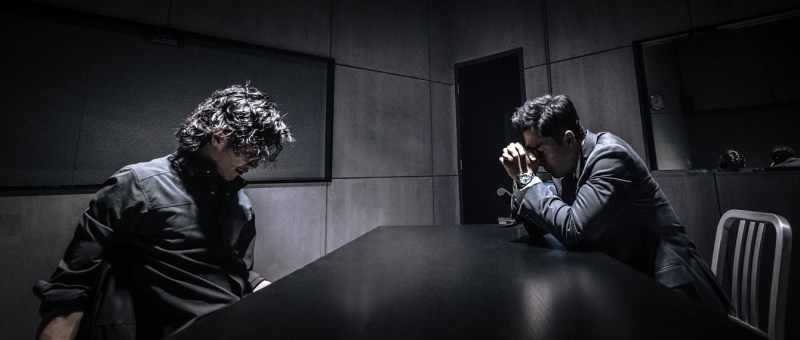
Breakout Brothers (逃獄兄弟, Mak Ho-Pong, 2020)

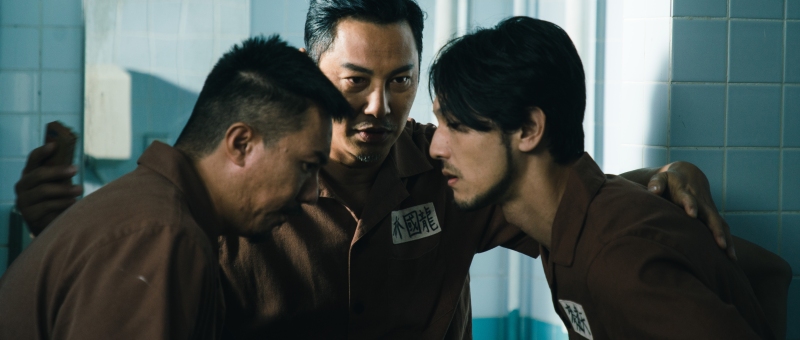
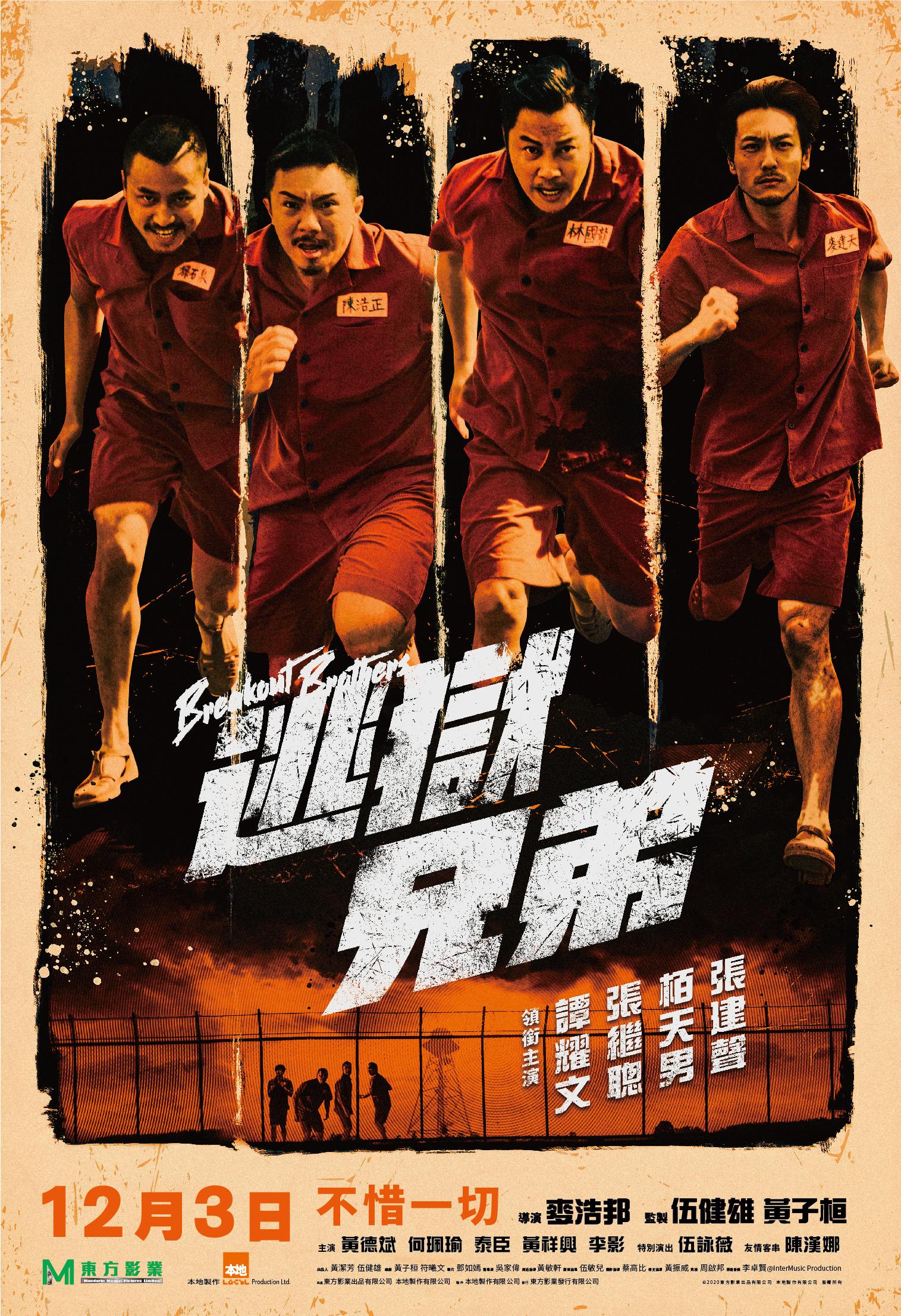
“I’m treating this as a vacation” says affable triad Chan (Louis Cheung Kai-Chung) of his three month prison term, after all it’s rent free and three meals a day who could say no to that in the difficult economic environment of pre-handover Hong Kong? Nevertheless, it’s hardly a vacation if you can’t cut it short and Chan, along with two buddies, will eventually find reasons to want to leave. Mak Ho-pong’s genial prison break comedy Breakout Brothers (逃獄兄弟) takes occasional subversive potshots against an increasingly corrupt social order but eventually discovers that you can’t escape social responsibility while the real reward is indeed the friends you make along the way. 

That is at least the conclusion that newbie prisoner Mak (Adam Pak Tin-Nam) comes to after being pulled into an escape plan formulated by petty gangster Chan who decides to make a break for it after learning that his dear mother has been taken ill and needs a kidney transplant which only he can give her. Thinking of his prison time as a vacation from the pressures of everyday life, Chan has been a low maintenance prisoner and therefore assumed the warden would agree to a temporary release to let him help his mum, but Warden Tang (Kenny Wong Tak-Ban) who has already served a “life sentence” of 30 years in post has recently been promised a promotion and doesn’t want anything to mess it up like a prisoner turning fugitive while on hospital leave. Spotting a workman disappearing from a storeroom and emerging Mario-style from a manhole on the other side of the fence Chan gets an idea and enlists Mak, an architect inside after being framed for taking bribes, to help him figure out the logistics, and Big Roller (Patrick Tam Yiu-Man), leader of the prison’s second biggest gang, for access and protection. 

The guys’ predicaments are perhaps embodiments of the age, Chan wanting out for reasons of filial piety while for Big Roller it’s in a sense the reverse in learning the daughter he was told had died is in fact alive and about to be married. Mak meanwhile wants out because he’s a sitting duck inside, the shady construction CEO who framed him for signing off on lax safety procedures which led to a fire in a prominent building having enlisted the services of rival gangster Scar (Justin Cheung Kin-Seng) to intimidate him into dropping his appeal. Hints of institutional corruption extend to the colonial prison system with guards quite clearly intimidated by prisoners and often turning a blind eye to cellblock violence while it’s also implied that Warden Tang has in a sense facilitated the rise of Scar at the expense of Big Roller as a means of maintaining order. He, like the colonial authorities, will soon be on his way but anticipating his own freedom is keen there be no trouble which is why he refuses Chan’s compassionate leave and extends little sympathy to new boy Mak. 

In any case, the real draw is the bumbling crime caper of the guys planning a heist-style escape which is, in the history of prison escapes, not an especially elaborate one. The prison is not exactly max security, and as they plan to escape during the celebrations for the Mid-August festival none of them are anticipating much difficulty in making it to the outside though as expected not quite everything goes to plan. Mak, meanwhile, eventually takes Big Roller’s advice and decides to stay inside to clear his name properly while the gang ensure his safety rather than try to live as a guilty fugitive and possibly be caught only to end up with more time. The other two have more pressing temporary goals and have not perhaps considered what to do after they’ve completed them, believing only that their lives are untenable if they cannot fulfil their duties as father and son respectively. 

Perhaps for this reason, the Mainland-friendly conclusion has each of the men recommitting themselves to paying their debts to society, Chan even insisting that he’s going to use his time wisely to improve his education in order to be a better husband and son while Big Roller promises to become a carpenter for real. Mak gets a partial vindication in that the shady CEO is finally forced to face justice while also realising that his slightly elitist, individualist stance has been mistaken thanks to the warm and genuine relationships he’s discovered inside. More comedy crime caper than tense prison break thriller, Breakout Brothers remains true to its name in prioritising the unconventional friendship that develops between the trio as they bond in a shared sense of existential rather than literal imprisonment. 


Breakout Brothers screened as part of this year’s New York Asian Film Festival.

Original trailer (English / Traditional Chinese subtitles)
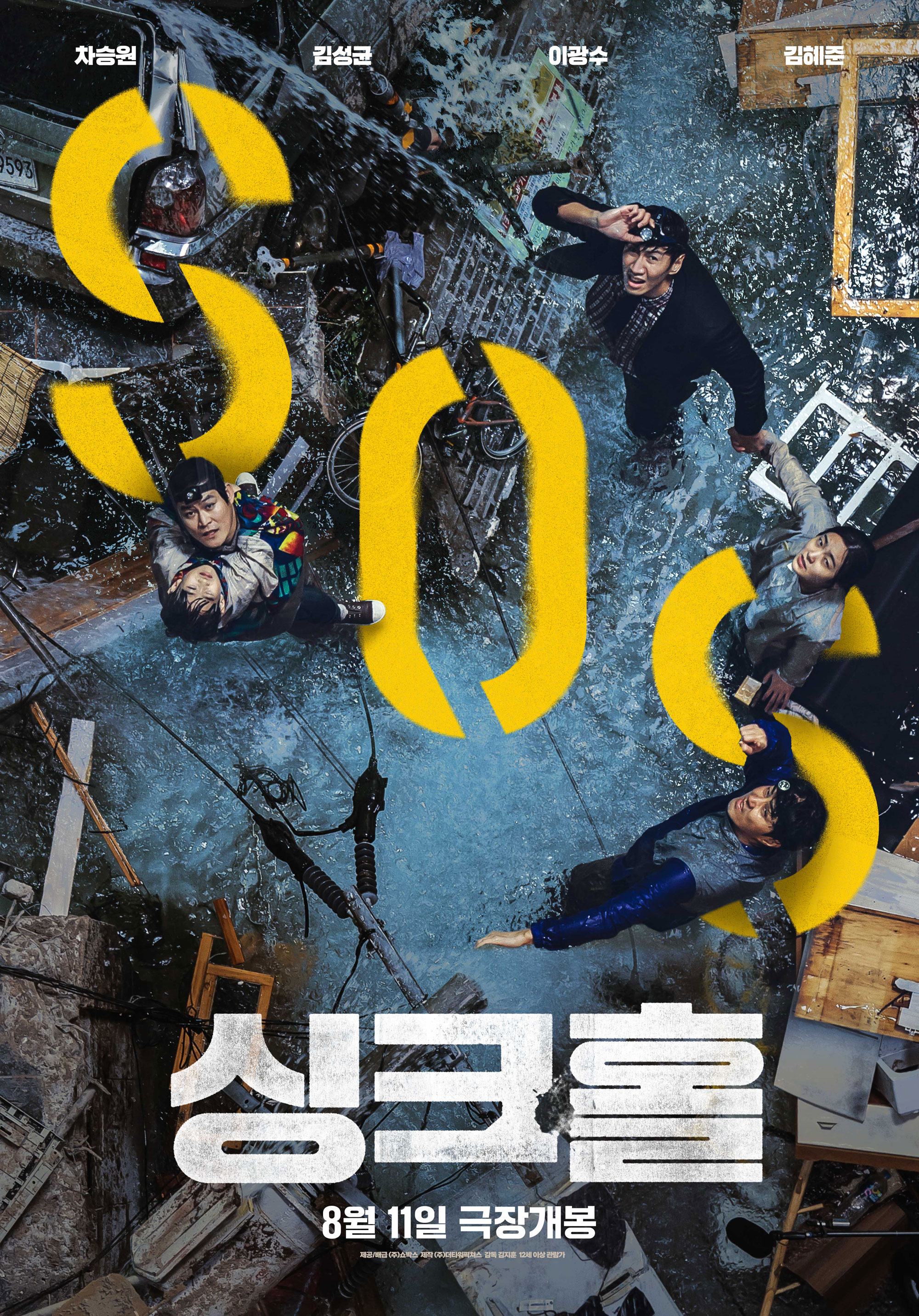
Sinkhole (싱크홀, Kim Ji-hoon, 2021)

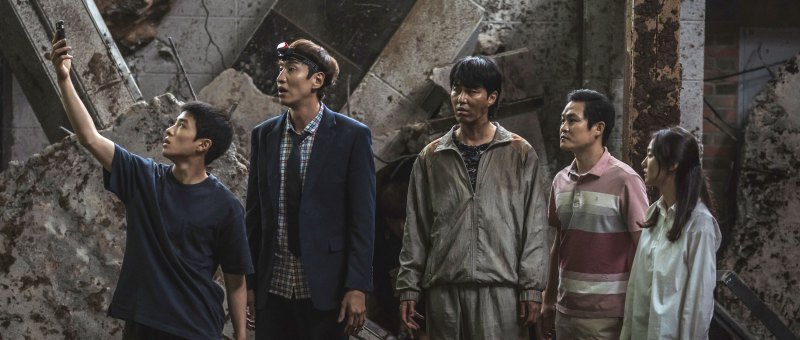
Financial security is built on shaky ground in Kim Ji-hoon’s harrowing disaster dramedy Sinkhole (싱크홀) in which one man’s home-owning triumph quite literally crumbles beneath his feet. The latest in a recent series of movies lamenting the sometimes lax safety culture of the Korean construction industry, Sinkhole is also a crushing indictment of a society ruled by house prices in which social status is largely defined by the owning of property while the young in particular struggle to climb out of a deep well of societal despair. 

As the film opens, the Park family is about to move in to their new flat, the first they’ve ever owned albeit with a frighteningly large mortgage, in the middle of a seasonal downpour. Only when they arrive, they discover the movers haven’t even started unloading because their apparently irresponsible neighbour Man-su (Cha Seung-won) has inconsiderately parked his car in front of the entrance and isn’t answering his phone. Patriarch Dong-won (Kim Sung-kyun) ends up in an awkward confrontation with the abrasive apartment dweller which is inconvenient because Man-su apparently works in just about every business in the area which means he continues to run into him just about everywhere he goes. 

Anyway, that’s the the least of his problems because, having made this giant investment, Dong-won can’t help thinking there’s something wrong with his new dream home especially when his adorably polite young son Su-chan points out that his marbles roll across the floor of their own accord. Worried they may have a subsidence problem, Dong-won checks his windows open properly and records evidence of ominous cracks in the pavement outside but struggles to get the other residents to agree to maintenance checks in fear that not getting the answer they want will bring down the value of their property. 

Property prices are apparently everything. Homeownership is an unobtainable dream for many, yet Dong-won already feels insecure in his purchase especially as his colleagues seem relatively unimpressed by the fact his flat is in a recently gentrified area and comparatively modest. Bamboozled into hosting a housewarming, he’s mildly embarrassed to realise the view from his balcony is of nicer, much more expensive luxury flats just across the river which are likely to remain far out of his reach. Nevertheless, his colleague, Seung-hyun (Lee Kwang-soo) declares himself jealous in part because he’s still renting a studio flat and feels that dating let alone marriage is impossible without being in a position to get a multi-room apartment. His colleague Eun-ju (Kim Hye-jun) is in the same predicament but prefers to see it as simply being at a certain stage on the ladder.  

This dream of future security is however quite literally built on shaky ground. There are definitely problems with Dong-won’s new apartment which become increasingly severe from the tilting floors to cracked glass and interruptions with the water supply presumably caused by cost-cutting and shoddy construction practices. When the building collapses into a sinkhole, Dong-won is trapped inside with work colleagues Seung-hyun and Eun-ju along with Man-su and his teenage son Seung-tae (Nam Da-reum). Despite the inherent horror of the situation, Kim keeps the atmosphere light as the small band of survivors attempts to manage as best they can, finding an awkward solidarity while trying to attract the attention of the emergency services and eventually making a daring escape using whatever tools are available to them. 

Even so, as much as the small band of almost strangers bond thanks to their desperate circumstances, there is an uncomfortable conservatism at play especially in the film’s treatment of a working class single mother and her son living in an apartment on the floor below Dong-won’s. That aside, Sinkhole offers a fierce criticism of an increasingly consumerist society in which house prices are all anyone talks about and homeownership is the only badge of social success. 11 years of patient sacrifice is swallowed in an instant, sucked into an abyss of corporate malfeasance, while Dong-won is left to climb out of the hole he’s in on his own. It’s small wonder that some of the survivors decide to drop out of the system altogether, ditching the idea of rooted homeownership for nomadic freedom in buying a small caravan rather than participate in the property market or climb the corporate ladder. “Don’t be happy in 10 years, be happy today!” they enthusiastically chant. The entire society is, it seems, sitting on a sinkhole which might give any minute, what’s the point in investing in a future which could disappear from beneath your feet without reason or warning? 


Sinkhole screened as part of this year’s New York Asian Film Festival.

International trailer (English subtitles)

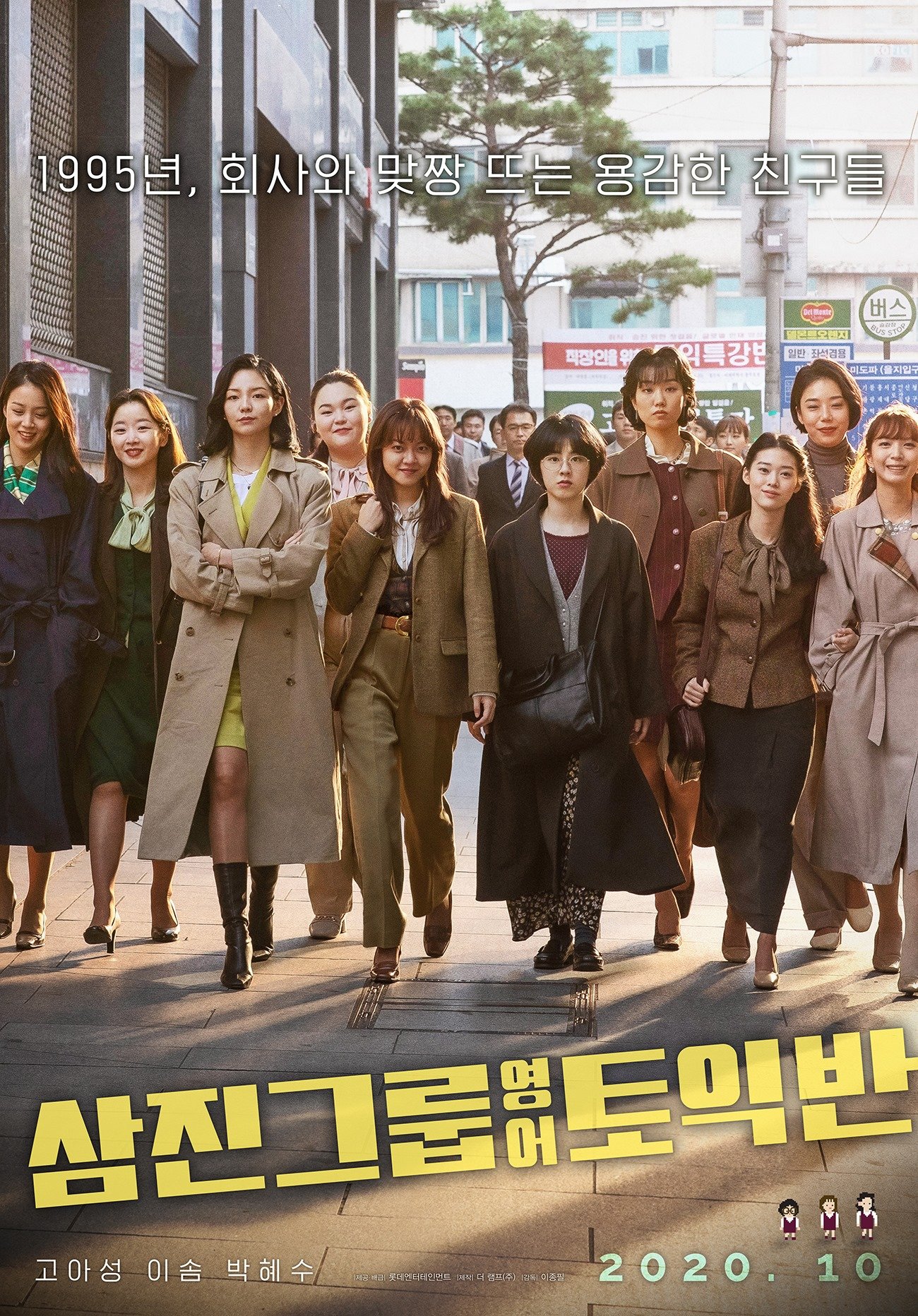
Samjin Company English Class (삼진그룹 영어토익반, Lee Jong-pil, 2020)

“The year of 1995 will mark the first year of our globalisation” according to the opening stock footage in Lee Jong-pil’s tale of tempered feminism and corporate anxiety, Samjin Company English Class (삼진그룹 영어토익반, Samjingeurup Yeongeotoikban). Partly a nostalgia fest for a mid-90s sense of aspiration which would come to a crashing halt with the financial crisis just two years later, Lee chronicles a society in flux as a new generation of women find themselves kicking back against the ingrained patriarchal attitudes of a conservative society while at the same time experiencing a gradual sense of disillusionment with growing internationalism that ironically sends them straight back into the arms of the chaebol. 

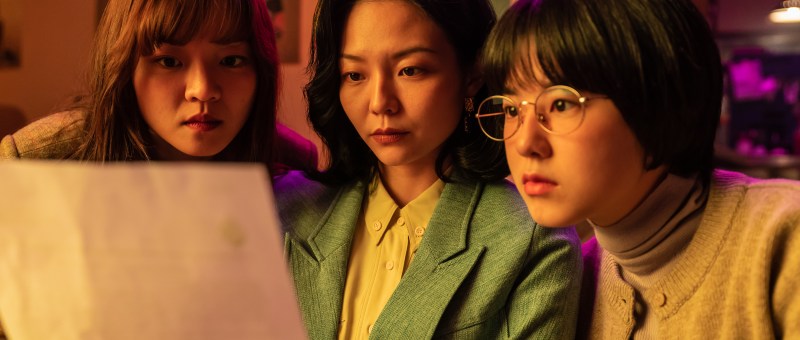
Set concretely in 1995, Lee frames his Working Girl-esque drama around the lives of three office ladies each beginning to age out of their potentially dead end jobs. An evolution of the secretarial pool, office ladies are treated more or less as domestic staff in the corporate environment often assisting the, largely but not exclusively, male workers with admin tasks such as teaching them how to use the fax machine or operate IT software while otherwise expected to perform traditionally feminine roles keeping the office clean and tidy or fetching drinks and cigarettes for their bosses. As such they are largely invisible, the men often talking indiscreetly in front of them because they don’t really matter. No one takes an office lady seriously even while they are perceived as essential, if interchangeable, in the functioning of the office. 

All very capable women, Ja-young (Go Ah-sung), Yuna (Esom), and Bo-ram (Park Hye-su) are looked down on by the few female members of the regular salaried staff because, largely for socio-economic reasons, they have no university degrees. Still, beginning to age out of office lady life they are faced with a conventional choice of finding a husband or attempting to gain a promotion into the ranks of permanent workers. It’s for this reason that they begin taking the company’s English classes, hoping a high TOEIC score will as they’ve been promised smooth the path towards employment. Women coming of age in a newly democratised Korea with its eyes on the rest of the world, they want more out of life than perhaps the previous generation would have done though Ja-young in particular is noticeably ahead of her time wanting not just career success but personal fulfilment. She was glad to work for Samjin because she thought they made products that enriched people’s lives and thinks her work should have a value to society aside from providing personal material comfort. 

That’s one reason she’s determined to do something when she discovers a Samjin factory has been spewing industrial waste into the waters surrounding a small rural village. As office ladies, the three women occupy a liminal space within the company that in a sense makes it easier for them to investigate but gives them little power to affect real change. Conflicted, Ja-young witnesses the company reach a settlement with the villagers assuring them the leak has been small, will have no lasting affect on their health or livelihood, and has been dealt with effectively. Her niggling doubts lead her uncover the cover up, but in this version of the story the enemy turns out not to be large corporations or chaebol greed but duplicitous foreigners taking advantage of the situation to facilitate their own goals of dominating Korean business, in this case by engineering a merger with a Japanese company brokered by an improbably handsome Korean-American corporate mole (David Lee McInnis). 

In fact, the solution that is found in one sense empowers the ranks of the office lady as Ja-young marshals the resentment of her cohorts towards challenging the corrupt status quo, but also makes an awkward defence of chaebol culture as the point of resistance lies in forcing the elderly chairman to reassume personal responsibility over his company. “Yankee go home!” he unsubtly exclaims before discovering that he no longer has much control because he runs a “corporation” in which the shareholder is king. The fact that the industrial pollution is entirely the fault of the chairman’s feckless son promoted above his abilities for dynastic reasons is quietly forgotten as if he were merely a bad apple later forced to face justice for his corporate misconduct while the system largely remains unchanged. Meanwhile, the parallel progress of the three Tess McGill’s eventually hints at a sea change in work culture that allows them to smash the unfair barriers to corporate success but in reality only grants them an unequal access to a patriarchal social order which otherwise remains the same as it ever was. 

Of course, the male members of staff are also in themselves constrained by this oppressive working culture, portrayed largely as spineless corporate drones blindly following orders for the sake of their careers only later given courage to do the right thing by the office ladies’ rebellion. Nevertheless, there is something pleasantly aspirational in the idealistic determination of Ja-young and her friends to succeed on their own terms even if their progress is ultimately undercut by a thinly veiled nationalism that repositions chaebol culture as force for good while forcing the women back into complicity with an inherently oppressive, patriarchal society defined by corporate success. 


Samjin Company English Class screened & streamed as part of this year’s New York Asian Film Festival.

International trailer (English subtitles)

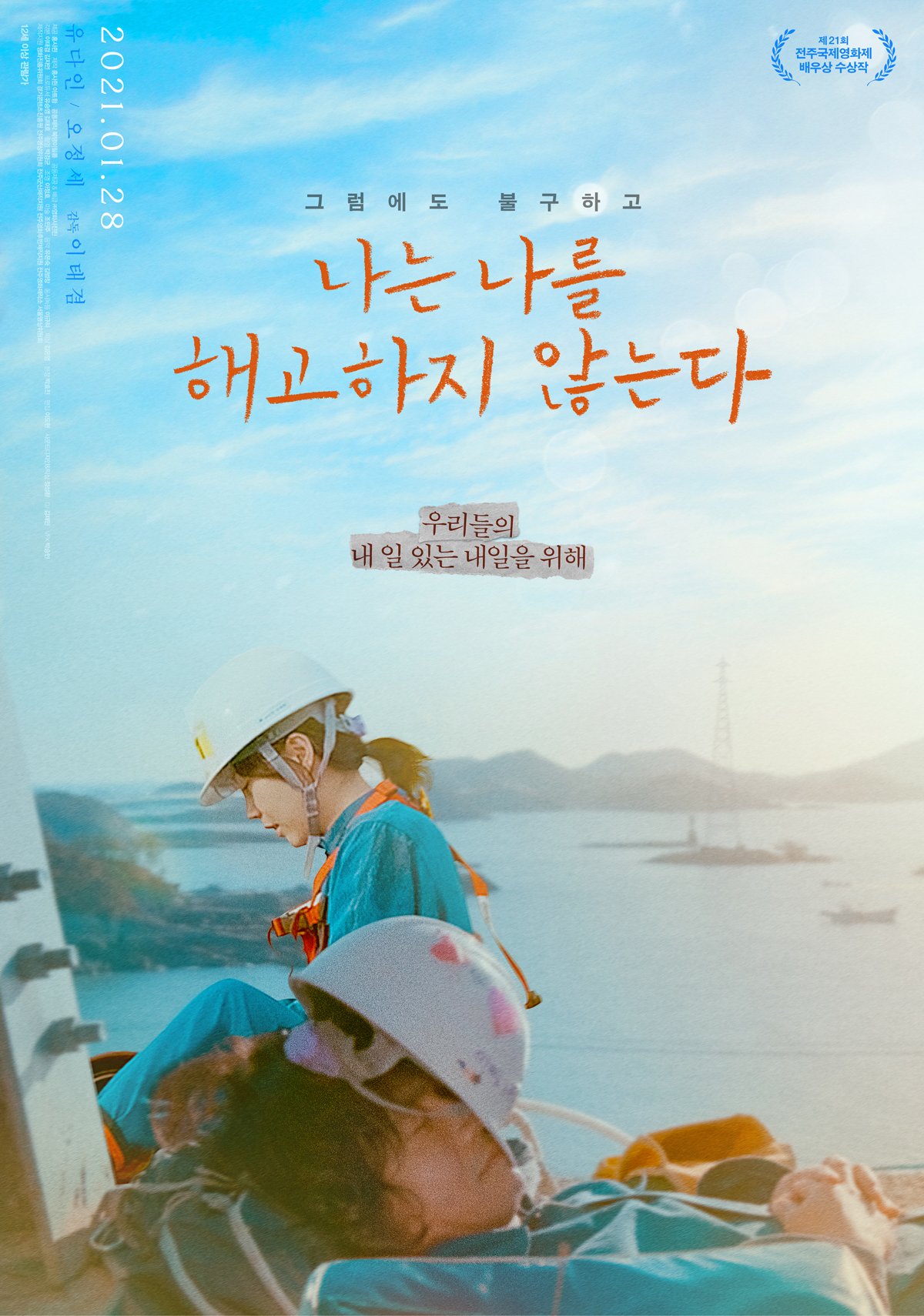
I Don’t Fire Myself (나는 나를 해고하지 않는다, Lee Tae-gyeom, 2020)

“All we asked for is not to die” a disgruntled employee reasonably explains, finally finding her voice on being confronted with the consequences of her complicity. Lee Tae-gyeom’s impassioned workplace drama I Don’t Fire Myself (나는 나를 해고하지 않는다, Naneun Nareul Haegohaji Anneunda) is the story of one woman’s path towards reclaiming agency over her life, but it’s also a subtle condemnation of rampant capitalism and the various ways entrenched social mores can set the oppressed against each other, hiding from the very ways they are each victims of the same social order. 

30-ish Jeong-eun (Yoo Da-in) is a talented employee working at an electrical company but her capability only makes her a threat to her male bosses. Insisting that “it’s not about whether a woman can do the job”, her superior forces her to accept a one-year transfer to a rural electrical engineering subcontractor promising that if she works out the contract she can come back to HQ. Resolving to make the best of a bad situation Jeong-eun soon realises her new boss is not keen to have her. Her presence is an obvious inconvenience to the other three male employees who must now put a curtain up so they can change into their work clothes while resenting the unexpected intrusion into their working life. What soon becomes clear to Jeong-eun is that her new assignment is in reality just an elaborate form of “banishment room”-style constructive dismissal. Her old boss is trying to make her working life so miserable that she’ll quit on all her own. 

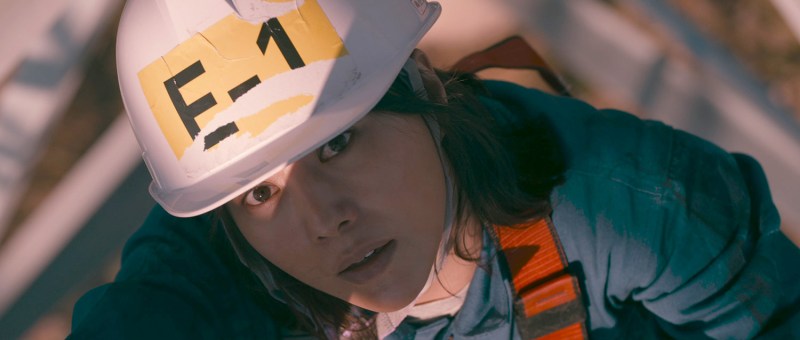
Only, as a friend of Jeong-eun’s points out, neither of them can afford to quit because it’s so unlikely they’ll be able to find alternative employment. Jeong-eun was good at her job, but as a woman she has very little chance of career advancement and had to work twice as hard as the men just to be employed. Perhaps for these reasons, she refuses to quit resolving to stick out the year in the sticks to see what happens, but her new manager refuses to give her any work and is himself pressured by the higher ups to either push Jeong-eun towards resignation or engineer a reason to fire her. Her male colleagues only come to resent her more when it’s revealed that the substation is expected to cover her salary out of their budget which is also being reduced meaning someone will likely be out of a job. Hoping to win their trust and respect, she studies electrical engineering manuals in her off hours and offers to accompany them into the field but is quickly undone by anxiety as she looks up at the tall towers of the electricity pylons unsure how she could ever scale them. 

There is something of a potent metaphor in Jeong-eun’s attempts to climb these infinite structures while the men around her laugh and try to pull her down. Latterly sympathetic colleague Seo (Oh Jung-se) snaps at her that for men like him getting fired is worse than dying and the reason she can’t climb is that for her it never will be. But Seo has in a sense miscalculated. Jeong-eun may be educated and middle class, but as she claps back to her getting fired and dying are synonyms. They are each victims of the same system, but blind to the ways they are similarly misused. Jeong-eun knows only too well the costs of getting fired, her grief over a close friend who took her own life after being forced out of her job possibly contributing to her self-destructive drinking problem. Seo meanwhile is constantly being reprimanded for falling asleep on the job, largely because he also works a series of part-time gigs to make ends meet such as manning the till in a convenience store and working as an Uber driver. As Jeong-eun discovers this dangerous, highly skilled work which is essential both for public safety and economic support pays almost nothing while the workers are also expected to provide their own protective safety gear including electric resistant overalls which run to $1000. 

The inspectors sent to undermine Jeong-eun and pressure the manager harp on about how the company has already been privatised and can no longer afford “inefficiency” while continuing to exploit their employees and ride rough shod over both employment law and people’s basic rights. Jeong-eun has three months to decide if she wants to try suing them for constructive dismissal but is warned that if she does the company will retaliate and even if she wins the quality of her working life may not improve. Yet if everyone goes on thinking only of themselves the company will continue to get away with their nefarious practices 

Pushed to breaking point, Jeong-eun’s epiphany comes only after a colleague is killed after being asked to fix a transmission tower in unsafe conditions while her slimy boss shows up to pressure his young daughter who can’t be more than 10 to sign away her right to proper compensation. She realises that she’s been “fired” by everyone in her life from her parents to her company, but has also been wilfully complicit in her reluctance to rock the boat believing that if you work hard and follow the rules you’ll eventually succeed even while intellectually knowing that that way of thinking is merely another tool used by the powerful to maintain their grip on power. She realises that she doesn’t need to fire herself too, seizing her own agency to mount a resistance towards the amoral venality of her ultra capitalist bosses by refusing to play by their rules anymore. A subtle yet pointed attack on the radiating effects of Korea’s notoriously poor labour law, I Don’t Fire Myself allows its educated middle-class heroine to find unexpected solidarity with a working-class labourer while ending on a note of positivity as Jeong-eun finds the courage to climb alone in the hope of bringing the light to others much like herself. 


I Don’t Fire Myself streams in the US Aug. 18 to 23 as part of this year’s New York Asian Film Festival.

Original teaser trailer (English subtitles)

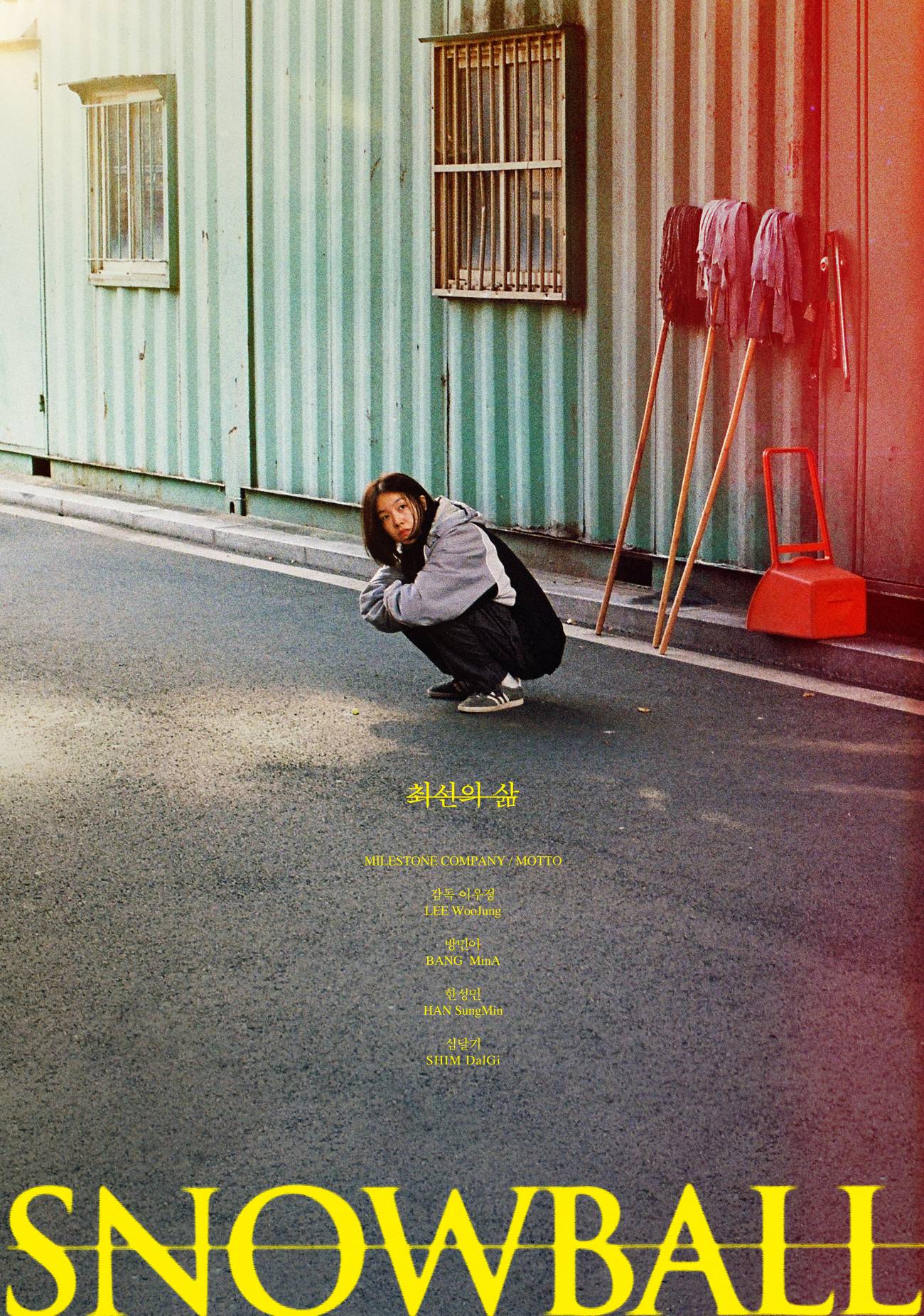
Snowball (최선의 삶, Lee Woo-jung, 2020)

Three teenage girls seeking escape from an unsatisfying adolescence find only betrayal and disappointment in Lee Woo-jung’s sensitive adaptation of the novel by Lim Solah, Snowball (최선의 삶, Choisunui Sarm). Each oppressed by a resolutely patriarchal society, the three women nevertheless differ in the their respective traumas and resentments finding solidarity in the strength of their friendship only to witness it crumble when its barriers must necessarily be confronted. “Why did you do this to me?” Kang-yi (Bang Min-ah) eventually asks, only to receive no answer and realise that in the end they did to and for themselves. 

Though perhaps feeling a sense of familial rejection in the otherwise peaceful home she shares with her overly religious Buddhist mother, emotionally reserved father, and a little dog also yearning for love, Kang-yi is ostensibly the least burdened of her friends if facing a similar sense of detachment. Aloof golden child So-young (Han Sung-min) is clever and pretty, everything seems to go right for her as Kang-yi enviously explains, except for her dream to become a model and actress which her family apparently don’t support. Ah-ram (Shim Dal-gi), by contrast, is quirky and rebellious with a tendency to collect stray animals and other items from the street little caring who they may or may not belong to but is also trapped in abusive home with an authoritarian father. When So-young one day suggests running away together the other girls agree, but after the novelty wears off and they begin to run out of money the realities of a forced adulthood are suddenly brought home to them. 

The depths of their naivety are perhaps signalled in an early and misguided attempt to misuse a potentially predatory middle-aged man who offers them money for food, allows them to stay in his apartment, and suggests an improbably low stress job they might be able to do for him. As she’s want to do, Ah-ram runs off with his wallet only to begin feeling sorry him seeing as there’s so little in it and he is so clearly lonely even if So-young proclaims him a creep. Picking up a mattress in the street the girls end up sleeping in a stairwell, only for Kang-yi and So-young to return and find Ah-ram apparently beaten and raped by a man she later willingly returns to, talking as if such brutal treatment is a normal part of any relationship. “Children, when you’re in love you sometimes get into fights” she depressingly explains, later implying that her violent boyfriend has become her pimp as she slides into sex work in an effort to provide economic support to all three of them. 

So brutalised is she, that Ah-ram thinks nothing of the abuse she continues to suffer while So-young solipsistically wallows in a sense of defeat and despair. It’s at this point she whips out a credit card she’s apparently been carrying all along, her choice not to use it seemingly less about the possibility of its being traced than a stubborn desire to insist she is as underprivileged as her two friends. As we later discover, Kang-yi lied about her address to get into the school and in fact lives in a run-down semi-rural area some distance away, secretly regarded as even more of a hick provincial by the upwardly mobile So-young. Nevertheless, it’s not class differences which eventually shatter their friendship but repressed sexuality. One extremely hot evening, So-young and Kang-yi share a moment of physical intimacy but while it only seems to bind Kang-yi more closely to her friend, So-young is unable to cope with the taboo realisation of her desires and becomes increasingly irritable, distancing herself from both of the other girls before abruptly deciding to call the experiment in independence short and return to her parental home. 

All Kang-yi wants is a return to their former friendship, but So-young’s repression eventually turns violent. Rejecting Kang-yi and Ah-ram she becomes a part of the popular set and embarks on a campaign of bullying that leaves Kang-yi both physically bruised and emotionally wounded. Yet she is also in her own way repressed, unable to accept her parents’ love for her and often ignoring the plaintive cries of the family dog longing to be picked up and held. Neither she nor Ah-ram are able to conceive of a future for themselves, Kang-yi’s sense of rejection eventually pushing her towards a self-destructive act of violence that will further rob her of possibility and the potential for happiness. Captured with a restless, roving energy imbued with with the colours of twilight, Lee’s melancholy indie drama suggests that not even friendship can provide a refuge from the pressures of the modern society and its relentlessly oppressive social codes in which internalised shame can quickly snowball into an avalanche of violence.


Snowball screened as part of this year’s New York Asian Film Festival.

Festival trailer (no subtitles)

A Leg (腿, Chang Yao-sheng, 2020)

“Life is long. We all have some regrets.” a grieving widow is told by a disingenuous doctor in full damage limitation mode. He’s not necessarily wrong, nor is his advice that the widow’s pointless quest to retrieve her late husband’s amputated limb has little practical value though of course it means something to her and as he’d pointed out seconds earlier a physician’s duty is to alleviate suffering of all kinds. Apparently inspired by the true story of director Chang Yao-sheng’s mother, A Leg (腿, Tuǐ) is in many ways a story of letting go as the deceased man himself makes a presumably unheard ghostly confession while his wife attempts to do the only thing she can in order to lay him to rest. 

Husband Zi-han (Tony Yang) is in hospital to deal with a painful, seemingly necrotic foot which eventually has to be amputated in a last ditch attempt to cure his septicaemia. “Keep the leg and lose your life, or keep your life and lose the leg” the otherwise unsympathetic doctor advices wife Yu-ying (Gwei Lun-mei) in a remark which will come to seem ironic as, unfortunately, Zi-han’s case turns out to be more serious than first thought and he doesn’t make it through the night. Grief-stricken, Yu-ying leaves in an ambulance with the body but later turns back, determined to retrieve the amputated foot in order that her husband be buried “complete” only it turns out that it’s not as simple as she assumed it would be. 

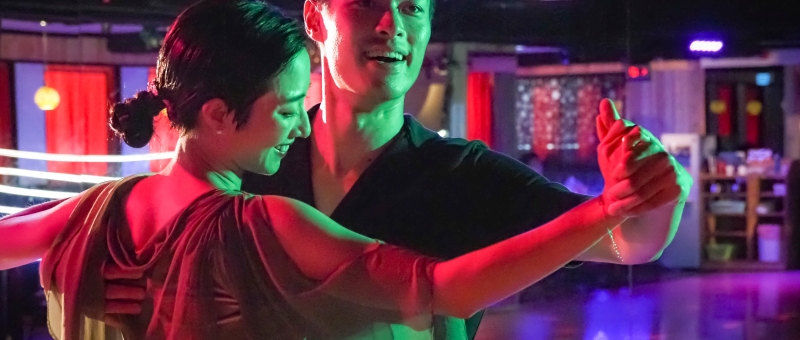
The loss of Zi-han’s foot is all the more ironic as the couple had been a pair of ballroom dancers. As Yu-ying makes a nuisance of herself at the hospital, Zi-han begins to narrate the story of their romance which began when he fell in love with a photo of her dancing in the window of his friend’s photography studio. Explaining that, having died, he’s reached the realisation that everything beautiful is in the past only he was too foolish to appreciate it, Zi-han looks back over his tragic love story acknowledging that he was at best an imperfect husband who caused his wife nothing but pain and disappointment until the marriage finally broke down. He offers no real explanation for his self-destructive behaviour save the unrealistic justification that he only wanted Yu-ying to live comfortably and perhaps implies that his death is partly a means of freeing her from the series of catastrophes he brought into her life. 

Given Zi-han’s beyond the grave testimony, the accusation levelled at Yu-ying by his doctor that the couple could not have been on good terms because Zi-han must have been ill for a long time with no one to look after him seems unfair though perhaps hints at the guilt Yu-ying feels in not having been there for her husband when he needed her. As we later discover, however, this is also partly Zi-han’s fault in that he over invested in a single piece of medical advice and resisted getting checked out by a hospital until he managed to sort out an insurance scam using his photographer friend, wrongly as it turned out believing he had a few months slack before the situation became critical and paying a high price for his tendency to do everything on the cheap. Nevertheless, Yu-ying’s quest to reattach his leg is her way of making amends, doing this one last thing for the husband whom she loved deeply even though he appears to have caused her nothing but misery since the day they met. 

In order to placate her, the slimy hospital chief offers to have a buddhist sculptor carve a wooden replica of Zi-han’s leg made from wood destined for a statue of Guan-yin goddess of mercy but Yu-ying eventually turns it down, struck by the beauty of the object but convinced that turning it to ash along with her husband’s body would be wrong while believing that wood ash and bone ash are fundamentally different. She regrets having ticked the box on the consent form stating she didn’t want to keep the “specimen”, never for one moment assuming that her husband would not recover. Despite their dancing dreams, she thought the leg was worth sacrificing against the long years they would have spent together after, though this too seems a little unlikely considering the state of their relationship prior to her discovery of Zi-han’s precarious health. Zi-han meanwhile is filled with regret for his continually awful behaviour and the obvious pain he caused his wife. Getting his leg back allows him to begin “moving on” while doing something much the same for Yu-ying though his afterlife pledge about the endurance of love seems a little trite given how he behaved while alive. A little more maudlin than your average quirky rom-com, A Leg nevertheless takes a few potshots at a sometimes cold, cynical, and inefficient medical system, inserting a plea for a little more empathy from a pair of unexpectedly sympathetic police officers, while insisting that it’s important to dance through life with feeling for as long as you’re allowed. 


A Leg screens Aug. 14  & streams in the US Aug. 15 – 20 as part of this year’s New York Asian Film Festival.

Original trailer (English/Traditional Chinese subtitles)

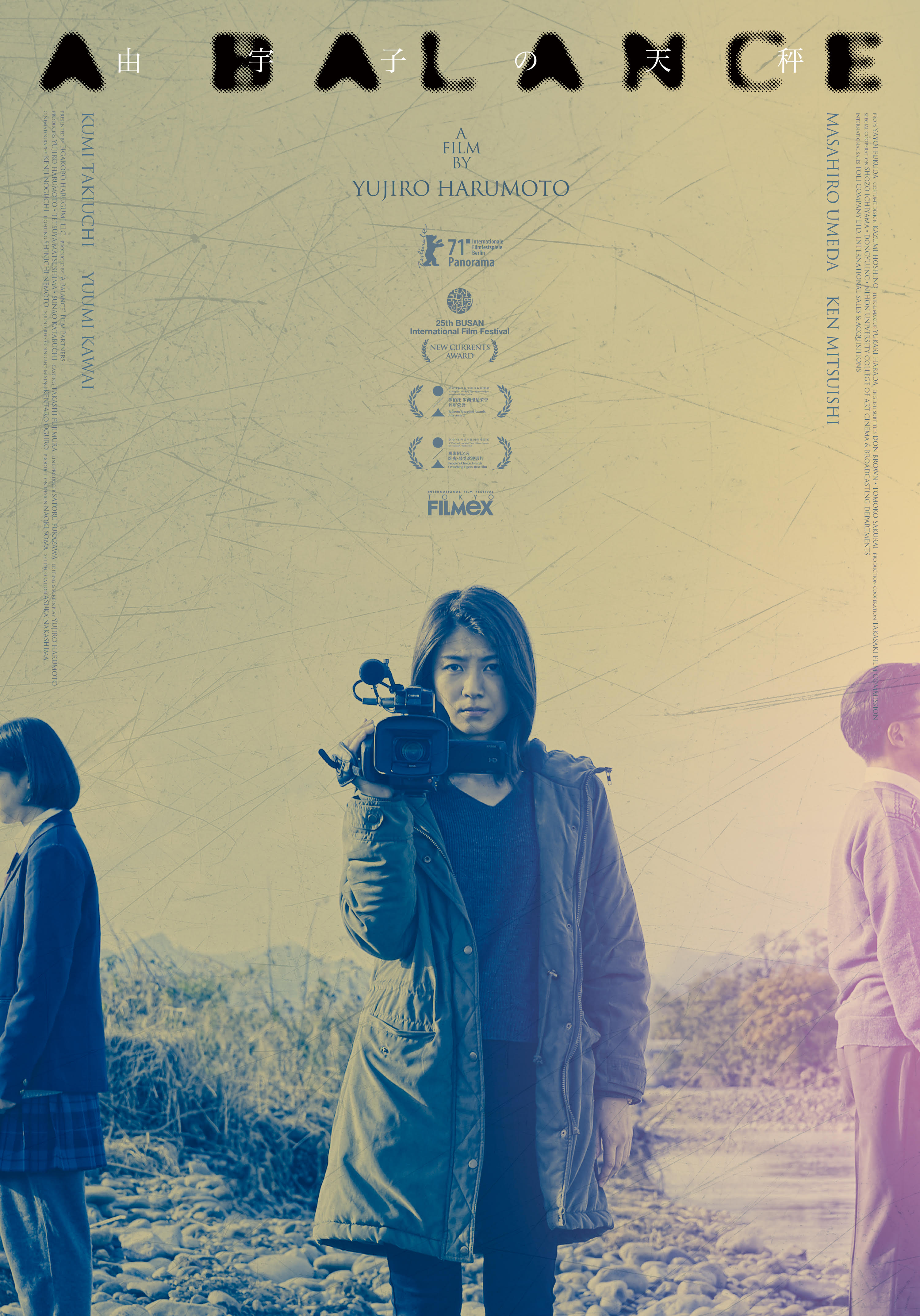
A Balance (由宇子の天秤, Yujiro Harumoto, 2020)

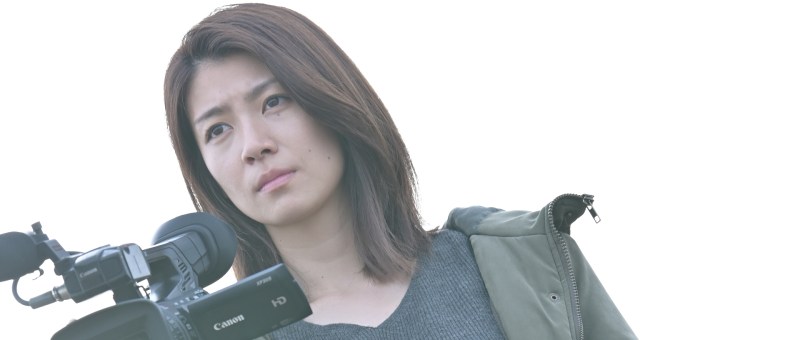
“What’s moral isn’t always what’s best” according to the morally compromised heroine at the centre of Yujiro Harumoto’s A Balance (由宇子の天秤, Yuko no Tenbin). To Yuko (Kumi Takiuchi), a balance is what a documentarian should strike, not taking one side or another but shining a light on hidden truths. The irony is that in seeking to expose one truth she accidentally stumbles on another uncomfortably close to home and although her job is to highlight injustice finds herself making the decision to do the opposite concluding that in this case, and perhaps many others, keeping quiet may actually be what’s best for victims, victimisers, and everyone in-between. 

As the film opens, Yuko is shooting a potentially manipulative interview with the grieving father of a young woman, Hiromi, who took her own life after becoming the subject of scandal and rumour when it was revealed she may have been involved in an inappropriate “relationship” with a teacher. The teacher, Mr. Yano, eventually took his own life too leaving behind him a note proclaiming his innocence and explaining that death is the manner he has chosen for his resistance. Yuko is sympathetic to Mr. Hasebe (Yuya Matsuura), but also perhaps verging on the unethical in the depth of the questions she asks him of his daughter’s death. Soon enough a conflict emerges between the nature of the documentary Yuko would like to make which is more contemplative than polemical, and the “routine piece on bullying” the TV studio think they’ve commissioned. Consequently, we see the suits redacting problematic lines in Yuko’s scripts in editorial meetings, misrepresenting Mr. Hasebe’s words in removing his criticism of mass media which he blames for hounding Mr. Yano to his death and thereby depriving him of answers. 

Yuko remains determined to provide “a balance” in interviewing Yano’s surviving family members including his mother Toshiko (Mitsuko Oka) and sister Shiho (Misa Wada), but discovers them tyrannised by the treatment they’ve received at the hands of the media and a vindictive society. Toshiko near collapses towards the end of the interview when asked if there was anything the family could have done to prevent this tragedy happening, inviting Yuko to visit her at home whereupon she discovers her living in near total darkness, afraid to go out lest she be recognised and explaining that she has few possessions in case she has to move again in a hurry because someone has exposed her address online. This little old lady is living in terror because of something her son was accused of which later caused him to take his own life and even that did not end the torment for his family. 

Meanwhile, in an ironic touch, Yuko discovers that a young woman, Mei (Yumi Kawai), attending the cram school owned by her father where she also teaches part-time has become pregnant and claims her father, Mr. Kinoshita (Ken Mitsuishi), is responsible having accepted sex in lieu of her overdue fees. Yuko does not want to disbelieve her and confronts her father, holding up her iPhone as a record, who admits that what Mei has said is true. Yuko tells herself she’s doing what’s best for Mei, bonding with her as two women who lost their mothers young (as did Hiromi), understanding that she may not want to go to the authorities because of the lingering stigma of being involved such a scandal. But she also can’t deny that her actions are self-interested in that she doesn’t want her doc pulled or her career messed up by her father’s transgression, something which gets harder to ignore when she discovers Mei’s pregnancy may be high risk and requires immediate medical treatment from a proper hospital to ensure her safety. 

The lines become ever more blurred, Yuko developing a quasi-maternal relationship with the motherless Mei which is in its way perfectly genuine even as she pays their overdue gas bill and worries about her potentially abusive father (Masahiro Umeda), but is nevertheless coloured by her desire both to cover up this harmful secret and to atone for her father’s wrongdoing. For his part, Mr. Kinoshita wants to confess but as Yuko points out he’d be doing it to unburden himself which in effect would merely shift the burden onto others including Mei but also Yuko herself, her documentary team, the other students at the cram school, and in effect everyone else they’ve ever known. 

Yet can Yuko be an effective arbiter of the truth especially when, as it turns out, neither she nor anyone else is being entirely honest? Her job is to present information in such a way that conclusions can be drawn, but she is herself making decisions in selecting the information she presents and the manner in which she presents it. She may resent the interference of the studio, but in reality they aren’t doing anything she hasn’t already done even if they are acting less out of a sense of integrity than commercial concern. “Whatever we put together is the truth” as her exasperated producer (Yota Kawase) finally insists. It’s in this same conflict that she begins to lose her sense of balance, trying to help those victimised by an unforgiving society while attempting to protect herself from unwelcome consequences of social scandal aided and abetted by the industry in which she herself works. “Ask them who is the real victimiser” Toshiko asks of Yuko taking aim at the mass media who have shamed her into a life of total darkness, but all Yuko can in the end do is turn her camera back on herself in contemplation of her shattered integrity.  


A Balance screens Aug. 12 as part of this year’s New York Asian Film Festival.

Original trailer (English subtitles)

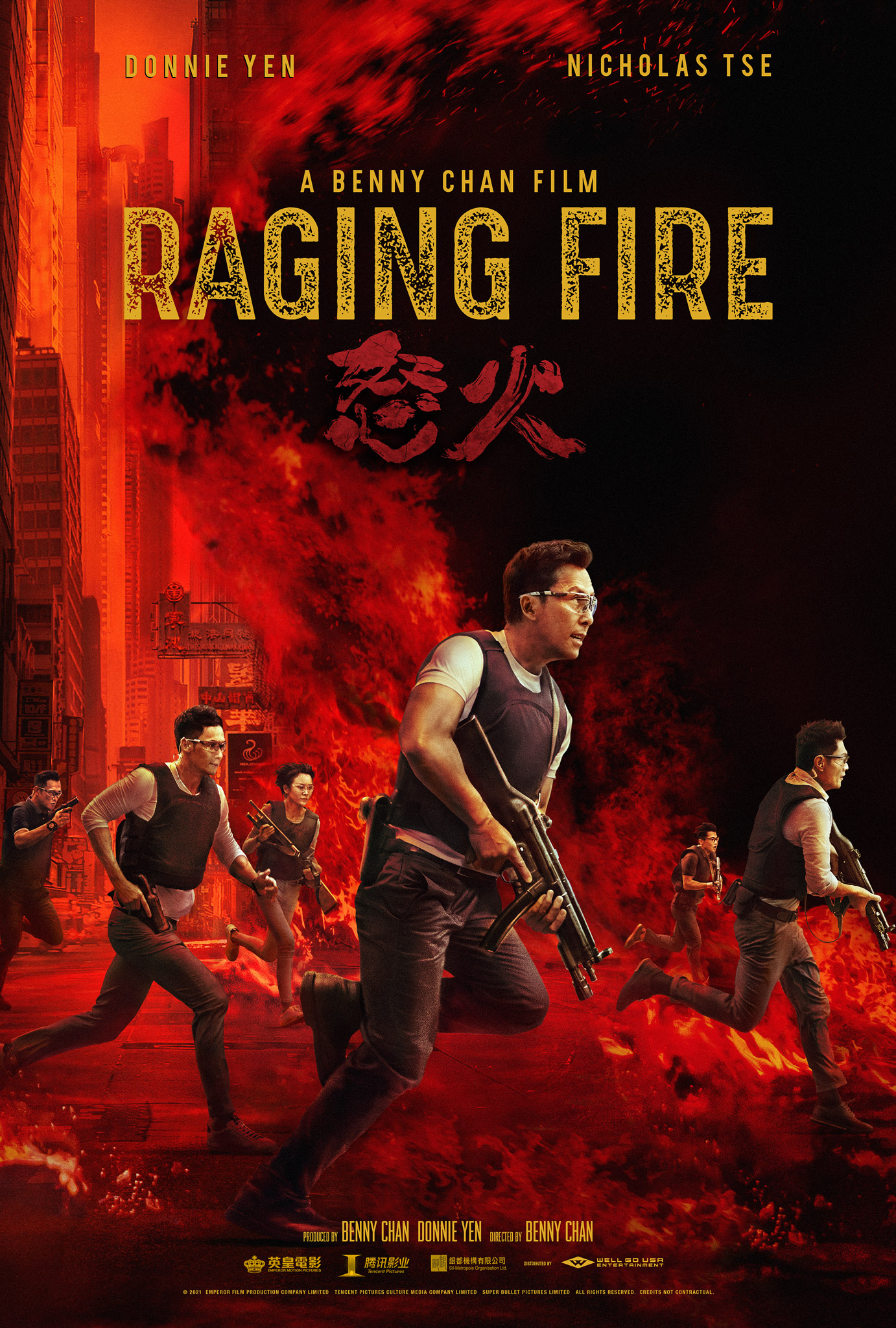
Raging Fire (怒火, Benny Chan, 2021)

“If you had chased Coke that day, would our destinies have been reversed?” a cop turned villain asks of his righteous colleague, but his friend has no answer for him. The final film from director Benny Chan who sadly passed away last year after being diagnosed with cancer while filming, Raging Fire (怒火) pits a disgruntled police officer wronged by the system against an incorruptible detective but suggests that the real villain is an increasingly corrupt society in which the rich and powerful have a direct line to justice. 

As the film opens, noble officer Cheung (Donnie Yen) is racing towards some kind of altercation in a shipyard but later wakes up next to his much younger and very pregnant wife (Qin Lan). After a years long operation, his team is about to take out a petty criminal involved with a previous investigation which resulted in fellow officers getting sent to prison for excessive use of force. After refusing to to help a wealthy businessman make his son’s drunken car accident go away, Cheung is taken off the case while the raid turns out to have been a trap leaving eight of his friends dead and many more injured. Through his investigations, Cheung begins to realise that his former colleague Ngo (Nicholas Tse), recently released from prison, may be responsible for the deaths of his friends in pursuing a vigilante revenge against the police force he feels betrayed him. 

“This society doesn’t reward good men” Ngo later insists, though his total and relatively sudden transformation from earnest cop to bloodthirsty psychopathic killer seems something of a stretch. Cheung aside, the Hong Kong police force is depicted as infinitely corrupt and working at the behest of the rich and powerful to further agendas not always in the interests of justice. The case which caused so much trouble related to the kidnapping of a prominent financier and the secretary he was canoodling with at the time, the financier’s wife having obeyed the kidnappers’ instructions not to call the police by ringing a government contact instead which is why the operation is covert. Ngo and his team were told to do whatever it took to extract information from a suspect who later wound up dead but were hung out to dry by the superior officer who ordered it. Not unreasonably they see themselves as victims of a corrupt system but care little who might get in the way of their vicious bid for revenge. 

For his part, Chueng is also a thorn in the side of his colleagues because of his refusal to play along with the base level corruption all around him. Dragged to the meeting with the businessman by nervous colleague Beau (Patrick Tam), Cheung sips tea rather than the wine everyone else is drinking and eventually storms out making a point of paying for his exorbitantly priced beverage while refusing to be complicit with systemic corruption. So upright is he that he asks a passing driver if he has insurance before borrowing his car to chase down Ngo and when he himself is accused of breaking protocol the entire squad shows up to petition the disciplinary panel on his behalf. Ngo asks him if the situation would have been reversed had it been Cheung who had questioned the suspect that night, but of course it wouldn’t because Cheung would never have beaten a suspect to death in the first place. 

Chan places this debate front and centre by setting the final showdown in a church currently undergoing renovation, Ngo seemingly judged for his moral transgressions while Cheung meditates on the man he used to be in a bromance montage that laments the tragedy of Ngo’s fall from grace. The battle of wits between the two men, Ngo of course uniquely positioned to game the system he rails against, ends only in futility while the system which created him remains unchanged. Chan shoots with characteristic visual flare sending his compromised cops through a golden hellscape of the contemporary city veering between beautifully choreographed, high octane action sequences including a lengthy car chase through a highly populated area, and procedural thrills tinged with ambivalent social commentary in which justice itself has become commodified while police officers exceed their authority and bow to the rich and powerful. A throwback to classic Hong Kong action, Chan’s final film is a fitting finale for the career of a director taken far too soon. 


Raging Fire screened as part of this year’s New York Asian Film Festival and will be released in US cinemas on Aug, 13 courtesy of Well Go USA.

International trailer (English subtitles)

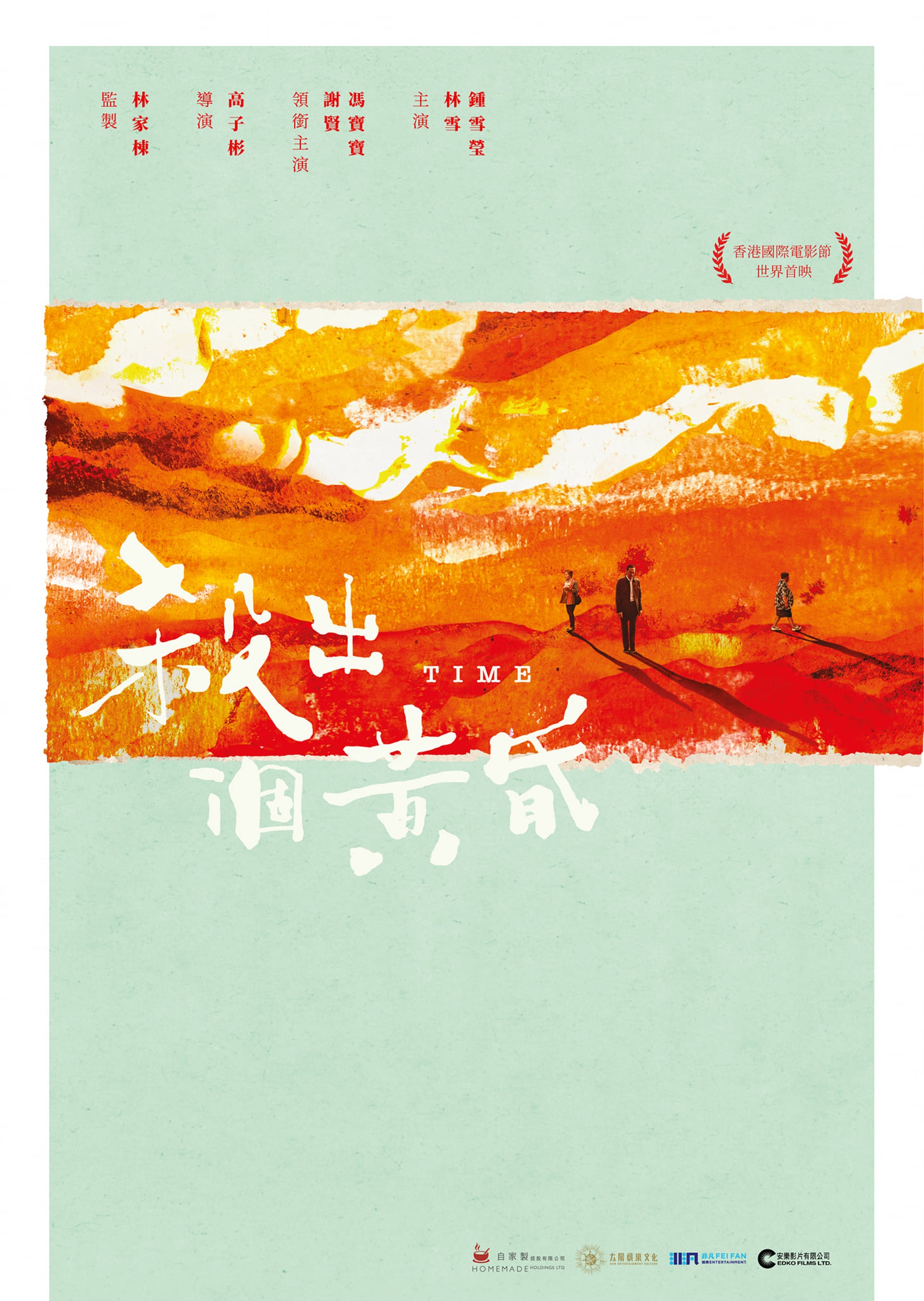
Time (殺出個黃昏, Ricky Ko, 2021)

Youth is wasted on the young in Ricky Ko’s wistfully nostalgic ode to a bygone Hong Kong, Time (殺出個黃昏). Highlighting a series of very real social problems from the government’s failure to properly care for its old, to incurable loneliness, and the changing family dynamics of the modern society, Ko’s sometimes melancholy drama begins as a story about death but then finally becomes one about life granting its defeated heroes a second chance at a forgotten love in the formation of a new family. 

Ko opens, however, with a kitsch retro sequence filmed in the manner of ‘70s action movies in which a trio of assassins cooly eliminate their targets. Flashing forward to the present day, hitman Chau (Patrick Tse Yin) is unceremoniously let go from his job as a noodle chef. Unable to keep up with the breakneck pace of contemporary Hong Kong, he’s being replaced by a machine. A message on a radio show brings him back into contact with his old gang, fixer Fung (Petrina Fung Bo-Bo) now a nightclub singer and owner of at the Golden Phoenix cabaret bar catering for elderly romantics, and getaway driver Chung (Lam Suet) who has formed an unwise emotional attachment to a sex worker he dreams of marrying. Fung has found them a new job, but Chau immediately senses something different on his arrival. His target is a bedridden old lady who’s called the hit on herself because she can’t afford the bills for her medical treatment and has no real quality of life. 

Chau is so shocked he can’t go through with it, later seeing in a news report that the woman’s husband has been arrested in connection with her death. Her plight seems to have provoked a minor debate concerning lack of appropriate care for Hong Kong’s elderly. “Death is better than debt” is the way the woman’s husband characterised her choice, essentially affirming that there was no way for her to go on living in a society which has abandoned its elderly and infirm. Nevertheless, after that first case Chau takes on more requests for “euthanasia” from similarly afflicted people yet one of his most poignant is for a very wealthy man in good physical health who is simply lonely following the death of his wife. Though he had a large family, his children are far away with lives of their own and rarely visit. He chooses death in the hope of reuniting with his wife and escaping from the crushing loneliness of his existence. 

One particular assignment, however, brings Chau into contact with vulnerable teenager Tsz-Ying (Chung Suet-Ying) who has been abandoned by her parents following their divorce and is currently living alone. Despite himself, Chau ends up taking the girl in and acting as her “grandpa” while she insists on learning his knife technique and how to make noodles the old fashioned way. For his part, Chau finds himself at odds with the modern world, confused beyond belief about how to pay for a bus ticket and embarrassed when a younger woman does it for him by waving her phone at a box by the driver. He stands rather than sit in one of the priority seats reserved for elderly passengers unwilling to accept that he has become old. Yet living with Tsz-Ying he begins to emerge into the modern society, learning how to use a smartphone and regaining something of his youth even as he bests a few young whippersnappers who made the mistake of underestimating an old guy. 

While Chung, plagued by medical issues, quips that prison is “all inclusive” and you can get an appointment with your doctor any time you want, Fung has family issues of her own including a tense relationship with her snobbish daughter-in-law who’s determined to force her to sell her apartment and give up the club to get her grandson into an elite school. Despite their dark history as killers for hire, the trio are subject to the same problems faced by ordinary elderly people, witnessing lonely deaths and incurable pain coupled with a sense of futility which encourages them to think their lives are already over. Yet thanks to their involvement with Tsz-Ying they get a kind of second chance, building a new kind of family in intergenerational solidarity. Quirky and nostalgic, Ko’s aptly belated directorial debut feature may begin as a story about death and the inexorable march of time but finally makes the case for sidestepping the alienation of the modern society for a more wholesome sense of community and the eternal ability to start again no matter how old you are.


Time streams in the US Aug. 10 to 15 as part of this year’s New York Asian Film Festival.

Original trailer (English subtitles)

Fighter (파이터, Jéro Yun, 2020)

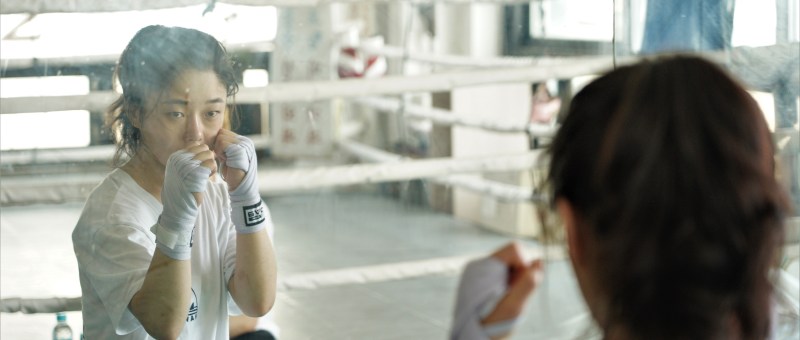
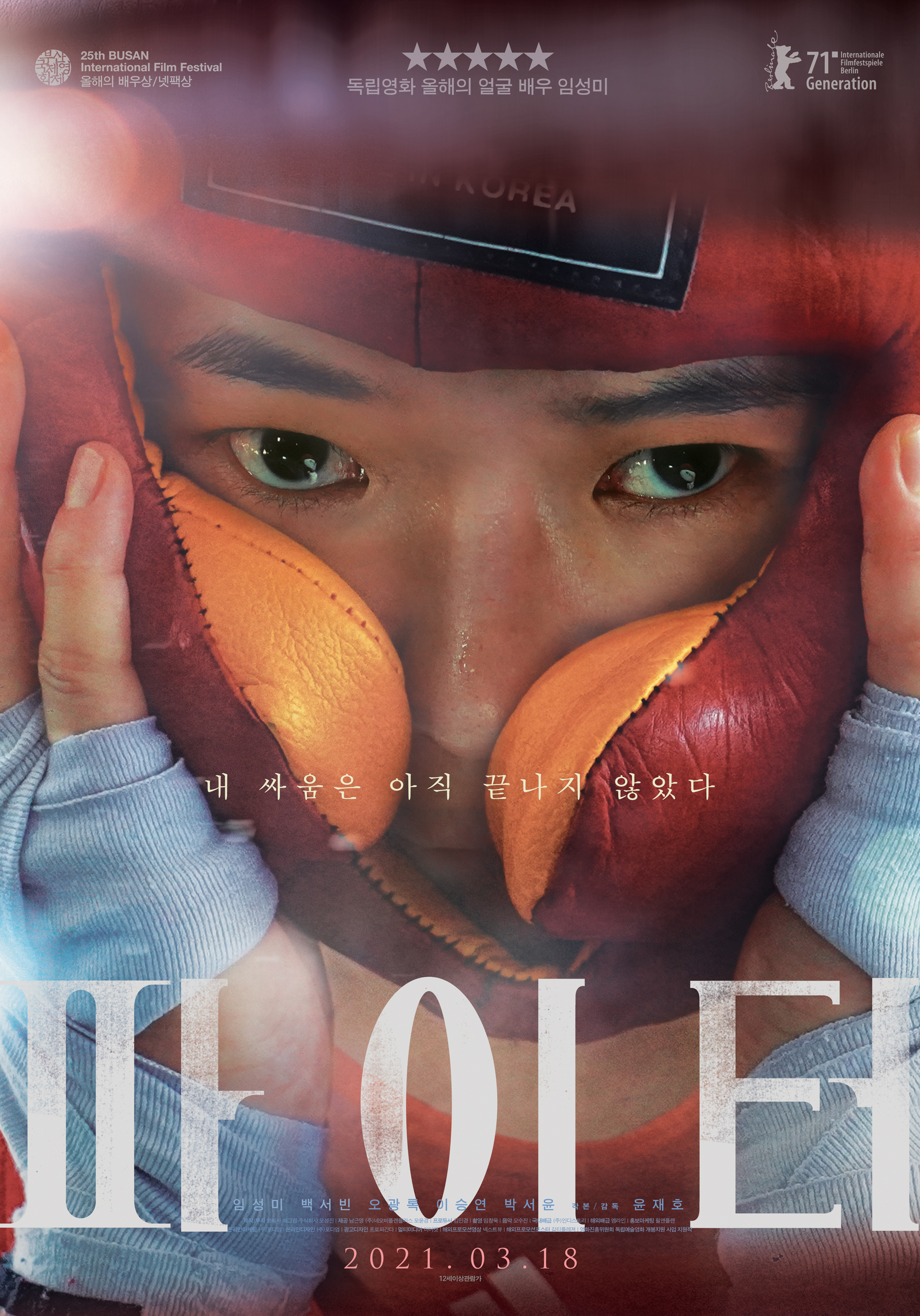
“My name is Ree Jina. I am a “North Korean Refugee”. This is how South Koreans call us. My fight is not over yet. I will keep fighting until the end. Even if I fail I will rise again.” a young woman insists, finding a new sense of purpose in the boxing ring while attempting to adjust to her new life in the South. As the title implies, Jéro Yun’s indie drama Fighter (파이터) follows one woman’s attempt to fight her way through personal trauma and societal anxiety but is less boxing movie than gentle character study as the heroine gains the courage to begin moving on through reconnecting with the estranged mother who abandoned her to come to the South alone. 

After a spell in a readjustment centre, Jina (Lim Sung-mi) is guided to a well-appointed flat by a social worker whose off the cuff remark that apartments like these are out of reach for most South Koreans speaks of a latent resentment. Most of Jina’s rent is subsidised, but she still needs to cover a part of it plus maintenance fees and so she contacts a North Korean fixer who helps her get a job in a restaurant. Needing more money to bring her father, who has escaped the North but remains trapped in hiding in China, to the South she decides to take a second job working as a cleaner at a boxing gym. She’s only there to clean, but despite herself Jina is captivated by the unexpected sight of female boxers. Encouraged to step into the ring herself, she remains reluctant, exclaiming that she doesn’t have time to waste on “fighting”, but eventually decides to give it a go on being told there may be money it if you’re good enough to turn pro. 

One of the reasons Jina gives sympathetic sub coach Tae-su (Baek Seo-bin) for her reluctance to box is due to the discrimination she faces from South Koreans who have a stereotypical vision of Northerners as a heavily militarised people as if they were all enemy combatants. She reminds him that ordinary people live there too, like presumably her father whom she’s desperate to save before he gets picked up by the Chinese authorities and sent back. The social worker’s barbed comments meanwhile echo the impression of some that North Koreans have an unfair advantage in the South with better access to a higher standing of living thanks to being taken care of by the government, but this obviously ignores the societal difficulties they face from isolation and discrimination to trouble gaining employment, potential exploitation, and the persistent culture shock of living in a modern capitalist economy. Even the kind and supportive Tae-su can’t help making a minor joke at her expense as she struggles to understand his contemporary Konglish slang. After making a few friendly overtures, the social worker later turns up drunk at Jina’s flat and attempts to proposition her as if he thinks he’s entitled to her attention, both misogynistic and xenophobic, while having the gaul to blackmail her into paying his medical fees when she attempts to defend herself and get away from him. 

Life in the South is certainly not easy. But Jina is also battling a sense of abandonment and displacement born of her mother’s defection when she was only 12. Planning to ask for money to help her father, Jina finds herself conflicted on meeting her, feeling a further sense of betrayal on realising her mother married again to a moderately wealthy man and had another daughter living a comfortable life in Seoul while she and her father continued to suffer. Yet as the opening quotation implied, Jina’s salvation lies in finding forgiveness and rebuilding old relationships while allowing herself to build new ones. Anchored by a supportive mentor in her coach, Jina finds a new family at the boxing club who actively care for and support her. Tae-su claims boxing restored his sense of purpose in life and gave him the courage to go on living it, but it’s less the sport with its rigid discipline and clearly defined structure that gives her a sense of safety than the unconditional kindness of her new friends which stands in such stark contrast to the rejection she senses from so many others in the South. 

Playing with boxing movie tropes, Yun includes a series of training montages and introduces a fleeting rivalry with a mean girl at the gym, but gradually shifts away from genre norms towards the realms of the family drama as Jina begins to overcome her trauma though reconnecting with her mother. “In life there are times we need to cry”, Jina’s unexpectedly sympathetic coach tells her, giving her the space to be vulnerable even in this most defiantly defensive place as she attempts to process all that life is currently throwing at her, gaining a new determination to keep on fighting no matter who or what tries to knock her down. 


Fighter streams in the US Aug. 7 to 12 as part of this year’s New York Asian Film Festival.

Original trailer (English subtitles)