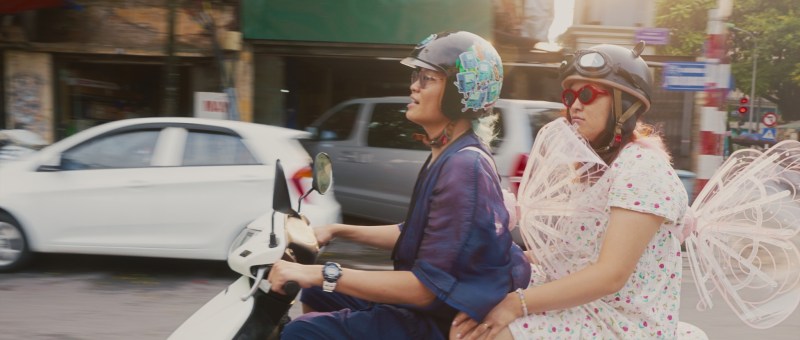
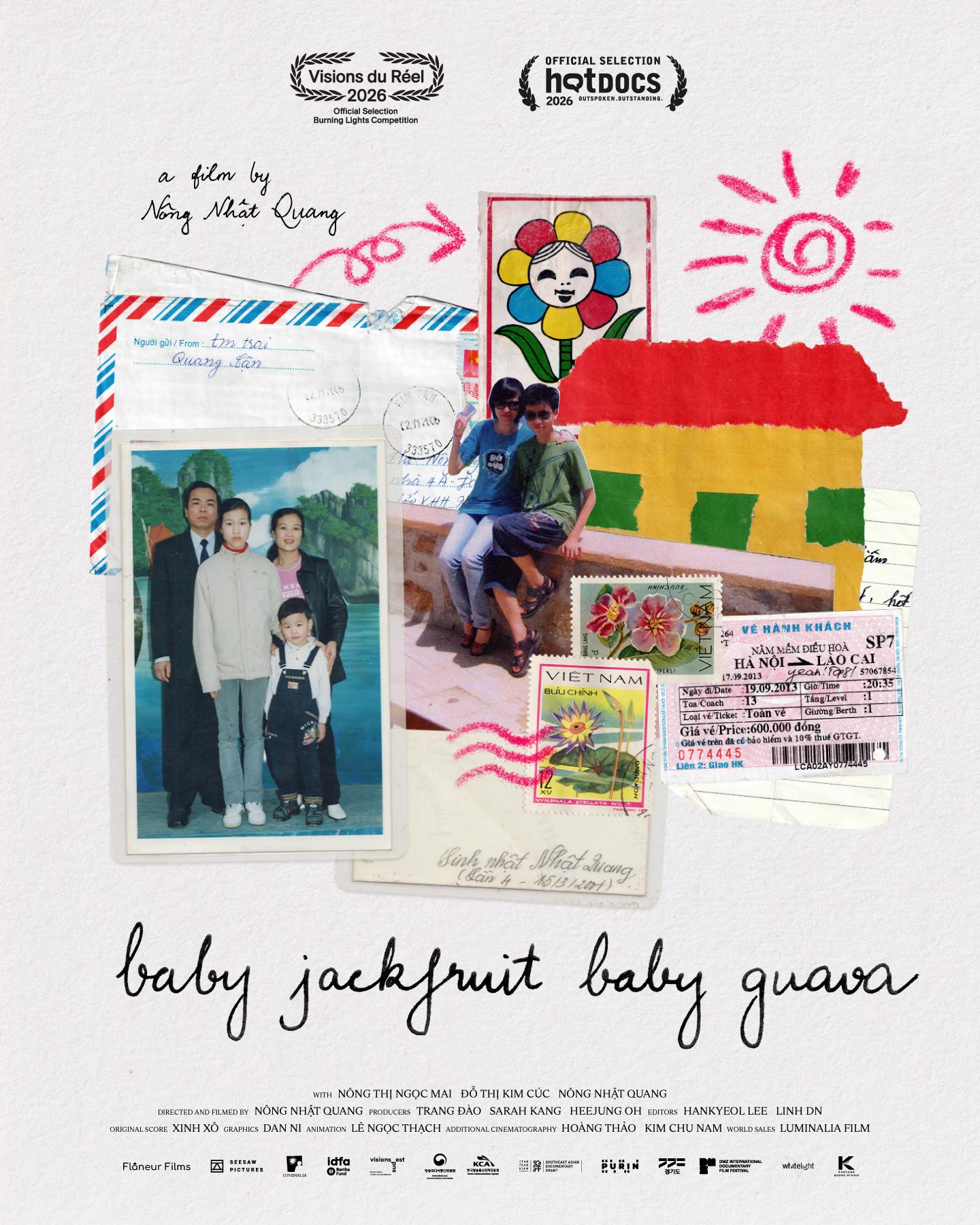
In his feature debut documentary Baby Jackfruit Baby Guava, Nông Nhật Quang charts his attempts to connect with his family having left his hometown for Hanoi to live a freer life as a gay man. His sister’s unexpected pregnancy later brings him back while looking for a better kind of balance between the personal and the familial, but also confronts him with his own choices and insensitivity when reacting to his older sister’s mental health diagnosis.
Mai is nine years older, and though the siblings were closer in their childhood, Quang came to feel a distance growing between them as Mai’s behaviour became increasingly erratic. Though he advised his parents to have her see a doctor, it wasn’t until sometime later that Mai was diagnosed with schizophrenia. Though his more conservative mother had lamented that neither of them were likely to give her grandchildren, Mai has become pregnant but the prospect also has the family worried as how to Mai will cope. For the time being, she is continuing to take her medication, leading Cuc to worry about potential effects on the baby, while coming off the meds to breastfeed has her worried about Mai. Once the baby is born, Mai sometimes describes disturbing visions of hurting her son and requires a lot of family support.
But at the same time, she says that she pours all the love her mother never gave her into her son. She complains that Cuc only cares for her while she’s ill and otheriwise seems to prefer her brother or husband. Cut is indeed supportive, but also complains of being tired while also torn between the needs of both her children. When she attends a screening of one of Quang’s films, she finds it difficult to concentrate because her phone’s blowing up with notifications that Mai has insulted the entire family of a neighbour on Facebook. The neighbour later calls her to complain, yelling at Cuc that they should “put the crazy in the hospital” and stop making trouble for other people. Quang regrets not having been there when she needed him, having gone to Hanoi in part to get away from the turmoil at the house. He does not shy away from his negative emotions in including excerpts from old diaries in which he expresses his frustration, calling Mai a “burden” he does not really want to bear.
Cuc calls their family “ill-fated”, struggling to accept her son’s sexuality and her daughter’s mental health condition. Though the family know that Quang is gay, he feels under pressure to tone himself down even while referring to himself as the “Flamboyant Baby.” When his mother comes to stay with him in the city, Quang has to spend time getting rid of all his gay stuff to avoid offending her, while he’s also avoided telling them that he has a serious boyfriend. When Quang tries to introduce him, Cuc reacts badly, complaining he’s too old and too foreign. Yet simultaneously, she seems hurt he hadn’t told her before. “You take everything too personally,” she tells him when he suggests that she holds him to a different standard from his sister or her husband.
Yet through all this bickering and resentment, the family does begin to come closer while bonding over Baby Guava. Nông Nhật Quang is remarkably even-handed and empathetic in his direction, even if his third-person voiceover is tinged with a note of melancholy that he still can’t seem to find a way to completely connect with his family members in the way he would like. Even once he has introduced his partner to the family, there is a still a divide between his life in Hanoi and that in his hometown. Even so, they seem to have reached a happy equilibrium brokered by a process of mutual understanding and unspoken solidarity as they look forward to watching Baby Guava grow into whoever they’re going to be as the latest addition to their growing family.
Baby Jackfruit Baby Guava as part of this year’s San Diego Asian Film Festival.
Trailer (English subtitles)

