Mongrels (Jerome Yoo, 2024)

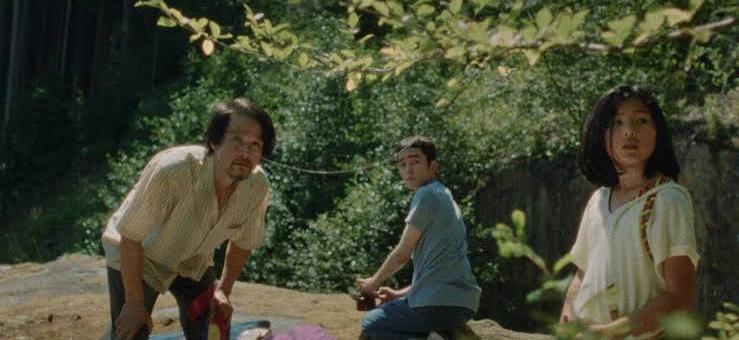
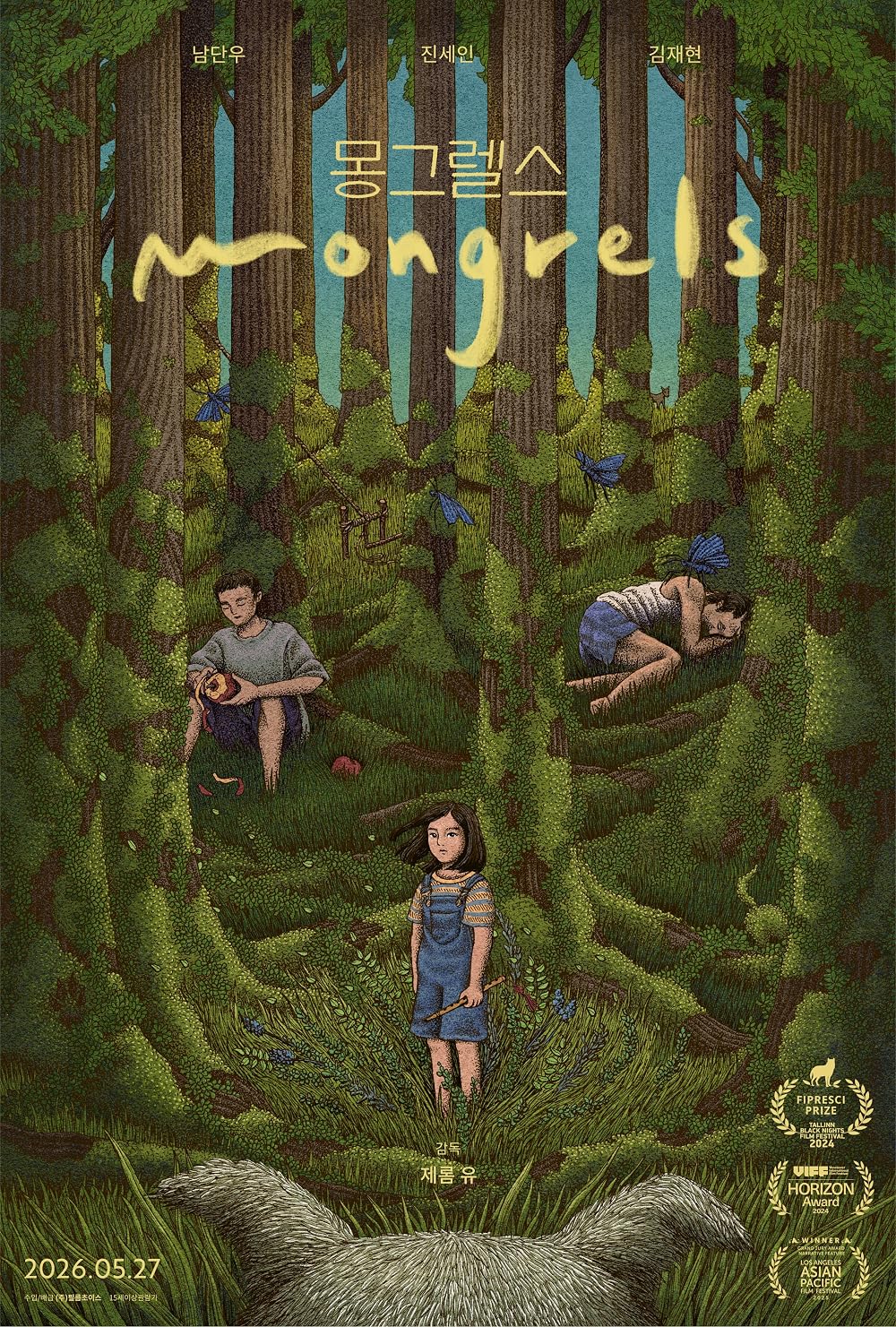
A fractured Korean family gradually finds its way back to each other while trying to adapt to a new life in early ’90s Canada in Jerome Yoo’s lyrical debut feature, Mongrels. The title might seemingly refer to the liminal state in which the family finds itself, but also to the packs of wild dogs running in the forests that patriarch Sonny has been brought over to cull. Though he seems to see something of himself in these persecuted animals, he thinks nothing of dispatching or mistreating them.

Indeed, the religious local mayor talking of the dogs in the same way that politicians often talk of those from places, stating that the dogs are a threat to their way of life and describing them as “vermin” that need to be eradicated. Nevertheless, Scott and his wife Laura are welcoming of Sonny and his family even remains Sonny is wary and vigilant. Their overt religiosity is indeed a little unsettling, as is the way that they seem to want them to conform fully with the local culture just as Sonny fears losing connection with Korean roots. Abandoning your beliefs makes you no better than a beast, according to Sonny whose animist vision of the world stands in stark contrast to the Larsons’ Christianity. The opening scenes see him dropping to his knees in the forest dressed only in his underpants to ask for forgiveness for what he has to do. He also puts up five colour ribbons and other shamanistic symbols “to show reverence to the spirits of the mountain”.

But the children, meanwhile, are pulled towards the local community as teenage son Hajoon begins hanging out with the other kids and younger daughter Hana is more or less co-opted by Laura who always wanted a daughter but only has a son. As such, Laura, probably more thoughtlessly than maliciously, tries to turn Hana into her ideal daughter by making her pose for photos next to other girls holding up copies of the bible. Though Hana feels uncomfortable, it’s not until Laura tries to dye her hair blond that she herself runs off into the forest wearing the hanbok her late mother made for her before they came to Canada, seeking freedom among the wild dogs this society doesn’t really seem to want to permit to exist.

In another way, this might also hint at how lonely Laura is in this patriarchal culture in which she longs for female company and something else to do now that her son is more or less grown. The growing friendship between Hajoon and Noah further expresses the constraints present in this oppressive environment in which Noah’s attraction to Hajoon would likely not be accepted by his family. Hajoon is not quite accepted by Sonny either whose hardline vision of masculinity values only strength and heartlessness. He berates Hajoon for being soft, not wanting to hurt the dogs and caring about their welfare, while also being a “draft dodger” despite the fact Sonny has brought him to Canada a couple of years before he would become eligible.

Nevertheless, Sonny is also a broken man who cannot accept his wife’s death and is full of regrets for the way he behaved in the past. He still talks to his wife on the telephone, tells others that she is in Korea but will be joining them soon, and still hasn’t clearly explained to Hana that her mother won’t ever be coming home. For her part, Hana has a childish superstition that if she catches and eats 100 planes, she’ll be granted a wish and her mother will come back. Left largely to her own devices, Hana subsists on microwave Bolognese and longs for her mother’s kimchi stew with Hajoon offering to make it for her next time they go to the big supermarket in town. In a way, the family’s bonds are restored through opposition, realising the ways they stand at odds with the world around them and identifying with the wild dogs denied their rightful place in the forests. Filled with a reverence for the natural world, there is a kind of poignancy in the family’s belated “new start” as they begin to bid the past goodbye and look towards new futures.


Mongrels screened as part of this year’s London Korean Film Festival.

Trailer (English subtitles)
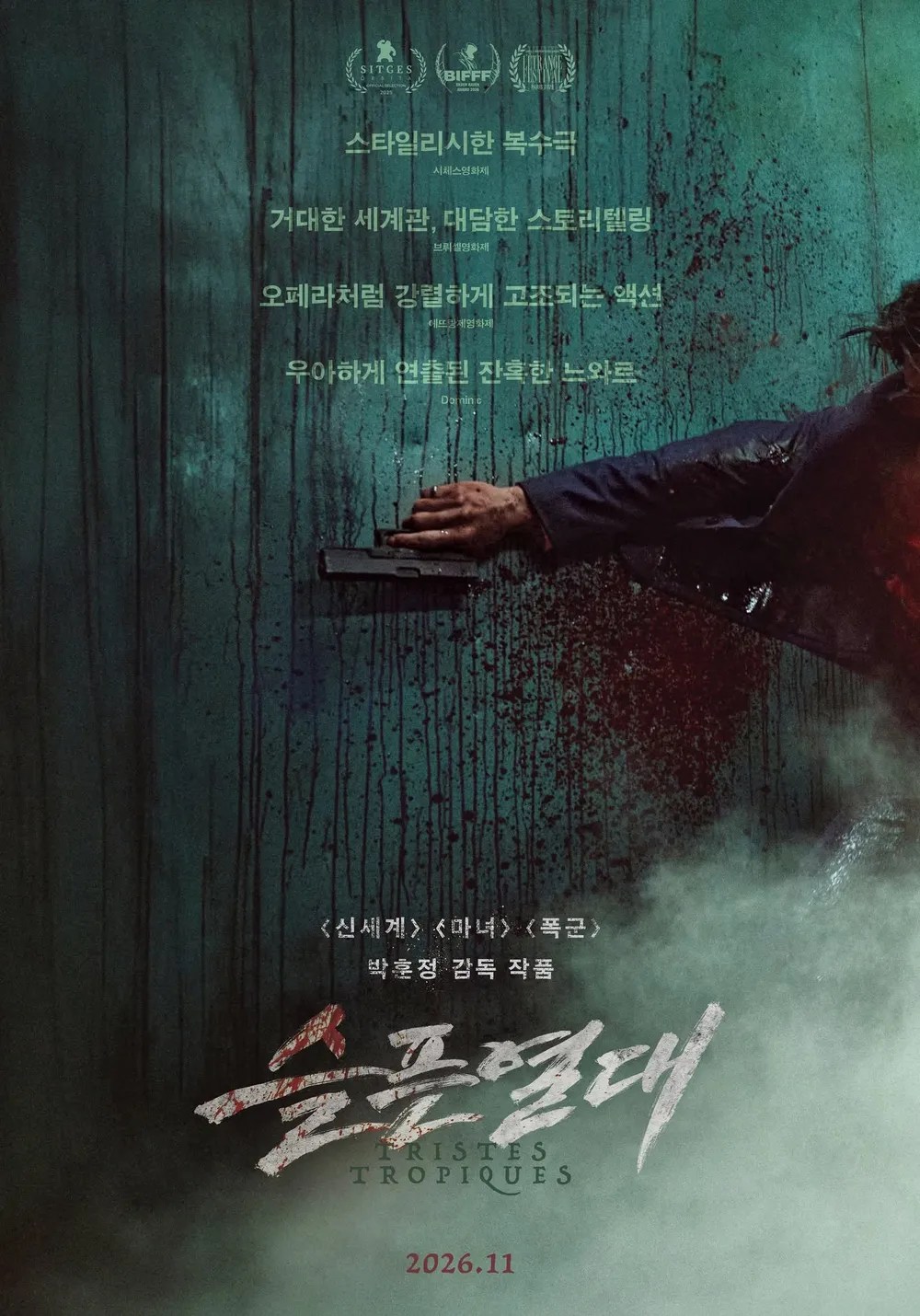
Tristes Tropiques (슬픈 열대, Park Hoon-jung, 2025)

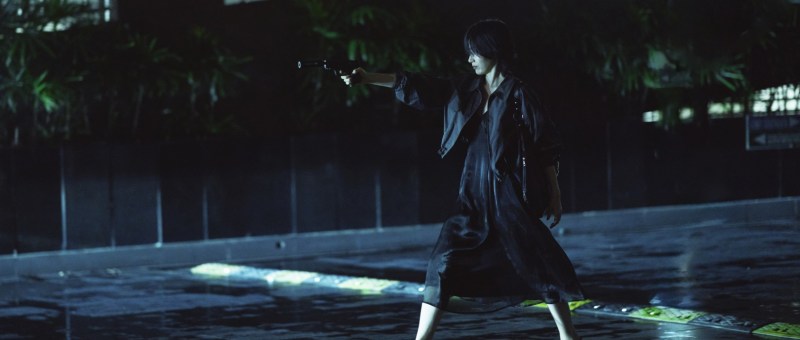
Taking its name from the memoir by Claude Lévi-Strauss, Park Hoon-jung’s Tristes Tropiques (슬픈 열대, Seulpeun yeoldae) examines the legacy of violence as a collection of orphans raised as assassins attempt to deal with the apparent death of their “Master” (Kim Myung-min). Reminiscent of the work of Lee Myung-se and particularly Nowhere to Hide along with mid-90s Hong Kong action cinema, Park’s dark noir seems to suggest, on one level, that violence may be something that cannot be escaped, but if one is to escape it, salvation may lie in family.

Then again, when Master tells Roo (Lee Shin-young) he sent Jojo (Park Yu-rim) to kill him but she couldn’t do it, Master remarks that he knows Roo would have killed her without a second thought. Roo has been deaf and mute since birth and was adopted by Master after his birth mother sold him. Though he cannot speak, it’s his internal voice over that narrates much of the film. He describes himself as a bit slow and suggests that, in a way, he’s the baby of the group who is doted on by his brothers and sisters. This conception of him is somewhat bolstered by Master’s decision to give him a year’s holiday living normal life in a Thailand-esque South East Asian nation where he works in a coffeeshop and is quite excited about learning how to make the coffee.

But as weak as Park makes him seem with his propensity for tears, it’s clear that Roo also has as good or better skills as his brethren and is a killed a skilled fighter fully capable of defending himself. The trouble starts when Master is apparently murdered by someone unknown which creates a power vacuum in the local Chinatown that gang boss’ son Na is perfectly primed to exploit. Roo and siblings were raised according to the law of the jungle by a man whose life was warped and defined by violence, but this supposedly more enlightened, urban environment may in fact be far more violent than the straightforward nature of nature red in tooth an claw.

Nevertheless, despite attempts to erase their humanity, the children seem to have a least a degree of affection and fellow feeling. Master raised them to speak their native languages, speaking to them in English while they reply in a Japanese, Mandarin, Korean, or in Roo’s case Korean sign language. It seems that this was partly in order to foster a sense of division between them, but it doesn’t appear to have worked. Master too must have had some pity. Roo wondered why he looked sad when he named them Tristes Tropiques, only later realising that he knew he would sacrifice them someday.

In way, this is the tragedy of Master’s violence in that leaves him a perpetually lonely figure secretly longing for connection but unable to achieve it. They are all looking for a family, but are prevented from finding it because of the codes of violence. But there’s also a strange poignancy to the idea that instead of “dying” in a physical sense, you could instead kill everyone who ever knew you and be reborn. Identity and sense of existence are reflective, created through just these kinds of bonds, suggesting an underlying sense of humanity which cannot really be fully erased or sublimated.

The same could be said to be true of Roo who at critical moment rejects the idea of returning to his “holiday” and implicitly of living a “normal” life to embrace his familial legacy. Even so, he is also told that whatever choice he makes won’t matter, we all end up in the same place, anyway. Park pulls out all the stops with a series of elaborately choreographed and beautifully filmed action sequences which might, in some senses, undermine the central theme in presenting the beauty violence as Roo tries to fight his way to survival. Imbued with a deep sense of nihilism, the film nevertheless finds a kind of hope in the younger generation overcoming its programming while motivated more by human emotion such as love and brotherhood rather than hate or greed.


Tristes Tropiques screened as part of this year’s London Korean Film Festival.

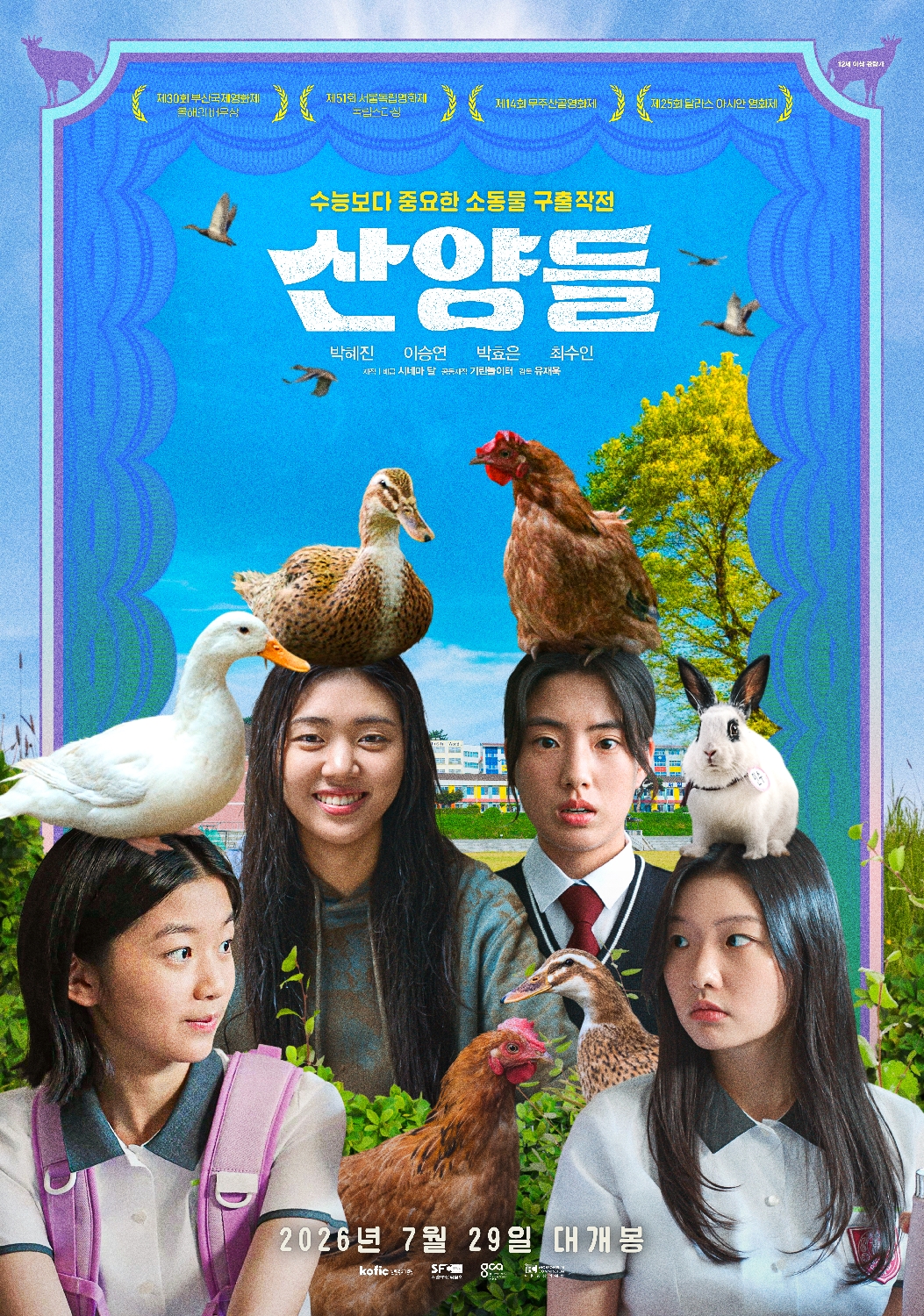
The Gorals (산양들, Yoo Jae-wook, 2025)

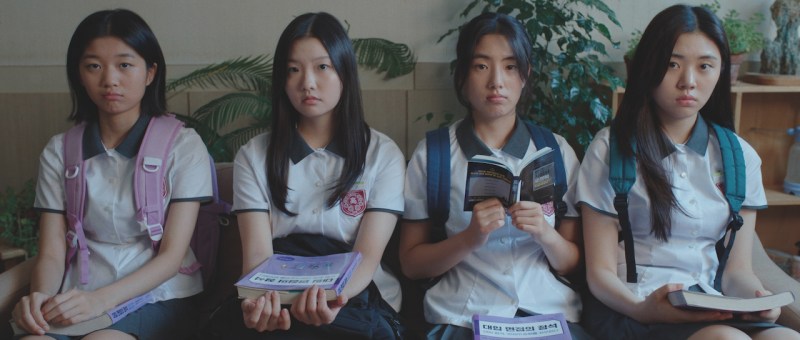
A group of four directionless girls find solace in the natural world and in each other in Yoo Jae-wook’s gentle coming of age drama, The Gorals (산양들, Sanyangdeul). Each finding themselves slightly at odds with Korea’s conformist society, the young women are railroaded onto the conventional path of university and presumably some kind of steady corporate job afterwards with little consideration given to why they’re doing it or what it is they actually want out of life.

The reason the four girls, who did not really know each other previously, are brought together is that none of them have filled in the form regarding their intended universities or career paths. A teacher has, therefore, determined that she’s going to get them into any university that will accept them through a process of intensive interview prep and catch up classes. It doesn’t really matter to the teacher how she does it, so she mainly puts the girls up for random courses such as sending In-hae to an interview to study Spanish at a university with “Seoul” in its name (but not actually “Seoul University”) despite the fact that In-hae wanted to study landscaping.

In-hae also tends the school’s small “zoo” consisting mostly of domesticated livestock such as ducks, chickens, and geese alongside a few bunnies. She tells Seo-hee, who is obsessed with prepping for an oncoming disaster, that her dream is to become an influencer and get on the cover of Time magazine even if it’s for doing something nefarious. The girls start posting pictures and videos of the animals, but this only seems to lead to complaints coming in with the school suggesting they may close the zoo altogether. To save their animal friends, the girls decide to set up camp in the woods on their own, building their own farm as a kind of teenage utopia free from parental or hierarchal pressures.

In someways, this desire to retreat is also another way of staving off impending adulthood or the need to make serious decisions about their lives and futures. But it also reflects a new desire among younger people to live in a simpler way, sidestepping the rat race in search of greater personal fulfilment and work that feels as if it’s worth doing rather than just simply being what you do to qualify as a bona fide member of society. The “shelter” they construct is for the animals who face the prospect of being put to sleep with no one to care for them, but it’s also for themselves too as they try to find somewhere they can just be themselves.

Each of the girls is in some way unconventional which might make it harder for them to follow the conventional path. In-hae has secretly been dating a popular boy who won’t go public with their relationship because he’s running for class president and is worried that girls won’t vote for him if they think he’s unavailable. It soon becomes clear that he too is a symbol of the conventional, patriarchal society from which In-hae wants to escape. He tracks the location app on her phone and behaves in a controlling fashion. “You used to listen to me well,” he ominously says after In-hae starts hanging out more with the other girls while trying to pressure her to stick to the conventional path by doing exactly as he tells her to do.

But part of the problem is that, as the girls say of escapee duck Hee-soo, they’ve been raised in a cage and don’t know how to live outside it. Nevertheless, Hee-soo seems to take to life in the wild with confidence and assurance. The name the girls choose for themselves is “The Gorals” after a kind of wandering mountain goat pushed out of its natural habitat by modern civilisation but still finding new ways to live. Adults may try to tear down their sanctuary, but they can simply rebuild it somewhere else. Though facing different issues from overprotective parents, complicated family situations and feelings of abandonment, to impending apocalypse and a terrible boyfriend torpedoing your parents’ business to increase his own success, the solidarity that the young women eventually discover gives them the sense of confidence they need in progressing to the next phase of their lives while following their own paths rather than those set down for them by others.


The Gorals screened as part of this year’s London Korean Film Festival.

Trailer (Korean subtitles only)

Be My Baby (미아, Yoo Jong-seok, 2025)

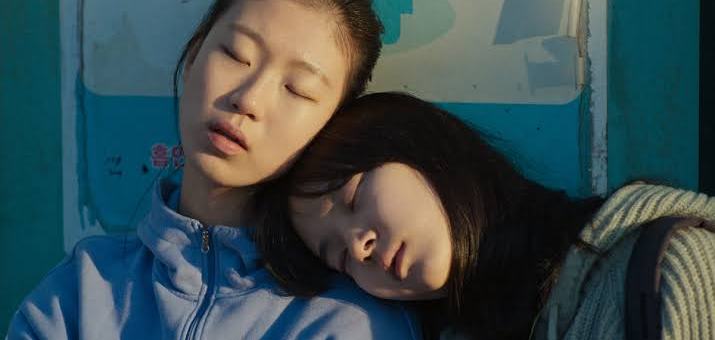
What actually is “an identity” and what does it mean to possess one? In Yoo Jong-seok’s psychological thriller Be My Baby (미아, Mia), an external “identity” largely seems to be defined by the possession of a document. In an odd kind of way, the film seems to imply at times that one woman is interchangeable with another. No one checks these IDs more than superficially. ID photos don’t often give much of an impression of height or build, and long dark hair seems to be enough of a defining characteristic to merit a pass. Possession of the ID equals the possession of that identity even if it is only borrowed or lent for a specific purpose.

In fact, we can’t really be sure that anyone is who they say they are. When we first meet Seo-rim, she lies. She’s taken a photo of an ultrasound seemingly swiped from the hospital where she works as a nurse to guilt her boyfriend’s other woman into breaking up with him, but Eun-bi isn’t having any of it. Seo-rim has miscalculated on one level as she assumed that she and Eun-bi were social equals, while it turns out that Eun-bi is from a wealthy family and essentially works in the bar just for fun. Seo-rim’s boyfriend is leaving her for Eun-bi in part because he wants to live a rich person’s life and has no way of earning it for himself.

In that way it becomes clear that Seo-rim and Eun-bi live in different worlds, though Seo-rim decides to try her identity on for size in order to enact a plan of revenge that involves faking her own death so she can claim on an insurance policy that lists her mysteriously absent twin sister as the beneficiary. To do this sets her sights on a young woman she finds knocked out in the street and takes to the hospital mostly on the grounds that she does not appear to have connections to other people and therefore will not be easily missed. “No one notices when a homeless girl dies,” Soo-mi says prophetically when talking about the death of the woman whose identity she temporarily borrowed. Ironically enough, Seo-rim does not seem to notice that she already has a connection with Soo-mi that makes her more than the perfect target, but perhaps also a dangerous liability.

The danger presented by those who lack a clear identity of their own is a staple of the genre, but there’s something unsettling about Soo-mi’s hollowness as if she were in search of a new home to inhabit. She asks if Soo-mi hasn’t also wanted to live a different life or be a different person, but clearly means it in a more literal sense than most. She eyes up Eun-bi’s swanky apartment as if planning to steal it from Seo-rim without realising it doesn’t belong to her either. For reasons that become apparent, Soo-mi is in search of a new identity as a means of burying an old one, so that she can live a “normal life,” rather than being in permanent hiding from an exploitative community. Seo-rim is, however, also pursued though in her case by loan sharks having accrued massive debts to pay for her sister’s medical treatment. Unable to continue paying into her “insurance policy”, Seo-rim has been embezzling from the hospital and is in any case only a contract worker rather than a regular employee. With hospital budgets shrinking, she almost certainly won’t be rehired. Given all that, it’s not really clear why Soo-mi would actively want her identity anyway aside from possessing document to tell her who she is.

In any case, we can’t be sure who Seo-rim really is, either, or how much of what happens around her is objective reality. Her friend at the hospital cautions her about using an experimental mental health medicine, while she appears to have visual hallucinations and acts in odd ways that do not always make sense. We may end up asking ourselves if Soo-mi is even “real”, or at least if she was really with Seo-rim when she began enacting her revised plan. Even if she was, perhaps she was also merely using Seo-rim so she could run away with a new identity and enough money to live a “normal life.” The only path to survival seems to be to steal from those weaker than oneself. Pushed into a corner by an indifferent society, weighed down by debts both financial and spiritual, all they can really do is fight over the discarded scraps of those like Eun-bi whose presence would very definitely be missed in a world which little cares for those without means and no currency to their names.


Be My Baby screened as part of this year’s London Korean Film Festival.

Trailer (no subtitles0

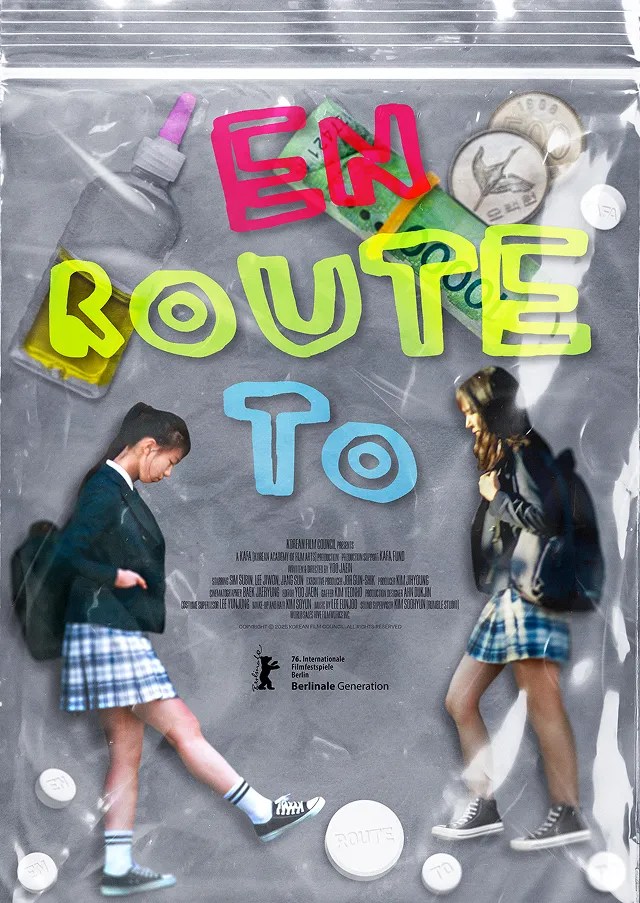
En Route To (지우러 가는 길, Yoo Jae-in, 2025)

“Give only what you can take responsibility for,” Yoon-ji (Sim Su-bin) is advised by an apparently compassionate older man trying to explain to her that sometimes you end up causing further pain while trying to be kind. Yoon-ji’s problem might be that no one seems to want to take responsibility when it comes to her and she herself is struggling to do so while faced with an unexpected pregnancy. Not only has the father disappeared off the face of the earth, but he was also her 36-year-old high teacher and is obviously not going to take any sort of responsibility for his conduct, certainly not for the baby, but not for the false expectations and unresolved emotions with which he’s left Yoon-ji, either.

Much of Yoo Jae-in’s graduation film En Route to (지우러 가는 길, Jiureo ganeun gil) takes place against the backdrop of the only recent decriminalisation of abortion in Korea, but explores the ways in which young women like Yoon-ji are still left with few options when deciding what to do about an unexpected pregnancy. Though she wanted to keep the baby, she is pressured into an abortion assuming that Mr Han has disappeared because she refused to get one and will return once she has. This rather childish thinking demonstrations both her naivety and her desperation, little understanding the situation she is in. It doesn’t seem to occur to her that Mr Han may have done this before and probably doesn’t see her as a long-term romantic prospect. After all, he has a wife already, even if they’ve been living separately with the implication that he’s ended up being transferred to this school in flight from allegations at his previous place of work.

To try to keep it secret, Yoon-ji orders abortion pills off the internet without any sort of guarantee of what she’s actually taking which could be actively harmful to her health in other ways or perhaps just be chalk that won’t help her to end the pregnancy. After finding out what Yoon-ji has done because she borrowed her savings to pay for the pills, Yoon-ji’s roommate Gyung-sun (Lee Jiwon) asks her why didn’t go to a hospital, but as they find out, Yoon-ji would need parental approval in addition to the money to pay for the procedure and as she was abandoned by her father, there is no one she can ask to sign even assuming that the situation allowed her to involve her guardians and she felt comfortable doing so. A friend knows of a vet who is willing to provide backstreet abortions as a hangover from the era in which it was a criminal offence to end a pregnancy, leaving Yoon-ji at the mercy of potentially dangerous medical interventions.

Meanwhile, she can’t really tell anyone about what’s happened to her as Mrs Han has begun to figure out that her husband may have been a serial offender but is intent on saving his reputation, perhaps as a means of saving her own so that she would not have to accept the fact not only that her husband had sexual relations outside of the marriage, but that he did so with underage girls whose trust in him he willingly betrayed while abusing his position as a teacher. She uses her relative wealth to cow Yoon-ji and Gyung-sun into silence by dangling the prospect of a scholarship, ironically in Mr Han’s name as a means of whitewashing his reputation.

Gyung-sun is particularly upset about this, partly because her own mother gave birth to her very young and Gyung-sun has always felt a little guilty about all her mother missed out on to raise her like going to university and getting a better job, or getting married and starting a bigger family. Without explaining why, she pushes Yoon-ji towards ending the pregnancy in part because she experienced bullying and exclusion simply for being the child of a young single mother and does not think it’s fair for Yoon-ji to have a child when she has not really thought about the realities of raising it by herself or what she will tell them about their father when they’re old enough to ask. Both Yoon-ji and Gyung-sun are somewhat outsiders, though Yoon-ji continues to yearn for a family of her own, while Gyung-sun has been selling under the table vape cartridges at school to fund a working holiday visa in Australia specifically to set out for her own independence.

Nevertheless, it’s really in each other that they begin to find a new sense of ”family” as they bond over the question of what to do for the best when it comes to Yoon-ji’s future and the baby’s. They  do indeed take responsibility for what they give to each other, and though left to handle all of this largely on their own, offer mutual support through this difficult time before allowing a conclusion to be reached that will enable them to move on. Warm and empathetic while refusing to moralise, Yoo’s humorous drama is a testament to the power of female friendship which can in some ways at least overcome the constraints of the world around it.


En Route To screened as part of this year’s London Korean Film Festival.

Trailer (English subtitles)
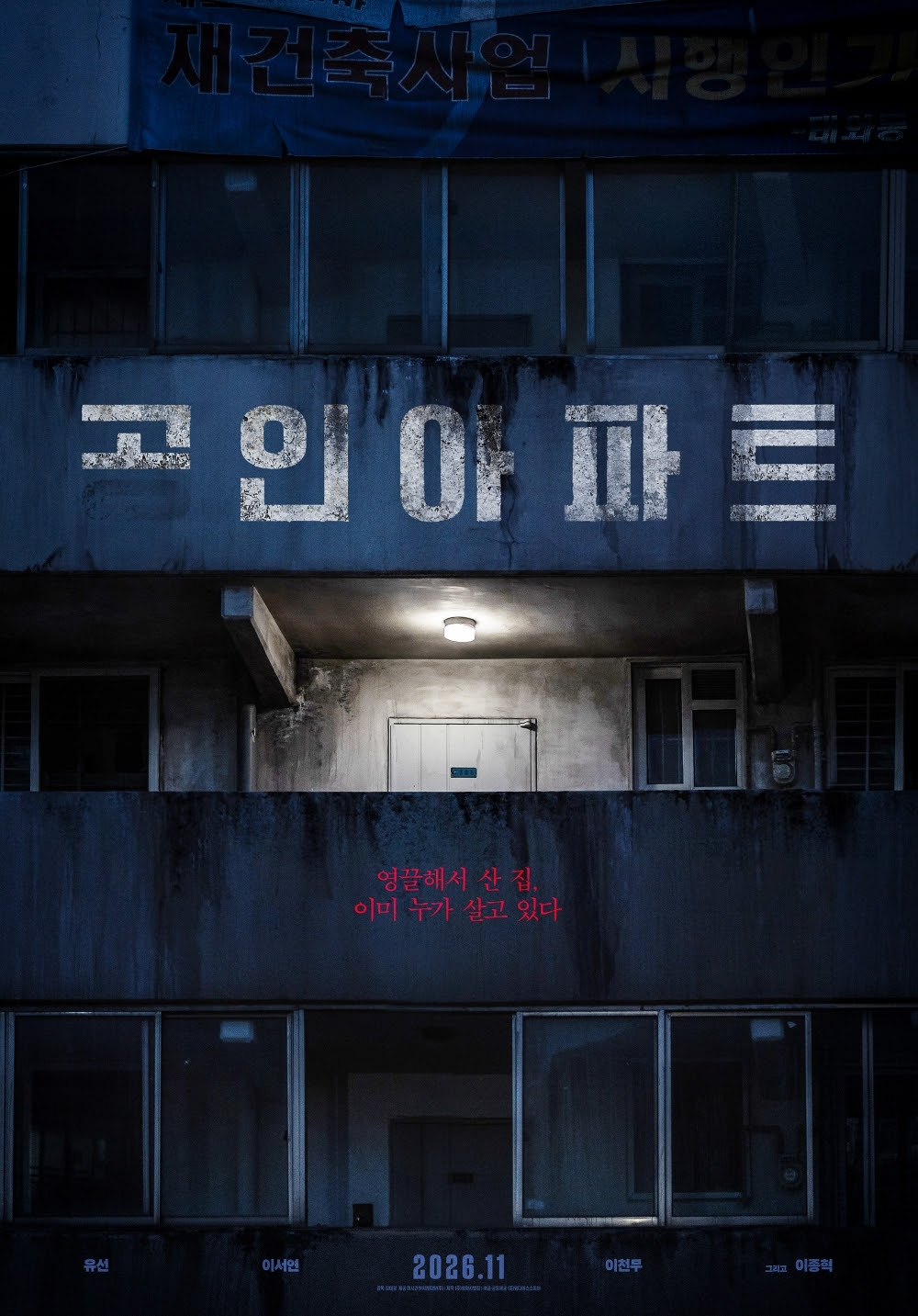
Home A Loan (고인아파트, Kim Tae-kyung, 2026)

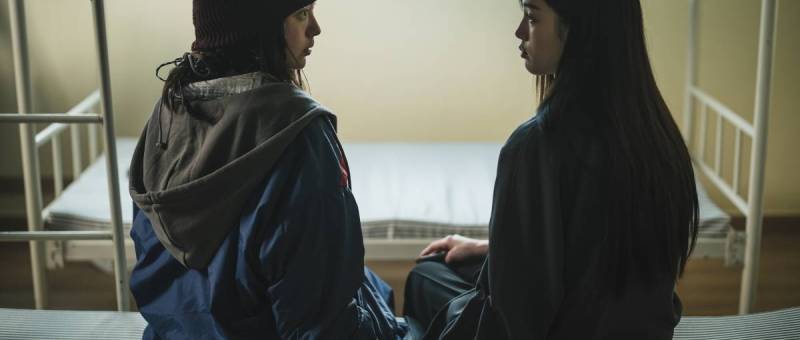
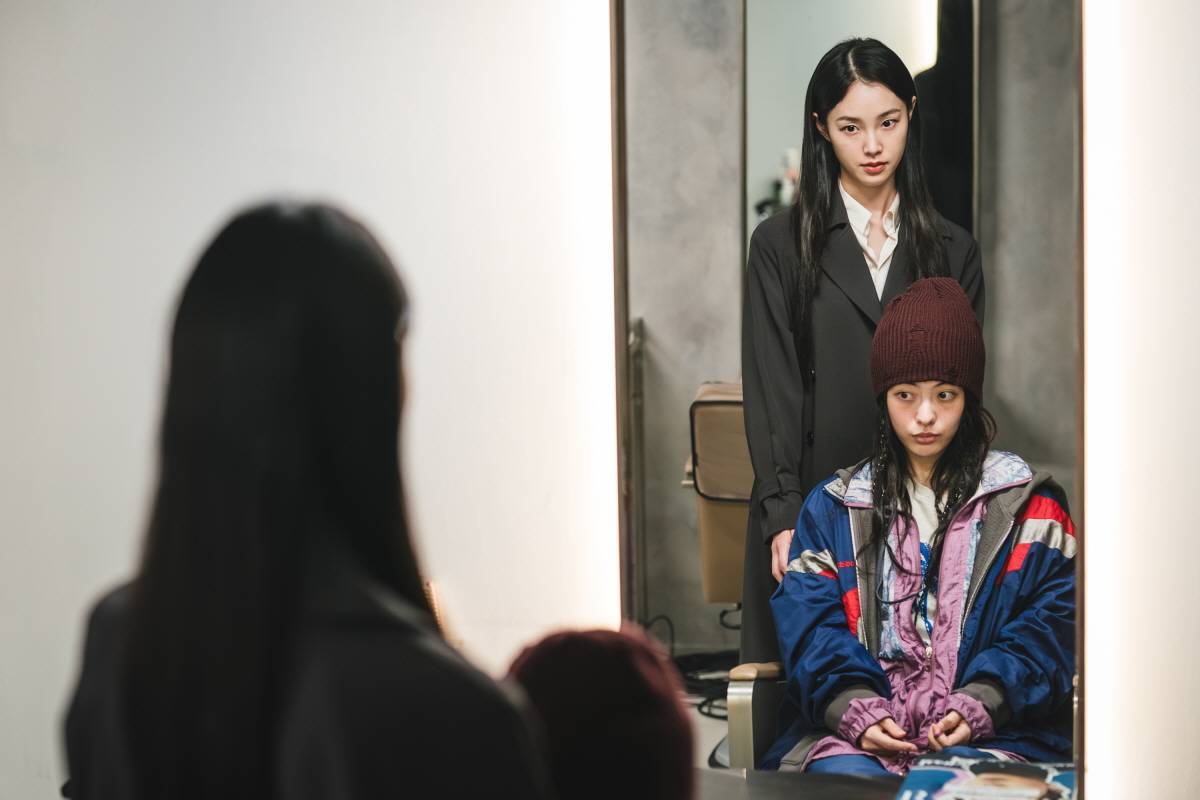
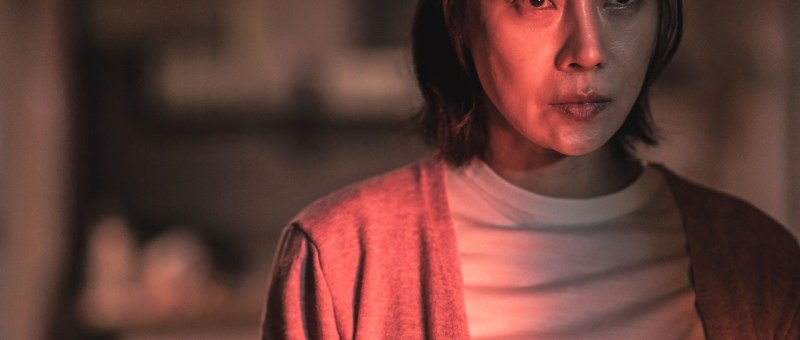
Is it the “black mould” that’s driving new homeowner Eun-jin (Yoo Seon) out of her mind, or the combination of unresolved trauma and the financial pressures of trying to secure a safe and comfortable living environment for your family in contemporary Seoul where out of control property prices have made ownership an unattainable dream for many? Echoing a motif that’s become increasingly familiar in recent Korean films, Eun-jin buys an apartment which looks out onto a complex of other, much nicer, luxury apartment blocks that are well out of her reach. Yet she’s convinced herself that the building she’s moved in to will soon be redeveloped and she could make a life-changing amount of money by flipping it once the renovations are completed.

The only snag would seem to be that the block is plastered in signs that say things like “redevelopment equals death”. In fact, Gong-in Apartments is well known locally as “Go-in Apartments” which sounds like “apartments of the departed”, making this place seem “haunted” in a less literal sense as something that exists out of time with the world around it. The local residents seem to regard the blocks as old-fashioned and an eyesore. They are slightly embarrassed by them, and prefer to avoid the people that live there. The block is then “haunted” in another sense in that most of the “inhabitants” are “ghost owners” who bought the apartments as an investment but do not live there, nor do they rent the apartments out due to the rundown nature of the building. Despite having pushed her to invest by implying that the city had virtually already agreed to go ahead with the redevelopment, Eun-jin’s estate agent is surprised that she actually intends to live there given the building’s reputation, yet later revelations suggest she may have sold this unit before. She has definitely sold others in the building to people who were financially ruined by their decision to buy and in some cases took their own lives.

Yet Eun-jin is proud of her new status as a homeowner, as if reaching a new level as a fully-fledged member of society. She cleans and redecorates it herself, peeling off the layers of lining on the ceiling and clearing away the mould assuming it’s only caused by the fact the apartment had been empty. Yet as a doctor later explains, you can’t get rid of that kind of mould by papering over it, just as Eun-jin cannot get over the familial trauma from her childhood by creating a superficially happy home of her own. In some ways, the film ultimately takes a turn for the conservative in its messaging as most of the problems are attributed to paternal absence, even if that absence was also caused by the economic conditions of the society which forced Ji-chul (Lee Jong-hyu) to live separately from his family in order to provide for them while Eun-jin works in a local factory to make ends meet.

In the opening stretches of the film, one almost wonders if Ji-chul is a ghost himself as Eun-jin only talks to him on the phone through which he offers words of kind support that might as well be Eun-jin talking to herself, while he is able to offer little in the way of practical help. Though his absence obviously increases the strain on Eun-jin as she has to care for the family alone while also working, the doctor frames it in more patriarchal tones as if things like this happen when women live without men. On one level he is blaming Ji-chul for failing as a man by leaving his family undefended, but also suggesting that women are incapable of protecting themselves. Eun-jin repeatedly states that she will “protect” her family, but ends up endangering them as her reality becomes ever more fragmented and confused. In the end only Ji-chul’s return can save the children from her mania, though he cannot cure her of her delusions alone.

It soon becomes apparent that Eun-jin has been experiencing reality differently to those around her, frequently seeing centipedes in the house while others seemingly don’t react to potentially life-threatening situations. At one point, she arrives at work wearing a very old-fashioned, purple wraparound dress and with a makeup and hair style that seems reminiscent of an earlier era, suggesting that she may have been possessed by something more than just fear and fury that her investment is not actually going to pay off and she won’t even be able to afford to continue living in this moribund building where the lifts don’t work and no one has noticed the little boy from upstairs has been living alone so long he’s turned feral. Homeownership seems to have turned Eun-jin into a selfish and suspicious person, instinctively fearing the homeless as if now afraid either to become one or that they will somehow steal her space. She stops her son playing with the other boy, complaining that people like that will become stuck to you if you let them get too close while making no attempt to help him. Perhaps this is also a reflection of her own childhood trauma as are the visions she begins to see of a malevolent presence out to destroy her family. “I just wanted to do better,” she says, but it seems this society doesn’t really want to let her even as it dangles a vision of future happiness that is destined to remain far out of reach.


Home A Loan screened as part of this year’s London Korean Film Festival.

Trailer (English subtitles)
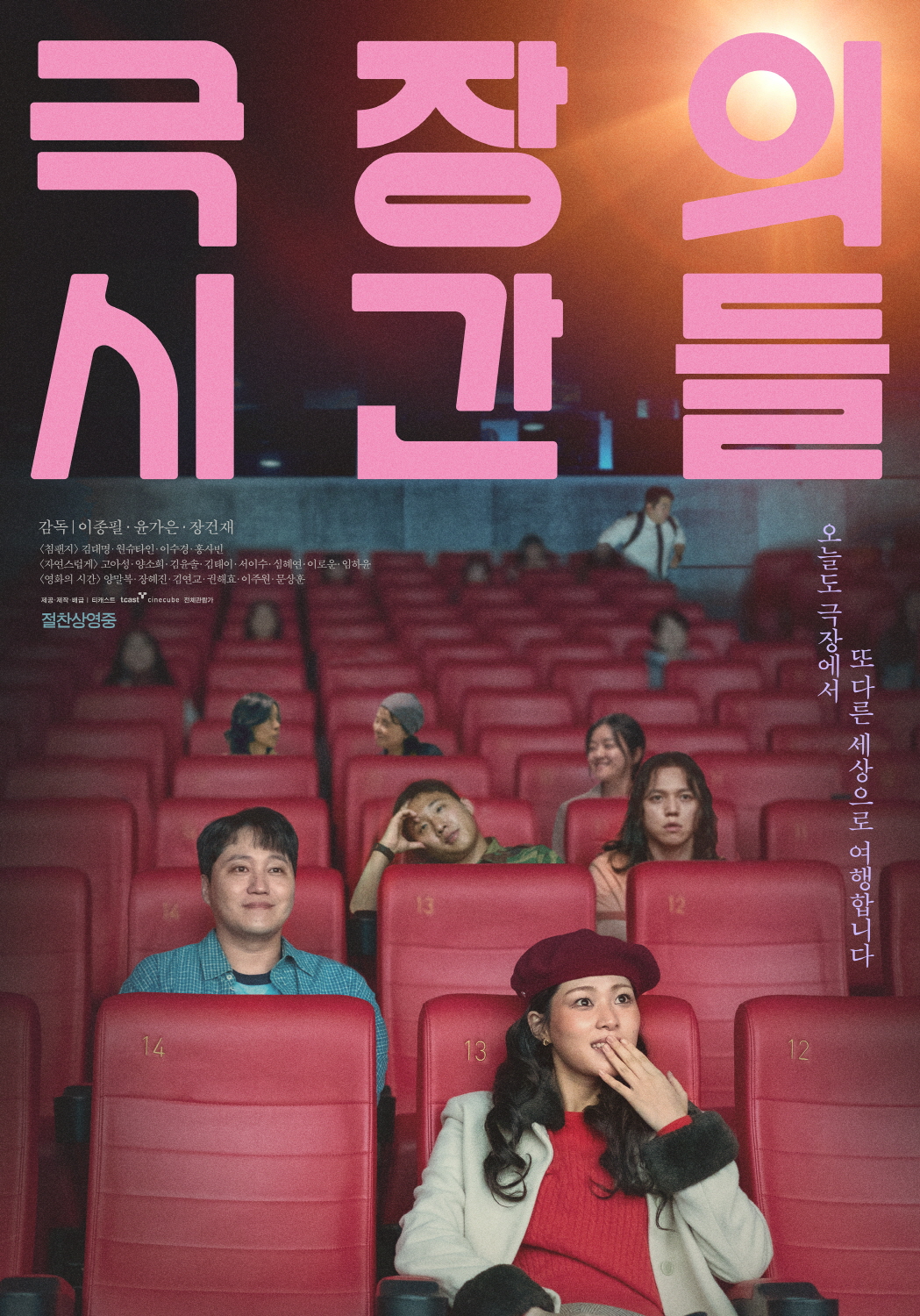
Time of Cinema (극장의 시간들, Lee Jong-pil, Yoon Ga-eun, Jang Kun-jae, 2025)

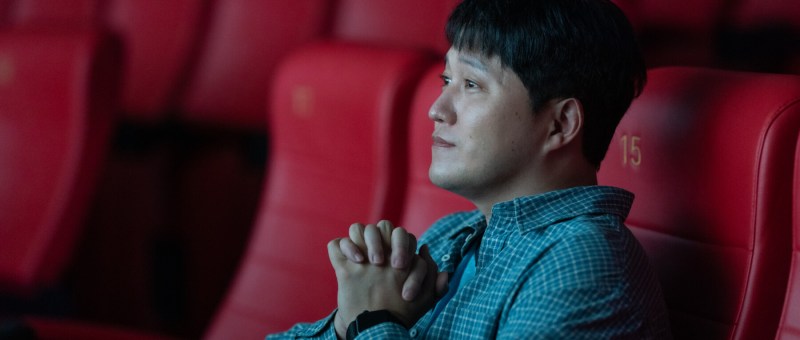
Made in celebration of the 25th anniversary of the Cinecube cinema in Seoul, Time of Cinema (극장의 시간들, Geugjang-ui Sigandeul) is an anthology film featuring three segments and bookended with a sequence set in the venue as a young woman takes lessons from the projectionist while classic films such as Ozu’s Late Spring play in the background. As such, each of the films has a kind of meta commentary on the nature of film, the industry and buildings as well as the impact it can have on people’s lives even if they happen to fall asleep during the movie.

This kind of reflexivity is evident in the opening segment, Chimpanzee, which features its protagonists recreating the dance from Godard’s Bande à part. This segment also is set across two time periods and is revealed to be “a film” based on the recollections of the director’s youth in which he spent time watching movies with two close friends while in the military. This sense of loss for shared experiences of the past is something that echoes through the other sequences and in the last seems as if it could in some senses be returned through unexpected reunion. In any case, the director appears to reclaim them through imprinting his memories in the film as a means of reliving them. Its protagonists also have a kind of truth revealed to them that something they assumed to be merely a legend was perhaps true after all.

The second sequence, meanwhile, directed by Yoon Ga-eun plays with the nature of film itself as we’re show several scenes that turn out to be in progress shots from the filming of another movie in which a collection of little girls are asked to repeat the same scene in a frustrated attempt to make it seem more “natural.” At the end, they all sit down to watch the film they’ve made, but this is also a part of the “film”, while we have also already been watching them, leading us to ponder on these many levels of refection within the video footage. Well known for her films featuring children such as The House of Us, Yoon gets the most from her young cast while at the same time demonstrating how difficult it can be work with child actors even if what she mainly does is to leave them to their own devices, capturing their spontaneity and enthusiasm in the most natural way possible.

The third sequence meanwhile is more firmly rooted in Cinecube and explores the less glamorous side of filmmaking in taking a leaf out of Goodbye Dragon Inn’s book as the cleaning lady walks up and down the aisles collecting rubbish even if, as they mentioned in the first segment, this place is too fancy to sell popcorn. Though the cleaning lady rarely has time to watch any films, she ends up running into an old friend who’s just come in to use the bathroom and pressures her into seeing whatever’s playing which happens to be a special screening of a movie with a director Q&A. The old friend’s name also has the same pronunciation of the word for “film”, and though she and everyone else in the cinema falls asleep, her time spent there seems to return something precious that she had lost while she also reunites with her old friend.

In this way it paints cinema as an interactive experience and all the more so when visiting a cinema rather than watching passively, or inattentively, though a TV screen. By the same token, it shows the cinema staff working hard from the put upon box office lady trying to tell a desperate cinephile that he’s arrived too late to enter the auditorium and, in any case, has booked his ticket for the following day, to the cleaning lady and projectionist who meticulously keeps an eye on everything, both digital and analogue, to ensure that the film is being projected as intended. Cinemas are in that sense social spaces in which people share experiences with both strangers and friends while in some ways unaware of the relationship that’s arising between themselves and the screen and the images that may also be changing them in ways untold.


Time of Cinema screened as part of this year’s London Korean Film Festival.

Trailer (no subtitles)

The Accordion Door (아코디언 도어, Son Kyeong-su, 2025)

A young man with an apparently prodigious talent for writing comes to doubt himself when past trauma provokes what may either be a strange delusion or a very real exit of the muse in Son Kyeong-su’s supernaturally tinged exploration of the pressures of the contemporary Korean society, The Accordion Door (아코디언 도어). Constantly berated by his overly demanding mother as a small child for not being good at anything, Ji-soo (Moon Woo-jin) lives in fear of being labeled “a dummy” but has simultaneously become almost entirely detached from the world around him.

This is partly because he has no memories of himself before the age of nine when he went temporarily missing. In the opening sequences, the young Ji-soo is taken around an exhibition explaining the precipitation cycle by his parents who are each too busy sniping at each other to pay much attention to him. His mother blames his father’s lack of effort for Ji-soo’s apparent inability to fill in a worksheet demonstrating that he’s understood that water from the river becomes clouds and that clouds become rain. Crying on his own in the toilet, he poetically wonders if he too has become a cloud only for a cloud-like, or perhaps wormlike, being to enter his brain through his ears, turning him into an apparently different person who is addicted to chocolate and can perfectly articulate his thoughts in writing.

But as good a writer as Ji-soo might currently be, having recently won a national competition, he carries a strong sense of inferiority and worthlessness that’s largely caused by the seemingly conditional nature of his mother’s love which may be withdrawn if he were to become “a dummy”. His mother has separated from his father under the rationale that this will help make Ji-soo a better writer and is constantly pressuring him about winning more competitions. In a way, her determination is self-reflective in that she does not want her son’s mediocrity to make her look like a mediocre mother. When Ji-soo asks what he was like as a child, she tells him that he was “ordinary” and now he’s “brilliant”. When she replaces the expensive phone he had that got broken after he finally agreed to have one, she remarks that it’s just the kind that “ordinary” boys have, in case it gets broken again thereby presaging the fall from grace he undergoes believing that his talent has left him and migrated into Hyeon-joo (Lee Jae-in), the football-playing transfer student that Ji-soo has developed a crush on.

Hyeon-joo was the reason Ji-soo agreed to get a phone, but he’s equal parts attracted and threatened by her. He doesn’t know much about football, but it seems like she might not be all that good. When she starts to get better all of a sudden, his jealousy manifests in the paranoia that his talent left him for her, and he desperately wants it back so that he won’t be a “dummy” even if it ends up ruining his relationship with Hyeon-joo. Hyeon-joo, meanwhile, is much more laidback if just as alienated as he is. For her, it doesn’t matter if she’s any good at football as long as she enjoys it. She tries to encourage him that it’s the same with his writing. It shouldn’t really matter whether or not he wins any prizes, it only matters if he felt good while he was doing it. Her poet mother is the polar opposite of his own, encouraging Hyeon-joo to do what she likes doing and be happy even if there is nothing more to be gained of it than that. Becoming ever more insecure, Ji-soo tries to ask her for writing lessons, but all she tells him is that writing is an art that can’t really taught by one person to another. He must simply learn to teach himself. After all, he didn’t follow any rules when was writing something he was later proud of.

His science-obsessed friend Jong-yoon is similarly cheerful, rejoicing in his curiosity rather than thinking about what it might lead to or be worth to him in the future. Ji-soo’s mother had also been preoccupied with height, taking him to a doctor who seemed to be giving growth hormones, only for his growth spirt to begin as soon as he thinks his talent has left and bits of the past, or his imagination of it, start coming back to him. In a way this literal growth maybe a sign that he has begun to unpack some of his trauma and is experiencing a breakthrough that is destructive in the moment but also allows him to move forward. His mother lets up and finally divorces his father formally, while he no longer needs to be constrained by the idea that whatever talent he had was given by some mysterious parasite that took root inside him, but perhaps came from himself if only he could learn to embrace his love for it rather than be scared into silence by his fear of not being good enough. The implications of Ji-soo’s dreams maybe rather melancholy if lending an elliptical quality to his existence, but Son’s quietly empathetic, abstract film, does for a time at least allow him to find solace in his art in a sometimes unkind and judgemental society.


The Accordion Door screens as part of this year’s London Korean Film Festival.

Trailer (no subtitles)

The Journey to Gyeong-ju (경주기행, Kim Mi-jo, 2025)

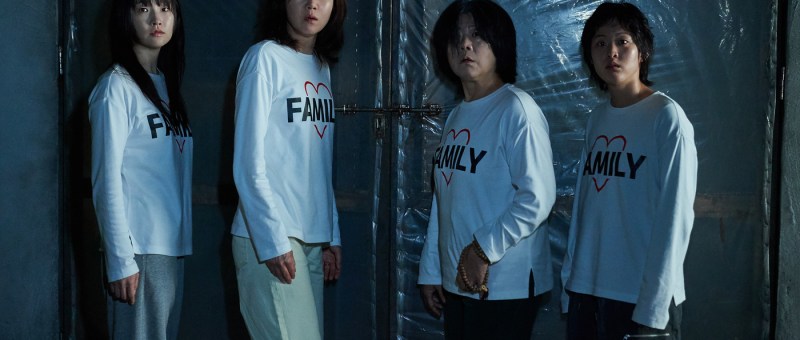
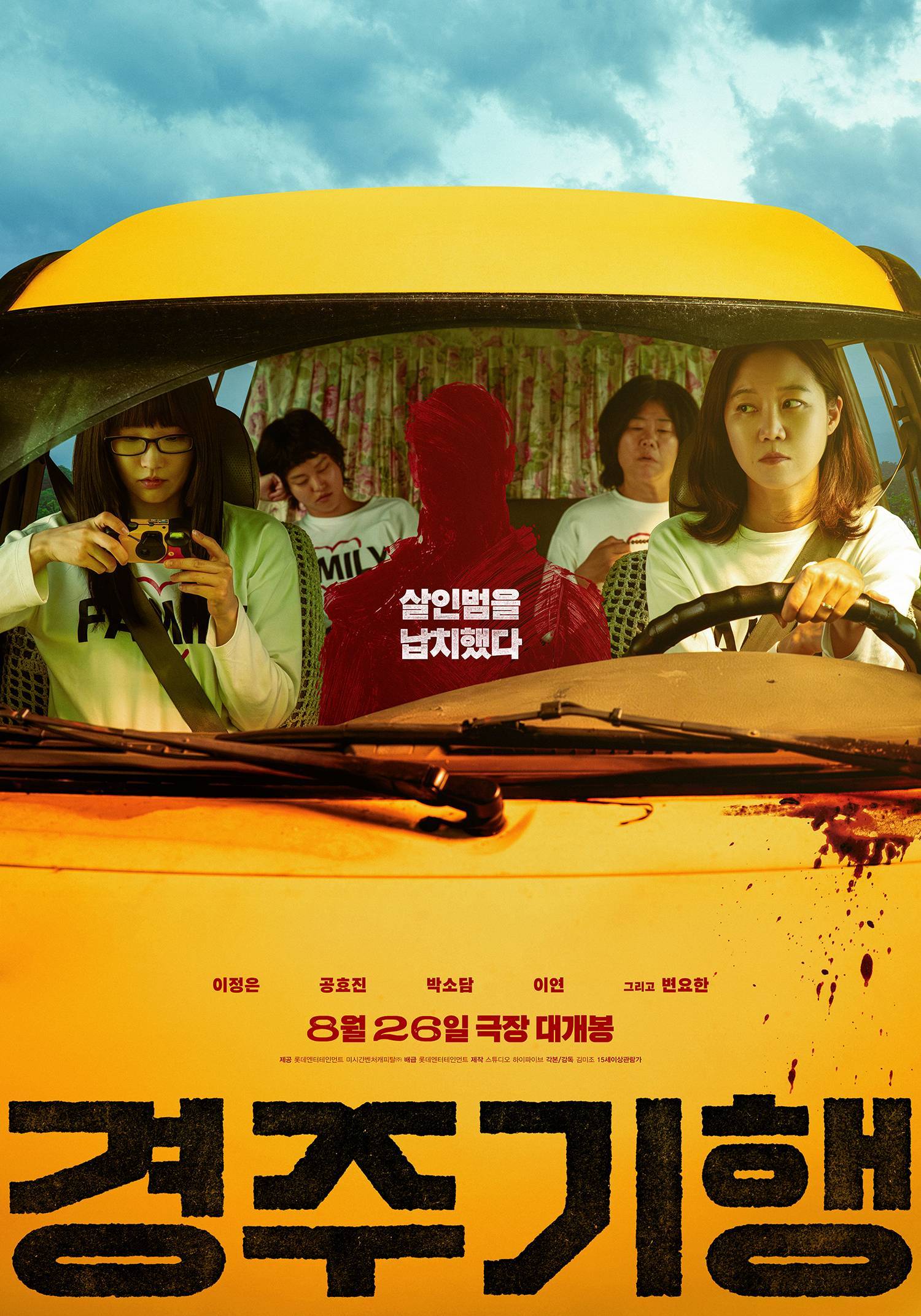
You know what they say, if you’re going to seek revenge, you’d best dig two graves. In a way, that’s what the bereaved mother at the centre of Kim Mi-jo’s familial vengeance comedy The Journey to Gyeong-ju (경주기행, Gyeongju gihaeng) ends up doing, but really what she wants is to repair her fracturing family which has been torn apart in the wake of her youngest daughter’s brutal abduction and murder. The killer was caught, but as the judge saw something in him that suggested he might be a candidate for rehabilitation, he handed him a comparatively light sentence that Ok-sil (Lee Jung-eun) in particular feels provides no sense of justice for her daughter.

For that reason alone, she decided to accept a cash settlement rather than press charges knowing that the killer, Sang-hyun (Byun Yo-han), would be released relatively quickly so she could kill him herself with the help of a shady underground fixer she met at a support group. To pull this off, she enlists her three surviving daughters, most of whom have their doubts about this plan, not only the morality of it but whether a group of four ordinary women who’ve never done anything like this before can really hold a brutal killer captive and torture him to death. They are, though, largely unable to directly defy their mother and are therefore looking for other ways to stop her from going through with this by pretending to play along. Ok-sil, however, feels like this is the only way that she will be able to move forward with her life.

The irony is that they frame this as a family trip to honour Gyeong-ju’s birthday, all of them piling into the now beaten up camper van father Mu-il (Kim Hak-sun) bought when Gyeong-ju was born hoping they’d take a lot more family holidays. The age gap between the sisters, however, meant that they only took one all together and that was, like this trip, impromptu and rolled in with a business obligation, or maybe the other way around. When oldest daughter Jang-ju’s (Gong Hyo-jin) husband and young daughter turn up announced, in a way, it’s like the family is restored with Seok-man (Kim Young-sung) taking Mu-il’s place while Yun-ji takes that of the absent Gyeong-ju. Waking up in the middle of the night at the remote villa they’ve rented, Ok-sil does a quick head count, realises someone’s missing, then looks over at Yun-ji and acknowledges there are the right number of people after all. They took this trip for the purposes of murder, but also ended up having a nice family holiday while creating “alibis” at various local tourist spots and posting pictures on social media.

What did they didn’t really know was that Sang-hyun had figured out they probably took the settlement money with the intention of killing him, and so is actually intent on killing them first. There is something bestial about him in the way that he can’t be subdued and immediately begins a crime spree after managing to escape. It’s difficult to see why the judge felt he might have a chance at reform given the nature of his crime and the probability that Gyeong-ju was not his first victim. The fact that Sang-hyun is actively trying to kill her lends a kind of moral justification to Ok-sil’s plan that might not otherwise be there, even as he pleads and wheedles, suddenly playing the mild-mannered fool who made a mistake, is very sorry, and is not going to do anything like this ever again.

Still, Ok-sil’s determination is born from a desire for vengeance rather than by the fact that Sang-hyun will go on creating more victims as long as he walks the earth. Confronted by her daughters, she has to face the ways in which her grief has caused her to shut out those who are still living while meditating on the dead. Killing Sang-hyuk won’t help her put her family back together in the way she thought it would, while strangely going on holiday together seems to have done the trick. Despite the absurd humour of the film’s early stretches as these very ordinary people try to get their heads around the practicalities of killing while largely trying to ignore the psychological pressure and affects of taking another person’s life, there is a genuine poignancy to its scenes final scenes in which Ok-sil realises she will finally have to let her daughter go.


The Journey to Gyeong-ju screened as part of this year’s London Korean Film Festival.

Trailer (English subtitles)