

A keyboard warrior enters a masculinity crisis after being ambushed in real life and taking a beating from an online rival in Um Tae-hwa’s graduation film, Ingtoogi: The Battle of the Internet Trolls (잉투기, Ingtoogi). Though the title may promise something more like a slacker comedy, Um subtly hints at the loserville of the contemporary Korean society which is, as the hero’s mother suggests, “only for the select few” leaving men like Tae-sik (Uhm Tae-goo), in contrast to the film’s title, losing the will to fight.
20-something and unemployed, Tae-sik still lives at home with his mother and fills his life with online fighting games. Lured to a park on the pretext of selling an online game item, Tae-sik is unexpectedly attacked by fellow gamer ManBoobs and becomes a laughing stock for getting beaten up in the street. Vowing revenge, Tae-sik makes his way to a mixed martial arts gym named Ingtoogi which as the coach explains means “we’re still fighting” and begins training in preparation to publicly call out Man Boobs for a fair fight on safer ground.
But Tae-sik is now traumatised and has become frightened of everything, hallucinating being punched in the face and in fact afraid of getting hit. It’s this sense of fear along with his wounded masculinity that he’s trying to avenge through violence and male dominance, but in order to do so has to resort to carrying around a kitchen knife as rather phallic replacement for his fractured manhood while otherwise trained by an equally disaffected teenage girl herself a former mixed martial arts champion.
Young-ja’s (Ryu Hye-young) high school class is perhaps surprisingly asked to debate capitalism in broadly positive terms only for her best friend to shock her by giving a detailed, text book answer about the loss of individuality later explaining that her nagging mother bribed the teacher to get the topic in advance so she could prepare. Young-ja is an orphan living alone though watched over by her martial arts expert uncle, Wook, but Tae-sik too has a nagging mother who is particularly disappointed in him for embarrassing himself by getting beaten up and going viral online. She wants to emigrate to Costa Rica vowing that it’s too hard to live in Korean society which is only for the elites. Tae-sik has no desire to move and in a pointed criticism states that though he and his mother live in the same space he does not feel as if they “live together” suggesting that the demands of contemporary capitalism and her job as an estate agent have placed a divide between them.
Indeed, when she suggests that Tae-sik learn the trade from her she in fact ends up in a physical altercation with a homeowner that is observed by the entire neighbourhood just standing and watching much as they’d watched Tae-sik getting beaten up online. The film seems keen to present his generation as one already beaten into submission and retreating behind the shield of their computer screens rather than taking risks in real life while those like Man Boobs who is later revealed to have been suffering with poor mental health are perhaps looking for something more “real” offline but have few ways to express themselves outside of violence. Even Man Boobs’ friend who set up the attack and filmed it is revealed to be a failed boy band star whose bid for fame in a capitalist society has crashed and burned leaving him with nothing.
Yet for all that Tae-sik and his friend Hee-jun (Kwon Yul) who learns to take his knocks faster are fairly skeevy each attempting to ask out the teenage Young-ja despite being in their 20s, Hee-jun following up on a tip off from one of the other “loser” fighters about how to set up a date to take advantage of girl. Far from overcoming his powerlessness, what Tae-sik has to get used to is being beaten and effectively accept his “loserdom” if continuing a futile attempt to fight his dismal circumstances by less than productive means in simply not giving in and grinning through the blood no matter how many knocks he takes. The inane insults of online commenters present themselves as a kind of Greek chorus enshrouding Tae-sik in his self-loathing and powerlessness but do so only as a means of masking their own, ranting against the darkness from the comparative safety of their anonymous online personas. Though underlined by a quiet irony, Um paints a bleak picture of the contemporary city in which masochistic violence has become the only escape from an oppressive society.
INGtoogi: The Battle of Internet Trolls screened as part of this year’s London Korean Film Festival.
Trailer (English subtitles)
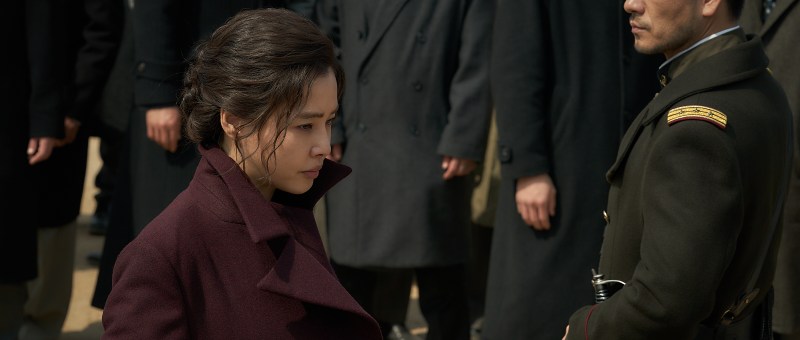
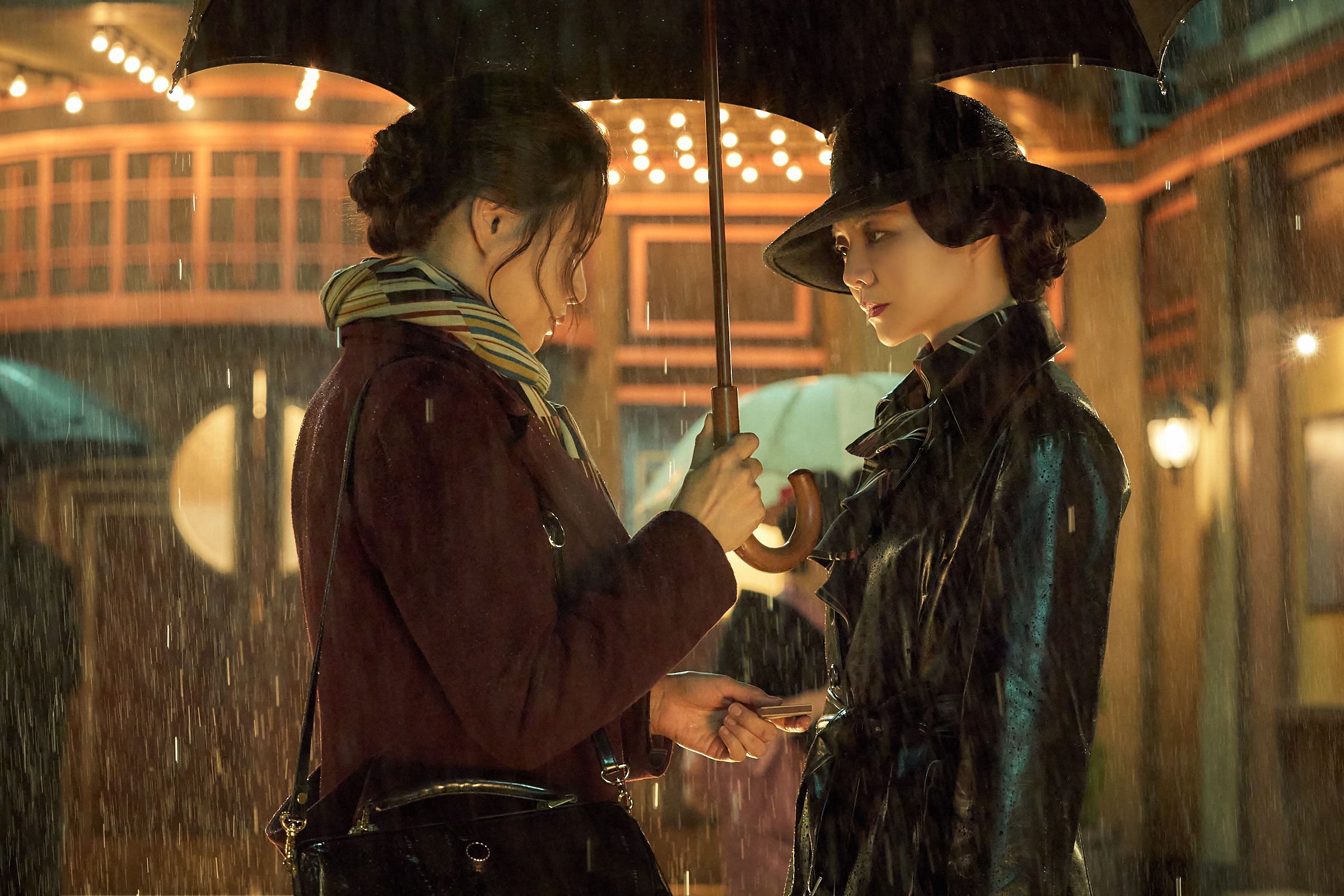



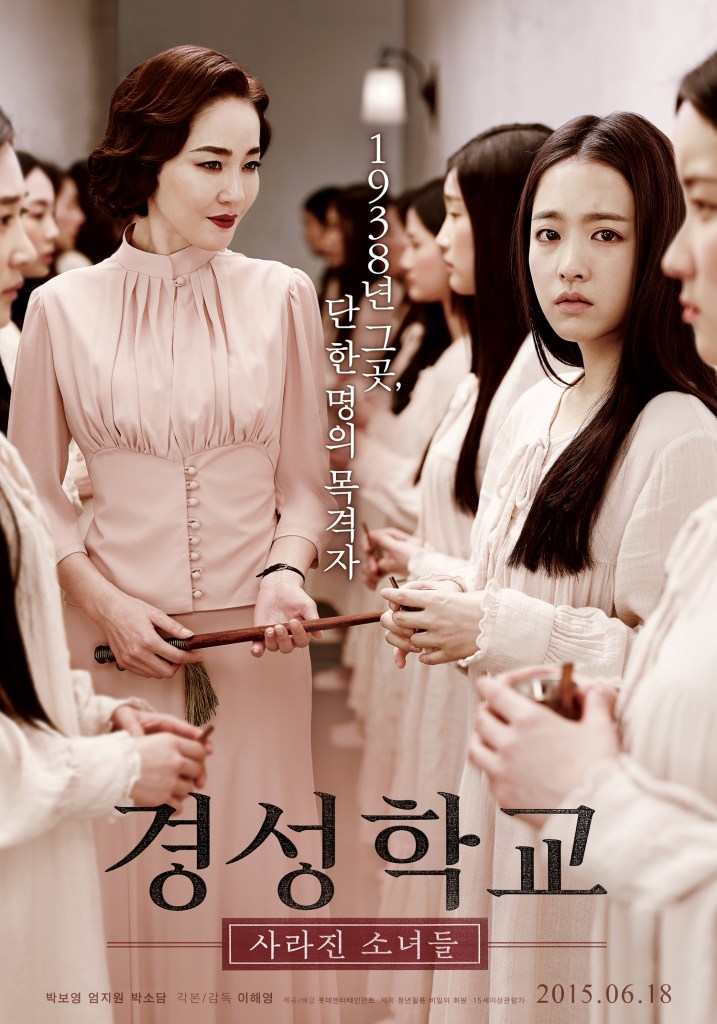 The Silenced (경성학교: 사라진 소녀들, Gyeongseonghakyoo: Sarajin Sonyeodeul) has all the classic genre aspects of the boarding school horror story familiar to fans of gothic literature everywhere, but this is no Victorian tale of repressed sexuality and hallucinatory psychosis. What The Silence does is take all of these essential elements and remix them as a metaphor for the horror of colonialism. Surrounded by quislings and forced into submission in order to survive, how does the essential soul of an oppressed people survive? The Silence would seem to argue that perhaps it can’t, but can evolve and learn to resist its colonisers even if it has to bend to do so.
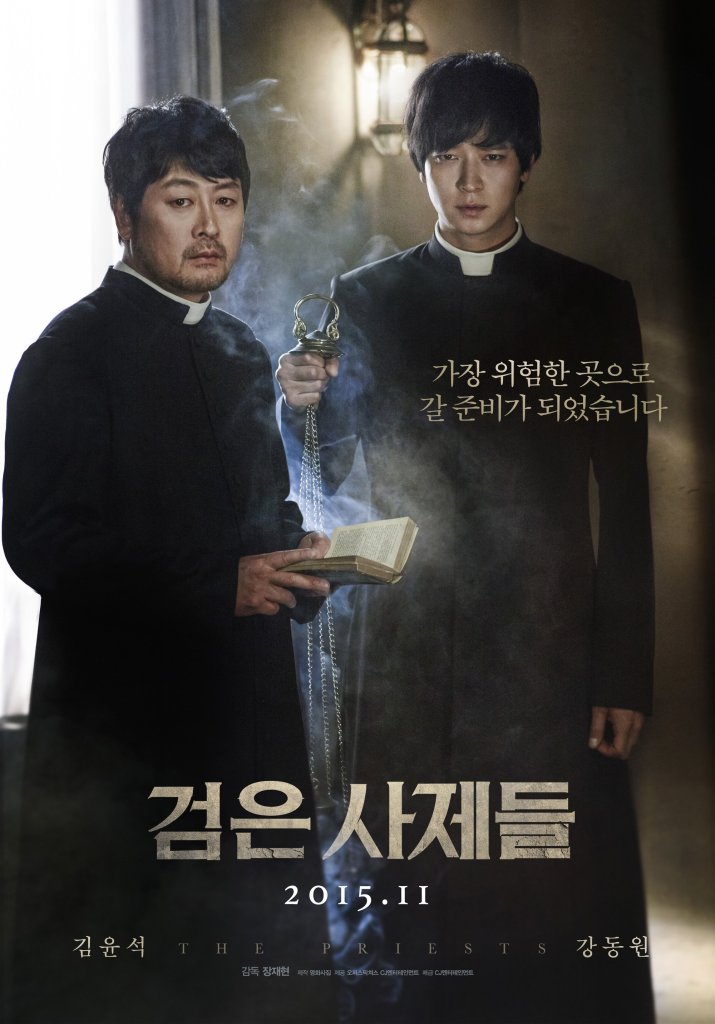 The era of hero priests might be well and truly behind us but at least when it comes to the exorcism movie, the warrior monk resurfaces as the valiant men of God face off against pure evil itself risking both body and soul in an attempt to free the unfortunate victim of a possession from their torment. To many, the very idea sounds as if it belongs in the medieval era – what need have we for demons now that we posses such certain, scientific knowledge? There are, however, things far more ancient than man which are far more terrifying than our ordinary villainy.
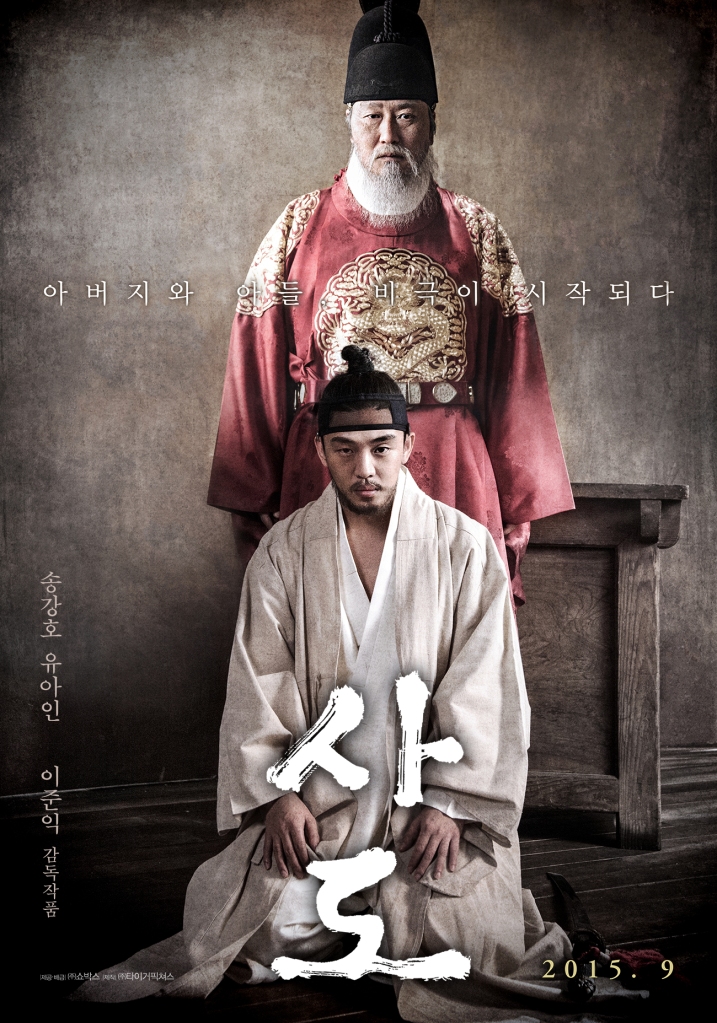 Which one is worse, the son who tries to kill his tyrannical father, or the tyrannical father who executes his own son and heir? A collection of sad stories all round, Lee Joon-ik’s The Throne (사도, Sado) is a historically inspired tale of familial conflict played out on a national stage. Where another nation might have entered into a bloody civil war, this very private tragedy keeps its bloodshed within the palace walls but still does not lack for cruelty.
 Windows on Worlds