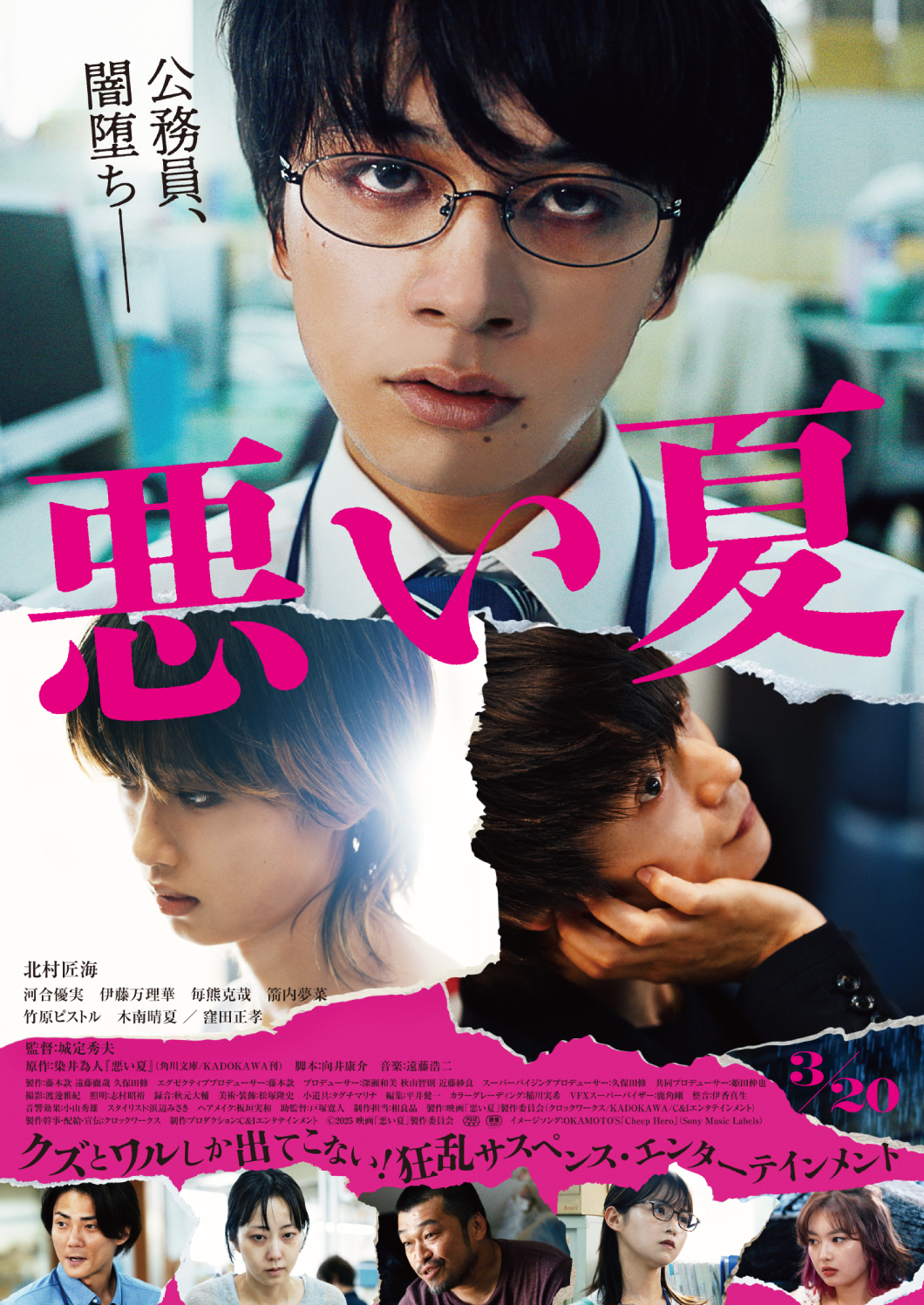
Sunset Sunrise (サンセット・サンライズ, Yoshiyuki Kishi, 2024)

In a way, the 2020 coronavirus pandemic presented a kind of turning point in which it became possible to envision a different kind of future brokered by technological advance in which society was no longer ruled by the dominance of the cities. If people could work remotely from anywhere, then they could easily improve their standard of living by moving to more rural areas for cheaper rents and healthier environments. Assuming the infrastructure was in place to allow them to do so, they could also support and reinvigorate communities struggling with depopulation in which the young have all left for the cities leaving the elderly behind to fend for themselves.

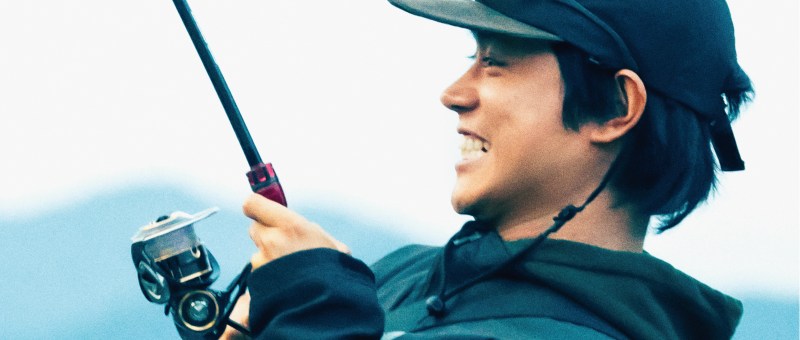
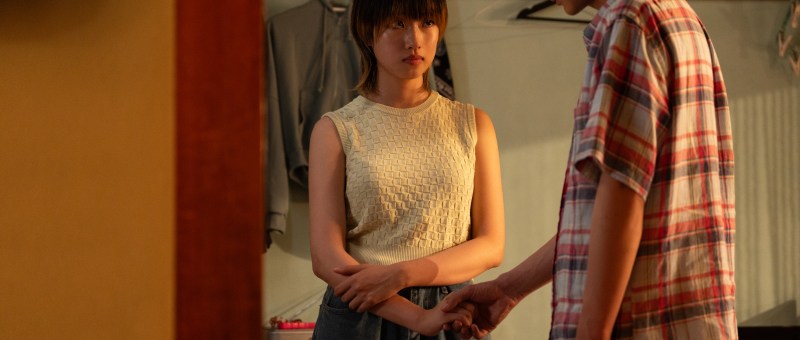
It’s an elegant solution that solves many of the problems of the contemporary society, but change isn’t always as straightforward as it seems as the hero of Yoshiyuki Kishi’s Sunset Sunrise (サンセット・サンライズ) finds out after he jumps at the chance to move into an abandoned house in Tohoku for a fraction of the rent he’d have to pay for a flat in Tokyo if he didn’t still live with his parents. The catch is, however, that houses have souls too and are more than just places to live for those that own or inherit them. Momoka (Mao Inoue), who decides to put her own empty house on the market, has her reasons for not wanting to live there herself nor for selling it completely but renting it out is also emotionally difficult. In the end, she only really does it after being put in charge of the town’s empty house problem at her job working for the council and thinking she should probably start with her own. Not knowing what to charge, it hadn’t really occurred to her someone would be as interested as Shinsaku (Masaki Suda), a fishing enthusiast longing to escape his salaryman life in the city for something a little more traditional in a peaceful rural area. 

Then again, that’s not to say that Shinsaku is a traditionalist and his decision quickly sparks controversy but also attracts the attention of his boss who senses a promising business opportunity. Momoka’s is a slightly special case, but Japan is filled with these so-called “akiya” which might, amid the work from home revolution of the pandemic, now be attractive to young professionals looking for a better environment to start a family. Houses generally start to deteriorate quite quickly when no one lives in them, and it’s true a lot of them need some work doing but it’s an idea that could work out well for everyone. Younger people who can’t find decent living space in the cities would be able to afford larger homes in the country where they would also then be contributing and integrating into the local community to provide support for its elderly residents.

Shinsaku becomes a part of the local community quite quickly and strikes up a friendship with an elderly woman whose children have all moved to Tokyo and rarely visit now that their own children are getting older. They’ve asked her to move to Tokyo with them, but as she points out, it would be the same as them moving back. There’s nothing for her to do there, and she’d have no friends. She’d only feel in the way and that she was getting under her daughter-in-law’s feet. Nevertheless, they fear for her especially as the area is still dealing with the scars of the 2011 earthquake which have left many clinging to a now bygone past. Once Momoka and Shinsaku start working with his boss on the akiya project, they find it hard to convince the inheritors of the houses to agree. Though they won’t live there, they might want to pop back a few times a year just for the memories and somehow can’t bear to part with their childhood or relative’s homes. But Shinsaku points out, it doesn’t necessarily have to be a case of either or and the renovation projects they undertake modernise the houses in a sympathetic way that brings them up to date with modern living yet honours the past even sometimes incorporating some of the previous resident’s furniture and belongings while issuing a caveat that the owners are welcome to visit should they wish to.

Essentially, the idea is a kind of co-existence with the past but also with unresolved trauma such as that presented by the earthquake and the ongoing pandemic. Momoka too is struggling to move on and while a gradual romance seems to arise between herself and Shinsaku, she isn’t sure she can ever let the past go though he makes it clear it’s okay to bring it with her. For his part, despite the initial fears of the early pandemic period and the suspicion of him as an outsider, Shinsaku’s quickly taken in by the community and adapts to a more rural way of life with relative ease though his boss’ big plan is rather undermined by his later insistence that he come back to Tokyo to run the project from the office like a many a contemporary CEO rolling back promises of flexible working environments that make this kind of utopian ideal much harder to materialise. In any case, there’s something quite refreshening in the eventual resolution just to do their own thing, not particularly paying attention to labels or what other people might think, but just doing what makes them happy right now. As an old fisherman’s song says, the sun sets but then it rises again. Scripted by Kankuro Kudo and adapted from a novel by Shuhei Nire, the film has kind of wholesome optimism that is rooted in a sense of continuity but also the potential to start again and make a new life inside the old that is less bound by outdated social norms than brokered by the gentle solidarity between people and a generosity of spirit that allows all to seek happiness in whatever way they choose.


Sunset Sunrise screens in Chicago 22nd March as part of the 19th edition of Asian Pop-Up Cinema.

Trailer (English subtitles)

Yoko (658km、陽子の旅, Kazuyoshi Kumakiri, 2023)

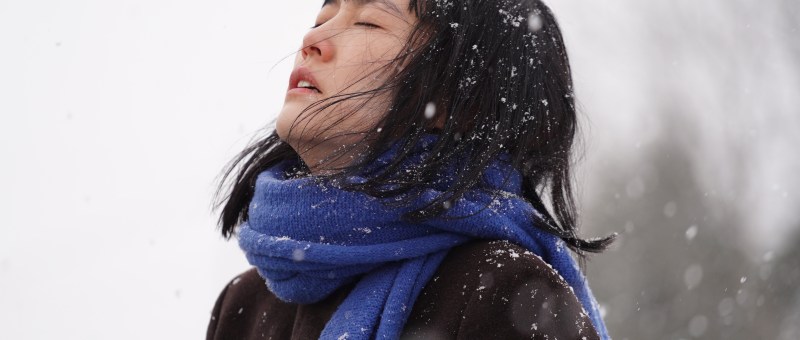
Sometimes home is the hardest place to go. At least that’s how it is for the eponymous Yoko (658km、陽子の旅, 658km, Yoko no Tabi) in Kazuyoshi Kumakiri’s emotional road movie in which a defeated middle-aged woman is jolted out of her self-imposed inertia on hearing of the sudden death of the father she had not seen in over 20 years. As much about a moment of mid-life reevaluation as one woman’s gradual return to the world through a process of self-acceptance, the film displays a boundless empathy not to mention a sense of warmth out of keeping with a snowbound winter in northern Japan. 

At 42, Yoko (Rinko Kikuchi) lives alone in a one room apartment that she seemingly never leaves. Ironically enough, she works as a customer service assistant operating a remote chat box in which she encourages the customer to try turning it off and on again but otherwise offers little real support. When she accidentally breaks her phone, he first thought is to try contacting the online consumer helpline only to realise the irony of her situation and think better of it. In a moment of cosmic coincidence she receives a visit from her cousin, Shigeru (Pistol Takehara), who explains that her sister Rie has been trying to call but obviously couldn’t get through because of the broken phone. Yoko’s father has passed away suddenly. Shigeru and his family are making the long drive from Tokyo to Aomori and they’ve been instructed to bring Yoko with them for the funeral the day after next. 

We can tell that Yoko is no longer used to interacting with other people. Her voice is almost inaudible and her words tumble out in a half-confused jumble. Shigeru seems sympathetic and we can interpret that she’s been this way a long time, if not all of her life. He asks her if she has clothes for the funeral and is unsurprised when she gives no answer, assuring her they can sort it out when they get there while trying to cajole her downstairs and into the car where his wife and kids are waiting. The kids are, predictably, incredibly noisy and a little insensitive while the mother tries to get some sleep and Shigeru sings a folksong that was a favourite of her father’s. His spectre (Joe Odagiri), not so much a ghost as a manifestation of her memory silently, haunts her throughout the journey reminding of her of her unresolved shame and the reasons she had avoided contact with him for the last 20 years. 

These moments are full of painful melancholy but also an underlying sense of dread as if Yoko were being stalked by her own self-loathing projected onto the figure of father. After becoming separated from Shigeru at a service station and assuming she’s been abandoned with no phone and only loose change, she decides to hitchhike to Aomori and in effect travels backward meeting echoes of herself as she goes. Her first driver is a woman of about her own age (Asuka Kurosawa) in Tokyo for a job interview who reflects her buried cynicism, remarking that she resents the people she sees at service stations who to her at least seem far too happy. On learning that Yoko has no children and never married, she chuckles that she couldn’t imagine a life without out them hinting at another life Yoko might have led and perhaps quietly yearns for in her solitude. 

Yoko answers the woman with only grunts and a shake of the head, unable to communicate and in effect too shy to ask for help from passing strangers. Through her journey she gradually recovers the ability to speak, her words eventually pouring out of her in a voluntary monologue to a stranger on whose kindness she has become dependent. But in a girl she meets at the next rest stop she sees only her teenage self, the girl answering that it’s too hard to explain when questioned about why she’s hitchhiking alone in the middle of the night. When she gives her her scarf, it’s like a gift from her younger self, a small moment of embrace and support. Something similar happens as she approaches the area affected by the 2011 tsunami and meets a kindly older couple who represent her parents as she might have wished them to be rather than as they were. While the man gives her some fatherly advice, not unkindly, the woman (Jun Fubuki) gives her a pair of sheepskin boots in another gift of warmth that further proves to her that the world is full of kindness even if not all of the people who gave her rides were nice.

There maybe something in the fact that Yoko has to travel through the disaster zone in order to emerge from it, journeying towards the site of her trauma and beginning to overcome it as she comes to accept her father’s death and that is simply too late for many things though crucially not for all. What she comes to realise is, as her first driver told her, everyone has their reasons and she wasn’t the only one carrying a heavy burden. She only made it as far as she did because of the kindness of strangers and those, like Shigeru, who are willing to wait for her to come in from the cold. Rinko Kikuchi’s extraordinarily nuanced performance along with the snowbound vistas and melancholy score conjure a poignant atmosphere but one oddly buoyed with warmth in which the world can be a kind place or least as long as we can be kind to ourselves. 


Yoko screens Feb. 22 as part of Family Portrait: Japanese Family in Flux

Original trailer (no subtitles)

Sabakan (サバカン SABAKAN, Tomoki Kanazawa, 2022)

A melancholy middle-aged writer looks back to a climactic summer of his youth and the ghost of fractured friendship in Tomoki Kanazawa’s heartwarming nostalgia fest, Sabakan (サバカン SABAKAN). A classic summer adventure movie, the film finds a sense of warmth in childhood memory but also reflects on all that at the time it was impossible to understand along with a sadness in the inevitable end of summer as two boys chase the spectre of dolphins in an otherwise tranquil seaside town.

In the present day, Takaaki (Tsuyoshi Kusanagi) is a struggling author and divorced father already behind on his child support. When he mentions working on another novel, his agent laughs at him that books like that don’t sell while trying to convince him to take a job ghostwriting for an Instagram influencer going viral for her dieting tips. Perhaps because the agent had described his writing as “quick and easy to read”, essentially anonymous and empty, he begins meditating on his childhood self repeatedly praised for his writing by a teacher who is perhaps a little easily moved. 

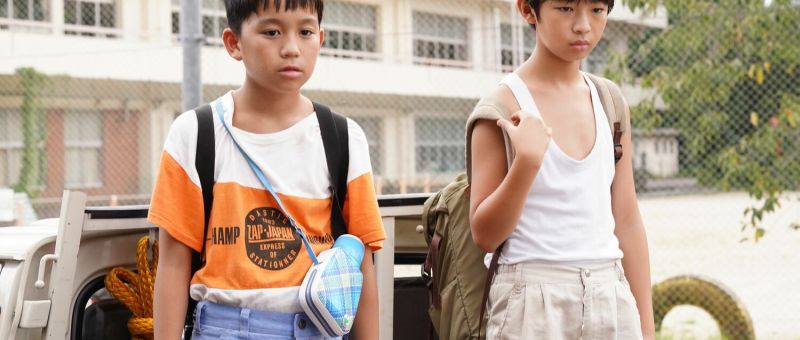
The summer of 1986 was the beginning of the Bubble era and Takaaki’s memories are indeed filled with a series of cultural touchstones such as the idol Yuki Saito whose poster the young Takaaki sometimes kisses after dancing around singing her hits. All of which is one reason why the poverty of his classmate Kenji (Konosuke Harada) has made him even more of an outcast bullied by the other kids who follow him home and make fun of the rundown house with tarp covering the roof that he lives in with his mother (Shihori Kanjiya) and several siblings. His fisherman father died some years ago and his mother works in the local supermarket doing her best to support five kinds on a part-timer’s salary. Kenji takes a liking to Takaaki because he’s the only kid who didn’t join with the others when they laughed at him, more or less blackmailing him into a summer adventure looking for dolphins in a cove over the mountain. 

Even the younger Takaaki reflects there probably weren’t any dolphins in the first place, Kenji just wanted to go on adventure with him and didn’t otherwise know how to ask. A careless word from his otherwise warm and supportive mother provokes a minor rift in the boys’ relationship that despite himself the younger Takaaki didn’t quite understand causing him to pull away from Kenji in an unwarranted sense of rejection unable to recognise that he is simply awkward and has low self-esteem which caused him to question the reality of their friendship. In any case though they are later separated by unexpected tragedy, their connection becomes a touchstone for each of them reminding them that they are not alone even if no longer together. 

Kanazawa captures an impish sense of fun the boys’ adventure as they find themselves in a tricky situation with a trio of thuggish delinquents and meet an equally melancholy teenage girl at the shore who stares mournfully at a washed up can of Korean soda and explains sadly as she looks out over the sea that she herself has not been there yet. The Yuki Saito poster comes down, signalling the arrival of a coming of age and the putting away of childish things as Takaaki moves into a more concrete adulthood while still floundering in adolescent confusion and the inability to fully understand his new friendship or its growing importance in his life. 

The adult him understands only too well, meditating on his memories and triggered by nostalgia on seeing a can of mackerel and remembering the carefree summer of his youth. The rediscovery of a childhood bond begins to open him up both artistically and in his relationship with the wife and daughter from whom he is separated. Told with humour and warmth, the film is filled with a sense of childhood wonder and the comfort of the everyday largely undimmed by the entrance of tragedy and the essential sadness of summer’s end. Even so it allows its melancholy hero to find a kind of salvation not only in childhood memories of dolphins and canned mackerel but in the enduring quality of a friendship that itself may have become distant.


Sabakan screened as part of this year’s Camera Japan.

Original trailer (no subtitles)

Zokki (ゾッキ, Naoto Takenaka, Takayuki Yamada, & Takumi Saitoh, 2020)

“Thanks to secrets carefully kept by people the world keeps turning” according to one of the many heroes of Zokki (ゾッキ), a series of intersecting vignettes adapted from the cult manga by Yoshiharu Tsuge and directed by three of Japan’s most prominent actor-directors, Naoto Takenaka (whose Nowhere Man also adapted Tsuge), Takayuki Yamada and Takumi Saitoh. According to the philosophical grandpa who opens the series of elliptical tales everyone has their secrets and without them you may die though each of the protagonists will in fact share their secrets with us if by accident or design. 

Seamlessly blended, the various segments slide into and around each other each taking place in a small rural town and primarily it seems around 2001 though as we’ll discover the timelines seem curiously out of joint as motifs from one story, a broken school window, an awkward moment in a convenience store, the retirement of a popular gravure model/AV actress etc, randomly appear in another. This is however all part of the overarching thesis that life is an endless cycle of joy and despair in which the intervals between the two gradually shrink as you age before ceasing to exist entirely. 

Or so says our first protagonist, Fujimura (Ryuhei Matsuda), a socially awkward man heading off on a random bicycling road trip in which he has no particular destination other than “south” or maybe “west” as he later tells a potential friend he accidentally alienates. Fujimura’s unspoken secret seems to link back to a moment of high school trauma in which he betrayed one burgeoning friendship in order to forge another by joining in with bullying gossip and eventually got his comeuppance. Meanwhile the reverse is almost true for Makita (Yusaku Mori) who relates another high school tale in which he overcame his loneliness by befriending Ban (Joe Kujo), another odd young man rejected by teachers and the other pupils for his often strange behaviour such as his tendency to shout “I want to die”. Ban claims to have heard a rumour that Makita has a pretty sister and Makita goes along with it, eventually having to fake his sister’s death in order to seal the lie only for Ban to find happiness in his adult life largely thanks to Makita’s act of deception. 

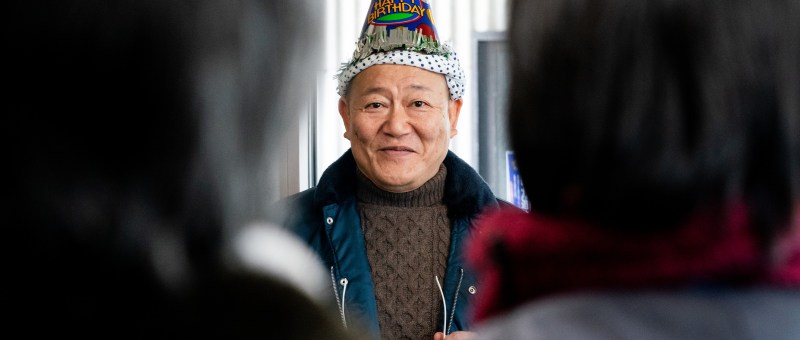
The broken window which brought them together turns up in another tale, that of Masaru (Yunho) whose adulterous father Kouta (Takehara Pistol) took him on a midnight mission to steal a punching bag (and some adult DVDs) from the local high school only to encounter a sentient mannequin/ghost who is later likened to the young woman from Fujimura’s past. Bar some minor embarrassment there’s no real reason the ghost sighting would need to be kept secret, the deception in this case more to do with Kouta’s affair and his subsequent departure from his son’s life only to make an unexpected return a decade later. The affair also makes him a target for fisherman Tsunehiko, the betrayed husband and one of the fisherman celebrating the birthday of a colleague along with an existentially confused Fujimura. Meanwhile, Fujimura’s fed up neighbour secretly writes a rude word on a note to himself instead of the usual “good morning” only to realise it’s been moved when he opens the local video store the next morning. 

Eventually coming full circle, Zokki insists what goes around comes around, everything really is “an endless cycle”, and that in the grand scheme of things secrets aren’t always such a bad thing. They keep the world turning and perhaps give the individual a sense of control in the necessity of keeping them if running with a concurrent sense of anxiety. The criss-crossing of various stories sometimes defying temporal logic hints at the mutability of memory while allowing the creation of a zany Zokki universe set in this infinitely ordinary small town in rural northern Japan. As the various protagonists each look for an escape from their loneliness, unwittingly spilling their secrets to an unseen audience, the endless cycle continues bringing with it both joy and sorrow in equal measure but also a kind of warmth in resignation. Beautifully brought together by its three directors working in tandem towards a single unified aesthetic, Zokki defies definition but rejoices in the strange wonder of the everyday in this “obscure corner of the world”.


Zokki streamed as part of this year’s New York Asian Film Festival. It will also screen in London on 24th October as part of this year’s London East Asia Film Festival.

Original trailer (no subtitles)

NYAFF intro

Blue (BLUE/ブルー, Keisuke Yoshida, 2021)

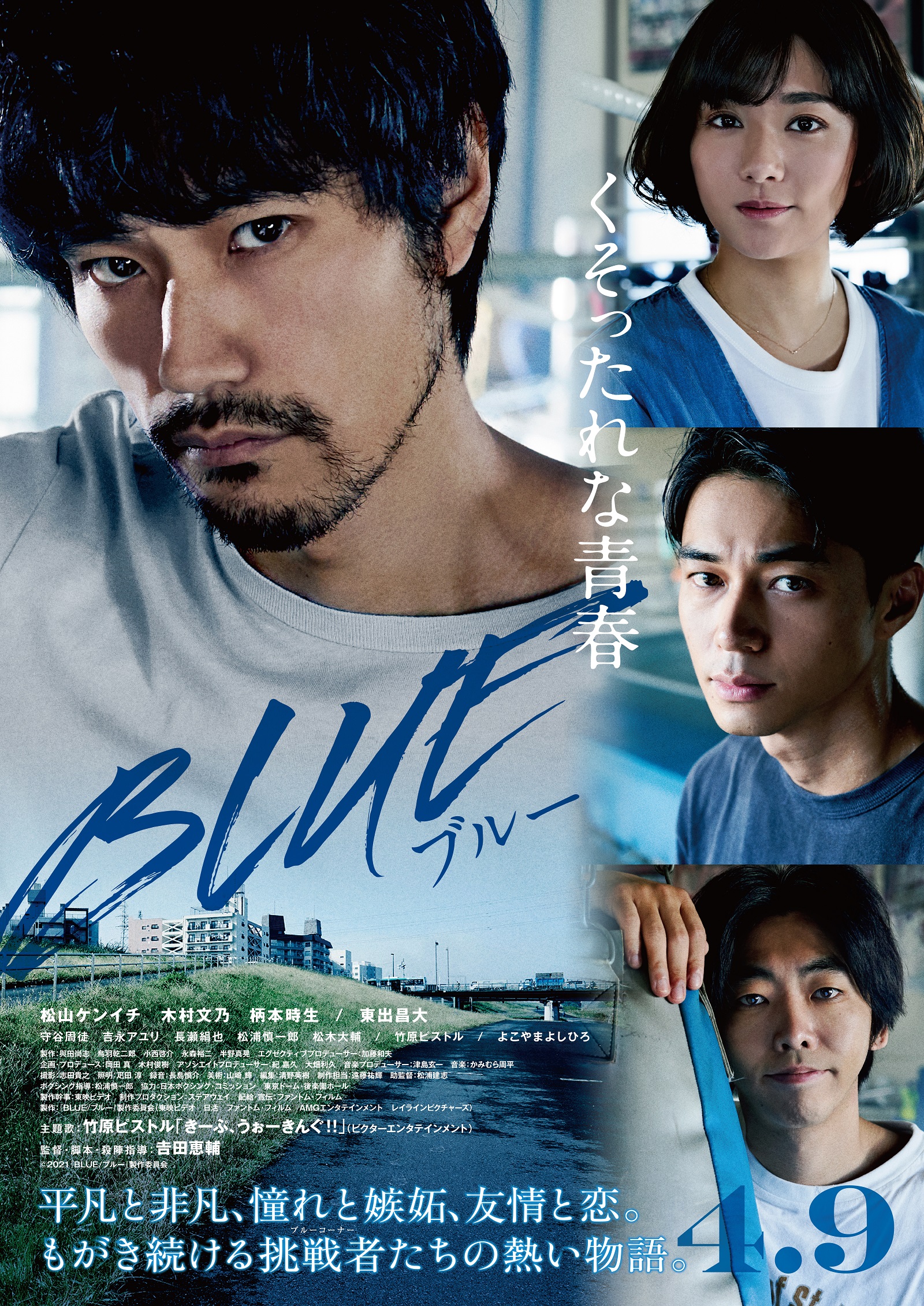
“Let me walk on my own feet” a defeated boxer insists, reminding us that his victory is in getting up even if he always loses. The heroes of Keisuke Yoshida’s Blue (BLUE/ブルー) are by and large “losers”, though the act of winning lies not so much in knocking out your opponent as in continuing to show up for the fight. Blue is not only a state of mind, but also the colour of the challenger’s corner, the spiritual home of these dejected underdogs who refuse to lie down even when seemingly defeated. 

Urita (Kenichi Matsuyama), for example, stays in boxing because there’s nothing else he wants to do though in truth he’s not much good at the sport. What he is good at is encouraging others and even if he’s a bust in the ring he’s an excellent coach and warmhearted mentor. His friend, Ogawa (Masahiro Higashide), meanwhile, is on track to take the national title but is also in denial about a medical condition that could end his career in the ring. And then there’s Narasaki (Tokio Emoto) who only took up boxing because of an offhand comment from a girl he fancied at the pachinko parlour where he works after he got beaten up by a teenager while feeling his masculinity challenged by a handsome coworker. 

Narasaki rocks up at the gym and refuses to do anything very strenuous because he only wants to look like someone who boxes, not actually box. Nevertheless, he discovers a genuine aptitude for the sport, gradually overcoming his fear of getting of hurt as he begins to enjoy the discipline of training. His journey directly contrasts with that of one of the other young hopefuls at the club who originally knocks him out during their first sparring match but later falls victim to his own egotism, insisting that he doesn’t need to take advice from a “loser” like Urita and has his own way of doing things. In his characteristic way, Urita just smiles and reminds him it’s important to master the basics but the hotheaded youngster won’t listen, blaming his lack of success on everyone else before getting himself seriously injured trying to prove his own way is superior. 

It’s the basic moves which later prove valuable to Narasaki as he attempts to take on a powerful rival, a reminder that there’s no substitute for nailing the fundamentals. Talking over their respective differences, Ogawa wonders if he really loves boxing as much as Urita does but has then to accept that “passion and talent are different” which is why he’s succeeding where Urita failed. In any case, it’s less about winning in the ring than it is about hard work and mastery of a craft. Smarting from his own early defeat, Narasaki also snaps back that he doesn’t want a loser’s advice only to bitterly regret it afterwards, realising that Urita’s strengths lie at the side of the ring rather than inside it. 

While Ogawa battles his illness, Narasaki also finds himself conflicted caring for his elderly grandmother and feeling guilty that his newfound love for boxing has led him to neglect her. Urita battles a sense of resentment and despair he covers with good humour in being fully aware that he doesn’t have what takes while attempting to encourage others only latterly confessing that a part of him always hoped Ogawa would lose. The demands of a sporting life may have endangered familial and romantic relationships but the guys do at least have each other and the familial camaraderie of the gym.

The important thing, the film seems to say, is to keep fighting, win or lose. Experiencing various setbacks, the guys each find themselves inhabiting their own internal rings, unable to let go of boxing glory no matter how elusive it may prove to be. Yoshida plays with genre norms such as training montages and ring-set climaxes, but also undercuts them in his frequent allusions to defeat allowing the heroes to lose and sometimes repeatedly solely so that they can get right back up again, on their own feet, ready to fight for something be that mastering the art of boxing or simply gaining a new sense of personal empowerment born of determination and self belief as they recommit to learning the “basics” of a fulfilling life. 


Blue streams in Europe (excl. Spain/Andorra) until 2nd July as part of this year’s hybrid edition Udine Far East Film Festival.

Original trailer (English subtitles)

Sketches of Kaitan City (海炭市叙景, Kazuyoshi Kumakiri, 2010)

sketches of kaitan cityYasushi Sato, a Hakodate native, has provided the source material for some of the best films of recent times including Mipo O’s The Light Shines Only There and Nobuhiro Yamashita’s Over the Fence but it has to be said that his world view is anything but positive. Kazuyoshi Kumakiri takes on Sketches of Kaitan City (海炭市叙景, Kaitanshi Jokei) inspired by a collection of short stories left unfinished on Sato’s death by suicide in 1990. Despite the late bubble era setting of the stories (now updated to the present day), his Kaitan (eerily close to the real life Hakodate) is a place of decline and hopelessness, populated by the disillusioned and despairing.
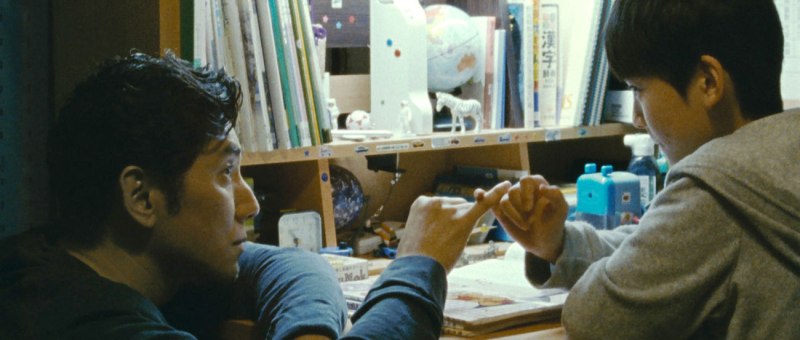
The first story concerns a brother and sister whose lives have been defined by the local shipbuilding industry. Since their father was killed in a dockside fire, older brother Futa (Pistol Takehara) has been taking care of his little sister Honami (Mitsuki Tanimura) and now works at the docks himself. Times being what they are, the company is planning to close three docks with mass layoffs inevitable. The workers strike but are unable to win more than minor concessions leaving Futa unable to continue providing for himself or his sister.

Similar tales of societal indifference follow as an old lady living alone with her beloved cat is hounded by a developer (Takashi Yamanaka) desperate to buy her home. Across town the owner of the planetarium (Kaoru Kobayashi) is living a life of quiet desperation, suspecting that his bar hostess wife (Kaho Minami) is having an affair. Meanwhile a gas canister salesman (Ryo Kase) is trying to branch out but having little success, and a tram driver dwells on his relationship with his estranged son.

Economic and social concerns become intertwined as increasing financial instability chips away at the foundations of otherwise sound family bonds. Futa’s situation is one of true desperation now that he’s lost the only job he’s ever had and is ill equipped to get a new one even if there were anything going in this town which revolves entirely around its port.

Yet other familial bonds are far from sound to begin with. The gas canister salesman, going against his father’s wishes in trying to diversify with a series of water purifiers he believes will be a guaranteed earner because of the need to replace filters, takes out his various frustrations through astonishing acts of violence against his wife who then passes on the legacy of abuse to his son, Akira (You Koyama). Resentful towards his father and embarrassed by his lack of success with the water filters, the gas canister salesman threatens to explode but unexpectedly finding himself on the receiving end of violence, he is forced into a reconsideration of his way of life – saving one family member, but perhaps betraying another.

The gas canister salesman is not the only one to have a difficult relationship with his child. The planetarium owner cannot seem to connect with his own sullen offspring and is treated like an exile within his own home while the tram driver no longer speaks to his son who is apparently still angry and embarrassed that his mother worked in a hostess bar.

Yet for all of this real world disillusionment, despair takes on a poetic quality as the planetarium owner spends his days literally staring at the stars – even if they are fake. The gas canister salesman’s son, Akira, becomes a frequent visitor, excited by the idea of the telescope and dreaming of a better, far away world only to have his hopes literally dashed by his parents, themselves already teetering on the brink of an abyss. Futa’s lifelong love has been with shipping – the company officials are keen to sell the line that it’s all about the boats and an early scene of jubilation following the launch of a recently completed vessel would seem to bear that out, but when it comes down to it the values are far less pure than a simple love of craftsmanship. Kaitan City is a place where dreams go to die and hope is a double edged sword.

There are, however, small shoots of positivity. The old lady welcomes her cat back into her arms, discovering that it is pregnant and stroking it gently, reassuring it that everything will be OK and she will take care of the new cat family. Signs of life appear, even if drowned out by the noise of ancient engines and the sound of the future marching quickly in the opposite direction. Bleak yet beautifully photographed, Sketches of Kaitan City perfectly captures the post-industrial malaise and growing despair of those excluded from economic prosperity, left with nothing other than false promises and misplaced hope to guide the way towards some kind of survival.


Original trailer (no subtitles)

Scabbard Samurai (さや侍, Hitoshi Matsumoto, 2011)

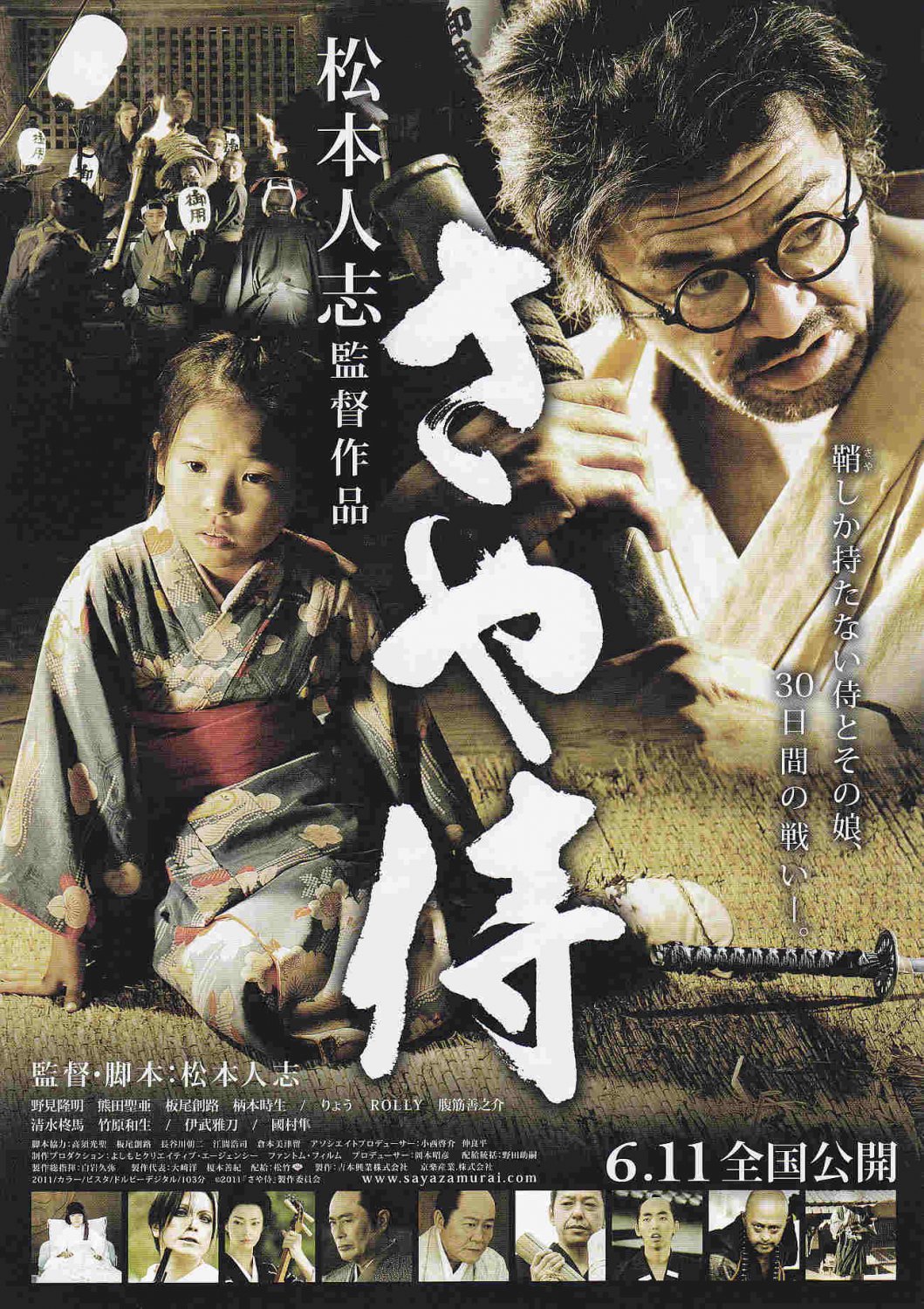
scabbard samuraiA samurai’s soul in his sword, so they say. What is a samurai once he’s been reduced to selling the symbol of his status? According to Scabbard Samurai (さや侍, Sayazamurai) not much of anything at all, yet perhaps there’s another way of defining yourself in keeping with the established code even when robbed of your equipment. Hitoshi Matsumoto, one of Japan’s best known comedians, made a name for himself with the surreal comedies Big Man Japan and Symbol but takes a low-key turn in Scabbard Samurai, stepping back in time but also in comedic tastes as the hero tests his mettle as a showman in a high stakes game of life and death.
Nomi Kanjuro (Takaaki Nomi) is a samurai on the run. Wandering with an empty scabbard hanging at his side, he pushes on into the wilderness with his nine year old daughter Tae (Sea Kumada) grumpily traipsing behind him. Eventually, Nomi is attacked by a series of assassins but rather than heroically fighting back as any other jidaigeki hero might, he runs off into the bushes screaming hysterically. Nomi and Tae are then captured by a local lord but rather than the usual punishment for escapee retainers, Nomi is given an opportunity to earn his freedom if only he can make the lord’s sad little boy smile again before the time is up.

Nomi is not exactly a natural comedian. He’s as sullen and passive as the little lord he’s supposed to entertain yet he does try to come up with the kind of ideas which might amuse bored children. Given one opportunity to impress every day for a period of thirty days, Nomi starts off with the regular dad stuff like sticking oranges on his eyes or dancing around with a face drawn on his chest but the melancholy child remains impassive. By turns, Nomi’s ideas become more complex as the guards (Itsuji Itao and Tokio Emoto) begin to take an interest and help him plan his next attempts. Before long Nomi is jumping naked through flaming barrels, being shot out of cannons, and performing as a human firework but all to no avail.

Meanwhile, Tae looks on with contempt as her useless father continues to embarrass them both on an increasingly large stage. Tae’s harsh words express her disappointment with in Nomi, berating him for running away, abandoning his sword and with it his samurai honour, and exposing him as a failure by the code in which she has been raised. She watches her father’s attempts at humour with exasperation, unsurprised that he’s failed once again. Later striking up a friendship with the guards Tae begins to get more involved, finally becoming an ally and ringmaster for her father’s newfound career as an artist.

Tae and the orphaned little boy share the same sorrow in having lost their mothers to illness and it’s her contribution that perhaps begins to reawaken his talent for joy. Nomi’s attempts at comedy largely fall flat but the nature of his battle turns out to be a different one than anyone expected. Tae eventually comes around to her father’s fecklessness thanks to his determination, realising that he’s been fighting on without a sword for all this time and if that’s not samurai spirit, what is? Nomi makes a decision to save his honour, sending a heartfelt letter to his little girl instructing her to live her life to the fullest, delivering a message he was unable to express in words but only in his deeds.

Matsumoto’s approach is less surreal here and his comedy more of a vaudeville than an absurd kind, cannons and mechanical horses notwithstanding. The story of a scabbard samurai is the story of an empty man whose soul followed his wife, leaving his vacant body to wander aimlessly looking for an exit. Intentionally flat comedy gives way to an oddly moving finale in which a man finds his redemption and his release in the most unexpected of ways but makes sure to pass that same liberation on to his daughter who has come to realise that her father embodies the true samurai spirit in his righteous perseverance. Laughter and tears, Scabbard Samurai states the case for the interdependence of joy and sorrow, yet even if it makes plain that kindness and understanding are worth more than superficial attempts at humour it also allows that comedy can be the bridge that spans a chasm of despair, even if accidentally.


Currently streaming on Mubi

Original trailer (no subtitles)

The Long Excuse (永い言い訳, Miwa Nishikawa, 2016)

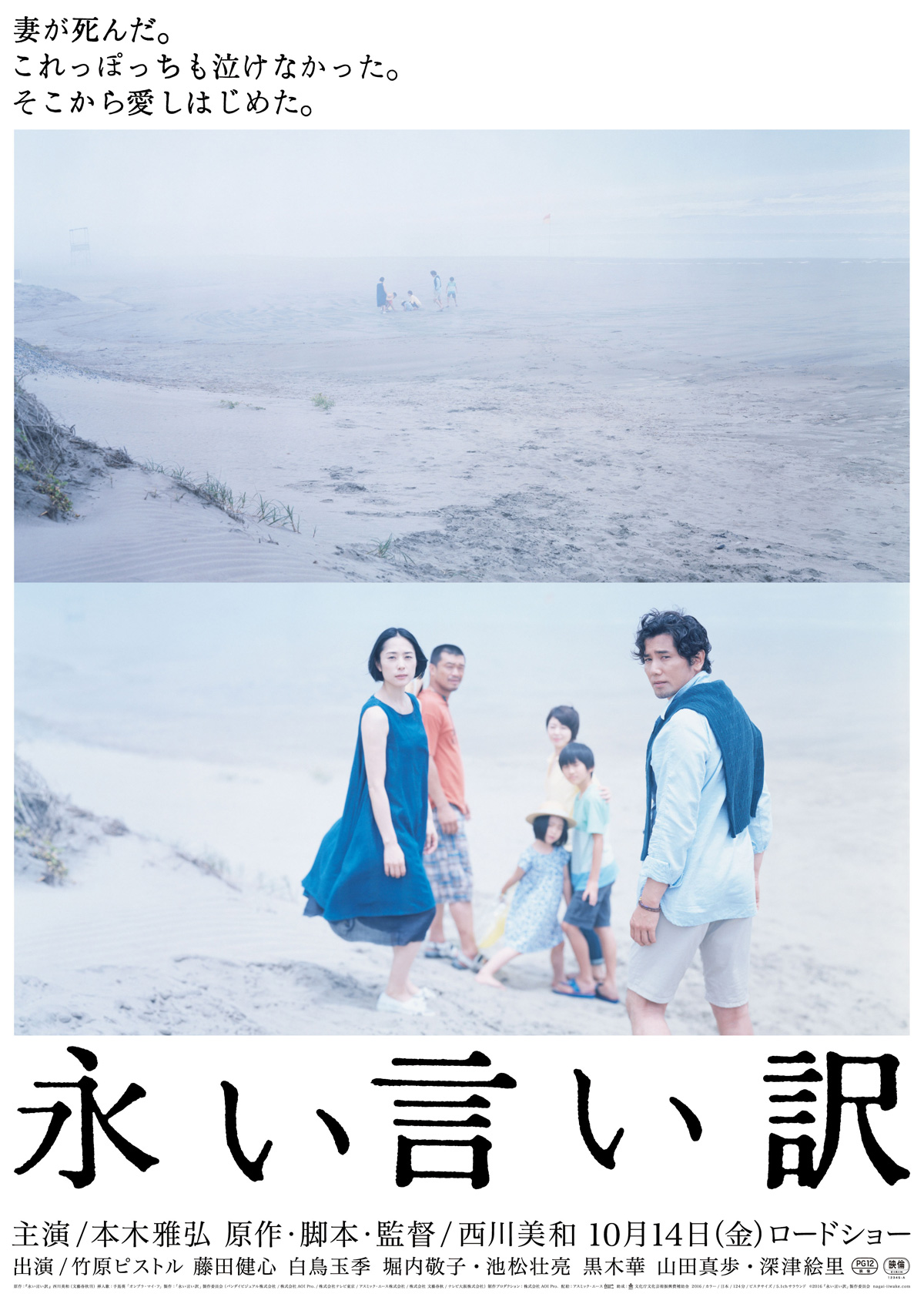
long excuse posterSelf disgust is self obsession as the old adage goes. It certainly seems to ring true for the “hero” of Miwa Nishikawa’s latest feature, The Long Excuse (永い言い訳, Nagai Iiwake) , in which she adapts her own Naoki Prize nominated novel. In part inspired by the devastating earthquake which struck Japan in March 2011, The Long Excuse is a tale of grief deferred but also one of redemption and self recognition as this same refusal to grieve forces a self-centred novelist to remember that other people also exist in the world and have their own lives, emotions, and broken futures to dwell on.

Sachio Kinugasa (Masahiro Motoki) is a formerly successful novelist turned TV pundit. As his hairstylist wife, Natsuko (Eri Fukatsu), gives his hair a trim he angrily turns off the television on which one of the programmes he appears on is playing and returns to petulantly needle his wife about perceived slights including “deliberately” using his real name in front of important publishers “to embarrass him”. Upset but bearing it, Natsuko takes all of this in her stride though her husband is in a particularly maudlin mood today, reminding her once again about his intense feelings of self loathing. Shortly after finishing Sachio’s haircut, Natsuko throws on a coat and grabs a suitcase – she’s late to meet a friend with whom she is going on a trip. Sachio barely waits for the door to close before picking up his phone and texting his mistress to let her know that his wife is away.

Later, Sachio figures out that at the moment his wife, her friend Yuki (Keiko Horiuchi), and a busload of other people plunged over a guard rail on a mountain road and into a frozen lake, he was rolling around in his marital bed with a much younger woman. Now playing the grieving husband, Sachio seems fairly indifferent to his recent tragedy but writes an improbably literary funeral speech which boils down to wondering who is going to cut his hair, which he also makes a point of checking in the rear view mirror of the funeral car, now that his wife is gone.

So self obsessed is Sachio that he can’t even answer most of the policeman’s simple questions regarding the identification of his wife – what was she wearing, what did she eat for dinner, is there anything at all he can tell them to confirm the identity of his wife’s body? The answer is always no – he doesn’t remember what she wore (he was busy thinking about texting his mistress), ate dinner separately, and didn’t even know the name of the friend Natsuko was going to meet. The policeman tries to comfort him with the rationale that it’s normal enough to have grown apart a little over 20 years, but the truth is that Sachio was never very interested in his wife. As a funeral guest points out, Natsuko had her own life filled with other people who loved her and would have appreciated the chance to pay their respects in the normal fashion rather than becoming mere guests at Sachio’s stage managed memorial service.

Sachio’s lack of sincere reaction to his wife’s passing stands in stark contrast to the husband of her friend, Yoichi (Pistol Takehara), who is a wailing, broken man and now a widowed single father to two young children. Yoichi is excited to finally meet Sachio about whom he heard so much from “Nacchan” his wife’s best friend and the children’s favourite auntie. Sachio knew nothing of this important relationship in his wife’s life, or much of anything about her activities outside of their home.

When Natsuko left that last time, she paused in the doorway somewhat finally to remind Sachio to take care of the house in her absence but neither of these two men know how to look after themselves from basic household chores like using the washing machine to cooking and cleaning, having gone from a mother to a wife and left all of the “domestic” tasks to their women. Eventually feeling low, Sachio decides to respond to Yoichi’s suggestion they try to ease their shared grief by taking the family out for dinner, only he invites them to a fancy, upscale place he goes to often which is neither child friendly nor particularly comfortable for them seeing as they aren’t used to such extravagant dining. Yoichi, otherwise a doting father but often absent due to his job as a long distance truck driver, neglects to think about his daughter’s dangerous crab allergy and necessity of carrying epinephrin just in case, never having had to worry about something as basic as feeding her.

Hearing that Yuki’s son Shinpei (Kenshin Fujita) is quitting studying for middle school exams because he needs to take care of his sister, Sachio makes the improbable suggestion that he come over and help out while Yoichi is away on the road. Becoming a second father to someone else’s children forces Sachio into a consideration of his new role but his publicist cautions him against it. Whipping out some photos of his own, he tells Sachio that kids are great because they make you forget what a terrible person you are but that it’s just the ultimate act of indulgence, basking in adoration you know you don’t deserve. Sachio frequently reminds people that he’s no good, almost making it their own fault that he’s hurt them through his constant need for external validation and thinly disguised insecurity. Sachio’s personal tragedy is that his attempts at self-deception largely fail, he knows exactly what he is but that only makes it worse.

The Long Excuse, such as it is, is the title of Sachio’s autobiographical story of grief and an attempt to explain all of this through a process of self discovery and acceptance. Though appearing indifferent to his wife’s death, Sachio’s reaction is one informed by his ongoing self delusions in which he tries to convince himself to ignore the issue and attempt to simply forget about it and move on. Yoichi, by contrast, feels differently – he can’t let his wife go and wants to keep her alive by talking about her all the time but his bighearted grief is too much for his sensitive son who has more than a little in common with Sachio and would rather hit the pause button to come back to this later. The best way out is always through, however difficult and painful it may turn out to be. Making The Long Excuse is Sachio’s way of explaining himself and learning to reconcile the person he is with the one he would like to be, and even if he’s still talking to himself he’s at least moving in the right direction.


The Long Excuse was screened at the 17th Nippon Connection Japanese Film Festival.

Original trailer (English subtitles)