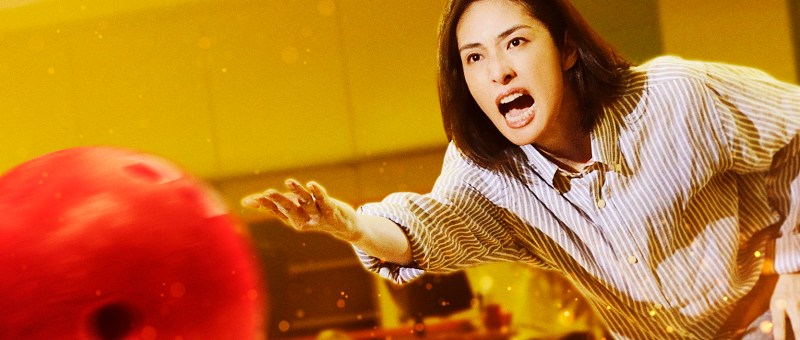
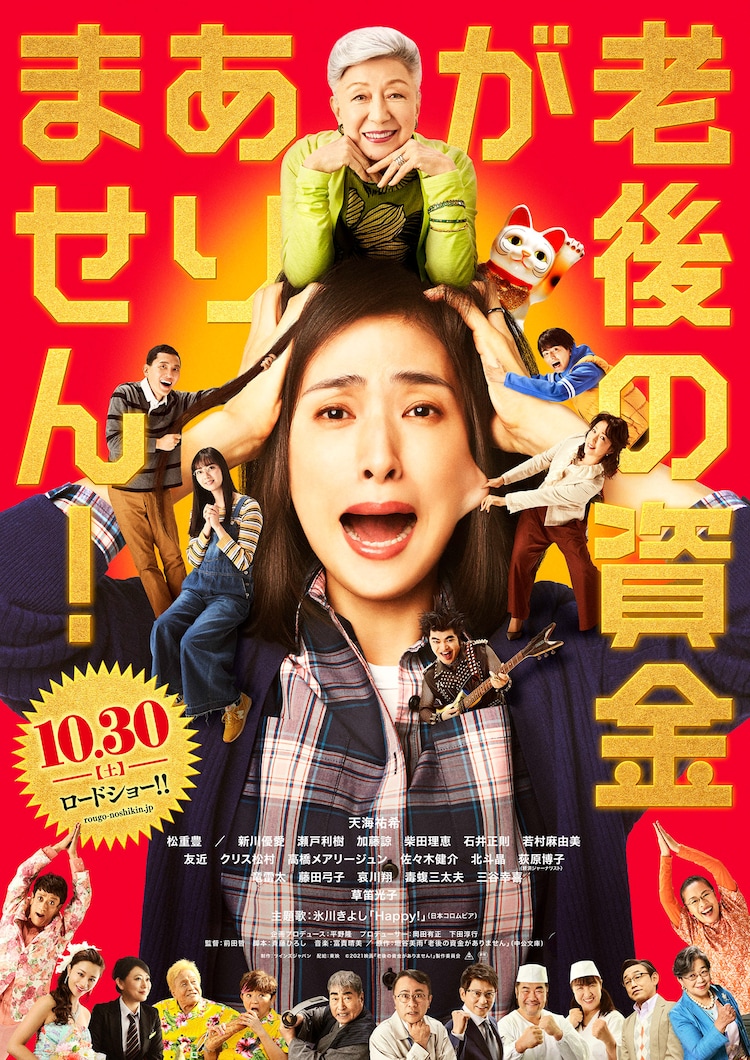
What Happened to Our Nest Egg!? (老後の資金がありません!, Tetsu Maeda, 2021)

A minor controversy erupted in Japan in 2019 when then finance minister Taso Aso issued a statement recommending that couples should have 20 million yen (£104,620 total at the time of writing) saved for their retirement on top of the state pension in order to live a comfortable life in old age. All things considered, 20 million yen actually sounds like quite a low sum for two people who might live another 30 years post-employment. Nevertheless, Atsuko (Yuki Amami) and her husband Akira (Yutaka Matsushige) are now in their mid-50s and don’t have anywhere near that amount in savings. They’re still paying off their mortgage and though their children are grown-up, neither of them seem to be completely independent financially and both still live at home. 

Tetsu Maeda’s familial comedy What Happened to Our Nest Egg!? (老後の資金がありません!, Rogo no shikin ga arimasen!) explores the plight of the sandwich generation which finds itself having to support elderly relatives while themselves approaching retirement and still needing to support their children who otherwise can’t move forward with their lives. Seeing an accusatory ad which seems to remind her personally that even 20 million yen isn’t really enough when you take into consideration the potential costs of medical treatment or a place in a retirement home, Atsuko has a sudden moment of panic over their precarious financial situation. The apparently sudden death of Akira’s 90-year-old father acts as a sharp wake up call especially as Akira’s apparently very wealthy but also selfish and materialistic sister Shizuko (Mayumi Wakamura) bamboozles him into paying for the entirety of the funeral while pointing out that they’ve been footing most of the bill for the parents’ upkeep over the last few years.

There was probably a better time to discuss the financial arrangements than with their father on his deathbed in the next room, but in any case Shizuko doesn’t pay attention to Atsuko’s attempt to point out they’ve been chipping in too. Akira’s mother Yoshino (Mitsuko Kusabue) also reminds them that their family was once of some standing and a lot of people will be attending the funeral so they need to make sure everything is done properly. The funeral arranger is very good at her job and quickly guilts Atsuko into spending large sums of money on pointless funeral pomp to avoid causing offence only to go to waste when hardly anyone comes because, as she later realises, all of the couple’s friends have already passed away, are bedridden, or too ill to travel. 

Yoshino is however in good health. When Shizuko suddenly demands even more money for her upkeep, Atsuko suggests Yoshino come live with them but it appears that she has very expensive tastes that don’t quite gel with their ordinary, lower-middle class lifestyle. Having lived a fairly privileged life and never needing to manage her finances, Yoshino has no idea of the relative value of money and is given to pointless extravagance that threatens to reduce Atsuko’s dwindling savings even more while in a moment of cosmic irony both she and Akira are let go from their jobs. Now they’re in middle age, finding new ones is almost impossible while their daughter suddenly drops the bombshell that she’s pregnant and is marrying her incredibly polite punk rocker boyfriend whose parents run a successful potsticker restaurant and are set on an elaborate wedding.

The film seems to suggest that Atsuko and Akira can’t really win. They aren’t extravagant people and it just wasn’t possible for them to have saved more than they did nor is it possible for them to save more in the future. Instead it seems to imply that what they should do is change their focus and the image they had of themselves in their old age. One of the new colleagues that Akira meets in a construction job has moved into a commune that’s part of the radical new housing solution invented by his old friend Tenma (Sho Aiwaka). Rather than building up a savings pot, the couple decide to reduce their expenses by moving into a share house and living as part of a community in which people can support each other by providing child care and growing their own veg. Yoshino too comes to an appreciation of the value of community and the new exciting life that she’s experienced since moving in with Atsuko. It may all seem a little too utopian, but there is something refreshing in the suggestion that what’s needed isn’t more money but simply a greater willingness to share, not only one’s physical resources but the emotional ones too in a society in which everyone is ready to help each other rather than competing to fill their own pots as quickly as possible. 


What Happened to Our Nest Egg!? screens as part of this year’s Japan Foundation Touring Film Programme.

Trailer (English subtitles)
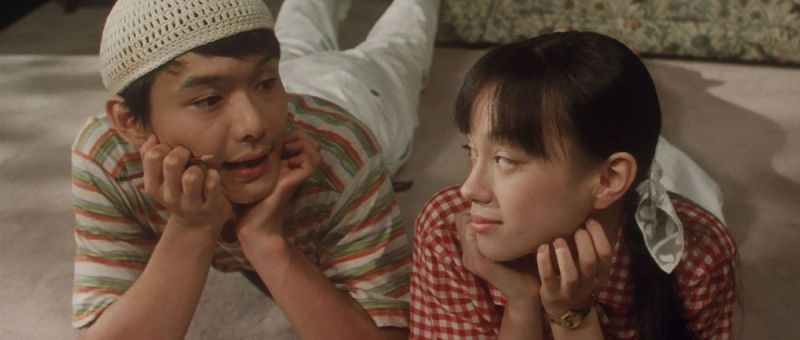
A Quiet Life (静かな生活, Juzo Itami, 1995)

“One person is not a tool for another” the heroine of Juzo Itami’s 1995 melodrama A Quiet Life (静かな生活, Shizukana Seikatsu) eventually writes in her diary quoting her novelist father but also reflecting on herself and her life in which some have indeed attempted to use others for their own ends. Outside of international mega hit Tampopo, Itami is best known for a series of anarchic comedies each starring his wife Nobuko Miyamoto as forthright woman tackling the ills of contemporary Japan from tax evasion and increasingly amoral capitalism to the yakuza and shady cults. Based on a novel by his brother-in-law Kenzaburo Oe, A Quiet Life is therefore something of an outlier yet once again addresses a number of social issues from treatment of disability in the contemporary society to the relationships between parents and children and the dangers of a rapidly modernising society. 

Middle daughter Ma (Hinako Saeki) lives in a large Western-style in the country with her father, internationally renowned author K (Tsutomu Yamazaki), mother and two brothers the oldest of which, Eeyore, has some learning difficulties but is largely independent. Nevertheless, when K, who is experiencing a moment of crisis that leads him to consider suicide when he is unable to fix a problem with the drains and has to resort to a plumber, is offered a job at a university in Australia Ma is left in charge at home and therefore responsible for her brother. Though the family fully accepts Eeyore, it’s clear the world around them is not always so kind. As they approach a centre for the disabled on a walk, others around them openly express disgust, suggesting they are a “bad influence” and wanting to leave the area entirely. 

Meanwhile as the film opens two children are locked together in a game of magnets, a collection of adults attempting to pull them apart by force. The shot is later repeated as Eeyore holds his sister in the rain following a traumatic and unexpected incident and demonstrating the close and affectionate bond between the siblings. Yet there is an uncomfortable suggestion from some that Ma is being asked to sacrifice her life to look after her brother who after all is unlikely to marry and will require additional care as long he lives, while she is perhaps slightly overprotective and wilfully self-sacrificing. “Don’t expect another human to sacrifice their life for you” goes another of her father’s lines, “to expect such a thing is the worst kind of depravity”, the family otherwise committed to the insistence that Eeyore has his own life and interiority which must neither be sacrificed, nor sacrificed for, for to do so would be to deny his personhood. Eeyore is not a tool for Ma’s charity nor is she a tool for the family’s duty towards him. 

Nevertheless even she is not immune to negative stereotyping becoming increasingly concerned that her now adult brother may pose a threat to the local community in his lack of understanding and inability to control his impulses. When a child molester is on the loose in the village, she is terrified Eeyore may be involved having read a newspaper report about a similar crime committed by someone with learning difficulties uncomfortably echoing the prejudice of the walkers by the disabled centre not to mention to middle-aged women who openly gossip about it in front of their house. Meanwhile, her own naivety becomes a threat when she allows a smarmy young man, Arai, to give her brother swimming lessons later learning that he has a grudge against her father who he feels “used” him to facilitate his art having bought and drawn inspiration from his experiences of being accused of a crime but leaving readers with the impression that he was a sex offender. 

Arai may indeed be trying to use her for revenge and at any rate is not all he seems even if the implication of her father’s story is that he wanted to sacrifice himself to save the young man. While K works through his artistic block offscreen aided by his wife (whom he soon forgets once he’s well), Ma has a series of epiphanies of her own over an eventful summer you couldn’t really call “quiet” even if there’s a strange tranquility in its anarchy. Going to some dark and unexpected places, Itami’s gentle dramedy veers away from the zany comedies of his earlier career but discovers a kind of serenity in the quiet of life of the siblings getting on with business of living in the sometimes hostile Japanese countryside. 


Original trailer (no subtitles)

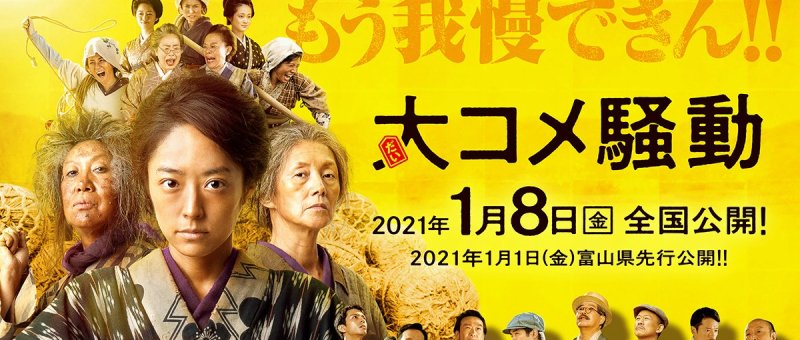
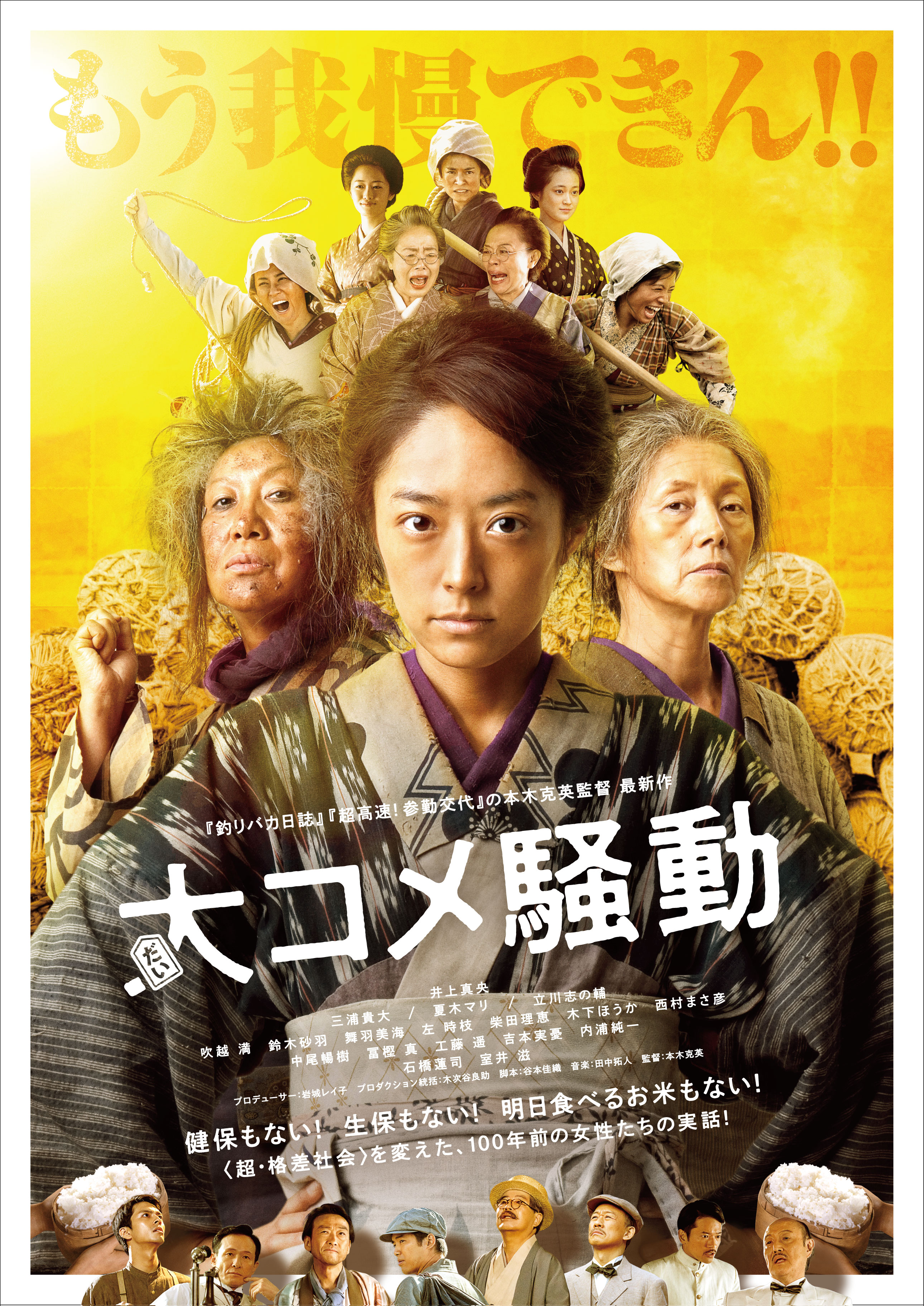
Angry Rice Wives (大コメ騒動, Katsuhide Motoki, 2021)

“Even if women try to do something, nothing will change” a condescending husband insists cautioning his wife not to take part in any more protests lest he lose his protected status and the family its source of income. Set in the middle of the Taisho era, Angry Rice Wives (大コメ騒動, Dai Kome Soudo) dramatises a small moment of revolution in which the resistance movement organised by a community of women towards the spiralling cost of rice sent shock waves through a changing society and in its own way provoked a change of course in an increasingly capitalistic society. 

Beginning in April 1918, the small fishing village of Toyama sees an exodus of its young men who must spend the off-season when the catch is low working other jobs in order to make ends meet, This necessarily means their wives and families are left behind and must make do with what they themselves can earn in doing menial jobs such as transporting rice and the little their husbands might be able to send before their return. A farmer’s daughter who married into the fishing community, Ito (Mao Inoue) is one of the few literate women in the village and looked to as a kind of oracle reporting the contents of the morning paper to the other wives who are keenly interested in the continually fluctuating price rice which seems set to rise still more with news that Japan plans to send troops to Siberia. 

As the voiceover relates, with the catch so low rice is the only form of sustenance available but prices have already exceeded what most of the women can earn in a day leaving them unable to feed their feed their families and giving rise to increasing discontent with the inequalities of the contemporary social order. Taking drastic action and led by eccentric old woman Kiyonsa (Shigeru Muroi), they stage a rebellion by intercepting their locally grown rice in order to stop it being sent to Hokkaido which is reported in the newspapers as an “uprising”. The term is indeed a little grand for what actually took place, but it does at least seem to spark a spirit of rebellion echoing around the country even if nothing much as changes in Toyama. Buoyed by a sense of wider support, the women continue their protests merely asking for the rice merchants to sell at a more reasonable rate (which they are perfectly capable of doing) while decrying the immorality of the obvious profiteering by corrupt authorities including local bigwig Kuroiwa (Renji Ishibashi) who are deliberately stockpiling rice to push the price up while planning to sell it to the government for a hefty price to feed their troops. 

Kuroiwa is entirely unsympathetic to the women’s predicament while the local police chief Kumazawa (Junichi Uchiura) believes himself indebted to him and is therefore entirely under his thumb. Neither of them think the women are much of a threat, Kumazawa randomly arresting a middle-aged man close to several of the women the rationale being as the husband of one puts it that women can never achieve anything no matter how hard they try but a man’s involvement in such rebellious activity would be cause for concern. Similarly, Ito is often told that her education is of no use, partly because the other women feel inferior for not having any, but struggles to find the self-confidence to standup to the corruptions of lingering feudalism owing to her liminal status as a non-native villager despite having given birth to three children there. Even so she is often looked to as a local problem solver and potential successor to Kiyonasa as leader of the village women if only she could learn to embrace the courage of her convictions. 

The children, by contrast have no such qualms, Ito’s young son Soichiro directly telling the profiteering proprietress of the rice store Mrs Washida (Tokie Hidari) that it’s her own fault another child stole food because if she hadn’t insisted in pricing her customers out to the point that they were starving she would never have needed to steal. “What exactly has capitalism done for us?” an opportunistic visitor from the workers party asks but receives short shrift from the cynical Kiyonsa who agrees they should rebel but is non-plussed by the flummoxed canvasser’s admission that he has no real plan for what do afterwards. Washida plays divide and conquer, pitting the women against each other and tempting even Ito with offers of under the table rice deals to feed their starving families if only they back down but though the solidarity of the women is temporarily ruptured it is never truly broken as they stand together to fight for fairness in the face of the Kuroiwas and Washidas of the increasingly capitalistic society. Their resistance eventually forces the government to backdown, realising they can’t simply ignore the plight of society’s poor or take their complicity for granted while attempting to starve them into submission. 


International trailer (English subtitles)

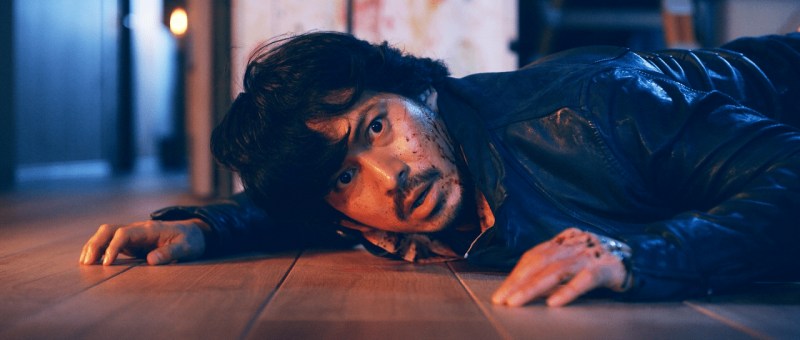
It Comes (来る, Tetsuya Nakashima, 2018)

According to a duplicitous folklorist in Tetsuya Nakashima’s anarchic horror film It Comes (来る, Kuru), monsters aren’t real. People made them up so they wouldn’t have to face an unpleasant reality. Farmers who had more children than they could feed invented a monster who came to claim their infants rather than have to live with the reality that they left them in the in the forest to die. As it turns out this monster may actually be “real”, but undoubtedly fuelled by the loneliness of a neglected child whose parents are burdened by their own particular legacy of parental toxicity. 

The mother of soon-to-be-married Hideki (Satoshi Tsumabuki) more or less says as much when he brings his fiancée to meet the family at a memorial service for his late grandfather. “Maybe it’s her upbringing” she snidely suggests, remarking that Kana (Haru Kuroki) is “a little gloomy” (which seems like an odd criticism to make of a guest at what is effectively a reenactment of a funeral). A strangely beaming Hideki keeps reassuring his fiancée that she’s “perfect” while she continues to worry about whether she’s a good fit seeing as she never knew a “real” family having been raised by a mother she regards as neglectful. But even at the couple’s wedding it’s clear that Hideki mostly ignores her, so obsessed is he with being the centre of attention. “Is it ever not about you?” one of the fed up guests eventually heckles, but it evidently never is. After setting up his “perfect” life in a “perfect” luxury flat and having a “perfect” baby, Hideki sets up a blog about being the perfect dad and barely helps with their small daughter Chisa driving Kana slowly out of her mind with his narcissistic self-obsession and thinly veiled emotional abuse. 

When the ghosts start coming, we might wonder if they reveal the truth or effect a distorted reality that leans in to otherwise unspoken dark thoughts, but Hideki really is as someone puts it all lies. When he’s persuaded to visit an “exorcist” she simply tells him to treat his wife and daughter properly to make the monster go away sending Hideki into a small moment of rage implying that he really does know what he is rather than having “forgotten” a cruel alter ego. In his charmed life, we might even wonder if he made some kind of deal with the devil which would explain his rather vacant smile though as it turns out it’s more like he’s cursed by a forgotten childhood encounter with an ancient forest spirit which hints at a deeper, older evil going all the way back to those farmers and the children they abandoned. 

Then again, it seems as if Hideki was rather spoiled as a child leaving him craving both attention and approval, while Kana is still struggling with resentment towards the mother she mainly had to parent herself and is afraid of becoming. Hideki snaps at her that she shouldn’t lose her temper with the baby because children remember, though as it turns out neither of them can really give their full attention to Chisa because of the realities of parenthood which among other things include constant anxiety and feelings of inadequacy. The parents are effectively haunted while cursed by their own toxic parental legacies that they will inevitably pass on to their daughter whether they mean to or not. 

It’s much the same for occult writer Nozaki (Junichi Okada) brought in to help solve the case with the help of his girlfriend, Makoto (Nana Komatsu), a bar hostess with psychic abilities. He once persuaded an old girlfriend to have an abortion because he was afraid of becoming attached to something he might eventually lose, and may be in a relationship with Makoto partly because she is unable to bear children for reasons connected to her frustrated love for her icy exorcist sister Kotoko (Takako Matsu) who like Nozaki wilfully distances herself from others to protect herself from the pain of loss. But as another shaman tells him, in a land of darkness where you no longer know right from wrong pain is the only truth. 

Nakashima shoots with a thinly veiled irony, vacillating between the ridiculousness of demonic spirits wreaking havoc in a well-appointed Tokyo apartment and the concession that there are indeed monsters in the world and as another infected suggests, they are we. Once again set at Christmas much like World of Kanako, Nakashima’s familial horror juxtaposes the season of goodwill with supernatural violence even as Kotoko marshals every power at her disposal from her roots in Okinawa shamanism to Buddhism and Christianity to hold back the latent evil born of a little girl’s loneliness. Meanwhile, he draws inspiration from classic J-horror and particularly the work of Nobuo Nakagawa in his green mists and swamp-based set piece in which Nozaki finds himself mired in a lake of life and death. Kotoko’s wounded eye and fear of mirrors hark back to Yotsuya Kaidan and the betrayed ghost of Oiwa, herself a victim of a man whose self-involved quest for approval cost her her life. At heart an interrogation of the parental bond the film eventually comes down on the side of family as Nozaki reclaims his frustrated paternity while a little girl dreams of nothing more sinister than a land of omurice. 


It Comes screened as part of this year’s Japan Foundation Touring Film Programme.

International Trailer (English subtitles)

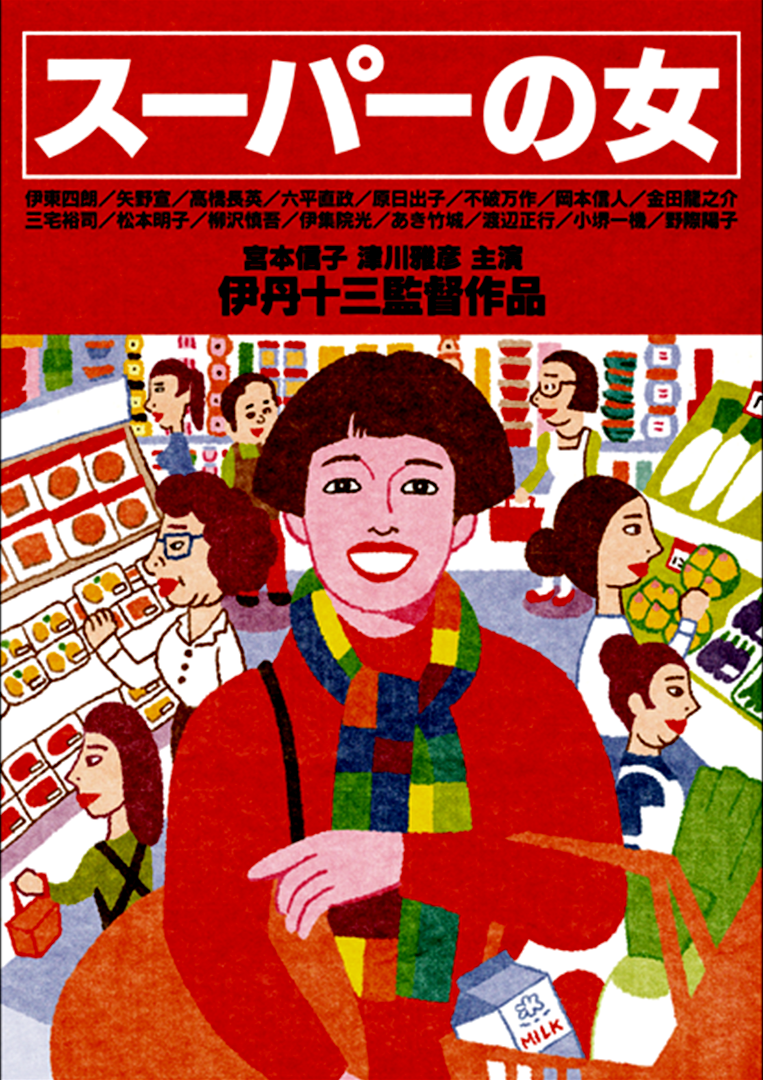
Supermarket Woman (スーパーの女, Juzo Itami, 1996)

By 1996 Japan had entered an extended period of economic stagnation which signalled the end of post-war aspiration but for many at least the false promises of the Bubble era proved hard to dispel. In what would be his penultimate film, Supermarket Woman (スーパーの女, Supa no Onna), Juzo Itami turns his attentions to the insular world of the nation’s family-held, independent supermarkets to ask a few questions about integrity in business which cut straight to the heart of what kind of society post-Bubble Japan intended to be given yet another opportunity to make itself anew. 

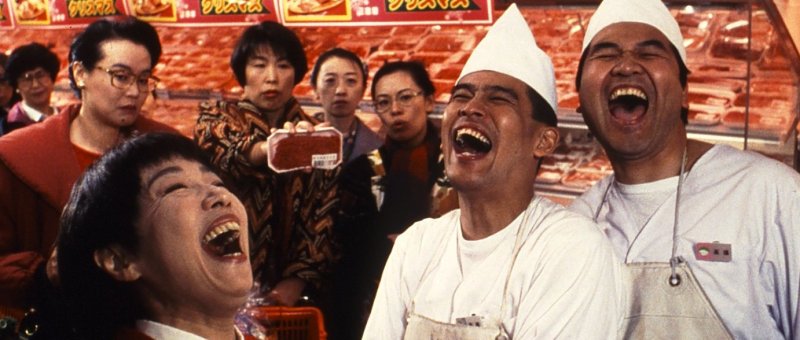
As the opening text crawl explains, this is a story not about giant supermarket chains but your friendly indie local. “Honest Mart” is a family-owned, mid-range supermarket in a declining industrial area nominally run by absentee CEO Goro (Masahiko Tsugawa) who was bequeathed the place by his father but is a melancholy drunkard delegating responsibility to his manager. The store has a huge problem in that a rival has recently re-opened under the new name “Discount Demon” and seems primed to steal all their business. On a stakeout of the new place, Goro runs into a childhood friend, Hanako (Nobuko Miyamoto), who is now a widow returning to the area. With her lifelong experience as a veteran housewife, Hanako knows a few things about supermarkets and she’s not very impressed with Discount Demon, doing a few quick calculations to realise the supposed discounts aren’t as enticing as they seem while common gimmicks like the all pervasive red glow that makes their meat look fresher than it really is only irritate her. Goro asks her for a “professional” opinion on Honest Mart without telling her who he is, only to discover she’s even less impressed with them, certain that his place is on the way out thanks to its dated decor, uninviting atmosphere, and low quality produce. 

The irony is Honest Mart is not much better than Discount Demon, both stores are subject to the same industry standards in which a certain degree of obfuscation is permissible. “In business honesty doesn’t pay” Hanako is told by the onsite butcher after she questions his tendency to mix meats to pass them off as more expensive cuts, while she later discovers that the store engages in the practice of repackaging unsold meat and fish with new expiration dates and is not very particular about its suppliers when it comes to buying in ready-made products. Brought on board to save the store, Hanako breezes in with a new mission to win the hearts and minds of her customers, and she can’t do that if she can’t have confidence in her stock. In any case, her the customer is always right policy quickly brings her into conflict with the store manager, an older more conservative man who actively resists innovation and resents having his authority undercut by an interloping woman. 

Meanwhile, we can also see that customer attitudes have changed. There’s a problem with availability of trolleys because, perhaps unusually for Japan, customers are just abandoning them willy-nilly in the carpark instead of retuning them to the trolley point like responsible shoppers. One man is even for some reason intent on stealing a large number of shopping baskets, caught by Hanako loading them into his car. Everybody wants cheap, which is understandable especially given the economic situation, and they might even be a little underhanded when it comes to getting it, but they also expect a reasonable level of quality and to be able to trust that the food they’re buying is safe to feed their families. Hanako is most alarmed that the ladies who work in the kitchen area, who are obviously wives and mothers themselves, do not shop at Honest Mart because they know what goes on at the store and they don’t trust it. 

“A housewife knows” Hanako is fond is saying. Her revolution is in essence a vindication of “the housewife”, perhaps the most maligned and dismissed figure of the mid-90s society, putting to good use all of her veteran experience both of running a home and of working a series of part-time jobs including those in supermarkets which she claims to love. Approaching the problem from the point of view of a consumer, she attempts to help Goro achieve his dream of making Honest Mart number one in Japan not through making it the most financially successful but the most loved by listening to women like her in the form of a focus group of local aunties some of whom had previously been serial complainers. 

Then again, some of her decisions are in a sense contradictory as she attempts to streamline the business along classically capitalistic lines in suggesting that the store doesn’t really need its overqualified butcher and fishmonger because the part-timers could be trained to do a “good enough” job. “Good enough” is in a sense her business philosophy, only not in the sense that somewhere like Discount Demon which falsely advertises regular steak as discount Wagyu means it, rather that her customers are after an everyday level of produce and so it’s not surprising that premium meats don’t sell. She wants to get rid of the butcher, who turns out to be on the fiddle, and the melancholy fishmonger disappointed no one wants his top quality seafood, because their “artistic temperament” is disruptive to the flow of the store and their presence is perhaps emblematic of the bloated, pretentious management style which is holding it back. 

Positioning the “housewife’s choice” as the ultimate seal of approval, Supermarket Woman advocates for a return to wholesome, small-town values, prioritising a sense of integrity as Honest Mart projects itself as a corporate force their customers can trust, perhaps anticipating a trend in dedicating itself to providing good quality fresh produce at fair prices in direct opposition to Discount Demon and its underhanded trickery. “Honest Mart keeps its word” Goro assures, pledging to honour a mistaken ad which promised eggs at prices so good it caused minor riot. In the end, it’s all about trust and integrity. If you don’t have that, you don’t have anything and the housewives of post-Bubble Japan will it seems vote with their feet. 


Currently available to stream in the US via Criterion Channel.

Original trailer (no subtitles)

Twinkle (きらきらひかる, Joji Matsuoka, 1992)

TwinkleThe end of the Bubble Economy created a profound sense of national confusion in Japan, leading to what become known as a “lost generation” left behind in the difficult ‘90s. Yet for all of the cultural trauma it also presented an opportunity and a willingness to investigate hitherto taboo subject matters. In the early ‘90s homosexuality finally began to become mainstream as the “gay boom” saw media embracing homosexual storylines with even ultra independent movies such as A Touch of Fever becoming unexpected box office hits. Based on the book by Kaori Ekuni, Joji Matsuoka’s Twinkle (きらきらひかる, Kira Kira Hikaru) tackles this subject head on in examining the changing nature of the modern family as personal freedom and greater social liberalism conflict with familial duty and centuries old tradition.

We first meet Shoko (Hiroko Yakushimaru) in the office of a doctor who assures her that her “problems” are nothing to worry about and the best thing to do is find “a nice man” and get married after which she’s sure to feel much better. On the taxi ride home, her mother suddenly pulls out an omiai photo she’s apparently been carrying in her bag the whole time and proposes Shoko try meeting this particular prospect just as the doctor suggested.

Her “date” is Mitsuki (Etsushi Toyokawa) – an unmarried middled aged doctor who doesn’t seem very interested in the omiai business either. After a brief period of bickering, Shoko and Mitsuki get some time to themselves at which point Mitsuki reveals that the reason he isn’t married is because he has a boyfriend. Despite this, the pair come to an understanding and decide to get married to finally get their relatives off their backs. However, if they thought the pressure would go away after the wedding, they were mistaken. Though both sets of parents know about their children’s reasons for originally avoiding marriage, they don’t know about those of the spouses and when they find out it’s just going to get even more complicated.

We don’t find out exactly what “problems” Shoko may have had in the past. On the morning of the omiai her family dog dies meaning she has an obvious reason to appear visibly upset, yet she also displays symptoms of ongoing depression right the way through the film, flitting between upbeat cheerfulness to impulsive behaviour and crying fits. She also has a long standing drink problem which can result in dangerous accidents such as an incident where Mitsuki returns home to find her passed out on the floor with the iron in one hand and an empty glass of whiskey apparently fallen out of the other.

Mitsuki is in a relationship with a much younger college student and, though they don’t seem to go out of their way to hide their relationship, they can’t exactly be open about it either. Kon did not approve of Mitsuki’s decision to get married and has been avoiding him but Shoko is keen for the two men’s relationship to continue, eventually befriending the young man and bringing him home as fully fledged member of their family. Mitsuki finds this arrangement quite confusing, trapped between two spouses and feeling a responsibility to both of them. In one notable exchange he’s asked to make the relatively simple choice between strawberry and vanilla ice-cream, but the question has taken on a much wider implication than just tonight’s dessert.

The arrangement starts out well enough, except that the growing affection between the married couple eventually begins to place a wedge between them, each knowing that they can never truly satisfy the demands of the other. Not satisfied with a marriage, the parents also expect children which is going to require medical assistance given the circumstances, but Mitsuki is still unsure about taking this next step. Shoko, though experiencing a intensification of her emotional volatility, now suggests a truly radical solution for the early ‘90s – that she undergo artificial insemination using the mixed sperm of both Mitsuki and Kon to essentially have “their” baby.

Shoko and Mitsuki are both trapped, in a sense, by their societal obligations – particularly that of producing children. Mitsuki’s parents know he’s gay, though they tolerate more than accept, yet they still pressure him into fathering a child for appearance’s sake alone. His father had come to terms with his son’s sexuality, even if Mitsuki refers to himself as a son who has “betrayed” his father, but he was against the marriage viewing it as cruel and irresponsible. Once Shoko’s parents discover the real reasoning they try to take over, ignoring Shoko’s views (and even her first clear stating of her problems with alcohol), acting as if they were the injured party.

Though slightly older, Shoko and Mitsuki have found themselves at the centre of a generational conflict as they fight to free themselves from parental control even in adulthood. The future they propose for themselves is an unusual one and unlikely to be accepted by society, yet it is finally their own decision and only by unshackling themselves from the same social pressures which brought them together can they learn to forge a new future. Ten years later, Ryosuke Hashiguchi’s Hush! would suggest a similar scenario which, though still not universally accepted, is greeted with much less resistance than the entirely radical arrangement of Shoko, Mitsuki, and Kon. An interesting look at the changing nature of  social bonds in the immediate post-bubble era, Twinkle is a melancholic though ultimately hopeful tale of three individuals who might be able to provide the stability each needs if only they can learn to withstand the overwhelming external pressures.


Original trailer (no subtitles)

https://www.youtube.com/watch?v=zN2m8GMmuqM