The Love of the Actress Sumako (女優須磨子の恋, Kenji Mizoguchi, 1947)

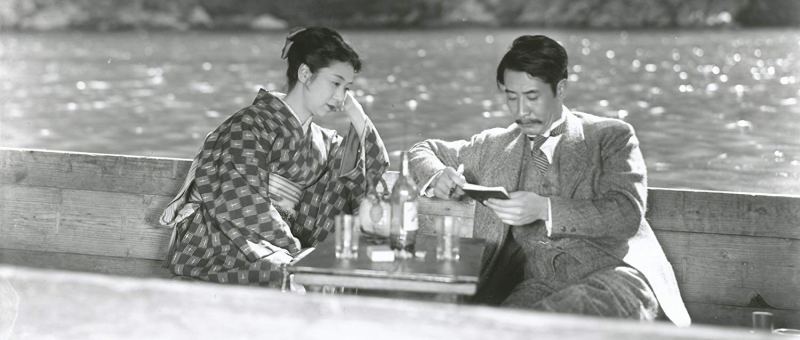
vlcsnap-2019-03-27-01h39m45s435The Taisho era was, like that of the post-war, a time both of confusion and possibility in which the young, in particular, looked for new paths and new freedoms as the world got wider and ideas flowed in from every corner of the globe. In The Love of the Actress Sumako (女優須磨子の恋, Joyu Sumako no koi), the second of a loose trilogy films about female emancipation, Kenji Mizoguchi took the real life story of a pioneering actress of Western theatre and used it to explore the progress of lack there of in terms of social freedoms not only for women but for artists and for society as a whole.

We begin in late Meiji as theatre director Shimamura (So Yamamura) fights to establish a foothold of Western-style “art theatre”, moving away from the theatricality of kabuki for something more immediate and naturalistic. He has, however, a problem in that as women were not allowed to take to the kabuki stage all of his students are male and casting a man to play a woman’s role would run counter to his desires to create a truly representative theatre. It is therefore lucky that he runs into Sumako Matsui (Kinuyo Tanaka) – a feisty, determined young woman who had divorced her first husband for infidelity and then left the second when he complained about her desire to pursue a career on the stage. In Sumako, Shimamura finds a muse and the ideal woman to portray the extremely controversial figure of Nora in his dream production of Ibsen’s incendiary A Doll’s House.

Shimamura casts Sumako because he sees in her some of Nora’s defiance and eventual desire to be free from illusionary social constraints, but it is in fact he who ends up embodying her spirit in real life. Somewhat feminised, Shimamura is in a difficult position in having married into his wife’s family, leaving him without real agency inside his own home as evidenced by his mild opposition to his daughter’s arranged marriage. While he wishes that his daughter be happy and if possible marry for love, Shimamura’s wife is very much of the old school and wants to make the best possible match in terms of financial gain and social status, viewing emotional compatibility as a low priority (the daughter herself as relatively little say). Unwisely falling in love with Sumako, it is he who eventually decides to follow Nora’s example by walking out not only on his family but also on the theatre company. He does this not quite because the scales have been lifted from his eyes – he was never under any illusion that his arranged marriage was “real” and there is of course an accepted degree of performance involved in all such unions, but because he finally sees possibility enough in his love for Sumako and the viability of emotionally honest Western art to allow him to break free of outdated feudal ideas of familial obligation.

Nevertheless, making a career as an artist is a difficult prospect in any age and Shimamura’s emotional freedom quickly becomes tied up with that of his art. Sumako’s Nora proves a hit (in the last year of Meiji), but he is ahead of his times both in terms of his liberal, left-wing philosophy and his determination to embrace modern drama in a still traditional society. The roles we see Sumako perform, including that in Tolstoy’s Resurrection which was another of those that helped to make her name, are all from proto-feminist plays which revolve around women who, like herself, had chosen to challenge the patriarchal status quo in pursuit of their own freedom and agency. Shimamura’s wife makes no secret of her outrage to her husband’s desire to stage A Doll’s House, viewing Nora’s decision as “selfish” and perhaps of a subversion of every notion she associates with idealised femininity. Though not so far apart in age, Sumako is a woman of Taisho who left not one but two unfulfilling marriages and is determined to forge her own path even if that path eventually leads her to subsume her own desires within those of her lover as the pair attempt to put their social revolution on the stage.

The revolution, however, does not quite take off. Despite good early notices, Shimamura’s Art Theatre company quickly runs into trouble. Faced with financial ruin, he does what any sensible theatre producer would do – he begins to prioritise bums on seats and acknowledges that if he’s to keep his company afloat and facilitate his dream of making Western theatre a success in Japan he’ll have to compromise his artistic aims  by putting on some populist plays. Of course, this sudden concession to commercial demands does not go down well with all and some of his hardline actors begin to leave in protest not just of his selling out but of his twinned desire to make Sumako his star.

Tellingly, the pair are eventually forced out of Japan entirely to tour the beginnings of empire from Korea to China and on to Taiwan. Their ideas are too radical and their society not quite ready for their messages even if not initially as hostile as it would later become. Shimamura works himself to the bone trying to keep his dream alive, eventually damaging his health. Sumako remains somewhat petulant about being forced into an itinerant lifestyle while her onstage personas come increasingly to influence her offstage life until it is said of her that her performance is “no longer an interpretation but an extension of reality”. In this, Sumako has, in a sense, achieved Shimamura’s dreams of a truly naturalistic theatre, but it comes at a cost, as perhaps all art does, and, Mizoguchi seems to suggest, becomes a kind of sacrifice laid down to a society still too rigid and unforgiving to appreciate its sincerity. Nevertheless, their boldness, as fruitless as it was, has started a flame which others intend to keep burning, eventually becoming a beacon for another new world looking to rebuild itself better and freer than before.


Short clip featuring Sumako’s performance as Carmen.

Victory of Women (女性の勝利, Kenji Mizoguchi, 1946)

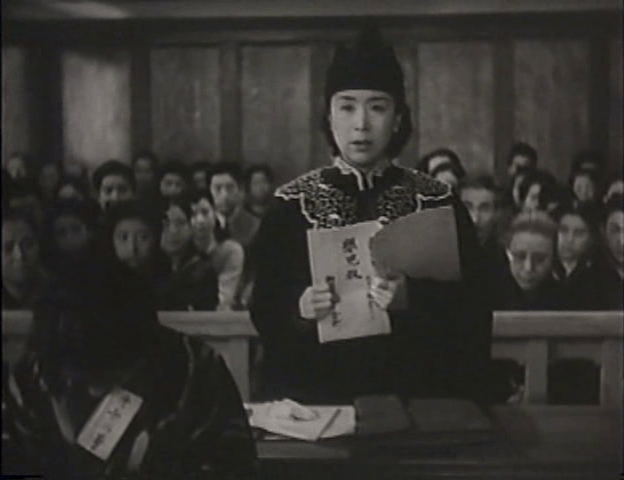
Victory of Women cap 1Female suffering in an oppressive society had always been at the forefront of Mizoguchi’s filmmaking even if he, like many of his contemporaries, found his aims frustrated by the increasingly censorious militarist regime. In some senses, the early days of occupation may not have been much better as one form of propaganda was essentially substituted for another if one that most would find more palatable. The first of his “women’s liberation trilogy”, Victory of Women (女性の勝利, Josei no Shori) was released in 1946 and expressly embraced the democratic philosophy espoused by the American authorities which necessarily included a motion towards female emancipation.
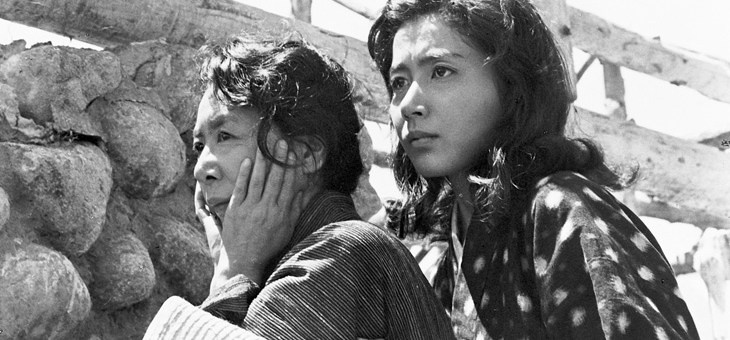
Played by Mizoguchi’s muse Kinuyo Tanaka, our heroine is Hiroko – a young woman working as a lawyer defending women against the cold and hard face of the law. Her family situation is, however, complicated. Her father having passed away, Hiroko’s sister Michiko (Michiko Kuwano who sadly passed away during shooting after collapsing on set) married the prosecutor Kono (Kappei Matsumoto) who financially supported Hiroko so that she might become the lawyer she is today. Meanwhile, Kono is also responsible for the arrest and incarceration of Hiroko’s fiancé Yamaoka (Shin Tokudaiji), a liberal intellectual. The political situation having changed, Yamaoka is to be released from prison after five years but is now in extremely poor health. Hiroko intends to return to him, resume their former relationship and marry once his health recovers. This is anathema to Kono who still objects to his liberalist views and views himself as having a hold over Hiroko’s future as the head of her family and in having supported her financially.

Financial support is a cornerstone if not the full foundation of Kono’s position of entitled superiority over Hiroko and her family. Despite the melodramatic underpinning of the case at hand, the real questions are the ones defining the direction of the post-war world in pitting the feudal values of “duty” and “womanliness” against a modernising liberality that prizes freedom and equality above hierarchy and obligation.

Kono, perhaps to his credit, does not appear object to the idea of female lawyers and has indeed facilitated Hiroko’s rise to just such as position but otherwise affirms that “a woman’s duty is easy. All that is required of her is self-sacrifice”. The idea of “self-sacrifice” is one which is brought up in the closing speeches of the trial in which Hiroko makes an impassioned plea in the case of a mother, Moto (Mitsuko Miura), who, mad with grief, held her baby too closely and may have suffocated it. Kono’s argument is that Moto’s transgression is against nature and the social order, that she has “failed” as a woman in rejecting her maternity by murdering her child. He rejects the “extenuating circumstances” of her grief and desperation by painting her “crime” as a selfish one in choosing to save her own life rather than sacrifice herself on her child’s behalf. Insisting that she has “disgraced the morals of women”, Kono requests she be punished severely as an example to the others.

In refuting Kono’s argument, Hiroko not only restates the extenuating circumstances of the intense strain on Moto’s mental health but attacks his entire way of thinking in positioning “motherhood” as the primary female “duty”. She does not deny that there have been many wonderful stories of women who valiantly sacrificed their own lives for their families, but reminds the court that these stories have often been misused as a kind of propaganda in service of female oppression, that under the feudal system which militarists prized so highly women were little more than slaves to men with no rights or agency. Further more, she points to the corruption of the hierarchical society which has left Moto in such a difficult position following her husband’s early death as a result of an accident at the factory for which the factory paid but only until the end of the war at which time he was cruelly cast away like so many of his generation who had perhaps been similarly exploited to serve a similar idea of “duty” only this time to the state. Kono blames Moto, insisting that her “crime” occurred because her character is “weak”. Hiroko does not blame Moto at all but the society which placed her in such an impossible position and has all but broken her spirit.

The argument is between a fair and just society in which the law exists for the protection of the people, and an austere and cruel one in which the law exists to oppress and tyrannise. Kono, an arch and unreconstructed militarist, believes in the primacy of the law. He is rigid and uncompromising, branding Hiroko’s summation as “sentimental” and “romantic”, dismissing an “irrational” woman’s logic from his elevated position on the podium. As others point out to him, his way of thinking is outdated and his tendency towards an entitled assumption that it will eventually prevail through being the proper order of things is extremely misguided yet he clings fiercely to feudalistic values which have ensured power remains in the hands of people like him since time immemorial, uncompromising to the last.

Rather than focus on Moto and her trial, Mizoguchi and his scriptwriters Kogo Noda and Kaneto Shindo, return to the realms of melodrama in shifting into the domestic as Hiroko’s older sister Michiko struggles between the feudal duty to her husband (however much she appears to dislike him) and her love for her sister whose modern liberal way of thinking still strikes her as immoral. Michiko, it seems, was forced to sacrifice herself for her family in marrying Kono for financial support. The sisters’ mother, now committed to Hiroko’s way of thinking, willingly married her daughter off telling her never to return believing it to be the proper way of things. Having suffered so long in service of an ideal no longer current, Michiko gradually comes to the realisation that she now has a choice – she does not have to stay with a husband who she does not love and does not love her, she is free to leave him and live as a full and independent woman if that is her individual will.

Nevertheless, the slightly awkward framing perhaps casts the choices of Hiroko and her sister as being defined by their respective men – Hiroko swept along by Yamaoka’s socialist politics and Michiko by her husband’s conservatism. Both men are in different senses problematic – Yamaoka vindictive and unsympathetic to Michiko’s attempts to make peace, no more forgiving than Kono while also patronising in his last impassioned speech which places such great responsibility in Hiroko’s “tiny hands”. Nevertheless, Hiroko’s clearsighted fight not only for her own freedom but for a fairer, more compassionate society founded on the idea of a literal social justice in which the law exists in service of its people rather than to oppress them is remarkably forward thinking, moving beyond “propaganda” for the new regime to the better world so often envisaged by the post-war humanists.


A Legend or Was It? (死闘の伝説, Keisuke Kinoshita, 1963)

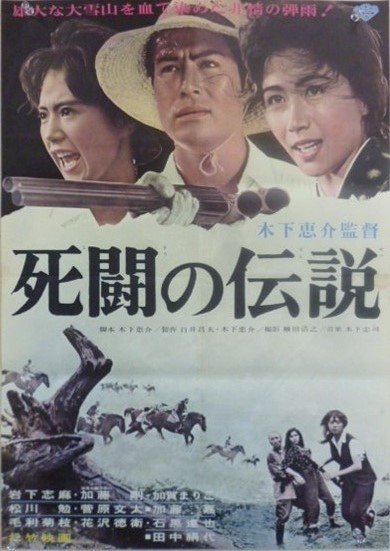
A Legend or Was it posterIn 1951’s Boyhood, Kinoshita had painted a less than idealised portrait of village life during wartime. With pressure mounting ranks were closing, “outsiders” were not welcome. The family at the centre of Boyhood had more reasons to worry in that they had, by necessity, removed themselves from a commonality in their ideological opposition to imperialism but newcomers are always vulnerable when they find themselves undefended and without friends. 1963’s A Legend or Was It? (死闘の伝説, Shito no Densetsu, AKA Legend of a Duel to the Death) tells a similar story, but darker as a family of evacuees fall foul not only of lingering feudal mores but a growing resentment in which they find themselves held responsible for all the evils of war.

Beginning with a brief colour framing sequence, Kinoshita shows us a contemporary Hokkaido village filled with cheerful rural folk who mourn each other’s losses and share each other’s joys while shouldering communal burdens. A voice over, however, reminds us that something ugly happened in this beautiful place twenty years previously. Something of which all are too ashamed to speak. Switching back to black and white and the same village in the summer of 1945, he introduces us to Hideyuki Sonobe (Go Kato) who has just come home from the war to convalesce from a battlefield injury. Hideyuki’s engineer father went off to serve his country and hasn’t been heard from since, and neither has his brother who joined the air corp. His mother (Kinuyo Tanaka), sister Kieko (Shima Iwashita), and younger brother Norio (Tsutomu Matsukawa) have evacuated from Tokyo to this small Hokkaido village where they live in a disused cottage some distance from the main settlement.

The family had been getting by in the village thanks to the support of its mayor, Takamori, but relations have soured of late following an unexpected marriage proposal. Takamori’s son Goichi (Bunta Sugawara), a war veteran with a ruined hand and young master complex, wants to marry Kieko. She doesn’t want to marry him, but the family worry about possible repercussions if they turn him down. It just so happens that Hideyuki recognises Goichi and doesn’t like what he sees – he once witnessed him committing an atrocity in China and knows he is not the sort of man he would want his sister to marry, let alone marry out of fear and practicality. Hideyuki, as the head of the family, turns the proposal down and it turns out they were right to worry. The family’s field is soon vandalised and the police won’t help. When other fields meet the same fate, a rumour spreads that the Sonobes are behind it – taking revenge on the village on as a whole. The villagers swing behind Goichi, using the feud as a cover to ease their own petty grievances.

City dwellers by nature, the Sonobes have wandered into a land little understood in which feudal bonds still matter and mob mentality is only few misplaced words away. The village serves a microcosm of Japanese society at war in which Takamori becomes the unassailable authority and his cruel son the embodiment of militarism. Goichi embraces his role as a young master with relish, riding around the town on horse back and occasionally barking orders at his obedient peasants, stopping only to issue a beating to anyone he feels has slighted him – even taking offence at an innocuous folksong about a man who was rejected in love and subsequently incurred a disability. Despite all of that, however, few can find the strength to resist the pull of the old masters and the majority resolutely fall behind Goichi, willing to die for him if necessary.

As the desperation intensifies and it appears the war, far off as it is, is all but lost, a kind of creeping madness takes hold in which the Sonobes become somehow responsible for the greater madness that has stolen so many sons and husbands from this tiny village otherwise untouched by violence or famine. An embodiment of city civilisation the Sonobes come to represent everything the village feels threatened by, branded as “bandits” and blamed for everything from murder to vegetable theft. The central issue, one of a weak and violent man who felt himself entitled to any woman he wanted and refused to accept the legitimacy of her right to refuse, falls by the wayside as just another facet of the spiralling madness born of corrupted male pride and misplaced loyalties.

Kinoshita returns to the idyllic countryside to close his framing sequence, reminding us that these events may have been unthought to the level of myth but such things did happen even if those who remember are too ashamed to recall them. Tense and inevitable, A Legend or Was It? reframes an age of fear and madness as a timeless village story in which the corrupted bonds of feudalism fuel the fires of resentment and impotence until all that remains is the irrationality of violence.


Original trailer (no subtitles)

Marriage (結婚, Keisuke Kinoshita, 1947)

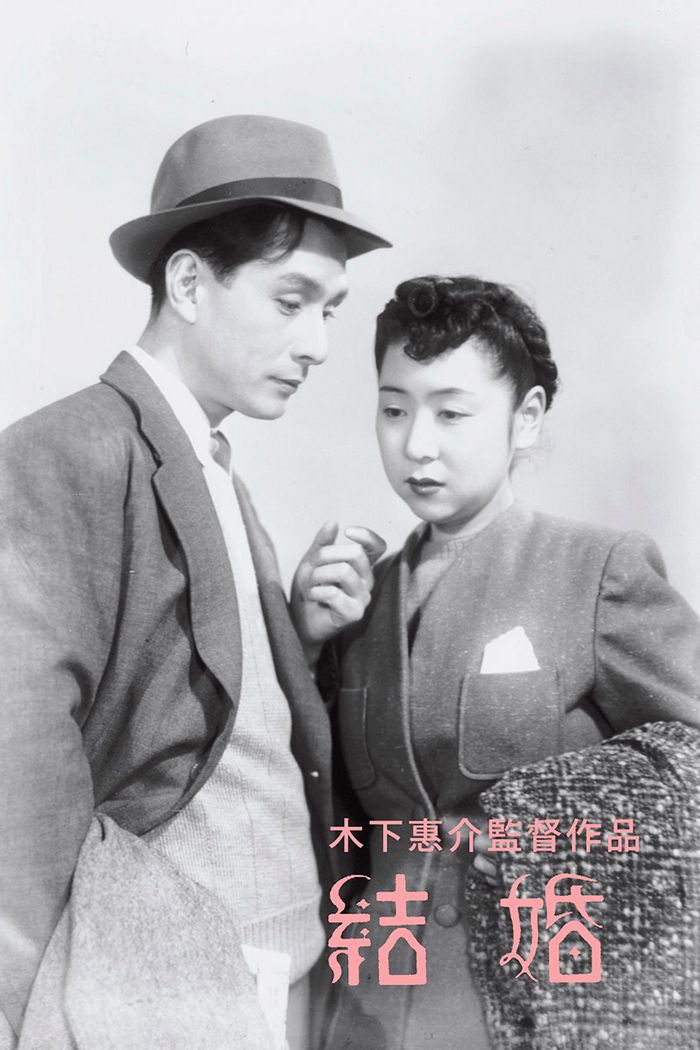
Marriage DVD coverGenerally speaking, the heroes in the world of Keisuke Kinoshita are those who stick steadfastly to their principles and refuse to become corrupted by the world around them. This is all very well but perhaps somewhat idealistic given the pressures of the post-war world. 1947’s Marriage (結婚, Kekkon) finds the director working with scriptwriter Kaneto Shindo whose view of humanity was perhaps a little more pragmatic than Kinoshita’s and therefore recasts his heroes as essentially good people who eventually come to the conclusion that their moral rigidity is causing more unhappiness than compromise might and that an acceptance of complicity may in fact be the only possible way forward.

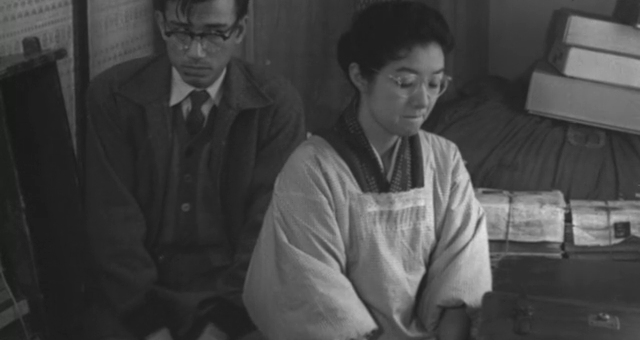
Fumie (Kinuyo Tanaka) became engaged to Sugawara (Ken Uehara) before he went away to war and the couple have been waiting to marry ever since. Though Sugawara returned promptly, unharmed, and seems to be in regular employment, they have been unable to formalise their union because Fumie and her sister are the only members of her family currently working which means that they cannot do without her paycheck. Things begin to look up when Fumie’s father Kohei (Eijiro Tono), formerly an accountant who lost his job when his previous employer went bust, runs into an acquaintance who’s now the owner of a successful restaurant. Shimamoto (Eitaro Ozawa) promises him a job which has the family overjoyed, not least Fumie who may now finally be able to marry, but their happiness is to be short lived. Kohei realises that Shimamoto’s business is built on underhanded practices intertwined with black market profiteering and wants no part of it. The two men argue. Kohei refuses the job and storms out. Fumie is back to square one.

Though Sugawara reiterates that he understands the demands of the situation they find themselves in and will wait as long as is necessary, he too is under pressure from his family to bring the matter to a suitable conclusion. Sugawara’s mother is in poor health and wants to see him settled before she goes. She understands that he has someone in mind, but would rather he marry as soon as possible even if that means marrying someone else entirely – for example, a lovely girl from the village whose omiai photo his aunt has helpfully delivered. Sugawara bears all of this with good grace, but stands firm in insisting he will wait for Fumie even if that means he never marries at all.

The dilemmas are two fold and occur across two generations. Fumie finds herself torn between a duty to her family who are now almost entirely dependent on her as a breadwinner, and her romantic desire to become Sugawara’s wife – a promise made before the war which the post-war world conspires to make impossible. Despite their dire circumstances, the Matsukawas are a happy family doing their best to muddle through though there is obvious tension between teenage son Kei (Shozo Suzuki) and his father over Kohei’s rigid refusal to compromise himself as the times seem to demand. Kinoshita captures the atmosphere of a precarious household with easy confidence, an icy silence descending as Kohei returns with a face like thunder making plain that his job opportunity has not worked out as planned. Everyone is upset and disappointed, but no one has the energy for an argument and so silence is all there is.

Fumie becomes ever more conflicted, especially after a strained meeting with Sugawara’s aunt who seems nice enough but drops a few hints about the girl waiting in the country and Sugawara’s sickly mother. She begins to wonder if her romantic dreams are selfish in a world so wracked with ruin that it seems unlikely that she will ever be in a position to marry. Perhaps it would be more responsible, or just less painful, to end things with Sugawara for good so that he at least can move on. As things stand, the couple only have their Sundays which are endlessly prolonged with additional activities to put off the time that they must part as long as possible. The destabilising visit from the aunt is followed by an awkward, almost celebratory dinner in which sake pushes difficult emotions to the fore. Fumie vacillates, unable to dance she eventually decides to give things a go, affirming that she will simply hold onto and follow Sugawara – seemingly unaware of the wider implications of her statement. During the dance, however, in which she is literally swept off her feet, she changes her mind again, shamed by her brief moment of joy into feeling selfish and self involved as if all those around her suffer in service of her eventual romantic fulfilment.

Where Kinoshita might have introduced a deus ex machina in which the Matsukawas would be the beneficiaries of divine reward for their selfless goodness, Shindo makes way for a more realistic (though perhaps equally melodramatic) solution in which Kohei reassumes his role of the head of the family and chooses his daughter’s happiness over his principles. As such he recognises that he must make the sacrifice that will save them all in abandoning moral righteousness and becoming complicit with the murkiness of the world in which he lives. Pragmatism, this time, wins out but only as a lesser evil in which a compromise is made in the favour of happiness which might, in a round about way, produce a greater change in an already unhappy world.


Titles and opening (no subtitles)

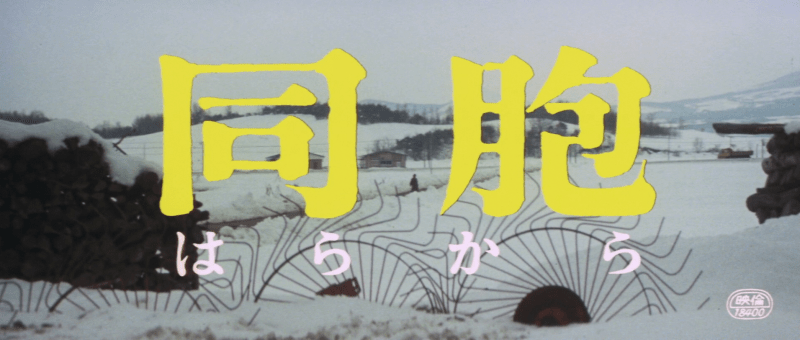
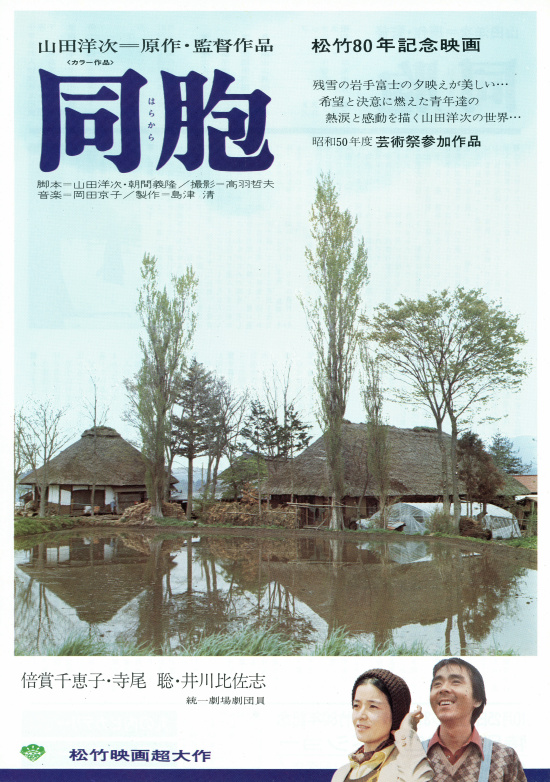
The Village (同胞, Yoji Yamada, 1975)

The Village posterBest known for the long running Tora-san series, Yoji Yamada has often been disregarded by international critics for a perceived over indulgence in sentimentality. Nevertheless, his films are often at pains to capture a Japan which is changing with a noted ambivalence towards the results of those changes. Home From the Sea had rooted itself in the difficult decision of a young couple in realising that their way of life was no longer sustainable in a rapidly modernising economy. The Village (同胞, Harakara) returns to a similar theme, once again harping on “furusato” while the conflicted younger residents of a farming village struggle with the decision to accept the life passed down to them by their parents or abandon it in favour of the bright lights of an urban future.

Narrated by Takashi (Akira Terao), a young farmer and president of the local youth club, The Village revolves around one heady spring in which the arrival of a sophisticated woman from Tokyo injects additional stimulation into the sometimes stagnant community. Takashi, in many ways a very typical resident of Matsuo and many other rapidly depopulating rural villages like it, has taken over his family dairy farm following the death of his father when he was relatively young. His brother, Hiroshi (Hisashi Igawa), took a factory job to help make ends meet and put Takashi through school but has now become embittered and resentful as the widowed father of two young girls. Trapped by circumstance he berates Takashi for his diffidence in remaining uncommitted to farm life while perhaps dreaming of something better that he is too afraid to pursue.

The arrival of Hideko Konno (Chieko Baisho) seems to give Takashi a new sense of purpose. Hideko works for an itinerant theatre company based out of Tokyo which makes a point of taking shows to remote areas which might not ordinarily get much access to the arts. The snag is that the locality will have to take the responsibility of producing the show and absorbing the shortfall should they fail to sell enough tickets to cover costs. Takashi is tempted but he’s also well aware of the risks – the investment is sizeable given the relative poverty of the rural area and the risks involved with failure extreme.

Yamada places the dilemma surrounding whether or not to produce the show at the forefront, but the questions are bigger than they might at first seem. It has to be said that farming, whatever its rewards, is an extremely hard life. As a character puts it in the emotively titled play “Furusato”, it’s disheartening when you get a bad harvest and all your work goes for nothing but it’s almost worse when the harvest is good and the value of your work drops exponentially. For Takashi and the others, the youth association is a much needed social outlet even if many of them regard it as something of a joke and rarely get around to doing very much with it. The idea of the play is attractive to them for several reasons, having something more interesting to do not the least among them, not to mention offering a valuable break in routine in what can often be an overly ordered and somewhat stagnant existence.

However, the very same reasons the play appeals to the youngsters are the ones their elders find suspicious. Having made their peace with rural life and learned to adapt to its rhythms, the older generation worry that the young ones are being swayed by outside influences and neglecting their work in favour of idle pursuits. Meanwhile, many of the youngsters have already left to try their luck in the cities, some of them returning and bringing new experiences back with them while others resolve to remain where the lights are brighter.

Setting the scene, Yamada reminds us the factories have long been encroaching on farmland and that this “ancient” way of life is becoming ever harder in a rapidly modernising economy, but through their involvement with the play and its extremely close to home themes, the members of the youth association are finally able to look at their village through new eyes, seeing not only its immense visual beauty for the first time but learning to reappreciate the value of community and friendship. Life in the city might be more glamorous but perhaps it’s no less hard and only lonely in a different way. At once a celebration of and lament for a changing rural landscape, The Village asks an accidentally profound series of questions about life and happiness but once again puts its faith in goodhearted people creating meaning from togetherness in a world that might otherwise set them apart.


Original trailer (no subtitles)

Fireworks Over the Sea (海の花火, Keisuke Kinoshita, 1951)

In the films of Keisuke Kinoshita, it can (generally) be assumed that the good will triumph, that those who remain true to themselves and refuse to give in to cynicism and selfishness will eventually be rewarded. This is more or less true of the convoluted Fireworks Over the Sea (海の花火, Umi no Hanabi) which takes a once successful family who have made an ill-advised entry into the fishing industry and puts them through the post-war ringer with everything from duplicitous business associates and overbearing relatives to difficult romances and unwanted arranged marriages to contend with.

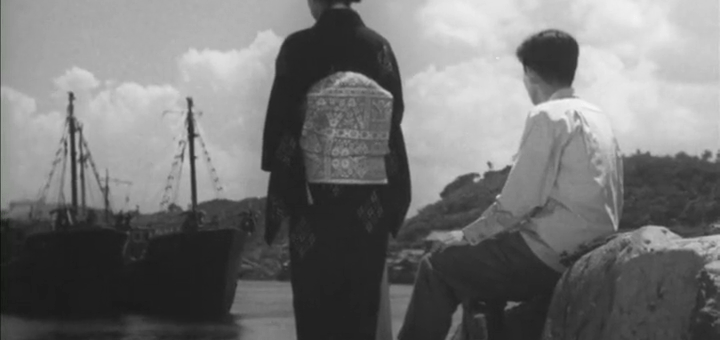
The action begins in 1949 in the small harbour town of Yobuko in Southern Japan. Tarobei (Chishu Ryu) and his brother Aikawa (Takeshi Sakamoto) run a small fishing concern with two boats under the aegis of the local fishing association. The business is in big trouble and they’re convinced the captain of one of the boats has been secretly stealing part of the catch and selling it on the black market. Attempts to confront him have stalled and the brothers are at a loss, unsure how to proceed given that it will be difficult to find another captain at short notice even if they are already getting serious heat from their investors and the association.

Luckily things begin to look up when a familiar face from the past arrives in the form of Shogo (Takashi Miki) – a soldier who was briefly stationed in the town at the very end of the war during which time he fell in love with Tarobei’s eldest daughter, Mie (Michiyo Kogure). Shogo has a friend who would be perfect for taking over the boat and everything seems to be going well but the Kamiyas just can’t seem to catch a break and their attempt to construct a different economic future for themselves in the post-war world seems doomed to failure.

The Kamiyas are indeed somewhat persecuted. They have lost out precisely because of their essential goodness in which they prefer to conduct business honestly and fairly rather than give in to the selfish ways of the new society. Thus they vacillate over how to deal with the treacherous captain who has already figured out that he holds all the cards and can most likely walk all over them. They encounter the same level of oppressive intimidation when they eventually decide to fight unfair treatment from the association all the way to Tokyo only to be left sitting on a bench outside the clerk’s office for three whole days at the end of which Tarobei is taken seriously ill.

However, unlike Kinoshita’s usual heroes, Tarobei’s faith begins to waver. He is told he can get a loan from another family on the condition that their son marry his youngest daughter Miwa (Yoko Katsuragi). To begin with he laughs it off but as the situation declines he finds himself tempted even if he hates himself for the thought. He never wanted to be one of those fathers who treats his daughters like capital, but here he is. Both Miwa, who has fallen in love with the younger brother of the new captain, and her sister are in a sense at the mercy of their families, torn between personal desire familial duty. Mie, having discovered that her husband died in the war, is still trapped in post-war confusion and unsure if she returns Shogo’s feelings but in any case is afraid to pursue them when she knows the depths of despair her father finds himself in because of their precarious economic situation. Shogo is keen to help, but he is also fighting a war on two fronts seeing as his extremely strange (and somewhat overfamiliar) sister-in-law (Isuzu Yamada) is desperate to marry him off to her niece (Keiko Tsushima) in order to keep him around but also palm off her mother-in-law.

Meanwhile, a lonely geisha (Toshiko Kobayashi) who has fallen into the clutches of the corrupt captain is determined to find out what happened to someone she used to know who might be connected to Shogo and the Kamiyas and falling in desperate unrequited love with replacement captain Yabuki (Rentaro Mikuni) who is inconveniently in love with Mie. Kinoshita apparently cut production on Fireworks short in order to jet off to France which might be why his characteristically large number of interconnected subplots never coalesce. Running the gamut from melancholy existential drama to rowdy fights on boats and shootouts in the street, Kinoshita knows how to mix things up but leaves his final messages unclear as the Kamiyas willingly wave their traumatic pasts out to sea with a few extra passengers in tow still looking for new directions.


Titles and opening (no subtitles)

Danger Stalks Near (風前の灯, Keisuke Kinoshita, 1957)

Keisuke Kinoshita is often regarded as a sentimentalist but he wasn’t completely immune to bitterness and cynicism as many of his farcical comedies bear out. Danger Stalks Near (風前の灯, Fuzen no Tomoshibi) begins in serious fashion as a trio of young toughs set on burgling the home of an elderly woman they assume has money but quickly descends into absurd dark humour as we discover there’s just as much money-grubbing thievery going on inside the house as out.

Two street toughs bully a nervous young man who needs money to get back to the country into joining them in a plot to rob a suburban house owned by a mean old woman whom they assume must be hiding a serious amount of cash inside. Having watched the place before, they know that it’s generally just housewife Yuriko (Hideko Takamine), her young son Kazuo (Kotohisa Saotome), and grumpy grandma Tetsu (Akiko Tamura) at home during the day after husband Kaneshige (Keiji Sada) has gone to work at his lowly job as a shoe salesman. Today, however, their aspirations towards crime will be thwarted because it’s all go at the Sato residence – flouncing lodgers, sisters with issues, tatami repair men, and mysterious faces from the past all mean that today is a very bad day for burglary but a very good one for entertainment.

Kinoshita deliberately upsets the scene by casting familiar actors Hideko Takamine and Keiji Sada in noticeably deglammed roles – she with a ridiculous pair of large round glasses and he with a giant facial mole designed to make them look “ordinary” but accidentally drawing attention to their star quality in the process. The Satos are, however, a very ordinary family in that they’re intensely obsessed with money and with their own precarious status in the improving but still difficult post-war economy. Tetsu is Kaneshige’s step-mother which is perhaps why he urges his wife to put up with her tyranny seeing as Tetsu is old and will probably not be around much longer, which means it’s just a waiting game until they inherit the house. Whatever else she may be, Tetsu is a mean old woman whose only hobbies are penny pinching and occasional trips to the cinema where she watches heartwarming dramas about filial piety. Her haughty attitude is perhaps why the crooks assume there is cash in the house but sometimes mean people are mean because they really don’t have money rather than just being stingy by nature.

Nevertheless, Tetsu’s iron grip is slowly destroying the family unit. Kaneshige (whose name ironically means “money multiplying” and uses a rather pretentious reading for his name kanji which are often misread by the postman etc) sneaks home to tell his wife he’s won second place in a competition, worrying that if Tetsu finds out she’ll expect her share of the prize money. The old woman is so mean that she even keeps her own stash of eggs in her personal cupboard along with tea for her exclusive use and takes the unusual step of locking the doors when Yuriko is out running errands because she feels “unsafe” in her own home – an ironic state of mind once we discover how exactly Tetsu was able to buy this house as a lonely war widow in the immediate aftermath of the defeat.

Tetsu is, in a fashion, merely protecting her status as matriarch in oppressing daughter-in-law Yuriko by running down her every move as well as those of her sisters whom she criticises for being dull despite their “cheerful” names but also chastises for lack of traditional virtues. Sakura (Toshiko Kobayashi) pays a visit to the Satos because she needs help – her husband has been accused of embezzlement, but is also hoping Yuriko is going to feed her in return for help with domestic tasks only the pair eventually fall out over a missing 30 yen and some crackers. Meanwhile, second sister Ayame (Masako Arisawa) also turns up but with a “friend” (Yoshihide Sato) in tow whom she hopes can become their new lodger after they ended up throwing the old one out because she burned a hole in the tatami mat floor through inattentive use of an iron. Neither Tetsu nor Yuriko could quite get their head around previous tenant Miyoko’s (Hiroko Ito) liberated, student existence of rolling in late after dates and lounging around reading magazines but a male lodger wasn’t something they had in mind either.

Persistent economic stressors have begun to wear away at family bonds – Tetsu is not a nice old woman, but it probably isn’t nice to be living in a house where you know everyone is just waiting for you to die. At least little Kazuo is honest enough to admit he only likes grandma when she gives him candy. Yuriko seems to be a responsible figure for both her sisters, but resents their relying on her for money while enjoying the various gifts they bring to curry favour including a large amount of fish cake from the prospective lodger/Ayame’s intended (if he doesn’t wind up being swayed by the dubious charms of the seductive Miyoko who insists on sitting in her empty room for the rest of the day because she already paid today’s rent). Meanwhile, Yuriko’s attempt to palm off a pair of unwanted tall geta that were a “present” from Kaneshige’s boss (who also heard about the prize money) leads to an accusation of attempted murder as if she hoped Tetsu might topple to her death after trying them on! The burglars have wasted all day sitting outside watching the ridiculous comings and goings as they bide their time waiting to strike only for the police to arrive on a completely unrelated matter. Turns out, inside and outside is not so different as you might think in a society where everything is a transaction and all connection built on mutual resentment.


Titles and opening scene (no subtitles)

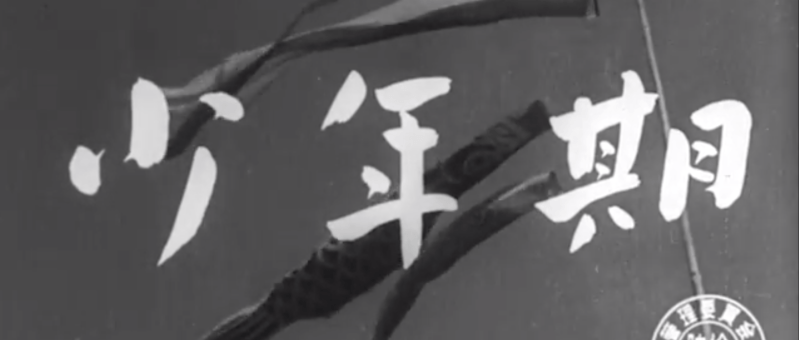
Boyhood (少年期, Keisuke Kinoshita, 1951)

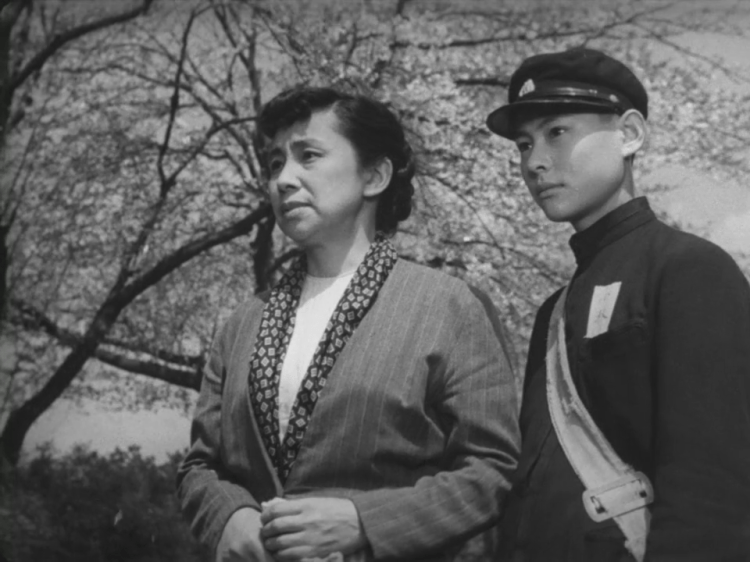
Boyhood (Kinoshita) screencapIt’s easy to look back in judgement with the benefit of hindsight, but much less so to see clearly in the moment. Keisuke Kinoshita’s Boyhood (少年期, Shonenki), arriving just six years after the events that it depicts, is a painful if sympathetic look at the conflicts of the age seen through the eyes of a conflicted adolescent as he struggles to understand his place in a world which is becoming ever colder.

In the spring of 1944, 16-year-old Ichiro (Akira Ishihama) and his mother (Akiko Tamura) investigate the possibilities of retreat, back to the country and away from the increasingly fraught and dangerous city. Their first prospect which offered the comfort of family nevertheless proves too inconvenient and so Ichiro’s mother decides perhaps Suwa, a rural area not quite so out of the way, might be better even if it would mean starting all over again with no friends or family to offer support. Ichiro, however, doesn’t want to leave at all. He is afraid of being thought a coward and doesn’t see why he should have to leave his school and classmates behind just because there’s a war on. If he had his druthers, he’d be a pilot dropping bombs, not a resentful schoolboy torn between his feelings for his family and the increasingly austere demands of militarism.

Ichiro may be 16, and if it were not for his poor health perhaps he might already have been drafted, but he seems younger and is trapped in the difficult gulf between boy and man which makes him petulant and occasionally unreasonable. His father (Chishu Ryu), a professor of English literature, is a well known social liberal which is a problem that eventually makes it impossible for the family to stay on in the city. They decide to sell the house and move to Suwa, allowing Ichiro to stay behind alone as a lodger for the family of greengrocers who are the new occupants, but despite his insistence on his independence Ichiro is not yet ready for self sufficiency and misses his family, especially his mother, dearly, while he also experiences harsh treatment from the military instructors at school thanks to his general lack of soldiering aptitude.

Like his nation, Ichiro is lost in a fog of confusion – torn between the prevailing ideology of the age and that of his gentle hearted father. His problem is that as he is still “a child” and the conditions in which they find themselves make openness difficult, nobody is willing to talk to him seriously about the issues at hand – his father perhaps less out of fear or reticence than because he is acutely aware that his son must come to his own conclusions even if those conclusions prove contrary to his own. Thus, much to Ichiro’s consternation, he refuses to allow him to enrol at a military academy but does not explicitly state why, leaving him with only the vague idea that his father is “anti-war” and therefore a social pariah in a nation where everyone is expected to do their duty.

Ichiro begins to resent his father for the family’s plight, certain that he is the reason they were forced out of their home and also the ongoing cause of his mother’s suffering as she finds herself becoming the family breadwinner as an unlikely milk lady – a job she was only able to get thanks to the friendship of a gregarious neighbour, herself a fellow evacuee in a similar position. Far from the community spirit such situations are said to engender, Ichiro and his family find themselves perpetually excluded, viewed with suspicion as “outsiders” and at the bottom of the pile when it comes to the distribution of resources. “Extra” people get only the extra after the real villagers have had their fill. Meanwhile, Ichiro is bullied by the full on fascists at school, one of whom is the son of a local military commander and has fallen completely under the militarist spell.

Everyone is always telling Ichiro that he will come to understand when he is older. Being young, he resents this intensely but eventually comes to see that they were right, some things can only be understood with the weight of experience. With the war’s end and the eventual defeat of militarism, the fog begins to lift, allowing him to see that the prevailing ideology is not always the correct one and that there’s something to be said for quiet resistance and sticking steadfastly to one’s principles even if it would be much easier to go along with the majority. His father, however, reminds him that those who chose to do just that can hardly be blamed and will likely suffer in whatever is to come. They will need the all love and compassion in the world in order to find a new, less destructive path than the one they had been obliged to walk through a time of fear and madness. Using imperialistic song and propaganda to ironic, somewhat chilling effect Kinoshita presents a characteristically empathetic portrait of a “difficult age” in the life of a young man and his country who each find themselves emerging from chaos and confusion into something completely unknown and perhaps frightening but open and filled with possibility.


Title sequence and opening (no subtitles)

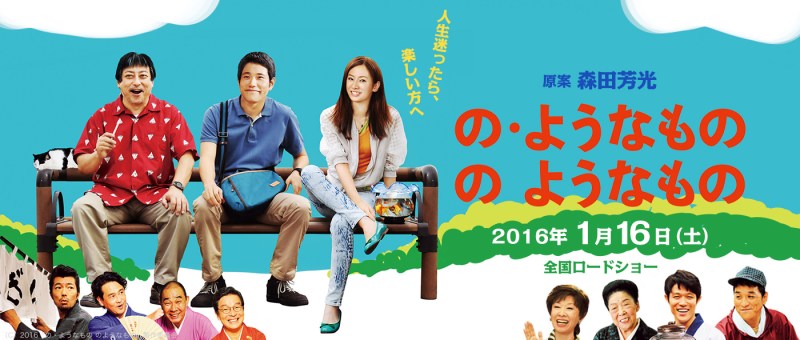
Something Like, Something Like It (の・ようなもの のようなもの, Taiichi Sugiyama, 2016)

something like, something like it posterSadly passing away at the young age of 61 in 2011, Yoshimitsu Morita had been relatively prolific in his 25-year career, leaving behind him a hugely varied back catalogue that ran from zany idol movies to prestigious literary adaptations. His recurrent concerns, however, were relentlessly populist – he wanted to make films that ordinary people could enjoy which intensely reflected the time in which they were made. Five years after his death, one of his early ADs chose to pay tribute to his mentor by drawing inspiration from Morita’s 1981 feature debut, Something Like It. Something Like, Something Like It (の・ようなもの のようなもの, No Yona Mono no Yona Mono) brings the original cast back together with a few new faces from the late director’s more recent works to recreate yesterday’s pleasures for today’s audiences.

Our hero this time round is young Shinden (Kenichi Matsuyama). Well, he’s not really all that young despite being the lowest ranking rakugoka on the roster. Now 30 and beginning to lose hope, Shinden is a former salaryman well known for taking his time. Meanwhile, the 13th memorial service for the late master is fast approaching and the troupe’s patron has decreed she wants to see the return of an old friend – Shintoto (Katsunobu Ito) who abruptly disappeared right after the funeral. Seeing as Shinden is not so hot at rakugo, the other guys task him with tracking down Shintoto in the hope of convincing him to make a return to the stage so the patroness doesn’t decide to remove her patronage.

Rakugo – the traditional art of comic storytelling, is a rarefied affair. It requires extreme rigour from the performer in order to make often extremely familiar tales funny in all the right places. Shinden isn’t very good at it because he’s too stiff all over. Poor at reading social cues, he has an urge to point out tiny and embarrassing mistakes like a slightly frayed curtain or a wonky sign. He might not be best placed for finding and then convincing a sad old man to take back up the career he’d sworn to lay down. Nevertheless, once Shinden manages to find Shintoto and realises he’s made an extremely circular journey, he makes himself his disciple and commits himself to doing all Shintoho’s odd jobs in the hope he’ll finally finish the “Pop-Eyed Goldfish” routine that the patroness so wants to hear.

Taiichi Sugiyama* was an AD on Something Like It but is only making his own feature debut 25 years later. Reassembling the old cast, Sugiyama remains true to an old formula and his genial retro comedy certainly has an old fashioned quality right down to the cutesy jazz score which feels right out of the ‘80s. More modern additions come in the form of Kenichi Matsuyama (who starred in Morita’s final film, Train Brain Express) back on comedy form with a typically left of centre performance as the archetypal “cannot read the air” aspiring rakugoka whose tendency towards literalism as well as that to be distracted by minor imperfections threatens to ruin his career before it’s even really begun. That’s not to mention his nascent crush on his mentor’s daughter Yumi (Played by Keiko Kitagawa who made her feature debut in Morita’s Mamiya Brothers) and mild jealousy over the other various young and good looking men she seems to take an interest in.

Through getting closer to the now somewhat schlubby but basically good hearted Shintoto, Shinden learns to loosen up a bit and his Rakugo perhaps improves even if he also figures out when it’s best to make a sacrifice on someone else’s behalf. Shintoto too rediscovers his talent for comedy, if not the love. Morita never had much of a “signature” style – his films were in a sense tailor made to suit a particular purpose, but Sugiyama remains firmly within the world of early ‘80s comedy, allowing the everyday to brim with silliness as Shinden pursues his roundabout quest before coming quite literally full circle and then finding his feet again. A man pays tribute to his late mentor, mentors someone else, and then absents himself from the frame to let his pupil grow. One generation retreats and another rises – an age old story, but one that like a rakugo tale shines in the telling.


*IMDB and some other sites list his name as Yasukazu but according to the JFDB and Shochiku the official reading of his name is Taiichi.

Chinese release trailer (English & Traditional Chinese subtitles)

Woman of the Mist (朧夜の女, Heinosuke Gosho, 1936)

vlcsnap-2019-01-21-00h29m30s692The 1930s are often thought of as an era of social rigidity and implacable conservatism, yet even before the war things were changing. The young wanted something different than their parents often had and dared to dream of getting it even if their hopes were often dashed by the times in which they lived. Heinosuke Gosho’s Woman of the Mist (朧夜の女, Oboroyo no Onna) is the story of two youngsters who find themselves in a difficult situation and are offered a solution by elders acting kindness which they are persuaded to take only to find themselves progressively more miserable, burdened by the weight of the sacrifice their society has asked them to make.

Set in the jovial working class world of Shitamachi, Woman of the Mist opens with the hero of the tale, Fumikichi (Takeshi Sakamoto), enjoying a historical lecture regarding Edo era sacrifice for the common good during which his wife, Okiyo (Mitsuko Yoshikawa), comes to fetch him. Members of a local association he belongs to have come looking for him, it turns out for a favour. They want him to assist with some fundraising for a stone lantern to mark the association’s anniversary. Much to his wife’s exasperation, Fumikichi is only too happy to comply. It might seem that Fumikichi is a much respected pillar of the community only it is also true enough that he basks in the flattery of being regarded as someone to be depended upon and is therefore a soft touch (something undoubtedly well known to all around him).

Nevertheless, despite his slight tendency towards narcissistic attention seeking, Fumikichi is a salt of the earth type and willing to help those who need it for largely altruistic reasons. He therefore finds himself a surrogate father (though childless himself) to the son of his widowed sister Otoku (Choko Iida) who enlists him to talk some sense into his law student nephew, Seiichi (Shin Tokudaiji), who has apparently been “disrespecting” his mother and neglecting his studies by reading too many novels. Fumikichi has a word but counsels Seiichi that there’s nothing wrong with reading novels save that it obviously upsets his mum who has worked herself to the bone for the last 20 years dreaming of the day Seiichi becomes a fully fledged lawyer, which is to say a member of the middle classes.

Fumikichi, as he often will, becomes the conciliatory voice at the centre of generational conflict. Seiichi is a young man at the crossroads of life and finds himself torn between youthful idealism and a duty towards his family. He has become disillusioned with the law and would rather transfer to literature, secure in the knowledge that only in novels can you find the truly humane. Fumikichi is careful not to patronise but gives him a knowing look, realising that his confusion is partly born of resentment towards his well meaning yet accidentally possessive mother who has railroaded him into a career he doesn’t want to buy him a future which is her only dream. What he wants is control over his life, but when it comes to it he is still a boy and woefully unprepared for the demands of adulthood.

This becomes obvious when he falls in love and gets his girlfriend into trouble. Teruko (Toshiko Iizuka), a former geisha apparently known to Fumikichi in his younger days now working as a bar hostess, is not exactly the kind of wife his mother might have had in mind. The pair are careful to keep their relationship a secret for just this reason as Seiichi remains conflicted – one moment declaring that he no longer cares if everyone finds out and lying to his mother about her the next. Pregnancy forces the issue. Teruko, mindful of Seiichi’s bright future, declares that she can raise the child alone, glancing sadly at a picture of herself in her former life as a sex worker as if accepting what future sacrifices might be expected of her while half hoping Seiichi will rush forward to save her from such a fate. Seiichi doesn’t exactly rush but does tentatively accept his responsibility in reassuring her that he will soon come of age and is ready to become a father with all of the joys and obligations that entails.

Lost he turns to Fumikichi who hatches a plan which might be accounted a neat solution but is also another instance of the older generation making decisions on behalf of the young without really asking them. Despite being a rather feckless old man, Fumikichi tells his wife the child is his and asks for her forgiveness while also suggesting that they adopt the baby as their own. As expected, Okiyo is not exactly enthused but as Fumikichi calculated she would eventually comes around, ironically enough after a conversation with Otoku who has no idea the baby is really her grandchild. Once the decision is made, everyone rallies round to look after Teruko who finally becomes a (temporary) member of Seiichi’s family even whilst barred from ever becoming his wife and in fact of ever seeing him again as a result of the bargain which has been struck by Fumikichi. Nevertheless, Seiichi vacillates and attempts to change his mind by asking Teruko to marry him only for her to urge him to study hard and live well, sacrificing her happiness for his future.

Uncomfortably enough, it is Teruko who must pay for a series of transgressions against the norms of her society – for being a young woman with a past who seduced a nervous young man and dared to dream of a happier future with a person of her own choosing, though the very fact of her suffering is in itself an attack on these rigid and unfair social codes which do their best to destroy the happiness of ordinary, basically good people who have done nothing wrong other than attempt to live their lives. Fumikichi and his wife are doing their best and they too are good, compassionate people who have made good compassionate choices hoping for the best in a difficult situation even if their choices are defined by the prevailing conservative morality which places Seiichi’s future above a young woman’s life and love.

Then again, Fumikichi’s objections are largely practical – it’s hard to keep a family with no money coming in and Seiichi is still a student with no prospect of immediate employment that would pay enough for a wife and child. Could they be happy after a shotgun wedding and years of penury? Seiichi’s diffidence hints at no, but Teruko’s “purity” hints at yes as she vows to make the kind of sacrifice that proves her “goodness”. The youngsters find themselves beholden to the demands of their elders, torn between their personal desires and duties to those they love. Whatever they do, they lose and are destined to remain unhappy, unable to seize their individual chance of happiness in an oppressive, conformist society. Gosho may leave them at the mercy of such a system, but he does so with immense sympathy and not a little anger as we watch these good people making the best of things while asking ourselves if all of this is really for the best.