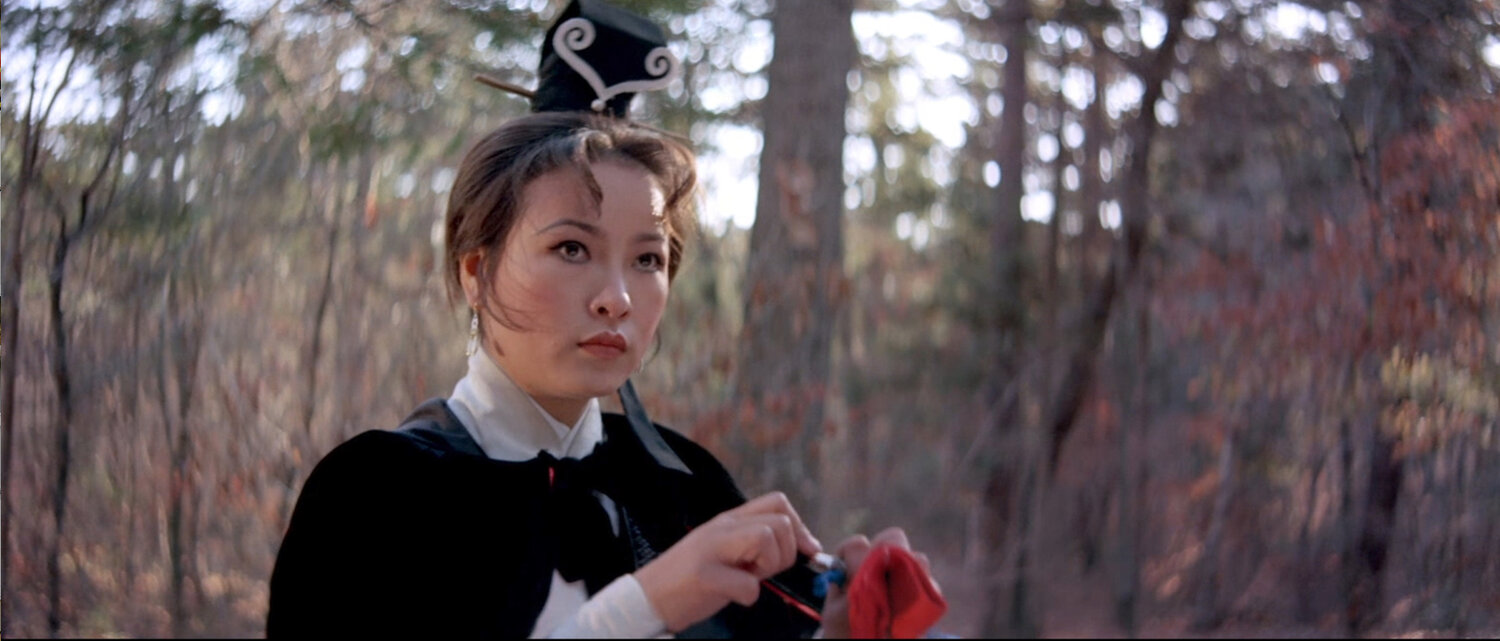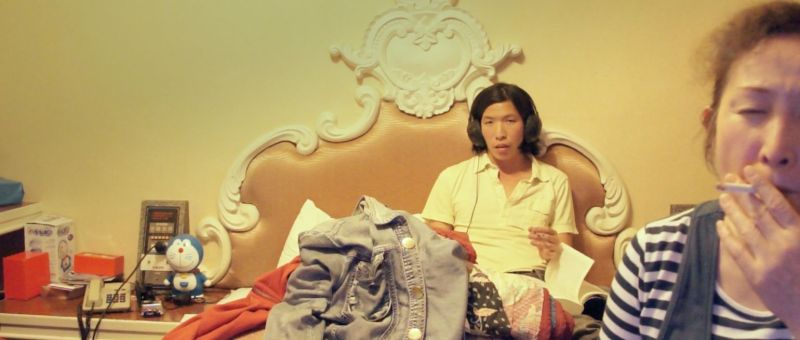
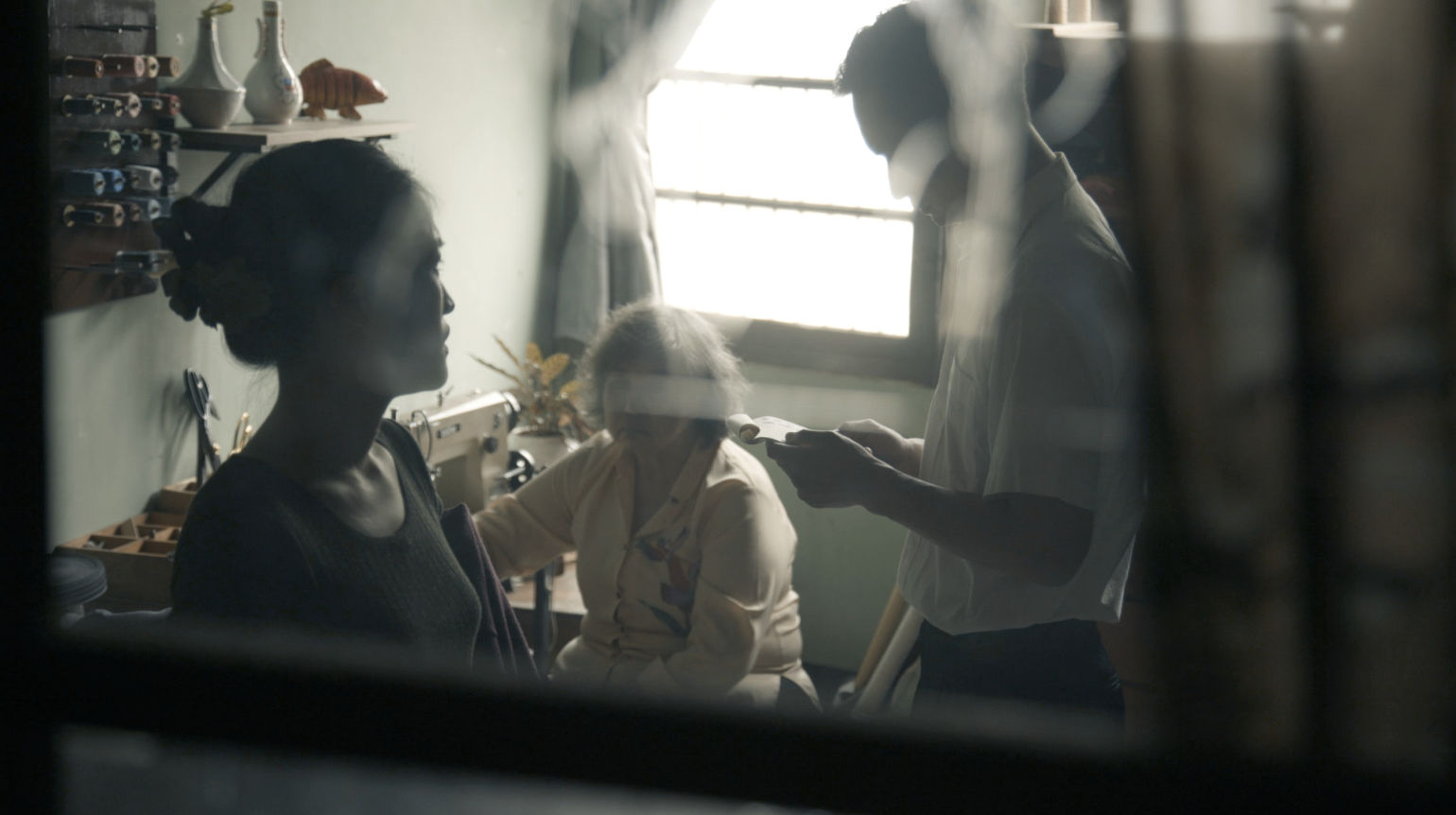
The Personals (徵婚啓事, Chen Kuo-fu, 1998)

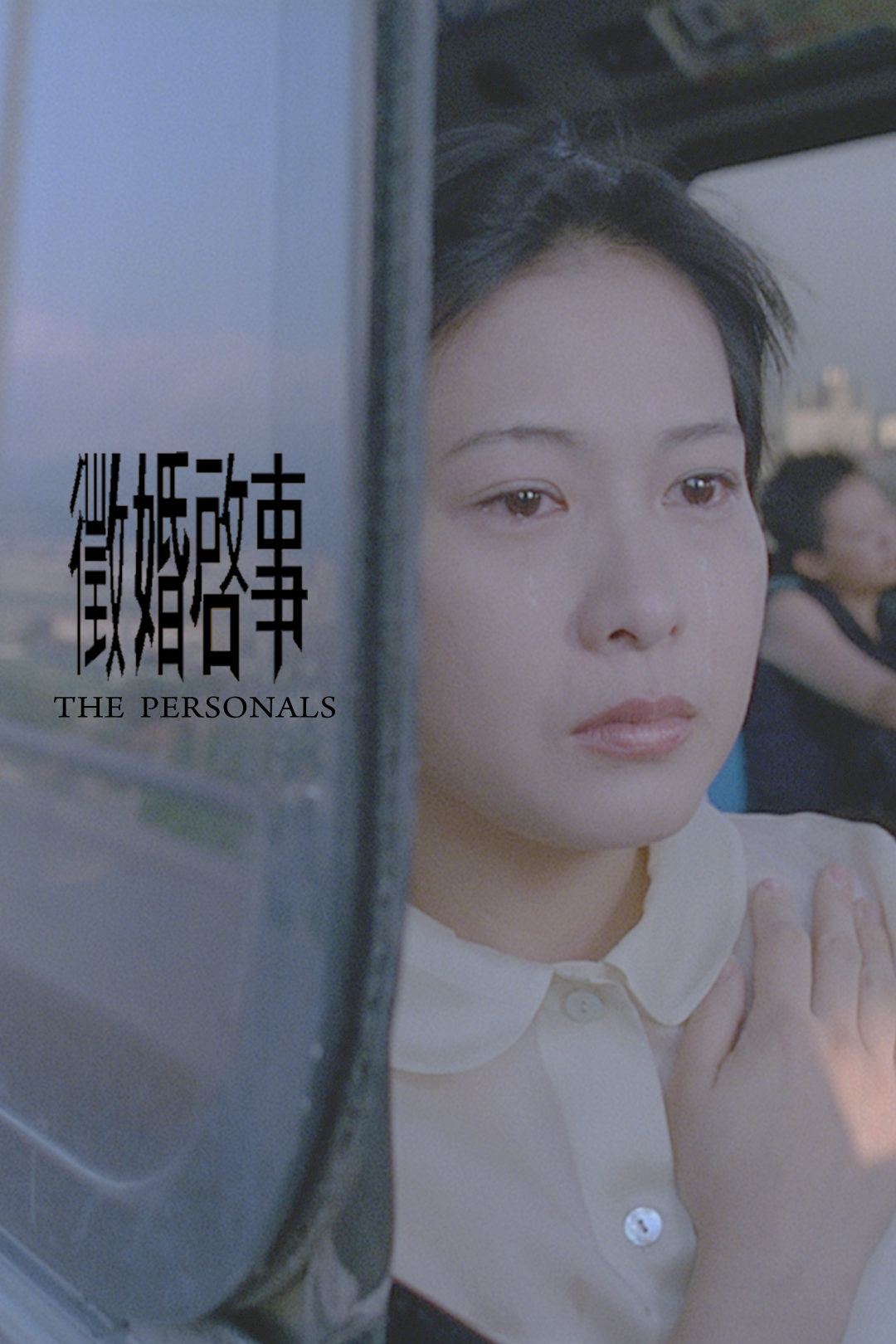
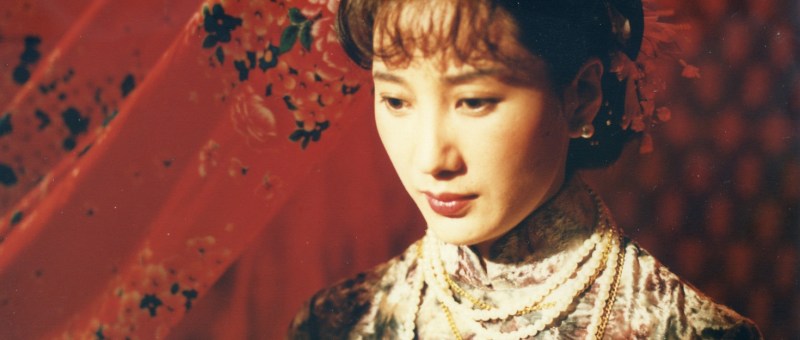
Looking for love in all the wrong places, a Taipei career woman suddenly decides to give up her life and place a personal ad stating that she’s looking for a husband, “Who knows, maybe I’ll find happiness” she unconvincingly explains. Chen Kuo-fu’s sophisticated dramedy The Personals (徵婚啓事, Zhēnghūn Qǐ Shì) sends its heroine on a dating odyssey through the contemporary capital but is at heart the story of a woman learning to see herself while grieving a failed relationship and the married ex who won’t return her calls. 

Tu Chia-wen (Rene Liu Ruo-ying) was a successful eye doctor at a Taipei hospital, explaining to a patient that some people lose the ability to produce enough tears after the age of 30, but abruptly quits her job later claiming that she wanted sever connections with her past which is another reason why she’s decided to place an ad rather than asking friends to set her up with eligible bachelors. Implicitly, it also seems that Chia-wen feels her status as a doctor may be intimidating to some men in the still patriarchal society, if also a clue to her true identity which she has otherwise chosen to keep hidden going instead by the name of Miss “Wu” which just happens to be the name of her lover’s wife. 

Of course, it’s illogical to use a false identity if your end goal is finding a life partner, a factor which later feeds in to Chia-wen’s half-hearted conclusion that it isn’t the fault of the men she’s been meeting that they didn’t hit it off but her own in that she’s so far failed to fully “open up” to any of them. Despite newspaper personal ads not featuring photos, Chia-wen receives 100 messages in the three days after her details are posted from a varied cross section of applicants some more suitable than others. One gentleman who unconvincingly claims to be in his 30s reels off his CV as if he were introducing himself at a job interview while wearing a cheerful farmer-style straw hat. A factory worker chews betel nut and smokes tobacco at the same time while exposing an insecurity over his financial situation in complaining that modern women are too materialistic. One suitor is a woman who struggles to explain her gender and sexual identity with the terminology of the time causing Chia-Wen a degree of consternation. Another potential date is a shoe fetishist with a large suitcase intent on some kind of cinderella role-play closely followed by an executive who enthusiastically explains his only hobby outside of drinking is an encyclopaedic knowledge of S&M porn, while a son brings his father as a potential match because his mum’s “gone abroad” and in a heartbreaking moment a worried mother tries to negotiate on behalf of her son who appears to have learning difficulties and might not be sure what’s going on, hoping to find someone to look after him when she’s gone. 

It may be a biased sample, but it doesn’t speak well for the men of Taipei and that’s without even getting into the guy trying to recruit Chia-wen as a high class call girl, the obvious married man after no strings sex, or the salesman trying to peddle women’s self defence equipment with a case full of tasers and pepper spray. Chia-wen pours out her frustrations in daily calls to her ex’s answering machine, leaving long messages she knows he won’t reply to but somehow it makes her feel close to him. Gradually through her monologues we begin to piece together the trauma that she’s struggling to accommodate while a late and unexpected twist keys us in to the cosmic tragedy of her frustrated romance. “Choose what you can endure” she’s advised by a professor friend who confesses to her that he’s chosen to suppress his homosexuality out of a desire for a “normal” life as a husband and father hinting at the still conservative nature of the contemporary society. 

It’s not until she’s caught off guard by a potential match seeing through her ruse that Chia-wen begins to reconsider her experiment, eventually captivated by a sensitive young man who’s not long come out of prison but has an endearingly awkward smile that reminds her of her own. She meets each of the men in the same cafe where she had her first date with her former lover, taking on a slightly different character as she attempts to interview them about their lives, getting to know their hopes and desires often tinged with a note of loneliness or despair. They seldom seem very interested in her, but instantly propose marriage or at least some sort of serious courtship without even finding out about her hopes and aspirations in life. Chia-wen’s often comical encounters from the teenage boys trying their luck to the old men taking their last chance each expose something of contemporary gender dynamics as well as hinting at increasing urban loneliness and romantic desperation but in the end it’s herself Chia-wen must face in learning to let go of past trauma in order to give herself permission to move on in her ever evolving quest for love.


The Personals streams in the UK 25th to 31st October as part of this year’s Taiwan Film Festival Edinburgh.

Trailer (Traditional Chinese / English subtitles)

Dust in the Wind (戀戀風塵, Hou Hsiao-hsien, 1986)

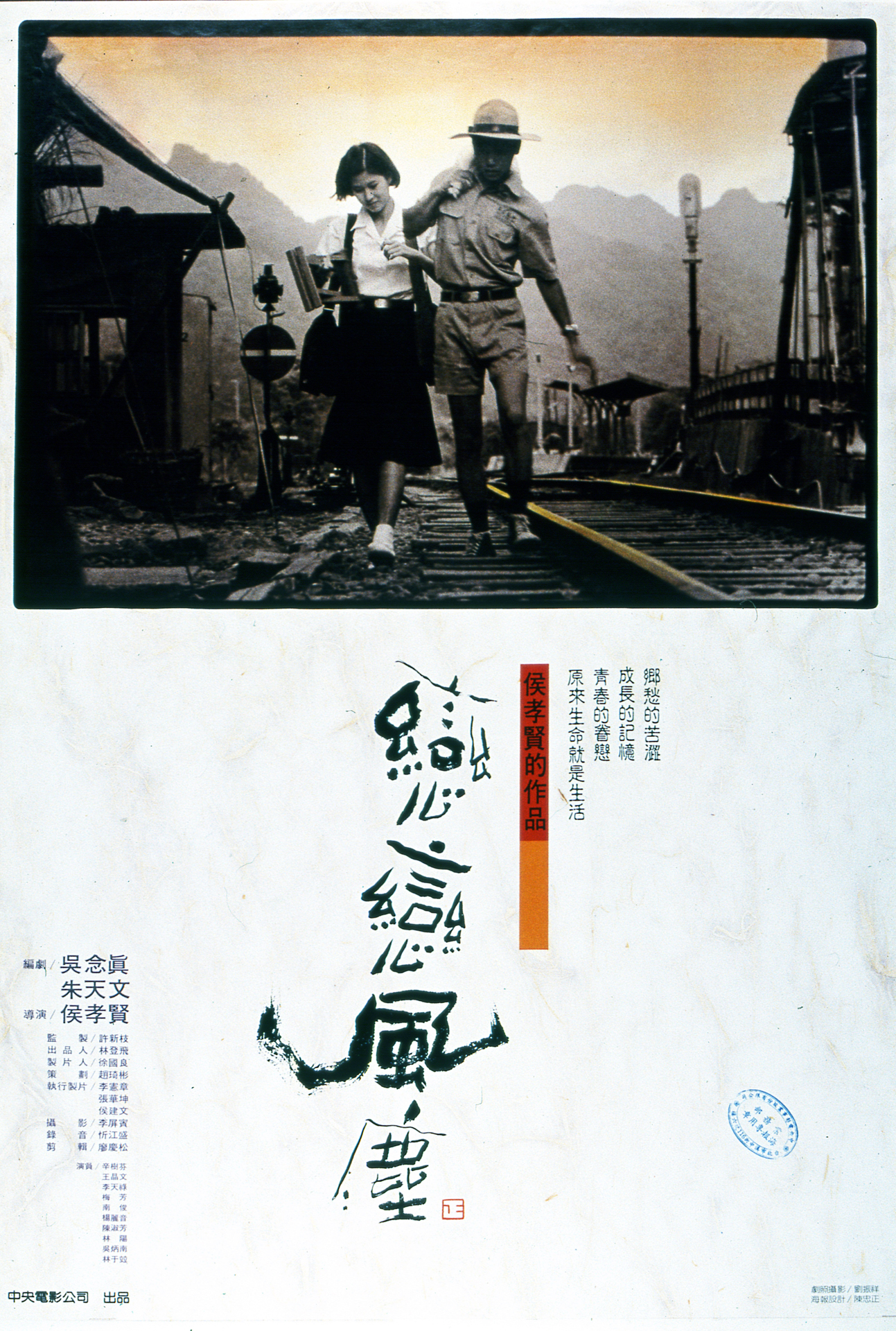
Geographical dislocation and changing times slowly erode the innocent love of a young couple in Hou Hsiao-Hsien’s nostalgic youth drama, Dust in the Wind (戀戀風塵, Liànliàn Fēngchén). Hoping for a better standard of life, they venture to the city but discover that the grass is always greener while their problems largely follow them and the young man finally alienates his childhood love with his stubborn male pride, imbued with a general sense of futility in the inability to better himself because of the constraints of a society which is changing but unevenly and not perhaps in ways which ultimately benefit. 

Opening with a long POV shot of a train emerging from darkness into the light, Hou finds Wen (Wang Chien-wen) and Huen (Xin Shufen) travelling home from school she bashfully admitting that she didn’t understand their maths homework while he automatically shoulders the heavy rice bag her mother has asked her to collect on the way. Their relationship is indeed close and intimate, almost like a long-married couple, yet there’s also little that tells us they are romantically involved rather than siblings or merely childhood friends. Given his family’s relative poverty and the lack of opportunities available in the village, Wen decides not to progress to high school but move to Taipei in search of work while studying in the evenings. Some time later Huen joins him, but they evidently struggle to reassume the level of comfort in each other’s company they experienced at home, Wen permanently sullen and resentful while Huen perhaps adapts more quickly to the rhythms of urban life than he expected if also intensely lonely and fearful, no longer confident in his ability and inclination to care for her. 

Huen clearly envisions a future for the both of them of conventional domesticity, eventually writing to Wen after he is drafted for his military service that a mutual friend spared the draft because of a workplace injury is moving back to his hometown to get married and is planning to sell off land to build houses one of which will be for them. But Wen is still consumed with resentment, frustrated that he can’t make headway in Taipei and in part blaming Huen for highlighting his failure while also holding her responsible when the motorbike he’d been using for work as a delivery driver is stolen after he gives her a ride to town to buy presents for her family. They only seem to speak through the bars of a small window in the basement tailoring room where Huen works as if something is always between them while she complains of her loneliness, Wen apparently ignoring her for long stretches of time while studying for exams though ultimately electing not to apply for colleges. While he’s away in the army, Huen’s letters to him become increasingly infrequent until Wen’s start coming back return to sender, the other soldiers mocking him for his devotion to his hometown girlfriend while suggesting that she has most likely moved on, a supposition which turns out to be correct in the extremely ironic nature of her new suitor. 

Yet it’s not quite true that everything is rosy in the country and rotten in the city. On a visit home, Wen overhears his father and some of the other coal miners discussing a potential strike action feeling themselves exploited and under appreciated, while later that evening a group of boys who also left for Taipei lament their circumstances afraid to explain to their parents that things aren’t going well and that they’ve been physically abused by their employers. Ironically enough it’s Wen who can’t seem to gel with city life, becoming frustrated by Huen’s ability to go with the flow having a minor patriarchal tantrum when she accepts a drink from his male friends at a going away party for a man about to enlist. She responds by voluntarily removing her shirt for an artist friend to decorate, staring at him with scorn while waiting around in her vest. In the village everyone is disappointed, feeling as if Huen has betrayed Wen in failing to fulfil their romantic destiny though it is often enough he who has alienated her in his prideful stubbornness, continually cold towards her, leaving her lonely and afraid. Had they stayed, perhaps they would have married, had children, grown old and done all the expected things together and in that sense “modernity” has indeed come between them but then again they were children and what teenage lovers don’t assume they’re “supposed” to be? “What can you do?” come the words from stoical granddad (Li Tian-lu), explaining that his transplanted potatoes haven’t fared well in the recent storm. 

While Wen’s father can only lament the toll changing political realities took on his future prospects, literally moving rocks around in drunken bouts of frustrated masculinity, Wen must struggle with his familial legacy while wondering if perhaps it’s better in the village after all ensconced in the beautiful rural landscape far from the consumerist corruptions of increasing urbanity. But then according to granddad, the potatoes only accept the nutrient when severed from the vine, much harder to look after than ginseng, apparently. You have to wander in order to find a home, life is hard everywhere, sometimes painful and disappointing, but what can you do? Like dust in the wind, try your best to ride it out.


Dust in the Wind streams in the UK 25th to 31st October as part of this year’s Taiwan Film Festival Edinburgh.

Trailer (Traditional Chinese / English subtitles)

Peony Birds (牡丹鳥, Huang Yu-Shan, 1990)

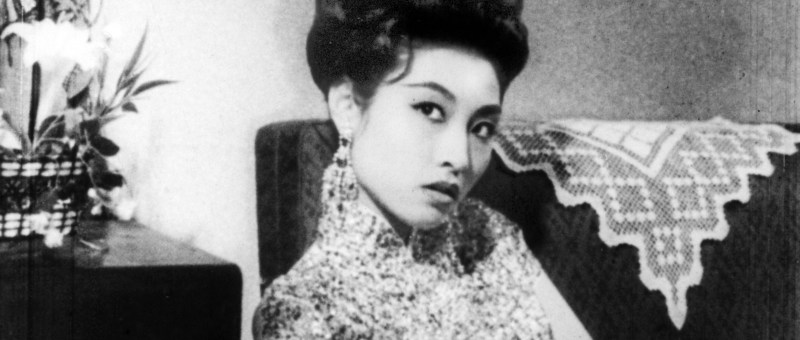
Two women struggle with inter-generational conflict and the changing Taiwanese society in Huang Yu-Shan’s melancholy familial drama, Peony Birds (牡丹鳥, Mǔdan Niǎo). Perhaps the love birds of the title, mother and daughter find themselves at odds partly through a series of misunderstandings but also in the strange reversals of their social outlook, the older woman eventually becoming a successful industrialist rejecting the patriarchal social codes of her upbringing while the younger remains prudish and resentful, unfairly blaming her mother for her father’s early death. 

The film opens with two children accidentally releasing a pair of caged birds before the camera lights on the melancholy figure of Ah-chuan (Su Ming-ming), absentmindedly embroidering beneath a large picture which appears to be of herself. The portrait, a source of contention with her husband Cheng, will follow her throughout her life a symbol of herself as a young woman with choices falling in hopeless love with a Japanese-speaking doctor, Kuo, who never gave her a second glance and later married someone else. Seemingly on the rebound, Ah-chuan consented to an arranged marriage to the wealthy son of a rice merchant who thinks himself a member of the local aristocracy, forever throwing around his money and reminding people of his good name, but the marriage is unhappy Cheng frustrated that his wife loves someone else and Ah-chuan unable to let go of her idealised image of Kuo. Soon enough, Cheng drowns, falling into the river stumbling around in a drunken stupor. As they pull his body out of the water, doting daughter Shu-chin remembers her father bitterly exclaiming that her mother loved someone else and, noticing the comforting arm of childhood friend Chin-shui on her shoulder, assumes it must be him.  

It’s this fundamental misunderstanding that continues to colour the frustrated relationship between the two women, the grown-up Shu-chin (Vivian Chen Te-Yung) childishly complaining that Ah-chuan failed in her wifely responsibilities and has never been a mother to her, blaming her for Cheng’s death while criticising her commitment to her career almost as a betrayal of womanhood. By this point, Shu-chin is in her 20s and has a job as a record producer, later attempting to push her mother towards retirement claiming her salary is enough to support both her and her artistic brother but eventually leaving home entirely after beginning an affair with an unsuitable man defiantly ignoring Ah-chuan’s attempts to convince her she is making a huge mistake. 

Meanwhile, Chin-shui resurfaces in their lives having become a wealthy real estate magnate, a career we saw him start back in the village by taking advantage of the post-war land reforms to buy up the redistributed estates of formerly noble families, some of it Cheng’s. In some ways, former sharecropper Chin-shui is a villainous Lopakhin intent on paving over the beautiful Taiwanese countryside with towering high rise buildings, a symbol of the nation’s transformation from agrarian economy to financial powerhouse and of the hollowness it implies. Yet Ah-chuan’s business is floundering partly she claims because of protectionist US trade laws leaving her at the mercy of men like Chin-shui who, though not the man in her heart, has long carried a torch for her despite knowing of her impossible, unrequited love for Dr. Kuo. Shu-chin finds herself in a similar position in her affair with free-spirited colleague Li Kang whose previous girlfriend attempted to take her own life, discovering the mutability of his affections after he becomes famous with one of his solo compositions, while also drawn to a more suitable match in the more traditional Yi-cheng who eventually pledges his love to her, offering to make her a home explaining that having a home is what gives the young confidence to wander. 

Yet “home” is what Shu-chin continually rejects, yearning for her childhood in a more rural, quasi-feudal Taiwan while misunderstanding the tragedy of her parents’ toxic romance, only latterly reawakening to her mother’s love for her and discovering a new sense of security in a changing Taiwan as Ah-chuan frees them both in literally setting fire to the frustrated hopes of the past, reminding her “It’s always been our home”. A touching story of two women finally coming to understand each other while learning how to live in a changing society, Huang Yu-Shan’s maternal drama eventually bridges a generational divide as mother and daughter finally flee the coop but choose to fly together. 


Peony Birds streams in the UK 25th to 31st October as part of this year’s Taiwan Film Festival Edinburgh.

Clip (English subtitles)

The Best Secret Agent (天字第一號, Chang Ying, 1964)

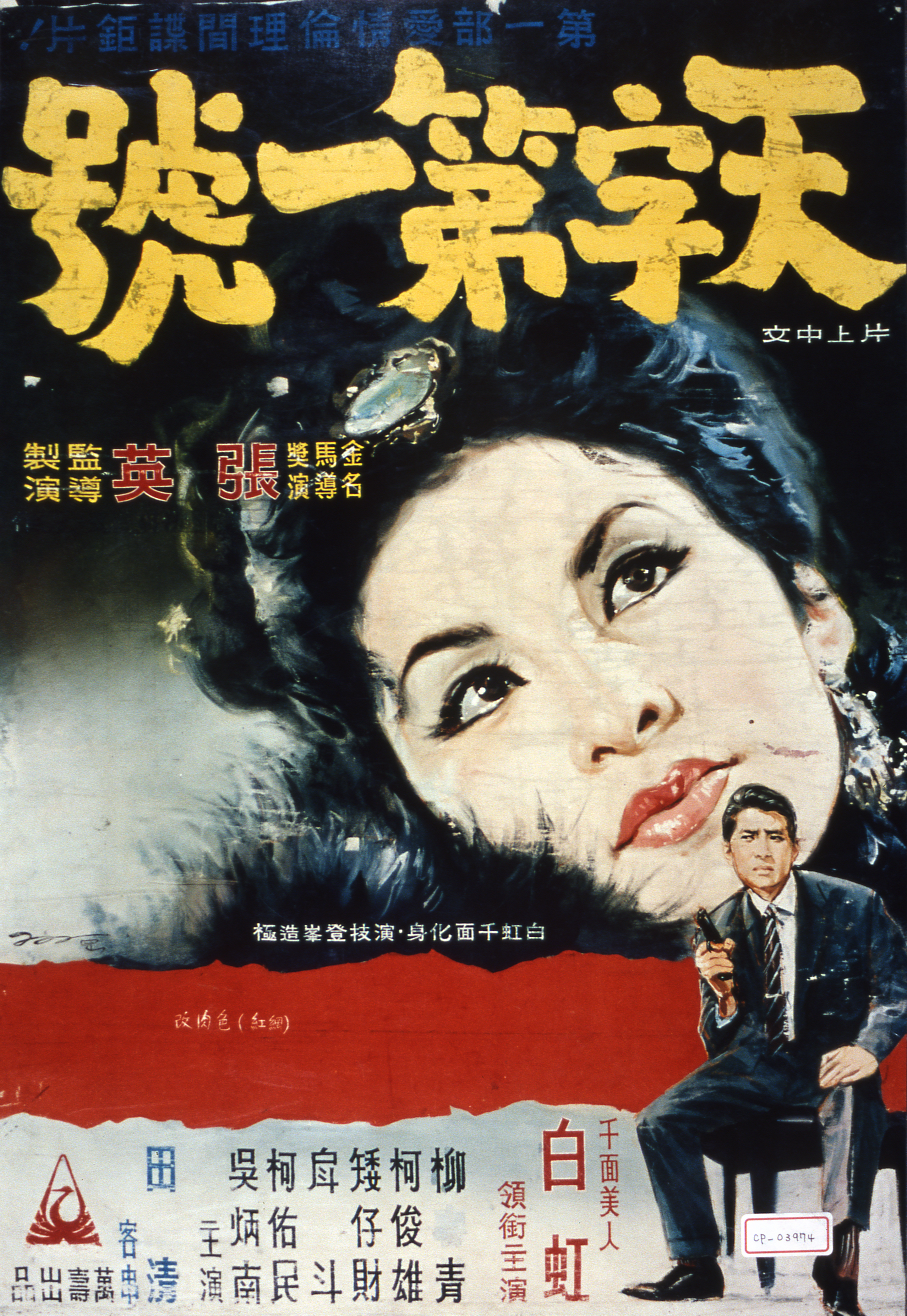
“The Japanese have destroyed our family. You must avenge me” a dying father instructs his daughter, his words somewhat ironically echoing the ideology of the ruling regime in hinting at the national trauma of exile and separation. Arriving in the wake of Bond mania, Chang Ying’s The Best Secret Agent (天字第一號) is, incongruously enough, a Taiwanese-language remake of an earlier film from 1945 set in Shanghai amid the Anti-Japanese Resistance movement, but at heart is less a tale of espionage and intrigue than a romantic melodrama in which a capable woman sacrifices romantic love for the patriotic and filial while perhaps subversively finding true freedom and independence. 

As Tsui-ying’s (Pai Hung) father (Ko Yu-Min) later explains, not wishing to be enslaved they fled from the Japanese but are forced to degrade themselves with public performances in the market square, the old man stooping to beating his daughter when the show fails to please the audience. A kindhearted man from the crowd, Ling-yun (Ko Chun-Hsiung), comes to her defence but Tsui-ying forgives her father blaming the Japanese for the misfortune which has befallen them. Soon after, Tsui-ying’s father is killed during an airstrike using his dying breath to ask for vengeance. After becoming a nightclub singer in Shanghai, Tsui-ying ends up running into Ling-yun again and the pair fall in love but she is also working as a spy and is ordered to break up with him in order to capitalise on the attraction a prominent collaborator, Chao-chun (Tien Ching), feels for her. Reluctantly she obeys, Ling-yun going abroad to study while she eventually becomes Chao-chun’s wife only to discover some years later that Chao-chun is actually Ling-yun’s uncle. 

The central melodrama revolves around the impossible love of Tsui-ying for Ling-yun, a love that she must willingly sacrifice in order to fulfil her role as a daughter both to her literal father and to her country. There is also however a degree of awkward comedy in Ling-yun’s continual discomfort that he must now refer to Tsui-ying as his aunt, their love now a further taboo in taking on a quasi-incestuous quality. Continually pained, she must keep her cover identity intact unable to explain to Ling-yun why she left him, encouraging him to think of her as a cold and heartless woman while watching him romancing his cousin, Ai-li (Liu Ching), whom she has come to genuinely care for as a maternal figure despite there being very little difference between them in age. 

What she apparently doesn’t know despite being a cunning mastermind is that almost everyone in her house is also a spy. As the famed Heaven No. 1, Tsui-Ying plays the cooly elegant wife of a diplomat cosying up to the Japanese but her activities perhaps owe more to the Basil Rathbone Sherlock Holmes movies than they do to the ever popular Bond, a late montage sequence showing her in a series of disguises from a wise old man to anonymous soldier and cheerful shoeshine boy while an early slapstick set piece sees the Resistance hide a pistol inside a roast duck in order to assassinate the Japanese advisor at dinner, the plan almost foiled by Chao-chun’s fiddling with the lazy Suzan. 

Everything is indeed the fault of the Japanese, but it’s Chao-chun, the collaborator who is the true villain even in his bumbling cluelessness, a quality also reflected in his idiot police chief Captain Wan who consistently fails to capture any Resistance members despite Chao-chun repeatedly ordering him to. In another bumbling piece of verbal humour, Captain Wan (Hu Tou) simply repeats the speech he’s just had criticising him for incompetence verbatim to his own subordinates while not doing much of anything himself. They are both, fairly obviously, outclassed by Tsui-ying playing the part of the clueless society bride lounging around in her furs and mediating in-house disputes while simultaneously plotting to bring them both down once they’ve outlived their usefulness. Though she is forced to give up what is most important to her, her love for Ling-yun, what she discovers is perhaps a transgressive sense of freedom and independence in her life as a master spy not otherwise available to an ordinary woman as she pursues her revenge for the death of her father.

Nevertheless, she is also orphaned both literally and metaphorically forced into a life of wandering. The separation of the lovers, blamed on the Japanese, is symbolic of that between the two Chinas as echoed in Tsui-ying’s melancholy love song and no doubt appealing to the prevailing ideology of the ruling regime save for the implication of fatalism as Tsui-ying and Ling-yun pursue exile in opposing directions. Even so with its fantastically compelling heroine, ironic humour, and atmosphere of intrigue tempered with melancholy romance, The Best Secret Agent more than lives up to its name as the master spy effortlessly completes her primary mission even if sacrificing her heart in the process. 


The Best Secret Agent streams in the UK 25th to 31st October as part of this year’s Taiwan Film Festival Edinburgh.

Trailer (Traditional Chinese subtitles only)

Raining in the Mountain (空山靈雨, King Hu, 1979)

Is it truly possible to retreat from the world and live a pure life free of Earthly desires? Perhaps not, at least not entirely as the monks of King Hu’s joyously comic wuxia Raining in the Mountain (空山靈雨, Kōng Shān Líng Yǔ) later discover in attempting to cure the corruption already eating through their ranks. The old abbot is ill and mindful that his time is short, recruits a series of advisors to help him pick a successor to steer the monastery in his absence yet whether he too is plotting or not there is intrigue at play and not everyone’s motives are strictly spiritual. 

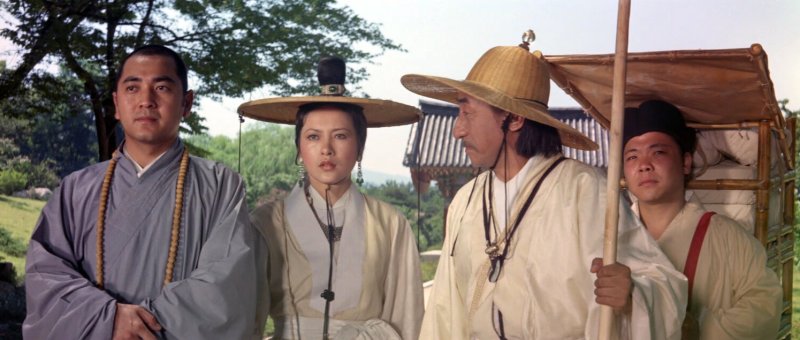
The film opens with Hu’s trademark immersion in the beauty of nature as three pilgrims approach a mountain temple yet there’s something almost suspicious in their manner as they’re met by the abbot’s reliable righthand man, Hui Ssu (Paul Chun Pui). Esquire Wen (Sun Yueh), a wealthy merchant and frequent donor, introduces the woman with him as his concubine, the man obviously a servant given that he’s carrying their pack. Wen has, however, an ulterior motive in that he’s come with the intention of stealing a unique scroll featuring the Mahayana Sutra in the hand of Xuanzang/Tripitaka of Journey to the West fame. The woman is no concubine but a famous thief, White Fox (Hsu Feng), who wastes no time at all before changing into her best sneaking clothes and reuniting with the servant, her minion Chin Suo (Wu Ming-Tsai), to try and break into the sutra room. 

They are not however alone in their endeavours. The abbot has also invited local police chief General Wang (Tien Feng) and his underling Chang Cheng (Chen Hui-Lou) who nominally favour monk Hui Tung (Shih Chun) for the position of abbot but are also there largely with the intention of getting their hands on the scroll which Hui Tung has pledged to give them if he wins. Likewise, though it seems Esquire Wen had forgotten to brief White Fox, rival candidate Hui Wen (Lu Chan) is also in league with them. Just as it looks as if this duality is about to implode, the introduction of a third party, former convict Chiu Ming (Tung Lin) who claims he was framed by Chang Cheng because his family refused to sell him a precious scroll, creates additional uncertainty in the race for succession. 

Secluded in the mountains, the temple ought to be a refuge of enlightenment free from spiritual corruption in its isolation from Earthly desires. Even so, we’re told that the most holy man is the third advisor, Wu Wai (Wu Chia-Hsiang), a Buddhist lay preacher who arrives with a massive entourage of colourfully dressed handmaidens and is said to be “immune to sensual pleasures”. He favours no particular candidate, but acts as a spiritual sounding board at the right hand of the abbot who may or may not be aware that his other two advisors have ulterior motives, or that corruption is already rife in the monastery. Aside from the power-hungry machinations of Hui Wen and Hui Tung, who is so desperate for the position he later consents to murder on temple grounds, many of the younger monks have been bribing a pedlar to smuggle in meat and wine for them, literally passing it over the fence, and not even paying him properly. They are also tested perhaps deliberately by Wu Wai who has his handmaidens frolic in the water where the monks are supposed to be meditating, many of them unable to maintain concentration.  

Yet these are only partial incursions, the monastery is not entirely isolated from the wider society by virtue of its financial dependency. Wu Wai who lives on the outside seems to be fantastically wealthy (still it seems clinging on to material desires), yet the temple is dependent on donations from men like Esquire Wen or else on alms giving. On her arrival, White Fox disdainfully rejects the meal she’s offered and describes the place as a dump, her complaints apparently not unfounded as a ruse to raise rebellion by staging a protest about the the low quality of the catering strikes a genuine note of discord with the monks. The solution posited by the new abbot, opting for austerity rather than opulence, is to tell the young monks they’ve had it too easy and now it’s time they shift for themselves by aiming to become self-sufficient growing their own veg (and thereby lessening their contact with worldly corruption). 

In any case, they cannot purify the temple while the temptation of the scroll exists. “Priceless” to General Wang and Esquire Wen, to the abbot and interestingly to White Fox, the scroll is “worthless” merely a raggedy bit of old paper with no intrinsic value. Yet hoping to raise revenue, the new abbot is advised to borrow on its collateral by the duplicitous Esquire Wen and thereby is forced to accept its “worth” in the secular world perhaps only then realising that if the temple wishes to finalise its divorce the scroll has to go. Essentially a morality tale, Hu hints at the absurdity of these petty corruptions in the cartoonish, farcical shenanigans of the rival thieves as they dance around each other silently fighting over a “worthless” scroll the camera following them with a wry eye while the constant drumming of the background score lends a note of ever present tension. Almost everyone, it seems, is redeemable for the path to enlightenment should be available to all though those who choose not to follow it may find the way of corruption leads to only one destination. 


Raining in the Mountain streams in the US until Sept. 28 as part of the 13th Season of Asian Pop-Up Cinema.

Restoration trailer (English subtitles)

A Touch of Zen (俠女, King Hu, 1971)

“A man has his code” a late villain explains in King Hu’s radical Buddhist wuxia epic, A Touch of Zen (俠女, Xiá Nǚ), justifying his villainy with weary fatalism as a matter dictated by the world in which he lives and of which he is merely a passive conduit. Based on a story by Pu Songling, Hu’s meandering tale begins as gothic horror yet ends in enlightenment parable that in itself reflects the values of Jianghu as a warrior monk achieves nirvana in the apotheosis of his righteousness. 

Hu begins however with slowly mounting tension as lackadaisical scholar Gu Shengzhai (Shih Chun) begins to notice something strange going on in the sleepy rural backwater where he lives. There are several strangers in town from the recently arrived pharmacist Dr Lu (Xue Han), to the blind fortune teller Shi (Bai Ying), and a young man who stops into his shop to have a portrait done (Tien Peng) but is behaving somewhat suspiciously. Shengzhai has also noticed unexpected activity at a house opposite his long thought to be “haunted”, activity which turns out to be caused by a young woman, Miss Yang (Hsu Feng), living in penury with her bedridden mother. 

Shengzhai is often described as feckless or immature, his mother (Zhang Bing-yu) constantly complaining that he refuses to take the civil service exam and has stubbornly wasted his life with “pointless” study while they live harsh lives with little comfort. Shengzhai is, however, an unconventional jianghu hero who has rejected a world of courtly corruption in order to live by his own principles even if that means a poor but honest existence. In a sense he becomes a man through his brief relationship with Yang who turns out to be a noblewoman on the run from the East Chamber after being sentenced to death because of her father’s attempt to expose the corruption of a high ranking eunuch. After he and Yang enjoy a single night of passion in the middle of a thunderstorm, Shengzhai becomes determined to protect her and reveals he has spent much of his life studying military strategy, but he also fully accepts Yang’s agency and right dictate her future walking back his claim of feeling duty-bound because they are “almost married” to be content to help “even as a friend”. 

Nevertheless, there is something of boyish glee in the machinations of his trickery, repurposing the gothic horror of the “haunted” fort as a means to “demoralise” the enemy. His second antagonist, Men Da (Wang Rui), refuses to take the rumours, ably spread by Shengzhai’s gossipy mother panel to panel through a series of expanding split screens, seriously describing them as something only “ignorant country folk” would believe but later falls victims to Shengzhai’s elaborate setup. After his victory, Shengzhai walks through the fort laughing his head off playing with the lifeless mannequins he positioned as ghosts and idly tapping various traps and mechanisms, but it’s not until he leaves the ruined building and ventures outside that he realises the true cost of his childish game in the rows of bodies stretching out and around before realising Yang is nowhere to be found. Shengzhai becomes a man again, forced to accept the consequences of his actions, but also defiant, ignoring advice and instruction on leaving home in search of a woman who asked him not to look for her. 

As he later discovers, Yang and her retainer have renounced the world for a monastic life returning to the Buddhist temple in which Yang learned martial arts during her two years of exile under the all powerful master Hui Yuan (Roy Chiao) who is now it seems close to achieving enlightenment though that won’t stop him helping Yang deal with her “unfinished business”. Like the heroes of jianghu, Yang removes herself from a world of infinite corruption though in this case to pursue spiritual enlightenment and thereafter forgoes her revenge, acting in defence only rather striking back at Eunuch Wei or the East Chamber. At the film’s conclusion, Hui Yang’s act of compassion brings about his betrayal but through it his enlightenment. Struck, he bleeds gold blood and sits atop a rocky outcrop as the sun radiates around his head in a clear evocation of his transcendence witnessed at a distance even by Shengzhai alone and placed once again in a traditionally feminine role literally left holding the baby but perhaps freed from the web of intrigue in which he had been trapped spun all around him just like that weaved by the spider in the film’s gothic opening. 

Stunningly capturing the beauty of the Taiwanese countryside with its ethereal rolling mists and sunlit forests, Hu’s composition takes on the aesthetic of a classic ink painting finding Shengzhai lost amid the towering landscape while eventually veering into the realms of the experimental in the transcendent red-tinted negative of spiritual transition. For Hu’s jianghu refugees, there can be no victory in violence only in the gradual path towards enlightenment born of true righteousness and human compassion.


A Touch of Zen streams in the US until Sept. 28 as part of the 13th Season of Asian Pop-Up Cinema.

International restoration trailer (English subtitles)

Taiwan Film Festival Edinburgh Announces Lineup for 2021 Hybrid Edition

Following last year’s inaugural online edition, the Taiwan Film Festival Edinburgh returns for 2021 in a hybrid format featuring a few in-person screenings as well as an extensive online programme running entirely for free in the UK from 25th to 31st October.

IN-PERSON SCREENINGS in Glasgow and Edinburgh

Sacred Forest 神殿| Ke Chin-Yuan| 2019 | 60 mins

In-person screening on 25 October at Glasgow Film Theatre; tickets on sale soon.

Ecological documentary exploring Taiwan’s unique ecosystem from the point of view of six different groups each with different interests and specialities as they explore the majesty of the forest.

Whale Island 男人與他的海 | Huang Chia-Chun| 2020 | 108 mins | UK Premiere

In-person screening on 30 October at Glasgow Film Theatre; tickets on sale soon.

Capturing the power and mystery of the sea, Huang’s beautifully shot nature doc contemplates Taiwan’s relationship with the oceans which surround it. Review.

Sounds in Silence double bill at 6.30pm on 27 October in Summerhall, Edinburgh; also online 28-31 Oct on Festival website.

A Morning in Taipei 臺北之晨 | Pai Jing-jui | 1964 | 20 mins | UK Premiere

1964 documentary short capturing a newly industrious Taipei in which a variety of individuals go about their regular morning routines.

Deng Nan-guang’s 8mm Movies 鄧南光8mm家庭電影| Deng Nan-guang| 1935-1941| 57 mins| UK Premiere

A collection of home video-style recordings captured between 1935 and 1941 and bearing witness to an overlooked era of Japanese occupation in the shadow of the second world war.

DIGITAL SCREENINGS on the Festival website between 25 and 31 October 

The Best Secret Agent 天字第一號 | Chang Ying | 1964 | 102 mins

Taiwanese-language remake of a popular film from 1945 in which a young woman flees the Japanese occupation with her father and falls in love with a kind and idealistic young man. When her father is killed in an airstrike, she realises she must give up on romance in order to avenge his death by becoming a master spy!

Foolish Bride, Naive Bridegroom 三八新娘憨子婿| Hsin Chi | 1967 | 101 mins

A naive young couple’s desire to marry is frustrated by the revelation their parents were once lovers in Hsin’s delightful screwball rom-com. Review.

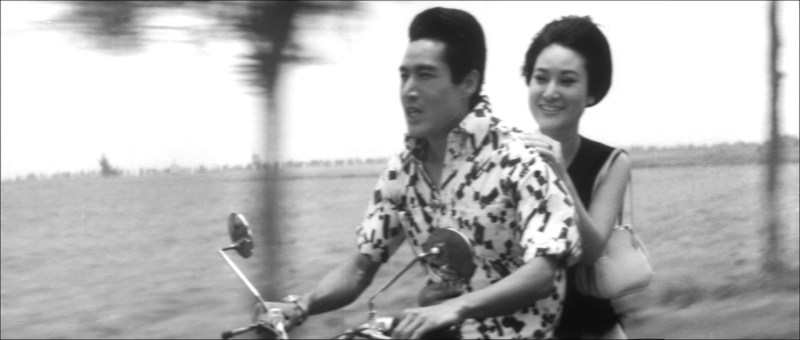
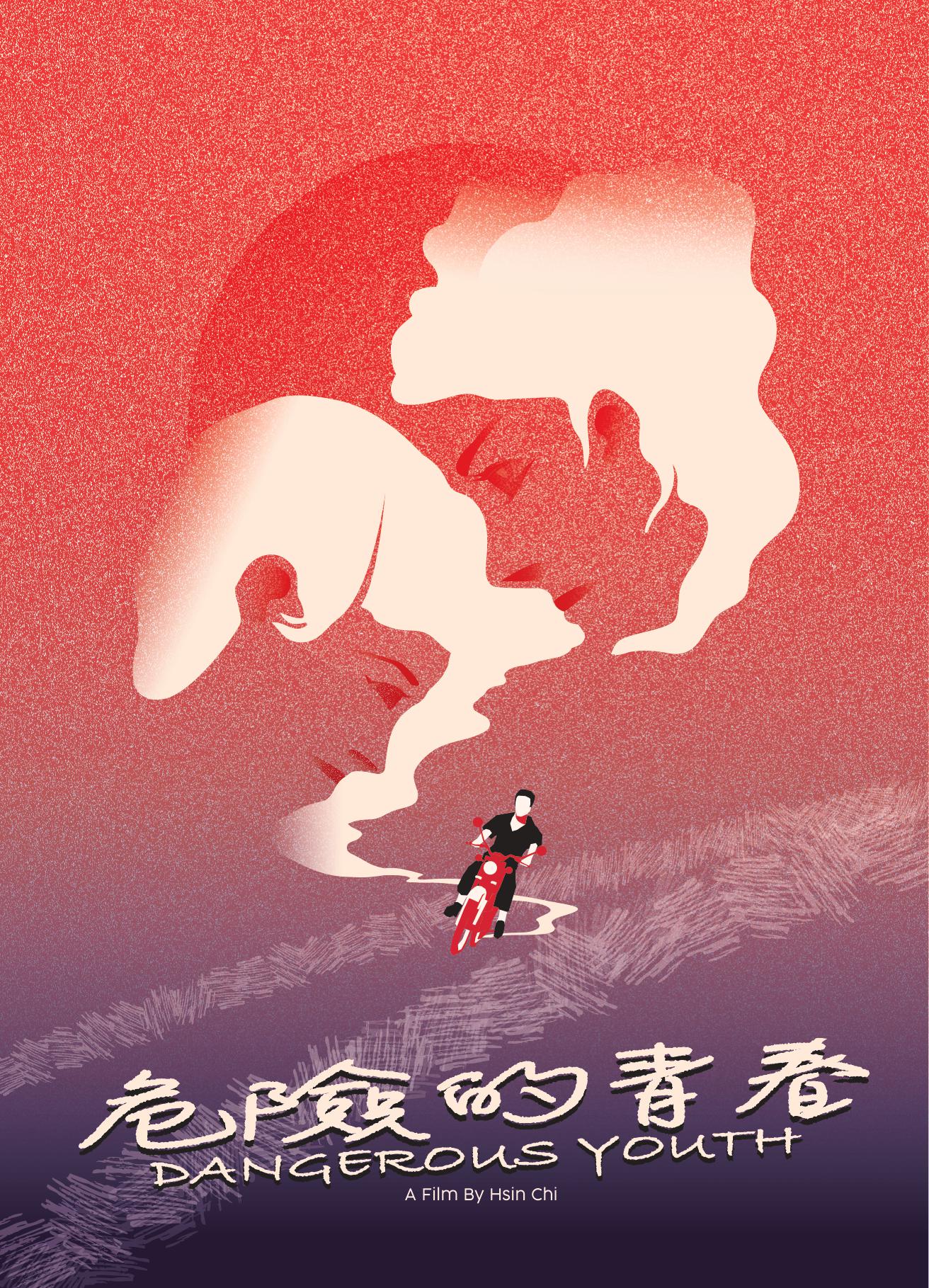
Dangerous Youth 危險的青春 | Hsin Chi | 1969 | 95 mins

A recently dumped delivery driver becomes fond of a waitress and tries to get her another job after meeting a guy who runs a cabaret bar but the job turns out to be as an escort to an elderly millionaire.

The Homecoming Pilgrimage of Dajia Mazu  大甲媽祖回娘家| Huang Chun-ming | 1975 | 27 mins | UK Premiere

Documentary capture of the annual Taoist celebration of the Dajia Mazu Pilgrimage from 1974. This recently restored edition features the original language track in Taiwanese Hokkien once banned under the KMT’s Mandarin-only policy.

Taipei Story 青梅竹馬 | Edward Yang | 1985 | 115 mins

Edward Yang’s landmark 1985 drama in which an independent, financially secure woman is determined to move forward while her boyfriend (played by film director Hou Hsiao-Hsien) remains trapped in the past.

Dust in the Wind 戀戀風塵 | Hou Hsiao-Hsien | 1986 | 109 mins

A young couple from a rural village travel to Taipei hoping to make enough money to marry, but their dreams of romance are crushed when the boy is drafted into the Republic of China Army.

Peony Birds 牡丹鳥 | Huang Yu-shan| 1990 | 107 mins | UK Premiere

Melodrama exploring the troubled relationship of a mother and daughter bound by mutual resentment. A Q&A session with director Huang Yu-shan will also be available via the streaming platform.

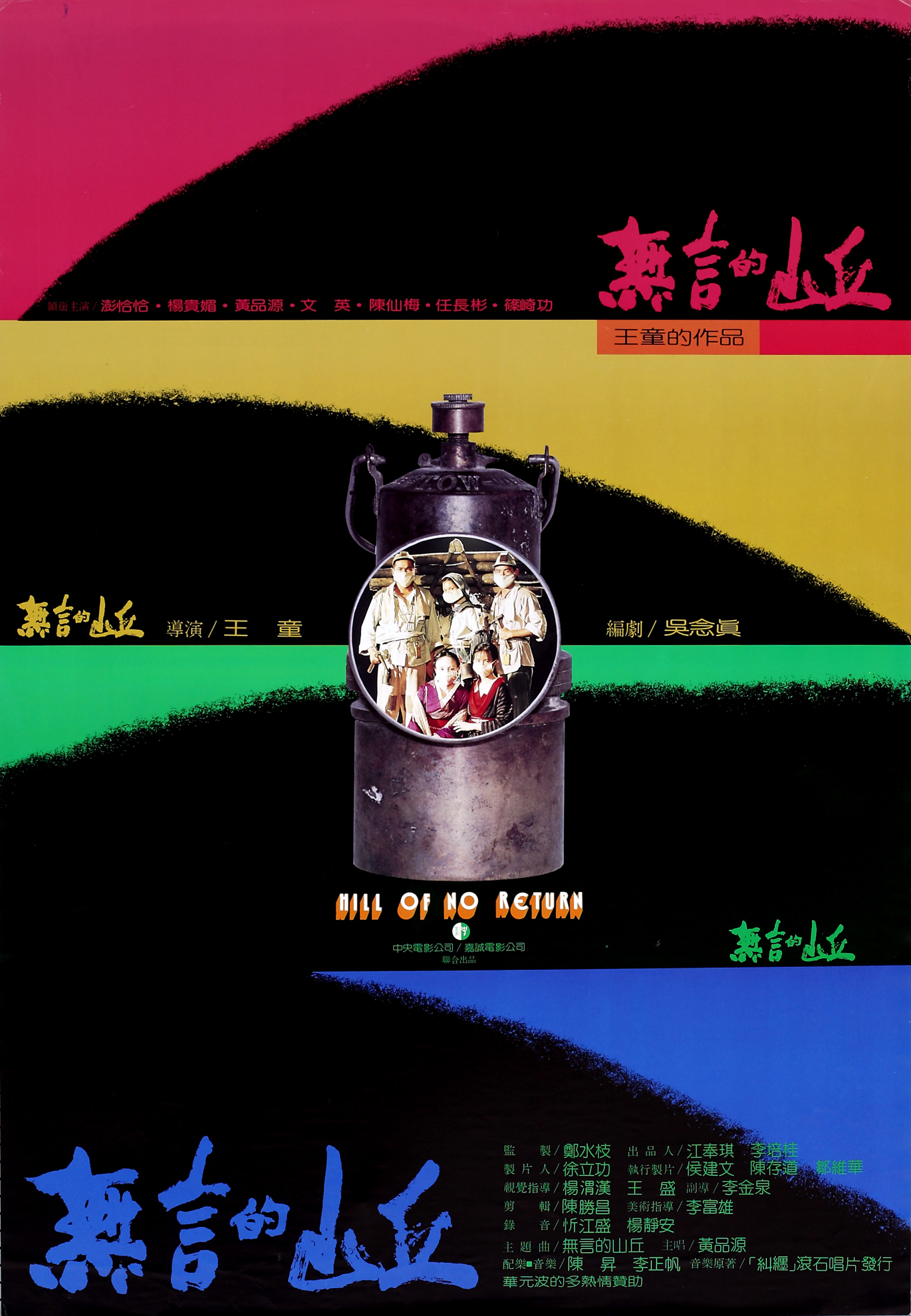
Hill of no Return 無言的山丘 | Wang Tung | 1992 | 175 mins

Two brothers leave home after the deaths of their parents to work at a Japanese-run goldmine in 1927 but rather than the riches they dreamed of find only exploitation and disappointment. A Q&A session with director Wang Tung will also be available via the streaming platform.

The Personals 徵婚啓事 | Chen Kuo-Fu | 1998 | 105 mins

A heartbroken eye doctor quits her job at a hospital and plans to get married, placing a personal ad to find the perfect partner in this humorous exploration of the ’90s Taipei dating scene.

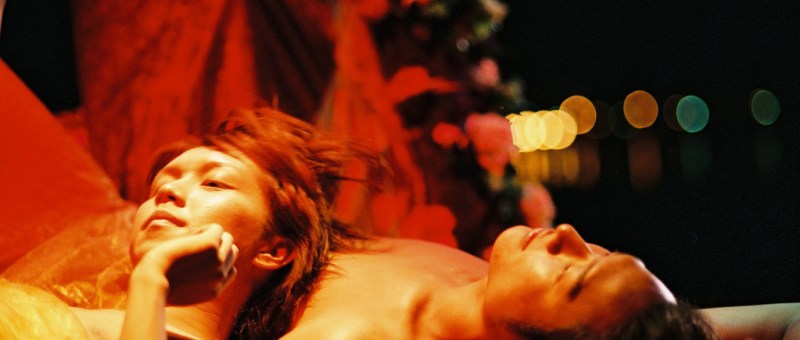
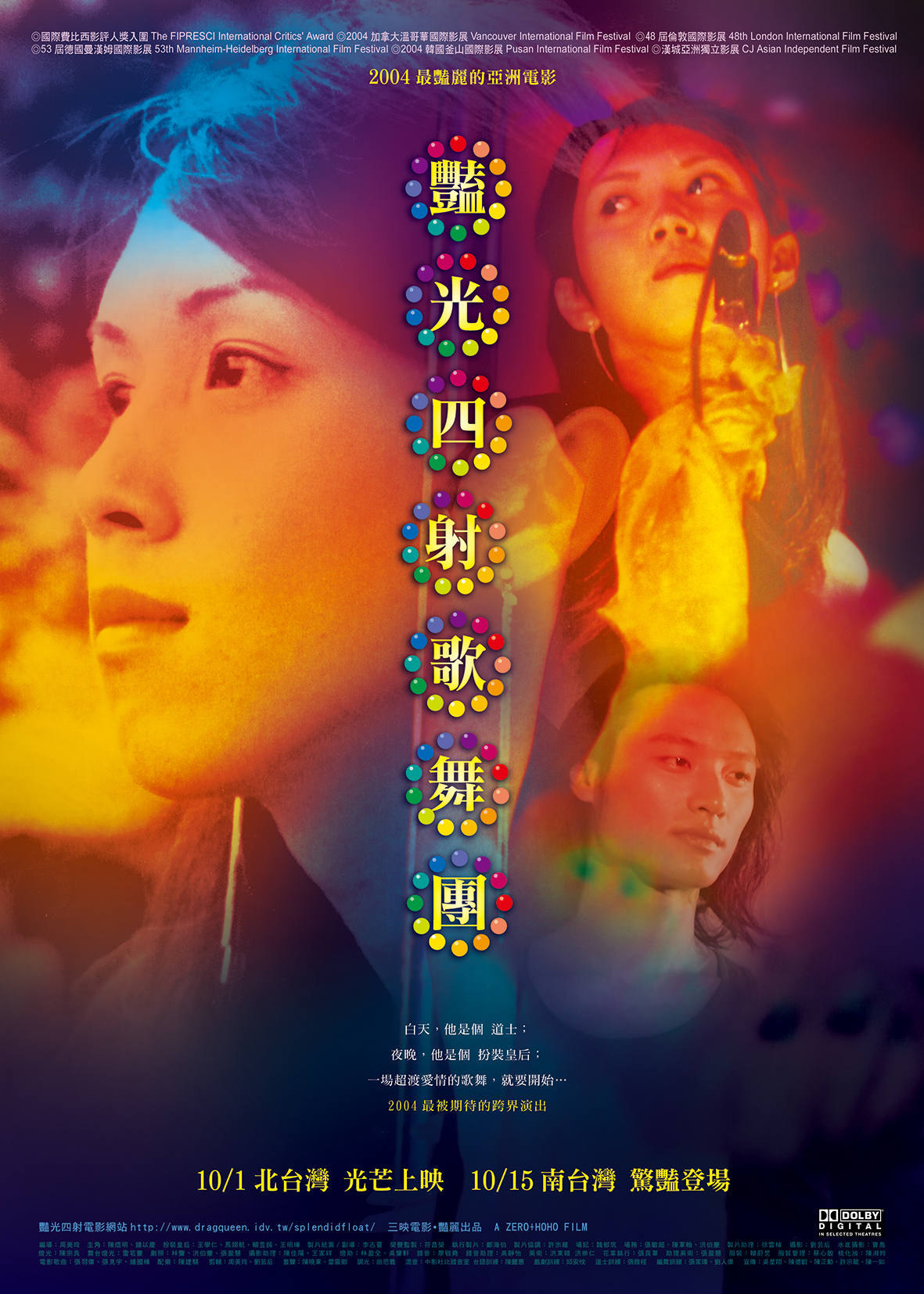
Splendid Float 豔光四射歌舞團 | Zero Chou | 2004 | 73 mins

A Taoist priest with a sideline as a drag artist falls for someone who later disappears without saying goodbye leaving him wondering if something terrible may have occurred.

Closing Time 打烊時刻 | Nicole Vogele | 2018 | 116 mins

Documentary from Swiss filmmaker Nicole Vogele following the city’s nighttime economy from the vantage point of an ageing couple’s late night eatery.

Taiwan Film Festival Edinburgh takes place online and in-person 25th to 31st October, 2021. All films stream for free in the UK via the official platform though ticket numbers are limited and early booking is advised. Full details are available via the official website and you can also keep up with all the latest details by following the festival on FacebookTwitter, Instagram, and YouTube.

Secrets of 1979 (弓蕉園的秘密, Zero Chou, 2021)

Love is a political act in the latest film from Zero Chou, Secrets of 1979 (弓蕉園的秘密, Gōng Jiāo Yuán de Mìmì). As history repeats itself, a now ageing woman is called back to the past on witnessing the Hong Kong democracy protests triggering memories of the Kaohsiung Incident and her youth fighting for political freedom in martial law Taiwan. Chou’s betrayed heroine dreams of a future in which all voices can be heard and all loves embraced, a future that in some senses may have come to pass, yet tragically too late for some forced to believe that their love must forever remain a secret. 

Malaysian student Shu-lan (Daphne Low) falls for Kuan (Chen Yu), the daughter of a banana plantation owner majoring in art as part of a teacher training programme. The pair draw closer while sharing a room, and a bed though partly because those two things are mainly the same, over the summer while Shu-lan takes a job at the farm but their innocent romance is soon overshadowed by the revelation that Kuan’s brother Siu (Hsu Yu-ting) has become involved with the movement against martial law producing a magazine critical of the government. Though they could never know it, their love will lie at the centre of a political divide, cruelly used against them even while they commit themselves to the battle for freedom and human rights. 

Soon after the film opens, a young man walks into Shu-lan’s classroom with application forms to join the nationalist governing party of the martial law one party state, the KMT. The idea does not seem popular among the students, but some are interested if treating it with a degree of irony explaining that they’d only be joining to take advantage of the generous perks which include free travel back to your hometown to vote and access to scholarships, or else because it may be advantageous in their future careers. Shu-lan is fiercely disinterested and attempts to politely decline, but the recruiter, Chih-hsiang (Sean Sun), has an obvious crush on her and won’t take no for an answer thrusting a form into her hand to think about later while lowkey resentful as she distances herself from him to leave with Kuan. 

Kuan, meanwhile, has just been subjected to an unpleasant grilling in her art class when she tried to stand up for a painter rumoured to be gay provoking a homophobic rant from several of her classmates who then openly mock her for being a lesbian. Perhaps surprisingly the rumour of homosexuality does not cause either of the girls particular problems with the authorities or their fellow students save for further irritating the extremely creepy, generally evil, and cruelly manipulative fascist Chih-hsiang who views it as merely another bargaining chip in his pointless quest to convince Shu-lan who has no interest in men (or members of the KMT) to go out with him. The problems that Shu-lan faces which are partly set up by Chih-hsiang so he can save her from them, are largely to do with her status as a foreign national and involvement with politics accused of collaborating with communists for listening to Chinese folk songs sent by her teacher in Malaysia. 

These are all reasons, along with her treatment at the hands of the authorities, that eventually convince her she must renounce her love for Kuan in order to keep her safe in fear that she too will be implicated as a politically suspicious person. Prior to that, she’d been learning Taiwanese and hoped to stay living on the banana farm with Kuan whose family seem relatively relaxed about the relationship, only for their love to be stamped out by oppressive authoritarianism and the machinations of a petty and jealous man. The bookending sequences set in the present day and featuring a Kuan who seems much older than a woman who’d only be in her mid-60s remind us that though Taiwan may have become a relatively progressive place in which same-sex marriage has been legalised, the battle is never really won as the young people of Hong Kong too campaign for freedom and democracy. But Kuan is left only with her secrets and her sadness stuck in the summer of 1979 and a love never to be told. 


Secrets of 1979 screens at Lexi Cinema on 21st September as part of this year’s Queer East. It is also available to stream in many territories via GagaOOLala.

Original trailer (English subtitles)

Hello! Tapir (嗨!神獸, Kethsvin Chee, 2020) [Fantasia 2021]

“In this world, everything disappears eventually” according to the prophetic words of the absent father of young Keat in Kethsvin Chee’s charmingly retro children’s fantasy adventure Hello! Tapir (嗨!神獸, Hāi Shénshòu). At heart a tale of grief and a small child’s acceptance of death, Hello! Tapir is also one of gentle adventure as the hero and his two friends search for tapirs in the undergrowth but eventually discover an accommodation with loss in the knowledge that nothing’s ever really gone even if you can’t see it. 

Keat (Bai Run-yin) lives in a small fishing village with his fisherman father (Lee Lee-zen) and grandma (Lü Hsueh-feng) who sells seafood at the market. Captivated by his father’s improbabe tale of having encountered a tapir who eats people’s nightmares in the forest, Keat implores his dad to take him to see it too but Keat’s father Sheng is always too busy and often reneges on his promises. Ominous winds start to blow when news of a typhoon is broadcast over the radio while Keat is angry that no one woke him before his father left on the boat as he had asked them to do. Sure enough, not long after Keat discovers a commotion at the harbour and gathers there has been some kind of accident at sea. His father hasn’t come home and his grandma is frantic but he’s just a little boy and no one is telling him anything. 

Told from a child’s point of view, Chee’s melancholy tale perfectly captures the confusion and resentment of a small boy in the midst of crisis. Keat cannot conceive of the idea his father may never come home again, replying to his friend’s questions that he’ll be back maybe tomorrow or the day after that. After all, he was supposed to take him to see the tapir. Because he’s sure his dad’s coming back, he grows resentful towards his recently returned mother (Charlie Yeung Choi-Nei) who left the family some time previously and had been living in Taipei and his grandmother for taking his father’s place away by boxing up his clothes and preparing to sell the fishing boat which came back empty on its own for scrap. 

Meanwhile he attempts to secure his father’s legacy by searching for the tapir on his own, encountering a baby which later leads him into the forest and towards its giant parent sucking on golden nightmare orbs all the way. Tapirs are obviously not native to Taiwan and so their presence is as decidedly unexpected as their unusual appearance. You would’t expect to see one wandering through town unless it had recently escaped from a zoo, but they are perhaps Keat’s way of processing the loss of his father the adult tapir gently showing him what it was he most wanted but feared to know while comforting him with its reassuringly warm presence. 

On the cusp of adolescence, Keat finds himself squarely between two sets of overlapping worlds caught between the fantasy of nightmare-eating tapirs and the reality of his grief while also remaining firmly in the realms of childhood having innocent adventures with his two friends as they try all sorts of tricks to draw out the mystical creatures just as his mother deals with the difficulties of planning a funeral and making plans for the future without overburdening her son with impending change. Nobody tells Keat anything because he’s just a child and they think he won’t understand, but he understands that they’re not telling him and the knowledge further increases his sense of loneliness and alienation left entirely alone with his grief and anxiety. 

A beautifully drawn magical realist fable, Chee’s charmingly old fashioned kids fantasy adventure makes the most of its idyllic seaside setting replete with a warm and friendly atmosphere despite its concurrent tragedy. Keat is forced to face the reality of his loss, but does so while maintaining a sense of wonder for the natural world secure in the knowledge that all things disappear in the end, but it isn’t the end of the story and death is merely another part of life. Warm and empathetic, Hello! Tapir paints its coastal setting with an uncanny sense of magic coupled with a cosmological sense of security as its young hero begins to come to terms with his loss thanks to the gentleness of sleeping creatures. 


Hello! Tapir streamed as part of this year’s Fantasia International Film Festival

Original trailer (English subtitles)

The Sadness (哭悲, Robert Jabbaz, 2021) [Fantasia 2021]

“You’re just like me, violent and depraved” a crazed aggressor sneers, almost victorious in his defeat in having goaded his target into bashing his head in with a fire extinguisher. A defiantly depraved tale, Robert Jabbaz’ zombie-adjacent horror The Sadness (哭悲, Kū Bēi) as the title implies suggests that the propensity for violence and cruelty lurks within us all merely waiting for some kind of trigger, in this case a deadly virus, to set it free. 

The film opens, however, with tranquility as young couple Jim (Berant Zhu Ting-Dian) and Kat (Regina) cuddle in bed before Kat’s alarm goes off. The mood begins to sour when Jim reveals they’ll have to cancel their upcoming holiday because he’s been offered work on a film and that is apparently something that’s been thin on the ground. As he turns on the TV, a pundit and a scientist argue about the “Alvin virus” which many people apparently believe is only a cold, though those people are obviously quite wrong (sound familiar?). The virologist continues to explain that the danger is the virus contains similar genetic material to rabies and he fears it may soon mutate into something seriously worrying. In any case, he finds it suspicious the virus has fetched up on the eve of an election and hints at the dubious immorality of politicising a public health crisis. Jim first encounters the afflicted on spotting an elderly person in a bloodstained nightgown who later turns up at his local cafe to bite several members of the clientele who then turn on him seemingly consumed by a violent and irrational rage.

Kat meanwhile experiences something similar as a madman with a knife rips through the carriage of the MTR in which she is currently sitting. Yet, as we discover, the violence and sadism is not entirely indiscriminate but informed by the underlying “sadness”, resentment, and anxieties of the infected person. Kat’s day had got off to a bad start when the middle-aged creep (Wang Tzu-Chiang) sitting next to her kept trying to chat her up only to go off a rant about the entitlement of pretty women when he’s only trying to be friendly after she threatens to call the police because he’s ignored all of her polite hints and requests to be left alone. Crazed, the train creep continues to stalk her determined to get his revenge. His rage and violence is fuelled by the pre-existing condition of his misogyny. 

The fact that Kat appears to be otherwise immune to the virus may suggest that she is a fairly well-adjusted person with no underlying sadnesses or personal resentments, yet she is apparently still capable of great violence when presented with the right trigger(s), in this case being existential terror. The infected meanwhile profess themselves in a state of ecstasy as they indulge their darkest desires. Jabbaz’ gore-fuelled odyssey is in truth a little too depraved, the sickening scenes of sadistic violence accompanied by copious amounts of blood not to mention scattered innards and severed limbs. “This is my kiss, I’m kissing you to death” a woman preens while holding a circular bone saw seconds after revealing that she always had trouble making friends but is beginning to feel as if she’s finally found her crowd. 

A minor irony is that this pandemic anxiety is expressing itself in Taiwan which up until recently at least had done a stellar job of suppressing COVID-19 largely thanks to the opposite of the impulses on display here. Yet there is also something of obvious satire in certain people’s refusal to listen to the science even as the president’s head literally explodes live on TV, while Jim picks up a brochure for reasonably priced apartments only to be told that the pandemic has also “depressed” the property market. His next-door neighbour, Mr. Lin thinks Alvin is a conspiracy theory designed to create economic instability those in the know can profit from later. He seems to have a nasty cold, but refuses to go to the doctor because it seems like a lot of bother when they’re just going to tell you to stay at home and rest. Mr. Lin’s theories are in part vindicated by another scientist who also thinks the government has been ruled by political concerns, too afraid of the economic consequences of a lockdown to contemplate ordering one even while knowing not to do so endangers public health. “Everything must be politics. There’s no room for truth” he laments, though as it turns out he isn’t free of his own darkness either. 

Not for the faint of heart, Jabbaz’s absurdist satire is a depraved journey through every kind of human degradation imaginable darkly suggesting that sadistic violence is never as far from the surface in the ordinary person, or indeed in ourselves, as we’d like to believe. “It feels like I’ve finally found a purpose in life” a member of the infected dreamily explains, embracing his life of ultra violence apparently freed of the burdens of contemporary civility. 


The Sadness screened as part of this year’s Fantasia International Film Festival.

Original trailer (English subtitles)