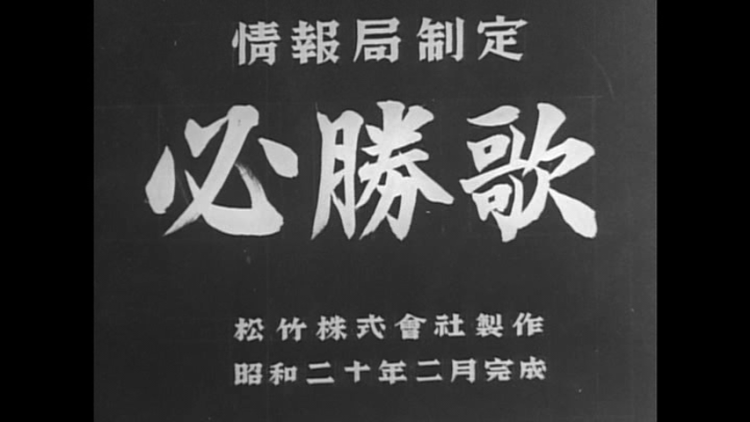
Victory Song (必勝歌, Masahiro Makino, Kenji Mizoguchi, Hiroshi Shimizu, Tomotaka Tasaka, Tatsuo Osone, Koichi Takagi, Tetsuo Ichikawa, 1945)

vlcsnap-2017-08-01-00h21m20s082Completed in 1945, Victory Song (必勝歌, Hisshoka) is a strangely optimistic title for this full on propaganda effort intended to show how ordinary people were still working hard for the Emperor and refusing to read the writing on the wall. Like all propaganda films it is supposed to reinforce the views of the ruling regime, encourage conformity, and raise morale yet there are also tiny background hints of ongoing suffering which must be endured. Composed of 13 parts, Victory Song pictures the lives of ordinary people from all walks of life though all, of course, in some way connected with the military or the war effort more generally. Seven directors worked on the film – Masahiro Makino, Kenji Mizoguchi, Hiroshi Shimizu, Tomotaka Tasaka, Tatsuo Osone, Koichi Takagi, and Tetsuo Ichikawa, and it appears to have been a speedy production, made for little money though starring some of the studio’s biggest stars in smallish roles.

The first scenes make plain the propagandistic intentions by starting in 660BC with a pledge of protection for the descendants of Amaterasu – ancestral mother goddess of Japan. Flash forward to 1941 and her sons are doing their best. Stock footage gives way to soldiers in the Asian jungle, taking a brief respite from the fighting to console each other with thoughts of home which is presumably where most of these small stories of resilience come from.

The soldiers appear to come from all backgrounds, the youngest of them seeming to be just a young boy whose strongest memory of home is his mother’s face. They chat cheerfully about their hometowns, never betraying any sense of fear, boredom or fatigue but the commander suddenly announces that they’re all “going home” until the next attack – taking a brief voyage of memory back to the motherland.

Within this framing sequence, the ordinary people of Japan go about their ordinary lives with cheerful forbearance. A young man cares for his parents after his older brother has given his life for the Emperor, serving on the home front by working himself so hard there’s a danger of going overboard and rendering himself out of action. His father argues that as long as everyone in Japan works as hard as they can, they can never be defeated. Community comes to the rescue again when a train gets stuck in the snow and the entire village gets out of bed to free it.

While the adults are giving it their all, the children are preparing to become fine subjects of the Emperor, training their minds and bodies to be of the most use whilst singing patriotic songs and performing military drills. Another segment finds the children praising their parents for their bravery, playing and roughhousing like any children would, but a hint of darkness emerges when a group of boys plays at war with their toy aeroplane. One little boy, Yuichi, has applied for the young pilots school without talking it over with his parents because he didn’t want them to be sad about him going away. His father, at least, is proud of him but upset at not being consulted. Practically measuring him up for the uniform, Yuichi’s father marvels at all the “young pilots” in the village – a chilling note seeing as none of these boys can be more than ten years old.

While the men go to war the women are at home waiting. Another persistent question relates to the fate of unmarried women – a positive motion for an arranged engagement is disrupted by the receipt of a draft card, prompting the male side to suggest they call the whole thing off. The woman, however, points out that every young man is in this position and she doesn’t see the point in expecting the worst. Life must go on, women must get married, and men must go to war. All of these things must be accepted without thinking too hard about it or there will be nothing for these gallant men to come home to.

The difficulties of wartime life extend to the fear and destruction of air raids, though a news report of the fire bombing of Tokyo reminds us that it could all have been much worse if it weren’t for the valiant efforts of the pilots and ground based defence forces keeping the threat from the skies at a minimum. Other reports detail dive bombing of hospital convoys while the wounded die happily knowing they’ve done their duty. Likewise the “special attack squad” prepare to meet their fates with stoicism and determination while their relatives are treated with especial esteem.

Interspersed with the vignettes and stock footage there are songs and dances bringing both entertainment and inspiration. The final message is one of resilience and unity, that Japan stands together to defend its ancient homeland in devotion to its Emperor, but then such a message would hardly be necessarily if the situation were brighter. Brief allusions are made to rationing, to the destruction and constant loss of life but these are all things which must be born for the glorious future. There is, however, much more stock put in remaining positive than there is in trying to deny the ongoing desperation. As propaganda films go, this one may backfire but does perhaps shine a light on the unspoken anxieties of ordinary people facing an extraordinary situation.


Final scenes including the “Victory Song” itself

https://www.youtube.com/watch?v=MmJAaU8sJuo

Aizen Katsura (愛染かつら, AKA The Tree of Love/Yearning Laurel, Hiromasa Nomura, 1938)

aizen katsura posterJapan’s political climate had become difficult by 1938 with militarism in full swing. Young men were disappearing from their villages and being shipped off to war, and growing economic strife also saw young women sold into prostitution by their families. Cinema needed to be escapist and aspirational but it also needed to reflect the values of the ruling regime. Adapted from a novel by Katsutaro Kawaguchi, Aizen Katsura (愛染かつら) is an attempt to marry both of these aims whilst staying within the realm of the traditional romantic melodrama. The values are modern and even progressive, to a point, but most importantly they imply that there is always room for hope and that happy endings are always possible.
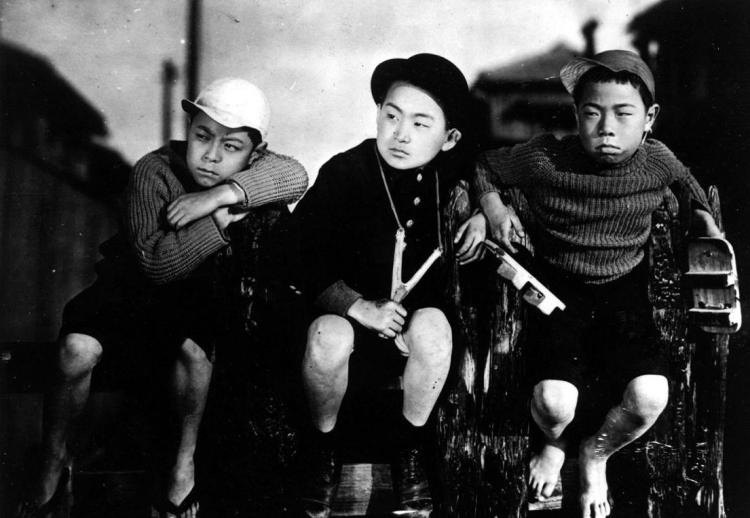
The heroine, Katsue (Kinuyo Tanaka), has found herself in a difficult position for a woman of 1938. Married off at a young age in payment of a family debt yet rejected by her husband’s family, Katsue’s fortunes fall still further when her husband passes away suddenly leaving her alone and eight months pregnant. Her daughter, Toshi (Kazuko Kojima), is now five years old and Katsue has a good job as a nurse at a local hospital. The job allows her to support herself, her daughter, and her older sister but the problem is that the hospital has a strict policy of not employing married women. Katsue isn’t married anymore, she’s a widow, but the fact that she has a daughter she is raising alone makes her familial status a grey area. She’s been hiding her daughter’s existence from her colleagues in case it costs her the job she needs to survive, but a chance encounter in a park threatens to ruin everything.

Thankfully, Katsue’s colleagues at the hospital turn out to be nice, reasonable people who respond sympathetically on hearing Katsue’s explanation about why she’d avoided telling them the truth about her daughter (and that, crucially, she had been married and the child was conceived legitimately). Her next problem occurs when the son of the hospital’s chief doctor, Kozo (Ken Uehara), returns after graduating university and the pair strike up a friendship which eventually blossoms into romance. Kozo’s father, however, is intent on arranging his marriage to a girl from another medical family – a long held tradition and, in an odd mirror of Katsue’s situation, the marriage is a way of getting additional investment for the rapidly failing clinic. Kozo asks Katsue to run away with him to Kyoto but she still hasn’t told him about Toshi or her previous marriage out of fear of losing not only her new love but her position at the hospital if he rejects her. Just as Katsue is about to go to meet Kozo at the station, Toshi falls ill.

Despite the austerity and conservatism of the times, Aizen Katsura is a very “modern” story in which Katsue’s pragmatic solution to her difficulties is praised and even encouraged. Her life has been an unhappy one in many ways – sold into an arranged marriage at 18, forced out of her hometown after rejection by her husband’s family, and finally widowed in the city, Katsue has been let down at each and every juncture. Alone with a baby, her choices were few and her only support seems to come from her older sister who has no husband of her own (at least, not one that is present), and takes care of Toshi while Katsue has to go out and earn the money to support the family.

Society does not quite know what to do with an anomaly like Katsue who cannot rely on extended family. She needs to support herself and her child but many jobs still have a marriage bar which extends to widows with children. The only options for women who can’t find a solution as elegant as Katsue’s aren’t pleasant, the hospital is a dream come true as it both pays well and is a respectable profession, but if the management found out about Toshi, Katsue could be left out in the cold with little prospect of finding more work despite her nursing qualifications.

The times may be harsh, but the world Katsue inhabits places her on the fringes of the middle classes. Kozo, as young doctor and heir to the clinic (Japanese hospitals are often family businesses) is far above her but is, in some ways, equally constrained. Whilst recognising a duty to his father, Kozo is resolute in refusing the idea of an arranged marriage conducted for financial purposes. He determines to set his own course rather than be railroaded into something which is for his father’s benefit and not his own. Deeply hurt by Katsue’s actions but not attempting to find out why she acted as she did, Kozo enters a depressive spell, sitting around resentfully and not doing much of anything. Luckily for him, the woman his father has picked out, Michiko (Michiko Kuwano), is a thoroughly good person who, once she finds out about Katsue, becomes determined to see that true love wins rather than being shackled to a moody young man and spending the rest of her life in a one sided relationship with someone still pining for a first love.

Katsue’s dreams come true only once she begins to give up on them. Leaving the hospital and returning to her home town with no firm plans, Katsue gets herself a career through luck and talent when a song she enters in a competition is picked up by a leading record label. Music rewards her financially but also gives her a sense of confidence and a purpose which puts her on more of an even footing with Kozo even if he sits in the stalls while her colleagues fill the balcony. Her salvation is both self made and something of a deus ex machina, but the broadly happy ending is intended to give hope to a hopeless age, that miracles can happen and second chances appear once two meet each other openly with full understanding and forgiving hearts.


I Was Born, But… ( 大人の見る絵本 生れてはみたけれど, Yasujiro Ozu, 1932)

I was born but stillWhen one thinks of the classic examples of children in Japanese cinema, Hiroshi Shimizu is the name which comes to mind but family chronicler Yasujiro Ozu also made a few notable forays into the genre. I Was Born, But… (大人の見る絵本 生れてはみたけれど, Otona no miru ehon – Umarete wa mita keredo) stars one of the premier child actors of the silent era in Tokkan Kozo (later known as Tomio Aoki) who also worked repeatedly with Shimizu (Children in the Wind, Star Athlete) and Naruse (No Blood Relation, Apart from You, Street Without End, Forget Love for Now) among many others. Like Children in the Wind, I Was Born, But… is the story of two young boys and their well meaning dad only this time the boys’ faith in their father is not entirely justified. Ozu would also revisit this theme some years later with the genial comedy Good Morning which also sees a pair of cute as a button brothers going on strike though theirs is one of silence rather than hunger and provoked by the desire for a television rather than just shock and disillusionment on discovering the unfairness and hypocrisy of the adult world.

Mr. Yoshi (Tatsuo Saito) has moved his family into a nice house in the suburbs not far from that of his boss, Mr. Iwasaki (Takeshi Sakamoto). His two sons, Keiji (Tomio Aoki/Tokkan Kozo) and Ryoichi (Hideo Sugawara) quickly make enemies of some of the neighbourhood kids and start playing truant from school in order to avoid them. Making an ally of the delivery boy from the local sake shop, Keiji and Ryoichi enlist his efforts to get back at the head bully landing themselves top of the local pack.

However, one of the boys, Taro, is none other than the son of their dad’s boss, Mr. Iwasaki. Furiously engaging in a battle of my dad’s better than your dad, the boys are dismayed to see how their father obsequiously greets his superior. Their faith is well and truly crushed when Mr. Iwasaki invites all the kids over to watch some home movies (cutting edge technology for the time) which features some of the employees goofing off, including Yoshi who enthusiastically gurns and performs silly walks for his boss’ benefit. To Keiji and Ryoichi, Yoshi had been a kind of superhero – austere, but strong, honest and inspiring. Realising he’s just another corporate stooge betraying his true self for commercial gain, the boys are thrown into a period of acute existential confusion.

Yoshi’s mantra dictates that he wants his sons to grow up to become “someone”. Keiji and Ryoichi ironically turn this back on him with the charge that he himself is a “no one”. Yoshi cannot argue with their judgement, he is “no one”, in his own mind at least, and harbours a sense of disappointment in his dull and ordinary middle class life. Checking in with his sons after they’ve fallen asleep, Yoshi offers a different kind of mantra during a speech to his wife in that he hopes neither of his sons become company men like he has. He truly wants them to be “someones” but more than that, he wants them to be their own men, living their lives on their own terms and finding a greater sense of fulfilment than he has been able to in willingly debasing himself to curry favour with a boss he doesn’t particularly like to put food on the table for his family.

Keiji and Ryoichi, in a gesture of defiance, go on a hunger strike to prove that they don’t need their father to humiliate himself daily on their behalf. Yoshi can’t get through to them, his authority is significantly damaged and the boys are stubborn but then again their mother’s rice balls are just so tasty they might eventually be persuaded to abandon their mini protest by the power of a rumbly tum. The lesson they learn is one familiar to Ozu’s general philosophy, that battles must be picked and compromises made in the name of pragmatism even if they may uncomfortable to bear.

Ozu shoots with his characteristic naturalism, allowing the boys to goof off as only children can as they pull faces, dance, and strike poses to poke fun at the other boys but also engage in a strange “resurrection” gimmick rather than a secret handshake to bond with their new frenemines. Forgiveness and reconciliation are all around as the boys learn to accept their slightly less black and white world, embrace their new friends, and stride forward towards their eventual destinies. The children occupy one world, and the adults another but perhaps they aren’t so different after all.


Short scene from the film (English subtitles)

Burden of Life (人生のお荷物, Heinosuke Gosho, 1935)

Despite being at the forefront of early Japanese cinema, directing Japan’s very first talkie, Heinosuke Gosho remains largely unknown overseas. Like many films of the era, much of Gosho’s silent work is lost but the director was among the pioneers of the “shomin-geki” genre which dealt with ordinary, lower middle class society in contemporary Japan. Burden of Life (人生のお荷物, Jinsei no Onimotsu) is another in the long line of girls getting married movies, but Gosho allows his particular brand of irrevent, ironic humour to colour the scene as an ageing patriarch muses on retiring from the fathering business before resentfully remembering his only son, born to him when he was already 50 years old.

Rather than focussing on the main narrative right away, Gosho gives us a crash course in marital relations as we meet middle sister, Itsuko (Kinuyo Tanaka), who is currently posing for a raunchy portrait her starving artist husband is painting. Itsuko dresses in Western style, smokes openly and often, and her home is a bohemian one of the kind you’d imagine a (well to do) artist from the ‘30s would live in. The couple are interrupted by their brother-in-law who has come in search of his wife, Takako (Yoshiko Tsubouchi), with whom he’s had yet another argument causing her to storm off somewhere or other in a huff.

Takako has indeed stormed off, but has gone to her mother’s where her younger sister, Machiko (Mitsuyo Mizushima) is preparing for her own wedding and now feeling quite nervous hoping that it won’t be as tempestuous as Takako’s. The three sisters also have a little brother, Kanichi, who is doted on by the women of the family but has a strained relationship with his father, Shozo (Tatsuo Saito). The main conflict occurs once Shozo has successfully married off Machiko and begins happily contemplating a burden free life only to remember that little Kanichi is only eight and so there are twelve more years of fatherhood ahead of him and he’ll be 70 before he gets any peace. In order to speed up the process, he tells his wife Tamako (Mitsuko Yoshikawa) that maybe Kanichi doesn’t need to go school and should go out and get a job instead. Tamako, rightly outraged at her husband’s persistent coldness towards their son brings things to a head by leaving the family home.

The themes are common ones as a family faces the successful marriage of its youngest daughter but the pattern is complicated by the loose end that is Kanichi. Much younger than his sisters, it’s easy to believe Shozo’s assertions that his arrival was somewhat unexpected but far from a joyous surprise Shozo still seems to regard him with a degree of mild horror. Fearing becoming an elderly father Shozo’s concerns are fair given the additional burdens placed on him in having to find good husbands for three women and then pay for their weddings and dowries never mind a college education for a son he never wanted. Kanichi seems to be aware on some level of the way his father feels about him as a poignant scene implies when he begs some of the other neighbourhood children to keep playing with him even though it’s past tea time because he doesn’t want to go home if his dad is there.

Shozo fails to reform his opinion even after his wife leaves him. Almost delighting in a late life slice of batchelorhood, Shozo heads into the bar district for a night out where he ends up drinking with some younger guys, surrounded by students singing the Keio University song. His attention is momentarily taken by a small boy of around Kanichi’s age who is selling flowers to amorous patrons but it’s only once a hostess calls him “papa” that he seems to feel aged fatherhood reassert itself. Enquiring about her age he discovers she is only 19 – much younger than any of his daughters, and consequently Shozo begins to feel more like a ridiculous old man than a young buck on the prowl.

Gosho draws a number of contrasts within his “ordinary” family from the three sisters who seem to represent the changing times in their differing attitudes to the husband and wife and the division of their home. Itsuko, Westernised and brassy, is living well beyond her means and touching her parents for money in order to do it. Talking things over with the kimono’d Takako who offers to recommend a traditional hairstylist for Machiko’s wedding, Itsuko has some advice for dealing with men which she calls “reverse psychology”. Takako and her husband may not have children and fight all the time, but she is in other ways a model wife even if she thinks married life ought to be simpler than it is. Machiko is caught on the brink, though we never see her husband, wondering what her own married life will entail. Her father, Shozo, lamenting on his responsibilities remarks that women are like products for sale, requiring investments which will eventually pay off in terms of successful marriages but any investment in a son is, in a sense, a waste. Family, for him, is less a social unit and more a mini business enterprise from which he was looking forward to retiring.

In the end of course he changes his mind though more out of loneliness or a sense of mortality than any less selfish emotion. Slight at 66 minutes, Gosho packs in as much detail as possible whilst maintaining a broadly comic, almost screwball tone filled with selfish husbands and calculating wives all making the most of the relatively stable times. Life has many burdens but sometimes it’s better to rebrand those burdens joys and make the most of them before someone else decides to carry them for you and all you’re left with is an empty sort of lightness. You’re only old once, after all.


Introspection Tower (みかへりの塔, Hiroshi Shimizu, 1941)

vlcsnap-2016-12-10-01h34m55s187Shimizu, strenuously avoiding comment on the current situation, retreats entirely from urban society for this 1941 effort, Introspection Tower (みかへりの塔, Mikaheri no Tou). Set entirely within the confines of a progressive reformatory for troubled children, the film does, however, praise the virtues popular at the time from self discipline to community mindedness and the ability to put the individual to one side in order for the group to prosper. These qualities are, of course, common to both the extreme left and extreme right and Shimizu is walking a tightrope here, strung up over a great chasm of political thought, but as usual he does so with a broad smile whilst sticking to his humanist values all the way.

Introspection Tower opens with a tour being given to a group of women guided by one of the teachers (Chishu Ryu) in which he outlines the qualities of the school. There are no high walls or barbed wire fences, the front gate remains open at all times for the children to feel free within their new environment so they can learn to want to stay until they can be reintegrated into society. The school is run like mini commune with several houses segregated by sex and headed by a teacher and a female guardian – usually his wife, though the female houses also have a female teacher. The kids spend time in conventional education in the morning followed up with physical activity and vocational training in the afternoons to help them find work later in life. Parents are welcome to visit and also encouraged to write letters (notably, all of these kids seem to be able to read and write, at least to a degree). The kids also take care of the housework amongst themselves so they learn life skills like cooking and cleaning, again meant to help them as they return to regular society.

Rather than a straightforward narrative, Shimizu concentrates on the general life of the school with particular interest in four difficult pupils – new arrival Tamiko (Yuiko Nomura), a naughty upperclass girl who has difficulty learning to muck in with everyone else, Yoshio (Jun Yokoyama, formerly known as Bakudan Kozo) who likes get into fights, Masao (Norio Otsuka) who has his head in the clouds, and Nobu who can’t seem to get on with his stepmother no matter how hard she tries. Several times the kids get fed up with their reform school lives and try to escape, only to be brought back with their tails between their legs and, being children, they are apt to fight, grouse and get upset over nothing.

Perhaps unusual given Shimizu’s reputation the film is not exclusively told from the point of view of the kids but also looks at the often difficult lives of the adults who’ve dedicated their entire existences to caring for them. Each of the teachers and guardians is fully committed to looking after the children and trying to teach them how to be functioning members of society, living with kindness and responsibility. The house leaders are referred to as “mother” and “father” and the kids are intended to think of the other residents as siblings as if they’re all part of one big well functioning family. Discipline is carried out through self reflection, penance, and apology as the offending child is encouraged to realise why the way they’ve behaved is unacceptable and why they should avoid acting in that way in the future. Endlessly patient and giving, the adults’ lives are not easy ones as a female teacher finds herself snapping and hitting a pupil while another couple wonder if they’re really making that much difference when the children continue to misbehave.

About half way through, one naughty boy causes a huge problem by temporarily draining the well which is the school’s only source of water. Faced with a number of serious issues, the teachers decide to try channelling a riverbed from the nearby lake down to the school but they obviously don’t have money to pay for it. You can see where this is going and it’s certainly the most problematic aspect of the film as these young children are suddenly expected to do the strenuous, sometimes dangerous, work of physically carving a channel in the land with shovels and pick axes. Intended to sell the virtues of togetherness and responsibility, the river construction is, in essence, the forced labour of imprisoned minors who are given no rights to refuse, are not compensated for their efforts, and are children who are not equipped to handle this physically taxing work. Shimizu films the sequence like some kind of Soviet propaganda film as the axes rise and fall rhythmically as a hymn to the beauty of physical labour, but this particular celebration of the strength of the group over the individual is very difficult to take at face value.

Whatever Shimizu intended with the river building sequence, several of the pupils earn their freedom through taking part in it, supposedly reformed by hard work and community. Their “graduation” ceremony involves them reading poems and inspirational phrases aloud as a tribute to the school, but Shimizu neatly undercuts the happily ever after image with the presence of an older boy who has returned to visit. Regarding the school as his home, he has nowhere else to go and it quickly transpires he’s lost yet another job. Even when things seem to be going well, people find out he was in a reform school and it all falls apart. No matter how good the efforts of the teachers, the kids will face constant stigma and internalised shame for the rest of their lives making reintegration into society a difficult prospect. Nevertheless, Shimizu does seem to want to believe the school can do some good in looking after these troubled children who often come from difficult family circumstances.

An odd, confused effort from Shimizu, Introspection Tower still does its best to emphasise his humanist philosophy in the broadly progressive approach of the school which truly is dedicated to to teaching these children how to live in the Japan of the day without getting into trouble. The tone is one of good humour mixed with Shimizu’s naturalistic approach to filming children which shows them for all of the complicated young people they really are, deriving both great comedy and heartrending drama from their comic escapades and melancholy backstories. Making fantastic use of location shooting once again with an approach closer to his silent work than his talkies, Shimizu’s return to the world of progressive education is a strange and occasionally problematic one which is at times hard to read but, worryingly enough, seems to have its heart in the right place.


Four Seasons of Children (子どもの四季, Hiroshi Shimizu, 1939)

vlcsnap-2016-12-08-00h10m14s613Isn’t it sad that it’s always the kids that end up hurt when parents fight? Throughout Shimizu’s long career of child centric cinema, the one recurring motif is in the sheer pain of a child who suddenly finds the other kids won’t play with him anymore even though he doesn’t think he’s done anything wrong. Four Seasons of Children (子どもの四季, Kodomo no Shiki) is actually a kind of companion piece to Children in the Wind which also makes use of this motif, as they’re both based on works by the same author, Joji Tsubota, and feature the same cast playing characters with the same names. Four Seasons differs slightly in its form as it originally played as two films released at the same time with the piece split into four sections following the two central brothers across the course of a particularly traumatic year.
Beginning in spring, younger brother Sampei (Bakudan Kozo now known as Jun Yokoyama) is excitedly waiting for the arrival of an old man (Takeshi Sakamoto) who brings masks for the children and rides a fine horse. Unfortunately, Sampei takes a tumble and arrives last when only a noh style mask of a lady’s face remains which really doesn’t appeal to him (later he asks his older brother Zenta (Masao Hayama) to draw a moustache on it to make it look ”stronger”), so the old man offers to give him a ride on his horse to make up for it. Sampei and Zenta don’t think they have any grandparents, but Sampei thinks it would be nice if the old man were his grandpa for real.

After he does a typical Sampei thing and falls off a cow, Sampei’s mother (Mitsuko Yoshikawa) arrives and realises that, yes, mask man really is her estranged father who disowned her after she got married without his consent. Happy that perhaps her parents have finally forgiven her, Sampei’s mother is also a little bit worried as they’ve never explained to the children why they weren’t in contact with her parents and she’s afraid it might upset them. There’s also another problem. The boys’ father (Reikichi Kawamura) is currently very ill, and their dairy farm isn’t doing well either. The family have large debts secretly taken out with the father-in-law’s company behind his back, so all of this could quite easily backfire. More drama erupts when an ambitious underling, Rokai (Seiji Nishimura), realises there’s a possibility the old man will take his daughter’s family as his direct heirs rather than promote from within the company and starts on a series of fiendishly machiavellian plans to oust his rival.

The boys, however, know very little of this. They love their cows and life on the ranch, and the thing they’re most sad about is when they end up having to move in with grandpa for a while to avoid some of Rokai’s scheming. Having been very popular in their old town, the boys are slower to make friends and quickly run into a problem with the son of the man who’s causing their family so much bother. A typically melancholy episode sees little Sampei wandering off on his own to make friends with the carp in the local lake because there’s no one else for him to talk to. However, the boys later bond with their would be arch nemesis, Kintaro (Teruo Furuya), in defiance of the ongoing feud between their families, even going so far as to carry him on their back all the way home after he breaks his leg falling out of a tree when his father stupidly “repossesses” the backyard where the kids have been playing together safely.

Gradually, as time wears on, the allegiance of Kintaro and his mother starts shift away from Rokai and towards the boys and their family who have never been anything other than kind to them. In a nice piece of symmetry, it seems the two women were also close childhood friends who have been kept apart thanks to the ongoing pettiness instigated by the menfolk. The grandfather, having fully patched things up with his daughter, is doing his best to remain on the side of decency despite Rokai’s underhanded tactics but finds himself increasingly cornered by his finagling. The boys’ commitment to their friend and refusal to give in to Rokai’s attempts to use the children to perpetuate his feuding only serve to remind everyone how petty and self serving Rokai’s actions really are.

Rokai is several times described as “a real villain” by the disbelieving grandpa, constantly exasperated by the dishonourable conduct of someone he’d employed on his staff for several years. Yet aside from Rokai himself, it’s greed and pettiness that are the true villains of of the piece. The boys’ father gives them some very important advice for their future lives when he tells them not to strive to have more things than other people but to be generous in its place. Rokai, afraid and resentful, eventually gets his comeuppance, ending a long year of torment for the Ono family and restoring justice to an unjust world.

The boys themselves know little of the details of the feuds between their families, worrying about normal things like whether they’ll be able to go on to middle school and wondering how the cows are doing back at their old ranch. It’s these details at which Shimizu excels as usual, perfectly capturing the reality of childhood even whilst giving more space to adult concerns than he often did in many of his other, more purely child centred films. Once again making great use of location shooting, Shimizu captures the fast disappearing rural paradise the boys inhabit which is entirely divorced from the political tension of the day. Another warm and humorous tale of kids and the way they often become the accidental victims of a grown up dispute, Four Seasons of Children perfectly unifies all of Shimizu’s ongoing themes right up to its necessarily just, compassionate, ending.


Children in the Wind (風の中の子供, Hiroshi Shimizu, 1937)

vlcsnap-2016-12-06-23h27m52s218It would be a mistake to say that Hiroshi Shimizu made “children’s films” in that his work is not particularly intended for younger audiences though it often takes their point of view. This is certainly true of one of his most well known pieces, Children in the Wind (風の中の子供, Kaze no Naka no Kodomo), which is told entirely from the perspective of the two young boys who suddenly find themselves thrown into an entirely different world when their father is framed for embezzlement and arrested.  Encompassing Shimizu’s constant themes of injustice, compassion and resilience, Children in the Wind is one of his kindest films, if perhaps one of his lightest.

Brothers Zenta (Masao Hayama) and Sampei (Bakudan Kozo) live a fairly comfortable life in a small town with their accountancy clerk father (Reikichi Kawamura) and doting mother (Mitsuko Yoshikawa). Older brother Zenta is the stereotypically good boy who studies hard, gets good grades, and causes no trouble. Sampei, by contrast, is a handful. Running out of the house to play Tarzan with the other neighbourhood kids even though he’d promised his mother he’d stay home to study to improve his awful performance at school, Sampei is the loveable rascal that no one quite knows what to do with. Despite their mother’s protestations, the boys’ father is content to let Sampei run riot for now, he’s only young after all.

When their father is accused of embezzling company funds, sacked, and later arrested, the boys’ world begins to crumble. The other kids won’t play with them anymore, their dad isn’t home, and their mother is worrying about money now that her husband has lost his job. Sampei is packed off to an uncle’s while Zenta stays behind to try and get a job to help out. Unfortunately, Sampei does not take well to his new environment and starts misbehaving even more than usual by disappearing up trees, riding a bucket down a river, running off to meet kappa, and even trying to run away with the circus!

All of this is told more or less from Sampei’s point view meaning that the facts of his father’s case recede into the background while Sampei’s worry and confusion comes to the fore. Having been in the office to deliver his father’s lunch when the coup occurred, Sampei can tell something awful has happened and tries to comfort his dad by closing all the blinds to block out the nosy kids’ faces peeking in from outside, and grabbing his father’s hat to get him to come home. Reassuring his dad that it’s all fine because he can just start a better company of his own, Sampei puts a childishly brave face on things while his ashen faced father walks home in silence. Of course, because Sampei is a child, no one explains to him exactly what’s happened, so no one explains it to us either, but we can perhaps infer a little more from the adults’ passing conversation than the still innocent Sampei.

The boys’ relationship with their father is one of the film’s warmest elements as, in contrast to the stereotypically austere salaryman dad, he delights in playing with his children, even breaking off from worrying about his impending doom by launching into a game of sumo. Sampei and Zenta know their father couldn’t have really done anything bad, so they aren’t really worried and though they miss him, they are sure he’ll be home soon. It’s not until fairly late on that they start to realise the gravity of the situation and how difficult things are for their mother, but once they do they become determined to support her too.

This being a (happy) Shimizu film, the injustice is finally undone and everything goes back to normal which what all children always want. Children, more than adults, are apt to forget quickly and so it’s not long before the other neighbourhood kids start responding to Sampei’s Tarzan call once again. In a typically nice touch, Sampei even invites his arch rival, Kinta – the son of the man who framed his dad for embezzlement in the first place, to come and see the approaching circus with him. A final gesture of reconciliation signals the end to hostilities as a possibly life changing event becomes a humorous summer interlude in the boys’ early lives. Warm and lighthearted, Children in the Wind is perhaps not as cutting or incisive as some of Shimizu’s more socially conscious efforts, but is filled with his characteristic compassionate humanism in its childlike certainty in justice and the willingness to forgive and forget.


The Boss’ Son at College (大学の若旦那, Hiroshi Shimizu, 1933)

vlcsnap-2016-09-25-01h32m39s471It’s tough being young. The Boss’ Son At College (大学の若旦那, Daigaku no Wakadanna) is the first, and only surviving, film in a series which followed the adventures of the well to do son of a soy sauce manufacturer set in the contemporary era. Somewhat autobiographical, Shimizu’s film centres around the titular boss’ son as he struggles with conflicting influences – those of his father and the traditional past and those of his forward looking, hedonistic youth.
Fuji (Mitsugu Fujii) is the star of the university rugby team. In fact his prowess on the rugby field has made him something of a mini celebrity and a big man on campus which Fuji seems to enjoy very much. At home, he’s the son of a successful soy sauce brewer with distinctly conservative attitudes. Fuji’s father has just married off one of his daughters to an employee and is setting about sorting out the second one despite the reluctance of all parties involved. Everyone seems very intent on Fuji also hurrying up with finishing his studies so he can conform to the normal social rules by working hard and getting married.

Fuji, however, spends most of his off the pitch time drinking with geisha, one of whom has unwisely fallen in love with him. Like many teams, Fuji’s rugby buddies have a strict “orderly conduct” rule which Fuji has been breaking thanks to his loose ways. His top player status has kept him safe but also made him enemies and when an embarrassing incident proves too much to overlook he’s finally kicked off the team.

The times may have been changing, but Fuji’s soy sauce shop remains untouched. Gohei (Haruro Takeda), the patriarch, grumpily rules over all with a “father knows best” attitude, refusing to listen to his son’s complaints. In fact, he tries to bypass his son altogether by marrying off another employee to his younger daughter, Miyako. Though Miyako tries to come to the employee’s defence (as well as her own) by informing her father that “this way of treating employees is obsolete”, she is shrugged off by Gohei’s authoritarian attitude. He’s already tried this once by arranging a marriage for his older daughter but his son-in-law spends all his time in geisha houses, often accompanied by Fuji, and the match has produced neither a happy family nor a successful business arrangement.

Fuji is a young man and he wants to enjoy his youth, in part because he knows it will be short and that conformity is all that awaits him. His dalliance with a geisha which contributes to him being kicked off the rugby team is in no way serious on his part (caddish, if not usually so). However, when he befriends an injured teammate and meets his showgirl sister, Fuji falls in love for real. This presents a problem for the friend whose main commitment is to the rugby team who were thinking of reinstating Fuji because they have a big match coming up and need him to have any chance of not disgracing themselves. This poor woman who has apparently been forced onto the stage to pay her brother’s school fees is then physically beaten by him (if in a childishly brotherly way) until she agrees to break things off with Fuji for the good of the rugby team.

Fuji is finally allowed onto the pitch again, in part at the behest of his previously hostile father who thinks rugby training is probably better than spending all night drinking (and keeping his brother-in-law out all night with him). The loss of status Fuji experienced after leaving the team rocked him to the core though his central conflict goes back to his place as his father’s son. At one point, Fuji argues with a friend only for a woman to emerge and inform him that his friend had things he longed to tell him, but he could never say them to “the young master”. Fuji may have embraced his star label, but he doesn’t want this one of inherited burdens and artificial walls. Hard as he tries, he can never be anything other than “the boss’ son”, with all of the pressures and responsibilities that entails but with few of the benefits. Getting back on the team is, ironically, like getting his individual personality back but also requires sacrificing it for the common good.

In contrast with some of Shimizu’s post-war films which praise the importance of working together for a common good but imply that the duty of the individual is oppose the majority if it thinks it’s wrong, here Fuji is made to sacrifice everything in service of the team. At the end of his final match, Fuji remarks to his teammate that this is “the end of their beautiful youth”. After graduation, they’ll find jobs, get married, have children and lose all rights to any kind of individual expression. Fuji is still torn between his “selfish” hedonistic desires and the growing responsibilities of adulthood, but even such vacillation will soon be unavailable to him. Ending on a far less hopeful note than many a Shimizu film with Fuji silently crying whilst his teammates celebrate victory, The Boss’ Son Goes to College is a lament for the necessary death of the self as a young man contemplates his impending graduation into the adult world, but it’s one filled with a rosy kind of humour and an unwilling resignation to the natural order of things.


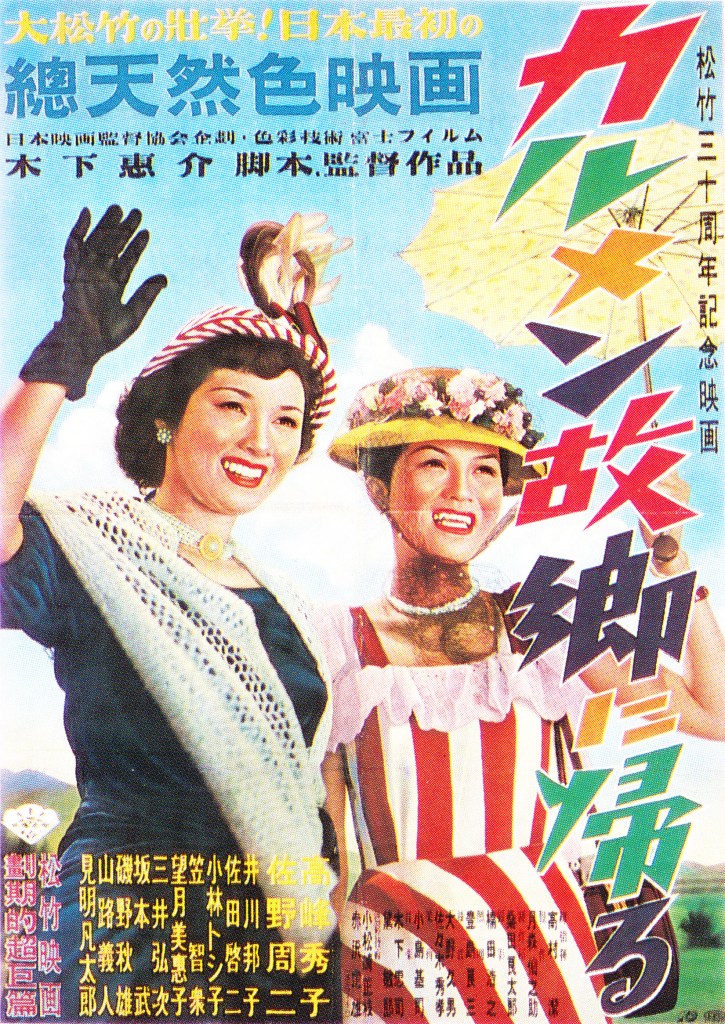
Carmen Comes Home (カルメン故郷に帰る, Keisuke Kinoshita, 1951)

Carmen Comes HomeShochiku was doing pretty well in 1951. Accordingly they could afford to splash out a little in their 30th anniversary year in commissioning the first ever full colour film to be shot in Japan, Carmen Comes Home (カルメン故郷に帰る, Carmen Kokyou ni Kaeru). For this landmark project they chose trusted director Keisuke Kinoshita and opted to use the home grown Fujicolor which has a much more saturated look than the film stocks favoured by overseas studios or those which would become more common in Japan such as Eastman Colour or Agfa. Fujicolour also had a lot of optimum condition requirements including the necessity of shooting outdoors, and so we find ourselves visiting a picturesque mountain village along with a showgirl runaway on her first visit home hoping to show off what a success she’s made for herself in the city.
Famous Tokyo showgirl “Lily Carmen” (Hideko Takamine) was once plain old Kin from the cow farm. When the family receives a letter written in grand style and signed with Kin’s stage name explaining she’ll be coming to visit, her sister may be excited but her father has much more mixed emotions. When Carmen comes home she does so like she’s on a victory parade. Wearing her Westernised, colourful outfits fashionable in the city but like something from outer space here, Carmen becomes the show but oddly seems uncomfortable with the predictable amount of attention she’s getting around town. The presence of Carmen and her equally pretty friend, Maya (Toshiko Kobayashi), threatens to destabilise this otherwise peaceful mountain village but just what sort of chaos can two beautiful women really create over the period of a few days?

The villagers react to Carmen’s return with a series of ambivalent emotions. Of course, they’re glad to see their own girl back, especially as she’s been so successful in the city, but this Carmen is not the same as the Kin who ran away. Slightly in awe of all this visiting urban sophistication, the villagers are also scandalised by Carmen’s modern attitudes to fashion and vulgar behaviour. Striding around the village like as it were a tourist attraction and she a visiting monarch, Carmen chews gum, breaks in to song at random and dances happily in her underwear on the green mountain hillsides.

The village is smallish community but fiercely proud of their local traditions. Many of the residents are happy to think that a “great artist” of the pedigree of Lily Carmen could have been born in their little village. In fact, this tiny settlement is something of a crucible for artistic talent and the extremely pompous school headmaster has a bee in his bonnet about bringing forth the future of Japan through cultural education. However, not quite all of the residents are so liberal and many live in fear of a feudalistic money lender named Maruju (Koji Mitsui) who runs the local transportation business (such as it is) but makes most of his money out of issuing exorbitant loans to desperate local people. Recently, he’s pointlessly repossessed an organ from the home of a man who was blinded during the war.

The headmaster is very keen for Carmen to come and bring some of her city sophistication back to the village, but no one has actually asked what kind of “art” Carmen is involved in. After a lot of chat from Carmen about how seriously she takes her work, people start wondering about this cutting edge performance art that their homegirl has apparently surrendered her life to. As if it weren’t obvious from her name, Carmen is a burlesque dancer. Quite a good, high grade burlesque dancer and, in fact, an artist, but essentially a stripper who really does take it all off in the end. Ever the enterprising businessman, Maruju decides to put on a show which he advertises with a big cart bearing the slogan “wild dancing by nude beauties” plastered on the side.

Needless to say this does not go down well with pompous headmaster and his plan to create a great city of highbrow artists. Striding straight over to talk to Carmen’s father Shoichi who’s only just got up from a few days in bed after Carmen’s last embarrassing faux pas, the principal intends to talk Carmen and her friend out of their scheduled performance. Her father, however, has a surprising reaction. He had an inkling what kind of life his runaway daughter must have been living. Shoichi put much of Carmen’s lack of acumen down to being kicked in the head by a cow as a child and realised it would be hard for her to find “respectable” work. He doesn’t want to see her “indecent” show and thinks the professor shouldn’t go either, but also thinks that if she’s good at it and it makes her happy then maybe that’s OK. After all, if it was that bad they wouldn’t allow it in the city and whatever’s good enough for the city ought to be good enough for the mountains. The headmaster, momentary stunned, is now confused and wondering if stopping the performance is an infringement on Carmen’s human rights.

Kinoshita refuses to take a side, he shows the ridiculousness of both the isolated villagers and the sophisticated city dwellers to great comic effect. Hideko Takamine is something of a revelation, cast completely against type as a bubbly, airhead showgirl. As is true with a lot of early colour films, or even a lot of early talkies, Carmen Comes Home has a built in gimmick and doesn’t really worry about doing very much beyond it. As such it keeps things light and bright and breezy, emphasising its high contrast colour palate every step of the way. A gentle comedy of manners as small town comforts rival big city liberalism with the obvious trade offs involved on either side, Carmen Comes Home might lack the substance of some of Kinoshita’s other work but makes up for it with general sunniness and effortlessly timeless humour.


Original trailer(s) (no subtitles):

https://www.youtube.com/watch?v=-2zwkGWPejQ

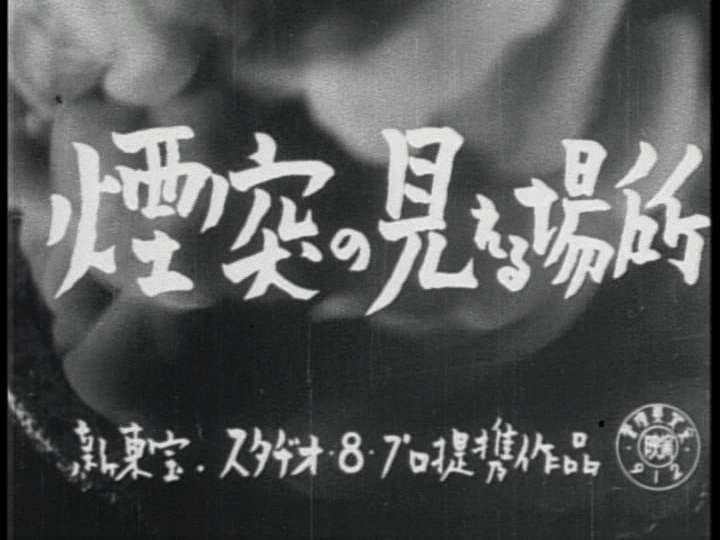
Where Chimneys are Seen (煙突の見える場所, Heinosuke Gosho, 1953)

vlcsnap-2016-07-07-01h01m06s792Where Chimneys are Seen (煙突の見える場所, Entotsu no Mieru Basho) is widely regarded as on of the most important films of the immediate post-war era, yet it remains little seen outside of Japan and very little of the work of its director, Heinosuke Gosho, has ever been released in English speaking territories. Like much of Gosho’s filmography, Where Chimneys are Seen devotes itself to exploring the everyday lives of ordinary people, in this case a married couple and their two upstairs lodgers each trying to survive in precarious economic circumstances whilst also coming to terms with the traumatic recent past.

Ryukichi Ogata (Ken Uehara) is our primary narrator, introducing us to his humble circumstances and, for the moment, happy home. He’s married to a cheerful and kindly woman, Hiroko (Kinuyo Tanaka), who was widowed during the war, and the couple rent out their upstairs to a man, Kenzo (Hiroshi Akutagawa), and a woman, Senko (Hideko Takamine) , who aren’t a couple but each rent a room separately. They’re desperately poor, so much so that they have complicated measures in place to try and avoid having any children – a luxury which they can in no way contemplate. However, unbeknownst to Ryukichi, Hiroko has taken on a part-time job outside the home by working at the bicycle races. He’s upset by this because he resents feeling as if his wife has been hiding things from him, though his pride is wounded too. The worry planted in his mind by the idea of not knowing everything there is to know about his wife’s past is brought to the fore when a baby is suddenly abandoned on their doorstep with a note claiming to be from Hiroko’s first husband which states this is “her” child and she ought to look after it from now on.

The titular “magic” chimneys belong to a large scale factory and, in truth, there are four of them, but depending on where you stand they blend into each other, increasing or decreasing in number. This rundown, backwater town is a three chimney sort of place – not quite rock bottom, but almost. All anyone can think about is trying to keep their head above the water and food on the table. Upstairs lodger Senko works as a public announcer in the shopping district along with another woman who has a rather different approach to life and is in some kind of compensatory relationship with a businessman whom she’s apparently going to marry. Senko is a little upset about this, possibly envious, but at any rate is going to lose a friend at work and in a way she doesn’t entirely approve of. At one point she declares that she envies the baby in one sense – children are allowed to cry whenever they want and make as much noise as they please, but adults are expected to grin and bear it no matter how painful it might be.

Kenzo, by contrast, is a government official in that he’s a kind of bailiff trying to enforce taxation fines and threatening to seize the property of those that can’t pay. This kind of work contrasts strongly with his sense of social justice as he can see that most of the people he visits just don’t have the means to pay but do have plenty of other problems of their own, what good will it serve turning them out onto the streets? Predictably he’s developed a bit of a crush on Senko though given both of their dire financial circumstances, he’s afraid to pursue it. His need for “justice” sends him out on a quest to track down Hiroko’s former husband and find out what’s really going on though his investigation takes far longer than expected and soon begins to depress him. When eventually uncovered, the facts of the matter shock and upset, leaving Kenzo wishing that he’d never bothered in the first place.

Having gone to so much trouble to avoid having children (they have a very prominently marked calendar hanging on the wall), that Ryukichi and Hiroko should be saddled with an abandoned child is especially ironic though the baby serves as more than a physical burden, becoming a manifestation of a hitherto buried past. Both of the women in the film have suffered heavily in the war. Hiroko lost her entire family and was reduced to stealing scraps of discarded food behind the evacuation centre. After losing everything she came to resent the whole of humanity for becoming involved in this senseless war and just wanted to live alone, but came to feel a life of mere subsistence was not worth living. She got herself a new family register and started again planning not to look back. She didn’t tell Ryukichi much about her former life because she wanted to forget it, it was painful to her.

Senko had similar experiences, losing family members in extremely cruel ways leaving her with a degree of resistance to forming new bonds. The baby, perhaps a temporary visitor, perhaps not, forces them to reconsider their choices, reawakening an emotional connection that had been severed due to the war’s hardships. The past is quite literally visited upon them, but how they decide to deal with it is very much a matter for the present. In the end, this extreme stress test on the various relationships of the central characters proves effective as their bonds eventually strengthen rather than break.

Using the four chimneys as an effective, if occasionally overworked, metaphor, Gosho remains resolutely non-judgemental, reminding us that things often look very different depending on where you stand. Everybody here is struggling, but everyone is trying to survive. If the film has a central message, it’s that you have to let the past go. The “right time” may never come, so you just have to make the best of things now. Happiness is fragile, but possible, if only you can learn to accept the various compromises which necessarily accompany it.