Triads: The Inside Story (我在黑社會的日子, Taylor Wong Tai-Loi, 1989)

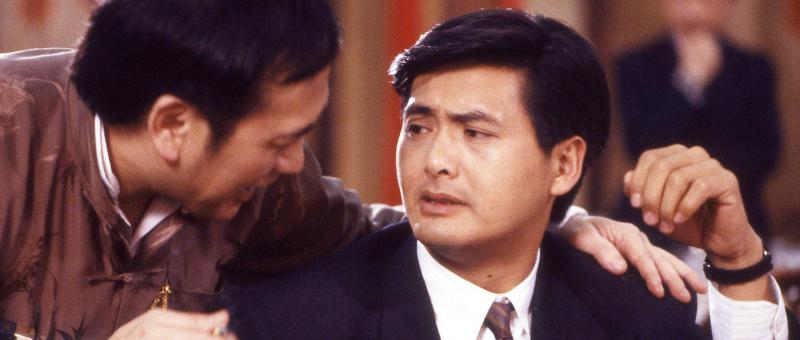
“Brother Ho, you’re a kind leader, but not a good triad member,” a underling remarks of his rival, the biological son exiled from the world of crime now returned but struggling to accept his triad inheritance. Though Taylor Wong Tai-Loi’s Triads: The Inside Story (我在黑社會的日子) is said to have been intended to depict the life inside the triads in a more realistic way, the Chinese title, which translates as something more like “my time in organised crime,” more closely implies that this is a personal story of one man’s attempt to reconcile the two sides of himself.

Aging boss Uncle Kwan (Tien Feng) is challenged by a young upstart and killed during an ambush. With his dying breath, he instructs his right-hand men Shing (Michael Chan Wai-man) and Keung (Shing Fui-On) to tell his son, Ho (Chow Yun-fat), not to join their gang or seek revenge but to continue living his life in America. Kwan evidently sent Ho there with the intention of keeping him out of the world of organised crime, making sure he got an education and can live a nice, middle-class life. Ho indeed seems to have done quite well in the US. He has a large suburban house he lives in with his wife and young son, and has recently got into the real estate business. Nevertheless, he has a close relationship with his father even if he never approved of his triad activities.

Despite Kwan’s request, when Ho and his family return to hold the funeral, Shing and Keung press him to take over as head of the gang. Ho is understandably reluctant and insists he’ll be returning to America when all the formalities have been completed. Nevertheless, he ends up becoming somewhat involved in the gang’s business, using his corporate knowledge from America to suggest they simply sublet some of their territory to other gangs to stave off conflict and turf war, little realising that will lead to just that. Not knowing how the triad world works, he makes some catastrophic mistakes that lead to some of his father’s men being killed or injured.

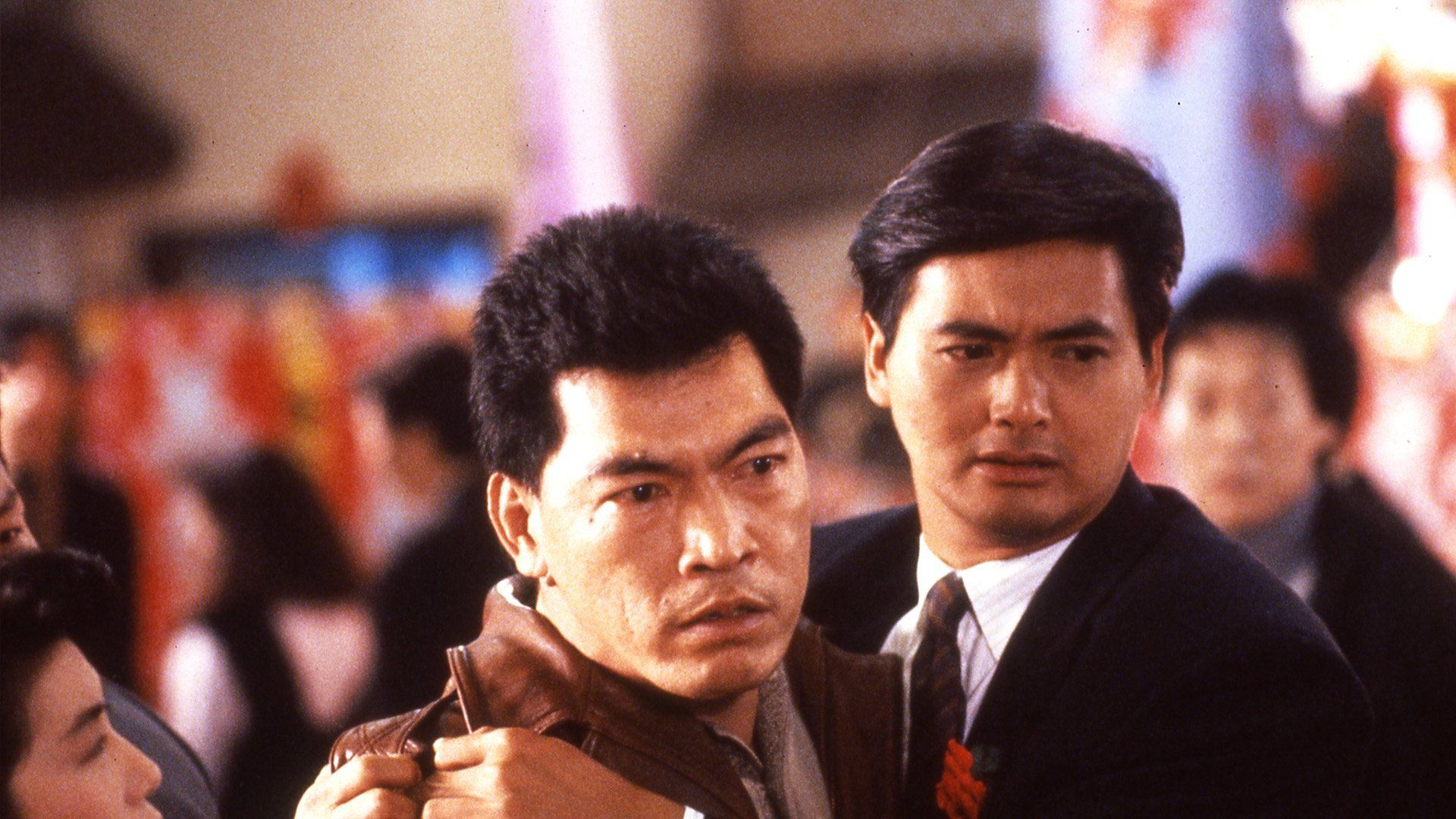
In many ways Kong (Roy Cheung Yiu-Yeung), one of Kwan’s protégés, is his mirror image. Taken in by Uncle Ping (Lam Kau) and raised in triad society, he is in some ways Kwan’s natural heir but resents both still being treated as a petty foot soldier and that Ho has had all the opportunities not afforded to someone like him. Ho tells him that he’s still young, and could get a “proper job,” but Kong is illiterate and has been in triad society for most of his life. There are no other jobs he could go to, while Ho was sent abroad to study. Ho does not really belong in this society, but is respected as the biological son, while Kong, who cannot live anywhere else, is shunned and ignored.

Ho takes him to task for recruiting other young men to act as foot soldiers and scapegoats, but as Kong points out, this is how his father recruited him and triad society does at least provide a family for those who have no other. In going to America, Ho has lost touch with his culture and become somewhat exiled from his family, but also feels responsible for the empire his father built and the men who followed him. In some ways, his internal conflict may reflect a sense of anxiety that those who go abroad with the Handover looming will lose both their cultural identity and any possibility of influencing the future of the place they’ve left behind.

Yet, on the other hand, there is perhaps the idea that Ho survives abroad, while Kong sacrifices himself to save him in recognition of the fact that Ho has tried to do the same. In torching the Taoist altar along with his father’s photo, Ho sets fire to triad society itself along with the world his father left behind, asking for his father’s forgiveness while leaving to return to his new life in America without looking back. One of the first films to be awarded a Cat III certificate for its depiction of triad ritual which upset the colonial authorities, the film plays out more like a yakuza drama of fragmented paternal legacy and compromised brotherhood while exposing the inherent corruption of a gangster society before reaching a sense of catharsis as Ho prepares to burn it all down.


Trailer (Traditional Chinese / English subtitles)
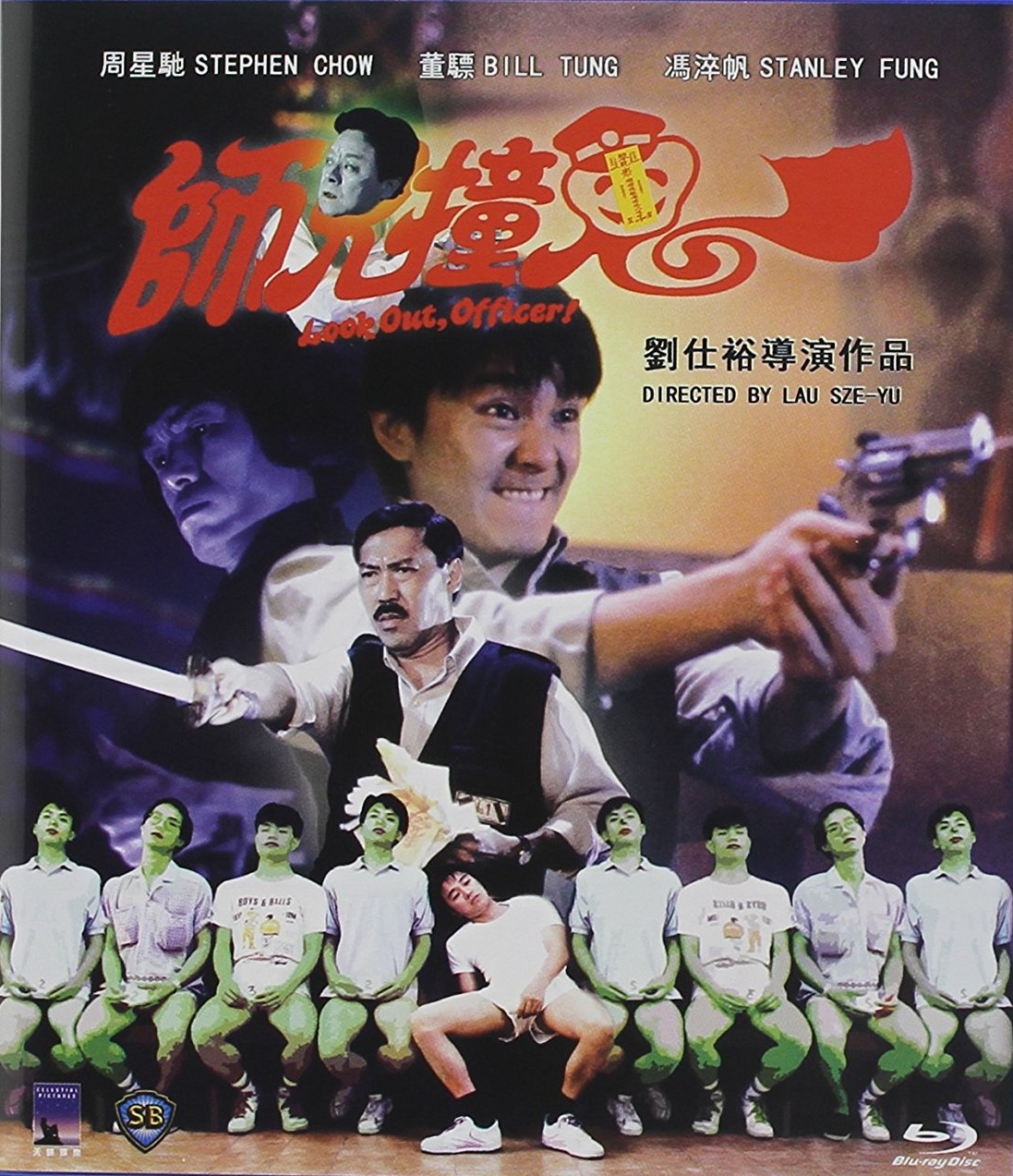
Look Out, Officer! (師兄撞鬼, Lau Sze-yue, 1990)

look out officer BD 1The thing about classic Hong Kong comedies is, they were made for a very specific time and place as a quick populist diversion not intended to have much of a life beyond their original release. Despite the thrown together, sketch show-style progression from one tenuously related set piece to the next held together by quick fire comedy, they could also be surprisingly subversive as in this 1990 comedy starring a young Stephen Chow. Look Out, Officer! (師兄撞鬼) is a silly buddy cop comedy and supernaturally tinged procedural but it also satirises the Hong Kong government’s response to the growing “boat people” crisis in which, as is declared in the film, those who’ve come from Vietnam for “economic reasons” will be regarded as illegal immigrants and deported. 

The film begins with two policeman as one berates the other for stopping to burn “ghost money” on the street, describing his need for ritual as like that of an old woman. The first policeman, Biao (Bill Tung), then gets a message on his pager to check out an abandoned warehouse. Piling into the police car, Biao and religious cop Chin (Stanley Fung) arrive but don’t find anything suspicious. Chin decides to leave while Biao wants to investigate further. Poking around, Biao finds himself directly above some kind of large scale drugs lab into which he heroically jumps and beats up most of the grunts waiting below before the head gangster turns up and throws him out of a window. Biao’s body lands directly on the top of Chin’s car who has returned after having second thoughts and wanting to make sure his partner is OK.

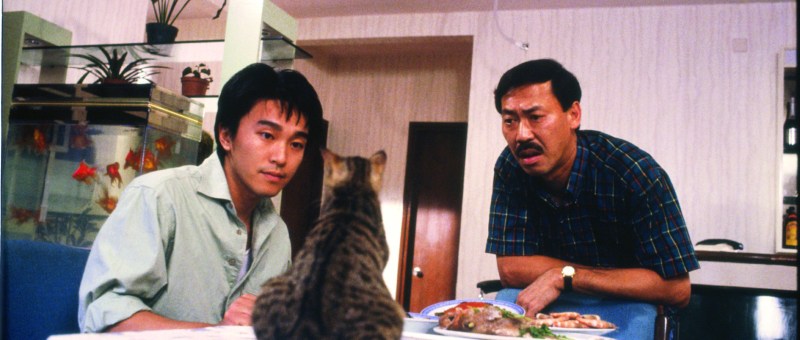
The “official” explanation is that Biao has killed himself because of his excessive gambling debts. Up in heaven he gets put on trial (alongside recently deceased dictators Ceausescu and Marcos) and the judges find that his death is indeed suicide despite his protestations. Eventually they agree to let him go back to Earth as a ghost to prove he was murdered and take revenge on the killer. Biao gets assigned a “saviour” whom he will know thanks to an unusual birthmark. The “saviour” turns out to be rookie cop, Sing (Stephen Chow), who is not exactly top of his graduating class but aided by Biao’s supernatural powers he just might be able to find the real killer after all.

As it turns out Chin dabbles in Taoist magic (to make his arms longer, for no particular reason) as do the gangsters who seem to have demonic forces on their side. Biao never saw the face of the man who killed him because he had him in a headlock, but he does remember his terrible body odour thanks to being shoved under his armpits. Victory in the final battle relies on conjuring a unique charm which consists of equally stinky ingredients including virgin’s urine, cat poo, and flatulence neatly bringing several of the film’s running jokes together into one satisfying punchline.

Running gags there are a plenty from the grumpy old cleaner at the police station they’ve nicknamed the 1000 year old virgin who likes to mop up the men’s toilets while they’re busy so she can assess the policemen’s “capabilities” for herself, to the cat who keeps defecting on the altar, and Sing’s general weediness. The supernatural procedural runs in tandem with the usual romantic comedy subplots including Chin’s over protective attitude to his grown up daughter who inevitably ends up in a relationship with Sing thanks to Biao’s supernatural wingman-ing. One of the “charms” Baio has been given to help him in his quest is a “lewd” spell which suddenly makes the victim randy for the first person they see. Biao uses this to get his own back on Chin for leaving him behind by making their austere superior officer suddenly come over all goey only to have her snap out of it and accuse him of sexual harassment.

The humour maybe distinctly lowbrow, but there is a degree of satire lurking in the background as Sing is sent into a “massage parlour” with a codeword in Vietnamese only to discover that all the girls in the place can understand it and immediately parrot back the recent ordinance of Vietnamese immigration. Later, a Vietnamese man threatens to commit suicide over the cruel and inhumane treatment he has received as a Vietnamese immigrant trying to make a life in Hong Kong, fearing he may be forcibly deported and will be killed if he has to go back to Vietnam losing everything he’s tried to build in Hong Kong.

When Biao eventually gets back to heaven they don’t want to let him in even though he’s cleared his name because heaven has a quota and he doesn’t meet the criteria. All is not lost, however, because you can buy your way in as an immigrant with ”special investor” status. In heaven, it seems, everything is fine so long as you have money. As above, so below. Another characteristically nonsensical, juvenile comedy from Shaw Brothers, Look Out, Officer! is as silly and of its time as one would expect but it is undeniably entertaining and unexpectedly moving in its final moments.


Remake of Philip Chan & Ricky Lau’s Where’s Officer Tuba? (1986)

Celestial Pictures trailer (English/traditional Chinese subtitles)