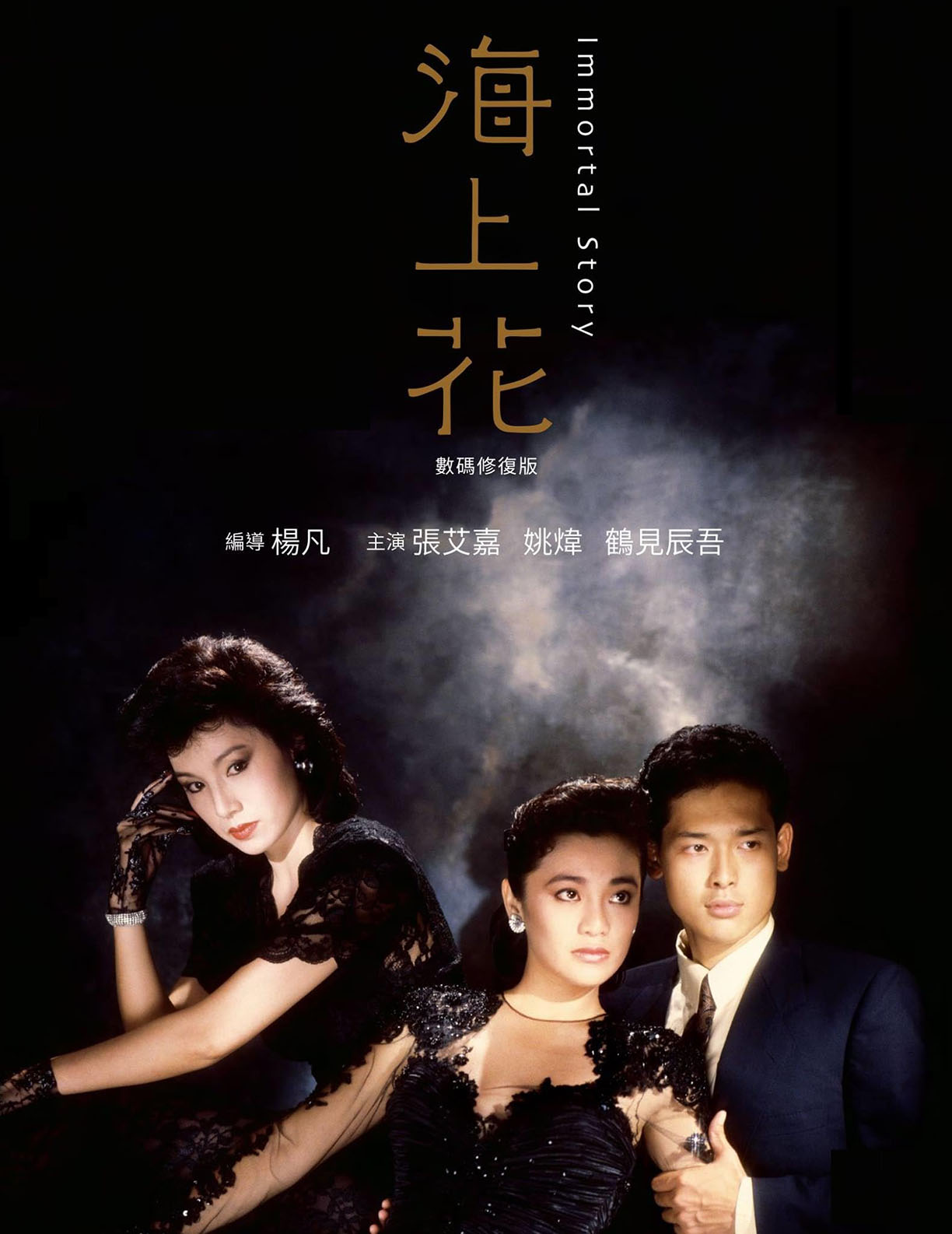
Immortal Story (海上花, Yonfan, 1986)

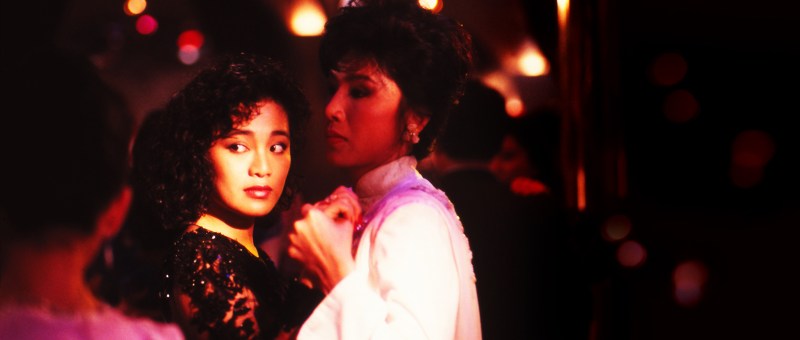
A young woman dreams of romance after meeting a Japanese boy in Macau, but finds that fate has other plans in Yonfan’s romantic melodrama, Immortal Story (海上花). Employing a non-linear narrative, the film opens in the early 1970s and shifts back 10 years as Ling (Sylvia Chang Ai-Chia) meets Nakamura (Tsurumi Shingo) who is in town for a few days while his school baseball team has a fixture in Hong Kong. Though the pair are smitten with each other, Ling never sends the letters she promised to write him, realising that she is corresponding with a romantic fantasy rather than a real person, while Nakamura apparently continues to think of her after returning to Japan.

Ten years later, Ling is discovered cradling Nakamura’s body in a hotel room in Macau and is presumed to have stabbed him with a fruit knife. The film then explores what led to this tragic ending through a series of flashbacks and witness testimonies through which it becomes apparent that both Ling and Nakamura have become somehow corrupted during their time apart. Even during her youth, however, it seems that Ling did not really believe in the reality of romantic salvation and was too afraid to pursue her relationship with Nakamura. After all, she could easily have sent the letters that she continued to write for the full 10 years, but preferred to maintain the fantasy rather than risk it shattering.

Instead, she drifted into an abusive relationship with a local boy who got her pregnant and then dumped her, after which she was rescued by bar owner/madam, Blanche (Yiu Wai). If Ling is caught in a romantic fantasy, then so in a way Blanche is too as it is clear that she is infatuated with Ling who will never return her affections. In fact, when Ling reveals that she plans to leave with Nakamura, she says that she feels indebted to Blanche but also that she has effectively repaid her kindness through the money she has made working for her as an escort. This is in a way Blanche’s tragedy, that in seeking to trap and possess Ling, she ends up ruining her while Ling feels only gratitude rather than affection. To escape the trauma of her life as a sex worker, she ends up turning to drugs from which neither Blanche nor Nakamura is able to save her.

What exactly happened to Nakamura in the intervening 10 years is never revealed, but it seems that he has ironically become involved with the drugs trade and is therefore partly responsible for Ling’s fate. He vows that he will get her off the drugs and take her back to Japan with him, but agrees to help her inject not only after they first reconnect but when they meet again in the hotel room before they’re supposed to leave. Blanche isn’t wrong when she accuses him of feeding on the blood of vulnerable people, though one could say she does the same in pressing them into sex work as she does with Ling. Unsurprisingly, Blanche is against Ling reuniting with Nakamura, but also asks why she allows men to hurt her, rather than accept the care and nurture Blanche is giving her if while, at the same time, harming her through her exploitation. 

The 1970s setting maybe crucial to making the timeline work as Nakamura states the reason he can speak Chinese is that he was born in China, though this “immortal story” feels like something that might have happened much earlier. There is a strong sense of nostalgia for a lost time of innocence and possibility, though Ling already seems to think that her future is out of reach even as a teen. When she reunites with Nakamura, it’s in a ruined building where she once used to live that is about to be torn down, hinting both that their romance has no real future and that it belongs to another time or may really never have existed at all outside of a mutual fantasy. In these early scenes, Ling is entirely dressed in a bright white, as she is in the hotel room, while as a tragic nightclub singer later she wears black like the ironically named Blanche. Their outfits often complement each other in a mix of black and white symbolising both the genuineness of their connection and the corruption stemming from Blanche’s line of work. In the end it maybe Blanche who is trapped within an impossible dream of romance, caught by the futility of her desire, while in a way freeing Ling from the torment of the shadow of an illusionary lover.
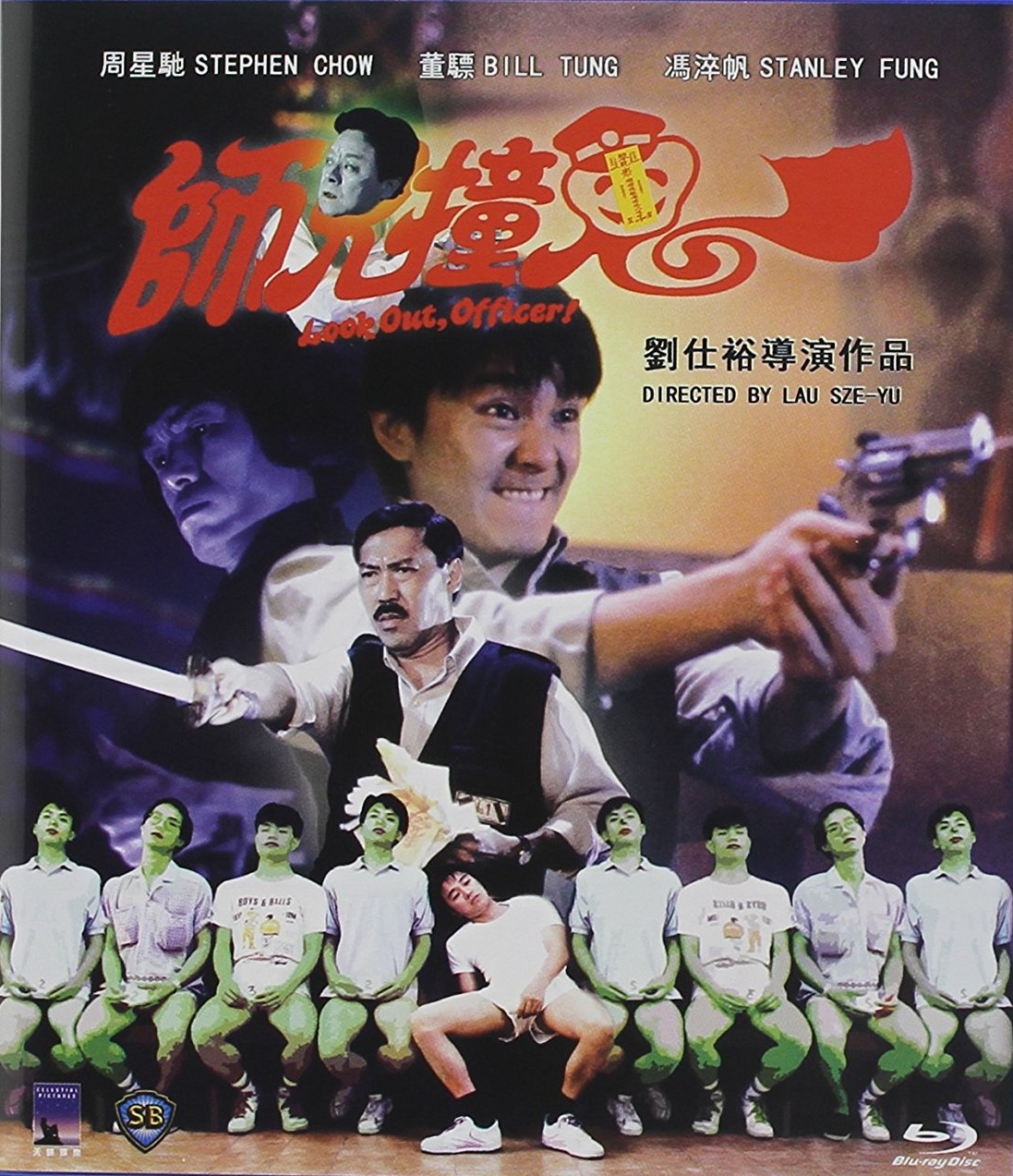
Look Out, Officer! (師兄撞鬼, Lau Sze-yue, 1990)

look out officer BD 1The thing about classic Hong Kong comedies is, they were made for a very specific time and place as a quick populist diversion not intended to have much of a life beyond their original release. Despite the thrown together, sketch show-style progression from one tenuously related set piece to the next held together by quick fire comedy, they could also be surprisingly subversive as in this 1990 comedy starring a young Stephen Chow. Look Out, Officer! (師兄撞鬼) is a silly buddy cop comedy and supernaturally tinged procedural but it also satirises the Hong Kong government’s response to the growing “boat people” crisis in which, as is declared in the film, those who’ve come from Vietnam for “economic reasons” will be regarded as illegal immigrants and deported. 

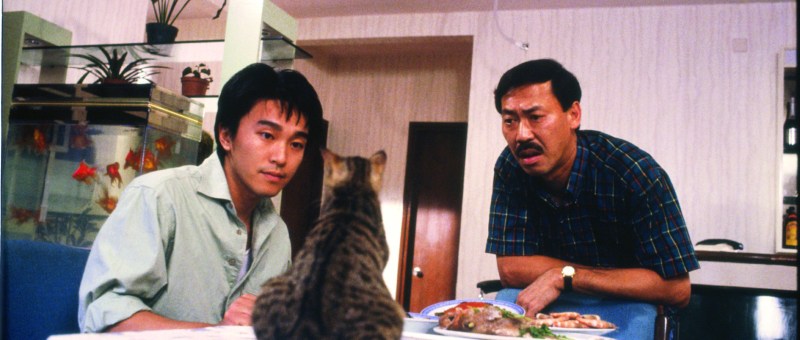
The film begins with two policeman as one berates the other for stopping to burn “ghost money” on the street, describing his need for ritual as like that of an old woman. The first policeman, Biao (Bill Tung), then gets a message on his pager to check out an abandoned warehouse. Piling into the police car, Biao and religious cop Chin (Stanley Fung) arrive but don’t find anything suspicious. Chin decides to leave while Biao wants to investigate further. Poking around, Biao finds himself directly above some kind of large scale drugs lab into which he heroically jumps and beats up most of the grunts waiting below before the head gangster turns up and throws him out of a window. Biao’s body lands directly on the top of Chin’s car who has returned after having second thoughts and wanting to make sure his partner is OK.

The “official” explanation is that Biao has killed himself because of his excessive gambling debts. Up in heaven he gets put on trial (alongside recently deceased dictators Ceausescu and Marcos) and the judges find that his death is indeed suicide despite his protestations. Eventually they agree to let him go back to Earth as a ghost to prove he was murdered and take revenge on the killer. Biao gets assigned a “saviour” whom he will know thanks to an unusual birthmark. The “saviour” turns out to be rookie cop, Sing (Stephen Chow), who is not exactly top of his graduating class but aided by Biao’s supernatural powers he just might be able to find the real killer after all.

As it turns out Chin dabbles in Taoist magic (to make his arms longer, for no particular reason) as do the gangsters who seem to have demonic forces on their side. Biao never saw the face of the man who killed him because he had him in a headlock, but he does remember his terrible body odour thanks to being shoved under his armpits. Victory in the final battle relies on conjuring a unique charm which consists of equally stinky ingredients including virgin’s urine, cat poo, and flatulence neatly bringing several of the film’s running jokes together into one satisfying punchline.

Running gags there are a plenty from the grumpy old cleaner at the police station they’ve nicknamed the 1000 year old virgin who likes to mop up the men’s toilets while they’re busy so she can assess the policemen’s “capabilities” for herself, to the cat who keeps defecting on the altar, and Sing’s general weediness. The supernatural procedural runs in tandem with the usual romantic comedy subplots including Chin’s over protective attitude to his grown up daughter who inevitably ends up in a relationship with Sing thanks to Biao’s supernatural wingman-ing. One of the “charms” Baio has been given to help him in his quest is a “lewd” spell which suddenly makes the victim randy for the first person they see. Biao uses this to get his own back on Chin for leaving him behind by making their austere superior officer suddenly come over all goey only to have her snap out of it and accuse him of sexual harassment.

The humour maybe distinctly lowbrow, but there is a degree of satire lurking in the background as Sing is sent into a “massage parlour” with a codeword in Vietnamese only to discover that all the girls in the place can understand it and immediately parrot back the recent ordinance of Vietnamese immigration. Later, a Vietnamese man threatens to commit suicide over the cruel and inhumane treatment he has received as a Vietnamese immigrant trying to make a life in Hong Kong, fearing he may be forcibly deported and will be killed if he has to go back to Vietnam losing everything he’s tried to build in Hong Kong.

When Biao eventually gets back to heaven they don’t want to let him in even though he’s cleared his name because heaven has a quota and he doesn’t meet the criteria. All is not lost, however, because you can buy your way in as an immigrant with ”special investor” status. In heaven, it seems, everything is fine so long as you have money. As above, so below. Another characteristically nonsensical, juvenile comedy from Shaw Brothers, Look Out, Officer! is as silly and of its time as one would expect but it is undeniably entertaining and unexpectedly moving in its final moments.


Remake of Philip Chan & Ricky Lau’s Where’s Officer Tuba? (1986)

Celestial Pictures trailer (English/traditional Chinese subtitles)