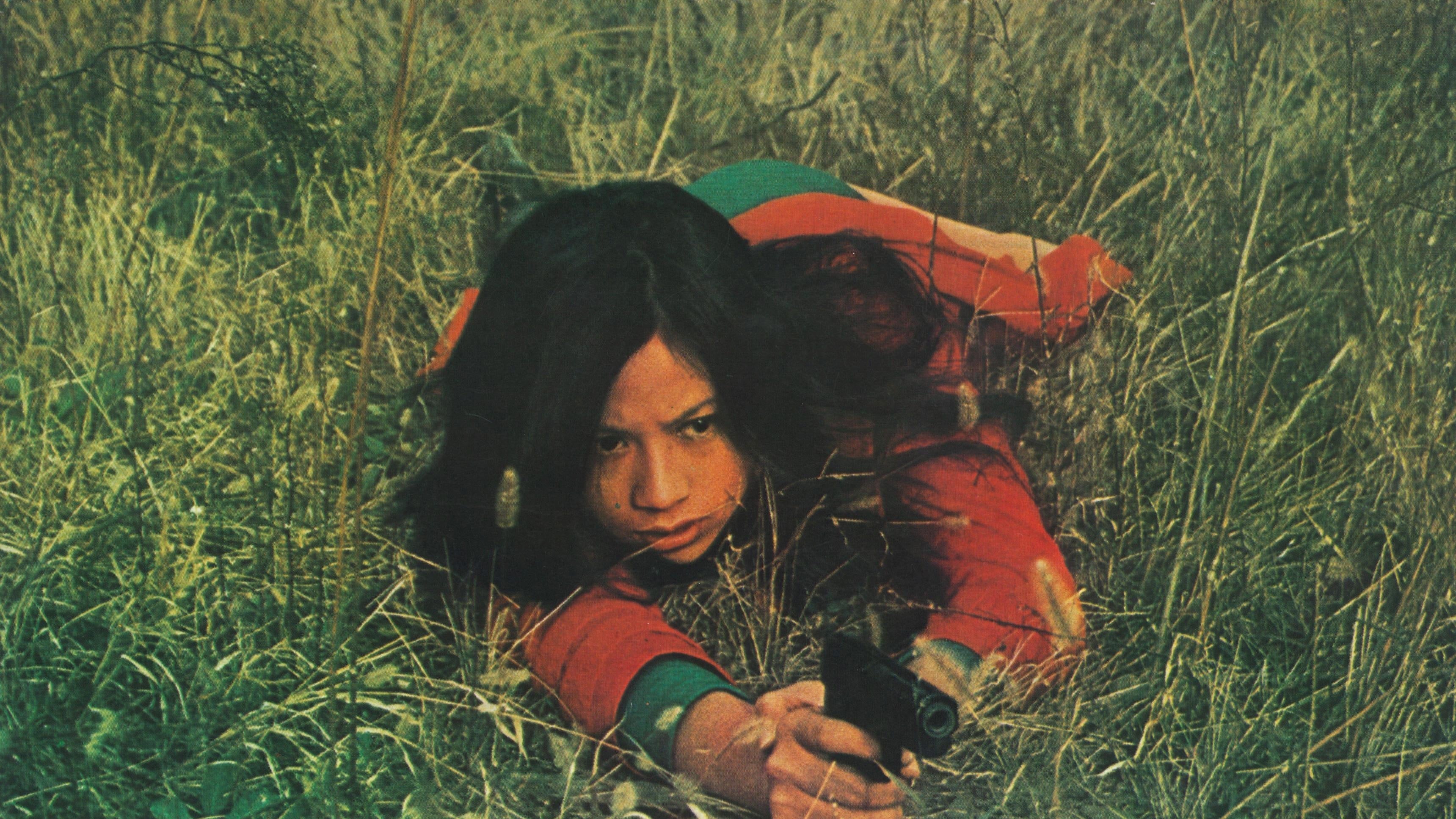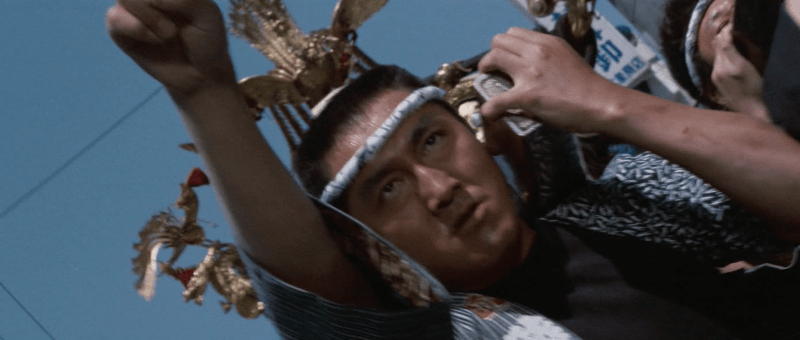
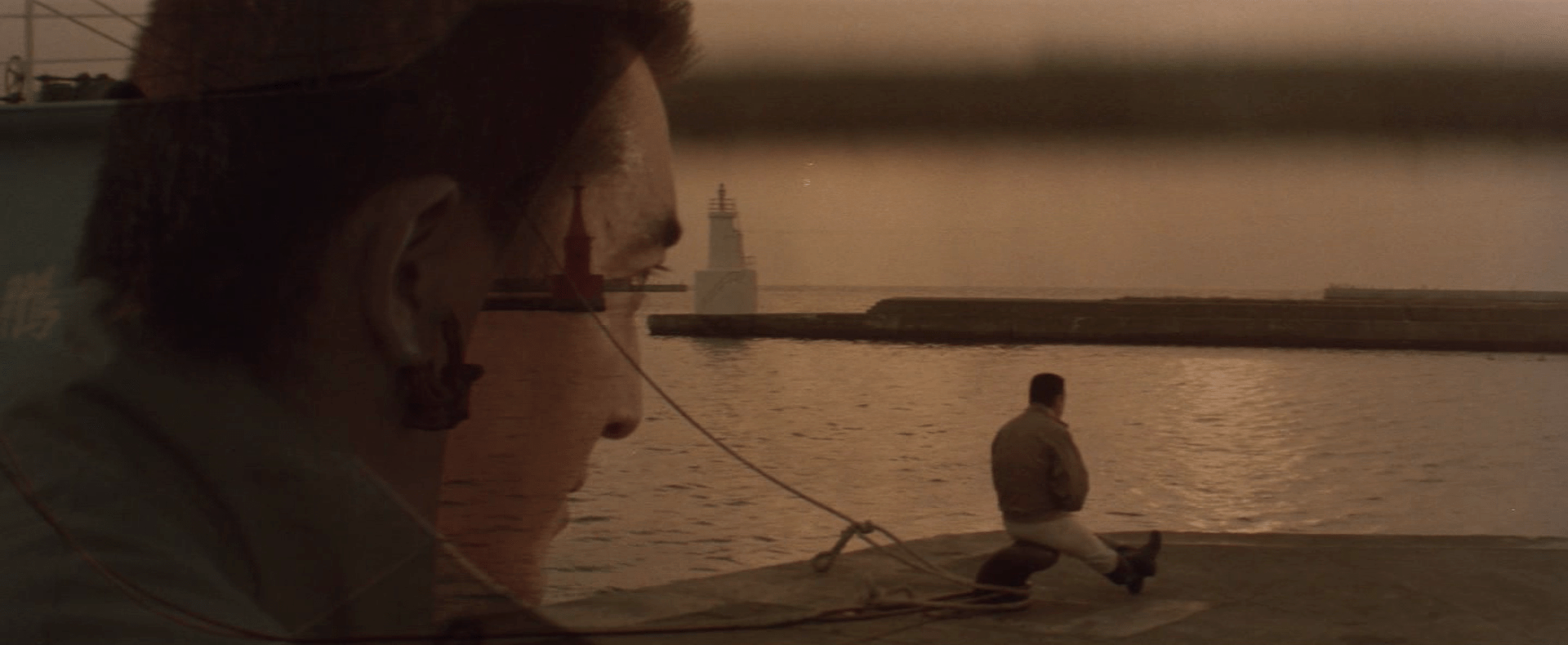
Eleven Samurai (十一人の侍, Eiichi Kudo, 1967)

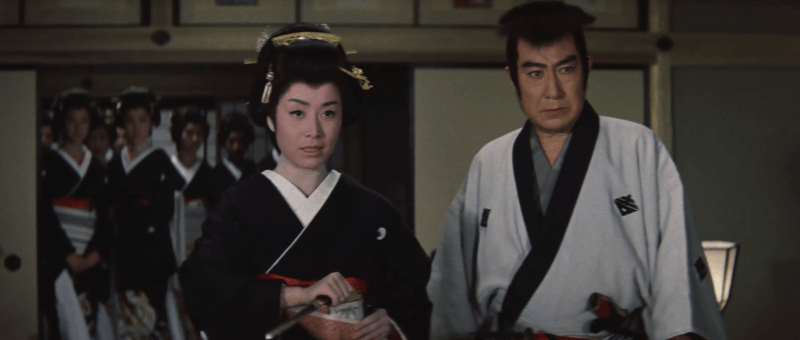
“If no one denounces the absurdity of this world, then our descendants will keep suffering,” a soon-to-be ronin insists in Eiichi Kudo’s revengers tragedy, Eleven Samurai (十一人の侍, Juichinin no Samurai). It seems clear from the outset that their actions will have little effect no matter whether they succeed or fail because the enemy is feudalism which may be approaching the end of its life but is definitely not dead yet. They can at least attempt to avenge their clan even if they can’t save it while refusing to let an entitled, selfish lord get away doing whatever he likes just because he happens to be the son of the former shogun and brother of the current one.

The opening scenes see Nariatsu (Kantaro Suga) chasing a deer having declared himself a “real hunter”. He ignores the cries of his men to watch where he’s going and sails over the border into the territory of Oshi which amounts to an invasion seeing as he is armed and has no permission to be there. The deer gets away, but Nariatsu shoots an old woodcutter whom he felt to be in his way with his bow and arrow. The Lord of the Abe clan that rules Oshi immediately takes him to task and tells Noriatsu that his behaviour is unbecoming for the son of the former shogun. He’s committed a murder in their territory, but they’re prepared to let it go as long as he leaves as soon as possible. But Nariatsu doesn’t like being told what to do and simply shoots the lord in the eye, potentially sparking a diplomatic incident. 

The Abe clan try to lodge a complaint in Edo, but are shut down by courtier Mizuno (Kei Sato) who fears that to acknowledge an event such as this would damage the moral authority of the Tokugawa regime. He decides to cover the whole thing up by claiming it was the Abe clan who insulted Noriatsu. The Abe clan will then be dissolved, and Oshi essentially gets nationalised. All of which suits Nariatsu just fine because he wants to take control of Oshi and expand his territory anyway. Part of his petulance seems to stem from the fact that he feels hard done by with such a small inheritance when his brother became the Shogun and received multiple fiefdoms. The previous Shogun, Tokugawa Ieyoshi, had produced an unusual number of children which became quite a problem in that he had to find lands for them all and eventually hastened the demise of the shogunate because of the additional strain. 

But Nariatsu is also an overgrown child who has no idea how to do anything for himself and no concern for the feelings or fortunes of others. When instructed to do something he doesn’t want to, Nariatsu petulantly stamps his feet and complains, and when his actions are challenged he simply replies that he’ll be telling his father. In fact, he is so infuriating that it’s likely most of his men secretly want him dead too, including his chief adviser Gyobu (Ryutaro Otomo) who was once the General Inspector but is now expected to babysit this absolute buffoon. Even though Nariatsu knows the Abe clan will be trying to kill him, he still sneaks out to the red light district and gets blind drunk with geisha which in itself is conduct unbecoming for a high ranking samurai such as himself. 

As such, he represents almost everything that’s wrong with the feudal order while Mizuno represents the rest. It’s Mizuno that secretly plots against the plotters, manipulating them into giving up their assassination mission by claiming to have switched sides only to backtrack and reveal he’s actually still working for Nariatsu fearing a reputational loss for the Tokugawa. Chief revenger Hayato (Isao Natsuyagi) is also banking on this fear of reputational damage, certain that the Shogunate won’t be able to bear the humiliation of Nariastsu being killed by a ronin so will instead claim that he died from an illness. Vowing to avenge the clan, Hayato righteously gives up his position to become one so that the Abes won’t be linked to the crime and is joined by 10 more similarly annoyed samurai. Six of them are already “dead” having been asked to commit seppuku for recklessly attacking Nariatsu on their own and blowing the whole operation. 

Hayato at least believes this to be a suicide mission. He leaves his loving wife and home and allows people to think he’s run off with Nui (Eiko Okawa), the younger sister of one of their number who died before he could join them. They do this because they think it must be done, and also because if no one stands up to samurai oppression it will never end. Wandering peasant Daijuro (Ko Nishimura) agrees with them. He wants revenge on the samurai for raping his sister after which his father and brother took their own lives. Nariatsu is as good as anyone else and he does very much need to die. 

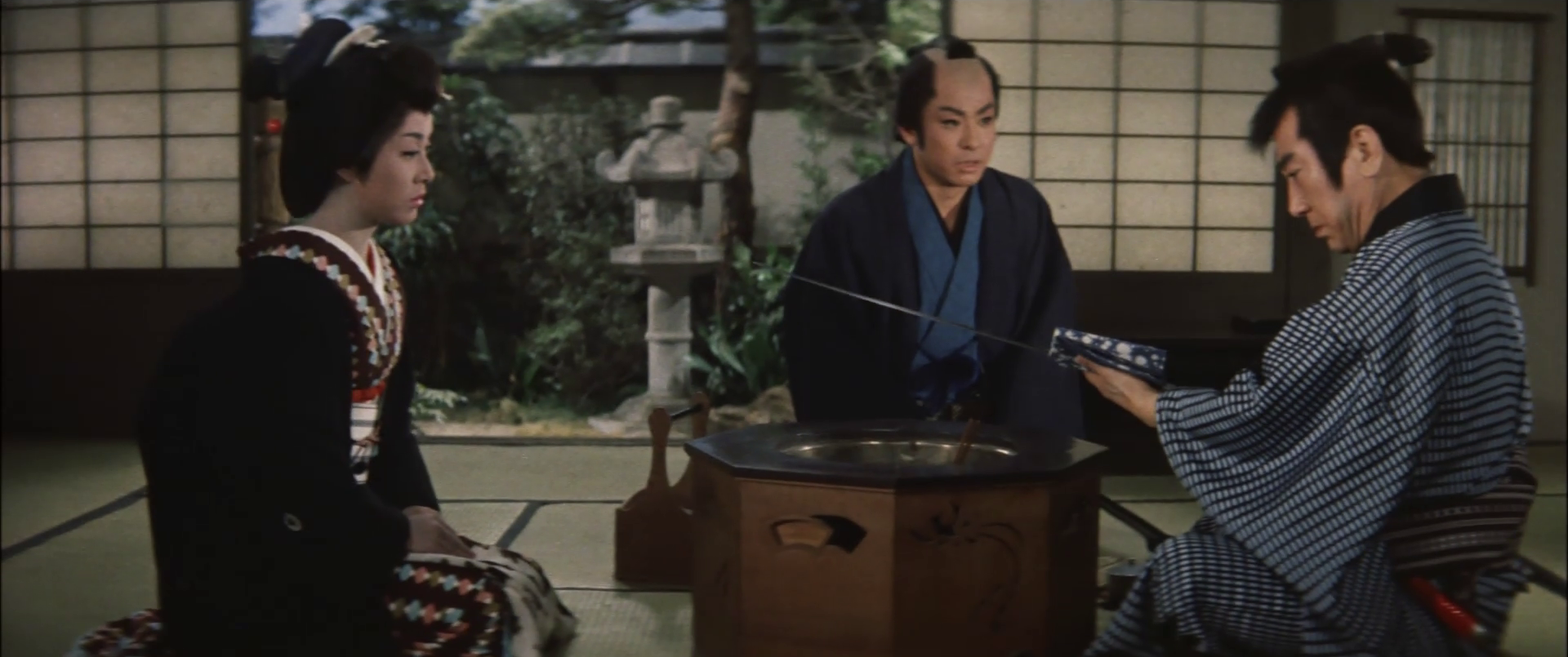
But despite Daijuro’s homemade cannons, nothing quite goes to plan. Kudo sets his final battle in an atmospheric, misty valley that is an obvious stand in for the underworld. Hayato may succeed in killing Nariatsu but it’s a pyrrhic victory. Though he vowed “to put an end to this ridiculous world,” a samurai cannot really win this battle. It’s Daijuro who eventually walks off with Nariatsu’s head, symbolically decapitating the shogunate which the closing titles confirm was mortally wounded by this incident. With his striking black and white cinematography, Kudo does indeed paint this samurai world as a hellish place ruled over by an infinitely corrupt and self-interested authority. The nihilistic futility of it all is emphasised by the figure of a grown man sitting like a small child and splashing his sword in a puddle while surrounded by dead bodies. There might be a way out of this, but not for the samurai, only for those who will come after and perhaps finally be free of this world’s absurdity.


Tengu Priest (お坊主天狗, Yasushi Sasaki, 1962)

Disparate denizens of Edo are united in one thing in Yasushi Sasaki’s light hearted jidaigeki, Tengu Priest (お坊主天狗, Obozu tengu), revenge. Like many jidaigeki, what they really want is revenge against the evils of feudalism to which they have each fallen victim, but also acknowledge that they have found something better in being outside it in the solidarity that exists between them as outsiders free from the obligations of samurai society if also with loose ends waiting to be tied.

Once a hatamoto with a 1000 Koku stipend, Obo Kichiza (Chiezo Kataoka) is now a much feared figure keeping order in Edo. When some yakuza toughs are hassling the geisha Kozome (Hibari Misora) at the theatre, insisting that she serve them sake even as she reminds them she’s off the clock, one look from him stops them dead though Kichizo is also impressed with Kozome’s nerve. Like him, Kozome is also in Edo for revenge. Formerly a samurai’s daughter, she became a geisha to look for the man who killed her father in a stupid quarrel over a fencing duel. Kichiza, meanwhile, seeks revenge against the local lord, Honda Etsu (Masao Mishima), who killed his father in a fit of temper when he ordered him to commit seppuku for causing his son-in-law to fall off his horse but he refused. 

Loyal retainer Kinpei (Ryutaro Otomo) had begged for his forgiveness and insisted that he could get Etsu to reform but three years have passed and not only has he bribed his way to head office but his behaviour has declined still further. We see him cruelly cut down a maid seemingly for no reason, simply ordering his men to get rid of the body. Etsu has a reputation for random violence while drunk, but as he is the lord, there are no real consequences for him. His retainers cover up his crimes, and Kinpei’s sole attempt to talk some sense into him goes nowhere, meanwhile his chief adviser Shichinosuke (Sentaro Fushimi) is basically running the show telling others the lord is not in his right mind and cannot make decisions so he must make them for him.

They are all, including Etsu himself, victims of the feudal order in which the systems of power are necessarily corrupt. In his yakuza persona, Kichiza has struck up a friendship with another geisha, Kozuru (Naoko Kubo), who was actually a lady in waiting working as a maid at his estate. She has long been in love with him, but the class difference would have made any union impossible. Ironically, she remarks to Kozome that even in their present state they are still a Hatamoto and a lady in waiting so she dare not express her love for him. Only once his revenge is concluded and he’s fully abandoned his samurai status can Kichiza truly be free to embrace a relationship with Kozuru while conversely Kozome regains her life as a samurai’s daughter by avenging the death of her father.

Kozome asks for Kichiza’s help to track down the target of her revenge, but he also respects her wishes and understands that it’s something she must do herself as does eccentric sword sharpener Shinzaburo (Hashizo Okawa ) who actively stands back so she, another wronged woman, can stick the knife in. Hibari Misora’s role in the film is smaller than one might expect as her revenge subplot is secondary to Kichiza’s and she has relatively little screen time with only a brief musical sequence during a naginata dance though she does participate in the high octane final showdown in which all grievances are exorcised and a kind of order returned to the samurai realm even if it must be destroyed to so as Kinpei resolves to protect both the lives and livelihoods of their many retainers and the integrity of Kichiza, going so far as to congratulate Kozome on the successful completion of her revenge. 

Yet what made the whole thing possible was Kichiza’s own band of outlaw drifters whom he allowed to live in his home he later says just so that they would have a place to come and be together so that they might more easily reintegrate into mainstream society. He might have lost his domain and samurai status but has discovered something better in this accidental community. They may be in a sense almost like retainers to him, but if so they stay by choice rather than obligation and help out of a genuine sense of loyalty and affection. In essence, in taking his revenge, he frees himself from the oppressive nature of the samurai code and is able to live like an ordinary man lamenting that if only he and Kinpei had both been ronin they could have enjoyed their time together for longer. Lighthearted and cheerful despite its dark themes, the film is nevertheless a condemnation of the hypocrisies and abuses of a feudal society in which freedom is to be found only among those who live outside it.


School of the Holy Beast (聖獣学園, Norifumi Suzuki, 1974)

“Why is sex wrong?” a rebel nun enquires, hinting at the hypocritical atmosphere of the convent which comes to stand in for the patriarchal superstructure of the contemporary society. That it does so might in a way be surprising given that Christianity has relatively little cultural relevance in Japan save its stance as a persecuted religion during the feudal era. Director Norifumi Suzuki jumps on the nunsploitation bandwagon but does so with a baroque romanticism mixed with punkish youthfulness as two young women find themselves rebels in the house of God.

They are both there for reasons largely unconnected to religion. 18-year-old Maya (Yumi Takigawa) is searching for the truth behind her birth and her mother’s death, while Sister Ishida (Emiko Yamauchi) claims she’s been sent there by a wicked stepmother. Ishida also kicks up a stink during a class by questioning the truth of immaculate conception which is quite odd for someone who wanted to become a nun, while otherwise punished for drinking whisky in the middle of the night. Punishment does seem to be the main thrust of their religious practice with the transgressions of “adultery”, which includes all impure thoughts, murder (!), and theft taken the most seriously. On her first night at the convent Maya is woken by the sound of another nun furiously whipping herself though in fairness there just isn’t much else to do. 

Suzuki rams home the erotisicm of ritual in the baptism Maya undergoes during her initiation as a nun in which she is totally nude and instructed to stand with her arms out as if on the cross in front of the altar. She must then bend to kiss the crucifix before receiving her veil as a bride of Christ. The nuns talk of lives of eternal virginity while burying themselves in asceticism in an effort to deny their natural desires but have to a degree sublimated their lust in violence. The most common form of punishment is whipping, while Maya is later tortured with thorns and artfully battered by roses. When one nun steals money in guilt for having abandoned her impoverished family to begin her spiritual journey to Christ, she confesses herself to a priest who offers her the same amount so that she can help her family and ease her conscience by returning it. But in reality the priest has tricked her. He resents that she feels as if her sin has been forgiven and she may forget her guilt, cruelly telling her that she will never hear the voice of God before going on to violate her. 

The act of betrayal, of himself breaking the code to which he should subscribe, is only a echo of an societal corruption which allows men to abuse their power often with the complicity of the women around them such as the abess who has long been in love with him. Kakinuma (Fumio Watanabe) is a man whose faith has been shaken. He bears the scars from exposure to the atomic bomb in Nagasaki which is centre of Christianity in Japan. After telling Hisako (Yayoi Watanabe) that God will not see her, he asks if anyone has actually seen him and why he does nothing when his people suffer. 

Both he and the abbess are trapped in a hell of their own making, though as the girls both say the convent is akin to a prison. When Hisako’s sister visits her they talk to each other through glass as if she were a prisoner, though in many ways she is oppressed by her own repressed desires while those of the other nuns have begun to drive them quietly out of their minds and into sadomasochistic fury. This peculiar madness is only deepened by the arrival of a new Mother Superior who returns from Europe insistent on rooting out “witches” in league with the devil. Suzuki signals the absurdity by playing a chorus of elation when a tortured nun wets herself over a tablet featuring a crucifix in the inversion of a bizarre Edo-era ritual designed to identify secret Christians who were at that point illegal. 

To break free of the covent and return to her liberated life in contemporary Japan as seen in the cheerful opening sequences of her date with Kenta (Hayato Tani), Maya must also free her mother’s ghost and the souls of her sisters by forcing Kakinuma to reckon with his crimes if in the most ironic of ways. Suzuki shoots with febrile romanticism, the pastel colours of the church lending it a hellish glow even before the resurrection of a ghost enacts karmic revenge in a feverish atmosphere of romantic jealously and masochistic repression.


Original trailer (no subtitles)

*Norifumi Suzuki’s name is actually “Noribumi” but he has become known as “Norifumi” to English-speaking audiences.
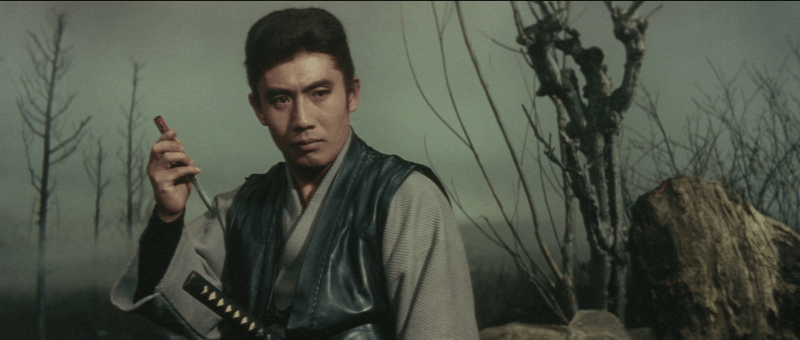
Zero Woman: Red Handcuffs (0課の女 赤い手錠, Yukio Noda, 1974)

“Your sense of duty is too strong! The world isn’t a pretty place,” barks an irate policeman, scolding a female officer with a tendency to take things, in his view at least, too far. Yukio Noda’s kidnap drama Zero Woman: Red Handcuffs (0課の女 赤い手錠, Zeroka no onna: Akai Tejo) is on the extreme end of pinky violence and soaked in the political concerns of the 1970s along with all their concurrent paranoia but nevertheless positions its fearless avenger as a lone arbiter of justice in an incredibly unjust world. 

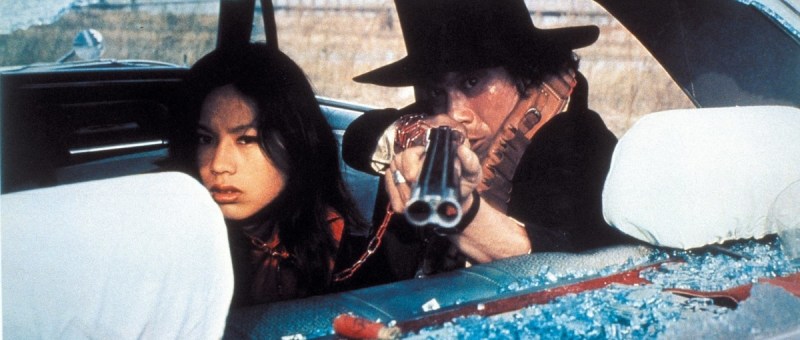
We know this from the start as we see Zero (Miki Sugimoto) almost date raped by an apparent serial killer who has his own torture suitcase and apparently killed her friend. Knowing that he is a diplomat and therefore has diplomatic immunity, she simply shoots him in the balls in the film’s extraordinary opening sequence. But even though it could be argued what she did was self-defence, Zero is kicked off the force and thrown into a woman’s prison for an indefinite period of detention to keep the lid on any possible scandal. Zero is only reprieved when the daughter of a politician is kidnapped by thugs and, wanting to keep things quiet, they need someone to rescue her and also wipe out all of the kidnappers to ensure no one ever finds out.

Kyoko (Hiromi Kishi), the politician’s daughter, claims that her father will do “anything” to ingratiate himself with the prime minister and has in fact already arranged her marriage to his son. Kyoko, however, already has a boyfriend who, inconveniently, is quite obviously a student protestor given his yellow construction hat and other paraphernalia. The pair are accosted while sitting in a car near an old American base, and as Kyoko is gang raped, firstly by the gang leader Nakahara (Eiji Go) who is wearing a hoodie with the words US Navy printed on the back, US planes fly over her as if she were being raped by America in an obvious metaphor for the legacy of the occupation. 

Indeed, the flashbacks later experienced by Nakahara are of his mother whom he describes as a sex worker who worked at the base suggesting a very literal allusion to the corrupting influence of American servicemen. The gang operate out of a bar called “Manhattan” which is surrounded by other similar bars with Western names in a neon-lit area, while they constantly run across various signs written in English in fact peeing directly on a no peeing sign outside a largely disused residential area on the edge of the base where they later take hostage some kind of amateur dramatics / English-language class currently in the middle of a production of Romeo and Juliet. 

Yet the big bad turns out to be essentially homegrown in the form of the corrupt lackey policeman Osaka, and the politician Nagumo (Tetsuro Tanba), who is more concerned with his political capital than his daughter’s safety keen that the police keep everything out of the papers otherwise the wedding will be called off and he’ll have a problem with the prime minister. Seeing a very pale Kyoko, her clothes torn, barely conscious having been drugged by the gang, he says he no longer cares to think of her as his daughter and perhaps it would be better if she simply passed away in an “accident”, instructing Osaka to care of loose ends like Zero too. 

It’s very clear that women’s lives have little currency in this very patriarchal world, something Zero seems to know all too well even if at the beginning of the film she was content to work for the oppressive organisation of the police force though she later tears up her warrant card in disgust. The fact that division zero, operating like a secret police force on the behalf of an authoritarian government, exists at all is a clear indication that this is already a police state though one subverted by Zero who uses her red handcuffs to deliver ironic justice to all those who deserve it. Then again, unlike other pinky violence films there’s precious little solidarity that arises between herself and Kyoko whom she later describes as nothing more her mission objective seemingly caring little for her as a fellow human being. Noda cuts back between the Diet building and police HQ as if actively critiquing the latent authoritarianism of the early 70s society but even if Nagumo gets a kind of comeuppance it’s abundantly clear that nothing really will change and Zero stands alone wilfully freeing herself of the handcuffs of a controlling society. 


Sex and Fury (不良姐御伝 猪の鹿お蝶, Norifumi Suzuki,1973)

An orphaned daughter takes revenge against the corruptions of the late Meiji society in Norifumi Suzuki’s pinky violence classic Sex and Fury (不良姐御伝 猪の鹿お蝶, Furyo anego den: Inoshika Ocho). As the opening voiceover explains, the Japan of the early 1900s is already stoking imperial ambitions closely linked with the ideas of “modernisation” and “civility” it is seeking though in reality it is very much a gangster society as the three villains the heroine searches for have come to dominate the new Japan. 

This moment of schism is depicted in the opening sequence set in 1886 in which the little girl who will later take the name Ocho witnesses the murder of her policeman father by three unseen assassins who steal from him evidence of a scandal they then use for their own gain. The murder takes place in a shrine, the young Ocho rolling her paper ball onto a discarded charm that reads “misfortune”, while the film then jumps on to 1905 through a series of historical images prominently featuring the emperor Meiji along with a host of patriotic symbols that seem to signal the wrong path that is being taken. 

As for Ocho (Reiko Ike), she has survived by living on her wits as an excellent pickpocket and gambler but is otherwise uncorrupted continuing to dress in kimono and giving off an air of refined elegance that belies her toughness. In the course of her revenge, she is met by her opposite number, Shunosuke (Masataka Naruse), whose father was also killed by the same three duplicitous yakuza and is dragged into geopolitical intrigue by means of plot by the British to turn Japan into the site of the second opium wars using a spy disguised as a dancer played by Swedish starlet Christina Lindberg who is really in Japan for Shunosuke with whom she fell in love abroad only to be cruelly abandoned. 

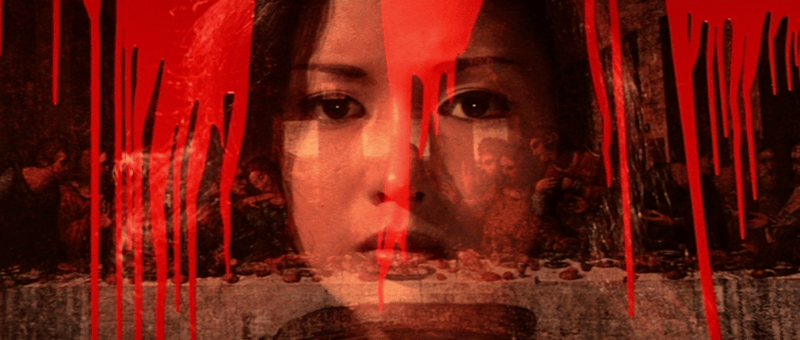
Somewhat contradictorily, it’s these Western intrusions that are being resisted with Ocho the representative of an older Japan, and the gangsters that of a newer, largely amoral society of burgeoning militarism. Arch villain Kurokawa (Seizaburo Kawazu) lives in a huge Western-style mansion and is preparing to transition into national politics in the post-feudal society insisting that he and his organisation will soon control “everything”. His underling Iwakura (Hiroshi Nawa), who travels by motorcar, will also be handling the construction of Tokyo Harbour. When the girls from Ocho’s adopted family are kidnapped, they are taken to dance hall Panorama which is bedecked both with Christmassy tinsel and signs celebrating the victory in the Russo-Japanese conflict, while in an anachronistic touch scenes of the war are projected inside. Just to ram the point home, the man who throws a knife at Ocho is wearing stereotypical Chinese dress, while Kurokawa is later seen to have at his disposal a secret attack squad of nuns armed with switchblades and has Ocho whipped, by British spy Christina, in front of a large mural of Christ in some kind of underground chapel. 

In taking her revenge, Ocho is also in a sense attempting to right a historical wrong in removing these usurping men and their accomplice from power while fighting their perversion with her sexuality over which only she is master going so far as to kill one with poison rubbed on her own skin. In accidentally having exposed the equally duplicitous practices in a gambling hall, she is attacked while in the bath but instantly leaps into action entirely in the nude in a strangely beautiful sequence of elegant violence and poetic bloodletting that echoes the film’s conclusion in finally moving out into the snow. Eventually captured, she is bound tightly with rope and tortured but manages to cut herself free using only one of her trademark hanafuda cards which also symbolise her skill as a gambler even if her climactic game with Christina is played with Western cards for casino chips over a dining table. 

Suzuki signals the chaotic nature of this early 20th century world in his riotous use of colour and frequent anachronisms along with canted angles and a spinning top shot that seems to echo the world spinning out of control as Iwakura breaks a sacred promise between gamblers and rapes a young woman he had agreed to spare if Ocho was victorious in her bout with Christina. He saves his most expressionistic technique for the film’s closing moments in which Ocho singlehandedly puts a stop to Kurokawa’s corruption, another picture of Emperor Meiji looking down at her as she launches her final attack, and then stops to purify herself in the snow before wandering off into a storm of hanafuda cards with only darkness ahead of her.


Original trailer (English subtitles)

*Norifumi Suzuki’s name is actually “Noribumi” but he has become known as “Norifumi” to English-speaking audiences.

The Tattooed Hitman (山口組外伝 九州進攻作戦, Kosaku Yamashita, 1974)

The close brotherhood between two men is disrupted by changing times in a more contemporary gangster drama from Kosaku Yamashita, Tattooed Hitman (山口組外伝 九州進攻作戦, Yamaguchi-gumi gaiden: Kyushu shinko-sakusen). As many are fond of saying, times have changed and the yakuza must try to change with them or else meet a melancholy end. But as the hero admits, change is something he has no intention of doing even as his old school gangsterism leaves him increasingly at odds with the corporatising ways of the contemporary yakuza. 

The change in the times is obvious from the film’s opening sequence set in 1957 in which an attempt is made on the life of petty boss Ishino (Tatsuo Umemiya) by a gunman who shouts “die, for the good of the world” before firing a pistol and running away. Ishino has been targeted in a dispute over construction rights connected with the regeneration of hot springs resort, Beppu. The hit seems to have been ordered by rival gang, Sakaguchi (Eizo Kitamura), the leader of which is also a prominent local politician who is content to abuse his power for his own financial gain. So confident is he in his safety, that Sakaguchi even gets the police involved rather than deal with it himself. 

Ginji (Bunta Sugawara) has been Ishino’s sworn brother since their teenage delinquent days and determines to get revenge by raiding the Sakaguchi offices and killing one of their high ranking officers. Seeing as he’s already wanted by the police for a previous murder, Ishino sends Ginji to Osaka to lay low while working for an associate, Daito, mainly as a debt collector. It’s this act of separation which introduces a rift between the two men. While Ginji waits patiently to be recalled, Ishino climbs the ranks of corporatised gangsterism by learning to play by the new rules. 

To fill the void, Ginji takes on a new “brother” or perhaps surrogate son in the wayward Ken (Tsunehiko Watase) whom he first meets cheating at pachinko at a parlour where his pregnant wife Fusako (Mayumi Nagisa) is working. It’s Ken who first drags him into a brewing turf war as Korean gang Soryu threaten to disrupt the local equilibrium not least by selling drugs of which Ginji does not approve. Ginji “saves” Ken from joining Soryu by essentially making him his one of his guys though he doesn’t really have much of a position in Daito’s gang, offering him a sense of grown-up responsibility by handing him a pistol with the only the instruction to make sure he shoots with two hands. Unfortunately, Ken will follow his advice but otherwise ends up almost causing an incident with another gang by shooting a man who disrespected him in the street. Ginji marches straight down there to sort things out, but on arrival discovers an arrangement has already been made with his boss which further strains his sense of pride and confidence in his position as a yakuza.

Ginji feels something similar on being invited to a party to celebrate Ishino’s promotion only to be seated with the lowly footsoldiers and ignored by Ishino all night. Ishino rejects him still further in agreeing to plan to send him back to Kyushu out of the way hoping that his old school hotheadedness can finally be tempered. Others meanwhile voice concern that Ginji may have forged a relationship with rival Kobe gangs during the 18 months he abruptly disappeared from Osaka and has only come back to cause trouble. Ginji perhaps knows that he has no more future in the contemporary society, others remarking that seems like someone who is in a sense already dead for having accepted that he will die and most likely in Hakata, the town he had wanted to conquer with Ishino who had crushed his dreams in his newfound pragmatism by calmly explaining that they would never have the power to take it. 

Koji Takada’s screenplay positions Ginji’s gradual decline as an allegory for the yakuza himself while citing the new legislation that this particular series of incidents made necessary creating the new offence of assembly with dangerous weapons as a decisive moment in weakening the yakuza as an institution. Ginji remains a man displaced by his times unable to move forward into a new society in the way that Ishino has but stuck in a permanently post-war mentality despite the constant reminders that “times have changed”. Yamashita adopts the trappings of the jisturoku drama with frequent references to real life events and narrative voiceover but otherwise maintains his classicist formalism while ending on a note of ambivalence that tells us a certain kind of justice may have been served but the cycle of violence may not yet be completed.


Original trailer (no subtitles)

Yakuza Hooligans (893 愚連隊, Sadao Nakajima, 1966)

“The world has changed,” an old school street thug is repeatedly reminded after his release from prison into a new Japan amid the tides of rising prosperity. An early effort from Sadao Nakajima, Yakuza Hooligans (893 愚連隊, 893 Gurentai) situates itself in cultural and generational abyss among those who find themselves locked out of the new society and unable to escape the immediate post-war era in part perhaps because they may not really want to.

At least it seems that way for the central trio of “hooligans” who later explain to their sometime mentor that they aren’t doing petty crime because of a lack of other options but out of devilment and a childish rebellion against a world they feel doesn’t accept them. As the film opens, they’re running a petty scam luring queuing passengers into unlicensed cabs for which they are almost arrested, stiffing the cabbie that helps them escape and then conning a takoyaki vendor out of a free lunch. Several times they’re criticised for “bullying the weak,” most obviously in their sideline seducing women and forcing them into sex work or blackmailing men who sleep with them. 

They are, however, fairly weak themselves. They like to describe themselves as a “democratic” institution in which everyone is equal and everything is shared fairly but despite supposedly having no boss they’re bossed around by almost everyone and when challenged by actual yakuza quickly back down. A generation older, failed kamikaze Sugi is released from prison after spending 15 years behind bars for killing a Chinese man as part of a petty crime gang formed in the immediate chaos after the war. Unlike his former associate Kurokawa, Sugi too claims that he doesn’t see the point in having a boss but like the younger men flounders unable to see a place for himself in the new society.

Sugi doesn’t approve of the more immoral sides of their business, particularly the rape and trafficking of women but proves just how out of touch he is when he asks the guys why they can’t just swipe some rice or clothing. In the immediate post-war period, rice and kimono were the only things which held their value but in a newly consumerist Japan they’re in plentiful supply and in fact worth relatively little. While he was inside, his former girlfriend married someone else and had a child, burning the tattoo she once had of his name on her arm clean away. She tells him that she’s sorry, but she’s happy and she doesn’t want anything to disrupt the life she has now. Falling for a middle-aged woman unhappy in her marriage and subsequently forced into sex work by the gang, he dreams of a happy family life and ultimately risks all on a confrontation with his old yakuza pal Kurokawa.

The film seems to suggest that the writing’s on the wall for men like Kurokawa too. His old school world of regimented, authoritarian gangsterdom doesn’t fit in the new Japan anymore than Sugi’s corrupted post-war idealism. A subplot revolving around Ken, a mixed-race member of the gang who hates the way they treat women because his mother was raped by a US serviceman positions the Occupation as another source of corruption leaving nothing behind itself other than moral decline and lasting trauma. But as Nobuko later says as long as you’re alive you have to go on searching for something and if one place is the same as another then you might as well move. 

The hooligans, however, seem stuck in the past. They can’t stand up for themselves or mount any real resistance to their circumstances, continuing to “bully the weak” in an attempt to mask their own weakness until racing headlong towards a confrontation with the yakuza along a bridge which quite literally hasn’t been finished yet symbolising their mutual inability to progress into the new society. Shooting with a heavy dose of irony enhanced by the whimsical jazz score, Nakajima captures a sense of contemporary Kyoto as an alienating environment caught between the ancient and the modern in which men like Sugi and the hooligans are permanently displaced yet lack the desire to escape because the newly consumerist society has little to offer them. 


Original trailer (no subtitles)

The Insatiable (現代ポルノ伝 先天性淫婦, Norifumi Suzuki, 1971)

History repeats itself in Norifumi Suzuki’s erotic drama The Insatiable (現代ポルノ伝 先天性淫婦, Gendai Porno Den: Sentensei Inpu). The film’s Japanese title, Modern Porno Tale: Inherited Sex Mania, better hints at its true intentions in essentially repurposing a sense of class anxiety and moral conservatism as familiar from classic melodrama to fit Toei’s line of erotically charged movies but eventually offers little judgement of the heroine’s surrender to her fate (after gaining her revenge) in putting on her mother’s kimono to follow the path set down for her.

That was not, however, what Yuki’s (Reiko Ike) mother (Yoko Mihara) originally wanted. Hoping to save her from the life of a bar hostess with terrible taste in men, she sent her to a religious boarding school in Tokyo which has given her a toxic sense of shame in her sexuality. Sharing a bed with a classmate, she relates her fear and horror of sleeping with men which she assumes she is expected to do in time, though goes on to explore herself sexually with the other girl who feels much the same despite the warning from their lesson books that looking at another woman with desire is no different from adultery. 

Nevertheless, on returning to her mother’s home in Kyoto Yuki is later raped by her mother’s latest boyfriend who is for some reason a bowling enthusiast. His sensibility is emblematic of that of most men in the film who see Yuki merely as an object to be conquered. Following this violation, Yuki quits school and spends all her time in clubs in Shibuya unable to reconcile herself with her sexuality and living as good time girl if resenting herself when others see her as a sex worker. Sucked into the world of sleazy clubs, she becomes a kind of pass around for wealthy men while also cared for by a besotted yakuza who has been quite literally emasculated by his love for her, leaving Yuki unable to fully return his affections because he can no longer satisfy her sexually.

Eventually she meets handsome architect Yoichiro (Hiroshi Miyauchi) with whom she falls in a more wholesome love, but continues to believe that she cannot really be with him because of her sordid past. She then realises that not only does he have unfinished business with a French woman he met while studying abroad (Sandra Julien), but that his father, Matsumura (Tatsuo Endo), is the seedy loanshark who’s been trying to get his hands on her through middleman Akihito (Fumio Watanabe) who is connected with her mother’s new partner Tomoguchi, and also Yoichiro’s brother-in-law.

Akihito is really the villain of the piece, though mostly for his attempt to wage class warfare by taking over Matsumura’s business. His wife, Ayano (Miwako Onaya), has turned away from him knowing that her father brought him into the family for his ruthlessness while exclaiming that she hates self-made men. In much the same way that Yuki was attempting to escape her mother’s legacy, Akihito is also trying to overcome his impoverished background to catapult himself into the upper classes though Matsumura himself appears to have earned his wealth in dubious ways. In any case, he rejects Yoichiro’s decision to marry Yuki not only because he wants her himself but because he claims he wants to find a more appropriate wife for his son presumably as he found Ayano a husband who would benefit himself. 

In any case, Yuki is drugged and abused much like her mother turned into a plaything for men. Yuki resents her only momentarily for her role in her rape and sickening attempt to placate her boyfriend after having stood up for Yuki and confronted him about his betrayal. The two women later reconcile and find solidarity in their maternal relationship even if her mother can never escape the pattern of behaviour that keeps her dependent on bad men which is something Yuki may have overcome in the film’s closing moments as she in turn, wearing her mother’s kimono, opens a bar under her own name living as an independent woman. 

To get her revenge, she manipulated the men around her by using her sexuality against them only to be backed into a corner by Akihito’s chilling claim that she was now his slave. Her salvation at the hands of another man who damns himself in her defence and the defence of their love as something pure despite having cruelly rejected Yuki as a “whore” perhaps undercuts the message but also in the film’s eyes redeems her from her wandering life as an insatiable sex addict now free of her sense of shame and the lingering trauma of her rape. In this patriarchal and classist society, all men are animals driven only by destructive influences, while Yuki is even able to bond with Yoichiro’s French former lover with whom she also shares a sexual encounter. Suzuki films with characteristically romantic imagery and a wry sense of humour but nevertheless allows his heroine to find her way out of a world of beasts while refusing to shame her even as she embraces her mother’s legacy. 


*Norifumi Suzuki’s name is actually “Noribumi” but he has become known as “Norifumi” to English-speaking audiences.

Sword of Destiny (孤剣は折れず 月影一刀流, Yasushi Sasaki, 1960)

A wandering swordsman winds up in intrigue on returning to his fencing school to find his old master murdered in Yasushi Sasaki’s Sword of Destiny (孤剣は折れず 月影一刀流, Koken wa Arezu: Tsukage Ittoryu). A classic jidaigeki adventure, it nevertheless has to be said that this one is a little more sexist than most in actively pushing its series of female warriors into the background as the hero by turns sends them all back to typically feminine roles while declaring that he will be the one to claim vengeance and clear up corruption in the court itself caused by a woman’s apparent forgetting of her place. 

At least, this is what Mikogami Genshiro (Koji Tsuruta) is told by an old friend, Izu, after an altercation with the fiery princess Kazu (Hibari Misora). The Shogun’s nurse, Lady Kasuga, has apparently taken an interest in politics and has most of the inner palace in her grasp enriching herself in the process. Izu believes that she may also be behind the assassination of Geshiro’s former mentor Ono while working in league with the Yagyu who coveted the position of fencing master to the Shogun. He asks Genshiro to kill her which he’s only too happy to do while seeking vengeance for Ono, but later gains a second reason after meeting the two orphaned daughters of a former retainer forced to take his own life thanks to Lady Kasuga’s machinations. 

Itoya (Yoshiko Fujita) wanders round with a gun and disrupts Genshiro’s first assassination attempt. He later tells her to leave the killing business to him and live “the life of a woman” insisting that one girl has no power to kill Lady Kasuga anyway. Meanwhile, he also makes an enemy of the Shogun’s sister Princess Kazu after challenging her in the street on seeing her callous disregard for a peasant her horse had run over. Princess Kazu falls in love with him after he defeats her in a duel, temporarily rebelling in insisting she will resist a dynastic marriage and take no other husband though he eventually rejects her partly on the grounds of their class difference and partly because he is a wandering sword who lives in the moment and may know no tomorrow. 

Nevertheless, she is later seen capitulating to her proper role as a princess who exists largely to continue the family line, marrying a man chosen by the Shogun and his advisors with no real power to chose anything other than her obedience. In much the same way he does with Itoya, Genshiro pushes her back towards the typically feminine while falling for Itoya’s meek, sickly sister Mine (Hiroko Sakuramachi) who is otherwise an idealised image of femininity in her softness and naivety while like every other woman in the picture falling for Genshiro because of his robust manliness and ability to protect her by gaining the sisters’ vengeance on their behalf. 

Meanwhile, Genshiro also facing off against the rival Yagyu school whom he suspects of having killed Ono to usurp his place as the shogunate fencing master with the assistance of underling Takagaki who has now taken over leading to a mass exit of students fed up with his authoritarian teaching methods. Interestingly enough, Genshiro is temporarily imprisoned by the Yagyu alongside a dissident Christian whose death they’d faked while keeping him alive in order to torture the names of other Christians out of him. On fulfilling his request to take his cross to his daughter who has become a sex worker, Genshiro succeeds only in endangering her while she also falls in love with him. 

All in all, he’s not much of a responsible hero also reckless with the life of his former burglar sidekick Kurobei (Shin Tokudaiji) who uses his ninja tricks to get him out of prison. As expected, it all ends with in a battle against a treacherous swordsman and the spineless Takagaki with the final revelation that Lady Kasuga (who just dies of old age) had not much to do with anything anyway despite having been a “meddling” old woman who forgot her proper place. Even Mine is forced to admit that she can’t come between Genshiro and his sword so she plans to become a nun while Kazu sends him an elaborate katana to remember her by certain that he will not accept a place in the Shogun’s household but will return to the road to continuing his training. In any case, a kind of justice is done and order restored even if that order is in itself fairly unideal. 


Invasion of the Neptune Men (宇宙快速船, Koji Ota, 1961)

Japan was well on the way to economic recovery by 1961, but the newly prosperous society also gave rise to other anxieties and most particularly in the light of the Cold War and space race with the nation fearful of falling behind in scientific development. Or at least, that’s something that particularly bothers the young heroes of Koji Ota’s kids tokusatsu, Invasion of the Neptune Men (宇宙快速船, Uchu Kaisokusen), in which the nation’s failure to build a space rocket is conflated with its traditional visions of masculinity. 

At least, the boys all agree that Tachibana (Shinichi Chiba), a young scientist who runs a kind of club with them at the research facility where he works, is pretty great but also a bit of a wimp who failed to stand up to some bullies who were hassling him at a local cinema. They think it would be better if he were cool, re-imagining him as a kind of tokusatsu hero named “Iron Sharp” for whom they even come up with a theme song. As part of their club activities watching satellites, the kids accidentally stumble across a spaceship belonging to Neptune men who are planning to invade though obviously as they are children no one really believes them until the Neptune men start causing other forms of destruction. 

Attacked, the kids are saved by the hero they themselves made up flying in on a car/plane/spaceship though he too doesn’t really have a lot time for them and the kids don’t even really notice he looks a lot like Tachibana who is noticeably absent from the lab whenever he’s around. Even so, this being a kids film the major the problem is that no one else takes the boys very seriously, save Tachibana himself, leaving them to save the day on their own while the grown-ups argue amongst themselves. 

Getting people to argue amongst themselves turns out to be part of the aliens’ mission in exploiting Cold War paranoia to start world war three. The first attack results in a mushroom cloud which must have been fairly painful symbolism though the Americans immediately blame Russia who blame the US in return asking if they’re really intent on starting a nuclear war. The kids wonder why grownups are always so suspicious of other countries, hinting at a desire for a less xenophobic society eventually echoed in the calls for worldwide unity to defeat the Neptune men while otherwise repeatedly emphasising that Japan can’t be left behind by the US and Russia in the space race. 

Then again, there is something quite troubling in the fact that the invading Neptune men who’ve taken on human form appear as soldiers but wearing prominent feminine makeup, re-echoing the boys’ concerns regarding science and masculinity while introducing a seemingly unintentional dose of homophobia into the threat posed by the aliens who otherwise wield destructive nuclear powers echoing the atomic bomb in using their ray guns to vaporise their targets who then leave shadow imprints of themselves where they disappeared. The main weapon used to combat them is science, Tachibana and his boss, the father of one of the boys, coming up with an ingenious electric shield and then a series of magnetic rockets which allow them to shoot down the Neptunian’s ship. 

In this case, science is the “good” force that combats the “bad” use of nuclear weapons this time rendered alien rather than manmade therefore neutering the debate surrounding their use and the responsibilities involved with their discovery. Tachibana, the thinly disguised Iron Sharp, then becomes a hero of science racing round in his custom car and largely defeating the Neptunians through a more primal kind of hand to hand violence while embodying the kind of cool masculinity the boys the otherwise feared he lacked which is to say that unlike his real life guise, Iron Sharp is perfectly capable of standing up to “bullies” like extraterrestrial invaders. Reusing some of the effects footage from The Last War, the film emphasises the need for world unity and the end of the Cold War, but also sells a slightly contradictory, mildly nationalist message insisting that Japan can’t fall far behind technologically or will essentially be at the mercy of Russia and America, Tachibana having travelled to Moscow to assist with the creation of a new spaceship. Spurred on by their adventures, the kids all vow to become great inventors protecting Japan through their innovations, going on to explore Mars and Venus hinting at a new sense of possibility in the post-war society but also mindful of its geopolitical realities.