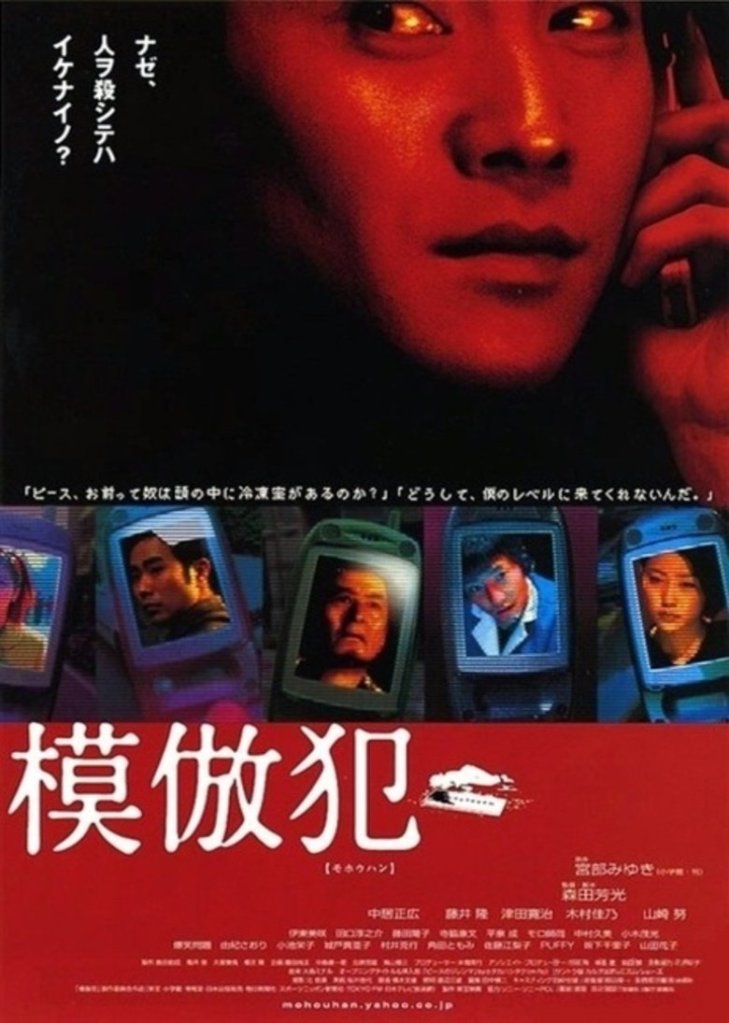
 Yoshimitsu Morita had a long standing commitment to creating “populist” mainstream cinema but, perversely, he liked to spice it with a layer of arthouse inspired style. 2002’s Copycat Killer(模倣犯, Mohouhan) finds him back in the realm of literary adaptations with a crime thriller inspired by Miyuki Miyabe’s book in which the media becomes an accessory in the crazed culprit’s elaborate bid for eternal fame through fear driven notoriety.
Following a non-linear structure, the film first introduces us to an old man who runs a tofu shop where he lives with his middle aged daughter who is in the middle of a breakdown following the end of her marriage, and his grown up granddaughter who has become the woman of the house during her mother’s illness. Though not without its difficulties his life was happy enough but after granddaughter Mariko goes out one evening and never comes home, nothing will ever be the same again.
A severed arm and a handbag are discovered in a flower bed by a teenage boy whilst walking a dog, though a mysterious distorted voice later contacts the media to inform them that the arm and the handbag do not belong to the same woman. The boy, oddly enough, is the sole survivor of his family who were all murdered some years previously. He was interviewed at the time by press reporter Yumiko whose soba shop owning brother may have a connection to the crimes. The cold blooded killer knows all of this and is engineering coincidences into a grand plan in which he will harness the power of mass media to earn himself a kind of national respect as an “expert” on the crimes which he has himself been committing.
Hitting a style somewhere between The Black House and Keiho, Morita opts for a dreamlike atmosphere filled with dissolves, soft split screens and hacker inspired graphical touches. Not only is the killer interested in appearing on TV either in voice or in person but can also manipulate mass media by hacking commercials and billboards to proclaim his own messages. As well as the early computer inspired effects, photo zooms, and contemporary methods of evidence presentation, Morita wrong foots the audience by zigzagging through the chronology of crime beginning with the central murder then switching back to the killers as they are now, then their childhoods, and cutting back to each of the other protagonists – the grandfather, teenage boy, and reporter.
Possibly inspired by the Leopold and Loeb case, the killers are a duo of psychotic young men who think they can achieve everlasting fame and personal satisfaction by committing the kind of murders which have never been committed before. The true motivator of the crimes even tells one of his victims that she ought to be grateful. That she was leading a “pointless” life and now she’s being given the opportunity to “serve” in something greater as a component in his master plan. Before, he explains, she’d just have gone on living until she died and been forgotten but now she’ll be a star – everyone will remember her name as a victim in the crime of the century and the world will mourn her death.
At another juncture, the killer also remarks that absolute faith in the family unit is the reason a relative of a suspect or victim of crime is routinely targeted by the press and a source of recrimination even though they themselves had nothing to do with it. Family issues are also a factor as rejection and abandonment by parental figures is offered as a reason for why a person may eventually become deranged. Thus, the killer’s intention to harness mass media for worldwide fame through committing heinous, terrible crimes is painted as a quest for the attention and recognition he never received from his parents. The family is both nothing and everything, but as we reach the conclusion it’s family that engenders hope as we’re presented with a potential new family committing to proving that nurture can trump nature with happy childhoods building mentally balanced adults.
The grief stricken grandfather tells the killer that his selfish actions are cowardly and pointless. That if he really wanted to cause a sensation in this cruel world, he should have become a hero and taught people how to love instead of hate – that would be the true radical action. Morita’s essential world view is once again resolutely bleak but offered with a wry and cynical sense of humour. The final messages are of acceptance and moving on no matter how hard it may be, and of trying to create something good out of even the very worst occurrences. The film’s extremely strange, oddly explosive expressionist finale takes things a step too far and the youthful, contemporary electronic score with its link to the stereotypical hacking iconography occasionally calls attention to itself but Copycat Killer still proves an entertaining, multilayered crime thriller filmed with Morita’s characteristically experimental approach and necessary dose of oddness.
Unsubtitled trailer:
 Hibari Misora was one of the leading lights of the post-war entertainment world. Largely active as a chart topping ballad singer, she also made frequent forays into the movies notably starring with fellow musical stars Izumi Yukimura and Chiemi Eri in the
 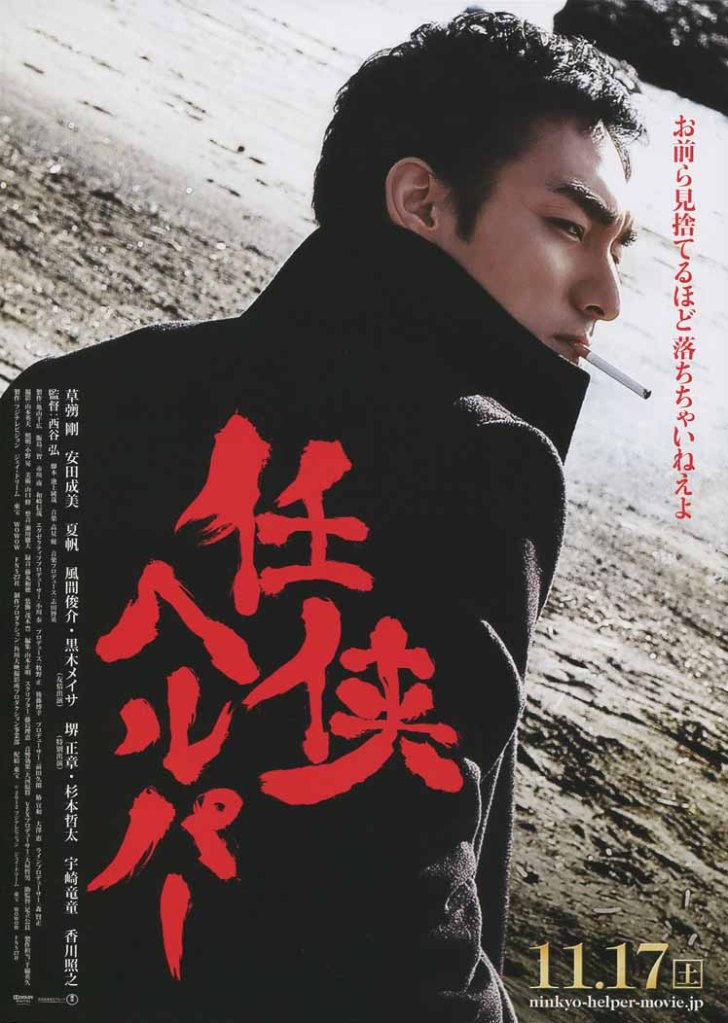 In old yakuza lore, the “ninkyo” way, the outlaw stands as guardian to the people. Defend the weak, crush the strong. Of course, these are just words and in truth most yakuza’s aims are focussed in quite a different direction and no longer extend to protecting the peasantry from bandits or overbearing feudal lords (quite the reverse, in fact). However, some idealistic young men nevertheless end up joining the yakuza ranks in the mistaken belief that they’re somehow going to be able to help people, however wrongheaded and naive that might be.
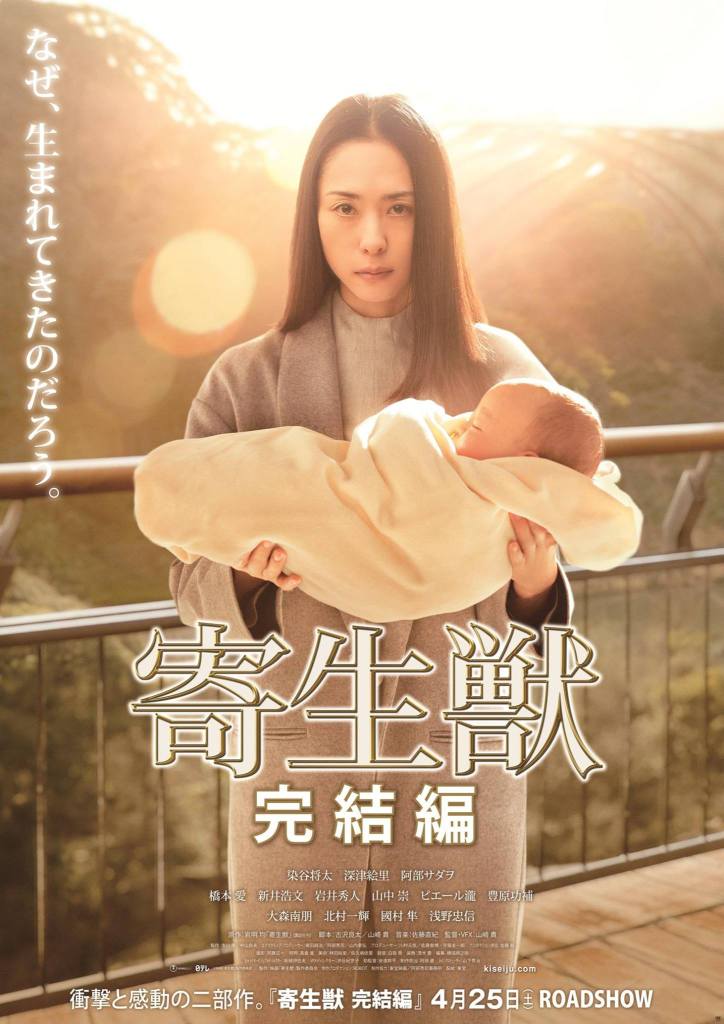 Review the concluding chapter of Takashi Yamazaki’s Parasyte live action movie (寄生獣 完結編, Kiseiju Kanketsu Hen) first published by
 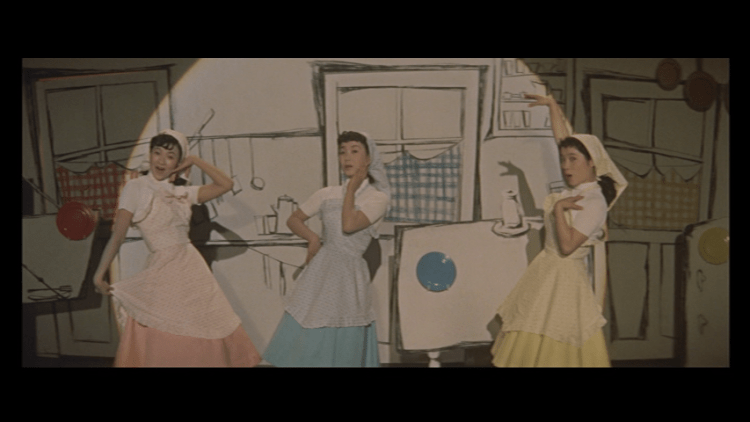 The Sannin Musume girls are growing up by the time we reach 1957’s On Wings of Love (大当り三色娘, Ooatari Sanshoku Musume). In fact, they each turned 20 this year (which is the age you legally become an adult in Japan), so it’s out with the school girl stuff and in with more grown up concerns, or more specifically marriage. Wings of Love is the third film to star the three Japanese singing stars Hibari Misora, Chiemi Eri, and Izumi Yukimura who come together to form the early idol combo supergroup Sannin Musume. Once again modelled on the classic Hollywood musical, On Wings of Love is the very first Tohoscope film giving the girls even more screen to fill with their by now familiar cute and colourful antics.
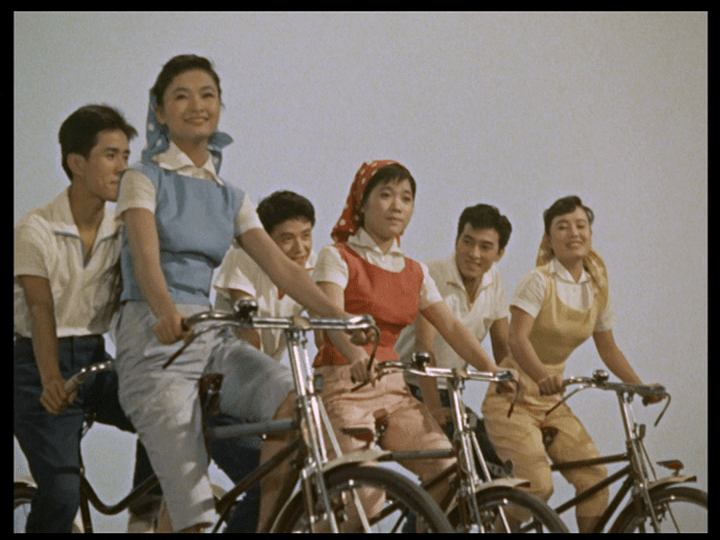 Romantic Daughters (ロマンス娘, Romance Musume) is the second big screen outing for the singing star combo known as “sannin musume”. A year on from
 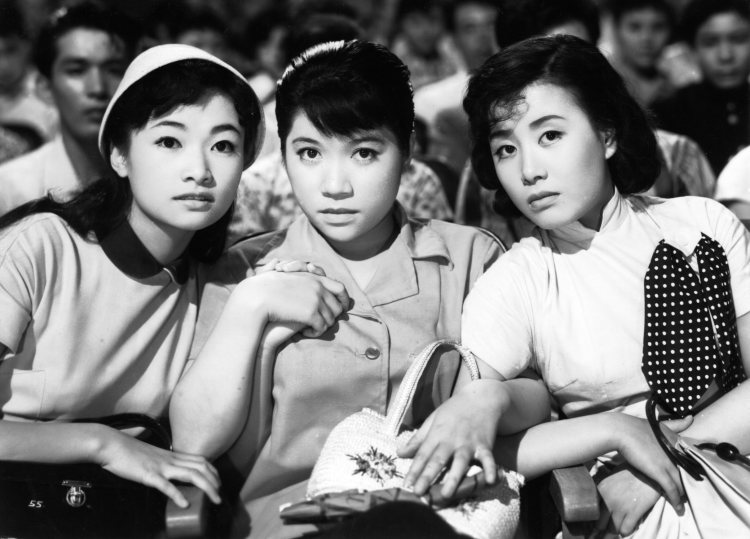 Pop stars invading the cinematic realm either for reasons of commerce, vanity, or just simple ambition is hardly a new phenomenon and even continues today with the biggest singers of the era getting to play their own track over the closing credits of the latest tentpole feature. This is even more popular in Japan where idol culture dominates the entertainment world and boy bands boys are often top of the list for any going blockbuster (wisely or otherwise). Cycling back to 1955 when the phenomenon was at its heyday all over the world, So Young, So Bright (ジャンケン娘, Janken Musume) is the first of four so called “three girl” (Sannin Musume) musicals which united the three biggest female singers of the post-war era: Hibari Misora, Chiemi Eri, and Izumi Yukimura for a music infused comedy caper.
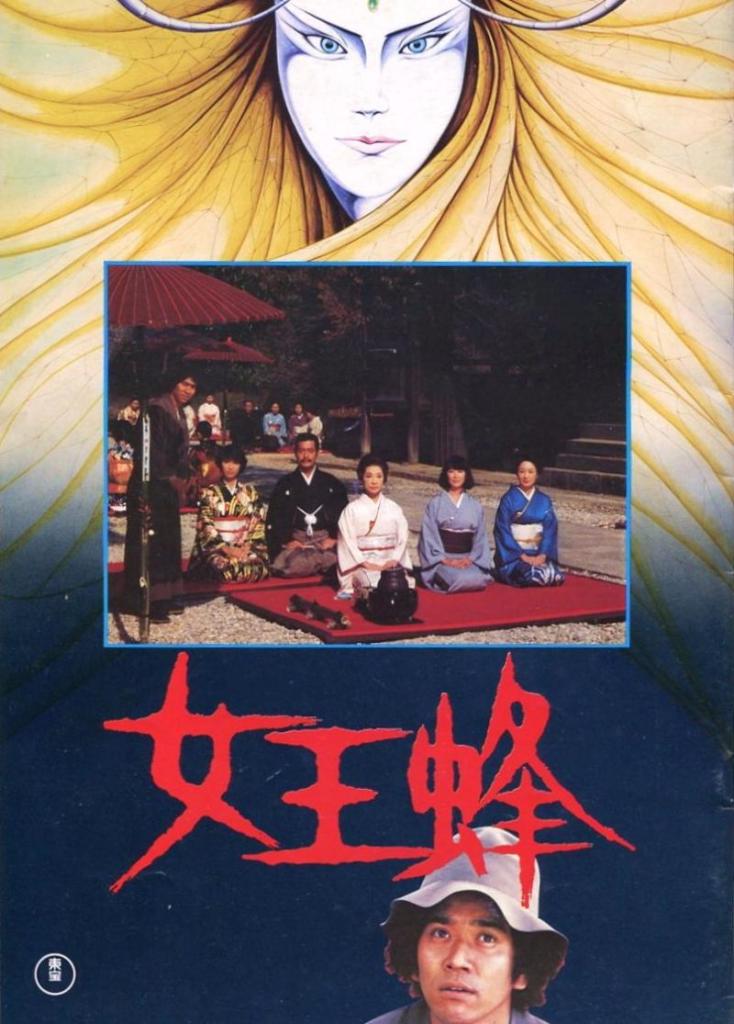 Kon Ichikawa may be best remembered for his mid career work, particularly his war films The Burmese Harp and
 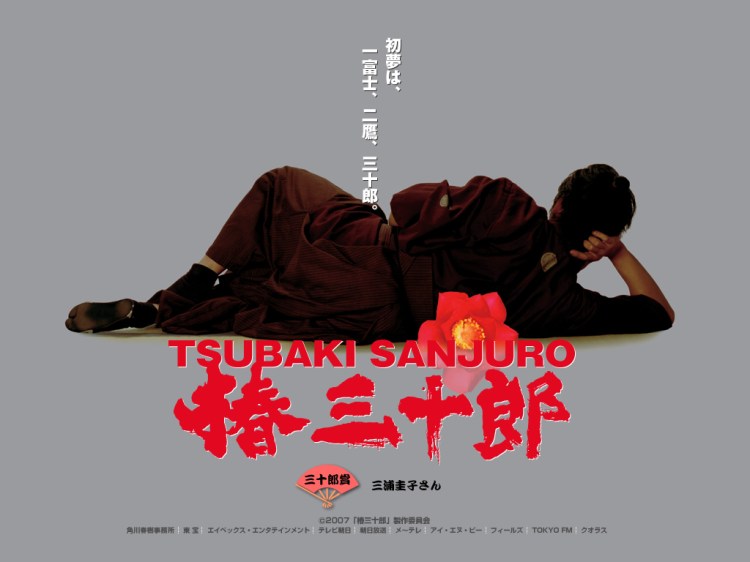 Generally speaking, where a film has been inspired by already existing source material, it’s unfair to refer to it as a “remake” even if there has been an iconic previous adaptation. That said, in the case of Tsubaki Sanjuro (椿三十郎), “remake” is very much at the heart of the idea as the film uses the exact same script as the massively influential 1962 version directed by Akira Kurosawa which also starred his muse Toshiro Mifune. Director Yoshimitsu Morita is less interested in returning to the story’s novelistic roots than he is in engaging with Kurosawa’s cinematic legacy.
 Windows on Worlds