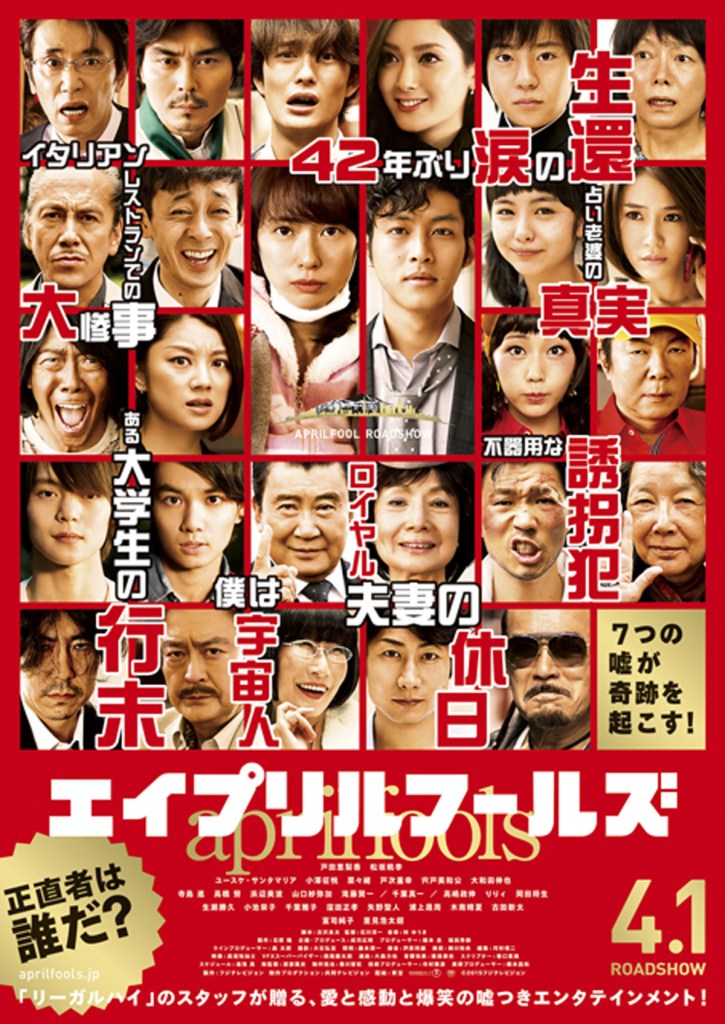
April Fools (エイプリルフールズ, Junichi Ishikawa, 2015)

april-foolsIn this brand new, post truth world where spin rules all, it’s important to look on the bright side and recognise the enormous positive power of the lie. 2015’s April Fools (エイプリルフールズ) is suddenly seeming just as prophetic as the machinations of the weird old woman buried at its centre seeing as its central message is “who cares about the truth so long as everyone (pretends) to be happy in the end?”. A dangerous message to be sure though perhaps there is something to be said about forgiving those who’ve misled you after understanding their reasoning. Or, then again, maybe not.

Juggling seven stories April Fools is never as successful at weaving them into a coherent whole as other similarly structured efforts but begins with an intriguing Star Wars style scroll regarding alien sleeper agents who can apparently go home now because they’ve accomplished everything they came for. Changing track, pregnant snack addict Ayumi (Erika Toda) decides to ring the still unknowing father of her child after witnessing an improbable reunion on TV only he’s in bed with someone else and assumes her call is a weird practical joke. Overhearing that he’s just arrived at a restaurant for a lunch date, Ayumi takes matters into her own hands and marches over there, eventually taking the entire place hostage. Meanwhile an older couple are having a harmless holiday pretending to be royalty and a grizzled gangster has “kidnapped” a teenage girl only to give her a nice day out at the fun fair. Oh, and the hikkikomori from the beginning who’s fallen for the whole alien thing has made a total fool of himself at school by taking out his bully, kissing his crush goodbye and racing up to the roof to try and hitch a lift from the mothership.

Importing this weird European tradition to Japan, the creative team have only incorporated parts of it in that they don’t call time on jokes at noon and it’s less about practical shenanigans and elaborate set ups than it is about wholesale lying which is frustrated by this famous non-holiday apparently created in celebration of it. All of the protagonists are lying about something quite fundamental and usually to themselves more than anyone else but at least their April Fools adventures will help them to realise these basic inner truths.

Then again some of these revelations backfire, such as in the slightly misjudged minor segment concerning two college friends who are repeatedly kicked out of restaurants before they can get anything to eat. One decides to “prank” his friend with an April Fools confession of love, only to find that his friend really is gay and is in love with him. Awkward is not the word, but then an April Fools declaration of love is about the worst kind of cruel there is and is never funny anyway, nor is the casual homophobia involved in this entire skit but that’s another story.

In fact, most of the other people are aware they’re being lied to, but are going along with it for various reasons, some hoping that the liars will spontaneously reform and apologise or explain their actions. Ayumi, who is shy and isolated by nature, always knew her handsome doctor suitor was probably not all he seemed to be but is still disappointed to be proved right, only be perhaps be proved wrong again in the end. Convinced to take a chance on an unwise romance by an older colleague who explains to her that many miracles begin with lies, Ayumi is angry with herself as much as with her lying Casanova of a baby daddy, and also feels guilty about an incredibly sight deception of her own. As in many of the other stories, now that everyone has figured out the real, important, truths about themselves and about the situation, they can excuse all of the lying. Sensible or not? The choice is yours.

Despite coming from the team who created some very funny TV dramas including Legal High, the comedy of April Fools never quite hits its stride. Weak jokes backed up with slapstick humour giving way to sentimentality as the “good reasons” for the avoidance of truth are revealed don’t exactly whip up the farcical frenzy which the premiss implies. The point may very well be that we’re the April Fools going along with this, but even so its difficult to admire a film which pushes the “lying is good” mantra right to the end rather than neatly undercutting it. Still, there is enough zany humour to make April Fools not a complete waste of time, even if it doesn’t make as much of its original inspiration as might be hoped.


Original trailer (English subtitles)
The Apology King (謝罪の王様, Nobuo Mizuta, 2013)

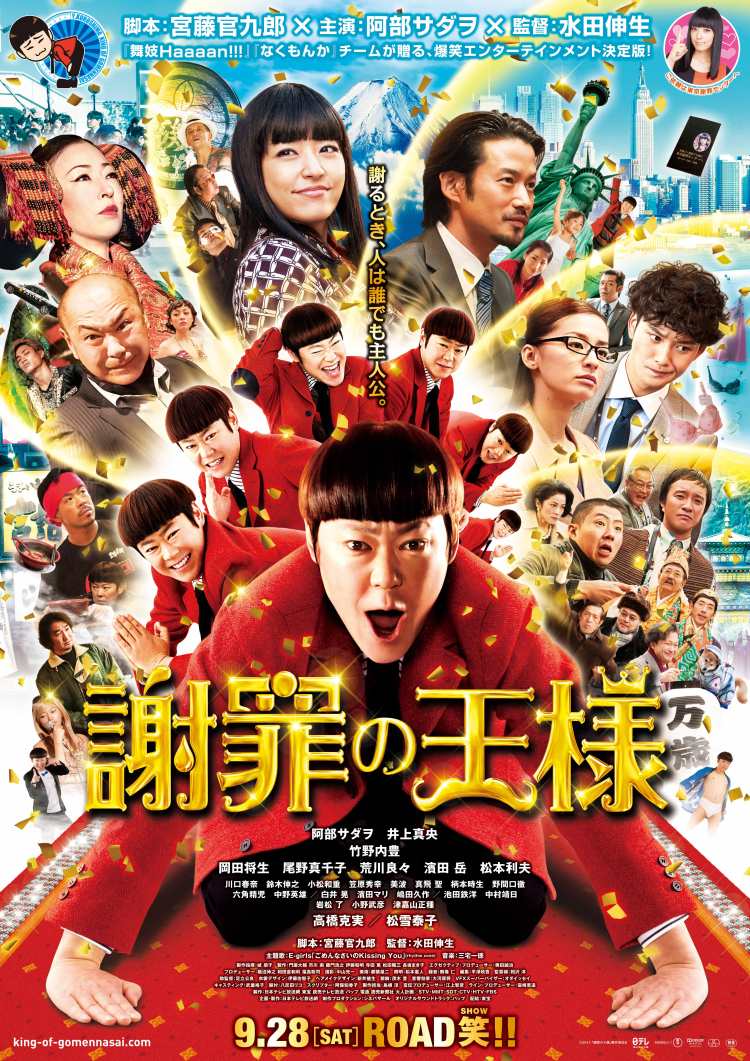
The Apology King.jpgThere are few things in life which cannot at least be improved by a full and frank apology. Sometimes that apology will need to go beyond a simple, if heart felt, “I’m Sorry” to truly make amends but as long as there’s a genuine desire to make things right, it can be done. Some people do, however, need help in navigating this complex series of culturally defined rituals which is where the enterprising hero of Nobuo Mizuta’s The Apology King (謝罪の王様, Shazai no Ousama), Ryoro Kurojima (Sadao Abe), comes in. As head of the Tokyo Apology Centre, Kurojima is on hand to save the needy who find themselves requiring extrication from all kinds of sticky situations such as accidentally getting sold into prostitution by the yakuza or causing small diplomatic incidents with a tiny yet very angry foreign country.
Kurojima promises to know an even more powerful form of apology than the classic Japanese “dogeza” (falling to your knees and placing your head on the ground with hands either side, or OTL in internet lingo), but if you do everything he tells you to, you shouldn’t need it. His first case brings him into contact with Noriko (Mao Inoue) whose awful driving has brought her into contact with the yakuza. Not really paying attention, Noriko has signed an arcane contract in which she’s pledged herself to pay off the extreme debts they’ve placed on her by entering their “employment” at a facility in Osaka. Luckily, she’s turned to Kurojima to help her sort out this mess, which he does by an elaborate process of sucking up to the top brass guys until they forget all about Noriko and the money she owes them in damages. Impressed, Noriko ends up becoming Kurojima’s assistant in all of his subsequent cases, helping people like her settle their disputes amicably rather allowing the situation to spiral out of control.

Mizuta begins with a neat meta segment in which Kurojima appears in a cinema ad outlining various situations in which you might need to apologise including allowing your phone to go off during the movie, or attempting to illegally film inside the auditorium etc ending with a catchy jingle and dance routine pointing towards the contact details for his apology school. Kurojima’s instructions are also offered throughout the film in a series of video essays in which he outlines the basic procedures for de-escalating a conflict and eventually getting the outcome you’re looking for.

Of course, all of this might sound a little manipulative, which it is to a degree, but the important thing to Kurojima lies in mutual understanding more than “winning” or “losing” the argument. The second case which comes to him concerns a young man who has some very outdated ideas and has, therefore, been accused of sexual harassment. Unfortunately, Numata (Masaki Okada) is a classic sexist who only makes the situation worse for himself and completely fails to understand why he was at fault in the first place. Even following Kurojima’s expertly crafted instructions, Numata further insults his female boss whilst attempting to apologise meaning Kurojima has to come up with an even more elaborate plan to smooth the situation which involves pretending to be the ghost of a man who threw himself under a train after being accused of harassing a young woman at work who did not return his affections. This seems to do the trick and the relationship between Numata and his boss appears to have improved even if Numata still has a long way to go in the person stakes, though it does perhaps make light of a serious workplace problem.

Numata follows all of Kurojima’s instructions but still gets everything wrong because he refuses to understand all of the various social rules he’s broken and therefore why and how the apology process is intended to make amends for them. Understanding and sincerity are the keys to Kurojima’s ideology but Numata, after a quick fix, fails to appreciate either of these central tenets and so is unable to work things out for himself. Similarly, in another case the parents of an actor are required to make a public apology when their son is captured on CCTV getting into a street fight. Only, being actors, they find genuine sincerity hard to pull off on the public stage either resorting to chewing the scenery or overdoing the dignified act, not to mention plugging their latest appearances at the end of the speech. The public apology is an important part of the Japanese entertainment industry though it might seem odd that the famous parents of a “disgraced” celebrity would be expected to apologise to the nation as a whole, but as it turns out all that was needed to settle the matter was a quick chat between the people involved, fully explaining the situation and reaching a degree of mutual understanding.

The innovative structure of Apology King neatly weaves each of the cases together as they occur in slightly overlapping timeframes but each contribute to the final set piece in which Kurojima becomes an advisor during a diplomatic incident caused when a film director unwittingly offends the small nation of Mutan by accidentally turning their crown prince into an extra in his film. Mutan is a nation with many arcane rules including a prohibition on filming royalty as well as on drinking and eating skewered meat, all of which the crown prince is seen doing in the movie. Matters only get worse when the film crew travel to Mutan to apologise but make even more faux pas, especially when it turns out that Japanese dogeza is actually incredibly rude in Mutanese culture. Revisiting elements from each of the previous cases, Kurojima is only able to engineer a peaceful solution by convincing the Japanese authorities to utter a set phrase in Mutanese which means something quite different and very embarrassing in their own language. Apologies are, of course, always a little humiliating, but then that is a part of the process in itself – placing oneself on a lower level to those who’ve been wronged, as symbolised in the dogeza.

Full of zany, madcap humour and culminating in a gloriously unexpected pop video complete with dancing idols of both genders exhorting the benefits of a perfectly constructed (and sincere) apology, The Apology King is a warm and innocent tribute to the importance of mutual understanding and its power to ease even the deepest of wounds and most difficult of situations. Hilarious but also heartfelt, The Apology King is a timely reminder that unresolved conflicts only snowball when left to their own devices, the only path to forgiveness lies in recognising your own faults and learning to see things from another perspective. Kurojima’s powers could be misused by the unscrupulous, but the most important ingredient is sincerity – empty words win no respect.


Original trailer (no subtitles)

Tears for You (涙そうそう, Nobuhiro Doi, 2006)

tears-for-youComing in at the end of the “pure love” boom, Nobuhiro Doi’s second feature, Tears for You (涙そうそう, Nada So So) is presumably named to tie in with his smash hit debut Be With You, and continues in the same general vein but with a much less satisfying melodrama at its core. A complicated love story centring on a pair of orphaned step-siblings, Tears for You edges into some difficult, perhaps unpalatable, territory but neatly skirts around it with a childish innocence intended to enhance its romantic credentials. Starring the jun-ai icon Masami Nasagawa, the tragic heroine at the centre of Crying Out Love in the Center of the World, alongside the then up and coming leading man Satoshi Tsumabuki, Tears for You is never quite as heartrending as it would like to be but does its best to wring its sorrowful narrative for all of its inherent tragedy.
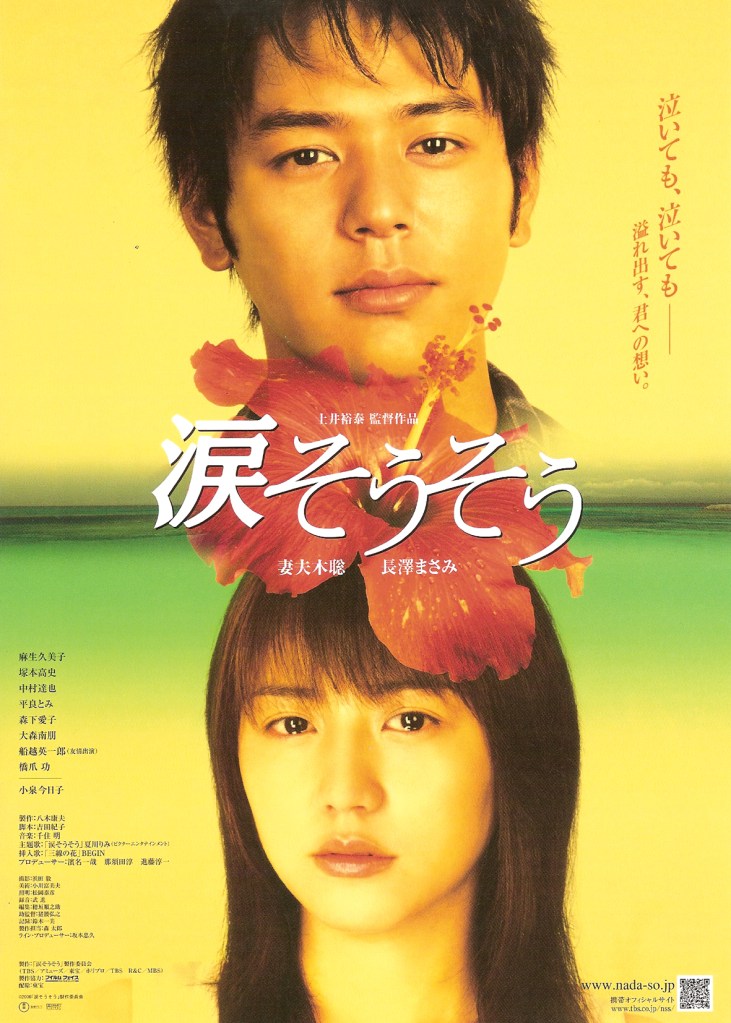
21yr old Yota (Satoshi Tsumabuki) is a young man with big dreams but he’s put lots of them on hold in order to take care of his younger step-sister, Kaoru (Masami Nagasawa), who has only him to depend on. Yota’s mother married Kaoru’s father when both the children were small but her new husband soon ran off leaving his daughter behind. The three of them continued as a tightly knit family until Yota’s mother became ill and passed away, making Yota promise to take care of Kaoru no matter what even whilst on her deathbed. The two then moved back to an Okinawan island to live with Yota’s grandmother until Yota came back to Naha for high school. Kaoru is now about to make that same journey but the siblings’ happy reunion also provokes a number of questions about the nature of their relationship and the course each of their lives will take in the future.

This being a “pure love” movie, tragedy is coming though Tears for You does its best to disguise where it’s coming from even if the eventual outcome is quite obviously signposted. The original barrier between Kaoru and Yota is raised by their nature as accidental siblings, not related by blood but raised alongside each other with a familial bond stronger than that of just childhood friends. This, of course, becomes a problem as they grow older and begin to find it difficult to draw the line between their familial love and a possibly romantic one which would allow their family of two to continue forever.

Yota, the self sacrificing older brother has indeed become everything to Kaoru – a brother, father, and friend all in one. Dropping out of high school early, Yota has been sending a pay check home since the age of sixteen, putting his own future to one side in order to provide for Kaoru. Determined that Kaoru should prosper and escape their lowly, poverty stricken island existence through getting to university and into a middle class profession, Yota has been working three different jobs. When it looks as if he’s about to be able to realise his own dream of opening a restaurant, it all comes crashing down around his ears as he realises he’s been duped by a con artist and is now on the hook to a gang of loansharks.

In addition to adding to his financial burdens, causing him embarrassment, and further deepening his worry about providing for Kaoru, the situation also creates instability in his romantic life when the father of his longterm medical student girlfriend finds out about his predicament and offers to help – but only at a price. Keiko (Isao Hashizume), he reminds him, is a middle class girl on track to take over her father’s clinic. Yota is a poor boy with limited expectations. The implications are clear and already known to Yota who has internalised a degree of shame over his lowly origins and lack of education which he overcomes through hard work and enthusiasm. Keiko is not the sort to worry about a petty class difference even if her father is, but his words get to Yota who has always felt Keiko is too good for him. She does, however, care slightly about Yota’s ongoing and complicated relationship with his younger sister whom, she fears, will always eclipse any other woman in his life.

As in all pure love stories, love is an impossibility, surrounded by unassailable walls of culture and fate. Though there is no blood relation between Yota and Kaoru, their familial circumstances make romantic love a taboo which leads the film into a rather odd corner in which the familial side of their relationship is the one which gains the upper hand as the love of a brother and sister eclipses that of a tragic missed opportunity. As such the nature of the heartrending conclusion does not reach the melodramatic heights of other genre hits, even if it adheres to the form in maintaining the “purity” of the love through the final impossibility of its realisation. Doi employs many of the same techniques he used so well in Be With You, artfully shifting between past and present and making the most of repeated motifs to bring home the circularity of the relationship between the pair of tragic lovers but never achieves the same kind of emotional depth. Nevertheless, Tears for You is a suitably melancholy weepy anchored by strong performances from its two leads which does ultimately prove moving even if not quite reaching the degree of melodrama implied by the title.


Original trailer (no subtitles)

And here’s the original song, Nada Sou Sou, in its cover version by Rimi Natsukawa which spawned a mini industry of its own encompassing two TV dramas and this standalone film (English translation):

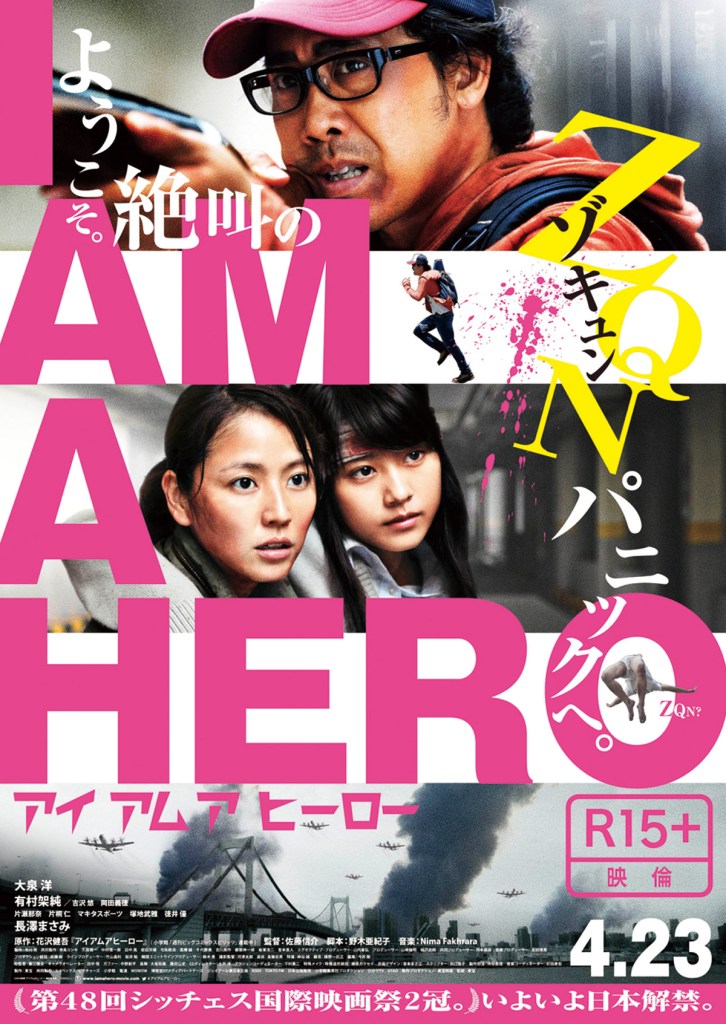
I Am a Hero (アイアムアヒーロー, Shinsuke Sato, 2016)

i-am-a-heroJapan has never quite got the zombie movie. That’s not to say they haven’t tried, from the arty Miss Zombie to the splatter leaning exploitation fare of Helldriver, zombies have never been far from the scene even if they looked and behaved a littler differently than their American cousins. Shinsuke Sato’s adaptation of Kengo Hanazawa’s manga I Am a Hero (アイアムアヒーロー) is unapologetically married to the Romero universe even if filtered through 28 Days Later and, perhaps more importantly, Shaun of the Dead. These “ZQN” jerk and scuttle like the monsters you always feared were in the darkness, but as much as the undead threat lingers with outstretched hands of dread, Sato mines the situation for all the humour on offer creating that rarest of beasts – a horror comedy that’s both scary and funny but crucially also weighty enough to prove emotionally effective.
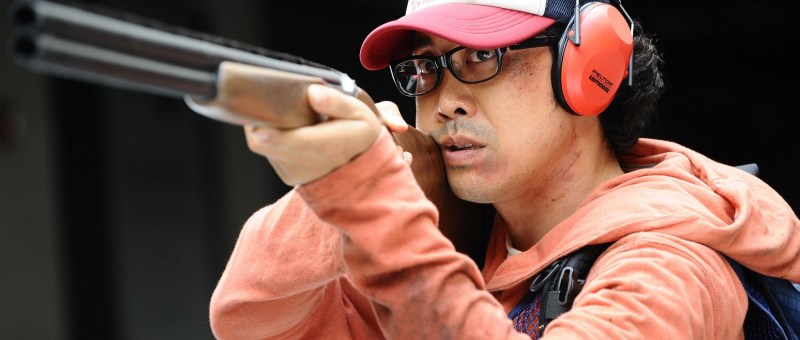
Strange things are happening in Tokyo. The news has just had to make a correction to their previous item – apparently, it was the woman who bit the dog and no, they don’t as yet know why. Hideo Suzuki (Yo Oizumi), sitting in the corner apart from his sardonic colleagues, is a 35 year old manga assistant with dreams of creating his very own franchised series. Sadly, his ideas are always shot down by the publisher who barely remembers his name but does note that there’s always the same problem with his protagonists. They’re just too…”normal’? Returning home to his previously patient girlfriend with the news that he has, once again, failed, Hideo is unceremoniously thrown out as Tekko (Nana Katase) charges him with exactly the same complaint as his publisher had – only special people can achieve their dreams, she says. You’re not special, you’re just ordinary. Throwing out his ridiculous shotgun purchased for “research” alongside him, Tekko slams the door with an air of frustrated finality.

A short time later, some of Hideo’s co-workers are feeling unwell, as is Tekko who calls him to apologise but when he arrives at her flat what he finds there is obviously not Tekko anymore. Returning to work, Hideo also finds one of his colleagues wielding a bloody bat next to the body of another assistant. Heroically cutting his own throat on realising he’s been bitten, his friend passes the bat(on) to Hideo, now on the run from a falling city. Teaming up with high school girl, Hiromi (Kasumi Arimura), he heads for Mt. Fuji where it’s hoped the virus may not be able to survive but the pair eventually run into another group of survivors holed up in a outlet mall where the undead may be the last of their worries.

Sato gleefully ignores the genre norms, refusing to give in to cinematic rules by consistently moving in unexpected directions. Thus, Hideo remains a cowardly fantasist throughout much of the film. In an odd kind of way, this refusal to engage is his manner of heroism. Though he is afraid and avoids reality through frequently trying write his way out of a situation, cleverly manifested by nicely integrated fantasy sequences, Hideo does not run away and consistently refuses to abandon those around him even if might be to his own advantage. Eventually he does get his hero moment, finally finding the courage to fire the shotgun which has so far remained an empty symbol of his unattainable dreams, stopping to pick up his all important hat as every bona fide hero must, but his true moment of realisation comes when he’s forced to acknowledge his own ordinariness. Having been accustomed to introduce himself with the false bravado that his name is Hideo – written with the character for hero, his post-zombie warrior persona can finally consent to just being “the regular kind of Hideo”. Heroes are not a magic breed, they’re regular guys who are OK with who they are and are prepared to risk all for someone or something else.

The fact that Hideo has a gun at all is a strange one when guns are so rare in Japan though his devotion to the precise rules of his license even in this quite obviously lawless environment proves an ongoing source of comedy. It also makes him an unwitting target for the unscrupulous and puts him in danger with the unpredictable leader of the survivor community he accidentally wanders into. As with any good zombie tale, the undead are one thing but it’s the living you have to watch out for. Holing up in an outlet store of all places can’t help but recall Dawn of the Dead and Sato does, indeed, make a little of its anti-consumerist message as expensive trinkets firstly seem pointless trophies, unceremoniously heaped together in Tupperware, but ultimately prove a kind of armour against zombie attack.

The ZQN are classic zombies in many ways – you need to remove the head or destroy the brain, but they’re also super strong and have a poignant tendency to engage in repetitive actions from their former lives or repeatedly make reference to something which was obviously in their mind as they died. Thus Tekko has enough time to ring Hideo before the virus takes hold and a politician to vent about the incompetence of his colleagues but the ZQN turns salarymen into babbling choruses of “thanks for everything”, dooms shop assistants to exclaim “welcome” for eternity and leaves baristas stuck with “What can I get you today?”. Unlike your usual zombies, the ZQN retain some buried consciousness of their inner selves, able to recognise those close to them but condemned to devour them anyway.

Placing character development ahead of the expected genre trajectory, Sato weaves a nuanced essay on the nature of heroism and humanity as Hideo is forced to confront himself in order to survive. Though he tantalises with a possible deus ex machina, Sato never gives in to its use – if our heroes are going to survive, they have to save themselves rather than wait for someone with the hero genes to suddenly appear. Of course, they do so in an elaborate blood soaked finale which more than satisfies in the zombie action stakes. Witty yet heartfelt, if I am a Hero has a message it’s that if I am a Hero then you can be too – no one is coming to save us, except us, but if we’re going to do so then we have to conquer ourselves first so that we might help each other.


Original trailer (English subtitles)

Golden Slumber (ゴールデンスランバー, Yoshihiro Nakamura, 2010)

golden-slumberYoshihiro Nakamura has made a name for himself as a master of fiendishly intricate, warm and quirky mysteries in which seemingly random events each radiate out from a single interconnected focus point. Golden Slumber (ゴールデンスランバー), like The Foreign Duck, the Native Duck and God in a Coin Locker, and Fish Story, is based on a novel by Kotaro Isaka and shares something of the same structure but is far less interested in the mystery itself rather than the man who finds himself caught up in it.

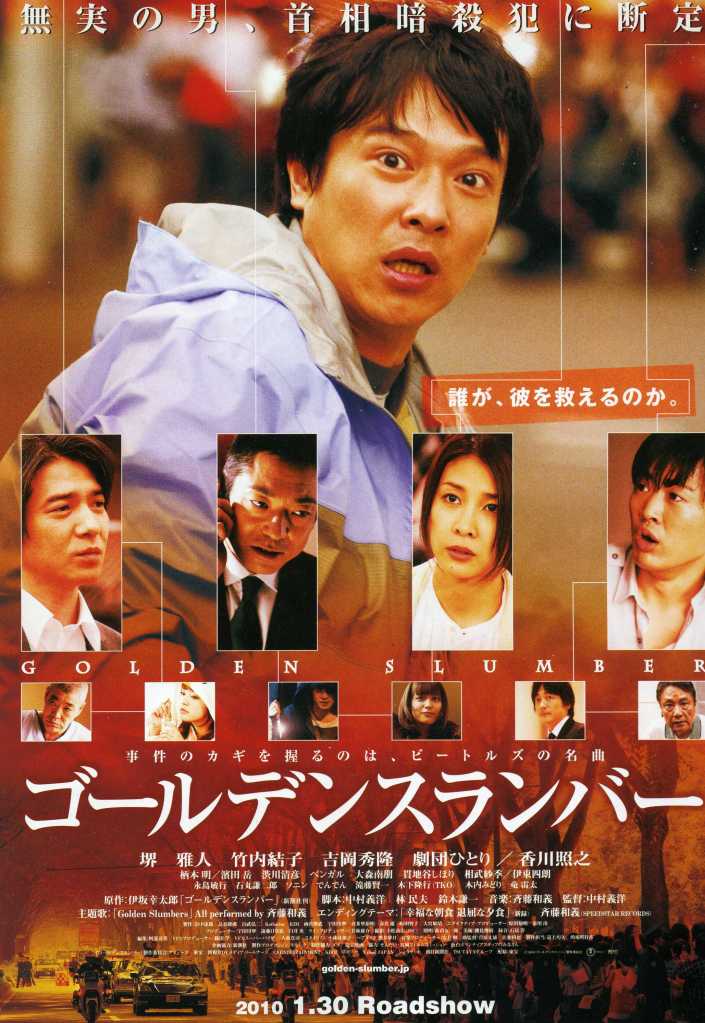
30 year old delivery driver Aoyagi (Masato Sakai) is all set for a nice day out fishing with an old college buddy, Morita (Hidetaka Yoshioka), but he’s about to discover that it’s he’s been hooked and reeled in as the patsy in someone else’s elaborate assassination plot. After grabbing some fast food, Morita takes Aoyagi to a parked car near the closed off area through which the Prime Minster is due to be paraded in an open topped car. Waking up after a brief period of drug induced sedation, Aoyagi is made aware that this has all been a trick – badly in debt thanks to his wife’s pachinko addiction, Morita has betrayed him to a set of undisclosed bad guys with unclear motives and is taking this brief opportunity to give him as much warning as he can. Sure enough, a bomb goes off at the parade and Aoyagi just manages to escape before Morita too is the victim of an explosion.

Aoyagi is now very confused and on the run. Inexplicably, the police seem to have CCTV footage of him in places he’s never been and doing things he’s never done. If he’s going to survive any of this, he’s going to need some help but caught between old friends and new, trust has just become his most valuable commodity.

At heart, Golden Slumber is a classic Wrong Man narrative yet it refuses to follow the well trodden formula in that it isn’t so much interested in restoring the protagonist to his former life unblemished as it is in giving him a new one. The well known Beatles song Golden Slumber which runs throughout the film plays into its neatly nostalgic atmosphere as each of the now 30 year old college friends find themselves looking back into those care free, joyous days before of the enormity of their adult responsibilities took hold. That is to say, aside from Aoyagi himself who seems to have been muddling along amiably before all of this happened to him, unmarried and working a dead end delivery job.

As Morita tells him in the car, it’s all about image. The nature of the conspiracy and the identity of the perpetrators is not the main the main thrust of the film, but the only possible motive suggested for why Aoyagi has been chosen stems back to his unexpected fifteen minutes of fame two years previously when he saved a pop idol from an intruder with a nifty judo move (taught to him by Morita in uni) after fortuitously arriving with a delivery. Those behind the conspiracy intend to harness his still vaguely current profile to grab even more media attention with a local hero turned national villain spin. The Prime Minister, it seems, was a constantly controversial, extreme right wing demagogue with a tendency for making off the cuff offensive statements so there are those who’d rather congratulate Aoyagi than bring him to justice, but anyone who’s ever met him knows none of this can really be true despite the overwhelming video evidence.

Throughout his long odyssey looking for “the way back home” as the song puts it, Aoyagi begins to remember relevant episodes from his life which may feed back into his current circumstances. Although it seems as if Aoyagi had not seen Morita in some time (he knew nothing of his family circumstances, for example) his college friends with whom he wasted time “reviewing” junk food restaurants and chatting about conspiracy theories are still the most important people in his life. Not least among them is former girlfriend Haruko (Yuko Takeuchi), now married and the mother of a little daughter, who seems to still be carrying a torch for her old flame and is willing to go to great lengths to help him in his current predicament.

The film seems mixed on whether these hazy college days are the “golden slumber”, a beautiful dream time enhanced by memory to which it is not possible to return, or whether it refers to Aoyagi’s post college life which impinges on the narrative only slightly when he asks an unreliable colleague for help, aside from an accidental moment of heroic celebrity. It could even refer to the film’s conclusion which, departing from the genre norms, resolves almost nothing save for the hero’s neat evasion of the trap (aided by the vexed conspirators who eventually opt for a plan B). Once there might have been a road home – a way back to the past and the renewing of old friendships, but this road seems closed now, severed by the new beginning promised to Aoyagi who has been robbed of his entire identity and all but the memory of his past. Whether this means that the golden slumber has ended and Aoyagi, along with each of the other nostalgia bound protagonists, must now wake up and start living the life he’s been given, or that the old Aoyagi has been consigned to the realm of golden slumbers, may be a matter for debate.

Though the resolution may appear ultimately unsatisfying, the preceding events provide just enough interconnected absurdity to guide it through. During his long journey, Aoyagi is aided not just by his old friends but new ones too including a very strange young serial killer (Gaku Hamada) and a hospital malingerer with one foot in the “underworld” (Akira Emoto). It speaks to Aoyagi’s character that all of those who know him trust him implicitly and are ready to help without even being asked (even if they occasionally waver under pressure), and even those who are meeting him for the first time are compelled to come to his defence.  An elliptical, roundabout tale of the weight of nostalgia and inescapability of regret, Golden Slumber is the story of a man on the run from his future which eventually becomes a net he cannot escape.


Original trailer (English subtitles – select via menu)

Future Memories: Last Christmas (未来の想い出 Last Christmas, Yoshimitsu Morita, 1992)

b27a8478bde0a2deBased on the contemporary manga by the legendary Fujiko F. Fujio (Doraemon), Future Memories: Last Christmas (未来の想い出 Last Christmas, Mirai no Omoide: Last Christmas) is neither quiet as science fiction or romantically focussed as the title suggests yet perhaps reflects the mood of its 1992 release in which a generation of young people most probably would also have liked to travel back in time ten years just like the film’s heroines. Another up to the minute effort from the prolific Yoshimitsu Morita, Future Memories: Last Christmas is among his most inconsequential works, displaying much less of his experimental tinkering or stylistic variations, but is, perhaps a guide its traumatic, post-bubble era.
After a short segment set in 1971 in which one of our two heroines, Yuko Nando (Misa Shimizu), tells her classmates of her dream to become a best selling children’s author, we flash forward to 1981 where Yuko is a struggling artist unable to find success with her publishing company. A decade later, Christmas 1991, Yuko seems to have made little progress and despondently finds herself bonding with a mysterious woman offering a fortune telling service at the side of the road.

Ginko Kanae’s (Shizuka Kudo) life also seems to have spiralled downwards since 1981. A career as an office lady led to a fateful party after which another girl ended up going home with the guy she liked, and then she ended up being rebound married to the second choice salaryman she wound up with. Hence she’s reading fortunes on a less than busy side street at Christmas. The two women bond and swap phone numbers, but tragedy is about to befall them both as Yuko has a heart attack and dies at an office golf outing and Ginko has an accident on the way back from attending Yuko’s funeral. Never fear, the two women are soon cast back to 1981 with the next ten years of memories intact to help them make “better” choices and hopefully save their futures from ruin.

1992 was the start of a difficult era for Japan, the collapse of the bubble economy left behind it not just financial instability and social uncertainty, but a lingering feeling of foolishness and betrayal among those who’d been promised so much during the bubble years only to have the rug cruelly pulled from under them. It’s not surprising that many people of around Yuko and Ginko’s ages may have liked to travel back to 1981 and either relive the boom years or try and prevent the resultant tragedies from occurring. Unsurprisingly, the pair’s first pass at a do over sees them striving for conventional success, using their future knowledge to their advantage – Yuko by appropriating the idea of a popular 1991 manga to become an award winning artist, and Ginko becoming a financial guru. Both women come to feel conflicted about their “dishonest” choices which see them prosper unfairly, ironically robbing them of the chance to succeed as individuals in their own right and fulfil their own potential in the way they had always wanted to.

After each die at the same point and in the same way once again despite their financial successes, they get a second go, now with twenty years of hindsight to help them work out what’s really important. This time each chooses a path filled with more individual expression and the expectation of happiness. Romance is the name of the game as both women vow to spend more time with the men they love. However, having been through this once before Yuko and Ginko also have an expectation that their time will end once again in December 1991, meaning they feel conflicted about making a life with lovers they’ll be leaving behind. Gradually each starts to wonder if their fates are really as sealed as they fear them to be, or if they’ve been given this chance to start again precisely so that they can change their futures for the better.

In 1992, the idea that everything doesn’t have to be as gloomy as it seems might have been an important one, even more so than it is now. In the original timeline, Yuko and Ginko were, like many in the post-bubble world, victims of circumstance rather than people who’d actively made poor choices and the lessons which they learn are also those of their generation. Financial success is not everything, particularly if it’s gained in a “dishonest” way. More than changing their fates, Yuko and Ginko must first learn how to be happy which lies in self realisation, fulfilled potential, and, ironically, that their fate doesn’t matter so long as they live happily in the now.

Morita’s approach is again a timely one, filled with the music of the era (including a cover version of the title song from previous Morita hit, Main Theme), stock footage, and a curiously retro, nostalgia filled approach for a period that was only a decade earlier. Dissolves, slow motion and double exposures are his concessions to the sci-fi themes, but what he’s really interested in is capturing the essence of the era more so than crafting an emotionally affecting piece. Necessarily of its time, Future Memories: Last Christmas is among Morita’s weaker efforts but does serve to shine a light on early ‘90s pop culture as it found itself in a moment of profound self reflection.


Original trailer (no subtitles but lots of Christmas Cheer…and…Wham)

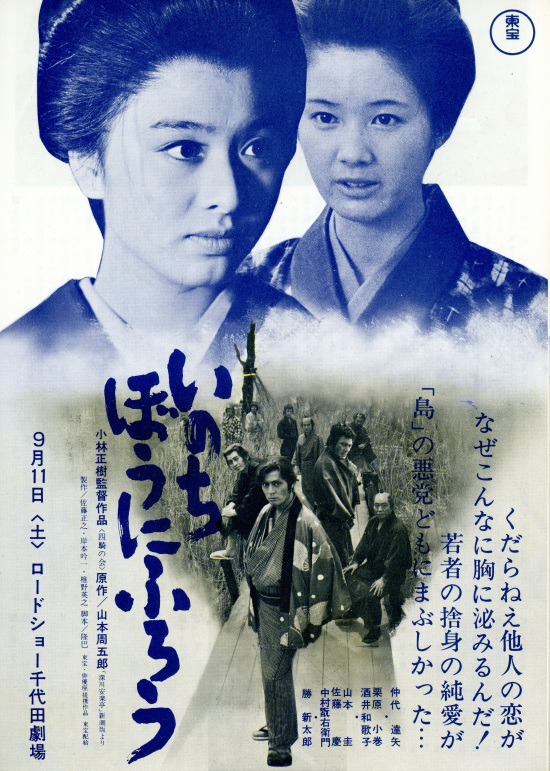
Inn of Evil (いのちぼうにふろう, Masaki Kobayashi, 1971)

inn-of-evil“Sometimes it feels good to risk your life for something other people think is stupid”, says one of the leading players of Masaki Kobayashi’s strangely retitled Inn of Evil (いのちぼうにふろう, Inochi Bonifuro), neatly summing up the director’s key philosophy in a few simple words. The original Japanese title “Inochi Bonifuro” means something more like “To Throw One’s Life Away”, which more directly signals the tragic character drama that’s about to unfold. Though it most obviously relates to the decision that this gang of hardened criminals is about to make, the criticism is a wider one as the film stops to ask why it is this group of unusual characters have found themselves living under the roof of the Easy Tavern engaged in benign acts of smuggling during Japan’s isolationist period.
Led by the innkeeper Ikuzo (Kan’emon Nakamura), the Easy Tavern is, effectively, the hideout of a smuggling gang conveniently located on a small island in the middle of a river where they can unload goods from the Dutch boats before shipping them on to Edo. Everything had been running smoothly, but the friendly policeman has been moved on and the new guy seems very straight laced. The gang’s routine existence changes one night when they receive two unexpected visitors – a young man they save from a beating in the street, and a drunk who wanders in looking for sake. The younger man, Tomijiro (Kei Yamamoto), brings a sad story with him in that all of his troubles have been caused by trying to save the woman he loves from being sold to a brothel. Moved by Tomijiro’s innocent ardour, even the most hardhearted residents of the Easy Tavern become determined to help him. Accepting a job everyone had a bad feeling about in order to get the money for Tomijiro to buy back his lady love before it’s too late, the gang’s unusual decision to risk their lives for someone else’s happiness may be the first and last time they ever do so.

The residents of the Easy Tavern have various different backstories, but the thing they all have in common is having been rejected by mainstream society at some point in their lives. The most high profile, Sadashichi (Tatsuya Nakadai), is known as “The Indifferent” which is both apt and slightly ironic. Sullen and cynical, he puts on a show about caring for nothing and no one but, as inn keeper’s daughter Omitsu (Komaki Kurihara) has figured out, it’s more that the opposite it true – he cares too much about everything. Abandoned as a child, Sadashichi’s sad story is that he once thought his saw his mother long after they were separated but killed her because she’d fallen into prostitution. Then again, perhaps it was just a woman who looked like her, or perhaps he made he whole thing up. Coming across a lost baby bird shortly after killing a man, Sadashichi is determined to look after it but is later distressed by the words of the drunk who reminds him that the bird’s mother is probably going crazy with worry. Sadashichi may identify with this lost little bird, but his empathy also extends to Tomijiro’s plight as his plaintive looks and gloomy face prompt him into action, if only to make them go away.

Similarly, the other members including “The Living Buddha” – a rabidly bisexual former monk thrown out of his temple for his lascivious ways, an effeminate homeless man, a stutterer, and an invalid all have reasons for living outside the law. As the sympathetic inn keeper later tries to explain to a policeman, most of these men are people who’ve faced rejection in one way or another. Craving sympathy, they’ve turned violent and suspicious, pushed away from the very things they wanted most. Far from an Inn of Evil, the Easy Tavern is the only place where these people have been able to find acceptance, building a community of lost souls from those cast out from society at large.

The decision to try and help Tomijiro to rescue his childhood sweetheart, cruelly sold by her selfish and uncaring father, is, in once sense, a selfless one but perhaps also reminds them of all the times they were also betrayed or abandoned and no one came to help. Even knowing the plan is unlikely to end well, the inn keeper is proud of his men’s decision, if they didn’t try to help the girl no one else would. They may be throwing their lives away in a pointless endeavour, but if they don’t at least try then what’s the point in living at all. This more than anything expresses Kobayashi’s constant preoccupation throughout his career in pointing to the essential goodness of those who refuse to simply accept acts of injustice as normal and stand up to oppose them, even if their resistance will produce little or no actual change.

Filming in a crisp black and white, Kobayashi creates an eerie atmosphere aided by Toru Takemitsu’s strangely ethereal score. The world of the The Easy Tavern is a dark one in which cruelty and betrayal lie at every turn and men ruin themselves through thoughtless and reckless decisions, but the best of humanity is to be found among this gang of outlaws who collectively decide it’s world risking their lives for someone else’s love story. Filled with impressive visual imagery including the strange sight of the looming bright white police lanterns and the impressively staged last stand as Sadashichi holds off the troops for Tomijiro to escape, Inn of Evil is a tightly controlled, minutely detailed character drama in which men who’d throw their lives away for nothing find that their sacrifice has not been in vain.


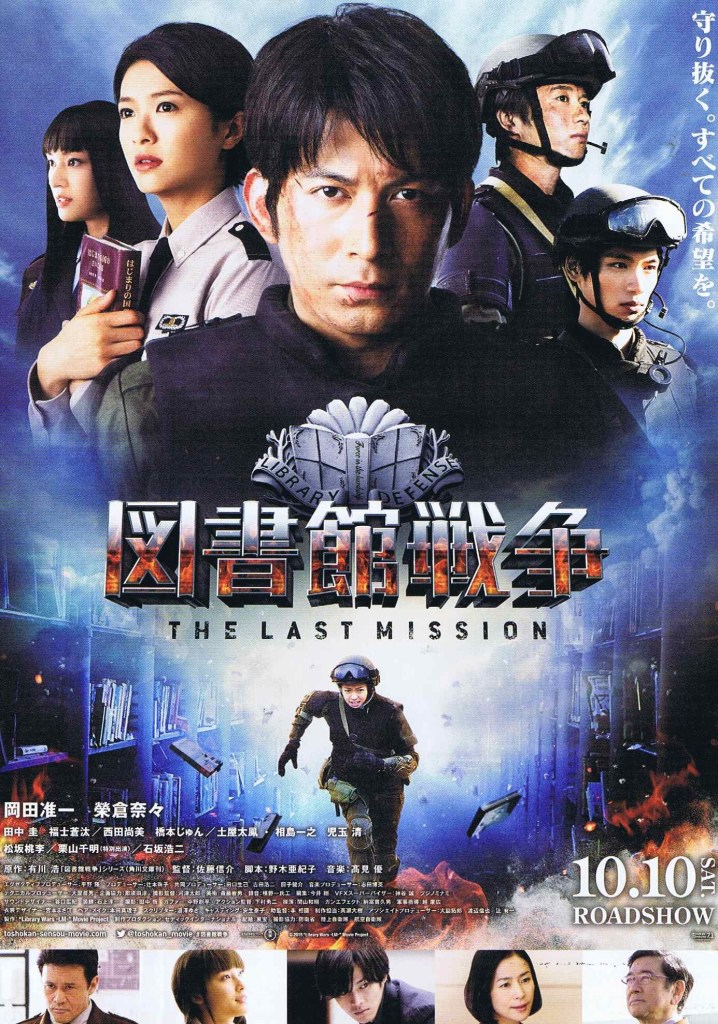
Library Wars: The Last Mission (図書館戦争-THE LAST MISSION-, Shinsuke Sato, 2015)

library-wars-last-missionWhen Library Wars, the original live action adaptation of Hiro Arikawa’s light novel series, hit cinema screens back in 2013 it did so with a degree of commercial, rather than critical, success. Though critics were quick to point out the great gaping plot holes in the franchise’s world building and a slight imbalance in its split romantic comedy/sci-fi political thriller genre mix, the film was in many ways a finely crafted mainstream blockbuster supported by committed performances from its cast and impressive cinematography from its creative team. Library Wars: The Last Mission (図書館戦争-THE LAST MISSION-, Toshokan Senso -The Last Mission-) is the sequel that those who enjoyed the first film have been waiting for given the very obvious plot developments left unresolved at the previous instalment’s conclusion.

18 months later, Kasahara (Nana Eikura) is a fully fledged member of the Library Defence Force, but still hasn’t found the courage to confess her love to her long term crush and embittered commanding officer, Dojo (Junichi Okada). As in the first film, The Media Betterment Force maintains a strict censorship system intended to prevent “harmful” literature reaching “vulnerable” people through burning all suspect books before they can cause any damage. Luckily, the libraries system is there to rescue books before they meet such an unfortunate fate and operates the LDF to defend the right to read, by force if necessary.

Kasahara is an idealist, fully committed to the defence of literature. It is, therefore, a surprise when she is accused of being an accomplice to a spate of book burning within the library in which books criticising the libraries system are destroyed. Needless to say, Kasahara has been framed as part of a villainous plan orchestrated by fellow LDF officer Tezuka’s (Sota Fukushi) rogue older brother, Satoshi (Tori Matsuzaka). There is a conspiracy at foot, but it’s not quite the one everyone had assumed it to be.

In comparison with the first film, The Last Mission is much more action orientated with military matters taking up the vast majority of the run time. A large scale battle in which the LDF is tasked with guarding an extremely important book containing their own charter (i.e. a symbol of everything they stand for) but quickly discovers the Media Betterment Force is not going to pass up this opportunity to humiliate their rival, forms the action packed centrepiece of the film.

The theme this time round leans less towards combating censorship in itself, but stops to ask whether it’s worth continuing to fight even if you feel little progress is being made. The traitorous officer who helps to frame Kasahara does so because he’s disillusioned with the LDF and its constant water treading. The LDF is doing what it can, but it’s fighting to protect books – not change the system. This is a weakness Satoshi Tezuka is often able to exploit as the constant warfare and tit for tat exchanges have begun to wear heavy on many LDF officers who are half way to giving up and switching sides. Even a zealot like Kasahara is thrown into a moment of existential despair when prodded by Satoshi’s convincing arguments about her own obsolescence.

Satoshi rails against a world filled with evil words, but as the head of the LDF points out in quoting Heinrich Heine, the society that burns books will one day burn men. The LDF may not be able to break the system, but in providing access to information it can spread enlightenment and create a thirst for knowledge among the young which will one day produce the kind of social change that will lead to a better, fairer world.

As in Library Wars all of these ideas are background rather than the focus of the film which is, in essence, the ongoing non-romance between Kasahara and Dojo. Remaining firmly within the innocent shojo realm, the romantic resolution may seem overly subtle to some given the extended build up over both films but is ultimately satisfying in its cuteness. Library Wars: The Last Mission masks its absurd premise with a degree of silliness, always entirely self aware, but gets away with it through sincerity and good humour. Shinsuke Sato once again proves himself among the best directors of mainstream blockbusters in Japan improving on some of the faults of the first film whilst bringing the franchise to a suitably just conclusion.


Original trailer (No subtitles)

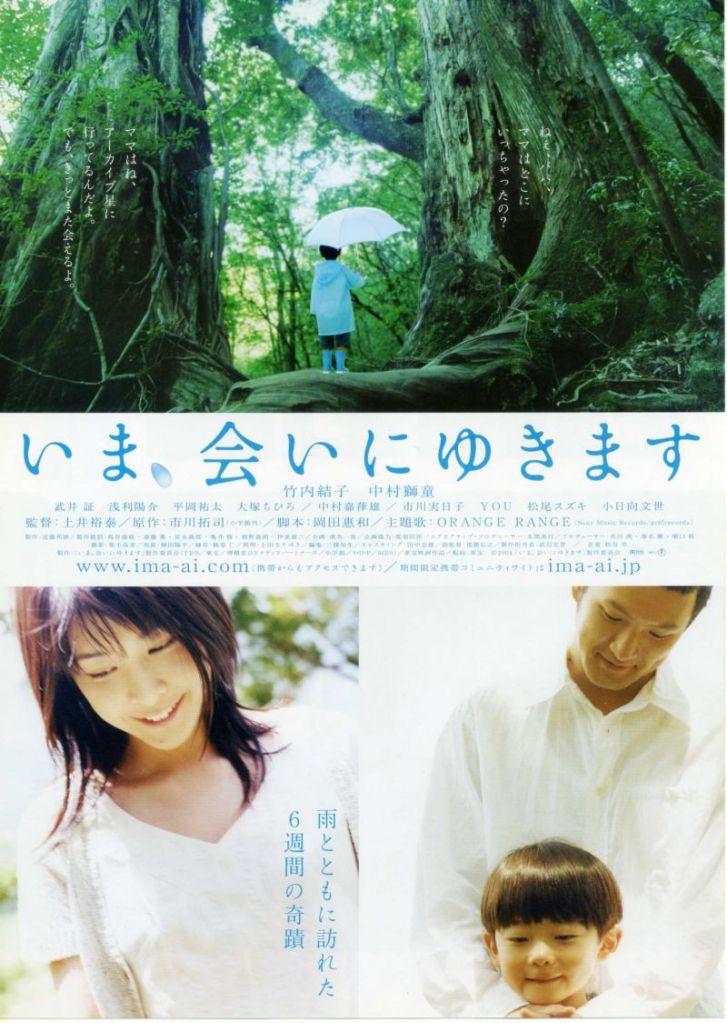
Be With You (いま、会いにゆきます, Nobuhiro Doi, 2004)

be-with-youWhen it comes to tragic romances, no one does them better than Japan. Adapted from a best selling novel by Takuji Ichikawa, Be With You (いま、会いにゆきます, Ima, ai ni Yukimasu) is very much part of the “Jun-ai” or “pure love” boom kickstarted by Crying Out Love In the Center of the World released the same year but taps into Japan’s long history of supernaturally tinged love stories, filled with the weight of impending tragedy and the essential transience of the human experience.
Like many such tales, Be With You begins with a framing sequence set 12 years after the main events, but unusually it’s directed from the point of view of the soon-to-be 18 year old, Yuji (Yuta Hiraoka). Receiving a birthday cake from a bakery which has apparently only stayed open because of its promise to deliver birthday cakes to him every year until he turns 18, Yuji begins to reflect on the “miracle” which he and his father experienced all those years ago.

Yuji’s mother passed away at the age of 28 when he was only 5 years old. However, before she died, Mio (Yuko Takeuchi) had prepared a special picture book for Yuji to try and help him process what was happening. In the book, Mio has gone to a place called “Archive Star” and will return for the first rainy season a year after her death. Improbable as it is, Yuji and his father Takumi (Shido Nakamura) discover a woman who looks exactly like Mio lost in the forest during the first rains. Stunned the pair take her home but Mio has no knowledge of her former life as a wife and mother. Gradually, Mio begins to fall in love with her husband all over again whilst bonding with her young son, but their happiness is short lived as Mio realises her time with them is limited.

Because Mio can’t remember, we experience the love story between the teenage Takumi and Mio firstly through his eyes as he tells her of his unrequited high school crush when she sat at the desk across from him for two years during in which he was too shy to say anything. Later we hear the same story again from Mio’s perspective through her diary where we learn, not altogether surprisingly, that she felt the same way. The pair mirror each other throughout their courtship, wanting to say something but lacking the courage and looking for excuses to try and push the situation in a better direction. Other than the mutually unresolved attempts at phone calls and an unreturned pen, Mio and Takumi essentially relive their original romance in the brief time they are able to share together from repeated motifs of untied shoelaces and clumsiness with a bicycle, to innocent in pocket hand holding.

Takumi has an ongoing medical condition which interferes with his motor functions, slowing him down and giving him an air of soulful melancholy later compounded by his romantic tragedy. Having been a champion runner on a sports scholarship to college, the diagnosis causes extreme disruption to his life and leads him to the typically jun-ai decision to break up with Mio because he feels as if he’d be a burden to her. A year after Mio passed away, Takumi is doing his best to bring up his son but is a little distant and struggling to take care of the domestic environment. When Mio realises that she can’t take care of them forever, she switches her focus to trying to prepare her husband and son for life alone – teaching Yuji how to fry eggs and do the laundry, whilst renewing her emotional bond with Takumi. There’s no happy ending in store for Mio, the loss cannot be avoided and perhaps it might even be worse to have had this brief respite from the ongoing pain, but the six week rainy season does, at least, provide an opportunity to say those things that might have otherwise gone unsaid.

Nobuhiro Doi films in a typically elegant fashion making great use of the area’s natural beauty to create a fairy tale atmosphere from the mysterious, life giving forest. The poignancy of the tale is all the deeper knowing that Mio eventually understood what would happen to her, but chose a brief life with Takumi and her son over the possibility of a longer one without them. Heartbreakingly sad, yet a testament to the importance of appreciating the present which all too soon becomes the past, Be With You is a genuinely romantic love story, not only between a husband and a wife but an entire family carrying the weight of a tragic loss but easing the burden by treasuring the memory of the intense love shared between them.


Original trailer (no subtitles)

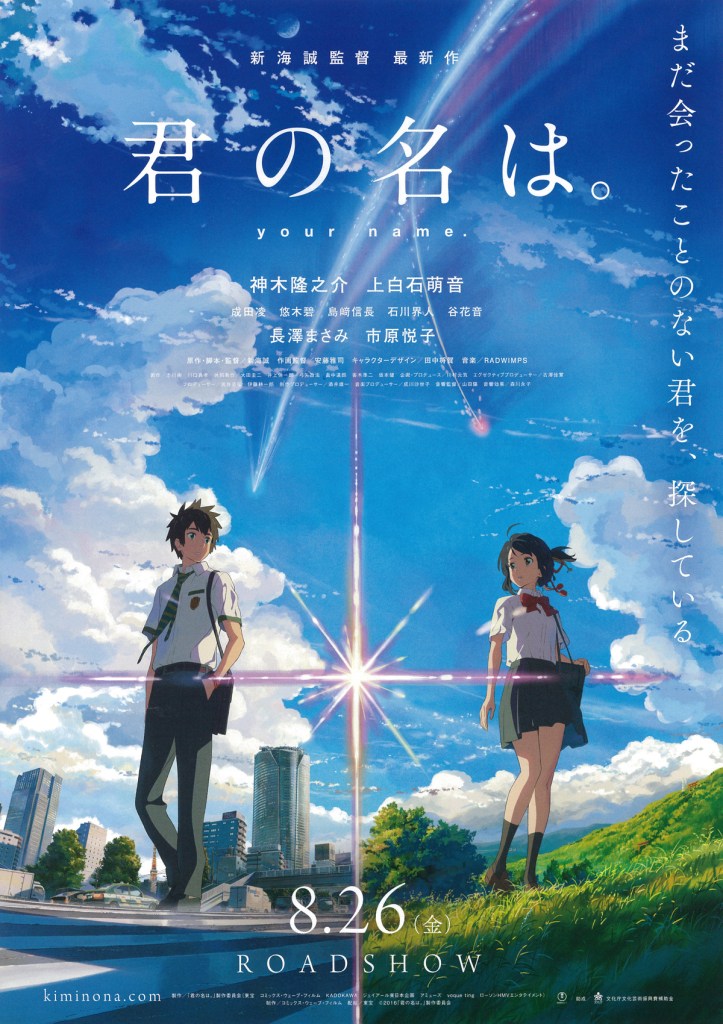
Your Name (君の名は, Makoto Shinkai, 2016)

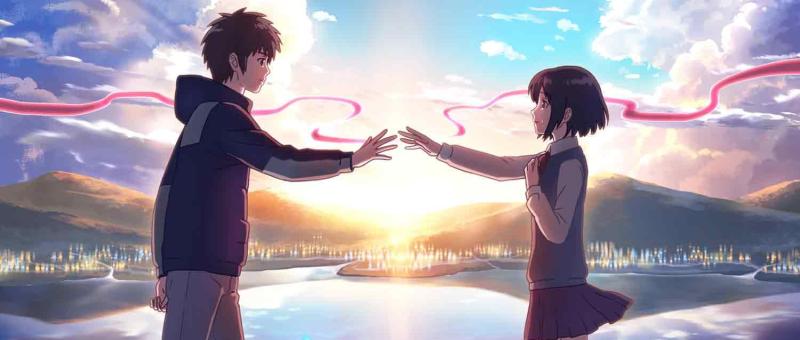
your-nameIndie animation talent Makoto Shinkai has been making an impact with his beautifully drawn tales of heartbreaking, unresolvable romance for well over a decade and now with Your Name (君の名は, Kimi no Na wa) he’s finally hit the mainstream with an increased budget and distribution from major Japanese studio Toho. Noticeably more upbeat than his previous work, Your Name takes on the star-crossed lovers motif as two teenagers from different worlds come to know each other intimately without ever meeting only to find their youthful romance frustrated by the vagaries of time and fate.

Mitsuha (Mone Kamishiraishi) is a typical country girl and daughter of a Shinto temple family who dreams of the urban sophistication of the big city. Taki (Ryunosuke Kamiki), by contrast, is a typical city boy living in Tokyo and taking full advantage of its cafes and mass transportation systems. One fateful day, each wakes up in the body of the other and must quickly adjust to living in someone else’s skin. Though each originally believes the events to have been merely a dream, friends and family members are quick to point out the strange behaviour of the two teenagers. Neither Mitsuha nor Taki maintains a clear memory of their time in the other’s world though they are able to keep in a kind of contact through their respective diaries (his on a smartphone, hers in a more traditional notebook). Beginning to develop a degree of mutual affection through their strangely acquired intimacy, Mitsuha and Taki each have a profound effect on the other’s life but fate seems content to keep them apart.

Body swap comedy is not an unusual genre in Japan (Obayashi’s similarly themed I Are You, You Am Me being a notable example which was even remade by the director himself thirty years later as Switching, Goodbye Me), nevertheless Shinkai mines the situation for all of its awkward comedy as Mitsuha and Taki get used to living as the opposite gender. Beginning with the obvious repeated joke of Taki waking up and squeezing “his” breasts, there are other issues to contend with from which pronoun to use to remembering to avoid slipping into a rural dialect. Taki, obviously at sea with how to get on as a girl, causes consternation by turning up late for school with messy hair and subsequently behaving in an unacceptably masculine way. Conversely when Mitsuha is playing Taki, she helps him sort out various things in his life through her feminine influence including getting him a date with his workplace crush.

The pair are indeed “star-crossed” as their romance is heralded by the arrival of a rare comet, watched by both at the same time, as it splits in two. The comet strike turns out to have a much more pressing importance than simply as a symbol of romantic destiny but neatly represents the central dynamic of Mitsuha and Taki as two halves of the same soul. The two are connected by the “red string of fate” visualised through Mitsuha’s long red hair ribbon which later makes a reappearance in Taki’s sake based dream sequence and serves to bind the two together. Mitsuha’s family also make traditional braided bracelets which, as her grandmother tells us, represent the flow of time itself, weaving narrative into dramatic knots.

The knot, in this case, is the comet strike which later threatens to keep the tragic lovers apart rather than bring them together. Recalling the devastating earthquake of 2011, the destruction wrought by such a catastrophic event does not stop at loss of life but becomes a great ongoing loss – things left unsaid, opportunities missed, lives unlived. If it were only possible to turn back time and somehow save all those people from harm. Mitsuha and Taki have been given just such an opportunity thanks to their usual connection.

Like many Shinkai heroes, Taki and Mitsuha later find themselves burdened with a sense of incompleteness, as if they’re continually searching, trying to regain something they’ve lost but are unable to put a name to. The memories of their shared past fade, dissipating like a dream upon waking leaving a only faint trace behind them, just enough to know that something is missing. Yet, journeys end in lovers meeting, and even in a metropolis as vast as Tokyo recognition is powerful force.

Shinkai takes his trademark aesthetic beauty to all new heights with his idyllic country landscapes, realistic cities, and the visually striking (if potentially deadly) fracturing of a comet. Much less deliberately downbeat than Shinkai’s previous work which often emphasised the impossibility of true love satisfied, Your Name is no less emotionally affecting even if its melancholy sense of longing persists until the very last frame.


Reveiwed at the BFI London Film Festival 2016

Original trailer (English subtitles)