 It’s a strange paradox that in a land defined by corruption of the legal system, your only hope my lie in a new trial. So it is for the hero of Kim Tae-yun’s latest film. Inspired by a real life miscarriage of justice (a case which was in fact still continuing at the time of filming), New Trial (재심, Jaesim) takes aim at everything from social inequality to unscrupulous lawyers and abuse of police power. A teenager pays dearly for being in the wrong place at the wrong time, not only losing 10 years of his life but the entire possibility of his future now that he’s forever branded a criminal. That’s aside from leaving his ageing (now blind mother) alone with no means of support and the additional burden of trying to clear her son’s name.
In the year 2000, reckless teen Hyeon-woo (Kang Ha-Neul) gets himself mixed up in the stabbing of a taxi driver. Despite sticking around to do his civic duty, he gets arrested, tried, talked into a false plea bargain confession and serves 10 years behind bars. Hyeon-woo might have been released after serving his time but he’s not the carefree kid he was before. Sullen, angry, and an ex-con without qualifications, he can’t find a job and has the additional burden of trying to care for his now blind mother. Even if he technically confessed to the crime because his conviction was inevitable and he wanted to get out faster so his mother wasn’t left alone, Hyeon-woo has his hopes permanently fixed on a retrial so he can clear his name once and for all.
Enter shady lawyer Park Jun-young (Jung Woo). Park is not your usual pick for a social justice case. He became a lawyer for the big bucks and macho posturing. After he loses a big case, incurs numerous debts, and is left by his wife and child, Park joins a big firm on a pro-bono basis, hoping to pick up a big client, impress them and get another permanent position. Thus he stumbles on Hyeon-woo’s case and, given the notoriety of the incident, thinks there may be some mileage in it.
Park may start off as the cynical, winner takes all school of legally savvy but morally bankrupt attorney but the more he looks into Hyeon-woo’s case the angrier he finds himself getting. Not only was Hyeon-woo betrayed by the police who knew the identity of the real killer but chose to scapegoat a poor boy instead, but he was also ordered to pay vast sums in compensation to the victim’s family. Saddled with an irreparable debt for a crime he did not commit, Hyeon-woo has reason for his passive aggressive defeatism and lack of faith in Park but gradually begins to come back to life when provided with real hope of achieving his goal of a new trial.
Yet much of the drama revolves around the two as they negotiate an uneasy trust. Hyeon-woo has been let down before by men in who said they could help only to make a speedy exit taking Hyeon-woo’s hard won money and faith in the future with them. Park starts off claiming Hyeon-woo’s guilt or innocence is an irrelevant detail, all that matters to him is winning the case and thereby getting his career back on track. Flitting through periods of winning and losing faith in each other the two are eventually able to come together in their common goal, each working for justice not just for Hyeon-woo but for all the other Hyeon-woos betrayed by political and judicial corruption.
The real life case which inspired New Trial is still not settled but the man who inspired the originally slippery Park has gone on to become Korea’s new trial king – coming to the rescue of those who find themselves at the mercy of shady forces and railroaded into paying for something they did not do. Park finds few allies in his new quest for social justice, and none among the ranks of the swanky lawyer elites he was so desperate to join, but every movement needs a leader and perhaps this one starts with a man called Park and a massive change of heart.
New Trial was screened at the 19th Udine Far East Film Festival
Original trailer (English subtitles)
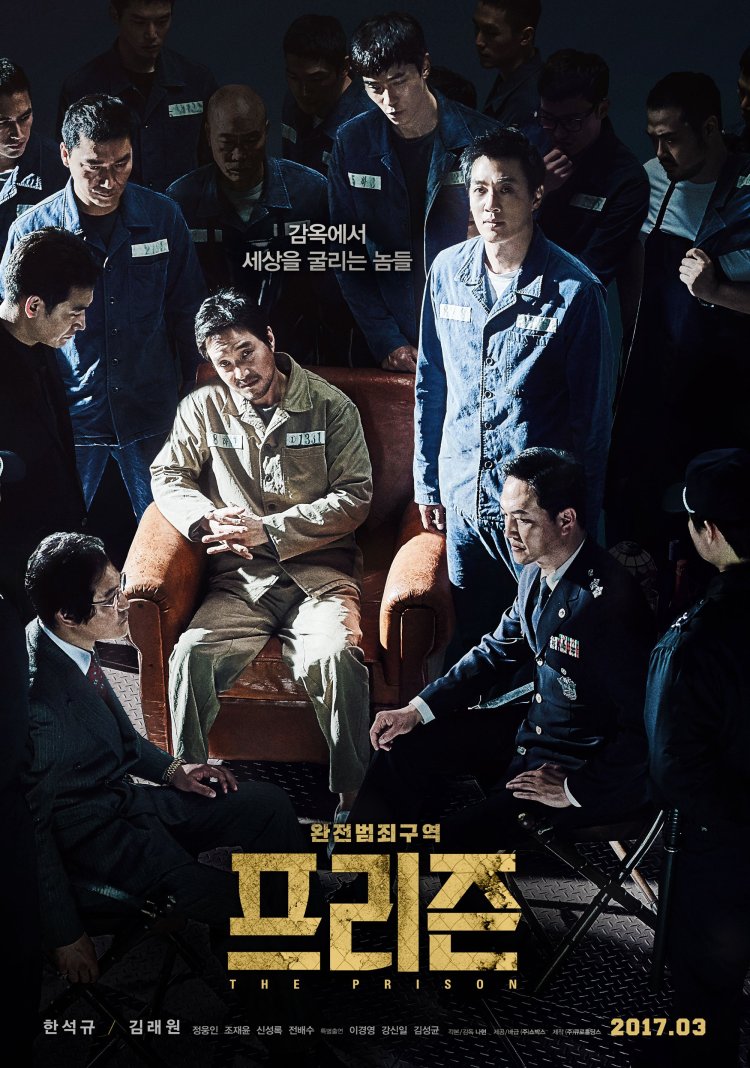 Prison can be a paradise if you’re doing it right, at least if you’re a top gangster in the movies. Na Hyun’s The Prison (프리즌) paints an interesting picture of incarceration and the way it links into his nation’s infinitely corrupt power structures. When investigators wonder why a crime spree suddenly came to an end, one of the frequently offered explanations is that the perpetrator was most likely arrested for another crime but what if you could turn this obviously solid alibi to your advantage and get those already behind bars to do your dirty work for you?
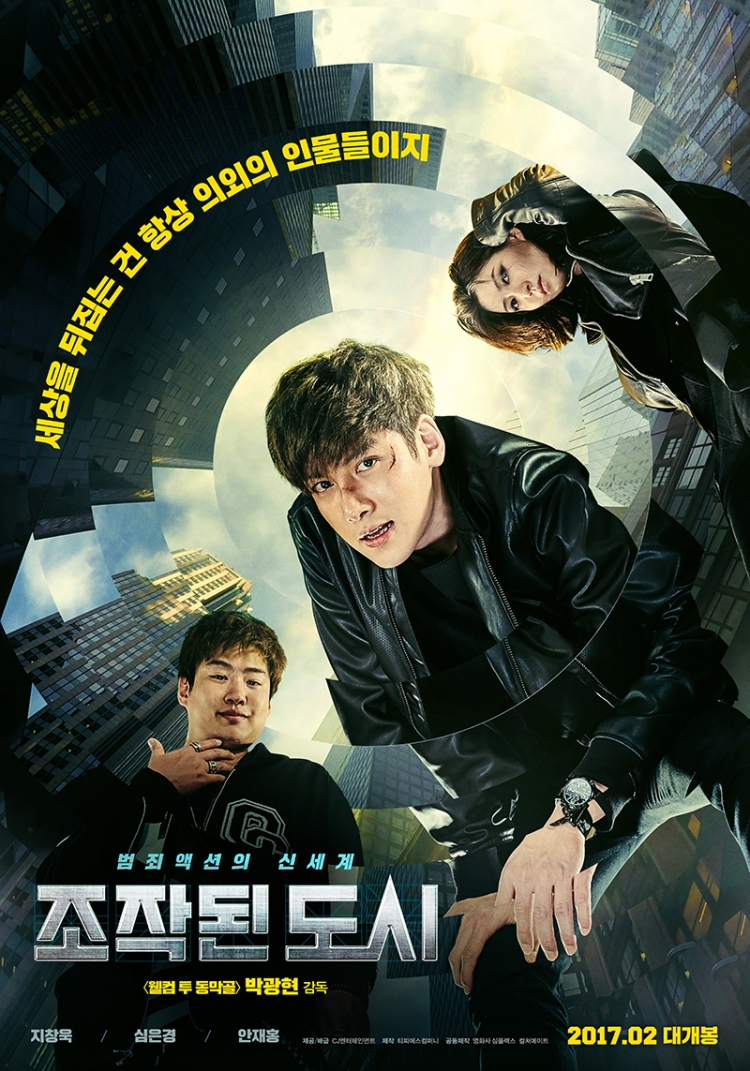 The real and the unreal. In the era of fake news, it’s become ever harder to draw a clear line between the two but when you live online, the borders are even more permeable. Twelve years after the wartime comedy Welcome to Dongmakgol, director Park Kwang-hyun finally makes a return to the director’s chair with an action packed cyberpunk thriller which joins the ranks of recent Korean films bemoaning the country’s hardwired tendency to social inequality where the rich and powerful are free to run roughshod over the merely ordinary. Fabricated City (조작된 도시, Jojakdwen Doshi) refers to more than just the literally manufactured online world, but to the social reality in which unseen forces govern and define the lives of others, operating in secret behind a government backed curtain.
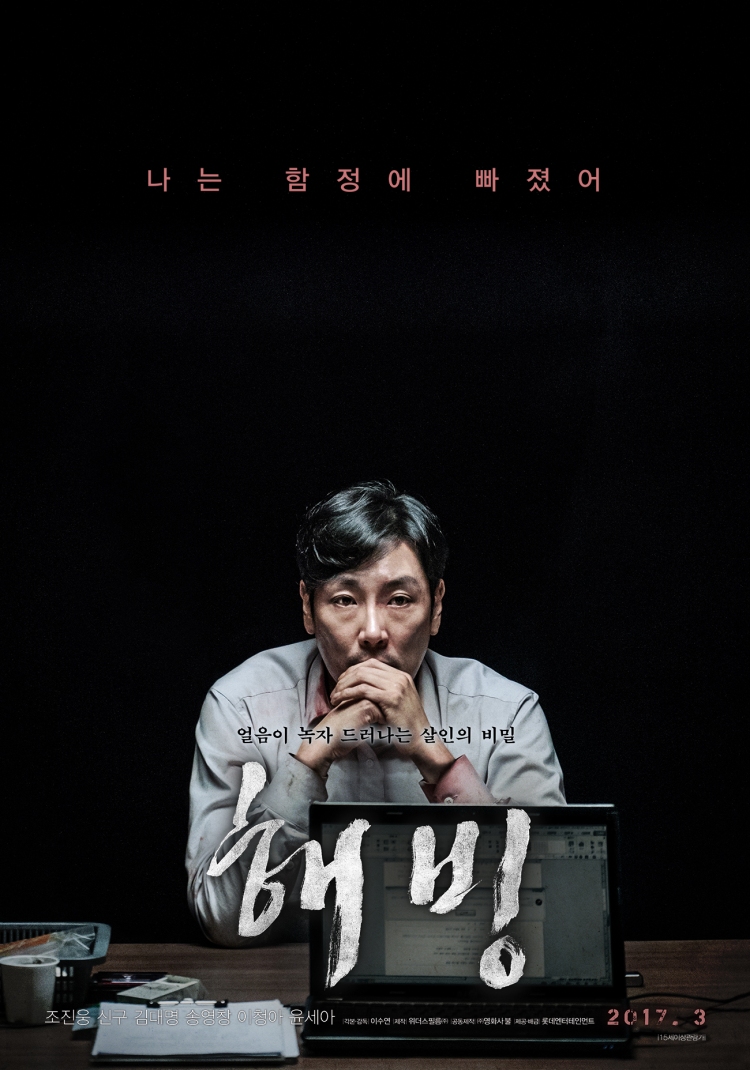 If you think you might have moved in above a modern-day Sweeney Todd, what should you do? Lee Soo-youn’s follow-up to 2003’s The Uninvited, Bluebeard (해빙, Haebing), provides a few easy lessons in the wrong way to cope with such an extreme situation as its increasingly confused and incriminated hero becomes convinced that his butcher landlord’s senile father is responsible for a still unsolved spate of serial killings. Rather than move, go to the police, or pretend not to have noticed, self-absorbed doctor Seung-hoon (Cho Jin-woong) drives himself half mad with fear and worry, certain that the strange father and son duo from downstairs have begun to suspect that he suspects.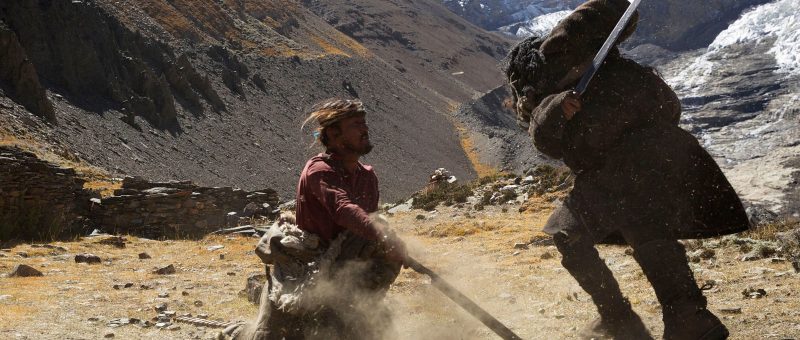
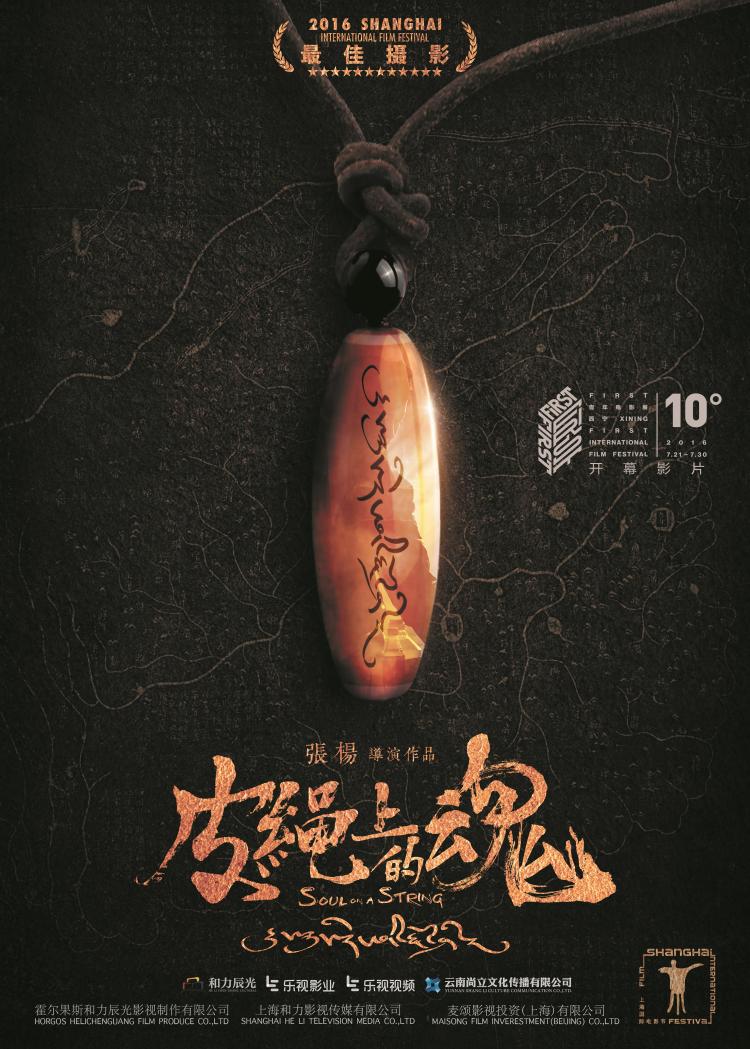 At the end of Zhang Yang’s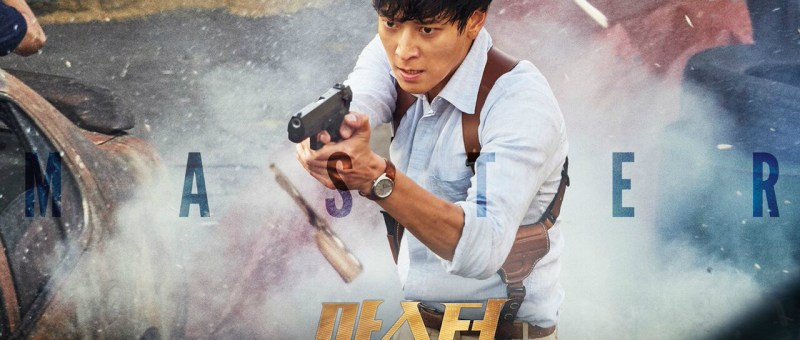
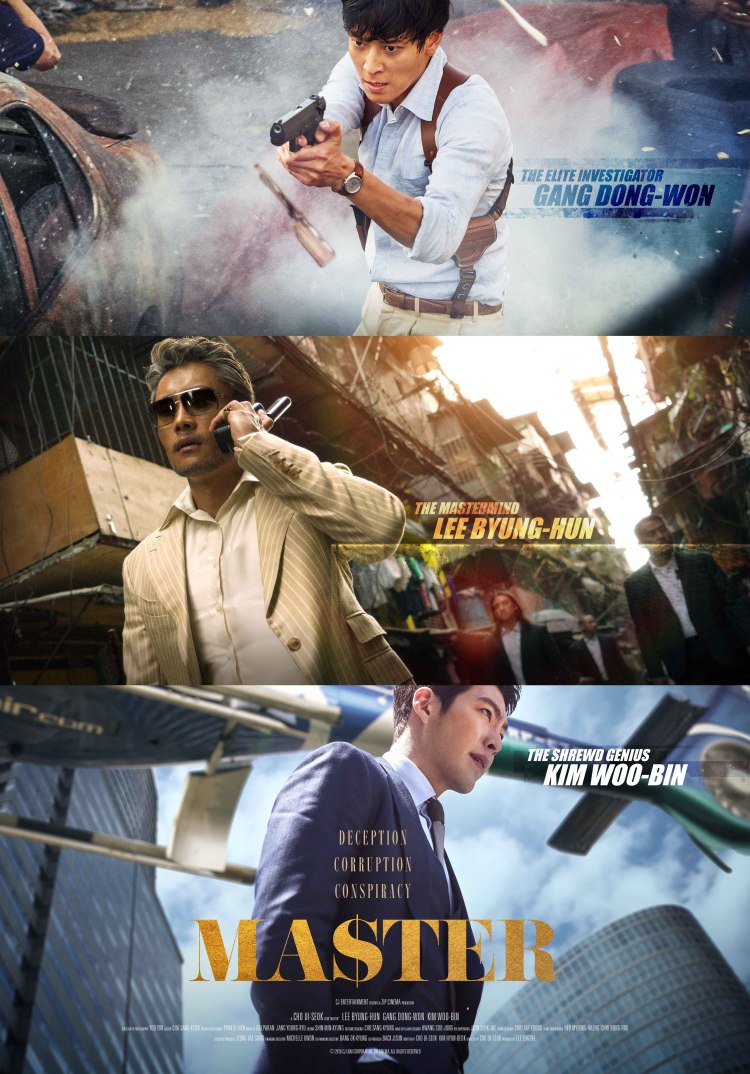 Corruption has become a major theme in Korean cinema. Perhaps understandably given current events, but you’ll have to look hard to find anyone occupying a high level corporate, political, or judicial position who can be counted worthy of public trust in any Korean film from the democratic era. Cho Ui-seok’s Master (마스터) goes further than most in building its case higher and harder as its sleazy, heartless, conman of an antagonist casts himself onto the world stage as some kind of international megastar promising riches to the poor all the while planning to deprive them of what little they have. The forces which oppose him, cerebral cops from the financial fraud devision, may be committed to exposing his criminality but they aren’t above playing his game to do it.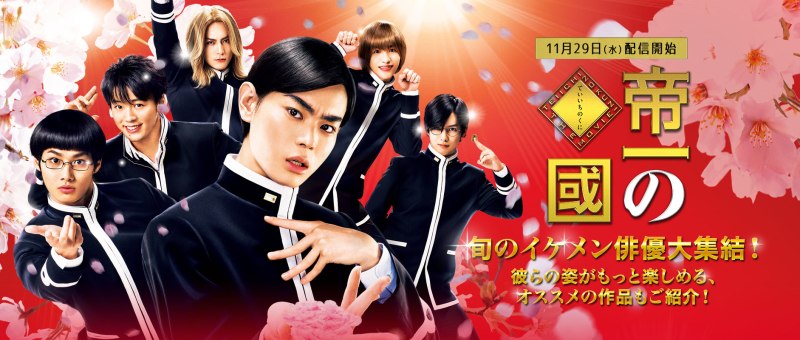
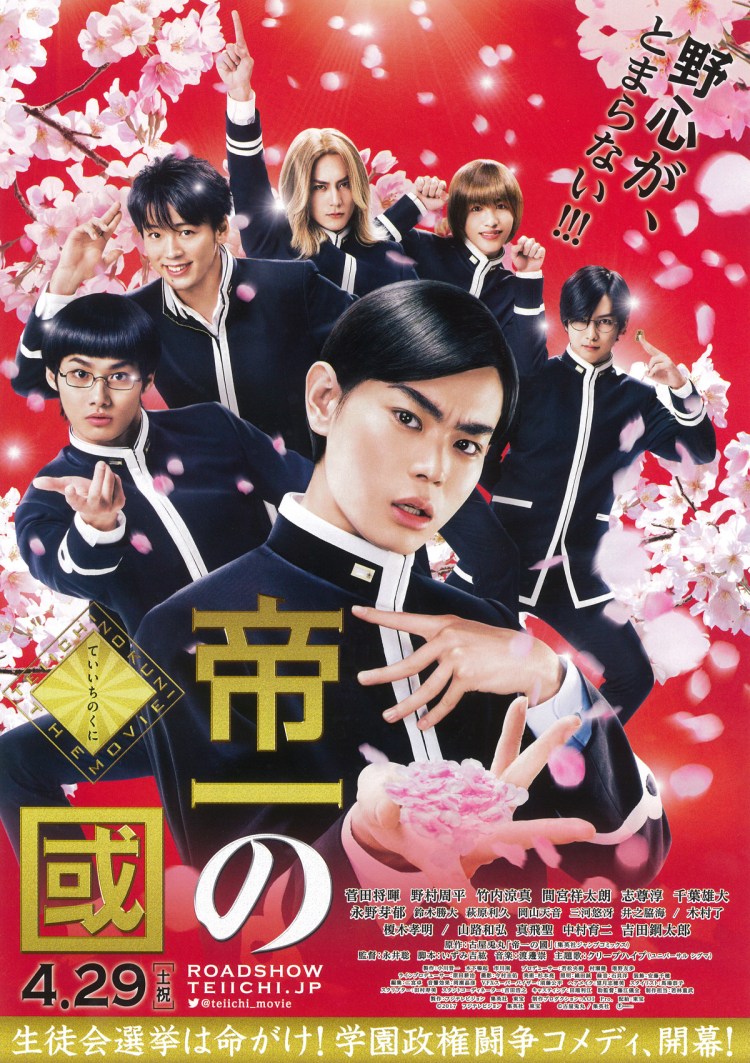 Back in the real world, politics has never felt so unfunny. This latest slice of unlikely political satire from Japan may feel a little close to home, at least to those of us who hail from nations where it seems perfectly normal that the older men who make up the political elite all attended the same school and fully expected to grow up and walk directly into high office, never needing to worry about anything so ordinary as a career. Taking this idea to its extreme, elite teenager Teiichi is not only determined to take over Japan by becoming its Prime Minister, but to start his very own nation. In Teiichi: Battle of Supreme High (帝一の國, Teiichi no Kuni) teenage flirtations with fascism, homoeroticism, factionalism, extremism – in fact just about every “ism” you can think of (aside from altruism) vie for the top spot among the boys at Supreme High but who, or what, will finally win out in Teiichi’s fledging, mental little nation?
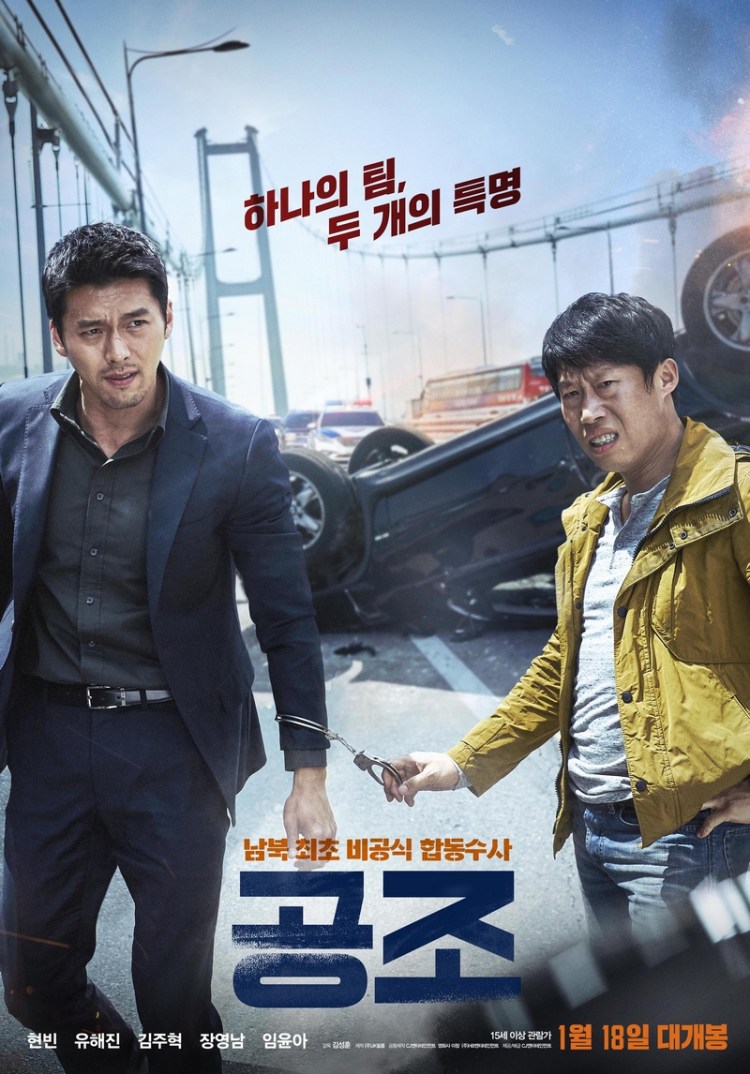 South Korean cinema has a fairly ambivalent attitude to its policemen. Most often, detectives are a bumbling bunch who couldn’t find the killer even if he danced around in front of them shouting “it was me!” whereas street cops are incompetent, lazy, and cowardly. That’s aside from their tendency towards violence and corruption but rarely has there been a policeman who gets himself into trouble solely for being too nice and too focussed on his family. Confidential Assignment (공조, Gongjo), though very much a mainstream action/buddy cop movie, is somewhat unusual in this respect as it pairs a goofy if skilled and well-meaning South Korean police officer, with an outwardly impassive yet inwardly raging North Korean special forces operative.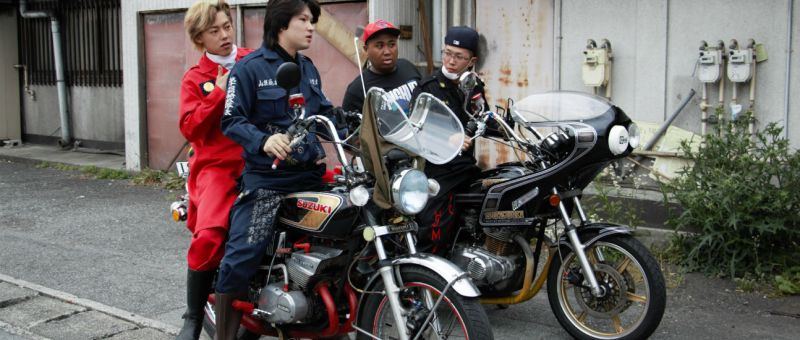
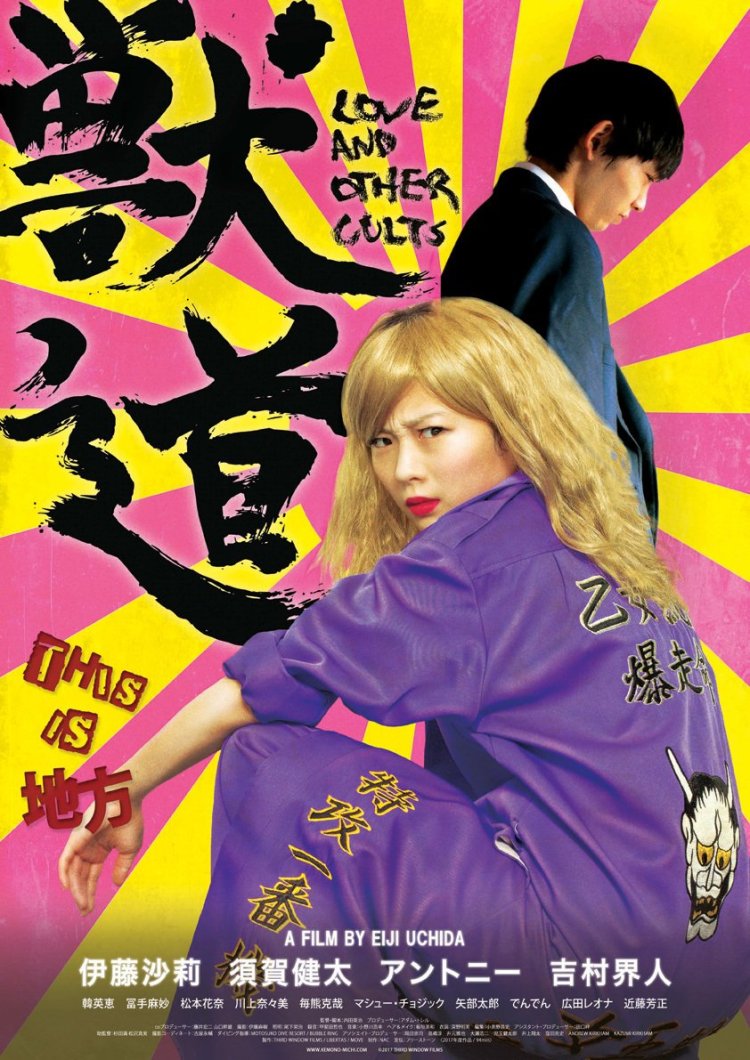 Eiji Uchida’s career has been marked by the stories of self defined outsiders trying to decide if they want to move towards or further away from the centre, but in his latest film Love and Other Cults ( 獣道, Kemonomichi), he seems content to let them linger on the margins. The title, neatly suggesting that perhaps love itself is little more than a ritualised set of devotional acts, sets us up for a strange odyssey through teenage identity shifting but where it sends us is a little more obscure as a still young man revisits his youthful romance only to find it as wandering and ill-defined as many a first love story and like many such tales, one ultimately belonging to someone else.
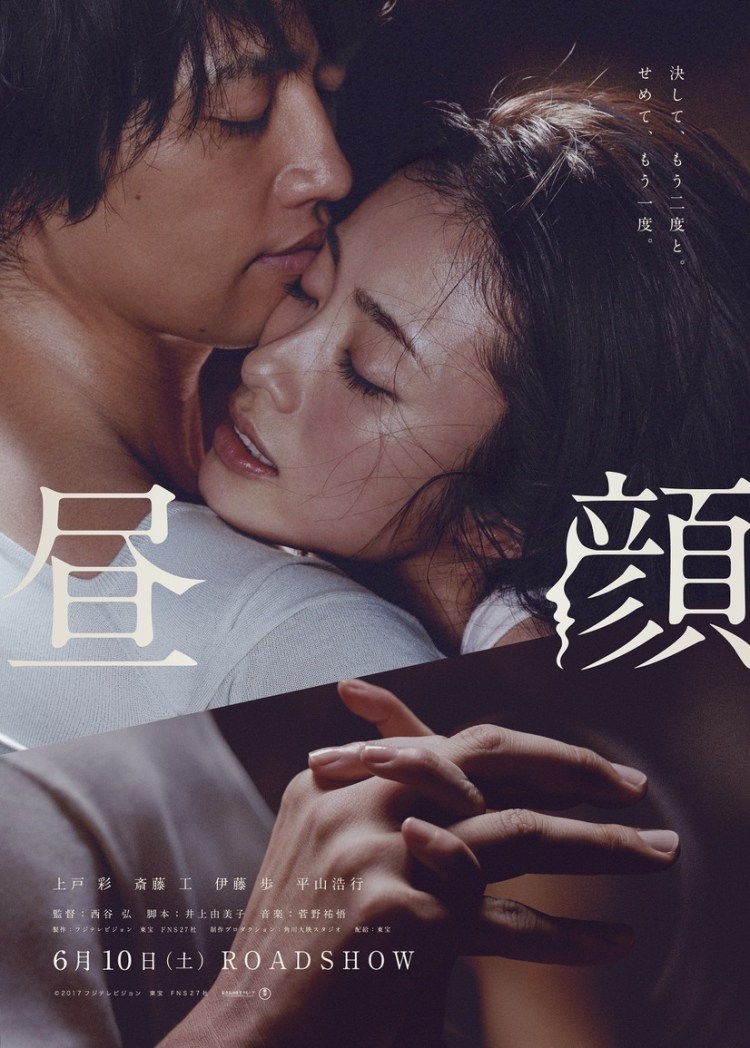 Hiroshi Nishitani has spent the bulk of his career working in television. Best known for the phenomenally popular Galileo starring Masaharu Fukuyama which spawned a number of big screen spin-offs including an adaptation of the series’ inspiration The Devotion of Suspect X and
  Windows on Worlds