Goro (Tetsuya Watari) just can’t catch a break. He sends his one true love off on a train to safety only to see her dramatically return because she can’t bear to leave his side. Her devotion costs her her life as she places herself between Goro’s manly chest and an assassin’s knife. Heartbroken, Goro gets out of town only to run into another old flame who is now a mama-san and has apparently married another yakuza (despite the fact that Goro parted with her because of his chaotic yakuza lifestyle). As usual, the past won’t let him go – this time in a more literal sense as Goro encounters another woman who looks exactly like the girlfriend who died in his arms….
This time for the fifth instalment in the Outlaw series, Black Dagger (無頼 黒ヒ首, Burai Kurodosu), it’s not so much family as romance which takes centre stage as we witness just how dangerous it can be to fall in love with a yakuza. Yuri (Chieko Matsubara), the girlfriend Goro couldn’t save, died because she loved him too much. Saeko loved him too – he succeeded in getting rid of her but she ended up rebound married to another guy who kind of looks like him but isn’t as good, and now there’s Shizuko (Chieko Matsubara again) – a warmhearted nurse who’s once again fallen for Goro’s noble tough guy act. Goro knows the price of love and he thinks he’s no good so he tries to avoid letting himself fall, both for his own safety and for his prospective love, but in the end the one fight he can never win is the one against his own heart.
Oddly Goro gets on quite well with Saeko’s husband, though he’s not keen to get involved with his troubles. He warns him that it might be better to let Saeko go as in the end yakuza only cause suffering for their women and soon enough Goro is proved right when the local gang become intent on pimping Saeko out leaving her husband pretty much powerless to resist.
Apparently this cuts both ways as a sad song from a band of street musicians recounts that a good wife can be a man’s weakness. Again it isn’t really clear how this instalment fits with the others but Yuri’s story is certainly very similar to Yukiko’s as seen in the first two movies and Goro’s guilt over not being able to protect her comes to colour the rest of his life. Once again Goro tries to say goodbye to love, advising Shizuko of the folly of falling for a man like him – she should just find someone nice and be happy. Full of nobleness and conviction, Goro strides out to clean up the town for good, knowing he may not return to see the fruits of his labours.
Black Dagger is once again directed by Keiichi Ozawa and is more or less in keeping with his other efforts in the series, mixing studio bound action with occasional forays into wider outdoor expanses. The film opens with an impressive montage title sequence and fight scene, but other than that the only set piece we get is the street singer sequence towards the end though the final fight is once again action packed and impressively filmed. Black Dagger perhaps doesn’t bring anything too new to the franchise, but it does improve on its already familiar narrative with another doomed love story and a series of shattered dreams for poor old Goro. Unlike the more hopeful ending of the last film, Black Dagger ends on exactly the same note as the other Outlaw movies as Goro staggers away from the crime scene, knife in hand and ready for the next crisis to come his way.
Outlaw: Black Dagger is the fifth of six films included in Arrow films’ Outlaw: Gangster VIP The Complete Collection box set (which is region free on DVD and blu-ray and available from both US and UK).
By 1968 the fate of the gangster movie was somewhat in flux as the old ninkyo style was on its way out yet the jitsuroku approach, later to find its zenith in the Battles Without Honour and Humanity series, hadn’t quite taken hold. Outlaw: Gangster VIP provides an essential bridge as it takes its inspiration from the writings of one time yakuza Goro Fujita but at the same time brings together many of the themes that were dominating Nikkatsu’s output at the time from their star led, youth appeal billboard cool to their noir inflicted, nihilistic crime thrillers as a kind of culmination of everything they had been producing up to that point.
The first film in the series, Outlaw: Gangster VIP (無頼」より大幹部, Burai yori Daikanbu) begins with a black and white prologue seemingly set around the end of the war in which a young boy endures firstly the death of his mother and then the younger sister who has been left in his care – presumably through hunger or at least ill heath exacerbated by malnutrition. Eventually he himself is arrested after being caught trying to steal food and is sent to a reform school from which he escapes alongside another boy, Sugiyama.
Flash forward to a grown up version of Goro (Tetsuya Watari) lounging around in a dingy apartment and the film expands into glorious, if garish color. Goro is summoned to a local drinking establishment where his yakuza boss is under attack. On getting to the bar and coming to his boss’ defence he finds that the aggressor is none other than Sugiyama. Saving his boss by stabbing his friend he nevertheless ensures Sugiyama’s survival with a carefully placed blow though both are sent back to prison. Goro gets out three years later to discover his girlfriend has married someone else and the yakuza world is just as dog eat dog as it was when he left it.
As in many other films of this burgeoning genre, the yakuza is more or less a surrogate family of grown up orphaned street kids who’ve bound together for increased odds of survival. There maybe strong bonds between brothers, but the old ways of samurai style honourable conduct are long gone (if they ever really existed at all). Suigyama’s gang have failed to protect his girlfriend who has been reduced to prostitution despite his sacrifices for them – an unthinkable act in traditional terms, but Sugiyama’s boss is the new kind of uncaring, ambitious yakuza who cares nothing for traditional ethics.
The yakuza as a home for waifs and strays is a theme which continues throughout the series with the constant references to “hometowns” and a desire to get out of the city for a simpler, more honest life. People keep telling Goro that he’s not a real yakuza, that deep down he doesn’t have a gangster’s heart. This is true, to an extent, as Goro is the kind of noble criminal seen in the ninkyo genre who clings fast to the old ways – loyal to his friends and his clan, seeking to protect those who need it over choosing to further exploit the already vulnerable. He’s a gangster because life left him with no other options. For a street kid and reform school escapee, what possible other place could there be for him to survive than in the arms of his yakuza brothers?
An exile from the world of conventional society, Goro cuts a lonely path which ties into the nihilistic noir themes of the genre as he wanders around in very cool looking leather jacket. Mostly still studio bound, Masuda opts for a fairly straightforward approach yet with some noir-esque canted angles and a few interesting set pieces. The unusual finale in which Goro faces the treacherous yakuza kingpins against the background of a cabaret act serves as impressive highlight of the film, perfectly contrasting its garish technicolor world with the darkness underneath as Goro staggers off along a street dark with something more night and towards an eventual salvation of one kind or another.
Outlaw: Gangster VIP is the first of six films available as part of Arrow’s amazing new blu-ray and DVD box set which is released in UK and USA and is completely region free (hurrah!).
I’ve also written a full writeup of the box set as a whole over at UK Anime Network which you can read right now if you’re the sort of person who likes to skip to the end. Otherwise, get ready for five more tales of broken hearted tough guys….
English subbed version of the original theatrical trailer:
Original quad poster from UK theatrical release (some of these cinemas no longer exist. Also, sponsored by Yo! Sushi.)
Review of Takeshi Kitano’s Hana-bi (はなび) first published by UK Anime Network.
Takeshi Kitano might still be best known for his ultra violent gangster pics, but after making it into the international arthouse repertoire with Sonatine back in the early ‘90s it was Hana-bi which put him on the map as one of Japan’s most prominent exports. Kitano plays the lead in the film once more adopting his cooler than cool persona with occasional flashes of violence only this time on the side of the law (to begin with, anyway).
Told in an initially confusing, flashback structure, Hana-bi follows middle aged policeman Nishi who experiences several life changing events in a short space of time. At the beginning of the film he’s let off a stakeout and told to go visit his wife who’s ill in hospital. Unfortunately, as we later find out, this will prove to be a poor decision as pretty much everything goes wrong – Nishi’s partner, Horibe, is shot and ends up paralysed, one of his other men is wounded and tragically another killed right in front of Nishi’s eyes. After being told that nothing more can be done for his wife and it’s better that she just come home from the hospital, Nishi quits the police force, gets involved with the yakuza and robs a bank before taking off with his wife for one last holiday.
Actually, the film skips over its climactic event until quite a way into its running time. Kitano unsettles us right away by giving us very little explanation for what we’re seeing. He shows us Nishi meeting with the widow of a man we didn’t even know was dead yet (not that he really told us who she was anyway). We’re left to piece events together like a detective listening to a confused witness testimony only our information is primarily visual – there isn’t even a lot of dialogue to guide us on our way. This refreshing technique is one the generally laconic Kitano seems to favour and greatly adds to Hana-bi’s low-key style.
Kitano never says too much in his movies anyway, but this time his is wife also near silent uttering the grand total of two words in the entire film and both of those come in the final scene. We know that she has a terminal illness (though it isn’t clear that she knows this, or how much she understands). Nishi and his wife also apparently lost their young daughter not long ago and it’s implied that perhaps she just hasn’t been fully present ever since. Her lack of speech, shyness and constant game playing coupled with her outwardly cheerful (if sometimes vacant) demeanour give her a childlike quality but the two words she does offer at the film’s conclusion imply (at least in that moment) that she knows what’s going on and understands what is about to happen.
Nishi and his wife have an extremely close relationship, they rarely need to speak to each other. However, Nishi’s partner, Horibe, discovers that his marriage was not as secure as he assumed as his wife and daughter walk out on him after his accident. In an effort to give him something to strive for, Nishi sends him some painting supplies and henceforth Horibe’s artwork (actually designed by Kitano himself) becomes a prominent motif in the film. The first series takes animals and then people and paints them with the heads of flowers but this then gives way to more complicated pointillist scenes. Many of Horibe’s works feature a repeated motif of a man, woman and child (neatly echoed in the films closing scenes) seemingly enjoying a happy family occasion. Perhaps this is an odd sort of masochism on Horibe’s part, lamenting everything he’s lost since his accident but the two figures could also represent the Nishis reunited with their lost daughter.
Shot in Kitano’s trademark blues, Hana-bi is a melancholy tale. Flowers and fire, Kitano shows us both extreme tenderness and fits of violence as he’s both the loving husband, grieving father, nurturing best friend and hardline cop who bears personal responsibility for the loss of his own. This path only leads in one direction and we’ve figured out where we’re headed long before nearing the end of our journey. Nevertheless, Hana-bi is a rich, poetic experience which continues to prove deeply moving and endlessly fascinating.
Hana-bi is re-released in the UK today on blu-ray courtesy of Third Window Films who will also be releasing Dolls and Kikujiro in the near future.
Belated review from the 2015 London Film Festival – Yakuza Apocalypse is released in UK cinemas for one day only on 6th January 2016 courtesy of Manga who will also be releasing on home video at a later date.
Takashi Miike shuffles back towards the yakuza plains in the western inspired horror comedy Yakuza Apocalypse (極道大戦争, Gokudo Daisenso) trailing ever more zany humour behind him. Yakuza gungslingers, bloodsucking, high school girls running away from things and, finally, a guy with a magic belly button wearing a frog suit who just happens to be “The World’s Toughest Terrorist”.
We open in media res as vampire yakuza boss Kamiura (Lily Franky) cuts up a storm in settling some local disputes. There’s a handy voice over from our soon to be protagonist, Kageyama (Hayato Ichihara), lamenting the old yakuza world of tough guys and honour codes but things don’t really take off until a very geeky looking guy and a Van Helsing type in 17th century attire suddenly turn up hoping to re-recruit the boss to “The Syndicate”. When he refuses, they fight and the geek twists Kamiura’s head right off. Using his last ounce of strength and in a touch right out of Hausu, Kamiura clamps onto Kageyama’s neck turning him into a vampire. However, in his just turned state, the honourable Kageyama turns a few more vampires of his own – and not only vampires, the bite also transmits yakuzaism too. This increase in bloodsucking gangsters is a bit of a problem for the regular guys as it does mean their pool of victims is being steadily depleted…
Not making much sense is not generally much of a problem in a Miike film. In fact, it’s a pretty much a given at this stage of the prolific director’s career. However, in the case of Yakuza Apocalypse it’s even more pointless than usual to pay any attention at all to any kind of narrative. Looking over Kageyama’s shoulder, we move from set to piece to set piece as, first of all, the non-vampire yakuza guys struggle for power between themselves and then with the vampire variety before the giant frog turns up to ruin everything.
There are some rules, Miike takes a while explaining to us how this yakuza business works with Kamiura as the “good” kind of yakuza committed to protecting his townspeople above all else – essentially, he’s the sherriff around these parts. He’s a vampire, yes, but he only feeds on yakuza who he’s “reforming” by means of an underground knitting circle held prisoner in his basement. Apparently yakuza blood tastes bad and isn’t very good for you but eating civilians is dishonourable and anyway, limited in supply, because when you turn someone they also become a foul mouthed yakuza fighting machine.
The world building is shaky at best, none of this really hangs together making for a fairly disappointing series of one note jokes. There is an attempt at a bit of more sophisticated satire with the regular gangsters suddenly lamenting that there will be no one left for them to prey on if everyone turns yakuza vampire but otherwise it’s crazy piled on crazy. Not a bad thing in itself but somewhat lacking in substance.
Despite that, the film offers some quality performances notably from its lead, Kageyama, played by Hayato Ichihara, as the yakuza who’s so sensitive his delicate skin won’t allow him to get a proper yakuza tattoo. That is, until he becomes a brooding, conflicted vampire mourning the loss of his boss and of those long held tough guy ideals. Lily Franky also offers a high impact though short lived appearance as the honourable vampire boss with a hinted at backstory, though the much publicised cameo of The Raid’s Yayan Ruhian feels a little wasted as he’s just generally hanging around for a handful of fight scenes. That said, the action scenes themselves are extremely impressive, both exciting and often funny too.
Yakuza Apocalypse is not one of Miike’s most well thought out efforts. Its collection of crazy ideas feels thrown together and there’s disappointingly little depth to its world building. Even its media res conclusion looks more like running out of ideas than a deliberate decision. However, that’s not to say it isn’t heaps of fun, which it often is. A crazy frog riding a bicycle who somehow wakes up the giant king of the crazy frog people after some kind of emergency plaster is ripped off his belly button – really, what could be more fun than that? That really is all there is though and those who prefer their absurdist action thrills with a little more substance had best look elsewhere.
Yakuza Apocalypse is in released in UK cinemas for one night only on 6th January 2016. Luckily the film is playing across the UK even if it’s only the one night and you can see if it’s on anywhere near you by checking out this handy link! If it’s not, don’t despair! It’ll also be available in all the normal ways from Manga later in the year.
Kabukicho Love Hotel (さよなら歌舞伎町, Sayonara Kabukicho), to go by its more prosaic English title, is a Runyonesque portrait of Tokyo’s red light district centered around the comings and goings of the Hotel Atlas – an establishment which rents by the hour and takes care not to ask too many questions of its clientele. The real aim of the collection of intersecting stories is more easily seen in the original Japanese title, Sayonara Kabukicho, as the vast majority of our protagonists decide to use today’s chaotic events to finally get out of this dead end town once and for all.
The first couple we meet, Toru and Saya are young and apparently in love though the relationship may have all but run its course. She’s a singer-songwriter chasing her artistic dreams while he longs for a successful career in the hotel industry. He hasn’t told her that far from working at a top hotel in the city, he’s currently slumming it at the Atlas. Our next two hopefuls are a couple of (illegal) Korean migrants – she wants to open a boutique, he a restaurant. She told him she works as a hostess (which he’s not so keen on but it pays well), but she’s a high class call girl well known to the staff at the Atlas. Our third couple are a little older – Satomi works at the Atlas as a cleaner but she has a secret at home in the form of her man, Yasuo, who can’t go outside because the couple is wanted for a violent crime nearly 15 years previously. In fact, in 48hrs the statute of limitations will pass and they can finally get on with their lives but until then Satomi will continue to check the wanted posters on the way to work. That’s not to mention the tale of the teenage runaway and the hard nosed yakuza who wanted to recruit her as a call girl but had a change of heart or the porn shoot on the second floor which stars a lady with an unexpected relationship to one of the hotel’s employees…
It’s all go in Kabukicho. The punters come (ahem), go and leave barely a mark save for the odd tragedy to remind you that this is the place nobody wanted to end up. In fact, the picture Hiroki paints of Kabukicho is the oddly realistic one of someone hovering on its fringes, acknowledging the darkness of the place but refusing to meet its eyes. Everybody is, or was, dreaming of something better – Toru with his job at a five star hotel and a sparkling career in hospitality, Satomi and her romance or the Korean couple who want to make enough money to go home and start again. In short, this isn’t the place you make your life – it’s the one you fall into after you’ve hit rock bottom and promptly want to forget all about after you’ve clawed your way out.
However, while you’re there, you’re invested in the idea of it not being all that bad, really. There’s warmth and humour among the staff at the hotel who treat this pretty much the same as any other job despite its occasional messiness. In fact, the agency for the which the Korean hopeful works is run by an oddly paternalistic “pimp” (this seems far to strong a word somehow) who sits around in an apron and chats, offering comfort and fatherly advice in between dispatching various pretty young girls off to any skeevy guy who wants to rent them for an hour or two.
That’s not to say anyone is happy here though, all anyone’s focussed on is getting out and by the end the majority of them decide it’s just not worth it and the time to leave is now. Kabukicho Love Hotel may be one of Hiroki’s most mainstream efforts (despite its far less frequent than you might expect though frank sexual content) but its overlong running time and its failure to fully unify its disperate ensemble stories make it a slightly flawed one. An interestingly whimsical black comedy that takes a humorous view of Kabukicho’s darkside, Kabukicho Love Hotel is perhaps one it’s fairly easy to check out of well before the end of your stay but does offer a few of its own particular charms over the duration of your visit.
Or perhaps, you can check out any time you like, but you can never leave? We are all just prisoners here, of our own device….
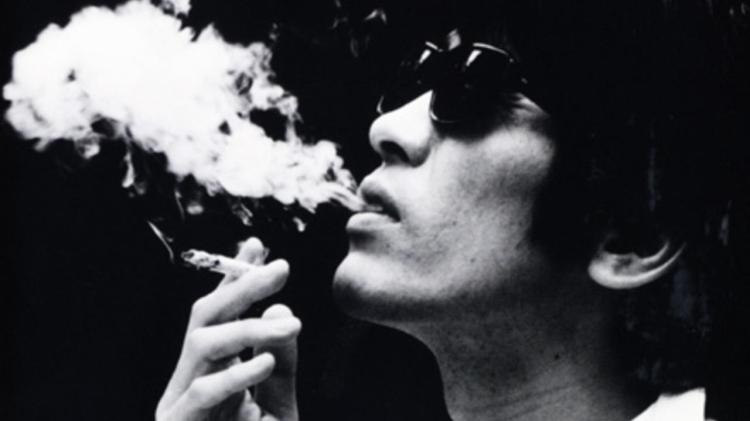
When you learn someone has died, suddenly everything they have ever done becomes tragic. No matter how old they were, this fact remains. Ryuji is a film which is always going to be overshadowed by the fact that its leading actor and screenwriter sadly passed away at the extremely young age of 33 from a terminal illness only days after the film’s release. Well, in actuality, the film was only “released” in a very limited sense, perhaps no one really had the heart to go on with it. However, it left its mark on all who saw it and eventually became a cult hit and influential classic on VHS. On paper, its tale is conventional – an existential yakuza drama about a man torn between conflicting desires and his own nature but on film, it’s something else.
In fact, the film takes its time about setting its scene as Ryuji goes about his regular yakuza business of beatings and whoring but eventually things come to a crisis as he becomes a father and winds up in prison. His dutiful wife pulls some strings to get him out. However, when released, she explains that she only got the money from her father for a divorce as he wasn’t going to bail out a yakuza. After kicking up a fuss (literally) Ryuji realises his wife is just too good for a yakuza’s moll, so he sends her and their daughter back to his father-in-law. The fact is, Ryuji misses them. He’s tired. Of the life, of the violence, of the threat. He’s ready to try something more ordinary if it means he can go back to his wife and his child. Living honestly is hard too, though. Physically exhausting, and much less financially comfortable. Things are going well, for a time, before a familiar face from the past appears and the ghost of the old Ryuji begins to rise up again.
In many ways, Ryuji is caught in a confused cycle of frustration. He’s a violent man, a yakuza, but one who’s becoming bored with the constant threat and violence inherent in his world. He misses his wife and daughter but he doesn’t know of a path that leads back to them. Eventually he starts walking, unsure of where he’s headed and once he’s home he feels at peace, at last. However, such peace is not meant to last, the past will not let you rest. Old friends turn up one after the other, your decision to help them or not will carry more weight than you first realise. After these cracks appear, the old Ryuji, filled with rage and violence, bubbles to the surface. In the end, you can’t evade your nature, you’re either one thing or something else and however much you long to be the other thing, it can’t be done.
Shoji Kaneko was a talented stage actor who was looking for a cinematic epitaph. He wrote the script, played the leading role and brought the production together. He temporarily joined a real gang to learn just what it’s like to be a yakuza and brought some of his existential despair to his on screen persona. Ryuji is a hard man and a bruiser yet often tender with his wife and cute little girl (played by Kaneko’s real life daughter in another moment of filmic symmetry). He has to decide which side of himself is the one he values most and the film’s final scene is one of the most heartbreakingly moving in all of cinema. The sound disappears entirely, sentiment is conveyed by look alone and a man makes an irrevocable decision that is instantly understood even the absence of words.
If it be not now, yet it will come – the readiness is all. There is actually very little death in Ryuji considering it’s a yakuza picture (if an unconventional one) but the spectre of endings is hovering all around. Knowing what it’s impossible not to know, it’s hard not to read that ever present threat of eclipse into every scene. Ryuji’s decision is a permanent one, taken once it defines everything. Kaneko was also a father with a young daughter facing the end of his life, also weak but tender. Graceful yet robust, Ryuji’s story is one of a man who couldn’t reconcile the two sides of himself into something whole and so sacrificed the things he wanted most. Beautifully made and perfectly realised, Ryuji is a film that should have been more widely appreciated and now, perhaps, will finally be accorded the respect it deserves.
General run down of Arrow’s Battles Without Honour and Humanity box set first published by UK Anime Network.
When you’re thinking about the modern gangster action movie, you’d be hard pressed to come up with a more influential name than Kinji Fukasaku. Though perhaps best remembered for his extremely controversial adaptation of Koushun Takami’s Battle Royale, he first began to make a name for himself with a series of revolutionary yakuza movies released over a short period of time in the mid ‘70s. Up until this time there had been a popular strand of “ninkyo eiga” gangster pictures which took their queue from the now less well regarded samurai movies applying the classic chivalry tropes to the criminal underworld. However, the ninkyo eiga was also becoming stale and it was time for something new. Perhaps the world was ready a depiction of the yakuza life which was a little more honest.
Teaming up with screenwriter Kazuo Kasuhara, Fukasaku’s aim was to tell the story of post-war Japan from the viewpoint of youth. Based on the real life memoirs of a famous yakuza, Battles Without Honour and Humanity is a prime example of the “jitsuroku” approach and didn’t make any attempt to hide the ugly side of the underworld.
The first film in the series introduces us to Shozo Hirono just back from the war (in fact still in his army uniform) when he witnesses a group of American soldiers attempting to rape a woman in a crowded market area. Hirono comes to the woman’s rescue only to be pulled back by the police who tell him not to mess with the GIs. Later, one of his friends is assaulted by a yakuza and teaming up with a rival gang Hirono gets his revenge but also ends up being sent to prison for twelve years. Inside, he meets another mobster who tells him you can get out on bail for a price because the prisons are so over crowded. If he helps in his escape attempt, he’ll get his yakuza buddies to bail Hirono out. Hirono quickly finds himself embroiled in the yakuza underworld.
Though nominally the protagonist of the entire series, Hirono is pushed to the sidelines for the second installment, Hiroshima Death Match. This time the protagonist, Yamanaka, is a little younger – too young to have actually fought in the war he nevertheless had kamikaze dreams that the war’s end denied him fulfilling. It’s now 1950, and young guys like Yamanaka have come of age in the difficult post-war world. With no opportunities and a fuelled by a young man’s fury it’s no mystery that he ends up in a gang. Things would probably have been OK for him but he made the mistake of falling in love with the boss’ niece with tragic consequences.
Moving back into the centre again for part three, Proxy War, Hirono has formed his own gang in the nearby town of Kure. It’s 1960 and the cold war is mounting the world over. The yakuza it seems are not immune to the internecine power struggles themselves and embark on a series of complicated alliances, double crossings and betrayals. The action may have calmed down a little here but the intricate plot elements make it one of the most impressive entries in the series.
By the time we reach Police Tactics, times have moved on. With prosperity on the up and the 1964 Tokyo Olympic Games on the horizon the public have grown tired of yakuza antics and fearing for their international reputation, it’s finally decided that the police should go hard on organised crime. With the “cold war” environment of the last film still in the background, it’s a tough time to be a yakuza.
The Final Episode is something of a bonus epilogue, written by a different screenwriter (Koji Takeda who’d previously worked on ninkyo eiga) the film picks up with the yakuza as a political corporation, morphing into violent corporate entities rather than petty thugs. The original crew are the old guys now and some of them don’t want to change. The young guy, Matsumura, seems to have his head screwed on when it comes to initiating the new brand of gangster but he still has to contend with all the complicated infighting from each of the other instalments. Hirono is in prison for much of the film writing his memoirs and seems set to retire on release. However, it’s not long before he’s dragged back into the world of yakuza crime.
Fukasaku makes his yakuza look cool, yes, but he never ignores the destructive nature of their existence. Having returned from the war defeated, these men were angry, traumatised and left with few options. They turned to crime and to violence because that was all that was left to them. Many of the films end with funerals and countless young men are cut down in their prime but in the end it all counts for nothing. Nothing gets created out of this mess except widows and orphans. The constant shots of the ruined dome (now the Hiroshima Peace Memorial) constantly remind us that this is just one example of young lives sacrificed for old men’s vanity. If “jingi”, the concept of honour and humanity often referred to in yakuza movies, ever existed at all then it’s another casualty of war because there’s nothing of that moral universe left remaining in this cruel and empty world.
All of the films follow a documentary style approach with a voice over explaining the context and frequent on screen captions giving the characters’ names and affiliations (and at the appropriate moments their time of death). The action is fast, furious and messy with lurid paint-like red blood decorating the screen. Largely captured with handheld camera and unusually dynamic movement, the series’ key signature is realism.
This new box set from Arrow presents each of the films in a top notch HD transfer which is a vast improvement on the previously available versions. Notably, the set also includes the rarer “complete saga” edit of the film which presents the first four movies cut together with a short intermission in the middle. This is as well done as could be yet suffers a little because of the floating nature of Hirono’s involvement – i.e, the second film where he’s barely present feels a little out of place in the midst of the other three where he’s more of an active player. The plots are undoubtedly complicated but the set does also include a hardback book filled with illuminative essays and also a series of “family tree” style diagrams outlining the various gangs and their makeups.
A seminal entry in the world of Japanese gangster pics, the Battles Without Honour and Humanity (also known as the Yakuza Papers) series is an essential watch for any yakuza movie enthusiast. Without Fukasaku’s input there’d be no Takashi Miike, or Kitano gangster movies – simply put he changed the course of Japanese action films. Finally available in HD with English subtitles, this comprehensive set from Arrow is the perfect way to revisit each of these hugely influential movies.
The Kinji Fukasaku’s Battles Without Honour and Humanity: The Complete Collection blu-ray & DVD box set is out now from Arrow Video in the UK and USA. The set also comes with an impressive array of bonus features including an exclusive hardback book filled with essays by some of the top scholars of today! Full list of contents from Arrow’s Store
This obviously a very compressed run down so here are some links to more in depth reviews of each of the films:
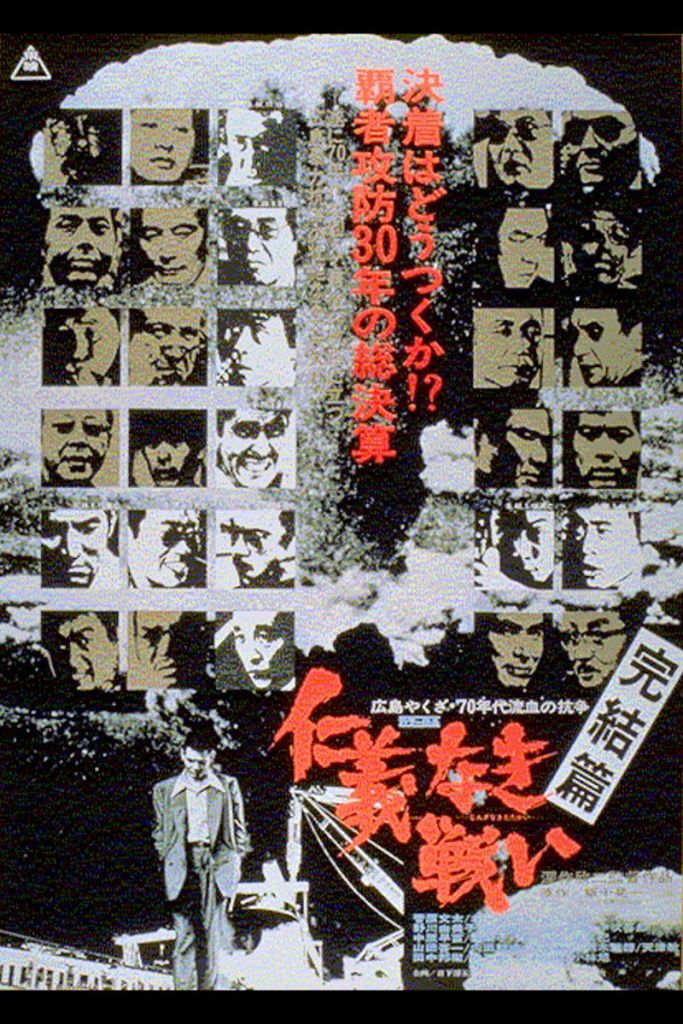
And so, the saga finally reaches its conclusion. Final Episode (仁義なき戦い: 完結篇, Jingi Naki Tatakai: Kanketsu-hen) brings us ever closer to the contemporary era and picks up in the mid ‘60s where Hirono is still in prison and Takeda, released on a technicality, has decided to move the yakuza into the legit arena. The surviving gangs have united and rebranded themselves as a political group known as the Tensei Coalition. However, not everyone has joined the new gangsters’ union and the enterprise is fragile at best.
Hirono’s sworn brother, Ichioka, is one such antagonist and after the Coalition’s accountant is clumsily gunned down in the street, tempers start to flair. Though the Coalition is nominally headed by Takeda, an up and coming youngster, Matsumura, is winning a lot of respect for his level headed judgement and ability to form long term plans. He wants to move away from the image of the traditional yakuza with their missing fingers and bad attitudes to something a little more media friendly. However, the old guard including the veteran, Otomo (now played by Jo Shishido), aren’t willing to see the bigger picture and continue to behave in the old ways requiring swift and bloody justice for their fallen comrade. The older generation maybe on their way out, but that doesn’t mean they can’t cause a little trouble on their way. Despite the best efforts of the younger guys the cycle of violence seems set to continue, will anything ever change at all?
According to Fukasaku, almost certainly not. Though Matsumura is accounted to be a good guy by both of our “heroes” Hirono and Takeda, his yakuza revolution seems doomed to fail. This kind of coalition is completely pointless if not everybody joins and obviously not everybody is going to. Following the public outcry and subsequent police crackdown in the previous film, the yakuza feel the need to reform their image, keep the violence off the streets and appear generally less scary than the image they’ve hitherto cultivated. Now it suits them to conduct themselves in a more dignified manner, more like regular businessmen than thugs in flashy suits.
Meeting at the prison in the end of Police Tactics, Hirono and Takeda both agree that their era has passed. They still aren’t quite old men, but they aren’t young and this violent world isn’t for them anymore. Their resolutions are both that the general environment has changed making the way they’ve lived so far untenable, but also that if they attempted to live that way again they simply wouldn’t survive any longer (perhaps they are “better off” in jail). Hirono spends most of the movie off screen again, in prison, writing his memoirs. Before coming out he seems set on “retirement” but once released he decides to return to the yakuza world. It’s not until the end of the film when once again confronted by the senseless violence of gang warfare that he finally decides to retire. Matsumura may have been trying to change things, but more young guys are dying so fast there’s barely any point learning their names and what really does it get you in the end? Can you live freely, has the world really changed at all? From Hirono’s late middle age viewpoint, the answer is no.
Final Episode follows the same basic formula as the other films in the series with the narrative voice over, frenetic handheld camera work, captions and freeze frames. The violence may be a little less frequent but appears bolder in its execution. These youngsters are messier than their forebears – the gunning down of the Tensei accountant is a clumsy affair carried out by two amateurs in the middle of a crowded street. Random weapons are constructed with pretty much anything that’s lying around during a street fight. These young guys are a different kind of desperate and have no idea how to conduct themselves in a subdued way.
We’re almost up to the the contemporary era of the film. It’s getting on for 25 years since Hirono came home from the war and joined a different kind of battlefront. Japan’s development has been startlingly rapid – from post-war rubble to hosting the olympic games and a newly burgeoning prosperity. Hirono and those like him have found themselves riding the wrong wave as their fortunes continue to dwindle just as the legitimate world is coming into its own. When Hirono and Takeda were talking at the prison at the end of part four they knew something had come to an end. They had no place in this world anymore – unless you become a ruthless boss like the hated Yamamori (still harbouring dreams of domination well into his dotage), the yakuza life is a young man’s game. Once again we finish on a shot of the ruined dome and a reminder that the strong will always prey on the weak. Fukasaku’s prognosis for the future is grim but, it has to be said, accurate.
Final Episode is available on blu-ray in the UK as part of Arrow Video’s Battles Without Honour and Humanity: The Complete Collection box set.
It’s 1963 now and the chaos in the yakuza world is only increasing. However, with the Tokyo olympics only a year away and the economic conditions considerably improved the outlaw life is much less justifiable. The public are becoming increasingly intolerant of yakuza violence and the government is keen to clean up their image before the tourists arrive and so the police finally decide to do something about the organised crime problem. This is bad news for Hirono and his guys who are already still in the middle of their own yakuza style cold war.
Police Tactics (仁義なき戦い: 頂上作戦, Jingi Naki Tatakai: Chojo Sakusen), the fourth in the Yakuza Papers (or Battles Without Honour and Humanity) series, once again places Hirono at the centre of events for much of the film. The cold war from the end of the last film, Proxy War, is still going on with ambitious boss Takeda hosting additional foot soldiers from other areas of the country. However, all these extra guys are quite a drain on his resources and, simply put, it’s going to ruin him if this situation goes on much longer. Yamamori is currently holed up in a safe place and only steps outside to go to the bath house when he’s surrounded by a huge entourage of bodyguards. Added to the gang rivalry which is only growing now as factions split and new families are formed, not to mention all the guys from outside, is the now constant police pressure. Up to now, the police have been either a minor irritation or a soft ally but this time the guys might have finally met their match.
It’s almost twenty years since Hirono settled into the yakuza life. He’s not an old man, but he’s not a young one either. You can no longer explain or excuse any of his actions with the fire of youth – he’s one of the veterans now. However, young men are always young men and even while the older guys try to scheme and come up with a plan the youngsters are all for action. Hirono has always been the one noble gangster. Committed to yakuza ideals, he’s loyal to his bosses and dedicated to taking care of his guys. Hence, there’s no way he’s going to let one of his men take out Yamamori – firstly, after nursing a grudge for 18 years he wants to handle it himself but even if he didn’t he still wouldn’t be able go after Yamamori in anything other than an honourable way. However, now even Hirono says at one point “I don’t give a fucking shit about honour anymore”. At this point you know it’s all over, the one loyal retainer has finally given up.
With the police pressure mounting, the violence on the streets intensifies with even more feats of desperate backstreets warfare. Hirono himself is absent for a lot of the film while he gets picked up by the police on a flimsy pretext. More gangs are introduced, more guys die before you even begin to remember their names. There’s death everywhere yet still more yakuza keep turning up, offering to die for their bosses who will sell them out without a second thought if it buys them ten seconds more in power. The younger generation may not have the trauma of the war to burn through, but they’ve grown up in this world of street gangs and constant violence so it stands to reason that they come to idolise the tough guys and think joining a gang is their one way ticket out of the slums. As they will discover, there is always a heavy price to be paid for ambition and naivety.
The shooting style is pretty much the same as the first few films in the series. Documentary style voice over, hand held camera and freeze frame death shots are the order of the day. Once again we begin and end with the ruined dome reminding us of the price of violence. Police Tactics could almost be the end of the cycle. With the police finally deciding to act, by the end of the film all of the major players are off the streets in one way or another. In the end, all that death and violence amounted to to nothing. As the film reminds us, public order may have been restored (temporarily) but the systems and conditions which lead to violence are still very much in place.
Police Tactics is available on blu-ray in the UK as part of Arrow Video’s Battles Without Honour and Humanity: The Complete Collection box set.
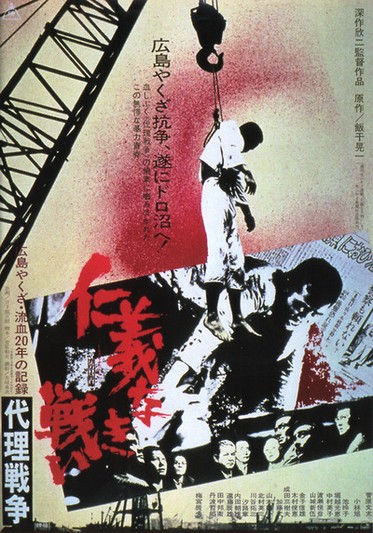
Three films into The Yakuza Papers or Battles Without Honour and Humanity series, Fukasaku slackens the place slightly and brings us a little more intrigue and behind the scenes machinations rather than the wholesale carnage of the first two films. In Proxy War we move on in terms of time period and region following Shozo Hirono into the ’60s where he’s still a petty yakuza, but his fortunes have improved slightly.
It’s now 1960 – almost 15 years since Hirono came home from the war. The young people who are just coming of age grew up in the turbulent post-war era but probably don’t remember much of the conflict itself. These days the problem is the ANPO treaty and the wider world’s pre-occupation with communism. Russia and America are engaged in various “proxy wars” across the world in what would come to be known as the cold war. This tactic of indirect warfare has also taken root in the yakuza world as gangs and gang members form covert alliances, hatch secret plots to take out rivals, or otherwise try to manipulate the situation to their advantage. When the head of the Muraoka crime syndicate is assassinated in broad daylight and his underling, Uchimoto, does nothing, it kickstarts a chain of petty vendettas as each of the ambitious crime bosses vie to fill the power vacuum with the snivelling Uchimoto not least among them.
Bunta Sugawara returns to centre stage again with Hirono at the forefront of the action. One of the few yakuza guys who’s pretty happy with his lot and not seeking a higher position he’s in the perfect spot to become a very important player when it comes to supporting other people’s bids for power. Having originally backed Uchimoto he’s at something of a disadvantage following Uchimoto’s cowardly flip-flopping. However, having found himself back under the aegis of former boss Yorimoto, it does afford Hirono the possibility of finally getting revenge against him. Gangs merge several times while fracturing on the inside as the lower bosses try to get their guys in line whlst picking sides as to whom they support in the leadership battles (some with more of an eye on their own futures) but this time the action is a little more cerebral than the audacious violence of the immediate post-war period.
Changing up his style slightly, Fukasaku keeps the overall documentary approach with the news reel voice over relating the salient political and historical details plus the initial captions explaining the names and allegiances of the major players but reduces the freeze frame death announcements. The action is still frenetic with ultra naturalistic handheld camera and occasional strange angles but this time he opts for a muted colour effect in the final shoot out which increases the shocking nature of the scene. Blow for blow there’s less overt violence here though there is a fairly graphic and unpleasant rape scene which feels a little out of place though it does add to Fukasaku’s argument about the nature of aggression.
Once again the ruined the dome looms large over everything, reminding us that this isn’t just a story of gang warfare but a critique of the senselessness of a violent life. As the film says, young men are the first to die when the battles begin but their deaths are never honoured. Like Hiroshima Death Match, Proxy War also leads to the death of a youngster in pointless gang violence – another young man who ended up in the criminal underworld through lack of other options. The futility of the cycle of violence is becoming wearing – as is perhaps the point. One gang boss falls, another rises – only the names have changed. There’s no rest for an honest yakuza like Hirono when the less scrupulous are willing switch allegiance without a second thought. The only victory is staying alive as long as you can.
Proxy War is available on blu-ray in the UK as part of Arrow Video’s Battles Without Honour and Humanity: The Complete Collection box set.
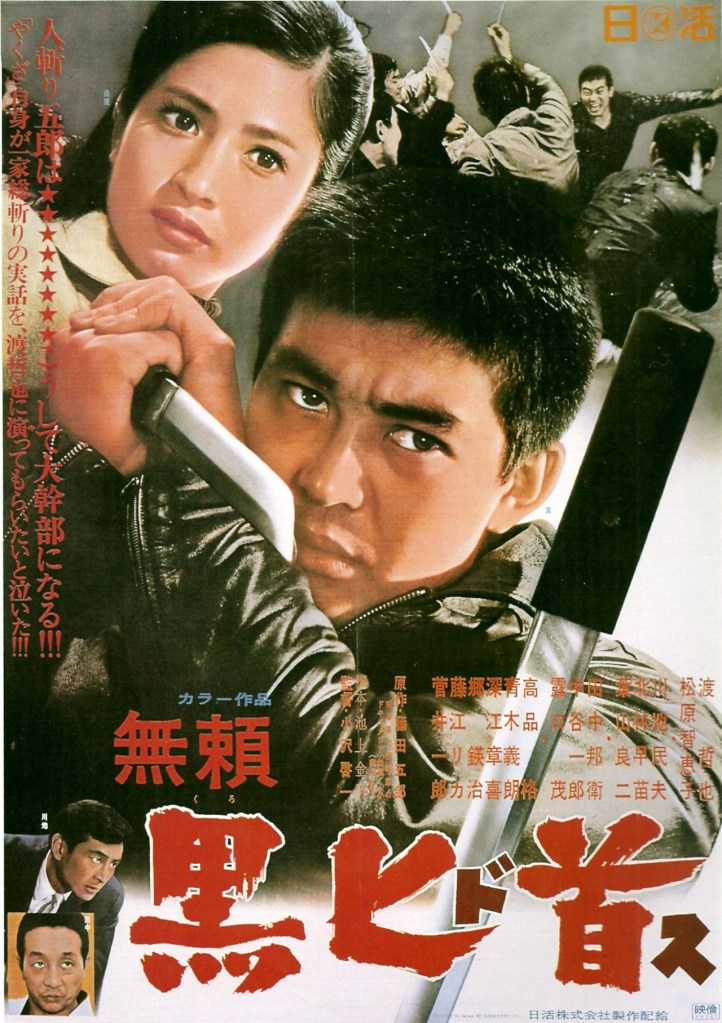 Goro (Tetsuya Watari) just can’t catch a break. He sends his one true love off on a train to safety only to see her dramatically return because she can’t bear to leave his side. Her devotion costs her her life as she places herself between Goro’s manly chest and an assassin’s knife. Heartbroken, Goro gets out of town only to run into another old flame who is now a mama-san and has apparently married another yakuza (despite the fact that Goro parted with her because of his chaotic yakuza lifestyle). As usual, the past won’t let him go – this time in a more literal sense as Goro encounters another woman who looks exactly like the girlfriend who died in his arms….
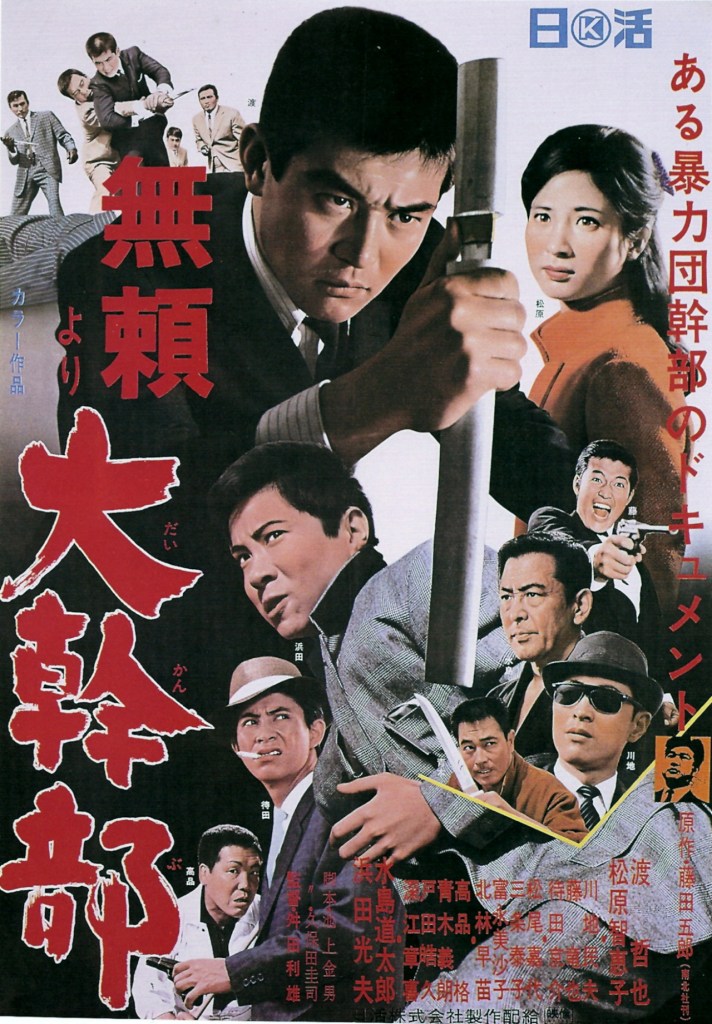 By 1968 the fate of the gangster movie was somewhat in flux as the old ninkyo style was on its way out yet the jitsuroku approach, later to find its zenith in the
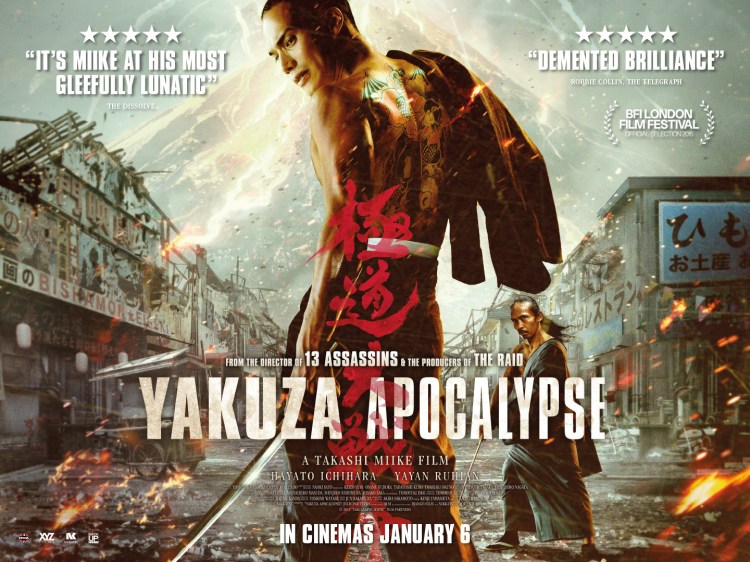 Belated review from the 2015 London Film Festival – Yakuza Apocalypse is released in UK cinemas for one day only on 6th January 2016 courtesy of Manga who will also be releasing on home video at a later date.
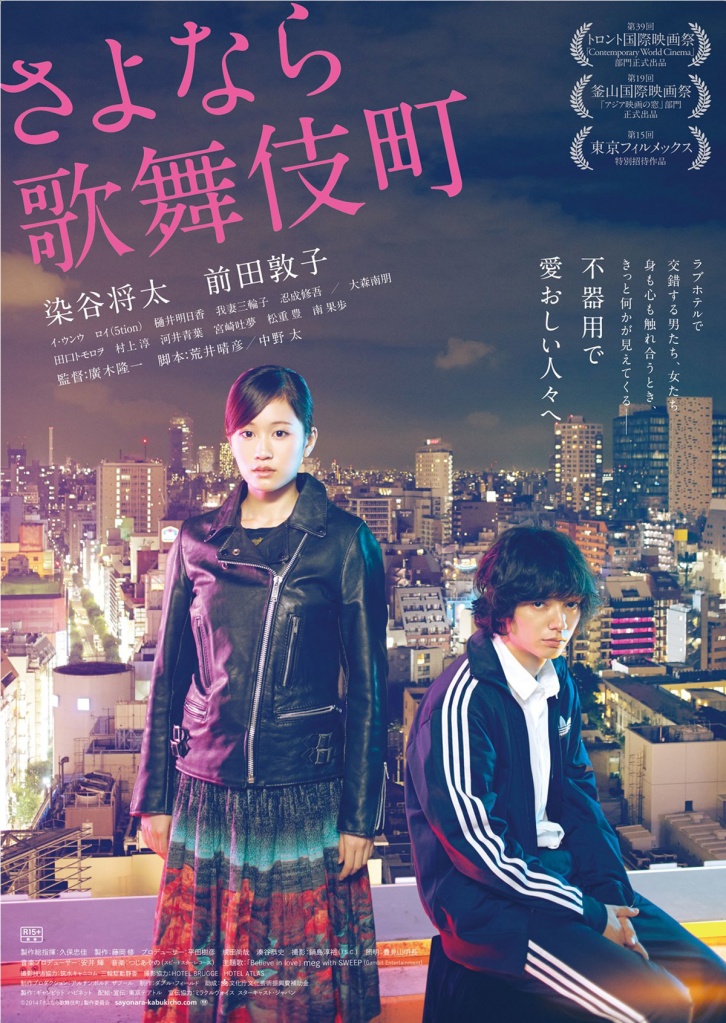 Kabukicho Love Hotel (さよなら歌舞伎町, Sayonara Kabukicho), to go by its more prosaic English title, is a Runyonesque portrait of Tokyo’s red light district centered around the comings and goings of the Hotel Atlas – an establishment which rents by the hour and takes care not to ask too many questions of its clientele. The real aim of the collection of intersecting stories is more easily seen in the original Japanese title, Sayonara Kabukicho, as the vast majority of our protagonists decide to use today’s chaotic events to finally get out of this dead end town once and for all.
 When you learn someone has died, suddenly everything they have ever done becomes tragic. No matter how old they were, this fact remains. Ryuji is a film which is always going to be overshadowed by the fact that its leading actor and screenwriter sadly passed away at the extremely young age of 33 from a terminal illness only days after the film’s release. Well, in actuality, the film was only “released” in a very limited sense, perhaps no one really had the heart to go on with it. However, it left its mark on all who saw it and eventually became a cult hit and influential classic on VHS. On paper, its tale is conventional – an existential yakuza drama about a man torn between conflicting desires and his own nature but on film, it’s something else.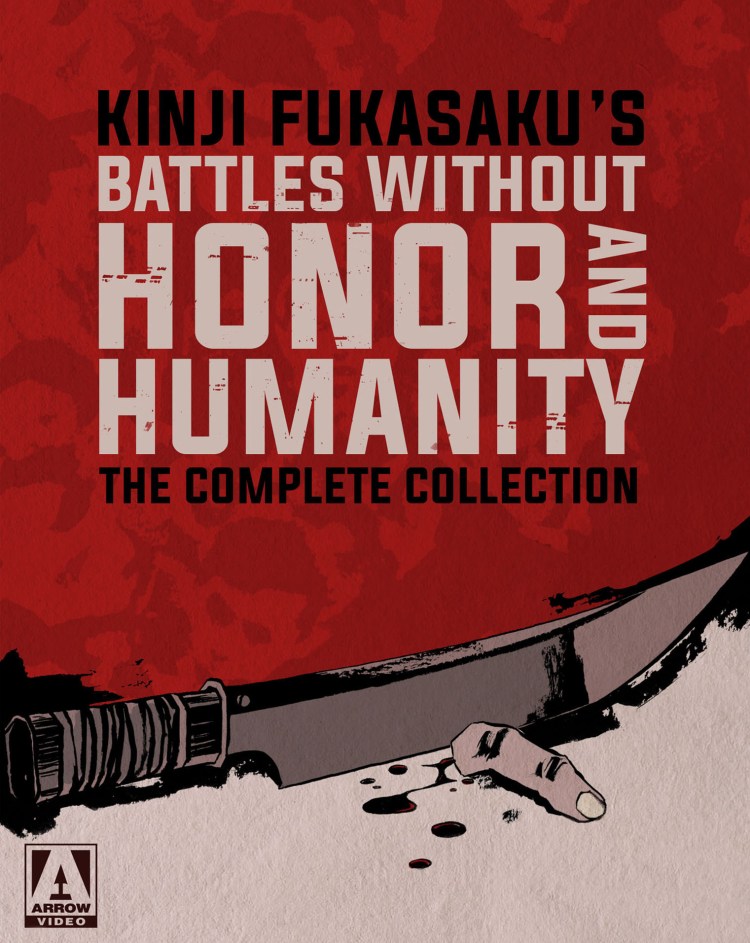
 And so, the saga finally reaches its conclusion. Final Episode (仁義なき戦い: 完結篇, Jingi Naki Tatakai: Kanketsu-hen) brings us ever closer to the contemporary era and picks up in the mid ‘60s where Hirono is still in prison and Takeda, released on a technicality, has decided to move the yakuza into the legit arena. The surviving gangs have united and rebranded themselves as a political group known as the Tensei Coalition. However, not everyone has joined the new gangsters’ union and the enterprise is fragile at best.
 It’s 1963 now and the chaos in the yakuza world is only increasing. However, with the Tokyo olympics only a year away and the economic conditions considerably improved the outlaw life is much less justifiable. The public are becoming increasingly intolerant of yakuza violence and the government is keen to clean up their image before the tourists arrive and so the police finally decide to do something about the organised crime problem. This is bad news for Hirono and his guys who are already still in the middle of their own yakuza style cold war.
 Three films into The Yakuza Papers or Battles Without Honour and Humanity series, Fukasaku slackens the place slightly and brings us a little more intrigue and behind the scenes machinations rather than the wholesale carnage of the first two films. In Proxy War we move on in terms of time period and region following Shozo Hirono into the ’60s where he’s still a petty yakuza, but his fortunes have improved slightly.
 Windows on Worlds