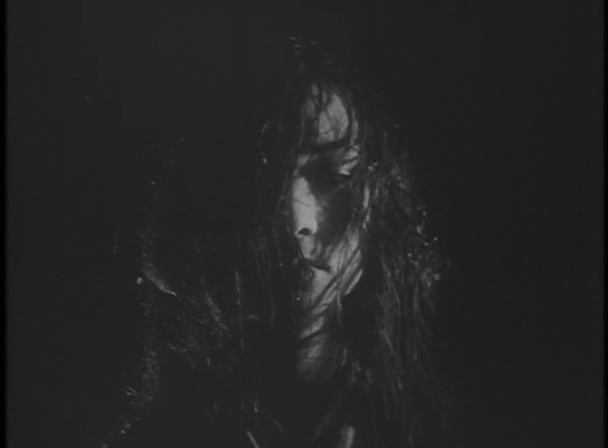
The Military Policeman and the Dismembered Beauty (憲兵とバラバラ死美人, Kyotaro Namiki, 1957)

The Military Policeman and the Dismembered Beauty (憲兵とバラバラ死美人, Kenpei to Barabara Shibijin) was apparently a substantial hit on its release, though to modern eyes at least it doesn’t quite live up to the salaciousness of its title. In fact, it seems a little more interested in reassessing the militarist past while attempting to rehabilitate an authoritarian power and reframing it as good and compassionate unlike the corrupted killer who is selfish and ambitious to the extent that he’s literally poisoning the militarist wells. 

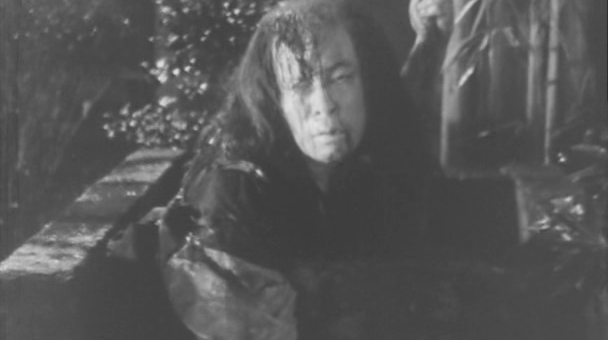
What we’re first introduced to, however, is a rather familiar tale of a soldier who’s gotten a girl pregnant but now won’t marry her mainly because he’s onto a good thing with a pretty girl from a prominent family so his girlfriend’s in the way. Though we see a prelude to the murder, we don’t get good a look at the soldier’s face (though we do hear his voice) which on one level hints at the generalised violent threat of the militarist machine but is also a neat plot device that allows us to into the crime but still maintains the mystery. When we do see the actual killing, it’s surprisingly frank for the time period and disturbing in its sexual charge though there is no gore involved save a grisly discovery in yet another well. 

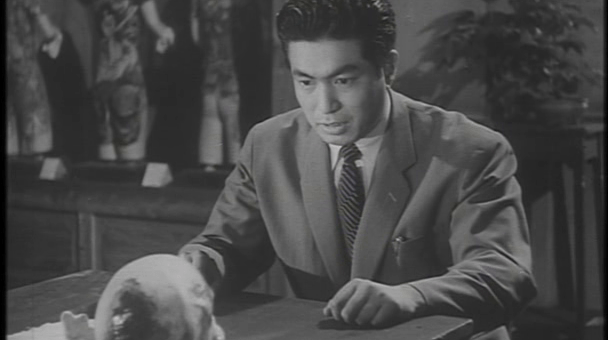
The killing occurred shortly before the regiment left for Manchuria, which seems to be one way the killer sought to move on and leave his crime behind. The first hint of the corruption is discovered by a gang of new recruits as yet unused to the militarist machine. They notice that the water in the well in the barracks is bad, but are at first bullied and insulted by another soldier who’s been there longer and gives them a rather priggish speech about the sanctity of the regimental water. What they discover is that the water tastes bad because there’s a dismembered torso in there and has been for the last six months. One has to wonder why the culprit would think this a good place to hide a body given the risk of discovery and increasing suspicion but as it turns out no one is all that interested. The Military Police aren’t that keen on investigating themselves, and then we get the familiar conflict between the local cops and the specialists as a top investigator, Kosaka (Shoji Nakayama), is assigned to investigate the crime and insists on doing so thoroughly rather than just beating their favourite subject into a false confession. 

Kosaka is then posited as a nice Military Policeman, an emissary of legitimate authority rather than bumbling provincials who are ridiculous and self-serving not to mention incompetent and resentful. We’re told repeatedly that Kosaka is prepared to work with the civilian police unlike the other military policemen who insist on militarist primacy and refuse to allow the detectives onto the base to investigate. He’s a representative of a less authoritarian age that looks forward to the democratic future, but he is also a part of that organisation himself no matter how different he may seem to be and cannot escape the overarching structures of militarism. Nevertheless, his edges are further softened by a nascent romance with the middle-aged innkeeper at his lodging house while his assistant is after her sister, a childhood friend who can’t stop calling him by his old nickname. 

The two of them investigate scientifically, making frequent trips to the pathologist to discuss theories and evidence though Kosaka is eventually guided towards the solution after seeing the young woman’s ghost. The local military police meanwhile fixate on another soldier who has a reputation for using sex workers, one of whom has recently disappeared, though Kosaka thinks the man is a just a crook with what modern viewers make think of as a sex addition that sees him steal supplies from the kitchen to sell in order to finance his visits to the red light district. The military police whip him in an oddly sexually charged manner to try to get him to confess, but he maintains his innocence. One of the motives for the murder was seemingly that the victim planned to expose the affair, taking her concerns to the killer’s superior officer in an effort to force him to marry her which would have ruined his career prospects in what is supposed to be an organisation of honourable men. Unlike Kosaka who shares his name with the writer of the novel the film is based on which may have been inspired by true events, the other military police are largely like the killer, arrogant, selfish and unfeeling though all Kosaka himself represents is a supposedly more benevolent authority that for his niceness may not actually be all that much nicer.
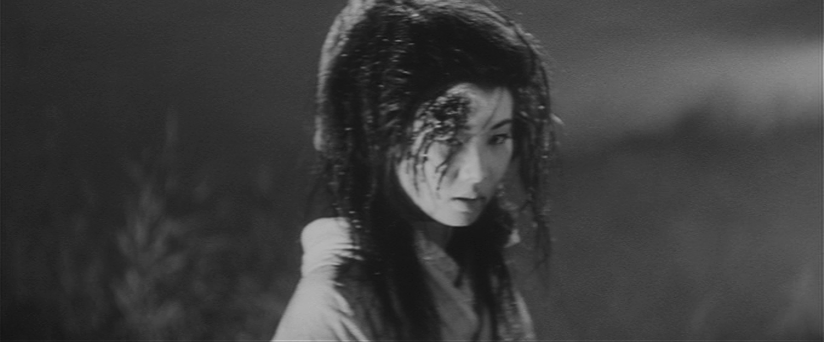
Lust of the White Serpent (蛇精の淫, Morihei Magatani, 1960)

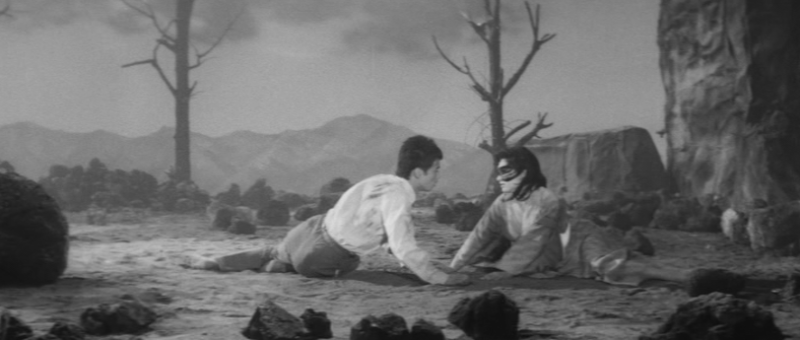
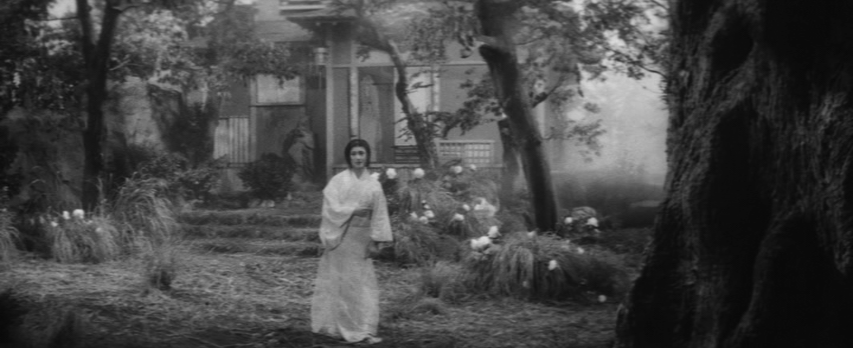
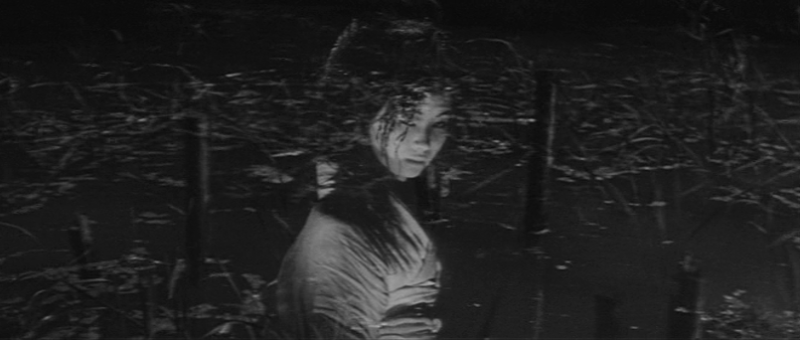
The lingering inequalities of the feudal society are manifested in a snake woman’s thwarted desire for love in Morihei Magatani’s Shintoho horror Lust of the White Serpent (蛇精の淫, Jasei no In). Not quite as salacious as its title may imply, Magatani’s film takes a sympathetic view of the classic snake lady painting her as a tragic heroine betrayed by the codes of the mortal world with its persistent classism and misogyny while offering the conflicted hero caught between the old and the new only a compromised escape in spirituality. 

In what the opening voiceover describes as a local legend that has been passed on “since ancient days” though seemingly taking place in the relatively recent past, village boy Minokichi (Hiroshi Asami) hears a woman’s screams while walking along a mountain path and investigates to find her writhing around in the long grass. Having been attacked by a snake, the woman, Kinu (Kinuko Obata), seems confused though Minokichi recognises her as the daughter of the village headman and offers to carry her home. Unfortunately Kinu’s retinue immediately jump to the conclusion that filthy peasant boy Minokichi must have abducted her, roundly beating him for having dared to lay his hands on such a fine lady. “Even if you try to interact with them, they won’t treat you as an equal. This our fate” his mother reminds him cautioning him against any further attempts at interclass friendship. 

The problem is that the half-crazed Kinu has apparently imprinted on Minokichi and insists that she will marry only him or else die. This is unwelcome news for her father who had been considering marrying her off to the son of a local businessman who has learning difficulties on the promise of a seat on the prefectural council. As for Minokichi, he is technically betrothed to childhood friend Kiyo (Yumiko Matsubara) but is growing resentful having fallen for Kinu but knowing that their romance is impossible because of the barrier of social class. In a surprising move, Kinu’s father chooses his daughter’s happiness over both the current social order and his own financial gain in formally offering Kinu to Minokichi who is then conflicted, at first reassuring Kiyo that he cannot accept only for her to tell him that he must on hearing the rather naive conviction of the local policeman that this taboo-breaking interclass union will liberate the villagers from their subjugation by the townspeople and they’ll never be looked down again. 

As it turns out, Kinu has been possessed by the spirit of a snake woman, Sakurako, who fell in love with Minokichi after he saved her when she became trapped on a rock. The pair had had a brief affair a year earlier which Minokichi’s mother had put a stop to fearful that Minokichi was falling victim to a curse and that Sakurako meant to drain him of his energy and move on. “My background doesn’t matter, does it?” Sakurako had ironically asked having explained to Minokichi that she was just “a poor girl with no one to turn to” echoing the forbidden quality of Minokichi’s romance with Kinu. Yet their relationship is also transgressive in spanning two worlds. “Intimacy with an animal is non-Buddhistic behaviour” Minokichi is later scolded by an intense priest though still finding himself drawn to Sakurako despite the entreaties of his mother and Kiyo trying to drag him back to the village and his “proper” place in the contemporary social order. 

As for Kinu little thought is given to this reckless usurpation of her body, Sakurako seemingly having chosen her to appeal to Minokichi’s desire for social advancement. Once everyone knows she is possessed by a snake spirit things get even stranger with some of the men in the village believing that the only way to tell is to sleep with her. Having tried a shinto shamaness who confirmed a diagnosis of possession by a white snake, Kinu’s father tries a Western doctor branded a “horny weirdo” by the villagers. Despite everyone knowing this and that he is clearly drunk, the doctor is left alone in a room with Kinu and proceeds to rape her while the servant Sakuzo who had beaten Minokichi merely for touching his mistress watches silently from outside. When Sakurako strangles the doctor, winding her snake body around his chest, it is read as an expression of the snake’s curse, everyone instantly understanding what the doctor had done but merely covering up the crime while later petitioning Kinu’s father to have her sent away to save them from the havoc she is wreaking with storms, droughts, and floods in protest at her unhappy fate. 

Minokichi who was supposed to unite two worlds and dissolve barriers finds himself in a liminal state no longer a member of either, Kiyo’s father refusing to welcome him back into the village while having separated from Kinu on realising she is a snake woman denies him a place in the town. While he tells himself that he should know his place, reintegrate himself into the village and accept his proper social role by settling down and marrying Kiyo as he was supposed to do he cannot let go of his desire for Sakurako/Kinu and in the end cannot resist following her even if or perhaps precisely because it may lead to his death. When the “curse” is broken he is led away once again only this time by the priest as a new devotee of Buddhism reinforcing a spiritual message but ironically also implying that Minokichi’s fault was in trying to help others, firstly the snake and secondly Kinu, when he should like his mother advised have minded his own business and refrained from interacting with those outside of his immediate community be they beautiful noblewomen or alluring snake spirits. Though light on effects, Magatani ups the atmosphere with copious fog while employing a series of dissolves for the snake women’s transformations and some superimposition for their wrathful curses. The message may be know your place or you’ll end up nowhere, but the film nevertheless has unexpected sympathy for the lonely Sakurako beaten into submission by a cruel and misogynistic society. 


Original trailer (no subtitles)

The Ghosts of Kagami Pond (怪談鏡ケ淵, Masaki Mori, 1959)

“How could you do this to me?” asks a wandering ghost in Masaki Mori’s 1959 Shintoho kaidan Ghosts of Kagami Pond (怪談鏡ケ淵, Kaidan Kagami-ga-fuchi). Based on a story by Kozo Hayama, Mori’s supernatural morality tale is in many ways fairly typical for the genre save that the vengeance wreaked by the wronged spirit is extremely targeted rather than the sometimes indiscriminate curses aimed more at a corrupt society than the figures directly responsible for the death and mistreatment inflicted on the now wrathful ghost. 

The good-hearted hero, Yasujiro (Shozaburo Date), was forced to move to Edo after his father fell into disgrace with the Shogunate authorities and is grateful to have been taken in by the owner of kimono shop Ejimaya. However, his presence is intensely resented by veteran employee Kinbei (Joji Ohara) who had been expecting to inherit the business. Overhearing the boss, Jiemon (Hiroshi Hayashi), and his wife (Fumiko Miyata) discussing a possible marriage between Yasujiro and his childhood friend Kiku (Noriko Kitazawa) reunited by chance in the city, Kinbei realises that he intends to make Yasujiro his heir and hatches a plan to ensure that doesn’t happen beginning with selling Kiku’s sister Sato (Reiko Seto) a knock off wedding kimono that tears during the ceremony leading her intended’s family to cancel the marriage entirely leaving Sato a shamed woman in an impossible situation. Wandering the streets in despair intending to throw herself into Kagami Pond and thereafter become a vengeful ghost cursing the house of Ejimaya, Sato encounters Kinbei again and is killed in the ensuing struggle only to tumble into Kagami Pond sinking without trace. 

“No one ever floats up out of there” Kinbei later insists suggesting the pond as a possible dumping ground for additional bodies of which there are a fair few. As kaidan villains go, Kinbei is of the one note variety in simply being evil for no particular reason the only justifications offered for his ill conduct being his previous devotion to the kimono store and the fear that all his hard work will go to waste if Yasujiro is allowed to inherit. Even so, this seems disingenuous given an early scene in which an angry customer brings a kimono back complaining of shoddy work and suggesting she’s been fobbed off with a substandard product. Kinbei blames the whole thing on new employee Yasujiro though it later seems clear that he probably sold her a cheap kimono and pocketed the difference in price. 

He even goes so far as to mug Yasujiro in disguise, stealing 15 Ryo which he’d been transporting on behalf of the store attempting to sink his rival in debt. When Yasujiro’s disgraced father offers to sell a precious family sword to pay back Jiemon, Kinbei kills him too while 15 Ryo is also the amount for which he indentures Kiku to a brothel after framing her for adultery (illegal at the time) with the help of his sex worker co-conspirator Naka (Keiko Hamano) who bumps off Jiemon’s wife and quickly takes her place. Jiemon, who had previously been kind and fatherly insisting that Yasujiro and Kiku are like his own children to him, undergoes an unexplained and abrupt change of character becoming cruel and greedy, loaning money to another store holder in the assumption he won’t be able to pay it back in order to get his hands on his business and eventually party to all of Kinbei’s scheming little realising he most likely intends to bump him off too after he’s married Naka so that they will have full control of the business. 

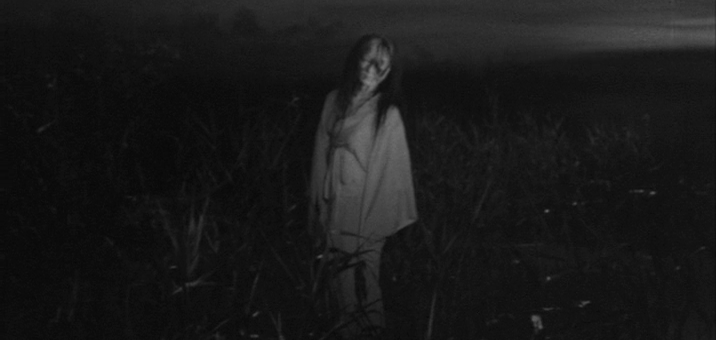
Kinbei is occasionally haunted by the rising ghost of Sato who chillingly repeats the phrase “How could you do this to me?” but carries on with his dastardly deeds anyway. As in most kaidan tales, she cannot hurt him directly but leads him to hurt himself by causing him to hallucinate, as do the ghosts of Yasujiro’s dad and the storeowner eventually calling him towards Kagami Pond and his watery fate. Some disjointed storytelling aside, the introduction of a potential ghost cat for example is never followed up, Ghosts of Kagami Pond is a fairly typical B-movie kaidan running a tight 60 minutes even if the effects and supernatural imagery are perhaps muted in comparison with Shintoho’s similarly themed ghostly morality tales. 


Clip (no subtitles)

The Ceiling at Utsunomiya (怪異宇都宮釣天井, Nobuo Nakagawa, 1956)

Crime does not pay for a series of conspirators at the centre of Nobuo Nakagawa’s supernaturally-inflected historical tale, The Ceiling at Utsunomiya (怪異宇都宮釣天井, Kaii Utsunomiya Tsuritenjo). As the title implies, Nakagawa’s ominous jidaigeki is inspired by a historical legend in which a retainer supposedly attempted to assassinate the shogun through the rather elaborate device of a mechanical ceiling designed to crush him as he slept. In actuality no such thing took place, the shogun changed his route and subsequent investigations of Utsunomiya Castle found no sign of a false ceiling, yet the story took on a life of its own as local folklore. 

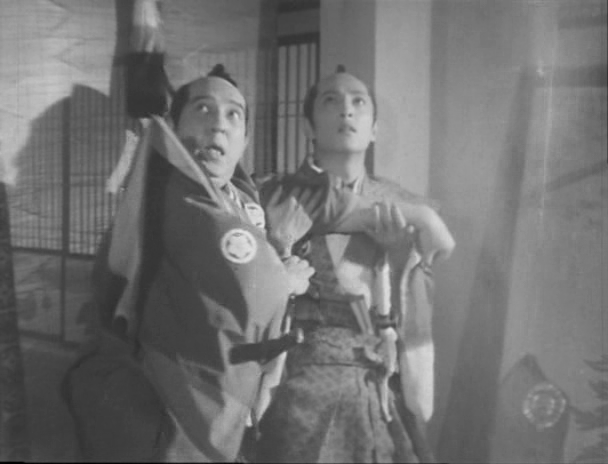
In this version of the tale, conspirators Councillor Kawamura (Ureo Egawa) and local yakuza Kagiya (Masao Mishima) are conspiring to depose Tokugawa Iemitsu (Yoichi Numata) in favour of his brother, manipulating Lord Honda (Shuntaro Emi) of Utsunomiya Castle by convincing him that his clan will prosper when the other retainers fall in behind the new shogun. The pair have arranged for nine talented craftsmen to be shut up in the castle to install “the mechanism” in time for the arrival of the shogun who is due to stay at the castle on his way to Nikko. Meanwhile, Kawamura is also intent on sleeping with the daughter of head carpenter Toemon (Yoji Misaki), Ofuji (Konomi Fuji), whom chief minion Tenzen (Tetsuro Tamba) is supposed to kidnap once the workmen have gone into isolation in the castle. Righteous samurai Ryutaro (Hiroshi Ogasawara) however, an undercover shogunate bodyguard, begins to disrupt their plan saving Ofuji while bonding with a friendly bar hostess, Onobu (Sachiko Toyama), and secret princess forest woman Oshino (Akemi Tsukushi). 

The plot represents in itself a malfunctioning of the feudal order in the essential weakness of Lord Honda, the ambition of his underling Kawamura, and the cruel greed of Kagiya. As the two men conspire, Kagiya jokingly laments that he isn’t a samurai while Kawamura reminds him that if the plan comes off he’ll be fantastically rich. Kagiya, a yakuza who sends his thugs to extort protection money from the local market, is representation of the threat of the rising merchant class whose financial power presents a challenge to the authority of the samurai. Toemon, meanwhile, a master craftsman, is manipulated into participating in the plan because he is in debt to Kagiya, later promised that he too will be “promoted” in being given permission to carry a sword little knowing that Kawamura and Kagiya not only plan to kidnap and rape his daughter but never intend to allow any of the craftsmen to live because they simply know too much. 

The Ceiling at Utsunomiya is not a ghost story in the manner for which Nakagawa is best known but it certainly plays like one, Kagiya eventually haunted by the figure of a betrayed Toemon which in turn leads him to a self-destructive attack on Tenzen and his eventual demise collapsed over his ill-gotten gains, a koban falling from his hand. Greed and violence will only repay in the same, the weak-willed Lord getting his comeuppance from the ever confident shogun even if he himself coolly stands back while others risk their lives to protect him. Even so, the eventual operation of “the mechanism” is intensely startling, the ceiling abruptly collapsing with alarming ferocity though one wonders what the advantage is in such an expensive, elaborate contraption aside from its ironic symbolism when the point of a sword will do. 

Then again, the heroic Ryutaro is almost assassinated while crossing a river via zip wire later fished out of the river by sullen forest woman Oshino, first encountered hunting birds with darts but later revealed to be the illegitimate child of samurai parents who fell foul of political intrigue. In a sense this revelation emphasises the restoration of the political order, Ryutaro permitted to fall in love with Oshino because they are of the same social class, while the romance between Ofuji and craftsman Yoshichi (Kotaro Sugiyama) also comes to fruition eliding the minor class difference between them in allowing the boss’ protege to marry the now orphaned daughter. Onobu meanwhile pays heavy price for her misplaced love for Ryutaro, denied romantic fulfilment in her liminal existence as a bar hostess. In any case, the corruption is exorcised and the normal order resumes reinforcing the hierarchical shogunate society with each of the players back in their rightful positions and possessing new hope for the future as Ryutaro and the shogun continue their tour while their former comrades kneel at the roadside. 


The Ghost of Kasane (怪談かさねが渕, Nobuo Nakagawa, 1957)

“Fear the hatred of the dead!” a blameless slain wife exclaims after being cruelly cut down by her deluded husband in Nobuo Nakagawa’s tale of karmic vengeance, The Ghost of Kasane (怪談かさねが渕, Kaidan Kasane-ga-fuchi). Then again, though cleaving close to the standard formulas of the ghost movie not to mention the famous tale, these fatalistic, generationally twinned tales of ghostly revenge have an oddly imprecise quality in which it is the innocent who are eventually made to suffer, caught between concentric circles of guilt and retribution. 

The tale opens in 1773 with a blind masseur/money lender, Soetsu (Yoji Misaki), leaving his home on a snowy day hoping to catch venal samurai Shinzaemon (Akira Nakamura) at home. Shinzaemon and his wife are hospitable, but a conflict soon breaks out during which Shinzaemon accuses the old man of disrespecting him as a samurai and generally getting above himself as a mere member of the peasant class. All Soetsu has done is politely ask for the money he’s owed while making it clear that Shinzaemon’s attempts to give him the run around are wearing thin, but he ends up with a nasty gash on his face after the enraged samurai throws a pot at him. Driven into a frenzy by this unwelcome class-based anxiety, Shinzaemon slashes Soetsu with his sword and kills him, instructing a servant to stuff his body in a case and dump it in Kasane swamp. Soetsu, however, does not rest easy, returning to taunt him, eventually causing him to murder his wife by mistake and thereafter drawing him to his death by drowning in the very swamp where he dumped the body. 

20 years later in Edo, Soetsu’s daughter Rui (Katsuko Wakasugi) has become a successful shamisen teacher, while Shinkichi (Takashi Wada), the orphaned son of Shinzaemon, was taken in by a merchant family who continue to treat him as a poor relation. While having internalised a servant mentality that ironically inverts his father’s anxiety in his samurai status, Shinkichi has fallen in love with the daughter of the house, Hisa (Noriko Kitazawa), who is about to be betrothed against her will to the horrible son of local merchants, Seitaro (Shuji Kawabe). Rui, meanwhile, an older unmarried woman, is desperate to fend off the violent attentions of rough ronin Omura (Tetsuro Tanba), eventually convincing herself she is in love with the mild-mannered Shinkichi who might well think a rebound relationship is a good idea if it clears the way for Hisa’s inevitable marriage. 

Oddly enough and somewhat incomprehensibly, it’s Rui who becomes the target of her father’s curse, perhaps for her unwitting affection for the son of the man who killed him though it seems insufferably cruel that a father would involve his own child, not to mention the blameless infant of his murderer, in his bid for vengeance from beyond the grave. For his part, Shinkichi pays a heavy price for his unmanly diffidence, brave enough neither to say no to Rui or to run away with Hisa, simply passive if kind in the face of mounting impossibilities. Yet as much as it’s her father’s resentment that causes her downfall, struck by the pluck from the shamisen which scars her face to mirror his, she adds her own share in the wrath of a woman scorned dragging Shinkichi towards the lake for his inability to let go of his love for Hisa.

Old Soetsu might have a right to be vengeful, but his curse has collateral damage, enacted on women in order to target men as in Shinzaemon’s unwitting murder of his wife and Shinkichi’s accidental violence against Hisa at the instigation of Rui. Only the two old servants are left behind to make peace and tell the story, united by their respective positions rather than divided by their conflicting affiliations. Studio-bound yet filled with a series of supernatural tricks, Nakagawa’s atmospheric adaptation of the classic tale once again features the bug-eyed deformity of the scorned female ghost as Rui’s initial injury eventually balloons as her “sickness” intensifies, later finding time to turn her rage on Omura who was not, it has to be said, on the original list of victims being simply an embodiment of the cruelty of the age. Nakagawa ends, however, not with darkness but with light, freeing the souls of the troubled lovers from the gloom of earthly torment in urging them to leave their hatred behind and return to Buddha in eternal peace.