Willful Murder (日本の熱い日々 謀殺・下山事件, Kei Kumai, 1981)

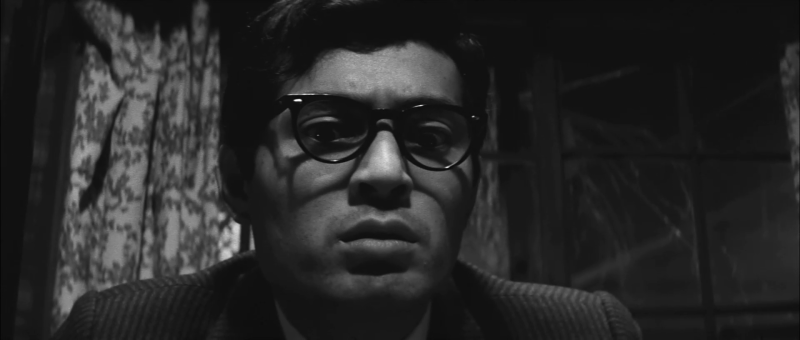
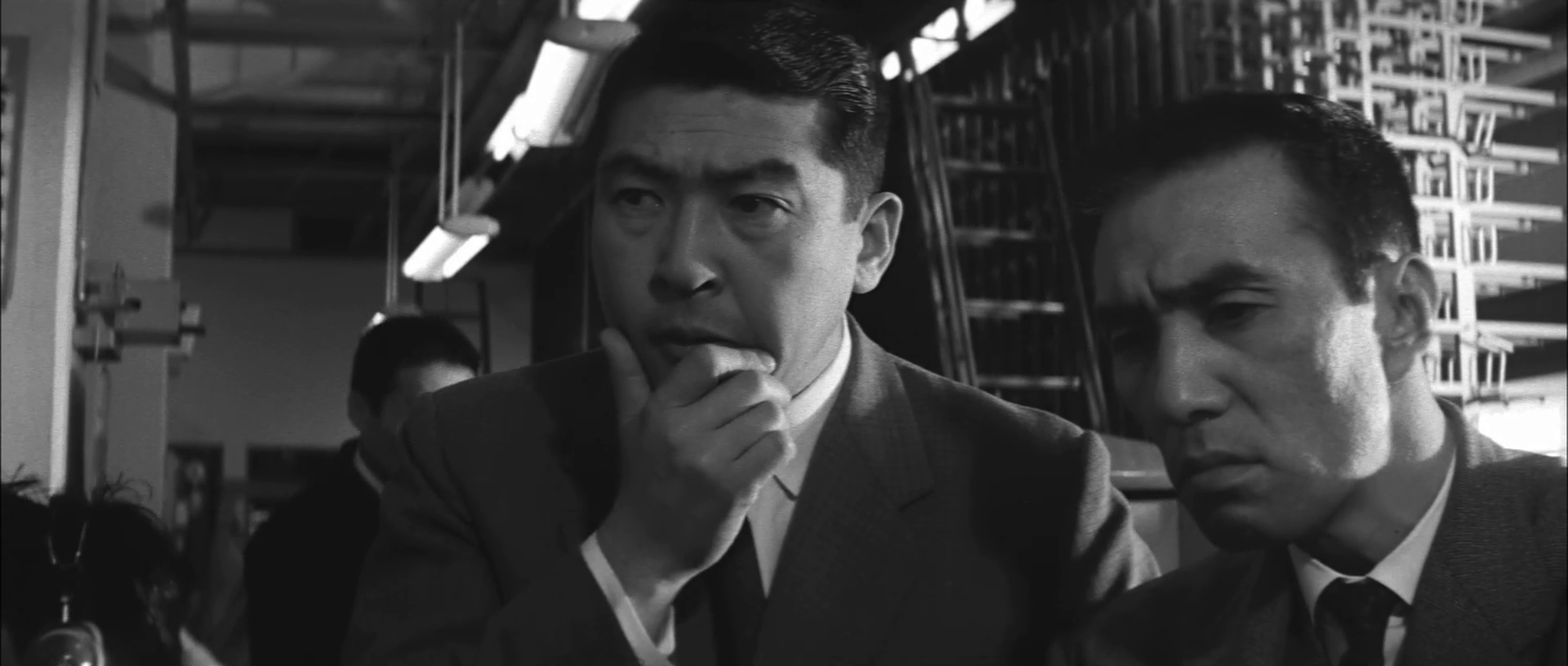
Beginning to piece something together, the dogged reporter at the centre of Kei Kumai’s Willful Murder (日本の熱い日々 謀殺・下山事件, Nihon no Atsui Hibi Bosatsu: Shimoyama Jiken) looks out at an industrial complex and reflects that when he visited it eight years previously it was a “piddling little factory” and has since become a “major company”. His comments might equally stand for Japan itself as Kumai charts the course of the nation’s post-war economic miracle viewing it as a kind of Faustian bargain with the Americans largely conducted by former militarists driven by personal gain and ideological fury. 

Based on the book by Kimio Yada, The Killing: The Shimoyama Incident, the film turns on the mystery surrounding the still unexplained death of Japan National Railways CEO Sadanori Shimoyama whose dismembered body was discovered by the railway tracks in July 1949 suggesting he had been hit by a train. Given the investigative techniques available at the time, Shimoyama’s demise has never been conclusively ruled either a murder or a suicide with experts from rival universities coming to opposing opinions and the police later closing the case in somewhat suspicious circumstances. 

Kumai’s film leans towards the murder angle though like the real life investigators cannot definitively rule out that Shimoyama may have taken his own life presumably due to the pressure he felt himself under after being ordered by the occupation authorities to dismiss 30,000 railway workers from their jobs as part of the so called “Dodge Line” economic plan intended to halt runaway inflation. As the film’s opening voice over also reveals, the Japan Railways Union was at the centre of the labour movement at the moment in which occupational approach was shifting from its original purpose of demilitarisation and democratisation, towards remilitarisation and capitalisation as the Americans sought to make Japan a foreign policy ally in their opposition towards communism in Asia. 

The film’s thesis is that US forces were already planning for the Korean War and urgently needed to crush the labour movement. Shortly after Shimoyama’s death, two other railway incidents occurred firstly with the runaway train in Mitaka which crashed into the station killing six and injuring 20, and then the Matsukawa derailment for which 17 men were falsely convicted (four sentenced to death) all of whom were members of the railway workers’ union. The conclusion that dogged reporter Yashiro (Tatsuya Nakadai) slowly comes to, is that Shimoyama was murdered and the train incidents staged to discredit the labour movement on the orders of the occupation forces while former militarist collaborators continued on the same path in a newly “democratic” Japan.

Japan certainly did very well out of the Korean War the economic stimulus of which allowed that “piddling little factory” to become a “major company” in under a decade much as the nation rocketed towards the economic prosperity which culminated in the 1964 Olympics against which the film’s finale is played. The portrait the Kumai paints is of a nation which has lost its soul, mired in hypocrisy which makes a mockery of “pacifism” and “democracy”. There are in fact at least three unexplained deaths presented in the film, the second of the being that of Michiko Kanba who was killed during the protests against the Anpo security treaty which was later forced through parliament despite clear public opposition. The same possibly corrupt pathologist is assigned to the autopsy and argues that the young woman died as the result of a crowd crush despite the attending physician’s report that the cause of death was strangulation. 

The true villain is however the American occupation and Japan’s continuing complicity even after it ended. Kumai includes several scenes of mass protest against the presence of the American military in Japan, and often places American soldiers ominously hovering in the corners of the frame such as those standing directly outside the police station. Yashiro attempts to interview a Korean man who tried to blow a whistle on the Shimoyama murder only to be arrested by US Counter Intelligence and later physically dragged out of the visiting room by a lurking MP. It all sounds like a conspiracy theory and one Yashiro doesn’t know if he should believe but then has to ask himself why all these people are seemingly being silenced if there is nothing to hide. He maintains his conviction that Shimoyama was murdered, but cannot necessarily say whether it was by a communist foreign nation as the Korean whistleblower had suggested or by the Americans trying to frustrate the “democracy” they’d previously been so keen on lest it disrupt their capitalist agenda. 

In the closing scenes, Yashiro is confronted by yet another death which cannot be ruled suicide or murder along with the realisation that he will never learn the truth. The grills from a grate on the platform of a train station above cast shadowy bars that imprison him in the shady cynicism of the Cold War society. Kumai films in boxy 4:3 academy ratio and in the black and white of golden age cinema, lending a degree of cinematic realism to his devastating tale of post-war moral decline which contains a note of inescapable dread in the faces of two men caught in the intermittent flashes of a train going by obscuring a truth that can never be revealed.


Flag in the Mist (霧の旗, Yoji Yamada, 1965)

flag in the mist poster 2In theory, we’re all equal under the law, but the business of justice is anything but egalitarian. Yoji Yamada is generally known for his tearjerking melodramas or genial comedies but Flag in the Mist (霧の旗, Kiri no Hata) is a rare step away from his most representative genres, drawing inspiration from America film noir and adding a touch of typically Japanese cynical humour. Based on a novel by Japanese mystery master Seicho Matsumoto, Flag in the Mist is a tale of hopeless, mutually destructive revenge which sees a murderer walk free while the honest but selfish pay dearly for daring to ignore the poor in need of help. A powerful message in the increasing economic prosperity of 1965, but one that leaves no clear path for the successful revenger.

Kiriko (Chieko Baisho), a twenty year old typist from Kyushu, has taken an arduous train journey into Tokyo to get a meeting with a top lawyer she hopes will defend her older brother and only living relative from a trumped up murder charge. The clerk attempts to dissuade her – Mr. Otsuka (Osamu Takizawa) charges a hefty sum for his services and, in any case, his docket is too full to be travelling back and forth to Kyushu never mind the additional travel and accommodation costs. Kiriko is disappointed but undeterred – she thinks she can manage the expenses, but asks for a discount on the fee. The clerk finds this amusing and does at least ask Otsuka who finally agrees to see Kiriko seeing as she’s come all this way. She makes an impression on him but ultimately he tells her he’s just too busy and she’s better off looking for a lawyer closer to home.

Kiriko leaves disappointed but refuses to give up, missing her original train to try again by telephone but Otsuka has already gone out “to see clients” and so she finally has to accept her mission to save her brother may have stalled. While Kiriko was using the public phone, she was overheard by a reporter, Abe (Yosuke Kondo), who wants to write something on the case but his Tokyo based bosses aren’t so keen on a local interest story from halfway across the country.

A year later, Kiriko’s brother Masao (Shigeru Tsuyuguchi) has been convicted and sentenced to death. After his second appeal fails, Masao dies of illness in prison before the sentence could be carried out. Kiriko writes a bitter letter to Otsuka blaming him for her brother’s death which forces Otsuka to reconsider his decision not to take the case. He comes to the conclusion that the case was unwinable and therefore his decision not to take it made no difference but then, he spots something that no one else seems to have noticed.

A tenacious and strong willed young woman – you’d have to be to jump on a long distance train from a tiny village all the way to the big city on your own in 1965, Kiriko is determined to save her brother but finds herself facing an uphill battle against a society deliberately structured to ignore her voice and those of everyone like her. Kiriko is an orphan and so her older bother is also a kind of father figure as well as the only living relative she has left. Masao had been a primary school teacher, which is to say a respected member of society, but found himself involved with a loanshark who was later murdered after he lost some cash collected from students to pay for a school trip and borrowed money he couldn’t pay back from a ruthless old woman. Masao has made a mistake he’s going to pay for dearly – disgraced and humiliated, it was easy work to frame him for a violent crime and force him into a confession through the usual police methods. Kiriko won’t stand for it, but she’s powerless to help him.

Otsuka is, in a sense, entitled to charge what he wants for his services. He’s clearly a talented lawyer, very much in demand, and so why “should” he trek all the way out to Kyushu for a case that doesn’t interest him when he has enough clients already. He does, at least, bother to listen to Kiriko’s pitch before letting her down gently, but just when it seems he might be about to change his mind he tells his clerk to cancel all his appointments and winds up on the golf course with his girlfriend. So much for being too busy to save an innocent man’s life.

Kiriko’s “whole life has been desecrated by one incident” as she cuttingly writes later in a letter which forms a crucial part of her plot of revenge against the man who refused to save her brother’s life (half talking about something else). Forced out of her hometown where she’s the murderer’s sister, she finds work as hostess going by the club name of Rie in a Tokyo bar which has a Kyushu theme. This brings her back into contact with the reporter, Abe, and that isn’t the last of the coincidences as Kiriko finds herself swept up by circumstances which allow her to turn an unfortunate series of events into a cunning plan to ruin Otsuka by neatly echoing the precise circumstances of her brother’s case. Now it’s Otsuka forced to plead with her night after night, begging on his knees that she agree to testify and turn over key evidence that proves his client is innocent all while Kiriko adamantly sticks to her story.

Yamada conjures a tense and gloomy film noir world, following Kiriko down foggy passageways as she tries to navigate the city from the shadows, chasing the spectre of the unjust but losing herself in the process. Masao dies because he was too poor to hire a good lawyer to save him from the police who were supposed to be protecting him, but decided it was easier to stitch up someone without influence than find the real killer. His sister destroys herself to get revenge not just on lawyers more interested in fame and success than in serving justice but on an entire society which believes her existence is insufficiently important to merit full consideration. Otsuka is not a bad man, he is not corrupt or incompetent, he is merely selfish in all the ways his society encourages him to be. Originally letting himself off the hook with the excuse that his decision made no difference, he’s genuinely horrified when he realises he’s noticed a crucial clue which could have exonerated Masao even if it’s an equally selfish guilt he feels more than a recognition that he’s failed his duty to justice by letting an innocent man die while a guilty one lives to kill again. No one wins in this case, everyone emerges ruined and broken by the increasing inequalities and selfish individualism of the post-war world. Justice is blind, so they say, but perhaps she needs to open her eyes.


Original trailer (no subtitles)

Inn of Evil (いのちぼうにふろう, Masaki Kobayashi, 1971)

inn-of-evil“Sometimes it feels good to risk your life for something other people think is stupid”, says one of the leading players of Masaki Kobayashi’s strangely retitled Inn of Evil (いのちぼうにふろう, Inochi Bonifuro), neatly summing up the director’s key philosophy in a few simple words. The original Japanese title “Inochi Bonifuro” means something more like “To Throw One’s Life Away”, which more directly signals the tragic character drama that’s about to unfold. Though it most obviously relates to the decision that this gang of hardened criminals is about to make, the criticism is a wider one as the film stops to ask why it is this group of unusual characters have found themselves living under the roof of the Easy Tavern engaged in benign acts of smuggling during Japan’s isolationist period.

Led by the innkeeper Ikuzo (Kan’emon Nakamura), the Easy Tavern is, effectively, the hideout of a smuggling gang conveniently located on a small island in the middle of a river where they can unload goods from the Dutch boats before shipping them on to Edo. Everything had been running smoothly, but the friendly policeman has been moved on and the new guy seems very straight laced. The gang’s routine existence changes one night when they receive two unexpected visitors – a young man they save from a beating in the street, and a drunk who wanders in looking for sake. The younger man, Tomijiro (Kei Yamamoto), brings a sad story with him in that all of his troubles have been caused by trying to save the woman he loves from being sold to a brothel. Moved by Tomijiro’s innocent ardour, even the most hardhearted residents of the Easy Tavern become determined to help him. Accepting a job everyone had a bad feeling about in order to get the money for Tomijiro to buy back his lady love before it’s too late, the gang’s unusual decision to risk their lives for someone else’s happiness may be the first and last time they ever do so.

The residents of the Easy Tavern have various different backstories, but the thing they all have in common is having been rejected by mainstream society at some point in their lives. The most high profile, Sadashichi (Tatsuya Nakadai), is known as “The Indifferent” which is both apt and slightly ironic. Sullen and cynical, he puts on a show about caring for nothing and no one but, as inn keeper’s daughter Omitsu (Komaki Kurihara) has figured out, it’s more that the opposite it true – he cares too much about everything. Abandoned as a child, Sadashichi’s sad story is that he once thought his saw his mother long after they were separated but killed her because she’d fallen into prostitution. Then again, perhaps it was just a woman who looked like her, or perhaps he made he whole thing up. Coming across a lost baby bird shortly after killing a man, Sadashichi is determined to look after it but is later distressed by the words of the drunk who reminds him that the bird’s mother is probably going crazy with worry. Sadashichi may identify with this lost little bird, but his empathy also extends to Tomijiro’s plight as his plaintive looks and gloomy face prompt him into action, if only to make them go away.

Similarly, the other members including “The Living Buddha” – a rabidly bisexual former monk thrown out of his temple for his lascivious ways, an effeminate homeless man, a stutterer, and an invalid all have reasons for living outside the law. As the sympathetic inn keeper later tries to explain to a policeman, most of these men are people who’ve faced rejection in one way or another. Craving sympathy, they’ve turned violent and suspicious, pushed away from the very things they wanted most. Far from an Inn of Evil, the Easy Tavern is the only place where these people have been able to find acceptance, building a community of lost souls from those cast out from society at large.

The decision to try and help Tomijiro to rescue his childhood sweetheart, cruelly sold by her selfish and uncaring father, is, in once sense, a selfless one but perhaps also reminds them of all the times they were also betrayed or abandoned and no one came to help. Even knowing the plan is unlikely to end well, the inn keeper is proud of his men’s decision, if they didn’t try to help the girl no one else would. They may be throwing their lives away in a pointless endeavour, but if they don’t at least try then what’s the point in living at all. This more than anything expresses Kobayashi’s constant preoccupation throughout his career in pointing to the essential goodness of those who refuse to simply accept acts of injustice as normal and stand up to oppose them, even if their resistance will produce little or no actual change.

Filming in a crisp black and white, Kobayashi creates an eerie atmosphere aided by Toru Takemitsu’s strangely ethereal score. The world of the The Easy Tavern is a dark one in which cruelty and betrayal lie at every turn and men ruin themselves through thoughtless and reckless decisions, but the best of humanity is to be found among this gang of outlaws who collectively decide it’s world risking their lives for someone else’s love story. Filled with impressive visual imagery including the strange sight of the looming bright white police lanterns and the impressively staged last stand as Sadashichi holds off the troops for Tomijiro to escape, Inn of Evil is a tightly controlled, minutely detailed character drama in which men who’d throw their lives away for nothing find that their sacrifice has not been in vain.