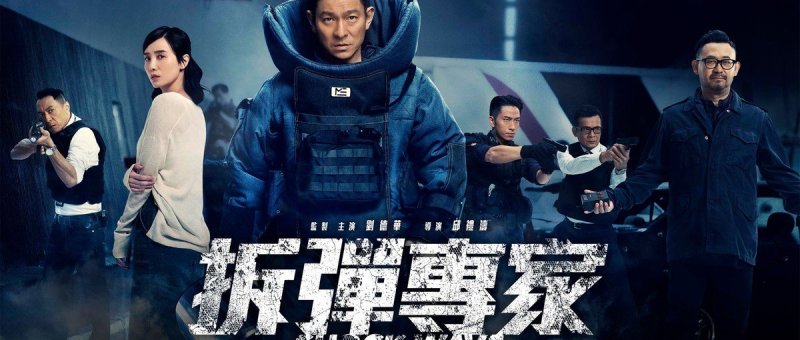
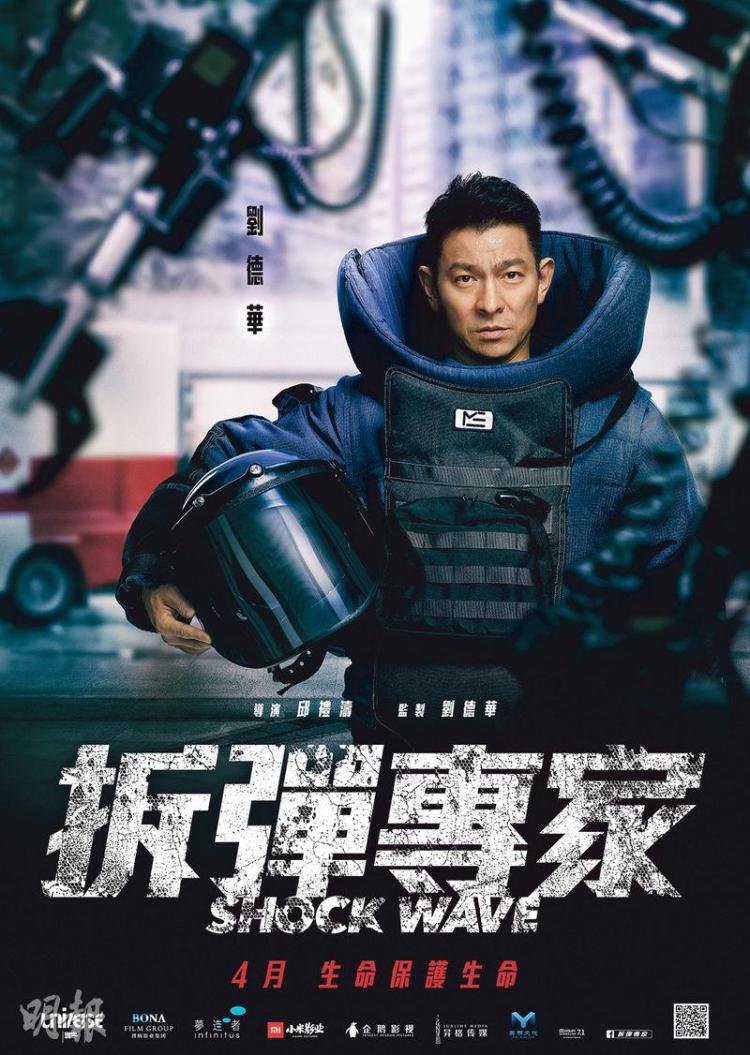
 Recent Hong Kong action cinema has not exactly been known for its hero cops. Most often, one brave and valiant officer stands up for justice when all around him are corrupt or acting in self interest rather than for the good of the people. Shock Wave (拆彈專家) sees Herman Yau reteam with veteran actor Andy Lau turning in another fine action performance at 55 years of age as a dedicated, highly skilled and righteous bomb disposal officer who becomes the target of a mad bomber after blowing his cover in an undercover operation. These are universally good cops fighting an insane terrorist whose intense desire for revenge and familial reunion is primed to reduce Hong Kong’s central infrastructure to a smoking mess.
Some years prior to the main action, J S Cheung (Andy Lau) is undercover with a gang of bomb loving bank robbers. When they decide to load up a few taxis with explosives, Cheung just can’t let innocent people and fellow officers get caught in the crossfire and so he blows his cover and tips the cops off to the weaponised motor vehicles. Head honcho of the gang, Blast (Jiang Wu), is not best pleased especially as his younger brother Biao (Wang Ziyi) gets himself arrested. Flash forward to the present day and Blast has come up with his plot for revenge – placing large amounts of explosives in the Cross Harbour Tunnel and taking everyone in the general area hostage until the authorities agree to release his brother and he’s satisfied himself in outwitting Cheung.
In this at least Shock Wave fits neatly into the mad bomber genre as Blast goes to great lengths to terrorise the public for irrational and entirely selfish reasons. Blast’s original twin motives centre on a need to get his brother out of prison and the need to destroy Cheung but Biao has decided one of the reasons he quite liked being in prison was that Blast wasn’t there and Cheung isn’t really interested in playing Blast’s game. Blast, as his brother points out, is someone who rarely considers the thoughts or emotions of other people, acting selfishly and assuming his own desires are the only ones which matter. This essential selfishness is echoed in a fairly subtle point about the financial impact of the tunnel crisis and how others stand to profit from it while hundreds people remain terrified and captive inside a giant tube surrounded by water which may soon collapse if Blast loses his temper.
Th mad bomber may be a cinematic staple but Shock Wave relies too heavily on familiar genre elements to make much on an impact of its own. Characterisation is often shallow in the hero cop vs insane criminal set up with supporting characters reduced to a single prominent emotion. The inevitable romantic subplot gives Cheung an emotionally fragile, recently divorced school teacher as an angelic girlfriend only to have her experience sudden qualms about getting involved with someone who does such a dangerous job.
Even if the narrative fails to impress, Yau produces an exciting visual spectacle reportedly spending vast sums of money building an exact replica of the Cross Harbour Tunnel. Filled with explosions, gunfights, and high octane action Yau keeps the tension high by turning the dial right down as Cheung and his gang do their thing with cool, calm military precision disarming everything from C4 to unexploded World War II bombs. At two hours, Shock Wave is pushing the ideal for an action thriller but largely makes its lengthy running time count despite a number of underdeveloped subplots.
A vehicle for Lau who also takes a producer credit, Shock Wave is defined by his performance as the dashing and heroic member of the bomb disposal squad. Jiang Wu’s mad bomber provides hearty support but is never given much to do other than emphasise his villainy with sneering taunts and occasional acts of cruelty. Cheung’s schoolteacher girlfriend Carmen, played by Song Li, is about as generic as they come seeming only to exist for the classic girlfriend in peril plot device but Song and Lau have good chemistry and the relationship does at least help to up the otherwise absent emotional content. Simply put, Shock Wave is an excuse for the ageing Lau to play the action hero once again and he plays it to the hilt. At times frustratingly formulaic, Shock Wave does manage to maintain the tension until the grippingly explosive finale whilst also paying tribute to those who run towards the crisis rather than away from it in full knowledge of the price they may pay in coming to the defence of ordinary people.
Shock Wave was the closing film of the 19th Udine Far East Film Festival and will also be released in UK cinemas from 5th May.
Original trailer (English subtitles)

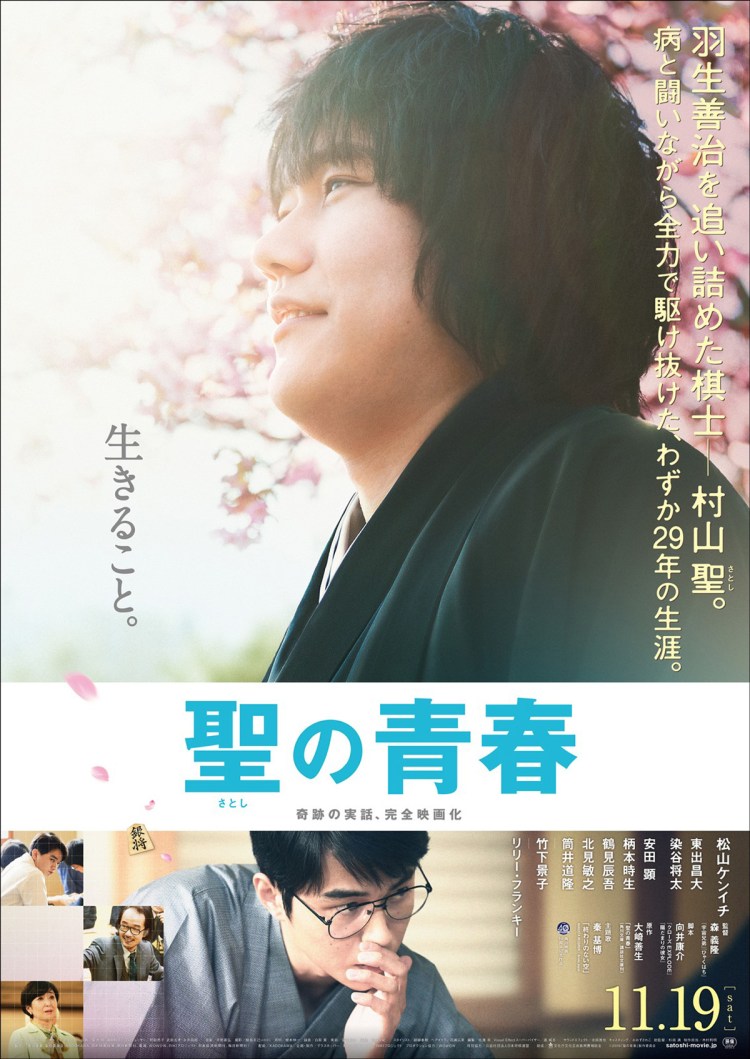 There’s a slight irony in the English title of Yoshitaka Mori’s tragic shogi star biopic, Satoshi: A Move For Tomorrow (聖の青春, Satoshi no Seishun). The Japanese title does something similar with the simple “Satoshi’s Youth” but both undercut the fact that Satoshi (Kenichi Matsuyama) was a man who only ever had his youth and knew there was no future for him to consider. The fact that he devoted his short life to a game that’s all about thinking ahead is another wry irony but one it seems the man himself may have enjoyed. Satoshi Murayama, a household name in Japan, died at only 29 years old after denying chemotherapy treatment for bladder cancer in fear that it would interfere with his thought process and set him back on his quest to conquer the world of shogi. Less a story of triumph over adversity than of noble perseverance, Satoshi lacks the classic underdog beats the odds narrative so central to the sports drama but never quite manages to replace it with something deeper.
 Every keen dramatist knows the most exciting things which happen at a party are always those which occur away from the main action. Lonely cigarette breaks and kitchen conversations give rise to the most unexpected of events as those desperately trying to escape the party atmosphere accidentally let their guard down in their sudden relief. Adapting his own stage play titled Trois Grotesque, Kenji Yamauchi takes this idea to its natural conclusion in At the Terrace (テラスにて, Terrace Nite) setting the entirety of the action on the rear terraced area of an elegant European-style villa shortly after the majority of guests have departed following a business themed dinner party. This farcical comedy of manners neatly sends up the various layers of propriety and the difficulty of maintaining strict social codes amongst a group of intimate strangers, lending a Japanese twist to a well honed European tradition.
 Nobuhiro Yamashita may be best known for his laid-back slacker comedies, but he’s no stranger to the darker sides of humanity as evidenced in the oddly hopeful Drudgery Train or the heartbreaking exploration of misplaced trust and disillusionment of My Back Page. One of three films inspired by Hakodate native novelist Yasushi Sato (the other two being Kazuyoshi Kumakiri’s Sketches of Kaitan City and Mipo O’s The Light Shines Only There), Over the Fence (オーバー・フェンス) may be among the less pessimistic adaptations of the author’s work though its cast of lonely lost souls is certainly worthy both of Yamashita’s more melancholy aspects and Sato’s deeply felt despair.
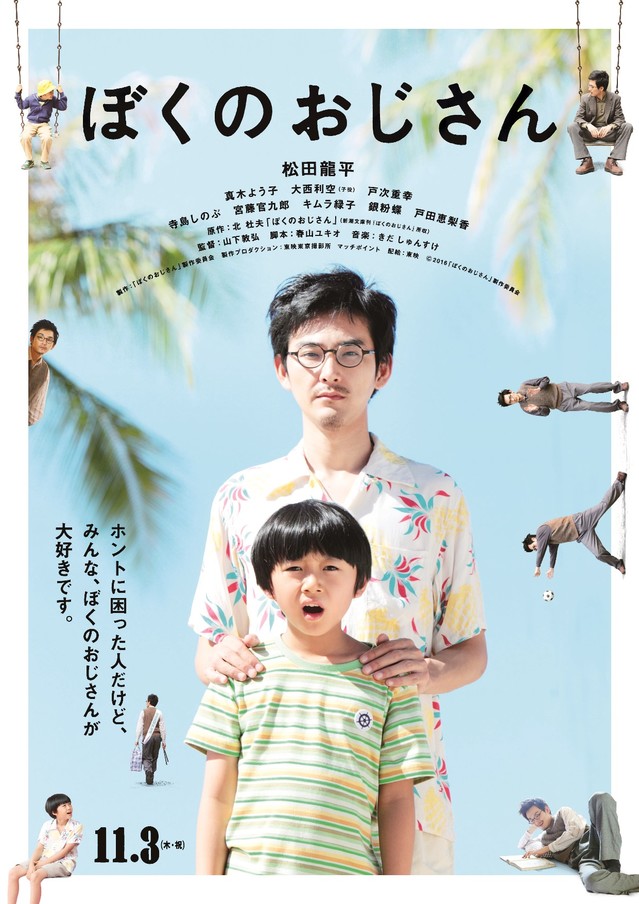 Crazy uncles – the gift that keeps on giving. Following the darker edged Over the Fence as the second of two films released in 2016, Nobuhiro Yamashita’s My Uncle (ぼくのおじさん, Boku no Ojisan) pushes his subtle humour in a much more overt direction with a comic tale of a self obsessed (not quite) professor as seen seen through the eyes of his exasperated nephew. “Travels with my uncle” of a kind, Yamashita’s latest is a pleasantly old fashioned comedy spiced with oddly poignant moments as a wiser than his years nephew attempts to help his continually befuddled uncle navigate the difficulties of unexpected romance.
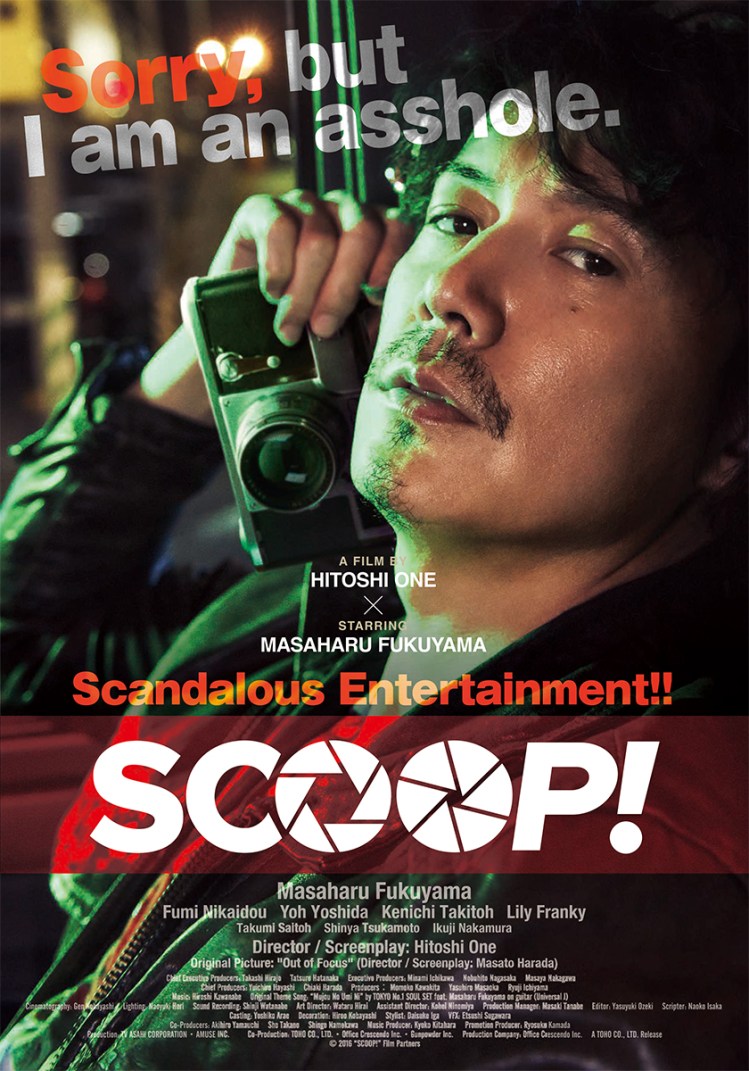 Hitoshi One has a history of trying to find the humour in an old fashioned sleazy guy but the hero of his latest film, Scoop!, is an appropriately ‘80s throwback complete with loud shirt, leather jacket, and a mop of curly hair. Inspired by a 1985 TV movie written and directed by Masato Harada, Scoop! is equal parts satire, exposé and tragic character study as it attempts to capture the image of a photographer desperately trying to pretend he cares about nothing whilst caring too much about everything.
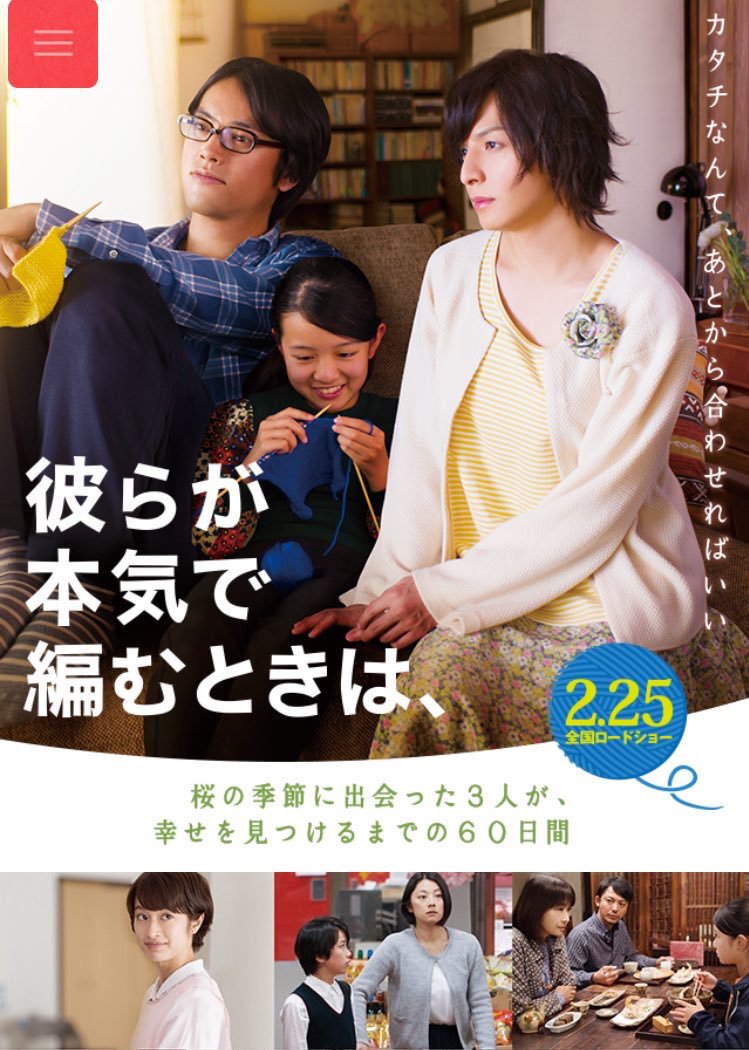 While studying in the US, director Naoko Ogigami encountered people from all walks of life but on her return to Japan was immediately struck by the invisibility of the LGBT community and particularly that of transgender people. Close-Knit (彼らが本気で編むときは, Karera ga Honki de Amu Toki wa) is her response to a still prevalent social conservatism which sometimes gives rise to fear, discrimination and prejudice. Moving away from the quirkier sides of her previous work, Ogigami nevertheless opts for a gentle, warm approach to this potentially heavy subject matter, preferring to focus on positivity rather than dwell on suffering.
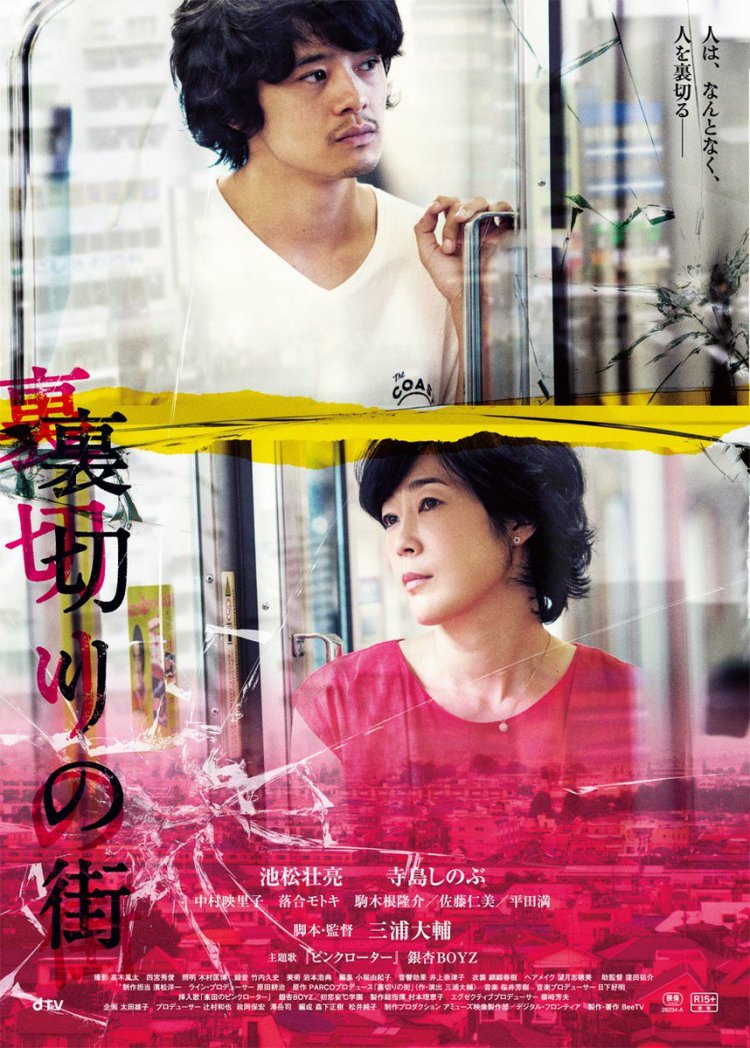 What is it that makes one person betray another? Following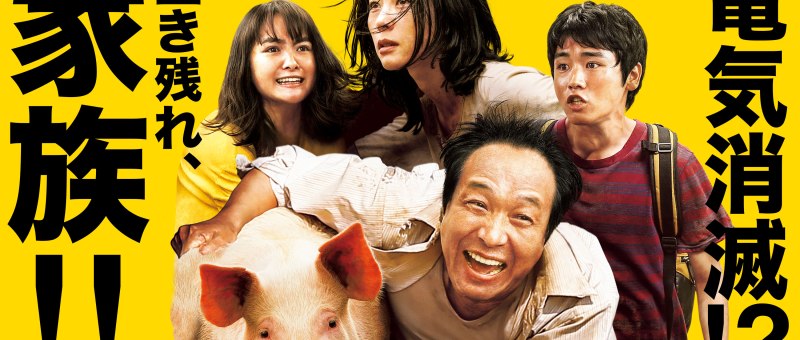
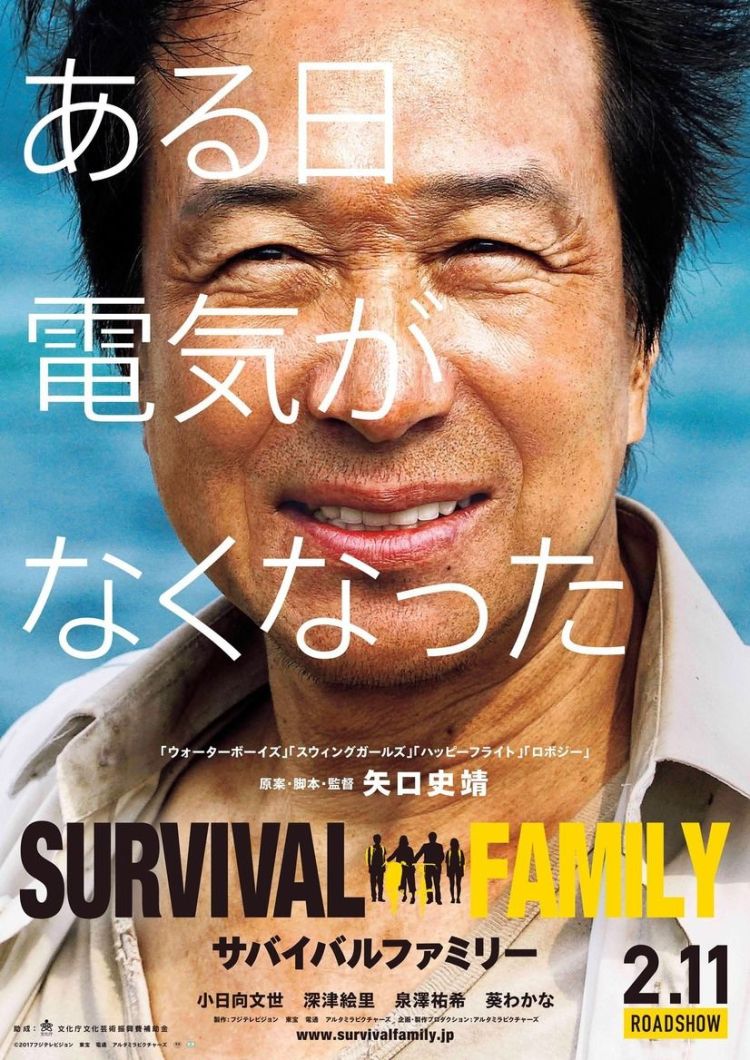 Modern life is full of conveniences, but perhaps they come at a price. Shinobu Yaguchi has made something of a career out of showing the various ways nice people can come together to overcome their problems, but as the problem in Survival Family (サバイバルファミリー) is post-apocalyptic dystopia, being nice might not be the best way to solve it. Nevertheless, the Suzukis can’t help trying as they deal with the cracks already present in their relationships whilst trying to figure out a way to survive in the new, post-electric world.
 Placed between
  Windows on Worlds