The DMZ (비무장지대 / 非武裝地帶, Park Sang-ho, 1965)

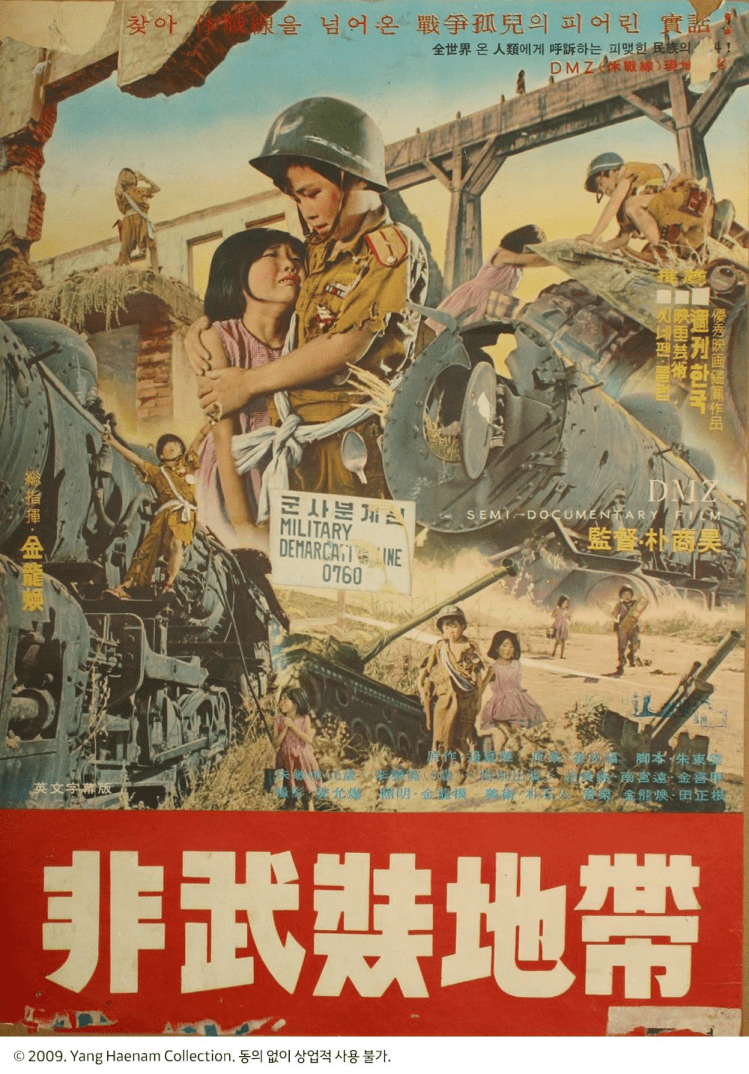
DMZ 1965 posterTalking about the “reunification” of Korea could be a risky business in the increasingly censorious 1960s. Directors had been jailed for less, and the anti-Communism drama was fast becoming a staple genre in the rapidly expanding film industry. Director Park Sang-ho had been at the forefront of Korea’s burgeoning International cinematic success when his 1963 film A Happy Businesswoman had been selected for the Tokyo film festival. Whilst there to present the film (which picked up a best actress award for Do Keum-bong), Park was met with consternation by foreign delegates who assumed he was Japanese and could show them around Tokyo. On learning he was Korean all they wanted to know about was the Demilitarised Zone and the village that was trapped inside it – Panmunjeom. Park had no answers for them. He’d never been to Panmunjeom and knew nothing about it, but he was surprised and concerned that an obscure little village and an ongoing political dispute had come to dominate the thinking surrounding his country with Panmunjeom emerging as a grim tourist destination for those interested in experiencing the “thrill” of life in a dormant war zone.

On return to Korea he knew he had to make a film about the DMZ, but the subject was a difficult, perhaps taboo one which had to be approached carefully. Park’s first cut which was released in theatres ran to 90 minutes and conformed more obviously to the standard commercial cinema of the time. In a radical move, the director then decided to re-edit it with the intention of submitting to foreign film festivals. Cutting most of the scenes with well known actors, Park retained only the stock footage which bookends the film (apparently enough to qualify the remainder as a “documentary” rather than narrative feature), and the central drama focussing on two small children desperately wandering the ruined landscape alone in search of their mothers.

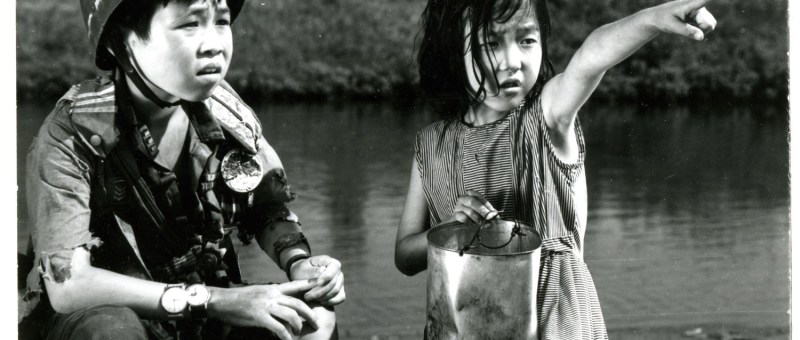
The younger of the two, Yong-ha (Ju Min-a) – a five year old girl, falls into a lake and is rescued by an 8-year-old boy (Lee Yeong-gwan) she originally mistakes for a grown man because of the ragged military uniform and soldier’s helmet he is wearing. The unnamed little boy tells Yong-ha he had a little sister with her name, and there are enough coincidences in their back stories to make one wonder if they really might be related, but in any case the boy “becomes” Yong-ha’s big brother and agrees to protect her while they each look for their long lost mothers.

As the pair are only children, they do not really know that they’re in the “DMZ” or what the DMZ is, they only know they are alone and surrounded by danger. Skeletons and decomposing bodies are a frequent sight, as are abandoned tanks, overturned trucks, broken trains, and rusty equipment. There are no other people, and nature has begun to reclaim the land – wild dogs and foxes are potential perils, while Yong-ha later finds herself separated from her brother after chasing a cute rabbit into a woodland grove and then being unable to find her way back.

The allegory becomes clearer as the children engage in absurd games exposing the arbitrary and destructive nature of the division itself. Walking up to the line, the boy gleefully jumps over to show Yong-ha how meaningless it is. Yong-ha, enjoying the game, thinks “division” seems fun and they should try it out for themselves. Her brother agrees, marking his territory and then insisting that they turn their backs on each other and refuse to speak. He keeps this up for quite a while until Yong-ha becomes distressed, at which point he jumps up and smashes the makeshift division marker to pieces so he can once again embrace his sister.

Nevertheless the anticommunist sentiments are present in the form of a cruel and callous North Korean spy who tries to kidnap the children and take them away with him. To add to the spirit of adventure, the boy sings a nationalist song which honours those who have given their lives to “liberate” the country from “oppression”, while a propaganda broadcast tries to do something similar whilst the children are playing division by offering a message of solidarity to those in the North who might like to come South. Dangerous as the situation is, the children’s innocent naivety eventually leads to a small diplomatic incident when they unwittingly pick up a landmine to use as a firestone but are frightened away by the approach of soldiers just before it explodes, leading both sides to claim the act as one of provocation by the other.

Park takes the dangerous step of shooting directly within the real DMZ with all of its eeriness as a place abandoned by humanity and filled with man made dangers. The children attempt to survive in it alone – foraging for food, using the wood from crosses put up as grave markers to start fires, and looking after each other in the absence of adults. They play when they can, swimming, pretending to commandeer tanks and steal trains, pilfering left behind supplies and always talking about their families and how best to find them. The theatrical version, as was expected at the time, apparently has a more positive ending but Park refuses to soft-pedal the disproportionate suffering experienced by children in time of war, even whilst adding a pointed statement to the end advancing the cause of Korean brotherhood and calling for an end to the unfair and arbitrary separation of a people which feels itself to be of one blood. Unusual for the time but ending on a note of hope (if however bleak), DMZ is part anti-communist propaganda, part unification treatise, and most of all the story of two unlucky orphans created by a war and a diplomatic stalemate who find themselves alone in no-man’s land with no safe refuge in sight.


The DMZ (비무장지대 / 非武裝地帶, Bi-mu-jang Ji-dae) is available on DVD with English subtitles courtesy of the Korean Film Archive. The set also includes an English subtitled documentary about the career of director Park Sang-ho as well as a 32-page bilingual booklet. Not currently available to stream online.

Ramen Shop, Hanagatami Bookend Japan Cuts 2018

yocho still 1

Japan Cuts returns for its 12th instalment bringing some of the best recent mainstream and indie hits to Japan Society New York from 19th to 29th July. This year’s Japan Cuts Cut Above Award goes to much loved actress Kirin Kiki who will be on hand to present the North American premiere of Shuichi Okita’s Mori, The Artist’s Habitat.

The programme in full:

Ramen Shop

ramen shop still 1

Takumi Saitoh stars in Singaporean director Erik Khoo’s cross cultural family drama in which the son of a ramen shop owner discovers a suitcase full of old photos which belonged to his late Singaporean mother and decides to travel to the place of his mother’s birth to find out more about his family history. Opening Night Gala featuring intro and Q&A with director Eric Khoo and star Takumi Saitoh.

Of Love & Law

Of love and law still 1

Hikaru Toda reunites with Love Hotel’s Fumi and Kazu who run a small law firm in Osaka specialising in representing the LGBT community. ReviewIntro and Q&A with director Hikaru Toda.

blank 13

blank 13 still 1

Actor Takumi Saitoh steps behind the camera for this atypical family drama in which a young man travels home for the funeral of his estranged father only to find himself charmed by the roguish stories of his fellow mourners. Intro and Q&A with director Takumi Saitoh.

Violence Voyager

violence voyager still 1

Experimental animation from The Burning Buddha Man director Ujicha in which an American boy called Bobby and his friend Akkun take off for the mountains but end up trapped in an abandoned theme park called Violence Voyager.

Born Bone Born

Born Bone Born still 1

Set once again in Okinawa, the second feature from comedian Toshiyuki Teruya follows a pregnant woman home to a remote island to mourn her late mother while her family continues to fall apart and neighbours gossip about the absent father of her unborn child.

Dream of Illumination

Dream of Illusion still 1

High schooler Nana has been dragged around by her divorced father Ueda who works as an immoral real estate broker facilitating cheap land sales for foreign buyers but an extended stay in Rokujo forces the pair to reassess the past and their current way of life in Thunder Sawada’s rural drama. Intro and Q&A with director Thunder Sawada, star Yuya Takagawa and producer Kazuyuki Kitaki

Last Winter, We Parted

Last Winter We Parted horizontal

Tomoyuki Takimoto adapts the award winning novel by Fuminori Nakamura in which an ambitious journalist decides to look into the mysterious case of a beautiful female model who died in a horrific fire on the set of a shoot by a famous fine arts photographer.

Passage of Life

passage of life still one

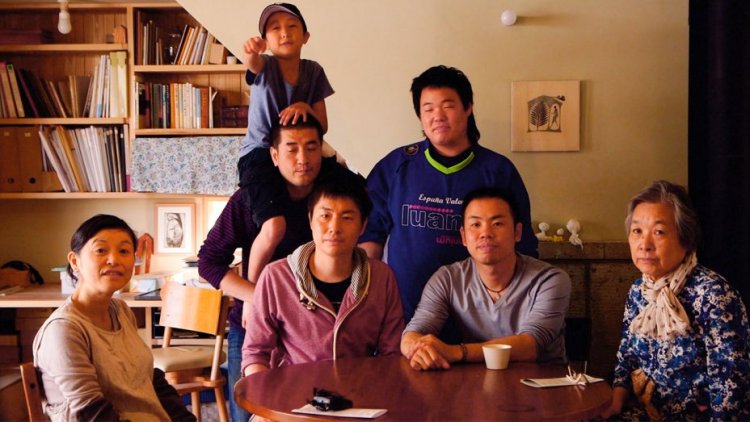
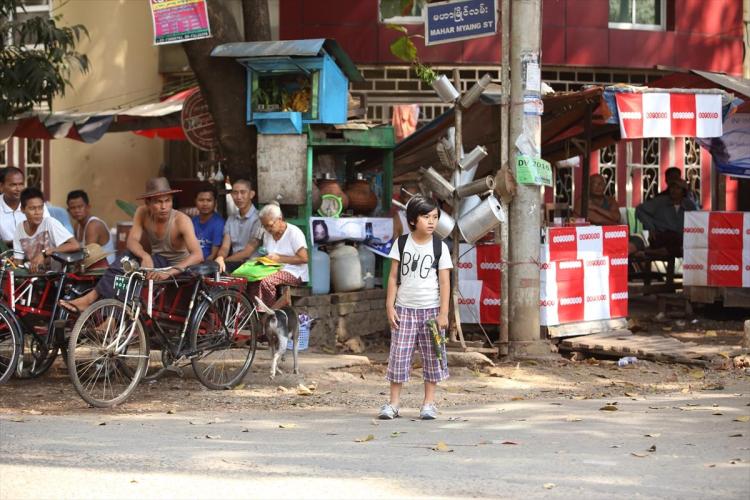
A small family from Myanmar attempts to get by undocumented only to face an uncertain future when their application for refugee status is rejected. The two children born in Japan struggle to identify with their Burmese heritage while their parents face more immediate concerns for the family’s safety and security. Intro and Q&A with director Akio Fujimoto.

The Night is Short, Walk On Girl

The night is short still

Masaaki Yuasa adapts Tomihiko Morimi’s novel in which a university student undergoes a surreal odyssey through nighttime Kyoto in search of a beloved childhood book while her not so secret admirer has a few adventures of his own in the hope of winning her heart. Review.

We Make Antiques!

We make antiques still 1

Comedy from Masaharu Take in which a smoozy antiques dealer is unwittingly sold a fake tea cup claiming to have belonged to famous tea master Sen no Rikyu only to decide if you can’t beat ’em join ’em and plan a heist with the guys who just scammed him.

Toward a Common Tenderness

Common tenderness still 1

Documentarian Kaori Oda weaves together unused footage from her time with Béla Tarr at his Film Factory in Sarajevo in 2013-2016 as well as her life in Japan to explore a path towards connection. Intro and Q&A with director Kaori Oda 

Side Job.

Sidejob banner

Ryuichi Hiroki adapts his own novel in which a young woman living in temporary accommodation following the 2011 earthquake attempts to escape the crushing inertia of her uncertain life through undertaking casual sex work in Tokyo. Review.

Sennan Asbestos Disaster

Sennan Asbestos Disaster still 1

Kazuo Hara follows the residents of Sennan, Osaka as they pursue legal compensation from the government for exposing them to pollution from asbestos factories. Intro and Q&A with director Kazuo Hara, producer Sachiko Kobayashi, and film participants 

Yocho (Foreboding)

Yocho banner

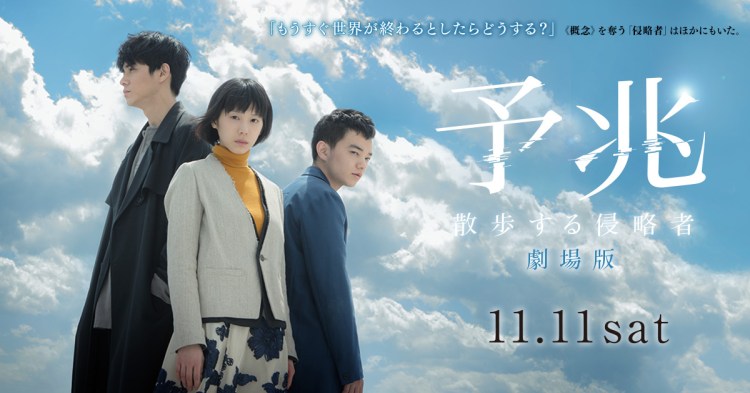
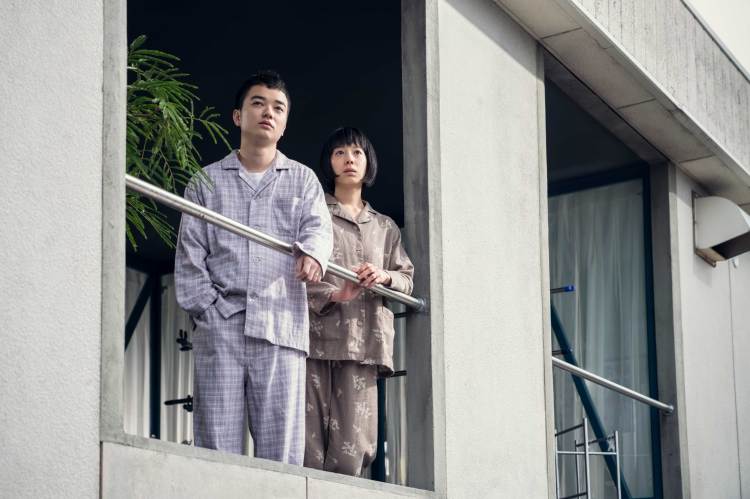
Kiyoshi Kurosawa revisits the world of Before We Vanish with a cut down of his TV companion piece in which a factory worker stumbles on the alien invasion thanks to her corrupted healthworker husband. Review.

Call Boy

call boy still 1

An apathetic student begins to find a sense of purpose when sucked into the world of the male escort in the latest from Daisuke Miura.

KUSHINA, what will you be

kushina

Okinuma took off and founded an all female colony in the woods with her pregnant 14-year-old daughter, Kagu. Now that Kagu’s daughter Kushina is approaching the same age her mother was when they first left modern society behind she is beginning to ask questions about the outside world. When an anthropologist and her male assistant stumble onto the colony Okinuma will do whatever it takes to protect it. Intro and Q&A with director Moët Hayami and star Tomona Hirota

Radiance

radiance

A young woman attempting to create audio description scripts for the visually impaired is tested by a former photographer trying to come to terms with losing his sight in Naomi Kawase’s romantic drama. Review.

Mori, The Artist’s Habitat

39415762940_128b534524_o

Shuichi Okita chronicles the later life of artist Morikazu Kumagai who has barely left his garden in the last 30 years but must prepare to bid it goodbye as a modern apartment complex nears completion. ReviewIntro and Q&A with star Kirin Kiki plus Cut Above Award ceremony.

Still Walking

stilll walking 1

Family divisions, secrets, and prejudices are brought to the surface as a family gathers for the memorial service for their eldest son who was killed trying to save a child from drowning in Koreeda’s classic family drama. Review.

Empty Orchestras and the Speed of Your Voice

Yeah still 1

Five experimental short films including Yohei Suzuki’s YEAH! ReviewIntro and Q&A with dir. Nao Yoshigai, dir. Yohei Suzuki and actress Elisa Yanagi

Abnormal Family

abnormal family still

Masayuki Suo’s only pink film takes the form of an Ozu pastiche centring on one very unusual family.

Tremble All You Want

tremble all you want still 1

Unfulfilled office lady Yoshika is still nursing a high school crush but when a colleague suddenly confesses his love for her, Yoshika’s cheerful fantasy world threatens to implode. Review.

Thicker than Water

Ken-en banner

Print shop owner Yuria is desperate to attract the attentions of client Kazunari but he only has eyes for her assistant and younger sister Mako. Meanwhile, Kazunari is also contending with his rowdy brother just released from jail and crashing at his apartment. Intro and Q&A with director Keisuke Yoshida 

Outrage Coda

outrage coda still

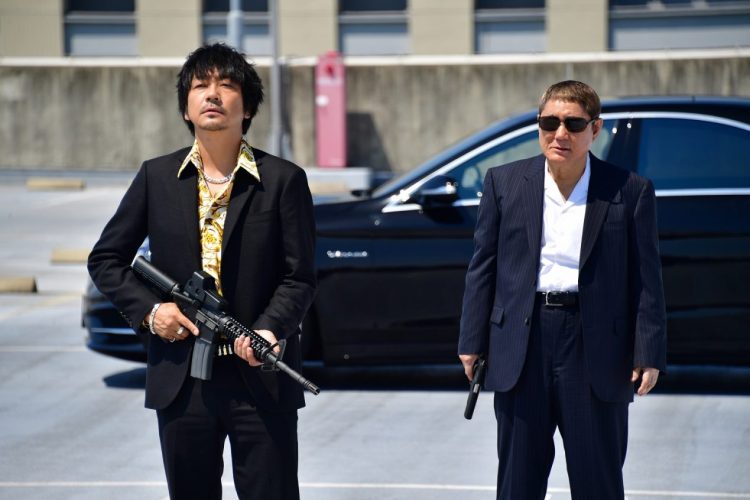
Kitano returns with the third and final instalment in the Outrage trilogy which finds Otomo in exile in Korea.

BLEACH

Bleach still 1

Tite Kubo’s hit manga gets a live action adaptation helmed by I am a Hero’s Shinsuke SatoSota Fukushi stars as Ichigo – an ordinary high school boy with orange hair and the ability to detect spirits, who comes to the rescue of imperilled Soul Reaper Rukia (Hana Sugisaki) and soon finds himself battling Hollows on her behalf. Intro and Q&A with director Shinsuke Sato.

Dear Etranger

Dear Etranger still 2

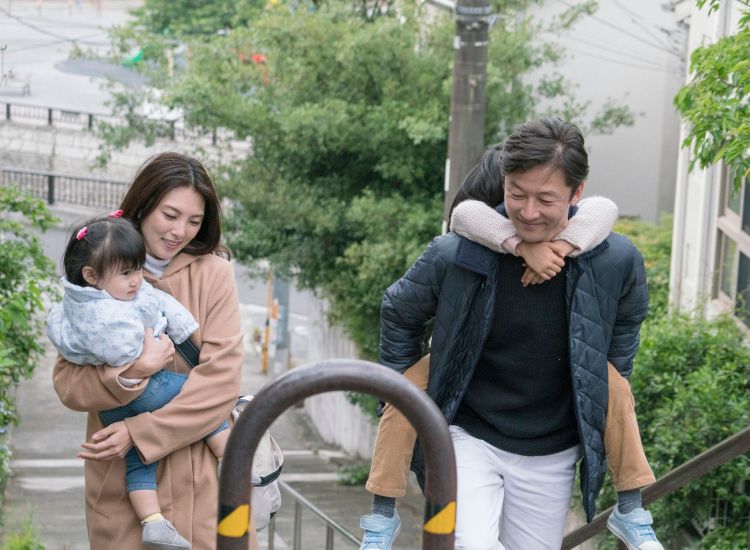
Divorced father Makoto has remarried and has two step-daughters but when his second wife discovers she is carrying their child, he begins to worry that the new baby may pull his blended family apart in this very modern family drama from Yukiko Mishima. Review.

Amiko

Amiko still 1

Lonely 16-year-old Amiko finds a kindred spirit in footballer Aomi, but when he abruptly takes off for Tokyo with a former student Amiko cannot help but follow him hoping to make sense of his sudden betrayal. Intro and Q&A with director Yoko Yamanaka.

TOURISM

tourism still 1

Nina wins the lottery and takes her friend Su with her on a trip to Singapore where they quickly grow bored of tourist hotspots and retreat to the global anonymity of shopping malls. When Nina loses track of her friend and her phone, the trip sends her on a different kind of odyssey through the “real” Singapore in the latest from Daisuke Miyazaki.

Hanagatami

hanagatami still 1

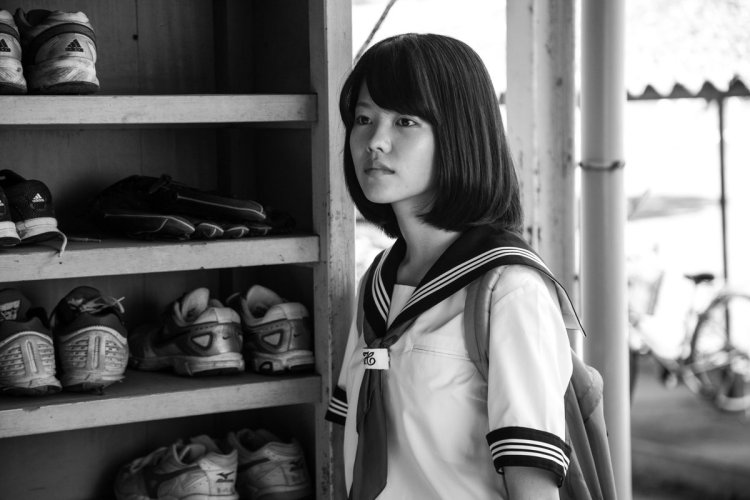
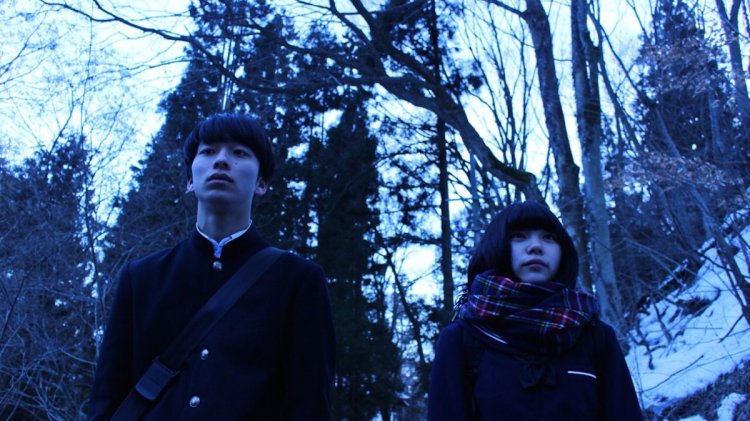
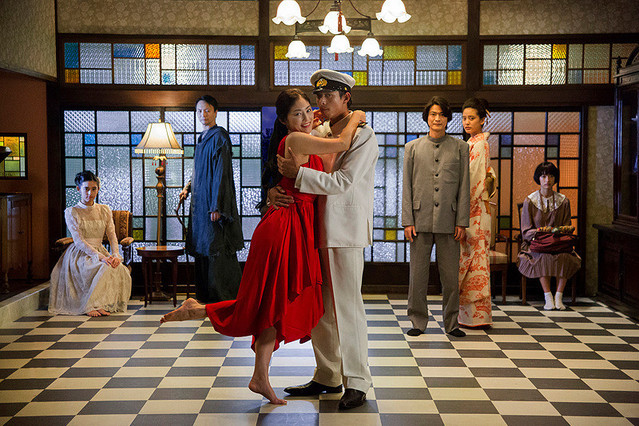
Nobuhiko Obayashi realises a long held ambition of filming Kazuo Dan’s 1937 novella of youth living in the shadow of an oncoming tragedy. Review.

Japan Cuts runs from 19th to 29th July at Japan Society New York. Full details for all the films along with ticketing links are available via the official website and you can also keep up with all the latest details by following the festival’s official Facebook page and Twitter account.

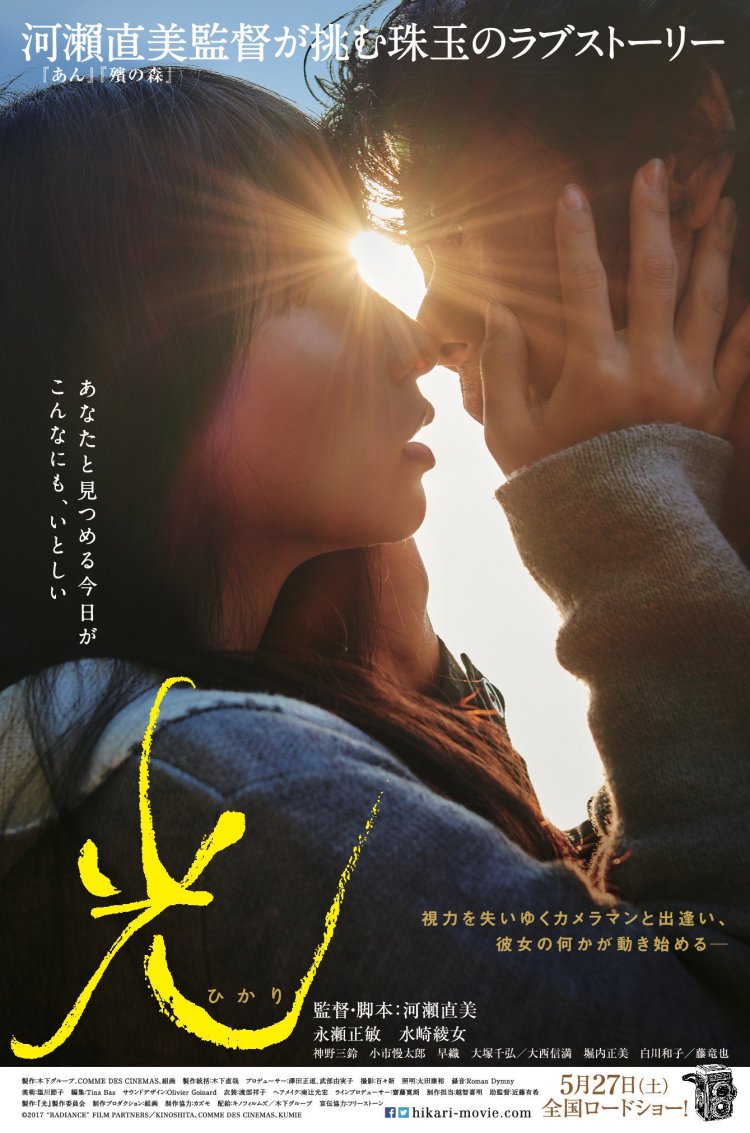
Radiance (光, Naomi Kawase, 2017)

radiance posterAs a producer claims part way through Naomi Kawase’s Radiance (光, Hikari), the aim of cinema is to connect with other people’s lives. Yet connection is something each of our conflicted protagonists seem to struggle with and something which continues to elude them as they try and fail to find the meaning in the messages of sound and image. Radiance wants to guide us to the light, but its clearest dialogue is with itself or more practically in discussion of translation as an act of intense connection even as its messages flicker in the breeze, caught in a moment of transition from one soul to another. Yet what Kawase finds is that the message is carried, even if it cannot be “translated” into text, or image, or sound, it is felt all the same.

As the film opens a young woman, Misako (Ayame Misaki), observes the world around her and turns her observations into a poetic monologue. Her actions are a kind of rehearsal for her day job which involves creating the script for an audio description that will enable people with visual impairments to enjoy cinema. In order to improve her practice, Misako and her producer hold a number of focus meetings with a group of visually impaired people who can critique her script and point out any potential weak points or moments of confusion. Most of the members of the group are of a mind to be helpful though perhaps overly polite but one, Nakamori (Masatoshi Nagase), is particularly critical of Misako’s approach and unforgiving when voicing his concerns.

Unlike most of the other participants, Nakamori is partially sighted but is suffering from a degenerative condition in which he will eventually lose his sight entirely. This fact is particularly difficult for him to come to terms with as he had previously been an award winning photographer and is losing a key part of his identity in having to face the day when he will have to put his camera down for good.

One of the other ladies at the focus session, pointing out that Misako’s script for the audio description of the film is in effect a subjective commentary, elaborates that what she got from Misako’s narration was a sense of ruined of beauty, of sadness, and the inescapable sense of loss for something that can never be recovered. The film itself is, apparently, the story of a lifelong romance approaching its end as a husband prepares to say goodbye to his wife as she slips away from him. The themes, as we later find out, are ones eerily relevant to Misako who is still mourning the loss of her father while she watches her mother fade away as dementia takes its hold.

The beauty of transience, of the sense of loss before loss, becomes the central message of the film within the film – the message that Misako could not seem to see because she was afraid to look. Fed up with Nakamori’s constant criticisms, she accuses him of lacking imagination but her own act of “seeing” is then exposed as superficial, merely a catalogue of actions without meaning or import but delivered with a subjectivity that, as Nakamori cruelly points out, “gets in the way” of his ability to connect fully with the visual world that Misako is trying to create. 

Misako misses the messages because there are things that cannot be directly understood without conscious effort – the elderly film director tells her that her interpretation of the final scenes is too “hopeful”, as a young woman she cannot comprehend the futility of a old man’s desire for life. Age cannot talk to youth, and sound cannot talk to image but still the attempt is made and a message delivered albeit imperfectly. Nakamori, having given his life to the art of photography, is eventually forced to abandon the thing he loves most only to discover something else existing underneath it while Misako is forced to confront the superficiality of her act of “seeing” which makes her attempt to “translate” image into sound a hollow exercise – something which can only be corrected by a willingness to accept that the medium is not the message. Kawase’s messages may be trite, on one level, but there is something beautiful in continuing to chase the light as it dwindles knowing that in the darkness the flame still burns.


International trailer (English subtitles/captions)

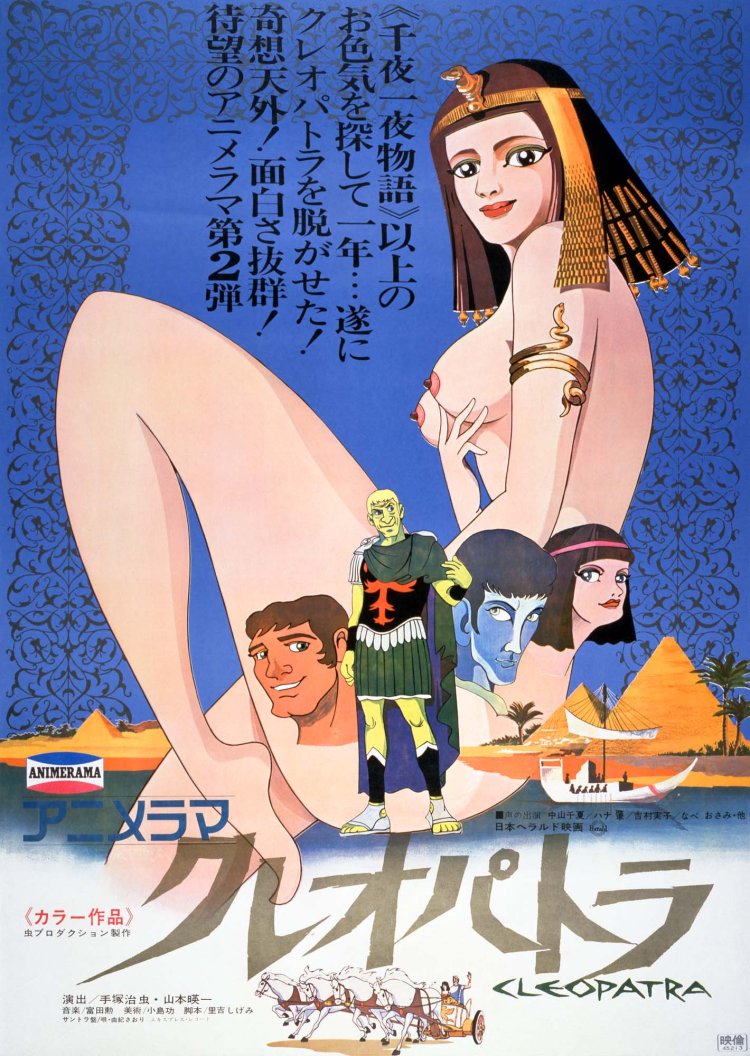
Cleopatra (クレオパトラ, Osamu Tezuka & Eiichi Yamamoto, 1970)

Cleopatra posterMushi Pro’s first real foray into feature length (and feature length it really was at over two hours) animation for adults, A Thousand & One Nights, had earned some critical plaudits but nevertheless failed to set the box office alight. A year later they tried again as manga pioneer Osamu Tezuka and experimental animator Eiichi Yamamoto reteamed for a salacious tale of ancient Egypt. Or at least that’s what was promised by the suggestive title, Cleopatra (クレオパトラ), recalling Hollywood glamour and cinematic excess anchored by beauty to echo through the ages, but what emerges is less a tale of doomed love and imperial lust than a thinly veiled attack on the American “occupation” and associated foreign policy in an increasingly politicised age.

Because Tezuka likes to be perverse, he opens not with deserts and pyramids but with a silent ode to 2001: A Space Odyssey before a space ship drifts into view and sails into a very space age tower block filled with very ordinary corridors. Our team of space warriors are part of a colonising force hellbent on conquering nations which don’t which to be conquered. The Pasatorine have mounted a resistance and Earth intelligence has got wind of a covert operation codenamed “Cleopatra”. To figure out what the name might mean, they’ve decided to send three of their best agents back in time to hang out with the lady herself and gather a few clues.

Back in Ancient Egypt, the nation has been overrun by lecherous Roman troops who ride roughshod over the local population (which includes a number of well known characters from popular 1960s manga). Caesar (Hajime Hana) himself is a jolly green giant with skin like Osiris who turns out to be a little more sympathetic than might otherwise be assumed. Nevertheless, a resistance movement has spun into action guided by the royal nanny, Apollodoria (Kotoe Hatsui), who has convinced exiled princess Cleopatra (Chinatsu Nakayama) that their best hope for freedom lies in her body which she must use as a weapon against the lusty foreign general in order that she might seduce and betray.

Cleopatra, however, is conflicted. Molested by her old nanny and falling for her unexpectedly “decent” captor, she wavers in her conviction and begins to wonder if the best path for her people might lie in working alongside rather than against her nation’s new masters. As history tells us, she may not get to make that choice for herself for her stony general has a weakness his countrymen can exploit leaving her all at sea once again.

In 1970 Japan was about to revisit the post-war security treaty with the Americans giving rise to a wide scale protests against what many saw as Japanese complicity in controversial American foreign policy and particularly the ongoing war in Vietnam. The Romans, thinly veiled stand-ins for Americans in Japan, march in triumph, oppressing the locals and erasing traditional culture in favour of “modernity”. Yet Caesar and his ilk perhaps turn out not to be so bad as once feared, seducing with false promise as they show off their wealth and prosperity whilst subtly gesturing to their superior numbers and technology to assure any doubters. The colonisers are technically our heroes – the spacemen and women from the beginning we’ve all but forgotten about have come back in time from the position of the imperialists, hoping to find out how Cleopatra’s doomed romantic destiny might inform modern insurgency, but have discovered only a righteous loathing for “occupying” forces and their relentless tendency to ruin the lives of pure hearted women for their own nefarious gains.

Perhaps emboldened by A Thousand & One Nights, Tezuka cannot resist inserting a number of idiosyncratic gags for manga enthusiasts, including a few references to his own back catalogue, while also sending up the pop-culture of the day. Cleopatra is, on one level, a distinctly lowbrow effort filled with deliberately cartoonish slapstick, silliness, and anarchic humour but it also harbours a subversive idea at its centre which was certain to prove popular with a particular section, at least, of its target audience. Mixing live action footage with experimental animation, if retaining a cartoonish sensibility, Cleopatra is a strange interdimensional political metaphor but not without its charms even in its most outrageous moments.


Available on blu-ray from Third Window Films as a part of double release with Eiichi Yamamoto’s A Thousand & One Nights.

Original trailer (English subtitles, NSFW)

A Thousand & One Nights (千夜一夜物語, Eiichi Yamamoto, 1969)

one thousand and one nights poster 2The “Godfather of Manga” Osamu Tezuka had been a pioneer of what later became the mainstream of a burgeoning industry, kickstarting TV anime in the process with the long running Astro Boy. His ambitions, however, increasingly ran towards the avant-garde and he feared that the heavy association between his production company, Mushi Pro, and genial kids’ cartoons would only lead to diminishing artistic returns even if the increasing merchandising opportunities would perhaps allow the studio to engage in other less profitable areas such the adult-orientated anime he longed to produce. By the late ‘60s, Tezuka’s polite, inoffensive brand of child-friendly adventure stories were becoming distinctly old hat while the “gekiga” movement, acting more or less in direct opposition, continued to gain ground with older readers keen to move on to more adult fare. The Animerama series was intended to prove that Tezuka still had something new and dynamic to bring to the table and that there was a market for “racy” animation which embraced mature themes and experimental artwork.

The first of the Animerama films, A Thousand & One Nights (千夜一夜物語, Senya Ichiya Monogatari), is, as the title implies, loosely inspired by classic Arabian folktales as its hero “Aldin” (Yukio Aoshima) finds and then loses true love, overcomes the urge for vengeance, is himself corrupted by wealth and power, and then is returned to the very same state in which we first encountered him walking off into the sunset in preparation for the next adventure.

The tale begins with a slave auction at which the lowly water seller Aldin first catches sight of the beautiful Milliam (Kyoko Kishida). He tries to buy her but is too poor while the son of the local police chief (Asao Koike) outbids all to win the prize. However, in the first of many strokes of luck that will befall Aldin, a sandstorm allows him steal away with Milliam who falls in love with him too and gives herself willingly to a man she sees as an equal rather than a master. Sadly, their true love story is short lived and they are soon separated sending Aldin off on a quest to return to his beloved that will only end in tragedy.

Despite the later protestations that the love of Aldin and Milliam is one of equals in which there are no masters or slaves, only a man and a woman, it remains true that Aldin watched the slave auction with a degree of titillation and would have bought Milliam had he only been able to afford her. Surviving on his wits, Aldin is a cheeky chancer waiting for that big lucky break he is sure is waiting somewhere round the corner but he is not, perhaps, above becoming that which oppresses him. Later, having become a wealthy and powerful man, he uses his wealth and his power in the same way that others use theirs against him in pressuring a vulnerable young girl to become his mistress against her will, ripping her away from her own true love in the same way he was once ripped away from Milliam by another man wearing a crown. As a “king” he wonders what “power” is, pushing his as far as it will go in order to find out and risking “losing himself” in a way he’d once thought he’d overcome in rejecting a pointless act of vengeance that would forever have changed him.

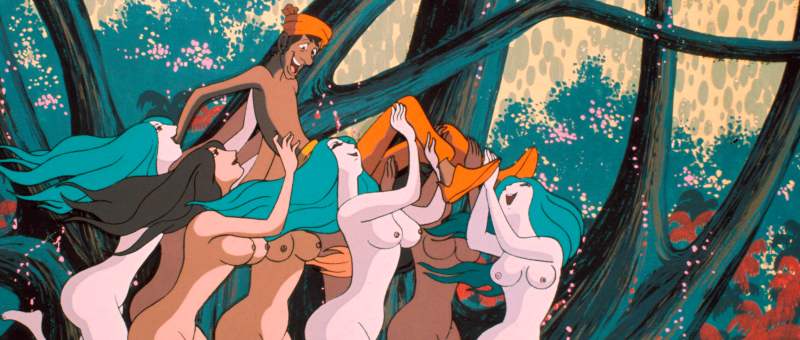
Milliam, and later Jallis – the daughter of Aldin and Milliam raised by their worst enemy, Badli (Hiroshi Akutagawa), fight for the right to decide their own romantic destiny. Like Madlia (Sachiko Ito), the feisty bandit’s daughter, they resist the social codes of their era in which women are merely prizes divided among men and actively attempt to free themselves through love only to find defeat and despair. Yet love, or more precisely lust, can also be a force of constraint and or ruin as Aldin discovers on a paradise island when he unwisely decides to abandon Madlia, who has also fallen in love with him, for the empty pleasures of orgiastic sex with the voracious islanders whose unrestrained desire soon threatens to consume him whole.

A picaresque adventure, A Thousand & One Nights is a bawdy, flippant retelling of the Aladdin myth in which the hero begins as a poor yet free and cheerful young man before experiencing what it is to be wealthy and all powerful and discovering that it only makes him mean and miserable. Shifting from model shots to live photography and abstract to cartoonish animation, Yamamoto’s direction may appear restrained in comparison to the more outlandish and surreal Belladonna of Sadness but is a masterclass in finding artistry through budgetary limitations. A psychedelic odyssey through freedom and constraint, desire and obsession, A Thousand & One Nights is a forgotten landmark of experimental animation as relentlessly strange as it is endearing.


Available on blu-ray from Third Window Films as a part of double release with Eiichi Yamamoto & Osamu Tezuka’s Cleopatra.

Original trailer (English subtitles, NSFW)

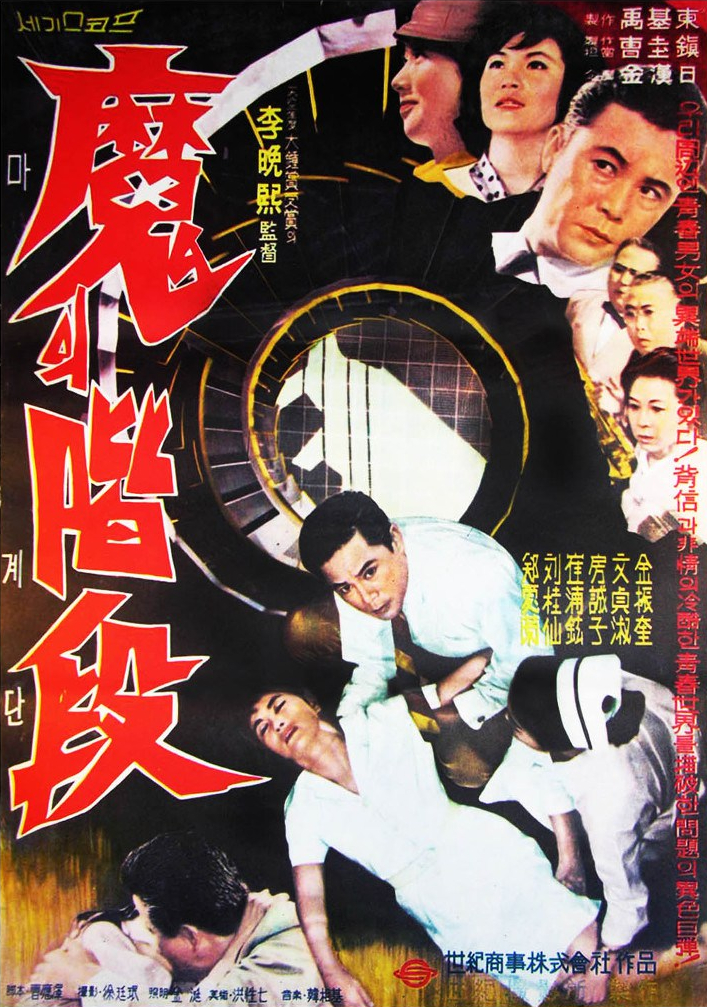
The Devil’s Stairway (마의 계단 / 魔의 階段, Lee Man-hee, 1964)

devils-staircase-poster.jpg

By 1964, Korea’s economic situation was beginning to improve and for many there seemed to be a bright light shining in the distance, a fixed point to which they could aspire and felt was in their grasp if they could only catch a lucky break. Throughout Lee Man-hee’s relatively short career (the director sadly passed away at the young age of only 45 – apparently a casualty of his fondness for drink and intensive work habit which accounts for his high output), his protagonists struggle with a conflict between the desire for the new kind of “success” their society promises them, and a feeling that they can never truly obtain it. Ambitious surgeon Dr. Hyeon (Kim Jin-kyu) attempts to climb The Devil’s Stairway (마의 계단 / 魔의 階段, Maui Gyedan, AKA The Evil Stairs) by abandoning the compassion that ought to define his profession for coldhearted pragmatism but discovers that the path has its price while his victims are not quite so passive as he’d assumed them to be.

When we first meet Dr. Hyeon he’s lounging around in bed while his female companion, Nurse Nam (Moon Jeong-suk), dresses and prepares to leave. Somewhat coldly, Hyeon tells her to exit via the back stairs and avoid being seen by the security guard on her way. Irritated, Nam leaves and the pair go back to work at the hospital the next morning pretending there’s nothing more between them than the relationship between a nurse and a chief surgeon. This situation might have continued indefinitely were it not for the fact that Jeong-ja (Bang Sung-ja), the daughter of the hospital’s head doctor, has taken a liking to Hyeon and seeing as her father has no sons to take over when he retires, an arranged marriage is in the offing. Dr. Hyeon, who is ambitious and emotionally cold, considers accepting the offer but Nurse Nam is unwilling to let him go, especially as she is pregnant with his child. When she threatens to spill the beans about their illicit relationship, he decides to kill her by dosing her up with sedatives and throwing her body in the pool behind the hospital to make it look like she drowned herself in heartbreak and shame, but Nurse Nam refuses to go quietly.

The titular “Devil’s Stairway” is a literal staircase from the hospital floor to the head doctor’s office. There has recently been accident in which the bannister was broken and a woman was killed. The banister is repeatedly mended throughout the film but represents a point of fracture in the spiritual path to success. Nurse Nam is another early casualty when she and Hyeon argue in the middle of the stairs and the recently mended bannister breaks as he struggles with her. Despite the minimal drop to the floor, Nam is left with serious injuries requiring surgery, loses her baby, and gains a conviction that Hyeon bears her ill will. Her position is extremely difficult – the accident has exposed the fact that she had conceived a child outside of wedlock and though she has not yet disclosed the name of the father, Hyeon fears that she will destroy his bright future either by speaking out or through forcing him to marry her to avoid social disgrace.

Hyeon gives in to darker instincts. He tells Nam that his heart is hers, perhaps intending to carry on an arrangement even after he’s decided to accept the marriage proposal, but excuses himself for stringing her along by reminding her of his lack of financial stability and comparatively low social status. We are reminded later that he is old be unmarried and, even stranger, is assumed to be a “virgin” – a solitary, perhaps dull, bachelor not known for mixing with women. This again signals his coldhearted ambition – he waits and he calculates. He wants a hospital of his own and knows his only way to get one is to marry into it, and so he does even if it means sacrificing “love” and emotional happiness for the cold comforts of conventional success and the false acclamation of social status.

Hyeon thinks he’s got away with it, but his crime haunts him. Going slowly out of his mind, Hyeon sees Nam everywhere, placing a strain on his relationship with his new wife who grows wary of his increasing violence and bad temper. His madness culminates in a tense surgery scene in which everyone around him has Nam’s face and he finds himself surrounded by his crime, forced to confess himself as a murderer in order to free himself of her ghost. Yet, things are not quite as they seem and it is not he alone who finds his grand plan floundering.

Hyeon posits his poverty as a reason for his crime, but it’s his greed which guides him towards the Devil’s Stairway. He could have married Nam, had his child, and led an ordinary middle-class life of relative comfort perhaps even opening his own clinic in good time, but he chose the quick fix in marrying for money and (literally) throwing over the woman he claimed to love to ease his feelings of insecurity and resentment at his position in the social order. His murder is cowardly but, as Nam points out, the law may protect him while there are precious few looking out for her, a betrayed woman, pregnant outside of marriage, and without a family to press her case.

As he did in the same year’s Black Hair, Lee co-opts the murkiness of the film noir, sending its sense of betrayed morality into the realms of the gothic with an ever increasing atmosphere of supernatural dread. The pond seems to emanate evil while the stairs beckon ominously, the wind rattles the doors open without warning and the rain pours down outside adding to the claustrophobic gloom of the creepy old hospital as if attempting to embody the evil that lies at its centre. Drawing heavily from Les Diaboliques, Lee declares no winners in his tale of fractured morality and emotional betrayal, painting it as a symptom of a confused era in which all emerge tarnished from a struggle to gain some kind of personal agency in an otherwise oppressive environment. Taut to the last, The Devil’s Stairway is a forgotten masterpiece of psychological horror and a mild condemnation of a society’s slide into national paranoia and greedy consumerism at the cost of true human feeling.


Available to stream online via the Korean Film Archive’s YouTube Channel.

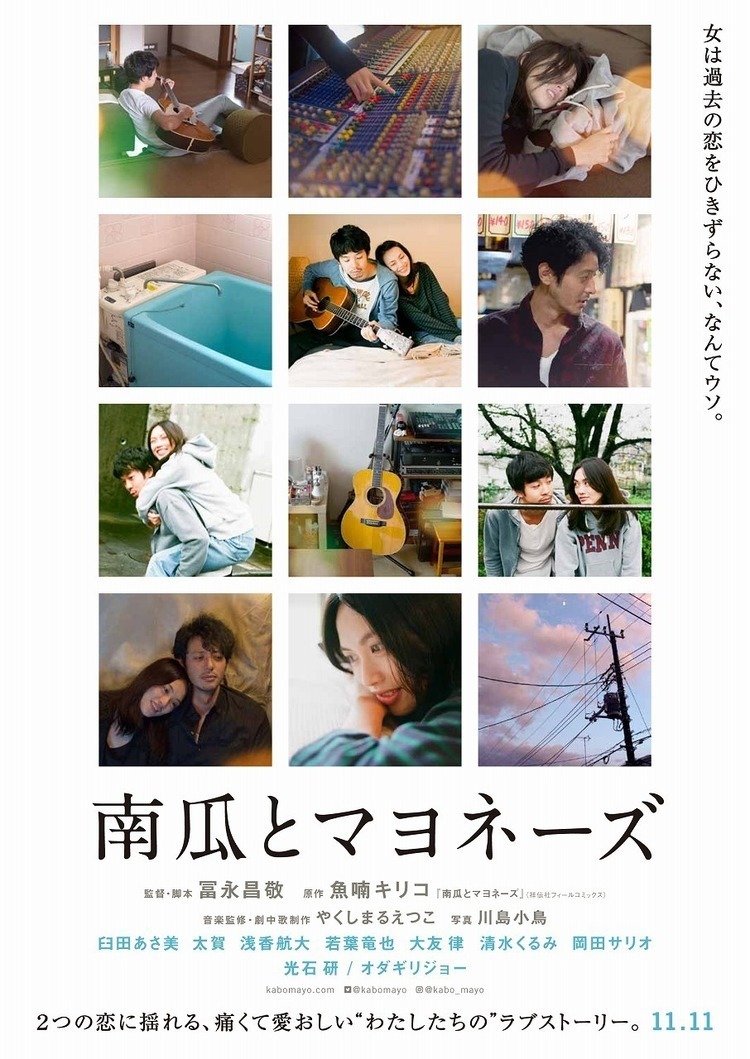
Pumpkin and Mayonnaise (南瓜とマヨネーズ, Masanori Tominaga, 2017)

Pumpkin and Mayonnaise posterIt’s important to be supportive towards your partner’s dreams, but what if your support is actually getting in the way of their development? The question itself never seems to occur to the heroine of Pumpkin and Mayonnaise (南瓜とマヨネーズ, Kabocha to Mayonnaise) as she descends deeper and deeper into a dark web of wilful self sacrifice hoping that her singer songwriter boyfriend will finally get his act together and come up with some new material. Adapted from the manga by Kiriko Nananan, Masanori Tominaga’s charting of a modern relationship is perhaps slightly more hopeful than those which have previously featured in his movies but nevertheless takes his heroine to some pretty dark places all in the name of love.

Tsuchida (Asami Usuda) is a 20-something woman living with her aspiring rock star boyfriend, Seiichi (Taiga). In order to facilitate his art, she has convinced him to give up work while she supports the couple financially through her job at live music venue. Seiichi, however, remains conflicted about the arrangement and hasn’t written anything of note in months. In fact, as Tsuchida tells a colleague, he barely leaves the house which means he’s not likely to be suddenly inspired either. What Seiichi doesn’t know is that the money from Tsuchida’s regular job isn’t quite enough and she’s started supplementing her income through working in a hostess bar. Though not naturally suited to the work, she soon picks up a “particular” client (Ken Mitsuishi) who offers her some “overtime” at a hotel. Tsuchida isn’t quite sure but having come so far she can hardly turn back now, even if the guy is a pervert with a school girl fetish. Hiding the money in a cigarette box in shame, Tsuchida is eventually caught out and forced to confess to Seiichi who is horrified, placing a serious strain on their relationship.

Just as her relationship with Seiichi starts to go south, Tsuchida runs into an old flame, Hagio, who is everything Seiichi isn’t – brash, arrogant, confident, and very much not the sort of man to make a life with. Nevertheless, Tsuchida can’t help looking back and remembering how madly in love she was with Hagio (Joe Odagiri), forgetting that she was just as madly in love with Seiichi or she wouldn’t have gone to all this trouble for his benefit. Hagio himself cites Tsuchida’s all or nothing intensity as one reason he ended the relationship the first time round, she was just too into him and he found it annoying.

Seiichi, a quieter, introspective sort, never found Tsuchida’s devotion irritating but the pressure of her expectation was perhaps a barrier to his artistic success. Staying home all day, bored and depressed, Seiichi rarely found the inspiration to write between brooding about his lack of progress and feeling guilty that he couldn’t pull his economic weight. To his credit, Seiichi harbours no particularly sexist notions towards Tsuchida’s being the family earner, but he does mildly resent a barbed comment from a friend who criticises him for his “purist” stance in accusing his former band members of selling out when he is being kept by his girlfriend. Likewise, he doesn’t reject Tsuchida for engaging in prostitution or for “cheating” on him, but turns his anger inward in resenting that she felt forced to go such great lengths for the music that he isn’t quite so confident about anyway.

The problem is that Tsuchida gets far too into her idealised notions of romance rather than directly engaging with the person in front of her. She pushed Seiichi towards music and encouraged him to fulfil his dreams but in the end stifled them with her unforgiving intensity. Likewise, she ends up over engaging in Hagio’s hedonistic, devil may care lifestyle and never really stops to think where it’s going to take her. Only near the end does she begin to approach a level of self realisation which allows her to see that her relationship with Hagio will never work out because she remains afraid to enter a true level of intimacy with him in fear that he won’t like what he sees and will leave her.

Told from Tsuchida’s perspective with frequent voice overs to let us in on her interior monologue, Pumpkin and Mayonnaise is a messy “grownup” love story between three people who are still in the process of growing up. Artistic integrity rubs up against relationship dynamics as Tsuchida is forced to examine her own behaviour and realise she often, intentionally or otherwise, sabotages her dreams by attempting to impose her own singular vision upon them rather than simply let them be. As in real life, there may not be a “happy” ending, in one sense at least, but there is still the possibility of one further down the line for a woman who’s finally accepted herself and is willing to let others do the same.


Screened at Nippon Connection 2018.

Original trailer (no subtitles)

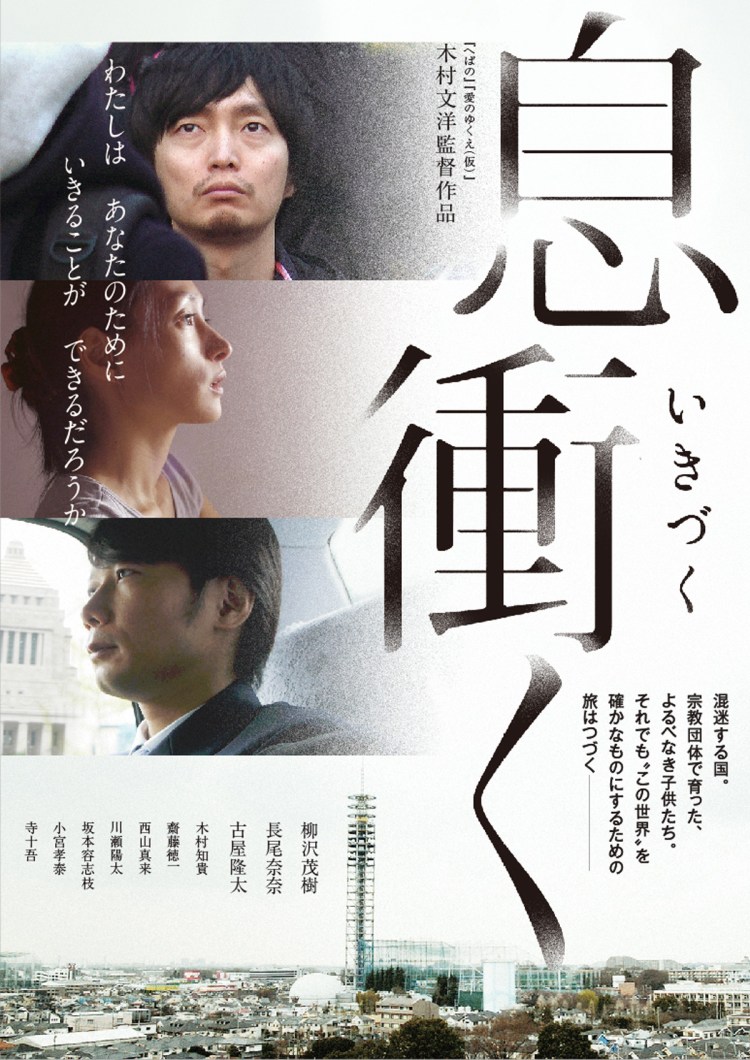
Breath of Rokkasho (息衝く, Bunyo Kimura, 2017)

Breath of Rokkasho posterIndividual desire versus responsibility to the collective is something of a major theme in Japanese cinema. The fallible ideologue at the centre of Breath of Rokkasho (息衝く, Ikizuku) believes individualism is the key to world happiness, implying that a collection of fulfilled individuals would amount to a fulfilled society, but then again his logic is perhaps hard to follow when he cares so little for other people’s freedom. Taking place in the post-Fukushima world, Rokkasho wants to extend this idea through examining the complexity of the anti-nuclear movement and the political forces which advocate for it while ordinary people largely sit back in silent disapproval. The ideal society, if there even is such a thing, will probably not be built by those in power but by those who manage shake off the problematic legacy of the past in order to embrace their “individual” wills but with the collective good in mind.

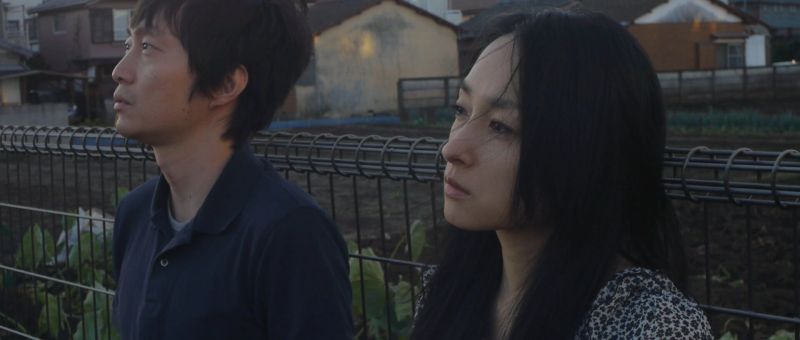
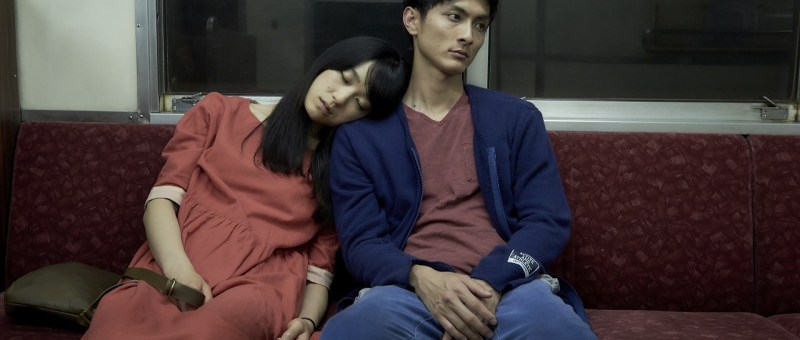
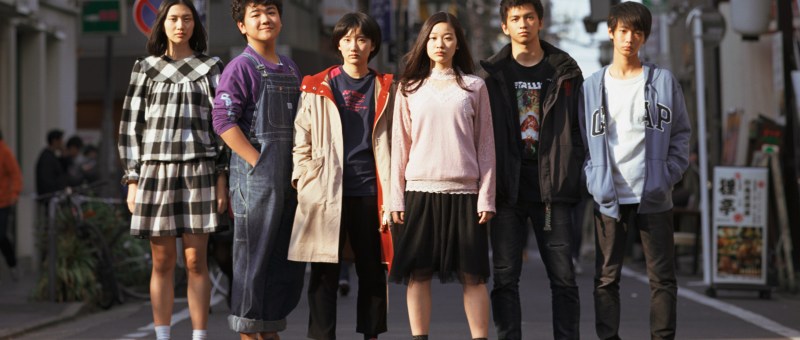
Norio (Shigeki Yanagisawa), Yasuyuki (Ryuta Furuya), and Yoshi (Nana Nagao) were raised in a politicised Buddhist cult, The Seed Association, which has a strong interest in ecological affairs and therefore the anti-nuclear movement. Each lacking fatherly input, the three youngsters fell under the spell of the cult’s most prominent member, Mr. M (Satoru Jitsunashi). Mr. M however abruptly upped and left them, abandoned without hope or answers. 20 years later, Norio is a civil servant also working for the Seed Association on political campaigns while Yasuyuki has become the new golden boy whom many tout as the natural successor to Mr. M. Yoshi left the sect at a much younger age and is now a single mother in the middle of what seems to be a fairly messy divorce.

Looking up at the Tanashi Tower (also known as Sky Tower West Tokyo) – a “state of the art” radio tower completed in 1989 midway through a period of unprecedented economic prosperity and named after the town which used to stand here the name of which literally means “no rice”, the three kids ask Mr. M if it’s possible to see the Nighthawk Star from down below. He tells them he doesn’t know, but they can look for it together. Mr. M did not help them, he disappeared and left them with only more questions and an even shakier relationship with their familial pasts. Each badly let down by parental figures who either abandoned their families to join the cult out of nuclear fear, committed suicide, or were simply distant and neglectful, neither Norio, Yasuyuki, or Yoshi has been able to step into the adult world with any degree of confidence or faith in its teachings.

Only by confronting their difficult pasts can the trio begin to unblock their individual paths. A visit to the long absent Mr. M who has apparently embraced full individualism as a hermit farmer who dresses in a comical baby chick’s costume complete with squeaky claw-shaped slippers, begins to show them that their faith in his teachings may have been misplaced. Mr. M claims that the human race is not yet strong enough to live only by thinking of its own happiness, something that he feels would bring the greatest happiness to all mankind. Refusing to recognise the “selfishness” of his philosophy, Mr. M has withdrawn from society and made himself the centre of a happy nation of one.

Parental betrayal becomes a major theme, eventually extending to the paternity of the state in its repeated failures to protect and care for its children. The English title of the film references the Rokkasho nuclear reprocessing facility which has become an ongoing scandal in its 20-year series of construction delays with 23 postponements issued since its original 1997 projected date for completion. Norio, the melancholy civil servant, hails from the town himself – in fact his mother took him away from it precisely because she feared a nuclear disaster. Yet The Seed Association, or anyone else for that matter, has not been able to solve the nuclear issue even in the post-Fukushima era. Engaged in the business of “politics” the sect’s intentions have become blurred as they contemplate their survival in an ever shrinking society, subject to the same political games of manipulation and backbiting as any other party. Gradually disillusioned with the cult’s hypocrisy and didacticism, Norio considers forging his own path – something which sets him at odds with Yasuyuki whose faith is also shaken only he’s invested far too much to allow himself to acknowledge it.

The Japanese title, by contrast, simply means to gasp for air. Trapped fast in society filled with corrupt, conflicting values each of the three struggles to find a foothold for themselves as they flounder wildly without guidance or aim. Yet in being forced to confront themselves and their pasts there is a movement towards progress, or at least a strong desire to find it. They, like their nation, have been betrayed and struggled to deal with their betrayal, but have managed to find their own essential truth even so and along with it the ability breathe deeply even when the air is thickening.


Screened at Nippon Connection 2018.

Original trailer (no subtitles)

Moon and Thunder (月と雷, Hiroshi Ando, 2017)

Moon and Thunder posterThe family is coming in for another round of fierce criticism in Japanese cinema where the “family drama” has long been revered as a representative genre. Hiroshi Ando who has hitherto been more interested in atypical romantic relationships is the latest to reconsider whether family is really all it’s cracked up to be in adapting Mitsuyo Kakuta’s novel, Moon and Thunder (月と雷, Tsuki to Kaminari). Two children from dysfunctional homes now fully grown struggle to adapt themselves to the nature of adult society, unsure if they should remove themselves from it entirely or force themselves into the socially expected roles they fear they don’t know how to play. Yet perhaps what they find in the end is not so much a talent for conventionality as an acceptance of life’s many imperfections.

20-something Yasuko (Eriko Hatsune) lives alone in her family home following the death of her father (Jun Murakami). She has an unsatisfying job in the local supermarket and is in an unsatisfying relationship with a co-worker who wants to get married but she isn’t convinced. Yasuko’s striving for an “ordinary” life is disrupted when Satoru (Kengo Kora), the son of one her father’s former girlfriends who lived with them for a few months 20 years ago, suddenly tracks her down. The reconnection between them is instant and easy but also confused, somewhere between siblings and lovers as they resume the physical intimacy they shared as children but on an adult level.

Satoru, a drifter like his flighty mother (Tamiyo Kusakari), pushes Yasuko towards a consideration of the idea of family which she’d long been resisting. She becomes determined to track down the biological mother who abandoned her when she was just a toddler, hoping to find some kind of answer to the great riddle of her life. Her birth mother, however, fails her once again. Kazuyo, faking tears for the reality show cameras reuniting her with her daughter, is a selfish woman who claims she left her country home because it was boring and that she left her daughter behind because she said she didn’t want to go. Feeling as if she’s being blamed for her own abandonment Yasuko is left with only more confusion and resentment but does at least discover something by accidentally encountering her younger half-sister, Arisa (Takemi Fujii), who shows her that life with her mother might not have been very much different than without.

Yasuko and Satoru revert to their childhood selves because that brief period 20 years ago is the only time either of them ever experienced what they felt to be a “normal” family life as they played together happily and were well fed and cared for by adults acting responsibly. It was however all over too soon – Naoko, Satoru’s drifting mother, upped and left just as she always does. Someone probably left her years ago, and now she makes sure to leave them first before she can be can rejected. Naoko is the only “mother” Yasuko can remember, and her abandonment the most painful in her long memory of abandonments. First came Satoru, and then Arisa her sister, and finally Naoko too returning, filling Yasuko’s home with an instant family that at times seems too perverse and difficult to bear.

Yet she struggles with the idea of “family” itself as something she’s supposed to want but perhaps doesn’t out of fear it will fail her. She considers marrying her workplace boyfriend even though it appears she doesn’t particularly like him and they aren’t suited, solely because his proposal offers her the “normal”, “conventional” kind of life she both fears and longs for. With Satoru she has found a kind of love that is more complicated than most, two lonely children looking for a home and finding it in each other but each fearing that they will not be able to bear the anxiety of its potential end. Yet rather than continue onward along the same dull path she’d walked before, longing for soulless normality, what Yasuko discovers is that she’ll be OK on her own even if things don’t work out in the way that most would consider “normal”. Abandoning past and future, Yasuko begins to accept her presence in the present as a woman with possibilities rather than a passive object clinging onto the life raft of “normality”, accepting that nothing is forever but that once something starts it never really ends.


Screened at Nippon Connection 2018.

Original trailer (no subtitles)

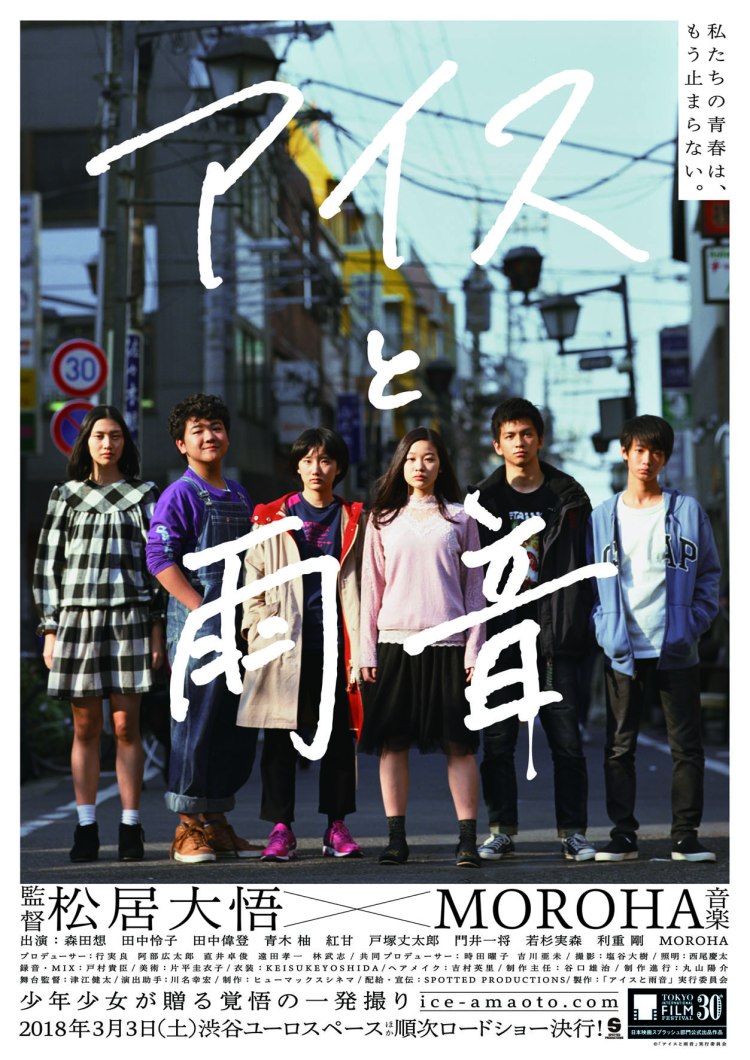
Ice Cream and the Sound of Raindrops (アイスと雨音, Daigo Matsui, 2017)

プリントThe youth movie has long held a special place in Japanese cinema but it would be fair to say that the fire has gone out of late, modern youth dramas are generally sad rather than angry. Daigo Matsui was in an enraged mood when he brought us Japanese Girls Never Die – a chronicle of female elision in an intensely misogynistic society. Now he brings his camera down a little to take a look at the incendiary play by boundary pushing British playwright Simon Stephens, Morning, through the eyes of real teenagers as their own hopes and dreams are suddenly pulled away from them by an act of “unfairness” which is perfectly typical of the treacherous adult world obsessed with rationality and not at all interested in their feelings.

Shot entirely in one take, Ice Cream and the Sound of Raindrops (アイスと雨音, Ice to Amaoto) masterfully condenses the one month rehearsal period of the play into a mere 70 minutes through dreamlike time segues, neatly swapping aspect ratios as the “play” takes over from “real life”. Stephens’ play, set at the end of summer – the same time as the play is being rehearsed and was scheduled to be performed, is a coming of age tale in which its small town heroine attempts to deal with the impending departure of her best friend for university by embracing the “freedoms” of youth only to discover that not all transgressions are cost free.

In a bid for “realism” the play’s director, played by Matsui himself, has cast real local teens by means of an open audition, but times are tough for the arts. With no “names” in the cast, ticket sales are slow. The producers have decided to pull the production and cut their losses ahead of time. The youngsters are obviously upset. This was, after all, their big chance and they’ve worked hard only to be told that all their efforts are worthless because they just don’t have “it”. No one cares about their feelings, no one cares about their wasted time, no one cares about them.

The actors and actresses play characters with their real names, slipping into and out of the theatrical world with little warning until the two begin to blend almost seamlessly and it becomes impossible to tell which level of theatricality best represents the teens’ inner lives. The “play” is also scored by a kind of Greek chorus in the form of a slightly older rapper/performance poet who offers a more direct commentary on the general feelings of hopelessness which have begun to plague the young cast who know they will be emerging into a world with few possibilities in which they will be expected to abandon their youthful dreams for an idea of conventional success which is destined to remain far out of their reach.

The cutesy title, Ice Cream and the Sound of Raindrops, hints at another kind of youth story – the melancholy journey into nostalgia as an older protagonist looks back on a beautiful summer many years ago spent with friends who perhaps are no longer around. Matsui’s film has some of that too, though his protagonists are younger. The teens almost eulogise themselves, telling their story as if it’s already over, walking like ghosts through halls of memory. They’re sad, but they’re angry too and they don’t understand why their platform has been so arbitrarily removed just as they were preparing their voices to be heard.

If youth wants the stage it will have to take it by force. Sick of being blamed, of being told that their failures are all lack of talent rather than luck, the kids make themselves heard even if they do so through a veil. Daigo Matsui gives them back their stage, enriching it with his own artifice in the thrillingly complex choreography of his oscillating one take conceit. Anchored by a standout performance from leading lady Kokoro Morita on whom many of the transitions depend, Ice Cream and the Sound of Raindrops returns the youth film to its previous intensity with a rebel yell from the disenfranchised next generation who once again find themselves at odds with the society their parents’ have created and see no place for themselves within it which accords with their own sense of personal integrity. 


Screened at Nippon Connection 2018.

Original trailer (no subtitles)