The Cannes film festival has announced its first clutch of titles and while it’s not a bumper year for East Asian cinema, the few titles selected are among the most highly anticipated.
Japan
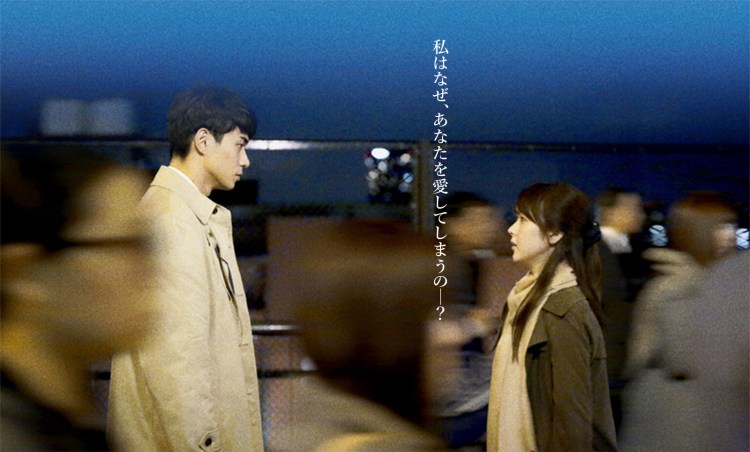
Asako I & II – Ryusuke Hamaguchi’s followup to Happy Hour is another lengthy drama following a young woman whose boyfriend mysteriously disappears. Two years later, she meets a man who looks exactly like him but has a totally different personality.
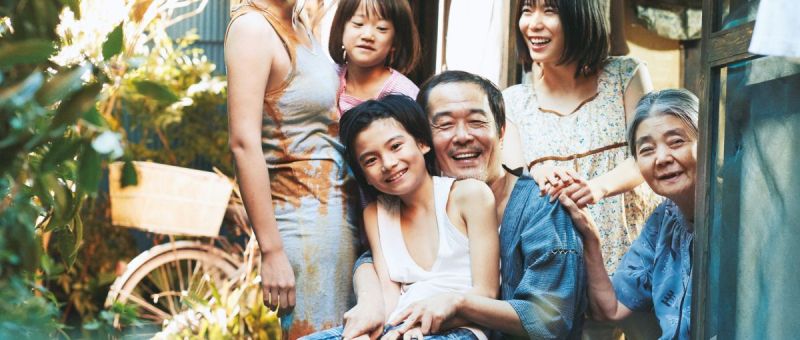
Shoplifters – the latest from festival favourite Hirokazu Koreeda, Shoplifters boasts an A-list cast including Lily Franky, Sakura Ando, Kengo Kora, Sosuke Ikematsu, Chizuru Ikewaki, Yuki Yamada, Yoko Moriguchi and Akira Emoto and centres on a family of petty criminals who take in an orphaned little girl.
China
Ash Is Purest White – Jia Zhangke returns with another socially conscious crime drama as a woman shoots a gang member to protect her mobster boyfriend and winds up in prison for five years. When she gets out, she goes looking for her former love…
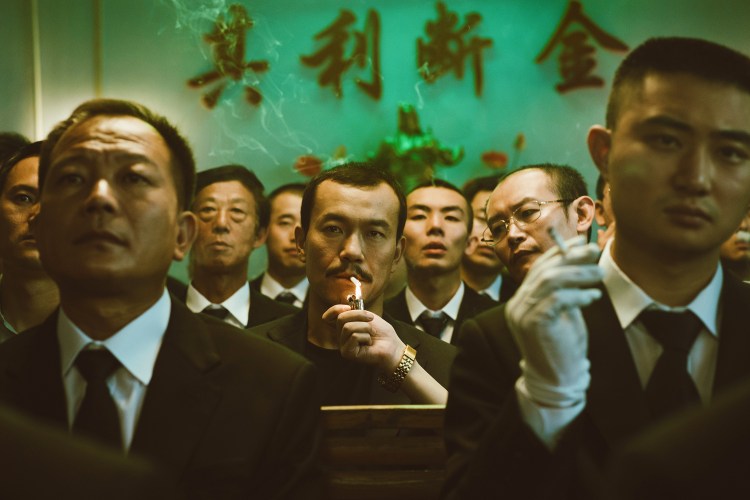
Long Day’s Journey Into Night – Bi Gan’s followup to the critically acclaimed Kaili Blues stars Tang Wei, Sylvia Chang, and Huang Jue and follows a murderer who returns to his hometown haunted by memories of the woman he killed for.
Dead Souls – Wang Bing’s eight-hour documentary about dying expands on the themes of his previous doc, Mrs. Fang.
Korea
Burning – the long awaited return by Korean auteur Lee Chang-dong, Burning adapts a short story by Haruki Murakami and revolves around three people – a novelist, another man, and a fashion model, as they become embroiled in a strange incident.
The Spy Gone North – Yoon Jong-bin’s thriller follows a South Korean spy on an infiltration mission in the North.
Thailand
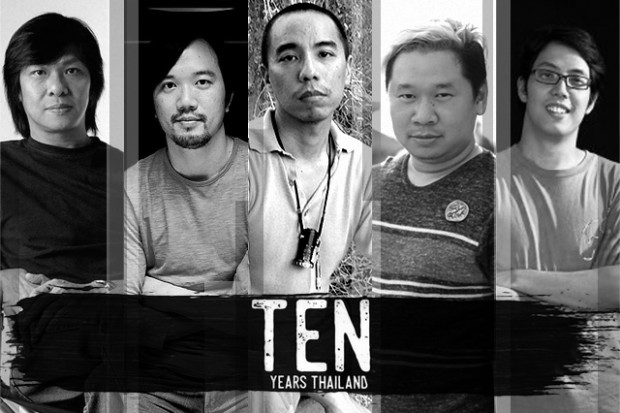
10 Years in Thailand – inspired by the Hong Kong original, four Thai directors – Aditya Assarat, Wisit Sasanatieng, Chulayarnon Sriphol, and Apichatpong Weerasethakul, consider what their nation will look like in 10 years time.
The Cannes film festival runs 8 – 19th May, 2018. Further titles may well be announced in the coming weeks. You can keep up to date with all the latest Cannes news via the festival’s official website, Facebook Page, Twitter account, Instagram and YouTube Channels.
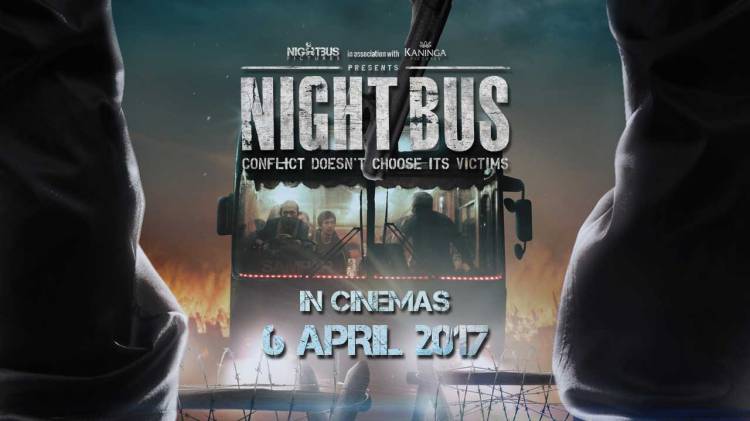
The Udine Far East Film Festival returns for its 20th edition in just over a week’s time. As usual, the festival has brought together some of the most highly anticipated East Asian cinema releases in its 81 film programme which also includes a retrospective dedicated to veteran actress Brigitte Lin who will be receiving the festival’s coveted Golden Mulberry Award. The festival will open with Netflix Original Steel Rain making its Festival Premiere, while Emil Heradi’s Indonesian thriller Night Bus will close the festival on 28th April.
Full programme:
China
A Better Tomorrow 2018 – Ding Sheng’s remake of the ’80s John Woo classic in which two brothers find themselves on opposite sides of the law.
Brotherhood of Blades II: The Infernal Battlefield – Lu Yang’s prequel to the 2014 original follows Shen Lian as he searches for clues to expose a conspiracy.
The Legend of the Demon Cat – Chen Kaige adapts a Japanese novel by Yoneyama Mineo in which a poet and a monk follow a cat to track down a murderer. Features Chinese/Japanese cast including Shota Sometani, Huang Xuan, Hiroshi Abe, Qin Hao, and Keiko Matsuzaka.
Never Say Die – hilarious Chinese body swap comedy! Review.
Love Education – Sylvia Chang’s latest explores the impact of China’s feudal legacy as two women fight for the remains of a polygamous man.
Wolf Warrior II – Wu Jing’s gung-ho action sequel in which Leng Feng takes the fight to Africa.
Wrath of Silence – a mute father searches for clues regarding the disappearance of his son in Xin Yukun’s probing crime drama. Review.
Youth – Feng Xiaogang looks back at the Cultural Revolution through the story of the Revolutionary Ballet corps. Review.
Hong Kong/China
Operation Red Sea – Dante Lam’s Operation Mekong sequel finds elite Chinese military forces evacuating diplomatic staff after war breaks out in the Middle East. Review.
Our Time Will Come – Ann Hui tells the story of the resistance movement in World War II HK. Review.
Hong Kong
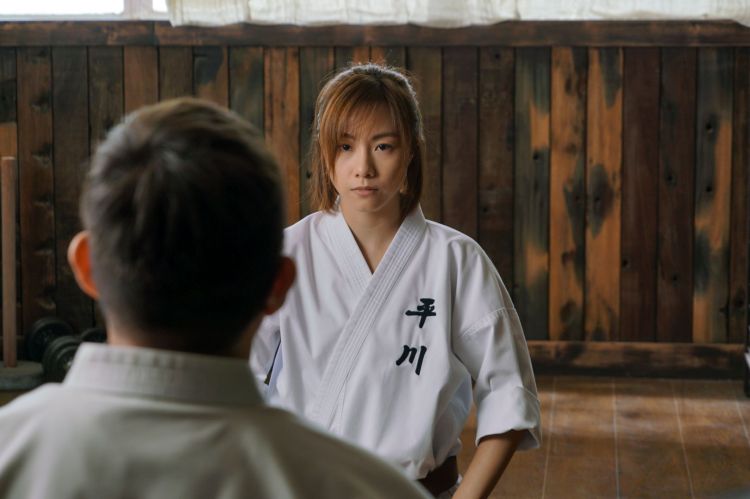
The Empty Hands – comedy from Chapman To in which a half-Japanese Hong Kong woman’s dreams of freedom from her father’s martial arts legacy are dashed when he leaves 51% of his dojo to another pupil who challenges her to a match for the right to win his controlling share.
No. 1 Chung Ying Street – drama contrasting 1967 pro-China demonstrations against the British Government, and the Umbrella democratisation movement in present day Hong Kong.
The Bride with White Hair – Ronny Yu’s classic wu xia. Brigitte Lin retrospective.
Chungking Express – Wong Kar-Wai’s HK classic. Brigitte Lin retrospective.
Dragon Inn – 1992 wuxia classic from Raymond Lee. Brigitte Lin retrospective.
Red Dust – 1990 melodrama in which a novelist falls in love with a Japanese collaborator during World War II. Brigitte Lin retrospective.
My Heart Is That Eternal Rose – Patrick Tam’s 1989 romantic crime drama.
Throw Down – premiere of the new restoration of Johnnie To’s 2004 martial arts drama starring Louis Koo and Aaron Kwok.
Indonesia
My Generation – teen movie affectionately satirising Indonesian millennials.
Night Bus – civilians catch a bus to Sampar – a town rich in natural resources but heavily guarded by the army who are keen to defend against rebel militias. Closing night gala.
Satan’s Slaves – Joko Anwar remakes the 1980 classic horror movie in which a mother rises from the dead to collect her children.
Japan
The 8-Year Engagement – romantic tearjerker starring Takeru Satoh and Tao Tsuchiya.
The Blood of Wolves – Koji Yakusho plays a possibly dodgy cop investigating a missing persons case in Kazuya Shirashi’s ’80s crime drama.
Yocho (Foreboding) – the theatrical cutdown of Kiyoshi Kurosawa’s TV companion piece to Before we Vanish.
Inuyashiki – Shinsuke Sato adapts Hiroya Oku’s science-fiction manga in which an old man gets superpowers and decides to use them to do good, meanwhile a young man has the opposite reaction.
Mori, The Artist’s Habitat – the latest from Shuichi Okita stars Kirin Kiki and Tsutomu Yamazaki in the story of an elderly artist and his wife of 52 years.
The Name – bankrupt businessman Masao discovers a new side to himself after encountering mysterious high school girl Emiko.
One Cut of the Dead – experimental zombie fun from Shinichiro Ueda.
The Scythian Lamb – Ryuhei Matsuda stars in Daihachi Yoshida’s adaptation of Tatsuhiko Yamagami and Mikio Igarashi’s manga in which prisoners are released from jail on the condition that they help repopulate declining rural towns.
Tremble All You Want – an office lady experiences a number of romantic difficulties in this off-kilter love comedy.
Ramen Heads – documentary following “Ramen King” Osamu Tomita.
Ryuichi Sakamoto: CODA – documentary following the legendary composer.
SUKITA: The Shoot Must Go On – David Bowie x photographer Masayoshi Sukita documentary.
Blue Film Woman – premiere of a new restoration of the classic 1969 pink film by Ken Mukai.
Women Hell Song – premiere of a new restoration of the classic 1970 pink film by Mamoru Watanabe.
Crossroads:One Two Jaga – gritty migrant worker drama from Nam Ron.
South Korea
1987: When the Day Comes – democracy movement drama from Jang Joon-hwan.
The Battleship Island: Director’s Cut – extended cut of Ryoo Seung-wan’s wartime drama in which a musician and his daughter are conscripted for offshore forced labour. Review of the theatrical edition.
Be with You – remake of the 2004 jun-ai classic in which a bereaved husband and son discover a woman who looks like their lost wife and mother wandering in the forest.
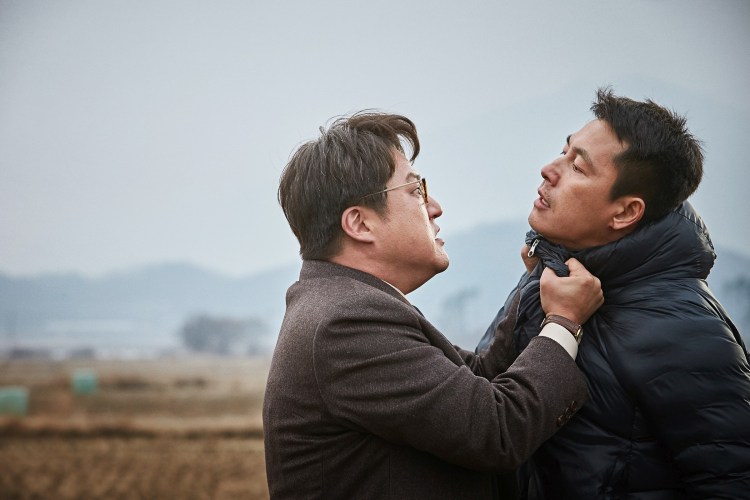
The Chase – a retired policeman teams up with a landowner to solve a 30-year-old cold case.
Forgotten – a nervous young man begins to doubt his surroundings after his brother is kidnapped. Review.
Gonjiam: Haunted Asylum – a TV crew travel to an abandoned asylum with a notorious past and get a lot more than they bargained for.
Last Child – powerful drama in which a grieving couple warm to the child their son died saving.
Little Forest – remake of the Japanese foody drama starring Kim Tae-ri
Midnight Runners – two police trainees decide to pursue justice alone in this hugely enjoyable buddy cop action comedy. Review.
The Outlaws – Ma Dong-seok stars in an anarchic crime drama. Review.
The Running Actress – actress Moon So-ri writes, directs, and stars in this feature length compilation of three shorts.
A Special Lady – Kim Hye-soo stars as the second in command of a corporate gangster outfit in this noirish thriller.
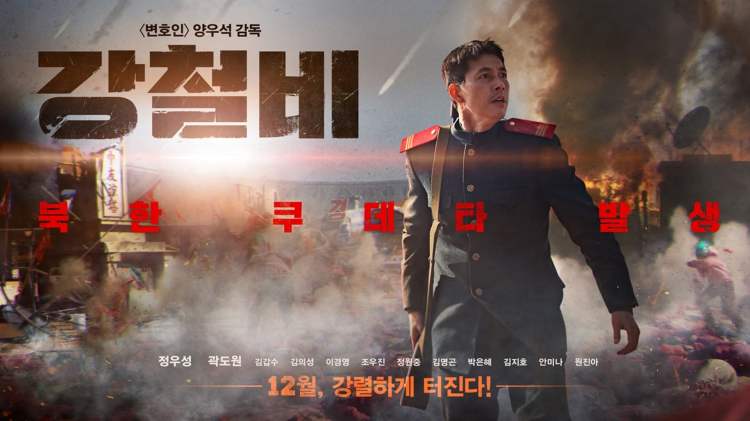
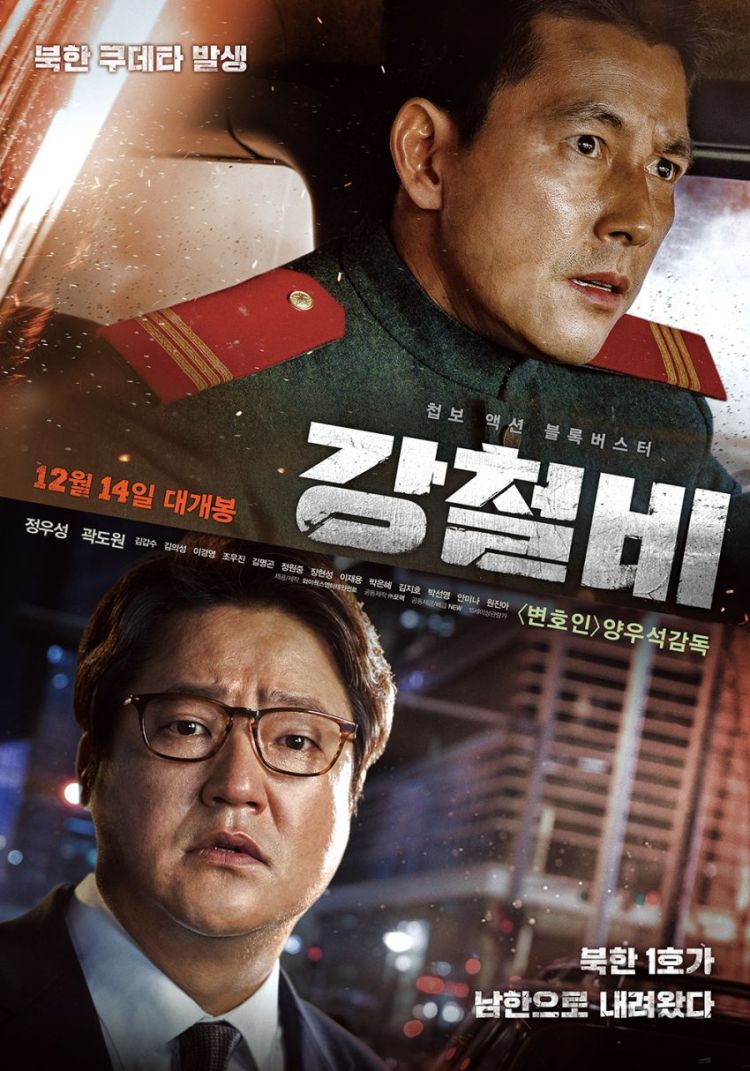
Steel Rain – A North Korean operative brings the wounded leader to the South to escape a coup and then must cooperate with an intelligence officer to prevent a nuclear war. Opening night gala. Review.
Courtesy to the Nation – Kwon Gyeong-won’s documentary focuses on democracy activist Chang Ki-hoon who became the centre of the Fake Will Scandal.
Chedeng and Apple – two old ladies set off on a quest to discover lost love with a severed head in a handbag along for the ride.
The Portrait – musical World War 2 drama.
Smaller and Smaller Circles – Raya Martin adapts the novel by F. H. Batacan in which two priests investigate murders of small boys in a Manila slum.
Himala– 1982 religious drama from Ishmael Bernal.
Moral – classic 1982 youth drama from Marilou Diaz-Abaya.
Singapore
Diamond Dogs – a terminal cancer patient enters an underground social experiment.
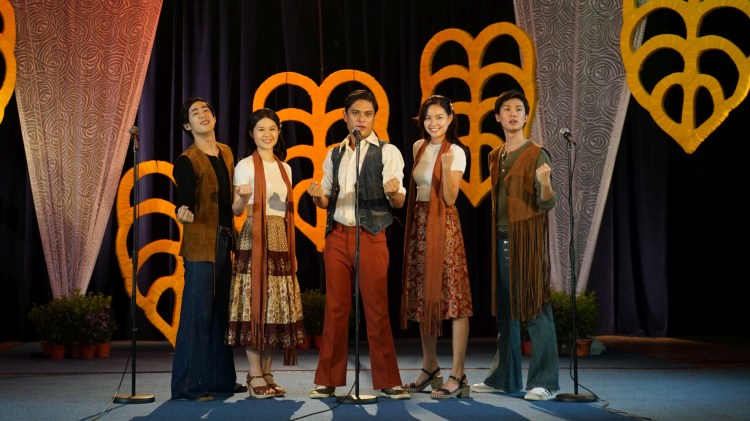
Wonder Boy – ’70s musical biopic.
Taiwan
All Because of Love – teen romance.
Dear Ex – family drama
Gatao 2: Rise of the King – sequel to the gangster drama.
On Happiness Road – charming animation in which a woman returns to her childhood home.
Take Me to the Moon – timeslip comedy in which a young man attempts to save his friend from a life decision that will eventually lead to both their deaths.
Cloud of Romance – restored melodrama from 1977. Brigitte Lin retrospective.
Outside the Window – 1973 Taiwanese age-gap romantic melodrama. Brigitte Lin retrospective.
Thailand
Bad Genius – a high school girl hatches a plan to cheat the exams system. Review.
The Promise – two women pledge to commit suicide together but when one backs out the other returns 20 years later to haunt her!
Sad Beauty – two female friends get mixed up in a murder.
Vietnam
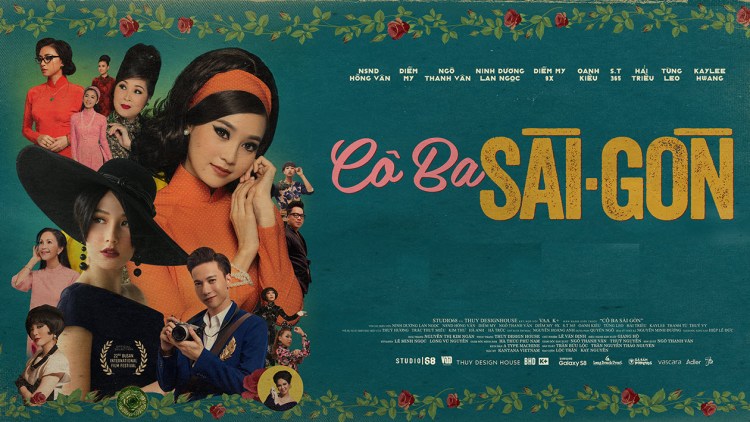
The Tailor – a tale of dressmaking and family in ’60s Vietnam.
Full details for each of the films will be shortly available via the official website where you can also find the daily screening schedule. Screenings take place both at the Teatro Nuovo, and the Visionario cinema. You can keep up with all the latest festival news via the festival’s Facebook Page, Instagram and YouTube channels, Twitter account, and Tumblr.
A little way in to Steel Rain (강철비, Gangchulbi), one of its heroes – a Blue House official, gives a pointed lecture on Korea’s past to some students of Geopolitical History. Fiercely critical of Korea’s previous subjugation by Japan, he laments that his nation was not able to free itself from the Japanese yoke and was awarded its freedom with the end of a wider political conflict which saw the Japanese “empire” collapse. According to Kwak Cheol-u, Korea has never quite lost its cultural admiration for its former colonisers which is why its most prominent corporations – Samsung, Haeundae etc, are all direct competitors with similar Japanese firms (and are only now pushing past them in terms of global market penetration and technological innovation).
Switching tack, he wonders why it is that Japan lost a war and Korea got cut in two by two new “colonising” forces. In his oft observed mantra, Kwak (Kwak Do-won) insists that the citizens of a divided nation suffer more from those who seek to manipulate the division for their own ends than they do from the division itself, which is where we find ourselves in the contemporary era of my button’s bigger than his button in which “capitalist pig dogs” face off against “dirty commies”. Adapting his own webcomic, Yang’s action thriller is among the most recent in a long line of North/South buddy movies and even if its cold-war paranoia feels distinctly old hat, it just goes to prove that everything old is new again.
Eom Cheol-u (Jung Woo-sung), a former North Korean special forces agent, is called back into the fold by his old commander for a very special mission. Tensions are about to boil over in the perpetually precarious state and the Dear Leader’s life is under threat from a suspected coup. Eom is to silence one of the conspirators in return for which he will be given elite status and his family will be well looked after. Unfortunately, the mission does not go to plan and Eom ends up witnessing a missile strike on a welcome meeting at a Chinese managed factory in which the (mostly young and female) employees are murdered in cold blood. Managing to escape with the Dear Leader himself who is seriously wounded, Eom travels over the border along with two young girls. From this point on he’s in conspiracy thriller territory trying to work out just what’s going on and who he can really trust.
The symbolism is rammed home by the fact that our two heroes, Kwak and Eom, have the same first name – Cheol-u, only one uses the characters for “strong friendship” and the other “bright world”. Taken together they paint a pretty picture, brothers in arms despite the political difficulties which place them on differing sides of an arbitrary line drawn up by a foreign power without much consideration for those divided by it. As in many North/South buddy movies of recent times, the North Korean agent displays the best qualities of his nation in his essential “goodness” – a caring husband and father, he executes his mission with maximum efficiency but bears no ill will towards those outside of it and is keen to protect the people of North Korea from almost certain doom should a nuclear war break out between the two peoples. Kwak, by contrast, is more of a schemer whose moral universe is much less black and white. A fluent Mandarin speaker he’s in tight with a North Korean official who keeps trying to talk him into taking a research post at a Chinese university while his family life is somewhat complicated thanks to a divorce from his plastic surgeon wife.
Meanwhile, the film is at pains to point out that Korea became the focus point of the first East/West proxy war and, in Kwak’s view at least, remains insufficiently important in the eyes of its “allies” to merit much direct consideration. Thus our boardroom squabbles are often reduced to the looming face of the American President “advising” the Korean officials on the best course of action while others worry about what Japan is going to think and wonder if the US secretly values the opinion of the Japanese more than the Koreans on the ground. The situation is further complicated by the fact that the government is in a transitionary phase in which a new president has been elected but not sworn in. The crisis may well play out entirely within the old president’s final hours which means that diplomatically he has little to lose and as he is a conservative, might as well milk the situation for all it’s worth. In short, he’s as keen to ruffle diplomatic feathers and bring the situation to a head as everyone else is and war looks more likely than not. The central message is that, as Kwak is fond of implying, governments care little for their people or that millions may die when idea of division is so easily manipulated, especially if it’s not “their” people who will be doing the dying.
Not for nothing is the new president seen reading copy of Willy Brandt’s book on successful reunification, even if he begs his outgoing predecessor to consider the economic impact of any possible change in relations with a Northern neighbour. The North Korean official also warns that China is not keen on the idea of a war seeing as that will necessarily mean an influx of North Korean refugees no one wants to take responsibility for. The cold war may be about to turn hot, but the heroics that cool it down turn out to be of a much less gung-ho nature than might be expected, relying on personal sacrifice and a perhaps outdated code of honour. Nevertheless, the crisis is averted not through macho posturing but through “diplomatic channels” and a careful balancing of powers. Perhaps not so farfetched after all.
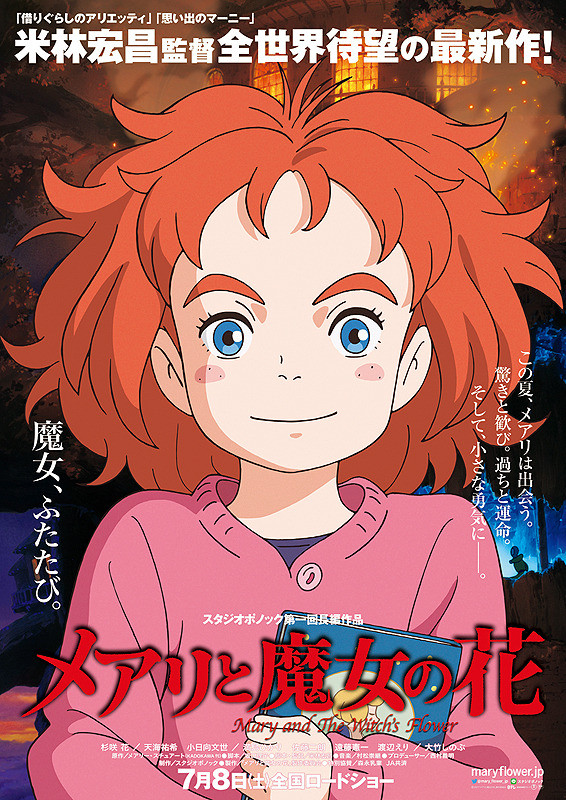
When Studio Ghibli announced that it would be ceasing production, it couldn’t help but feel like the end of an era. The studio which had made Japanese animation an internationally beloved art form was no more. Into the void stepped a brand new animation studio which vowed to pick up the Ghibli gauntlet– Studio Ponoc was formed by former Ghibli producer Yoshiaki Nishimura who enlisted a host of other ex-Ghibli talent including Arrietty director, Hiromasa Yonebayashi.
Mary and the Witch’s Flower (メアリと魔女の花, Mary to Majo no Hana), Ponoc’s first feature is, like Yonebayashi’s When Marnie was There, an adaptation of a classic British children’s novel. Part of the ‘70s children’s literature boom, Mary Stewart’s The Little Broomstick was more or less forgotten until the film, paradoxically, brought it back into print. Like many post-war children’s novels, The Little Broomstick is the story of a clever and kind little girl who thinks she doesn’t quite fit in. Mary and the Witch’s Flower is no different in this regard, even in updating the tale (seemingly) to the present day as its spiky heroine finds herself taking on mad scientists and crazed witches in a strange fantasy realm all while trying to get used to the comparatively gentle rhythms of country life.
Mary Smith (Hana Sugisaki) is bored. She hates her frizzy red hair which a horrible local boy, Peter (Ryunosuke Kamiki), uses as justification to describe her as a “red haired monkey”, and fears that the rest of her life will merely be a dull exercise in killing time until its inevitable conclusion. Mary has just moved in with her Great-Aunt Charlotte (Shinobu Otake) in the country while her parents are apparently working away and, as she still has a week left of summer holidays until school starts, she’s desperate for something to do. Unwisely following two cats into a misty forest, she chances upon a mysterious flower – the “Fly By Night” which blooms only once every seven years. With no respect for nature, Mary picks herself some of the pretty bulbs to take back to the gardener but unwittingly opens up a portal to another world. Taking hold of an abandoned broomstick, she finds herself swooped off to Endor College – an elite institution of witchcraft and wizardry where she dazzles all with her magical skills. Thinking she’s finally found her place, Mary is content to go along with everyone’s assumption that she is the new student they’ve been waiting for but on closer inspection, Endor College is not quite all it seems.
Mary’s initial dissatisfaction with herself is somewhat sidelined by the narrative but there’s something particularly poignant about her loathing of her red hair. In British culture at least, those with red hair often face a strange kind of “acceptable” prejudice, bullied and ostracised even into adulthood. Thus when Peter calls Mary a “red haired monkey” it isn’t cute or funny it’s just mean and she’s probably heard something similar every day of her life. When she rocks up at Endor and they tell her that her red hair makes her special and is the sign of high magic potential, it’s music to her ears but it’s also, perhaps, reinforcing the idea that simply having red hair makes her different from everyone else.
Feeling different from everyone else perhaps allows her to look a little deeper into the world of Endor than she might otherwise have done. Despite her conviction that she doesn’t fit in and is of no use to anyone, Mary is never seriously tempted by the promises of Endor which include untold power as well as a clear offer of acceptance and even respect. When she realises that the couple who run the school – a witch and a scientist, have been abusing their powers by committing heinous acts of experimentation on innocent “test subjects”, Mary learns to stand up for those who can’t stand up for themselves even if she couldn’t have done it for herself.
Messages about the seductive power of authoritarian regimes exploiting feelings of disconnection, the scant difference between magic and science, and the need for respect of scientific ethics in the pursuit of knowledge, all get somewhat lost amid Mary’s meandering adventures, as does Mary herself as her gradual progress towards realising that she possessed her own “magic” all along ticks away quietly in the background. Yet the biggest problem Mary and the Witch’s Flower faces is also its greatest strength – its ties to Studio Ghibli. With echoes of Yonebayashi’s previous adaptations of classic British literature, Mary and the Witch’s Flower also indulges in a number of obvious Ghibli homages from the Ponyo-esque flying fish and Laputa influenced design of Endor to the overt shot of Mary riding a deer on a rocky path, and the unavoidable girl+broomstick echoes of Kiki’s Delivery Service. Even if Mary and the Witch’s Flower cannot free itself from the burden of its legacy, it does perhaps fill the void it was intended to, if in unspectacular fashion.
Mary and the Witch’s Flower will be released in UK cinemas courtesy of Altitude Films in May 2018.
The first narrative feature from former documentarian and TV presenter Li Yu, Fish and Elephant (今年夏天, Jīn Nián Xià Tiān) is touted as the first film from mainland China to explicitly deal with lesbian life in modern Beijing. Necessarily shot under the radar to get around China’s strict censorship requirements, the film almost disappeared after “getting lost” on return from the Venice Film Festival (where a mishap with missing reels apparently led to a less than stellar reception though Li did eventually pick up an award) but went on to feature in a number of international festivals even if not quite welcomed at home. Imperfect and somewhat clumsy in execution, Fish and Elephant is nevertheless as whimsical as its title might suggest if only in its ironically abstracted need for detachment.
Xiaoqun is approaching 30 and unmarried. Despite her mother’s pleas and the needling of relatives Xiaoqun has no desire to marry. She supports herself well enough as an elephant keeper at the zoo and lives alone in a small apartment. A desire for independence is not the only reason Xiaoqun chooses to remain single – she is gay. Unable to state this fact openly, Xiaoqun is often forced to attend various blind dates set up by her mother who emotionally blackmails her by bursting into tears on the phone. Nevertheless, she eventually develops a flirtation with a young woman, Xiaoling, who owns her own clothing store at the market. Before long the women have moved in together and established an easy domesticity only for Xiaoqun’s mother to turn up unannounced determined to see her daughter wed. As if that weren’t enough, Xiaoqun’s long lost ex, Junjun, also arrives without warning apparently on the run from the police for “bank robbing”.
Perhaps because of the need to shoot covertly, Li’s script is structurally threadbare involving several large narrative jumps but the quality of unseen incompleteness plays into the film’s central theme in that the lives of women like Xiaoqun and Xiaoling are often invisible and hidden from view. We observe the two women’s courtship obliquely and in stages as they flirt (tentatively), wait for each other, are frustrated by exes, and finally come to a kind of agreement framed against the turquoise of of Xiaoqun’s bedroom wall which makes the pair look uncomfortably like the goldfish trapped inside her aquarium. Even this is unspoken and uncertain, hands tentatively grasped in trying to confirm that the situation has been read correctly until it is quite literally sealed with a kiss.
Xiaoqun, at least, is not so afraid to tell people what she is, only they never seem to believe her. Her uncle, berating her for turning down all the suitors he finds and reminding her that it’s the “proper thing” for women to marry and bear children, asks her what the problem is, to which Xiaoqun replies that she’s told him plenty of times before – she’s “no interest in men”. The uncle cannot process this information and offers to find a therapist to help with Xiaoqun’s supposed “issues”. Similarly, she decides to tell it straight to one of her dates – “I don’t like men, I like women”, but he refuses to listen. It seems he’s familiar with the concept, but doesn’t really believe in it and assumes Xiaoqun is trying to skip out on the date without giving him a proper chance by saying something outrageous.
Each time Xiaoqun calmly explains her life choices, everyone just ignores her. Either they simply don’t understand or refuse to accept that her sexuality is a good enough “excuse” for refusing to conform to the social order. Not until she finally attempts to come out to her mother does Xiaoqun actually say “I am gay” and then only very quickly followed directly by an explicit explanation of what she means. Unfortunately her mother still can’t quite get it, the language and cultural gap too vast to bridge. Like the young person’s pop song she’s always listening to, it’s not that she doesn’t understand, it’s just that the world is moving so fast.
Eventually Xiaoqun’s mother starts to come round and considers going against the social order by marrying again herself despite her supposedly inappropriate age. Marriage, however, seems an unhappy business all round and none of the men we are introduced to are particularly appealing. The men in Xiaoling’s shop bark at their girlfriends and criticise the slutty clothes, or try to harass Xiaoling into dropping the price while her boyfriend hovers in the background and places a territorial hand on her shoulder almost as if he knew why she just gave a quite massive discount on an expensive shirt to the woman currently trying it on for size. Xiaoqun’s mother is divorced, her father having left the family (and an apparently unhappy marriage) for another woman. Yet everyone seems intent on railroading the two women into this culturally demanded alleyway of misery.
For the most part, Xiaoqun and Xiaoling are content to simply ignore the world around them and live peacefully together like two fish in a bowl. Conspiratorially linking hands under the table as Xiaoqun’s mum reels off her marriage spiel and leaning in close to light one cigarette from another, they perhaps take pleasure in mocking the social order directly under her nose while worrying what the fall out might be should the truth be discovered. The relationship is threatened not particularly by the marriage plots, but by the presence of Junjun who places a wedge between the verbally uncommunicative lovers and another burden of secrecy on the already burdened Xiaoqun.
Li concludes by splitting the narrative into its three component strands, opting for a perhaps unwise slide into absurdity as Junjun embarks on a last stand though it does provide an opportunity for another (accidentally?) misogynistic/homophobic remark from a police officer. The film ends on a wedding, at which Xiaoqun and Xiaoling are conspicuously absent despite being expected and as a couple. Perhaps they are just “busy” having recently recovered from their momentary romantic drama, but their failure to appear also reinforces their committed isolation in which they are content (for good or ill) to hide themselves away, existing only for each other.
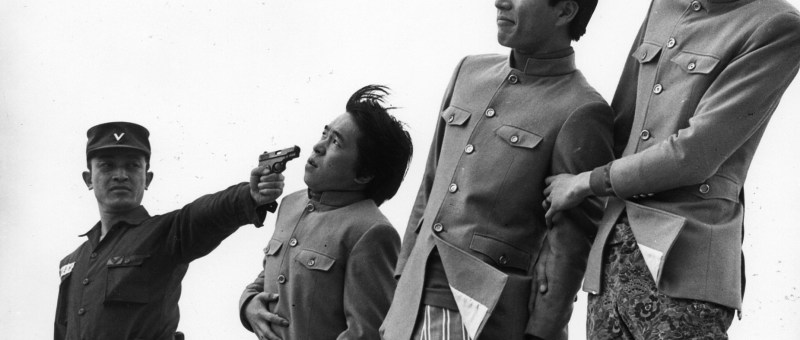
The pop star movie has a long and distinguished history in Japanese cinema, but one might not have expected it to include Nagisa Oshima – a legendary iconoclast and conscientious objector to this particular strain of pop culture frivolity. Then again, taking a much hated form and turning it in on itself as a multifaceted form of protest is exactly the sort of thing one might expect Oshima to do. Therefore we find him in 1968 teaming up with The Folk Crusaders – a folk rock band enjoying a sudden flash of popularity after pressing their own indie record and seeing it go gold when radio stations picked up their North Korean themed Imujingawa and turned it into a giant hit. The band’s best known hit remains Kanashikute Yarikirenai which was released the same year, but it was perhaps Imujingawa with its melancholy Korean theme which attracted Oshima’s attention. A Monkees-esque surreal pop-star vehicle, Three Resurrected Drunkards (帰って来たヨッパライ, Kaette Kita Yopparai) is the third and most direct (strangely) in a series of films critiquing Japan-Korea relations, pushing further into the contemporary era with additional questions to ask about American imperialism and the complicity of both nations in the ongoing conflict in Vietnam.
Three students, played by the three members of The Folk Crusaders, frolic on a beach recreating the famous Vietnam war photo of General Nguyen Ngoc Loan executing a prisoner in the street, before stripping off to go swimming. While they’re enjoying the waters, a hand rises up from beneath the sand and exchanges their clothes for a set of Korean military uniforms and some cash. The boys put on the strangers’ clothes and try to go home, but run into trouble when they try to scam an old grandma running a tobacco stand by pretending to have forgotten the price of cigarettes has gone up by 10 yen, assuming a dotty old grandma out in the sticks might not know anyway. Instantly suspicious, and seeing as this is “crack down on stowaways week”, the grandma tips off the authorities. After all, no Japanese person could be unaware of the rise in the price of cigarettes, so our heroes must be the “them” everyone is looking for.
What transpires is a surreal adventure of mistaken identities and rampant xenophobia in which our three students become temporarily transposed with their Korean counterparts – a draft dodging corporal trying to escape being sent to die in Vietnam, and his friend who’s come with him in the hopes of getting into a Japanese university. The third student, “Beanpole”, gets to keep his “Japanese” identity as a kind of control, but finds himself punished alongside his “Korean” friends as they face the harshest of punishments in this increasingly cruel and arbitrary world.
The three “stowaways” are then chased by the “real” Koreans who want to kill them and fake their own deaths to become Japanese. Later the three turn the tables on their pursuers but find themselves unable to pull the trigger because “Koreans don’t kill other Koreans”. In a bold piece of narrative reframing, Oshima abruptly resets the narrative halfway through, literally “resurrecting” our three drunkards who are instantly aware of what’s going on and determine to do things differently this time around – offering the grandma the right money, not taking the Korean uniforms with them when they leave the bathhouse etc, but they still get caught by the “real” Koreans and manage to survive only by “becoming” Koreans themselves, owning their new identities and rejecting their Japaneseness whilst turning their captors’ questions back on them and accusing them of being Japanese.
Meanwhile, the students take to the streets for an extended voxpop session in which they ask the question “are you Japanese?” to which all of their interviewees reply “No.”, asked “so how’s that then?”, they all calmly state it’s because they’re Korean. Aside from a pointed shot at a Westerner, Oshima seems to be making the rather banal point that Japanese and Koreans cannot be distinguished visually despite what some rather ignorant people might think – hence the identity confusion resulting from putting on “Korean” clothes, but he goes a little further in muddying the waters with a comparison between ongoing American imperialism and that of the Japanese past. Koreans in Japan experience oppression and xenophobic racism, but their nation as a whole also suffers from external oppression born of their government’s reliance on America for military support in the event that their truce with the North will someday be broken. Hence they find themselves packed off to another controversial war killing other Asians at the behest of a foreign government and its intense cold-war paranoia.
Japan of course is also subject to this same oppression in reliance on American military power and so is also complicit in the horrors of Vietnam. These twin threads meet not only in the melancholy folk song penned by The Folk Crusaders, but in the final image which sees the executed Vietnamese man replaced by a Korean “stowaway” and the soldier by a Japanese policeman. Concentric circles flash in and out but Korea is always left in the middle, suffering at the hands of external powers, though Oshima remains largely silent on that presented by the authoritarian government of the day save criticising its determination to cling to American military might. A pop star movie with a title named for one of the band’s biggest hits – the high pitched and cartoonish Kaette Kita Yopparai which is itself a nonsense adventure of silliness, Three Resurrected Drunkards is a psychedelic treatise against systemic prejudices, complicity, and the seemingly inescapable cycle of geopolitical manoeuvring such prejudices fuel and enable.
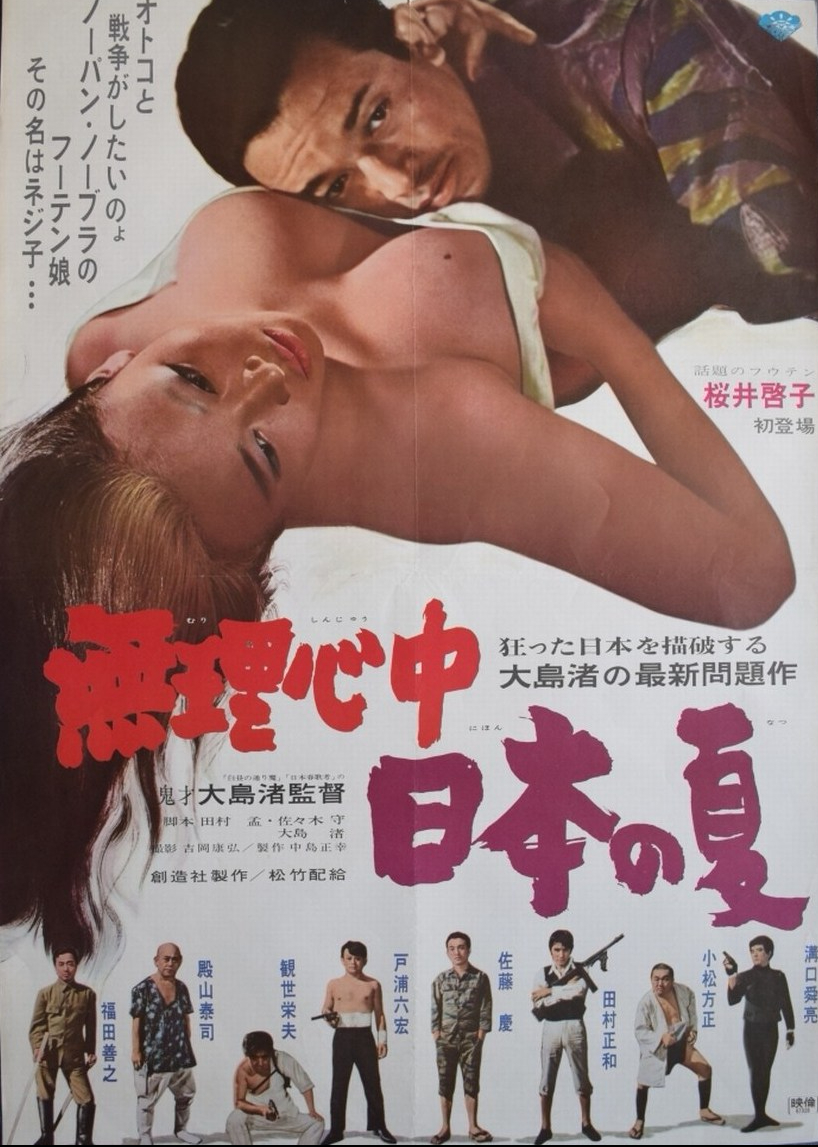
The youth of Japan can’t get no satisfaction in Nagisa Oshima’s 1967 absurdist odyssey Japanese Summer: Double Suicide (無理心中日本の夏, Muri Shinju: Nihon no Natsu). A liberated woman craves sexual pleasure but can find no man willing to satisfy her, so obsessed are they with their solipsistic concerns of death, violence, and the search for self knowledge. The nymphomaniac and disillusioned warrior yearning for a death that will restore his sense of self meet on an empty highway only to wander on aimlessly until reaching their mutually “satisfying” yet inevitable conclusion.
Nejiko (Keiko Sakurai), a sexually frustrated teenage woman, watches some municipal workers scrub at the word Japan graffitied on a bathroom wall but takes off when she realises no one here is going to give her what she wants. Throwing her underwear off a bridge in a symbolic act of abandon she catches sight of naked swimmers trailing a Japanese flag before running into collections of marching soldiers and chanting monks. She takes up with a deserter, Otoko (Kei Sato), who is on a quest for death though his desire is not so much for the act of non-existence as it is for self knowledge. He does not want to kill himself, but to be killed by another person in whose eyes he will see himself reflected and, in his final moments, reach a realisation of everything he is.
After wandering arid, sunbaked deserts the pair are picked up by a mysterious paramilitary group who keep them prisoner in a kind of bunker where they eventually meet a gun crazed teen who just wants to kill, a middle-aged man who gets his kicks through the penetrative act of stabbing, and a wise old gangster who knows what it is to carry the weight of a weapon of death. Meanwhile, once a vengeful guy with a TV turns up, they become aware of a crisis in the outside world involving a rampaging foreigner loose with a rifle on a random shooting spree.
Guns and knives are persistent obsessions. These men are obsessed with phallic objects but indifferent to their phalluses. Nejiko pleads with each of them to satisfy her sexual frustrations but none of them is interested. Her need is for pleasure and relief, seemingly free of social or cultural taboos and born of naturally given freedom. The male urge is, by contrast, destructive – they chase death and violence without pretence or justification. When questioned, one of the bunker henchmen retorts that the situation outside is not war but only killing. All there is is violence without cause or explanation, existing solely because of male destructive impulses.
The situation outside is eerie in the extreme. This is a Japan of silence and emptiness where monks chant on the motorway and shadows people the landscape. Nejiko and Otoko find themselves frequently trying to fit in to human shapes cut into the Earth, finding them far too big or in someway constraining. Yet they also become these shadow figures, birthing new shades of themselves to leave behind as they shed evermore aspects of their essential selves. What caused this situation is not revealed, but everyone seems to be carrying on as normal. There is a crazed killer on the loose and the police have asked civilians to remain in their homes but civilians have ignored them for the most characteristic reasons for uncharacteristic insubordination – they all went to work.
Eventually Nejiko manages to convince some of the men to make love to her, but she remains unsatisfied. Likewise, the teenage “gang member” who wandered into the bunker looking for a gun gets one and succeeds in an act of random killing but discovers that it was not “exciting” after all. Desire is misplaced or its satisfaction unattainable. In this world of pure nihilism there is no pleasure and no relief, no need can be met and no peace brokered. All there is is senseless violence, devoid of meaning or purpose and born of nothing more than a desperation to quell a need which can never be fulfilled.
Death and Eros approach the same end – the “double suicide” of the title though even this is essentially passive and desperate. Youth wanders blindly towards its inevitable conclusion, lacking the will or the strength to fight back. There is no self, there is no higher purpose. All there is is a great expanse of emptiness peopled by shadows, fading slowly from a world gradually falling apart.
Aimless youth wastes its potency on repressed desires in Oshima’s avant-garde treatise on power dynamics and political fallacies. Sing a Song of Sex (日本春歌考, Nihon shunka-ko), less the bawdy romp the title promises than an irony tinged journey through music as a weapon against oppression, is the first of three films Oshima would make in the late ‘60s examining Japan’s complicated relationship with Korea. Its “heroes” however are about as depoliticised as it’s possible to get – they interrupt protests they don’t understand and obsess over a single pretty girl they fantasise about raping in an elaborate classroom based piece of erotic wish-fulfilment. All that matters to them is their craving for physical satisfaction which knows no morality or greater purpose save satiation, conquest, and implied humiliation.
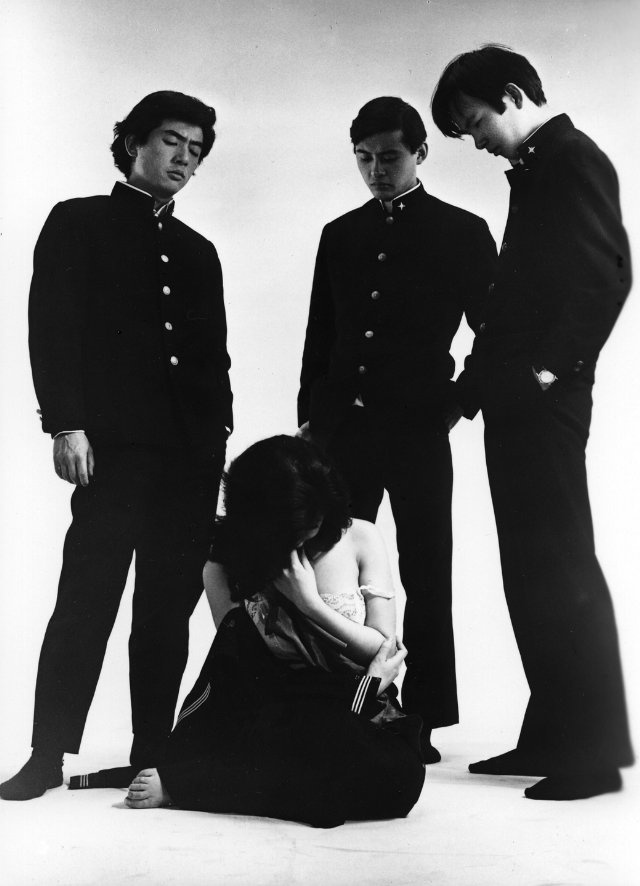
Japan, spring, 1967. Four boys sit their university entrance exams with (externally at least) less seriousness than might be expected. Huddling together away from the snow they smoke cigarettes and gossip about miss 469 whose name they don’t know but caught their eye in the exam hall. The boys, along with three girls, are nominally under the care of their teacher, Mr. Otake (Juzo Itami), who takes them to a pub to “celebrate” before getting extremely drunk and kicking off on an inappropriate lecture about bawdy folk songs and their lasting legacy as the voice of the poor and the oppressed who have no other way of expressing their needs and desires. Lamenting that the young people of today lack the capacity for real feeling, Otake offers to put the kids up in a local inn, perhaps hoping to provoke some kind of awakening among his teenage charges but the loss of innocence he inspires in them is of a very different nature. Still extremely drunk, Otake falls asleep next to a faulty gas heater and dies of carbon monoxide poisoning.
One of the boys, Nakamura (Ichiro Araki), went to see Otake during the night and saw him keeled over in a room that smelt of gas but did nothing. The girls, wailing and distraught, attempt to make their way home while the boys joke about having murdered their teacher and continue to exchange increasingly lewd and disturbing banter about their female classmates including collective rape fantasies (but only of the pretty one). The “other” girl that they collectively decide they don’t fancy, Kaneda (Hideko Yoshida), is disturbed enough by the boys’ murderous joke that she comes back to make sure it isn’t true, accidentally finding out about their dreamscape rape of no. 469 and pushing Nakamura towards paying a visit to Otake’s girlfriend, whom the boys have also been fantasising about, to apologise to her about his possible contribution to Otake’s death.
While Kaneda and the other three set off to track down 469, Nakamura splits off for Otake’s wake where he finds himself alone among a collection of former student protestors with differing views about Otake’s legacy and relation to the cause. The protestors break into a traditional Japanese leftwing anthem, but Nakamura isn’t having any of it. That’s not the Otake he knew. He resists their politicisation of his mentor’s funeral by loudly singing the bawdy drinking song Otake taught them at the pub. The song becomes something like an anthem for Nakamura and his friends who sing it at every conceivable opportunity, delighting in its inappropriateness and ironic similarity to the acts they frequently discuss but seemingly do not directly engage in. Like the peasants Otake idolised, Nakamura takes up the song as a weapon against his own oppression and the unwilling repression of his physical desires.
The battle becomes one of audience and agency. Nakamura sings his song over the hymn of protest being offered by the defeated left while Kaneda later attempts to counter with a female tale of exploitation, snatching a microphone away from some Americanised hippies singing Woody Guthrie and protesting the Vietnam war while dancing round the stars and stripes. Kaneda eventually gets her moment in the spotlight but she pays a heavy and ironic price for it, partly at the hands of miss 469 who re-enters the boys’ rape fantasy after it is directly revealed to her and she dares them to realise their baser desires. Suddenly back in an empty classroom presided over by Otake’s girlfriend, Miss Tanigawa (Akiko Koyama), and the silent spectre of Kaneda now dressed in a sparkly white hanbok, the boys get an intense lesson in Japanese history and more specifically the origins of the Japanese state in the royal courts of Korea.
The songs of the youthful protestors, some Japanese some co-opted from abroad, have lost their meaning and their fire. Their protest is affected and purposeless, as solipsistic as the boys’ destructive desires. On the one hand, youth embraces the pop culture of rebellion – joining the flower power revolution and adopting the Americanised protests against a foreign war and (perhaps tangentially) their nation’s complicity in it, while age fixes its sights on a recently revived imperial holiday and a rejection of the fascist past (though not a rejection of the imperial past or a recognition of its lingering legacy). Painted in tones of red and white, the rising sun occasionally replaced with the blackened flag of protest, Sing a Song of Sex is a paradoxically nihilistic condemnation of post-war youth who allow their oppression to push them into senseless acts of violence rather towards the noble causes of revolution and social change which might finally set them free.
For Nagisa Oshima, the personal is always political and urges for destruction and creation always inextricably linked. Violence at Noon (白昼の通り魔, Hakuchu no Torima), a noticeable shift towards the avant-garde, is a true crime story but the murder here is of idealism, the wilful death of innocence as manifested in the rampage of a disaffected sociopath whose corrupted heart ties together two women who find themselves bound to him in both love and hate. Each feeling responsible yet also that the responsibility for action belongs to someone else, they protect and defend the symbol of their failures, continuing on in despair and self loathing knowing that to turn him in is to accept the death of their idealism in its failure to reform the “demon” that won’t let them go.
Bright white gives way to the shadow of a man lurking behind bars. He opens a door and gazes at a woman doing the washing, lingering on her neck before he forces himself in. The woman, Shino (Saeda Kawaguchi) – the maid in this fancy household, knows the man – Eisuke (Kei Sato), a drifter from her home town, but her attempts at kindness are eventually rebuffed when she tells him to go back to his wife and he violently assaults her causing her to pass out at which he point he decides to spare her and murders her employer instead. Rather than explain to the police who Eisuke is, Shino offers only cryptic clues while writing to Eisuke’s wife, Matsuko (Akiko Koyama) – an idealistic schoolteacher, to ask for permission to turn him in and end the reign of terror her husband is currently wreaking as a notorious serial rapist and murderer.
Eisuke, Shino, and Matsuko are all inextricably linked by an incident which occurred in a failing farming collective the previous year. Matsuko, a kind of spiritual leader for the farming community as well as its schoolteacher, preaches a philosophy of absolute love, proclaiming that those who love expect no reward and that through the eyes of love all are equal. Meanwhile, Shino – daughter of a poor family, contemplates suicide along with her father after their lands are ruined by a flash flood and they are left without the means to support themselves. She enters into a loose arrangement with the former son of a village elder, Genji (Rokko Toura), exchanging a loan for sexual favours, later beginning develop something like a relationship with him but one which is essentially empty. Nevertheless when Genji suggested a double suicide she felt compelled to accompany him, only to survive and be “saved” by Eisuke who, believing her to be dead, raped what he assumed was her corpse before planning to dump her body in a nearby river.
It is this original act of transgression that underpins all else. Shino believes herself in someway responsible for Eisuke’s depravity, that his rape of her “corpse” was the trigger for the death of his humanity. Matsuko, meanwhile, sees herself as the embodiment of love – she “loved” Eisuke and thought her love could cure his savage nature and bring him back towards the light and the community. Matsuko was wrong, “love” is not enough and perhaps what she has come to feel for the man who later became her husband on a whim is closer to hate and thereby a total negation of her core philosophy. To admit this fact to herself, to consider that perhaps love and hate are in effect the same thing, is tantamount to a death of the self and so she will not do it. She and Shino are locked in a spiral of inertia and despair. They each feel responsible for Eisuke’s depraved existence, but each also powerless to stop him. Shino in not wishing to overstep another woman’s domain, and Matsuko in being unwilling to admit she has given up on the idea of forgiving the man who has dealt her nothing but cruelty.
Literally seduced by nihilism, Eisuke finally rejects both women. He claims they are responsible – that if Shino had married him instead of attempting double suicide with Genji he might not have “gone astray”, going on to characterise his crimes as “revenge” against his wife’s “hypocrisy”, but then he calmly states that he is the man he is and would always have done these terrible things no matter where and when he was born. Passivity has failed, blind faith in goodness has allowed a monster to arise and those who birthed him remain too mired in solipsistic soul-searching to do their civic duty. Too afraid to let go of their ideals and take decisive action, Shino and Matsuko choose to watch their society burn rather than destroy themselves in an act of personal revolution – Oshima’s thesis is clear and obscure at the same time, “Sometimes cruelty is unavoidable”.
Original trailer (no subtitles, incorrect aspect ratio)
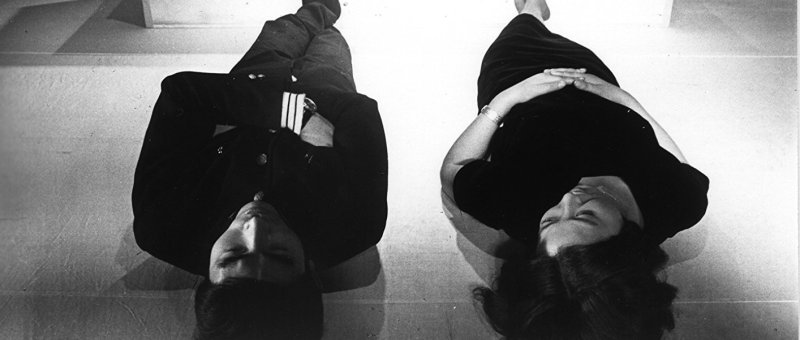
Having joined Shochiku apparently on a whim, Nagisa Oshima dramatically walked out on his home studio when they abruptly shelved his incendiary film Night and Fog in Japan citing political concerns following the assassination of the Socialist Party president by a right wing agitator. Oshima’s decision to abandon the studio system and form his own independent production company would eventually develop into a small movement, leading into that which would retrospectively be termed the “Japanese New Wave”. The first film produced by Sozo-sha, Pleasures of the Flesh (悦楽, Etsuraku), was perhaps a shift towards “pink film” aesthetics though, as in much of Oshima’s work, eroticism is more tool and trap than it is a mechanism for liberation. Ironically titled, Pleasures of the Flesh is a tale of desire frustrated by an oppressive society provoking nothing more than nihilistic need for psychological abandon.
Wakizaka (Katsuo Nakamura), an unsuccessful young man, pines for his first love – a young girl he tutored when he was a college student and she a precocious high schooler. Shoko (Mariko Kaga) has, however, married – her new husband someone more in keeping with her class and social standing. Wakizaka sees himself attend Shoko’s wedding, dreaming of her running away from the altar in her wedding dress to return to him but, no, he remains little more than a pleasant memory for the woman who has come to define his life. So devoted to Shoko was Wakizaka that when he learned from her family that a man who had molested her when she was just a child had returned to cause yet more harm by attempting to blackmail them, Wakizaka wanted to help. Seeing the man and paying him off convinced Wakizaka that the man would never give up and there would be no final payment or assurance of silence. Following him onto his train home Wakizaka took drastic action for justice, or perhaps it was revenge, or even out of a strange kind of jealousy, but nevertheless he transgressed by pushing the man from a moving train and thereby ending the threat posed to his beloved.
Wakizaka’s problems, however, are far from over. As ever in Japanese cinema, someone is always watching – in this case, a corrupt government official looking for a likely stooge with whom to stash a large amount of embezzled cash. Irony, a minor theme of the picture, rears its head as Wakizaka finds himself blackmailed over the murder of a blackmailer. The official makes a deal with him – Wakizaka must keep living in his same old horrible apartment and hang on to the suitcase full of money without opening it until he gets out of jail which is where he assumes he will shortly be headed now that his scam is reaching the tipping point. Wakizaka has little choice but to agree but when Shoko marries someone else he comes to believe his original transgression has been in vain, his life is now meaningless, and all that remains for him is a lonely death. Hence, he might as well go in style by spending all of that stolen doe, committing a bizarre act of revenge against Shoko and an unkind society by enjoying a year of debauchery followed by suicide before the official gets out of jail and turns him in as another act of retaliation.
Rejected in love, Wakizaka’s quest becomes one of continual search for conquest as he attempts to force himself on various women he wants to pretend are Shoko though of course knows are not. His approaches are many and various but begin with the obvious – he rents a fancy apartment and convinces a bar girl who looks a little like Shoko to live with him as his wife in return for a generous salary and the promise that the arrangement will only last a year. Hitomi (Yumiko Nogawa) is willing enough to submit herself to Wakizaka’s demands but he is dissatisfied by the inescapable hollowness of the relationship, uncertain who is using whom in this complicated series of transactions. His second choice is a married woman whose ongoing misery arouses in him a taste for sadism, convinced that the only way to make her “happy” is to plunge her into pain and suffering. The third woman, Keiko (Hiroko Shimizu), proves his biggest challenge – a feminist doctor afraid of men, she keeps him at arms length until he finally attempts to rape her, though this too she manages to frustrate insisting that he marry her even if they divorce a month later when Wakizaka’s time limit rolls around. Sick of Keiko’s resistance, Wakizaka opts for a mute prostitute who literally cannot talk back to him but finally makes her own defiant act of self actualisation despite Wakizaka’s attempt to assert total dominance over her existence.
Wakizaka uses the money for a life of “pleasure” but finds only despair and emptiness in each of his manufactured relationships. Having failed to “earn” it, he tries to buy love, but what he really chases is death and oblivion along with a way out of his ruined life and the humiliation he feels in his perceived failure to win Shoko’s heart. An idealised figure of elegance and purity, Shoko is an unattainable prize – the parents gentle pressing of an envelope into his hands following his “handling” of the blackmail case a subtle reminder that he is a servant, and now one perhaps cast out as tainted with a scandal they all wish to forget. Money, another recurrent motif, brings with it only sorrow and resentment. The embezzled cash didn’t do anyone any good, and neither of the blackmailers manages to make their scheme work out for them. Wakizaka is a haunted man, not so much by his crime which he sees as morally justified and feels no particular guilt over, but by his unresolvable desires as surfacing in his frequent hallucinations of Shoko who echoes in and round each and every woman in a form created entirely by her adoring suitor. In the end, reality betrays where the simulacrum remains true, but it is Wakizaka who betrays himself in allowing his pure love to become perverse revenge in the ultimate individualist act of self harm.
 The Cannes film festival has announced its first clutch of titles and while it’s not a bumper year for East Asian cinema, the few titles selected are among the most highly anticipated.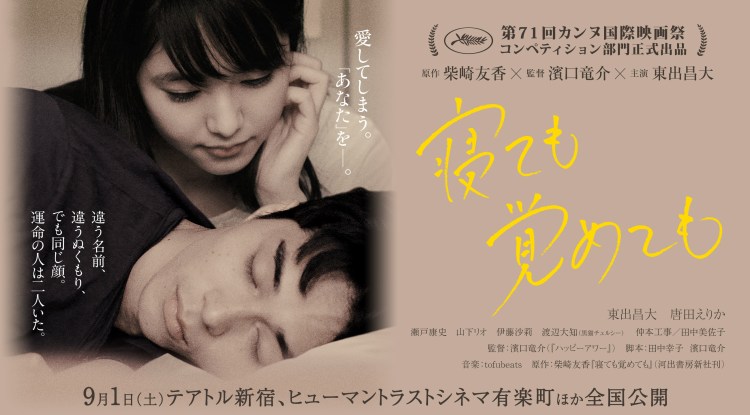

 The
The 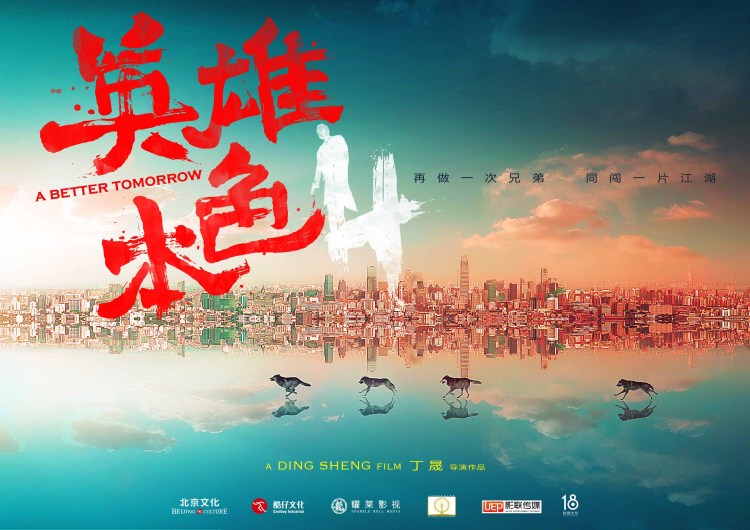









 Windows on Worlds