Berlin International Film Festival to Screen River’s Edge, Grass, Yocho

River's edge still 1The Berlin International Film Festival returns with the 68th edition from 15 – 25th February. Long a champion of East Asian cinema, this year’s program arrives with a series of highly anticipated features including the latest from Isao Yukisada, Kiyoshi Kurosawa, and Hong Sang-soo.

Japan
yocho still 1

  • Amiko – 16 year old Amiko has left Nagano behind to look for the boyfriend who skipped out on her to go to Tokyo with another girl.
  • Blue Wind Blows – A small boy on Sado chases ghosts with the help of a bookish friend.
  • Minatomachi – Kazuhiro Soda’s latest documentary focusses on a declining fishing village.
  • Our House – Two women inhabit the same space in Yui Kiyohara’s eerie drama.
  • Ramen Teh – A Japanese ramen chef travels to Singapore after the death of his father to find out more about his Singaporean mother who died when he was only 10.
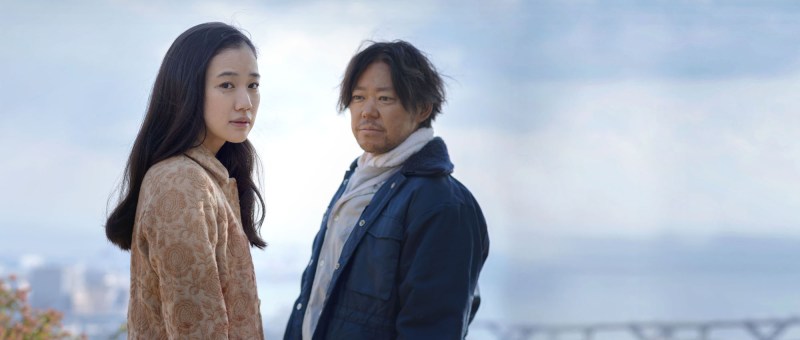
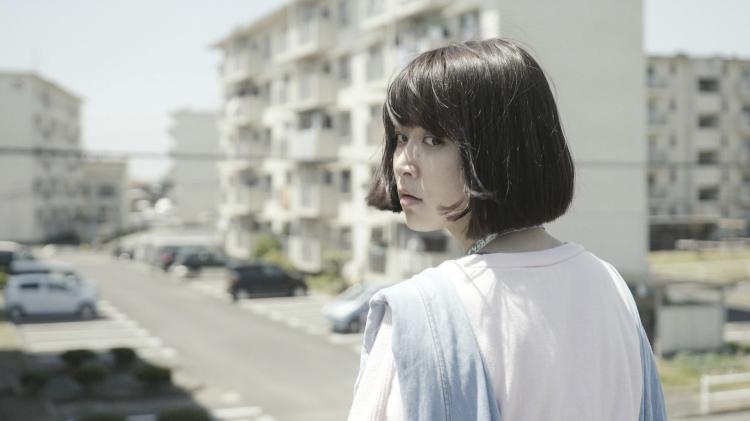
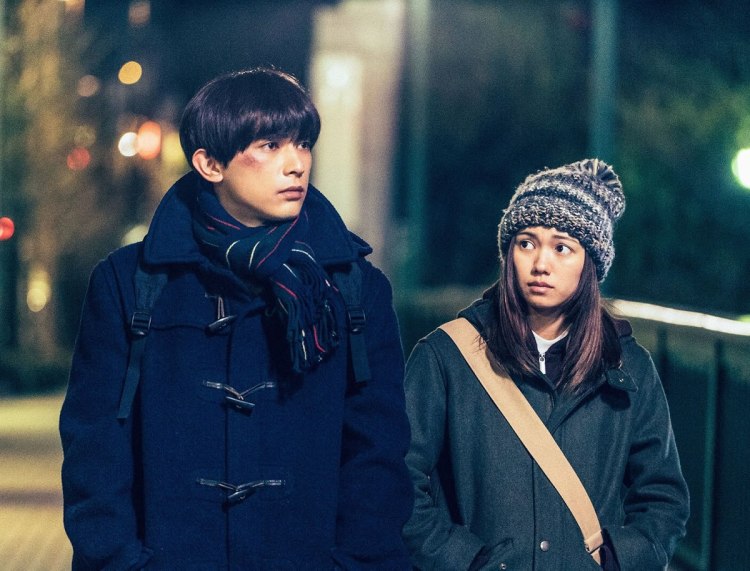
  • River’s Edge – A young man bullied because of his sexuality finds a dead body and investigates with the help of his best friend and confidant in the latest from Isao Yukisada.
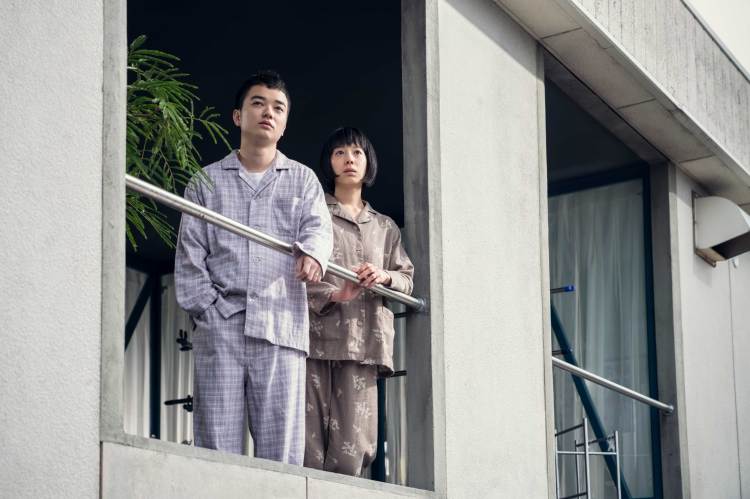
  • Yocho (Foreboding) – Kiyoshi Kurosawa’s companion piece to Before We Vanish, Yocho is the story of an alien doctor and his Earthling wife.
  • Tokyo Boshoku (Tokyo Twilight) – In this restored classic from Yasujiro Ozu, a young woman copes with an unwanted pregnancy with the help of her sister who has returned home in flight from an alcoholic husband.
  • Yama – Attack to Attack – Intended as a document of the workers’ struggle, this 1985 documentary eventually cost both of its directors their lives at the hands of the yakuza whose corruption they hoped to expose.

Tribute to Keiko Sato

abnormal family still“Pink film” – independently made softcore erotica, is generally thought of as being a very male affair but one of its driving forces, Keiko Sato, was actually a woman and the festival will pay tribute to her with three films from her surprisingly diverse career as a producer.

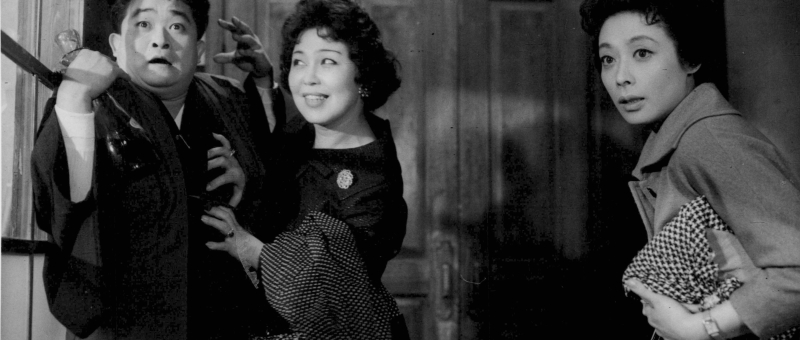
  • Abnormal Family – Masayuki Suo’s only pink film takes the form of an Ozu pastiche centring on one very unusual family.
  • Gushing Prayer – Masao Adachi takes the pink film in a political direction through the story of a young woman on the quest to beat sex.
  • Inflatable Sex Doll of the Wastelands – From the screenwriter of Branded to Kill, Inflatable Sex Doll of the Wastelands follows a hitman on a surreal and noirish journey.

Korea
grass still 1

  • Inkan, gongkan, sikan grigo inkan (Human, Space, Time, and Human) – A senator and his son, a newly wed couple, a mysterious old man, a group of sex workers, and a violent gang all set off on a warship in Kim Ki-duk’s latest.
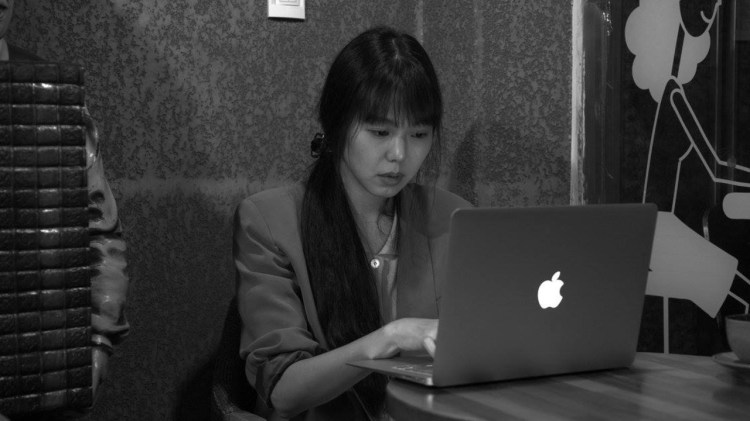
  • Grass – Kim Min-hee sits in a coffee shop and observes the world around her in another whimsical drama from Hong Sang-soo.
  • Last Child – After their son dies saving another child, the bereaved parents eventually bond with the boy he was trying to save though all is not as it seems.
  • Old Love – A woman returns to Korea from Canada and re-encounters an old flame.

China

monster hunt 2 still 1

Taiwan

201818494_4_IMG_FIX_700x700

  • 14 Apples – Midi Z’s documentary follows a businessman on a 14 day sojourn as a monk.
  • Xiao Mei – A ordinary shop girl disappears leaving only confusion and mystery behind her.

Thailand

die tomorrow still 1

  • Die Tomorrow – Nawapol Thamrongrattanarit follows a collection of people through their last day.

Philippines

season of the devil still 1

Indonesia

the seen and the unseen still 1

  • Sekala Niskala (The Seen and Unseen) The second film from Kamila Andini, The Seen and Unseen follows one half of a pair of twins as she deals with the deteriorating health of her brother…

The Berlin International Film Festival takes place from February 15 – 25 at venues across the city. Ticket sales begin 12th February via the official website and you can keep up with all the latest details via the festival’s Facebook Page, Twitter account, YouTube and Instagram Channels.

Joy of Man’s Desiring (人の望みの喜びよ, Masakazu Sugita, 2014)

Joy of Man's Desiring posterWhen disaster strikes false cheerfulness takes hold as those left behind attempt to push each other forward and away from the wreckage of their old lives, but refusing to deal with the reality causes more problems than it solves. This is doubly true when it comes to children who find themselves all alone when robbed of everything they’ve known by forces beyond their control. First time feature director Masakazu Sugita, himself a survivor of the 1995 Hanshin Earthquake which struck when he was just 14 years old, was led to the realisation of a long gestating project after the devastating earthquake and tsunami which struck Japan in March 2011 leaving many facing loss and bereavement. Though the children at the centre of Joy of Man’s Desiring (人の望みの喜びよ, Hito no Nozomi no Yorokobi yo) are lucky enough to have surviving relatives prepared to take them in and raise them with love and care, their lives are far from easy as they attempt to come to terms with the aftershocks of disaster.

12 year old Haruna (Ayane Ohmori) tugs at roof tiles now lying on the floor with no house underneath them. Her nightdress is covered in blood stains and dust and she has deep cuts on her heels, hands, and face. Finally someone drags her away from her broken home and towards a makeshift settlement with a oil drum fire where a relative later finds her. Though she and her brother Shota (five, still in the hospital) survive, both her parents have been killed. The relatives who’ve been looking after her don’t want to make it a long term arrangement and suggest sending the siblings to an orphanage all with Haruna lying awake listening in the next room. Her other aunt won’t hear of it and so Haruna and Shota (Riku Ohishi) are packed off to live in a quiet coastal town with their mother’s sister (Naoko Yoshimoto) and her family which includes their slightly older and very sulky cousin Katsutoshi (Shumpei Oba) as well as their uncle (Koichiro Nishi) and his father who is all too happy to have another two grandchildren to spoil.

The quiet coastal town with its natural beauty, wide open roads and winding streets dotted with pleasant looking houses should be the ideal place for the children to settle down in peace and they are indeed lucky in their aunt’s willingness to take them in as full members of the family (especially given the initial ugliness which exposed the relative lack of compassion from others) but moving to a completely new town to live with near strangers is a difficult prospect at the best of times, especially for young children, even if they aren’t also trying to process the loss of their parents. Whether because they didn’t have the heart, or they thought he wouldn’t understand, or perhaps just because they were waiting for his physical health to fully recover, no one has explained to little Shota that his parents will not be coming back. He can’t understand why they haven’t come to fetch him and has taken to hanging around the ferry terminal all day watching the figures coming off the boat in case they should eventually arrive.

Shota is lively and boisterous, adapting much more quickly to his new life than his older sister who remains quiet and withdrawn, sitting alone at school and staying in her room at home. Everyone is so caught up in the need to be cheerful and get on with life that no one has stopped think about the various effects the new living situation is having on all involved. The community is small and so new kids moving in is a rare event, making Haruna a mild novelty at her new school whether she likes it or not. People keep telling her to “hang in there” and they mean well, but all they really do is remind her that she’s been bereaved, that she’s “different” from the other children, and that she doesn’t quite belong in their world.

Meanwhile, they also discourage her from talking to them about her feelings of grief and guilt, but talking’s not something generally done by people making a great effort to get on with things as demonstrated by a final frustrated outburst by Haruna’s aunt who has been trying to care for the children while her own son turns his resentment back on her, her husband leaves everything to his wife, and Haruna offers some unkind words at just the wrong time. Katsutoshi is perhaps justified in his petulant resentment of his new siblings, fearing (as one unkind school friend indelicately puts it) that his parents don’t want him anymore, and that he’s unwittingly become associated with the mild whiff of intrigue surrounding the newcomers, but it’s his inability to voice any of his concerns in a more normal way that provokes the eventual family crisis which sees Shota and Haruna finally set out on a course of reconciliation with their past.

Haruna thinks she has to be strong for Shota, keeping the secret of their parents death to avoid causing him pain but also leaving her with no one to talk about them with. Shota, however, is equally devoted to his sister, gently patting her futon while she’s ill and arriving with a pretty daisy he’s picked to cheer her up in the film’s poignant final scenes. Sugita keeps things natural but enlivens the drama with interesting composition and a shift into the expressionist for the traumatic scenes of destruction which mark the film’s opening. A repeated motif of the sun shining through water serves an apt metaphor of the grief process as a kind of drowning, but like the daisy at the film’s closing it also offers hope in the possibility of life after disaster but only once the waters have receded.


 Screened as part of the Japan Foundation Touring Film Programme 2018.

Screening again at:

  • Queen’s Film Theatre – 11 February 2018
  • Firstsite – 18 February 2018
  • Depot – 21 February 2018
  • Filmhouse – 4 March 2018
  • Broadway – 19 March 2018

Original trailer (English subtitles)

Mumon: The Land of Stealth (忍びの国, Yoshihiro Nakamura, 2017)

MumonJapan prides itself on its harmonious society, but just like the Spartans of Ancient Greece, there have always been those who choose to do things differently. In the late 16th century, Japan was divided into a number of warring states but one visionary general, Oda Nobunaga, had begun a campaign of conquest which he intended to extend across the nation creating peace through unification under a single ruler. One tiny province held out – Iga, home to the ninja and renowned for the petty heartlessness of its mercenary men.

In the September of 1579, two rival ninja clans are engaging in a little practice fighting to the death during which Mumon (Satoshi Ohno), “the greatest ninja in Iga”, takes a commission to assassinate the younger son (Shinnosuke Mitsushima) of the opposing general, which he does with characteristic style and efficiency. The dead man’s older brother, Heibei (Ryohei Suzuki), is heartbroken not only by his brother’s death but by the relative lack of reaction it provokes in his father (Denden) who remarks that the loss of a younger son is no different to that of a foot soldier, and foot soldiers die all the time.

Ironically enough for a man nicknamed “no doors” because no doors can bar him, Mumon is currently locked out of his own house because his wife is upset about his meagre salary. When he stole her away from her noble home, Mumon exaggerated slightly in his tales of his great wealth and social standing and now Okuni (Satomi Ishihara) has decided he can’t come home ’til she gets what she was promised.

The death of Heibei’s brother sets in motion a chain of politically significant events which are set to change not only the course of history but the outlook of at least two men in the “land of stealth”. In Iga, the men are known are known for their beastliness and lack of common human decency. Skilled in stealth warfare, they have no allegiance to any but those with the biggest wallets and live by the doctrine of strength. The weak die alone, and that’s a good thing because it means the tribe is strong.

Later a retainer (Makita Sports) to the son of Oda Nobunaga, Nobukatsu (Yuri Chinen), says something similar – that only might can unite, the weak must either follow or be destroyed. He regards Iga as weak because it is small and alone, but Iga thinks it is strong for exactly the same reasons. The Nobunaga contingent have no idea just how beastly and petty minded the Igans can be when comes to defending their independence, little suspecting that they are embroiled in a well planned conspiracy.

Heibei, disillusioned with the inhumanity of his fellow ninja defects, offering his services to the new regime with the advice that they invade and wipe out the heartless warriors like the beasts they are. Mumon, sold to the Iga as a child, has known nothing but the Iga way of life and is as greedy and self-centred as any other ninja save being able to command a higher price thanks to his fame and abilities. He now has a problem on his hands in the form of Okuni who manages to dominate him fully with her insistence on replicating the way of life she was originally promised. Mumon cares deeply for his stolen bride and does not want to lose her, but she objects to his natural indifference to the cruelty of his people, opening his eyes to the harshness he had always regarded as normality.

When greed is the only accepted virtue, there can be no honour and without honour no unity. This Mumon eventually comes to understand. Far from the famed independence of the Iga, he, Heibei, and a host of others have been well and truly played by a corrupt and secretive tyranny. Daizen (Yusuke Iseya), an honourable samurai forced to betray his own code in killing his former lord, has a point when he says that the ninja spirit has not been destroyed but merely scattered and will endure through the ages – a chilling thought which results in an echo of the modern world and the horrors wrought by intensive individualism. Rather than embrace the traditional genre tropes of the jidaigeki, Nakamura opts for a post-modern style filled with punk and jazz while the ninjas perform their death defying stunts and Mumon pauses to wink at the camera. The result is an anarchic foray in a historical folly in which triumph is followed quickly by defeat and always by the futility of life without compassion.


Mumon: The Land of Stealth (忍びの国, Shinobi no Kuni) was screened as part of the Japan Foundation Touring Film Programme 2018.

Also screening at:

  • QUAD – 10 February 2018
  • Phoenix Leicester- 11 February 2018
  • Showroom Cinema – 13 March 2018
  • Eden Court – 15 March 2018
  • Broadway – 17 March 2018
  • Firstsite – 25 March 2018

Original trailer (English subtitles)

Birds Without Names (彼女がその名を知らない鳥たち, Kazuya Shiraishi, 2017)

Birds Without Names poster“Human beings are lonely by nature”, a statement offered by someone who could well think he’s lying but accidentally tells the truth in Kazuya Shiraishi’s Birds Without Names (彼女がその名を知らない鳥たち, Kanojo ga Sono Na wo Shiranai Toritachi). Loneliness, of an existential more than physical kind, eats away at the souls of those unable to connect with what it is they truly want until they eventually destroy themselves through explosive acts of irrepressible rage or, perhaps, of love. The bad look good and the good look bad but appearances can be deceptive, as can memory, and when it comes to the truths of emotional connection the sands are always shifting.

Towako (Yu Aoi), an unmarried woman in her 30s, does not work and spends most of her time angrily ringing up customer service departments to complain about things in the hope of getting some kind of compensation. She lives with an older man, Jinji (Sadao Abe) – a construction worker, who is completely devoted to her and provides both financial and emotional support despite Towako’s obvious contempt for him. Referring to him as a “slug”, Towako consistently rejects Jinji’s amorous advances and resents his, in her view, overly controlling behaviour in which he rings her several times a day and keeps general tabs on her whereabouts.

Depressed and on edge, Towako’s life takes a turn when she gets into a dispute with an upscale jewellery store over a watch repair and ends up beginning an affair with the handsome salesman who visits her apartment with a selection of possible replacements. Around the same time, Towako rings an ex-boyfriend’s number in a moment of weakness only to reconsider and hangup right away. The next day a policeman arrives and informs her that they’ve been monitoring her ex’s phone because his wife reported him missing five years ago and he’s not been seen since.

Towako views Jinji’s behaviour as possessive and his continuing devotion pathetic in his eagerness to debase himself for her benefit. Her sister Misuzu (Mukku Akazawa), however, thinks Jinji is good for her and berates Towako for her ill treatment of him. Despite the fact that Towako’s relationship with her ex, Kurosaki (Yutaka Takenouchi), ended eight years previously, Misuzu is paranoid Towako is still seeing him on the sly and will eventually try to get back together with him. Misuzu does not want this to happen because Kurosaki beat Towako so badly she landed in hospital, but despite this and worse, Towako cannot let the spectre of Kurosaki and the happiness promised in their earliest days go. She continues to pine for him, looking for other Kurosakis in the form of other handsome faces selling false promises and empty words.

Mizushima (Mukku Akazawa), the watch salesman, is just Towako’s type – something which Jinji seems to know when he violently pushes a Mizushima look-alike off a busy commuter train just because he saw the way Towako looked at him. Daring to kiss her when she abruptly starts crying while looking at his replacement watches, Mizushima spins her a line about an unhappy marriage and his craving for solitude which he sates through solo travel – most recently to a remote spot in the desert and cave they call an underground womb. Mizushima describes himself as a lonely soul and claims to have found a kindred spirit in Towako whose loneliness it was that first sparked his interest. Like all the men in the picture, Mizushima is not all he seems and there is reason to disbelieve much of what he says but he may well be correct in his assessment of Towako’s need for impossible connections with emotionally unavailable men who only ever cause her pain.

It just so happens that Kurosaki’s apparent disappearance happened around the time Towako began dating Jinji. Seeing as his behaviour is often controlling, paranoid and, as seen in the train incident, occasionally violent, Towako begins to suspect he may be involved in the mysterious absence of her one true love. Then again, Towako may well need protecting from herself and perhaps, as Misuzu seems to think, Jinji is just looking out for her. The deeper Jinji’s devotion descends, the more Towako’s contempt for him grows but the suspicion that he may be capable of something far darker provokes a series of strange and unexpected reactions in the already unsteady Towako.

A dark romance more than noirish mystery,  Birds Without Names takes place in a gloomy Osaka soaked in disappointment and post-industrial grime where the region’s distinctive accent loses its sometimes soft, comedic edge for a relentless bite in which words reject the connection they ultimately seek. Rejection, humiliation, degradation, and a hopeless sense of incurable loneliness push already strained minds towards an abyss but there’s a strange kind of purity in the intensity of selfless love which, uncomfortably enough, offers salvation in a final act of destruction.


 Screened as part of the Japan Foundation Touring Film Programme 2018.

Also screening at:

  • Firstsite (Colchester) 9 February 2018
  • HOME (Manchester) 12 February 2018
  • Watershed (Bristol) – 13 February 2018
  • Exeter Phoenix – 27 February 2018
  • Depot (Lewes) – 6 March 2018
  • Filmhouse (Edinburgh) – 8 March 2018

International trailer (English subtitles)

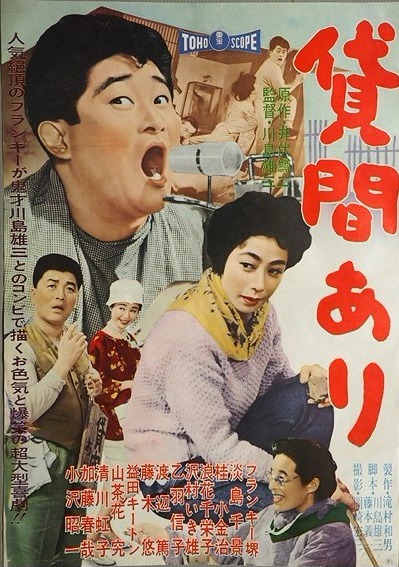
Room for Let (貸間あり, Yuzo Kawashima, 1959)

room for rent poster“Life is just goodbyes” exclaims a tenant of the small, rundown boarding house at the centre of Yuzo Kawashima’s Room for Let (貸間あり, Kashima Ari). Best remembered for his anarchic farces, Kawashima takes a trip down south to the comedy capital of Japan for an exploration of life on the margins of a major metropolis as a host of eccentric characters attempt to negotiate the difficult post-war economy, each in someway having failed badly enough to end up here. Though the setting is perhaps depressing, the lively atmosphere of the boarding house is anything but and the residents, depending on each other as a community of solidarity, know they have the ultimate resource at their disposal in the form of infinitely kind hearted, multi-talented fixer Goro Yoda.

Our introduction to the boarding house follows the passage of an outsider, Yumiko Tsuyama (Chikage Awashima) – a ceramicist who wants to make use of Goro’s printing facilities, but to find him she’ll first have to run the gamut of eccentric residents from the batty bee keeper to the geisha currently trying to fumigate one of her patrons by riding him around the room and the henpecked husband who responds to his wife’s frequent shouts of “Darling!” with a military style “yes, sir!”. On her way to Goro’s jam packed annex, Yumiko notices a room to let sign along with a kiln in the courtyard which catches her eye. Taking a liking both to the room and to Goro, Yumiko moves in and subsequently gets herself involved in the oddly exciting world of an old-fashioned courtyard standing on a ridge above a rapidly evolving city.

Played by well known comedian Frankie Sakai (who played a similar role in Kawashima’s Bakumatsu Taiyoden of two years earlier), Goro is an awkward symbol of post-war malaise and confusion. Goro, a jack of all trades, is the man everyone turns to when they run into a seemingly unsolvable problem, and Goro almost always knows a way to solve them (for a price). His sign in the marketplace proclaims that he speaks several languages and is available for tutoring students, he’s written “how to” books on just about everything you can imagine, he knows how to make the perfect cabbage rolls and konyaku, ghostwrites serial fiction, and runs a small printing enterprise, yet Goro is not a scholar, (licensed) lawyer, doctor, or successful businessman he’s a goodhearted chancer living on his wits. He runs away from success and eventually from love because he doesn’t think he deserves it due his continuing “fakery”.

Despite his minor shadiness, Goro’s kindness and sincerity stand in stark contrast to the evils of his age. Like Goro, many of the boarding house residents are trying to get ahead through somewhat unconventional means including the bawdy lady from upstairs whose main business is blackmarket booze, the peeping-tom street punk who peddles dirty pictures near the station, and the sad young woman working as an independent geisha (Nobuko Otowa) to save enough money to marry her betrothed whom she hopes is still waiting for her at home in her tiny village. That’s not to mention the mad scientist bee keeper who can’t help describing everything he sees in terms of bees and has attempted to turn their apian secretions into a cream which increases sexual potency, or the enterprising landlady who realises she could charge a few more pennies for patrons who want to sit in a fancy seat or watch TV while they eat dinner.

Yumiko isn’t the only outsider sending shockwaves through the community, a young student armed with a camera and the determination to avoid parental disapproval, intends to petition Goro to take his exams for him. The aptly named Eto (Shoichi Ozawa) is a dim boy with seemingly infinite wealth who’d rather scheme his way to the top than invest his energy in getting there the honest way. In this he’s the inverse of Goro whose simple sincerity and easy going nature are, it is subtly suggested, partly the reason he hasn’t made his way in the increasingly duplicitous post-war society. Goro does, however, give in to Eto’s nefarious plan even if it conflicts with his otherwise solid honour code which also sees him turn down the “opportunity” of sleeping with his neighbour’s seemingly insatiable wife in one of the stranger requests coming in to his do anything shop.

Kawashima’s true mastery lies not in the myriad moments of small comedy that pepper the main narrative, but in the glorious way he brings them all together as a perfectly constructed farce. The residents of the boarding house (one of whom is so proud of the “room to let” sign he made that he doesn’t want to rent the room because then he’d have to take the sign down) each face their own difficulties and disappointments but even when darkness creeps in (suicides, arrest, sexual assault, and animal cruelty all raising their ugly heads) the absurd positivity and warmth of these ordinary Osakans seems to be enough to combat it. Life may be a series of goodbyes, but it must still be lived, at least to the best of one’s ability.


 Screened as part of the Japan Foundation Touring Film Programme 2018.

Also screening at:

Forever the Moment (우리 생애 최고의 순간, Yim Soon-rye, 2008)

forever the moment posterSports is one of society’s acceptable obsessions. Devotion to a football team, intense knowledge of baseball stats, and idolatry of athletes is not only respected, it is often required for any kind cultural fluency in the society in which one lives. Sportsmen and women, however, can become a disposable commodity. This is after all why the pay for sports stars is so high – the career is temporary. A brief moment in the spotlight can earn a top athlete a multitude of promotional contracts and role model status to hundreds of sporty kids, but when the music stops everyone loses interest. The heroes of Yim Soon-rye’s Forever the Moment (우리 생애 최고의 순간, Woori Saengae Chwegoui Soongan) achieved their 15 seconds of fame when the Korean women’s handball team won a couple of gold medals in the ‘90s before the sport returned to relative obscurity. Despite being gold medal winners, the women are in a precarious position, left without professional team contracts and lacking the necessary qualifications and experience to find well paid work outside of the sports world.

Yim frames her story around the 2004 Olympic Games in which the Korean women’s handball team came back from a disastrous slump to reach the final only to go home with silver after a penalty shootout defeat to Denmark. Mi-sook (Moon So-ri) was part of the gold medal winning 1992 team and is now a wife and mother. Her financial circumstances, however, are strained. When the supermarket handball team she’s been playing for is disbanded, Mi-sook counts herself lucky to get a job on the shop floor. Her husband (Sung Ji-ru), formerly a top male handball player, has been conned out of all his money by an unscrupulous business partner and is currently on the run from debt collectors leaving her a virtual single parent and desperate for money.

Money is the reason she eventually decides to come back to the Korean Women’s Olympic handball team. Mi-sook’s one time rival, Hye-kyeong (Kim Jung-eun), has been parachuted in to coach the Korean Olympic hopefuls after a successful run coaching in Japan. The team is in a sorry state – filled with inexperienced youngsters, it will need serious work to even qualify for the upcoming games let alone reach the podium. Hye-kyeong decides to get some of her old medal winning team-mates back to bring some strength to the ranks even if they’re all a little past their prime. Despite her best efforts, Hye-kyeong is soon sidelined for male coach (and old flame) Ahn Pil-seung (Uhm Tae-woong) who decides to junk the “Korean method” which uses speed as a weapon against the taller European challengers, and embark on a “science-based” European training regimen.

Yim deliberately moves away from the classic sports movie formula, eschewing the training montage and including only one lengthy match at the film’s climax. Forever the Moment prefers to concentrate on the internal struggles of its scrappy, underdog team the best hopes of which are middle-aged women with children whom society often writes off. Hye-kyeong is an earnest, driven woman who’s made a successful life for herself as a sports professional after her court life has come to a natural end, but she still loses out because she got divorced – the bigwigs are nervous about the proposition of a “divorced” woman occupying a “public” position, something that would hardly come up if she were a man. Made “acting coach”, Hye-kyeong is given hardly any time at all to prove herself before the experiment of “allowing” a woman to coach women is ruled unsuccessful and a man with little experience given full budgetary backing to replace her.

Hye-kyeong’s battles with Ahn may eventually take on the expected romantic dimension but it’s the relationships between the other players which become the film’s spine. Mi-sook has always made a point of distancing herself from handball, regarding it simply as a paycheck rather than a vocation – something which seems all the more relevant thanks to her ongoing troubles with her absent husband who is rapidly sinking into a breakdown over his humiliation and inability to support his wife and child. Struggling through adversity and working hard to achieve a physical goal, the teammates discover new strengths, growing as people and as athletes in their quest to be ready for the all important Athens games.

Forever the Moment is another in the long line of Korean films which celebrate the achievements Koreans can make when they come together and work hard to achieve their goal. As in real life, the Korean Women’s Olympic Handball Team are robbed of their final victory by circumstance and accident, but coming second becomes a victory in itself because of everything it took to get there. Less a sports movie than a subversive comment on the way women are often cast aside or underestimated, Forever the Moment is a tribute to the power of hard work and team spirit which becomes its own reward even when one falls short of the goal.


Original trailer (English subtitles)

The President’s Barber (효자동 이발사, Lim Chan-sang, 2004)

president's barber posterWe each of us live in the midst of history being made, some of us closer to the action than others. Most of us don’t quite realise how close we are or fully understand our role in events until it’s too late, but in any case we’re all just too busy getting on with the business of living to give much thought such grand concepts as history or legacy. Song Kang-ho has made a name for himself playing genial everymen forever at the mercy of historical machinations, but before he was an apathetic Taxi Driver, he was an apathetic barber giving haircuts to a dictator he half imagined was a friend. The President’s Barber (효자동 이발사, Hyojadong Ibalsa) is part journey into the intersection between rosy childhood nostalgia and national trauma, and part subtle political satire on the moral corruptions of authoritarianism but its own soft heartedness is often at odds with the grimness of its purpose.

Sung Han-mo (like the counter for tofu) is a nice but dim sort who has his own barber’s studio right across from the Blue House. As his son (Lee Jae-eung) tells us in his cutsey voice over, Han-mo (Song Kang-ho) is easily led and content to do whatever the village leader tells him to do, including participating in the ongoing corruption surrounding the re-election of despotic president Rhee Syngman. Our narrator, the oddly named Nak-an, was born as a result of a brief indiscretion between his father and an assistant (Moon So-ri) who had, apparently, hoped to marry someone else from her home village if Han-mo hadn’t trapped her with maternity. She wanted wanted an abortion but didn’t find out until after the much publicised five month cut off, meaning Han-mo talked her into staying and little Nak-an acquired the unfortunate nickname of “five months Na-kan”.

The family live happily enough until the mid-1960s when Park Chung-hee stages a coup and declares himself “President for Life”. When Han-mo somehow manages to catch a “North Korean Spy”, he gets himself a commendation and the attention of the authorities (for good or ill). A KCIA agent dutifully turns up and hauls Han-mo off to the Blue House because the president needs a trim…

Park’s reputation underwent something of a rehabilitation for a time. He did, in the minds of those seeking to justify his tyrannical reign, preside over Korea’s economic recovery. Han-mo is one of many to prosper, in his case directly in working indirectly for the regime. Han-mo is a simple man, he doesn’t think about politics but often feels belittled and downtrodden, made a figure of fun by those close to him even whilst remaining a cheerful optimist. He doesn’t take much convincing to hitch his mule to Park’s waggon, enjoying the personal boost in his social standing and finally feeling like a someone in being introduced to the world of the elites even when he is forced to accept that he does not and cannot exist fully within it.

Han-mo cuts hair, chatting away the way a barber does without really realising either that he is a vox pop spy or that he might, at any time, say the wrong thing and land himself in serious trouble. Serious trouble arrives during a heated and extremely bizarre period of political hysteria surrounding the “Marxus” virus – a lamentable episode in which an epidemic of dysentery was blamed on North Korean spies and all those who suffered from the condition taken in for “questioning”. Only when his own family is threatened does Han-mo start to reconsider his role in the affair – his status as a peripheral member of the Blue House team is no help in protecting those close to him and he can no longer pretend he does not know what happens in those basements, and that it happens to ordinary people not just “suspicious” ones.

The low level satire derives from Han-mo’s background presence becoming foreground as a very personal spat between a couple of high ranking Blue House staffers gathers in intensity before exploding into events which will have profound, though short-lived, consequences for Korean political history. Han-mo sadly takes down his portrait of Park hanging in pride of place in his shop and replaces it with one of Chun Doo-hwan (who was bald). Still a simple man he has, at least, learned his lesson and prepares to turn down the “honour” of shaving a dictator’s chin. Korea, the film seems to unsubtly hint, is finding its feet again though there will be another long reckoning before it, like Han-mo and his family, is finally able to free itself of the militarist yoke.


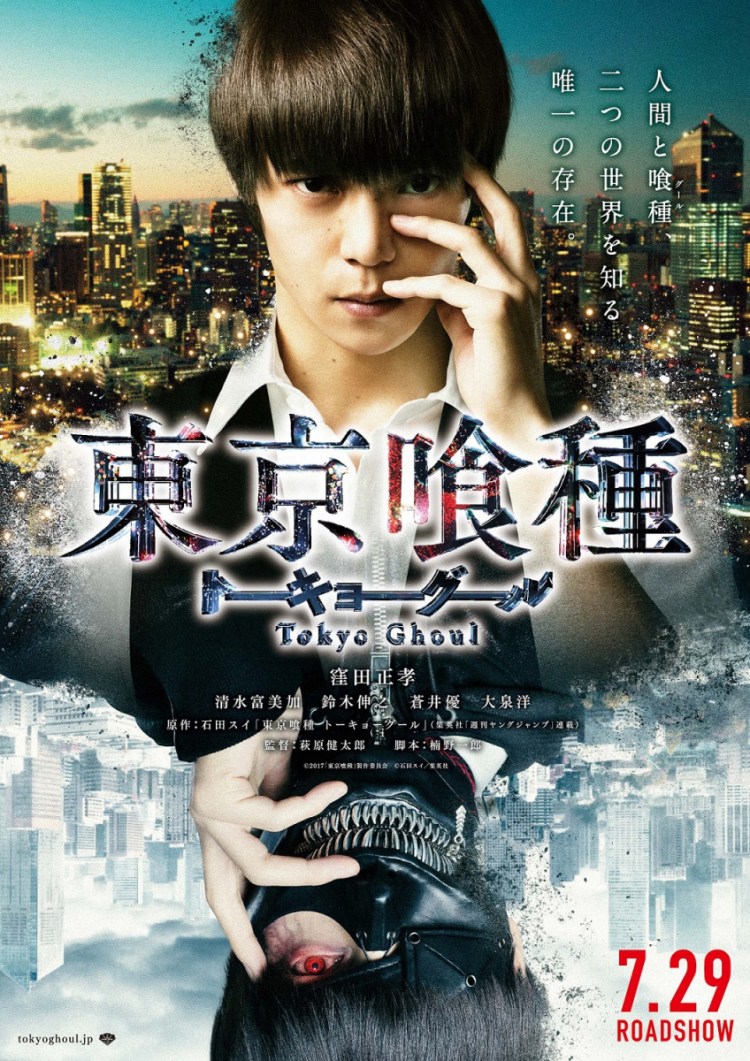
Tokyo Ghoul (東京喰種, Kentaro Hagiwara, 2017)

Tokyo Ghoul posterThough the idea has never been far away, Japanese cinema has largely steered clear of the enemy within. Recently however the “they walk among us” phenomenon seems to have gained traction from the horror-leaning Parasyte to the contemplative Before We Vanish. Parasyte would seem to be an appropriate point of departure for Kentaro Hagiwara’s debut feature, an adaptation of Sui Ishida’s hugely popular manga Tokyo Ghoul (東京喰種). Like Hitoshi Iwaaki’s ‘80s take on Invasion of the Body Snatchers, Tokyo Ghoul creates for itself a subsection of “humanity” which is not quite human yet apparently lives alongside “us” keeping its true nature and identity a secret in order to avoid detection. Unlike Parasyte, however, the intentions of the Ghouls are not so much destruction or colonisation as simple survival.

Ken Kaneki (Masataka Kubota), a shy bookworm with only one real friend, is trying to pluck up the courage to talk to another shy bookworm he often notices reading the kind of books he likes in a cafe they both seem to enjoy going to. It would seem that they have quite a lot in common already, but when Ken ends up on a successful date with Rize (Yu Aoi) he gets a little more than he bargained for. Far from the shy and mousy creature of his dreams, Rize is a raging Ghoul hungry for flesh rather than love. Luckily, Rize is killed in a freak accident just as she’s about devour poor Ken. Ken, however, survives but only thanks to a transplant of Rize’s organs meaning he is now part-Ghoul and can only live on human meat.

Neither one thing nor another, Ken struggles to accept his new nature as he craves flesh and has strange visions in which he imagines himself as Rize the crazed and ravenous Ghoul. Starving and alone he finally finds his way to the Anteiku cafe where he first met Rize and now finds a support network led by ethical Ghouls who sustain themselves on ethically sourced meat and high end coffee. These Ghouls do not want to kill, they simply want to survive which also means keeping one step ahead of the CCG which exists specifically in order to hunt down Ghouls with extreme prejudice.

In many a sci-fi tome, the CCG would be the good guys – protecting regular humans from a monstrous threat lurking in the shadows. After all, who would defend a substratum of cannibal serial killers who think nothing of devouring human flesh in front of its horrified offspring, but the CCG have perhaps begun to take too much pleasure in their work. Cold and calculating detective Amon (Nobuyuki Suzuki) has an idea that the world is “wrong” and it’s his job to put it right by exterminating the Ghouls, whereas creepy silver-haired detective Mado (Yo Oizumi) enjoys toying with his prey as much as Rize did and has even begun to harvest the various “Kagune” protuberances with which the Ghouls are endowed to use in his quest to defeat them.

The CCG may be justified in their fear in but in their methods they are little different than their quarry. The Ghouls too have a right to survive and are, after all, only being what they are. CCG might be better off working with Anteiku to minimise the Ghoul threat rather than engaging in a pointless and internecine war that guarantees only a continuation of violence and fear on both sides.

Having posited such interesting ideas it’s a shame that Tokyo Ghoul reverts to the classic super hero formula of resolving everything through a climactic battle in which Ken is forced to confront himself whilst battling CCG. Neither Ghoul nor human, Ken sees faults on both sides but perhaps learns to come into himself, no longer a diffident young man but one committed to protecting his friends even if it’s themselves they need protecting from.

Hagiwara opts for an artier approach than might expected though his noble intentions are often undercut by poor quality CGI and the inescapably outrageous quality of the source material. Nevertheless he gets impressive performances from his young cast even if some fan favourite characters are relegated to little more than background decoration and others scarcely written at all. Perhaps biting off more than it can chew, Tokyo Ghoul is an uneven experience but one that does its best to find heroism in villainy and villainy in heroism, negating the good/evil dichotomy of superhero morality for something altogether more complex.


Tokyo Ghoul was screened for one night only across the UK and will be released by Anime Limited later in the year.

UK release trailer (English subtitles)

Sunny (님은 먼곳에, Lee Joon-ik, 2008)

Sunny 2008 posterLove, apparently, makes people do stupid things. So, apparently, does the absence of love. Lee Joon-ik’s Sunny (님은 먼곳에, Nimeun Meongotyi) takes another roundabout look at the recent past through the medium of music in the unlikely tale of a poor village girl married off to a resentful man whose love for another has sent him reeling off into a foreign war. While it’s nice to see this familiar story from the often neglected point of view of the unwanted wife, Lee’s tale is more one of male folly and the various ways a woman’s life is dictated by patriarchal values than it is of love and determination in the face of extreme danger.

Soon-yi (Soo Ae) sings a plaintive love song by contemporary singing star Kim Chu-ja for her fellow housewives in a small village, but her moment of reverie is broken when her domineering mother-in-law (Lee Joo-sil) arrives and orders everyone back to work. Victim of an arranged marriage, Soon-yi has been abandoned by her husband Sang-il (Uhm Tae-woong) who ran off to join the army right after the wedding. A letter he receives in the barracks tells us that he had a love in Seoul whom he was (presumably) forced to give up on in order to submit to his mother’s chosen bride (why he did this is never explained). Nevertheless, Sang-il’s mum is desperate for an heir from her only son and packs Soon-yi off for a conjugal visit every month. Sang-il, however, refuses any intimacy with his new wife, coldly rolling over as he tells Soon-yi to stop coming, wondering if she really has any idea what “love” is seeing as she’s obviously so blind to his emotional pain.

The next time Soon-yi tries to visit Sang-il she finds out he’s got himself sent to Vietnam – a source of panic to his devoted mother who blames her daughter-in-law for alienating her son so badly he’s decided to go off and get himself killed on a foreign battlefield rather than endure married life at home. Kicked out from her marital household and disowned by her birth family, Soon-yi decides to track Sang-il down in war-torn Vietnam, teaming up with a shady con-artist/musician (Jung Jin-young) as her only passage out of the country. 

The central problem is that Soon-yi does not love Sang-il. How could she, she barely knows him and their only on screen meeting is one filled with awkwardness, contempt, and resentment. Yet Soon-yi suddenly becomes bold, leaves her village, and refuses to back down until she finds Sang-il and convinces him to accept her as his wife. Given that he’s gone all the way to Vietnam in order to avoid her, it’s unclear what Soon-yi hopes to achieve in this – is her great gesture of sacrifice and perseverance supposed to make Sang-il suddenly abandon his resentment at his personal powerlessness and submit himself to inescapable (accidentally female) forces of social oppression?

Nevertheless, Soon-yi’s pureheartedness wins over all as they become unwilling allies in her quest. The innocence of the enterprise is soon stained with blood as Lee gives way to the bloody unpleasantness of the battlefield reality which our merry band of chancers are ultimately unable to escape. Eventually captured by the Viet Cong, they discover a mini society forged in underground tunnels complete with schools for the many children living in the dark. The Americans, by contrast, are cold and unyielding, cruelly executing the enemy and refusing to help Soon-yi in her quest until she makes a considerable sacrifice of her own.

Soon-yi, rechristened Sunny for her onstage persona, quickly becomes a pawn looking for a foothold in the midst of male squabbling. While Soon-yi’s determination to find Sang-il might have achieved melodramatic weight if it had been a real love story rather than a petty quest to remind an errant, weak willed man of his social obligations, it strains belief that she would really go this far just to save a man who can’t stand her (or really, cannot stomach the representation of his own moral cowardice), let alone that both the Korean and US armies would eventually allow a near silent young woman anywhere near an active battlefield just because she misses her husband. Enlivened by the energetic score of early ‘70s hits, Sunny is entertaining enough but never earns its contrived narrative nor manages to invest its heroine’s quest with any kind of weight or meaning, leaving her a passive presence in the film that bears her name.


Original trailer (no subtitles)

Kim Chu-ja’s My Love is Far Away

YEAH (Yohei Suzuki, 2018)

Yeah still 2Following a series of high profile shorts in international festivals, Yohei Suzuki’s debut feature Ow became something of a cult hit in its surreal, sci-fi leaning tale of an unemployed young man who becomes transfixed by a mysterious round object that suddenly appears in his room, entering a kind of suspended animation which later claims several of his friends and family. Four years on Suzuki’s back with a second feature, but one which runs a scant 45 minutes. The enthusiastically titled “YEAH” takes a similarly surreal approach in dissecting the effects on ongoing national decline on the nation’s youth through the actions of a strange young woman who floats like a ghost through her rapidly disintegrating world.

There’s something a bit different about Ako. When we meet her, she appears to be in the middle of a difficult breakup with a scarecrow. Holding on to the bottom of a sleeve attached to a jacket which is being worn by a dressmaker’s mannequin, Ako laments that she likes how he doesn’t talk but hates not seeing him. Eventually she switches her attentions to a nearby tree which she praises for its constant services on behalf of “Man-kind”. Looking for her mother and sister, Ako wanders into other people’s apartments and confuses local shop keepers, carrying around a pot of coriander she’s collected for its cuteness and cradling it as if it were a baby. She hallucinates strange visions of a scary man and is taken to a mental hospital by another who seems to be her brother but is released back into his care only to wander off and meet another girl just like her who later confesses that she is, in fact, a bean and though she was at first frightened by her realisation, is OK with it now.

Set in Mito in rural Ibaraki, YEAH takes place entirely within a rundown housing estate. Ako, wandering around in wellies, is a lone figure in this oddly quiet settlement. Local teens hang out in the central courtyard where the grass is dying and the swings and climbing frames long rusty from underuse. A classic danchi with dingy open staircases, no lifts, and long corridors the atmosphere is one of decline and defeat. A symbol of an economic leap forward, farmlands giving way to a displaced urban populace, the estate could not be more out of step with modern times as the young make their way towards cities or back towards the land, forever abandoning this awkward liminal space which seems to have been eclipsed by a change in the economic weather.

Women like Ako are, perhaps, a kind of ghost – floating about unseen and unheeded, left with nothing other to do than go slowly mad in a world which is dying all around them. Rejected by the other young people on the estate who use her as a kind of entertainment, Ako literally slips in and out of the conscious world, disappearing from one place only to appear in another still carrying her beloved plant around with her. Lamenting that her home is gone and everything she loved has been taken away, Ako is left only with her worshipful devotion to “Atchy-ma” who “shines the light” on her, and a fierce love of the industry of plant life which works so tirelessly to maintain the environment human beings are so keen to destroy. 

Suzuki’s approach is surreal and obscure, making frequent use of dissolves and superimpositions to capture the various ways Ako is literally lost to or eliminated by her environment. Ako exclaims that she still doesn’t get “YEAH”, because she is “Japanese after all”, but keeps trying anyway, screaming into a void in search of some kind of light while those around her continue in similarly idle pursuits which, while less unusual, lack her otherwise idealistic sense of purpose.


Available to stream on Festival Scope until 20th February as part of their International Film Festival Rotterdam tie-up.