 Written by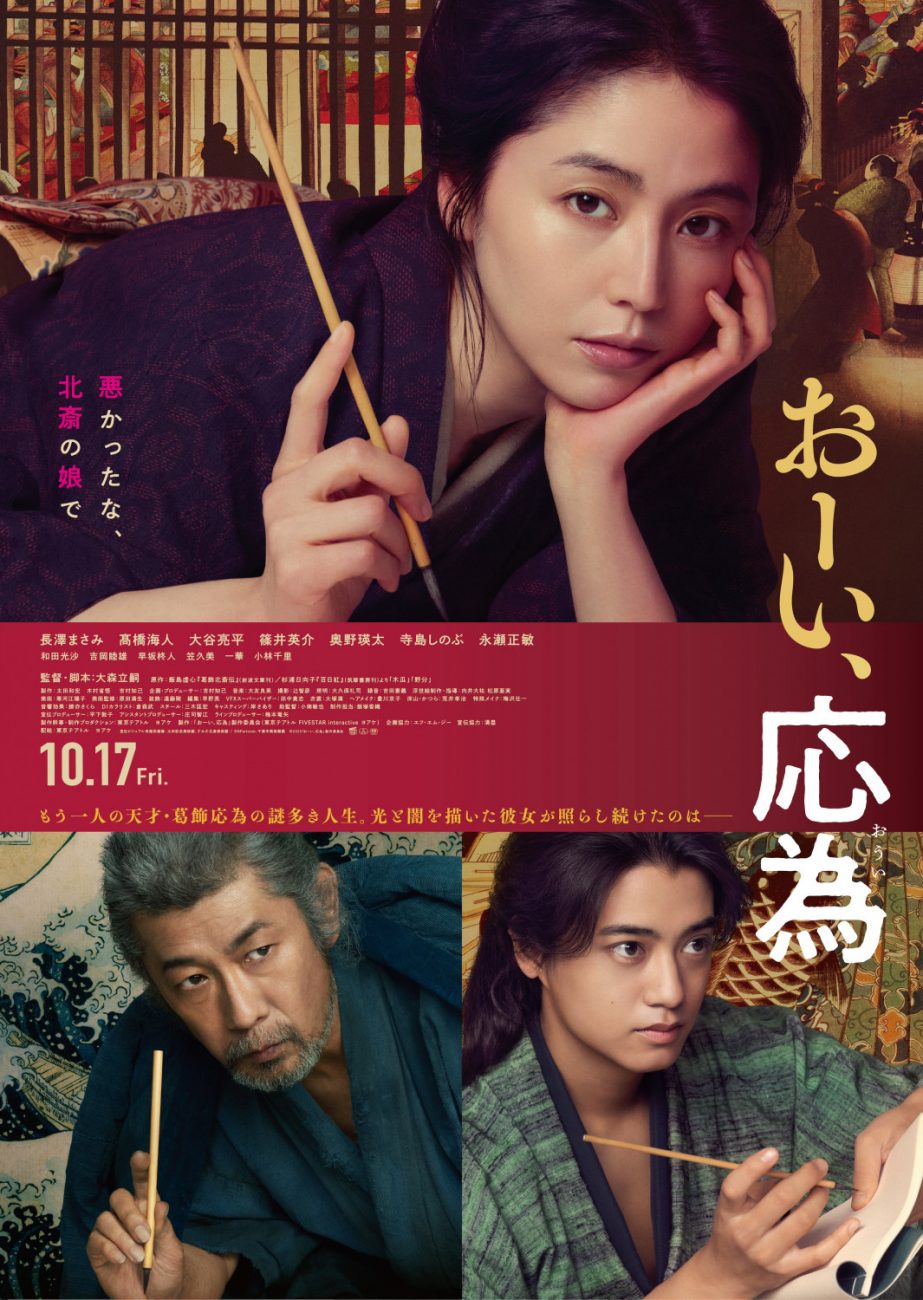
Is there something a little ironic about the title of Tatsushi Omori’s biographical drama, Hokusai’s Daughter (おーい、応為, Oi, Oui)? The Japanese title is a humorous allusion to how she came by her professional name, but once again the English centres her relationship with her more famous father rather than the woman herself. Yet, in a way, the film does this too in exploring the interplay between Oei’s own artistic ambitions, her father’s legacy, and the patriarchal society within which she lives.
By 1820, which is when the film begins, Oei (Masami Nagasawa) has already given up artistry to get married, but ends up leaving her husband, claiming that she couldn’t stand his terrible paintings. According to her, the reason they were so bad was because of her husband’s cynical mindset which manifested itself in dull, emotionally unengaging work, though perhaps it was more that she saw the man she had grown tired of reflected in his mediocre paintings which were never going to live up to her father’s or indeed her own. Returning to her father’s rubbish-strewn shack, Oei then faces the choice of whether to get married again or resume her artistic career. She seems to have a crush on the current top painter in Edo who is young and not bad looking, though perhaps it’s being the best artist that attracts her more than anything else. In any case, he is not romantically interested in her and tries to let her down gently, all of which just makes it worse for Oei. When her father Tetsuzo (Masatoshi Nagase), otherwise known as Hokusai, retrieves the hair pin she dropped in the well while preparing to meet the object of her affection, she tells him that she doesn’t want it back signalling her decision to give up on the idea of marriage and devote herself to painting.
Yet, the film is a little ambivalent on her decision, strongly implying that she is lying when she says she’s not lonely and must necessarily have a degree of regret in having rejected romantic fulfilment rather than allowing her to simply be fulfilled by her art. In this way, the pet dog that she adopts becomes a child substitute, rather than just a domestic companion. On the other hand, her unconventional personality and masculine behaviour mark her out as an outsider in Edo-era society who cannot really fit into any other milieu than the artistic. Tetsuzo keeps trying to kick her out because he thinks he’s stopping her from leading a more conventional life as a woman, before finally realising that wouldn’t suit her and giving Oei her own artist’s name as a seal of approval on her career as an artist.
Tetsuzo is however cantankerous and emotionally distant, unwilling to visit his younger daughter who is seriously ill seemingly because he doesn’t want to face the emotional reality of her impending death. Oei is not so diffident and more willing to confront her emotions head on as symbolised by her fascination with fire. When a samurai comes calling to commission a painting on behalf of his lord and becomes irate with Hokusai’s continued refusals, Oei calls his bluff by suggesting he attack her with his sword if he’s really serious about stabbing someone while her father looks on in silence. In some ways, the samurai is even less free than she is as he can hardly go back to his lord, tell him Hokusai said no, and expect to keep his life, so this gamble is all he really has left. Hokusai, however, resents both the samurai’s crass attempts to wave his money in his face and the entitled privilege of the samurai class in general who think they can order him about as they see fit.
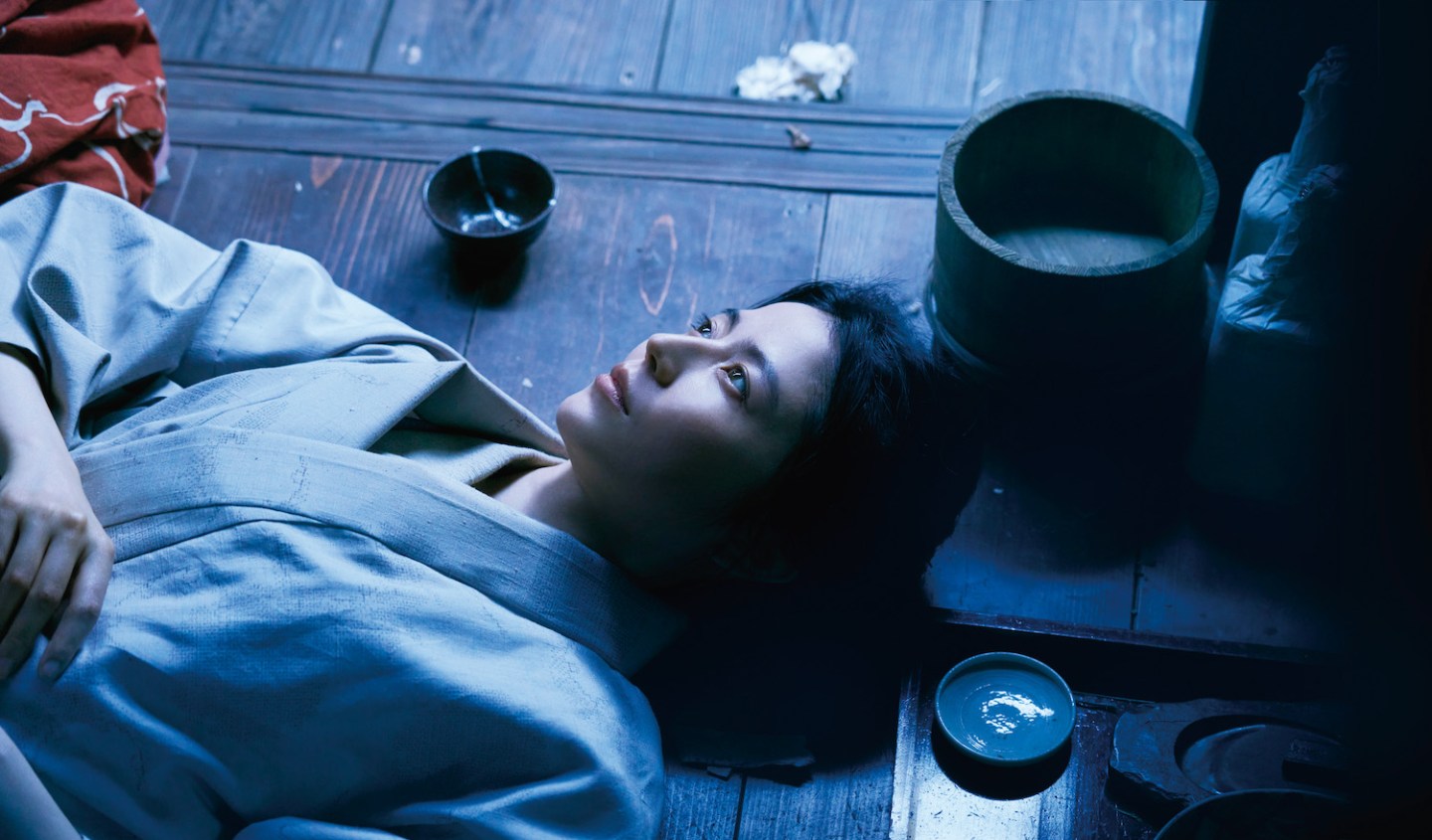
Tetsuzo’s poor business sense as an artist is another of his quirks which simultaneously sees him painting pictures of famous actors Oei thinks are not among his best work, and living in an absolute poverty that leaves him constantly moving from one rundown shack to another until leaving the city completely. Though it’s true that Oei is his longest serving disciple, it’s clear that most of her artistic development takes places while he is off on one of his travels that can last several years. When he suddenly returns as a much older man, he remarks that Oei now has her own style, perhaps as an acknowledgement that she has in some ways surpassed him in coming into her own as an artist while his time is coming to a close. Even so, the implication is that it would not have been possible for Oei to become a professional painter had she not had a famous father who approved of her talent, and that an artistic career would not have been open to her as a married woman in the repressively patriarchal Edo-era society. Using mostly natural light, Omori echoes the light and shade in Oei’s work as she begins to seek out not only a style that is distinctly her own, but a way of living as an outsider in a regimentally ordered society.
Hokusai’s Daughter screened as part of this year’s Camera Japan.
Trailer (English subtitles)

