 Written by
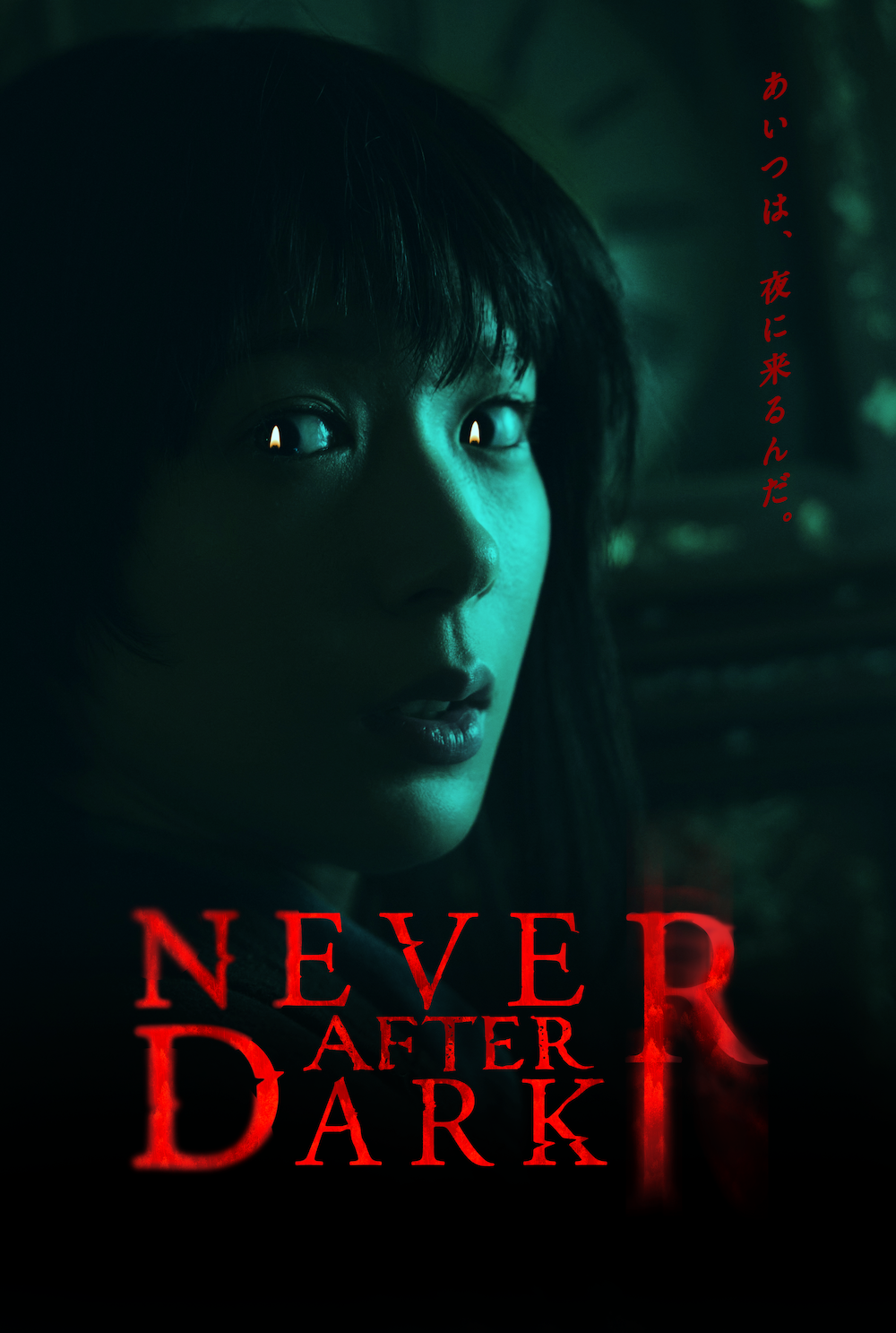
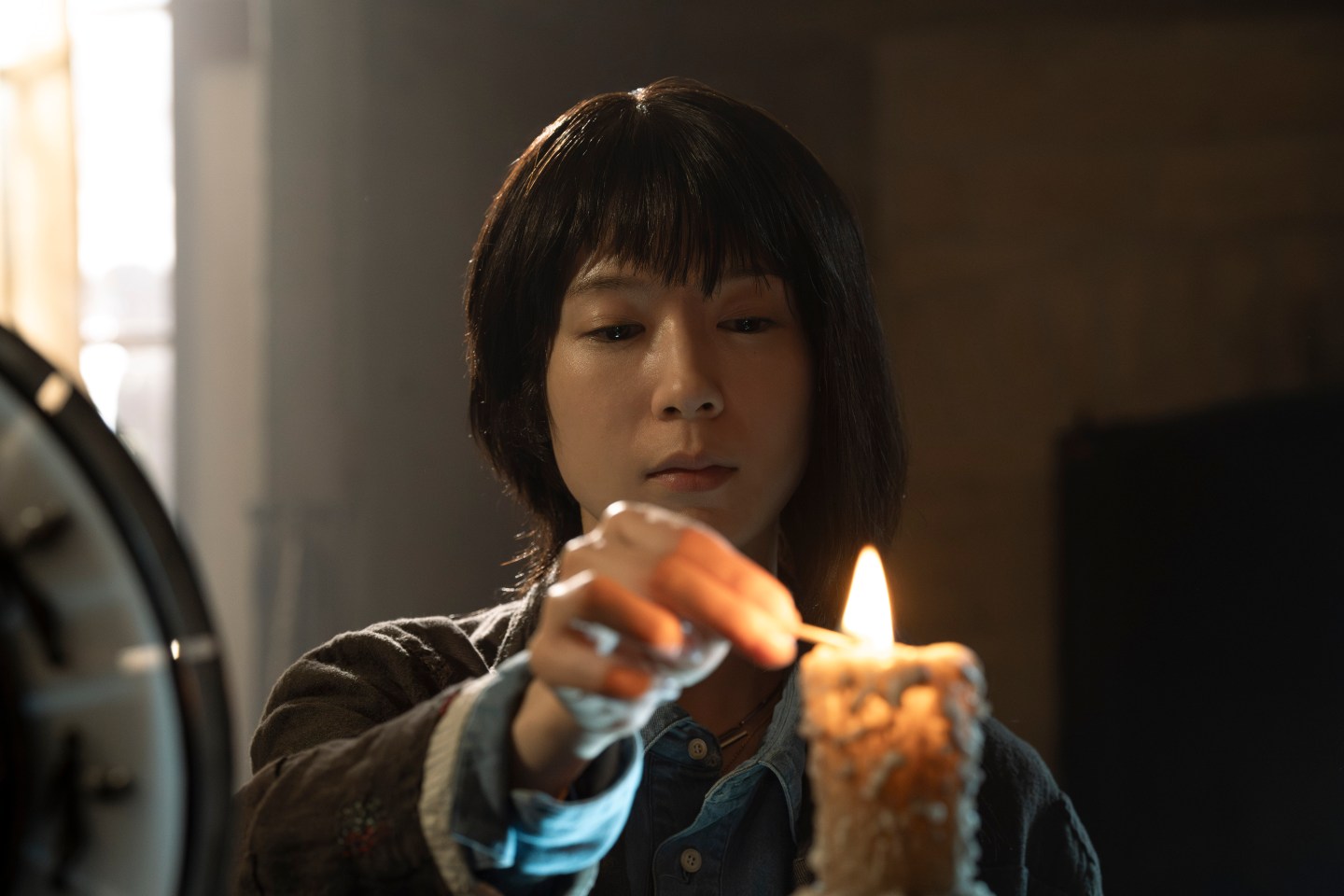
When people talk about the veil between this world and the other, it may seem that where one ends the other begins, but it’s often more like a two-way mirror with each occupying the same space. Flip the switch, and you’ll see a different reality. At least that’s sort of how it is for travelling psychic Airi (Moeka Hoshi) in Dave Boyle’s gothic chiller, Never After Dark, as she finds herself tasked with dispatching another wandering soul at a disused hotel.
Having just purchased the property, wealthy widow Teiko (Tae Kimura) struggles to convince her sceptical son Gunji (Kento Kaku) that there really is a malevolent spirit stalking the halls rather than a figment of her imagination provoked by her loneliness and sense of isolation while living alone in this vast and empty space. Doors seem to open on their own, and she’s seen the terrifying figure of a man with half his face missing. After consulting a shaman, she calls in Airi to help deal with the problem but is surprised when she arrives alone. The shaman had told her about “a pair of sisters” who deal with cases like these. But the truth is that Airi is alone and not alone. Her older sister Miku (Kurumi Inagaki) is a spirit herself, frozen in the form in which she died, though Airi is now much older than she’ll ever be.
As for Airi herself, she’s much more comfortable with the dead than the living and a fairly stand-offish presence which somewhat disappoints the bubbly Teiko who tells her that she’s interested in becoming a psychic herself and was hoping to witness the ritual. Airi, however, prefers to work alone and tells her that it’s far too dangerous for her clients to be present, none of which helps to head off any lingering doubts as to her authenticity. Though told to stay away for their own safety, unbeknownst to her Teiko and Gunji each sneak back for a quick peek at what she’s up to, which also includes drinking alone and listening to records late at night. She waits for dawn to break before entering the spirit realm through a process of self-hypnosis, otherwise the balance would be tipped the wrong way and the forces of darkness would hold all the power.
But there are other ways in which the living can be haunted. The film seems clear in its cosmology that Miku is a “real” presence in the other world. Through she appears only in reflective surfaces, she is not only a reflection of Airi’s grief, guilt, and internalised shame about this “gift” that she’s inherited from an apparently absent mother. Nevertheless, Airi’s aversion to the living is born of this same trauma in being constantly doubted, accused of fraud or witchcraft, and facing threats of irrational violence from apparently “rational” people who reject the idea of the supernatural.
Airi may be right when she says she has more to fear from the living than the dead, but what she encounters here is more like an echo of the future reverberating in the past. Miku recalls being pursued by a girl with white eyes she later understood to be her own ghost shortly before she died, blown back in time by the force of her grief. In that sense, perhaps everyone is alive and dead at the same time, even if Airi is both dead and alive, alone and not alone, in less literal ways. Even so, the force she’s battling seems to have the power of foresight, just not as regards their own fate, and identifies with a kind of emptiness in Airi that is reflected in their own search for a soul by stealing those of others.
Faced with a threat that’s more flesh and blood than she was expecting, Airi’s first instinct is to run. This isn’t in her remit, she claims, and therefore not her problem, only for Miku to remind her that she has a responsibility not only to help the dead move on, but to her living clients, while in this case it may amount to the same thing. A hotel is, after all, a transient space and there is something uncanny about its disused state as a nexus of time where all moments become one moment and one may be both alive and the same time dead. Perhaps it’s time for Airi to move on too, if only into another purgatorial existence, as her candle burns itself down to its last.
Never After Dark is available on digital platforms in the UK from 2nd November.
Trailer (English subtitles)

