 Written by
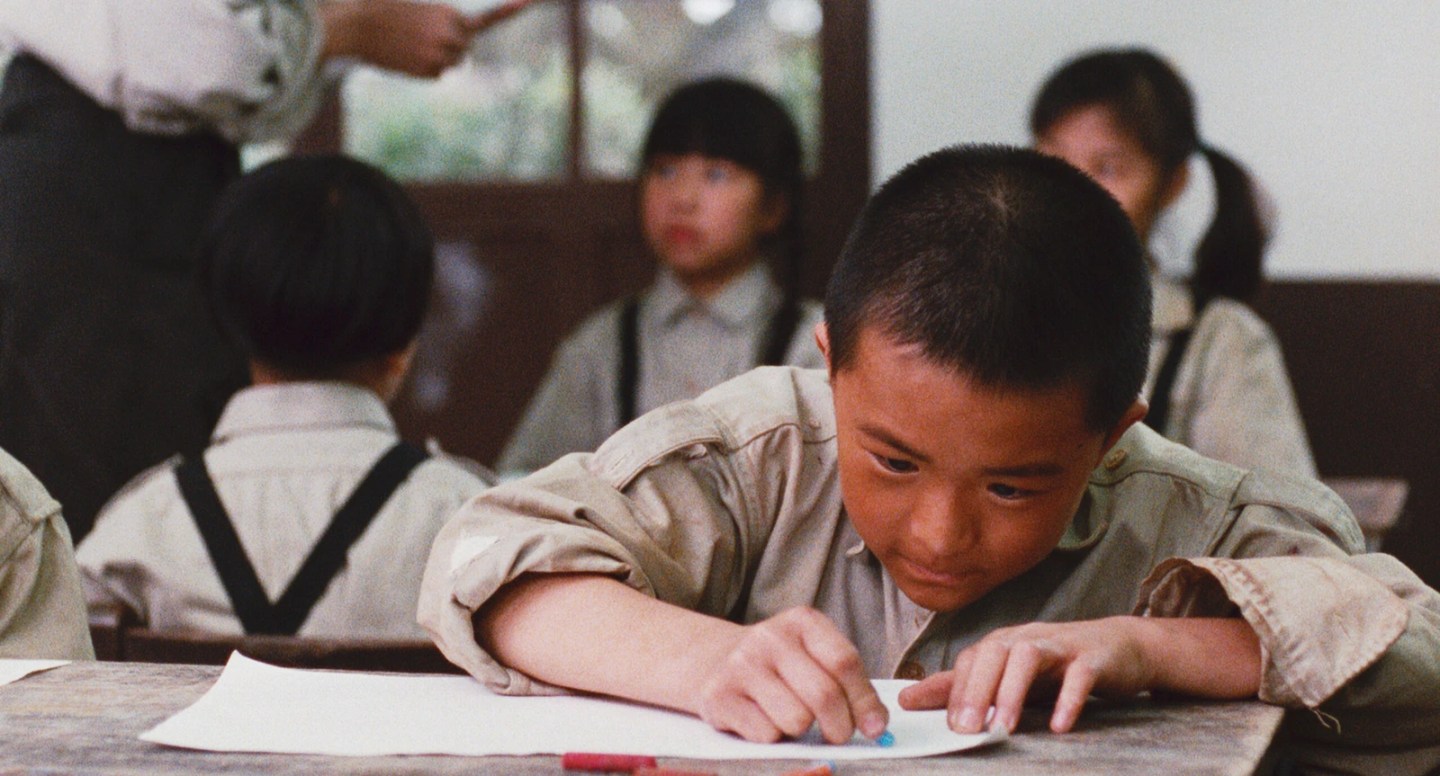
A mischievous little boy’s daily life beings to change following the arrival of an inspirational teacher in Yang Li-kuo’s poignant drama, The Dull-Ice Flower (魯冰花, Lǔ bīnghuā). Adapted from the novel by Chung Chao-cheng and set in the 1960s, the film was released shortly after the lifting of martial law and examines the many ways in which A-Ming’s (Wong Kwan-Yuen) life was defined by forces outside his control from his family’s poverty and the feudalistic nature of local society to the rigidities of authoritarian rule.
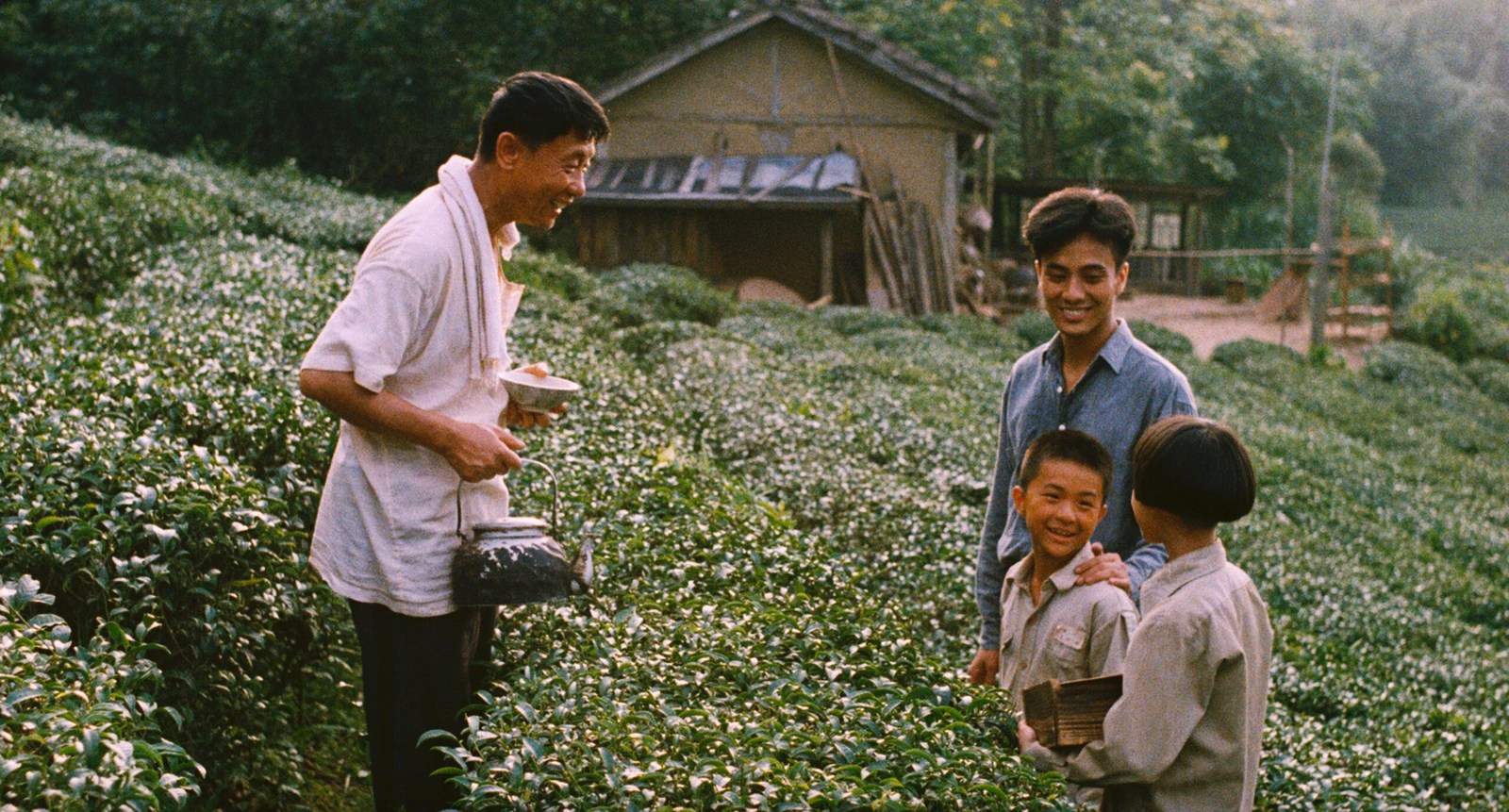
Indeed, there is something quite sad in seeing the once bright and energetic boy at the film’s centre gradually lose his spark, become listless and dejected, and finally succumb to the same illness that took his mother’s life. A-ming and his sister Cha-mei (Lee Suk-Ching) live in a remote mountain village where their father Shi-sung (Lin I-hsiung) grows tea. Though A-ming loves drawing, his father is always chastising him for being lazy and not working hard enough on their farm. He is bottom of his class in terms of grades and has a reputation as a troublemaker among the teachers.
It’s only on the arrival of Mr. Kuo (Yu Han), and idealistic art teacher from Taipei, that A-ming gains the courage and confidence to embrace his talent, though not everyone is as convinced of it as Mr. Kuo. Many of the other teachers favour Chih-hung, the son of the local mayor (Chan Chung-Yung), who was previously selected to represent the school in an art competition but didn’t win anything. Chih-hung’s drawing style is technically proficient, but in Kuo’s view overly naturalistic and lacking in both feeling and imagination. After Kuo starts the art club, Chih-hung is unable to draw anything without being given a subject first and when told to draw the class immediately gets up and starts counting the number of people in the room. He measures everything out and aims for accuracy in depicting the world around him. As Kuo’s fond of pointing out, a camera could do that just as well, while A-ming’s drawings are full of abstract ideas and childish flights of fancy. While Kuo sees genius in the them, the teachers dismiss his work as incomprehensible because in their rigid, authoritarian way of thinking they prize only “realism”. Not only are they unable to understand A-ming’s paintings, they have no desire to.
At the same time, they are all obsessed with currying favour with the mayor, Mr Lin, and local politics dictate that no one challenges him or his family. When Kuo tells Chih-hung that his drawing doesn’t make sense and all he needs to do is colour the flag red, it causes the boy to burst into tears because no once has ever given him anything other than praise so he feels personally attacked. The incident provokes a minor crisis that sees the other teachers rally round Chih-hung while telling a baffled Kuo not to bring “politics” into his work. Seemingly left-leading, Kuo speaks his mind and represents a new kind of democratic spirit that sees him advocate for egalitarianism and freedom of thought.
Even so, A-ming continues to suffer because of his family’s poverty and the feudalistic ties between the villagers and the mayor. It’s the mayor who rents the land to A-ming’s father, while he also took out a sizeable loan with him during his wife’s illness. Shi-sung fears that a poor harvest could result in his inability to pay the rent to Lin, leaving them homeless. Consequently, he pulls the children out of school to help kill an infestation of tea bugs, disapproving of their involvement with the art club because it means they come home later and less have time to work. Though she is also talented and enjoys drawing, Chi-mei gives up the art club so that A-ming can continue going while she works in the fields. Kuo later brings the class to them to help kill the tea bugs so the Chi-mei and A-ming can go to school and be in the art club. Chih-hung is apparently taken with this brief foray into the mountains, while Kuo later takes up the family’s plight with Lin who has the field sprayed as a symbolic gesture but then later presses Shi-sung for the repayment of his loan when he fails to vote for him after taking A-ming to the hospital on election day.
Forced to sell his pigs early, Shi-sung is unable to pay for the medical treatment and takes A-ming out of hospital early, though he thinks he’s recovered and is excited about returning to school and participating in the art contest. “Rich kids have a better chance at everything,” he laments sadly on hearing that Kuo was overruled when he nominated him for the contest as the other teachers all insisted on Chih-hung. This final disappointment seems to put paid to all his dreams to the point that Ah-ming gives up painting entirely as his illness intensifies. His painting of the tea bugs expresses his fears that everything will be taken away from him from food to the opportunity to go to school and paint. Shi-sung laments that it was this poverty that led to his wife’s early death, while later exacerbating Ah-ming’s illness and preventing him from receiving medical treatment.
This sense of unfairness permeates the film, as does a wonder and respect for the natural world echoed in Ah-ming’s desire to paint something just as beautiful on a large canvas so that the world could see. The teachers come to regret the way that they treated Ah-ming along with their dismissal of his artwork, though the mayor is full of self-serving hypocrisy announcing that they will now be sure to focus on artistically talented children when his own son is an aspiring artist. Even so, like the lubin flowers of the title, A-ming’s presence does seem to have enriched the world around him, kicking back against the elitism of an authoritarian regime with raw talent and finding new ways to express himself in an otherwise conformist culture.

