 Written by
A long-time housewife gets a new lease on life after getting part-time job at a detective agency in this 2002 TV special directed by Takashi Miike, Part-Time Detective (パートタイム探偵, Part-Time Tantei). Starring a deglammed Keiko Matsuzaka, the show is part mystery drama, and part exploration of the realities of traditional gender roles in a society which still to some extent subscribes to a strictly defined division of labour that confines women to the domestic space and men to the world of work.
It’s just this tension that’s beginning to bubble in the Yamada household as the bank where husband Kazuo (Ren Osugi) works is in trouble and facing an imminent merger in which he may end up being made redundant. Kazuo is a slightly old-fashioned man who largely talks in aphorisms and still believes in the post-war salaryman dream of jobs for life in return for absolute loyalty to the company. The idea that the bank might just cut him loose even though he’s worked there all his adult life is, therefore, destabilising to him. Because he defines his masculinity in terms of his ability to protect his family financially, he is too afraid to explain to his wife Noriko (Keiko Matsuzaka) that there’s a possibility he may lose his job, but also has put the family on austerity measures by ordering them to get by on just 1000 yen housekeeping money a day, which is not realistic for a family of four.
This does, however, liberate Noriko to begin looking for a job outside the home to supplement the family’s income. As a housewife, she is much like the caged bird that escapes in the early stretches of the film. A long montage sequence showcases the drudgery of her life as she fulfils dull domestic tasks such as drying futons and cleaning the bath while the kids are at school and her husband at work. The family more or less treat her like a maid, expecting all these tasks to be done as if by magic, reducing Noriko to “wife” or “mother” without really thinking of her as a person. On her job hunt, she’s similarly met with stereotypical views held of housewives as most places are unwilling to hire her either because of her age, lack of experience, or a perception that women who stay at home are dimwits who don’t know how to do anything.
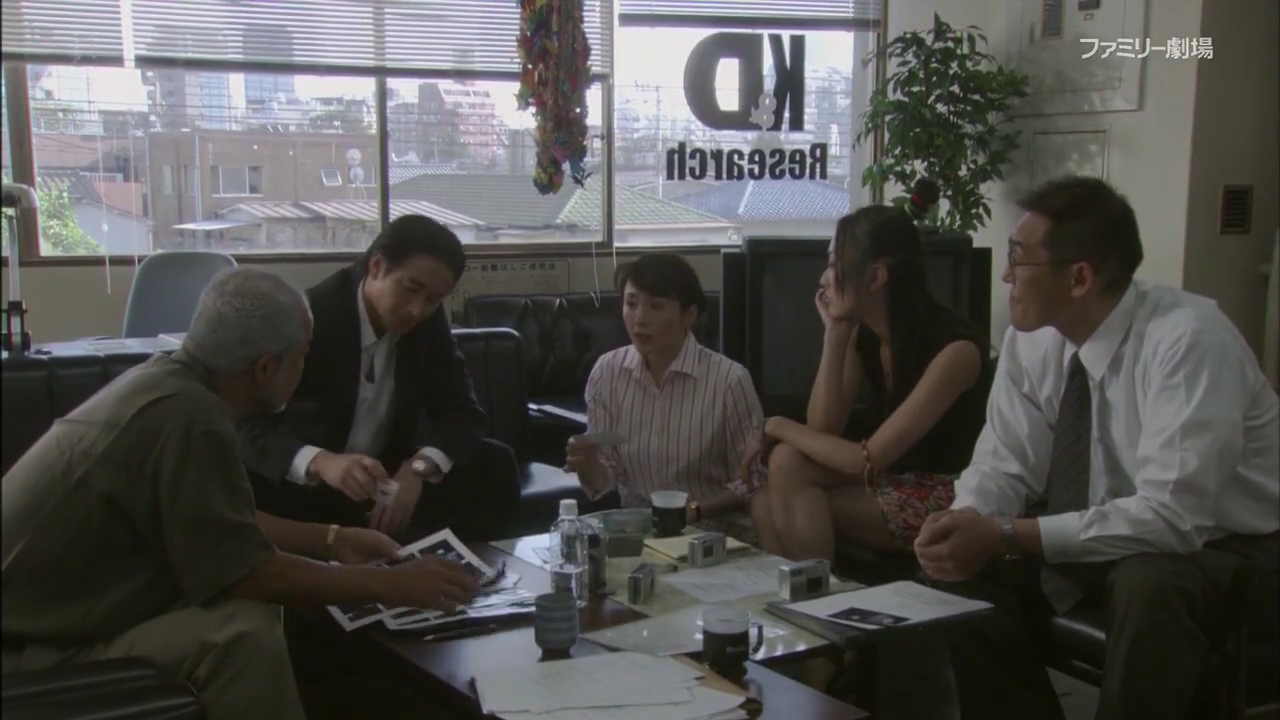
The suggestion that housewives are stupid is indeed galling, as it turns out that it’s the men who don’t know how to do anything for themselves because they expect their wives to do everything for them to the extent that they don’t even notice these things being done until they aren’t. Kazuo’s boss Kagami (Masaomi Kondo) also insists he’s protecting his family, but has several mistresses including bar hostess Kotori with whom he wants to break it off because he suspects she’s seeing other men. He asks the detective agency where Noriko ends up getting a part-time job despite the reluctance of cynical boss Hibino (Eisaku Yoshida), to get proof that she’s cheating on him. This casual affair ends up endangering both his personal and professional lives, with his wife Sachie (Yoshiko Miyazaki) later seeing this as something else she will have to sort out for him by going to the same detective agency hoping to cover up evidence of her husband’s transgressions.
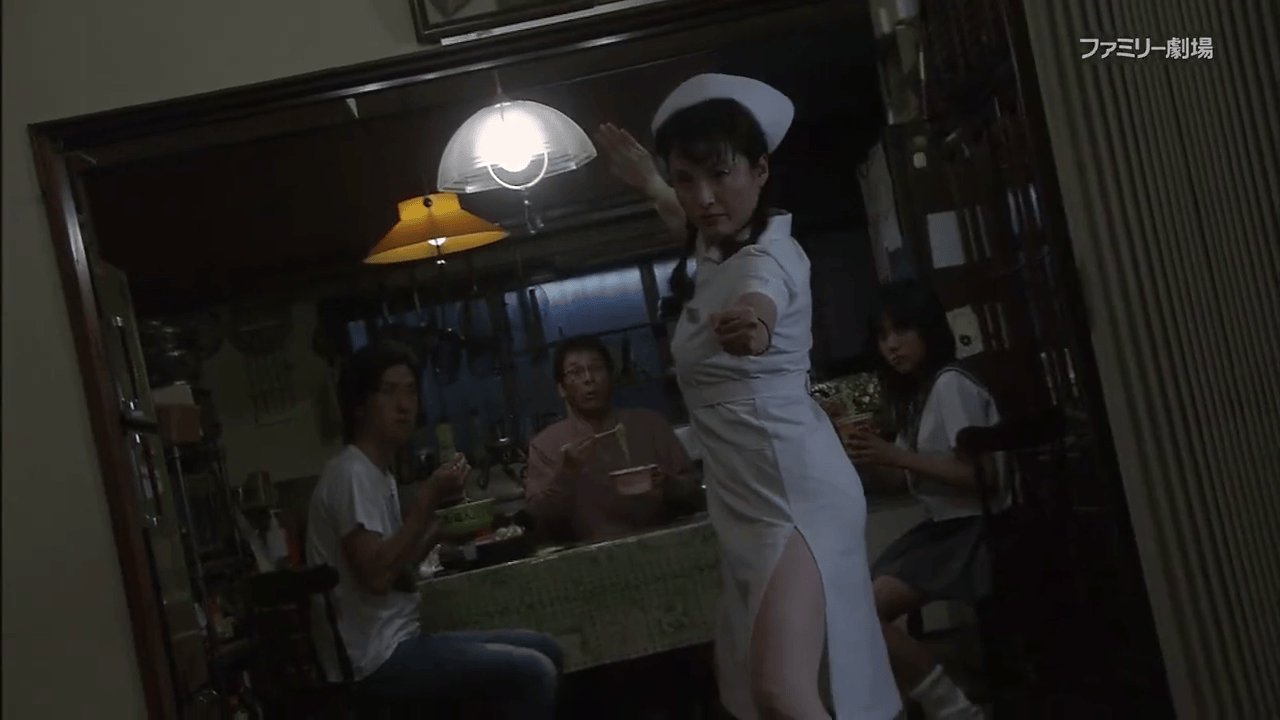
Even if Noriko might be hilariously bad at surveillance work, she does have a flair for solving mysteries, using her feminine intuition to pick up on aspects of the case that haven’t occurred to the male detectives. Unlike Hibino who thinks the truth is irrelevant and there’s no point digging any deeper than the remit of their case, Noriko wants to see justice served regardless of whether or not there’s a client or they’re getting paid. Indeed, her pure-heartedness eventually helps Hibino shed some of his cynicism in moving on from past trauma to remember his own zeal for justice. It looks like the bird may return to its cage at the end of the film as Noriko has ironically solved some of her domestic issues through her involvement with the case, but her work as a part-time detective has also given her new perspectives and the possibility of finding fulfilment outside the home while maintaining her position in the domestic space. Though conforming fully to the rather anonymous TV drama house style, the film still has occasional moments of Miike flair in its internal irony, martial arts fantasy sequence, and visions of domestic life.

