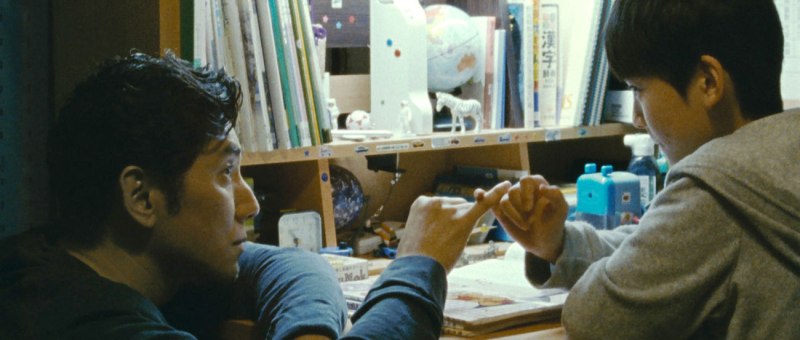
 Self disgust is self obsession as the old adage goes. It certainly seems to ring true for the “hero” of Miwa Nishikawa’s latest feature, The Long Excuse (永い言い訳, Nagai Iiwake) , in which she adapts her own Naoki Prize nominated novel. In part inspired by the devastating earthquake which struck Japan in March 2011, The Long Excuse is a tale of grief deferred but also one of redemption and self recognition as this same refusal to grieve forces a self-centred novelist to remember that other people also exist in the world and have their own lives, emotions, and broken futures to dwell on.
Sachio Kinugasa (Masahiro Motoki) is a formerly successful novelist turned TV pundit. As his hairstylist wife, Natsuko (Eri Fukatsu), gives his hair a trim he angrily turns off the television on which one of the programmes he appears on is playing and returns to petulantly needle his wife about perceived slights including “deliberately” using his real name in front of important publishers “to embarrass him”. Upset but bearing it, Natsuko takes all of this in her stride though her husband is in a particularly maudlin mood today, reminding her once again about his intense feelings of self loathing. Shortly after finishing Sachio’s haircut, Natsuko throws on a coat and grabs a suitcase – she’s late to meet a friend with whom she is going on a trip. Sachio barely waits for the door to close before picking up his phone and texting his mistress to let her know that his wife is away.
Later, Sachio figures out that at the moment his wife, her friend Yuki (Keiko Horiuchi), and a busload of other people plunged over a guard rail on a mountain road and into a frozen lake, he was rolling around in his marital bed with a much younger woman. Now playing the grieving husband, Sachio seems fairly indifferent to his recent tragedy but writes an improbably literary funeral speech which boils down to wondering who is going to cut his hair, which he also makes a point of checking in the rear view mirror of the funeral car, now that his wife is gone.
So self obsessed is Sachio that he can’t even answer most of the policeman’s simple questions regarding the identification of his wife – what was she wearing, what did she eat for dinner, is there anything at all he can tell them to confirm the identity of his wife’s body? The answer is always no – he doesn’t remember what she wore (he was busy thinking about texting his mistress), ate dinner separately, and didn’t even know the name of the friend Natsuko was going to meet. The policeman tries to comfort him with the rationale that it’s normal enough to have grown apart a little over 20 years, but the truth is that Sachio was never very interested in his wife. As a funeral guest points out, Natsuko had her own life filled with other people who loved her and would have appreciated the chance to pay their respects in the normal fashion rather than becoming mere guests at Sachio’s stage managed memorial service.
Sachio’s lack of sincere reaction to his wife’s passing stands in stark contrast to the husband of her friend, Yoichi (Pistol Takehara), who is a wailing, broken man and now a widowed single father to two young children. Yoichi is excited to finally meet Sachio about whom he heard so much from “Nacchan” his wife’s best friend and the children’s favourite auntie. Sachio knew nothing of this important relationship in his wife’s life, or much of anything about her activities outside of their home.
When Natsuko left that last time, she paused in the doorway somewhat finally to remind Sachio to take care of the house in her absence but neither of these two men know how to look after themselves from basic household chores like using the washing machine to cooking and cleaning, having gone from a mother to a wife and left all of the “domestic” tasks to their women. Eventually feeling low, Sachio decides to respond to Yoichi’s suggestion they try to ease their shared grief by taking the family out for dinner, only he invites them to a fancy, upscale place he goes to often which is neither child friendly nor particularly comfortable for them seeing as they aren’t used to such extravagant dining. Yoichi, otherwise a doting father but often absent due to his job as a long distance truck driver, neglects to think about his daughter’s dangerous crab allergy and necessity of carrying epinephrin just in case, never having had to worry about something as basic as feeding her.
Hearing that Yuki’s son Shinpei (Kenshin Fujita) is quitting studying for middle school exams because he needs to take care of his sister, Sachio makes the improbable suggestion that he come over and help out while Yoichi is away on the road. Becoming a second father to someone else’s children forces Sachio into a consideration of his new role but his publicist cautions him against it. Whipping out some photos of his own, he tells Sachio that kids are great because they make you forget what a terrible person you are but that it’s just the ultimate act of indulgence, basking in adoration you know you don’t deserve. Sachio frequently reminds people that he’s no good, almost making it their own fault that he’s hurt them through his constant need for external validation and thinly disguised insecurity. Sachio’s personal tragedy is that his attempts at self-deception largely fail, he knows exactly what he is but that only makes it worse.
The Long Excuse, such as it is, is the title of Sachio’s autobiographical story of grief and an attempt to explain all of this through a process of self discovery and acceptance. Though appearing indifferent to his wife’s death, Sachio’s reaction is one informed by his ongoing self delusions in which he tries to convince himself to ignore the issue and attempt to simply forget about it and move on. Yoichi, by contrast, feels differently – he can’t let his wife go and wants to keep her alive by talking about her all the time but his bighearted grief is too much for his sensitive son who has more than a little in common with Sachio and would rather hit the pause button to come back to this later. The best way out is always through, however difficult and painful it may turn out to be. Making The Long Excuse is Sachio’s way of explaining himself and learning to reconcile the person he is with the one he would like to be, and even if he’s still talking to himself he’s at least moving in the right direction.
The Long Excuse was screened at the 17th Nippon Connection Japanese Film Festival.
Original trailer (English subtitles)
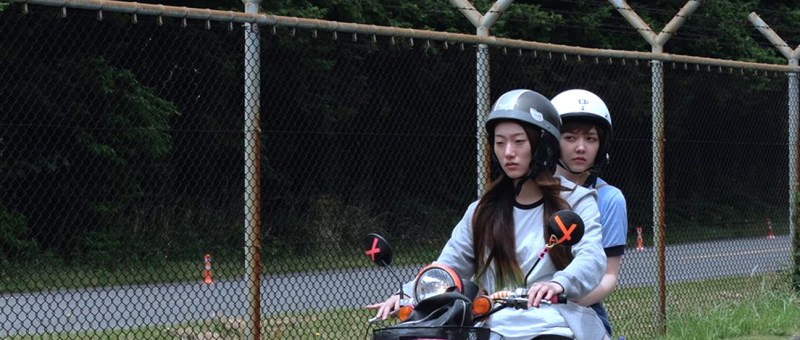
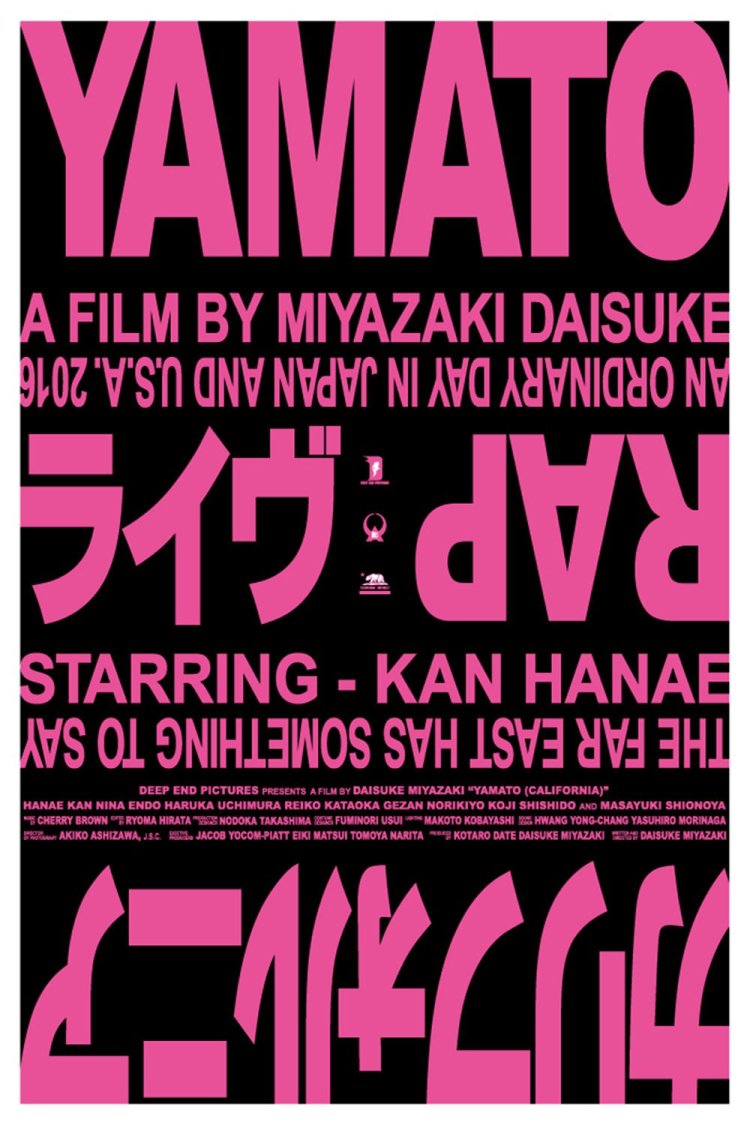 When you think of the American military presence in Japan, your mind naturally turns to Okinawa but the largest mainland US base is actually located not so far from Tokyo in a small Japanese town called Yamato which is also the ancient name for the modern-day country. The US has been a constant presence since the end of the second world war prompting resistance of varying degrees from both left and right either in resentment at perceived complicity in American foreign policy, or the desire to reform the pacifist constitution and rebuild an independent army capable of defending Japan alone. Daisuke Miyazaki’s second feature, Yamato (California) (大和(カリフォルニア) dramatises this long-standing issue through exploring the life of hip-hop enthusiast and Yamato resident Sakura (Hanae Kan) who idolises an art form born of political oppression in a country which she also feels oppresses her as a Japanese citizen living on the other side of the fence from land which technically still belongs to the US government.
 “Memories are what warm you up from the inside. But they’re also what tear you apart” runs the often quoted aphorism from Haruki Murakami. SABU seems to see things the same way and indulges an equally surreal side of himself in the sci-fi tinged Happiness (ハピネス). Memory, as the film would have it, both sustains and ruins – there are terrible things which cannot be forgotten, no matter how hard one tries, while the happiest moments of one’s life get lost among the myriad everyday occurrences. Happiness is the one thing everyone craves even if they don’t quite know what it is, little knowing that they had it once if only for a few seconds, but if the desire to attain “happiness” is itself a reason for living could simply obtaining it by technological means do more harm than good?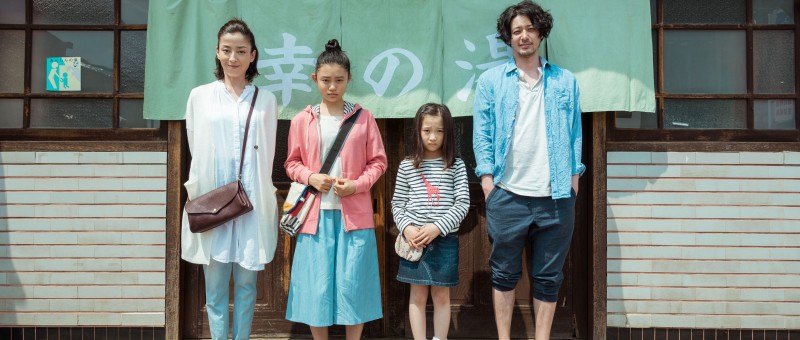

 It’s a strange paradox that in a land defined by corruption of the legal system, your only hope my lie in a new trial. So it is for the hero of Kim Tae-yun’s latest film. Inspired by a real life miscarriage of justice (a case which was in fact still continuing at the time of filming), New Trial (재심, Jaesim) takes aim at everything from social inequality to unscrupulous lawyers and abuse of police power. A teenager pays dearly for being in the wrong place at the wrong time, not only losing 10 years of his life but the entire possibility of his future now that he’s forever branded a criminal. That’s aside from leaving his ageing (now blind mother) alone with no means of support and the additional burden of trying to clear her son’s name.
 Each year the Nippon Connection film festival runs a retrospective programme alongside its collection of recent indie and mainstream hits. The subject for this year’s strand is Nikkatsu’s Roman Porno. Heading into the 1970s, Japanese cinema was in crisis mode as TV poached cinema audiences who largely stayed away from the successful genres of the 1960s including the previously popular youth, action, and yakuza movies which had been entertaining them for close to 20 years. Daiei, one of the larger studios known for glossy, big budget prestige fare alongside some lower budget genre offerings went bust in 1971, Shochiku kept up its steady stream of melodramas, but Nikkatsu found another solution. Taking inspiration from the “pink film” – a brand of soft core, mainstream pornography shown in specialised cinemas and made to exacting production standards, they created “Roman Porno” which made sex its selling point, but put big studio resources behind it, bringing in better actors and innovative directors to lend an air of legitimacy to its purely populist ethos.
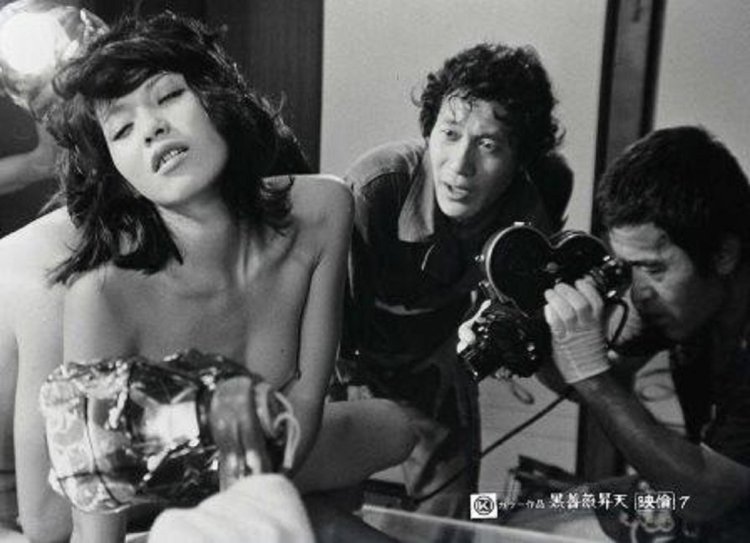 Ecstacy of the Black Rose is a more comedic effort than most of Kumashiro’s output and takes an ironic look at the genre as a put upon director gets fed up when his leading actress falls pregnant and becomes obsessed with finding a woman whose moans he overheard at the dentist’s.
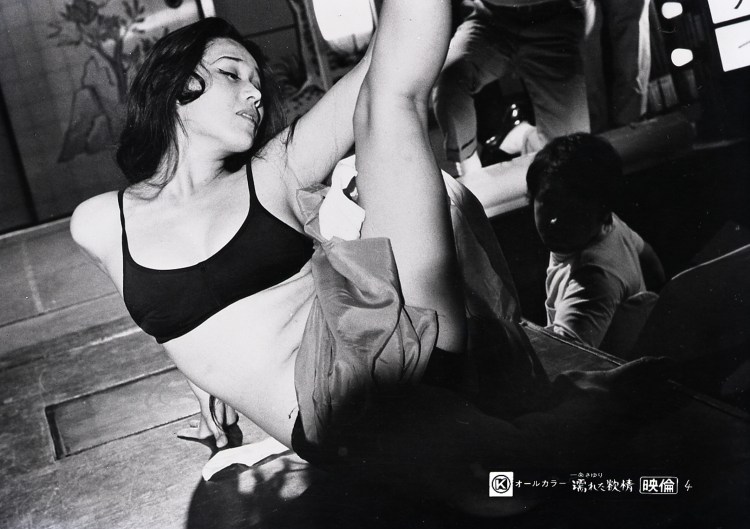 Following Desire received a Kinema Junpo award for best screenplay as well as the best actress prize for Hiroko Isayama who plays a stripper intent on taking down her rival for the top spot!
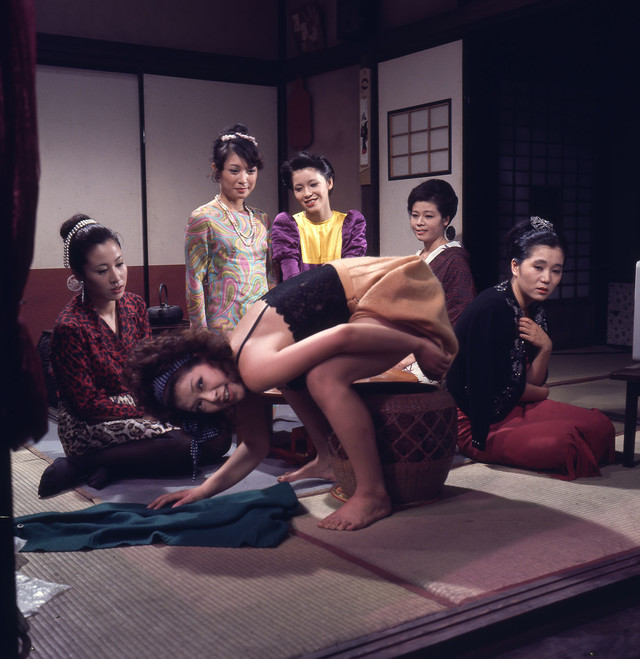 Kumashiro’s Tamanoi Street of Joy takes place on the last day of legal prostitution in 1958 and follows the girls as they mark the occasion in their own particular ways.
 Further proving Kumashiro’s critical stature, Twisted Path of Love was among Kinema Junpo’s 1999 list of the greatest Japanese films of the 20th century. The story of a young man who returns to his hometown but attempts to shed his identity, burning a hole in the conventional village life through sex and violence, Twisted Path of Love also displays Kumashiro’s interesting use of common censorship techniques for artistic effect.
 Often regarded as Kumashiro’s masterpiece, The Woman with the Red Hair picked up a Kinema Junpo best actress award for Junko Miyashita, as well as ranking fourth in their annual best of the year list. The story centres on construction worker Kozo who, along with friend Takao, rapes his boss’ daughter who subsequently becomes pregnant. While she asks Takao to marry her, Kozo embarks on an affair with the mysterious red-haired woman.
 Another of Kumashiro’s most well-regarded Roman Porno, The World of the Geisha takes place in a geisha house in 1918 and examines the various tensions which exist between the women themselves and their customers who have come to the house to escape external political concerns. The film again demonstrates Kumashiro’s tendency to ironic commentary as he tampers with intertitles to make a point about censorship.
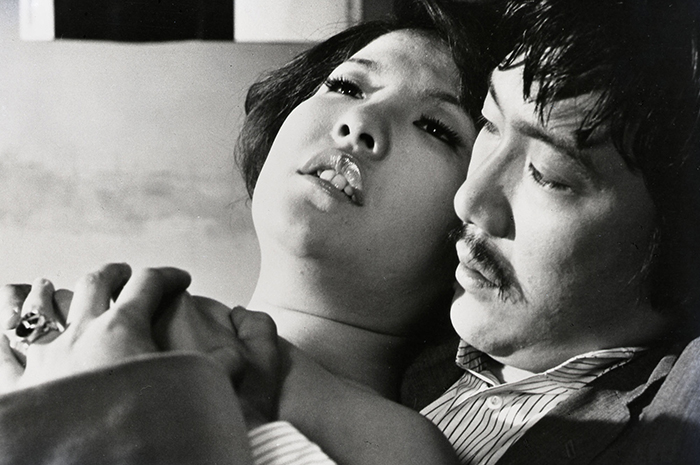 Night of the Felines provides the inspiration for Kazuya Shirashi’s reboot Dawn of the Felines and follows the comical adventures of three prostitutes.
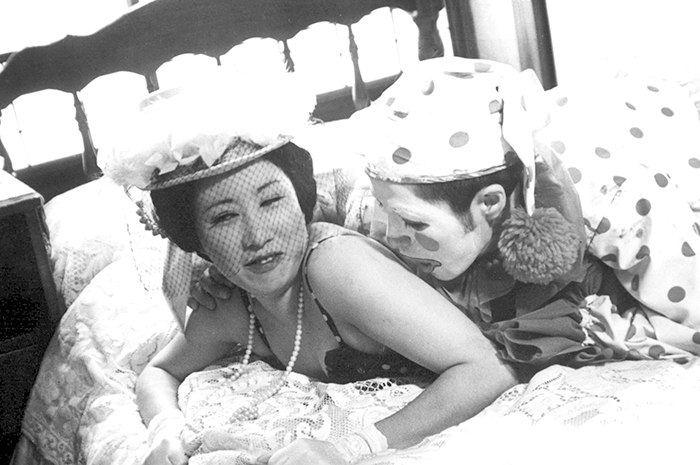 Stroller in the Attic is among the best known in the Roman Porno canon and adapts an Edogawa Rampo short story about a ’20s boarding house filled with eccentric guests.
 Inspired by the same real life case as In the Realm of the Senses, Noburu Tanaka’s Sada and Kichi takes a more lurid look at the strange case of Abe Sada who strangled her lover after a brief affair and then cut off his genitals to wear as a kind of talisman.
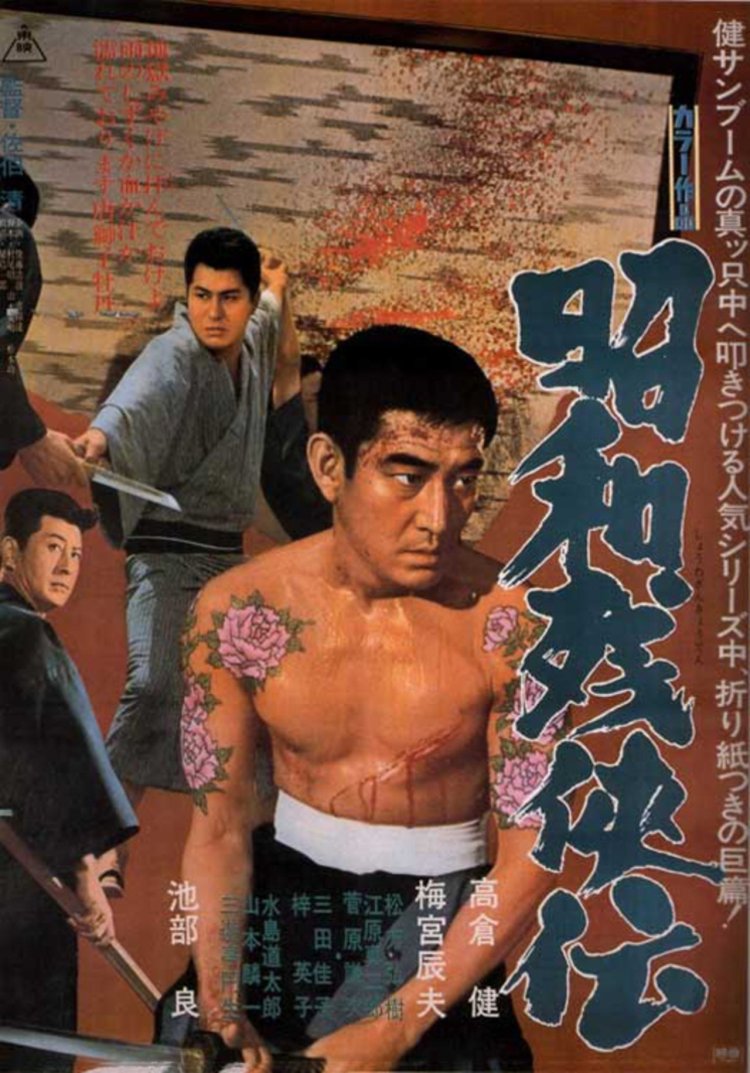 Brutal Tales of Chivalry (昭和残侠伝, Showa Zankyo-den) – a title which neatly sums up the “ninkyo eiga”. These old school gangsters still feel their traditional responsibilities deeply, acting as the protectors of ordinary people, obeying all of their arcane rules and abiding by the law of honour (if not the laws of the state the authority of which they refuse to fully recognise). Yet in the desperation of the post-war world, the old ways are losing ground to unscrupulous upstarts, prepared to jettison their long-held honour in favour of a dog eat dog mentality. This is the central battleground of Kiyoshi Saeki’s 1965 film which looks back at the immediate post-war period from a distance of only 15 years to ask the question where now? The city is in ruins, the people are starving, women are being forced into prostitution, but what is going to be done about it – should the good people of Asakusa accept the rule of violent punks in return for the possibility of investment in infrastructure, or continue to struggle through slowly with the old-fashioned patronage of “good yakuza” like the Kozu Family?
 Like the rest of the world, China, or a given generation at least, may be finding itself at something of a crossroads. The past few years have seen a flurry of coming of age dramas in which the melancholy and middle-aged revisit lost love from their youth but Derek Tsang’s Soul Mate (七月与安生, Qīyuè yǔ Anshēng) seems to be speaking to an older kind of melodrama in its examination of passionate friendship pulled apart by time, tragedy, and unspoken emotion. The story is an old one, but Tsang tells it well as its twin heroines maintain their intense, elemental connection even whilst cruelly separated.
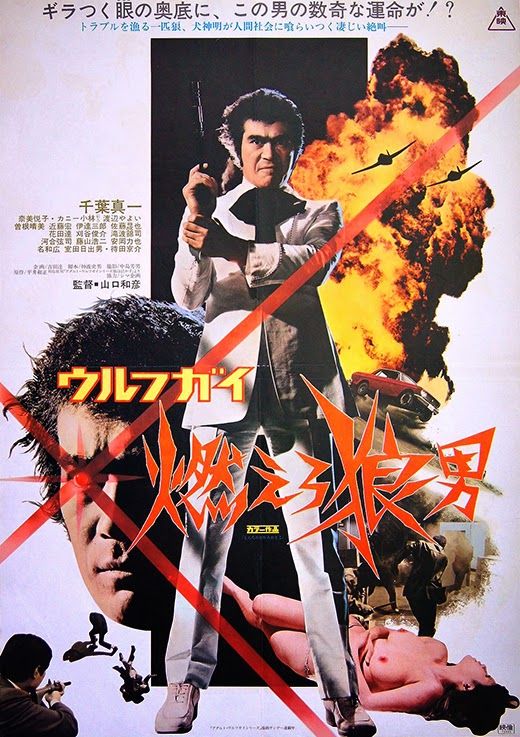 Universal’s Monster series might have a lot to answer for in creating a cinematic canon of ambiguous “heroes” who are by turns both worthy of pity and the embodiment of somehow unnatural evil. Despite the enduring popularity of Dracula, Frankenstein (dropping his “monster” monicker and acceding to his master’s name even if not quite his identity), and even The Mummy, the Wolf Man has, appropriately enough, remained a shadowy figure relegated to a substratum of second-rate classics. Kazuhiko Yamaguchi’s Wolf Guy (ウルフガイ 燃えよ狼男, Wolf Guy: Moero Okami Otoko, AKA Wolfguy: Enraged Lycanthrope) is no exception to this rule and in any case pays little more than lip service to werewolf lore. An adaptation of a popular manga, Wolf Guy is one among dozens of disposable B-movies starring action hero Sonny Chiba which have languished in obscurity save for the attentions of dedicated superfans, but sure as a full moon its time has come again.
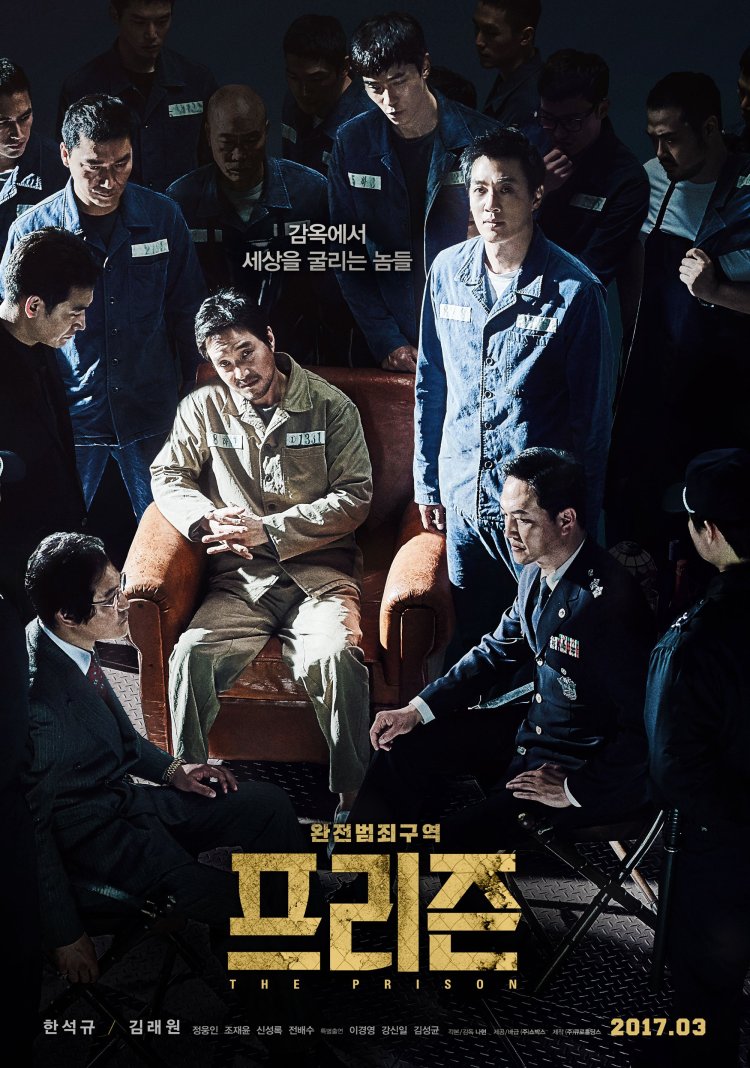 Prison can be a paradise if you’re doing it right, at least if you’re a top gangster in the movies. Na Hyun’s The Prison (프리즌) paints an interesting picture of incarceration and the way it links into his nation’s infinitely corrupt power structures. When investigators wonder why a crime spree suddenly came to an end, one of the frequently offered explanations is that the perpetrator was most likely arrested for another crime but what if you could turn this obviously solid alibi to your advantage and get those already behind bars to do your dirty work for you?
 Windows on Worlds