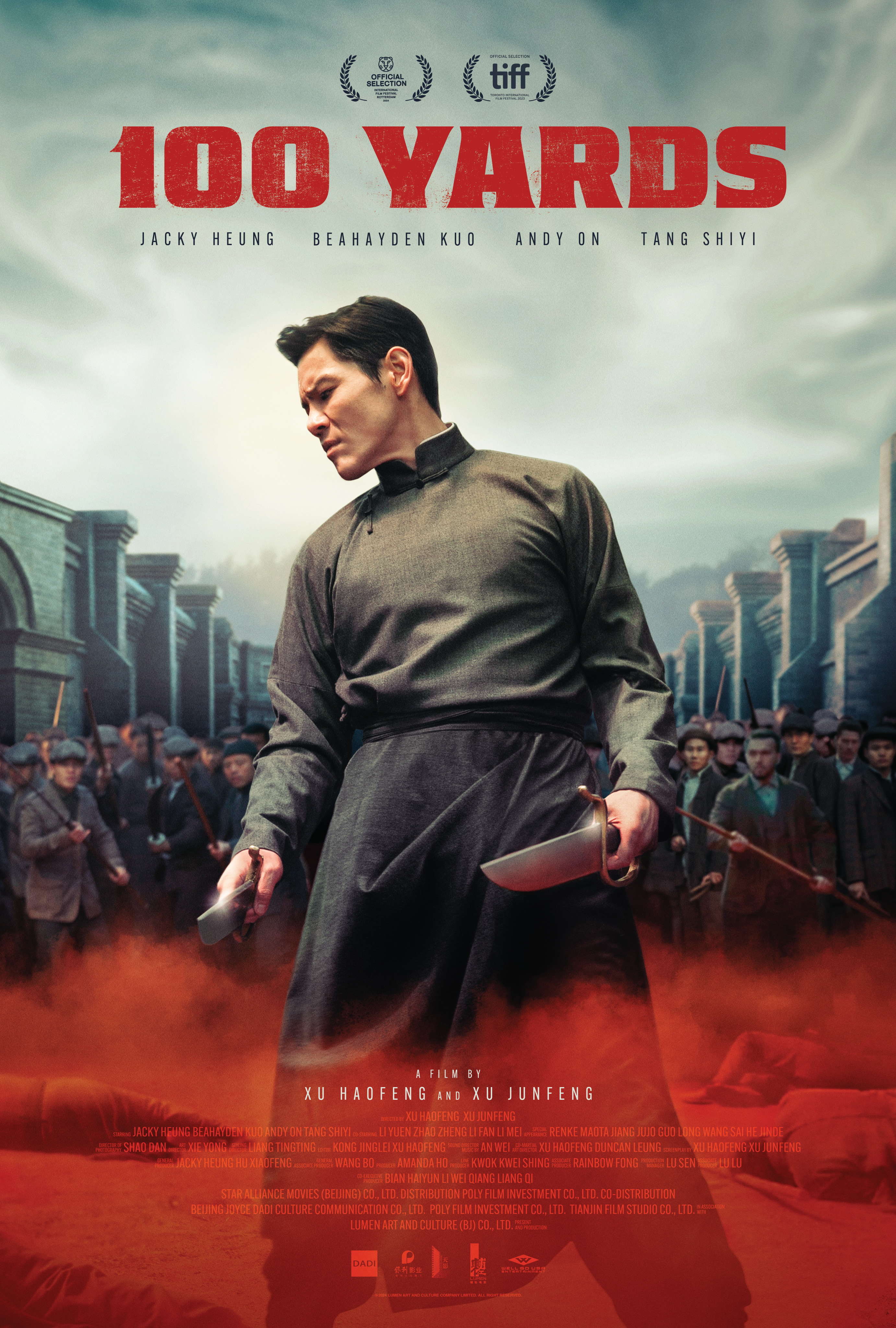
100 Yards (门前宝地, Xu Junfeng, Xu Haofeng, 2023)

“When my father went to the market, I always thought he was a threat to you. I’ve only learned now that you were a threat to him.” Set in martial arts hotspot Tianjin in 1920, nothing is ever quite as it seems in Xu Haofeng & Xu Junfeng’s 100 Yards (门前宝地, ménqián bǎodì). As a young man replies, everyone has their part to play in keeping the peace, or at least some sort of balance that allows the city to function while otherwise caught between declining colonial interests, warlords, crooks and the old world represented by Shen’s house of kung fu.

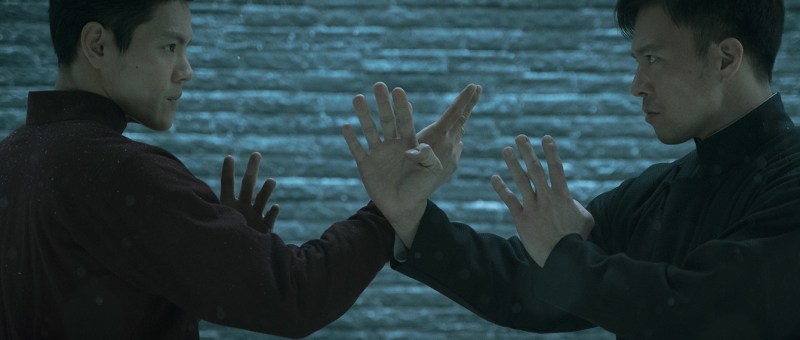
The struggle is in essence one of which way to lean. Old master Shen is dying. He must choose a successor and is stuck between his only son, An (Jacky Heung Cho), thought to be of insufficient skill, and his best apprentice, Quan (Andy On). Shen orders the two men to fight while he watches from his deathbed and admonishes each of them for holding back. Finally he tells Quan to beat An decisively or he’ll never learn and will simply be beaten by better masters later on. Quan knocks An out with a neck blow and inherits the school, but his management style immediately rankles former right-hand woman Chairmen Meng (Li Yuan).

Part of old Shen’s job had been to patrol the marketplace discouraging hoodlums from extorting the traders, but what An comes to realise is that it’s more like he cut a deal with them in which they permitted the illusion he controlled the gangs while he in turn turned a blind eye and allowed them to practice their art while wasn’t around. Everyone has their part to play, and like the 100-yard boundary around the martial arts school, it has clearly defined yet unspoken borders. Quan threatens these by recruiting hoodlums and Westerners into the martial arts society blurring what should be a hard barrier between martial artist and thug. He paints this as modernisation and egalitarianism, that he’s deliberately recruiting people from all walks of life so that they might all walk towards the future together. But in reality, Quan is merely a dictator in waiting quietly building up a personal power base that would make him unassailable in the martial arts world or otherwise.

An, meanwhile, has the desire to reclaim this space as one of greater nobility that keeps violence off the streets and settles disputes in gentlemanly fashion behind closed doors. Those who are defeated in a fair fight accept the results and consequences of their trial by combat with grace and honour. An signals his desire to leave the mainstream world and return to that of the Martial Arts Circle by breaking up with his longterm girlfriend Xia (Kuo Bea-ting) to pursue martial artist Gui Ying (Tang Shiyi) who is then also pursued by Quan in the belief she may know of the rumoured Fourth Fist Style of Shen’s family taught to her as a kind of safeguard against his eventual betrayal of the martial society. 

Xia is also caught between two worlds in that she is the illegitimate daughter of the Frenchman who runs the bank where Shen got An a job hoping that he would leave the martial arts world to live a “normal” life. Beaten by Quan, he takes the job and begins dressing in Western-style suits but is outraged when Xia’s father forces him to fight his bodyguards for the amusement of his guests. Tearing off his tie, he quits the job and goes back to wearing traditional Chinese dress while Quan, now essentially behaving like a mob boss, starts wearing colourful suits and sunglasses while taking violence to the streets and leading An to fight henchmen one by one until finally reaching him for their final confrontation. He forces An to fight with two short sabres with which he is unfamiliar in revenge for their previous duel in which Quan elected to use them falsely believing that this was Shen’s rumoured Fourth Fist technique which may not actually have existed.

In any case, An’s is then a battle of adjustment and acclimatisation in which he must learn to use these new tools on the go just as each of the men must learn to find an accommodation with rapidly changing 1920s society. The Xus’ action choreography is precise and complex, thrilling in its unpredictability while certain in its intent. The aim of the Martial Arts Circle is to minimise violence and so blows are often bated, we don’t need to see the connection because the winner is obvious. But there’s also a rawness and poignancy to the battle between An and Quan over a paternal legacy, the abandoned son yearning for acceptance and the talented apprentice nevertheless insecure in his master’s approval. The martial arts world is over, the conclusion seems to say, or in another way, perhaps it has only just begun as An begins his new life as a defender of a 100-yard fiefdom in a reclaimed post office just shy of its borders.


100 Yards is released Feb. 18 in the US on blu-ray and DVD courtesy of Well Go USA.

Trailer (English subtitles)
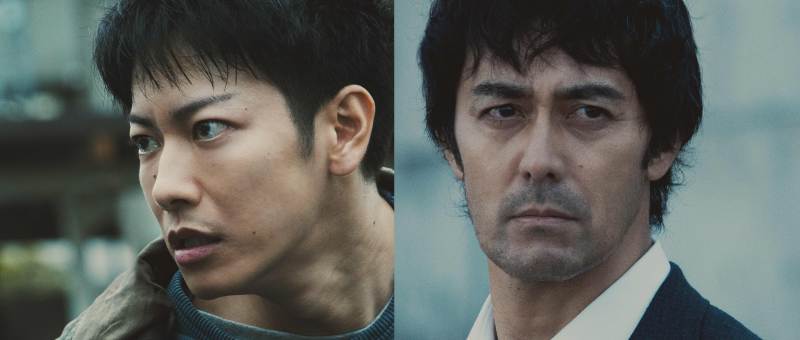
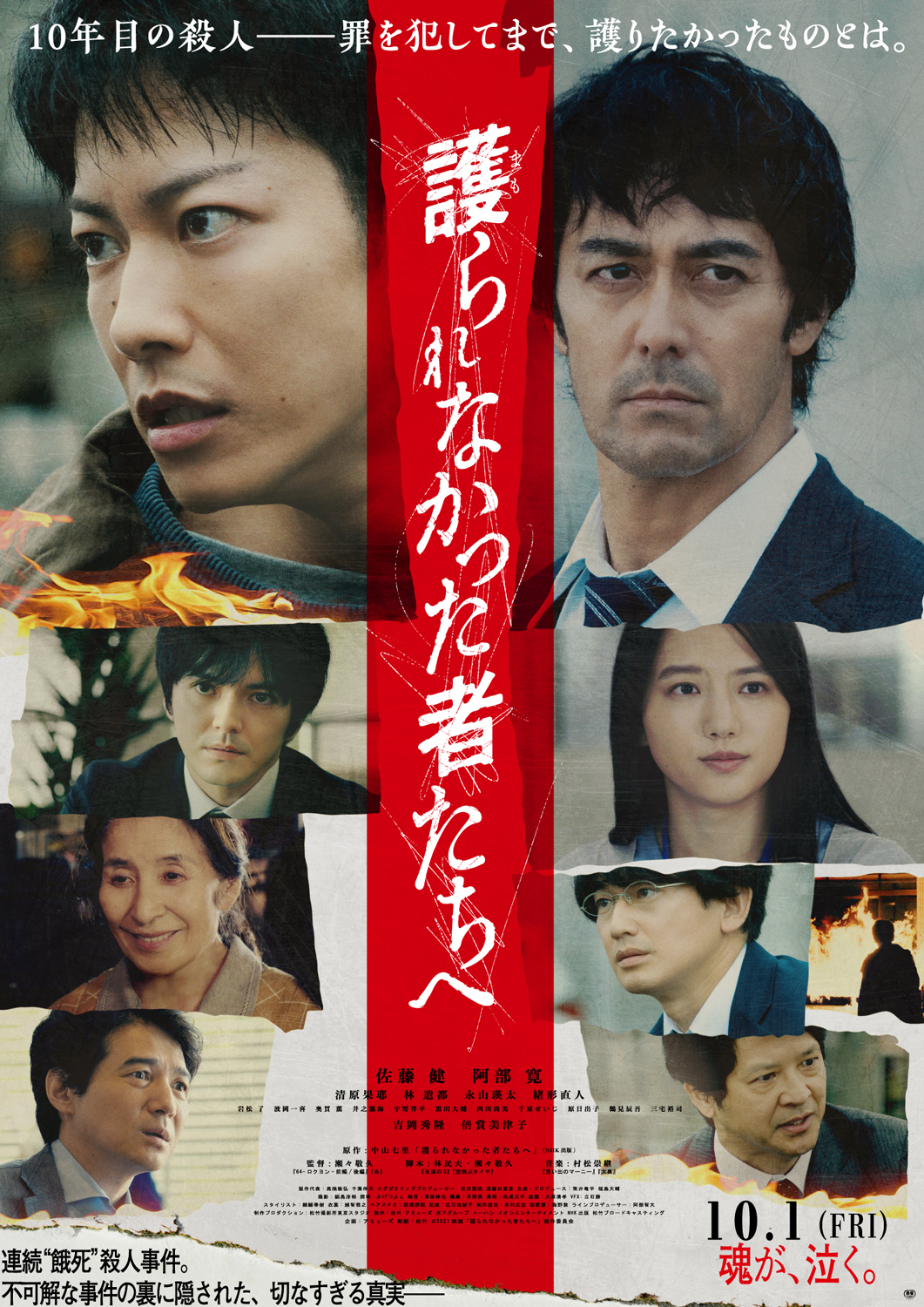
In the Wake (護られなかった者たちへ, Takahisa Zeze, 2021)

According to a young woman at the centre of Takahisa Zeze’s In the Wake (護られなかった者たちへ, Mamorarenakatta Monotachi he), natural disasters are monsters that devour humans with no rhyme or reason, but people close to her have died by human hands while left at the mercy of a hypocritical social welfare system. Though the social workers insist that benefits are something everyone is entitled to when they need support, others go to great lengths to stop anyone getting them. “That’s the country we live in,” one explains with a tone that implies he thinks this is exactly as it should be.

That social worker is the second to be found dead in suspicious circumstances nine years after the devastating 2011 earthquake and tsunami. The police obviously suspect a grudge, that someone who was turned down for benefits got fed up and killed him in revenge. But as assistant Mikiko (Kaya Kiyohara) says, it’s unlikely to be any of them because they are all “too busy trying to survive,” so they don’t have time to waste on things like vengeance. Zeze then switches to the welfare office where a social worker is trying to explain to an elderly applicant all of the different forms and documentation he’ll need to prepare for his claim. These people already have to jump through hoops to prove their “neediness,” while most of them feel defeated and humiliated in even having to ask and would prefer not to have to depend on the government. 

But a lot of Mikiko’s work involves challenging those suspected of committing benefits fraud. The first of two people she talks to is a single mother with mental health issues (Chika Uchida) who’s had to start working full-time and consequently gone over her allowance meaning her benefits should stop and she should pay back what was “wrongfully” claimed. The woman insists she needs the extra money because her daughter was being bullied for being on benefits so she wants to send her to cram school and be able to buy educational supplies, but Mikiko remains unsympathetic. The second is a man who it’s admittedly harder to sympathise with as he appears to have bought quite a fancy car which again takes him over the limit as a car is classed as a luxury item rather than a necessity. Mikiko doesn’t think they should pay out when he could easily sell the car. Of course, it’s not that simple. The man may need the car in order to work and without it would have no choice but to rely on benefits to a greater extent. In any case, he gets on Mikiko’s nerves because to her it’s people like him that prevent them helping more “genuinely” needy cases. 

But on the other hand, when they could and should have helped they refused and effectively blackmailed an old lady into revoking her application even though she had only 6000 yen (£30) left in the bank and was on the brink of starvation with no one else to turn to. Another of the social workers insists that good neighbours are the most effective way of tackling poverty which is equal parts unreasonable and unrealistic. Then again, there was a kind of solidarity that arose in the wake of the earthquake in which an old woman’s kindness saved a young man and little girl from being dragged away by the weight of their despair, giving them a new home and surrogate family along with proof of the fact that there is always someone there to help and that kind of compassion can be a kind of salvation. 

Even so, Mikiko’s insistence that you have to ask to receive, along with the welfare officer’s almost vampiric obsession with getting the applicant themselves to clearly state they need help, seems contrary to her philosophy in which it should just be provided with no questions asked. They know how difficult asking for help can be and deliberately leverage the social stigma of being on benefits to discourage people from applying for them. Citing increased demand and government cut backs in the wake of the earthquake, the social worker confusingly suggests that by declining more cases they can help more people in the long run which doesn’t make a tremendous amount of sense while his eerie grinning hints that he has begun to enjoying sadistically humiliating these vulnerable people who’ve been brave enough to come forward and ask for that to which they are otherwise entitled. 

They are all living in the wake of this disaster, something of which aloof yet empathetic detective Tomashino (Hiroshi Abe) is all too aware having lost his wife and son in the disaster. As his son’s body was never found, he too lives in a state of limbo but through investigating the killings begins to find a kind of closure along with an unexpected sense of understanding with a gloomy young man, Yasuhisa (Takeru Satoh), himself a suspect and struggling to make sense of the past, his survival, and the ongoing injustice of the world around him. The film takes its Japanese title, “those who were not protected”, from a note Mikiko writes about the importance of empathy in social work encouraging her colleagues to rebel even if their bosses tell them not to, but also hints at the grief and guilt felt by those left behind that in the end there were those they were not able to save but they can perhaps make their peace with that by continuing to help those around them even if their society largely refuses to do so.


In the Wake screens as part of this year’s Japan Foundation Touring Film Programme.

Trailer (English subtitles)
To Mom, With Love (お母さんが一緒, Ryosuke Hashiguchi, 2024)

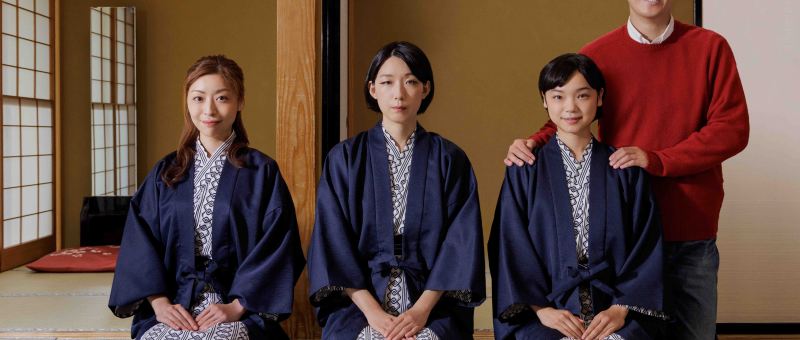
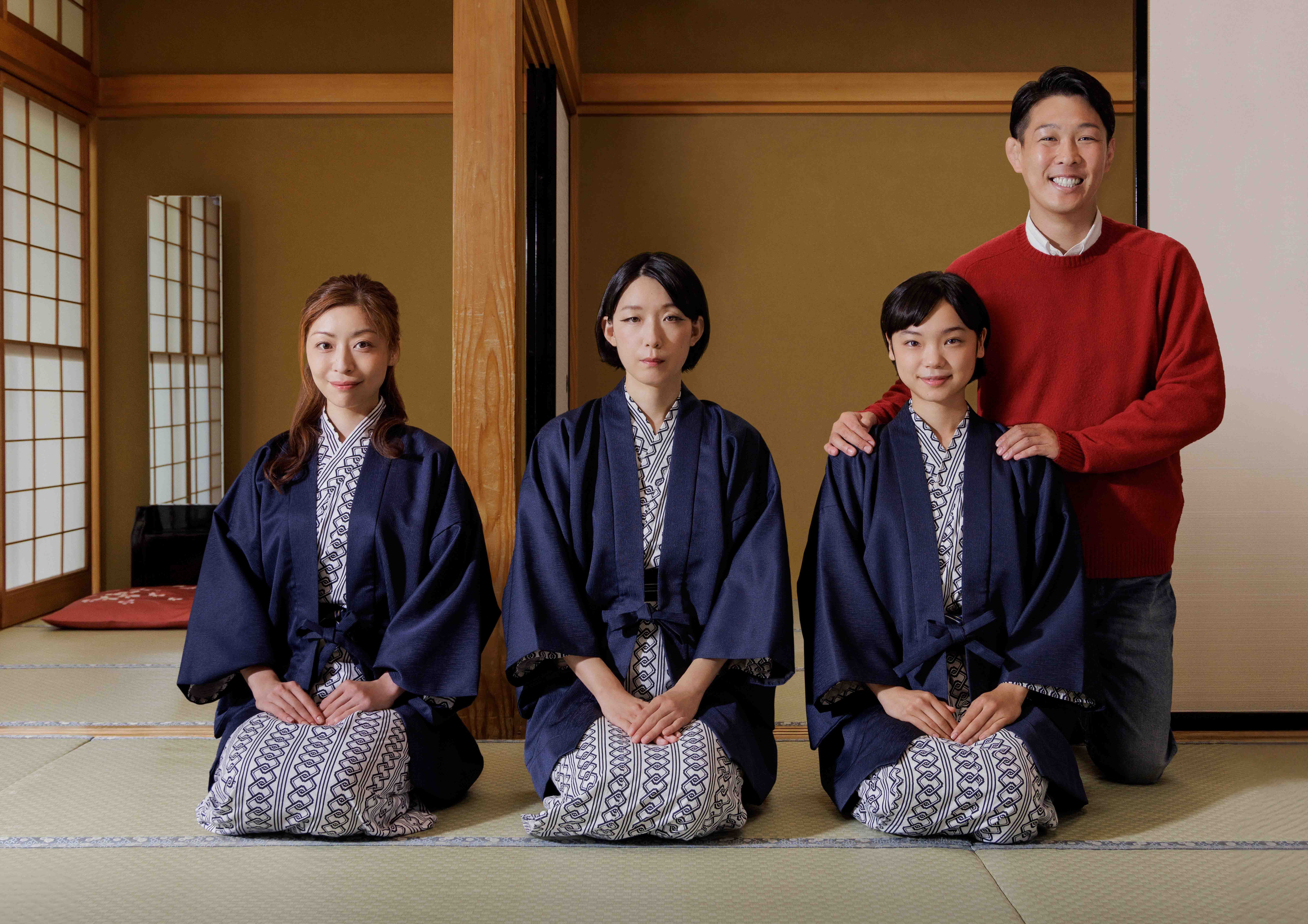
Three sisters embark on an ill-advised family trip to a rundown onsen to celebrate their difficult to please mother’s birthday but eventually discover a kind of serenity in their sisterhood in Ryosuke Hashiguchi’s To Mom, with Love (お母さんが一緒, Okasan ga Issho). Best known for his queer-themed films, this is Hashiguchi’s first feature in a decade and was made to celebrate the 25th anniversary of Shochiku’s family drama channel. As such it explores the perspectives of each of the sisters along with contemplating that of their unseen mother as they each find themselves trapped within oppressively patriarchal social structures.

Which is to say, the main problem is marriage. All the mother wants for her birthday is a grandchild but none of the sisters is married and the older two are ageing out of the prospect of motherhood. 40-ish Yayoi (Noriko Eguchi) has like her mother become somewhat embittered, constantly carping on about the facilities at the old-fashioned inn which she says smells of mould rather than the refreshing scent of tatami mats. She snipes at her sister Manami (Chika Udisa), 35, who has had a string of unsuccessful relationships including one with a married man, while the youngest sister, Kiyomi (Kotone Furukawa), 29, is about to spring the surprise that she is engaged to the son of their local liquor store, Takahiro (Fallgachi Aoyama), as a sort of birthday present for her nagging mother.

This pressure to marry and have children is overwhelming and largely stemming from the mother herself, but it’s clear that she suffered in life because of an arranged marriage to the sisters’ father which was ultimately unhappy. Manami recalls a rare family holiday in which her parents argued in a restaurant and her father violently threw his fork to the floor. He wasn’t an easy person either, but the mother still wants nothing more than to inflict this same misery on her daughters as means of declaring her own life successful. Manami may have a point when she says that they shouldn’t have come on this trip given that it doesn’t seem like something their mother would enjoy and in fact like Yayoi what she apparently enjoys most is complaining about it before going to bed early and ruining everyone’s plans for the evening. 

While all this is going on, Kiyomi has Takehiro hiding out in their room waiting for the signal to join them and doing so patiently without complaint. Though he seems fairly clueless, in contrast to the sisters he’s a calm, easy-going presence and eager to keep the peace. He might be a bit of a flirt, not exactly objecting to Manami’s inappropriately flirty behaviour and hanging out with two other women in the inn’s lounge while Kiyomi bickers with her sisters, but otherwise seems like he just might be nice. An only child, he might secretly be a little jealous of Kiyomi for having siblings to bicker with, though that’s something that Kiyomi is too insensitive to notice at least right away. In any case, his family life seems to have been much warmer and down to earth than that of the sisters who though they berate each other for blaming their problems on others struggle to let go of their familial traumas.

In part, that’s why Takahiro’s arrival sparks such a crisis for it means that Kiyomi will be moving on to the conventionally domestic future which has eluded Yayoi and Manami though they each appear to have desired it. Kiyomi says she was left with no choice but to spring this surprise because her mother wouldn’t listen to her otherwise, but it perhaps also hints at her self-doubt that she will really be able to fulfil these roles as wife and mother or that her own marriage will be any happier than her parents’. Tempers rise and grievances are aired, but in the end you can only really have these incredibly raw arguments with family because they’re the only ones who’ll forgive you once the storm has cleared. Though it may have been a bad idea to come on this trip, there is something in the healing powers of the waters or “power spots” at the local shrine which even seems to cause their constantly “negative” mother to say something nice even as the sisters realise that in the end they only have each other but perhaps need little else.


To Mom, With Love screens as part of this year’s Japan Foundation Touring Film Programme.

Trailer (Japanese subtitles)

Images: ©2024 SHOCHIKU BROADCASTING Co., Ltd.

A Girl Named Ann (あんのこと, Yu Irie, 2024)

In the wake of tragedy, it’s easy to think that if only you had made a different choice then everything would be alright, but in reality it’s never as easy as that and blaming oneself is merely an act of vanity. There’s a peculiar kind of tradeoff that occurs to journalist Kirino (Goro Inagaki), that if he hadn’t written an article exposing a policeman who founded a support group for former drug users trying to integrate into mainstream society as a sex pest, then he might have gone on to help more people. Of course, he would have gone on abusing some of them too and his behaviour would probably have escalated into something much worse. The journalist begins to ask himself if it’s worth it for the net good, without necessarily examining the ramifications of the policeman’s actions.

Yu Irie’s bleak social drama A Girl Named Ann (あんのこと, An no Koto) draws inspiration from a real life case in which a young woman began to turn her life around only to reach a crisis point during the pandemic. The film’s title almost makes an everywoman of its heroine who is resolutely failed by the society in which she lives and in the end discovers only a sense of futility in realising that she will never fully be able to escape the clutches of her abusive mother (Aoba Kawai) who forced her into sex work at age 12. Ann never even finished primary school even though middle school is compulsory and is functionally illiterate. Her reading level is that of a small child which of course makes it near impossible for her to be employed in any kind of salaried job while when she does secure employment her mother steals all her money. 

Being arrested by Tatara (Jiro Sato), a policeman who at first seems well-meaning even if positing “yoga” as a means of turning Ann’s life around, finally gives Ann the encouragement to come off drugs and try to integrate into mainstream society. To his credit, Tatara does everything he can for her from providing a paternal presence to finally helping her escape her mother by getting her a place in an apartment complex set up for women who are being stalked or have experienced domestic violence. Living alone gives Ann a sense of confidence and positivity that allows her to imagine a better future for herself while confronting her past. But on the other hand, it remains true that Tatara may have been better to help her move to another city where her mother would be less likely to find her and derail her life at every conceivable opportunity rather than keeping her close at his own support group which is perhaps an act of vanity if not something worse. No one helps for free and Ann encounters only differing kinds of exploitation from the employers who take her on at poverty wages because they know how desperate she is and don’t think she deserves any better, to the conflicted journalist Kirino who is only really invested in his investigation of Tatara. Ann seems to resent him for exposing Tatara and taking him away from her, but neither of the men make much of an attempt to continue supporting her once the story breaks. 

Ann’s plight exposes how the weakest in society were disproportionately affected by the coronavirus pandemic. The care home she was working at, poignantly because she wanted to learn how to take care of her grandmother (Yuriko Hirooka) who had shielded her from her mother’s abuse, is forced to restrict the number of employees on site meaning Ann is let go while the classes she’d been taking to improve her literacy are also cancelled. Though the apartment requires no rent, she no longer has a means of feeding herself not to mention being stuck inside all the time with nothing to do but study, and not even that when all her pens run out of ink. People are often judgemental and there is no further social support available to her. Even Tatara had been overly fixated on her drug use and while it’s true that she would otherwise be unable to rejoin society without recovering, he otherwise fails to consider other factors such as Ann’s toxic home life or trauma from the long years of abuse she suffered that all contribute to the problems she is facing. 

Even so, unlike her mother Ann is a warm and caring person who is well liked at the care home and clearly has a lot of love to give but the universe won’t seem to give her a break. Perhaps it would be easiest to simply blame her mother, but something must have made her like that too and there’s no one there for her either. She sometimes calls Ann “Mama”, as if the roles were reversed and she were the child being parented by Ann rather than the other way round. In any case, she comes to embody the selfishness of an indifferent society which could have saved a girl like Ann if really wanted to but in the end did not.


A Girl Named Ann screens as part of this year’s Japan Foundation Touring Film Programme.

Trailer (English subtitles)
Images: ©2024 “A Girl Named Ann” Film Partners

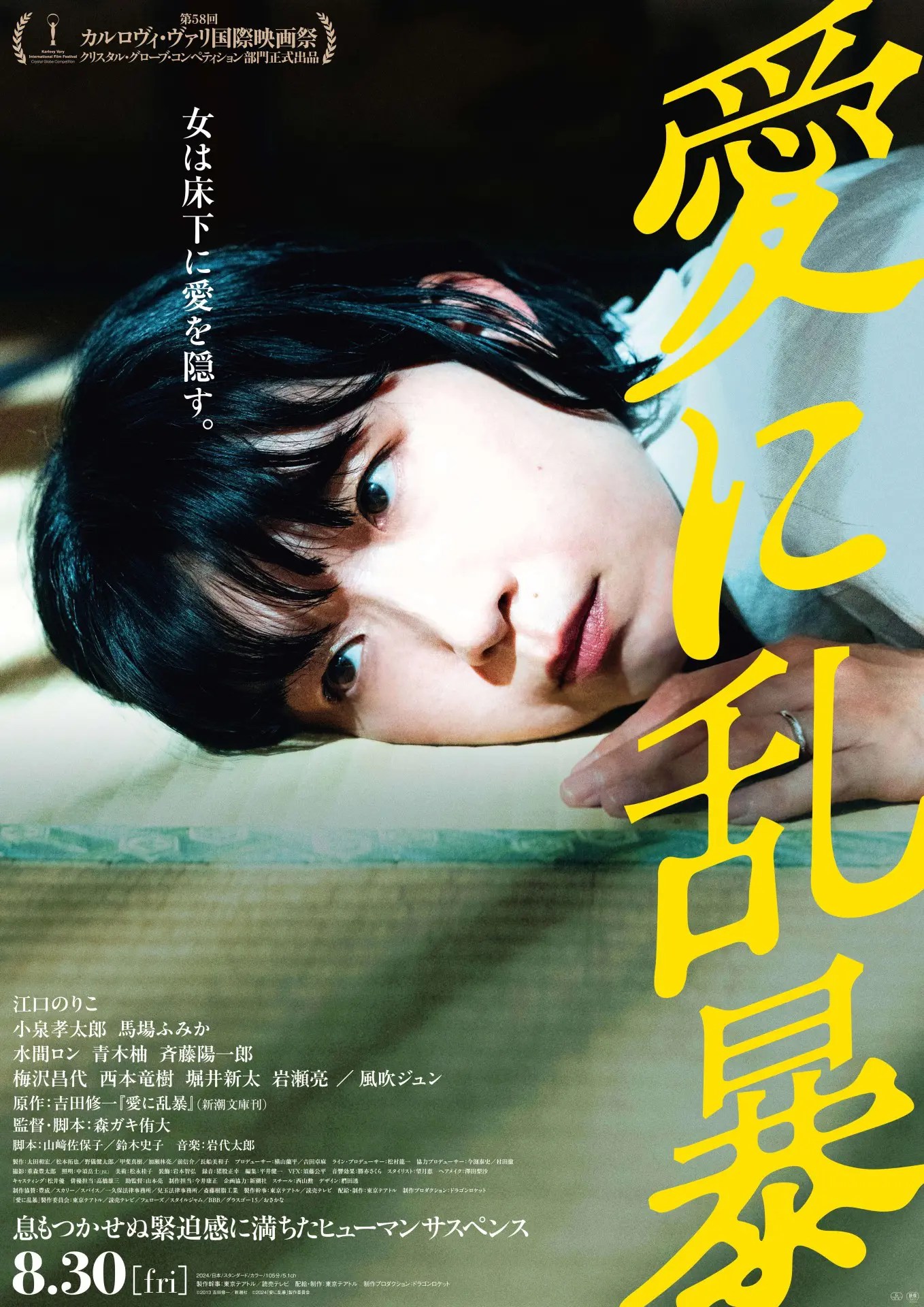
Rude to Love (愛に乱暴, Yukihiro Morigaki, 2024)

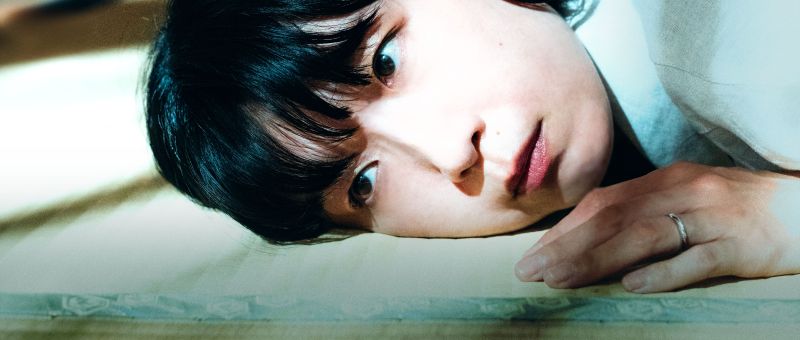
Momoko (Noriko Eguchi) can’t find her cat, Pi-chan. It hasn’t been home for days, and now there’s a stray prowling around near its water bowl. Her mother-in-law, Teruko (Jun Fubuki), can’t abide strays. They come into people’s homes and mess up their gardens. She shoos them away, making it clear they aren’t welcome here. It seems like Momoko’s not all that welcome either, and though her relationship with Teruko is civil enough, it’s clear Teruko has no great love for her and no desire to be any more friendly than she has to be to keep the familial peace.

In many ways, it’s Momoko herself that’s a stray cat and in trying to find Pi-chan she’s trying to reclaim her space within the domestic environment in which she fears she is imminently to be replaced, convinced that her husband, Mamoru (Kotaro Koizumi), is having an affair. At the core of Yukihiro Morigaki’s Rude to Love (愛に乱暴, Ai ni Ranbo) is a cry of despair from a middle-aged woman left with nowhere to turn. Someone in their quiet, residential district has been setting fire to the bins and it’s difficult to not think that the culprit is someone much like Momoko pushed to breaking point and desperate for some kind of release. For Momoko’s part, taking out Teruko’s rubbish has become a daily ritual and one of her key tasks as a dutiful daughter-in-law while she also goes out of her way to keep the place tidy, sweeping up the stray cigarette butts and tin cans that fall from other people’s loosely tied bags. But in other ways, we can see she wants things to change. She repeatedly approaches Mamoru with catalogues to talk about their plans for radically renovating their home, including the removal of a non-load-bearing pillar in the living room, but he generally ignores her.

In fact, Mamoru pays little attention to her at all and is frequently away on “business trips”. Momoko has a sideline in teaching other housewives how to make soap, but left her corporate job eight years previously when she married Mamoru. She tries approaching her old boss to expand the soap-making business and he suggests that she return to the office instead but almost certainly doesn’t really mean it and totally ignores her business proposal. Momoko knows that after so long out of the work force and as a middle-aged woman getting another corporate job is unlikely and the soap classes don’t pay enough to live on. If Mamoru leaves her, she’ll be left flat with nothing to fall back on. This is a key element of Mamoru’s betrayal and one of the reasons that Momoko holds fast to this domestic space to the point she would degrade herself by accepting Mamoru’s affair and begging him not to divorce her. 

Yet in other ways Momoko feels uneasy within it because she and Mamoru had no children. She looks on at other women with their babies and visits a doctor who tells her that her increasingly painful menstrual cramps are a symptom of ageing that she may have been able to ameliorate by giving birth to a child, but also that she is likely heading into the menopause so this maternal milestone is one that may already have passed her by. She can’t escape the feeling that she’s failed to make a success of her womanhood and channels all of her ambitions and desires into the remodelling project that her husband remains entirely uninterested in because he’s already decided to vacate this space. In the depths of her rage, Momoko finally takes a chainsaw to the foundations of her home in the hope of “freeing Pi-chan,” and ends up lying in a grave-like pit in the middle of her living room much like the deluded patriarch of The Crazy Family

The only person who seems to appreciate her efforts is the Chinese student, Li (Long Mizuma), who works at the local garden centre where he is treated poorly by some of the other customers. Mamoru never thanked her for anything, but Li expresses gratitude for her always keeping the rubbish drop tidy. Teruko resents her for something that is really a kind of misunderstanding, but has on some level some sympathy for her plight as a housewife. She idly remarks that she wishes she’d been widowed sooner, which sounds like a terrible thing to say, but also reflects the sense of doom a woman feels in her increasing age that a man does not. Men are never too old to start over but for a woman there are certain things for which is just “too late”, just as it was “too late” for Teruko to fulfil herself after her husband died. She tells Momoko that she still young enough to start over, but Momoko knows that in many ways she’s not. Still, at least the domestic space is hers to do with as she pleases no longer under the watchful eyes of her next-door neighbour and mother-in-law, stray cat no more but master of her own domain.


Rude to Love screens as part of this year’s Japan Foundation Touring Film Programme.

Trailer (no subtitles)

Based on the original novel Shuichi Yoshida “Rude to Love” published by Shinchosha

Images: ©2013 Shuichi Yoshida/Shinchosha ©2024 “Rude to Love” Film Production Committee

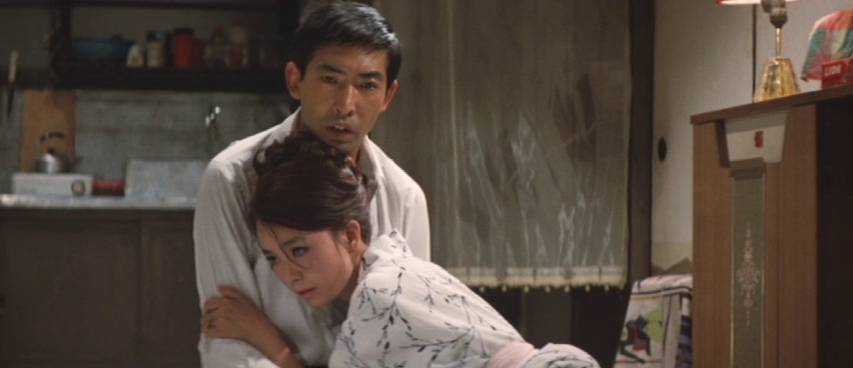
Bonds of Love (愛のきずな, Takashi Tsuboshima, 1969)

On a rainy night, a salaryman trapped in a loveless marriage and unsatisfying career chances on a beautiful woman dressed in kimono waiting by the side of the road. He decides to double back and offer her a lift, which she ill-advisedly accepts, but as it turns out he is actually the one in danger. Adapted from the Seicho Matsumoto short story Tazutazushi, The Bonds of Love (愛のきずな, Ai no Kizuna) has underlying misogyny that paints the woman at its centre as a sort of elemental spirit who bewitches men and leads them to their doom even while the hero himself is selfish and insecure, mired in an inferiority complex and incapacitated by wounded male pride.

The fact that Ryohei (Makoto Fujita) is already married comes as a bit of a shock, abruptly revealed as it is by the nameplate on the suburban home he returns to after a date with Yukiko (singer Mari Sono) having told her that he lives alone at the company dorm. It seems obvious that he’s dissatisfied with his domestic life and fed up with his overly materialist wife Sanae (Chisako Hara) whose constant gripes only seem to needle at his sense of inadequacy. Today, she’s misplaced an expensive ring he’d used his annual bonus to buy her and when he notices it simply sitting next to the sink, she remarks that it’s not all that nice anyway. Ryohei at least feels that she resents him for not being more successful and having the financial power to buy her the frivolous gifts and status symbols she clearly desires. The power dynamic is in any case unbalanced because Sanae is the daughter of his boss which means she in effect has total control over his career. One word to her father, and he’s toast, but at the same time she can only help him so far with his advancement despite nagging him constantly about his future prospects. Meanwhile, the other men at the office make fun of him. They describe Ryohei as an idiot who’s only in his position by virtue of being the boss’ son-in-law. 

This of course further needles at his wounded male pride, but dating Yukiko, who adores him completely, on the side restores his sense of masculinity. After he claims to have been staying out late playing mahjong, Sanae cautions him that one of his colleagues is being transferred because of his gambling and womanising habits. At his leaving do, Miyata (Sachio Sakai) lays into Ryohei and says he’s the one who taught him how to pick up women and pretend to be single as if this is the way they overcome their sense of impotence while under the company’s thumb. Ryohei appears not to like him, perhaps because he reflects the qualities in himself he is least proud of. The news of his transfer therefore spooks Ryohei knowing that the same fate may befall him if his affair with Yukiko is exposed. 

But when Sanae does eventually suspect he’s cheating on her and complains to her mother, the boss rings Ryohei and basically tells him not to worry about it because a man’s not a man if he doesn’t play around. The conflict that Ryohei has is essentially one of conflicting masculinities, the one in which he is effectively emasculated but defines his status through a hierarchical relationship with other men within the corporate structure, and the other in which he defines it through romantic conquest which also represents a kind of freedom. But being a fairly conventional man, in the end Ryohei cannot bear to have his salaryman persona ripped away from him and will do whatever it takes to maintain his relationship with his wife and by proxy his boss to preserve his career.

Realising Yukiko poses a threat to that, he decides the only solution is to kill her but it’s also true that he’s confronted by a much more robust vision of masculinity in the form of her estranged husband Kenji (Makoto Sato) who went to prison after stabbing another man in a jealous rage. It’s clear that Ryohei is afraid of Kenji and definitely doesn’t want to end up getting stabbed. His “love” for Yukiko does not stand up to that kind of scrutiny and it’s her assertion that she’s going to tell Kenji all about their affair and ask for a divorce that shifts him into crisis mode. After all, he’s in flight from domesticity. Leaving Sanae, and with it destroying his career might not solve his problems even if what he eventually chooses is just that, to be free of the burden of the salaryman dream and move to a small town to open a shop with a woman who is in thrall to him and therefore continually submissive and loving in contrast to Sanae who only ever makes him feel small.

Yet, we can’t actually be sure how much of what happens later is actually real or just Ryohei imagining things because of his guilty conscience and continuing sense of inadequacy. Essentially, he gets a second chance to make better choices and finally gains the courage to abandon his salaryman persona only to be immediately confronted by both his transgressions and violent masculinity. Tsuboshima crafts an atmosphere of malevolence and noirish dread coupled with a spiritual sense of retribution born of the constant rains and gothic thunderstorm that heralds the final confrontation in which Yukiko is herself a harbinger of death leading weak willed men towards their doom to which they go all too willingly. 


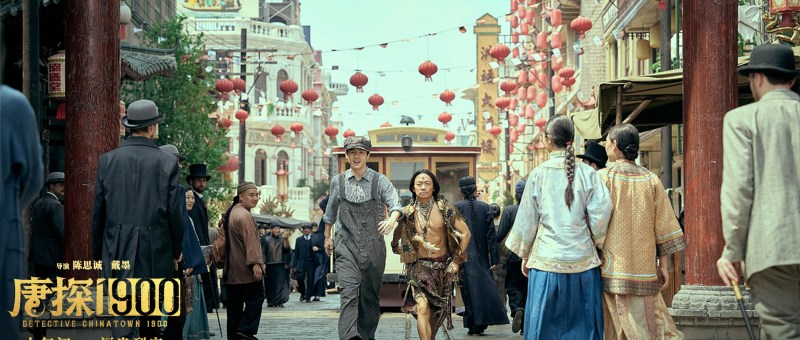
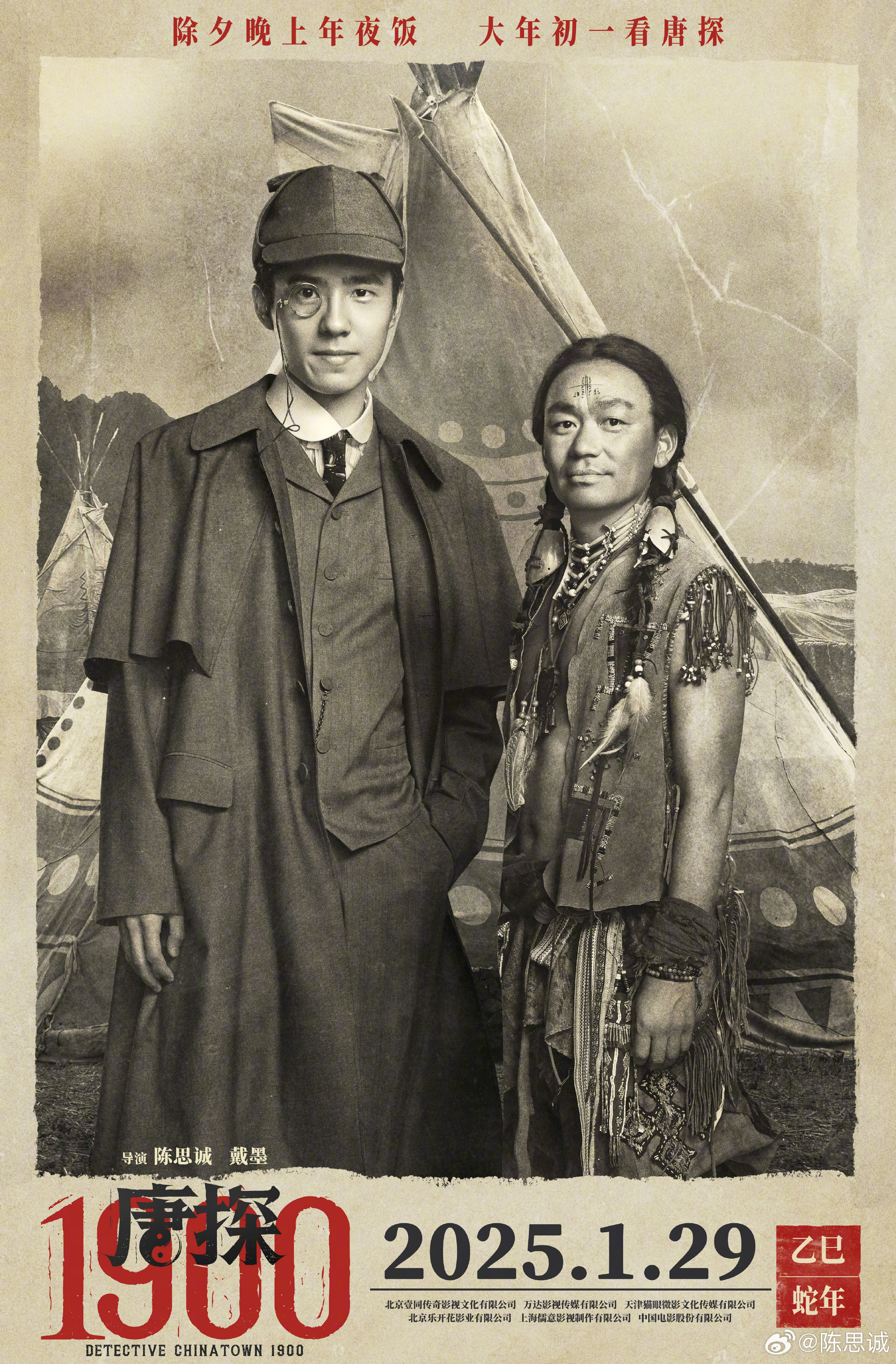
Detective Chinatown 1900 (唐探1900, Chen Sicheng & Dai Mo, 2025)

The Detective Chinatown team head back to turn of the contrary San Francisco in the latest instalment of the mega hit franchise, Detective Chinatown 1900 (唐探1900, Tángtàn 1900). Like many recent mainstream films, its main thrust is that Chinese citizens are only really safe in China, but also implies that diaspora communities exist outside the majority population and therefore can only rely on each other. Nevertheless, there’s something quite uncanny in the film’s ironic prescience as racist politicians wax on about how here rules are made by the people rather than an emperor and plaster “make America strong again” banners on their buses. 

The crime here though is the murder of a young white woman, Alice (Anastasia Shestakova), the daughter of Senator Grant (John Cusack) who is attempting to push the renewal of the Chinese Exclusion Act through government and destroy all the Chinatowns in the United States. An older Native American man was also found dead alongside her. Some have attributed the crime to Jack the Ripper as Alice was mutilated before she died and some of her organs were taken. The son of local gangster Bai (Chow Yun-Fat), Zhenbang (Zhang Xincheng), is quickly arrested for the crime while his father hires Qin Fu (Liu Hairan) to exonerate him believing Qin Fu to be Sherlock Holmes. 

What Qin Fu, an expert in Chinese medicine recently working as an interpreter for the famous consulting detective, finds himself mixed up in is also a slow moving revolution as it turns out Zhenbang is involved with the plot to overthrow the Qing dynasty (which would finally fall in 1912). As the film opens, corrupt courtiers to sell off large golden Buddha statues to American “allies” who are later seen saying that they plan to fleece China and then renege on their promises to protect it. Meanwhile, the Dowager Empress has sent emissaries to San Francisco to take out the revolutionaries in hiding there including Sun Yat-sen.

Of course, in this case, the Qing are the bad guys that were eventually overthrown by brave Communist revolutionaries that paved the way for China of today which is alluded to in the closing scenes when Zhenbang’s exiled friend Shiliang (Bai Ke) says that China will one day become the most powerful country in the world implying that no-one will look down on the Chinese people again. But on the other hand, they are still all Chinese and so the emissary tells Qin Fu to “Save China” as he lays dying having met his own end shortly after hearing that the British have invaded Peking signalling the death blow for the Qing dynasty. 

Nevertheless, there is a degree of irony in the fact that the secondary antagonist is an Irish gang who have signs reading “no dogs, no Chinese,” mimicking those they themselves famously face. The Irish gang is in league with Grant and content to do his dirty work, while Bai is supported by another prominent man who speaks Mandarin and pretends to be a friend to the Chinese but in reality is against the Exclusion Act on the grounds he wants to go on being able to exploit cheap Chinese labour. In this iteration, Ah Gui (Wang Baoqiang) is “Ghost,” a man whose parents were killed building the American railroad and was subsequently taken in and raised by a Native American community. In Bai’s final confrontation with the authorities, he takes them to task for their hypocrisy reminding them how important the Chinese have been in building the society in which they alone are privileged while “equality” does not appear to extend to them.

Through reinforcing these messages of prejudice and exploitation, the film once again encourages Chinese people living abroad to return home. Though set in 1900, the scenes of protest can’t help but echo those we’ve seen in the wake of the Covid-19 pandemic when racist hatred towards Asian communities has become much more open and pronounced. Qin Fu and Ghost do at least succeed in solving the mystery through scientific principles while ironically assisted by an earnest American policeman who says he thinks it’s important to uphold the law even as we can see the head of the golden Buddha sitting behind the victorious politician’s banquet table and realise that in reality taking out Grant has made little difference for the Exclusion Act will still be renewed (it was repealed only in 1943). They may have saved Chinatown, but Bai must sacrifice his American wealth and return to China much the way he left it having reflected on his life in light of the revolutionary course charted by his more earnest son. As Ghost and Qin Fu remark, if things were better there no one would want to come here though they themselves apparently elect to stay, solving more crimes and making sure that their descendants know they were here and where they were from.


International trailer (Simplified Chinese / English subtitles)

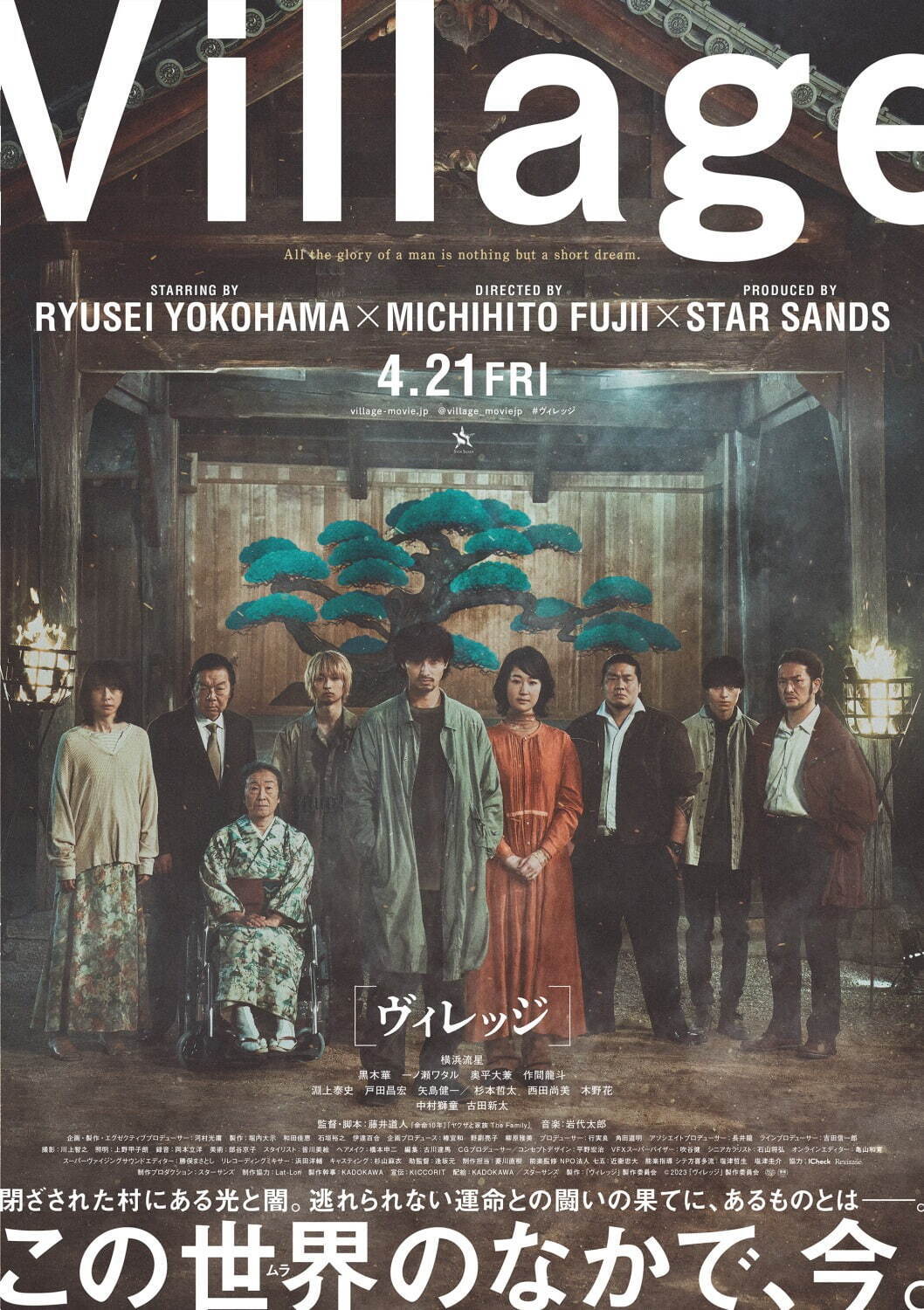
The Village (ヴィレッジ, Michihito Fujii, 2023)

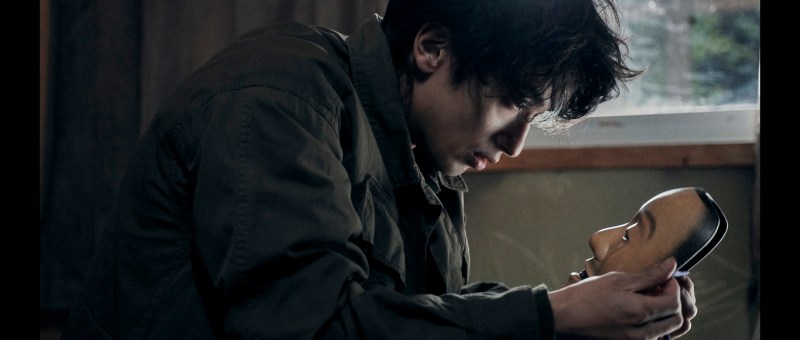
The toxicity of life in small-town Japan is manifested in a giant recycling plant in Michihito Fujii’s poetic drama, The Village (ヴィレッジ). Closely aligned with the noh play quoted in the opening title card, the film charts a young man’s simultaneous blossoming and corruption as he finds himself at the service of a demonic mayor and fighting for his place in a village that doesn’t need him but requires a sacrifice. 

In the opening scenes, mist rises over the mountain accompanied by noh recitation before we eventually arrive at a noh recital. These two images would seem to signal a kind of innate Japaneseness which has been corrupted by the presence of the recycling plant despite the economic benefits it’s brought to the area. The mayor, and boss of the plant, Ohashi (Arata Furuta), wants to extend it out across the other mountains in the region and boasts that though there may have been resistance at first now everyone is grateful to them for everything they’ve done for the village. 

Yu’s (Ryusei Yokohama) father was the last holdout against the plant and apparently ended up killing a man in an altercation thereafter taking his own life and burning down their family home. Because of the stigma surrounding his father’s actions, Yu has been ostracised by his community and is used as a perpetual kicking bag not least by Ohashi’s thuggish son Toru (Wataru Ichinose) at his job at the plant. His mother has also turned to drink and developed a pachinko problem which has resulted in massive debts to yakuza loanshark Maruoka (Tetta Sugimoto) who’s press-ganged Yu into working at the illegal dumpsite which is how the plant really makes its money.

But his life begins to change when childhood friend Misaki (Haru Kuroki) returns to the village having apparently suffered a breakdown in Tokyo. Misaki’s resurfacing reinforces the purgatorial atmosphere as if everyone here were already dead. Having been away so long, only she immediately embraces Yu and simultaneously bonds with him in their outsider status. Encouraging him at work and at home, Yu gradually becomes more confident but equally dependent on the plant for his newfound status. When he’s suggested as the host of a TV documentary some of the locals object given his family background, but in contrast to his father’s opposition Yu is slowly seduced by the plant and the new life it offers him which seems almost too good to be true like a dream he is sure to be awoken from. In this, he mimics the man in the noh play who falls asleep in an inn and is transported to a world in which he is an emperor. He lives there happily for 50 years only to wake up again back in the inn and realise that really life is just a dream. 

Misaki hands him back his noh mask as means of separating himself from the world around him. She says that it forces you to confront yourself, and also perhaps implies a deeper connection with an idealised vision of pre-modern Japan uncorrupted by the greed and cynicism of a man like Ohashi who claims that “position is all that matters.” Toru had told Yu that the village didn’t need him, Misaki and Ohashi say it does though for different reasons. Yet Ohashi darkly suggests that it also needs a sacrfice, and in an odd way just as his father before him it may be Yu who sacrifices himself even at the cost of his idealised life. His encroaching cynicism is directly contrasted with the idealism of Misaki’s younger brother Keiichi (Ryuto Sakuma) who like he once was is meek and diffident yet certain in his idealism and unwilling to along with the lies and wrongdoing that increasingly define village life. Eventually, he leaves the village altogether.

Yu meanwhile achieves his destiny in bringing things full circle, conducting a kind of purification ritual that aims to rid the village of Ohashi’s corruption as symbolised by the giant rubbish tip which is slowly consuming the landscape. Yu’s problem was that he tried to make his life on top of all this filth and toxicity only to realise what the price of that new life might be. Conjuring the strange and oppressive atmosphere of small-town life where past is always present and petty prejudices die hard, Fujii spins a poetic tale of fatalism and redemption amid the misty mountains and ancient chants of a slowly dying village.


Trailer (English subtitles)
Bloody Shuriken (赤い手裏剣, Tokuzo Tanaka, 1965)

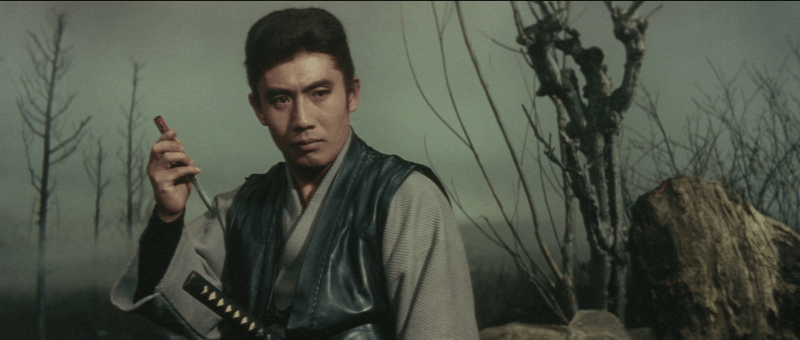
A cynical ronin spots a business opportunity when he rides into a town beset by gangsters in Tokuzo Tanaka’s samurai western, Bloody Shuriken (赤い手裏剣, Akai Shuriken). Despite the name, this is not a ninja movie. The title refers to the knives the hero throws with almost supernatural skill. Adapted from a short story by noir master Haruhiko Oyabu, the action may sound reminiscent of Yojimbo but there’s a different kind of irony in its humour and a lightheartedness to its cynicism even if its final message is that the wages of greed are death.

We can tell that Ibuki (Raizo Ichikawa) is both good man and bad in that he immediately breaks up a fight between rival gangs on entering town, depriving the men in question of their money, but then handing it straight to the owner of the bar they were fighting in to cover the damage. He’s concerned about his horse too, but can’t quite afford the lodging fees at the stable run by the grumpy Yuki (Chitose Kobayashi) who loathes samurai, and with good reason. After hearing about the complicated makeup of the town’s hierarchy, Ibuki decides to stay and make some money by essentially playing each of the three gang leaders off against each other so they end up taking care of themselves. 

So far, so Yojimbo. But this town seems to be even further out, much more like a decrepit western outpost filled with scum and villainy. When the wind picks up, the dust blows through as if signalling the murky air and sense of futility. We’re told that the leader of the biggest gang, Hotoke (Isao Yamagata), is also the police chief, while his rival Sumiya (Yoshio Yoshida) complains that he’s usurped his position as his family has been there longer. Hotoke arrived a starving man three years previously and got back on his feet thanks to the support of the community, but then he turned around and got rich running a gambling den targeting local miners. Kinuya (Fujio Suga) has been here a little longer, but is otherwise biding his time until the other gangs fall from grace.

Of course, Ibuki foments conflict and strikes deals with all of them, but the real trouble is some missing gold that was stolen from the government causing even more disruption in the town with inspectors targeting ordinary people who weren’t even involved. Bar owner Chinami (Masumi Harukawa) is one of many interested in finding out what happened to the money, but she’s also in a precarious position, on the one hand throwing her lot in with Hotoke but on the other hating him and approaching both Ibuki and moody ronin Masa (Koji Nanbara ) to help her be free of the troublesome gangster. 

The fact that the two most prominent business owners are women is perhaps uncomfortably intended to signal the breakdown of the town in which Ibuki becomes the only real “proper” man amid bumbling gangsters and crazed ronin. Yet Chinami is directly contrasted with the pure and innocent Yuki who hates all the gangsters, as well as the samurai and generally everyone who isn’t a horse. Cynical and greedy, Chinami wants the gold and she’s prepared to use her body to manipulate men into doing what she wants, whereas Yuki defiantly keeps her head down and refuses to participate in gangster nonsense because she just wants to run her stables in peace. Only later does she develop a fondness for Ibuki on realising that he’s not so cynical after all and is interested in a kind of justice and getting rid of the corruption in the town for reasons other than money. Having discovered the location for the gold, he leaves the knowledge to Yuki so she can avenge her father who was killed during the robbery. 

But in other ways, this is already a post-apocalyptic hellscape as Ibuki discovers on spotting a pair of crows feeding on a corpse in a river. Perhaps taking pity on one less fortunate than himself, he throws one of his darts and skewers them. Ibuki’s knife supply seems to be inexhaustible, and he never appears to go back and retrieve the ones he’s thrown though his skill does seem to lend him an almost supernatural quality. In any case, Tanaka injects a degree of weird humour in the strange town with its eccentric residents including ronin Masa who looks permanently evil yet has a strange love of dolls, while the fight scenes themselves are often somewhat comical as the gangs seem to clash like a pair of cats slapping each other. There’s even something quite funny about the way the film bluntly drops exposition at unexpected moments even in the midst of the farcical scheming between the gangsters and Ibuki running back and forth to stoke the fires of conflict. This land is so bleak, it seems to say, all you can do is laugh or you’ll end up face down in a river with crows picking at your back too, so you might as well ride off into the sunset like Ibuki looking for the next corrupt town to purify and onward towards the bounty on the horizon. 


Trailer (no subtitles)

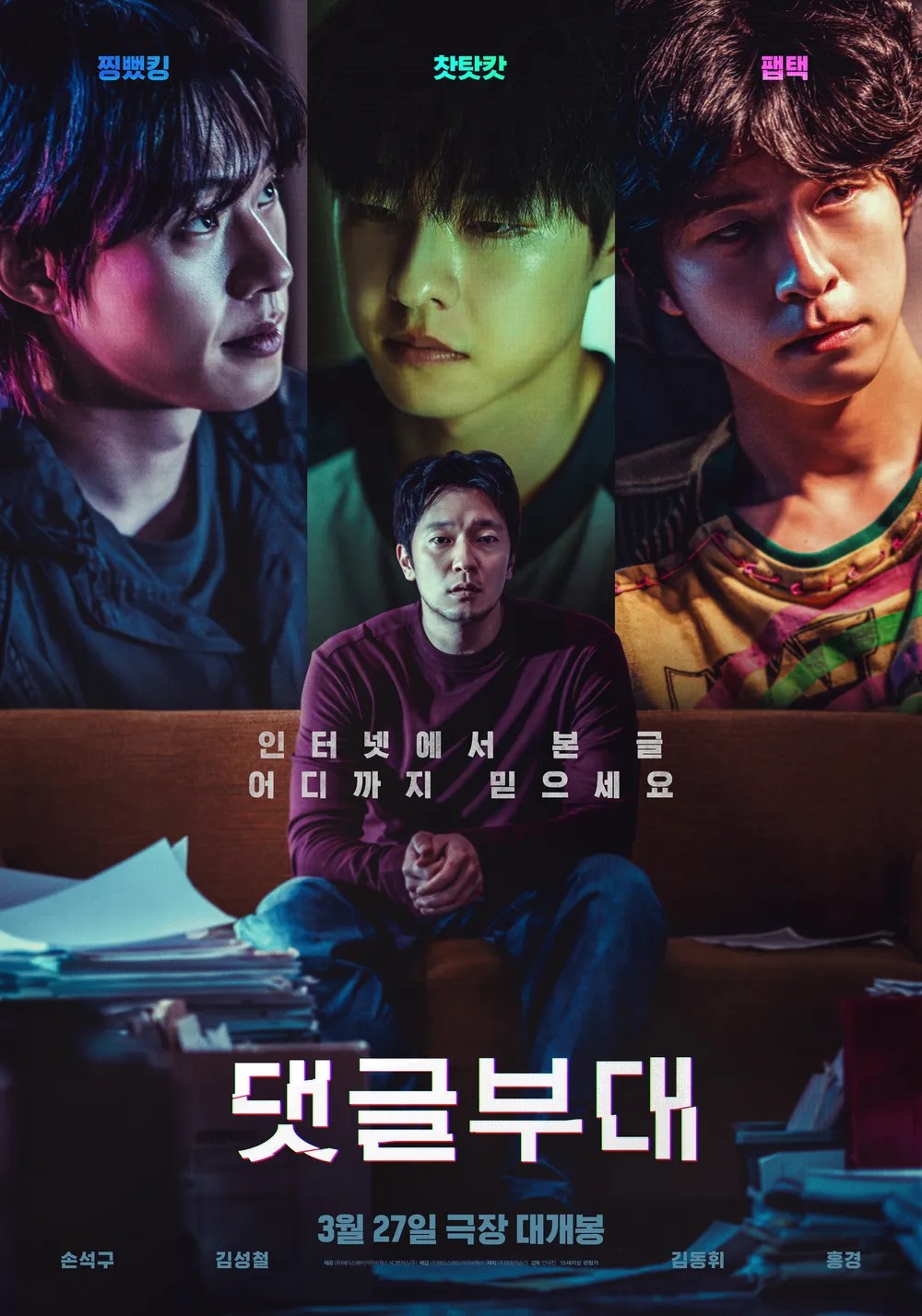
Troll Factory (댓글부대, Ahn Gooc-jin, 2024)

The modern world is so confusing that it’s become almost impossible to discern what is objectively “real” from what is merely currently held public opinion. Sometimes what is actually true sounds like a conspiracy theory, or maybe that’s just what they want you to think. In any case, most of us are already aware of the danger lurking behind cynically employed terms such as “fake news,” and that our perspectives are increasingly manipulated by dubious sources with their own agendas we are continually unaware of. 

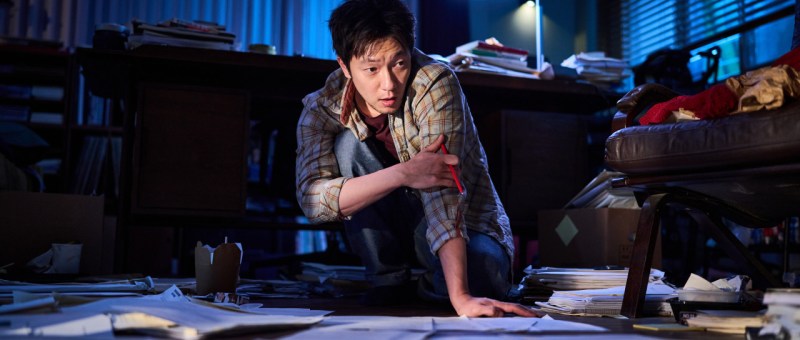
Yet is Sang-jin (Son Suk-ku) the journalistic hero of Ahn Gooc-jin’s Troll Factory (댓글부대, Daetguelbudae) already too far down the rabbit hole to be able to see the light? He’s fond of saying that “the path of a journalist is dark and lonely, but his courage changes the world,” while simultaneously admitting the “thrill” of leaking a secret that no one else knows. It’s possible he’s over romanticised his role in events and is reading more into things than is really there because at the end of the day he wants to believe which obviously leaves him dangerously open to manipulation.

In some ways, he starts his story with a more positive framing explaining that the first candlelight protests took place in the early days of the internet so they weren’t able to get the information out there fast enough to attract large enough crowds to make a difference while approximately a third of the entire population turned out in 2017 and got President Park Geun-hye impeached. Of course, that’s only good news if you’re on the same side as the protestors, and Sang-jin increasingly hints that the internet has been bought up by big business which obviously wouldn’t be. Sang-jin has a particular bugbear with a company named Manjun that was forced to offer a public apology for its corrupt business practices which were exposed thanks to the protests against the government scandal. He’s suckered into writing an article exposing them to help a small IT company that says Manjun scuppered its attempts to win a government contract then poached its employees and stole its technology.

Though Sang-jin is able to publish the piece, Manjun refute it and cast doubt on the CEO’s evidence. Sang-jin is relentlessly trolled online and the CEO takes his own life with many blaming Sang-jin for allowing him to face this kind of harassment because of his own petty vendetta against Manjun and desire for journalistic glory. Yet the young man who comes to him with another story that he was employed by Manjun to run extreme PR and harassing campaigns online may not be so different in that one of their targets also took her own life after being humiliated on the internet. They were hired to get her father to stop his one man protest against the defamation laws by pushing her into suing the people trolling her. Sadly she made a much more final decision, but her father did stop protesting so technically they still achieved their goal. 

As he later says, truth mixed with lies feels more real than the actual truth. It doesn’t seem implausible that a large corporation would be doing this sort of thing. It’s not unheard of that people are paid to write product reviews for products they’ve never used or to write negative reviews of a rival business to cause them reputational damage. It stands to reason that they’d be briefing against their enemies online and trying to mitigate any negative energy by manipulating public opinion. We’ve seen this done demonstrably with bots during elections. But Sang-jin still can’t seem to critically inspect his sources and never really stops to wonder if the young man opposite him in an otherwise empty coffee shop is making all this up just to troll him personally, or in fact from the conspiracy theorist’s perspective, to permanently discredit him so that his criticisms of Manjun will never be given any credence. 

In the end, it’s him that seems like a crank resorting to posting lengthy rants on the internet because the respectable papers won’t trust him anymore now that all his scoops have been discredited. Is he right that Manjun and possibly others are running large scale “Public Opinion Task Forces” or Troll Factories online, or did he just get trolled himself and can’t let it go? In the opinion of some, he is now the troll peddling his conspiracy theories online and craving the attention of going viral with another sensationalist story. But even if not all of it’s true, that doesn’t mean it’s all lies and Sang-jin maybe onto something even if it’s just that the internet make trolls of us all as we become lost in the infinitely confusing labyrinth of what is objectively “true” and what merely a convenient lie to serve those who are in “reality” already in power or simply would wish to be. 


Trailer (Korean subtitles only)