Ma, I Love You (真爱好妈, Chiu Keng Guan, 2023)

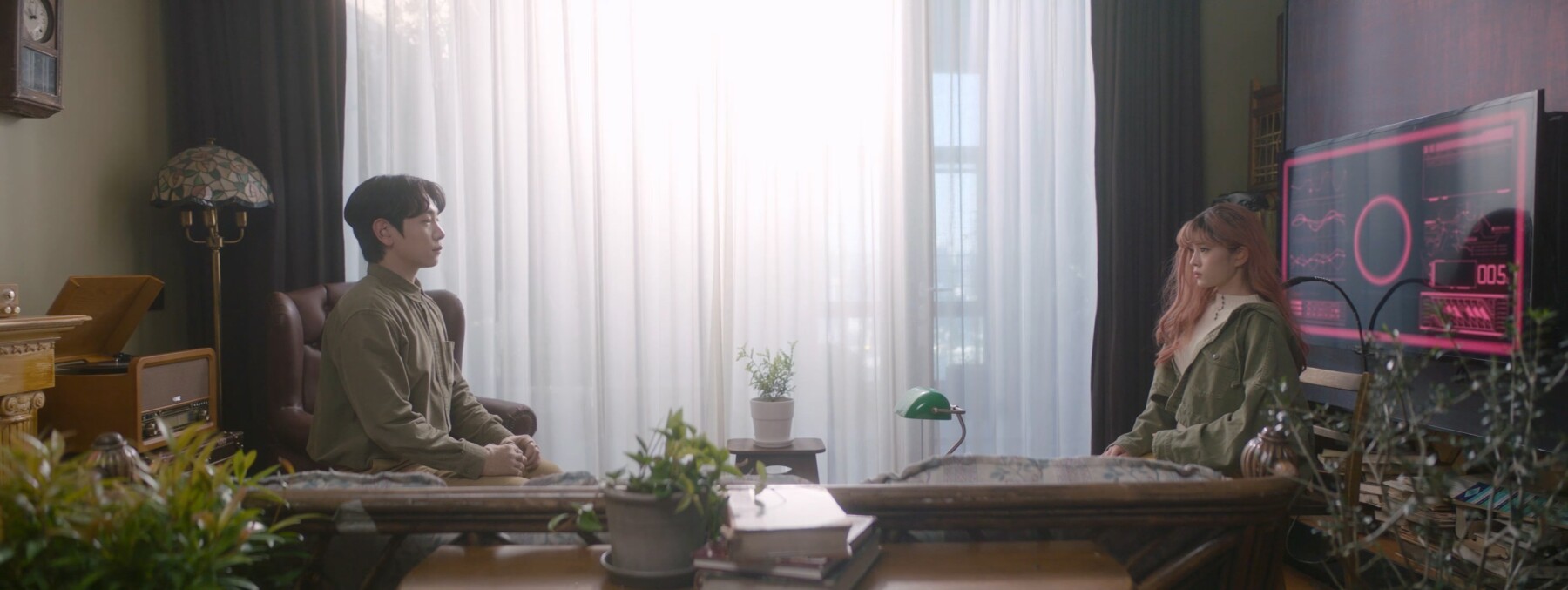
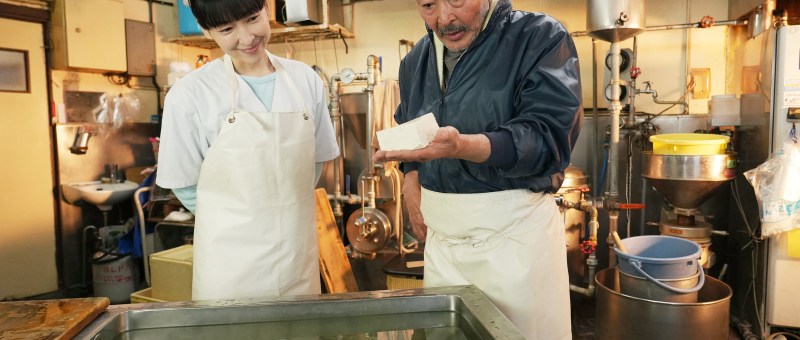
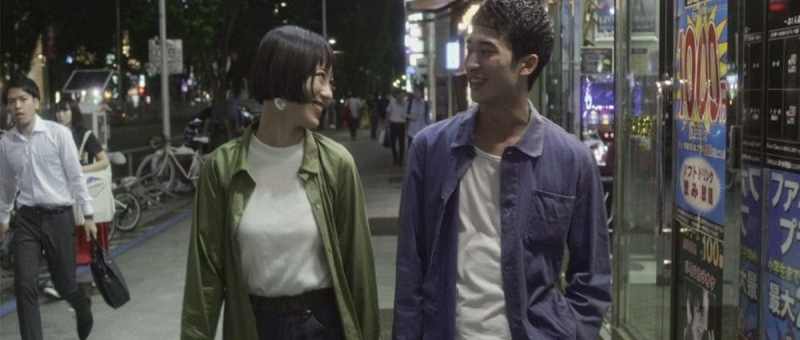
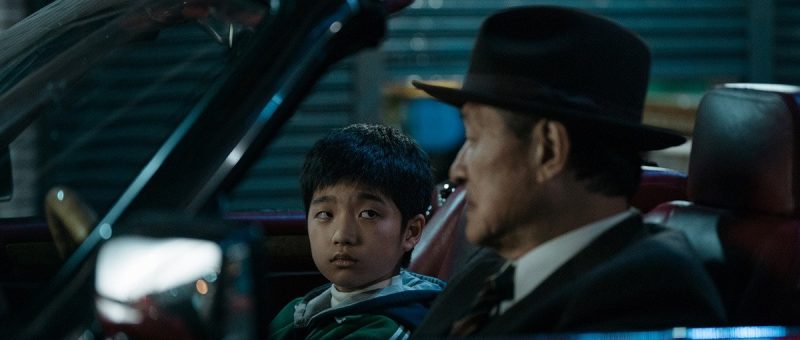
A single mother experiences separation anxiety when she discovers her teenage daughter plans to study abroad in Chiu Keng Guan’s heartwarming drama, Ma, I Love You (真爱好妈). While the daughter yearns for freedom, she is also understandably wary of heading out into the world alone and as much as she fears her mother’s sometimes worryingly obsessive love also recognises that it’s costing her own freedom in her inability to rediscover something to live for outside her daughter.

The bond between the pair is unusually strong in part because of the father’s early death in an accident at the beach which has left Bee Ling clingy and over protective. Now 18, Qi Qi is acutely embarrassed by her mother’s habit of turning up unannounced when she’s out with her friends while insisting on driving her everywhere rather than letting her drive herself or take public transport. That’s one reason that she hasn’t told her she’s given up her part-time job to take French lessons and has applied to study at a university in France. 

It’s obviously a big adjustment for Bee Ling who has devoted her entire life to raising her daughter. Even her job as an insurance agent for which she has won countless awards as a top employee is something she’s only worked hard at to provide for Qi Qi with the end goal of buying a home where they can live together. As her friends and family try to point out to her, children aren’t meant to live with their parents forever and Qi Qi isn’t a child anymore. She wants her own life and the freedom to explore, while Bee Ling should also have the freedom to find new interests and ways to fulfil herself. 

While her friend Li Yan is excited about the idea of her son Zi Hao studying overseas, Bee Ling tries to do whetever she can to prevent Qi Qi going including visiting a shrine to pray that she fails the interview before boldly stating that she will simply go to France with her which is the opposite of what Qi Qi wanted. “I want to go to a place without you” she rather bluntly states, trying to get through to her mother that she wants to be free of her helicopter parenting. 

But then Qi Qi is perhaps a little more anxious than she makes out and afraid to head out on her own without her mother to look out for her. Following a series of setbacks, she appears to have given up walking blankly through an apartment Bee Ling wanted to buy vacantly replying that she’s happy to go with whatever her mother decides. Even Bee Ling is by this point a little less controlling, looking for a place with similar sized rooms and keen that Qi Qi decide how she wants to decorate her space but is also still quite dependent on her daughter not really knowing what she’d do with herself without her.

Ironically, through her campaign to frustrate Qi Qi’s plans to study abroad, Bee Ling begins to develop new interests and make new friends. An older French woman living in their building explains to her that life began again for her at 70. Her children are grown up with lives of their own, so why shouldn’t she be free to live as she pleases? Meanwhile, Bee Ling’s mother also begins to reflect that perhaps she made the same mistake coloured by the times in which they lived thinking that a girl should stay at home. She now regrets what might have been and sees that Bee Ling’s mistaken attempts to stop Qi Qi going abroad will only bring harm to them both.

In any case, as the title implies the pair eventually discover a way to rebalance their relationship with Qi Qi reflecting on the difficulties her mother faced raising her alone and Bee Ling discovering a new sense of possibility for the future in setting her daughter free. Together they begin to move past the shared trauma of the sudden loss of Qi Qi’s father while ready to embrace new challenges. “Life is elsewhere,” Bee Ling is told by a French teacher, suddenly finding herself ready to look for it while allowing her daughter to do the same.


Ma, I Love You screens Nov. 3/4th as part of this year’s San Diego Asian Film Festival.

Original trailer (English subtitles)

San Diego Asian Film Festival Announces Full Programme for 2023

The San Diego Asian Film Festival returns to cinemas Nov. 2 – 11 with another packed programme of recent hits from across the region and its diaspora. This year’s programme opens with Quiz Lady starring Awkwafina and Sandra Oh while coming-of age-comedy Mustache will bring the event to a close on Nov. 11.

Here’s a rundown of the East Asian movies included in this year’s programme:

China

  • 100 Yards – martial arts drama set in 1920s Tianjin.
  • All Ears – meta drama revolving around a screenwriter who now writes eulogies.
  • Farewell My Concubine – Chen Kaige classic following two opera performers over 50 years of turbulent history.
  • Youth (Spring) – Wang Bing turns his camera on the mostly young workers in the textile factories of Zhili. Review.

Hong Kong

  • Elegies – Ann Hui documentary exploring Hong Kong’s literary scene.
  • Mad Fate – a fortune teller attempts to change the fate of a young man destined to kill in Soi Cheang’s darkly comic cosmic mystery thriller. Review.

Japan

  • Evil Does Not Exist – latest from Ryusuke Hamaguchi (Drive My Car) focussing on a construction project in a peaceful rural village.
  • Monster – latest from Hirokazu Koreeda starring Sakura Ando as a mother who confronts a teacher after noticing changes in her son’s behaviour.
  • One Second Ahead, One Second Behind – Japanese remake of My Missing Valentine directed by Nobuhiro Yamashita and scripted by Kankuro Kudo following a boy who is always too early for everything and a girl who is always late.
  • River – the staff of a hotel along with its guests find themselves trapped in an infinite two minute loop in Junta Yamaguchi’s strangely poignant farce. Review.
  • Typhoon Club – a collection of frustrated teens find themselves trapped within a literal storm of adolescence in Shinji Somai’s seminal youth drama. review.

Korea

  • Cobweb – an insecure filmmaker becomes entangled within the movie in his mind in Kim Jee-woon’s homage to golden age Korean cinema. Review.
  • Concrete Utopia – post-apocalyptic drama following survivors living in the only remaining towerblock.
  • In Our Day – Hong Sang-soo drama starring Kim Min-hee as a retired actor
  • In Water – experimental Hong Sang-soo in which an aspiring filmmaker goes to the seaside.
  • Killing Romance – A once famous actress sets out to reclaim her autonomy from an abusive, controlling, billionaire husband in Lee Won-suk’s hilariously off the wall comedy. Review.
  • Sleep – horror in which a newly wed husband says he can see an intruder in his sleep.
  • Small Fry – indie drama in which a film director squares off against a top fisherman.

Malaysia

  • Abang Adik – displaced brothers find themselves trapped on the margins of a prosperous city in Jin Ong’s gritty drama. Review
  • Ma, I Love You – a mother enters a crisis when she discovers her daughter wants to study abroad.
  • Tiger Stripes – femininst pre-teen body horror in which a young woman begins to change in unexpected ways.

Philippines

  • As if It’s True – an influencer embarks on a “fake” romance for clicks only for the lines to be blurred.

Singapore

  • Wonderland – drama in which an old man sells his house to finance his daughter studying abroad.

Taiwan

  • Ah Fei – drama following the life of a woman over a series of decades.
  • Day Off – the wholesome small-town values of an ageing hairdresser place her increasingly at odds with her cynical consumerist kids in Fu Tien-Yu’s poignant tale of changing times. Review.

Thailand

  • You & Me & Me – identical twins consider an inevitable separation on the eve of the Millennium in Wanweaw Hongvivatana and Weawwan Hongvivatana’s quirky Thai comedy. Review.

Vietnam

The San Diego Asian Film Film Festival runs Nov. 2 – 11 at venues across the county. Full details for all the films are available via the official website where you can also find ticketing links and screening information, and you can keep up with all the latest news by following the festival on Facebook X (formerly known asTwitter)Instagram, and YouTube.

Terror in the Streets (悪魔が呼んでいる, Michio Yamamoto, 1970)

How much bad luck can one person have before they start thinking someone’s out to get them? Released as part of double bill with The Vampire Doll and based on a novel by Kikuo Tsunoda, Terror in the Streets (悪魔が呼んでいる, Akuma ga Yondeiru) draws inspiration from contemporary folk horror and the paranoia thriller as one young woman finds herself in the crosshairs of mysterious forces seemingly hellbent on derailing her otherwise very ordinary and aspirational existence. 

Yuri (Wakako Sakai) worries that her status as an orphan has set her back in life, attributing her inability to find permanent employment after managing to put herself through university by working as tutor to a societal stigma against people with no families. Up to now, things had been going pretty well. Though she was only a temp, she had a good gig as office admin staff at big company in the city, lived in a modest but homely flat complete with a small television, and was dating her college sweetheart. But then one day her boss looks at her with an odd expression and then abruptly drops the bombshell that he’s terminating her contract without offering a reason why. When Yuri calls her boyfriend he gives her the same look and says he’s breaking up with her, also refusing to give any kind of explanation aside from not wanting to see her anymore. If all that weren’t enough, her landlady then explains that someone else is very interested in her flat and will pay double for it so she wants Yuri out by the end of the month. 

It’s undoubtedly been quite a bad day, but Yuri tries to stay upbeat reflecting that she didn’t particularly like the job anyway and intends to apply for a position as an editor on literary magazine which would suit her better. But after that nothing quite goes to plan and everything she tries to improve her situation backfires until she finally considers taking her own life at railway crossing only to be rescued by a mysterious man, Fujimura (Takashi Fujiki), who appears as her saviour but then convinces her to take some kind of pill to calm her nerves which predictably leaves her dazed and confused. He then takes her back to her apartment and claims they’re legally married, but when Yuri wakes up the following morning he’s dead with a knife in his chest. 

It’s not the first time that Yuri has experienced an apparent gap in her memory which causes her re-evaluate her sense of reality. She’s beginning to feel as if something or someone is out to get her, realising that Fujimura was the same sinister man she’d caught sight of before staring into her window. Meanwhile, she often hears a strange tune played on an ocarina that sounds like a medieval fugue. The film’s Japanese title is “the Devil calls” and it’s not a huge stretch to assume that Yuri’s been caught up in some kind of dark magic or supernatural curse, yet it’s also the collision of outdated and feudalistic notions of class and patriarchy that have her in their clutches. All of these weird men seemingly want to marry her or at least make her theirs with less than romantic overtures while chief among her aggressors Katagiri (Hideji Otaki) describes himself as an Earl and insists that noble blood is the most valuable thing in the world.

But far as she knows Yuri has no noble blood and is alone and friendless as an orphan with only a “distant relative” she mentions in passing who does not live in Tokyo. She has in effect been made a pawn in a cruel and ironic game played by a distant aristocracy which makes sport of the innocent and powerless by wielding the privileges of wealth and class. The only way she can escape is by renouncing her claim on its legacy, declaring herself uninterested in their games or rewards while ceding the prize to another woman who seems to have been driven out of her mind by a similar series of torments that may have lasted her entire adult life. Yamamoto films the contemporary city in an eerie light, a place of greed and darkness inhabited by sinister and shady forces that prey on the innocent and earnest like Yuri but then there is something to be said for the idea that in the end you can’t con an honest man and Yuri’s pure hearted rejection of unearned wealth just might be her salvation.


Original trailer (no subtitles)

It Remains (釀魂, Kelvin Shum, 2023)

Grief-stricken souls find themselves trapped in a hazy dreamworld of haunting guilt and vengeful spirits in Kelvin Shum’s eerie supernatural horror, It Remains (釀魂). Shum’s second feature following noirish psychological thriller Deliverance delves into the realms of classic ghost movies but discovers its heroes mainly haunted by the unresolved past. “We’re all afraid of facing reality,” heartbroken waiter Finn (Anson Lo) finally accepts though perhaps still lacking resolve to move on from his tragedy.

That would be the death in a car accident of his girlfriend of five years, Ava (Summer Chan). Finn was supposed to meet her for an anniversary dinner but got busy with work and left her sitting alone at which point she left and had a collision with fate. Unable to forgive himself, Finn has taken to drinking and is in a grief-stricken stupor. In an attempt to cheer him up, his friends from the restaurant where he works, chef Luke (Tommy Chu Pak-Hong), waiter Liam (Ng Siu-Hin), and Cora (Kwok Tsui-Yee) from front of house, are taking him camping only the location Liam has chosen turns out to be a little different than expected. Fetching up on a remote island where the boats only run every few days, the gang find themselves wandering through an eerie, seemingly abandoned village where it seems a wedding was once taking place.

As might be expected, they don’t really want to hang around to find out what happened here and are in any case told to leave in no uncertain terms by a mysterious woman and an angry old man who say this village is closed off to insiders. But with no way off the island they have little choice other than to hole up in an abandoned house and try to make the best of the situation. That becomes admittedly difficult when they start experiencing strange visions and are pulled back towards their own unresolved, internalised grief.

It seems Finn wasn’t the only one struggling to let go of the past and whatever evil lurks here quickly latches on to the buried anxieties of each of the group attempting to manipulate them to unleash a pent up spirit sealed away for good reason. Though clues scattered around the abandoned village point to something further in the past and indeed more ancient, it appears this particular moment of trauma occurred this century even if the darkness that surrounds it is older and apparently imparted by a passing Tibetan monk. Someone here also could not face reality and has been caught in another kind of limbo trapped alone and unable to resolve their pain.

The film’s Chinese title means something like “wine ghost” which is in its way ironic seeing as the main coping mechanism employed not just by Finn is alcohol, while the evil spirit itself is bound in a wine jar. This is however one jar it’s best not to open and a series a ghosts that should not be unleashed, despite the well honed logic that sealing the spirit is not really enough to keep it from ruining your life. Finn and the others are too afraid to face reality in knowledge that it may consume them and so remain trapped in the past though they may have been right to fear that in the end they would not be able to resolve their grief if they opened the jar and attempted to deal with it.

Swapping the noirish urbanity of his previous film for the eeriness of nature found in misty forests and forbidding signs of human absence, Shum conjures an atmosphere of spiritual dread in which each of the protagonists is plunged into their own kind of hell and forced to confront the unresolved past. Hoping to deal with at least one ghost, Cora performs a Taoist ritual but ends up summoning more spirits than intended and opening the door to something that none of them are able to control. There’s more than one way to quell a ghost, but the desire not to may be equally strong and for some moving on may not be what they actually want. Facing reality is to accept it, but it’s difficult to say if that represents liberation or constraint or if the only way to deal with a wandering ghost is to join it in eternal suffering.


It Remains opens in UK cinemas on 3rd November courtesy of CineAsia.

UK trailer (English subtitles)
Sabakan (サバカン SABAKAN, Tomoki Kanazawa, 2022)

A melancholy middle-aged writer looks back to a climactic summer of his youth and the ghost of fractured friendship in Tomoki Kanazawa’s heartwarming nostalgia fest, Sabakan (サバカン SABAKAN). A classic summer adventure movie, the film finds a sense of warmth in childhood memory but also reflects on all that at the time it was impossible to understand along with a sadness in the inevitable end of summer as two boys chase the spectre of dolphins in an otherwise tranquil seaside town.

In the present day, Takaaki (Tsuyoshi Kusanagi) is a struggling author and divorced father already behind on his child support. When he mentions working on another novel, his agent laughs at him that books like that don’t sell while trying to convince him to take a job ghostwriting for an Instagram influencer going viral for her dieting tips. Perhaps because the agent had described his writing as “quick and easy to read”, essentially anonymous and empty, he begins meditating on his childhood self repeatedly praised for his writing by a teacher who is perhaps a little easily moved. 

The summer of 1986 was the beginning of the Bubble era and Takaaki’s memories are indeed filled with a series of cultural touchstones such as the idol Yuki Saito whose poster the young Takaaki sometimes kisses after dancing around singing her hits. All of which is one reason why the poverty of his classmate Kenji (Konosuke Harada) has made him even more of an outcast bullied by the other kids who follow him home and make fun of the rundown house with tarp covering the roof that he lives in with his mother (Shihori Kanjiya) and several siblings. His fisherman father died some years ago and his mother works in the local supermarket doing her best to support five kinds on a part-timer’s salary. Kenji takes a liking to Takaaki because he’s the only kid who didn’t join with the others when they laughed at him, more or less blackmailing him into a summer adventure looking for dolphins in a cove over the mountain. 

Even the younger Takaaki reflects there probably weren’t any dolphins in the first place, Kenji just wanted to go on adventure with him and didn’t otherwise know how to ask. A careless word from his otherwise warm and supportive mother provokes a minor rift in the boys’ relationship that despite himself the younger Takaaki didn’t quite understand causing him to pull away from Kenji in an unwarranted sense of rejection unable to recognise that he is simply awkward and has low self-esteem which caused him to question the reality of their friendship. In any case though they are later separated by unexpected tragedy, their connection becomes a touchstone for each of them reminding them that they are not alone even if no longer together. 

Kanazawa captures an impish sense of fun the boys’ adventure as they find themselves in a tricky situation with a trio of thuggish delinquents and meet an equally melancholy teenage girl at the shore who stares mournfully at a washed up can of Korean soda and explains sadly as she looks out over the sea that she herself has not been there yet. The Yuki Saito poster comes down, signalling the arrival of a coming of age and the putting away of childish things as Takaaki moves into a more concrete adulthood while still floundering in adolescent confusion and the inability to fully understand his new friendship or its growing importance in his life. 

The adult him understands only too well, meditating on his memories and triggered by nostalgia on seeing a can of mackerel and remembering the carefree summer of his youth. The rediscovery of a childhood bond begins to open him up both artistically and in his relationship with the wife and daughter from whom he is separated. Told with humour and warmth, the film is filled with a sense of childhood wonder and the comfort of the everyday largely undimmed by the entrance of tragedy and the essential sadness of summer’s end. Even so it allows its melancholy hero to find a kind of salvation not only in childhood memories of dolphins and canned mackerel but in the enduring quality of a friendship that itself may have become distant.


Sabakan screened as part of this year’s Camera Japan.

Original trailer (no subtitles)

Little Blue (小藍, Lee Yi Fang, 2022)

Mother and daughter find themselves in eerily similar situations when dealing with a social double standard in Lee Yi Fang’s pointed drama, Little Blue (小藍). At heart refreshingly sex positive, the film nevertheless asks why some people seem to be hung up on what is a perfectly normal part of life while simultaneously exploring how sexuality can be misused or exploited and mostly particularly that of the young and naive. “I sometimes feel like my body’s not mine,” the titular Xiaolan (Wang Yu-xuan) confesses to a befuddled teacher who explains to her that she’s gone “astray”, while she might as it happens have a point. 

The opening sequence is witness to the transformation Xiaolan subsequently undergoes. Describing herself as incredibly confused, unable to understand what the teacher is getting at when he asks her why she didn’t come to him when it started, this Xiaolan is wearing makeup and has a fashionable hairstyle. But flashing back a few weeks, the Xiaolan we then encounter is shy and mousy. She has long, lank hair and glasses in contrast to her more glamorous friend Kyueiyu who needles her about hair removal techniques and the realities of contemporary dating. 

This Xiaolan is mildly resentful of her mother whom the other kids brand as “hot” when she turns up with a lunch box Xiaolan had forgotten. Vivi (Helena Hsu) is an estate agent who works late and leaves Xiaolan to get her own dinner but also has a very active sex life and an annoying boyfriend who keeps sexting her and sending videos of questionable taste at inappropriate moments. There’s probably something in the fact that aside from Xiaolan’s high school boyfriend Wu Miao (Ye Ting-qi), the otherwise unavailable men all have Western names. Vivi’s sleazy boyfriend goes by Matt, while she later starts an affair with a married client, Kris, and Xiaolan finds herself drawn to a slightly older guy she hooks up with on a dating app who tells her that he has a girlfriend and his name is “Tim” (Roy Chang). 

Just as Wu Miao had after seducing her on a beach, Tim soon starts ignoring Xiaolan’s messages. After all, he has a girlfriend and probably doesn’t want to be bothered by a genuine connection with a dating app hook up. Xiaolan experiences a kind of breakdown after handsome footballer Wu Miao shares an explicit photo of her with a friend who then “accidentally” posts it on the class chat if only to delete it seconds later. Wu Miao isn’t visible in the photo even if everyone knows he’s on the other side of it, but in any case it’s only Xiaolan who suffers a repetitional loss and is shamed by her classmates. It’s in the wake of his shunning that Xiaolan turns to dating apps, hoping to satiate her curiosity and desire but in the end discovering only more loneliness. Taking her to task, Vivi claps back that at least she gets a “thrill” from her otherwise painful love affairs whereas Xiaolan doesn’t seem very happy at all and gives the impression that her dating app odyssey is at least in part an act of self harm. 

Nevertheless, mother and daughter eventually begin to bond over the irony of their parallel crircumstances if only in the knowledge that it doesn’t really get any better and in the end female solidarity may be all there really is. Lee shoots the changing Xiaolan in melancholy shades of blue that of course eco her name but also lend her world an isolating quality that traps her within her own shame and uncertainty. Even the teacher who attempts to talk to her about her waywardness ends up becoming inappropriately aroused. Xiaolan tells him that he’s “very normal” and hasn’t done anything wrong in a moment that seems both a mic drop and somehow transgressive, allowing Xiaolan to offer the sex positive message she should have received while ironically highlighting that the teacher’s response, as unconscious as it may have been, is necessarily problematic. 

In any case, Xiaolan is finally able to reclaim herself and sexuality as perhaps is Vivi as something that belongs to her alone rather than for others. She’d begun to change herself to be accepted, getting contacts, stealing her mum’s makeup and following her friend’s beauty techniques but still found herself rejected and reduced to a mere body much as Vivi is described as a spare time girl realising that Kris only sees her as a temporary escape from his familial responsibilities. Maybe Vivi saw it the same way, too wrapped up in her own problems to deal with her daughter’s, but what emerges between them seems to be healthier kind of emotional honesty that, ironically, neither found in the arms of their duplicitous men. 


Little Blue screened as part of this year’s London East Asia Film Festival.

Original trailer (Traditional Chinese / English subtitles)

Youth (Spring) (青春, Wang Bing, 2023)

There’s an almost eerie quality to the absence of age in Wang Bing’s sprawling exploration of the Zhili textile industry Youth (Spring). Perhaps for reasons of tact, the ages of older workers, unlike those under 35, are not displayed while they are also predominantly female. One has to wonder where the young men who currently work on the shop floor will later end up if they generally do not stay in this line of work though alternatively it may be further evidence of generational shift in which the young men of 30 or 40 years ago simply did not take up jobs as seamstresses. In any case, the only older men we see here are factory owners and floor managers while the older women are often at the forefront of mostly futile attempts at collective bargaining. 

Many young migrant workers apparently prefer the factories in Zhili because they offer a greater degree of freedom than the large state-run complexes which often micromanage the lives of their employees in almost prison-like conditions. But then it’s also obvious that they struggle and largely cannot earn a living wage despite the long hours they are often forced to put in. One younger worker tries to complain about the lack of overtime pay on offer, explaining that he needs to make at least 4-500 yuan a day and cannot do that without the extra payment but the manager simply tells him that he pays better than other shops and in any case there are plenty of rural youngsters who will be happy to take his job. 

The later part of the film is largely concerned with attempts at collective bargaining led by veteran workers who find themselves frustrated by the system. This kind of work is often seasonal and ironically unavailable in the spring during which many workers return home to their villagers. They are paid on piece rate contracts but the rate is set by the kinds of garments they’re making and they often can’t know how much money they’ll be getting by the end of the season. Consequently they try to work up the rate on certain items while at times resentful of other workers who’ve been able to make more solely because they were assigned different tasks which pay better. The managers give them all the usual excuses, largely refusing to budge or offering only a modest per item increase which as one worker points out will barely make a difference if the quota is small anyway. 

Wang gives more of an overview rather than focussing on a series of individuals but discovers an ironic intersection of the legacy of the One Child Policy and the economic realities of today. At the first workshop, a couple who met on the shop floor experience an unexpected pregnancy. The young woman, Shengnan, seems to be given little choice in the matter which is largely being decided by the respective parents on each side. Because of the additional complications of the residence system (they are each from different districts) the parents both want the couple to move closer to them especially as the boy’s parents are economically dependent on him as they age. Shengnan’s mother puts her foot down and negotiates with the manager to get Shengnan time off for an abortion but he refuses until Shengnan has finished her current quota after which he says he’ll be very happy for her to take some rest at home to get over it though as another suggests, trying to offer comfort, an abortion is just like getting bitten by a dog and then biting back. He does however accept that it’s the girls who suffer while all the men are “little emperors”.

Evidence of sexism is rife. Another worker needles his girlfriend about her job in an overnight internet cafe, telling her that it’s not good for girls and that it might cause acne while seemingly not bothering to think about how his long shifts at the factory might be affecting him. “Women are useless” another man later exclaims despite being largely supported by them in the workplace, not least by his own mother who works in the same factory. The younger workers are often cheerful, messing around with silly banter and constant flirting. It’s not surprising that relationships often arise with people trapped together such long periods of time with little possibility of going out to meet someone else, but they’re also largely impossible given the futility of trying earn enough to support a family through seamstressing. Another man faces a similar dilemma when he discovers his girlfriend has also become pregnant but cannot decide if he wants to get married, worrying about shouldering the responsibility of a wife and child while financially insecure. 

All of which would seem to conflict with a wider anxiety about children not getting married as parents often reject a potential suitor based on low economic status or residency while young men find themselves frustrated unable to envisage a time when they might be financially stable enough to start a family. Meanwhile, the old-style factory dorms are strewn with rubbish and in general depressing in their grey concrete exteriors and poorly lit rooms. An outburst leading to a physical confrontation between workers seems only natural given the fraught conditions though Wang presents it as a howl of despair from a generation trapped between the old China and the new with very little to show for it.


Youth (Spring) screened as part of this year’s BFI London Film Festival.

Door II: Tokyo Diary (Banmei Takahashi, 1991)

A sequel in name only, Banmei Takahashi’s Door II: Tokyo Diary has almost nothing to do with his previous film Door, the title was apparently tacked on at the behest of studio execs who noticed that it had sold well on home video. Nevertheless, the film has its own door motif as the aimless heroine searches for herself among the many available to her, temporarily trying on other personas while wilfully flirting with danger. 

A menacing voice message reminds Ai (Chikako Aoyama) that her work is dangerous, a woman telling her to back off but for unclear reasons either genuinely concerned for her safety or annoyed she’s infringing on her business. Ironically enough, Ai is a call girl who runs her own operation through the soon-to-be obsolete technology of a telephone answering service which unlike the phones in Door offer her a one way portal of communication that isolates her from her potential clients. She explains that she chooses the men for herself, watching idly having quadruple booked the same appointment until finally deciding which door to open though it seems unclear how far she is aware of her vulnerability given that working alone means there’s no one to call if something goes wrong as it eventually does. Even the first client we see her with changes the moment he steps over the threshold, becoming angry having realised that Ai doubled booked the appointment while playing rough with her and forcing her down onto the bed. 

Ai (whose name means love) seems to treat each of the doors as another world in which she must play her assigned role. As such, she submits herself to every degradation though it’s unclear if the act of submission is empowering or she is really just at the mercy of these wealthy mean who’ve paid to do what they like with her. Then again as Ai explains to sometime love interest Ichiro (Shingo Kazami), her real motive is sex and not money leading her to turn down an appointment with a sweet older gentleman who’s checking call girl experience off his bucket list but does not actually want to sleep with her only go on a date. Meanwhile, she finds herself bound and blindfolded while a man in heavy makeup and a nazi uniform dribbles wine down her face as part of a urination role-play. She later plays the piano for him while he curls up in a little ball at her side. 

Becoming involved with a mysteriously wealthy art dealer (Joe Yamanaka) who treats her with unusual tenderness seems to shift Ai’s world view, but equally does an incredibly dark encounter with a dangerous man who attacks Ai and her friend Tomoyo (Yukino Tobita) with a pair of scissors until Tomoyo bites one of his toes off so they can escape. This is the danger the middle-aged madam (Keiko Takahashi) tried to warn her about and causes her to reconsider her life as a call girl until she finally decides to try the same door again and bursts the fantasy bubble by telling the art dealer she loves him. 

A climatic and hugely inappropriate speech at a wedding which nevertheless earns the appreciation of the bride, allows Ai to begin to rediscover herself realising that it was the sense of anticipation that she craved not knowing what she’d discover beyond each and every door. She decides she’d like to swim in the great ocean of infinite possibility once again, ready to open more doors to find out what lies beyond possibly reassured by the art dealer’s assertion that though most of his paintings are fakes he’s discovered a handful of “originals” too restoring Ai’s sense of self as an individual rather than an anonymous call girl who comes when called and has no direction of her own. A melancholy tale of youthful anxiety in the fracturing economy of the Bubble on the eve of its implosion the film trades on Takahashi’s experience in pink film in its at times perverse eroticism but ultimately presents a tale of a young woman regaining control over her self and her life, willing to embrace new possibilities and their concurrent dangers so long as she chooses them for herself. 


Door II: Tokyo Diary is released in the UK on blu-ray 30th October courtesy of Third Window Films.

Restoration trailer (English subtitles)

Door (Banmei Takahashi, 1988)

You like to think you’re safe behind closed doors, that nothing that happens behind them is anybody’s business and you’re free to be yourself. But a door is as much about keeping things in as it is about keeping them out and perhaps you’re not as in control of it as you thought. Arriving at the tail end of the Bubble era, Banmei Takahashi’s giallo-esque home invasion thriller is at heart about insecurity, a feeling of anxiety and ever impending doom under the watchful eyes of a judgemental society. 

At least, Yasuko (Keiko Takahashi) feels the eyes of her neighbours keenly on her, nervously attempting to live up to the role that’s been assigned to her as a moderately affluent housewife in a nice middle-class area that is nevertheless full of hazards even if many of them are social and psychological rather than directly physical. We can feel her discomfort when an anonymous neighbour passive aggressively returns her rubbish to her front door when she attempts to throw it out on the incorrect day, her husband’s (Shiro Shimomoto) advice simply to make sure she follows the bin day timetable correctly in the future. Another neighbour whose face is also not seen later stares at her when she drops a tissue that has been placed in her letterbox by a salesman (Daijiro Tsutsumi) who is harassing her, forcing Yasuko to pick it back up and take to her own apartment to dispose of lest she be judged for failing to obey this simple rule of urban living despite realising that the tissue likely contains unpleasant bodily fluids. 

The great mystery is why Yasuko, who clearly finds the salesman’s attentions threatening, does not immediately hang up when he calls her but continues to listen to his ominous conversation which heavily implies he is close by and watching her. Previously he’d daubed an obscene message on her front door branding her as “sexually frustrated” which as it turns out may not be far off the mark. Her husband is largely absent and often works away. When he returns she tries to wake him up after putting their son to bed, but he’s dead to the world and leaves the next morning having explained that he’ll be away the next three nights due to a colleague falling ill. Among the junk mail delivered to their flat were a series of business cards for cabaret bars that he jokingly suggested keeping, though as it turns out he really is at work and not spinning a yarn for a three-day jaunt with a mistress even if you could make a case that he’s in an extra-marital affair with his career. Yasuko almost says as much when she calls and tells him she’s scared but he refuses to come home, crying out that he obviously has no regard for his wife and child. 

It’s clear that the economic demands of the late Bubble era have endangered the traditional family even as they’ve provided a level of financial comfort that enables Yasuko to live in this “nice” apartment even if it’s perhaps only ordinarily nice for a middling middle-class couple living a stereotypically middle-class suburban life. Yasuko’s sense of anxiety partly stems from being constantly observed by those around her in an alienating urban environment but also suggests an insecurity in her social status which is after all dependent on a financial security which may be about to disappear as the Bubble bursts. The home is also a burden, and the space behind the door one of isolation rather than safety that leaves her feeling vulnerable and alone in the continual absence of her husband. 

Tellingly all of the voices she hears other than his (and their son’s) are filtered as if they were speaking to her via telephone. She has two handsets in her home, one belonging to the phone itself, black with an answering machine, and the other to the intercom, white and wall-mounted, which is intended to give her control over her door but which in the end offers little comfort just like the near pointless chain-lock intended to keep strangers at arm’s length but in reality easily breakable. In this society of ultra-politeness simply not answering an urgent knocking may not be an option, but behind the door Yasuko is also lonely so perhaps those nuisance cold calls telling her she’s won a cruise, encouraging her to take up English conversation classes, or maybe join a cult, are not really so much of a nuisance at all simultaneously interrupting her loneliness while also penetrating the protective sanctuary of the private space of the home much as the salesman will eventually do in physically breaking a protective barrier. 

When Yasuko fights back, she does so with a housewife’s weapons such as carving forks and chopping boards even picking up her son’s rollerblades to enlist him in the resistance. Takahashi films the final confrontation from above in a complex aerial shot that suggests a literal cat and mouse game as if Yasuko were intent on ejecting a stubborn rodent from her home, the rounded, doorless entranceways between rooms almost like oversized mouse holes in a scene from a cartoon. The question is whether Yasuko can in fact protect this space, a space which represents her family, in overcoming her own anxieties and the latent dark desire which draws her towards her stalker in her loneliness and lack of fulfilment. Yet the answer doesn’t quite lie in perfecting the persona of the perfect housewife even if it could on one level be argued that she’s saved by another kind of male protector but in taking care of business and reasserting her control over the space by means of resetting its boundaries very much on her own terms.


Door is released in the UK on blu-ray 30th October courtesy of Third Window Films.

Restoration trailer (English subtitles)

Coo-Coo 043 (一家子兒咕咕叫, Chan Ching-lin, 2022)

Why would a pigeon, or a child, return to you if you failed to make them a home? The enigmatic title of Chan Ching-lin’s gritty familial drama Coo-Coo 043 (一家子兒咕咕叫, yījiāzi ér gū jiào) refers to a homing pigeon that unexpectedly arrives seven years late but bringing with it less joy than an unwelcome confrontation with the unresolved past. A tale largely of male, patriarchal failure the film revolves around the taciturn figure of a middle-aged man obsessed with pigeon racing who attempts to build a coop an in abandoned field for the birds he no longer has means to care for even as his own home crumbles.

Old Ching (Yu An-shun) appears to be a broken man who’s never quite recovered from the massive success of having won a lot of money on a pigeon race several years previously though most of his birds since have never returned at all. Gambling is technically illegal in Taiwan, and the sport of pigeon racing is itself a little taboo though popular enough at least in the small town where Ching lives. It appears the family is mostly supported financially by his second wife Ming’s (Yang Li-yin) banana farm, while ironically enough his daughter Lulu (Rimong Ihwar) dreams only of flying the coop for a less depressing life somewhere else. Part of the reason for the difficult atmosphere in the family home is the sense of absence left by Shih, Ching’s son from his first marriage who disappeared on his way to school aged 12 more than a decade earlier.

Ching continually blames Ming for Shih’s disappearance because on that day she did not drive him to school as usual, ignoring the fact that she stayed to clean up the house after he trashed it in a violent fit after losing at gambling and told the boy to walk. Ching’s irony is that he is always waiting for something to come back to him, but never gives any reason why it should. Though he is often seen tenderly caring for his pigeons, he treats his family members with coldness and contempt and is on occasion violent towards Ming who has a sideline working as part of a troupe conducting death rituals and is considering leaving him. She takes pigeon 043’s miraculous return after seven years as a sign that they should look into having Shih declared legally dead to help them accept he won’t come back but Ching refuses to do so and continues to wallow in his own violent and angry grief unable to see that it may be him that drove his son, and later his daughter, away.

His limp also hints at a violent past as do his ties to a group of local gangsters who seem to be well into the pigeon racing scene, while gang young toughs make a living kidnapping birds and ransoming them back to their owners or else killing them for fun if they don’t pay. Ching finds a surrogate son in the orphaned Tig (Hu Jhih-ciang), Lulu’s sometime pigeon-catcher boyfriend, but fails to see him as such until it’s too late. Unlike Lulu, Tig is a man looking for a coop. He slides into the vacant space in the family longing to be accepted, but finds only coldness and abandonment left behind while everyone else flies away in search of a better life. 

Often captured behind bars, the two men are just as caged as the pigeons though the kind that don’t fly away when the doors are opened. Some of those who leave do so for the after life, no longer seeing any point in continuing this miserable existence which shows no sign of improvement and unable to envisage any other kind of escape. Even Lulu’s flight to the city to become a nightclub dancer seems as if it may just be another kind of cage from which she cannot fly. Ching’s pigeon coop is eventually ruined by a more literal kind of storm, but mainly because he failed to protect it unable to look past his personal despair and indifferent to the vulnerabilities of his home. Bleak in the extreme, Chan paints a grim picture of life on the margins in rural Taiwan in which the wings of all have long been clipped and those who return do so only because they have nowhere else to go.


Coo-Coo 043 screened as part of this year’s London East Asia Film Festival.

Original trailer (English subtitles)