The Rose: Come Back to Me (Eugene Yi, 2025)

Korean indie group The Rose have been making waves for close to a decade, starting out in Seoul and now having signed with a US label and playing the Coachella festival. They cite their musical message as healing, in part because music has healed them at various points in their lives, both individually and as a group, though they have faced a series of hardships, from the rigours of the K-pop industry to an exploitative label and a potentially explosive scandal.

Eugene Yi’s documentary is however more of a puff piece interested in how the band heroically overcame their struggles rather than the nature of the struggles themselves, despite a few talking heads outlining the oppressive and exploitative nature of the Korean music industry. According to them, what makes The Rose interesting is they all started out in K-pop training schools, but each found it wasn’t for them. As one of them points out, only 0.01% of applicants get to debut, and only 0.01% of the ones that do are successful. Sammy, a Korean-American musician who took part in a Korean TV talent competition, says that he developed body image problems because of the way the agency tried to control his appearance and eventually dropped out because he lost the joy of music in having to literally dance to their tune. 

Others of the band members had similar experiences before coming together as a street band and eventually forming The Rose as four young guys with a dream. They got an apartment together and eked out a living while spending all their time practising and writing songs. But as so often in these stories, they were picked up by a label who only wanted Sammy. He convinced them to take the others too, but they also tried to control the direction of their music and rejected their choice of an intensely personal, self-written debut song, insisting they needed something poppier and more upbeat. The joke was on them, though, because the song took off on its own on YouTube and became a hit across Europe. The label sent them touring, but otherwise did little else and misled them about the financial situation to the point that they decided to sue.

Suing your label is pretty unheard of in Korea where going against your team is socially difficult, as is challenging flaws in the system rather than just trusting in it and going with the flow. Had they lost, it would have been the end of the band and they’d all be financially ruined for the rest of their lives. This was also the time that Covid hit, with two of the band members going into the military. Along with the psychological pressure of the label playing divide and conquer to set them at each other’s throats, the anxiety of the court case strained Jeff’s mental health to the point of hospitalisation. He wondered if he should give up music if this was what it was doing to him, but then rediscovered its healing qualities. 

Having won their court case, the band reunited and signed with a label in the US only to be hit by another scandal once they started to make a name for themselves and Sammy’s former conviction for drug use after being caught with a small amount of marijuana was exposed in the papers. Any kind of involvement with drugs is a no-go in the Korean entertainment industry and can end careers or worse. Nevertheless, the band seem to have bounced back from it if even Sammy laments the guilt he feels for letting down his bandmates’ parents though he’d always been upfront with the guys that it might come out some day. Jeff too had remarked on the additional guilt he felt towards his parents for becoming ill, demonstrating that they’re all nice guys who care about their families and are serious about their healing message. Jeff is touched when members of the audience tell him their music helped them get through a loss or overcome their suicidal thoughts. 

Nevertheless, the film does rather seem set up to emphasise those messages and make the guys look as good as possible in addition to painting them as an authentic artistic rebellion against the soullessness of K-pop with its manufactured stars who are kept on a tight leash and trained to within an inch of their lives so that almost nothing of their individual expression remains. A little more shade might have helped to offset the hagiographic tone, though it’s true enough the band has talent and they’ve worked incredibly to get to where they are overcoming a series and crises and hardships along the way.


The Rose: Come Back to Me screened as part of this year’s San Diego Asian Film Festival.

Trailer (English subtitles)
Red Nails (홍이, Hwang Seul-gi, 2024)

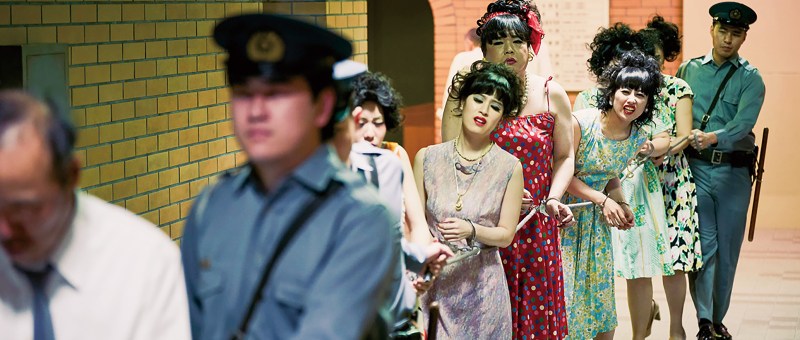
A not quite middle-aged woman watches as her mother takes an aerobics class with other similarly aged people at a nursing home. The attendant turns to her and remarks that it can’t have been an easy decision, leading us to think that she has reluctantly decided her mother may be better off living where she can be properly looked after. But Hong (Jang Sun) has actually arrived to take her mother home. Not because she’s had a change of heart, and not exactly because she’s having a hard time and can’t afford to pay for the home any more, but because she’s realised her estranged mother’s a cash cow and the only one she has left to tap.

Hwang Seul-gi’s complex drama Red Nails (홍이, Hong-i) never shies away from its heroine’s flaws even if it tries its best to empathise with her. Hong is clearly irresponsible with money. The piled up boxes in her living room hint that she may have fallen victim to a multi-level marketing scam, but whatever the root causes are, she’s pretty much bankrupt with the bailiffs about to be sent in to seize her goods due to her phenomenally large debts. Even so, we later see her going on shopping sprees as if she were trying to fill some sort of void through guilty consumerism that is really just punishing herself by making her situation even worse. 

Hong’s borrowed money from an ex-boyfriend who has since married someone else but continues to sleep with her while badgering Hong for his money back, claiming his wife’ll throw a fit if he doesn’t get it. Meanwhile, she’s engaged in a fantasy romance with a man from an app, Jin-woo, whom she misleads about her financial circumstances and later uses when she needs a free ride. Hong has a habit of taking advantage of people, including her mother’s old friend Hae-joo who agrees to watch her in the day. Hong often messes her around, staying out late without calling and just expecting Hae-joo is figure something out. Hae-joo eventually confronts her about her unreasonable behaviour while taking advantage of her free labour, but Hong tries to give her money as if that was the problem. Hae-joo is insulted, and bringing money into the equation only threatens to change the nature of the relationship. It makes Hae-joo feel cheap and used when she had been doing this as a friend because she cared about Seo-hee. 

Seo-hee, meanwhile, seems ambivalent about her new living standards and, at times, berates Hong complaining that she wishes she’d never been born. It’s not clear what happened in Hong’s childhood, but they evidently did not get on and still don’t now. Seo-hee wants to go home, complaining that there’s a thief in the house though whether or not she knows that Hong has been dipping into her savings to pay off her debts, she’s still aware that she brought home because she needed money rather than companionship. 

But then Hong is also lonely, and her romance with Jin-woo is an attempt to escape her disappointing circumstances. Her ex suggests she once dreamed of becoming a teacher, but is currently teaching a literacy class for a group of older woman at a local institute where she also cleans the toilets. She also has a second job directing traffic at a construction site where the foreman hates her, docking her pay for neglecting her duties by using her phone while on the job. She cannot her escape her debts through any legitimate means, though that hardly justifies stealing from her mother. 

Even so, it appears that on some level Hong wanted comfort and companionship along with her mother’s approval. As they live together, they begin to draw closer but at the same time it’s clear that they remember things differently, though whether Hong is right to blame Seo-hee’s dementia or has misremembered herself is destined to be an eternal mystery. Hong tries to fulfil her mother’s dream of lighting sparklers, but the pair are yelled by some kind of environmental officer and forced to put them out. Hong looks on forlornly as the glow fades away as if symbolising the flame going out of the relationship between the two women. Despite their growing closeness, there are some things that it seems can never really be made up and all Hong really has is a frustrated memory of a longed-for closeness that can never really be.

Red Nails screened as part of this year’s London Korean Film Festival.

Trailer (no subtitles)

YMCA Baseball Team (YMCA 야구단, Kim Hyun-seok, 2002)

Kim Hyun-seok’s sporting comedy YMCA Baseball Team (YMCA 야구단, YMCA Yagudan) opens with sepia-tinted scenes of Korea in 1905 in which most people still wear hanbok and live little differently than their distant ancestors. Modernity is, however, coming as evidenced by the streetcar that runs through the centre of town even if it’s surrounded on both sides by unpaved ground. Reluctant scholar Hochang’s (Song Kang-ho) father (Shin Goo) complains that the cranes no longer stop in Seoul. Too many scholars have picked the wrong side, he says, but Hochcang counters him that these days you can get to Incheon in hour by train. Maybe the cranes are saying there’s no need to emulate them anymore. 

Hochang doesn’t want to be a scholar or take over his father’s school. His father wanted his brother to do that anyway, but he’s run off and joined the resistance to the Japanese. Just as Hochang discovers the new sport of baseball thanks to a pair of American missionaries and the pretty daughter of a diplomat, the Japanese further increase their dominance over Korea by forcing it to sign the Eulsa Treaty in which they effetively ceded their sovereignty and gave additional provisions for Japanese troops to remain in their nation.

Hochang had been playing football alone as his friend practised reading English before he kicked a ball into Jungrim’s (Kim Hye-soo) garden and found a baseball instead. The early scenes see the local population adopting this Western game in makeshift fashion, using paddles and tools as bats while putting festival masks on their faces in weaponising their culture to make this sport their own. In baseball, Hochung finds the vocation he hasn’t found in scholarship or anywhere else. As a child, he wanted to be a King’s Emissary, but the Korean Empire is drawing to a close and the position no longer exists. His battle is in part to be able to live the life he chooses rather than simply continue these ancestral traditions and be a teacher like his father. In a cute public event unveiling the team, children sing a song in which little boys sing about how they don’t want to be an admiral as their fathers wanted them to be but want be something else, while the girls don’t want to marry a powerful man as their mother’s advised, but would rather marry someone else. The joke is that they both want to be or be with the YMCA Baseball Team, which has, in its way come, to represent a new modernising Korea that is keeping itself alive by embracing the new.

To that extent, Jongrim herself comes to represent “Korea” in that Hochang uses his scholarly skills to write her a love scroll in beautiful calligraphy, but it somehow gets mistaken for her father’s will and read out at his funeral after he takes his own life to protest the Eulsa Treaty. Hochang’s heart felt and rather florid poem is then reinterpreted to reflect her father’s “love” for Korea which has been stolen from him by the Japanese. Jungrim and her Japanese-educated friend Daehyun (Kim Joo-hyuk) are secretly in the Resistance and later forced into hiding when Hochung’s friend Kwangtae (Hwang Jung-min) figures out that it was Daehyun who attacked his politician father for betraying the nation by letting the Eulsa treaty pass. 

The baseball team becomes another resistance activity, with Jongrim admitting that the people “became one and felt proud” every time the team won. When they discover that their training ground has been commandeered by Japanese troops, they end up agreeing to play them to reclaim their lost territory. But the Japanese still have superiority over an underdeveloped Korea as seen in the opening footage as they started playing baseball 30 years earlier. Just as Hochang didn’t want to be a scholar, general’s son Hideo (Kazuma Suzuki) didn’t want to be a soldier either, but in a world of rising militarism he had little choice. His father thinks baseball’s a silly waste of time too, and like Hochang’s father is secretly proud of his son when he’s doing well, but is very clear that this game cannot be lost because the great Japanese Empire cannot be seen to lose to the nation it is currently in the process of subjugating. The day is saved, ironically, by Hochang’s royal seal, given to him by Jongrim, who seems to have returned his affections even if she had a greater cause. The baseball team even allows a snooty former nobleman to accept that class divisions no longer exist and he can in fact be friends with a peasant, especially when they’re uniting in a common goal like kicking out the Japanese. Sadly, the Japanese turned out to be not such good sportsmen after all, and predictably sore losers, but Hochang has at least found a way to resist and fight for a Korea that is free of both onerous tradition and colonial oppression.


YMCA Baseball Team screened as part of this year’s London Korean Film Festival.

Commission (커미션, Shin Jae-min, 2025)

What is it about art that conjures such frustration? Dan-kung (Kim Hyeon-soo) is consumed by resentment and deep-seated feelings of inferiority while certain that she will forever be trapped beneath the shadow of her sister, Ju-kyung (Kim Yong-ji), a popular webtoon artist. Dan-kyung dreams of being a webtoon artist too, but she’s convinced herself she isn’t good enough, mainly due to a childhood incident when she won first prize in a competition but only after her sister had made her mark on her painting. 

The tragedy might be in a way that it never seems to have occurred to the sisters that they could simply have worked together and that even if someone else helps you, that doesn’t mean that the work is any less your own. After all, most manhwa artists have assistants who do the bulk of the actual drawing. Ju-kyung has them herself, as does the kindly Mok, a former master taking his first steps into a new digital world. Mok sees potential in Dan-kyun, even if her colleagues haze and bully her and she only got the job thanks to Ju-kung’s connections. He’s working on a space epic titled Ozymandias that’s an attempt to make up for a project that never got to see the light of day having been suppressed during the authoritarian era. 

Dan-kyung uses the title of Mok’s lost manhwa, Taiji, as her username on a Japanese dark web forum that her sleazy colleague introduces her to where people pay vast sums to commission extreme artwork. The most obvious meaning of “Taiji” in Japanese is “foetus” (胎児), though it can also mean “extermination” (退治) as in of pests or demons, or “confrontation’ (対峙). It’s not clear that Dan-kyung would know this, nor that Mok intended the title of his manhwa to be read as Japanese or what he might have meant by it if he did. There is however, something in the idea that Dan-kyun still taking shape, as yet unborn just like Mok’s never released manwha. She defines herself in confrontation with her sister, as if she were the unborn twin forever languishing in darkness. Ju-kyung’s hit manhwa is titled Day and Night, and might itself hint at the contrast between them. While Jun-kyung enjoys the trappings of success, Dan-kyung finds the key to her art in her internal darkness, producing her best work drawing images of vile and sickening things for the benefit of her online fans. Her success mirrors Ju-kyun’s even it’s underground where only those in the know can see.

It gives her a new sense of confidence that would allow her to make progress in the mainstream world too, if her self-destructive actions didn’t have a habit of ruining things. Ju-kyung has a point when she describes Dan-kyung as a kind of jinx who ruins everything and everyone around her. Her biggest fan online is calls Hannya (Kim Jin-woo), which is the name for a demonic noh mask representing a woman who has become consumed by her jealousy. As Dan-kyun gets deeper into the online world, it becomes more difficult to tell if any of this is real or merely a symptom of her delusions. Hannya talks to her in a mix of Japanese and Korean, their androgynous quality inviting some uncomfortable readings but also echoing Dan-kyun’s nature as something as yet incomplete or a part of a separated whole. 

Another teacher at the art academy where Dan-kyun had been working bluntly states that some of the students aren’t worthy of teaching because they’re afraid to push themselves in case they find out that they’re not good enough. Ju-kyung initially seems sympathetic, telling Dan-kyung that understanding your limits is also a “talent” while seemingly encouraging her by getting her the job with Mok, but Dan-kyung later wonders if it isn’t Ju-kyung who is afraid and actively standing in her way because she can’t bear the thought that Dan-kyung might actually be better than her. Mok tells that “perseverance” is a “talent” too, though his frustrated apprentice who lost out to “genius” Ju-kyung, speaks of it more like purgatory. He knows deep down that he doesn’t have what it takes to make it, and doesn’t think Dan-kyung does either, but they keep at because of that vague hope that just maybe it’ll happen one day. But Mok described Ju-kyung’s talent as curse too, correctly predicting the paralysing fear and self-fulfilling prophecy that one day it’ll just abandon her and she won’t have anything to say any more.

The irony is, however, that every time Dan-kyung makes one of her bad decisions, something good would have happened anyway. The harsh teacher whom she wronged after they won an award she wanted, mellows once she gets used to success and apologises to Dan-kyung for “overreacting”. Dan-kyung discovers she’s actually getting a job she thought she lost a little while after plotting revenge and ruining the opportunity. Things would have worked out for her, if only she’d had a little more patience and self-confidence. It’s true enough that she’s motivated by spite and resentment, pettily striking back at those that have what she wants or have caused her to feel humiliated, but not really thinking through the consequences and assuming that everything will go the way she wants it to once she’s removed this one piece of the puzzle or replaced it with one of her own.

In unmasking herself, she reclaims her identity from Ju-kyung and finally becomes whole while echoing Mok’s words that Taiji needs readers, as if her art would remain forever unborn if no one ever got to see it. The pain in her wrist hints at the physical labour of creation, one that a more successful artist may no longer need to endure, while in other ways she is in the process of giving birth to herself. But Dan-kyung’s vision of art may also be flawed in her need for other people to see it, fixating on the fame and acclaim, even the money that comes with it, rather than in the simple art of creation in which it wouldn’t matter if her art sat in a desk drawer for the next 40 years because she had made it and made it for herself. Hannya has their “art” too, as grim as it may be, though aside from their first piece, they seem to hide the results. Another tortured artist, Dan-kyung has turned inward in bitterness and resentment, but wreaks her vengeance externally while otherwise continuing to dream of a mainstream success that may in itself be merely artifice.


Commission screened as part of this year’s London Korean Film Festival.

Trailer (English subtitles)
Hero (영웅, JK Youn, 2022)

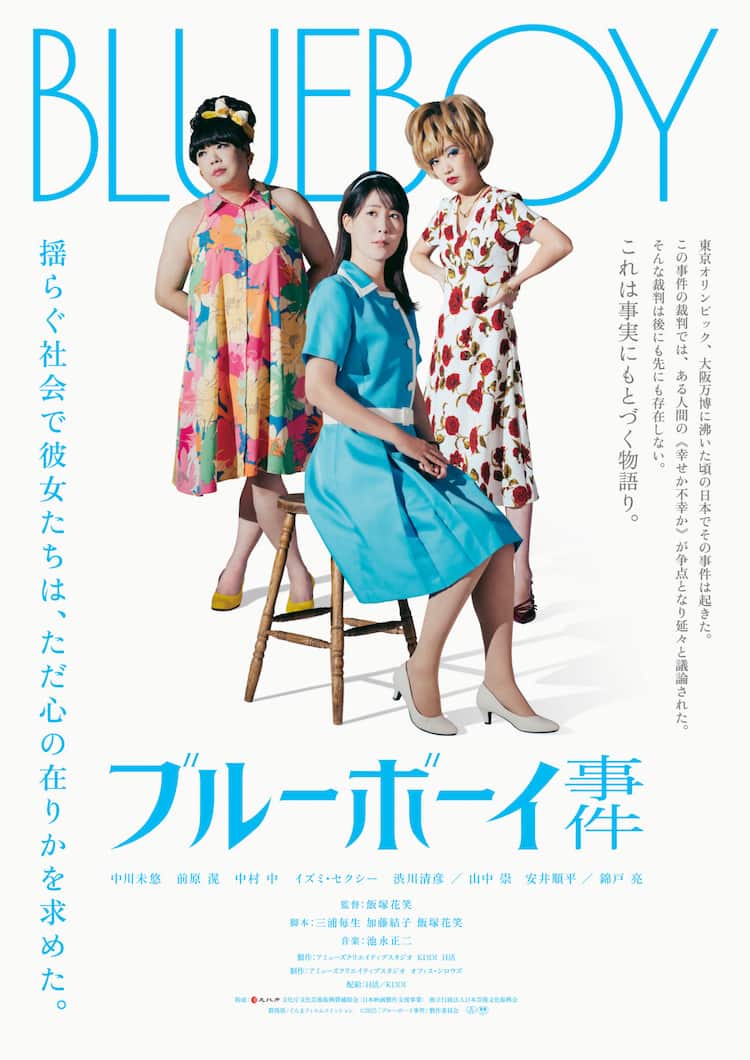
An Jung-geun is a key figure in modern Korean history whose story has been dramatised numerous times and given rise to its own legend. JK Youn’s Hero (영웅, Yeong-ung) is, however, the first movie musical devoted to his life and adapted from a stage hit that has been running since 2009. It has to be said that structurally the musical owes a fair amount to Les Misérables with a dramatic first act closer that is more than a little reminiscent of One Day More, while a number about meat buns echoes the kind of comic relief provided by Master of the House, though the rhythm might hint at Sweeney Todd’s meditation on pie making.

It is certainly out of keeping with the intensity surrounding it as the focus is, after all, on an attempt to stop the Japanese colonising Korea and practising even more cruelty. An Jung-geun abandons his family in the early part of the film, but this isn’t seen as a moral failing or irresponsibility so much as evidence of his devotion to the cause that he sacrifices a peaceful life as a husband and father. His revolutionary activity is furthermore filial because his mother encourages it, later writing him a letter while he is imprisoned urging him not to appeal his sentence but accept his death as a martyr. To appeal would mean accepting the Japanese’s authority in begging for his life. Jung-geun had wanted to be tried not as a murderer, but as a soldier fighting a war and therefore sees his trial as illegitimate. He insists he is a political prisoner, a rousing number outlines 15 reasons why the man he assassinated, Ito Hirobumi Japan’s first prime minister and resident-general of Korea, deserved to die which include dethroning the Emperor Gojong, assassinating the Korean Empress Myeongseong (Lee Il-hwa), lying to the world that Korea wanted Japanese protection, plunder, and massacring Koreans (all of which the Japanese had done). 

It’s the assassination of Empress Myeongseong that motivates the film’s secondary heroine, Seol-hee (Kim Go-eun), a former palace made now operating as a resistance spy in Japan under the name Yukiko. Seol-hee’s impassioned songs have curiously homoerotic quality and take the place of a central romance which the piece otherwise lacks except in the tentative relationship between Jin-joo, sister of one of An’s closest men, and the youthful recruit Dong-ha. Even if “Myeongseong” is effectively “Korea”, Seol-hee’s passionate intensity is quite surprising while her motivation is more revenge for her murdered mistress than it is saving the nation and eliminating Japanese influence. In this, her arc might not quite make sense in that her final actions almost derail Jeun-guen’s mission in putting the Japanese on high alert. 

But at the same time the film leans in far harder on Jeun-geun’s religiosity than other tellings on his story in which his faith presents only a minor conflict as evidenced by his offering an apology to God for killing Ito while justifying his actions as those of a righteous man in the courtroom. While placing him at odds with the left-wing ideology of other Independence activists, his religiosity is aligned with his humanitarian decision to release Japanese prisoners rather than execute them, abiding by the commonly held rules of war while his men are eager for blood. The decision backfires, but is depicted more favourably than in the narratively more complex Harbin and Jung-geun is otherwise an uncomplicated hero who makes no wrong decisions and never fails even if he is at the mercy of the Japanese.

As such, the musical sticks to the familiar beats of Jung-geun’s story from the Japanese counterstrike to his talent for calligraphy and the letter from his mother instructing him to go bravely to his death. Anchored by an incredibly strong vocal performance from Chung Sung-hwa who originated the role on stage, the film portrays Jeun-geung as the hero of the title, defiant to the end and thereafter wronged by the Japanese who buried his body in an unknown location and prevented him from ever returning home to a free Korea. It also glosses over the possibility that Ito’s assassination may actually have accelerated the course of Japan’s annexation which it failed to prevent and otherwise had little lasting effect. Nevertheless, despite its overt patriotism, the film does present the rousing spectacle of Jung-geun’s embodiment of the good son of the nation who fought hard for a liberated Korea he never got to see.


Hero screened as part of this year’s London Korean Film Festival.

Trailer (English subtitles)
Living the Land (生息之地, Huo Meng, 2025)

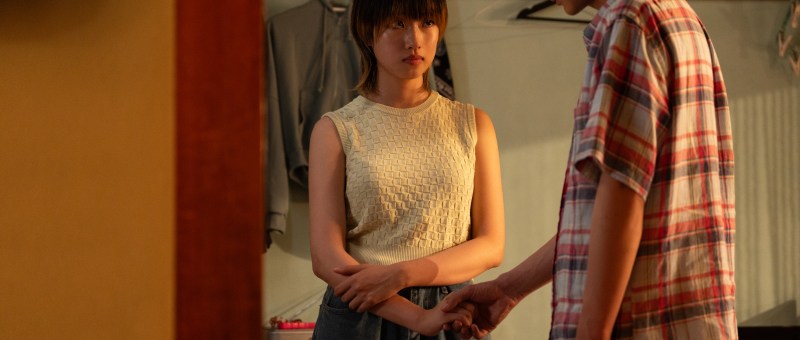
When a way of life has gone on unchanged for centuries, the idea that it might soon disappear seems unthinkable, but change is indeed coming to the village in Huo Meng’s elegiac drama, Living the Land (生息之地, shēngxī zhī dì). Set concretely in 1991, the economic reforms and impact of the One Child Policy are beginning to make themselves felt, while incoming mechanisation begins to destabilise the rural environment. Farmers will always have to work the land, one utters in exasperation as a local man employs a large American tractor he says is capable of doing the work of a hundred villagers, while other young men decide it’s time to go south and seek their fortunes in the factories of a new era.

Even so, the film opens with a literal digging up of the past. 10-year-old Chuang’s (Wang Shang) great aunt has died, and his uncle and grandfather want to exhume his great uncle from the makeshift grave he was placed in after getting on the wrong side of the authorities so they can be buried together. Villagers talk cryptically about those who didn’t make it through the Cultural Revolution and Great Leap Forward, but otherwise continue living their traditional lives in harmony with the landscape. The irony is that Chuang is a left behind child whose parents are working away in the city, but the reason he’s not with them is because he’s a secret. He’s their third child and they can’t afford to pay the fine for violating the One Child Policy while his father works for the government and would probably be fired if they found out.

And so, Chuang is living with his maternal grandparents while his siblings are with their parents. The fact he keeps wetting the bed at a comparatively late age is likely down to this sense of rootless anxiety. He doesn’t know if he should say this is his home village because he has a different surname to the people he’s living with. While his grandfather plots out burial spaces for the rest of the family, he leaves Chuang out, and when the boy asks why, he says he doesn’t belong here because his name isn’t Li. He’s mainly been cared for by his aunt, Xiuying (Zhang Yanrong) but she soon comes under pressure to marry, especially when a wealthy local man takes a liking to her and her tentative romance with the local school teacher falls flat when he too goes south without her. 

Xiuying attends the regular pregnancy screenings on her aunt’s behalf to hide the fact that she is pregnant with an unauthorised third child, which is one way in which the village attempts to get around these restrictions imposed from outside which threaten their way of life and livelihoods. They need more children to help work the land, while they’re finding it increasingly difficult to make ends meet selling wheat and bricks. Half of their wheat crops are destroyed when oil prospectors arrive with some in the village excited about the prospect of any being found, believing they’ll all be rich or that factories will open offering new jobs so the young won’t leave the community. But the prospecting leads to tragic consequences and seems unlikely to prove rewarding for the locals. 

When Chuang’s great-grandmother is interviewed by the authorities, she tells them that she doesn’t actually have a name. Before her marriage, she was just “third sister” and after that someone’s wife, mother, grandmother. The authorities don’t like that, and someone suggests calling her “Mrs Li Wang”, but there are a few of those already so she ends up becoming “Third Mrs Li Wang”, which doesn’t seem like a tremendous improvement. The lives women are continually devalued in the traditional, patriarchal community in which they are still chiefly valued for the ability to give birth, which they now can’t do because of the One Child Policy. Xiuying is bullied into marrying a man she doesn’t like, and then is mistreated by him because she didn’t bleed on their wedding night so he doesn’t believe she was a virgin likely because of the rough treatment she received during the pregnancy exam when they suddenly began to suspect she wasn’t a married mother of two. Chuang gets left behind again as the village slowly depletes and mechanisation forever disrupts this very traditional way of life, though the elegiac music suggests that even those who went south didn’t fare all that much better in amid the economic instability of the 90s reforms which destroyed not only communities and ways of life our very relationship with the land itself.


Living the Land screens as part of this year’s San Diego Asian Film Festival.

SAVE (생명의 은인, Bang Mi-ri, 2025)

There’s an old adage that if you save someone’s life, you become responsible for it, but equally perhaps some have come to expect reciprocity and the act of being saved places you into a debt you can never hope to repay. There are definitely different kinds of salvation on offer in Bang Mi-ri’s empathetic maternal drama Save (생명의 은인, Saengmyeong-ui eunin), but each of them comes with a cost both literal and spiritual in trying to draw lines in the complex interplay of guilt and gratitude.

As the film opens, Se-jeong (Kim Pureum) is being interviewed for a television programme about young people leaving care. The interview is being film at the hair salon where she has been working for the last few months in the run-up to graduating high school to prepare for “self-reliance”, but it’s obvious that one of her colleagues resents the intrusion and does not want to appear on camera with her. The young woman later rolls her eyes, claiming that she understands her circumstances but that’s she’s causing too much inconvenience, while her boss is unsympathetic when she’s distracted by the difficulties she’s facing and burns herself on a pair of curling tongs that she subsequently drops to the floor. 

Se-jeong’s friend from the children’s home gives up on studying at a university in Seoul because of the cost and goes to one locally instead, using the settlement money they’re given on leaving to buy designer clothes and telling her new classmates that she’s from a wealthy family to avoid the stigma of having no parents. Se-jeong has no such recourse, but it’s obvious that she’s bright and conscientious. She often has a notebook with her to jot down advice and instructions and is very thorough when searching for an apartment that’s within her means but ticks all of her boxes. Nevertheless, she is naive and has no one to help her, so it’s no wonder that she gets scammed out of her money by accepting an offer that’s too good to be true and falling for a landlord’s false reassurances that it’s fine to rent privately rather than through an estate agent because scammers only go for high value apartments. All of that does, however, leave Se-jeong even more isolated with no money or place to stay forcing her to rely on a woman who approaches her claiming to be the person who saved her from a fire at a home for single mothers in which her birth mother died.

Se-jeong wants to believe her, even if her friend advises her not to. Eun-sook (Song Sun-mi) too is after her settlement money, she claims for an operation to treat her lung cancer. “Can’t you save me this time?” She manipulatively asks, as if she meant for this debt to be repaid in kind. But Se-jeong has to wonder if she’s really telling the truth or is also trying to con her. Isn’t it a little too convenient how her “saviour” resurfaced in her life at just this moment?  Eun-sook can also be quite scary and knows a suspicious amount about how to manipulate social media and root out someone who values their reputation in the eyes of others and is on some level ashamed of making their money by deceiving people. In any case, Eun-sook offers the source of maternal warmth that Se-jeong has been craving while dropping hints about her birth mother and early life that further add to her credibility.

But on one level at least, Eun-sook doesn’t really want “saving” and isn’t looking for the same kind of salvation as Se-jeong who is looking for a new home while otherwise presented only with “self-reliance” and no other way to anchor herself in a society which is hostile to people like her and offers very little in the way of support. When she graduates high school, Se-jeong and her friend look on as the other girls take photos of their families with no one there to celebrate with them, except for Eun-sook who unexpectedly arrives to fill this vacant space. What she may be trying to do is save herself spiritually in saving Se-jeong, repaying an old debt and giving her the roots she needs to establish herself in adulthood. Her constant coughing is a symbolic reflection of her trauma from the fire that suggests she never really escaped it. Yet what she tells Se-jeong is that there’s no need for her to feel guilty. Her survival, just like their meeting, is just something that happened like fate or destiny, and she has a right to live her life to its fullest. Poignant in its implications of maternal sacrifice and intergenerational healing, Bang’s moving drama is infinitely forgiving of its flawed antagonist and suggests that, in the end, salvation is found only in saving others. 


SAVE screened as part of this year’s London Korean Film Festival.

Ky Nam Inn (Quán Kỳ Nam, Leon Lê, 2025)

As related in the opening voice over, “ky nam” is a type of agarwood that only forms when the tree is wounded. The tree lets out tiny drops of a fragrant resin to heal itself that in many years become “ky nam”. It also, however, the name of a woman with whom the writer has fallen in love who has herself spent many years trying to heal the past, much as her nation is still doing as it remakes itself after years of war and not to everyone’s liking.

A slow-burning love story, Leon Lê’s Ky Nam Inn (Quán Kỳ Nam) is set mainly in Saigon in 1985 as a “red seed” nephew of an influential Party man is sent to live in a small housing complex while he works on a new translation of Antoine de Saint-Exupéry’s The Little Prince. The book has been translated before to great acclaim, but the new regime must have a new translation and it must prove as good as the old. Khang (Liên Bỉnh Phát) only became a translator because he was so impressed with the dexterity of Bui Giang’s language in the original translation, but now he must erase and surpass him because times have changed and Bui Giang belongs to the old world. When Khang and Ky Nam encounter him by chance, he’s been reduced to directing street traffic, knocked over by the hustle and bustle of the flower market as if time were flowing past him like a fast-moving current.

In her own way, Ky Nam (Đỗ Thị Hải Yến) is much the same. She was once a well-known writer with a recipe column in a magazine, but is now living a lonely life as a widow running a meal delivery service for her neighbours yet avoided by many of them because of her problematic background. Her husband seems to have died in a labour camp, and her younger son has gone “missing”. 1985 was the year when the highest number of people tried to flee the country. Young men could be conscripted for the war with Cambodia, and so Ky Nam sent her youngest away but there’s been no word of him since. Her surviving son, Don, wants to hold a memorial service believing that the only conclusion is that Duong did not survive the journey though Ky Nam remains confident he’s still out there, somewhere. 

Su, a mixed-race boy who helps out in Ky Nam’s kitchen, also wants to leave though in part because he is bullied, discriminated against, and made to feel like a burden by the family who took him in. His uncle refused permission for him to finish high school, and has arranged for him to become a part of another “family” to be able to emigrate to America. As much as he’s there as the new hope of the Communist elite, Khang also has his sights set on studying abroad in France and it’s never clear how long he will be allowed to stay in this transitory space between the new Vietnam and the old which makes his growing affection for Ky Nam all the more poignant. Like him, she is an intellectual well versed in French literature though now finding herself at odds with the contemporary reality. The French schools they attended have all been renamed, as the new regime does its best to erase the history of the colonial era.

Perhaps that’s why Khang is so drawn to her as he struggles with his own role in this society. He barely knew the influential uncle who engineered this future for him and is acutely aware that if his translation’s no good, everyone will say he was only given the opportunity because of his personal connections. Meanwhile, his uncle, Tan, has arranged it so that he won’t be given a key for the front gate and will have to ring the bell to enter the complex while the doorman and community leader will be reporting all his movements. Nevertheless, that doesn’t seem to have much affect on his behaviour as he settles into the community and continues helping Ky Nam even after it’s made clear to him that associating with someone who has a problematic background could negatively affect his standing. As someone says, Khang will eventually have to choose between career and love.

For Ky Nam, it isn’t that much of a choice. She knows this love is impossible, so she tries to refuse Khang’s help and keep him at arms’ length all the while yearning to hold him closer. During their final night together as they roam the streets of Saigon until morning, Ky Nam says she’s reminded of heroine of Camus’ Adulterous Woman who breaks away from her husband to escape to an abandoned fort by herself for a brief taste of freedom before going back to her disappointing life. Khang says he didn’t like the ending, but later wonders if Ky Nam were not like the woman, only pretending to have forgotten her gate key so they could spend this brief time together. He confesses, though, that he doesn’t know how to end his own story and is wary of disrupting the new life that Ky Nam has made for herself after he ironically helped her heal a rift with her judgemental neighbour which has allowed her to expand her business. He now is a kind of exile too, marooned in Hanoi waiting for passage elsewhere having left the apartment complex and along with it his rose to experience more of the world. Yet for all its sadness, there’s a joy in it too that this lost love existed at all and became the tiny drops that may one day save the tree.


Ky Nam Inn screens as part of this year’s San Diego Asian Film Festival.

Trailer (English subtitles)

Silver Apricot (은빛살구, Jang Man-min, 2024)

Money ruins everything. It eats away at even the most fundamental of human connections, rendering them all, in their way, transactional. But you need it, in the same way a vampire needs blood and it might be that the only way to get it is to suck it out of someone else’s neck. Or at least, that’s how it is for Jung-seo (Na Ae-jin) in Jang Man-min’s familial drama Silver Apricot (은빛살구, Eunbitsalgu). 

At 32 years old, she’s still being held on a temporary worker contract with her sleazy boss, who is low-key sexually harassing her, using the prospect of full, salaried employment to manipulate her working life. She works “overtime” making posters to advertise other exploitative jobs, such as gig economy delivery driver, with the cheerful slogan “anyone can do it” which she later acknowledges is probably “insulting” to those who do actually do it and are fighting for proper pay and recognition. Secretly, however, she’s working on a webtoon about a vampire, which is how she works out her anxieties and what she actually wants to do and would be doing if money wasn’t getting in the way.

The particular way it’s getting in the way right now is that she’s won an apartment lottery and urgently needs to get the money together for a deposit. Jung-seo plans on going halves with her fiancée Gyeong-hyeon (Kang Bong-sung), but he seems reluctant to put the money in and is clear he won’t make up the shortfall when she’s turned down for the permanent position and won’t be earning as much as she hoped. All that’s left to her is the bank of mum, but her mother’s fed up with her always asking for money and claims she’s saving too with the hope of opening her own restaurant despite the fact that Jung-seo suspects the owner of the place she works at now is romantically interested in her. Perhaps like Jung-seo, she’s lost the ability to trust anyone after having a bad experience with Jung-seo’s father who left them for another woman and still lives in their home town with a new family. 

Jeung-seo’s father Young-joo may also have had artistic dreams in that he was once a saxophonist but gave his sax to her mother as security for a loan he never repaid. Her mother suggests she ask him for the money back instead, but that means opening old wounds that may be better left unresolved. Young-joo (Ahn Suk-hwan) is like a vampire himself, draining those around him of their cash to fund one harebrained scheme or another from stock market speculation to spurious property investments that he swears will pay off but almost never do. Gyeong-hyeon may not be much better in this regard, himself dabbling in stocks despite Jeung-seo making him promise he wouldn’t in a way that makes it hard for her trust him and suggests that men are always hung up on potential future gains rather than what they have concretely right now. 

Predictably, Young-joo doesn’t really want to pay up and insists on meeting Gyeong-hyeon first in and old-fashioned bit of patriarchal nonsense which makes even less sense considering how little of a father he has been to her for all these years. Gyeong-hyeong, meanwhile, is instantly taken in by him and has all but fallen for one of his scams. Maybe it makes sense on paper to abandon the city and live in an area with a lower cost of living doing a less prestigious kind of job like running a cafe which would lessen your financial burden and allow more “free” time to practise your art even if would still be a side hustle, but Jeung-seo knows better than to believe her father’s lies and knows full well that he’s only changed his tune because he overheard how much profit they could make with the apartment and thinks he’s entitled to some of it if he gives them the money.

But it’s not even like Jung-seo is asking for money from him. She’s only asking for money that actually belongs to her mother. Money ruined their relationship too, and it even interferes in her connection with her younger half-sister Jung-hae (Kim Jin-young) who idolises her but also frames her for stealing her mother’s savings after asking her to secretly sign a lease on an apartment she could use for her own art, music, and as a safety net in case her mother really decides to leave Young-joo this time when his plan to redevelop a building in a nearby town inevitably goes belly up. Joo-hee (Choi Jung-hyun) may have this in the back of her mind herself, which explains her coolness toward Jung-seo, fearing her sudden need for the repaying of old debts will destabilise their family and mess things up for Jung-hae. 

Despite the familial tension, being back in her hometown where Gyeong-hyeong’s spineless pragmatism is all the more obvious forces Jung-seo to think about what the apartment actually represents and whether that’s what she wants. Once she signs, she’ll be locked into that very conventional life which is what everyone in Seoul strives for, but might not actually be right for her. Her friend in her hometown, Tae-joo, has joined the navy for the financial security and will be able to get a military apartment when he marries. He’s given up drawing webtoons, and possibly also on his romantic hopes for Jung-seo. When she makes overtures towards him, he replies that he’s not ready to give up on his civil servant girlfriend, suggesting that he isn’t brave enough to break out of this conventionality either. Jung-seo is essentially in a relationship of convenience with Gyeong-hyeon that is not based on love but solely on the ability to buy the apartment which is what he really wants from her. The question is whether she has the courage to get off this train or is willing to settle for a life of dull humiliation submitting herself to the whims of her bosses while gradually abandoning her hopes and dreams to live in an apartment that is itself not a home but an investment in a future that will never really be hers.


Silver Apricot screened as part of this year’s London Korean Film Festival.

Trailer (English subtitles)
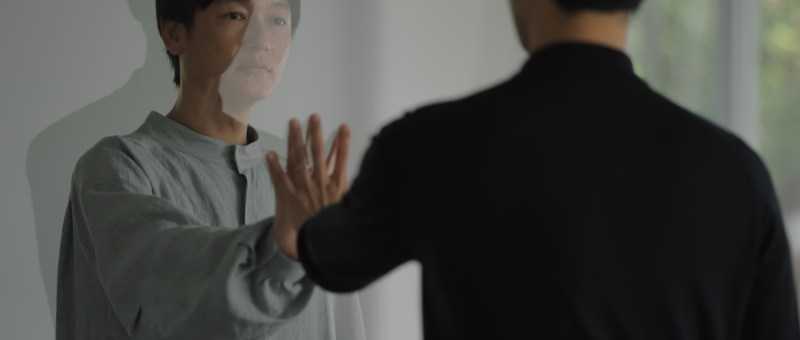
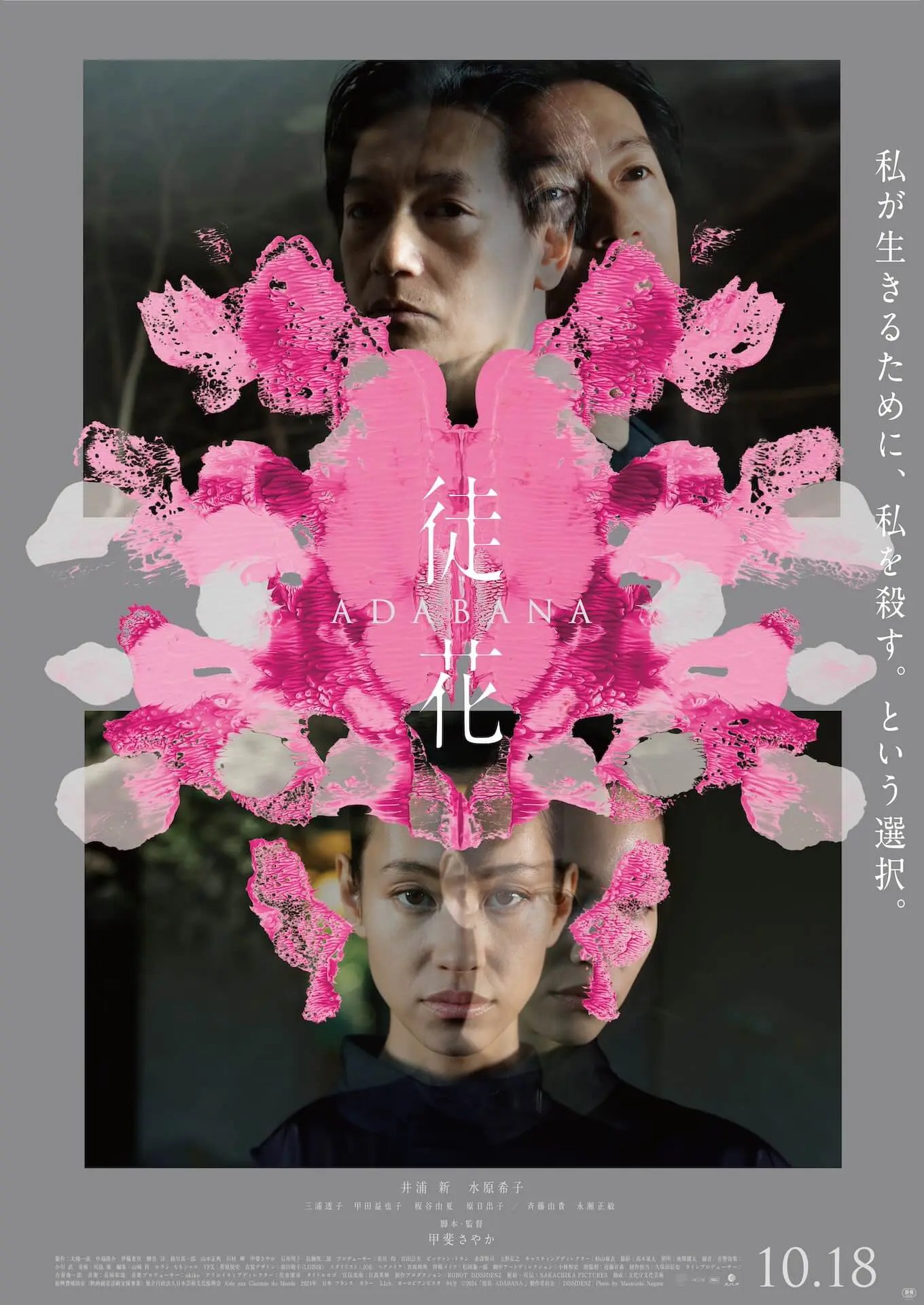
Brand New Landscape (見はらし世代, Yuiga Danzuka, 2025)

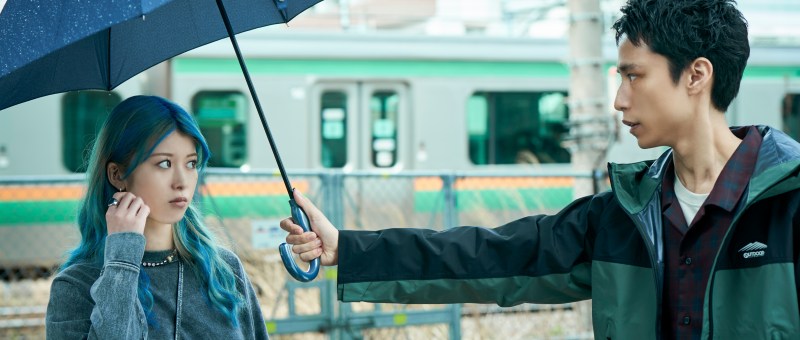
Do we inhabit spaces, or do the spaces inhabit us? Yuiga Danzuka’s autobiographically inspired Brand New Landscape (見はらし世代, Miwarashi Sedai) situates itself in a haunted Tokyo which is forever remaking itself around its inhabitants like a constantly retreating cliff edge that leaves them all rootless and in search of a home that no longer exists. Some long for a return to the past and wander endlessly, while others defiantly refuse to look back and are content to let history eclipse itself in a journey towards an ineffable “new”.

These imprinted spaces come to represent the disintegration of a family torn apart by their shifting foundations. Ten years previously, Ren (Kodai Kurosaki) and Emi’s (Mai Kiryu) mother, Yumi (Haruka Igawa), took her own life during a family holiday after their father Hajime (Kenichi Endo) told her that, despite his promises, he would be returning to Tokyo to pursue a work opportunity. “It’s pointless to go back and forth like this,” he remarks with exasperation, making it clear that he’ll be going no matter what she says. Rather than simply being a workaholic, Hajime is a deeply selfish person who doesn’t much care how other people are affected by the decisions that he makes. He wants this opportunity to prove himself and acts out of a mixture of vanity and a desire for external validation through professional acclaim rather than the love of his family. He claims he’s doing this for them, that the opportunity will provide additional financial security and a better quality of life for his children, but Yumi replies that they don’t need any more money. All she wanted was family time, albeit within this artificial domestic space of a rented holiday villa by the sea.

Three years after their mother’s death, Hajime left the children to chase opportunities abroad and they haven’t seen him in years. Younger son Ren is now working as a floral delivery driver for a company selling expensive moth orchids. It’s on a job that he first learns that Hajime has returned and is holding an exbitiion of his work that includes the controversial Miyashita Park redevelopment project designed to fuse the natural space of the park with a commercial centre the exhibition’s copy describes as a symbol of the “new” Tokyo. It also, however, required the displacement of a number of unhoused people who were living in the park in order to provide space for upscale outlets such as Louis Vuitton and Gucci. When Hajime accepts the opportunity to work on another such project, a young woman on his team voices her concern. She asks him where these unhoused people are supposed to go, but Hajime says it’s not his problem. It’s for the authorities to decide. She asks him if he’s considered the effect taking on such a large project will have on their team when the company is already working beyond its limit, but he gives her all the same excuses he gave Yumi that make it clear he’s not interested in the needs and well-being of his employees just as he wasn’t interested in those of his family. “It’s pointless going back and forth,” he tells her while trying to sound sympathetic but really emphasising that his decision is made and nothing she could say would sway him from his course.

Maybe, to that extent, oldest daughter Emi is much the same in that she’s decided she doesn’t want to see her father and resents Ren’s attempts to force her into doing so. She’s about to move in with her boyfriend and looking ahead towards marriage, but also prone to “low energy” days like her mother and anxious in her relationships, fearful that like that of her parents’ they can only end in failure. Ren, meanwhile, struggles with authority figures like his ridiculous boss who tries to assert dominance by giving him a public telling off about the non-standard colour of his hip pack, and then yells at him that he’s fired only to chase him out of the building throwing punches when Ren calmly replies that shouting only makes him look silly. In the midst of the drama, another young woman states her own intention to quit, politely bowing to everyone except one particular man before walking out the other door towards freedom as if to remind us that there are countlessly other stories going on in this city at the same time.

There’s a moment when Ren is delivery the orchids that he just stands there holding them, like he doesn’t know where to go or what to do. He’s lost within this space and is unable to find his way back within a Tokyo that’s always changing. In an attempt to find some sort of resolution, he drives Emi back to the service station where they had their final meal as a family, only their mother’s chair remains painfully empty. A perpetually falling ceiling light hints at the unreliability of these spaces. It isn’t and can’t ever be the same place it was before and has taken on new meanings for all concerned. Ren stares up at the Miyashita Park development as if caught between admiring his father’s achievement, wondering if it was worth it, and mourning the loss of everything it eclipsed in building over the past with a “new” that will quickly become the “old” and then be rebuilt and replaced. Nevertheless, he has perhaps begun a process of moving on even if for him moving forward lies in looking back.


Brand New Landscape screens as part of this year’s San Diego Asian Film Festival.

Original trailer (no subtitles)