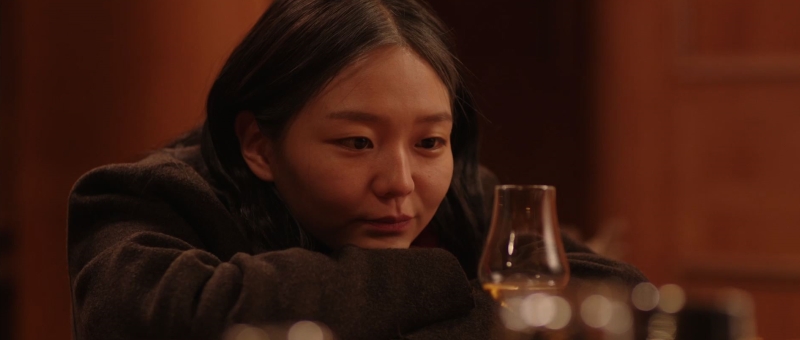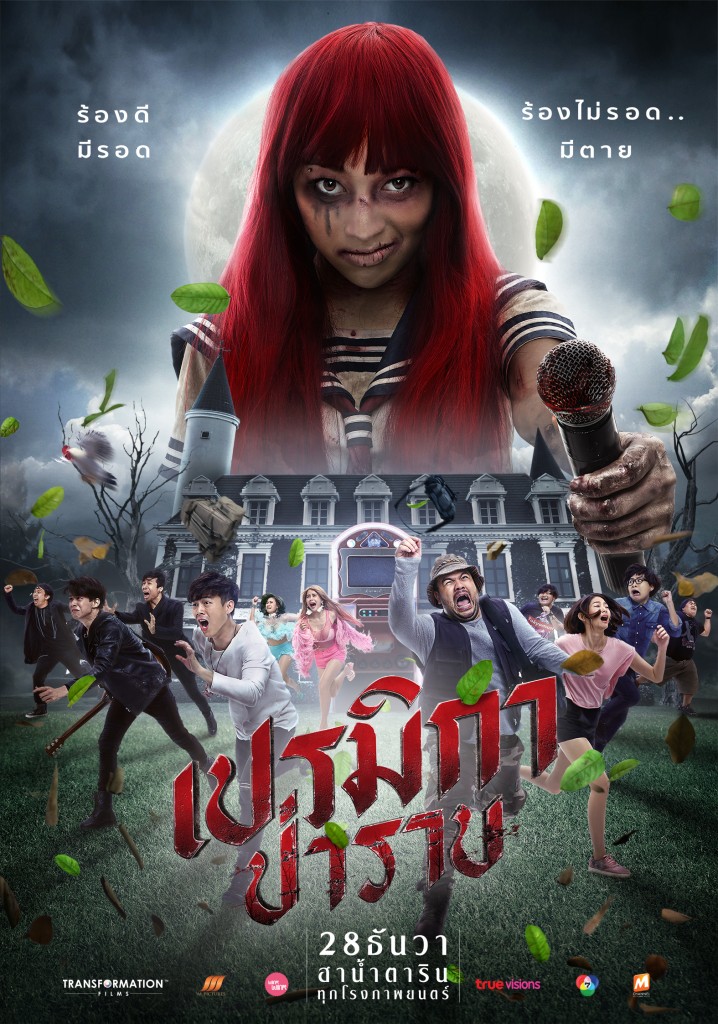

Sekigahara (関ヶ原, Masato Harada, 2017)

Sekigahara posterWhen considering a before and an after, you’d be hard pressed to find a moment as perfectly situated as the Battle of Sekigahara (関ヶ原). Taking place on 21st October 1600 (by the Western calendar), Sekigahara came at the end of a long and drawn out process of consolidation and finally ended the Sengoku (or “warring states”) era, paving the way for the modern concept of “Japan” as a distinct and unified nation. In actuality there were three unifiers of Japan – the first being Oda Nobunaga who brought much of Japan under his control before being betrayed by one of his own retainers. The second, Toyotomi Hideyoshi, continued Oda’s work and died a peaceful death leaving a son too young behind him which created a power vacuum and paved the way for our third and final creator of the modern Japanese state – Tokugawa Ieyasu whose dynasty would last 260 years encompassing the lengthy period of isolation that was finally ended by the tall black ships and some gunboat diplomacy.

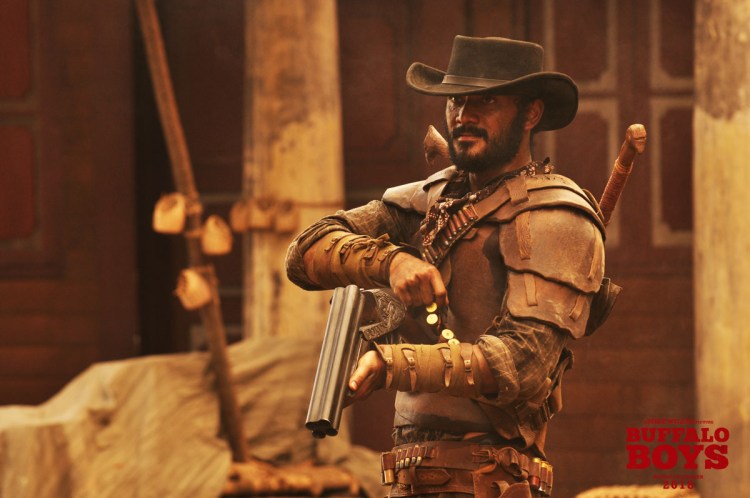
Loosely, we begin our tale towards the end of the rule of Toyotomi Hideyoshi (Kenichi Takito) though, in a nod to the novel, director Masato Harada includes a temporal framing sequence in which our author depicts himself as a boy during another war sitting in these same halls and hearing stories of heroes past. As well he might given where he was sitting, the narrator reframes his tale – our hero is not the eventual victor, Tokugawa Ieyasu, but a noble hearted retainer of the Toyotomi, Mitsunari (Junichi Okada).

Riding into battle, Mitsunari reminds his men that this is a war of “justice and injustice” – they cannot lose. Yet lose they do. The narrator recounts Mitsunari’s improbable rise as an orphan taken in by Hideyoshi on a whim who nevertheless became one of the most powerful men in late 16th century Japan. Despite his loyalty to his master, Mitsunari cannot abide the cruelty of the samurai world or its various modes of oppression both in terms of social class and even in terms of gender. He resents the subversion of samurai ethics to facilitate “politics” and longs to restore honour, justice, and fairness to a world ruled by chaos. Rather than the bloody uncertainty and self-centred politicking that define his era, Mitsunari hopes to enshrine these values as the guiding principles of his nation.

On the other hand, his opponent, Tokugawa Ieyasu (Koji Yakusho) is famed for his intelligence and particularly for his political skill. Hoping to swoop into the spot vacated by Hideyoshi which his young son Hideyori is too weak to occupy, Ieyasu has been playing a long game of winning alliances and disrupting those other candidates had assumed they had secured. Unlike Mitsunari, Ieyasu is ruthless and prepared to sacrifice all to win his hand, caring little for honour or justice or true human feeling.

The framing sequence now seems a little more pointed. Sekigahara becomes a turning point not just of political but ideological consolidation in which Mitsunari’s ideas of just rule and compassionate fair mindedness creating order from chaos are relegated to the romantic past while self interest triumphs in the rule of soulless politickers which, it seems, travels on through the ages to find its zenith in the age of militarism. Mitsunari is the last good man, prepared to die for his ideals but equally prepared to live for them. His tragedy is romantic in the grander sense but also in the more obvious one in that his innate honour code will not let him act on the love he feels for a poor girl displaced from Iga whose ninja service becomes invaluable to his plan. With a wife and children to consider, he would not commit the “injustice” of creating a concubine but dreams of one day, after all this is over, resigning his name and position and travelling to foreign lands with the woman he loves at his side.

Working on a scale unseen since the age of Kurosawa, Harada patiently lays the groundwork before condensing the six hours of battle to forty minutes of fury. The contrast between the purity of the past and the muddied future is once again thrown into stark relief in the vastly different strategies of Ieyasu and Mitsunari with Ieyasu’s troops armed to the teeth with modernity – they fire muskets and shout cannon commands in Portuguese while Mitsunari’s veteran warriors attempt to face them with only their pikes and wooden shields. Unable to adapt to “modern” warfare and trusting too deeply in the loyalty of his comrades, Mitsunari’s final blow comes not by will but by chance as a young and inexperienced vassal vacillates until his men make his decision for him, betraying an alliance he may have wished (in his heart) to maintain. Goodness dies a bloody death, but there is peace at last even if it comes at a price. That price, for some at least, may have been too great.


Original trailer (no subtitles)

Of Love & Law (愛と法, Hikaru Toda, 2017)

of love and law posterIn Japan the nail which sticks out is hammered down. Conformist societies promise mutual support, but all too often only when it suits the collective – those not deemed part of the club are wilfully left to fend for themselves with the dangled promise of readmission if one promises to reform and abide by the rules. We first met the couple at the centre of Hikaru Toda’s Of Love & Law in her previous documentary, Love Hotel, which documented their struggles with discrimination in frequently being turned away by establishments who did not wish to rent a room to two men. A same sex married couple in Japan’s second city of Osaka, Kazu and Fumi run their own law firm and operate under the mission statement of representing those who often find themselves without a voice in a culture which favours silence.

Opening at a local Pride event, the camera attempts to capture some talking heads but no one will bite. Asked for comments, the visitors each refuse to show their faces, revealing that they aren’t fully out, fearing that it might cause problems for them at work, or just embarrassed to go on the record about something so taboo. Though the law practice is not limited to representing LGBT issues, they are clearly a key concern to Fumi and Kazu who spend their “free” time engaging in outreach projects trying to foster a little more education and understanding of sexual minorities. Kazu brings this home when he tells his own coming out story in which his stunned mother exclaimed that she’d never heard of anything like this and therefore could not understand it. The problem wasn’t prejudice, it was ignorance mixed with fear.

Ignorance mixed with fear could equally well describe most of the cases brought against Kazu and Fumi’s clients. The protagonist of the second strand – artist and mangaka Rokudenashiko whose legal troubles even made the foreign press, attributes many of these issues to an inability to “read the air” or aquedately understand the unspoken rules of society and then silently abide by them. The law firm makes a point of defending those who have chosen to fly in the face of social convention, flying a flag for the freedom of choice in a society which often deliberately suppresses it.

The freedom of choice is certainly a key issue for the teacher suing the Osakan school that fired her for refusing to stand for the national anthem. Arguing that standing when one is forced to stand is hardly a declaration of patriotism and fearing the lurch to the right which has made even implicit indifference to the Imperial family a hot button issue, the teacher puts her foot down but finds that few will listen. Similarly, Rokudenashiko finds herself arrested for obscenity regarding her vagina themed artwork while the court undermines its own argument by accidentally proving that her work has socio-political merit.

Yet Rokudenashiko and the teacher have each, in a sense, made a firm decision to challenge the intransigence of their society, hoping to prevent a further decline even if not overly hopeful of improvement. Other clients on the roster include a fair few who are accidentally undocumented through no fault of their own thanks to Japan’s arcane and idiosyncratic legal system which makes it difficult to register births of children born out of wedlock or in difficult family circumstances meaning that youngsters sometimes grow up without the proper papers leading to problems with accessing education, employment, healthcare and welfare provisions. Getting someone a birth certificate who doesn’t currently “exist” can prove a taxing ordeal, especially as government officials often regard children born to “immoral” women as “unworthy” of care or attention.

Getting a call from the mother of a victim, Fumi is shocked when she makes a point of enquiring about the nationality of the perpetrator. He is unsurprised but disappointed in witnessing the various ways one oppressed person (both the victim and plaintiff are from impoverished, single parent backgrounds) can turn their oppression back on others as an odd kind of social revenge. Luckily, however, there are good people everywhere such as the fine young man Fumi and Kazu end up temporarily fostering after his care home is unexpectedly closed down. Kazuma accepts their relationship without a second thought, enjoys learning to cook from Fumi and blends right into Kazu’s extended family who each seem as warm and accepting as the couple themselves. Family is not about a register, it’s having a place to go where they’ll always take you in. Fumi doesn’t trust society because society shirks its responsibilities, but thankfully there are those who know better and continue on in hope tempered with patience.


Screened at BFI Flare 2018.

Korean Film Nights 2018: Korean Novels On Screen

Kim Ki-young earth posterAfter a brief pause, the Korean Cultural Centre London is set to resume its series of free film screenings with a brand new strand celebrating literary adaptations. Running from March to June, Korean Film Nights 2018: Korean Novels on Screen will showcase a diverse selection of films inspired by books from the “literary films” of the golden age to the recent hits of today.

29th March – Earth 

Earth-02Housemaid director Kim Ki-young adapts Yi Kwang-su’s 1932 novel of resistance in which a poor boy studies law in Seoul and marries the daughter of the landowner he once served only to decide to return and help his home village suffering under Japanese oppression.

Also screening at Deptford Cinema, 16th April, 7pm.

12th April – The Descendants of Cain

Descendants of Cain poster 2

Yu Hyun-mok (Aimless Bullet) adapts Hwang Sun-won’s autobiographical anti-communist novel in which a struggle over the means of production plays out against an impossible love story between the estranged wife of a communist agitator and the noble hearted founder of the school the communists have commandeered as their base.

26th April – White Badge

White Badge still 1Directed by Chung Ji-young, White Badge adapts Anh Junghyo’s autobiographical Vietnam novel in which a traumatised writer (played by Ahn Sung-ki) is forced to address his wartime past when an old comrade comes back into his life.

10th May – A Petal

a petal horizontalAdapting the novel by Choe Yun, Jang Sun-woo examines the legacy of the Gwangju Massacre through the story of a little girl who refuses to leave the side of a vulgar and violent man no matter how poorly he treats her.

Also screening at Deptford Cinema, 22nd May, 7pm.

24th May – The Old Garden

the old garden still 1Adapted from a novel by writer and activist Hwang Sok-young, Im Sang-soo’s The Old Garden follows an activist released from prison after 17 years who cannot forget the memory of a woman who helped him when he was a fugitive in the mountains.

7th June – The Unfair

The unfair horizontalThe debut feature from Kim Sung-je, the Unfair is an adaptation of Son Aram’s courtroom thriller which draws inspiration from the Yongsan Tragedy in which residents protesting redevelopment were forcibly evicted and several lives were lost including one of a police officer.

Also screening at Deptford Cinema, 19th June, 7pm.

28th June – My Brilliant Life + Q&A with author Kim Ae-ran

my brilliant life still 1An adaptation of the novel by Kim Ae-ran who will also be present for a Q&A, E J-yong’s My Brilliant Life stars Gang Dong-won and Song Hye-kyo as teenage parents raising a son who turns out to have a rare genetic condition which causes rapid ageing.

All of the screenings take place at the Korean Cultural Centre at 7pm and are free to attend but must be booked in advance via the links above. You can keep up to date with all the latest screening news via the Korean Cultural Centre and London Korean Film Festival websites and be sure to follow the festival on Twitter, Facebook, FlickrInstagram and YouTube channels for the most up to date information.

Tickets are also now on sale for the first of the 2018 Teaser Screenings for the upcoming London Korean Film Festival – Be With You which takes place at Picturehouse Central on 25th April at 9pm.

The Third Murder (三度目の殺人, Hirokazu Koreeda, 2017)

Third Murder posterJapanese cinema has often put the justice and legal system on trial and found it wanting. From Yoji Yamada’s Flag in the Mist in which a “selfish” lawyer contributes to the death of an innocent man, to Yoshitaro Nomura’s spiralling, feverish The Incident, Yoshimitsu Morita’s Kafka-esque Keiho, Gen Takahashi’s pointed Court of Zeus, and Masayuki Suo’s comparatively more straightforward I Just Didn’t Do It, the entire justice system takes on an almost spiritual quality of absurdity, tormenting the accused for the sake of a pantomime of justice, little caring for his or her guilt or innocence and intent only on propping up its own sense of absolute authority.

Like Yoji Yamada in Flag in the Mist, The Third Murder (三度目の殺人, Sandome no Satsujin) finds director Hirokazu Koreeda in unfamiliar territory though, at heart, it all comes back to family. A top lawyer, Shigemori (Masaharu Fukuyama), currently in the middle of a divorce, is asked to represent a man who has freely confessed to murder. As the son of the original judge who sentenced the accused, Misumi (Koji Yakusho), to the 30 year sentence he had not long been released from before (allegedly) committing the crime, Shigemori feels a responsibility to act but is frustrated by his client’s constantly shifting story. Nothing he says adds up, and every new angle Shigemori uncovers provokes only more doubt as to the true nature of the case at hand.

Shigemori, somewhat condescendingly, criticises the junior lawyer in the office for his naivety in wanting to to investigate the crime. Understanding and empathy are “unnecessary” in defending a client. The business of a lawyer, on either side, is to assess the evidence at hand, create an argument that withstands scrutiny, and eventually triumph in debating one’s opponent. In the face of the law, the “truth” is an irrelevance.

Shigemori’s cynicism is however rocked by the eerie presence of Misumi who seems to carry with him a kind of deepening emptiness. Misumi has already served 30 years in prison for the murder of two loansharks, the theft of their money, and an act of arson committed on their property to disguise the crime. Shigemori’s father, now a much older man, laments his youthful naivety in handing down a compassionate judgement which took into account the mitigating circumstances – Misumi’s troubled childhood, his poverty, the dire economic situation in which the closure of the local mines had led to mass unemployment and provided fertile ground for unscrupulous money lenders, and a series of personal tragedies which may have unbalanced his mind, but now he thinks some people are just bad and Misumi’s third murder is, in a sense, also his responsibility in allowing him the freedom to commit it.

Yet, there is also a doubt that Misumi’s first crimes are even his. We are told that, like the current case, Misumi couldn’t stick to one story – a common phenomenon with those who confess under duress, saying yes to everything in order to make the questioning stop but later forgetting what exactly they confessed to. Misumi later says he confessed only because he was told that confessing was the only way to avoid the death penalty which, ironically enough, is what he now faces. He also claims he was intimidated by the (admittedly stern) prosecutors, and when it looks as if a new trial may be necessary, the judge opts for the most “judicially economical” solution to incorporate the new demands into the current trial for reasons which the lawyers attribute to his personal need to get the case off his docket in good time so as not to muddy his own reputation. Japan’s 99% conviction rate is less an endorsement of judicial efficiency than a worrying indictment of the legal process in which trials are mere formalities held for show, a pantomime intended to reinforce an idea of “justice” which does not quite exist.

The weight of justice itself is called into question. We learn that the victim was guilty of several crimes, some of them more forgivable than others. Yet is his death “justice” or “murder”, was he “killed” or was the act one of “salvation” for his victims? There are no easy answers and the uncomfortable fact remains that one kind of justice may not necessarily be any different from another. Misumi remains a cypher, his motives for committing the crime(s) (if he even did commit them at all) unclear yet there is also something in him that suggests he is merely a reflection of ourselves, a projection of our own primal need to see justice done that our civil selves have tried and failed to codify into a universally recognised system of fairness known as law. Then again perhaps all we really want is a story we can understand and empathise with, perhaps we don’t want justice at all – we want narrative, a strategy for defence against the cruel and arbitrary charges of an unforgiving world. Shigemori stands at a crossroads, cleansed of his cynicism but unsure what to replace it with, as, perhaps, as we.


Currently on limited release in UK cinemas courtesy of Arrow Academy.

International trailer (English subtitles)

Have a Nice Day (大世界 / 好极了, Liu Jian, 2017)

Have a Nice Day poster 1Even when everything is pointless, still you have to try to live. “Spring is spring”, as the opening quote by Leo Tolstoy proclaims and so there is life even among the ruins which, in this case, exist in the mysterious “development zone” somewhere in the modern China. This backstreet noir takes place in a world of near apocalyptic dilapidation though the effect is more one of incompleteness than destruction, as if an over excited city planner had randomly started projects one after another but suddenly tired of each of them. Jack Ma may have affirmed that everyone has a dream in his heart, but the dreams here are small and mostly unattainable, locked into a claustrophobic atmosphere of inescapable despair.

Xiao Zhang (Zhu Changlong), a lowly construction driver, decides to seize his chance of happiness with both hands in lifting a vast sum of cash which belongs to mob boss Uncle Liu (Yang Siming). Uncle Liu, however, is busy torturing his childhood friend for supposedly sleeping with his wife. He sends his best guy, enigmatic hitman Skinny (Ma Xiaofeng), after Zhang but before Skinny can get to him, Xiao Zhang is is picked up by “inventor” Yellow Eyes (Cao Kou) whose X-ray specs have spotted the money and decided it’s too good an opportunity to miss. He takes off with his kind-of-girlfriend (Zheng Yi) who is also the sister-in-law of a guy who works with petty gangster Lao Zhao (Cao Kai) who is the guy Xiao Zhang took the money from in the first place. Meanwhile, the mother of Xiao Zhang’s girlfriend has asked her niece, Ann Ann (Zhu Hong), to have a look into what’s going on with Xiao Zhang because he’s been sending some very suspicious messages.

Everything here is in transit. Hitman Skinny is fond of telling people that he’s “just passing through” but so is everyone else, there is nothing here to stop for, except that it’s impossible to escape. All the significant places are also points of transit or hope for connection – the “Integrity” internet cafe, a “business” hotel, a road which leads nowhere through a landscape permanently “under construction”. Everything is half formed or falling down, the world is indistinct as if it hasn’t discovered its own identity and has tried to cobble something together from the back streets of other cities glanced in violent movies from somewhere far away.

Xiao Zhang, (almost) our hero, is almost the same – he tells Skinny that his dream was to be a man like him rather than the spineless coward he feels himself to be because guys like him always seem so cool in the movies. Doubtless Skinny doesn’t seem so “cool” with his foot on Xiao Zhang’s chest, but Xiao Zhang’s need is as much about escape as it is a matter of practicality. Though the practicality is ironic enough – he wants the money to pay for more plastic surgery for his fiancée whose face has apparently been ruined by a botched operation. Xiao Zhang hopes they can escape to South Korea, world capital of cosmetic procedures, where they can repair what the modern China has destroyed.

It isn’t difficult to see why Have a Nice Day (大世界, Dàshìjiè, previously titled 好极了, Hǎojíle) rubbed the censors the wrong way. Liu’s vision of the China of today is a lawless wasteland in which despair and inertia reign while those of the post ‘80s generation flail wildly in the wind, drinking in overseas culture from Hong Kong and the West and wanting more than their society can give them. In a running joke everyone has a startup idea they’re sure will be the next big thing but when it comes right down to it, even with the money they’ve no idea what they’re doing. Two boys chatting idly about the future find only futility with one lamenting that if he wanted to make it he’d have gone to England to study, only for the other to ask what the point would be now the UK has left Europe. He has a radical startup idea of his own – a restaurant! After all, people will always need to eat. You have to admire his practicality, even if bemoaning his lack of imagination.

Meanwhile, the cousin of Xiao Zhang’s fiancée and her boyfriend, having figured out that Xiao Zhang really does have the money and intending to take it from him, fantasise about finding their own “Shangri-La”. Breaking into a lengthy karaoke-style video sequence, Liu paints a jagged picture of Ann Ann’s visual ideology which quickly descends into a mish-mash of Mao-era socialist propaganda posters and their collections of cheerful country women enthusiastically driving tractors and juggling sheep while posing in traditional Chinese dress with children in neckerchiefs reading improving literature. Everything is for sale, even apparently the innocence of the past. A friend of Lao Zhao’s expounding on the nature of freedom describes it as a three tiered system – the farmer’s market, supermarket, and online, your degree of personal autonomy and happiness reduced to a question of how the place you buy your groceries informs your sense of self worth.

Rampant capitalism has led to moral as well as physical decay as the half-finished buildings collapse under the weight of national hubris, a weathered statue standing in for a real life policeman as the hollow representation of the authority of an absent regime. Animated with an oddly naturalistic minimalism and filled with whimsical absurdity, Have a Nice Day serves as a condemnation of the last 30 years of Chinese history but it does so with a wistful irony. After all, it’s not as if things are much better anywhere else.


Have a Nice Day is released in UK Cinemas on 23rd March courtesy of Mubi. Check the official website to find out where it’s screening near you.

International trailer (English subtitles)

Aperture: Asia & Pacific Film Festival Launches 2018 UK Tour

in time to come still 2Following its announcement last October, Aperture: Asia & Pacific Film Festival – a brand new UK festival dedicated to Asian cinemas, is set to launch its inaugural screening series with three events at Glasgow’s Centre for Contemporary Arts in late March.

In Time To Come 

25th March, 1pm

in time to come still 1Tan Pin Pin’s Singaporean documentary unearths a time capsule of national history through videographic recordings to probe the connections between time and memory.

The Island Funeral

29th March, 6pm

Island Funeral posterLaila, a Muslim in predominantly Buddhist Bangkok, travels south along with her brother Zugood and friend Toy just as political turmoil engulfs the city. Yet being from the city they are each mostly ignorant of the ongoing political strife which has plagued the southern regions for quite some time. Meeting a conflicted soldier who also feels like an outsider being from the North the four continue on their journey through a strange landscape.

People Power Bombshell: The Diary Of Vietnam Rose

31st March, 1pm

People Power Bombshell- The Diary of Vietnam RoseJohn Torres repurposes footage from an uncompleted film by Celso Advento Castillo to lay bare the various oppressions of the Marcos regime at the time of the People Power Revolution through the story of Liz Alindogan whose dreams of becoming an actress were frustrated by the world in which she lived.

All three screenings take place at Glasgow’s Centre for Contemporary Arts and tickets are already available via the links above. Further details are available on the official website and you can keep up with all the latest news via the festival’s Facebook Page and Twitter account.

Aperture: Asia & Pacific Film Festival will tour across the UK throughout the spring and summer of 2018.

Anarchist from Colony Opens Osaka Asian Film Festival 2018

osaka poster largeThe Osaka Asian Film Festival returns for 2018 bringing the best in independent Japanese and East Asian cinema to Japan’s second city. As usual the festival has brought together some of the most anticipated recent features from veteran filmmakers and first timers from across the region opening with Lee Joon-ik’s tale of colonial rebellion and closing with Japanese indie THE NAME.

Japan

Name still 1

  • THE NAME – bankrupt businessman Masao discovers a new side to himself after encountering mysterious high school girl Emiko. Closing Night Gala.
  • Bad Poetry Tokyo – 30-year-old Jun is an aspiring actress working as a hostess while waiting to fulfil the dreams she fears have already eluded her.
  • Passage of Life – A young Burmese family try to make a life for themselves in Japan whilst remaining undocumented.
  • Woozoo be Alright? – A Korean businessman gets sent to Osaka after his boss is lost in a shipwreck but ends up quitting his job to learn guitar from a Japanese girl.
  • The Garden Apartment – Hikari and Taro are a young unmarried couple expecting a baby but financially insecure. Taro has been relying on an eccentric aunt for financial support but when Hikari is introduced to her she finds herself entering a whole new world.
  • KUSHINA, what will you be – Kushina has lived in a woman only village deep in the forest all her life but her world is turned upside down when a wandering anthropologist discovers the village’s existence.
  • The Path Leading to Love – alcoholic Shosuke ruins professional and personal possibilities through fear and insecurity but is forced to confront himself on discovering his mother is seriously ill.
  • The Sower – Mitsuo returns to his family after being institutionalised for mental breakdown caused by the strain of helping those caught up in the 2011 earthquake and tsunami but a family tragedy soon provides another wave of emotional turbulence. Review.
  • Still Life of Memories – In the latest from Hitoshi Yazaki, a photographer gets an unusual request to photograph the intimate areas of a female subject placing a strain on his romantic relationship.
  • TOURISM – Daisuke Miyazaki’s Yamato (California) followup takes two Yamato girls to Singapore only to discover that even abroad they can’t leave Yamato behind.
  • My Country My Home – Nan was born and raised in Japan but her dad is from Myanmar. When she finds out he intends to return and take her with him she finds out a little about her father’s history and her Burmese heritage.

Korea

anarchist fom Colony still 1

  • Anarchist from Colony – Lee Jook-ik tells the story of Korean anarchist Park Yeol and his Japanese wife who find themselves caught up in the anti-Korean hysteria in the aftermath of the 1923 Kanto earthquake. ReviewOpening Night Gala.
  • Daddy You, Daughter Me – Father/daughter bodyswap comedy inspired by Japanese novel Papa to Musume no Nanokakan.
  • Bitch on the Beach – Hong Sang-soo-esque cineliterate comedy from actor/director Jeong Ga-yeong. Review.

China

better tomorrow horizontal

  • A Better Tomorrow 2018 – Ding Sheng’s remake of the ’80s John Woo classic in which two brothers find themselves on opposite sides of the law.

Hong Kong

love off the cuff still 1

  • In Your Dreams – 16-year-old Heng saves a woman from drowning in a swimming pool and becomes captivated by her loneliness.
  • No. 1 Chung Ying Street – drama contrasting 1967 pro-China demonstrations against the British Government, and the Umbrella democratisation movement in present day Hong Kong.
  • The Empty Hands – comedy from Chapman To in which a half-Japanese Hong Kong woman’s dreams of freedom from her father’s martial arts legacy are dashed when he leaves 51% of his dojo to another pupil who challenges her to a match for the right to win his controlling share.
  • Love Off the Cuff – Jimmy and Cherie return for the third in Pang’s charming series of romantic comedies. Review.
  • Made in Hong Kong – 4K restoration of Fruit Chan’s seminal tale of handover youth. Review.
  • Somewhere Beyond the Mist – first narrative feature from documentarian Cheung King Wai in which a pregnant cop caring for a father with Alzheimer’s is charged with investigating the deaths of an elderly couple.

Taiwan

The Bold, the Corrupt and the Beautiful

  • The Bold, The Corrupt and the Beautiful – Madame Tang runs an antique shop in ’80s Taiwan which she uses as a front for her dodgy business dealings. Her daughter Ning reluctantly goes along with her scheming while granddaughter Chen watches in silence. When a neighbouring family is murdered, the trio begin to realise how precarious their situation really is.
  • Take Me To the Moon – timeslip comedy in which a young man attempts to save his friend from a life decision that will eventually lead to both their deaths.
  • A Dog’s Life – four stories of dogs!
  • The Island That All Flow By – Chia-Wen loses her tollbooth job to technology while her teenage son gets into trouble with the law. Truck driver Chih-Hao offers to help, but not for free.

Philippines

neomanila still 1

  • Mr. and Mrs. Cruz – two tourists are mistaken for a married couple and keep up the pretence while enjoying a beautiful holiday romance.
  • NEOMANILA – The latest from Mikhail Red is a tough tale of life on the streets of Duterte’s Manila.
  • PAKI (Please, Care) – 70-year-old Alejandra decides to leave her husband of 50 years while her family struggle to accept her decision.
  • Love You To The Stars And Back – Socially awkward Mika sets off on a journey to get abducted by aliens but ends up meeting Caloy who has lived a life of hardship but remains positive and agrees to help her in her quest.

Indonesia

pai kau

  • Posesif – Lala’s first love is derailed by a possessive boyfriend in this Indonesian drama.
  • Pai Kau – Lucy’s dream wedding is threatened when her fiancé’s ex shows up unexpectedly.

Thailand

die tomorrow still 1

  • Die Tomorrow – Nawapol Thamrongrattanarit follows six residents of Bangkok on their last day on Earth.

Vietnam

the tailor poster

  • The Tailor – a tale of dressmaking and family in ’60s Vietnam.

Sri Lanka

underpants their

  • Underpants Thief – Sam seeks help for his compulsion to touch ladies’ undies and is advised to marry but his brother doesn’t want him to because he wants to inherit their family mansion and redevelop it into a hotel. Sam’s sister-in-law, however, has a different, more radical solution…

Cambodia

poppy goes to hollywood

  • The Forest Whispers – a village suffering a curse prays to the forest deity whereupon a mysterious woman arrives but when people start dying they wonder if she is a saviour or executioner.
  • Poppy Goes to Hollywood Redux – homophobic street punk Mony takes refuge with his transgender sibling, a dancer in a gay club.

Malaysia

think big

  • Think Big Big – a larger lady finds internet fame after entering a slimming competition but begins to lose sight of who she really is.

The Osaka Asian Film Festival takes place from 9th – 18th March, 2018. You can find full details and screening information for all the films on the official website, and you can keep up with all the latest festival news via the official Facebook Page, Twitter account, YouTube and Instagram channels.

Operation Red Sea (红海行动, Dante Lam, 2018)

Operation Red Sea posterDante Lam, a Hong Kong action icon, is one of many to have begun looking North, tempted by the bigger budgets and audience potential of the Mainland. Following 2016’s Operation Mekong, Lam is back on manoeuvres with a second in what may develop into a series, Operation Red Sea (红海行动, Hónghǎi Xíngdòng). Red Sea is not connected to Mekong in terms of narrative and only features a cameo by the earlier film’s star, Zhang Hanyu, who remains firmly ensconced on the bridge of the all powerful Chinese warship while an elite troop of special forces handles the rapidly deteriorating situation on the ground, but it is once again “inspired” by a true story and perfectly positioned to show the Chinese security services in a more than favourable light.

The action begins in 2015 when the Chinese navy wades in to defend a merchant ship attacked by Somali pirates, managing to apprehend the “bad guys” with a minimum of bloodshed before they escape Chinese waters. Having suffered a casualty, the squad are then dispatched to rescue Chinese citizens caught up in an Middle Eastern coup. Their mission is helped and hindered by intrepid Chinese-French journalist, Xia Nan (Hai Qing), who has discovered evidence that a dodgy “businessman” caught up in the attack is in possession of a consignment of “yellowcake” along with a deadly dirty bomb formula which he plans to sell on to the terrorists currently waging war on the city.

Though Operation Red Sea is, perhaps, no more jingoistic than any British or American war film, its focus is more definitively centred on home concerns than an attempt to police the world. The Chinese military exists to defend Chinese citizens, even if those citizens are increasingly scattered throughout an unstable world. This presents a point of conflict between idealistic, and occasionally reckless, journalist Xia Nan whose mission is to stop the terrorists and rescue her friends, and the soldiers whose primary mission is to evacuate Chinese citizens though they hope to be able to provide assistance to citizens of other nations too if their mission parameters allow.

The Jiaolong, elite Chinese special forces, are indeed an impressive fighting force who proceed with military precision but are not without compassion. Informed by a local soldier that the terrorists often force civilians to become suicide bombers, the team’s bomb disposal officer puts himself at great risk to defuse a device and free a man destined to become a car bomb, rather than simply neutralising the threat. Protecting Chinese in peril is the official goal, but on a human level the soldiers are overcome with sorrow and anger for the local population, lamenting that they may have saved some lives but many have lost their homes and they will simply leave them behind to deal with the situation alone when they succeed in their mission of evacuating stranded Chinese diplomatic personnel.

Despite the overtly propagandistic elements which paint the Chinese military as a force for good, fighting bravely for their countrymen overseas, the landscape of war Lam paints is a hellish one full of blood, guts, and scattered body parts. Much of the film plays as a two hour recruiting video for the Chinese navy – it’s almost a surprise there aren’t people waiting with clipboards outside the theatre, but it’s difficult to believe anyone would be in a big hurry to sign up after witnessing the pure human carnage of a foreign battlefield and the very real threats the soldiers subject themselves to all while stoically pursuing their mission, committed to the protection of their nation and people.

Nevertheless Lam’s spectacle is impressive and action choreography unsurpassed. Working on a huge scale with everything from snipers to tank battles, Lam keeps the tension high as the team attempt to adapt to a situation which is rapidly deteriorating leaving them all but stranded behind enemy lines where each and every one of them faces a very real threat of death or serious injury. Despite an overuse of CGI slow motion bullet vision, Operation Red Sea largely earns its bombast with relentless fury, leaving its propaganda aims to dangle the background until the final coda which seeks to remind us that China rules the waves and will protect its citizens and territory wherever they may be.


Currently on limited release in UK cinemas courtesy of China Lion.

Original trailer (English subtitles)
The Mole Song: Undercover Agent Reiji (土竜の唄 潜入捜査官 REIJI, Takashi Miike, 2013)

mole song under cover agent reiji poserYakuza aren’t supposed to be funny, are they? According to one particular lover of Lepidoptera, that’s all they ever need to be. Scripted by Kankuro Kudo and adapted from the manga by Noboru Takahashi, Takashi Miike’s The Mole Song: Undercover Agent Reiji (土竜の唄 潜入捜査官 REIJI, Mogura no Uta: Sennyu Sosakan Reiji) is the classic bad spy comedy in which a hapless beat cop is dragged out of his police box and into the field as a yakuza mole in the (rather ambitious) hope of ridding Japan of drugs. As might be assumed, Reiji’s quest does not quite go to plan but then in another sense it goes better than anyone might have hoped.

Reiji Kikukawa (Toma Ikuta) is, to put it bluntly, not the finest recruit the Japanese police force has ever received. He does, however, have a strong sense of justice even if it doesn’t quite tally with that laid down in law though his methods of application are sometimes questionable. A self-confessed “pervert” (but not a “twisted” one) Reiji is currently in trouble for pulling his gun on a store owner who was extracting sexual favours from high school girls he caught shop lifting (the accused is a city counsellor who has pulled a few strings to ask for Reiji’s badge). Seizing this opportunity, Reiji’s boss (Mitsuru Fukikoshi) has decided that he’s a perfect fit for a spell undercover in a local gang they suspect of colluding with Russian mafia to smuggle large amounts of MDMA into Japan.

Reiji hates drugs, but not as much as his new best buddy “Crazy Papillon” (Shinichi Tsutsumi) who is obsessed with butterflies and insists everything that happens around him be “funny”. Reiji, an idiot, is very funny indeed and so he instantly gets himself a leg up in the yakuza world whilst forming an unexpectedly genuine bond with his new buddy who also really hates drugs and only agreed to join this gang because they promised him they didn’t have anything to with them.

Sliding into his regular manga mode, Miike adopts his Crows Zero aesthetic but re-ups the camp as Reiji gets fired up on justice and takes down rooms full of punks powered only by righteousness and his giant yakuza hairdo. Like most yakuza movies, the emphasis is on the bonds between men and it is indeed the strange connection between Reiji and Papillon which takes centerstage as Miike milks the melodrama for all it’s worth.

Scripted by Kankuro Kudo (who previously worked with the director on the Zebra Man series), Reiji skews towards a slightly different breed of absurdity from Miike’s patented brand but retains the outrageous production design including the big hair, garish outfits, and carefully considered colour scheme. Mixing amusing semi-animated sequences with over the top action and the frequent reoccurrence of the “Mole Song”, Miike is in full-on sugar rush mode, barely pausing before moving on from one ridiculous set piece to the next.

Ridiculous set pieces are however the highlight of the film from Reiji’s early series of initiation tests to his attempts to win the affections of his lady love, Junna (Riisa Naka), and a lengthy sojourn at a mysterious yakuza ceremony which Reiji manages to completely derail through a series of misunderstandings. At 130 minutes however, it’s all wearing a bit thin even with the plot machinations suddenly kicking into gear two thirds of the way through. Nevertheless, there’s enough silly slapstick comedy and impressive design work at play to keep things interesting even if Reiji’s eventual triumph is all but guaranteed.


Screened as part of the Japan Foundation Touring Film Programme 2018.

Screening again:

  • Queen’s Film Theatre – 21 February 2018
  • Phoenix Leicester – 24 February 2018
  • Brewery Arts Centre – 16 March 2018
  • Broadway – 20 March 2018
  • Midlands Arts Centre – 27 March 2018
  • Showroom Cinema – 28 March 2018

Original trailer (English subtitles)
After School (アフタースクール, Kenji Uchida, 2008)

after school posterKenji Uchida is well known for intricately constructed farces but he takes intrigue to new heights in After School (アフタースクール), allowing a mid-way twist to completely reverse everything you thought you knew. Yet at heart Uchida’s film is as uncynical as it’s possible to be even when our heroes find themselves embroiled in a large-scale conspiracy of corporate corruption, organised crime, and police machinations. What begins with a confession spirals outwards into a complicated web of deception and counter-deception proving it really is all connected, even if not quite in the way you first thought.

A salaryman, Kimura (Masato Sakai), enters a reverie staring at the pregnant woman (Takako Tokiwa) sitting opposite him over breakfast, flashing back to a breezy middle school day when she (presumably) nervously handed him a letter.  Kimura leaves for work and borrows the fancy Porche belonging to his high school teacher middle school friend, Jinno (Yo Oizumi), to go to a work meeting in Yokohama. While he’s away the woman goes into labour leaving Jinno to take care of everything but alarm bells start ringing when no one can reach Kimura the following morning. Meanwhile, Kimura has been seen with a mysterious woman at a hotel which seems to have right royally spooked his bosses who have hired a shady private detective, Kitazawa (Kuranosuke Sasaki), to track Kimura down. Kitazawa thinks his best bet is to start at Kimura’s old middle school – which is where he runs into Jinno who agrees to help look for his friend.

As might be assumed, all is not quite as it seems. Shady PI Kitazawa is in deep with the yakuza to whom he apparently has massive gambling debts. At a low ebb, he decides to ask his male assistant to run away with him to Sapporo (which he agrees to do) but this case just might be his salvation, especially once he works out that both ends are connected and he could technically double his pay out with a little strategic blackmail. Kitazawa is as cynical as they come. He thinks nothing of invading Kimura’s life and is fully prepared to make use of Jinno’s seeming innocence, claiming that naivety and pureheartedness make him sick. Later he attempts a pathetic act of petty revenge against Jinno for no real reason that could have ruined his entire life but instead ends up another cog in the grand wheel of Uchida’s finely crafted farce.

Kitazawa’s cynicism is eventually what leads to his downfall. His detective brain so wired for motives and gains is unable to process the idea that some actions are merely altruistic and offer no further reward than the pleasure of helping a friend. Jinno, at first a goofy school teacher with an improbably expensive car, soon becomes the film’s MVP and the only still point in a constantly turning world. Taken to task by Kitazawa for his continuing goodness, Jinno offers a perfectly schoolmasterly reply to the effect that there’s a snotty kid like him in every class, sneering away too cool for school and decrying everything as boring when really the problem isn’t school, it’s Kitazawa.

What eventually looked like a sordid affair turns into a beautiful romance as the truth is gradually revealed. The title refers not just to the setting of the initial flashback, but also to the entirety of adult life. Jinno’s innocence and goodness are belittled by Kitazawa who accuses him of being stuck in middle school with a childishly naive way of seeing the world. This is in a sense true, Jinno has never lost his childlike sense of justice and fair play, willing to go great lengths to help his friends even if it puts him in danger and forces him into some sticky situations which are not his natural milieu, but Jinno’s faith and loyalty are the qualities which eventually see him through and make possible the poignant, hopeful ending despite all that has gone before. Corrupt politicians preaching “family values” whilst associating themselves with dodgy corporations who are taking back handers from the yakuza, hidden policemen, shady PIs – there’s certainly a lot of darkness here but if anything is going to beat it, it’s sincerity and goodness rather than guile and cunning.


Screened as part of the Japan Foundation Touring Film Programme 2018.

Screening again:

  • Queen’s Film Theatre – 18 February 2018
  • Filmhouse – 6 March 2018
  • Showroom Cinema – 18 March 2018

Original trailer (no subtitles)