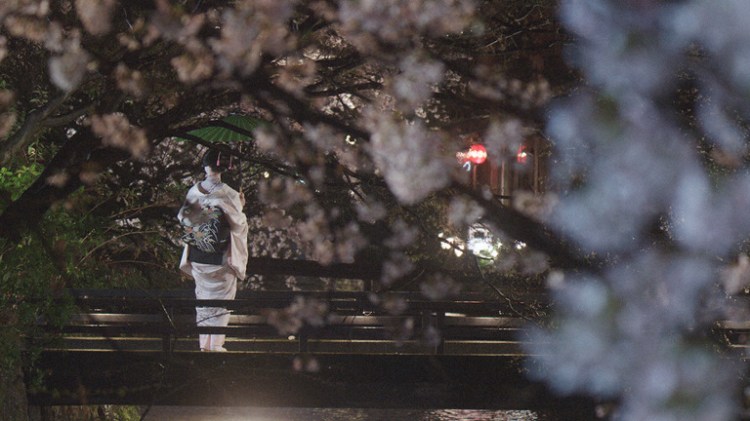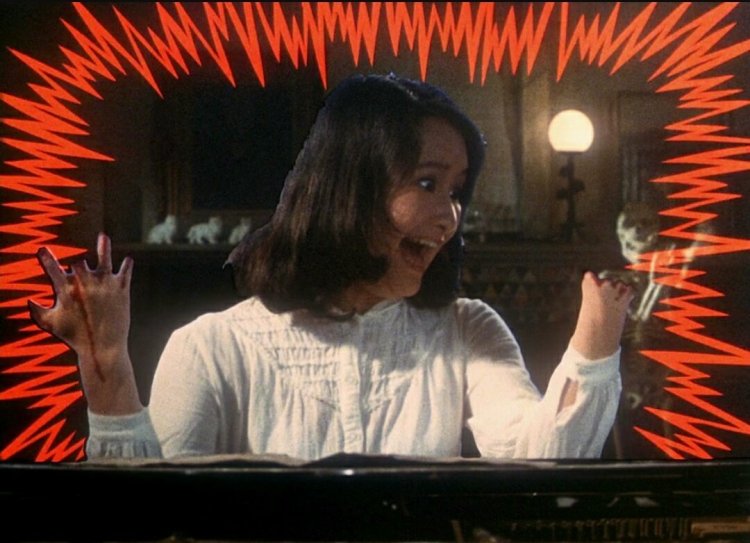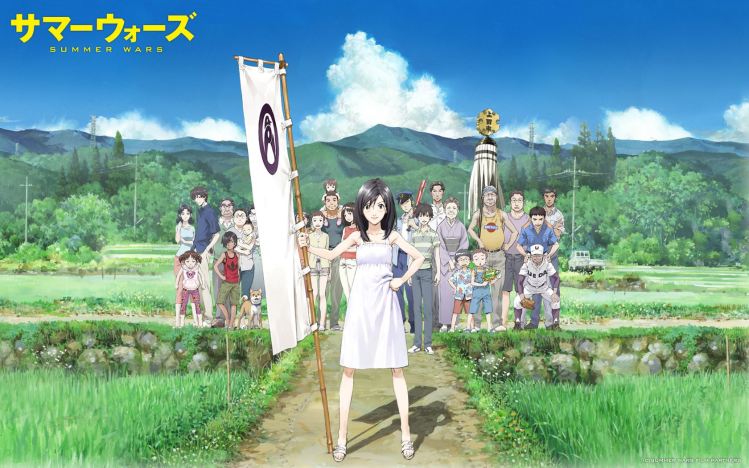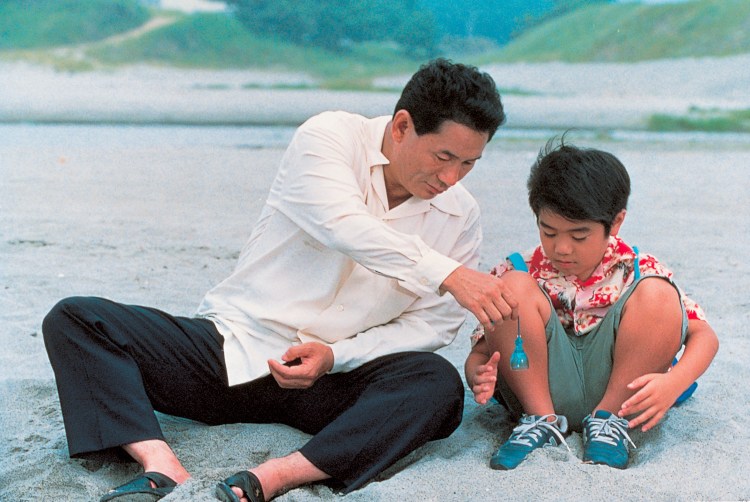
1987: When the Day Comes (1987, Jang Joon-hwan, 2017)

fullsizephoto931939The political history of Korea is long and complex and oftentimes sad. The events depicted in 1987: When the Day Comes (1987), pivotal as they were, occurred just 30 years ago. Yet the recent past has also been one marked by protest, public anger, and political scandal though this time around with far less fear or danger. The protests of 1987 were a different story. The rule of Chun Doo-hwan, a military dictator who had seized power following the assassination of the previous dictator, Park Chung-hee, was one of extreme oppression which had already seen a widespread massacre of peaceful protestors by the state in Gwangju in 1980. Chun’s term, under the constitution, was set at seven years after which many hoped for a path to modern democracy but those hopes were dashed when he announced an intention to appoint his successor rather than call a free and fair election.

In depicting the climactic events of that summer, Jang Joon-hwan begins with chaos as a doctor is summoned to a mysterious room where a young man lies unconscious in a pool of water. The police have gone too far, and boy has died during interrogation. Aware of the potential danger of the public finding out that the state has in effect murdered a suspect in an act of torture, the head of the ACIB, Park (Kim Yun-seok), orders the body to be quickly cremated. This, however, needs a certificate signed by a prosecutor and Prosecutor Choi (Ha Jung-woo) is fed up with the ACIB and unwilling to cooperate especially as he smells a rat with the cause of death for a healthy 22-year-old listed as a “heart attack”. Not wanting to be on the wrong side of it if it does get out, Choi refuses the cremation and orders an autopsy which in itself triggers a series of other events eventually bringing the government to its knees.

The state remains cruel and duplicitous. The death of Park Jong-chul (Yeo Jin-goo) would become a catalyst and a rallying call, not just for the injustice of it but for the injustice of covering it up. Park’s family are denied their basic rights, his mother and sister literally dragged away from the morgue screaming while his traumatised father looks on in silent agony. They say that Park was a communist, that he died of fear because he weak while claiming all along to have done no wrong. Only when the “truth” begins to emerge does the ACIB decide to hang a few of its guys out to dry, urging them to “patriotically” take one for the team and head to prison for a while with a hefty compensation package to help sweeten the deal.

The death in custody becomes just one event in a situation spiralling out of control. Paranoid in the extreme, the Chun regime is also working on bringing down a “North Korean Spy Network” controlled by a democracy activist on the run who, unbeknownst to them, is also working with the Catholic Church who will eventually prove pivotal in delivering the truth to the people. Meanwhile, the press has also decided to jump ship, ignoring the government’s carefully crafted guidelines in favour of running actual news. Chun’s iron grip is slipping.

Jang’s biggest takeaway is that corrupt regimes crumble when enough people find the strength to go on saying no. It begins with Choi refusing to stamp a certificate then travels to the reporter who won’t back down, passes on to the secret revolutionaries bravely carrying messages at great personal costs, the not so secret clergy who perhaps have more protection to speak their minds (up to a point) than most, and of course the students in the streets who risked their lives to build a better future. One of the few completely fictional characters, the niece (Kim Tae-ri) of a prison guard (Yu Hae-jin) charged with conveying messages to an activist in hiding, proves the most illuminating in her inward struggle towards the democratisation movement. Afraid of the consequences and preferring to remain politically apathetic, she is eventually radicalised through witnessing the brutality of the regime first hand and suffering personal loss because of it.

Playing out as a taut thriller, 1987: When the Day Comes has a lived in authenticity from the motif of being constantly deprived of one shoe by a cruel and absurd regime to the deadly serious ridiculousness of men like Park who hate “the enemy” enough to destroy the thing they claim to love in pursuit of it. Timely and filled with melancholy nostalgia, Jang’s depiction of the pivotal events of 30 years ago is also a rallying cry in itself and an important reminder that the fight for justice is never truly won.


Screened at the 20th Udine Far East Film Festival.

International trailer (English subtitles)

The 8-Year Engagement (8年越しの花嫁 奇跡の実話, Takahisa Zeze, 2017)

8-year bride posterRomantic melodrama has long been a staple of Japanese cinema which seems to revel in stories of impossible love. The short lived boom in “jun-ai” or “pure love” romances which blossomed at the beginning of the century may have petered out gracefully after plundering every terminal or debilitating illness for traces of heartbreaking tragedy, but the genre has never quite gone away and is unlikely ever to do so. Takahisa Zeze’s The 8-Year Engagement (8年越しの花嫁 奇跡の実話, 8-nengoshi no Hanayome: Kiseki no Jitsuwa) is, however, a slightly different case in that it is inspired by a true story which became something of a hot topic in the relatively recent past. Romantic in a grand, old fashioned sense, the film shifts away from the melodrama of misery while praising the power of perseverance and the enduring potency of true love in bringing about unexpected miracles.

In 2006, shy and retiring car mechanic Hisashi (Takeru Satoh) tries and fails to get out of a party his chatty colleague is arranging for that very evening. Sullen and resentful at having been roped into a social occasion he was not mentally prepared for, Hisashi says barely anything and then manages to free himself when the others decide to go for karaoke. Just as he’s walking off mildly regretful, one of the other partygoers, Mai (Tao Tsuchiya), comes back to harangue him about his “attitude”. Hisashi explains that he’s sorry but he’s not very good at this sort of thing anyway and the truth is he wanted to go home because he’s got a killer stomach ache which being forced to eat fatty meat and down sake out of politeness has done nothing to help. Mai approves of this excuse, and even loops back after leaving to meet the others at the karaoke to hand him a heat pack she had in her bag in the hope that it might help with the stomach trouble. The pair start dating, become wildly happy, and get engaged. Three months before the wedding, Mai is struck down by a rare illness and winds up in a coma.

The romance itself is tucked up neatly into the first half hour or so and mostly conforms to genre norms – he is shy and extremely sensitive, she is extroverted and extremely kind. The love story proceeds smoothly, though there are signs of trouble to come in Mai’s increasing clumsiness followed by headaches which lead to memory loss and finally a painful hallucinogenic episode resulting in prolonged hospitalisation. Zeze wisely scales back on medical detail and focuses on Hisashi’s devotion and unwavering belief that Mai will one day open her eyes and return to him. Rather than cancel the wedding date, Hisashi decides to keep it open in the hope that Mai will be well enough to attend before booking the same date, the date of their first meeting, in every subsequent year just in case she should wake up and regret missing out on her dream wedding.

As the condition is so rare, no one is sure what the prognosis will be though the doctors admit there is a strong possibility Mai may never awaken or that if she does there may well be extensive brain damage and irreparable memory loss in addition to life long medical needs. Hisashi puts his life on hold and comes to the hospital every day, making short video messages he sends to Mai’s phone so she can catch up on what she’s missed when she wakes up. His devotion does however begin to worry Mai’s doting parents (Hiroko Yakushimaru & Tetta Sugimoto) who eventually decide to explain to him that as he’s “not family” there’s no need for him to feel obliged to stick around. They do this not because they’re territorial over their daughter’s care, or that they don’t like Hisashi, they simply worry that he’s going to waste his life waiting for a woman who will never wake up. As he’s still young and has a chance to start again, they try to push him away in the harshest way possible – through cool politeness, but are secretly pleased when he refuses to be pushed.

People making other people’s decisions for them as a means of reducing their suffering becomes a recurrent theme. Rather than say what they mean, kindhearted people say the things which they believe are for the best and will end someone else’s suffering through a moment of intense pain. Everyone is so keen to spare everyone else’s feelings, that they perhaps suffer themselves when there is no need to. Hisashi’s supportive boss remembers a rather odd comment he made during his interview – after replying that he enjoyed fixing things when asked what made him apply for the job, Hisashi’s boss asked him what he thought about while he did it to which he replied “love”. Love does it seems fix everything, at least when coupled with undying devotion and a refusal give up even when things look grim. A romantic melodrama with a positive ending The 8-year Engagement is a happy tearjerker in which love really does conquer all despite seemingly unsurmountable odds.


Screened at the 20th Udine Far East Film Festival.

Original trailer (English subtitles)

Side Job (彼女の人生は間違いじゃない, Ryuichi Hiroki, 2017)

Side JOb posterFukushima has become a focal point for recent Japanese cinema, not just as a literal depiction of an area in crisis but as a symbol for various social concerns chief among them being a loss of faith in governmental responsibility. Side Job (彼女の人生は間違いじゃない, Kanojo no Jinsei wa Machigai ja Nai) has the distinction of being helmed by a Fukushima native in Ryuichi Hiroki who also wrote the original novel from which the film is adapted. Typical of Hiroki’s work, Side Job is less an ode to the power of perseverance than a powerful meditation on grief, inertia, and helplessness. Though he offers no easy answers and refuses to judge his protagonists for the ways they attempt to deal with their situations, Hiroki does allow them to find a kind of peace, at least of the kind that allows them to begin moving forward if not quite away from the past.

Five years after The Great East Japan Earthquake of 2011, Miyuki Kanazawa (Kumi Takiuchi) is still living in a cramped prefab house with her widowed father, Osamu (Ken Mitsuishi). Miyuki’s mother was lost in the storm and her body never found, leaving the pair bereft and with an unanswered question. Having lost his farm to the exclusion zone, Osamu is left with nothing much to do and mostly spends his time idly playing pachinko and drinking much to the consternation of Miyuki who has a regular job with the city council.

Miyuki may well be angry about the way her father fritters away their money, but that doesn’t quite explain why she boards an overnight coach every Friday and spends her weekends in Tokyo engaging in casual sex work. She appears not to like the work very much and it is occasionally dangerous, but she does seem to have built up a kind of friendship with her “manager” as he drives her around the city to her various clients. Miura (Kengo Kora) claims to enjoy his work because it gives him an opportunity to observe human nature in all of its complexity though if he harbours any conflict about his role as a dispatcher of sometimes vulnerable young women, he is slow to voice it.

The “side job” of the title provides a kind of escape from a boring, conventional life in rural Iwaki, equal parts self-harm and quest for sensation. Miyuki, like many of those around her walks around with an air of irritated blankness, angry at so many things she doesn’t quite know where to begin. Yet for all that she’s also emotionally numbed, held in a state of suspended animation, longing to feel something, anything, even if that something is only shame. Through her double life Miyuki is able to find a sense of control and equilibrium that eluded her in grief-stricken Iwaki. Her manager, Miura, promises to “protect” her, though he makes clear that there are many women he feels a duty to protect rather than just Miyuki. Just as it seems Miyuki has come to depend on him, Miura drops a bombshell of his own though it maybe one which spurs Miyuki on towards a new beginning.

Everything in Iwaki is, in a sense, temporary. Miyuki and her father still live in the tiny prefab house in the hope of one day being able to go “home” while Osamu attends occasional meetings with the farming collective to try and find out what’s going on with his fields. Held in a kind of limbo, repeating the same daily tasks with relentless monotony, Miyuki and Osamu are trapped by a sense of helpless dread, forever waiting for something to happen but having lost the faith that it ever will.

While the pair struggle on, others find themselves unable to bear the weight of their tragedies. The spectre of suicide haunts Miyuki and her father from the woman next-door (Tamae Ando) who has become depressed thanks to the stigma surrounding her husband’s job with the decontamination programme, to the window at the agency which no longer opens following the suicide of one of the employees. Pushed to the edge by financial strain, there are also those who find themselves befriending the vulnerable with an intent to defraud, but it is in the end genuine human relationships which light the way for each of our struggling protagonists. Osamu bonds with an orphaned little boy through playing catch, Miyuki finds strength in Miura’s decision to break with his old life and build a new one, and her assistant at the city council, Nitta (Tokio Emoto), grows into the responsibility of being a big brother while attempting to do the best he can for the people of Fukushima.

What each of them finds isn’t an answer or a “cure” for their trauma but a path towards accepting it in such a way as it allows them to begin moving forward. New seeds are planted in the expectation of a coming future, new lives are celebrated, and the past begins to recede. Memory becomes a still frame, bottled and in a sense commodified but held close as a kind of talisman proving nothing is really ever “lost”. Filmed with an eerie sense of listless beauty, Side Job is an unflinching yet not unforgiving exploration of life after tragedy in which the only possible chance for survival lies in empathy and simple human connection.


Screened at the 20th Udine Far East Film Festival.

Original trailer (English subtitles)


Crossroads: One Two Jaga (十字路口, Nam Ron, 2018)

crossroads one two jaga posterThe world is increasingly interconnected but far from greater freedom and increased possibilities, exploitation is often all that awaits those seeking opportunities overseas. Crossroads: One Two Jaga (十字路口) places the undocumented migrant worker at its centre and uncovers a deeply entrenched system of corruption and hypocrisy in which the line between the forces of order and chaos is so thin as to be barely discernible. The migrant worker is exploited twice over – once by the employers and again by the police who blackmail and extort, pulling in anyone who seems “suspicious” whenever they find themselves short of a few pennies. With no recourse to the “law” and no route “home”, there is little hope for a brighter future for any but those who seek to profit from other people’s misery.

Beginning at the end, we open on the bruised face of a young man who has prominent stitches on his cheek. Something tells us he is a police officer, but he is in questioning over the death of a young boy, killed by a bullet from his weapon. The officer looks stunned and claims to know nothing. As it turns out he may be telling the truth, but he alone is responsible for a child’s death, on the one hand, and exposing a corrupt police chief, on the other.

Flashing back, Joko (Izuan Fitri) – the son of Indonesian migrant worker Iman (Ario Bayu), wants to go for a ride with Adi (Amerul Affendi) – the adult son of Mr. Sarip (Azman Hassan) who runs a small construction firm (among other enterprises). Iman doesn’t really want his son to go, but he ignores him and goes anyway. Iman has another problem on his hands – his sister, Sumiyati (Asmara Abigail), who has left the family she was working for as a maid and wants to go home to Indonesia. Mr. Sarip says he can help with that (for a price) but Sumiyati is stopped by Hassan (Rosdeen Suboh) and his rookie partner Hussein (Zahiril Adzim). Hassan really just wants a bribe because his wife really needs money to avoid family embarrassment, but things goes south when Iman ropes in Adi to try and help him out only to escalate the situation into a declaration of war on the “rogue” policemen.

Undocumented workers exist in a kind of grey area which makes it possible for the unscrupulous to misuse them for their own ends. Sumiyati, like many young women, has gone abroad to work as a maid but found herself kept a virtual prisoner by her employer who holds her passport as a guarantee. With job parameters unclear, she finds herself not only maid but cook, babysitter, and office assistant and all for almost no pay. Fed up she upped and left, but lost her passport in the process leaving her with no legal way back to Indonesia which is where she’s decided she’d rather go. The only way “home” is through the back door channels operated by men like Mr. Sarip who have fingers in many pies and friends in all the right places.

Ordinarily speaking, a righteous rookie cop would be our hero, but we already know Hussein is our villain. Though he wants to enforce the letter of the law and resents the casual corruption of other officers, it’s his hotheadedness and refusal to play the long game which eventually cause so much trouble. Accidentally or otherwise, he does manage to unmask the kingpin responsible for holding together a system of corruption running from the top of the force down, collaborating with the criminals and turning a blind eye to real “crime”, but it comes at a heavy price and one to which Hussein seems worryingly indifferent.

Stylishly shot, Crossroads weaves a complex picture of interconnected exploitations in which the innocent are made to pay the price for the world in which they live. Realist in essence but expressionist in intent, gritty images of children disposing of bodies mingle with a father’s nightmare as blood colours the rain soaked ground and a young woman disappears in its miasmic haze. Malaysia maybe the crossroads of Asia, but it also finds itself at something of a junction unsure in which direction to turn, unwilling to confront the darkness that lies at the heart of the modern society.   


Screened at the 20th Udine Far East Film Festival.

Official trailer (English subtitles)

Maquia: When the Promised Flower Blooms (さよならの朝に約束の花をかざろう, Mari Okada, 2018)

maquia poster 1Perhaps because of its often adolescent target audience, the “hahamono” or mother movie is a relatively rare genre in the world of anime despite its importance in other Japanese media. Wolf Children aside, most anime prefer to focus on the problems of young people dealing with an absentee or unreasonable parent who unwittingly enables the teen to undergo the adventures shortly to ensue. Maquia: When the Promised Flower Blooms (さよならの朝に約束の花をかざろう, Sayonara no Asa ni Yakusoku no Hana wo Kazaro), is an exception to the rule in examining the complex nature of motherhood with a sideline in the legacy of familial disconnection, alienation, and the cyclical natures of life and memory. Flawed if ambitious, the first directorial feature from scriptwriter Mari Okada is a sprawling fantasy epic but one with its heart firmly on its sleeve.

Maquia (Manaka Iwami) is a member of the Separated Clan – an Iolf who weaves time and life into being. The life in Iolf is idyllic, if dull, and consists of little other than weaving. Maquia’s tomboyish friend, Leilia (Ai Kayano) rejoices in daring stunts and precocious flirtations that the shy and introverted Maquia can only dream of, while Maquia, an orphan, feels herself alone and remains somehow incapable of bonding with the other children. When Iolf is raided by Mesarte soldiers, Maquia is carried off by one of their great stone dragons. Now forced to explore the world outside of Iolf, Maquia chances on the remains of a ruined camp, stumbling over bodies only to discover a howling baby boy still held in the icy grip of his mother who tried her best to protect him even as she died. Perhaps identifying with another soul so completely alone, Maquia picks the boy up and decides to raise him though she is barely more than a child herself.

As the Iolf age much slower than the average human, Maquia’s quest to find true connection through maternity is destined to end in tragedy. Maquia christens her son Arial (Miyu Irino) and finds a home with a kindly ranch woman raising two sons of her own alone after her husband was killed by a rabid dragon, and begins to bond with her little boy. Meanwhile Leilia has been kidnapped and forced married to the Mesarte prince in the hope that his heir will inherit some Iolf lengevity. While Maquia is beginning to find connection, Leilia now tastes isolation as an imprisoned minority in the imperial court where she is also separated from the daughter born from a non-consensual union but loved all the same.

Though she already feels so alone, Maquia is warned by her Elder that if she wants to experience true loneliness she need only fall in love with a mortal. Maquia falls in love, or rather tries to, but as a mother rather than a lover. Pouring everything into her child Maquia knows the day will come when she must lose him, but for her it is in a more concrete sense than the normal breaking of a mother/son bond. The notion of mortality and differing lifespans is somewhat uncomfortably dramatised by the passing of the aged family dog who reaches the end of his journey long before his master. Though the message is sound is enough it does rather negate Maquia’s insistence that Arial is not a toy, implying that humans are almost like pets to the long-lived Iolf, something to be loved and fussed over in knowledge of its impermanence but something to which a lesser attachment is formed. 

Maquia, however, hurtles in the opposite direction, vowing to sacrifice all of herself in service of her son. Turning down a suitor in order to remain true and pure as an idealised mother figure, Maquia perhaps takes a retrograde step in agreeing to negate her own personality to become “a mother”, but like the classic hahamono, her overwhelming love proves too much for her growing son who grows tired of the burden of a mother’s expectation, longing to be free of her somewhat suffocating need to protect him while belittled by the knowledge that he, a mortal yet still a man, is incapable of protecting her. Maquia must find the strength to let her son go if she is to see him grow, but to do so will require a shift in self-knowledge born of truly learning what it means put another’s interest above one’s own.

Maquia’s struggles play out in parallel with the ongoing political drama surrounding the corrupt and oppressive Mesarte regime which seeks to rule by fear and violence, stealing the gifts of the Iolf only to abuse them. No matter the genesis, Prince Hazel seems to have formed a genuine attachment to his stolen bride (even if it is not returned) and does what he can to “protect” her, while her former love from the Iolf, Krim, has gone half mad through love denied, kidnapping Maquia to rope her into a half-baked rescue plot before threatening to burn the world if he cannot have his love for the price he is willing to pay.

The question is one of whether it is better to connect fully in the knowledge of a coming heartbreak, or hold back in self protection. In this Maquia learns the true meaning of her Elder’s instruction and begins to realise that the fabric that she weaves is spun from love and memory. Nothing is ever truly lost, merely laid down for someone else to pick up, and while parting is inevitable meeting is not and is something to be treasured no matter how painful it may be.


Distributed in the UK by Anime Limited

Original trailer (English subtitles)

Note: there seems to be some variation in the translation of the names of various characters, this review uses Anime Limited‘s list.

Burning, Shoplifters, Headline Cannes 2018

©© 2018 FUJI TELEVISION NETWORK/GAGA CORPORATION/AOI PRO. INC. ALL RIGHTS RESERVED.

photo_pcThe Cannes film festival has announced its first clutch of titles and while it’s not a bumper year for East Asian cinema, the few titles selected are among the most highly anticipated.

Japan

main_pc

  • Asako I & II – Ryusuke Hamaguchi’s followup to Happy Hour is another lengthy drama following a young woman whose boyfriend mysteriously disappears. Two years later, she meets a man who looks exactly like him but has a totally different personality.
  • Shoplifters – the latest from festival favourite Hirokazu Koreeda, Shoplifters boasts an A-list cast including Lily Franky, Sakura Ando, Kengo Kora, Sosuke Ikematsu, Chizuru Ikewaki, Yuki Yamada, Yoko Moriguchi and Akira Emoto and centres on a family of petty criminals who take in an orphaned little girl.

China

ashes08020203-r-c

  • Ash Is Purest White – Jia Zhangke returns with another socially conscious crime drama as a woman shoots a gang member to protect her mobster boyfriend and winds up in prison for five years. When she gets out, she goes looking for her former love…
  • Long Day’s Journey Into Night – Bi Gan’s followup to the critically acclaimed Kaili Blues stars Tang Wei, Sylvia Chang, and Huang Jue and follows a murderer who returns to his hometown haunted by memories of the woman he killed for.
  • Dead Souls – Wang Bing’s eight-hour documentary about dying expands on the themes of his previous doc, Mrs. Fang.

Korea

1272508_burning_924331

  • Burning – the long awaited return by Korean auteur Lee Chang-dong, Burning adapts a short story by Haruki Murakami and revolves around three people – a novelist, another man, and a fashion model, as they become embroiled in a strange incident.
  • The Spy Gone North – Yoon Jong-bin’s thriller follows a South Korean spy on an infiltration mission in the North.

Thailand

otezium8bn4um6b7kclh

  • 10 Years in Thailand – inspired by the Hong Kong original, four Thai directors – Aditya Assarat, Wisit Sasanatieng, Chulayarnon Sriphol, and Apichatpong Weerasethakul, consider what their nation will look like in 10 years time.

The Cannes film festival runs 8 – 19th May, 2018. Further titles may well be announced in the coming weeks. You can keep up to date with all the latest Cannes news via the festival’s official website, Facebook Page, Twitter account, Instagram and YouTube Channels.

Steel Rain, Night Bus Bookend 20th Udine Far East Film Festival

27352385278_5690a7d84e_oThe Udine Far East Film Festival returns for its 20th edition in just over a week’s time. As usual, the festival has brought together some of the most highly anticipated East Asian cinema releases in its 81 film programme which also includes a retrospective dedicated to veteran actress Brigitte Lin who will be receiving the festival’s coveted Golden Mulberry Award. The festival will open with Netflix Original Steel Rain making its Festival Premiere, while Emil Heradi’s Indonesian thriller Night Bus will close the festival on 28th April.

Full programme:

China

better tomorrow horizontal

  • A Better Tomorrow 2018 – Ding Sheng’s remake of the ’80s John Woo classic in which two brothers find themselves on opposite sides of the law.
  • Brotherhood of Blades II: The Infernal Battlefield – Lu Yang’s prequel to the 2014 original follows Shen Lian as he searches for clues to expose a conspiracy.
  • The Legend of the Demon Cat – Chen Kaige adapts a Japanese novel by Yoneyama Mineo in which a poet and a monk follow a cat to track down a murderer. Features Chinese/Japanese cast including Shota Sometani, Huang Xuan, Hiroshi Abe, Qin Hao, and Keiko Matsuzaka.
  • Never Say Die – hilarious Chinese body swap comedy! Review.
  • Love Education – Sylvia Chang’s latest explores the impact of China’s feudal legacy as two women fight for the remains of a polygamous man.
  • Transcendent – existential science fiction thriller.
  • Wolf Warrior II – Wu Jing’s gung-ho action sequel in which Leng Feng takes the fight to Africa.
  • Wrath of Silence – a mute father searches for clues regarding the disappearance of his son in Xin Yukun’s probing crime drama. Review.
  • Youth – Feng Xiaogang looks back at the Cultural Revolution through the story of the Revolutionary Ballet corps. Review.

Hong Kong/China

Operation Red Sea

  • Operation Red Sea – Dante Lam’s Operation Mekong sequel finds elite Chinese military forces evacuating diplomatic staff after war breaks out in the Middle East. Review.
  • Our Time Will Come – Ann Hui tells the story of the resistance movement in World War II HK. Review.

Hong Kong

empty hands still 1

  • The Empty Hands – comedy from Chapman To in which a half-Japanese Hong Kong woman’s dreams of freedom from her father’s martial arts legacy are dashed when he leaves 51% of his dojo to another pupil who challenges her to a match for the right to win his controlling share.
  • No. 1 Chung Ying Street – drama contrasting 1967 pro-China demonstrations against the British Government, and the Umbrella democratisation movement in present day Hong Kong.
  • The Bride with White Hair – Ronny Yu’s classic wu xia. Brigitte Lin retrospective.
  • Chungking Express – Wong Kar-Wai’s HK classic. Brigitte Lin retrospective.
  • Dragon Inn – 1992 wuxia classic from Raymond Lee. Brigitte Lin retrospective.
  • Red Dust – 1990 melodrama in which a novelist falls in love with a Japanese collaborator during World War II. Brigitte Lin retrospective.
  • My Heart Is That Eternal Rose – Patrick Tam’s 1989 romantic crime drama.
  • Throw Down – premiere of the new restoration of Johnnie To’s 2004 martial arts drama starring Louis Koo and Aaron Kwok.

Indonesia

night bus horizontal

  • My Generation – teen movie affectionately satirising Indonesian millennials.
  • Night Bus – civilians catch a bus to Sampar – a town rich in natural resources but heavily guarded by the army who are keen to defend against rebel militias. Closing night gala.
  • Satan’s Slaves – Joko Anwar remakes the 1980 classic horror movie in which a mother rises from the dead to collect her children.

Japan

yocho still 1

  • The 8-Year Engagement – romantic tearjerker starring Takeru Satoh and Tao Tsuchiya.
  • The Blood of Wolves – Koji Yakusho plays a possibly dodgy cop investigating a missing persons case in Kazuya Shirashi’s ’80s crime drama.
  • Yocho (Foreboding) – the theatrical cutdown of Kiyoshi Kurosawa’s TV companion piece to Before we Vanish.
  • Inuyashiki – Shinsuke Sato adapts Hiroya Oku’s science-fiction manga in which an old man gets superpowers and decides to use them to do good, meanwhile a young man has the opposite reaction.
  • Mori, The Artist’s Habitat – the latest from Shuichi Okita stars Kirin Kiki and Tsutomu Yamazaki in the story of an elderly artist and his wife of 52 years.
  • The Name – bankrupt businessman Masao discovers a new side to himself after encountering mysterious high school girl Emiko.
  • One Cut of the Dead – experimental zombie fun from Shinichiro Ueda.
  • The Scythian Lamb – Ryuhei Matsuda stars in Daihachi Yoshida’s adaptation of Tatsuhiko Yamagami and Mikio Igarashi’s manga in which prisoners are released from jail on the condition that they help repopulate declining rural towns.
  • Tremble All You Want – an office lady experiences a number of romantic difficulties in this off-kilter love comedy.
  • Ramen Heads – documentary following “Ramen King” Osamu Tomita.
  • Ryuichi Sakamoto: CODA – documentary following the legendary composer.
  • SUKITA: The Shoot Must Go On – David Bowie x photographer Masayoshi Sukita documentary.
  • Blue Film Woman – premiere of a new restoration of the classic 1969 pink film by Ken Mukai.
  • Women Hell Song – premiere of a new restoration of the classic 1970 pink film by Mamoru Watanabe.
  • Tampopo – Juzo Itami’s classic “ramen western”. Review.

Malaysia

L1110037

  • Crossroads:One Two Jaga –  gritty migrant worker drama from Nam Ron.

South Korea

Steel Rain banner

  • 1987: When the Day Comes – democracy movement drama from Jang Joon-hwan.
  • The Battleship Island: Director’s Cut – extended cut of Ryoo Seung-wan’s wartime drama in which a musician and his daughter are conscripted for offshore forced labour. Review of the theatrical edition.
  • Be with You – remake of the 2004 jun-ai classic in which a bereaved husband and son discover a woman who looks like their lost wife and mother wandering in the forest.
  • The Chase – a retired policeman teams up with a landowner to solve a 30-year-old cold case.
  • Forgotten – a nervous young man begins to doubt his surroundings after his brother is kidnapped. Review.
  • Gonjiam: Haunted Asylum – a TV crew travel to an abandoned asylum with a notorious past and get a lot more than they bargained for.
  • Last Child – powerful drama in which a grieving couple warm to the child their son died saving.
  • Little Forest – remake of the Japanese foody drama starring Kim Tae-ri
  • Midnight Runners – two police trainees decide to pursue justice alone in this hugely enjoyable buddy cop action comedy. Review.
  • The Outlaws – Ma Dong-seok stars in an anarchic crime drama. Review.
  • The Running Actress – actress Moon So-ri writes, directs, and stars in this feature length compilation of three shorts.
  • A Special Lady – Kim Hye-soo stars as the second in command of a corporate gangster outfit in this noirish thriller.
  • Steel Rain – A North Korean operative brings the wounded leader to the South to escape a coup and then must cooperate with an intelligence officer to prevent a nuclear war. Opening night gala. Review.
  • Courtesy to the Nation – Kwon Gyeong-won’s documentary focuses on democracy activist Chang Ki-hoon who became the centre of the Fake Will Scandal.
  • Veteran – Ryoo Seung-wan’s 2015 action drama. Review.

Philippines 

26353419607_79416c2262_o

  • Chedeng and Apple – two old ladies set off on a quest to discover lost love with a severed head in a handbag along for the ride.
  • The Portrait – musical World War 2 drama.
  • Smaller and Smaller Circles – Raya Martin adapts the novel by F. H. Batacan in which two priests investigate murders of small boys in a Manila slum.
  • Himala– 1982 religious drama from Ishmael Bernal.
  • Moral – classic 1982 youth drama from Marilou Diaz-Abaya.

Singapore

wonder boy still 1

  • Diamond Dogs – a terminal cancer patient enters an underground social experiment.
  • Wonder Boy – ’70s musical biopic.

Taiwan

41181664032_c03a278a38_o

  • All Because of Love – teen romance.
  • Dear Ex – family drama
  • Gatao 2: Rise of the King – sequel to the gangster drama.
  • On Happiness Road –  charming animation in which a woman returns to her childhood home.
  • Take Me to the Moon – timeslip comedy in which a young man attempts to save his friend from a life decision that will eventually lead to both their deaths.
  • Cloud of Romance – restored melodrama from 1977. Brigitte Lin retrospective.
  • Outside the Window – 1973 Taiwanese age-gap romantic melodrama. Brigitte Lin retrospective.

Thailand

bad genius still

  • Bad Genius – a high school girl hatches a plan to cheat the exams system. Review.
  • The Promise – two women pledge to commit suicide together but when one backs out the other returns 20 years later to haunt her!
  • Sad Beauty – two female friends get mixed up in a murder.

Vietnam

the tailor poster

  • The Tailor – a tale of dressmaking and family in ’60s Vietnam.

Full details for each of the films will be shortly available via the official website where you can also find the daily screening schedule. Screenings take place both at the Teatro Nuovo, and the Visionario cinema. You can keep up with all the latest festival news via the festival’s Facebook Page, Instagram and YouTube channels, Twitter account, and Tumblr.

Steel Rain (강철비, Yang Woo-suk, 2017)

Steel Rain posterA little way in to Steel Rain (강철비, Gangchulbi), one of its heroes – a Blue House official, gives a pointed lecture on Korea’s past to some students of Geopolitical History. Fiercely critical of Korea’s previous subjugation by Japan, he laments that his nation was not able to free itself from the Japanese yoke and was awarded its freedom with the end of a wider political conflict which saw the Japanese “empire” collapse. According to Kwak Cheol-u, Korea has never quite lost its cultural admiration for its former colonisers which is why its most prominent corporations – Samsung, Haeundae etc, are all direct competitors with similar Japanese firms (and are only now pushing past them in terms of global market penetration and technological innovation).

Switching tack, he wonders why it is that Japan lost a war and Korea got cut in two by two new “colonising” forces. In his oft observed mantra, Kwak (Kwak Do-won) insists that the citizens of a divided nation suffer more from those who seek to manipulate the division for their own ends than they do from the division itself, which is where we find ourselves in the contemporary era of my button’s bigger than his button in which “capitalist pig dogs” face off against “dirty commies”. Adapting his own webcomic, Yang’s action thriller is among the most recent in a long line of North/South buddy movies and even if its cold-war paranoia feels distinctly old hat, it just goes to prove that everything old is new again.

Eom Cheol-u (Jung Woo-sung), a former North Korean special forces agent, is called back into the fold by his old commander for a very special mission. Tensions are about to boil over in the perpetually precarious state and the Dear Leader’s life is under threat from a suspected coup. Eom is to silence one of the conspirators in return for which he will be given elite status and his family will be well looked after. Unfortunately, the mission does not go to plan and Eom ends up witnessing a missile strike on a welcome meeting at a Chinese managed factory in which the (mostly young and female) employees are murdered in cold blood. Managing to escape with the Dear Leader himself who is seriously wounded, Eom travels over the border along with two young girls. From this point on he’s in conspiracy thriller territory trying to work out just what’s going on and who he can really trust.

The symbolism is rammed home by the fact that our two heroes, Kwak and Eom, have the same first name – Cheol-u, only one uses the characters for “strong friendship” and the other “bright world”. Taken together they paint a pretty picture, brothers in arms despite the political difficulties which place them on differing sides of an arbitrary line drawn up by a foreign power without much consideration for those divided by it. As in many North/South buddy movies of recent times, the North Korean agent displays the best qualities of his nation in his essential “goodness” – a caring husband and father, he executes his mission with maximum efficiency but bears no ill will towards those outside of it and is keen to protect the people of North Korea from almost certain doom should a nuclear war break out between the two peoples. Kwak, by contrast, is more of a schemer whose moral universe is much less black and white. A fluent Mandarin speaker he’s in tight with a North Korean official who keeps trying to talk him into taking a research post at a Chinese university while his family life is somewhat complicated thanks to a divorce from his plastic surgeon wife.

Meanwhile, the film is at pains to point out that Korea became the focus point of the first East/West proxy war and, in Kwak’s view at least, remains insufficiently important in the eyes of its “allies” to merit much direct consideration. Thus our boardroom squabbles are often reduced to the looming face of the American President “advising” the Korean officials on the best course of action while others worry about what Japan is going to think and wonder if the US secretly values the opinion of the Japanese more than the Koreans on the ground. The situation is further complicated by the fact that the government is in a transitionary phase in which a new president has been elected but not sworn in. The crisis may well play out entirely within the old president’s final hours which means that diplomatically he has little to lose and as he is a conservative, might as well milk the situation for all it’s worth. In short, he’s as keen to ruffle diplomatic feathers and bring the situation to a head as everyone else is and war looks more likely than not. The central message is that, as Kwak is fond of implying, governments care little for their people or that millions may die when idea of division is so easily manipulated, especially if it’s not “their” people who will be doing the dying.

Not for nothing is the new president seen reading copy of Willy Brandt’s book on successful reunification, even if he begs his outgoing predecessor to consider the economic impact of any possible change in relations with a Northern neighbour. The North Korean official also warns that China is not keen on the idea of a war seeing as that will necessarily mean an influx of North Korean refugees no one wants to take responsibility for. The cold war may be about to turn hot, but the heroics that cool it down turn out to be of a much less gung-ho nature than might be expected, relying on personal sacrifice and a perhaps outdated code of honour. Nevertheless, the crisis is averted not through macho posturing but through “diplomatic channels” and a careful balancing of powers. Perhaps not so farfetched after all.


Streaming worldwide via Netflix.

Steel Rain will also receive its international festival premiere as the opening night gala of the Udine Far East Film Festival on 20th April.

Far East Film Festival trailer (no subtitles)

Mary and the Witch’s Flower (メアリと魔女の花, Hiromasa Yonebayashi, 2017)

Mary and the witch's flower posterWhen Studio Ghibli announced that it would be ceasing production, it couldn’t help but feel like the end of an era. The studio which had made Japanese animation an internationally beloved art form was no more. Into the void stepped a brand new animation studio which vowed to pick up the Ghibli gauntlet – Studio Ponoc was formed by former Ghibli producer Yoshiaki Nishimura who enlisted a host of other ex-Ghibli talent including Arrietty director, Hiromasa Yonebayashi. 

Mary and the Witch’s Flower (メアリと魔女の花, Mary to Majo no Hana), Ponoc’s first feature is, like Yonebayashi’s When Marnie was There, an adaptation of a classic British children’s novel. Part of the ‘70s children’s literature boom, Mary Stewart’s The Little Broomstick was more or less forgotten until the film, paradoxically, brought it back into print. Like many post-war children’s novels, The Little Broomstick is the story of a clever and kind little girl who thinks she doesn’t quite fit in. Mary and the Witch’s Flower is no different in this regard, even in updating the tale (seemingly) to the present day as its spiky heroine finds herself taking on mad scientists and crazed witches in a strange fantasy realm all while trying to get used to the comparatively gentle rhythms of country life.

Mary Smith (Hana Sugisaki) is bored. She hates her frizzy red hair which a horrible local boy, Peter (Ryunosuke Kamiki), uses as justification to describe her as a “red haired monkey”, and fears that the rest of her life will merely be a dull exercise in killing time until its inevitable conclusion. Mary has just moved in with her Great-Aunt Charlotte (Shinobu Otake) in the country while her parents are apparently working away and, as she still has a week left of summer holidays until school starts, she’s desperate for something to do. Unwisely following two cats into a misty forest, she chances upon a mysterious flower – the “Fly By Night” which blooms only once every seven years. With no respect for nature, Mary picks herself some of the pretty bulbs to take back to the gardener but unwittingly opens up a portal to another world. Taking hold of an abandoned broomstick, she finds herself swooped off to Endor College – an elite institution of witchcraft and wizardry where she dazzles all with her magical skills. Thinking she’s finally found her place, Mary is content to go along with everyone’s assumption that she is the new student they’ve been waiting for but on closer inspection, Endor College is not quite all it seems.

Mary’s initial dissatisfaction with herself is somewhat sidelined by the narrative but there’s something particularly poignant about her loathing of her red hair. In British culture at least, those with red hair often face a strange kind of “acceptable” prejudice, bullied and ostracised even into adulthood. Thus when Peter calls Mary a “red haired monkey” it isn’t cute or funny it’s just mean and she’s probably heard something similar every day of her life. When she rocks up at Endor and they tell her that her red hair makes her special and is the sign of high magic potential, it’s music to her ears but it’s also, perhaps, reinforcing the idea that simply having red hair makes her different from everyone else.

Feeling different from everyone else perhaps allows her to look a little deeper into the world of Endor than she might otherwise have done. Despite her conviction that she doesn’t fit in and is of no use to anyone, Mary is never seriously tempted by the promises of Endor which include untold power as well as a clear offer of acceptance and even respect. When she realises that the couple who run the school – a witch and a scientist, have been abusing their powers by committing heinous acts of experimentation on innocent “test subjects”, Mary learns to stand up for those who can’t stand up for themselves even if she couldn’t have done it for herself.

Messages about the seductive power of authoritarian regimes exploiting feelings of disconnection, the scant difference between magic and science, and the need for respect of scientific ethics in the pursuit of knowledge, all get somewhat lost amid Mary’s meandering adventures, as does Mary herself as her gradual progress towards realising that she possessed her own “magic” all along ticks away quietly in the background. Yet the biggest problem Mary and the Witch’s Flower faces is also its greatest strength – its ties to Studio Ghibli. With echoes of Yonebayashi’s previous adaptations of classic British literature, Mary and the Witch’s Flower also indulges in a number of obvious Ghibli homages from the Ponyo-esque flying fish and Laputa influenced design of Endor to the overt shot of Mary riding a deer on a rocky path, and the unavoidable girl+broomstick echoes of Kiki’s Delivery Service. Even if Mary and the Witch’s Flower cannot free itself from the burden of its legacy, it does perhaps fill the void it was intended to, if in unspectacular fashion.


Mary and the Witch’s Flower will be released in UK cinemas courtesy of Altitude Films in May 2018.

Original trailer (English subtitles)
Forgotten (기억의 밤, Jang Hang-jun, 2017)

forgotten posterEver wondered if you’re living in a simulacrum? Strangely, the thought isn’t one which occurs to the hero of Jang Hang-jun’s Forgotten (기억의 밤, Gieokui Bam) despite his sense of déjà vu and the uncanny eeriness of his world. Then again, perhaps that’s because he is wilfully complicit in his own life lie, afraid to open the door and confront the ghosts trapped inside his psyche seemingly desperate get out. A tense psychological thriller, Forgotten is also a symbolist drama in which Jin-seok, a man literally trapped in the past, is forced to free himself from a locked room mystery only to discover his own dark truths.

Following some distressed sounds from someone who claims not to be able to remember whatever it is they’re being interrogated about, we find a young man, Jin-seok (Kang Ha-neul), peacefully asleep on his mother’s shoulder as his family drive to their new home. Jin-seok is an anxious young man under a lot of stress studying to retake university exams while his brother, Yoo-seok (Kim Mu-yeol), is the archetypal good Korean son. He is handsome (if a little geeky looking), clever, good at sports, patient and kind. In short Yoo-seok is everyone’s hero, not least his little brother’s, while Jin-seok is a nervous wreck who rarely leaves the house and makes sure to have his discman with him when he does to block out the noise and fury of city life. According to the prominently displayed calendar, it is May 1997.

Things start to go awry when Jin-seok finds out that the house’s previous owner has left some property in the upstairs room which he will collect at a later date. The family aren’t supposed to go in there ’til he does and so the brothers will be sharing a room. Jin-seok is however fascinated by the locked door and the strange noises he thinks he can hear coming from upstairs. Things go from bad to worse when Jin-seok witnesses Yoo-seok being kidnapped in the street only to return 19 days later with no memory of where he’s been. Little by little, Jin-seok comes to doubt that the man who has returned is really his brother, but if he isn’t, then who is he and why is any of this happening?

Like all good gothic mysteries, the first problem is Jin-seok’s supposedly fragile mental state. His family repeatedly check he’s taking his medication and take care to ensure his life is as stress free as possible, apparently afraid that he will relapse into some kind of breakdown the cause of which may be partly the reason that the family has moved to a quieter area. Thus neither he nor we can be sure if everything he experiences is real, a product of his strained mind, or a problem with his medication.

Wedded to this story is the coded past of Korea in 1997 struck by the Asian economic crisis which, the film seems to say, provoked a kind of paranoid madness generalised across society. In this difficult climate in which jobs were scarce and even those in professional occupations faced a significant drop in living standards, extreme solutions began to seem attractive. A young woman and her daughter are murdered and the killer never caught, a little boy orphaned and abandoned by his relatives who keep his family’s money for themselves, a young man resolves to commit a terrible transgression in the hope of saving a loved one, and all because of a tragic accident and some random numbers on a screen. 

Jang Hang-jun turns the relatively low budget to his advantage in creating a world of intense uncanniness, somehow realer than real but never quite right. Gradually peeling back the layers of Jin-seok’s existence to expose the wires below, Jang’s artistry becomes apparent as the world comes into focus albeit presenting a different kind of mystery. Anchored by the impressive performance of a deglammed Kang Ha-neul, Forgotten is as bleak a tragedy as they come. The truth may set one free, but not quite in the way the saying implies and there are some things with which is it impossible to live. The unseen legacy of a traumatic era sends its invisible shockwaves through the present and out into the future, and perhaps the only way to survive them is to avoid opening the door.


Streaming worldwide via Netflix.

Original trailer (no subtitles)