Amalock (あまろっく, Kazuhiro Nakamura, 2024)

The purpose of a lock, at least far as those on water are concerned, is to keep everything on an even keel and protect the surrounding area from flooding. From the lock’s point of view it might be a thankless task, people never notice you’re there unless you’ve somehow failed at your job but the lock is ever present and always about its duty even if it might be difficult to understand. For all of these reasons, the heroine of Kazuhiro Nakamura’s gentle indie drama had come to think of her father as the titular Amalock (あまろっく) but often resented him for it, seeing him only as lazy and irresponsible.

For Ryutaro (Tsurube Shofukutei), meanwhile, laughter was the only way to make life bearable. His motto was to always enjoy the things that happen in life be they good or bad which is why he puts out a congratulations sign when his grown up daughter Yuko (Noriko Eguchi) returns home after being made redundant. Despite being good at her job and in receipt of several commendations for her work, Yuko is simply not pleasant to be around and creates tension in the office with her grumpy aloofness and tendency to make younger male members of staff cry in front of her. 

The implication is that Yuko became the exact opposite of the father she thought was feckless and of no use to anyone, yet mainly finds herself lying in front of the TV in a tracksuit mainlining snacks exactly as he had done when she was a child. Seemingly trapped in an intense depression, she makes no attempt to find new work for eight years, instead being supported by her father’s moribund ironmongers. The surprise news that he plans to remarry 20 years after her mother’s death to a woman barely 20 who works at the townhall sends shockwaves through her life and turns her into a petulant, resentful teenager who can’t accept her new stepmother.

The situation is of course ridiculous. Yuko is almost 40 and Saki (Ayami Nakajo), Ryutaro’s new wife, makes no attempt to wield authority over her beyond the well-meaning attempts to introduce potential husbands more because she thinks it would be nice for her to have someone than she wants her out of the house. Even so, Yuko’s problem is that she can’t understand the way her father works and that his cheerful attitude to life has value to those around him who are buoyed up by his friendliness and easy going nature even when times are hard. Like the Amalock, he’s always been there quietly supporting her despite her scorn and resentment, preventing her from becoming overwhelmed by the floodwaters of life tragedies.

In his way, he’s done something similar for Saki who ironically only ever wanted what Yuko could have had in a happy “harmonious” family having experienced a series of troubles of her own. Saki honours Yuko’s mother’s memory and includes it in her vision of the “family,” but struggles to get through to Yuko who remains difficult and resentful unable to see the value in the kind of life that Saki wants or in herself as human who might benefit more from interacting with others. The twin stressors of unexpected tragedy and a tentative marriage proposal from a man who turned out to know her little better than she thought begin to shift her perspective allowing her to see what it really was her father brought to the world and what she might bring to it too if only she were less serious about things that don’t really matter.

That is after all how you find your way to a harmonious life, becoming an Amalock for others who can also be an Amalock for you and might be willing to make a few compromises to make that happen. Set in the tranquil town of Amagasaki, Nakamura’s gentle tale captures a little of life’s absurdities along with the simple power of good humour to make life easier to bear. Rooted in tragedy as it may be, Ryutaro’s philosophy of making life a celebration has its merits and ones which are not lost on a newly enlightened Yuko becoming more and more like her father but also like herself at the heart of a harmonious family.


Amalock screened as part of this year’s Osaka Asian Film Festival.

Original trailer (no subtitles)

Snowdrop (スノードロップ, Kota Yoshida, 2024)

As the heroine of Kota Yoshida’s Snowdrop (スノードロップ) says close to the end of the film, you can become used to living in miserable circumstances and bear it because it is your normal but being suddenly confronted by them does nothing other than compound your misery. At least that’s how it seemed to her while attempting to register for social security payments after her father suffers a workplace accident and needs surgery they can’t afford in order to be well enough to be employed and earn money. 

Then again, her family circumstances are a little unusual in that her father, Eiji, left when she was little only to return 25 years later and ask to be taken in again swearing he’d work hard. Nearly 20 years after that, Naoko (Aki Nishihara) has had to give up working to care for her mother who has advanced dementia and requires round the clock care leaving Eiji as the only breadwinner though he is also elderly and working only as a newspaper delivery man which already makes it very difficult for them to make ends meet. It’s Eiji’s boss who suggests they apply for government help so that Eiji can get treatment for the gout that’s affecting his legs and get well enough to work again, though it’s clear that the family feel a degree of shame about the idea of accepting assistance even though as social worker Munemura points out it’s something that’s available to everyone should they ever need it.

The problem is however that you have to prove that you’re struggling which can be a long and difficult process. Naoko later describes it as a kind of humiliation, that she was forced to parade her penury and by doing so was confronted by the misery of her circumstances. Munemura describes her as a very earnest woman and is impressed by the way she meticulously fills in all the correct forms while the house, when they come to inspect it, is tidy and well kept (something which might actually go against you in other countries) even if they’re eying up her car and wondering if she really needs it. Munemura also sympathises with her on a personal level, realising from the forms that Eiji must have been absent from the family for an extended period and that they suffered because of it while it must also have been hard for Naoko caring for her severely ill mother alone for over 10 years.

Naoko herself has a largely beaten down, defeated aura in which she’s given up on the idea of a future for herself. She later describes caring for her mother as its own kind of escape in that she always found it difficult to get along with other people and never felt confident at work so being a carer became a kind of identity for her that she also feared losing if they were successful in their application and were able to secure nursing assistance for her mother. As well-meaning as Munemura is, she is not perhaps in the position of being able to see or deal with all sides of the issues someone like Naoko faces and is therefore shocked by the dark place her despair eventually takes her. Munemura faces a similar issue with a woman in her 70s whose claims that the cleaning job they insisted she take was simply too difficult for her at her age is treated with less than total sympathy by her slightly more cynical colleague.

A largely unexplored subplot in which it’s implied there was another sister who was given up because of the father’s abandonment and the family’s poverty hints at a deep-seated childhood trauma but also fissure within the family itself as Naoko explains her actions solely with the justification “we were a family” as if she too feared being left behind or abandoned even while her older sister has evidently been able have a family of her own though is also very sympathetic towards Naoko and in no way holds her responsible anything that happened. All she really wanted was an escape from her misery, which she may in a way get with the fresh shoots of a new life already visible to her if only she can embrace them. Shot with a detached naturalism, Yoshida’s drama is often bleak though does not lack for empathy and especially for those like Naoko who are largely left to deal with their misery all alone.


Snowdrop screened as part of this year’s Osaka Asian Film Festival.

Original trailer (English subtitles)

The Lyricist Wannabe (填詞L, Norris Wong, 2023)

Sometimes a dream might have come true only we never really noticed. In Norris Wong’s autobiographically inspired drama The Wannabe Lyricist (填詞L), a young woman battles her way towards becoming a Cantopop songwriter yet perhaps she already is one by virtue of her constant act of lyric writing. What she craves is the validation of having a song published, yet experiences setbacks at every step of the way that encourage her to doubt her talent or the right to continue chasing her dreams.

At a particularly low point after being taken on by a music producer to work with a spoilt influencer who’s getting studio time as some kind of favour, Sze (Chung Suet Ying) is told that her lyrics are no good and that after struggling so hard for six years perhaps she ought to take the hint and accept she isn’t suited to this line of work. It’s an act of intense cruelty, though one in part motivated by a well-meaning faux pas. In her excitement, she told the influencer she’d write lyrics for her album for free just to be published, but the palpable sense of desperation seems to have put the influencer off unable to have confidence in the work that Sze herself has devalued.

She encounters something similar during a partnership with an aspiring pop star who says he likes her lyrics but then drops the bombshell that he plans to sing in Mandarin because it’s a bigger audience. Ironically, on a trip to Taipei to sell his album she’s told that his accent is no good for the local market and while they like the song she worked on she later realises that they hired another lyricist for “real” release without even telling her. What’s more, tones don’t matter while singing in Mandarin whereas lyric writing in Cantonese is a painstaking process of trying to ensure that the tone of the word fits the melody. Aside from its political implications, not only does the pop star’s arbitrary decision to just sing it Mandarin ruin the lyrical flow she spent so long perfecting but entirely disrespects her work.

After deciding to take a break from trying to make it in music, Sze gets a job working at a ridesharing app startup where she’s roped in to create a jingle but once again her hopes are dashed when the business strays into a legal grey area and several of the drivers are arrested. While the app’s creator silently cries in his office, his female colleague ponders going somewhere else, “anywhere that doesn’t punish dreamers” which seems like a nod not only towards an oppressive capitalism that values only marketability but equally the increasingly oppressive atmosphere of the nation’s political realities. In a way this is what Sze ends up doing too, putting geographical distance between herself and the failure of her dreams by returning to the land which as the farmer says never lies to you, you reap what sow.

Yet for all her drive and perseverance there are others who view Sze’s obsession with her dreams as selfish and self-involved complaining that she rarely considers the feelings of others and neither notices nor cares if she may have hurt or inconvenienced them. She’s told that her lyrics are hollow because she lacks life experience but also is incapable of empathising and cannot see anything outside of her quest to become a lyricist. She watches other people move on, her brother getting married, friends enjoying career success etc while she’s still stuck looking for her big break only for something to go wrong just as everything was about to go right.

Wong signals the playful qualities of her fantasies though use of onscreen illustrations and even a karaoke-style video along with the nostalgic quality of the early 2000s setting of Sze’s schooldays with its MSN messenger and ICQ. Sze may be “dragged along by the melody” in more ways than one as she tries to make peace with her dreams and her future and find some way of living in harmony with the rhythms of the world around her but eventually comes to realise that she was a lyricist all along no matter what anyone else might have tried to convince her she was.


The Lyricist Wannabe screened as part of this year’s Osaka Asian Film Festival and opens in UK cinemas 15th March courtesy of Cine Asia.

Original trailer (Traditional Chinese / English subtitles)

Blue Imagine (ブルーイマジン, Urara Matsubayashi, 2024)

Over the past few years, there have been a series of scandals exposing a culture rampant sexual harassment and abuse which has long been an inextricable part of the Japanese film industry. Just recently, a director very like the one in Urara Matsubayashi’s indie drama Blue Imagine (ブルーイマジン) was arrested following several accusations of sexual assault though like his film counterpart insists that he has done nothing wrong and all his relationships were consensual. 

This is the battle that the women face. When Noeru (Mayu Yamaguchi), an aspiring actress, tries to take her case to the press she’s first met by a scruffy reporter who puts it to her that she willingly participated in a game and her problem is she didn’t get her half of the bargain rather than having been victimised by a predatory man. The reporter claims that they have women like that in the office who are keen to accompany older men for drinks or dinner in the hopes of getting ahead. In retrospect, one could see Tagawa’s treatment of her as a kind of grooming. He love bombs her with praise for her talent and then half promises her a leading role in his upcoming film before attempting to take advantage her. He insists he’s done nothing wrong, and perhaps on some level believes he simply seduced the women he assaulted unable to see how the power he wields over them prevents them from refusing or resisting him. Then again, he and his producer routinely engage in misogynistic banter and wilfully give false hope to the actors who take part in his workshops hoping to bolster their chances of landing professional gigs. 

Eventually it’s this wilful crushing of dreams that begins to get to Noeru along with the knowledge that Tagawa is still out there probably doing the same thing to other women aided and abetted by a misogyinistc culture that prevents the women from speaking out through shame and social stigma. When Noeru tells her brother, a lawyer, what happened to her he snaps back that this is why he didn’t want her to become an actress as if she’s somehow brought it on herself. A female reporter who treats their case with sympathy encounters something similar when her editor is relcutant to publish because to him it’s just how things work in the entertainment industry so there’s not really a story in it. 

Yet the waters are muddied a little by a sub plot revolving around the concept of compensated dating or as it’s now called “sugar dating” in which young women “date” wealthy older men who provide them with material goods rather than money. One of Noeru’s friends encounters the dangerous side of the arrangement when her Daddy becomes violent and possessive, threatening to leak nude photos of her if she chooses to break up with him. Her friend Yurina (Yui Kitamura) disapproves of what she’s doing which is in effect what the actresses were accused of in engaging in, a solely transactional relationship. A young man Noeru meets who lives in the floors above the refuge she later begins helping out at sees some of their fliers but immediately says they aren’t really for him, which seems like an ironic comment though it’s also of course true that men also suffer sexual harassment from both men and women while facing a similar but different level of social stigma to the women who are just beginning to find the strength to speak out thanks to their newfound solidarity.

Much of this is due to the efforts of Michiyo who runs Blue Imagine to support women who’ve suffered sexual assault or violence. Her Filipina barmaid Jessica also suffered domestic abuse at the hands of her Japanese husband which was compounded by her vulnerability as foreign national knowing her husband could use her immigration status as a further tool to control her while she had little access to help or support.Yet it’s she who tells Noeru that silence is also complicity and she should speak out to the extent that she is able in order to improve the situation for women in the film industry or at least put a stop to Tagawa’s abuse of power.

Confronted at a press conference for his film that is still shockingly going ahead, Tagawa denies everything while the leading actress is forced to say that he was a perfect gentleman only later asking why he and the producer bullied her into a nude scene that wasn’t in her contract or why it was so important for her to take off all her clothes. Pressed by the women for a explantation for his assaults he offers only that his sexual desire was too powerful. The female reporter and her colleague bemoan the lack of progress over lunch, but also refer to another scandal about a minister and his secretary though it turns out not even to be the one the female reporter thought they were talking about. 

In the end, however, it’s less about changing the film industry or in indeed society at large as it is about solidarity between women as symbolised by the closing scenes in which everyone at Blue Imagine sits down to dinner together to enjoy traditional Filipino food prepared by Jessica and another woman who arrives at the refuge after suffering domestic violence. Through bonding with other women in similar positions and making the decision to fight back, Noeru comes to make peace with herself and begins moving past her trauma determined to support other women in the hope that something will finally change. Shot with a down to earth naturalism, the film may at times feel bleak and filled with a sense of despair yet displays its own resilience and eventual serenity born of female solidarity and long-awaited self acceptance,


Blue Imagine screened as part of this year’s Osaka Asian Film Festival.

Original trailer (English subtitles)

The Lump in My Heart (あつい胸さわぎ, Shingo Matsumura, 2022)

A young woman with a growing desire for independence is thrown into turmoil by a totally unexpected diagnosis of cancer in Shingo Matsumura’s gentle coming-of-age tale and maternal drama, The Lump in My Heart (あつい胸さわぎ, Atsui Munasawagi). Perhaps because of her youth, the heroine finds herself struggling not with a fear of pain or death but of being unsexed while preoccupied with what it might mean for the rest of her life if she were to lose her breasts at such an early age.

It seems that Chinatsu (Mizuki Yoshida) has had a particular hangup about her chest size since the onset of puberty when her mother, Akiko (Tokiko Tokiwa), first refused to buy her a bra, making her wait a year longer than the other girls and leaving her with a sense of embarrassment that might be out of keeping with her age. One of the things that most bothered her about the doctors visits is that she was treated by a middle-aged man who was then the first person ever to touch her breasts which is something she’s unhappy about while also feeling insecure that she’s never had a proper boyfriend and might never get one if it turns out she needs a mastectomy. As it turns out, she’s carrying a torch for childhood friend Ko (Daiken Okudaira), an aspiring actor, but is too shy to say anything especially with this threat to her sense of femininity hanging over her. Of course, it doesn’t help that the doctors are asking her to make advance decisions about things an 18-year-old wouldn’t usually consider such as if and when she might want children because her feelings about her fertility might affect her treatment options. 

Then again, it’s also true that she remains trapped in adolescence resentful when her mother tells her not to worry she’ll make all the decisions but also perhaps relieved. A little sick of their co-dependency she’d been thinking of moving out though it seems difficult to believe she’d be able to afford rent with just her part-time job while studying full-time at university. But when her mother shows a little interest in an incredibly awkward man at work it sends her in the other direction, now feeling resentful and rejected while fearing the loss of their familial intimacy given it had just been the two of them for so long after her father’s death when she was four.

Motoharu (Masaki Miura) accidentally demonstrates the entrenched sexism of the world around them when he makes a misogynistic joke as an attempt at an icebreaker when introduced as the boss at the factory where Akiko works. It later comes to light that he left his last job due to an accusation of sexual assault, and though it turns out to have been a misunderstanding highlights a lack of awareness in the working environment that feeds in to Chinatsu’s ongoing preoccupation with her femininity and the elusiveness of romance. Her homework assignment over the summer holidays is to write a story about her first love, a topic which might be seen as bordering on inappropriate, perhaps discriminatory against those who do not feel romantic desire not to mention that Chinatsu is only 18 so it is only natural that she is still in the process of figuring things out and cannot be expected to have much of a perspective on what is to her still a fairly recent (in fact ongoing) event. 

Meanwhile, her mother and Motoharu are each feeling a pang of regret that they always let things pass them by like the arrival of the circus, destined to be in town for a limited time only so it’s best to catch it while you can. Unfortunately that’s easier said than done especially when not everyone’s on the same page. The lump in Chinatsu’s heart is her yearning for romantic love, though she still lacks the courage to be honest with her feelings even if it’s helped her repair her relationship with her mother. An unexpected piece of compassionate advice also helps her begin to re-imagine her femininity in accepting that the loss of her breasts might not mean that she’s destined to be alone forever nor undeserving of romantic love symbolically dissolving the lump in her heart in allowing her to move forward with her life no matter what the future might hold.


The Lump in My Heart screened as part of this year’s Japan Foundation Touring Film Programme.

Original trailer (English subtitles

Shadow of Fire (ほかげ, Shinya Tsukamoto, 2023)

The ruins of a firebombed city become a purgatorial space haunted by tortured souls who cannot escape the traumatic wartime past in Shinya Tsukamoto’s eerie voyage through post-war Japan, Shadow of Fire (ほかげ, Hokage). Even the small boy (Ouga Tsukao) who desperately looks for a place to belong is plagued by nightmares of the flames that took his home and family while it otherwise seems that those around him live their lives in the shadow of a war which for many is still far from over. 

This state of ruination is immediately brought home to us by the heightened presence of sound. Not only do the cicadas buzz amid the scorching heat of an oppressive summer, but we constantly hear the sound of people walking over rubble or the clinking of broken glass. The unnamed woman we first meet (Shuri) lives in a room behind a small bar which appears to have scorch marks across the fusuma, a dank and dingy place filled with hopelessness and despair. The woman herself has a vacant look, a little dead behind the eyes either numbed with the sake a neighbourhood man brings her as pretext for extracting sexual favours or simply too tired of life to think much about it. Though she technically runs a bar, it’s more of a front for her only means of supporting herself, casual sex work, though as later becomes apparent she too may have been slow poisoned not only by the war but it’s immediate aftermath and the lingering traumas of those left behind and those who returned. 

The boy who eventually comes to stay with her remarks that those who did not come back did not turn into scary people, as if they were somehow lucky to have escaped this purgatorial hellscape. Later he wanders through the black market and discovers an abandoned tunnel filled with returned soldiers who stare out at him with vacant eyes sitting with eerie stillness like dormant zombies. He spots a man among them that he knew well, a young soldier (Hiroki Kono) who had been a teacher before he was drafted and took a maths textbook with him to war as a kind of talisman that reminded him he’d survive and teach again. The soldier had formed an odd kind of family unit with the woman and the boy, almost as if the husband she lost in the war and son who died in the firebombing, had been returned to her but his trauma refuses to set him free surfacing in moments of unexpected violence that hint at war’s realities. 

Later the boy meets another man with a traumatic past though one who sees himself as both victim and villain, resentful towards himself and the militarist regime that convinced him to betray his humanity and do dreadful, terrible things in its service. Tellingly this man, Shuji (Mirai Moriyama), is the only one granted a name. Perhaps names are only for the living, there’s a part of Shuji that is painfully alive a way that others aren’t even as he fixes his sights on his revenge as if it would somehow restore the humanity that was taken from him. Completing his quest, he lets down his hair and proclaims that for him at least the war is finally over. His commander, meanwhile, appears to have been living a fairly nice and successful life reminding him that he should stop dwelling on the past because it was after all a war and such things are only to be expected.

Shuji uses the boy in a way that seems counterproductive, taking advantage of the gun he’d found to help him take revenge on war. The woman tries to change the boy’s path, instructing him not to steal but to work honestly for his pay and to try to be better than this infinitely corrupted world. He wanted to be her protector, in his way acting as guide trying to free those around him from the purgatorial space of ruin and destitution but when he asks a medicine seller if he can exchange his money for something that will cure sickness he is told it’s not enough. He then tries to buy a dress for the woman, as if anticipating the salvation through consumerism that will eventually arrive though the constant sound of gunshots from the black market might indicate that for some at least there’s only one way out. The old man who visits the woman explains that he only approaches the ones who look okay, but that in the end you never really know. Shot in the half light or caught from behind the previously friendly take on an almost demonic intensity, wandering ghosts or broken souls already half consumed by the flames that in their minds at least are still burning and casting their shadows over the scorched earth of a traumatised society.


Shadow of Fire screened as part of this year’s Japan Foundation Touring Film Programme.

International trailer (English subtitles)

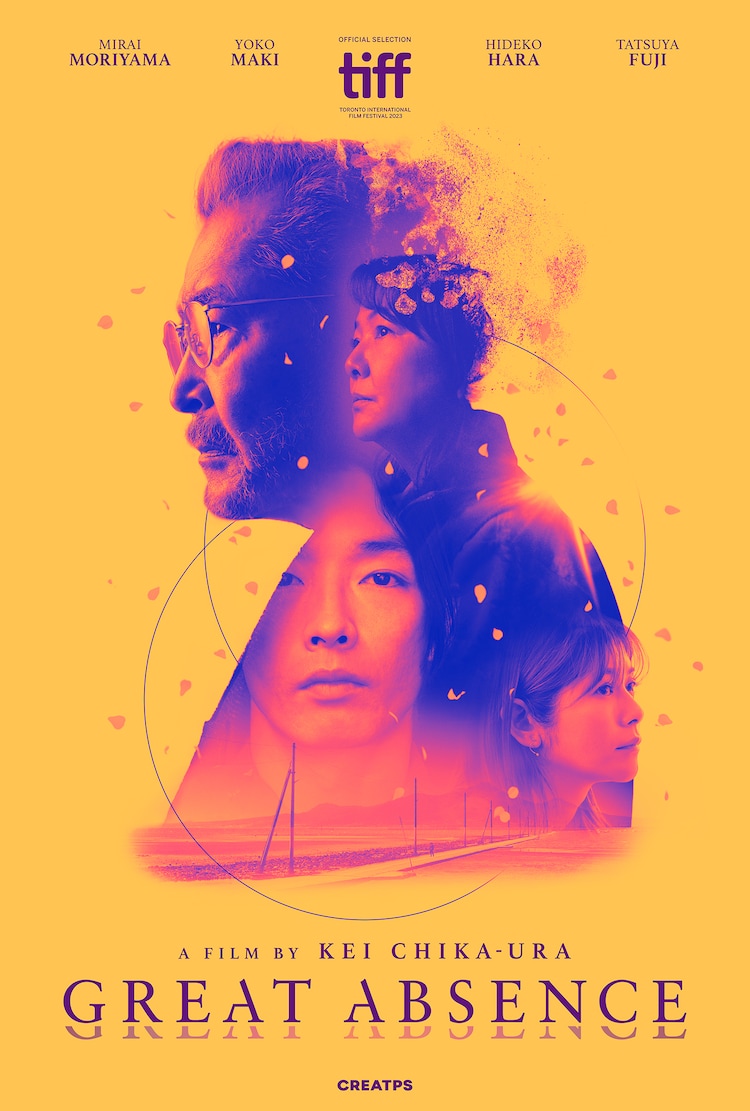
Undercurrent (アンダーカレント, Rikiya Imaizumi, 2023)

Part way through Rikiya Imaizumi’s adaptation of the Testuyua Toyoda manga Undercurrent (アンダーカレント) a detective asks his client what she thinks it means to “understand” someone. Of course, she doesn’t really have an answer, and the film seems to suggest there isn’t one because we are forever strangers to ourselves let alone anyone else. We do things without knowing why or that somehow surprise us, while the actions of others can an also be be worryingly opaque. But then perhaps you don’t really need to “know” someone in order to “understand” them and as someone else later says perhaps it’s true enough that most people don’t really want the truth but a comforting illusion. 

But then Kanae’s (Yoko Maki) illusions aren’t exactly comforting. Her husband of four years Satoru (Eita Nagayama) suddenly disappeared during a work trip a year previously and has not been heard from since. She turns the television off when the news announces details of a decomposing body discovered near a set of electrical pylons, but on another level she’s sure that Satoru is alive and chose to leave her for reasons she can’t understand. Kanae tells a friend that what pains her most is thinking that in the end she wasn’t a person Satoru felt he could share his worries with so she was powerless to help him. Then again, there’s something in Kanae that is equally closed off, a little distant and otherworldly as if she were also putting up a front to keep her true self submerged.

The detective (Lily Franky), whose name is “Yamasaki” yet allows people call him “Yamazaki” because it’s easier for them, says of Satoru that his “cheerful,” ever smiling nature may also have been a kind of masking designed to dissuade people from looking any deeper. Someone else admits that they lied mostly to fit in, be what others wanted them to be, only to be caught out by the gulf between their genuine feelings and and the ever expanding web of their lies. Caught in a kind of suspended animation uncertain if Satoru will ever return and if and how she should continue with her life, Kanae ends up taking in a new assistant at her family bathhouse. Hori (Arata Iura) is the polar opposite of the way her husband is described, silent, soulful and somehow sad. We might be suspicious of him, his arrival seems too coincidental and the way he looks at some children running past in the town perhaps worrying. Yet how can we judge based only on his silence knowing nothing else of his history? Nevertheless, he may understand Kanae much better than anyone would suspect and may be the comforting presence from her recurring nightmares.

In her dreams, she’s plunged into water with a pair of hands around her neck. Unknowingly, Hori asks her if she’s ever really wanted to die and she can’t answer him even if it seems to us that the dreams reflect her desire for death, to be submerged in a sea of forgetfulness. Yet we later learn they come to have another meaning reflecting her long buried trauma and the reason for her own listlessness. These are the undercurrents that run silently through her, waves of guilt and grief that obscure all else. Disappearances have happened around her all life and seem only to increase, another bath house owner seemingly disappearing after a fire having promised to sell her his boiler. Yet through her experiences, she comes to fear them less reflecting that anyone could leave at any moment and that’s alright, as Hori had said nothing’s really forever. 

Even so, she regrets that there couldn’t have been more emotional honesty from the beginning then perhaps no one would need to disappear without a word. Confessions are made and the air is cleared. Someone had said that no one wanted the truth, but it seems Kanae has chosen it as perhaps symbolised in her decision to call Yamasaki by his actual name rather than the one he allows people to use because it’s too much trouble to correct them. Aside from his multiple names, Yamasaki is a strange man who holds meetings in karaoke boxes and theme parks though perhaps because he simply thinks Kanae could use a little cheering up. In more ways than one, it’s the ones left behind who are left in the dark, but they may be able to find their way out of it with a little more light and reflection.


Screened as part of this year’s Japan Foundation Touring Film Programme.

Original trailer (English subtitles)

Twilight Cinema Blues (銀平町シネマブルース, Hideo Jojo, 2023)

Japan’s mini theatres have been in a status of crisis since the pandemic. Already struggling under the weight of changing times the immediate restrictions pushed many over the edge unable to entice older regulars back into screens or find a new audience among the young. This is doubly bad news for the industry as a whole as it’s mini theatres that allow indie films the platform they need to succeed and without them there is little avenue for films produced outside of the mainstream. Like Lim Kah-Wai’s Your Lovely Smile, Hideo Jojo’s Twilight Cinema Blues (銀平町シネマブルース, Ginpeicho Cinema Blues) similarly extols the virtues of the mini theatre which is not just somewhere to watch films but a place to belong that has room for anyone and everyone that wants to be there.

That’s more than true for Takeshi (Keisuke Koide), a struggling man approaching middle age who’s become near destitute and is almost sucked into a welfare scam targeting the homeless by a pair of shady yakuza claiming they run an NPO. At the orientation he runs into Kajiwara (Mitsuru Fukikoshi ), the owner of a mini theatre who declines to join the gangsters’ scheme but offers Takeshi the opportunity to bunk in his storeroom while working part-time little knowing that to Takeshi this particular mini cinema is like a return to source allowing him to rediscover his love of film.

But the mini cinema itself is also struggling. They simply don’t get bums on seats and Kajiawa is behind on paying his staff. Though they have a small collection of regulars, they aren’t enough to keep the lights on on their own. Even the projectionist is thinking he’ll probably retire along with the machine. Unable to afford new films, Kajiawara relies on cheap and easily licensable classics such as old favourite Casablanca but is largely unable to see away out of his situation while feeling guilty over ending what was effectively a family business and local landmark. The building’s 60th anniversary, 60 being a symbolic number in Japanese culture as it represents a full turn of the Chinese zodiac and literal new start, presents an opportunity to both Kajiawara and Takeshi to begin to move forward by renewing their faith in cinema.

The faith of Takeshi’s homeless friend Sato (Shohei Uno) needed no renewing. Though he had nothing, the ability to see a film twice a month made him feel human while the community at the cinema is perhaps the only one that still accepts him. He offers a small prayer after every film, and instructs Takeshi that he should the same. But his openhearted faith is also his undoing, allowing him to fall for the yakuza scam little realising they’ll force him to work for them taking half of the social security payments they helped him sign up for in the process. In the outside world, men like Sato find only exploitation and prejudice with cinema their only refuge.

Then again, filmmaking isn’t easy. A young woman who desperately wanted her debut film to play in her hometown cinema has based her first feature on the life of her father, a failed film director who drank himself to death (in a neat allusion to Oshima’s Cruel Story of Youth, her film’s title literally translates as “cruel story of a director”). Similarly, the suicide of a much loved assistant director has prevented those around him from moving on, preoccupied with the shock his death caused them in its suddenness and lack of obvious cause. They blame themselves sending their lives into a downward spiral that results in crushing financial debts and the end of a marriage. In some ways, the film is an ode to the ADs who keep everything running, including on occasions the director, and are in a sense the custodians of filmmaking.

Still, it’s clear that not everything can seamlessly repaired. Times have moved on even if some have been left behind and you can’t always simply reclaim what you’ve lost, but you can always start again with another spin of the wheel and make the most of what you’ve got. It won’t be the same, but that doesn’t mean it won’t be good. Jojo’s heartwarming tale of cinema has an undercurrent of darkness and despair running beneath, but also suggests that the silver screen can be a beacon hope when the world is at its bleakest and not least for those whose existence largely lies behind it.


Screened as part of this year’s Japan Foundation Touring Film Programme.

Original trailer (English subtitles)

The Boy and the Heron (君たちはどう生きるか, Hayao Miyazaki, 2023)

Sales of Genzaburo Yoshino’s 1937 novel How Do You Live? (君たちはどう生きるか, Kimitachi wa Do Ikiru ka? went through the roof when it was announced that the no longer retired Hayao Miyazaki would be directing a new film with the same title. Predictably, Miyazaki’s film turned out not to be an adaptation at all, or at least not a literal sense, but was intensely interested in the question not so much how do you live but how will you? Will you allow the past to make you bitter and live in a world of pain and resentment, or will you choose to live in a world of peace and beauty free of human malice?

These are of course the questions faced by a post-war generation, the children of Miyazaki’s own era who came of age in a time of fear and suffering. Mahito (Soma Santoki), the hero, loses his mother in the firebombing of Tokyo. He runs through a world of shadows to save her from the flames but of course, he cannot. A year later everything has changed. His father has remarried, taking his mother’s younger sister Natsuko (Yoshino Kimura) as his new wife. Natsuko is now pregnant which suggests the relationship began some time ago though Mahito knew nothing of it and had no recollection of ever having met Natsuko before being sent to live in her giant mansion in the country more or less untouched by the war. 

It’s here that Mahito’s own malice rises. He is polite, if sullen, but cannot warm to his new stepmother and resents his father’s relationship with her. Perpetually bothered by a grey heron (Masaki Suda) his first thought is to kill it, crafting a bow and arrow from bamboo and one of the heron’s own feathers. Shunned as the new boy at school he hits himself on the head with a rock while his father, Shoichi (Takuya Kimura), comically vows revenge and lets him stay home. As he points out, there’s not much “education” going on anyway with most of the students pulled away from their studies for “voluntary” labour in service of the war effort in this case agricultural. 

Shoichi has moved to the country to open a factory which it seems produces canopies for fighter planes which is all to say that he is profiting from the business of war, though transgressively referencing the failure in Saipan over breakfast with the mild implication that it might work out alright for him. There is after all a grim reason they’ll be in need of large numbers of aircraft parts in the near future. Mahito’s dark impulses are directly linked to those of militarism and the folly of war. When he finally enters the tower of madness apparently constructed by a great-uncle who went insane through reading too many books, he discovers that his enemies are an ever expanding clan of fascistic, man-eating parakeets led by a Mussolini-like despotic leader attempting to manipulate the Master of the tower. 

Inside the tower is a land out of time, a place for those already dead or in essence an eternal past. It’s here that Mahito is presented with a choice, how will he live? Will he choose malice and destruction, or will he choose to leave and build a new world of beauty and peace above? In many ways, the important point is that the choice is his as it is ours, that we are free to decide and that our choices create the world in which we live. Through his adventures in the tower, Mahito begins to come to terms with his situation and resolves to accept Natsuko as a mother and make friends of those he once considered enemies. When the tower itself crumbles, it takes with it the last vestiges of authoritarianism and tyranny.

Prompting his epiphany, Mahito discovers a copy of How Do You Live? in his room, a present from his late mother inscribed to the grown-up Mahito. He is surrounded by the world’s ugliness, forced into a surprisingly graphic fish gutting session that leaves him wiping away blood, recalling his profusely bleeding head injury and the scar it will forever mark him with. Pelicans imprisoned in the other world meanwhile tell him that they have no choice but to behave as they do for the Master of the Tower neglected to put enough fish in the rivers intending them to destroy rather nurture new life while their young too learn all the wrong lessons. Yet there is beauty and strangeness here too, along with kindness and humanity. Boundlessly inventive, Miyazaki couples surrealist visions of murderous birds and the hellish scenes of a city on fire with Mahito the only figure visible in his pale blue school uniform darting through the soot and the shadows. A vivid symphony of life, the film may in its way be about grief and the pain of moving on but finally discovers a kind of serenity in an accommodation with the present and the eternally unfinished question of how you yourself will live. 


The Boy and the Heron screened as part of this year’s BFI London Film Festival.

Iron Mask (만분의 일초, Kim Sung-hwan, 2023)

A young man seeking revenge sets his eyes on kendo glory in Kim Sung-hwan’s sporting drama Iron Mask (만분의 일초, Manbun-ui Ilcho). As his coach reminds him, a swordsman’s only opponent is himself though he continues to fixate on the man he blames for the destruction of his family still as an adult seeking reparation for the paternal influence he feels was stolen from him and the right to a legacy he feels to be rightfully his.

That might be one reason Jae-woo (Joo Jong-hyuk) is sometimes taken to task for his “entitlement” while some of the other students attending this training camp in the hope of making it onto the national team think he shouldn’t even be here seeing as he only came second in a regional competition when the others are veteran champions. But then as it turns out, Jae-woo has an ulterior motive for his participation. He is obsessed with number one challenger Tae-su (Moon Jin-seung) but for reasons outside of the sport, apparently hellbent on taking his revenge through kendo though it isn’t particularly clear what he hopes to achieve by it save personal vindication.

Kim pays particular attention to the peculiar rituals of the sport, a sense of rigorous order in the folding of the bandannas and tightening of the strings that fix the mask to the swordsman’s face while it’s clear that Jae-woo’s weakness is his emotional volatility. Though he manages to strike an impressive blow against Tae-su on the first day, his game then declines largely thanks to a hand tremor partly caused by a blow from Tae-su but also a manifestation of his jangling nerves.

He resents Tae-su on a personal level, irritated when he hears him talking on the phone to his wife about parenting their young daughter outraged that this man who he holds responsible for the implosion of his family has a family of his own while Jae-woo appears to have nothing other than his rage and resentment. He cannot forgive his estrangement from his kendo master father or that he chose to train another boy and not him, though perhaps that was simply his father’s way of coping with an impossible situation in the hope of making something good out of a personal tragedy. As another kendo master later tells him, as his father once did Jae-woo will have to find his own answers if he is to find success in kendo and indeed in life.

Still he struggles with fatherly relationships, first bonding with an older man who has two sons of his own and tries to impart paternal wisdom and comfort to the volatile Jae-woo but later accidentally injuring him during a sparring match when his temper gets the better of him. The only way he can free himself, is by moving past his image of his father to become his own man and also claim his own kendo rather than being resentful of that which was not bequeathed to him but to Tae-su for whom kendo is also a means of atonement and honouring of a paternal legacy.

Kim lends the battle a quasi-mythical quality, shooting a realm of eye-shaped mist as Jae-woo confronts Tae-su in his mind seeing only clashing swords and shadows while still unable to recognise that the man he is in competition with is only himself, his resentment and hurt in his abandonment, still a lonely little boy failing to become a man while Tae-su at least seemingly has been able to move on and make something of himself. Only by calming his nerves can he begin to perfect his art, taking the advice given to him by the team’s video replay expert seriously and apologising for his petulant behaviour. 

In essence, he has to escape from the “iron mask” of his repressed emotion and deal seriously with the traumatic past in order to progress to adulthood and also assume his rightful place on the kendo board. A psychological sports thriller, Kim lends a noirish touch to Jae-woo’s dark obsession even as it continues to consume him but finally implies the implosion of his rage through a dissolve transitioning to the falling snow as he now in white allows his resentment to melt away in favour of a more balanced hope for a peaceful future.


Iron Mask screened as part of this year’s London East Asia Film Festival.

Original trailer (Korean subtitles only)