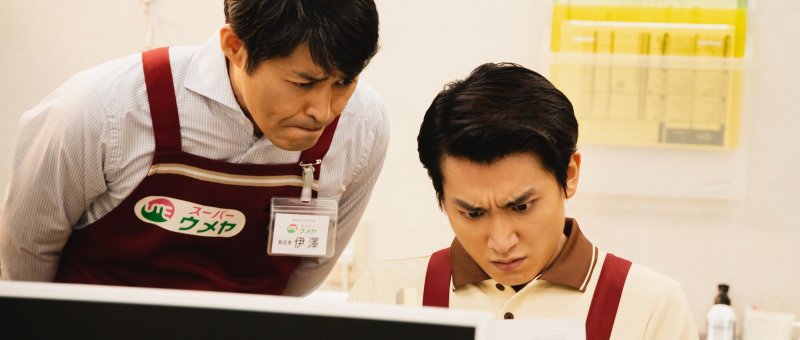
Fast & Feel Love (เร็วโหด..เหมือนโกรธเธอ, Nawapol Thamrongrattanarit, 2022) [Fantasia 2022]

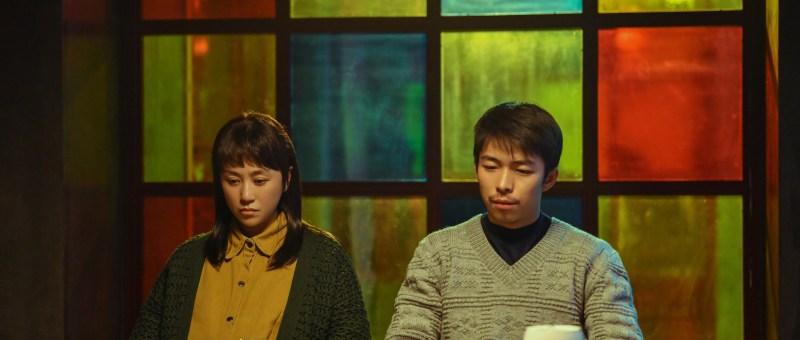
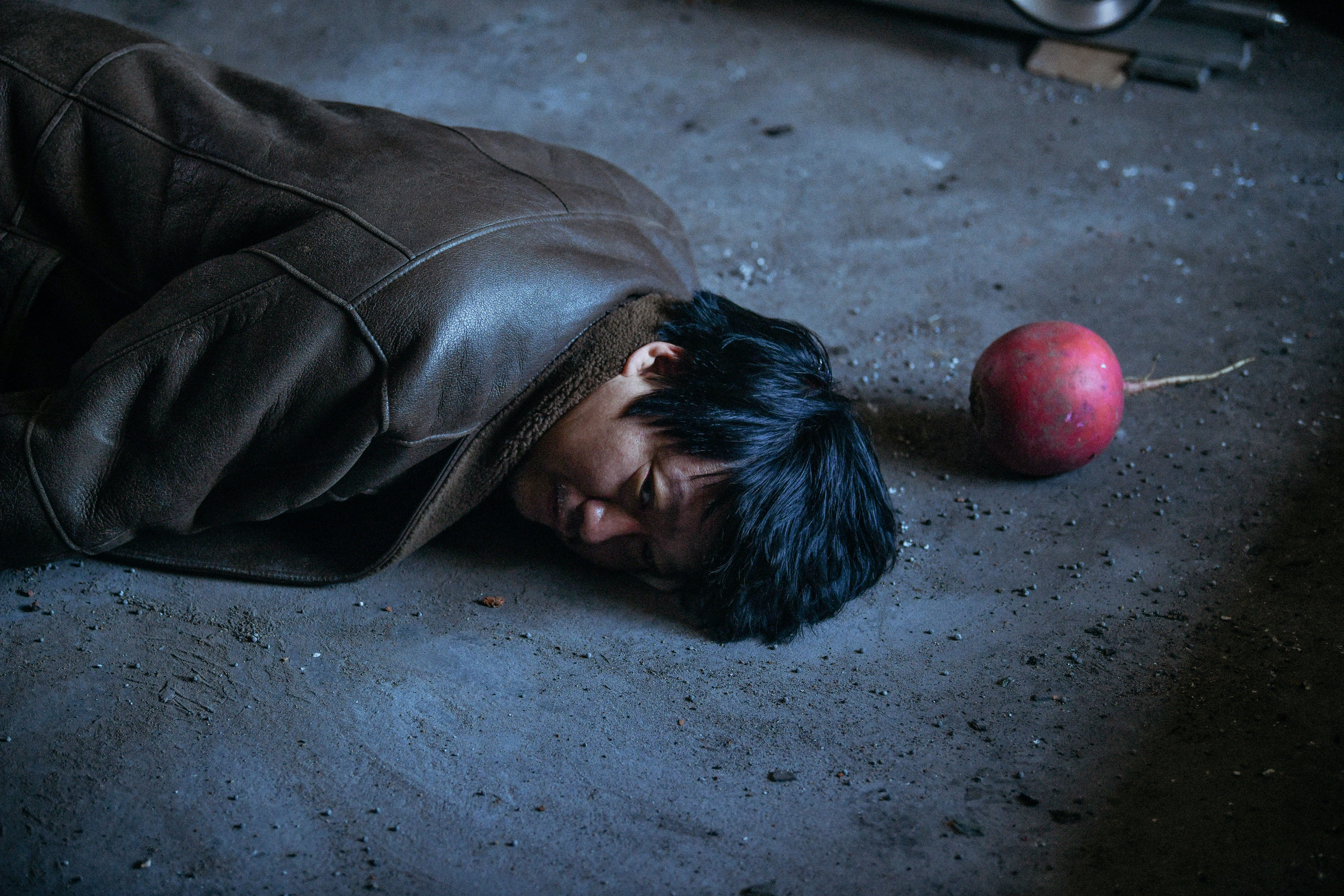
A 30-something couple find themselves pulled in different directions by their conflicting desires in Nawapol Thamrongrattanarit’s post-modern comedy, Fast & Feel Love (เร็วโหด..เหมือนโกรธเธอ). As the title implies, the self-involved hero is eventually forced to accept that his success is founded on the support of those around him while belatedly stepping in to adulthood in undergoing a baptism of fire learning basic life skills along with the confidence to look after himself in a new world of grownup responsibilities. 

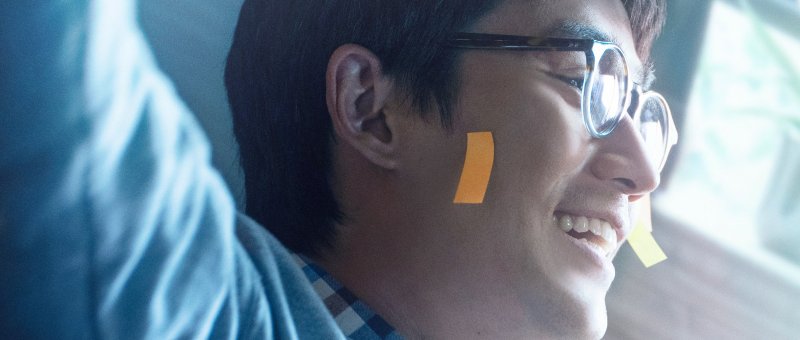
Jay (Urassaya Sperbund) and Kao (Nat Kitcharit) met as outsiders in high school, she excelling in English but not much else aside from her love of plants, and Kao obsessed with the art of sport stacking and dreaming of becoming a champion. 10 years later the pair are still a couple, kind of, living in a well-appointed home which they technically co-own though its clear Jay is shouldering the mortgage along with all the other domestic responsibilities. Kao is technically arrested in childhood, spending all of his time shut up in his room practicing sport stacking oblivious that others in his life have sacrificed themselves on his behalf. Jay used to think that it was all worth it as long as Kao achieved his sport stacking dreams but now she’s reached a crisis point realising that for everything she’s done for Kao she’s got very little back and if she waits much longer her own small dream of becoming a mother and having a conventional family life may pass her by. 

There is something of an irony in the fact that all of Kao’s major challengers are young children though as he points out sport stacking is an egalitarian sport in which things like age, gender, and nationality are irrelevant. Having successfully broken a record, Kao begins receiving creepy phone calls from a new rival, Edward, a little boy in Colombia who complains to his mother asking why people can’t go on stacking forever only for her to point out that adults have other things in their lives they have to attend to though Edward simply doesn’t understand. To begin with, Kao doesn’t either because he’s been lucky enough to be surrounded by people who supported his dream and went out of their way to make it easy for him by relieving him of basic tasks so that he could devote himself entirely to sport stacking. Because it had always been this way, it never really occurred to Kao that he needed to grow up and begin taking some responsibility for himself or at least acknowledge the sacrifices others were making on his behalf. 

When Jay eventually leaves him fearful that she’s wasted too much time and he’s never going to change, Kao is suddenly confronted by the frightening world of adulthood in which he must finally learn to look after himself while simultaneously accepting that it’s alright to ask for and receive help while helping others in return. What appealed to him about sport stacking was that it could be done alone, yet he failed to use the sport to block out everything else but was perpetually bothered by the intrusions of ordinary life his concentration ruined by the slightest noise. What he learns is that he cannot, and does not want to, win alone but only thanks to the support he receives from those around him while accepting that perhaps it’s time to move on from competitive sport stacking. 

Nawapol Thamrongrattanarit throws in plenty of meta references as Kao breaks the fourth wall or laments that he thought this was supposed to be an action movie but he’s hardly done any stacking at all and people might be disappointed. An extended running gag directly references Bong Joon-ho’s Parasite, while one of the kids Kao teaches at the sport stacking club talks like a gangster because she’s apparently watched too much John Wick. Even so, the relationship between Jay and Kao is drawn with a poignant naturalism rather than rom-com superficiality that allows Kao to accept that it’s time for them both to do what makes them happy even if that means they may not be able to stay together while little Edward seems to come to the same conclusion, ahead of the game in realising that a prize you don’t really want may not be worth winning. 


Fast & Feel Love screened as part of this year’s Fantasia International Film Festival.

International trailer (English subtitles)

Images: ©2022 GDH 559 Co., Ltd.

One and Four (一个和四个, Jigme Trinley, 2021)

A lonely forest ranger nursing a broken heart and an incredible hangover finds himself the accidental arbiter of truth in Jigme Trinley’s frosty psychological drama, One and Four (一个和四个, yī gè hé sì gè). One and four is what each of these men are, individuals pitted one against the other. The atmosphere is one of danger and mistrust coupled with almost supernatural dread in the constant warning of an approaching blizzard with a ruthless maniac on the loose while it’s true enough that the only neutral party may have been quietly going stir crazy for quite some time aside from his recent troubles. 

Troubles do indeed descend on Sanggye in threes with each of his various visitors only complicating an already dangerous situation. As the film opens he’s clearly hungover, grumpy, and tense, going about his quotidian tasks and chopping wood while apparently out of food resorting to sucking old bread and bones. He writes in his diary that he wishes the events of the previous night had been a dream and introduces a note of mistrust regarding village man Kunbo who visited him Sanggye had assumed to borrow money but may have had a different purpose in mind. He’s later startled by another knock at the door from a wounded man carrying a rifle who claims to be a policeman chasing a dangerous poacher but looks to Sanggye like he could well be the poacher himself. 

Then again, Sanggye isn’t entirely honest with him either telling the man that he has no alcohol because forest rangers aren’t supposed to drink yet we’ve already seen bottles littering the cabin and it seems clear he woke with a hangover. “I didn’t know you why should I tell you the truth” he later tells his guest not unreasonably having concealed Kunbo’s visit the night before but now finding himself dragged into a wider drama involving a high speed crash which seems to have caused the death of at least one policeman with the poacher supposedly on the run. Sanggye looks for clues most particularly in the policeman’s badge number though we might wonder if it’s reasonable to assume someone driving a police car or wearing a jacket with a number on it is necessarily a policeman, or if on the other hand someone carrying a hunter’s rifle in the manner of a poacher must be a poacher. He looks for objective facts occasionally asking for verifiable detail such as the name of the man who runs the forest commission and his place of birth but once both Kunbo and another man also claiming to be a policeman turns up the situation only becomes more confusing.

Did Kunbo set him up, drop by deliberately to upset him so he’d be less likely to catch him committing crimes or is he simply in the middle of a bad situation? Are both these men policemen or neither, could they both be poachers after the same kill with Kunbo caught in the middle or is the whole thing some kind of bizarre cosmic coincidence ironically occurring on the “day for heroes to gather” as it says today to be on Sanggye’s wall calendar. As Sanggye points out, if one of these men is a poacher most likely he’d be dead by now but then maybe he’s only waiting to retrieve his missing hoard of antlers cut from a bemused deer left bleeding in the snow. 

“Preventing forest fires is everyone’s responsibility” according to Sanggye’s mug, though it seems unlikely anyone’s going to be able to stamp out this conflagration very speedily. Aligned with nature, Sanggye first refuses to accept a gun perhaps because he does not trust the man who gives it to him fearing that he intends to lull him into a false sense of security but is eventually forced to wield one in a four-way stand off uncertain who to believe in this increasingly complicated piece of game theory thought experiment. Sanggye probably wishes this had all been a dream too though one supposes he’s reason to believe the bad news he received the previous evening may not be true. In any case another cosmic coincidence eventually makes his decision for him as the clock rounds out the day. Tense, frosty, and full of questioning angles, Jigme Trinley’s well designed forest fable suggests the most dangerous beast in the forest is your fellow man though a deer may repay a kindness if you’re mindful enough to show them one. 


One and Four screened as part of this year’s New York Asian Film Festival.

Original trailer (English subtitles)

Images: © Mani Stone Pictures/Tsemdo

Goodbye, Don Glees! (グッバイ、ドン・グリーズ!, Atsuko Ishizuka, 2021) [Fantasia 2022]

A diffident high schooler finds a new sense of confidence after a poignant summer adventure in Atsuko Ishizuka’s heartfelt coming-of-age anime, Goodbye, Don Glees! (グッバイ、ドン・グリーズ!). In many ways about finding direction in life, learning to live with grief, and making the moment count, the film is also a paean to male friendship as the trio at its centre develop new senses of security through mutual support while beginning to figure out what treasure it is they’re seeking in the further course of their lives. 

For Roma (Natsuki Hanae), a farm boy largely rejected by the other kids in the village, this summer is a little different. Not only is it his first as a high schooler, it’s also the first since his best and only friend Toto (Yuki Kaji) moved to Tokyo for high school and despite their previously close relationship it’s clear there’s a minor awkwardness in the distance that’s arisen between them since they’ve been apart while Roma has also added a third boy, Drop (Ayumu Murase), to their secret Don Glees friendship group. Now that he’s been living in the city, Toto finds the whole Don Glees thing childish and decidedly uncool while Roma is obviously keen to hang on to their shared history and childhood friendship. 

Their dilemmas may seem opposed but are in actuality very similar. Toto resents Roma for not having the courage to come with him to study in Tokyo where there are more academic high schools, choosing instead the safe option of attending a vocational school with a focus on agricultural education implying that he plans to stay in his hometown and take over the family farm. It isn’t immediately clear if it’s because this is what he wants to do with his life or if he is simply too afraid to strike out and try something different. Roma does indeed seem to lack confidence often remarking that he feels he’s not enough in some way or doesn’t have the right to chase after the things he wants. Unable to face his inability to tell his middle school crush Tivoli, who has since travelled to Ireland to study abroad, how he feels he ends up deleting his Instagram account to avoid being confronted with pictures of her exciting international life. Toto meanwhile is stressed out by his cram school lifestyle and newly uncertain in his decision making realising that he’s just been following the path his parents set out for him and wondering if he really wants to become a doctor after all. 

The mysterious Drop makes constant suggestions that he can’t really afford to think about the future and is living intensely in the moment. He is insistent on finding some kind of treasure, afraid of ending his life without resolving this one mystery and keen to ask both boys what it is they’d regret if the world were to end tomorrow. The quest takes on literal dimensions when the boys are accused (falsely) of starting a forest fire and set out in search of a drone they were using, technically illegally, to capture a local fireworks display hoping it will contain footage to verify their innocence but getting lost along the way and eventually sharing their fears and anxieties alone together under the night sky. It seems this new friendship is destined to end in unexpected tragedy, but as Drop is fond of saying sometimes all it takes is a little courage to make a jump and see things from a different perspective allowing Roma to gain the confidence in himself he’d been lacking to chase the things he really wants. 

A teen summer adventure movie, Goodbye, Don Glees! features lush animation of the Japanese countryside along with some enhanced CGI of nature in bloom captured forever via photograph which as Tivoli points out is like a freeze-frame in time trapping both the image and its accompanying emotions. That is perhaps what Roma learns, to make memories he can treasure when the moment ends while saying goodbye to something doesn’t mean it’s gone forever, it just exists in a different form. A warm and heartfelt tale of teenage male friendship and summer’s end, Goodbye, Don Glees! discovers a sense of the serene in the face of life’s futility through connections both momentary and eternal. 


Goodbye, Don Glees! screened as part of this year’s Fantasia International Film Festival and is in US cinemas from Sept. 14 courtesy of GKIDS.

US release trailer (Japanese with English subtitles)

Imaginur (Nik Amir Mustapha, 2022)

“It’s a pickle, isn’t it? Trying to remember what you don’t know you’ve forgotten.” So says the father of the hero of Nik Amir Mustapha’s touching sci-fi romance, Imaginur. It is however his son who’s trying to piece things back together while seemingly stuck in a maddening time loop chasing the ghost of lost love and searching for his “happy place”, the safest place he can imagine that will reconnect him with who he really is. 

Zahul seems to be haunted by fleeting glimpses of a woman whose face is hidden. After being involved in a traffic accident, he fetches up at the hospital but is there with his elderly father who is living with dementia. An elderly lady gives him a card for a special service called Hypnotica run by a mad scientist named Ramil who claims he can use hypnosis to cure Zahul’s panic attacks the most recent of which caused him to abandon his father in a supermarket after an awkward interaction with his ex. Ramil tells him that they’re simply going to revisist old memories with a new perspective to solve the cause of his anxiety but we can’t be sure when or if Zahul has actually left the state of hypnosis. Unable to remember or get a firm grasp on his reality he becomes panicked and short tempered, eventually paranoid and rambling about people trying to steal his brain.

Even so as someone puts it, his quest for Nur, a woman he meets at a burger stand, is also a quest for light and the path back towards himself in reclaiming his past even if it comes with the pain of loss on waking up to the reality. “This is what becomes of our lives” the sympathetic elderly woman laments of Zahul’s father, only for Zahul to reply that there’s no point resisting, but resisting is in a sense what he’s been doing trying to push through to a more concrete reality unwilling to accept the first or even second iteration of a moment in time but looking for the essential truth of it. 

What his father tells him is that the answer is what we feel in out hearts, that there’s nothing so important as feeling except perhaps the memory of it. That is in a sense what Zahul is chasing, trying to reorient himself through emotional logic while simultaneously reluctant as if avoiding something he doesn’t know that he’s forgotten. Meanwhile, he becomes increasingly paranoid about the shadiness of Ramli’s operation which even he calls a “pseudoscience” wondering if he’s caught up in some kind of conspiracy while convinced they’re trying to steal his brain or at least mess with it to drive him out of his mind. 

Yet it all seems to come back to a choice he didn’t and didn’t make watching the mysterious woman head towards a station with a suitcase but getting hit by a car before reaching her. “Remember me” she plaintively asks in the shared space of his mindscape, perhaps a phantom of his imagination but also a real woman he didn’t know he’d forgotten who holds the key to everything he is. “You live inside your head a little too much” Nur tells him, and she’s absolutely right while ironically advising him to find his happy place little knowing that perhaps he has and they’re already in it. 

Oneiric and elliptical, the film’s fragmentary dream logic in which Zahul is forced to relive a series of moments from getting a parking ticket to being at the hospital eventually builds towards a moving moment of cohesion as Zahul manages to find himself again accepting both love and loss along with memory in all of its emotional intensity. Opening with a classic hypnotic spiral, there’s a kind of charm in Nik Amir Mustapha’s retro production design in the lo-fi hypnotism headsets Ramil alarmingly claims turn off part of the brain along with the softened colour palate that lends a note of nostalgia to what we assume to be the present day. In any case there is something genuinely touching in Zahul’s determination to reclaim himself through remembering lost love and discovering the eternal in transient moments of happiness.  


Imaginur screened as part of this year’s New York Asian Film Festival.

Teaser trailer (English subtitles)

Images: © 2022 Lumatic Films.

Next Sohee (다음 소희, July Jung, 2022) [Fantasia 2022]

“She just went quietly” an older woman running a cafe explains to a police officer against all advice attempting to investigate the suicide of a young woman in July Jung’s long-awaited A Girl at My Door followup, Next Sohee (다음 소희, Daeum Sohee). In the end, Sohee (Kim Si-eun) did indeed go quietly, cowed into submission by the apparent hopelessness of her life amid the grinding crushingness of contemporary capitalism while even the policewoman who shares her fiery sense of outrage comes to a similar conclusion on uncovering the endemic abuses of the modern society. 

Jung devotes the entire first half of the film to Sohee’s slow burn disintegration as a high schooler selected as an “extern” for a call centre business while dreaming of becoming a dancer. These exploitative work experience programs are technically part of Sohee’s high school education and dropping out of them incurs the possibility of not graduating along with being “red tagged” by the school in a lesson in banishment room tactics which sees the kids forced to perform menial tasks such as cleaning the toilets while wearing clothing that marks them out as a failure who has brought shame on their institution. A proud young woman, Sohee is thought of as mentally strong and academically earnest originally excited by the extern opportunity which the teacher sells to her as being a cut above, she being the first of their students to land a position at a “major” company which is also feather in his own cap. 

Later Yoojin (Bae Doona), the policewoman who briefly met Sohee at a dance class, asks the teacher why he didn’t bother to investigate what was really going on at the call centre but he only tries to shift the blame explaining that he needs to find good jobs for other kids to maintain the school’s rankings which means keeping on the good side of employers. As Sohee sat vacantly and cried having attempted to take her own life, he dismissed her concerns and told her to work harder. Each time Yoojin interviews an authority figure they tell her it’s not their fault, it’s the system, while blaming Sohee for having “attitude problems” and pointing out that she should have just quit if she wasn’t up to the job. 

But Sohee couldn’t quit in part because of the shaming culture that surrounded her in which she’s constantly reminded that her actions have negative consequences for others. Firstly she’s told that her subpar performance brings down their team’s rankings, then shunned by her colleagues because her top scores are pushing up the targets for everyone else. She doesn’t want to let her teacher down by quitting, and even on trying to explain to her parents after her first suicide attempt is simply told to work harder under the fallacy that if you obey all the rules and work hard you’ll be alright. The call centre is almost entirely staffed by externs, in the main teenage girls, who are made to listen to irate customers verbally abuse or sexually harass them while instructed that they must do whatever possible to stop them cancelling their accounts. The call that breaks Sohee comes from a sobbing father who wants to cancel because his child has died so he doesn’t need the service anymore but she still has to try and sell him a new TV package while giving him the run around on the contract cancellation. 

Because the externs have a high turnover, the company defers payment of their bonuses to discourage them from leaving while continuously docking their wages reminding them of the clauses in the contract they signed which state that remuneration is subject to change. Sohee was in fact forced to sign two different contracts so the company could get away with paying her below minimum wage which is a violation of what little labour law actually exists while as these are essentially children who’ve signed contracts they don’t understand because their teachers and parents told them to they have no idea of their rights but are gradually realising they’re being exploited and there’s nothing they can do about it. Sohee was thought of as the type to fight back, and she was, she did, but in the end she went quietly because what else could she have done. 

She went quietly from the dance class where Yoojin first encountered her too, but does not pass so quietly from her mind. Yoojin asks why it was that she danced given there’s no gain to be had by it, she was too old to become a K-pop star and there’s no money in dancing but for her there was perhaps freedom and a small act of rebellion in the use of her physical body for something other than labour. An inspector who calls, Yoojin shares Sohee’s “attitude problems” and refuses to let the case rest realising that the poor kids at the below average schools are being forced into employment that is almost entirely unregulated while the companies that exploit them paint themselves as the victim, pressuring employees and bereaved family members into signing documents denying any wrongdoing. Betrayed by the company, Sohee first refuses to sign but in the end she does so, quietly, and at the cost of her integrity. Yoojin too is eventually forced to sign a form and put her name to something she believes is not quite true. Sohee’s death was as she puts it a workplace accident, or perhaps a slow motion murder, and “nobody gives a damn” because she was just a teenager with a “bad attitude” who went quietly because no one would have listened to her anyway. 


Next Sohee screened as part of this year’s Fantasia International Film Festival.

International trailer (English subtitles)

Ribbon (Non, 2022)

What is the place of art amid a global crisis? A young student finds herself wrestling with her sense of purpose uncertain if art is more necessary than ever before or a completely worthless waste of time that could be better used dealing with the situation on a more practical level. Written, directed, and edited by actress/singer Non, Ribbon is a response to pandemic anxiety but also a meta drama about an artist reclaiming a sense of confidence in their work along with their right to make it even if not widely understood. 

As the film opens, art student Itsuka (Non) is lugging a series of paintings and art equipment back to her university for the upcoming graduation exhibition, only the exhibition has just been cancelled because the university will be closing its doors the following day due to the COVID-19 pandemic. Itsuka has to cart all her stuff home again, but she’s luckier than some she witnesses who are left with no choice other than to destroy the precious works of art into which they’ve poured four years of their lives because they can’t store them and neither can the university. 

Watching her fellow students in tears as they crush, tear, and bludgeon their projects Itsuka can’t help but wonder what separates her painting from “trash”, seeing these precious pieces dismembered and left out for the binmen. The feeling is compounded when her mother (Misayo Haruki) pays her a visit, clad in a homemade hazmat suit, and throws the painting out justifying herself that as it had stuff stuck on it she thought it was just something she’d made messing around, more like a child’s collage than a serious piece of “art”. Unable to accept her mistake, Itsuka’s mother defensively doubles down leading to a climactic argument and the visits of other family members including her father (Daikichi Sugawara) who arrives with a social distancing pole and her sister (Karin Ono) who now dresses like an assassin each armed with passive aggressive peace offerings but ultimately seeking validations that her mother was right to dismiss her incomprehensible art. 

While her friend Hirai (Rio Yamashita) is later caught sneaking into uni to work on her much more conventional piece, a large canvas painting featuring a young girl in a forest with giraffes and leopards, Itsuka has been unable to find the desire to paint. The painting, a mixed media portrait of a young woman surrounded by ribbons, sits looking down on her taped to the wall but she can’t get away from the idea that perhaps her work really is “trash” and she’s just been wasting her time on something meaningless that other people don’t understand or care about. The feeling is compounded when she’s informed that the job offer she had from a design firm for after graduation has been rescinded due to COVID uncertainty. Only when she accidentally reconnects with a middle-school classmate (Daichi Watanabe) who had praised her work does she begin to rediscover its value not least in allowing her to vent her frustrations not only with the pandemic-era society and its isolating anxieties, but the conservative ideas embodied by her mother’s constant complaints about her “attitude” reminding her she’ll never get married if she carries on as she is.  

“This is what our frustration looks like” she explains incorporating her friend’s fractured painting to turn her formerly chaotic apartment into an installation covered in the ribbons which had previously swarmed around her. Opening with scenes of the deserted university peopled with broken statues, headless mannequins, and crude drawings on walls, Non captures a sense of the lonely despair of the early days of the pandemic allowing these now empty places to seem almost haunted by an eerie sense of absence. There is an unavoidable absurdity in the constant masking, obsession with social distance, and spraying anything and everything with sanitiser but also a care beneath the anxiety in the concern for others’ safety as well as one’s own. “Heavy” is how Itsuka frequently describes her situation not only the physical weight of her work but its spiritual burden along with her despair and anxiety for her uncertain future, but learning to bear it allows her to rediscover a purpose and value in art not despite but because of the times in which she lives. Quirky and heartwarming, Non’s accomplished directorial debut is not only a snapshot of ordinary life in a pandemic, but a meta tale of a young woman reclaiming her right to create and vent her frustrations towards a sometimes restrictive society. 


Ribbon screened as part of this year’s New York Asian Film Festival.

Original trailer (English subtitles)

Images: ©︎”Ribbon” Film Partners

Mercenaries from Hong Kong (獵魔者, Wong Jing, 1982) [Fantasia 2022]

A former mercenary’s bid for revenge having failed in his responsibilities soon goes awry in Wong Jing’s third directorial feature Mercenaries from Hong Kong (獵魔者). As is constantly pointed out to the hero, perhaps he’s not so different from his target with his very selective brand of justice and morality. After all maybe the difference between medicine smuggler and drug trafficker is largely semantic and taking revenge after the fact hardly makes up for the failure to protect the innocent from a world you’ve helped create. 

Li Lok (Ti Lung) is a pretty big figure on the underworld scene and as the ultra macho title sequence reveals a former mercenary who served in Vietnam. In the daring opening scene he sneaks into a gang hideout disguised as a telephone repairman and takes out a gangster in the middle of drugging a young woman whom he and his friend intend to rape and then murder. But Li Lok isn’t here to save the girl and in fact he doesn’t. He’s there because the gangster has done this kind of thing before and the previous victim was his 15-year-old niece whose care he had been entrusted with by his late brother before he passed away. Later one of his comrades will make a similar request of him and he will fail again apparently taking little stock of his responsibilities. 

Nevertheless, having knocked off the gangster annoys local big boss Shen who intends to have Li Lok eliminated but Hong Kong’s richest woman Ho Ying (Candice Yu On-On) convinces him not to because she has a job for Lok assassinating a top Thai assassin who killed her father and is now apparently blackmailing her with a cassette tape full of corporate secrets. All Lok needs to do is round up a posse and head to Cambodia where “the devil” Naiman (Ching Miao) is hiding out, kidnap him, and retrieve the tape to receive a massive life-changing payout while permanently getting Shen off his back. It all sounds like a pretty good deal to Lok along with the former buddies he recruits to join him who are all trapped in desperate poverty one with a sick little girl who desperately needs a kidney transplant. 

This is a Wong Jing film and perhaps there’s no need to dig too deeply into it, but there is something in the power Ying wields over Lok and his team by virtue of her wealth and privilege that speaks to the city’s growing inequality though it’s also true that perhaps the guys have all fallen low through their mercenary choices and are now unable to get a foothold in the contemporary society without resorting to crime. Yet perversely, Ying leverages Lok’s chivalrous sense of honour as part of her plan playing damsel in distress rather than dangerous femme fatale while he assumes he’s on a righteous mission planning to turn Naiman over to the authorities rather than just killing him while little caring that his actions threaten to destabilise an already chaotic situation in Cambodia. 

When one of the sworn brothers of the gangster that Lok killed in revenge is killed coming after him even after the truce, Lok is irritated that he died unnecessarily as if it offends his sense of justice that this man was not protected better by Shen. Yet as Naiman keeps pointing out to him, he’s no saint and perhaps no different. He could have saved the girl in the gang hideout but chose not to, escaping by jumping out of a window onto a van waiting below and riding off on a motorcycle (which is admittedly impressive). He claims to hate drug dealers but profited off war and misery in smuggling medicines across the border from Thailand into Cambodia even if he could tell himself he was running a kind of humanitarian service. Meanwhile Ying who is obviously involved in something shady if she’s dealing with people like Lok and his team, paying for their weapons and equipment which presumably includes the series of identical outfits the guys sport like some violent middle-aged boy band, wins an Outstanding Woman award and ironically pledges to use some of her wealth to fund community-based anti-drug programs. 

Li Lok may in a sense emerge victorious but also exactly where he started in failing to protect an innocent girl from a mercenary world. The Cantonese title might more literally be something like Devil Hunters, but Lok and his guys are certainly a mercenary bunch desperate to escape their poverty and hopelessness even if they may stand for a kind of justice and honour in brotherhood. This being a Wong Jing film there is plenty of crass humour including some that is very of its time along with gratuitous sex and female nudity but also a series of incredibly impressive action scenes and a bleaker than bleak conclusion which may suggest that the Loks of the world will be unable to protect the next generation from the violence they themselves have unleashed. 


Mercenaries from Hong Kong screened as part of this year’s Fantasia International Film Festival.

Original trailer (English subtitles)

Stellar: A Magical Ride (스텔라, Kwon Soo-kyung, 2022) [Fantasia 2022]

A cynical man learns to forgive the father he resented for abandoning him while on a road trip in his banged up ‘80s Hyundai Stellar in Kwon Soo-kyung’s quirky dramedy, Stellar: A Magical Ride (스텔라, Stellar). Not everyone is suited to being a parent, as he’s fond of saying not incorrectly, but even if his father’s love was imperfect it doesn’t mean it wasn’t there and just because he feels his own father failed him it doesn’t mean he’d do the same to his own child.

Young-bae (Son Ho-jun) makes a living repossessing luxury cars on behalf of shady gangsters. After unwisely entrusting a Lamborghini to his childhood friend Dong-sik (Lee Kyu-hyung) who now runs a logistics company, Young-bae’s life is derailed when he goes awol leaving him to deal with his violent boss. Meanwhile, he’s just found out his wife might be pregnant after stumbling on a pregnancy test in their bathroom and his sister has been in contact to let him know their estranged father has passed away. After the gangsters track him down to the funeral, he manages to make a daring escape by taking off in his father’s old Hyundai Stellar which is not exactly the most ideal getaway vehicle seeing as Young-bae struggles to get it over 30 and the driver’s side door doesn’t open anymore. 

In a way there might be a reason for that, Young-bae both driver and passenger as he shifts over into his father’s old seat at the wheel. For some reason he finds himself talking to the car without really understanding why while the car itself always seems to come to his rescue just at the right moment as a magical twinkling plays in the background. It’s difficult to avoid the interpretation that the car is possessed by his father’s spirit, though it may equally be the manifestations of Young-bae’s childhood memories as he remembers a happier time in his life when he spent time with his father in the car which he described as his family’s “star”. 

“Becoming a father is easy, but living as one is hard” Dong-sik laments having been somewhat humiliated in front of his own kids little knowing that Young-bae is facing just this dilemma as he tries to come to terms with impending fatherhood. As an older man looking back on traumatic childhood memories, he gains a new perspective if perhaps still struggling to forgive his father for abandoning him only later coming to the realisation that he may have shown his love in a different way in thinking that the best thing for his family might be to remove himself from it. 

The root cause of all these problems is however debt. Young-bae resents his father for getting into trouble with loansharks after a traffic accident disrupted his taxi business, while the reason Dong-sik double-crossed him with the car is because he is deeply in debt himself. Even a farmer’s wife he meets explains that they’re alive because they can’t die, now in masses of debt following several poor harvests and the onset of her husband’s lumbago. Young-bae technically makes a living off debt given that the reason most of these cars are being repossessed is that their owners have fallen into financial difficulty. One such man Young-bae targets is currently living in the car when he tries to repossess it having lost his life savings and everything he owned trying to pay for medical treatment for his wife. Young-bae unsympathetically tells him that he hates irresponsible and incompetent fathers projecting memories of his own onto him while unable to show any kind of compassion or mercy for the difficulties he is facing. As the film opens, he helps save a man who was planning to take his own life but only so he can get his signature on the repossession papers before he passes away. 

Literally having to take his father’s perspective by sitting in the driving seat of his car while interrupted by nostalgic songs from the tape deck which seems to have a mind of its own, Young-bae comes to an acceptance of paternity while making peace with his father’s memory. A quirky road trip movie with a series of strange characters who all have important lessons for Young-bae about the nature of friendship and family, Stellar is certainly a magical ride through frustrated grief and paternal anxiety finally arriving at a place of warmth and safety free of past trauma and resentment in the driving seat of a beaten up family car. 


Stellar: A Magical Ride screened as part of this year’s Fantasia International Film Festival.

International trailer (English subtitles)

Intimate Stranger (親密な他人, Mayu Nakamura, 2022)

“This society pampers men too much, no matter their age” according to a middle-aged woman searching for her missing son, yet in many ways it’s the primacy of the mother and maternal neglect that drive Mayu Nakamura’s eerie psychological chiller, Intimate Stranger (親密な他人, Shinmitsuna Tanin). Perhaps in some ways, that’s what a mother and a son should become, of course close and loving yet each with their own lives unknown to one another but for Mrs Ishikawa those boundaries have perhaps become corrupt in her overwhelming need to embody the maternal ideal. 

Mrs Ishikawa (Asuka Kurosawa) lives alone and is searching for her grown-up son, Shinpei, who went missing a year ago. She has a job in shop selling baby clothes and accessories but is described by other staff members as a bit strange though they continue to invite her to afterwork gatherings knowing she won’t come. One day she gets a call from a young man, Yuji (Fuju Kamio), who says he has information about Shinpei but in reality is part of a gang running “ore ore” scams who are also looking for him because he previously worked with them. Yuji’s purpose in approaching Mrs Ishikawa is to get info out of her, but she’s a little bit ahead of him and manages to plant the seeds of a dark seduction. 

Seduced is what Yuji eventually is in a discomforting mix of the erotic and the maternal. Casting shades of Vertigo, Mrs Ishikawa persuades him to move into her apartment, sleep in Shinpei’s room, and wear his clothes keeping him a virtual prisoner while forcing him into the role of her surrogate son. As we later discover, Yuji was a teenage runaway seemingly abandoned by his mother and craves maternal affection but is ashamed of admitting and fearful of accepting it all of which would make him ideal prey for a woman like Mrs Ishikawa who at all rates seems to need a son to feel herself complete. 

At the shop where she works, Mrs Ishikawa transgressively sniffs and fondles clothes for newborn infants while at one point driven to distraction by a crying child temporarily separated from its mother to the point that she inappropriately picks it up. She appears to be totally consumed by the maternal image and to that extent or else because of some previous trauma becomes extremely hostile when confronted with her sexuality. Her horror on being picked up by a gigalo when expecting to meet a man with info about Shinpei might be understandable, but the glee on her face after slashing a man with a straight razor when he attempted to attack her is less so while Yuji’s eventual confusion about the nature of their connection highlights the discomforting intersection of the maternal and the erotic. 

We have to wonder if Shinpei simply decided to escape the grasp of an overbearing mother who could not bear to accept that her son was now a man, or if Yuji’s suspicions that he may have met a darker fate are more than mere reflections of his own fear of maternal connection. Yet like story of the bluebird of happiness that Shinpei was apparently fond of telling, perhaps each of them for a time found what they needed in the other only to lose it again on identifying the darkness that underlines their relationship. 

Listening to a report on the news, Mrs Ishikawa explains that “ore ore” scams only happen in Japan because nowhere else would a parent drop everything and run cash in hand when told a grownup son is in financial trouble which might in a sense be unfair save for the urgency, similar scams circulate via text and messaging apps in many countries. Yet the scam hints at this same level of disconnection, that the often elderly targets cannot tell that it is not their son or grandson’s voice on the phone nor realise that the information they’re being given does not make sense so estranged have families become. The coronavirus pandemic meanwhile only makes the scammers’ job easier given the loneliness of enforced isolation coupled with generalised masking which decreases the level of intimacy on both sides dehumanising the target while allowing the scammer to further conceal their identity. 

Mrs Ishikawa is in a sense wearing a permanent mask, consumed by the maternal ideal and unable to conceive of herself as anything outside of a mother. There is something unsettling and vampiric in her need as she at one point sucks blood from her finger and wields her razor with dangerous affection when offering Yuji the closest shave he’ll ever have but also a deep sadness that like the bluebird of happiness that which she most wants is always going to fly away from her one way or another. The uncanniness of the desaturated colour palate adds a further note of dread to the noirish tale of a young man seduced by Oedipal desire and drawn as much towards death as love.


Intimate Stranger screened as part of this year’s New York Asian Film Festival.

Original trailer (no subtitles)

Images: © Siglo/Omphalos Pictures

Chun Tae-il: A Flame That Lives On (태일이, Hong Jun-pyo, 2021) [Fantasia 2022]

“We are not machines” became the rallying cry of a nascent workers movement in late 1960s Korea which gained momentum following the suicide by self-immolation of 22-year-old labour activist Chun Tae-il. 25 years on from his death, Park Kwang-su’s A Single Spark examined Chun’s legacy at the intersection of the labour and democracy movements, while Hong Jun-pyo’s animated treatment Chun Tae-il: A Flame That Lives On (태일이, Taeil-i) sees him as an ordinary man radicalised by his own compassion in his desperation to liberate those around him from the hell of poverty and exploitation. 

As such the film opens with a happy family scene of Tae-il (Jang Dong-yoon) playing with his siblings near the river and then joining his mother as they walk home only for the atmosphere to darken when bailiffs arrive to confiscate their sewing machine, the only means they had of supporting themselves. Tae-il’s mother is forced to leave the family to find work in the city, while his father becomes an embittered drunkard who is little help to his children. Forced to give up on education, Tae-il too later travels to the city where he reconnects with his mother and begins seamstressing, eventually agreeing to a small pay cut in order to train as a tailor in the hope of earning more money for his family further down the line. 

A kind and earnest young man, Tae-il first barely notices his exploitation while working hard trying to get a foothold on the employment ladder. He comes in early to sweep the floors and is caught out after curfew having spent his bus fare buying cakes for the children who help out on the shop floor. It’s only when a seamstress, Young-mi, collapses and is found to be suffering from TB caused by the poor conditions at the shop that he begins to question the wisdom of being loyal to his employer especially when he fires Young-mi for being ill and then refuses to pay her medical bills. When a floor manager quits after being accused of embezzlement, Tae-il is technically promoted but actually charged with doing two jobs for only a little more money which he doesn’t actually get because his boss uses the embezzlement as an excuse to cut everyone’s pay packet. 

Tae-il starts to think there should be a law against this sort of thing and is shocked to discover, from his father no less, that there is but its existence has been deliberately kept from him. Whenever he raises the idea of standing up to his exploitation his father urges him not to, to remain complicit and hang on to the job no matter what, but eventually changes his mind and instructs his wife not to stop Tae-il from what he’s trying to do in challenging the existing social order. Even once Tae-il has managed to get through the statute on labour law which is written in difficult legal language and in Chinese characters he would not have learned to read as someone with only a primary school education, Tae-il tries to go to the authorities with evidence that the law is not being followed but they don’t care. They even accuse him of being selfish and unpatriotic in standing in the way of the nation’s drive for economic prosperity while meeting any attempt at worker solidarity with a charge of communism. 

Earlier in the film, Young-mi had placed a plaster over a scratch on her sewing machine treating her means of production with a care and tenderness absent in her relationship with her employer who ironically sees her only as an expendable tool. What Tae-il and his friends are asking for isn’t anything radical, they just want the existing law to be respected along with basic improvements in their working conditions such as better ventilation and lighting to prevent workers falling ill. It’s small wonder that he starts to despair when his goals are so small and yet so impossible. 

In truth Hong’s pains to present Tae-il as an ordinary man sometimes undercut the film’s premise, presenting his working situation as so normalised as to not seem that bad save for when a colleague ominously drops off caffeine pills and energy drinks ahead of a big order, while Tae-il’s mission also appears quite sexist in his frequent assertions of protecting the “poor sisters” who work on the shop floor as if they were incapable of participating in the movement themselves. The association he starts which is admittedly for local tailors is entirely staffed by men with Young-mi invited only to come and watch. Only later does he pass it on to his mother (Yeom Hye-ran) as the guardian of the flame which he has ignited in the hope of a better world. Perhaps in keeping with the film’s family friendly intentions, Tae-il’s martyrdom is presented in quasi-religious terms as he walks in flames carrying a new testament which on another level deprives the action of its essential violence and weakens the message Tae-il was trying to send in the horror of his death. Nevertheless, Hong’s gentle designs lend a degree of pathos in the pure-hearted intensity of Tae-il’s otherwise kindly eyes.  


Chun Tae-il: A Flame That Lives On screened as part of this year’s Fantasia International Film Festival. Readers in Chicago will also have the opportunity to see the film as part of the 15th Season of Asian Pop-Up Cinema on Oct. 2.

Original trailer (English subtitles)