Ikiru (生きる, Akira Kurosawa, 1952)

The Japanese economy may have embarked on a path towards recovery thanks to the stimulus of the Korean War, but in the early 1950s many might have thought it too soon to ask if survival in itself was enough yet this is exactly what disillusioned civil servant Kenji Watanabe finds himself asking after receiving the devastating news that he has advanced stomach cancer and year at most to live. “To live” is apt translation of Akira Kurosawa’s intensely moving existential melodrama, Ikiru (生きる), which tackles the compromises of the salaryman dream head on along with those of the contradictions of the sometimes dehumanising post-war society. 

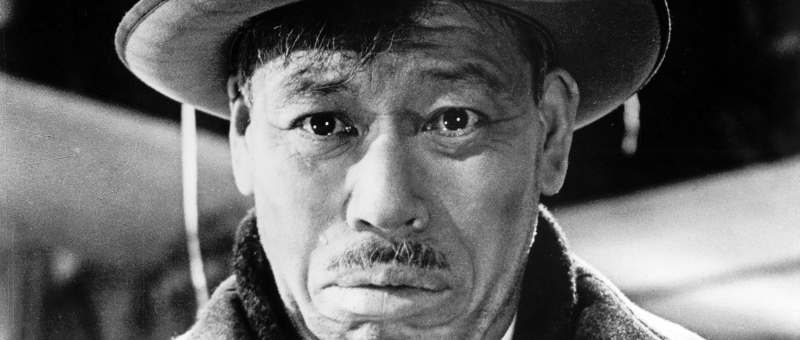
As the opening voice over reveals to to us, Watanabe (Takashi Shimura) is man who died long ago or perhaps has never truly been alive. In some senses, he is nothing more than an embodiment of the seal he uses to stamp documents day in day out, a mere piston in an ever turning machine of relentless bureaucracy. A young woman, Miss Odagiri (Miki Odagiri), working in the Public Affairs department loudly reads out a joke someone has written about their boss, Watanabe, who has taken not a single day’s holiday in 30 years suggesting that it’s less that he fears city hall will grind to a halt without him than they’ll suddenly figure out city hall has no need of him at all. The irony is city hall does indeed grind to a halt in Watanabe’s absence as he, unthinkably, fails to turn up for work for days on end as the papers pile ever higher on his desk. “Nothing moves here without his seal” one of the workers admits, bewildered by this sudden break with protocol while salivating over its implications in the possibility that Watanabe’s chair may soon be empty. 

Yet Watanabe’s crisis is that he’s realised he’s wasted his life on a pointless bureaucratic career that’s done little more than keep a roof over his head. Even the roof is a fairly modest one and it’s clear that his grown up son Mitsuo (Nobuo Kaneko) considers him to be a stingy old miser, unable to understand why he’s never spent so much as a penny on himself and lives in a kind of self-imposed austerity. Perhaps to Watanabe this is what constitutes properness. He’s done everything he was supposed to do, got a steady job at city hall and eventually became the head of department, but now he feels foolish and lonely. Mitsuo and his wife seem to resent him and talk openly about their plans to use their inheritance, along with Watanabe’s retirement bonus, for a downpayment on a “modern” home the polar opposite of the pre-war townhouse where the family continue to live. 

Mitsuo and Kazue (Kyoko Seki) are perhaps emblems of the increasingly empty consumerism of the post-war era, emotionally disconnected from Watanabe and seeking only the flashy and new. Miss Odagiri, the young woman from work, immediately says that she’d love to live in a home like Watanabe’s rather than the crowded multiple occupancy flat she currently inhabits with her family. Cheerful and outgoing, Odagiri is on the other hand a symbol of a new generation that wants something more out of life than simple material comfort and might even be willing to trade it for a small amount of happiness. Having worked at city hall for all of 18 months, she decides that she just can’t take it anymore and is quitting to get a job in a factory making toy rabbits that she says allow her to feel as if she’s making friends with all the babies in Japan. 

To that extent, Watanabe is himself also a baby craving Odagiri’s company admitting that he envies her youth and vitality in realising he squandered his own and will never get it back. How uncomfortable it must be for her, their final meeting in a restaurant sandwiched between a loving couple and teenage girl’s birthday party as Watanabe, gaunt and shrunken, claws at the air and begs her to help him live. Yet even within the grotesquery the tone is ironic, the strains of “Happy Birthday” accompanying Watanabe down the stairs as a the high school climbs up to meet her friends signalling his (re)birth as a man with purpose and determination. Just as Odagiri had found meaning in the rabbit, Watanabe finds it deciding to get a playground built over a post-war swamp in the slums filled with raw sewage and mosquitos that left the local children ill. 

Yet children’s parks aren’t particularly profitable which is presumably why the petition to build one had been kicked all round city hall in the infernal wheel of bureaucracy in which Watanabe too is trapped. “You call this democracy?” one of the women bringing the petition asks, taking the clerk to task complaining that all they do is fob them off insisting it’s someone else’s responsibility to help while determined only to guard their own turf. “You’re not supposed to do anything at city hall” someone ironically adds, “the best way to protect your place in this world is to do nothing at all”. Watanabe did nothing at all for 30 years and it got him nowhere, his dedication to his job disrupting his relationship with his son though Watanabe is ironically one of the most emotional men and engaged fathers seen on screen in the post-war era. 

After his death, in the park he helped build for which the deputy mayor has taken credit, his colleagues put him on trial at the wake trying to work out why he did it and whether or not he even knew he was dying seeing as he told no one close him not even the son whom he felt he could no longer trust. They deny his role while both praising and condemning his passion as somehow improper, disrupting the dispassionate rhythms of the bureaucratic machine with human emotion. It was only coincidence, they say. The deputy mayor wanted an election and the yakuza wanted to turn the swamp into a red light district. “Did he think he could just build a park?” someone adds, bemused by his effrontery as a man from Public Affairs straying into the Parks Department’s territory. You have to protect your turf after all. Finally moved by Watanabe’s last ditch bid to make his life mean something, to feel alive and know he has lived, the the drunken salarymen, all but one who retreats to look at Watanabe’s photo above the altar, swear to follow his example. 

But of course the bureaucratic wheel keeps turning, another dangerous sewage problem diverted to another department continuing the literal pollution of the capitalistic post-war society. A kind of ghost story, Kurosawa lights Shimura from below, shadows cast across his gaunt face even by his “rakish” new hat while his huge eyes have a somehow haunted, grotesque quality filled with hungry desperation. Yet it’s to childhood that Watanabe eventually returns, “perfectly happy” sitting on a swing singing a song from his youth about the price age while surrounded by snow and at last painfully, absurdly alive. 


Ikiru screens at the BFI Southbank, London on 4th & 15th February 2023 as part of the Kurosawa season.

Original trailer (English subtitles)

The Silent Duel (静かなる決闘, Akira Kurosawa, 1949)

Amid the labour strikes crippling Toho in the late ‘40s, Akira Kurosawa formed an association with other directors and film professionals and began working with different studios, the first being Daiei on a loose adaptation of a popular play in which an idealistic doctor struggles with his repressed desires while watching others wilfully embrace post-war selfishness and cynicism. Like many of Kurosawa’s films from this period, The Silent Duel (静かなる決闘, Shizukanaru Ketto) is essentially a meditation on post-war moral decline and what’s needed to correct it but also if somewhat accidentally the destructive effects of secret keeping and miscommunication. 

Kurosawa opens the film in 1944 with exhausted field medic Kyoji (Toshiro Mifune) operating on a badly wounded solider, Nakata (Kenjiro Uemura). Distracted by the constant dripping of a leaky roof, the adverse weather conditions outside, and the general stressfulness of the situation, Kyoji makes the fateful decision to remove his gloves to better accomplish the fiddly operation he is performing only to drop a scalpel and cut himself. He continues with the surgery, but realises that Nakata is likely infected with syphilis which he may have contracted through the wound on his finger. Kyoji tells Nakata, otherwise recovering well, that he should make sure to seek treatment but overhears him boasting that his injuries may soon save him from the battlefield. Kyoji continues to serve but is unable to treat the infection effectively with the limited resources available to him as a frontline medic allowing the disease to continue its progression largely unmitigated.

Taking a job at his father’s obstetrics clinic on his return to Japan, Kyoji breaks off his longstanding engagement to pre-war girlfriend Misao (Miki Sanjo) who has been waiting for him the last six years but refuses to explain to her why he cannot go through with their marriage. She assumes it must in some way be related to his war trauma, and in a way it is. The syphilis is an obvious metaphor for the corruptions of militarism. He declines to explain, he claims, because he is certain that Misao would vow to go on waiting for him until the disease is cured which would take at least three to five years assuming it can be cured at all. As she is already 27, he would be taking away Misao’s opportunity to make a happy marriage and have children with another man. In any case, he makes her decision for her which ironically conflicts with his later statement that she should be free to seek happiness on her own, not least because it seems she has been pressured into an arranged marriage by her financially troubled father. The act of childbirth is symbolically relevant though he does not seem to consider the idea of a platonic marriage perhaps uncertain that he could go on repressing his desires as a married man. So morally upright is he, that he also refuses to lie, saying nothing rather than allowing Misao to believe that he has fallen out of love with her, met someone else, or has another war-related issue that prevents his marrying her. Nor does he seem to consider telling her that he has syphilis and allowing her to come to the same conclusion as everyone else, that he contracted it through sleeping with sex workers during his military service which is most likely how Nakata became infected. 

The stigma associated with the disease adds a further dimension to Kyoji’s frustration given that he describes himself as having wilfully sublimated his physical desires in order to be able to return to a “peaceful marriage” with Misao whereas as Nakata who satisfied himself without a second thought returned home symptomless, married, and is soon to be a father. Re-encountering him by chance, Nakata who seems to have become wealthy doing something that is likely immoral if not illegal, tells Kyoji that his sickness is cured but does eventually bring his wife in for a free checkup to discover that he has passed the disease to her and to their unborn child. Yet even confronted with the truth, Nakata lies again and suggests that Kyoji has made all this up as revenge for something that happened in the war keeping the fact that he infected him from his wife. He blames Kyoji for destroying his family rather than accept his own responsibility and sees nothing wrong in his actions until directly confronted with the body of his stillborn child apparently so deformed and monstrous that they wouldn’t let the mother see it. 

The two men have clearly taken different paths, Kyoji certain that he must put others before himself and suppressing his own desires to ensure he cannot pass the disease on while Nakata buries his head in the sand and ignores it. It is a kind of metaphor for the post-war future, those like Kyoji acknowledging that the legacy of wartime trauma is something that must be acknowledged and actively healed before happiness is possible while those like Nakata simply plow on like nothing ever happened with no thought or consideration for those around them. Yet it is also Kyoji who lies by omission even in his selflessness just Nakata lied to his wife while the truth is only discovered by accident, firstly by reluctant nurse Minegishi (Noriko Sengoku) who walks in on him injecting the remedy for syphilis, she in turn then overheard by Kyoji’s father (Takashi Shimura) while Minegishi then overhears the explanation Kyoji gives him. She in a sense completes the cycle when she asks Misao to apologise to Kyoji on her behalf as she is too embarrassed to do so herself after realising that she got him wrong having resolved to turn her life around after learning of the depths of his selflessness. 

Minegishi had been a nightclub dancer who tried to take her own life after becoming pregnant by a man who abandoned her but was saved by Kyoji who gave her a job at the clinic and convinced her to raise the child. It’s this child, at first unwanted but later loved and embraced by all despite the stigma of his being born out of wedlock, that offers the clearest path towards a healthier future suggesting that the solution lies in accepting the past with a willingness to make something new out of it rather than in wilful denial and resentful self-interest. Yet Kyoji is also human and privately resentful. “If I’d known it would happen to me I would’ve done things differently” he sneers petulantly suggesting that his properness may be an affectation rather than deeply felt conviction but equally frustrated in feeling his fate is unjust and that he’s suffering for someone else’s sin. 

“Because of the blood of a shameless guy, my body became dirty without knowing any pleasure” he complains, hinting at a metaphor for his wartime contamination dragged into a conflict by forces outside of his control. The roles he plays are ironic, firstly a healer in a place of death and destruction and then as a deliverer of life at his father’s obstetrics clinic though he fears he will never have children of his own. He is in a sense trapped by his past as shown in the repeated visual metaphor of the closed gates outside the clinic on which the flowers that represent his relationship with Misao and hope for the future gradually wither. Minegishi tells him she’s in love with him and is willing to accept the risk of his disease to alleviate his desire, but he once again chooses to say nothing, immediately returning to business. As his father points out, he has (for the most part) resolved to channel his resentment into helping those less happy than himself but if he had been happy he may have become a snob, indifferent to the suffering of others. In some ways his problem is the familiar giri/ninjo conflict as he fights a silent duel within himself between his natural desires and his better nature but it’s also a battle against the slow poison of the wartime legacy through compassion and selflessness that may, like his inescapable illness, eventually drive him into madness.


The Silent Duel screens at the BFI Southbank, London on 2nd & 11th February 2023 as part of the Kurosawa season.

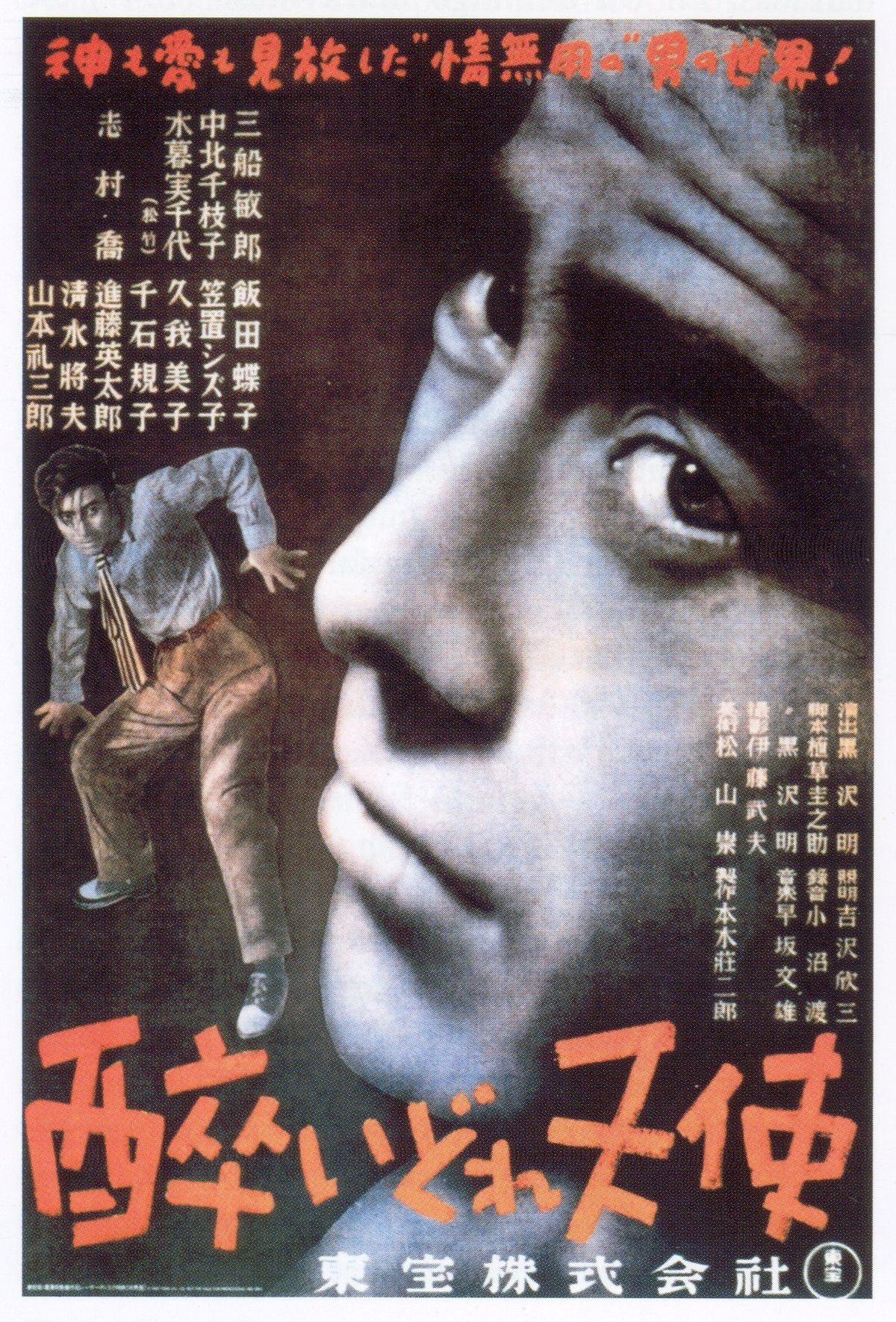
Drunken Angel (酔いどれ天使, Akira Kurosawa, 1948)

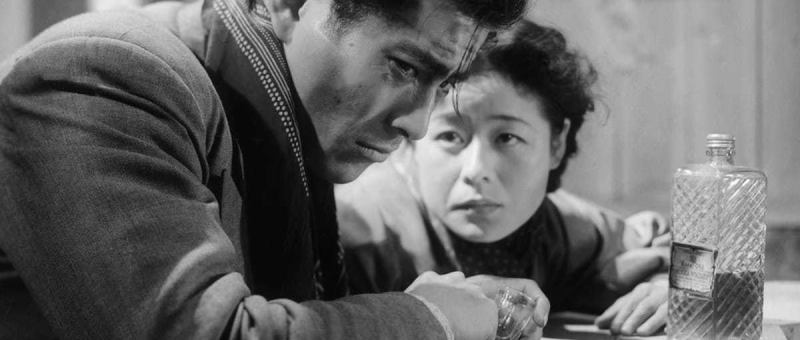
A gruff yet well intentioned doctor does his best to cure the ills of post-war Japan in a rundown slum on the edge of a fetid swamp in Akira Kurosawa’s noir tragedy, Drunken Angel (酔いどれ天使, Yoidore Tenshi). The doctor is most obviously the drunken angel of the title though it could equally apply to the unhappy yakuza he tries so hard to redeem whom most agree is not suited to that kind of life and trapped by the feudalistic thinking of the pre-war past.

Matsunaga (Toshiro Mifune) is the big man around town, but jaded physician Sanada (Takashi Shimura) sees straight through him. “He acts tough and swaggers around but I know in his heart he’s incredibly lonely,” Sanada tells his assistant, Miyo (Chieko Nakakita), a young woman he took in to help her escape the clutches of the violent yakuza ex who left her with syphilis. Miyo bemoans Sanada’s terrible bedside manner and tendency to bully his patients but praises his dedication and remarks that few doctors go as far for those under their care as he does especially ones like these who don’t often have the money to pay. This is a little ironic given Matsunaga’s original objection that he doesn’t trust doctors because it’s not in their best interests to cure you, something which Sanada jokingly acknowledges while expressing the futility he feels in the face of the mass sickness that confronts him. 

When Matsunaga first comes into his office, Sanada remarks that’s its not just his lungs that are sick, he’s sick to the core. But still he seems to think that Matsunaga can be saved, not just physically but spiritually redeemed if only he can coax him away from the yakuza underworld. Matsunaga is suffering from tuberculosis, a common disease of the post-war era and closely linked to the squalid conditions in which he lives which are themselves symbolised by the swamp in the centre of town onto which Sanada’s clinic backs. Sanada tries to warn the local children not to play in it because of the risk of typhus not to mention the mosquitos it attracts but the kids don’t really listen to him and shout back that he’s “just a drunk”. Yet the swamp represents a world upside-down, the neon sign for the No. 1 cabaret bar constantly reflected in its bubbling waters while as the film opens we see a trio of sex workers preparing to head into the red light district and a pair of petty thugs fighting while a young man plays Spanish guitar on the ruins of a bomb damaged building. 

It’s as if it were this world that is slowly consuming Matsunaga, an old-school yakuza who insists “we still believe in things like honour and loyalty” certain that the big boss will side with him against the returned upstart Okada (Reizaburo Yamamoto), Miyo’s yakuza ex, even as Sanada tells him it’s money that matters and Matsunaga no longer makes any. Everyone tells him that he already looks like a ghost, his appearance increasingly gaunt in his parallel decline as the illness takes hold and he begins to lose his status to Okada only to overhear his boss call him an “amateur” that he was only keeping around as a potential sacrifice. In the end, Matsunaga is too good for this world. Naively believing in things like honour and loyalty which no longer mean anything in the dog-eat-dog post-war society he is left with nothing other than a nihilistic bid for vengeance and a desire to repay Sanada’s faith in him if only in the most ironic of ways. 

Like Matsunaga, Sanada sometimes says the opposite of what he means claiming that he doesn’t care what happens to Matsunaga but is determined to wipe out the TB inside him to stop it spreading it to others. He’s on a mission to “sterilise this contaminated town” by eradicating the twin threats of disease and the yakuza, calling Matsunaga a coward for failing to face his fear and loneliness succumbing to the quick fixes of his hedonistic yakuza lifestyle. He’s not perfect either, a doctor who drinks his medical ethanol supplies and berates his patients when he them catches out them out drinking when he told them not to, but is also very at home with who he is and doing his best with it. His disappointment in Matsunaga is mainly in his swagger, the false bravado that masks his human frailty and unwillingness to face his fear of death which manifests itself in a hauntingly expressionistic dream sequence. Using silent cinema composition and canted angles Kurosawa conjures a world of constant uncertainty amid the vagaries of the post-war society in which the only sign of salvation is a drunken doctor and his “rational approach” to the sickness of the age.


Drunken Angel screens at the BFI Southbank, London on 2nd & 10th February 2023 as part of the Kurosawa season.

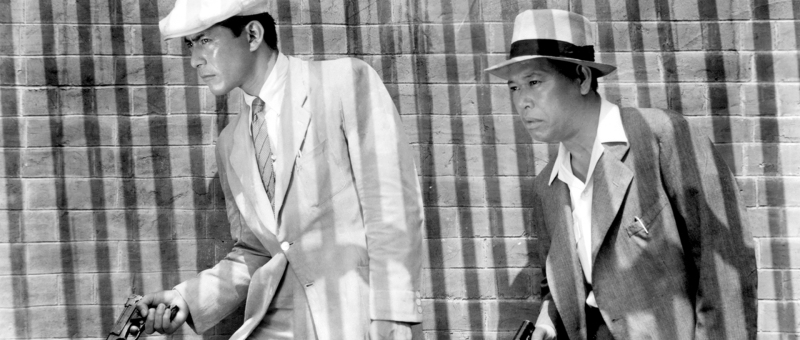
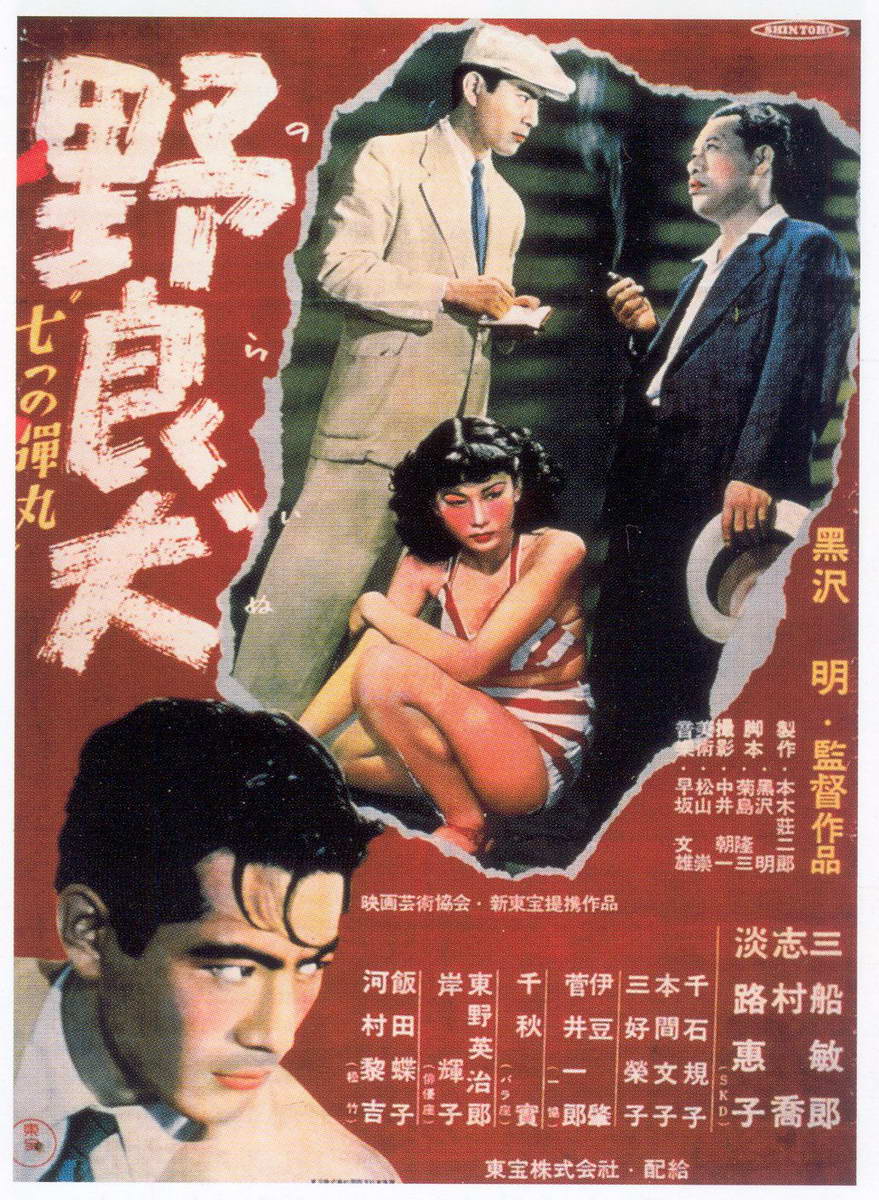
Stray Dog (野良犬, Akira Kurosawa, 1949)

“And, yes, I think the world’s not right. But it’s worse to take it out on the world” the conflicted policeman at the centre of Akira Kurosawa’s Stray Dog (野良犬, Nora Inu) explains as he struggles to reacquire his sense of authority while weighing up its limits and his own right to pass judgement on what is right or wrong or merely illegal. He must ask himself how he can enforce the law while faced with the reality that the man he chases is an echo of himself, the him that took another path amid the chaos, confusion, and despair that followed in the wake of defeat and occupation even as his well-meaning mentor insists that some people are good and others bad and he won’t be able to do his job if he gives it much more thought than that.

The policeman, Murakami (Toshiro Mifune), is perhaps the stray dog of the title who can only follow the straight path towards his missing gun taken from him on a sweltering bus in the middle of summer while he was distracted not only by the heat but by exhaustion having been up all night on a stakeout. As we later discover, Murakami is a rookie cop and recently demobbed soldier trying to make a life for himself in the post-war society. In this he is quite lucky. Many men returned home and struggled to find employment leaving them unable to marry or support families, a whole pack of stray dogs lost in an ever changing landscape. This must have weighed quite heavily on his mind as he made the decision to resign from the police force to take responsibility for the laxity that led to the gun possibly ending up in the wrong hands only to discover his superiors don’t regard it as seriously as he does. His boss tears up the letter and tells him to turn his defeat into something more positive by trying to do something about it, which might in its own way be a metaphor for the new post-war society. 

So closely does Murakami identify himself with his gun that on hearing it has been used in a violent robbery it’s almost as if he has committed the crime and is responsible for anything it might do. There is an essential irony in the fact that this weapon that was supposed to prevent crime is being subverted and used in its service as if mirroring the paths of the two men who both returned to a changed Japan and had their knapsacks stolen on their way back home. Murakami has chosen the law, while the thief Yusa (Isao Kimura) is thrown into nihilistic despair unable to make a life for himself. Murakami’s sense of guilt is further compounded on realising that he may have frustrated Yusa’s attempt to turn back, returning the gun to the underground pistol brokers who make their living through selling illegal weapons stolen from police or bought from occupation forces.

As he admits, Murakami could have ended up committing a robbery but realised he was at a dangerous crossroads and made a deliberate choice to join the police instead. He literally finds himself walking the other man’s path when he’s told by a pickpocket, Ogin (Noriko Sengoku), that the underworld pistol dealers will find him if he walks around downtown looking like he’s at the end of his rope. Ogin, the woman reeking of cheap perfume who stood next to him on the bus, was once known for her fancy kimonos but is now in western dress, signalling perhaps a further decline. In this age of privation, only kimonos and rice have held their value and it’s not unreasonable to assume that she’s sold all of hers and joined the modern generation. Ogin doesn’t have anything to do with the theft, but seems to take pity on Murakami seeing him as naive and essentially unable to understand the way things work on the ground. His mentor, Sato (Takashi Shimura), seems to understand too well, on one level looking down on those like Ogin as simply bad but otherwise happy in her company knowing exactly how to get what he wants through their oddly flirtatious conversation as they suck ice lollies and smoke illicit cigarettes in the interview room. 

Dressed in a ragged military uniform, Murakami wanders around the backstreets of contemporary Tokyo past street kids and sex workers and groups of men just hanging around. Kurosawa employs montage and superimposition to reflect the endless drudgery and maddening circularity his of passage under the stifling heat of summer in the city that allows him a better understanding of what it is to live in this world. Even so, the boy who eventually makes contact seems to see through him pointing out that he looks too physically robust to pass for a desperate drifter. Yusa meanwhile is wiry and hollow, a frightened man who uses Murakami’s gun to affect an authority he does not own which might explain why both of his victims are women. Sato emphasises the worthiness of their victimhood, explaining that the first was robbed of the money she’d saved over three years for her wedding meaning she might have to wait even longer at which point there would be no point getting married at all, while the second woman was killed at home alone and defenceless. We’re also told that her body was nude when discovered which raises the question of whether she might have been assaulted before she died which would cast quite a different light on Yusa’s crimes no longer an accidental killer but a crazed rapist well beyond salvation. 

Yet the accidental nature of Yusa’s fall does seem to be key. The trigger seems to have been a childhood friend he’d fallen in love with gazing at a dress he could never afford to buy for her, pushed into a corner by his wounded masculinity and taking drastic action to reclaim it in much the same way Murakami later does in searching for his missing gun. In their final confrontation they grapple violently in existential struggle in a small grove behind some posh houses where a woman plays a charming parlour tune on the piano pausing only for a few moments to peer out of the window on hearing gunshots. Murakami retrieves his gun and the pair fall to the ground side by side to be met by the sound of children singing, provoking a wail of absolute despair from a defeated Yusa suddenly hit by the full weight of his transgressions. He too was a stray dog heading straight in one direction driven out of mainstream society by the unfairness of the post-war world. Sato tells Murakami that he’ll eventually forget all about Yusa, that he’ll become “less sentimental” and accept the world is full of bad guys and those who fall victim to them, but Murakami doesn’t seem too convinced, for the moment at least unable to forget that Yusa was man much like himself only less lucky or perhaps simply less naive.


Stray Dog screens at the BFI Southbank, London on 1st & 13th February 2023 as part of the Kurosawa season.

Hero (世间有她, Li Shaohong, Joan Chen, Sylvia Chang, 2022)

The latest addition to the growing sub-genre of Chinese pandemic movies, tripartite anthology film Hero (世间有她, Shìjiān Yǒu Tā, AKA Her Story) is the first to root itself in the lives of contemporary women just as they are disrupted by the arrival of COVID-19. As might be expected, the themes are largely those of love and endurance which draw additional poignancy from a Lunar New Year setting that prioritises family reunion but may also be in their way reactionary in reinforcing patriarchal social codes while implying that it might be the women who need  to give a little and reassess their notion of what’s really important. 

Directed by Li Shaohong, the opening sequence pits 30-something mother Yue (Zhou Xun) against her domineering mother-in-law, Ju (Xu Di), whose love and care for her son and grandson borders on the destructively possessive. Yue is the first to contract the mysterious new form of pneumonia then taking hold in Wuhan, prompting Ju to immediately try and kick her out of her own flat while insisting her son, Kai, and grandson, Dongdong, come back with her to another city further north. When lockdown is declared in Wuhan, the grandmother is trapped with the family but her acrimonious relationship with Yue adds to an already stressful situation. After Ju comes down with COVID too, Kai and Dongdong take refuge in the empty flat of a friend leaving the two women alone but mainly phoning Kai to complain about each other. 

A phone call from Yue’s parents eventually forces Ju into a reconsideration of her corrupted filiality as she remembers that Yue is also someone’s daughter and a mother herself. She accepts that Yue’s criticism of her as overly invested in her son’s life is fair and mostly born of her loneliness rather than an attack on her otherwise conservative values that imply she exists only in service of the men of the family, while realising that by failing to take proper care of herself she accidentally increases the burden on those around her and should instead agree to care and be cared for as a part of a harmonious community. 

This question of interdependence also raises its head in the third chapter directed by Sylvia Chang set in Hong Kong and filmed in Cantonese. Chang’s segment is not really much about the pandemic save for the additional strain it places on the relationship between press photographer Chelsea (Sammi Cheng Sau-man) and her husband Daren (Stephen Fung Tak-lun) with whom she is in the process of separating. When their son develops a fever, they end up in a blazing row discussing the reasons their marriage is falling apart which relate mostly to differing views of contemporary gender roles with Daren apparently reluctant to do his fair share at home while lowkey resentful that Chelsea has not only continued to work but is professionally ambitious especially as, it’s implied, his salary is not really enough to support a family of four on its own. The family also have a Filipina helper who in a rather poignant moment is heard singing happy birthday to her own child back in the Philippines whom she cannot see because she’s earning money taking care of Chelsea’s. Like Yue, Chelsea is also prompted to consider what’s most important, but the implication seems to be that she’s the one in the wrong and should learn to prioritise her family while her husband is more or less vindicated rather than encouraged to change. 

Only the middle section, directed by Joan Chen, attempts to deal with the gaping losses of the pandemic era as a young woman, Xiaolu (Huang Miyi), tries to gather the courage to tell her parents, who are still hoping she’s going to hook up with a now successful childhood friend, that she’s going to marry her uni boyfriend, Zhaohua (Jackson Yee), who’s stayed behind in Wuhan to look after their cat while she returns to Beijing for Lunar New Year. Xiaolu keeps in regular contact by phone but soon discovers that Zhaohua has become ill with a mysterious illness. She immediately decides to return to Wuhan but he warns her not to because it isn’t safe and shortly thereafter the city is locked down while she and her family are placed under quarantine in Beijing. Shot in a washed out black and white only the various FaceTime conversations between the young couple are in colour hinting at the greyness that now surrounds Xiaolu’s existence and the distance between herself and the happy life in Wuhan which has now been taken away from her. 

The film’s Chinese title more literally means “the world has her” or maybe more simply implies that she is in the world, more of an everywoman contending with the extraordinary than the “hero” of the title though the survival of the three women is in its own way also of course “heroic”. This concept of heroism may however be somewhat problematic in its emphasis on patriarchal social codes which insist that their first and only duty is to the family even if the message of holding your friends and relatives closer in the wake of disaster is universally understandable. Nevertheless, it does perhaps pay tribute to the women’s perseverance and determination to seek kindness and love even in the most difficult of times. 


Hero streams for free in the US and Canada until Feb. 5 as part of Asian Pop-Up Cinema’s Lunar New Year celebration.

Original trailer (English subtitles)

So Long Summer Vacation (暑期何漫漫, Bo Ren, 2021)

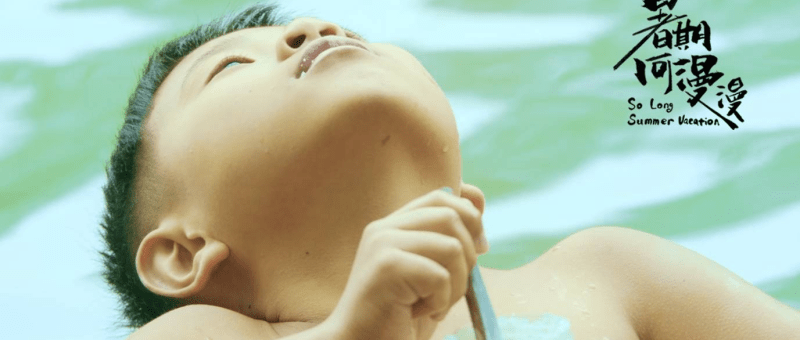
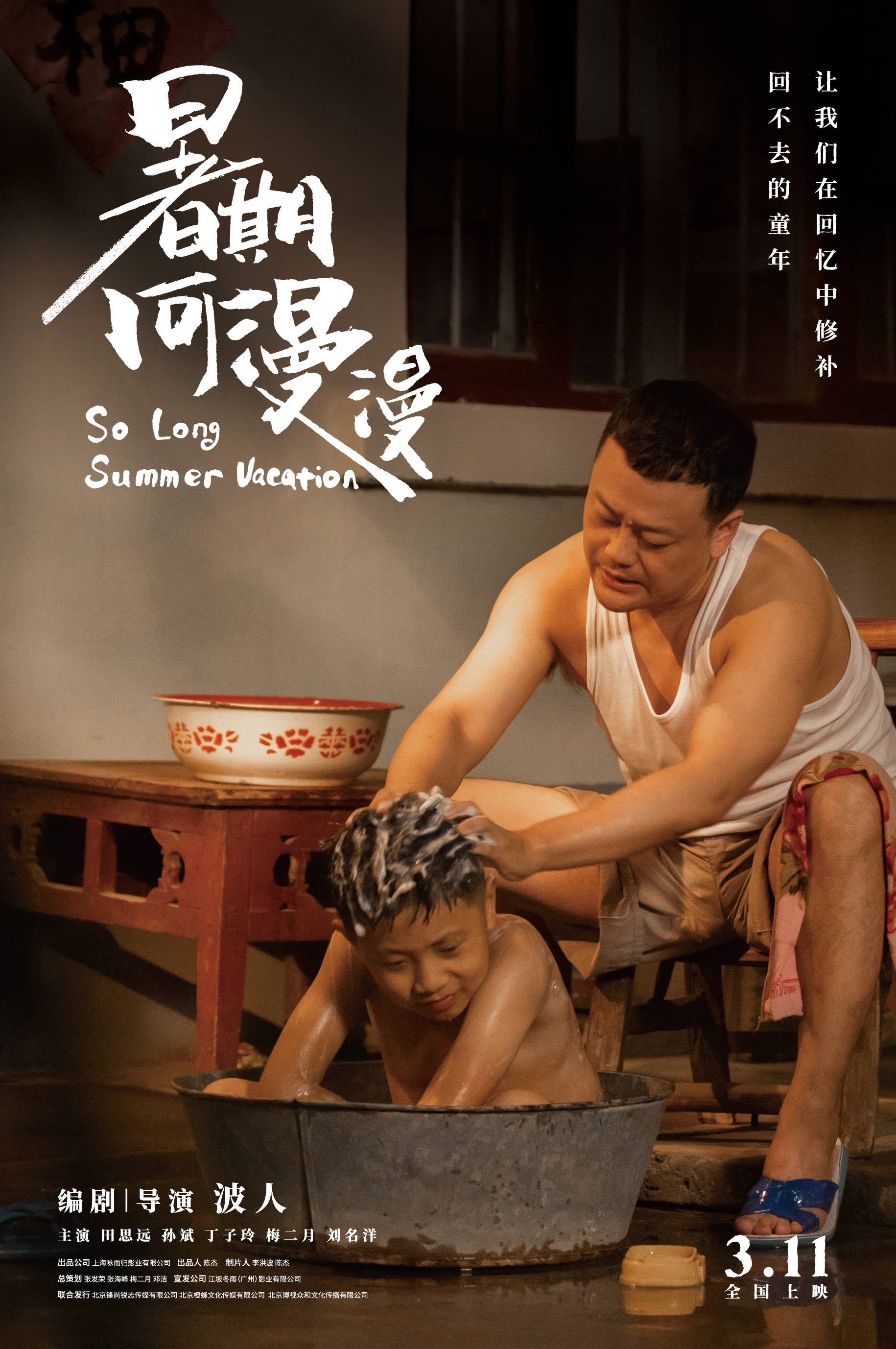
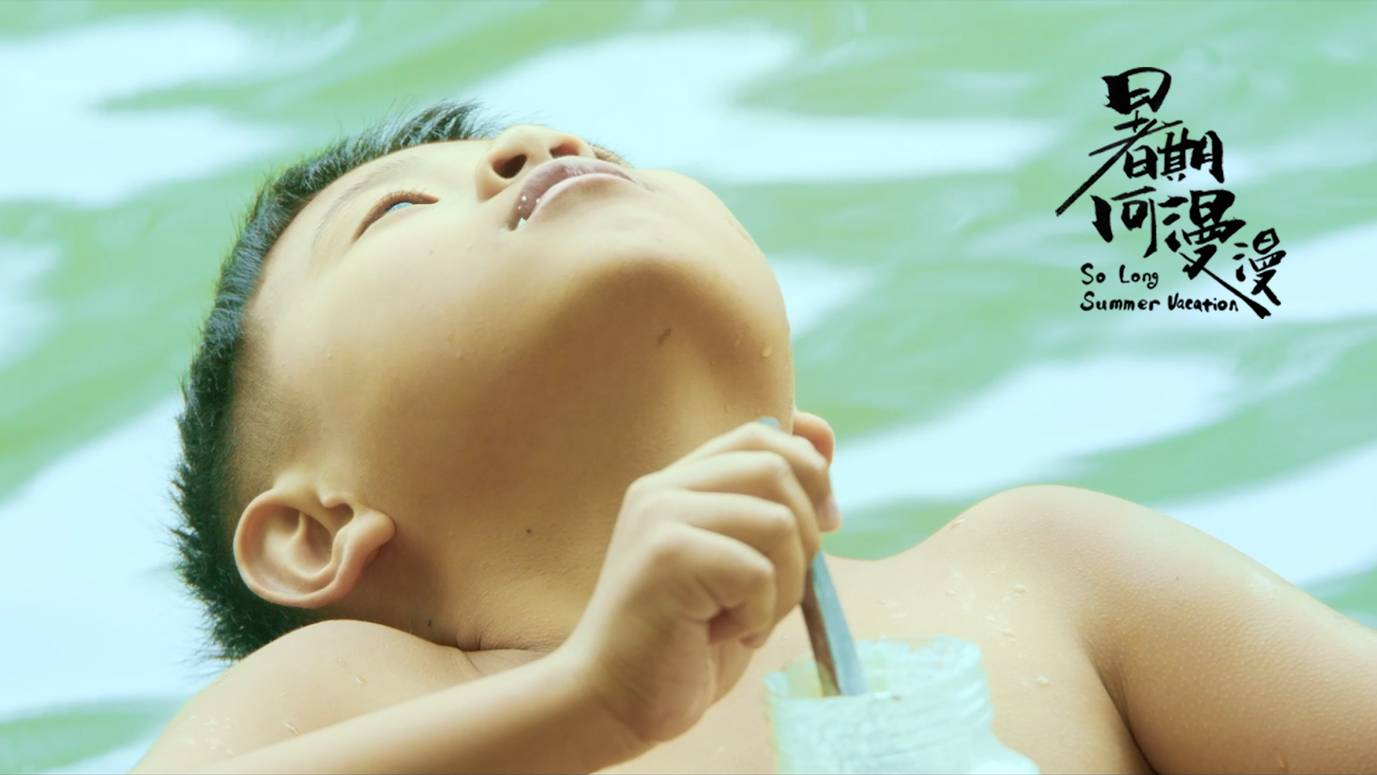
A small boy tries to work out what to do with a seemingly endless and infinitely boring summer in early ‘90s rural China in Bo Ren’s nostalgic childhood dramedy, So Long Summer Vacation (暑期何漫漫, shǔqī hé mànmàn). Told largely from the boy’s point of view, the film meditates on a China in the midst of transition along with the effects of the pre-reform work system on the family, the One Child Policy, sexism and conservatism all while the hero watches and learns.

All Xiaojin (Tian Siyuan) really wants for this summer is to learn to swim in the river, but his parents have banned him from going near it for the understandable reason that it’s dangerous. Usually, his father’s (Sun Bin) parents would be around to look after him, but they’ve decided to spend the summer with their other son while his father objects to his mother’s (Ding Ji Ling) idea of sending him to stay with his maternal grandma further out into the country because he thinks she’s too indulgent and last time he got into trouble for digging up the neighbours’ radishes. As Xiaojin is already 12 years old, they decide to let him stay home alone, but they also lock the front gate and tell him to spend his time studying though there’s not much else to do and he’s evidently bored and lonely as a child of the One Child Policy stuck in the house all day on his own. 

His problem is compounded by the fact that most of his friends have also gone away for the summer, the boy from next-door despatched to Shenzhen to spend time with his absent father. But while Weidong is away, Xiaojin begins to understand the hidden sadness of his mother, auntie Fengying (Mei Eryue), who has taken to having presents sent to herself to pick up at the local post office pretending that they are from the husband who otherwise seems to have abandoned her. As she tells Xiaojin, aside from the office job that affords her a slighter higher status than her factory worker neighbours, she has nothing to fill her time other than a little gardening. As no one else has much to do either, her life also becomes fodder for one of the few available activities, gossip, with the other neighbourhood ladies making scandalous allusions to her many “affairs” which are sadly unfounded. Pushed to the brink by the hopeless of her life, she even begins to consider suicide.

Xiaojin’s parents, meanwhile, are mainly consumed by their role as workers and left with little time to look after him. His father is preoccupied by the factory’s 100-day labour competition, seemingly less excited about the prospect of winning a significant prize than being “busy with work” and showing off his dedication through his productivity, while his mother is a seamstress who sometimes works unsociable hours. Little Xiaojin is pretty self-sufficient and as he is fond of saying has figured out how to do things like light a stove or cook a meal simply through having observed his mother and grandmother doing the same, but is obviously lonely at one point agreeing to swap one of his father’s valuable stamps with another boy on the condition that he comes to play with him for only three days. The other boy, Bin, hadn’t really wanted to because there’s “nothing to do” at Xiaojin’s house whereas his family has a TV set which still seems to be a rarity in the local area. 

When Bin takes Xiaojin to the river and they end up getting into trouble, one could argue that it wouldn’t have happened if only his parents had taught him to swim whether in the river or in a modern pool as his father suggested doing but never followed through. But their response is to tie him to a bench and beat him so badly that auntie Fengying and the other neighbours bang on their door and tell them to stop. Even grandma from the country who’s somehow ended up finding out about it comes straight over to tell them off, basically sending them to their room to think about what they’ve done while she looks after Xiaojin and asks the ancestors for their forgiveness. Part of his Xiaojin’s anxiety had rested on the fact that, because of the One Child Policy, she has only one son and has the twin pressures of needing to get it right with Xiaojin so that he grows up into a responsible member of society and living in constant fear that something will happen to him and they’ll be left alone in their old age. A short coda featuring Xiaojin in the present day as a father raising a son of his own suggests he’s doing things a little differently but still reflecting on that one very boring summer when the highlight of his day was ripping a page off the calendar and the only thing he wanted was to be able to swim in the river.


So Long Summer Vacation streams for free in the US and Canada until Feb. 5 as part of Asian Pop-Up Cinema’s Lunar New Year celebration.

Trailer (Simplified Chinese / English subtitles)
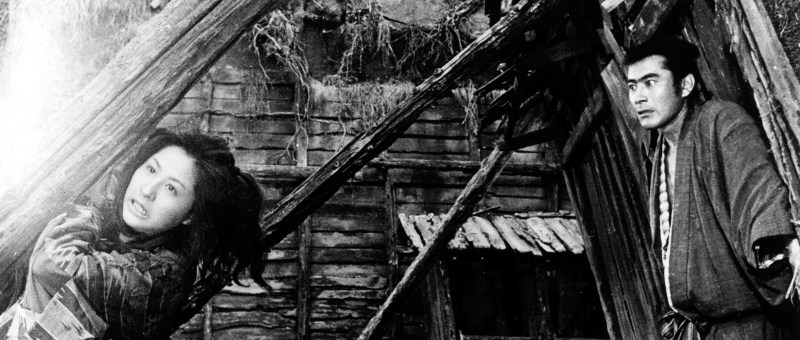
Lighting Up the Stars (人生大事, Liu Jiangjiang, 2022)

An immature young man recently released from prison for assaulting his girlfriend’s lover finally begins to grow up when unexpectedly saddled with looking after a grumpy little girl otherwise unwanted by her remaining family members in Liu Jiangjian’s feel good tearjerker, Lighting Up the Stars (人生大事, Rénshēng Dàshì). As much a tale of finding an accommodation with death and learning to move on as it is of the joys of forged families and unexpected connections, Liu’s drama is as the Chinese title suggests very much about the big things and what it takes to realise what they are. 

At this point in his life, San (Zhu Yilong) hasn’t been giving much thought towards the big things largely because he is consumed by resentment and a sense of inadequacy. He’s keen on getting back together with old girlfriend Xi (Janice Wu Qian) but sends her worryingly controlling voice notes and later becomes violent when she tries to break up with him before discovering that she is pregnant and plans to marry the guy he went to prison for beating up. “I can’t see you becoming a good father” she explains, regarding him as too immature to support the family she is keen to start. San is stung by the suggestion, as he is by his elderly father’s constant needling and refusal to hand the family funeral business over to him, but also has to concede she has a point. 

Nevertheless, there is a kind of tenderness to him as seen in his gentle washing of the body of an elderly woman still lying on the bed where she died while her son and his incredibly callous wife try to organise an express funeral so they can take their spoilt son to Beijing to participate in an academic competition. Meanwhile, little Xiaowen (Yang Enyou) watches while hiding in a cupboard before bursting out and demanding to know what they’ve done with her grandma. It seems that no one has taken the time to explain to Xiaowen exactly what’s happened or what’s going to happen to her now seeing as her grandmother had been raising her. Charging around like Nezha pointing her spear at everyone she meets, Xiaowen sets off to rescue grandma by chasing San’s van and eventually ending up at the funeral parlour which she then refuses to leave. Her uncle comes to fetch her but shockingly decides to leave her there with San and his two friends, asking them to look after her until they get back despite having absolutely no idea if they are suitable people to be looking after a little girl. 

These tears in the fabric of the traditional family are in some ways a result of a contemporary society. Xiaowen’s aunt point blank refuses to have her, insisting that she doesn’t want to expend resources on someone else’s child while blaming her husband for paying too much attention to his niece and not enough to their bratty son who lets them all down by humiliatingly failing the Beijing exam. Her hyperfocus is a reflection of the One Child Policy and rising consumerism as she seeks to express her status as a mother through her son’s success while simultaneously ruining their familial relationships with her constant nagging and hard-nosed practicality. Xiaowen’s henpecked uncle simply goes along with it for a quiet life, obviously very upset by his mother’s death but unable to defy his wife. San meanwhile is at odds with his father and sister who think he’s no good, will never be able to settle down and live a conventional life, and is incapable of accepting the responsibility of the family business. San may think some of this too, living with a sense of inadequacy feeling as if he doesn’t measure up to his absent elder brother, while seemingly floundering in his attempts to make something of himself. 

Through his relationship with Xiaowen he finally begins to come into his own in accepting the responsibility of fatherhood, caring for her both physically and emotionally while repairing his fracturing relationship with his own father and coming to terms with the past. He teaches Xiaowen about death and how to accept it, but also reminds her that her grandmother’s never really gone and will always be with her. Finally, San begins to think about the big things but about the small things too, planting stars in the sky as Xiaowen puts it as they prepare to get on with the business of living even in the presence of death.


Lighting Up the Stars streams for free in the US and Canada Jan. 22 to Feb. 5 as part of Asian Pop-Up Cinema’s Lunar New Year celebration.

International trailer (Simplified Chinese, English subitles)

Asian Pop-Up Cinema Celebrates Lunar New Year with Free Streaming Series

Asian Pop-Up Cinema will be celebrating the Year of the Rabbit with a series of films streaming for free in the US and Canada from Jan. 22 to Feb. 5.

Lighting Up The Stars

Streaming via Eventive

Recently released from prison, a jaded young man expected to take over the family funeral business gains a new perspective when he’s suddenly charged with looking after a little girl after her grandmother passes away.

So Long Summer Vacation

Streaming via Eventive.

A little boy tries to stave off loneliness while largely left to his own devices during a particularly dull summer in this nostalgic coming of age film.

GG Bond Ocean Diary

Streaming via Smartcinemausa.com 

Latest in the long-running series of children’s animated movies following humanoid pig and secret agent GG Bond. This time he’s on a mission in search of a dangerous weapon hidden somewhere in the ocean.

Hero

Streaming via Eventive

Three-part anthology film with segments directed by Li Shao Hong (Wuhan Story), Joan Chen (Beijing story), Sylvia Chang (Hong Kong story) each of which focus on the lives and loves of women in the contemporary society.

Four Springs

Streaming via Eventive.

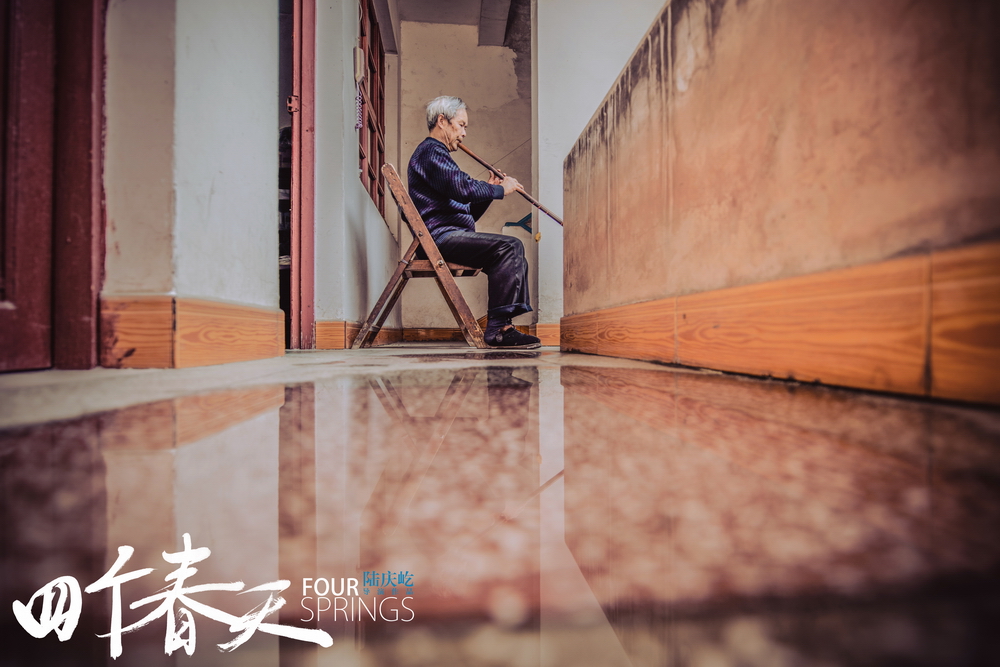
Director Lu Qingyi’s beautiful documentary follows his own family through four celebrations of New Year bringing with them both joy and sorrow. Review.

Each of the films is available to stream for free in the US and Canada Jan. 22 to Feb. 5. Simply register via the links above to receive a streaming link. You can find further information for all the films on Asian Pop-Up Cinema’s official website and you can also keep up with all the latest news by following the festival on Facebook, Twitter, and Instagram.

The Hidden Fortress (隠し砦の三悪人, Akira Kurosawa, 1958)

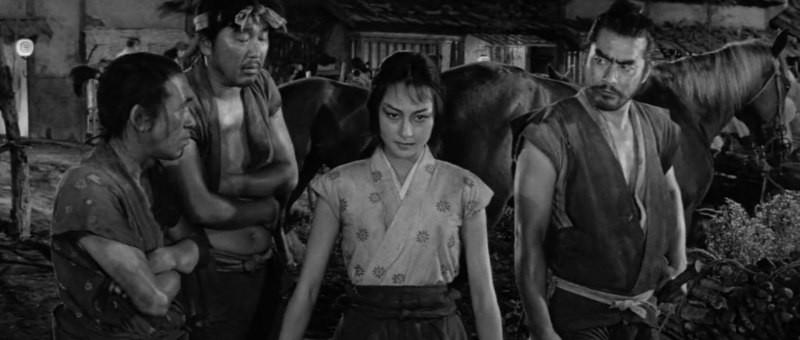
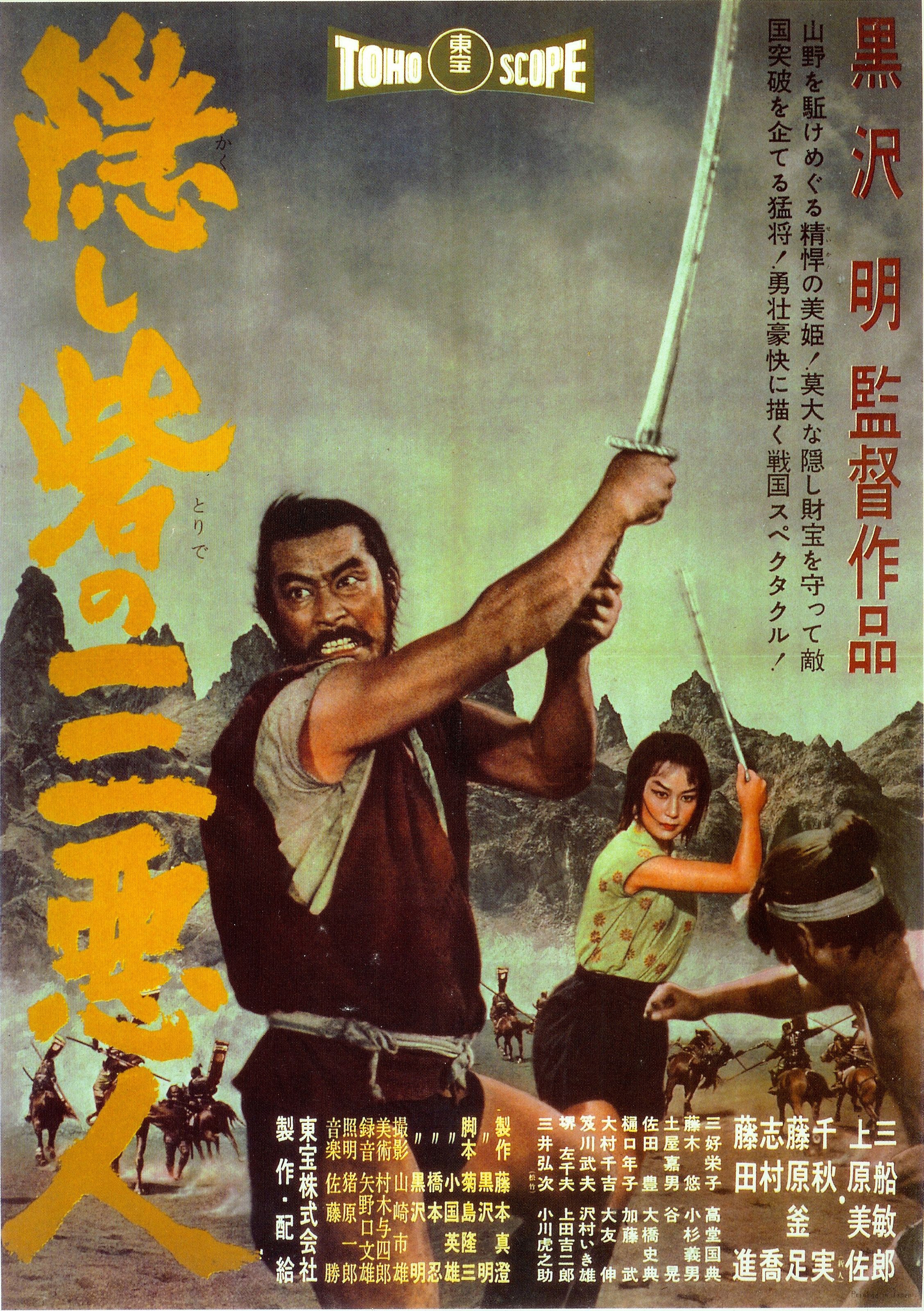
“Your kindness will harm you” a well-meaning retainer advises his charge, but in the end it is her kindness which saves her along with numerous others in Akira Kurosawa’s Sengoku-era epic, The Hidden Fortress (隠し砦の三悪人, Kakushi Toride no San Akunin). Largely told from the point of view of two bumbling peasants trying to get rich quick by exploiting the hierarchal fluidity of a time of war, the film nevertheless cuts against the grain of the democratic era in advocating not so much the destruction of the class-bound feudal order as benevolent authority. 

This can quite clearly be seen in the dynamic figure of displaced princess Yuki (Misa Uehara), the successor of her routed clan protected by a hidden fortress in the mountains which she must eventually leave. Her female servant laments that her father raised her as a boy which has given her a haughty and dominant manner at odds with the polite submissiveness usually expected of upperclass women. While often exerting her authority, she is otherwise uncomfortable with the uncritical servitude of her retainers, chief among them the talented general Makabe (Toshiro Mifune) who sacrificed the life of his own sister, allowing her to be executed in Yuki’s place buying them some time. “Kofuyu was 16. I am 16. What difference is there in our souls?” she asks, yet even if she believes their souls are equal she is not quite so egalitarian as to forget her position or the power and privilege that comes with it. 

Nevertheless, hers is an authority that is tempered by compassion and in the end chosen. Her salvation comes in speaking her mind to an enemy retainer, Tadokoro (Susumu Fujita), who has been savagely beaten by his own lord for losing a duel with Makabe who, to the mind of some, humiliated him with kindness in refusing to take his life leaving him to live in defeat. Yuki says she doesn’t know who is stupider, Tadokoro or his lord, for never would she punish a man in such a way simply for losing to an enemy. She tells him that there is another way, and that he need not serve a lord who does not serve him leading Tadokoro to defect and choose to follow her instead. 

She also inspires confidence in a young woman she insists on redeeming after discovering that she is a former member of the Akizuka clan sold into sexual slavery after being taken prisoner by the Yamane. Kurosawa presents the girl with a dilemma on realising that the mysterious woman who saved her is the fugitive princess, knowing that she could betray her and pocket the gold, but finds her resolving to serve Yuki all the more. In a moment of irony, we learn that the girl was bought for five silver coins, the same amount of money a wealthy traveller offers for Makabe’s horse, but displeases her master in refusing to speak or serve customers. For Yuki he offers gold, though withdraws on being told that she is mute. Knowing that she would be unable to disguise her speech or accent which would instantly give her away as a haughty princess, Makabe convinces her to stay silent though as she tells him he cannot make her heart mute too. 

Even the peasants, oblivious to her true identity, view Yuki as part of the spoils insisting that they should be entitled to a third of her too and at one point preparing to rape her only to be fought off by the rescued girl. “We can rely on their greed” Makabe had said, knowing that their material desires make them easy to manipulate and that their loyalties are otherwise fickle. Matashichi (Kamatari Fujiwara) and his friend Tahei (Minoru Chiaki) sold their houses in their village to buy armour in the hope of achieving social mobility through distinguishing themselves in war, but have largely been humiliated, robbed of their armour, mistaken for captured members of the enemy, and forced to dig the graves of others. They pledge eternal friendship but their bond is continually disrupted by the promise of monetary gain. They fall out over a moral quandary, one willing to plunder the body of a fallen soldier and the other not, while even on reuniting squabbling about how to divide the money first deciding it should be equal and immediately disagreeing as soon as they get their hands on it. At the film’s conclusion it rests on Yuki to play mother, telling them that they must be good and share the boon she’s given them equally without complaint each then too only quick to be generous insisting that the other can keep it. 

The implication is still, however, that Matashichi and Tahei should return to their village to live as peasants while Yuki assumes her place in a castle no longer hidden as its ruler. Order has returned and the old system remains in place, all that changes is that this is now a compassionate autocracy ruled by a benevolent lord who views her subjects lives as equal to her own yet not perhaps their status. Where it might prompt Tadokoro to conclude that he need serve no lord at all for there should be no leaders only equals, the film concludes that a leader should be just and if they are not they should not be followed. Then again, the disagreement between firm friends Matashichi and Tahei is ended when they each have enough and no longer find themselves fighting for a bigger slice of the pie content in the validation of their equality. As Makabe puts it, heavy is the head that wears the crown. Yuki’s suffering is in the responsibility of rebuilding her clan though she does so with compassion and empathy ruling with respect rather than fear or austerity. Kurosawa utilises the novel scope format to hint at the wide open vistas that extend ahead of the peasants as they make their way towards the castle in search of gold only to leave with something that while more valuable may also shine so brightly as to blind them to the inherent inequalities of the feudal order. 


The Hidden Fortress screens at the BFI Southbank, London on 20th & 27th January 2023 as part of the Kurosawa season.

The Lower Depths (どん底, Akira Kurosawa, 1957)

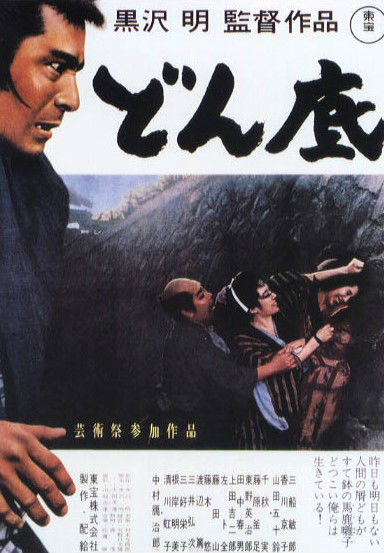
“How can you go to hell if you’re already there?” quips a stoical gangster, perhaps the only denizen of a rundown tenement block no longer looking for escape in Akira Kurosawa’s adaptation of the Gorky play The Lower Depths (どん底, Donzoko). In general, much of Kurosawa’s post-war work decries deliberate falsehood but paradoxically suggests that some degree of self-delusion is essential for surviving an otherwise hopeless world. The wandering pilgrim who arrives like some kind of emissary from the land above says as much as he offers what may turn out to be false promises of a better world to come, but as one of his charges points out he does so “out of pity for those beyond hope.”

Then again, perhaps spirituality won’t save you either. As the film opens, it’s two monks who are seen throwing leaves over a cliff describing the settlement below as “just an old rubbish dump”, which in a sense it is if that were not such a cruel thing to say. In any case, the people who live here are all those who have already fallen into desperation, exiled from mainstream society and caught between a fierce desire to claw their way back up and the despair of knowing that in all likelihood they never will. A man who claims to be a former samurai waxes on his illustrious past, while a melancholy sex worker meditates on the lost love that reduced her to current position, and a stage actor laments his failing memory his mind now fogged by years of alcohol abuse that he says have already poisoned his “bitol organs”. A tinker secretly thinks he’s better than those around him. He’s only been here six months and insists that he’s a skilled craftsman who can continue working, but blames his desperate circumstances on the sickly wife whose death he quietly awaits assuming it will free him of this burden and thereafter this place.

It doesn’t, of course. He sells his tools to pay for her funeral, and otherwise appears lost no longer a husband to a dying wife. In essence the film revolves around a confrontation between the pilgrim who offers what may well be an illusion of salvation and the thief Sutekichi (Toshiro Mifune) who challenges him but begins to believe that it really may be possible for him to leave this place and take the woman he loves, Okayo (Kyoko Kagawa), with him or else fall further and remain trapped in this mortal hellscape. The problem there is that Sutekichi had previously been having an affair with the landlord’s wife Osugi (Isuzu Yamada) who is Okayo’s sister. Though Osugi, whose hope of escape through romance is dashed, first takes against her sister, she later offers to surrender her to Sutekichi if only he will assist her by killing her greedy husband Rokubei (Ganjiro Nakamura). 

In this cold and austere place which is in effect a living hell, there is a sense that many of the residents are already dead. Rokubei’s face is the palest of them all, suggesting that he is already too far gone ever to be saved and most likely doesn’t want to be anyway for in this terrible place he is in effect the king. Osugi is the queen, but often framed behind bars now a prisoner already too corrupt to leave the tenement behind. Her uncle, Deputy Shimazo (Kichijiro Ueda), has a largely illusionary sense of power in his position in a policeman which he prosecutes selectively and mostly at the service of the landlord. In the climactic closing scenes, his policeman’s baton is stolen by the drunkard Unokichi (Yu Fujiki) who dances through the streets with it demonstrating just how little authority he actually wields finally losing his position when the landlord is deposed and his familial connections become irrelevant. He inherits the landlord’s residence, but is reduced to the husband of the sweet seller Otaki (Nijiko Kiyokawa) whose status as a working woman is perhaps higher than his. 

Yet the pilgrim seems to think there is still time to save Sutekichi who at heart wants to go straight but is also resentful admitting that in a world where swindlers prosper perhaps it is foolish not to be a swindler. The pilgrim promises all of them a “better place”. “As long as you believe you’ll find it, you surely will”, he explains telling the actor about a temple that can help him cure his alcoholism while simultaneously urging the tinker’s suffering wife to give in to her fate and go to Buddha’s embrace as soon as possible. Perhaps he sincerely believes these things to be true, but also seems to have a sense that even if they weren’t these hopeless people could not go on if they knew there was no way out. They all say they’ll leave, but discover there are only two means of escape, to die or fall still further in banishment from this already banished place. Only Okayo whose final whereabouts remain unknown may finally have been able to free herself. Staying almost exclusively with the claustrophobic confines of the drafty tenement as wind the whistles through it, Kurosawa frames the space of one of existential purgatory but perhaps suggests that in the absence of salvation a comforting falsehood is the only means of survival.


The Lower Depths screens at the BFI Southbank, London on 19th & 30th January 2023 as part of the Kurosawa season.