Peking Opera Blues (刀馬旦, Tsui Hark, 1986)

“There aren’t enough heroes,” the leader of an opera troupe shouts, “quick, those of you who were villains change your clothes.” Only the names change in Tsui Hark’s Peking Opera Blues (刀馬旦). Politics and history are mere performance in the revolving doors of power. Set in 1913 at the beginning of the warlord era that followed the end of the Qing dynasty, the film is also speaking to a nascent sense of Handover anxiety. As one warlord falls, another rises to take his place. When he too is defeated, the first warlord returns. Meanwhile, our heroes stand still as history happens around them without their consent, longing for an age of democracy which even now has not yet arrived.

As the film opens, warlord Tun (Huang Ha) is carousing with courtesans and boasting about his 28 wives when his soldiers begin to revolt because they’ve not been paid. Tun has lost all his money gambling and decides to flee while the soldiers loot the palace. His downfall both satirises the innate corruption of power and its anonymous nature as he is soon replaced by the governor who can’t believe his luck. The governor is accompanied by his androgynous daughter, Tsao (Brigitte Lin), who has short hair and dresses in military uniforms, and has recently returned after studying abroad. 

Unbeknownst to her father, Tsao is secretly working for the democratic resistance. President Yuan Shi Kai has been borrowing money from foreign banks to finance a bid to restore the monarchy. Tsao knows her father is the broker and plans to steal secret documents to expose Yuan’s corruption and thereby usher in a democratic revolution. Yet she also finds herself conflicted in the necessity of betraying her father knowing that she is the only person in whom she has absolute trust. In the absence of a son, he plans to hand his empire to her, only she doesn’t really want it. To find her new democratic future, she will have to let the old world die and that means letting men like Tun and her father go with it.

Her mission is contrasted with that of Bai Niu (Sally Yeh), the daughter of a Peking Opera troupe manager. Bai Niu’s greatest desire is to be on stage, but women are barred from performing. All female roles are played by men who are also sexuality exploited, essentially pimped out to important people and supporters to ensure the troupe’s survival. Though Tun and Tsao may openly vie for power, the real source of power lies with corrupt police chief, Liu (Ku Feng), who insists on sleeping with the troupe’s biggest star. When he flees, he gives Bai Niu his spot and permission to perform despite her father’s objections, but what she perhaps doesn’t realise is that this “freedom” also traps her with the threat of sexual exploitation, something she is later subject to while assisting with Tsao’s plan to knock her father out so she can steal the key to his safe.

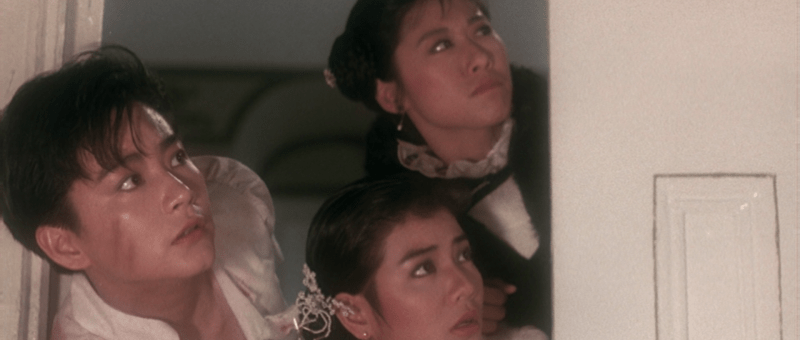
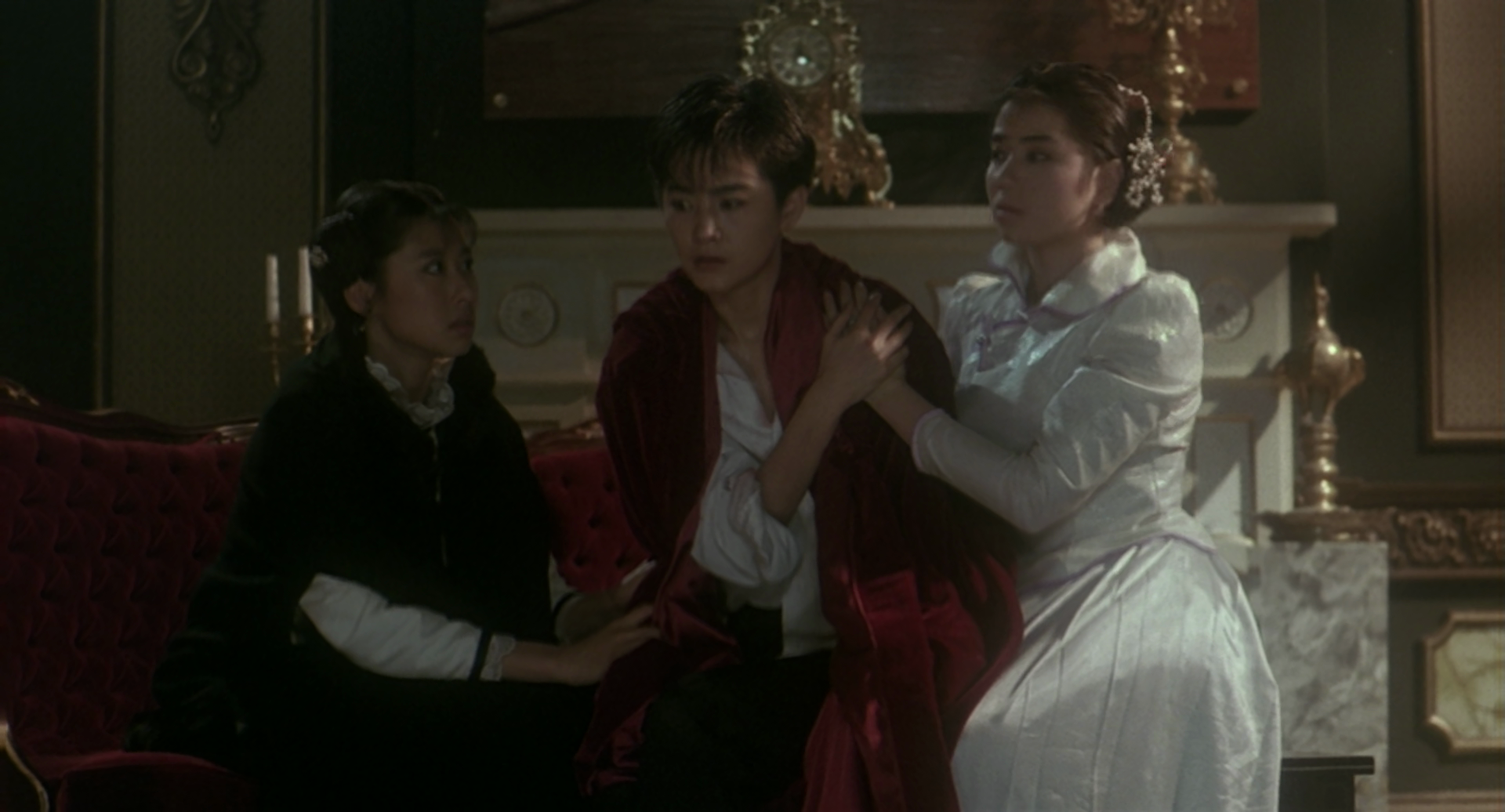
Wandering musician Sheung Hung (Cherie Chung), meanwhile, is much more accustomed to using her sexuality to get by and seeks freedom through riches. She wants the money so that she can flee abroad, which is both an expression of a desire for broader horizons and that to escape the chaos of the warlord era. It also, of course, speaks to the present day and those planning to get rich quick and leave Hong Kong before the Mainland takes over. The three women in ways reflect different reactions to the looming anxieties of the Handover, Tsao the revolutionary staying to fight for democracy, Bai-niu holding fast to her family and culture and trying to live through it as best she can, and Sheung Hung who is planning to leave.

They are all, however, at the mercy of circumstance and there’s an essential irony in the film’s conclusion which leaves them all scattered, vowing to reunite when the chaos is over and democracy has been restored, given that this likely means they will never meet again as the promised age of democratic freedom has not yet come to pass. Yuan is exposed, but it makes no difference. As if signalling the absurdity, Tsui flashes back to the laughing face of the Peking Opera performer with which the film opened. Rocketing between farcical humour, the subversive homoeroticism between the women, the grim reality of authoritarianism as Tsao finds herself tortured by the resurgent Tun, and the kinetic energy of the finely crafted action scenes, Tsui finds a genuine sense of poignancy in the futility of of the heroes’ quest. Finally, the best weapon they have is friendship and solidarity in which they protect and save each other while otherwise at the mercy of history being made all around them that they are otherwise powerless to influence.


Trailer (no subtitles)

Mercenaries from Hong Kong (獵魔者, Wong Jing, 1982) [Fantasia 2022]

A former mercenary’s bid for revenge having failed in his responsibilities soon goes awry in Wong Jing’s third directorial feature Mercenaries from Hong Kong (獵魔者). As is constantly pointed out to the hero, perhaps he’s not so different from his target with his very selective brand of justice and morality. After all maybe the difference between medicine smuggler and drug trafficker is largely semantic and taking revenge after the fact hardly makes up for the failure to protect the innocent from a world you’ve helped create. 

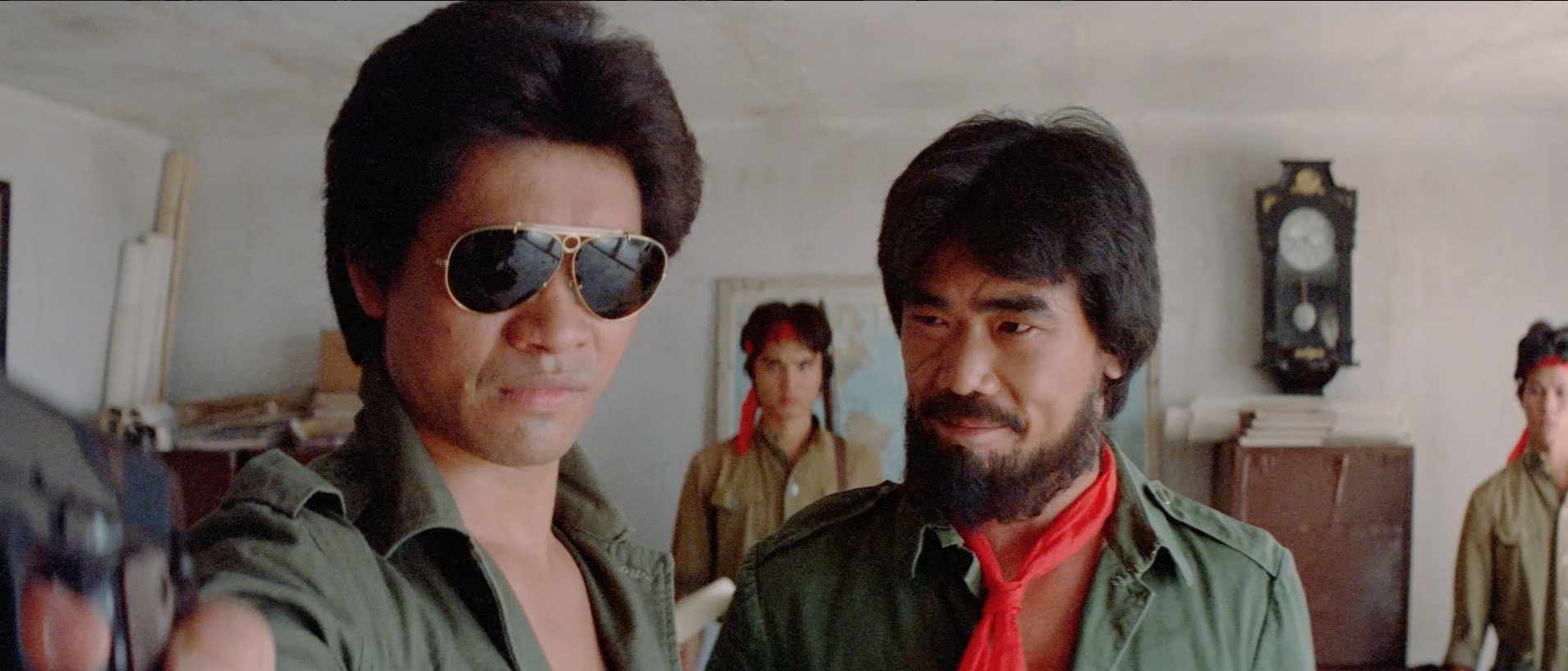
Li Lok (Ti Lung) is a pretty big figure on the underworld scene and as the ultra macho title sequence reveals a former mercenary who served in Vietnam. In the daring opening scene he sneaks into a gang hideout disguised as a telephone repairman and takes out a gangster in the middle of drugging a young woman whom he and his friend intend to rape and then murder. But Li Lok isn’t here to save the girl and in fact he doesn’t. He’s there because the gangster has done this kind of thing before and the previous victim was his 15-year-old niece whose care he had been entrusted with by his late brother before he passed away. Later one of his comrades will make a similar request of him and he will fail again apparently taking little stock of his responsibilities. 

Nevertheless, having knocked off the gangster annoys local big boss Shen who intends to have Li Lok eliminated but Hong Kong’s richest woman Ho Ying (Candice Yu On-On) convinces him not to because she has a job for Lok assassinating a top Thai assassin who killed her father and is now apparently blackmailing her with a cassette tape full of corporate secrets. All Lok needs to do is round up a posse and head to Cambodia where “the devil” Naiman (Ching Miao) is hiding out, kidnap him, and retrieve the tape to receive a massive life-changing payout while permanently getting Shen off his back. It all sounds like a pretty good deal to Lok along with the former buddies he recruits to join him who are all trapped in desperate poverty one with a sick little girl who desperately needs a kidney transplant. 

This is a Wong Jing film and perhaps there’s no need to dig too deeply into it, but there is something in the power Ying wields over Lok and his team by virtue of her wealth and privilege that speaks to the city’s growing inequality though it’s also true that perhaps the guys have all fallen low through their mercenary choices and are now unable to get a foothold in the contemporary society without resorting to crime. Yet perversely, Ying leverages Lok’s chivalrous sense of honour as part of her plan playing damsel in distress rather than dangerous femme fatale while he assumes he’s on a righteous mission planning to turn Naiman over to the authorities rather than just killing him while little caring that his actions threaten to destabilise an already chaotic situation in Cambodia. 

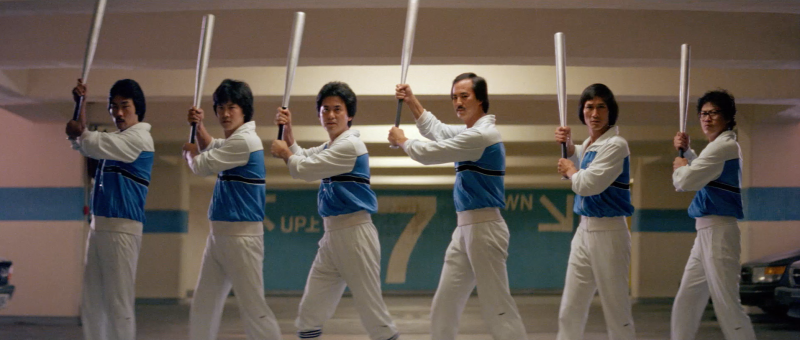
When one of the sworn brothers of the gangster that Lok killed in revenge is killed coming after him even after the truce, Lok is irritated that he died unnecessarily as if it offends his sense of justice that this man was not protected better by Shen. Yet as Naiman keeps pointing out to him, he’s no saint and perhaps no different. He could have saved the girl in the gang hideout but chose not to, escaping by jumping out of a window onto a van waiting below and riding off on a motorcycle (which is admittedly impressive). He claims to hate drug dealers but profited off war and misery in smuggling medicines across the border from Thailand into Cambodia even if he could tell himself he was running a kind of humanitarian service. Meanwhile Ying who is obviously involved in something shady if she’s dealing with people like Lok and his team, paying for their weapons and equipment which presumably includes the series of identical outfits the guys sport like some violent middle-aged boy band, wins an Outstanding Woman award and ironically pledges to use some of her wealth to fund community-based anti-drug programs. 

Li Lok may in a sense emerge victorious but also exactly where he started in failing to protect an innocent girl from a mercenary world. The Cantonese title might more literally be something like Devil Hunters, but Lok and his guys are certainly a mercenary bunch desperate to escape their poverty and hopelessness even if they may stand for a kind of justice and honour in brotherhood. This being a Wong Jing film there is plenty of crass humour including some that is very of its time along with gratuitous sex and female nudity but also a series of incredibly impressive action scenes and a bleaker than bleak conclusion which may suggest that the Loks of the world will be unable to protect the next generation from the violence they themselves have unleashed. 


Mercenaries from Hong Kong screened as part of this year’s Fantasia International Film Festival.

Original trailer (English subtitles)