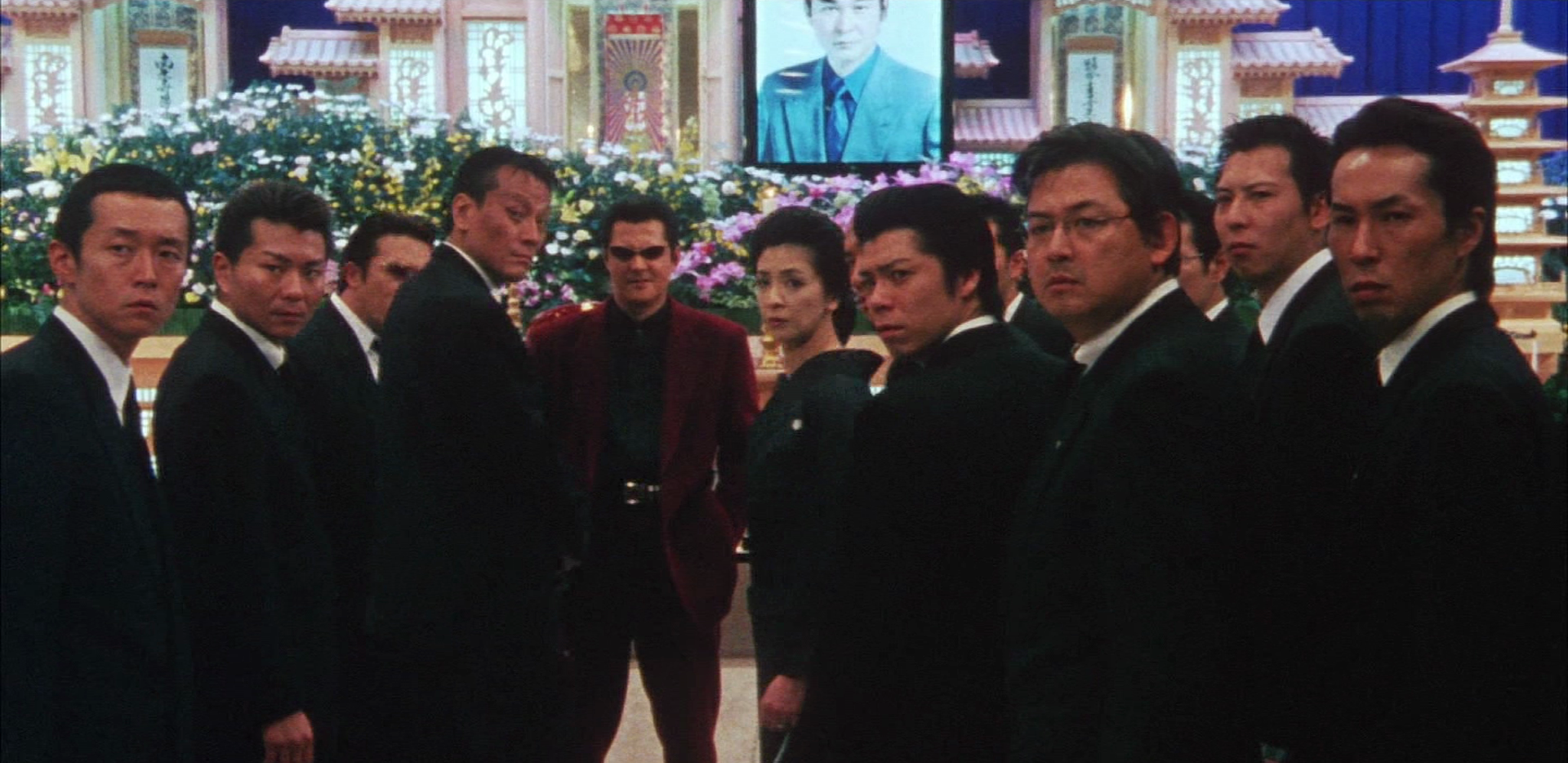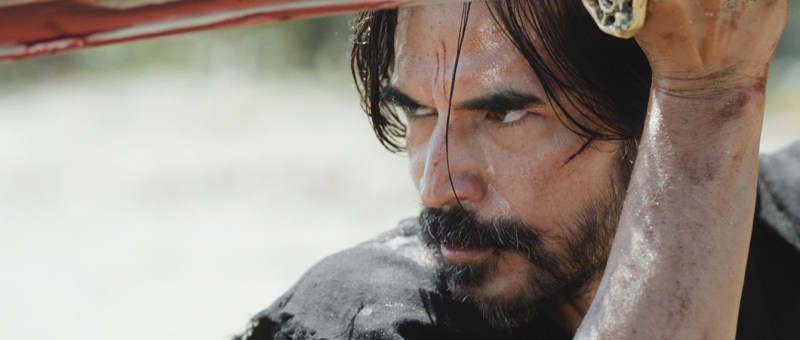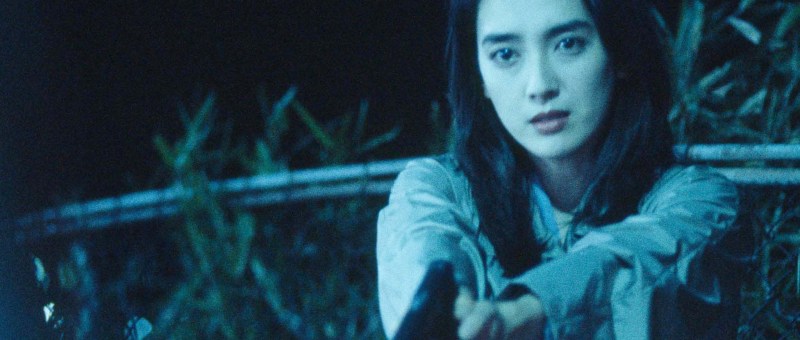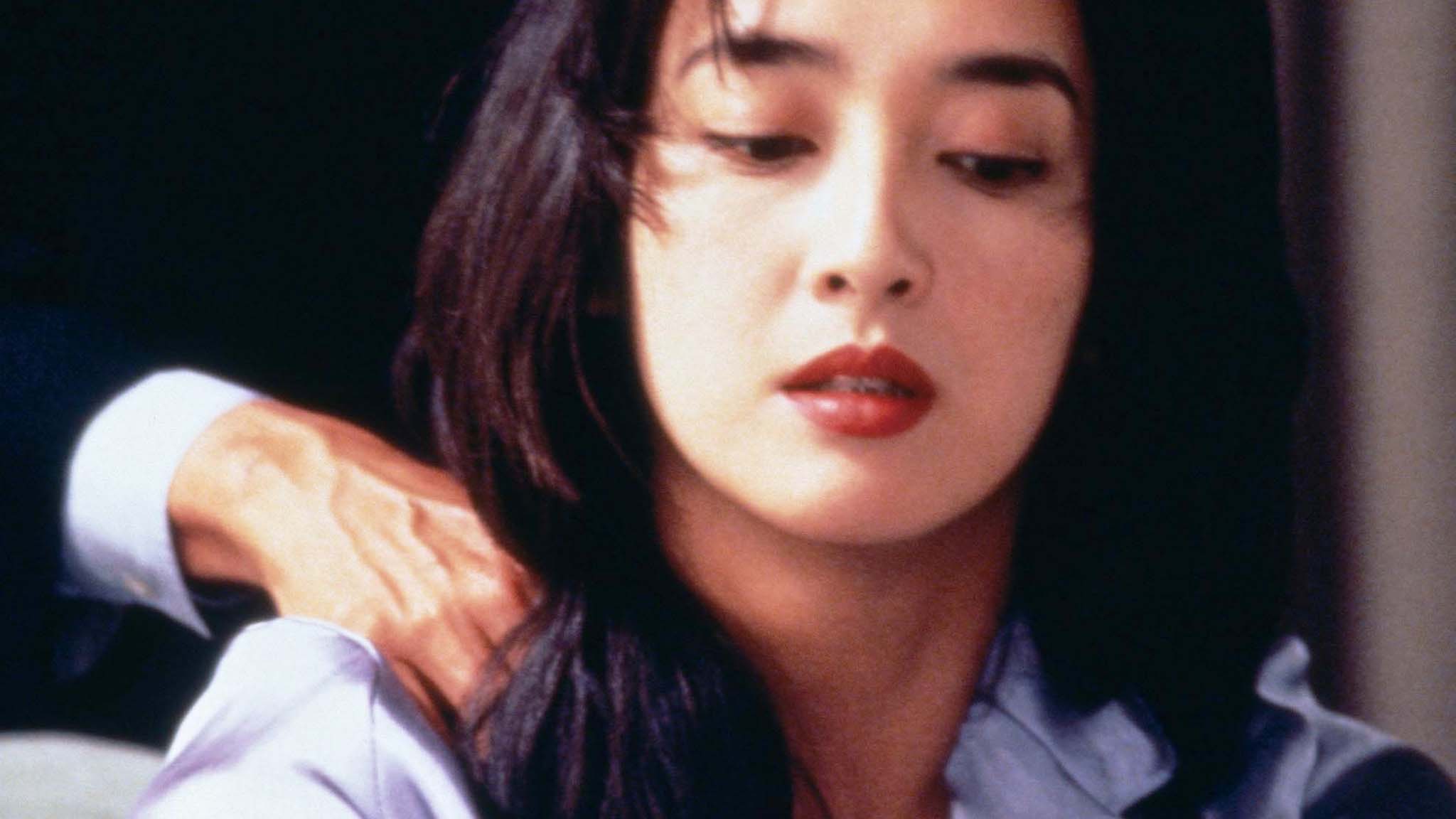
Strangers in Kyoto (ぶぶ漬けどうどす, Masanori Tominaga, 2025)

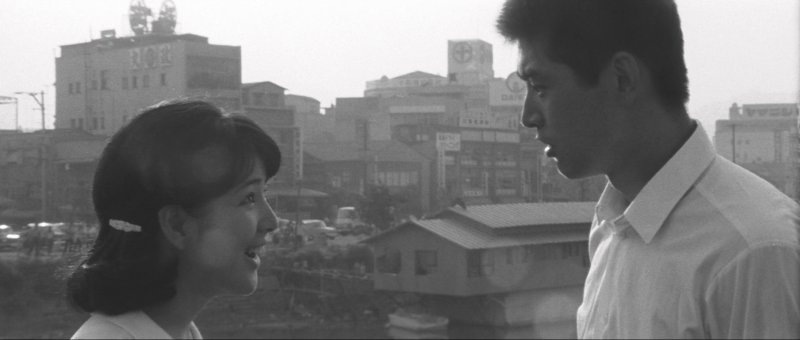
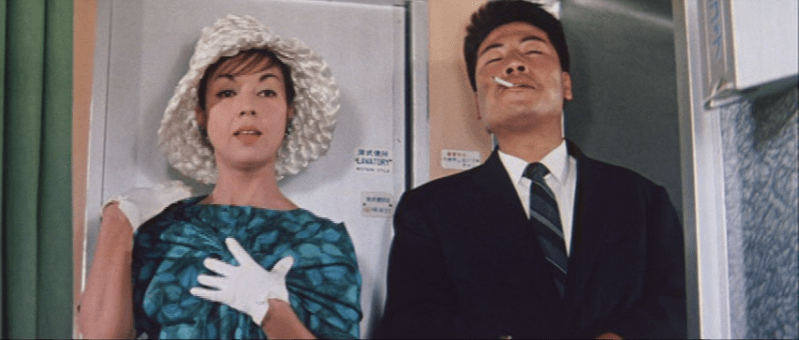
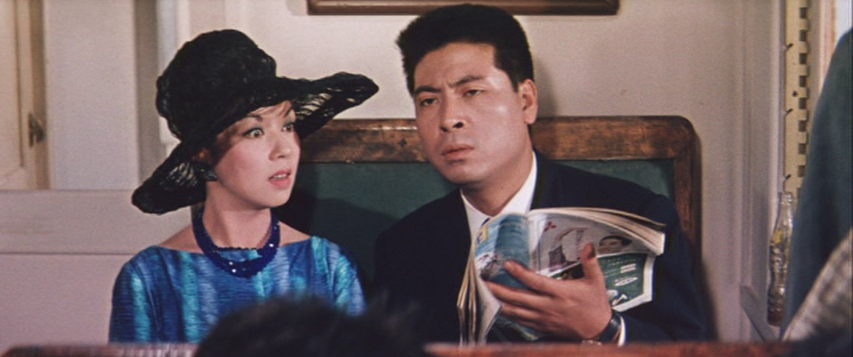
A former capital city, Kyoto is renowned as a historical centre and seat of tradition. But on the other hand, no one wants to live in a museum and while some of these old-fashioned ways of life might seem quaint or comforting, they’re also burdensome and for some an unwelcome imposition. Madoka (Mai Fukagawa), the wife of the 14th heir to a Kyoto fan seller is full of earnest wonder, but she’s also an outsider here and bringing with her own preconceptions and anxieties. 

To begin with, she’s come as a kind of cultural anthropologist directly interviewing local people to gain material for the manga she’s drawing with a friend. When one of the ladies she’s talking to explains that she runs a cafe in a former bathhouse that’s been sensitively adapted so that his traditional space can find new purpose in the modern world, Madoka is visibly disappointed which of course causes offence to her interviewee. Something similar happens when she interviews a woman running a traditional sweet shop who explains that their top-selling items are their halloween specials. They no longer sell anything that would have been on sale when the shop opened a few centuries ago. 

Madoka, who is not from Kyoto, is obsessed with preserving the city’s “true face” and fails to see that these businesses have survived because they’ve been able to adapt to the times when others could not. Repurposing old buildings to house modern businesses is one way of keeping the city alive. Meanwhile, she idolises her mother-in-law’s traditional lifestyle, but is after all experiencing it from the perspective of a guest. It may very well be much nicer to eat rice cooked over an open flame, but she’s not the one who’s got to get up early to stoke the fire or spend hours stirring the pot. She takes her responsibility as the wife of the 14th heir so seriously in part because she doesn’t understand what it entails. Her husband, Mario, meanwhile is keen to remind his mother that he has a life in Tokyo and won’t be returning to take over the shop, at least as long as his father is alive. 

Mario tries to warn Madoka about the complex nature of Kyoto social etiquette, but she fails to understand and makes a series of embarrassing faux pas that gradually destabilise the local equilibrium. In Kyoto, a particular brand of politeness rules in which one’s true feelings are never expressed openly but only through barbed comments that everyone nevertheless understands. So, when someone wants you to know that the party’s over and it’s time you went home, they’ll politely ask if you want any green tea over rice. This level of subtlety is lost on Madoka who comes from a city where size of the community means you have to be explicit.

It never really dawns on her that mother-in-law might have become so fed up with her that it’s easier just to sell the house and end 450 years of tradition than to tell her go home. Then again, it seems like she may be missing some social cues in Tokyo too, while it’s also fairly obvious in any culture that putting her awkward interactions into the manga could end up upsetting those around her. They do, after all, have a point that it’s inappropriate for her to make herself the self-appointed guardian of a place she’s isn’t from and doesn’t live in, disregarding the thoughts and feelings of those who do (not that they really told her what they were). 

Perhaps as she said she’s beginning to understand Kyoto in this regard by fighting back passive aggressively to claim her right to take over the fan shop. She might have a point about the comparatively ugly and utilitarian apartment blocks taking over the city as old buildings are bulldozed to make way for the new, but on the other hand it may not be possible to continue this business as it is and simply bringing in more tourists who’ll just clutter up the place and not buy anything may not be the answer. What the answer is may not be clear, but Madoka at least seems to have found her little niche in the heart of Kyoto, even if it is no longer so polite as to keep its irritation to itself.


Strangers in Kyoto screens as part of this year’s Japan Foundation Touring Film Programme.

Trailer (English subtitles)
Images: ©2025 Strangers in Kyoto Film Partners

The Hotel of my Dream (私にふさわしいホテル, Yukihiko Tsutsumi, 2024)

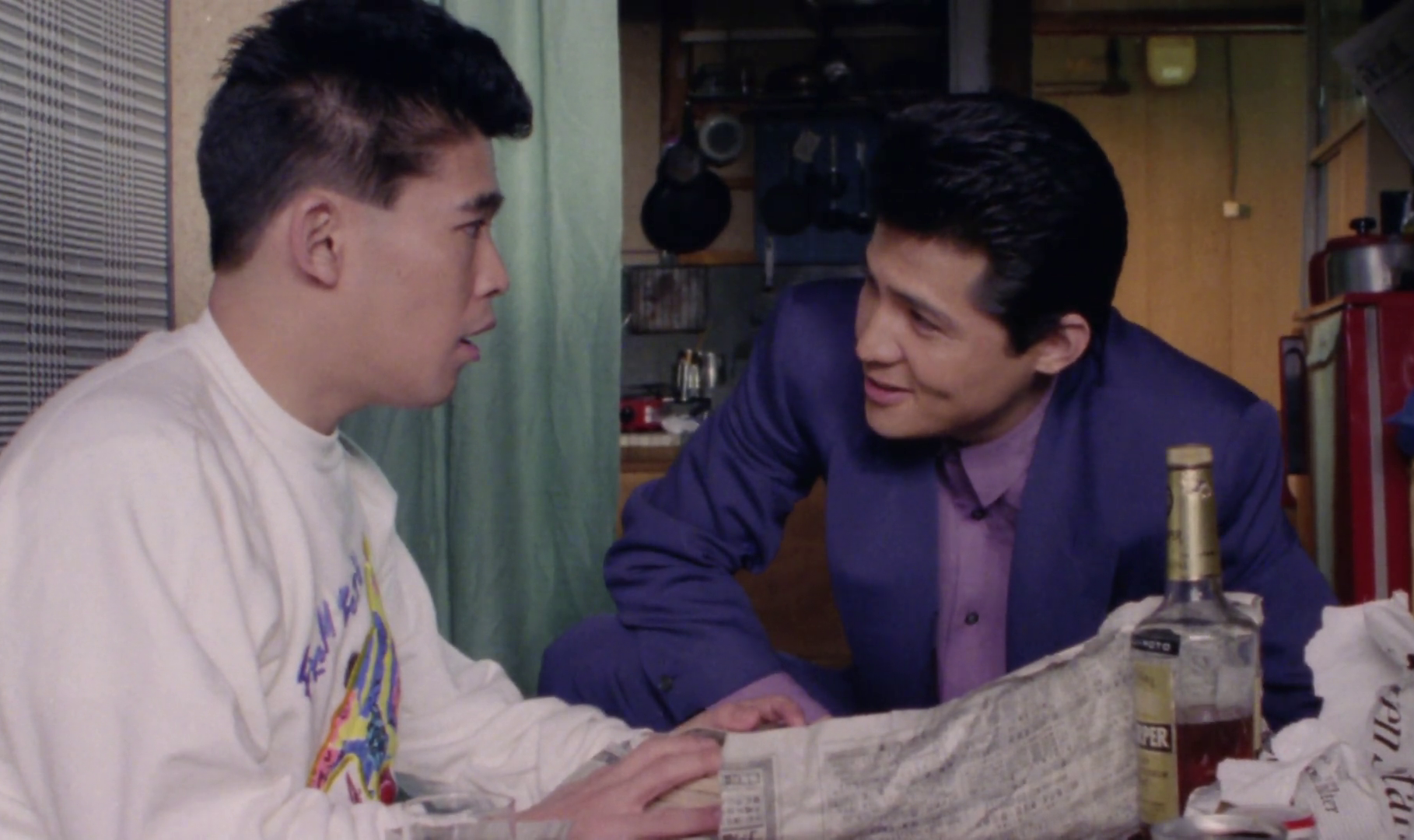
What does a girl have to do to get her book published in this town? Adapted from the novel by Asako Yuzuki, Yukihiko Tsutsumi’s The Hotel of My Dream (私にふさわしいホテル, Watashi ni Fusawashi Hotel) follows its eccentric heroine through a literary feud with an established master in an attempt to defeat a misogynistic, hierarchal and exploitative publishing industry and finally publish a full-length novel. In part a meditation on identity, the trades on its heroine’s charms and the comedic prowess of leading lady Non.

Set in 1984, the film begins and ends at the Hilltop Hotel popular with writers through the ages thanks to its proximity to book town Jinbocho and the offices of big time publishers. Using the pen name Taiju Aida, Kayoko (Non) is an aspiring author who won her publisher’s newcomer prize a few years previously for a short form essay but has been unable to write anything of substance since after being stung by a harsh review from literary master Higashijujo (Kenichi Takito). After learning from her editor Endo (Kei Tanaka) that Higashijujo is in the room upstairs and is on a tight deadline to complete a story for an upcoming anniversary anthology, Kayoko decides to impersonate a hotel maid so he’ll stay up all night and not make it, forcing Endo to use her story instead.

The irony is that Kayoko’s story is popular with readers and she has real talent as a writer that’s being suppressed by the publishing industry at large in the form of her former publisher, Endo, and Higashijujo. Higashijujo is a representative of a particular kind of older writer and is effectively acting as a gatekeeper by suggesting that young women like Kayoko have no place in the literary scene. Even so, he’s captivated by the story she tells him that’s the same as the essay she later has published which cleverly weaves in some of his own personal details. She plays on his vanity and lasciviousness in telling him she’s a big fan and is romantically naive as if dangling herself as bait. Higashijujo realises that Kayoko is Taiju Aida and kicks off a kind of literary feud in which he disrupts her career and she puts on various different personas to upset or embarrass him. 

Nevertheless, his rivalry with her does seem to stimulate his own latent artistic mojo and have him writing manically once again if partly out of resentment, while Kayoko is forced to change her name again before winning a note literary prize as “Junri Arimori” and writing with a completely different style. On realising that they may both be being manipulated by Endo who is setting them against each other in order to stimulate their writing, they team up against him by attempting to disabuse his daughters of the notion that Santa’s not real only they already know. They were just going along with the ruse because that’s a child’s job in much the same as Higashijujo suggests a writer’s is to conjure a pleasant fantasy for the reader and Kayoko creates a series of false personas further her own literary dreams. 

Yet as Kayoko says she’s not given the kind of support that other writers get and even after getting a book published has to go round to stores on her own to encourage them to stock and promote it. She only rises to prominence by charming a bookseller after catching a notorious book thief who didn’t even steal hers because he only takes “popular” books. Kayoko is indeed a total crazy lady, but perhaps you need to be in order to survive in this environment that’s still dominated by men like Higashijujo writing borderline sleazy novels and hanging out with hostesses in upscale Ginza bars. Resented by his daughter, he stays out in hotels for days at a time, leaving his wife alone and neglecting his family. Kayoko has to fight tooth and nail for her place in this space and to prove herself worthy of a room at the Hilltop Hotel while Higashijujo’s ride was must less fraught with difficulty even if it may not have been easy. The final message seems to be, however, that art is created best in opposition and success isn’t always good for an artist as Kayoko finds herself frustrated, feeling as if she hasn’t achieved all of her revenge but has no left to take it against while perhaps still manipulated by Endo who provides a source of authority for her to kick back against as literary queen trying to hang on to her throne.


The Hotel of my Dream screens as part of this year’s Japan Foundation Touring Film Programme.

Trailer (English subtitles)
Images: © 2012 Asako Yuzuki_Shinchosha © 2024 “The Hotel of my Dream” Film Partners

Tough Guy (悪名, Tokuzo Tanaka, 1961)

Starring a baby-faced Shintaro Katsu, Tokuzo Tanaka’s adaptation of a popular novel by Toko Kon, Tough Guy (悪名, Akumyo), went on to spawn a 17-film “Akumyo” or “Bad Reputation” series. Asakichi (Shintaro Katsu) is certainly the “tough guy” of the title and fulfilling a certain vision of post-war masculinity in this early Showa tale, yet getting a “bad reputation” is something he ultimately rejects in the film’s closing moments as he continues to straddle a line, not quite the “yakuza” he claims to hate but a noble rogue all the same. 

Asakichi is a small-town boy from rural Kawauchi. Despite the nobility which later comes to define his character, he’s disowned by his family after stealing a chicken from a yakuza-affiliated farmer to use in a cock fight. Originally, he skips town, with the farmer’s apparently married sister Kiyo who tells him that she’s pregnant though is probably not telling the truth. In any case, when they get to the next town he discovers she’s been engaging in sex work and breaks up with her, but Kiyo is only one element of his increasingly complicated love life. While staying in the town, Asakichi ends up developing a relationship with besotted former geisha Kotoito (Yaeko Mizutani) whom he eventually agrees to help rescue through another elopement. Meanwhile, he also becomes a “guest” of the local Yoshioka yakuza group and sworn brother of former enemy Sada.(Jiro Tamiya). 

The problem is that the Yoshioka gang is small potatoes in the town and does not have the resources to stand up against the hired thugs of the Matsushima red light district who eventually turn up to reclaim Kotoito. While she manages to escape on her own, Asakichi ends up randomly marrying a completely different woman, Okinu (Tamao Nakamura), who cannily makes him sign a contract saying they’re married before she’ll sleep with him. Nevertheless, when he hears that Kotoito came back to look for him and was recaptured, he springs into action and heads to Innoshima to battle agains the Silk Hat Boss and a wily yet fair-minded female yakuza who turns out to be the one really in charge of the island. 

Asakichi is, in many ways, an embodiment of a certain kind of masculinity in his determination to do what he sees as right even when others don’t agree with him. Consequently, his moral code seems inconsistent and difficult to define. He was fine with stealing the chicken, but doesn’t like the idea of cheating at gambling (though later does it to get money to rescue Kotoito) despite proving himself an expert at bluff and trickery. Similarly, he hates “yakuza” and refuses to become one, but is willing to stay as their “guest” and to help out when they need extra bodies for a fight. The only thing that certain is that he hates those who abuse their power to oppress the weak, which explains his objection to the yakuza, while otherwise doing what they claim to do but in reality do not in defending the interests of those who cannot defend themselves such as Kotoito who has been sold into the sex trade by a feckless father. 

Her position is mirrored in that of the female gang boss, Ito (Chieko Naniwa) , who eventually assumes control over Kotoito’s fate, an ice-cold and fearless leader who nevertheless respects Asakichi’s earnestness and brands him the tough guy of the title after he decides to return alone and accept punishment for freeing Kotoito. In giving them a week’s grace to have a kind of non-honeymoon (on which Okinu actually also comes along), she may not have expected the pair to return and is surprised that Asakichi insists on bringing the matter to a formal close. Eventually he defeats her by refusing to give in, insisting that they see which is stronger, his body or her cane, rather than begging for mercy and thereby accepting her authority. Having defeated her, he breaks the cane in two and throws it in the ocean to stand by his strength alone while crying out that he has won, yet suggesting that he does not want the kind of life that leads to a “bad reputation”. Tanaka makes fantastic use of lighting not least in the final shot of the shining sea that leaves Asakichi alone on the shore, a tiny figure in an expanding landscape.


Trailer (no subtitles)

Revolver LILY (リボルバー・リリー, Isao Yukisada, 2023)

A former assassin is drawn back into the light when an old colleague is framed for the murder of a small family in Isao Yukisada’s adaptation of Kyo Nagaura’s pulp novel, Revolver Lily (リボルバー・リリー). Set in the Taisho era, the film finds Japan at a crossroads amid an atmosphere of rising militarism in what is still a very poor country trying to change its fortunes through imperialism while those like Yuri (Haruka Ayase) attempt to stave off the oncoming apocalypse of war.

Though Yuri (whose name means “lily” in Japanese) had been part of a spy ring in Taiwan and trained to further Japan’s interest through political assassinations, she evidently came to see the error of her ways when the group was betrayed and an attack on their hideout led to personal tragedy. Since then, she’s lived as a well-to-do owner of a geisha house apparently under her own name which somewhat conflicts with the idea that she is simultaneously on an international most wanted list. In any case, she’s swept back into action when one of her former comrades, Kunimatsu, is accused of murdering the family of a man named Hosomi who is apparently on the run while militarists also seem to be intent on finding his teenage son Shinta (Jinsei Hamura).

Shinta, who was born with a lame leg which would presumably rule him out for military service, later becomes a kind of symbol of Japan as a more enlightened nation that no longer sees the need to use violence in order to advance its own interests. His father, Hosomi, had apparently done a series of dodgy deals with the military and then run off with all the money which is why they want to find him. It later turns out that he took the money not so much out of greed as that he was trying to turn the tide by growing the country economically in the hope that there would no longer be the need for imperialistic conquest.

Yet the money becomes a means of setting the army and the navy against each other in an increasingly straitened Japan in which neither feels they have the proper finding to pursue their ambitions. Constant references are made to the devastating economic impact of the 1923 earthquake, yet the authorities spend increasing amounts of money on waging war and there seem to be increasing numbers of soldiers on the streets. The army, in general, are depicted as loutish thugs with little on their side except brute force, while the navy in their pristine white uniforms are backroom plotters and always one step ahead.

But there is obviously a giant irony at the heart of the film in that as Yuri declares at the end, “fighting protest nothing,” having just taken out most of the Tokyo garrison in an effort to protect Shinta so that he can be preserved as a symbol of a new pacifist Japan. Though she tries to avoid mortally wounding anyone, Yuri is still prepared to use violence in order to combat it while the fact that merely fight on the side of capitalism suggests that there is, in fact, already a war going on between competing visions of the nation’s future which are both destined to come to pass. Capitalism, too, however, has its rough edges as symbolised by the grinning yakuza boss (Jiro Sato) who boasts of being “a man you can trust” but is only really ever on the side of greed and power.

Yuri, meanwhile, seems to be reawakened by her latest mission. She tells her assailant who accuses her of living in a state of nihilistic limbo, that she has made a choice a live which also symbolically aligns her with the new future opposed to the death cult that is militarism. Nevertheless, history tells us that whatever promises are made the militarists will win and the people will suffer. Yuri, however, continues fighting for peace with the film making full use of Haruka Ayase’s growing stature as an action star following on from franchises such as Caution, Hazardous Wife as Yuri effortlessly takes out huge numbers of army goons assisted by her female comrades. The closing scenes hint at further adventures for Yuri amid the vibrant Taisho-era setting taking on the forces of militarism with impeccable style and elegance.


Revolver LILY is available digitally in US from 27th January courtesy of Well Go USA.

Wandering (流浪の月, Lee Sang-il, 2022)

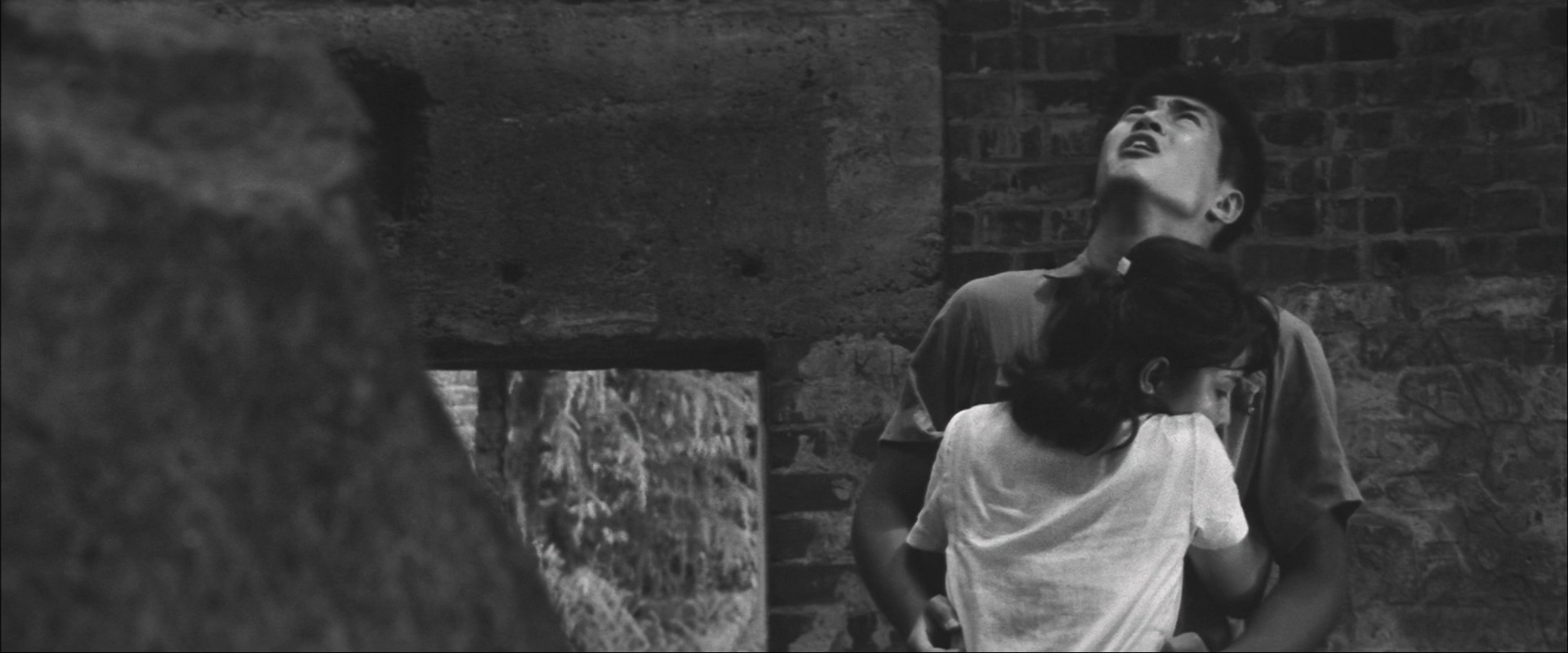
The fact that “people only see what they want to see”, as one character puts in Wandering (流浪の月, Rurou no Tsuki), has a been a minor theme in the work of Lee Sang-il for whom nothing is ever really as black and white as it might seem. Adapted from a novel by Yu Nagira, the film asks some characteristically difficult and necessarily uncomfortable questions while otherwise contemplating the toxic legacy of parental abandonment and the cycle of abuse.

On a rainy day in 2007, a 19-year-old student, Fumi (Tori Matsuzaka), extended an umbrella to a lonely nine-year-old girl, Sarasa (Tamaki Shiratori), sitting out in the rain because she didn’t want to go home. He invites her to come back to his place and she agrees, later asking him if she can stay which she does for a couple of months until the police tear her away from Fumi’s side after tracking them down to a local lake. Fifteen years later, Sarasa (Suzu Hirose) has a job at a diner and is engaged to successful salaryman Ryo (Ryusei Yokohama) but though her life may look superficially perfect there are deep-seated cracks in the foundations. Ryo is a brittle and volatile man who is controlling and possessive, though Sarasa can’t seem to decide if she ought be “grateful” for the life she has or find away to break of Ryo before it’s too late.  

Many of Ryo’s problems are apparently a result of latent trauma caused by his mother’s abandonment. Shortly before paying a visit to his family, Ryo had become violent with Sarasa and though his family notice the bruises they choose to say nothing until his sister, less out of compassion than a kind of spiteful gloating, explains that he’s done this sort of thing before and often picks vulnerable young women with disordered familial histories in the knowledge that it will make it much more difficult for them to leave. Sarasa had herself been abandoned by her mother who palmed her off on an aunt after her father’s death from cancer to run off with another man. The irony is that Fumi is accused of kidnapping her but is the only person to have shown her kindness while giving her the confidence to reassert her autonomy. Nevertheless he is branded a paedophile, while the relative who had sexually molested her while she was living with her aunt is allowed to go free.

Then again, it seems that Fumi does, in fact, have an attraction to young girls though he never behaved in a harmful way towards Sarasa and appears to have taken her in for otherwise altruistic reasons. The film asks the uncomfortable question of how we should respond to a person who identifies themselves as a paedophile but knows that to act on it would be wrong and therefore does not do so. Lee often frames Fumi in Christ-like fashion, cutting to his bare feet on the water of the wooden pier and later in the closing scenes catching him in a crucifixion pose with his legs slightly bent and his arms outstretched all of which emphasises his suffering and mental anguish in being afflicted with these unwelcome desires which after all he did not ask to be burdened with. 

But this framing is further complicated by a final revelation that Fumi is suffering with a medical condition that prevented him from passing through puberty. His body is therefore not sexually mature and he feels himself to be, in this sense, a “child”. Most often what he says is that he is someone who cannot love an adult woman, which is most obviously a way of articulating that he cannot fulfil the sexual dimensions of an “adult” romantic relationship. Sarasa, meanwhile, comes to feel something much the same, explaining that she does not enjoy physical intimacy because of the trauma of her abuse which is recalled to her in Ryo’s aggressive and one-sided love making. 

These are not distinctions which occur either to the police or the gutter tabloid press. The young Fumi had tried to explain to the detectives that Fumi had not harmed her, but they didn’t listen, while the pair later become fodder for malicious gossip when they re-encounter each other by chance and it is salaciously suggested there is something unseemly in their relationship. The gossip ends up costing Sarasa her job, while the notoriety of her past as a kidnapping victim had also been used against her by Ryo not to mention the casually biting remarks of some of her workplace friends. As she says though more of her hopes for her relationship with Ryo, people only see what they want to see and are often unable to look past their biases and preconceived notions.

As it turns out, Sarasa did have other people around her who cared for and supported her such as the sympathetic boss who tried to protect her both from her increasingly paranoid boyfriend and the judgemental guys from HR. She’d forgotten what Fumi had told her in that she was the only person who could own herself and she shouldn’t allow other people to bend her to her will, restoring to her the confidence and independence which had been taken from her by toxic familial history. Sarasa in a sense returns the favour, Fumi also burdened by a sense of rejection likening himself to a weak sapling his mother ripped from the soil before it had a chance to mature, as reflected in the poignant scene of Fumi fast asleep mirroring that of herself when she first arrived at the cafe. Poetically lensed by Hong Kyung-pyo, Lee lends the melancholy tale a poetic quality as the heroes eventually find a home in each other if only to be condemned to a perpetual wandering.


International trailer (English subtitles)
Silk Hat Boss (シルクハットの大親分, Norifumi Suzuki, 1970)

A true patriot squares off against a series of duplicitous nationalists in Norifumi Suzuki’s Red Peony Gambler spin-off, Silk Hat Boss (シルクハットの大親分, Silk Hat no Oooyabun) starring Tomisaburo Wakayama as top hat-wearing yakuza Komatora. Set in the world of 1905 in which Japan had just emerged victorious from the Russo-Japanese war, the film on one level attacks the rising militarism of late Meiji in which corrupt and arrogant military officers collude with venal yakuza to further the course of empire while lining their own pockets, but stops short of rejecting it outright.

Kumatora is about to return home in glory after taking his guys to the front to defeat the Russians and is expecting to receive a hero’s welcome when the boat docks in Kobe. Unfortunately, he is met only by his sister and an underling, Hansuke, who he immediately berates for the affront of having grown a magnificent moustache in his absence which is even bigger than his own. It turns out that evil yakuza rival Chindai has stolen all the credit for the work done by those like Kumatora and the ordinary foot soldiers who lost their lives defending Japan’s interests. 

Chindai has teamed up with corrupt military officer Kito who wastes no time throwing his weight around. Having fallen her during a brawl but been rebuffed, Kumatora searches for Osakan geisha Choko only to find her running away after Kito tried to assault her. Running around in his underwear, Kito rudely demands that Kumatora “return” Choko to him, but true to form Kumatora only tells him that he’s being unreasonable and the choice of whether to return or not belongs to Choko herself. Something similar occurs when Kumatora visits the family of a fallen comrade and discovers that his wife has been forced into sex work while the daughter, Satsuki, is seriously ill. Noticing the pock marks on her face which remind him of his own, Kumatora immediately decides to take the girl to a hospital at his own expense and, in fact, throws Kita out of a rickshaw in which he was riding because the girl’s need is greater. 

Kumatora is, perhaps unexpectedly, a great defender of the rights of women. After taking his guys to a brothel, he finds out that the girl assigned to him is only 14 and ends up cleaning her ears and singing a lullaby. Eventually he discovers that Chindai and Kita have been rounding up sex workers and tricking other women into sexual slavery with the intention of trafficking them and resolves to free all of them while looking for Satsuki’s mother to let her know she no longer needs to work in the red light district. Of course, Kumatora is very much in the throes of his unrequited love for Red Peony Gambler Oryu (Junko Fuji), running back to his lodgings mistakenly thinking she’s in town, but partially rejects Choko’s affections after she becomes besotted with him because he thinks it’s unfair to ask a woman to become the wife of a yakuza who might after all die any day.

Kumatora is also a fierce defender of his men, ceremoniously handing each of them a condom at the brothel and reminding them to stay safe before they head off with the women whom he has already rather comically inspected. He is very clear that the victory over the Russians was bought with the lives of ordinary workers who should be fairly rewarded with their share of the glory rather than allowing men like Chindai to exploit their heroism for their own gain. Kumatora finds an ally in good general Matsumoto who hands him a letter he can’t read from a general he admired who calls him the ideal Japanese man for his bravery and fighting spirit, but is as expected targeted by Kito and Chindai who are only interested in lining their own pockets. What it boils down to is that Kumatora is good because his patriotism is genuine while Kito and Chinda are bad because their nationalism is self-serving which does quite uncomfortably suggest that imperialism itself is not an issue only how it’s progressed. 

In any case, the corrupt officers are finally dealt a crushing blow by a resurgent Kumatora along with a little help from Oryu herself who eventually turns up to save the day in the bloody showdown which ends the film. Slightly absurdist in tone, the Silk Hat Boss has its fair share of offbeat humour beginning with Kumatora wearing his top hat in the bath and jokingly comparing various generals’ penis sizes to that of a loofah but is undeniably endearing in its hero’s guileless goodness. 


The 2nd Repatriation (2차 송환, Kim Dong-won, 2022)

“Psychologically, I’m a man who is already buried in the ground,” laments one of the “converted”, “I just wish I could get out of here”. Kim Dong-won’s landmark 2004 documentary Repatriation followed a series of “unconverted” long-term prisoners who had been sent to the South as spies and were later caught but refused to abandon their ideology. A historical turning point in the relations between North and South allowed these men who longed to return home to do so, but others were refused on the grounds that superficially or otherwise they had “converted” and renounced North Korean Communism to live more freely in the South. 

Almost 20 years in the making, Kim’s followup documentary 2nd Repatriation (2차 송환, 2 Cha Songhwan) follows those who were left behind but have never abandoned their ideology in their hearts and are determined to return to the North. Just as in the earlier film, Kim frames them as essentially caught in a kind of no mans land between two nations and two ideologies, used and misused as tools of each but also pawns at the hands of geopolitical manouvering. Though Kim had assumed a second repatriation would follow soon after the first, this was not to be because of changing political realities not only in Korea but in the US whose influence many regarded as essential in brokering peace across the peninsula. 

Kim’s main protagonist Youngshik is a cheerful and vibrant man, but sometimes descends into aggressive rants about “bastard Americans”. As the documentary is quick to point out, there is truth in some of what he’s saying regarding the undue influence of and risks of military dependency on American forces, but the strength of his language often lays bare the rigidity of his ideology. Later in the film, a younger man asks Youngshik if there aren’t things that worry him about the state of North Korea today in the reports of widespread famine, but Youngshik appears to not really listen to him before brushing it off as all the fault of the Americans. Anything that’s wrong with North Korea is the Americans’ fault, but then so is the division itself so callously drawn up as an overture in a proxy war. Nevertheless, in the 2020 US elections he finds himself rooting for Trump based solely on the single issue of North Korean relations believing his election may pave the way for an eventual reunification despite the vast ideological gulf that must necessarily exist between them. 

Youngshik has indeed never given up his mission and is seen giving speeches on the subway and protesting outside the Ministry of Unification crying out for peace. He claims that he “converted” only superficially after being tortured but feels ashamed of his actions. A second issue arises when a group representing the families of those kidnapped by North Korea objects to the repatriation on the grounds that their relatives will not be afforded the same opportunity asking for something more like a prisoner swap. But Youngshik and the North Korean authorities deny that any kidnapping took place, insisting that anyone captured by the regime after accidentally straying into its territory would have been allowed leave if they so wished laden down with rice, fish, and fresh clothes. Another of the converted speculates that they may have chosen to stay because the South Korean state would simply have confiscated everything they’d been given. Some fisherman who did return were punished under the Anti-Communism laws or accused of spying. 

Each side is keen to use those caught between them for their ends with the truth an unintended casualty. Meanwhile the irony remains that both the kidnapped and the former North Korean spies have been forcibly separated from their families by political forces beyond their control. Youngshik insists that he came to erase a border but has since been trapped by it, unable to understand the absurdity which prevents him from visiting his home. On one particular occasion, he is permitted to visit North Korea but only to a single village set aside for that purpose pointing at his hometown which he says lies just over the hill. In any case Youngshik is by that point in his 80s. After he learns that his wife has passed away. He begins to despair wondering what the point of returning home would be. His children would be strangers to him. They may harbour resentment or perhaps they would not get along. 

Despite his convictions life in the North must be very different and romanticisation of it as an exile a dangerous fantasy. Youngshik tells the man who asked him about famine that life the North was easier in part because there was no need to think. Your basic needs are taken care of so long as you do the work assigned to you whereas in the South you have to take care of yourself, no one will help you, and if you cannot work you cannot eat. The life of Youngshik and those like him is necessarily hard, ill equipped to survive in a capitalist society and without support network outside of each other save a few volunteer groups. One of the other men who married a South Korean woman explains that he is still working long hours at a physically strenuous job despite a heart condition because he has no other choice. Another who also married prepares to divorce his wife and return to the North ensuring she will inherit their home and face no financial penalty but otherwise resolved to abandon her in the hope of reuniting with the family he once abandoned if not entirely through choice. 

Only one of the men, who resented by the others, states that he did not come by his own volition and on balance prefers to stay in the relative freedom of the contemporary South. Each of the others is desperate to return and trapped in a kind of limbo unable either to make a life in the South or cross the border into a life which may still be rootless and uncertain. Some say the previous returnees were forced to marry in part to have someone to take care of them in their old age, assuming their families would not or could not do so, and in order to monitor them to ensure they had not been turned or were engaged in a counter mission against the North. In the end Kim is not able to complete his story with the prospect of a second repatriation ever more distant. Even his own trip to North Korea in search of his secret history is rendered impossible. The liaison company ironically suggest he send a foreigner instead, a Korean-Norwegian producer appealing through another Asian nation apparently having more luck. A list of the names of applicants for the second repatriation at the film’s conclusion lists many as deceased while those surviving are already over 90 and left with nothing else than the desire to return to a homeland that seems as if it may have forgotten them.


Wandering Ginza Butterfly (銀蝶渡り鳥, Kazuhiko Yamaguchi, 1972)

Having made a name for herself at Nikkatsu, Meiko Kaji was one of many who declined to continue working with the studio after it shifted production entirely to its Roman Porno line of softcore erotic cinema. Her exit, however, proved fortuitous for rival studio Toei who were urgently looking for a new female star following the sudden retirement of Junko Fuji who gave up acting after marrying a kabuki actor (she’d return a few years later working in television and subsequently films under the name Sumiko Fuji). With her feisty intensity and zeitgeisty energy Kaji would seem to be exactly what Toei were looking for. Her first vehicle for the studio, Wandering Ginza Butterfly (銀蝶渡り鳥, Gincho Wataridori) finds her attempting to forge a new star identity stepping into the space vacated by Fuji and making it her own in the midst of Toei’s ninkyo eiga decline. 

Set in the contemporary era, the film opens with a brief prologue at a woman’s prison in which new girl Tome (Kayako Sono) attempts to claim a space for herself by immediately challenging the boss of her new cell only for Nami (Meiko Kaji) to calmly defuse the situation with a traditional gambler’s introduction very much in keeping with Toei’s gambling films many of which had starred Fuji such as the Red Peony Gambler series which is perhaps referenced in Nami’s nickname of the Red Cherry Blossom. The action then shifts to a year later with Nami returning to Ginza in the hope of locating a woman, Saeko (Mieko Aoyagi), to thank her for writing a petition to get her prison sentence for killing a yakuza boss who had killed two members of her all-female biker gang reduced. On the train, however, she’s accosted by a mysterious man who rudely kisses her in order to hide from gangsters chasing him and is thereafter dragged into local intrigue after realising that a shady new yakuza group, Owada Enterprises, is at the centre of the injustice affecting all her friends new and old. 

As one of her new friends puts it, every girl in Ginza has a wound from the past she’d rather not talk about yet Nami’s particular sense of shame regarding her misspent biker girl youth and desire to atone are singular markers of her ninkyo inspired path to heroism. She’s just come out of prison, and now she’s going to clean up Ginza getting rid of rubbish, post-war yakuza who ignore the code and exploit “honest” people through underhanded methods such as buying up their debts to force them out of business. Discovering that Saeko has lost her business to Owada and thereafter became a regular bar girl but is now suffering with a serious illness and unable to work, Nami takes her spot at Bar Broncho while funnelling money to her through a mutual friend worried she wouldn’t take it if she knew where it came from. As a bar hostess, she is smart and coquettish, playing cute in a side not often seen from Kaji later in her career in order to get the punters to pay up, but unafraid to go all in that doesn’t work even pinching a construction worker’s truck as collateral when he refuses to pay his tab.

Nevertheless, the film subverts expectation by shifting away from the gambling movie model including only one round of cards which Nami easily wins and then immediately leaves explaining that you have to know when to quit in a fight or in gambling. The central conflict is, in fact, played out through an intense game of pool, a few brief moments of onscreen text explaining the rules before Nami squares off against a drug-addled Owada henchman whose face begins to glow in an ominous yellow as the stuff wears off. Nevertheless, when Owada reneges on his promises violence is all that remains. Nami and new friend Ryuji (Tsunehiko Watase) team up to take revenge on the sleazy gangsters in order to set Ginza to rights. 

Nevertheless, there’s a kind of poignancy in the fact the central trio are all war orphans, “wandering birds” trying to find a foothold in the complicated post-war landscape while attempting to hold on to their sense of integrity. When Nami’s past as an ex-con is exposed to the other ladies at the bar they roundly reject her, though one assumes they’ve sad stories of their own, leaving her consumed by shame. Reformed by Saeko’s unexpected generosity of spirit and compassionate forgiveness, she bitterly regrets the moral compromises of her biker girl life and commits herself to fighting injustice, unwavering in her refusal to be complicit in the increasingly amoral venality of the post-war society. Sadly, Wandering Ginza Butterfly did not entirely succeed in stealing Fuji’s crown, the contemporary setting unable to overcome audience fatigue with the ninkyo genre which was shortly to implode in the wake of the jitsuroku revolution. It spawned only one sequel, but did perhaps pave the way for Kaji’s path to Toei stardom as the face of pinky violence. 


Terrifying Girls’ High School: Women’s Violent Classroom (恐怖女子高校 女暴力教室, Norifumi Suzuki, 1972)

“Society fucking sucks” according to the delinquent teens at the centre of Terrifying Girls’ High School: Women’s Violent Classroom (恐怖女子高校 女暴力教室, Kyofu joshikoko: Onna boryoku kyoshitsu). The first of four in a Toei pinky violence series, the film presents a feminine rebellion against the societal tenets of womanhood, if doing so largely within the realms of male fantasy, but nevertheless kicks back against the corruption and hypocrisy of the older generation otherwise hellbent on controlling them.

Seiko Girls’ High School is, we’re told, both a private institution and a “trash bin” established to handle the “trash” transferred from “normal” schools. Nevertheless, the sign which hangs outside proclaims conservative values playing on the “good wife, wise mother” truism of traditional femininity in insisting the girls must become wise wives and kind mothers. Needless to say, most of the young women are quite uninterested in becoming any such thing. The unruliness of the school is signalled in the opening sequence as an older male teacher gives a boring lesson about curves while the girls all ignore him. Some are putting on makeup, others are eating or talking amongst themselves. After all, what’s the point of their education if the expectation is they’ll all become obedient housewives dependent on their husbands for support and allowed little in the way of free thought or interest?

A teacher later ironically suggests that the school’s reputation will later reflect badly on them when it comes to getting jobs or getting married only for one of the girls to snap back no one here is going to university and their reputations are all ruined anyway. It might be tempting to assume the problem is mostly generational, but the arrival of a young male teacher who has himself been transferred for violent conduct suggests a kind of backlash to the increasing freedoms of the contemporary society. He tells the girls that he won’t be soft on enforcing his three rules for education which are surprisingly gentle, being friendship, companionship, and harmony, but they simply laugh at him. Not only do they pelt the new teacher with pants and condoms but insist that it they who make the rules here and he will have to follow them. 

Then again there don’t seem to be any rules of any sort other than the absurdity of social hierarchy as they girls square off in various factions vying for dominance of the school, The implication is that gang leader Michiko (Miki Sugimoto) turned rebellious after being raped by strangers on her way home and witnessing her father, a politician, actively cover it up while she continues to feel shamed by her family. Another girl, Yoko (Natsuko Miura), otherwise not involved in the school violence, is working as a hostess to support herself as an orphan living with her grandmother but is lusted after by lecherous teacher who eventually forces her into a sexual relationship and then drops her when she becomes pregnant despite giving the implication he would marry her. Takeo tries to force her to have an abortion though she is determined to have the child despite the scandal causing him to hire another delinquent faction to beat her into a miscarriage. When she takes her own life, the school is most concerned about its reputation despite having done nothing when it was discovered the headmistress’ own daughter, the leader of the other gang, was also engaging in sex work. 

Takeo is also the target of a revenge plot at the hands of mysterious transfer student Yuki who avoids taking any categorical side until pulled into the conflict because of her friendship with Yoko and the growing sense of solidarity between the young women oppressed by a corrupt social system that uses shame to control them. “The rapists win in our society,” one sighs in an oddly contemporary moment. To celebrate their liberation, they burn their sailor suits having stripped and bound their teachers before posing before a sign announcing that they have enacted justice on the “three pigs” who financially exploited them through abusing the educational system. Full of ironic details such as the girls introducing themselves through the classic gambler’s pose, Suzuki films with a punkish irony quite clearly fetishising female violence yet also poking fun at lecherous middle-aged men, youthful hard cases, and matronly older women while in the end handing agency back to the girls even if society continues to suck. 


Shinobi no mono 8: The Three Enemies (新書・忍びの者, Kazuo Ikehiro, 1966)

The abiding constant of the Shinobi Mono series had been its continual forward motion, at least up until instalment seven which had backtracked to the death of Ieyasu. This eighth and final film (save for a further sequel released in 1970 starring Hiroki Matsukata replacing Raizo Ichikawa who had sadly passed away a couple of years earlier at the young age of 37) however reaches even further back into the mists of time setting itself a few years before the original trilogy had begun.

This time around, we follow young Kojiro (Raizo Ichikawa) on what is a more stereotypical tale of personal revenge albeit that one that eventually becomes embroiled in politics as he joins a ninja band that’s working for Takeda Shingen (Kenjiro Ishiyama). In slightly surprising turn of events, Ieyasu (Taketoshi Naito) turns out to be what passes for a good guy at least in contrast to Shingen’s duplicity though Ieyasu himself is still young and at the very beginning of his military career which is why unlike his older self he’s a little more proactive and willing to start a fight as well as finish one. In any case, Shingen thinks he’s an easy target largely because he simply hasn’t been in post long enough to have begun making connections with local lords, bribing them with gifts to secure their loyalty. 

In any case, Kojiro’s journey begins as something more like a martial arts film as he surpasses his current teacher and is told to find a man called Sadayu (Yunosuke Ito) in the mountains if wants to be up to gaining his revenge against the three men who killed his father while trying to steal his gunpowder. Perhaps there’s something a little ironic in the fact that Kojiro’s father was killed in a fight over what amounts to the substance of the future engineering a wholesale change in samurai warfare and edging towards the oppressive peace of the Tokugawa shogunate. But to get she revenge, Kojiro commits himself to learning true ninjutsu as the film demonstrates in a lengthy training montage. Unlike previous instalments, however, there is left emphasis place on the prohibition of emotion with the reason Kojiro cannot romance Sandayu’s adopted daughter down to her father’s whim forbidding her from marrying a ninja.

Apparently not the Sandayu of the earlier films despite the similarity of the name, this one has decided to side with Shingen because he’s mistakenly concluded that he is a “fair person who understands us ninja” when in reality he just using them and is no better than Nobunaga or Ieyasu. Shingen hires them to tunnel into a castle through the well, but is entirely indifferent to their complaints about safety leaving a Sandayu voiwing vengeance. The ninja, he says, generally serve themselves and are bound to no master but he seems to have thought Shingen was different only to be proved wrong once again.

Of course, Kojiro continues looking for the men who killed his father though they obviously guide him back towards conflict anyway. When he tracks some of them down, one remarks that all he did was finish him off which was an act of kindness to end his suffering not that he necessary approved of what his fallow gang members had done. Kojiro finds a surrogate father in Sadayu much as Goemon had though this time a slightly better one even if Sandayu is also a man with a lot on his conscience. Even more so than the other films, this one takes place in a largely lawless land too consumed with perpetual warfare to notice the starving and the desperate let alone the inherent corruption of the feudal era. The bad of ninjas has a rather scrappy quality, not quite as sleek as the Iga of previous films while also a little naive. Shooting more like a standard jidaigeki, Ikehiro uses relatively few ninja tricks generally sticking to smoke and blow tarts with a few shrunken battles. Nevertheless, the violence itself is surprisingly visceral beginning with unexpected severing of an arm and leading to a man getting stabbed in both eyes. Then again, the film ends in the characteristically upbeat way which has become somewhat familiar only this time Kojiro runs back towards romantic destiny now freed of his mission of vengeance and the oppressive ninja code.