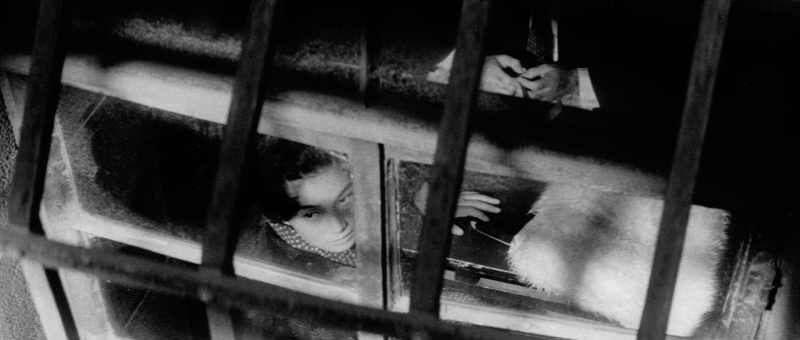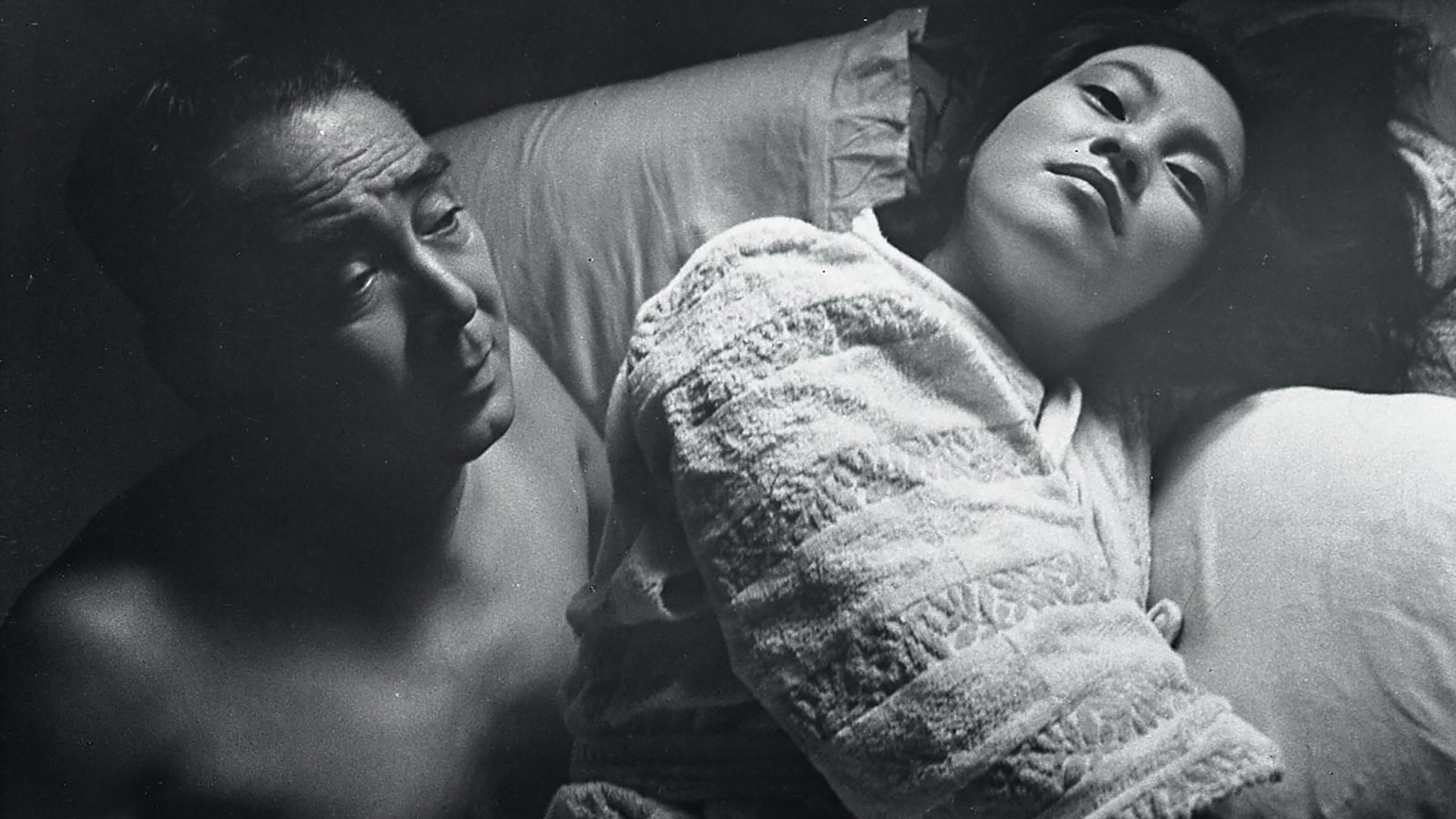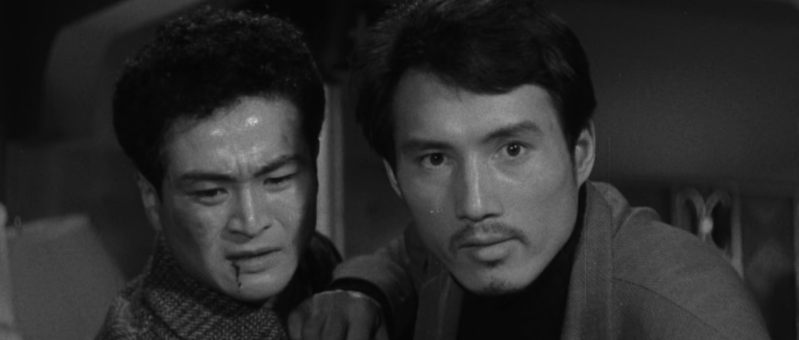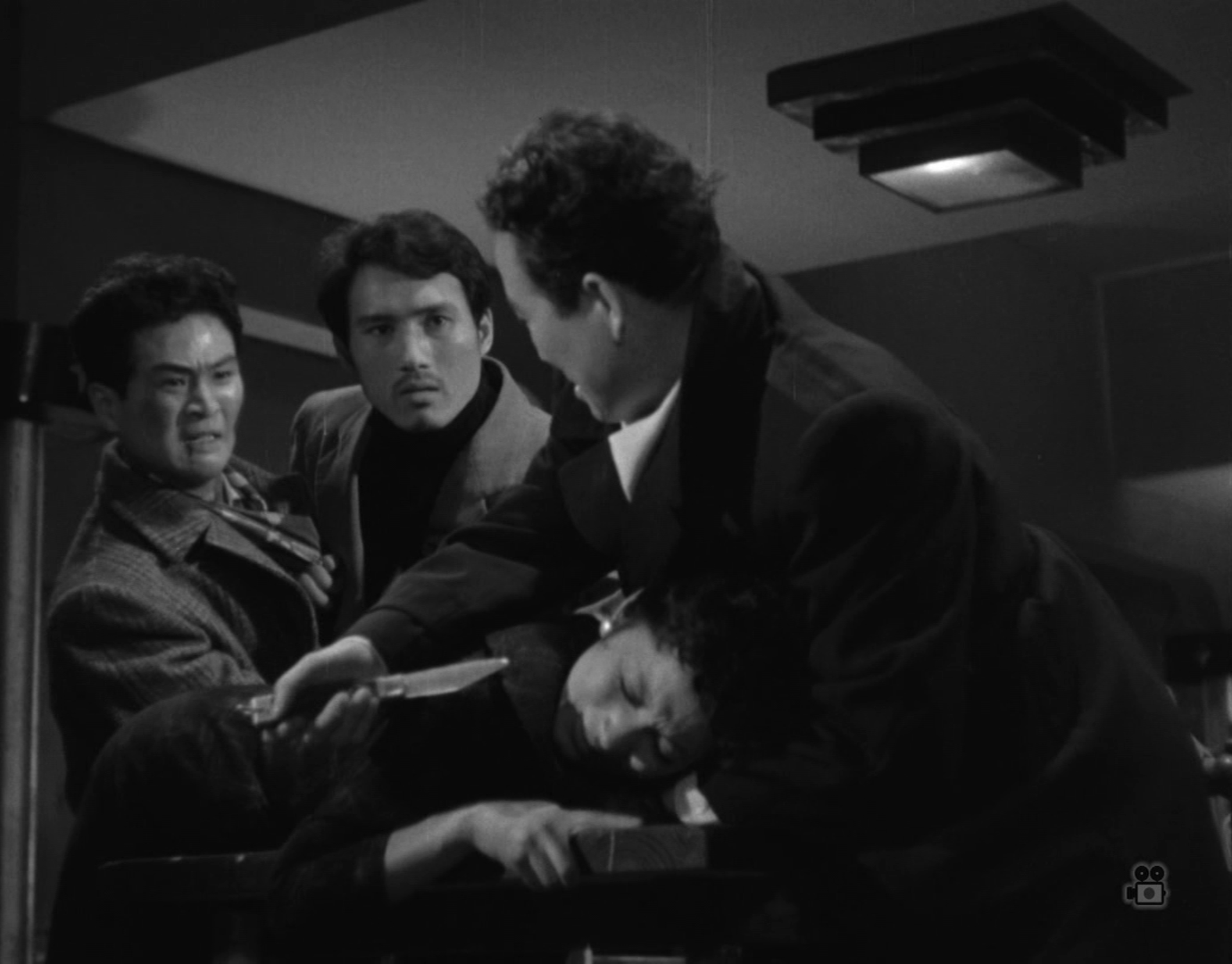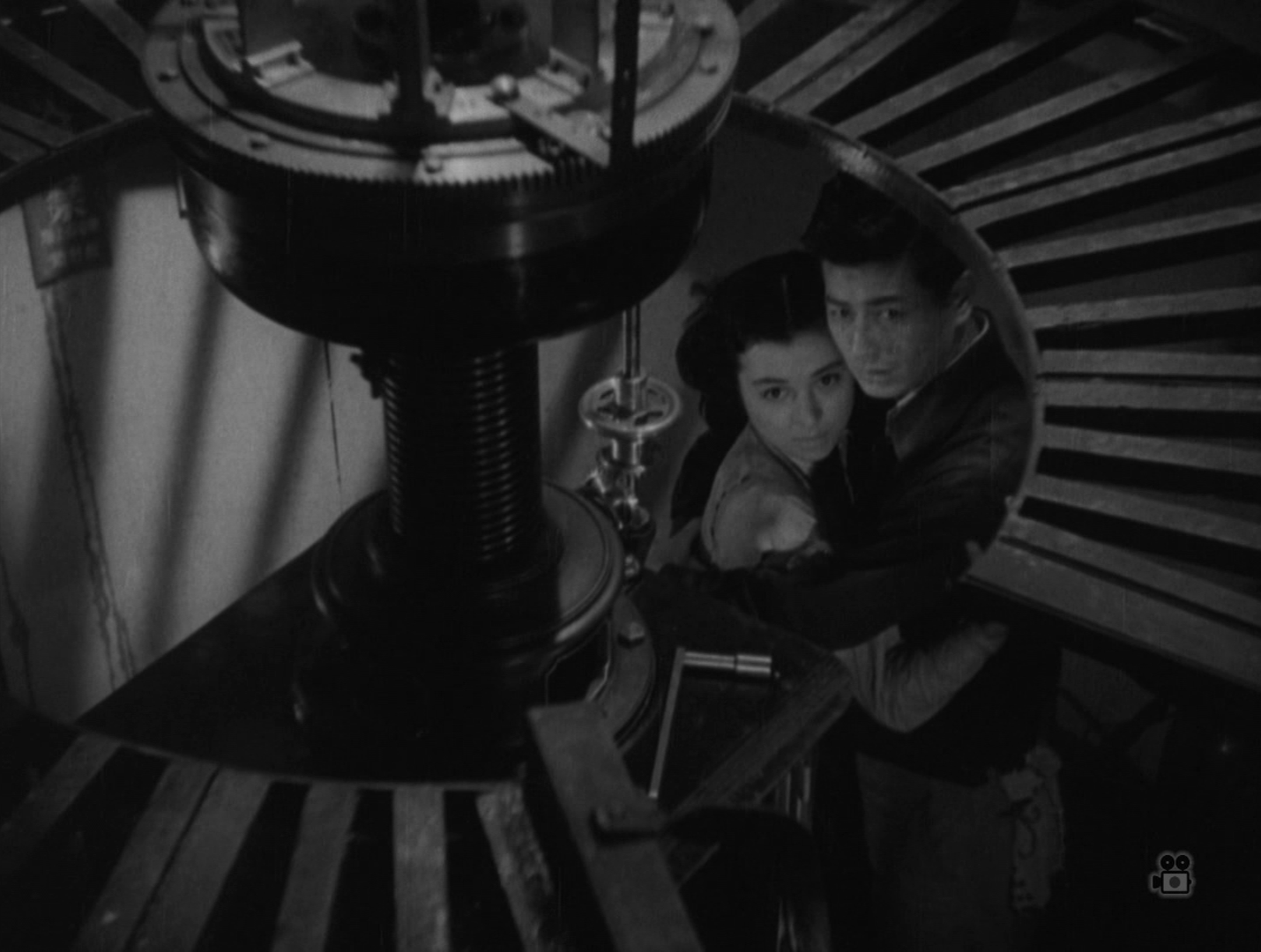
Middle-Aged Man (をぢさん, Minoru Shibuya, 1943)

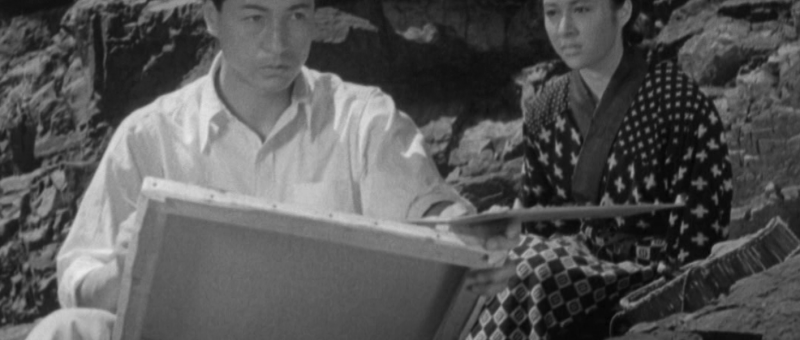
The middle-aged man in the title of Minoru Shibuya’s wam-hearted drama is a factory foreman who believes in the power of human kindness. A machine is no better than the human hand, he tells his staff somewhat prophetically explaining to them that they must remember that they are human and take of themselves and others. Yet even at work, there are those who are annoyed by him as he wanders around checking people’s work and offering advice.

Yet when Kondo is asked to go to another factory in Nagano to teach some children, he tries to object that he doesn’t know anything about teaching, though is eventually persuaded to go anyway much to the annoyance of his wife, Okiyo, who thinks he’s too much of a soft touch. She might be right that regard, and there is something to be said for the idea that they asked him because they knew he wouldn’t put up too much of a fight. She eventually goes on such a long rant about how annoyed she is by her husband’s excessive kindness that it almost ends up ruining her brother’s engagement. Kondo’s thoughts are unexpectedly progressive in contrast with those of his wife as he tells her that taking care of children is a meaningful job in its own right that not everyone can do, though the couple appear to have no children of their own.

Kondo has, however, taken on the role of surrogate father to the son of a widowed neighbour, Haruo. He continues to call the boy “bocchan” which means something equivalent to “young master”, while the boy calls him “Ojisan”, a fairly generic way of addressing a middle-aged man, bearing out the class disparity between them. A similar sense of class disparity exists between Okiyo’s brother Jukichi and his prospective bride Kazuko who turns out to come from a former samurai family who have a suit of armour in the living room and show Mrs Kondo a long scroll listing their ancestors going back to the Sengoku era. When she tries to tell Kondo about it, he misunderstands and thinks she’s talking about a kind of fish, so alien all of this is to him. 

The film seems to be saying that class barriers like these need to come down as Jukichi and Kazuko appear to be getting on quite well, effectively dating despite having been set up for an arranged marriage. Despite the difficult economic circumstances, Jukichi has been able to rent a house and a date house now been set for the wedding. This may, in its way, be a reminder that everyone needs to pull together as one for the war effort rather than allowing outdated feudal notions of class distinction prevent them working together effectively. Kondo’s kindness operates in quite the same way as he pitches in to help his neighbours plant tomatoes and is generally available whenever anyone needs help. 

Matters take a more serious turn when Haruo becomes ill after eating a sweet Kondo brought back from Nagano. Though there is no way to know that it was the sweet that made him ill, Kondo feels responsible and insists on taking him to the hospital where it is discovered that his condition is more serious than anyone had assumed. The doctors eventually suggest a blood transfusion. Kondo is not a match and has to content himself with cold baths at the Shinto shrine to pray for Haruo’s recovery, but Okiyo is and in a weird way it’s like she gets a transfusion herself. No longer so grumpy, she’s come round to her husband’s way of thinking and learned how good it can feel to help others. 

Meanwhile, she’d also objected to Kondo’s interest in traditional kagura ritual dance which she’d made him promise to give up on they marriage. He is nevertheless roped into it, and Haruo is fascinated by this ancient art form that Okiyo only regards as “silly dancing”. When he falls ill, all Haruo wants is to see the dance again and the possibility of doing so when he’s better encourages him to hang in there. Thus the film probably gets around any need for patriotic content with its embrace of kagura while otherwise sending positive messages about the importance of community and supporting one another so that the nation, like Haruo, remains robust.


Art of Assassination (女殺し屋 牝犬, Yoshio Inoue, 1969)

Kyoko Enami joined Daiei in 1959 and became one of its biggest stars seven years later when she played the lead in the 17-part Woman Gambler series that continued until 1971. The Art of Assassination (女殺し屋 牝犬, Onna koroshiya: Mesu Inu) shares many of the same members of the creative team while adapted from a novel by Shinji Fujiwara and written by Mitsuro Otaki who had adapted the Raizo Ichikawa vehicle Killer’s Key. Set in the present day, the film seems to be setting up another long-running series for Enami in its hints at the backstory of its hit woman heroine, though it appears not to have gone any further. 

In any case, the film anticipates the paranoia cinema of the coming decade as the ice cool Kayo (Kyoko Enami) finds herself mixed up in shady political intrigue when a yakuza working for a regular company hires her to take out a would-be-whistle-blower. Tobita, a corrupt politician in cahoots with Toyo Trading CEO Abe, has evidently been up to no good and possibly unwisely chose to freeze out one of his co-conspirators, Ishizuka. Ishizuka has now been released from prison and is minded to spill the beans on their whole operation, so Tobita wants him taken out before he can reveal his explosive memo. 

The relationship between Tobita, who is shameless in his corruption, Toyo Trading, and corporatising yakuza outfit Kijima Industries bears out a contemporary uneasiness regarding the interplay between politics, violence, and big business in the age of high prosperity. Kayo’s friend Mika works as an advertising model and has become the mistress of Toyo boss Abe to further her career. She tells Kayo that it was her dream to have her own place and live a life of luxury, which she’s ironically achieved through promoting consumerism and commodifying herself as Abe’s mistress. When Kayo is later forced to kill him, rather insensitively in Mika’s apartment, Mika seems less emotionally wounded by Abe’s death or shocked by learning the truth of her friend’s identity, than filled with despair that Kayo has now shattered her dreams. She won’t be getting any more work from Toyo nor will Abe be paying for her apartment, so she might lose everything she’s worked so build. 

Kayo, by contrast, dresses in a kimono for her cover job running a cafe and presents as the exact opposite of a modern girl like Mika. Her favourite weapon is a chunky emerald ring that conceals an extendable needle she uses to silently take out her targets. She is only really able to operate in this way precisely because of her femininity. She manages to kill Ishizuka while he’s arrogantly lounging around in a public pool at the hotel where he’s holed up by swimming under his lilo and puncturing his neck from below. This way of dispatching her targets necessarily means she has to get in close and is able to do so precisely because no suspects her. She is, however, prepared to use guns where necessary and is meticulous in her work while seemingly having no inner personality outside of her identity as a contract killer. Mika thinks they’re friends, but Kayo uses her without a second thought and seems only mildly guilty about getting her involved, placing a share of the bounty in front of her by way of compensation.

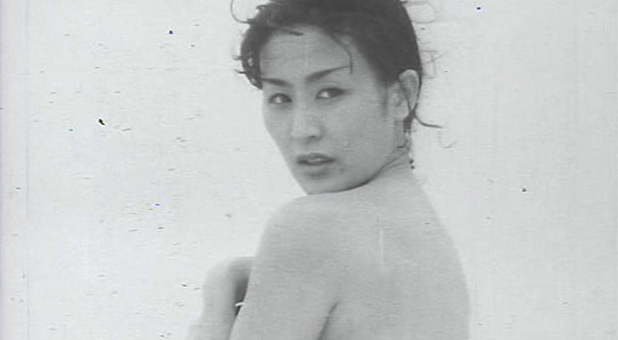
The film flirts with a backstory, offering a few flashbacks to Kayo as a child sitting in a pool of blood, but never explains any further. It seems Kayo’s coolness is a trauma response, but this job has her feeling very annoyed. As she says, it’s the first time she’s ever killed for rage rather than money and demands vengeance from those who’ve doubled crossed her. In that sense, it doesn’t really matter that her ultimate targets are the evils of the age from corrupt politicians to amoral capitalists and disingenuous yakuza because her quest is personal and driven and her own particular code of ethics, but it does nevertheless say something about contemporary anxieties. That Daiei chose to advertise this using a poster with Enami in a swimsuit, which does admittedly appear in the film, along with the Japanese title (Female Killer: Bitch) which makes the film sound a little more salacious than it actually is, suggests they may have had a different audience in mind from their usual fare, but it is a shame that Enami did not get the opportunity to further flesh out this ultra-cool heroine.


Ghost Stories of Wanderer at Honjo (怪談本所七不思議, Goro Kadono, 1957)

Ghost Stories of Wanderer at Honjo (怪談本所七不思議, Kaidan Nana Fushigi) seems to have become mistitled somewhere along the line seeing as the Japanese is something more like The Seven Wonders of Honjo, an area of Tokyo that had a reputation for gloominess during the Edo era. The “seven wonders” are a collective name for a series of local ghost stories, of which there may actually be more than seven, which were popular fare for rakugo tales and other forms of storytelling. Though the film opens with a brief rundown of the seven wonders which it weaves into the tale, it is more of a revenge drama that throws in the appearance of popular yokai such as Rokurokubi, Kasa-obake, and Hitotsume-kozo.

The yokai emerge to scare a pair of fishermen who were about to ignore a ghostly voice telling them to leave the fish they’d just caught in the river behind, but what the fishermen really seem to object to is the presence of a tanuki who makes a habit of tricking the local people. After becoming fed up with them, the locals hunt down the tanuki and are about to turn it into soup when a wealthy nobleman, Komiyama (Hiroshi Hayashi), arrives and buys the tanuki from them which he then frees. Komiyama tells the tanuki to stop bothering the villagers in return and continues home after marking the anniversary of his wife’s passing and the departure of his son who is going out into the world.

The tanuki later appears in the form of a beautiful young woman to tell Komiyama that she is grateful for his saving her life and will always protect him. Unfortunately, however, Komiyama gets into trouble on the night of a tanuki ritual, so she doesn’t make it in time to save him from a dastardly plot by his disinherited nephew to murder him for his money. She can, however, help his son Yumenosuke (Juzaburo Akechi) exact revenge and put a stop to the amoral Gonkuro’s (regular Shintoho villain Shigeru Amachi) reign of terror.

As in many tales like these, it’s Gonkuro who is real terror threatening chaos in the ordered Edo society while being unable to conform to his proper role in life. Before the film begins, Komiya has already disowned his nephew for being a wastrel. Gonkuro says that he’s come to pay his respects to his late aunt, but Komiyama suspects he’s after money again which he’ll spend on drink, women, and gambling. There is a direct contrast being drawn between the good son Yumenosuke and Gonkuro, though it’s Yumenosuke who apparently becomes seriously ill while on his travels preventing his speedy return until his desire for revenge enables him to overcome his illness. 

Meanwhile, Komiyama has recently married again to a younger woman, Sawa (Akiko Yamashita), who turns out to be a former lover of Gonkuro’s. Though she at first resists, she’s bullied into resuming a sexual relationship with him which she then carries on enthusiastically. She and Gonkuro seem to be symbols of the evils of the age in their lack of properness and humanity. Not only does Sawa cheat on her husband, but even goes along with Gonkuro’s murder plot to kill him and inherit his money.

Though the tanuki fails to save Komiyama and is generally depicted as an untrustworthy trickster, it is a kind of guardian of these virtues in standing behind Yumenosuke as a source of righteousness. Komiyama’s act of kindness will eventually be repaid, while Gonkuro’s attempt to triumph over the moral order represented by Komiyama will be denied. Having dispatched Komiyama, Gonkuro occupies an awkward class status as a usurping lord and even tries to rape Yumenosuke’s betrothed Yae during an expressionist storm as a means of asserting his triumph over his cousin. Sawa meanwhile does something similar by flirting with and then potentially entering a sexual relationship with their servant Gosuke (Saburo Sawai) in full contravention of the social order. Their attempts to get rid of the tanuki by praying her away are a means of reasserting control and dissolving the rules of human morality that they feel constrain them.

In that sense, the tanuki and yokai are not particularly frightening but a constant presence that enforces a moral order defined by humanity and compassion. The two fishermen are only spooked because they ignore the disembodied voice telling them to leave the fish, not because they heard it in the first place. The tanuki, meanwhile, are mainly seen dancing as part of their ritual rendered as ghostly figures not quite of this world. They appear not to do anything that could be considered more than irritating even when messing with locals and definitely don’t deserve to get made into soup. The message seems to be that being good and kind might not save you personally, but it will eventually pay off, and is after all, the right thing to do as man can only thrive when living in harmony with nature and the supernatural world rather than attempting to transcend it through immorality like the selfish and thoughtless Gonkuro.


Pure Emotions of the Sea (海の純情, Seijun Suzuki, 1956)

Directed under his birth name Seitaro, Seijun Suzuki’s second film Pure Emotions of the Sea (海の純情, Umi no Junjo) is essentially a vehicle for pop star Hachiro Kasuga who plays a character with the same and sings several of his popular hits including Otomi-san which eventually sold over a million copies. Perhaps precisely because of its nature as a 45-minute programme picture, Suzuki was able to get away with quite a lot of the nonsense that would become his signature style in an otherwise anarchic tale of a romantically troubled whaler and the improbable number of women who love him.

Hachiro is the harpoon operator on a whale boat, but it’s mainly women’s hearts that he seems to be piercing. While he seems to have feelings for captain’s daughter Kazue (Toshie Takada), he also attracts the attentions of Miyoko (Tomoko Ko), daughter of the head of the shipping company, local sex worker Yumi (Miki Odagiri), and “judo-geisha” Suzugiku (Kyoko Akemi). His various encounters encourage him to swear off women, but this is quite a small town and he can’t avoid them entirely. Eventually, Miyoko suggests that perhaps she, Yumi, and Suzugiku could divide Hachiro in three with Yumi taking his money, Suzugiku his heart, and Miyoko his throat for his singing voice. After some rather macabre discussions about how to get his heart out of his body, they settle on a time share arrangement instead with each of them having Hachiro for eight hours of the day, though Hachiro’s thoughts don’t seem to enter into it.

Conversely, ambitious rudder-operator Goro is interested in all these women too, though for largely cynical reasons. With the captain’s position weakened he’s angling to take over, though is unpopular with just about everyone except Yumi who feigns taking her own life to get his attention when he starts trying to woo Suzugiku, who doesn’t like him at all. He seems to be a kind of parody of the ambitious salaryman, even giving hair tonic to his balding boss in the hope of currying favour. The other sailors, however, seem to see Hachiro as a natural successor, though the captain isn’t so sure and particularly hates his habit of singing all the time. There’s a minor irony in the fact that Suzugiku often carries a portable radio to listen to Hachiro’s songs, making her a representative of modernity rather than the emblem of traditional culture one might expect a geisha to be. She even plays records of Hachiro rather than playing the shamisen much to Captain Eizo’s (Jushiro Kobayashi) consternation. According to him, geisha aren’t what they used to be. Not only are there “judo-geisha” but dancing geisha and mahjong geisha too.

Eizo’s grumpiness and harsh treatment of his men is one reason given for the boat’s declining fortunes, with Hachiro posited as a more cheerful presence who could boot their morale, though he’s more dopey than anything else and preoccupied with his romantic difficulties. Thus it’s not surprising that Eizo’s position is under threat or that he mildly resents Hachiro though picking up on his daughter’s obvious fondness for him. Nevertheless, he will eventually have to make way for the next generation, handing his captain’s jacket over to Hachiro in addition to accepting him as a potential son-in-law.

Suzuki, however, takes a rather roundabout route to get there embracing an absurdist sensibility and sense of cartoonish fun. He opens the film with an ethnographic voiceover reminiscent of a travel programme and then cuts to Miyoko away at university studying whales and introducing herself to the camera as a kind of guide to the weird fishing village, though she is not the protagonist of the film and only resurfaces halfway through as a love rival. He also adds in surrealist touches such as frequent cuts to classical statues during Suzugiku’s judo routine. When she shows off her techniques, she throws Goro straight through a wall leaving a man-shaped hole behind, while she later deflects his romantic attentions by punting him right to the top of a tall tower at the beach. Suzuki also uses small stretches of whale-themed animation to add to the childish sense of fun while simultaneously ignoring the bloodiness of Hachiro’s job as a whale hunter. Probably, he could only get away with all this precisely because it was a 45-minute kayo eiga pop song movie intended as a programme filler, but still there are hints at what would become his signature style in his distinctive composition and absurdist sense of humour.


A New Love in Tokyo (愛の新世界, Banmei Takahashi, 1994)

Life is theatre in Banmei Takahashi’s A New Love in Tokyo (愛の新世界, Ai no Shinsekai). Strangely marketed in some quarters as a kind of sequel to Ryu Murakami’s Tokyo Decadence though it is entirely unconnected to it, Banmei Takahashi’s after hours drama is a breezy riot that runs in direct contrast to other post-Bubble era movies which saw only despair and disillusionment in economic stagnation. For Rei (Sawa Suzuki) and Ayumi (Reiko Kataoka), however, life is one long party that they live on their own terms hoping to ride the wave all the way to the sea.

That said, it’s true that Rei, at least, is doing her dominatrix job because it’s impossible to support oneself as an artist in this economy. She is, in fact, basically subsidising her whole theatre troupe through sex work as a means of keeping it going. Her relationship to the men in the group is almost like Snow White and the Seven Dwarves while, for unexplained reasons, she sleeps with each of her dopey castmates on a rota system. It’s not until crunch time that they realise they should probably get jobs too, while the only other woman in the group (Yoko Nakajima) takes a job as a receptionist answering the phone at the call girl agency where Ayumi works.

Rei often runs into Ayumi leaving hotels and the pair soon become fast friends, though unlike Rei, Ayumi is a regular sex worker who sleeps with her clients. Nevertheless, Rei seems to like her precisely because, as she puts it, she’s a good liar, which is perhaps what you need to be to be successful at this business. She manipulates her clients by pretending to be a shy virgin so they pay her more for basic services, while lying to her boyfriend that she’s an office lady. The fact he takes it at face value suggests he might not be all that bright, which is why he’s struggling to finish his exams to become a doctor. Later, she’s thrown him over for a lad training to be a lawyer but just with as much success. Both the men she ends up with seem to be feckless and dim, though she fluffs their egos by pretending to be stupid. She says that her end goal is to become the wife of a professional lawyer or doctor, which is to say she’s looking for class status and respectability, though she’s probably earning more than they are by herself already. Ayumi has a host of savings pots and sometimes transfers large sums of money into one telling her boyfriend it’s from her father to help pay for a wedding.

Which is to say, everyone here is playing a kind of role. Both Rei and Ayumi seem to be using their real names for their work, but as Rei says the dominatrix gig is good for her acting career in allowing her to take on multiple personas. She too writes frequent letters home to her mother which bear little relation to reality in which she claims to be a therapist’s receptionist. But the clients are acting too, because this is, after all, all about role play. One of Rei’s most devoted customers is a yakuza who bosses his men around all day then comes to her to be punished. He is scrupulously polite and really rather sweet, buying up all the tickets to Rei’s play to make sure she’s not embarrassed on the opening night. Generally speaking, the streams shouldn’t cross between Rei the actress and Rei the dominatrix, so the yakuza is crossing a line by intruding on her personal life at the play, though he does so in an otherwise respectful way, apologising for his presence and making it clear that he doesn’t mean to expose her to those who might not know nor does he intend to encroach any further on her personal life.

Another of the women’s clients seems to be a fed up salaryman ranting about his boss and company lay-offs, hinting at the stressfulness of the economic situation for those working outside of the sex industry as well as the emasculating nature of corporate life in which the salaryman can only vent his frustrations through BDSM role-play rather than by actually taking it up with his boss. Rei and Ayumi are, by contrast, free from any such concerns. That is not to say, however, that their lives are easy or without danger. When a sex worker is found dead in a love hotel bathroom, a gloom falls over the industry. Rei asks Ayumi if she’s feeling alright, but as it turns out her agency has spotted a business opportunity seeing as most of the others will have decided to close for the sake for safety and as a gesture of respect. Ayumi too is threatened by a customer with a knife and is only saved by the arrival of a yakuza, in an unexpected cameo from ice cool V-Cinema star Show Aikawa, who intimidates the customer into backing off by eating his own sunglasses. Nevertheless, Ayumi goes straight back to work to meet the next customer, unwilling to let herself be cowed by male violence.

That’s something she has in common with Rei who similarly treats the attempts of men to ruin her night with similar disdain. When one customer proves rebellious, she keeps him waiting for hours while tied up and bound in the dark. She and Ayumi try turning the tables by visiting a host club, but are instantly put off by their poor quality patter. They go on a kind of date with two guys who tried to pick them up, but dump them when they’ve had enough. Rei, in particular, has several boyfriends who think they have some sort of claim on her body and her time, but she only ever does as she pleases. There’s something unexpectedly joyful about the two women running hand in hand through the midnight city, as if this were only ever their playground. The juxtaposition of the erotic photographs taken of actress Sawa Suzuki by Nobuyoshi Araki and those of her childhood hint at this quality of playfulness, as if her life were one of fun games in which she’s never quite grown up. They also remind us, however, of her ordinariness. She had a childhood too, and is, in fact, just like everyone else. Her job is just a job, no different from those of the guys at her theatre troupe who work in restaurants and video stores. She and Ayumi even exchange business cards. This festival might be over now, but that only means it’s time to start preparing for the next in the company of her friends as she and Ayumi enjoy their lives in the permanent dawn of a city that seems to exist only for them.


Trailer (English subtitles)

Kokkuri (こっくりさん, Takahisa Zeze, 1997)

The tensions between a trio of young women are brought to the fore by an ill-advised consultation with Kokkuri-san in Takahisa Zeze’s atmospheric horror movie. Some more than others, these girls are all haunted if only by adolescent confusion and suppressed desire. Looking for answers with no one turn to in the absence of parental authority, they rely doubly on a late-night radio show, Midnight Blue Bird,  hosted by a girl their age calling herself “Michiru”.

“Michiru” is the heroine of the Japanese version of Blue Bird fairytale about a brother and sister who leave in search of the blue bird of happiness only to return and realise that it was waiting for them at home all along. While the moral of the fairytale might be that happiness is all around us if only you know how to look, there is precious little surrounding the girls outside of their friendship which is already beginning to fracture under the weight of adolescence, not to mention a series of overlapping love triangles.

What neither of the other girls know, is that Michiru is actually a persona constructed by Mio (Ayumi Yamatsu) who is actually the host of the radio show. As Michiru she claims to be sexually experienced and rebellious, answering the questions that come from other young women though, in reality, a regular high schooler and romantically naive. As we gradually become aware, she is in love with her friend Hiroko (Hiroko Shimada), but Hiroko has a crush on Masami’s fickle boyfriend Akira. It was Mio who suggested the Kokkuri-san game on her radio show, a Ouija board style means of divination, but it quickly turns dark with Masami (Moe Ishikawa) manipulating the board to needle Hiroko after realising she’s after her boyfriend.

The resulting fallout pushes Hiroko and Mio towards a confrontation with their shared traumas as survivors of a drowning. Hiroko is haunted by a little girl in red, ironically named “Midori” which means “green”, and struggles to get over the guilt she feels over a childhood friend who drowned in a public bath. Mio, meanwhile, gives contradictory biographical information on her show, but it seems that Mio’s mother intended to take her own life with Mio in tow after she caught her with her new husband to be following the death of Mio’s father. Echoing the central motivation of the film, Mio’s mother suggests the “go together” to where her father is, but later saves Mio alone.

But while Hiroko becomes preoccupied with the notion of sex, vowing to become more like Michiru, she tells Michiro that thanks losing her virginity will change her though she later laments that it’s changed nothing at all. Mio, meanwhile seems to have a hangup having caught her mother with another man. In disgust, she rubs at her libs in the same way that the older Mio later does after finally finding the courage to kiss Hiroko who lips have, by then, been coated in striking red lipstick. The colour red seems to represent the curse of Kokkuri-san and with it repressed guilt, regret, and forbidden desire. Though it seems that by learning to accept herself, publicly unmasking herself on her radio show and confessing her love for Hiroko live on air, Mio alone is able to overcome the curse. The kiss she gives Hiroko is one of life that seems to break the spell and free them both from Kokkuri-san’s trap, though all may not be as it first seems. 

Nevertheless, the fact that Hiroko does not remember makes this something of a private evolution for Mio even as voices from the past resurface and encourage them “go together” toward whatever fate awaits them in the film’s ambiguous conclusion that echoes that of Zeze’s earlier pink tale of frustrated same-sex desire, Angel of September, which shares many of the same themes. Even so, in finally accepting her sister, who is impressed and supportive of her coming out live on air even if she cynically adds it can be her new gimmick, Mio has undergone a transformation into adulthood and symbolically been reborn, emerging from the cleansing waters with greater clarity and self-assurance if perhaps no more certain of what the future may hold.


Trailer (no subtitles)

Angel in September (本番レズ 恥ずかしい体位, Takahisa Zeze, 1994)

According to Hitomi, she and Eriko were once lovers in a past life in which they were angels battling a demon army. She claims that she recognised Eriko at once, though never had the courage to talk to her at school and has only connected with her now after witnessing her transgressive act of stealing a lipstick from a convenience store. Aside from bristling slightly that in her past life she was apparently a man, Eriko goes along with Hitomi’s bizarre story until their relationship intensifies and it begins to annoy her. 

It’s not really clear if Hitomi actually believes what she’s saying or is making the whole thing up. It may be a way for her to try and articulate her feelings, framing the love she feels for Eriko as a cosmically fated romance that began with an apparently heterosexual union, though perhaps after all angels have no gender. On the other hand, perhaps these demons that they’re battling represent those who would stand in the way of their love. Though it’s plain that Hitomi looks at her with an obvious longing, she asks Eriko if it’s alright that she’s not a boy. When Eriko replies that it doesn’t matter, Hitomi sadly asks if anyone would do while doubting her own worthiness. Eriko laughs and kisses her again, maintaining dominance by assuring Hitomi that she will teach her as she gently removes her clothes. 

But it’s also clear that Eriko has other things going on and, in some ways, represents the demon to Hitomi’s angel. She messes around with men via the telephone club, essentially a hookup line, getting Hitomi to come with her as they go on a date with a middle-aged man they plan to extort. After she and Hitomi run away together, she sleeps with the truck driver they hitched a lift with in the next room as if deliberately torturing Hitomi who writhes in agony while being subjected to her moans. Unable to bear the torment she calls her mother and asks to be picked up. Which causes a rift between herself and Eriko in what Eriko sees as an act of betrayal. After dropping out of school, Eriko takes up with another girl and rejects Hitomi’s pleas to come back, telling her that she doesn’t want to be railroaded onto a conventional life of marriage and children that believes is all that school leads to. Hitomi may, in that sense, be more conventional. Her innocence is reflected in the fact that she’d never drunk alcohol and disliked it when Eriko made her try. She dresses in a subdued manner and is fearful of Eriko’s reckless behaviour.

Nevertheless, she too tries on Eriko’s persona by going on an awkward arcade date with a boy from the telephone club who takes her to a hotel where she sleeps with him, but evidently loathes the experience and tries to regain control of the situation by becoming violent and demanding money. Resenting Eriko’s assertion that she couldn’t be an angel because she doesn’t have a scar, Hitomi burns herself by heating a metal fork to mimic the Orion’s Belt motif of moles Eriko has on her breast. Despite accusing Hitomi of only caring about herself, it seems that Eriko too is using the fantasy as an excuse to reject emotional intimacy. The other girl she’s with accuses her of thinking of Hitomi while they make they love with which she appears to be unsatisfied and there is something in her that seems fearful of genuine connection.

When they finally reunite, the final time they make love mirrors the first with roles reversed as Hitomi gently removes Eriko’s shirt and Eriko reaches out to touch the brand on Hitomi’s breast in shyness and wonder. The Orion’s Belt motif echoes the cosmic nature of their connection, as if they had finally completed their journey home to each other. But the ominous undertones remain as Hitomi returns to her story in which she romantically sacrificed herself for Eriko by jumping into the water to quell the demons’ storm. In releasing the apparently resurrected goldfish that she flushed away in pettiness and anger, she lets herself go as, like the butterfly lovers, she and Eriko seem to be transformed into fish free to swim in the ocean. Delicately shot with the yellow hues of nostalgia, Zeze’s poetic tale of toxic, frustrated love ends on a melancholy note that suggests the lovers are bound only for a loop of eternal heartbreak in every possible reincarnation.


Warm Water Under a Red Bridge (赤い橋の下のぬるい水, Shohei Imamura, 2001)

According to the blue-tent philosopher, the real meaning of freedom lies in thinking for oneself and coming to your own conclusions. People today are too educated to admit their desires, he says. That’s certainly true of Sasano (Koji Yakusho), the embodiment of the contemporary salaryman and one who has now been cast adrift in the wake of economic stagnation. He later asks if an officer worker doesn’t have the right to love, and in his present state he might not because it’s made him a stranger to himself who can no longer make his own decisions or identify what he really wants out of life.

That might be the reason that the late Taro (Kazuo Kitamura) decided to send him on a wild goose chase to the Noto Peninsula where he once hid a Buddhist statue he stole from a Kyoto temple in a pot which shoved at the back of a cupboard in the house of a woman he once loved. As we later learn, Taro became a drifter after the war and ended up living with a woman now known only as “Granny” (Mitsuko Baisho) before he unfortunately killed someone and went to prison. After that, he was too ashamed to return, but it seems like Granny spent the rest of her life waiting, sitting by the little red bridge that leads to her home.

The bridge itself comes to represent a path to freedom as Sasano becomes involved with a younger woman who lives there, Saeko (Misa Shimizu) . After witnessing her seemingly wet herself while stealing cheese at the supermarket, Sasano uses an earring she lost as an excuse to enter the house and unexpectedly ends up having sex with her which causes Saeko to gush large amounts of water on orgasm. This is apparently Saeko’s affliction and to her a source of shame that’s ruined relationships and isolated her from society. Every time she has too much water inside her, or in other words, when her libido can no longer be denied, she feels the urge to exorcise it in other transgressive ways such as shoplifting. To that extent, female sexual desire is framed as something seen as taboo, but Saeko’s sexual fulfilment turns out to be good for the world around her. It’s why the trumpet flowers bloom so beautifully outside the house, and when the water flows into the river it beckons the fish in from further out to sea. Saeko doesn’t connect the two things, but it’s also, of course, why she has access to high-quality water that enables her to make delicious traditional-style sweets.

Sasano, meanwhile, begins to discover another side of himself while living in this small town. His wife often calls to nag him to transfer money, and to begin with we might assume that they’re already divorced but the truth is that they’ve been forced to live separately because of Sasano’s economic situation. Though she’s taken their son and moved back in with her parents, Sasano’s wife tells him to hurry up and get another job or else they’ll never get back to Tokyo. Nevertheless, just as he does, she may be discovering a new and happier life outside of the city. When she calls to say she wants a divorce, she tells him that their son has made a lot of new friends and he doesn’t want to move back. It seemed that what she wanted was the salaryman ideal and she resented Sasano for falling from the corporate ladder, but it turns out that there are other ways to be happy. As Taro had put it, corporate culture doesn’t want workers to think. It wants busy drones who complete tasks mindlessly to pay off their mortgages and be accepted as fully-fledged members of society.

By breaking out of the salaryman straightjacket, Sasano begins to find unexpected fulfilment in a simpler life as a fisherman. Through his reconciliation with Saeko and acceptance of the emotional dimension of their relationship rather than the purely sexual, he discovers a kind of serenity as evidenced by the rainbow that emerges above them as Saeko orgasms directly into the sea. Life is about small pleasures, the film seems to say, such as good food and sexual fulfilment, that can also improve the general environment quite literally watering the earth with human warmth.


Trailer (English subtitles)

Ichijo’s Wet Lust (一条さゆり 濡れた欲情, Tatsumi Kumashiro, 1972)

The opening text at the beginning of Tatsumo Kumashiro’s Ichijo’s Wet Lust (一条さゆり 濡れた欲情, Ichijo Sayuri Nureta Yokujo) informs us that though the film might be inspired by the life of Sayuri Ichijo, queen of the strippers, it is fiction. Truth be told, Sayuri Ichijo isn’t in it all that much, but her presence seems calculated given the fact that Ichijo had also been having frequent troubles with the censors over her erotic cabaret appearances. Her signature set piece involved passing around a magnifying glass so that audience members could inspect her vagina, which got her charged with obscenity. 

Shortly before the film’s release, Nikkatsu had shifted production almost entirely to its Roman Porno line of erotic dramas. In 1972, a charge of obscenity was levelled at them in relation to the film Love Hunter, after which they became embroiled in a lengthy series of legal battles which continued until 1978. Kumashiro was the screenwriter for Love Hunter, though he penned it under a pseudonym. He apparently reached out to Ichijo as a gesture of solidarity and she agreed to be in the film, though she’d previously turned down an offer from Toei, because she thought the script seemed promising and was persuaded by Kumashiro. The dig at Toei appears to be mirrored in the film as Ichijo performs a routine dressed as a samurai noblewoman dancing to the theme from Red Peony Gambler, while her other acts mix a music hall sensibility with transgressive eroticism such as candle play.

In the wake off her legal troubles, Sayuri has quit the business to open a sushi restaurant while struggling to shake off her past. An obnoxious customer seems surprised about the idea of a stripper eating ramen, only for Sayuri to remind him that they’re normal people too and eat normal food like everyone else. She may be the queen of the strippers, but Sayuri still occupies a kind underclass in the regular world in which she’s looked down upon for her erotic art even if she personally regards it empowering. Even so, the slightly younger Harumi (Hiroko Isayama) seems to want to knock her off her perch and alternates between fawning admiration and resentment.

Trying to curry favour, she tells Sayuri that she identifies with her backstory of being an orphan that they may have grown up in the same children’s home in Saitama despite her broad Osaka accent. She also tells her husband, recently released from prison after being convicted of murder, that her father was sentenced to death, though this appears to be another detail pinched from Sayuri’s biography, which may not be true in her case either. Harumi later admits that nothing she’s said about herself is actually true, which could also be a lie, as she otherwise seems intent on stealing Sayuri’s identity and with it the top spot at the club. After getting arrested and fined, she tells her friend that she’s quitting their lesbian floorshow show because, she insensitively says, the lesbian stuff’s just for talentless hacks and she’s apparently turned off by other women’s genitalia.

To try to take down Sayuri, Harumi uses sex to manipulate the men around her including her besotted husband and another man he stabbed in the leg. Scenes of Sayuri’s show are intercut with Harumi having sex on a rollercoaster while a female attendant tries very hard not to laugh and another woman looks up in confusion from the ground. Harumi seems to be making a show of her life in a different way at least to Sayuri who is courting controversy and may have sensationalised aspects of her biography to give herself a sob story but otherwise affects refinement, every inch the queen holding court when questioned by reporters about her legal troubles and retirement. Nevertheless, she too may be threatened by Harumi, point blank telling her not to make trouble at her last show and or steal her candle act when she leaves. Sayuri’s acts become more extreme as a consequence which is what gets her in trouble with the censors, while Harumi tries to perfect a weird gimmick of squirting milk out of her vagina. Even so, she goes about it with reckless abandon and a sense of fun that lends the film a breezy, down to earth sensibility that itself is, in fact, a rebuke to the censor and a defiant depiction of a young woman living a life without constraints. 


Lovers Are Wet (恋人たちは濡れた, Tatsumi Kumashiro, 1973)

Everyone keeps asking Katsu (Toru Ohe) if he’s Katsu, but he continues to deny it. No matter how insistent those around him are that this is his hometown, Katsu refuses to acknowledge it while claiming no other identity. It is in a way, the ultimate negation of the self and the town to him is a kind of liminal space in which he’s only ever waiting for something or else putting off the act of leaving as if prevented from moving on.

This sense of listless rootlessness may reflect that of a youth generation orphaned after the collapse of the counter-culture movement. Katsu sings bawdy folk songs in the manner of a protest singer with nothing to protest. Yoshie (Moeko Ezawa), the wife of the owner of the cinema where Katsu is working, asks him if he’s a member of the far-left movement on the run from the authorities, but Katsu says he’s not smart enough for something like that, though later admitting that he does seem to be on the run from something. 

Though she’s curious about his past, Yoshie doesn’t seem to question him about being Katsu and rather appears to want him to be an embodiment of her projected desires. She is too is trapped in this place, pinned behind the box office window with only a cat for company. Her husband rarely comes home and spends all his time with a mistress. He knows that Katsu is sleeping with his wife, but couldn’t care less. Or rather, he’s sort of grateful because it’s one less thing for him worry about. Yoshie, meanwhile, clings to him because Katsu is her only means of escape from this moribund existence. She pleads with him to stay and to love her, but Katsu doesn’t seem to be capable of love and is only sticking around for the occasional tryst. 

Catching sight of another couple having sex in the wild, he stops to peep and gets into a fist fight with the man, Mitsuo (Rebun Hori), after which they become awkward friends. Mitsuo sets him up with another girl despite Katsu’s insistence that he’s not hard up for them, but Katsu immediately tries to rape her as if asserting his primal masculinity. Ironically enough, he rides around with the banner for Sex Animal on his bike as a means of advertising and Yoko (Rie Nakagawa), the girl, later remarks that he’s reenacting the poster in his attempt to rape Sachiko (Chizuyu Azami). A sex animal seems to be what he’s become as he purses meaningless and impulsive sex that care little for the woman’s feelings, only about dominance and conquest. Sachiko later brings Katsu’s mother as if to remind him of his true identity but her rejects her, while the girl later gets the upper hand by telling both the men to get lost and no matter how much they might think they’ve won, they really haven’t.

As Katsu rapes Sachiko, Yoko and Mitsuo share ironic banter in voiceover offering a running commentary while doing nothing to help Sachiko. They too seem bored and listless, which might be why Yoko seems drawn to Katsu even if in him she perhaps sees a shadow of death which would be another way of leaving this town. He later tells her that he killed someone for money, offering the money as proof, though it’s a fairly meaningless gesture as is the money itself which doesn’t seem to have increased his possibilities. Probably, he doesn’t know what to do with it. He describes Yoshie’s warmth as like a womb, and is apparently in this town waiting either for death or to be reborn, though Yoshie’s own failed suicide attempt seems to suggest there is no real escape from this purgatorial existence. When he tells her he wants to go somewhere else, Yoshie tells him that it’s the same everywhere anyway, so leaving will make no difference and there is nowhere he can go. 

The increasingly prosperous Japan of the mid-1970s in which the student movement has died seems to have no place for him. Kumashiro kicks back against this sense of ennui partly through his ironic use of censorship which cannot help but suggest what it hides. The large black bars and scratched out pools of white hint at an attempt to erase and oppress sexuality, which is the means by which Katsu and fails to find freedom, just as they oppress freedom of expression. Katsu meanwhile continues to block things out, rejecting his identity and behaving like a character from a film more hollow archetype than man just as Yoko seems to be an embodiment of his projected desires. She too may have only one destination available to her in this inescapable cycle of unfulfilled longing and crushing ennui.