
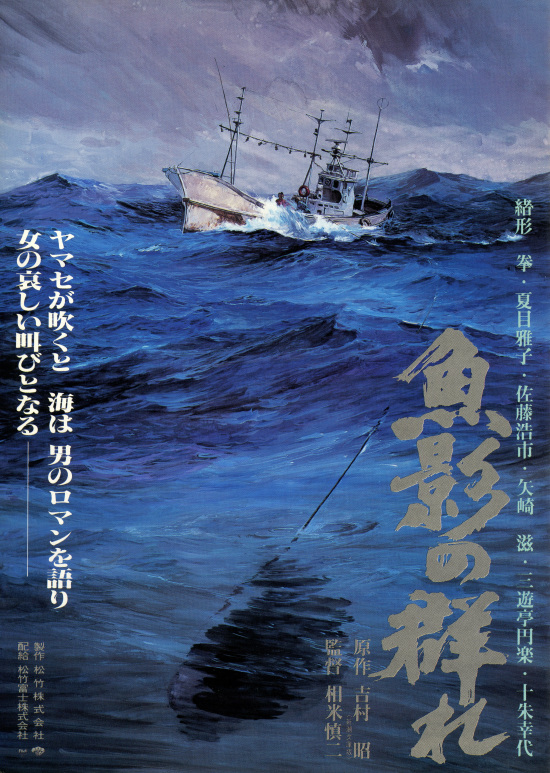
Some men become their work, the quest for success consumes them to the extent that there is barely anything left other than the chase. The Catch (魚影の群れ, Gyoei no Mure), Shinji Somai’s 1983 opus of fishermen at home on the waves and at sea on land is a complex examination of masculinity but also of fatherhood in a rapidly declining world filled with arcane ritual and ancient thought.
Fusajiro (Ken Ogata) is a middle aged man who looks old for his years. Man and boy he’s spent his life at sea, hunting down the elusive tuna fish which can be sold for vast amounts of money in the rare event that one is actually caught. This “first summer” as the title card refers to it, marks a change in his life as the daughter he’s been raising alone since his wife left him many years ago, Tokiko (Masako Natsume), has found a man she wants to marry. Her boyfriend, Shunichi (Koichi Sato), owns a coffee shop in town and Fusajiro has his doubts about a city boy marrying into a fisherman’s family. However, Shunichi isn’t just interested in Tokiko, he wants to set sail too. Though originally reluctant, Fusajiro eventually agrees to take Shunichi as a kind of apprentice but is dismayed when he gets seasick and seems to have no hint of a fisherman’s instinct.
Fusajiro is a legend among his peers – a big man of the sea, a true sailor and top hunter. He’s the one people turn to whenever anything goes wrong on the waves. However, he’s also a gruff man who speaks little and seems to prefer his own company. In the rare event that he is speaking, it’s generally about tuna. When Shunichi first meets Fusajiro he remarks that he knew it must be him because he “smells of the sea”.
A later scene sees Fusajiro catch sight of a woman caught in the rain who immediately starts running away from him. Chasing her just like one of his ever elusive tuna he eventually pins the woman down and takes her back to his boat to complete his conquest. The woman turns out to be his ex-wife, who left him precisely because of this violent behaviour. After momentarily considering returning to him, she realises that he hasn’t changed and accuses him of being unable to distinguish people from fish – he hooks them, reels them in, and if they don’t come willingly he hits them until they do so he can keep them with him. This overriding obsession with domination also costs Fusajiro his daughter when Shunichi is gravely injured on the boat and Fusajiro delays returning to port until he’s secured the tuna he was chasing at the time. Shunichi’s blood and the fish’s mingle together on the deck, one indistinguishable from the other, both victims of Fusajiro’s need to reign supreme over man and fish alike.
Fusajiro tried to warn Tokiko not to marry a fisherman, it would only make her miserable. Shunichi is warned that a fisherman’s life is a difficult one and the seas in this area less forgiving than most, but his mind is made up. Finally acquiring his own boat after selling his cafe, Shunichi, just like Fusajiro, starts to fall under the fisherman’s curse – endlessly chasing, living only for the catch. Unlike Fusajiro, however, Shunichi has little instinct for life at sea and fails to bring home his prey. Little by little, the mounting failures eat away at his self esteem as he feels belittled and humiliated in front of the other sailors culminating in an attempt to reinforce his manhood by raping his own wife. These men are little better than animals, consumed by conquest, permanently chasing at sea and on land. To be defeated, is to be destroyed.
Somai never shies away from the grimness and brutality of the work at hand. Ogata catches and spears these magnificent fish for real and the unfortunate creatures are then carved up right on the dockside before our very eyes. As we’re constantly reminded, physical strength is what matters for a fisherman and Fusajiro is a strong man, duelling with the tuna fish and straining to hold the line with all his might. Yet he’s getting old, his body is failing and like an aged toreador in the ring, his victory is no longer assured. The Japanese title of the film which translates as crowds of shadows of solitary fish expresses his nature more clearly, his fate and the tuna’s are the same – a lonely battle to the death. Unable to forge real human connections on land Fusajiro and his ilk are doomed to live out their days alone upon the sea wreaking only misery for those left behind on the shore.
Original trailer (No subtitles, graphic scenes of animal cruelty)
 A Double Life (二重生活, Nijyuu Seikatsu ), the debut feature from director Yoshiyuki Kishi adapted from Mariko Koike’s novel, could easily be subtitled “a defence of stalking with indifference”. As a philosophical experiment in itself, it recasts us as the voyeur, watching her watching him, following our oblivious heroine as she becomes increasingly obsessed with the act of observance. Taking into account the constant watchfulness of modern society, A Double Life has some serious questions to ask not only of the nature of existence but of the increasing connectedness and its counterpart of isolation, the disconnect between the image and reality, and how much the hidden facets of people’s lives define their essential personality.
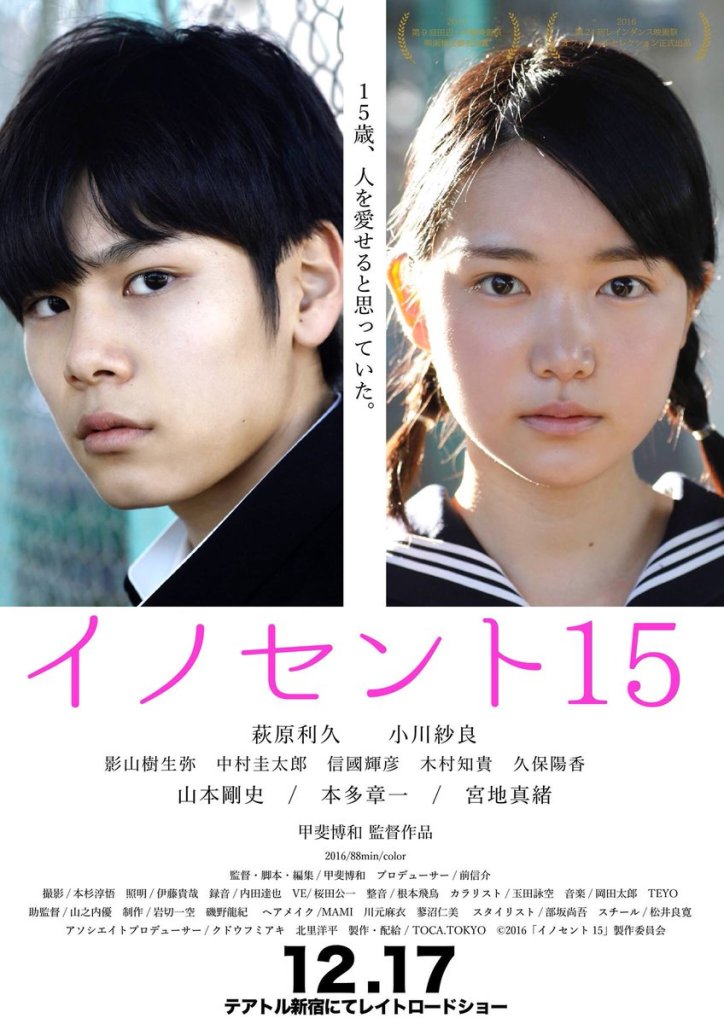 Innocence is a fairly nebulous concept and one often misused but if you were expecting an “innocent” tale of youthful romance, Hirokazu Kai’s Innocent15 (イノセント15) is out to wrong foot you from the get go. Kai does not shy away from the darker sides of human nature in examining abusive parenting and forced prostitution as well as the damage done when a secret is broken after long years of being unable to be honest about who you really are. This is a bleak tale, but one with with hope shining round the edges, even if uncertainly.
 There are two very distinct sides to the career of Tatsushi Omori. Brother of the well known actor, Nao, Omori may be best known to certain audiences for his hard hitting, often gloomy and pessimistic dramas of human misery such as festival favourite Ravine of Goodbye or the little seen
  It’s tough being young. The Boss’ Son At College (大学の若旦那, Daigaku no Wakadanna) is the first, and only surviving, film in a series which followed the adventures of the well to do son of a soy sauce manufacturer set in the contemporary era. Somewhat autobiographical, Shimizu’s film centres around the titular boss’ son as he struggles with conflicting influences – those of his father and the traditional past and those of his forward looking, hedonistic youth.
 Ohara Shousuke-san (小原庄助さん) is the name of a character from a popular folk song intended to teach children how not to live their lives. The Ohara Shosuke-san of Aizu Bandaisan has lost all his fortune but no one feels very sorry for him because it’s his own fault – he spent his days in idleness, drinking, sleeping in, and bathing in the morning. The central character of Hiroshi Shimizu’s 1937 film has earned this nickname for himself because he also enjoys a drink or too and doesn’t actually do very much else, but unlike the character in the song this a goodhearted man much loved by the community because he’s a soft touch and just can’t refuse when asked for a favour. An acknowledgement of the changing times, Shimizu’s Mr. Shousuke Ohara is a tribute to the soft hearted but also an argument for action over passivity.
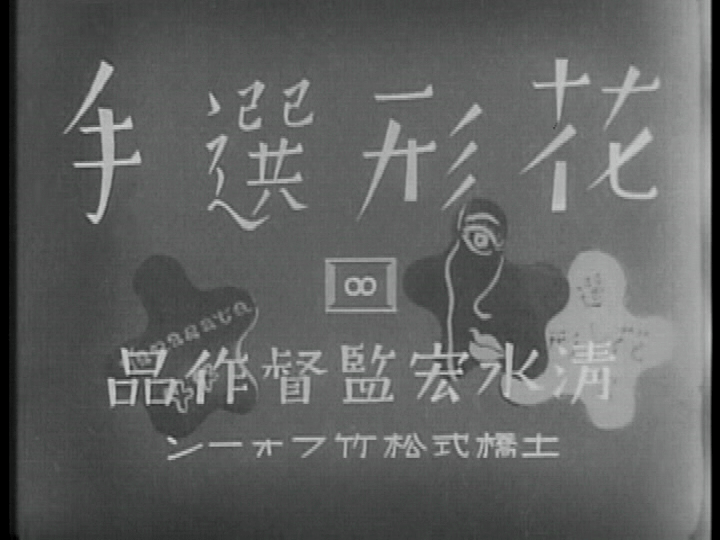 Japan in 1937 – film is propaganda, yet Hiroshi Shimizu once again does what he needs to do in managing to pay mere lip service to his studio’s aims. Star Athlete (花形選手, Hanagata senshu) is, ostensibly, a college comedy in which a group of university students debate the merits of physical vs cerebral strength and the place of the individual within the group yet it resolutely refuses to give in to the prevailing narrative of the day that those who cannot or will not conform must be left behind.
 Perhaps best known for his work with children, Hiroshi Shimizu changes tack for his 1937 adaptation of the oft filmed Ozaki Koyo short story The Golden Demon (金色夜叉, Konjiki Yasha) which is notable for featuring none at all – of the literal kind at least. A story of love and money, The Golden Demon has many questions to ask not least among them who is the most selfish when it comes to a frustrated romance.
 Sad stories of single mothers forced to work in the world of low entertainment are not exactly rare in pre-war Japanese cinema yet Hiroshi Shimizu’s 1937 entry, Forget Love For Now (Koi mo Wasurete) , puts his on own characteristic spin on things by looking at the situation through the eyes of the young son, Haru (Jun Yokoyama). Frustrated by both social and economic woes, little Haru’s life is blighted by loneliness and resentment culminating in tragedy for all.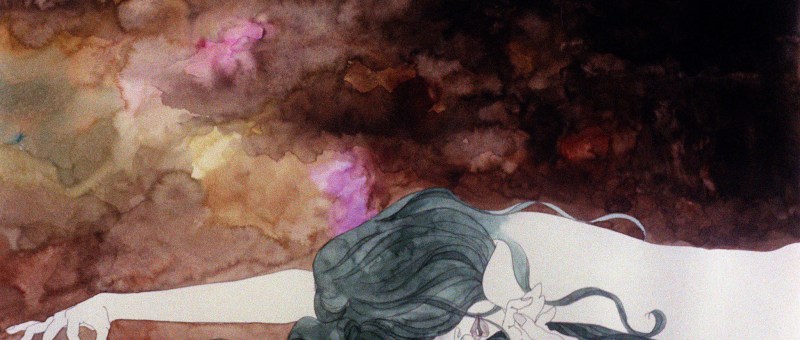
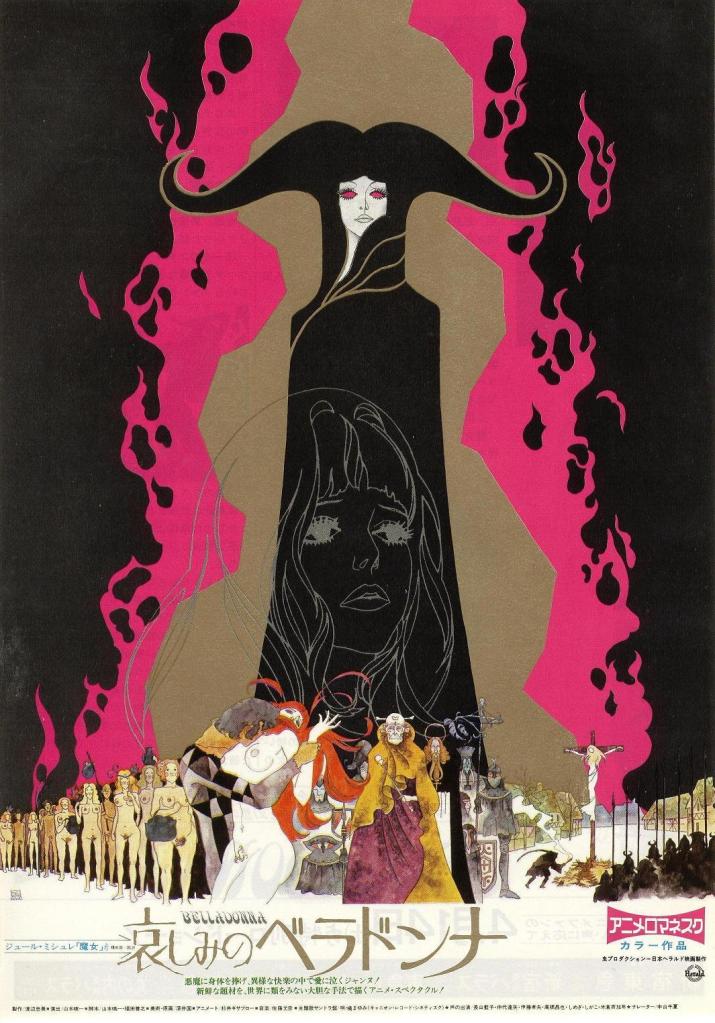 Loosely based on Jules Michelet’s La Sorcière (Satanism and Witchcraft) which reframed the idea of the witch as a revolutionary opposition to the oppression of the feudalistic system and the intense religiosity of the Catholic church, Belladonna of Sadness (哀しみのベラドンナ, Kanashimi no Belladonna) was, shall we say, under appreciated at the time of its original release even being credited with the eventual bankruptcy of its production studio. Begun as the third in the Animerama trilogy of adult orientated animations produced by legendary manga artist Osamu Tezuka’s Mushi Productions, Belladonna of Sadness is the only one of the three with which Tezuka was not directly involved owing to having left the company to return to manga. Consequently the animation sheds his characteristic character designs for something more akin to Art Nouveau elegance mixed with countercultural psychedelia and pink film compositions. Feminist rape revenge fairytale or an exploitative exploration of the “demonic” nature of female sexuality and empowerment, Belladonna of Sadness is not an easily forgettable experience.
