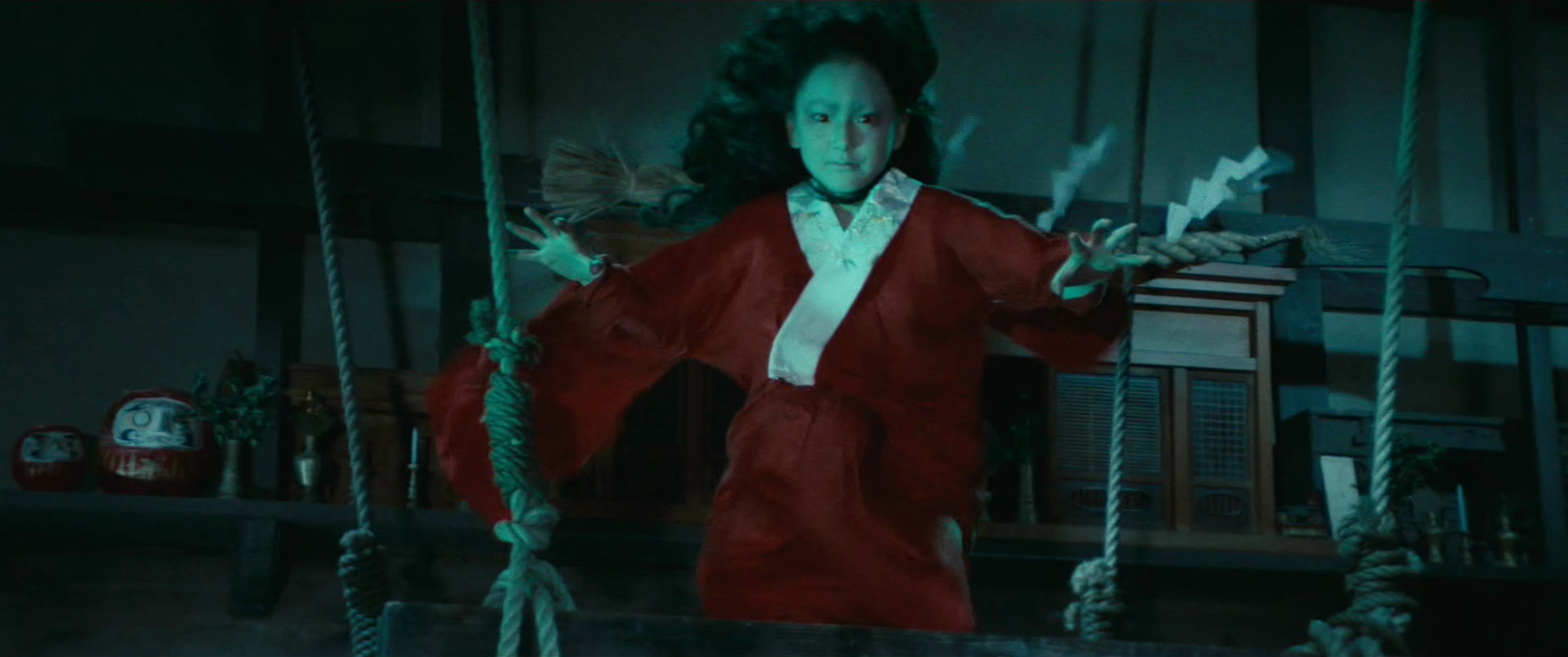
Bushido (碁盤斬り, Kazuya Shiraishi, 2024)

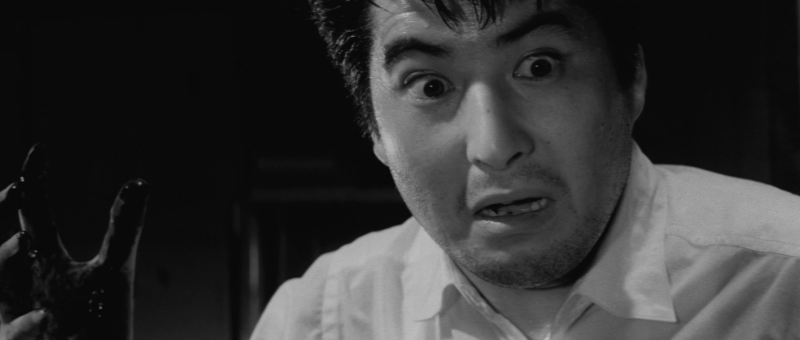
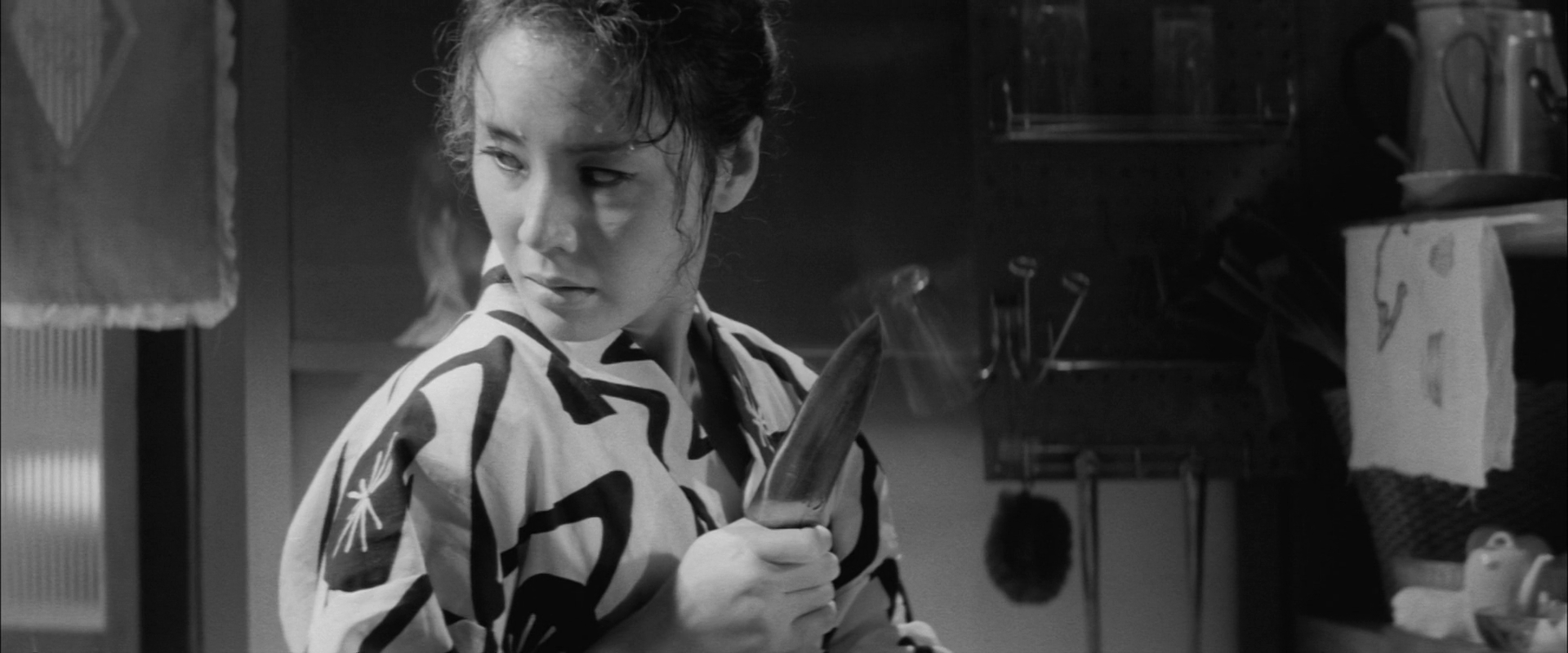
The hypocrisies of samurai society have led a dejected ronin into prideful penury but there is perhaps a fine line between properness and priggery that he struggles to accommodate. Like his earlier film Blood of Wolves, Kazuya Shiraishi’s Bushido (碁盤斬り, Gobankiri) is a loving homage to a classic genre, in this case jidaigeki, albeit one with a modern twist in which it’s the murkiness of the society and contradictions of its code that make it impossible to live in rather than the innate corruptions of the samurai class. 

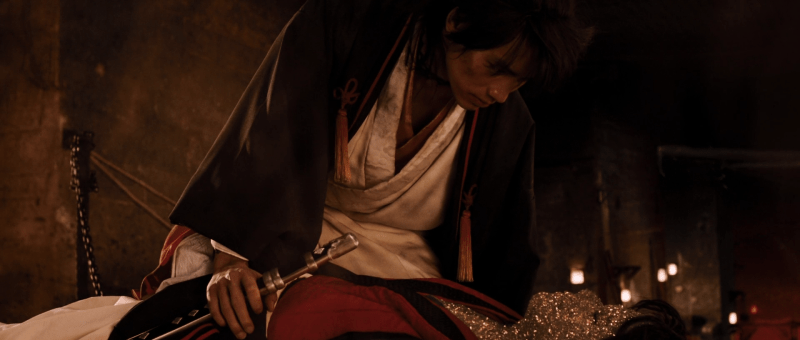
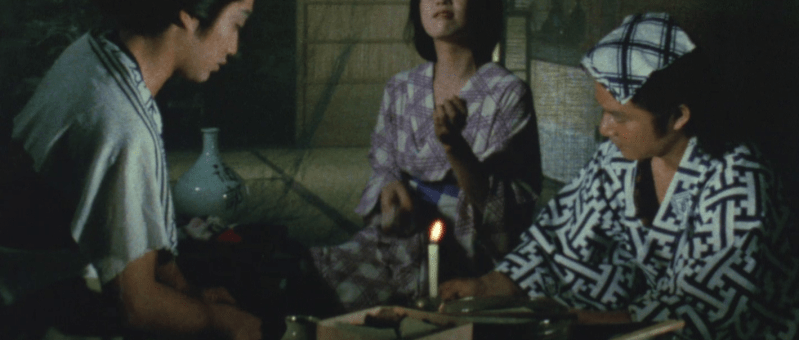
Even so, it’s samurai society which has betrayed Kakunoshin Yanagida (Tsuyoshi Kusanagi), now a seal-carving ronin living in a tenement house and months behind on his rent. Largely silent, Yanagida projects an air of calm but also a dangerous tension that hints at a deeply buried rage often echoed in the hellish glow of the candlelight that bathes his face in red. Not a natural gambler, he is nevertheless a Go enthusiast and talented player who gives the impression that he is always several steps ahead of any game in play. 

But that turns out not quite to be the case when he’s blindsided by a series of unexpected events that quickly destabilise his calmly ordered existence. Cast out of his clan after being accused of thievery, he is accused once again of taking 50 ryo from a pawn broker who had become a friend, Genbei (Jun Kunimura). Behind on his rent as he may be, Yanagida would not steal for stealing is beneath the dignity of a samurai and this stain on his honour is more than he can bear. But for all his righteousness we learn that he is also an ironic victim of his own priggishness and responsible for several other men meeting similar fates, cast out of the clan for something Yanagida turned them in for. In his reduced state, he seems to feel guilty and wavers momentarily on hearing the man who framed him for stealing a scroll from his former lord say he did so to gain money to support disenfranchised samurai but is caught between the spirit of samurai integrity and its letter. As his quarry told him, fish cannot live in water that is too clean and his oppressive enforcement of these arbitrary rules did no one any good. 

Yet his seeming righteousness does seem to improve the world around him, proving an epiphany in pawnbroker Genbei who develops a new determination for doing business fair and square after witnessing Yanagida’s conduct at the Go table. The irony is perhaps that everything on the Go board is black and white whereas Edo society is decidedly grey. Even the madam from the Yoshiwara Yanagida and his daughter are on good terms with (Kyoko Koizumi) can switch from wise mother to heartless gang boss in an instant. One moment, she’s giving maternal advice to Yanagida’s daughter Okinu (Kaya Kiyohara) and the next berating a runaway geisha who’s obviously been beaten while her lover has been killed for his transgression. The theft of 10 ryo will also it seems get you killed in this world of heartless rigidity and universal suspicion. 

Yanagida may not be much better in some respects. He is prideful and reckless, endangering himself and his daughter, whom he allows to pawn herself in the Yoshiwara knowing it’s very unlikely they will be able to repay the debt before the New Year deadline seeing nothing other than his obsession with vengeance against the man who wronged him in so many ways, Shibata (Takumi Saito). Shibata is his opposite number, cynical and amoral he subverted the samurai code for his own gain yet in its way perhaps it’s just a rebellion against the kind of austerity a man like Yanagida represented. In the end he can only escape his self-imposed prison by abandoning his rigour and accepting compromise, slashing the Go board with its black and white mentality in two though it leaves him further exiled. He cannot return to the world of samurai, but neither can he live among these ordinary people and like so many jidaigeki heroes seems to be condemned to wandering in this imperfect world. To that extent, the resolution seems much more cheerful than we might have been expecting. Everything works out, no harm done, but there’s a lingering tension even amidst apparent good fortune in a world of constant watchfulness. 


Bushido screened as part of this year’s New York Asian Film Festival.

Original trailer (no subtitles)

Rei (莉の対, Toshihiko Tanaka, 2024)

As the opening title cards of Toshihiko Tanaka’s Rei (莉の対, Rei no Tsui) somewhat paradoxically explain, Rei is a kanji character that has no real meaning on its own but can gain it by joining with another kanji as it has in the name of the heroine, Hikari, who does indeed feel herself to be “colourless” to the extent of being transparent. The implication seems to be that human connection is essential to fulfilment, but there’s precious little empathy on show between the disparate and isolated protagonists. 

A mild stigmatisation of singledom is displayed in the opening sequence in which Hikari attends a play alone and seems embarrassed by her unattached status while catching up with old university friend Asami who has since married and had a daughter. Yet it quickly becomes apparent that Asami is struggling as a young mother to a disabled child left largely without support while unbeknownst to her, her husband Ko has been having an affair with a young nurse. The implication seems to be partly that Ko resents his daughter Hina for not living up to his ideals or those of his rather snooty mother who seems to think Hina is an embarrassment to their family. We’re not exactly told what Hina’s disability is save that it involves some degree of learning difficulties and the doctor advises it would be better to put her down for a special school, but are instead uncomfortably focussed on the burden of her care which falls entirely on Asami.

The film then equates Hina’s condition with that of Masato, a photographer who happens to be deaf who had a troubled relationship with his mother while his brother hints that he may also have had some kind of mental disturbance that has left him fragile, too delicate for city life and instead living amid the peaceful mountain vistas of Hokkaido. In an effort to communicate with him, Hikari begins learning sign language only to discover he doesn’t know it but prefers to communicate through written language. Hikari finds herself caught between these different kinds of communication, at once walking with a dejected stage actor who insists words are essential and liberated by the their absence in her tentative relationship with Masato. Nevertheless, there is perhaps a degree of projection going on given that Masato cannot hear what she’s saying and directly respond to it allowing Hikari to interpret her own responses.

Masato’s estranged brother later suggests that Masato may be able to hear at least a little but pretends not to because it’s easier that way. In any case, he given little right of reply while others seem to make decisions on his behalf denying him any kind of agency. His friend, Shinya, tells Hikari to back off, that Masato is too fragile for relationships and she’s just making things hard for him though it seems clear to us that Shinya is in love with him himself and carrying a degree of shame for his repressed sexuality. Shame and a sense of inferiority also seem to be at the heart of Ko’s infidelity revealing to his lover that he feels he has to work twice as hard as anyone else just to get average results and be scolded by his boss. It’s clear that he has already begun to pull away from his family, resenting his wife and daughter for deepening his sense of personal failure while the lover, Rie, ironically presents a more progressive counter to Asami’s dilemma in telephoning her mother to say she plans to have a child and raise it alone in a society in which births outside of marriage are still rare.

No one really connects with anyone else nor are they fulfilled by their connections. Hikari’s relationship with Masato is frustrated by those who either infantilise him or act out of self interest but given the dark path he eventually takes they might have has a point in saying that love was too much complication though Hikari’s determination to reconnect may seem odd given the circumstances. Over long and meandering, the narrative progression cannot help but seem contrived in a manner out of keeping with the otherwise naturalistic treatment even before it rockets into the melodrama of its second half or the meta subplot with the dejected actor. Even so there is something poignant in the beauty of the Hokkaido landscapes and their endless vistas of snowbound isolation tempered by the gently bending trees.


Rei screened as part of this year’s JAPAN CUTS.

International trailer (English subtitles)

Cha-Cha (チャチャ, Mai Sakai, 2024)

Love can make you do funny things. It can also blind you to the world’s realities and colour the way you interpret the actions of others. At least, that’s how it is for the protagonists of Mai Sakai’s Cha-cha (チャチャ) who are all suffering with unrequited love and unbeknownst to them quite mistaken in their assumptions about the loves of others while otherwise solipsistically trapped in a bubble of frustrated romance.

Sometime narrator Rin (Sawako Fujima) is resentful of colleague Cha-Cha (Marika Ito) who is, ironically, the the total opposite of herself in that she’s free spirited and eccentric each qualities she assumes attract the opposite sex which Rin fears she herself does not. Chiefly she resents her because she has an unrequited crush on the boss, Kato, who is married with children though the interoffice gossip incorrectly suggests Cha-cha only got her job because she’s sleeping with him. According to Cha-cha, she is quite popular with men though describes herself as not being conventionally attractive and thinks men’s interest in her is usually more to do with conquest than romance. She develops a small crush on a handsome chef, Raku (Taishi Nakagawa), who smokes on their rooftop but though she ends up moving into his ramshackle home he does not appear to be interested in her and may in fact be suffering unrequited love for someone else. 

Because of all of these emotions can be awkward or embarrassing, no one really talks about them openly which obviously gives rise to a series of misunderstandings about the feelings and actions of others. Jealous of Cha-Cha, Rin ends up stalking her to find out if she really is sleeping with the boss though as she herself is not willing to be an adulteress it seems like something of a moot point. Cha-Cha likes the chef precisely because they have nothing in common and are in fact total opposites, much as she’s also the total opposite of Rin. She likes the idea that they could lead complementary existences because while she hates melon but likes cucumber, he likes cucumber and hates melon. 

She is also possibly drawn to him because they share a certain kind of darkness, admitting that she has a desire to lick the blood of the person she’s dating while he has a secret stash of lenses saved from the animal heads they sometimes get at the restaurant. Ironically, this shared quality may signal doom for their romance or ultimately force them together in a mutual act of settling for second best when their ideal romantic plans are disrupted by an unexpectedly extreme series of events. The most ironic thing is that the only genuine romance where feelings seem to be mutually returned, if imperfectly and with hints of exploitation, is doubted by others and motivates its own series of misapprehensions and petty jealousies. 

The strange events are at times narrated by a utility pole and telephone box who alone stand sturdy amid the changing and emotionally confusing environment of the present society. They are amused by the bizarre goings on among humans who seem incapable of being clear or honest in their romantic desires and often entirely misread the body language and behaviour of those around them to suit their own narrative. Rin thinks Cha-Cha probably is sleeping with the boss because they ignore each other, while a co-worker who admires her thinks she dislikes the boss because she avoids looking at him and assumes she likes another colleague, Aoki, ironically because she looks at him without bashfulness. 

It’s all par for the course in cha cha cha of love, and despite the dark turn the narrative may eventually take Sakai maintains an air of absurdist normality aided by quirky production design and a sense of wonder for a world that remains remains strange and difficult to understand, the protagonists individually blinkered views not withstanding. In any case, Rin’s eventual acceptance of Cha-Cha leads her to a desire to live “a more impulsive life” that will probably never be fulfilled but in some ways perhaps love is better as an unrequited fantasy than compromised reality if only it did not become an all encompassing obsession. As an imperfect man cheerfully in love tells her, perhaps Cha-Cha should focus on how to make herself happy rather than chasing an illusionary dream of love though in the end perhaps it’s all the same anyway. 


Cha-Cha screened as part of this year’s JAPAN CUTS.

Trailer (English subtitles)

Ice Cream Fever (アイスクリームフィーバー, Tetsuya Chihara, 2023)

“Cold and sweet” is the way a customer to Million Ice Cream describes their produce, but it might also be an odd way to describe its comforts echoing the melancholy of the series of women who pass through its doors in Tetsuya Chihara’s adaptation of a short story by Mieko Kawakami, Ice Cream Fever (アイスクリームフィーバー). For each of the heroines it represents a kind of purgatorial space as they find themselves torn between past and future while seeking new directions.

For Natsumi (Riho Yoshioka), who took the job working part-time at the ice cream shop after experiencing burn out in her career as a designer, that new direction appears in the form of Saho (Serena Motola), an alluring yet sullen woman dressed all in black who turns out to be a formerly successful novelist plagued by writer’s block. A series of flirtatious encounters seem to rejuvenate the creative impulses of both women with Natsumi returning to doodling new signs for the shop and Saho beginning to write again, though there remains something distant and elusive between them. Saho later describes herself as like a summer storm destined to pass by in an instant and soon forgotten though in an ironic way her aloofness and enduring mystery may in fact be a way to ensure she is not forgotten while she at least seems unable to embrace her romantic desires instead sublimating them into her literature.

This inability to forget has also marred the life of Yu (Marika Matsumoto), a similarly lost woman approaching middle age who is suddenly approached by a niece she’s never met because she cut ties with her sister after she stole her boyfriend. Her mother having now passed away, Miwa (Kotona Minami) has come to Tokyo in search of her father and though seemingly aware of the circumstances of her familial estrangement enlists her aunt to help find him thereby forcing Yu to confront the past and reassess her life. Like Natsumi she is also becoming disillusioned with contemporary working culture and contemplating making a change. While she is a devotee of ice cream, it’s the local bathhouse, “an oasis for working women” as she describes it, that her been her refuge. When it suddenly closes due to the elderly owner’s (Hairi Katagiri) own decision to pursue a different kind of life, Yu wonders if she might be happier giving up her high powered corporate job to take it over. 

The dilemma both women face is reflective of a generational shift away from a desire for conventional success achieved by hitting each of life’s landmark events to that for immediate individual happiness derived from small comforts such as an ice cream cone or a soak in a large bath. The irony is that Miwa comes to Tokyo in search of an absent father and finds her aunt, while Yu is able to make peace with her past and accept the new gift life has given her in accepting a maternal role in her niece’s life. What both women choose are pleasant lives rooted in community and giving pleasure to others rather ones of consumerist desire or external validation.

Still, that doesn’t necessarily mean romantic resolution. While one woman’s decision may reflect a desire to move on, the other’s may not but rather an intention to wait if also to do so in a happier and more fulfilling environment that unlike the Mexican salamanders in Saho’s tank she has chosen for herself. Gradually we come to understand these events are unfolding at differing time intervals though weaving through around each other, pursuing a logic of memory rather a more literal reality while driven by the natural rhythms of a life which continues onward around them in continual oscillation. Gradually spinning outward it ropes in the unfulfilled romantic desires of Natsumi’s punkish co-worker choosing to move on in the realisation that her feelings have not been acknowledged and are unlikely to be returned, along with the cruel irony of the happy life seemingly being lived by Miwa’s long absent father. With its gentle framing and pastel colours, the film has an atmosphere of calm and serenity that belies its underlying melancholy in the frosty sweetness of a dormant love kept in the deep chill waiting for summer’s return.


Ice Cream Fever screens in New York July 20 as part of this year’s JAPAN CUTS.

Original trailer (English subtitles)

Blue Period (ブルーピリオド, Kentaro Hagiwara, 2024)

An ennui-ridden teen finds the world opening up to him after he discovers the power of art yet fears he can’t live up to his new epiphany in Kentaro Hagiwara’s adaptation of the manga by Tsubasa Yamaguchi, Blue Period (ブルーピリオド). Less about art itself, the film presents its hero with the cowardice of conformity, challenging him above all to know himself and wield his selfhood like a weapon in a world that can at times be unforgiving.

Even so, Yatora (Gordon Maeda) is a model student who gets good grades and is known for being well-mannered but secretly he’s filled with emptiness and has largely been just going through the motions. In his opening voice over, he relates that he does what he has to do, but declares himself unfulfilled and directionless. Unexpectedly captivated by a fellow student’s painting, he’s confronted by the power of art and the freedom it offers vowing to get into prestigious art school Tokyo University of the Arts.

The constraints he feels are partly economic in that his parents can’t afford a private university so he has to do his best to get into a public arts school while his mother seems dead against the idea of him going into the arts because it doesn’t put food on the table. Yatora parrots back similar lines describing art school as a pointless waste of time but is quickly taken to task by fellow student Yuka (Fumiya Takahashi) who challenges his tendency towards conformity and needles him into independent thoughts and action.

Yuka is also contrained by conservative social codes in that she dresses in a female uniform though many still call her by her male name, Ryuji. Though the pair have a rather spiky relationship, it’s Yuka’s attempts to challenge him that bounce Yatora towards discovering his true self which as it happens is done through embracing his least palatable elements. As Yuki correctly observes, his good boy persona and tendency towards hard work are just masks for his inner insecurity.

Yet as he’s also told, art isn’t just about talent but requires passion and tenacity which in its way makes it a perfect fit for Yatora’s hard-working nature as he buckles down to become a promising artist in the run up to his high school exams. As he later reflects, others may be more talented than him but they can’t make the things that he makes because the point is they come from himself. His early pieces are criticied for their superficiality, that he only sees what’s directly in front him rather than learning to see the world in other, more unique ways and engage with it on an individual level but through his artistic journey he discovers new ways of seeing along with his true self in all its complexity. 

His newfound desire to follow his heart places him at odds with prevailing social codes which favour the sensible though it also spurs others on to do the same, one of his best friends deciding to become a pastry chef rather than get a regular salaryman job hinting at a greater desire for personal fulfilment among the young. Often poetic in his imagery such the sparks that fly from Yatora’s nascent artwork or the comforting blue of the Shibuya twilight that becomes his safe space, Hagiwara sometimes paints Yatora’s quest like a shonen manga with a series of bosses to beat in Yatora’s various rivals and challenges most which teach him something about himself that spurs him on to continue chasing his artistic dreams while the exams themselves are also mental exercises of strategy and thinking outside the box to unlock a particular kind of self-expression. There is something quite refreshing, however, in the fact that Yatora’s only real rival is himself in his ongoing quest for skills and self-knowledge, earnestly applying himself to master his craft eager only for the places his artistry will take him both mentally and physically and no longer so dissatisfied with the world around him but filled with a new curiosity and the confidence in himself to continue exploring it.


Blue Period screened in New York as part of this year’s JAPAN CUTS.

Original trailer (English subtitles)

Kubi (首, Takeshi Kitano, 2023)

Apparently in gestation for a couple of decades, it’s unsurprising that Takeshi Kitano gave himself the role of Hideyoshi in a long-awaited historical drama adapted from his own novel, Kubi (首). Played as an irascible but wily old man, Hideyoshi is the second of Japan’s great unifiers and, unlike his predecessor, died as a result of an illness rather than intrigue. He was also a peasant who rose through the ranks and is perhaps witness to the tumultuous class conflict and social divisions of a hierarchal society.

Even so, in this version of events, Oda Nobunaga (Ryo Kase) too speaks in a thick rural dialect that sets him apart from his retainers and seems to hint at his uncouthness. This Nobugana is an unhinged despot who threatens and humiliates his subordinates, not to mention sexually assaulting them. In short, there’s no real mystery why his men have begun to turn against him and there is intrigue in the court. The film opens with Murashige’s (Kenichi Endo) quickly quelled rebellion which floundered when his reinforcements failed to arrive. Murashige is on the run and Nobunaga has heavily suggested whoever brings in his head will be first in line for the succession, but Murashige is also in a relationship with Mitsuhide (Hidetoshi Nishijima) another courtier vying for favour in more ways than one from the capricious Nobunaga. 

The striking thing about the staging is how like a yakuza drama this intrigue really is with each of the main factions manoeuvring for control, forming temporary or duplicitous alliances forged in the mutual desire of ousting a ruler whose increasing instability presents only the likelihood of a return to chaos. Nobunaga’s flamboyant speech and threatening manner are reminiscent of a yakuza boss on his way out, as is his obvious tactic of setting his rivals against each other while secretly planning to hand the reins to his son anyway. The film takes place in a largely homosocial world, the only women on screen are sex workers and peasants about to be murdered, only this time defined by romantic intrigue in which the various relationships between the men are inescapably linked with power and duplicity.

Mitsuhide’s relationship with Murashige is originally framed as a giri/ninjo conflict, Mitsuhide torn between the exercise of his duty as a samurai and his love for Murashige, only to later be set wondering if Murashige isn’t also playing him in urging him too towards rebellion, while Murashige accuses him of harbouring desires for Nobunaga which would also necessarily be desire for advancement. Advancement is something sought by all and in particular Mosuke (Shido Nakamura), a peasant who is taken on as a foot soldier after looting a battlefield for amour and killing his friend to get his hands on the prize only to realise just at the critical moment how pointless the constant desire for heads really is. The absurdity is rammed home in the closing scene in which Hideyoshi declares himself uninterested in the severed head he asked for, rendering the quest entirely pointless.

This absurdity extends to introducing the character of a comedian who is later killed for talking too much, while Kitano wise cracks his way along as the affable Hideyoshi. Kitano is in his way in dialogue with other samurai epics, using Akira Kurosawa’s horizontal wipes and introducing a pair of bumbling comic relief peasants only to suddenly kill one of them off because at the end of the day this world isn’t very funny. It’s cruel, and mean, and meaningless, so you might as well laugh like Hideyoshi. Residents of a ninja village conduct a festival in which they pray for death and to be released from this earthly torment as soon as possible, while farmers still dream of becoming samurai little knowing the reality of samurai life.

It’s this cycle of futility that is echoed in the opening image of a severed neck into which crabs in a river are crawling. Kitano stages lavish battle scenes, but ones that are often horrifying and absurd, a visceral struggle in mud and blood fought for no real reason. These samurai live their lives on the point of a sword, but they move and behave like yakuza fighting pointless turf wars and games of petty intrigue until someone finally comes for their heads. In the end, the victor is the one who doesn’t play the game at all, but sits and laughs at the absurd cruelty all around them in which the only stable force is ambition accompanied by a nihilistic lust for blood in an already bloody world.


Kubi  screens in New York July 16 as part of this year’s JAPAN CUTS.

Trailer (English subtitles)

Whale Bones (鯨の骨, Takamasa Oe, 2023)

The augmented reality scavenger app at the centre of Takamasa Oe’s Whale Bones (鯨の骨, Kujira no hone) is littered with a series of digital ghosts endlessly re-enacting the past. Its selling point is that the content can only be accessed in a specific location, what its users call “holes” into which they “bury” their unpleasant thoughts, the irony being that they don’t so much rid themselves of them as ensure their survival on some other plane.

The hero, Ken, intended to bury something in a more literal sense after hooking up with a high school girl on dating app who apparently takes her own life in his apartment. Ken drives into the mountains and digs a hole, but the girl, Aska, disappears from the boot of his car leaving him wondering what exactly happened while experiencing a kind of breakdown that leads him to the Mimi app and Aska’s buried videos. In a way, he’s chasing a ghost. Trying to find out who Aska was and what might have happened her while trying to absolve himself of guilt and responsibility over her apparent death and his reaction to it. 

In a video he finds she talks about her late father and remarks that believing he’s out there somewhere gives her hope, much as her spectral existence in the Mimi app becomes a kind of beacon for the other users and bears out the way she both exists and doesn’t as a ghostly avatar of a constructed online identity. Rin, one of her followers, explains that Mimi started as a venting app where people threw away all of their unkind thoughts but quickly gave rise to a small, cult-like community of mutually supportive digital archaeologists intent on digging up all Aska’s holes as if attempting to excavate her identity. 

Of course, Ken has a different reason for wanting to dig up Aska and his quest is also an act of self-preservation. Before hooking up with Aska, he’d been jilted by his fiancée and was perhaps wounded and resentful, though his decision to take a high schooler back to his apartment in the first place doesn’t cast him in a very good light nor does his subsequently shady behaviour though it’s true enough that he begins to wonder if Aska was ever really “real” in the first place or some kind of digital ghost. People around him seem to just disappear, there one minute and then not, but then in a later moment of irony he realises the person he’s chasing is merely hiding rather than having blinked out of existence.

Ken’s work friend also fears that he will “disappear” from the office, becoming yet another soulless drone even as his obsession with Aska grows and his metal heath declines. It may be that he too is a ghost, trapped in the past and unable to move forward while feeling sorry for himself about his broken engagement. An attempt to explain his situation only raises the suggestion that perhaps he himself is an author of this mystery rather than its victim, which as his ex Yukari points out is his preferred way of seeing himself. In any case, what he’s confronted with is the dualities of the “real” and “digital” worlds in the way we become different people, burying parts of ourselves in hastily dug holes in an attempt to paper over the cracks in our lives.

These tiny fragments are themselves like the whalebones of the title, feasted over by tiny creatures who scuttle away as the soon the glittering stops and a new day begins. Oe lends his constructed reality a note of noirish eeriness in Ken’s ghostly quest for the “real” aska while hinting at the contradictory nature of social media which can at times be cruel and hateful, a place to spill bile forgetting that there are real people on either side, and also spark genuine connections among lost and lonely people looking for comfort and community otherwise unavailable to them. As Aska had said, thinking that her father was out there somewhere gave her hope, echoing the way that our digital ghosts may survive us but also provide a comforting sense of permanence in a transient and lonely world.


Whale Bones screens in New York July 14 as part of this year’s JAPAN CUTS.

The Box Man (箱男, Gakuryu Ishii, 2024)

Those who obsess over the Box Man, become the Box Man, in Gakuryu Ishii’s adaptation of the Kobo Abe novel. Yet the unnamed hero’s problem is that he feels himself unable to become “the real thing” and is thereafter trapped inside a labyrinth while forever seeking an exit. It’s never clear to him, or to us, if the cardboard box he wears is really just that or something imbued with a supernatural power that actively masks his identity even from himself.

Tellingly, the only named character is a woman, Yoko (Ayana Shiramoto), who seems to exist outside of the box. She appears to be free, confident, aware of all she is and apparently certain of her identity. The Box Man, or perhaps “a” Box Man, meanwhile, is known only as “myself,” a former photographer (Masatoshi Nagase) who almost pities those who target him in memory of the Box Man who once infected and cursed him to the same fate. Watching the city through the tiny letterbox slit, he remains a step away from our world and later refers to the box as the entrance to some other place suggesting that it’s really we who are trapped on the other side of the cardboard.

He advances something similar when he in effect turns the box inside out, walling himself inside a single room by covering the windows and doors to box out the world but not really finding escape. Still, others seem to covet the title of Box Man, those also without concrete identities but going by names such as Fake Doctor (Tadanobu Asano) and the General (Koichi Sato), both of whom are apparently interested in the Box Man and tracking his every move. It seems they believe there can only be one real, authentic Box Man allowed, but become increasingly uncertain which of them is “real”. The notes the Box Man is keeping become key to his identity, but like a metaphor for the unseen hand of fate, one points out that perhaps someone else has written them out for them, Myself lamenting that the author has written a better version of himself than he ever could. 

There is something undeniably absurd about the way the Box Men scuttle around, occasionally sticking their ams out of the box’ flaps while arguing over the true identify of the Box Man despite having described the mystery as boring. The Fake Doctor seems to want to destroy the box, as if he wanted to obliterate it perhaps in an attempt to destroy the image of a mask to avoid the suggestion that he has one himself, while it remains unclear if this would free the other Box Man or trap him further while Fake Doctor would take his place. When Myself killed the Box Man before him, a mask may have been what he wanted. A photographer sick of seeing the world and longing to be free of it, to shed himself of an identity he no longer wanted only to search for it once again even as others try to crush it from without. 

The Box Man comes to the conclusion that it’s the world that should be boxed away, but of course it’s all the same. When he remarks that Yoko, after leaving their sanctuary, did not really escape but has simply gone to a deeper level, it’s reflective if his own desire to find meaning in a meaningless world. He claims that he dreams of a world yet to begin but is finally confronted perhaps by anonymity in witnessing a row full of Box Men apparently all also devoid of personality which might in an ironic sense tell him who is if only in reflection. 

Strange and surreal, Ishii lends an edge of absurdity to the strange existence of the Box Man while perhaps aligning the letterbox frame of his open window to that of the cinema screen and the artificial reality that surrounds us. In any case, it seems the other world the Box Man longed to enter was that of the self, his interior life expanding inside the box as a small galaxy he has somehow become lost inside, no longer able to see beyond himself but trapped inside an “exitless black hole” looking for a path to authenticity away from this “fantasy” in which everything is “fake” save the potential salvation of a distant guiding light.


The Box Man screens in New York July 13 as part of this year’s JAPAN CUTS.

Original trailer (English subtitles)

Six Singing Women (唄う六人の女, Yoshimasa Ishibashi, 2023)

“Don’t take any detours,” the hero of Yoshimasa Ishibashi’s Six Singing Women (唄う六人の女, Utau Rokunin no Onna) is warned by his partner though it’s advice he’ll end up not taking if not entirely of his own volition. Even so, it may be that it’s the society that has gone off track, poisoning the environment and losing respect for the land that has always nurtured and protected us. Part eco-drama, Ishibashi’s surreal odyssey into an etherial realm of nature and spirits has its share of eeriness but also a kind of comfort in the embrace of the natural world.

Only that’s not how it first seems to Shin (Yutaka Takenouchi). After receiving a phone call to inform him his estranged father has passed away, he leaves his partner Kasumi (Rena Takeda) at home in Tokyo and travels into the mountains with the intention of selling his father’s house. But when he arrives, he finds himself in a place stranger than your average remote country hamlet and after signing a contract with the slimy Uwajima (Takayuki Yamada) is kidnapped by a band of mysterious, apparently mute women. While he is looked after in the house. Uwajima is tied up in the shed and tortured.

As we later discover Shin and Uwajima are embodiments of light and dark, a protector of nature and its destroyer. When Shin had asked him what Uwajima’s company, which has also bought up all the neighbours’ land, plans to do with his father’s house he tells him they just want to protect nature but his answer is of course ironic. He represents a corporate entity that cares nothing at all for the mountain but is simply looking to make some money by dumping potentially harmful stuff where no one will find it. Realising that his father had been on some kind of quest to stop the corporate take over, Shin begins to investigate his death and the wider fate of the mountain taking him ever deeper into the woods. 

What he finds there is a another realm, a place of spirits that seems somehow sacred if dangerous. Unable to speak, the women appear to have a message a for him but it’s only after reconnecting with his father and accepting his legacy that Shin finally begins to understand. His mother had told him that his father had been “possessed by the mountains,” and there may be something in Shin’s mania as if the spirits had indeed taken him over aside from merely captivating him. Yet despite his newfound desire to protect these women as embodiments of a natural order, he is powerless to do so alone and especially against the destructive corporatism of Uwajima.

Ishibashi strays into folk horror territory in that the strange place Shin finds himself in has the trappings of a cult. He witnesses strange rituals and is prevented from leaving a place he cannot understand by the women who cannot speak to him nor explain themselves. Bees, spiders, frogs and snakes surround him with an air of malice but are perhaps trying to protect, both him and themselves or else realising Shin is no threat to them but a prodigal son returning to accept and claim the legacy he sought to reject from a misunderstood father like him possessed by the mountains. Finally he finds the answer to the question his father asked him, in the woods exactly where he said it would be. 

His solution runs contrary to that of the estate agent who encouraged him to sell his father’s home, that the world is what it is as if it could not be changed and resisting destructive capitalism is merely foolish when it would be better to take the money and run. Ishibashi rams him message home with his haunting capture of the woods as a dreamlike idyll though not without its sense of darkness while lending an air of surreality to Shin’s ethereal quest with all its owl women and inscrutable ritual that somehow hint at a natural order of things that is deeper and older than our society and with which we tussle at our peril for nature is never quite as passive as we thought for all the compassion it may otherwise hold for its prodigal sons and daughters yet to return to the fold.


Six Singing Women screens in New York July 12 as part of of this year’s JAPAN CUTS.

Trailer (English subtitles)


Between the White Key and the Black Key (白鍵と黒鍵の間に, Masanori Tominaga, 2023)

The hero of Masanori Tominaga’s Between the White Key and the Black Key (白鍵と黒鍵の間に, Hakken to Kokken no Aida ni) looks up and declares that it’s not Jazz if you can’t the stars, quoting Charlie Parker but mired in artistic compromise amid the heady air of Bubble-era Ginza. Adapted from the 2008 memoir of jazz pianist Hiroshi Minami, the film’s surrealist conceit sees two eras overlap confronting a jaded bandman with his naive, earnest younger self while looking for a path back towards “real” jazz.

The intentionally confusing opening sequences introduces us to Hiroshi (Sosuke Ikematsu), dressed in white, a young man with romantic jazz dreams slumming it in a moribund cabaret bar, and Minami dressed in a smooth black and wearing sunshades now the top pianist at the area’s most prestigious bar. Chaos ensues when Hiroshi, intimidated by a recently released yakuza, innocently plays his request of the Godfather Waltz without realising that the song is prohibited, only the local yakuza chairman is allowed to request it. Minami is, meanwhile, the only musician apparently allowed to play the boss’ favourite tune, but it’s a double-edged sword. He’s come to hate his life of soulless playing and feels trapped as the chairman’s favourite while secretly plotting his escape to study real jazz in America.

Irritated by the attitude of American guest singer Lisa, Minami explains that the musicians are really just decoration. At the height of the Bubble-era the bars are full of people with too much money looking to show it off. No one really cares about jazz or even about music so no one pays them any attention. Minami has long since got used to this, but is also crushed by his sense of artistic inauthenticity and declares himself sick of making music that doesn’t come from his soul.

Perhaps the rest is mere fever dream, but in the cyclical turn of events Hiroshi’s godfather faux pas comes back to haunt him, stalked by the recently released yakuza who follows him like a ghost while simultaneously dealing with the chairman’s apparent crisis which may send him abroad and change the local hierarchy forever. In the increasing surreality, the two periods overlap and influence each other as Minami is confronted by artistic compromise and forced to quite literally confront himself in a dirty alleyway while his opposite number claims that they already are in America and have been for some time.

To that extent it’s Minami who is caught between the black and white keys, looking for the sweet spot between the ability to play real jazz and the economic and social realities of his life as a Ginza bandman suffering with what he calls “bar musician disease”. His former mentor had told him that he needed to learn to play more “nonchalantly” which is advice somewhat difficult to understand but perhaps implies that Hiroshi Minami needs to learn to let himself go, to struggle less with anxiety and just play as if it were as easy as breathing. To that extent, what Minami has discovered is the wrong kind of nonchalance. Told that his job is only really to sit there and add to the false sense jazzland sophistication, he’s lost himself between the gangsters and the high rollers and is at a crossroads of an artistic crisis that maybe about to fracture his mind.

Tominaga does his best to capture an anarchic sense of a world bent out of shape and filled with surrealistic absurdity as Minami seems to see events replay with different outcomes and encounters various bizarre incidents around the back alleys of Ginza clubland themselves an incongruous mix of high class sophistication and sleaziness in which gangsters still rule the roost. Consequently the other players in Minami’s psycho drama remain largely cyphers, themselves part of the furniture in this weird mental landscape in which violence appears cartoonishly and in silence, never really connecting and irony rules in the petty gangsters who see the the Godfather Waltz as their song. In any case, Minami seems to recover himself, partly thanks to a vision of his oblivious mother retuning to him something that was lost, in the simple act of sitting down to play as if it were the beginning once again, or perhaps it really is, more acquainted with the music of his soul.


Between the White Key and the Black Key screens in New York July 10 as the opening night of this year’s JAPAN CUTS.

Original trailer (no subtitles)