Dream (드림, Lee Byeong-heon, 2023)

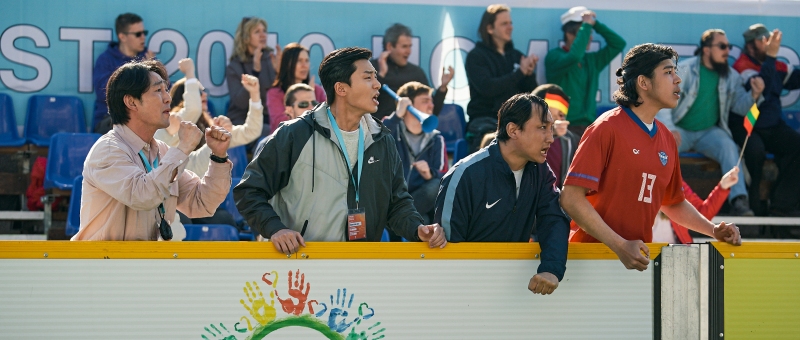
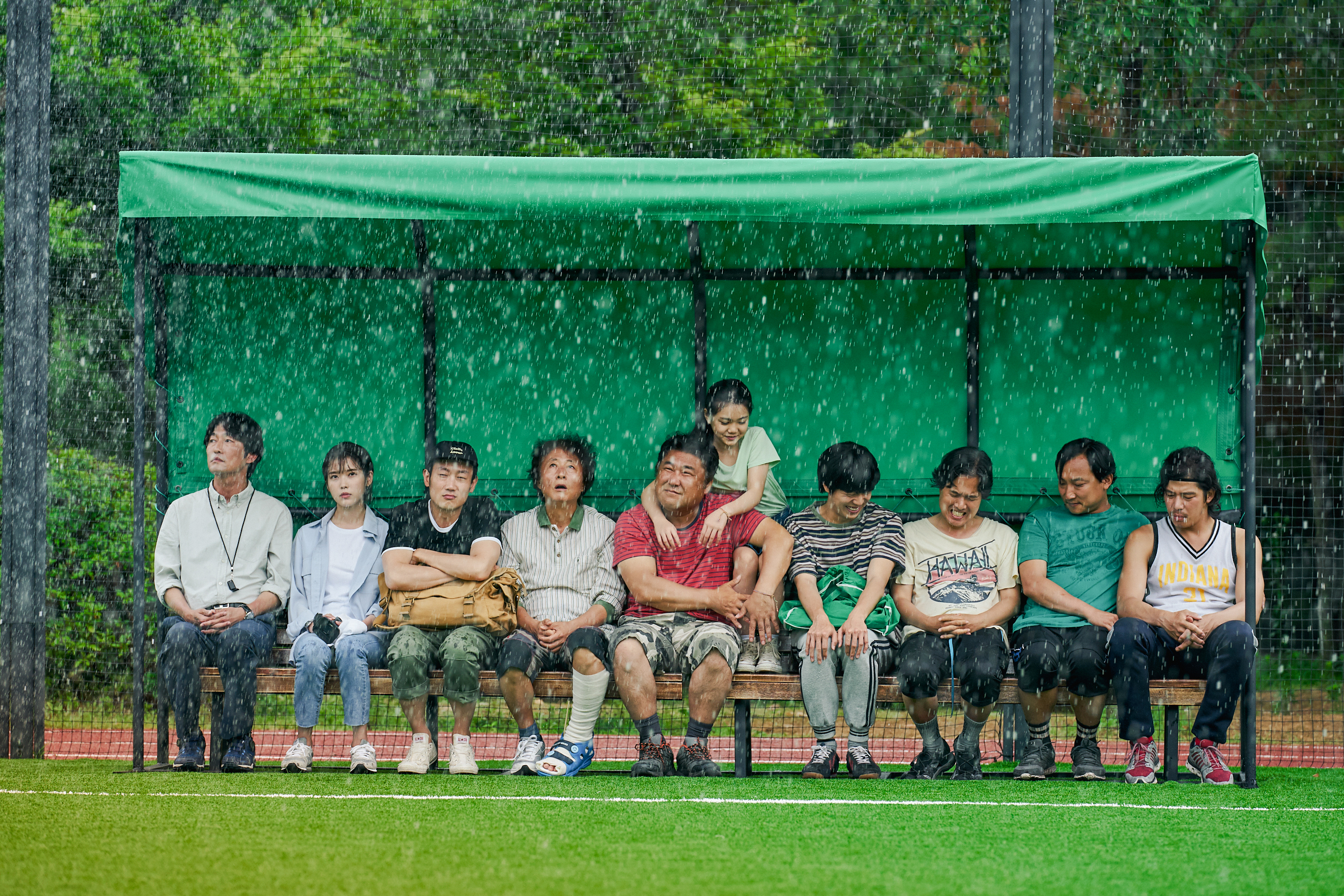
A disgraced football player gets a shot at redemption after agreeing to coach a team hoping to take part in the Homeless Olympics in Lee Byeong-heon’s sporting drama, Dream (드림). The Homeless Olympics was founded in order to advocate for the end of homelessness while combatting discrimination and stigma and takes place annually with teams of homeless people from all over the world taking part. Set in 2010 and inspired by the first Korean delegation to participate, the film is essentially an underdog sports drama in which the act of scoring a single goal is the same as an overall victory.

It is also, meanwhile, heavily critical of celebrity and sensationalist media each of which have a habit of latching onto popular causes in order to further their own careers. Hong-dae (Park Seo-jun) was a popular footballer insecure in his talents, but gained notoriety after poking an obnoxious reporter in the eyes when he repeatedly brought up the topic of his mother who happens to be a fugitive from justice. Deciding to retire from the game, Hong-dae is picked up by a talent agency who want to make him a star and is convinced to become the coach of the homeless football team in order to improve his personal brand while documentarian So-min (Lee Ji-eun) hopes to do something much the same by producing a semi-scripted reality show following the team’s fortunes.

Accordingly, So-min instructs Hong-dae to let her “cast” the key players on the basis of their touching backstories rather than their sporting ability. She comes up with a selection of people who have each for various reasons ended up on the streets but are looking for a way to turn their lives around and repair fractured relationships with family members. One man turned to booze and women while riding high but found himself out of luck when the Asian Financial Crisis ruined his business, while another claims that he’s not really homeless just lying low for a while, and a third was scammed by a friend and saddened by the impending exit of his ex-wife and daughter who will shortly be moving to Australia with her new husband. The film strays into more interesting territory in exploring the story of 44-year-old Beom-su (Jung Seung-gil) who ended up on the streets after a workplace accident left him with a chronic illness he did not have the money to treat, but otherwise falls into the same trap as So-min’s documentary in taking a fairly superficial view of homelessness. By the end of the film many of the players have thankfully moved into stable accommodation but do so largely without explanation aside from having apparently managed to save up for a deposit. 

Positioning their battle for sporting success as a means of reclaiming their self-esteem might also uncomfortably suggest that the reason they’re on the streets is a matter of mental attitude while ignoring other systemic issues that led them there or prevented them from moving on (assuming that they wish to do so). Aligning their struggles with Hong-dae’s and to a lesser extent So-min’s might do something similar while they too are also battling cynicism and self-esteem issues, Hong-dae continuing to blame his mother for his problems complaining that he was born to be second place because she never put him first. As Hong-dae later points out, So-min is also to an extent exploiting the homeless in trying to create an inspirational narrative for her TV show before she like everyone else realises there are other ways to win besides the literal. 

The final message is more one of never giving up as the team finally travel to the Olympics and find themselves out of their depth before deciding to give it everything they have even if it’s very unlikely they will win. There had indeed been discrimination in Korea, a sponsor pulling out describing the homeless as “smelly and disgusting” and expressing a degree of squeamishness about involving them with their brand, but at the Olympics they become the most popular team despite their lack of skill purely because of their charismatic perseverance. One player’s late in the game announcement that he is gay but has now come to accept himself in the knowledge that the problem lies with the world that will not accept him also makes the case for a greater equality if perhaps clumsily conflating two different issues. Nevertheless, IU’s lively performance and the film’s warmhearted tone help to overcome any mild sense of discomfort in its otherwise genial tale of never giving up and regaining your self-esteem even if you feel as if the world has already abandoned you. 


Dream screens July 17 as part of this year’s New York Asian Film Festival.

International trailer (English subtitles)

Images: © 2023 PLUS M ENTERTAINMENT & OCTOBER CINEMA INC. ALL RIGHTS RESERVED.

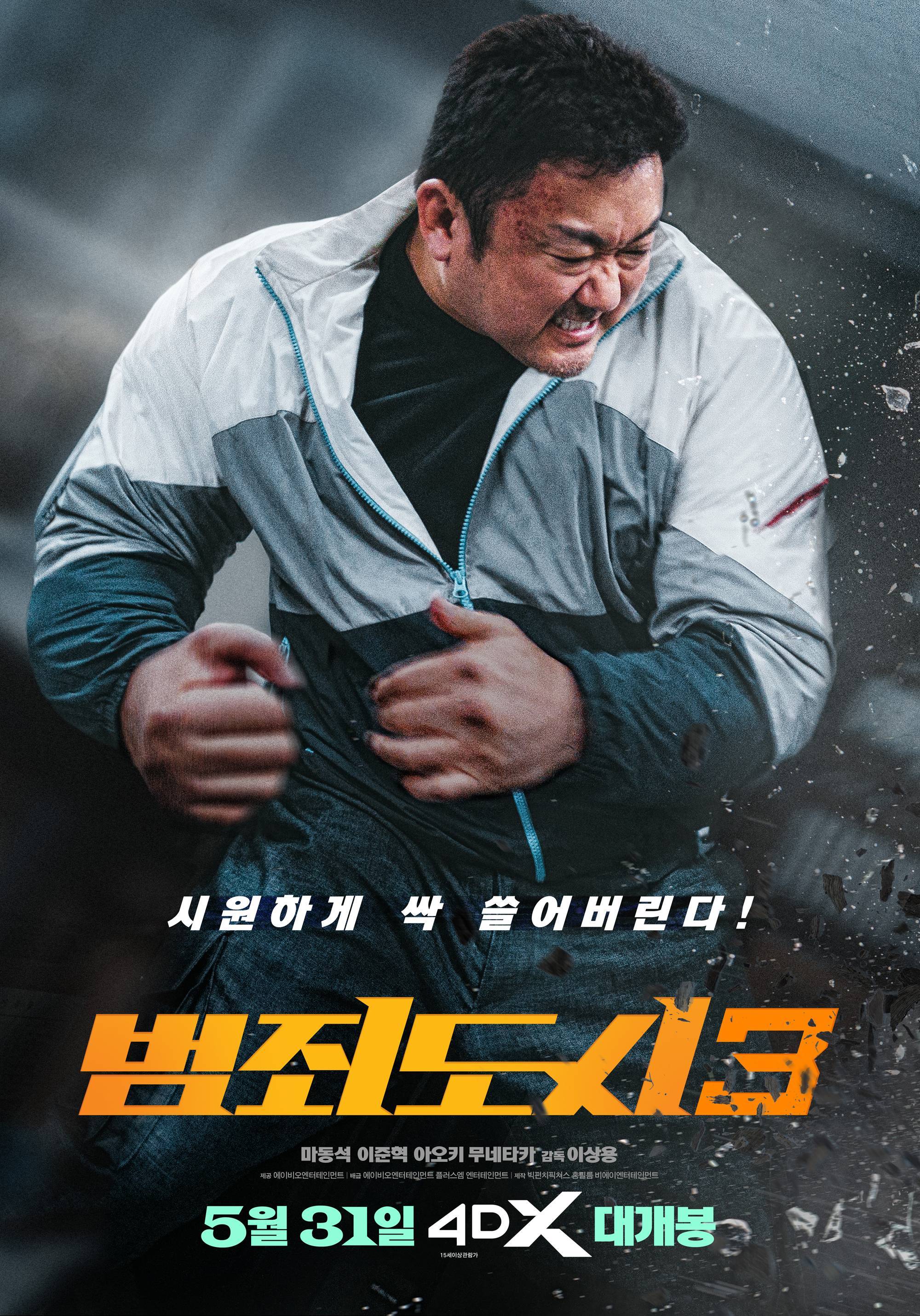
The Roundup: No Way Out (범죄도시 3, Lee Sang-yong, 2023)

Ma Dong-seok has been cultivating an image of himself as an action star for quite some time. The kind of marquee name who generally plays the hero, Ma looks back to the genre’s heyday presenting an uncomplicated vision of righteous masculinity, a bruiser with a heart of gold. The Roundup: No Way Out (범죄도시 3, Beomjoedosi 3) is the third in a series of films that began with The Outlaws and is projected to total at least eight instalments each starring Ma as the maverick detective his superiors hate to love. 

It’s true enough that you can’t get away from the more problematic elements of his unreconstructed good bad cop persona. We often see Seok-do (Ma Dong-seok) beat information out of suspects which the film treats as a cheeky joke in an otherwise tacit endorsement of police brutality that suggests red tape is the reason the guilty often evade justice. Meanwhile, in a step back from other Ma vehicles there are almost no women in the film and none in the police force. The heart of the case is the death of a 28-year-old woman who “fell” from a hotel room window and is later discovered to have died of a heart attack after being drugged in a club and dragged off by a random man who then literally threw her away to distance himself from the crime. The murder which Seok-do is supposed to be investigating is totally forgotten in his all encompassing drive to find out where the drugs are coming from which eventually descends into a battle of wits with a corrupt police officer who’s teamed up with a Korean-Japanese yakuza to skim his boss’ supply of new designer drug Hiper. 

There is a distinctly uncomfortable thread of xenophobia that runs through the series even if in this case the villainy is discovered closer to home in the form of police corruption. This time around, the threat is once again Japan which is apparently where Hiper originated though petty yakuza Tomo (An Se-ho) now manufactures it in Korea where he’s cut a freelance deal with dodgy cop Joo (Lee Joon-hyuk) to distribute it in the local night life scene without the knowledge of his boss back in Japan, Ichijo (Jun Kunimura). Joo has also cut a deal to sell the drugs to a Chinese gang, so it’s quite bad news for him when Ichijo gets wind of the situation and Tomo takes off with a suitcase full of pills for his own protection. Unluckily for him, Ichijo has already sent his most intimidating assassin, Riki (Munetaka Aoki), to find out what’s been going on behind his back. 

Problematic as it may be, Ma’s retro take on the action star is undeniably entertaining with his frequent hero moments and penchant for one liners. The first time he appears, we see him break up a street fight but mostly interested in finding out if the guy on the ground started it the implication being that perhaps if he did it’s none of his business but otherwise he’s going to have to intervene. Then again as he tells his exasperated boss, his personal motto is “punish and serve” and he’s here to get the job done even if that means wading in all fists blazing without much thought for regulations or procedure. At one point Seok-do and his guys stumble on a crime scene and walk around it touching everything in sight without bothering to even put on so much as gloves. 

In any case, Lee makes every punch land and quite literally as the screen seems to vibrate on contact almost as if the camera itself were taking a blow. Ma’s thunderous fists clash with the sound of justice as he all too easily disables hardened gangsters with one well placed slap. At times, his invincibility borders on the ridiculous but he does eventually allow himself be “defeated” if only temporarily as in his miraculous recovery from being run over by a gangster’s car. In many ways, Joo is Seok-do’s mirror, a bad bad cop with crazy eyes who kills without a second thought and behaves with narcissistic recklessness, overconfident in his abilities to sort his problems through his status as a law enforcement officer. Bruiser he may be, but Seok-do likes arresting people and never uses lethal force even when the opportunity is presented to him, symbolically snapping Riki’s katana and then proceeding to slap him seven ways to Sunday leaving the ice cool assassin collapsed amid a display of Japanese parasols. An end credits scene set three years later in 2018 sets up a fourth instalment and the return of a familiar face besides that of Seok-do himself who continues to charm as the world weary bruiser slapping down crime wherever it rears its ugly head. 


The Roundup: No Way Out is in UK cinemas now.

International trailer (English subtitles)

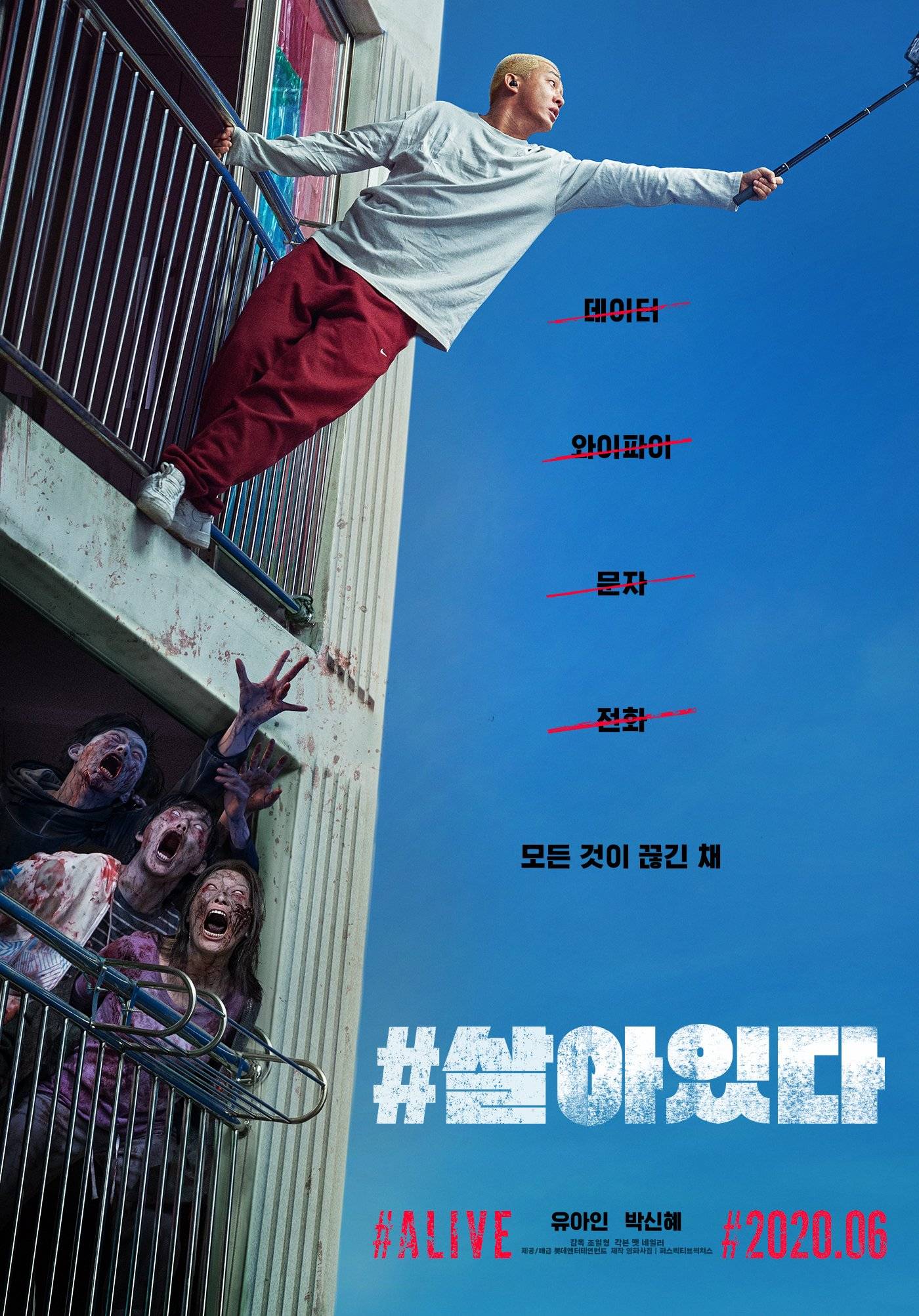
#Alive (#살아있다, Cho Il-hyung, 2020)

Is solidarity really the answer to alienation? The latest in a short line of zombie-related crisis movies, Cho Il-hyung’s oddly prescient #Alive (#살아있다, #Saraitda) presses directly into what it means to live in a time of isolation as its already introverted hero discovers the existential dread of true aloneness, orphaned by his society and quite literally surrounded by cannibalistic threat only to rediscover the desire for life in the company of others vowing to survive not out of obligation but individual will. 

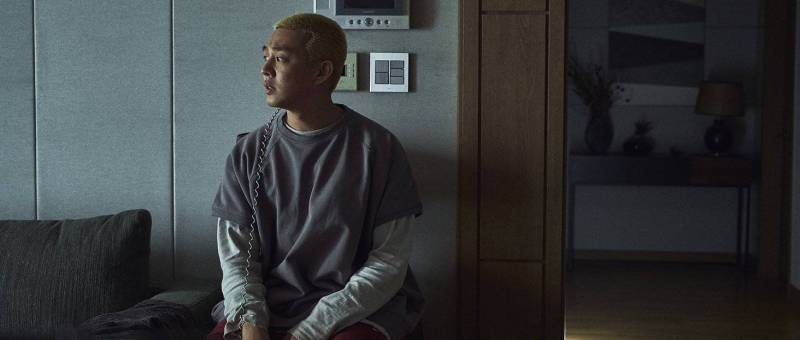
A young man in his 20s, Jun-u (Yoo Ah-in) lives at home with his parents and seems to be a virtual shut-in not quite supporting himself as a pro-gamer/vlogger. He ought to be in his element when he turns on his television one day to discover that a violent riot has apparently erupted all over the city, apparently spreading like a virus which causes aggressive behaviour and cannibalistic frenzy. Unfortunately, Jun-u’s parents left early that morning and didn’t have time to prepare food, leaving him money to go out for groceries but obviously it’s too late for that now and it looks like they won’t be coming home. Jun-u is entirely alone, and all the more so when his usual lines of communication are cut. 

Like the thematically similar EXIT, with which #Alive shares its faith in mountaineering, #Alive concerns itself less with the zombie threat than with youthful alienation and a sense of hopeless despair. Jun-u ought to be in his element, but finds himself ill-equipped for surviving the apocalypse given that he lacks basic adult life skills and those he does possess are now ironically unhelpful. Resourceful as he is, he remembers a smartphone app that would help him communicate via FM radio and all he’d need would be a standard earphone jack only all his earphones are wireless. Making the most of his unstable connection he uploads a single photo of himself holding his address written on the side of a cardboard box with the hashtag #I_MUST_SURVIVE to his Instagram in the hope that someone will see him but becomes increasingly despondent as his food and resources dwindle and he receives a disturbing voicemail which suggests his family may not have escaped the disaster. 

Hitting rock bottom he considers taking his own life but is saved by a literal light in the darkness, a laser shone from an opposing apartment signalling another presence he had previously missed. Believing he was alone in the world, Jun-u lost the will to live and faced with the prospect of waiting to starve to death or venturing out among the zombie hoards chose the only agency available to him in deciding the time and manner of his death. Realising he is not alone restores his desire for life, yet Yu-bin (Park Shin-hye), though much more well prepared, is also dealing with her own trauma in the face of crisis in the memory of a climbing fall that leaves her additionally anxious and fearful of physical risk. Where Jun-u flounders, lamenting as so many of us has in recent years, that no one seems to know what’s going on, the news continually flashing the same info screen while telling viewers only to stay home, Yu-bin has constructed a mini fort complete with a series of booby traps perhaps content in her independence having resolved to live and glad to have discovered she is not entirely alone. 

In contrast to disaster movie tropes, the pair instantly bond in their shared bounce back from despair, developing unconventional means of communication while Yu-bin willingly shares her food stash which in turn gives Jun-u the courage to venture outside for supplies. Eventually reuniting they do their best to withstand the zombie hoards, standing in as they are for the various anxieties which otherwise surround and oppress them, only to find themselves betrayed, worried that perhaps they have after all been abandoned and that no one is there looking out for them. Their salvation lies in their connection, the derided social media proving a lifeline that both affirms their existence and restores a sense of community that returns their safety, airlifting them from the locus of despair finally #Alive and returned to the world secure in the knowledge that they are not alone.


Netflix trailer (English subtitles)

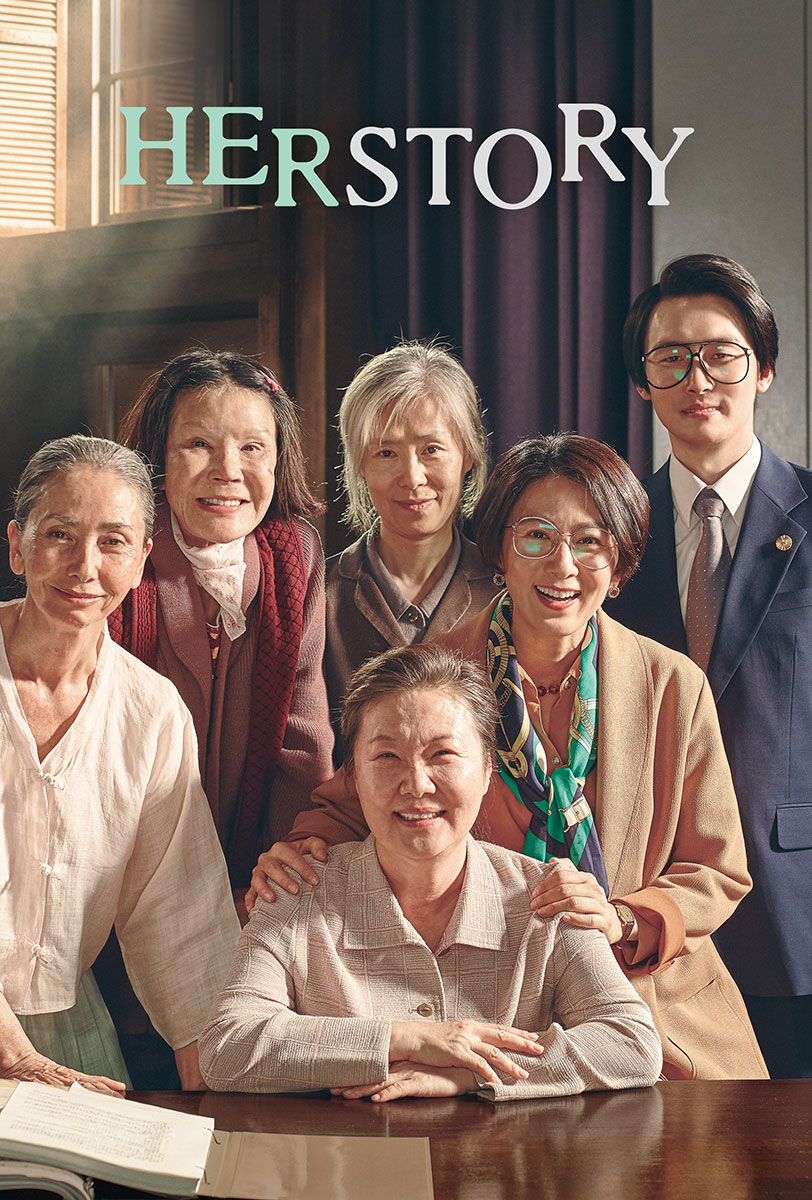
Herstory (허스토리, Min Kyu-dong, 2018)

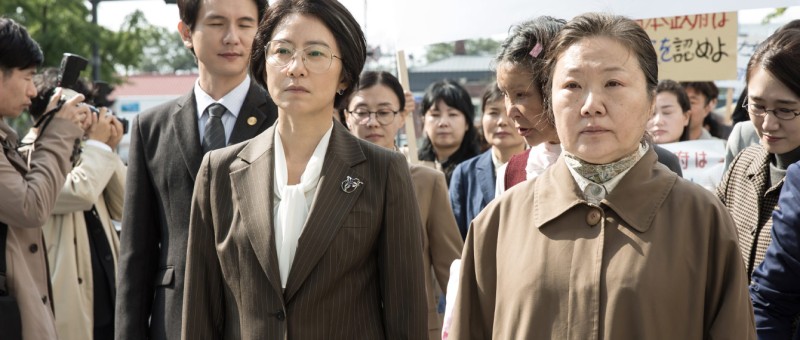
When Kim Hak-sun held a press conference and offered her testimony as a former comfort woman following a statement in the Japanese Diet in which the government rejected any responsibility for wartime sexual slavery, it brought an issue into the public consciousness that many had been unwilling to reckon with. One of many films focussing on the same subject released in the last few years, Min Kyu-dong’s Herstory (허스토리) dramatises the events of the Shimonoseki Trials which took place between 1992 and 1998 and resulted in the first admission from the Japanese authorities that the basic human rights of women had been breached but nevertheless found it not incumbent on the government to offer a direct apology. 

That the trial takes place in Shimonoseki is itself somewhat symbolic, given that this was the harbour from which boats to Korea and China departed and at which the women who were trafficked to Japan would have arrived. The film begins, however, in Busan where successful travel agent Moon Jung-sook (Kim Hee-ae) has ironically been accused of breaking the prevention of prostitution laws when a Japanese man is found dead after visiting a sex worker and it is revealed one of her employees had been running tours specifically geared towards sex tourism. Struck by Kim Hak-sun’s testimony, the association she leads of female business owners wants to do something to help and seeing as her company has been suspended, Jung-sook sets up a call centre on her premises for other victims of wartime sexual slavery and forced labour to come forward. 

Unlike some of the recent dramas dealing with the same issue, Min focusses on the resistance towards the former comfort women coming from within Korea itself. A taxi driver Jun-sook gets a lift from goes off on a rant describing the women as former sex workers out for a paycheque who should be ashamed of their sordid pasts while in any case all of this happened decades ago so why bring it up now? He is far from alone, even the Mayor describes them as “filthy women” when Jung-sook approaches him for help, and it’s obvious that many find the subject so embarrassing that they simply do not want to discuss it and blame the women for breaking the peace by speaking out. 

It’s also true that in the peculiarities of the political landscape of Korea, conservative elements tend to hold a more favourable view of Japan and the colonial era than might be expected. Economically, there are strong ties and Jung-sook, a fluent Japanese speaker, has close business relationships with Japanese clients which are endangered by her involvement with the comfort women cause. Her friend in the women’s association who runs a traditional-style hotel can be seen warmly greeting Japanese guests, at one point as she expresses her admiration for Kim Hak-sun in Korean to the television as they pass behind her. It’s clear that some would rather not rock the boat because this kind of politicking is often incompatible with running a successful business. 

Jung-sook is minded to buck the trend because she sympathises with the women’s suffering and with their rejection by mainstream society. She has the confidence to do this in part because the wealth she has accrued through business success gives her an unusual amount of power in a male-dominated, capitalistic society. Still she too struggles with contemporary notions of proper womanhood in being accused of neglecting her daughter through her workaholic lifestyle especially as she is considering leaving education claiming that studying isn’t for her. Even so, the women’s association seems to have female solidarity at its heart, collecting money to support single mothers even before taking up the cause and trying to help elderly women who have no remaining family members or means to support themselves. 

As she later comes to realise, the trial has meaning outside of winning and losing in allowing the women to express their trauma and regain some of their dignity. Even so, they are subject to further rejection in Japan, not least from a hotel which asks them to leave because other guests are unwilling to share the space with former sex workers. The Korean-Japanese lawyer also relates having faced racism in his life in Japan because of his Korean ethnicity while his mother’s restaurant is later graffitied because of their support of the case. Right-wing nationalists also hold protests outside the court and in Seoul accusing the women of lying, insisting that they are just “sex workers” as if sex workers weren’t worthy of human consideration anyway. In interpreting the testimony, Jung-sook becomes a kind of everywoman speaking for all women in her emotionally charged translation while inwardly conflicted in realising the toll the process is taking on some of the witnesses who are all in advanced age and often poor health. Min depicts their struggle with as much empathy as possible, avoiding the temptation to demonise while instead presenting a more nuanced perspective focussing on the women themselves and the rejection they continue face even within their own society.


Herstory is available digitally in the USA courtesy of Well Go USA.

Memento Mori (여고괴담 두번째 이야기, Kim Tae-yong & Min Kyu-dong, 1999)

Internalised shame leads to tragic, unforeseen consequences in landmark South Korean horror Memento Mori (여고괴담 두번째 이야기, Yeogogoedam Dubeonchae Iyagi). The second in a thematic series of high school ghost stories, the film was radical for its time in its presentation of same sex romance in demonising not the love but the world that would not accept it while otherwise painting a fairly bleak picture of the educational landscape in which teachers are only ever symbols of a corrupt authority intent on enforcing oppressive patriarchal social codes.

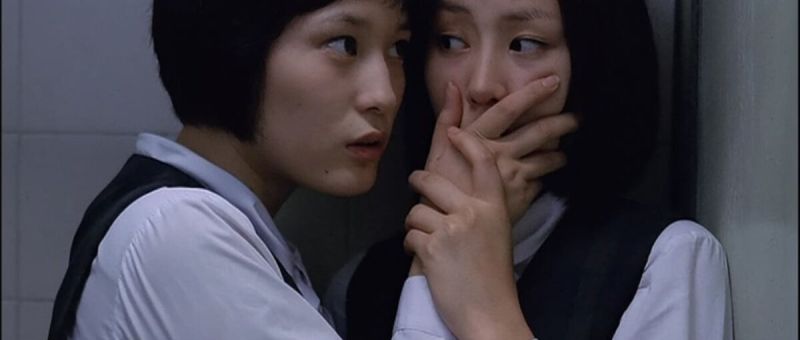
The film’s heroine is in many ways an audience member, or at least a fairly passive observer of the ongoing drama who only later inserts herself into the narrative. Min-ah (Kim Min-sun) discovers a mysterious “diary” near the sports ground and is quickly hooked on its cryptic contents even before realising that it details a lesbian relationship between two of her classmates who were at one point “close” but have since “drifted apart”. The author, Hyo-shin (Park Ye-jin), is already considered “weird” by her classmates and does seem to have an otherworldly quality, most particularly in her tendency to speak in an uncanny manner. She is also accused of being a “lesbian” by an obnoxious fellow student laying bare the way these teens already enforce a social prejudice which oppresses them all. 

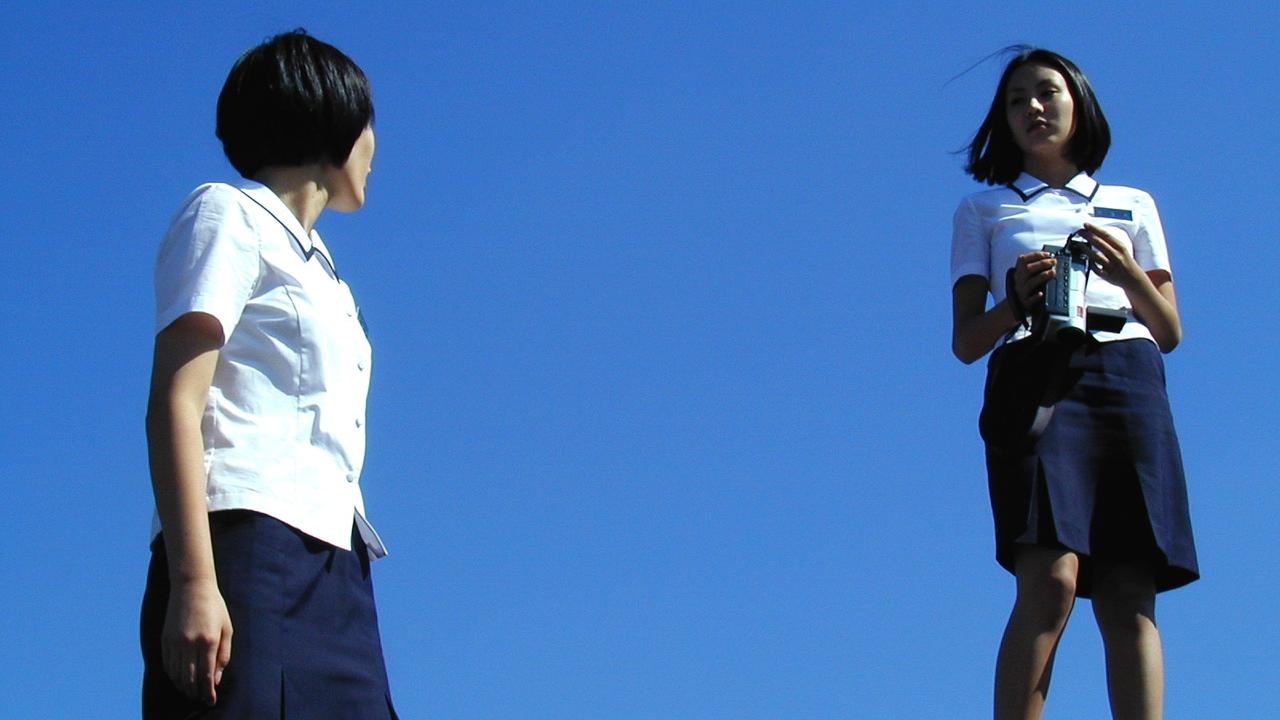
Min-ah’s friend Yeon-an (Kim Jae-in) has been fasting for the last few weeks to try and get her weight down before the school’s physical health check up, while Ji-won (Gong Hyo-jin) is similarly concerned with her chest measurement. This is an all girls school, and there is a clear preoccupation with the ability to conform to notions of conventional femininity while all of the teachers that we see aside from the school nurse are male and enforce discipline with quite shocking levels of violence. Yeon-an and Ji-won land up in trouble for playing around with a video camera they’d brought in to record choir practice when it’s discovered by a teacher who reacts as if he thinks the girls are on some kind of whistleblowing mission. He clearly feels that his authority has been questioned, which also implies that he knows his behaviour is “wrong”, and punishes the girls for their “rebellion” against him. 

After Hyo-shin dies in an apparent suicide, it is rumoured that she may have been pregnant which would certainly explain her desire to get out of the health check. In a flashback, she suggests that she may have drifted into an inappropriate sexual relationship with a dejected teacher, Mr. Goh (Baek Jong-hak), who claims that he doesn’t get on with his “materialistic” colleagues while fed up with the vacuous teenage girls he’s supposed to be teaching. Yet Mr. Goh appears to have suffered little after Hyo-shin’s death despite being the apparent father of her unborn child, leaving only Hyo-shin’s vengeful spirit to enact some kind of justice. 

It’s Mr. Goh who did in some way disrupt the relationship between Hyo-shin and Shi-eun (Lee Young-jin) who seems to feel on some level betrayed while deepening her inner conflict as regards her sexuality. Unlike the other girls, Shi-eun presents in a slightly more masculine fashion, not least because of her athleticism, and is filled with an internalised shame about her relationship with Hyo-shin which she otherwise does not share. In the dreamlike scene which opens the film, Hyo-shin and Shi-eun are plunged into water tied at the ankle by the red string of fate which in popular mythology signifies a true romantic connection. But as they fall together, Shi-eun begins to panic and unties herself. She violently pushes Hyo-shin away who then continues to sink into the murky depths below. This act of physical rejection is repeated several times, most notably when Hyo-shin kisses Shi-eun in front of their classmates shortly after she has been struck in the face by their teacher. Shi-eun pushes her away, and thereafter ignores her before directly stating that she is “ashamed” and does not care what Hyo-shin decides to do with her life. 

It’s this rejection that the film posits as the cause of Hyo-shin’s suicide, though the romance itself is constantly overshadowed by death. Obsessed with the diary, Min-ah eats a “magic” sweet stuck inside which is described as some kind of love poison for which Hyo-shin has an antidote, only in the climax of the film it seems to be the reverse and a kind of prelude to a double suicide. In the dreamworld created by Hyo-shin’s spirit, the schoolgirls assemble for something that looks a lot like a wedding though ostensibly a birthday party in which the couple is accepted by the world around them only in reality it can never happen in part because Shi-eun herself does not permit it to. 

Directors Kim and Min hint at the feverish atmosphere with blown out whites and strange angles even before entering the menacing dreamscape of Hyo-shin’s revenge, lending a note of unsteadiness to Min-ah’s obsessive investigation of the diary that perhaps reveals something of herself even as it draws her towards a dark spiritual destiny. In any case, what it leaves behind is a deep sense of melancholy for the tragedy of the teenage lovers who in the end maybe the ones haunted by the world around them.


Memento Mori screened as part of this year’s Queer East .

Trailer (English subtitles)

Stateless Things (줄탁동시, Kim Kyung-Mook, 2011)

“We looked everywhere for a place for us to stay, but we could not find it anywhere” one of the twin heroes of Kim Kyung-mook’s indie drama Stateless Things (줄탁동시, Jooltak Dongshi) confesses. As the title suggests, Kim’s eventually surrealist drama follows those who no longer have a home and are instead condemned to wander the margins of an unforgiving city. Finding only loneliness and exploitation they long for an escape and perhaps find one if only in a moment of eclipse. 

Shooting in a more naturalistic, documentary style, Kim first focusses on the figure of Jun (Paul Lee), a young North Korean refugee who lost his mother in the crossing and his father to another woman in Busan. He works in a petrol station but is treated with disdain by his boss who has his eye on his female colleague, Soon-hee (Kim Sae-Byuk), who is a member of the Korean minority in China where most of her family reside. Though originally hostile towards each other, each wary of their mutual isolation and concurrent vulnerability, the pair later bond in a shared resentment of their boss who exploits Jun physically for his labour and seeks to exploit Soon-hee sexually. After each saving the other from the nefarious boss, the pair have no choice but to go on the run taking in a series of tourist spots while looking for another place to settle. 

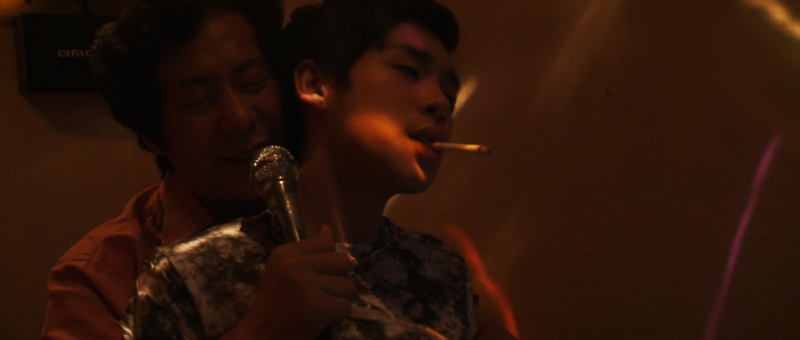
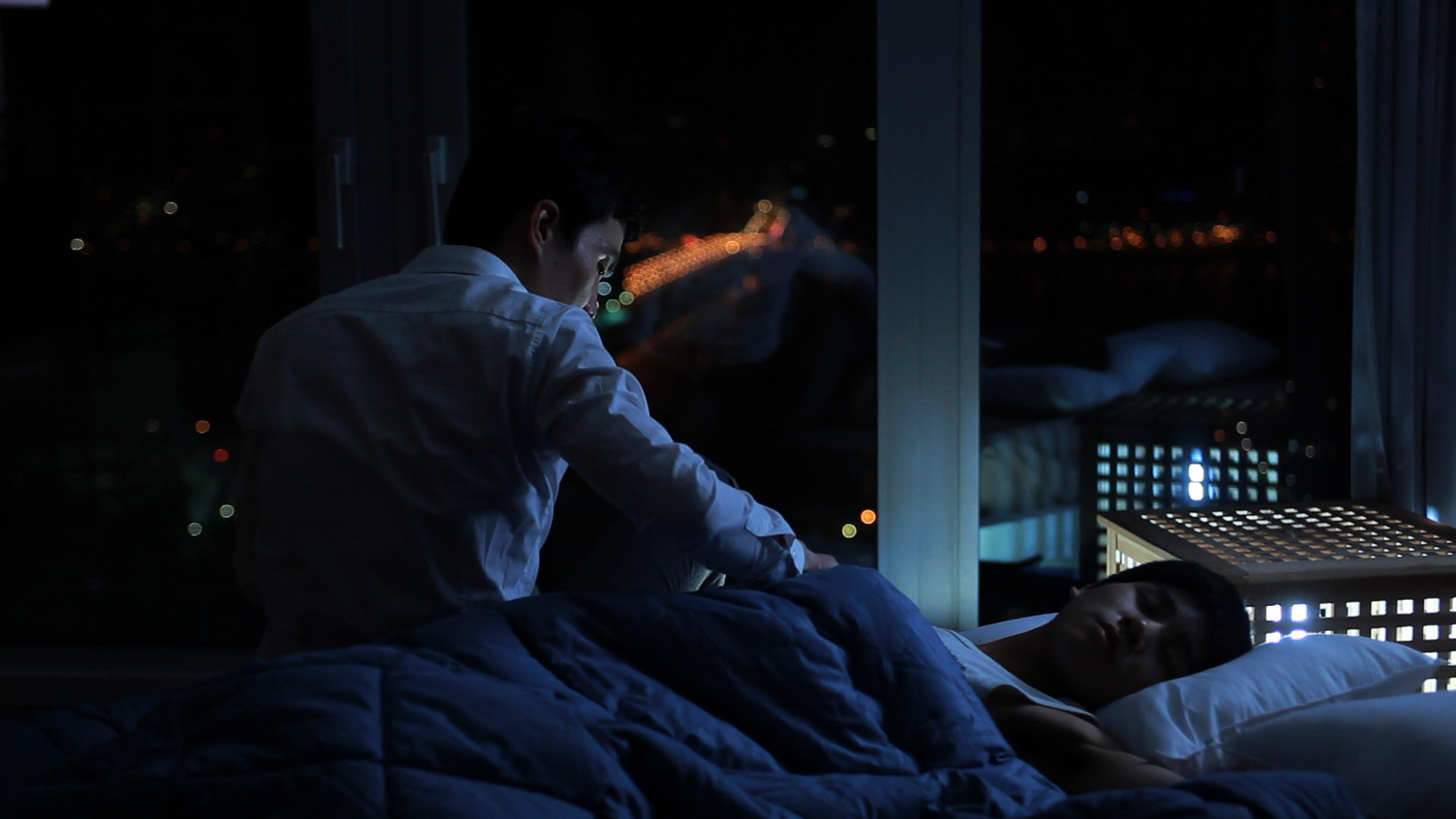
Meanwhile, across town, a young gay man, Hyun (Yeom Hyun-Joon), is a virtual prisoner in the home of his wealthy, married and closeted lover. He looks out across the midnight city and dances sadly alone in a luxury apartment in the sky while occasionally venturing out to meet other men, mostly older, who similarly only intend to exploit his body. “You have nowhere to go.” the exasperated Sung-woo/Sung-hoon (Lim Hyung-Guk) insists, thrown into jealous anxiety on visiting the flat and finding Hyun absent, yet he cannot really offer him a “home” and is all too aware of the transactional nature of their relationship. Though Hyun is also in a sense “stateless”, he has a power over Sung-woo and is able to wield his youth and beauty like a weapon if one he may not fully be able to control. In any case, he too is excluded from the mainstream society by virtue of his sexuality and socio-economic background. 

When Soon-hee and Jun visit a temple, he remarks on the incongruity of seeing a painting that features both a sun and a moon. She explains a folktale to him in which sun and moon are embodiments of siblings who climbed a rope into the sky to escape a hungry tiger. In his diary, Hyun also envisages a pair of twins one opening a door with his right hand as the other closes it with his left. In the surrealist sequence which closes the film, after a title card that appears 90 minutes in, the two men blur into one another as if they shared the same soul in an almost literal eclipse of the self. Kim nevertheless characterises them as sun and moon who cannot ordinarily share the same space. Jun occupies a world of street level sunniness until the light finally begins to dim leaving him alone in a dusky, rain-soaked city. Hyun meanwhile lives by night in his high rise apartment, a prisoner of luxury who flirts with danger for a sense of escape. 

Then again we might ask if Jun and Hyun are two sides of one whole, a sun and moon protecting the king who finds himself an exile. Kim shifts to scenes of emptiness, rooms without presence and streets without life as if the two men were ghosts of themselves hovering above a rootless Seoul, the sense of eeriness only deepened by Kim’s lengthy takes as he follows Jun walking a lonely path towards nowhere in particular because in the end he too has nowhere to go. Departing from the realism with which the film opened, the final sequence gives way to a kind of rebirth if only one of wandering that leaves its heroes at the mercy of a society continually unwilling to recognise their personhood. 


Stateless Things screened as part of this year’s Queer East .

Trailer (English subtitles)

King and the Clown (왕의 남자, Lee Joon-ik, 2005)

The feudal order conspires against everyone from minstrel to king in Lee Joon-ik’s Shakespearean historical epic, King and the Clown (왕의 남자, Wang-ui Namja). The Korean title might translate to the equally ambiguous “The King’s Man”, but in any case invites the question of who it is that is the “king” and who the “clown” though in practice it might not matter because their roles are to a degree interchangeable. Nevertheless, a minstrel’s attempt to transgress class boundaries eventually leads to tragedy but also perhaps defiance in his seizing of the little freedom that is given to him. 

The oppressiveness of the system is emphasised in the opening text which explains the historical background and reveals that the king of this story was considered a tyrant, though also thought to be sensitive and intelligent, while permanently damaged by the early death of his mother who was forced to take her own life because of machinations in the court. The King (Jung Jin-young) himself rails at the system complaining that he has no real power and is largely unable to overrule the advice of his courtiers who remain loyal to his late father and simultaneously force him to obey the rule of a man who is already dead. In this internecine feudal society, not even the king is free. 

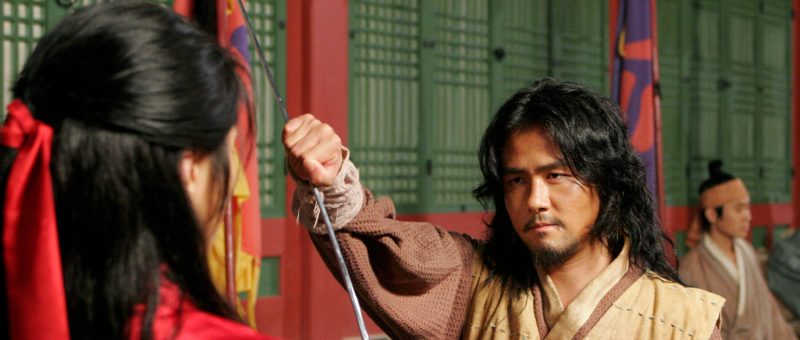
This might in a sense explain his tyranny, borne both of an anxiety over the precarity of his rule (the text also reveals that he was deposed by his courtiers shortly after the film concludes) and is otherwise engaged in a kind of frustrated boundary pushing. At heart, he is a wounded and petulant child. His eventual decision to participate in the clown show put on by Jang-saeng (Kam Woo-sung) and his troupe of jesters hints at his mental instability and growing inability to discern reality from fantasy, or to a point perhaps there is no true “reality” for a king and so the distinction no longer matters as there is no real difference for him between a man “dying” in a play and dying for real. 

For Jang-saeng, however, there is a difference. He and his brother-in-arms Gong-gil (Lee Joon-gi) are technically on the run after Gong-gil ended up killing their manager to defend Jang-saeng who had tried to protect him from exploitation in being pimped out as a male sex worker to earn extra money for the company. It’s Jang-saeng who hits on the lucrative opportunities of satire after teaming up with three other minstrels in the capital and hearing tales of the King’s scandalous sex life. This obviously gets him into hot water with the authorities, though Jang-saeng talks himself out of trouble by convincing conflicted courtier Cheo-seon (Jang Hang-seon) to allow them to perform before the King who actively enjoys being mocked and brings the clowns into the palace to entertain him at his pleasure causing a further rift with his conservative courtiers who do not enjoy having their dirty dealings exposed through bawdy street theatre. 

The repeated visual motif of the tightrope emphasises the fine line Jang-saeng is walking as a commoner in the court. Cheo-seon had hoped their performance would show the King the extent of the corruption among his courtiers, but the results leave Jang-seong conflicted as he sees men die as a result of his comedy while failing in his primary goal of protecting Gong-gil from exploitation as he quickly becomes a favourite of the King again endangering their position as they become a target for the King’s mistress (Kang Sung-yeon), a former sex worker who had like them used her natural gifts to transgress the boundaries of class. Cheo-seon complains that it’s the King’s “lust for a boy” which has corrupted the court, while Jang-seong’s resentment may otherwise be unwarranted as Gong-gil appears to like and pity the King and may have come to his own decision about advancing his fortunes despite Jang-seong’s assertion that there are some things that should not be sold.  

But as Jang-seong comes to realise, all around the tightrope is an abyss. “Never knew a fool who knew his place” Jang-seong wrote in one of his plays and that is in someways his tragedy, that he dared to challenge the social order but in the end could not overcome it and neither could the King. Even so he may find a kind of freedom in seeking escape from a cruel and oppressive society in the only way that is available to him. “The world’s but a stage. Kingly is he who struts for a while, then exits in style” Jang-seong exclaims, a “sightless fool” who finally knows where he stands.


King and the Clown screened as part of this year’s Queer East .

Trailer (English subtitles)

A Man and a Gisaeng (남자와 기생, Shim Wu-seob, 1969)

Under the authoritarian regime of Park Chung-hee, Korean Cinema was subject to increasingly stringent censorship and film was seen as an important means of moral instruction. The central message behind Shim Wu-seob’s raucous comedy A Man and a Gisaeng (남자와 기생, Namjawa Gisaeng) is that a man should be faithful to his family and avoid the double betrayal represented by drinking in the company of women which fritters away financial security and endangers his relationship with his wife. Yet the film is also subversive despite the underlying conservative message in making a mockery of so-called “traditional” gender roles.

Indeed, the film’s very thesis is that men are weak and women are strong. The men visit who gisaeng appear to have done so to reaffirm their dominant masculinity through their financial power in essentially paying women to be subservient towards them. Yet the gisaeng themselves are fully in control of the game they are playing as one makes clear when she tells a drunken businessman off after he gets handsy with her. She reminds him that a gisaeng is a person too, not a doll to be played with, and when he doesn’t listen she gets up and leaves proving who it is that has the upper hand in this situation. All the businessman can do is splutter and threaten the otherwise mild-mannered male manager. 

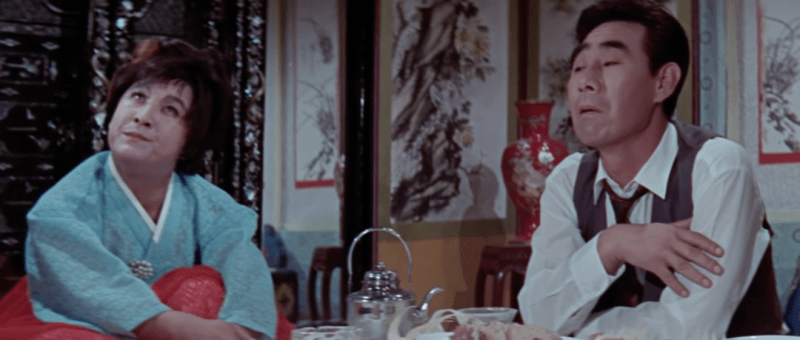
The hero’s boss, Heo (Heo Jang-gang), is a henpecked husband who visits gisaeng as a means of escape from his domineering wife (Do Kum-bong) who punishes him like a child. He asks Tae-ho (Gu Bong-Seo) to resign after catching him sitting at his desk darning socks to earn extra money and though it might be perfectly reasonable to fire an employee for brazenly doing another job on company time, Heo mainly lets him go because of his unmanliness. Tae-ho is a fully domesticated man who does work traditionally regarded as “feminine” in taking in sewing and looking after all of the domestic tasks such as cooking and cleaning as a “maternal” figure to his younger sister Tae-suk (Kim Chung-ja) who is then depicted as “manly” in her mastery of martial arts. 

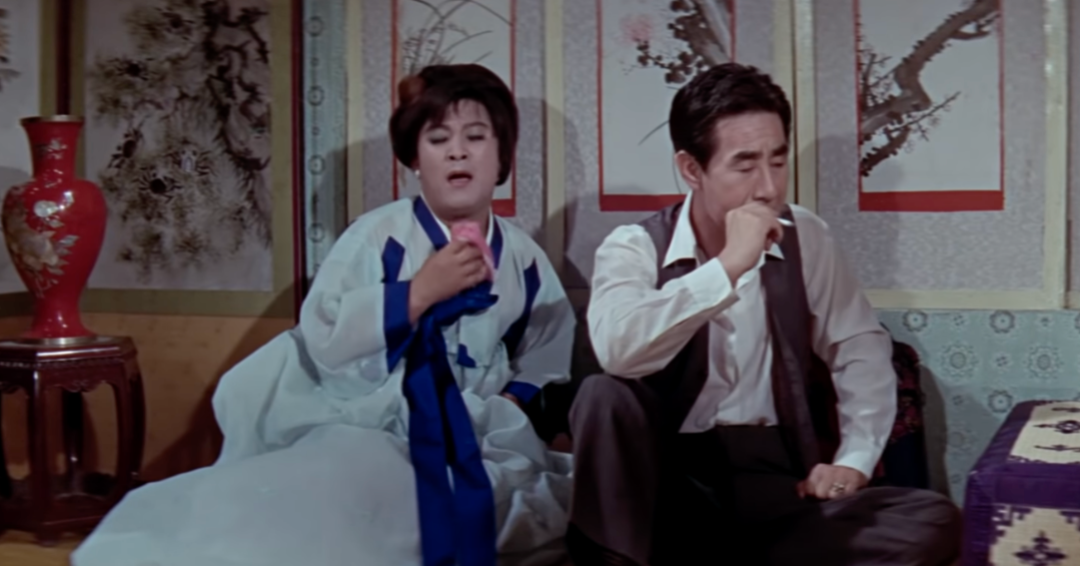
It quickly becomes clear that the “effeminate” man Tae-ho is the film’s strongest character and the only one largely in control of his circumstances. He agrees to become a gisaeng partly because he needs to earn money after being fired, but also he claims as a “joke” before committing himself to punishing men who neglect their duty to their families by shaming them into changing their behaviour as he largely does with Heo who, bizarrely, develops a fascination with Tae-ho’s gisaeng persona San-wol as she apparently reminds him of the first love he was prevented from marrying because of her family’s disapproval. 

The gender subversion is in essence the joke, but there are also constant hints that it might not be and Tae-ho’s female persona is also authentic, not least among them the music cues which are extremely ironic. For example, the melody of “Don’t Fence Me In” plays over Tae-ho at the house of gisaeng, as do the strains of “Nature Boy” which also hint at a validation of Tae-ho’s expression of femininity. Before being fired, Tae-ho tells Heo that he’s repressing himself and it isn’t good for him, and there is a (joking) suggestion in the final scenes that Heo’s attraction to San-wol is partly born of her seeming masculinity. He did indeed unwittingly appreciate a drag performance from Tae-ho’s queer-coded musician friend, after all.

It’s also possible to read Heo’s reunion with his wife as a new appreciation for her own “masculine” qualities in her capacity to dominate him even if the film simultaneously suggests that the role of a “good wife” is to offer “affection” to her husband and if the husband visits gisaeng it’s the wife’s fault for not giving it to him. Even so, what the film’s conclusion implies is closer to a rebalancing than might be expected in allowing Jeong-mi, the gisaeng with whom Tae-ho falls in love to counter any suggestion of queerness, to open her own shop as an independent woman pursuing a relationship with Tae-ho who is then a travelling salesmen selling cosmetics. Jeong-mi asks Tae-ho to give up “knitting” before they get married which would signal a remasculinisation, but Tae-suk, though dressing in a more feminine fashion to meet her in-laws, is not directly asked to give up Taekwondo and it seems that her fiancé appreciates her feistiness rather than seeking to soften it. Even Heo’s wife if seeming more cheerful has not given up control in their marriage despite her own drag experience in the gisaeng house yet their relationship is now considered “repaired”. “Traditional” gender roles have ostensibly been reaffirmed, Heo’s marriage is saved and both Tae-ho and his sister are about to marry, but they’ve also been subverted and redefined in unexpected ways. Some of this may only be possible because A Man and a Gisaeng is an absurd comedy of the kind Shim was known for, but it nevertheless hints at an underlying plea for greater social freedom in an authoritarian era. 


A Man and a Gisaeng screened as part of this year’s Queer East .

Home Ground (홈그라운드, Kwon Aram, 2022)

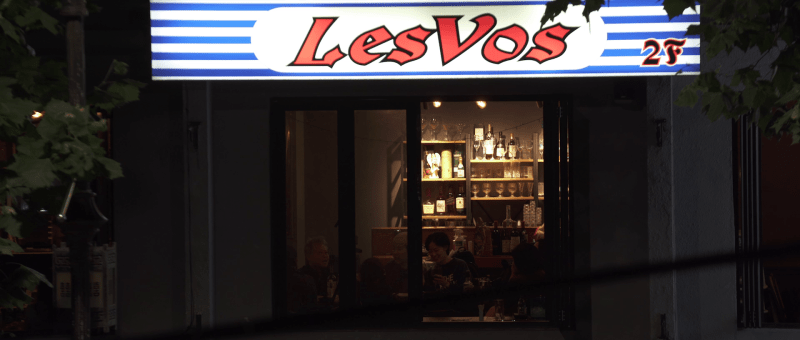
The ageing proprietor of an endangered lesbian bar reflects on the changing nature of queer culture in Korea over the last five decades in Kwon Aram’s contemplative documentary Home Ground (홈그라운드). “Home ground” is what many have come to regard spaces such as LesVos, but with changing times and the effects of the coronavirus pandemic maintaining them is becoming ever harder leaving the community with the few places to gather where they can come together in safety and solidarity. 

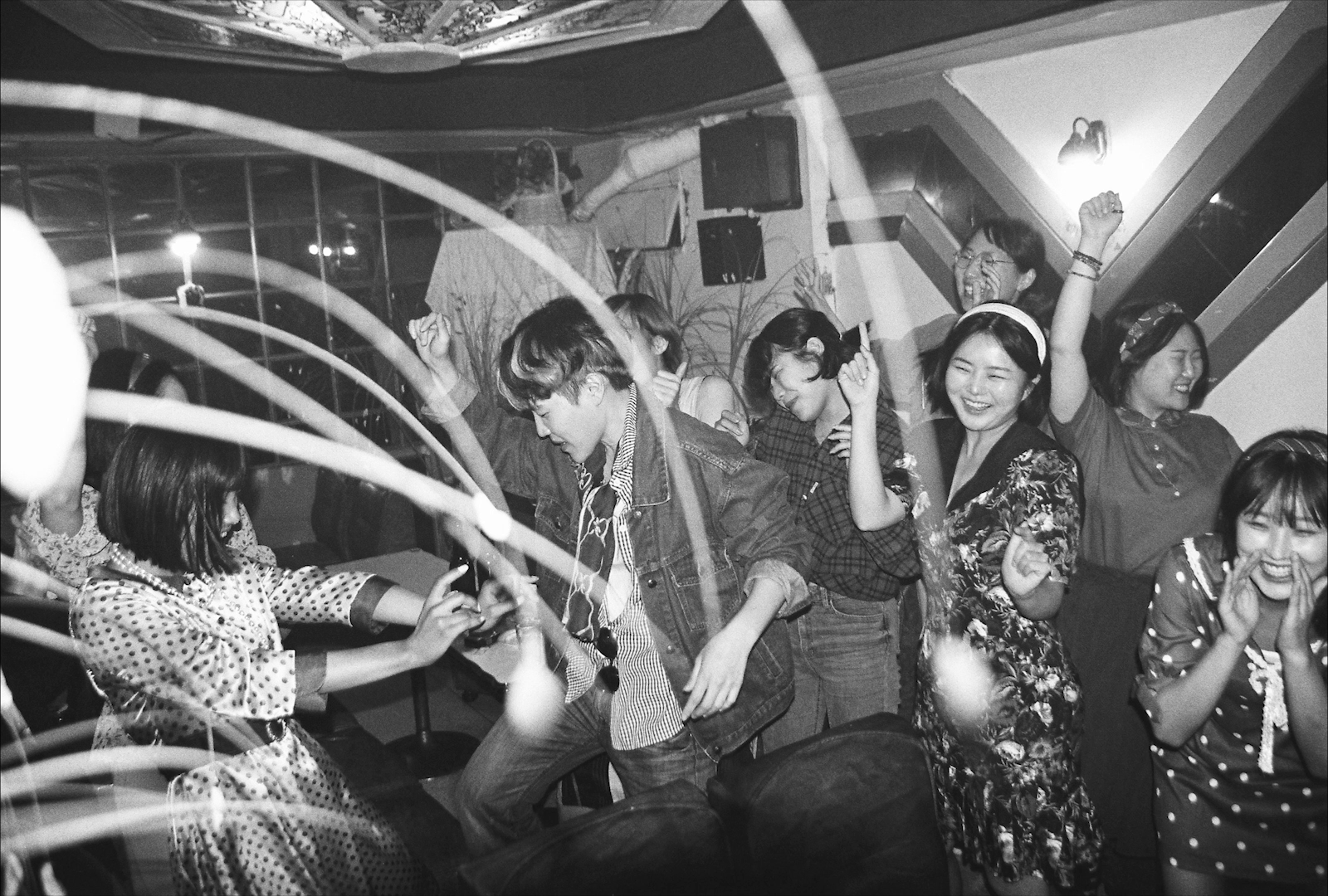
Though it has moved location, the documentary’s primary subject, Myong-woo, has run bar LesVos since in the late ‘90s. The first openly lesbian bar in Korea, it has provided a friendly and welcoming space for the LGBTQ+ community for almost 30 years though as Myong-woo relates times have certainly changed as they look back to the queer bars of Myeong-dong in 1970s including the legendary Chanel Tearoom which was raided by police in 1974 on the grounds of its scandalous “Decadence”. Kwon uses a mixture of stock footage and re-enactments to recreate the atmosphere of bygone eras as Myong-woo’s oldest friend Kkokji recalls the atmosphere at Chanel which had a strict no long hair rule and expected its patrons to dress smartly in suits. 

Like Myong-woo, Kkokji identifies himself as a transman and prefers to be address as “hyung” (older brother) though the pair are often mistakenly addressed as “auntie”. Myong-woo recalls breaking the heart of a boy in middle school whom he “dated” to fit in, knowing that he had to hide his sexuality though he seems to have been well accepted now in reuniting with a collection of school friends at LesVos. Kkokji meanwhile laments his difficulties finding employment because of his appearance and gender presentation while recalling a violent past as a street brawler and recruiter of women for bars in the ’70s and ’80s. 

LesVos by comparison seems to have been a more wholesome place, Myong-woo recalling that in the old days cherry coke and ice cream sundaes were firm favourites of the clientele. Before the bar existed, queer teens used to hang out in Shinchon Park where they found a sense of community along with an opportunity to meet new people in a comparatively safe place where they could be themselves. After checking with the licensing authorities who told him it was fine as long as he didn’t sell cigarettes or alcohol, Myong-Woo opened the bar to teens so they’d have a place to go that was safer than hanging out in the streets. 

Another former patron has created a safe space of her own in a queer-friendly dance studio where as she puts it they make life more fun and less lonely. Yet in the face of the pandemic, the community lost the ability to come together while faced with additional prejudice after the coronavirus cluster in an Itaewon club. As one interviewee relates, people began to blame LGBTQ+ people as if they were uniquely irresponsible without thinking about the reasons why the community feels the need to come together. Another adds that queer people were already “social distancing” before the pandemic, and that without queer spaces are often forced to hide who they are in a society which can often be hostile. 

Faced with the economic realities of the pandemic, Myong-woo worries he will have to close the bar while countless similar spaces have pasted closing notices on their doors. Myong-Woo himself is also ageing, a trip to the doctors revealing the toll standing for hours every day has taken on his feet while he’s also taken on another part-time job working in a kimbap shop with no money coming in through the bar. Even so he reveals how much he’s learning from his younger customers about how the community has changed while society largely refuses to. He reflects that he thought the young people of today had it better, but realises he is mistaken on attending a rally protesting the death of a transgender soldier who took their own life after being discharged from the army because of their transition. Myong-woo keeps the bar open to provide a place of refuge for those who may not have anywhere else to go, opening their doors on holidays for those who have only their queer family to rely on. “You can’t do it alone,” he reflects doing his best to preserve a small space of safety and solidarity amid a sometimes hostile atmosphere.


Home Ground screens at The Barbican 30th April as part of this year’s Queer East .

Sa Bangji (사방지, Song Kyung-shik, 1988)

The presence of an intersex person presents an existential threat to a fiercely patriarchal social order in Song Kyung-shik’s intense feudal-era drama, Sa Bangji (사방지). Inspired by the life of a historical figure who was exiled from mainstream society because of their gender identity, the film finds its protagonist continually exploited as a fetishised object of desire challenging the sexual repression of a society in which women were required to display no sexuality. 

The monks at the temple where Sa Bangji (Lee Hye-young) was raised advise them that they cannot live in the secular world and with good reason, as the hostility with which they are later greeted makes clear. On looking at them, a shamaness immediately has a vision of a snail, which is as she later explains a “hermaphrodite” creature, and immediately seems to have grasped their secret. The shamaness explodes with rage and insists the noble house by whom Sa Bangji has reluctantly been taken in as a maid should expel them at once for they will only bring misfortune and potentially death. They are later told that they are abomination born from their parents’ bad karma and made to pay the price for it with only the kind Buddhist monk reminding Sa Bangji that there will always be a place at the temple for them and that bad karma can always be overcome with goodness and light. 

Sa Bangji hadn’t wanted to leave the temple because they longed to see the world beyond it, only that even in this comparatively safe space they felt a burden while again ironically caught between two worlds neither nun nor layman. Though they present as a woman, Sa Bangji has male genitalia and is at pains to keep their true nature hidden. When the widow Lee So-sa (Bang Hee) encounters Sa Bangji at the temple, she too is drawn to their uncanniness and determines to “rescue” them from a monastic existence by taking them back to her home as a maid. Once there, she begins on what can only be described as a campaign of sexual harassment in which she continually makes advances to Sa Bangji who repeatedly turns them down because they are afraid of what will happen once their gender atypicality is exposed. So-sa in fact forces it out of them by accusing Sa Bangji of stealing a precious ring as a pretext for strip searching them. 

This ring is later exchanged as a token of their love once they have indeed become intimate and discovered in each other romantic fulfilment. Yet the ring also echoes the constraint which surrounds each of them by virtue of not being male in feudal society. “How dare you make decisions all by yourself” So-sa is told when she arrives home to the estate of her husband’s family with Sa Bangji in tow, even as a noblewoman unable to exercise much agency and dependent on relatives who blame her for her late husband’s death. Her chief oppressor is of course her mother-in-law who, as an older woman, has more power, though no more freedom, and uses it to control other women. So-sa keeps Sa Bangji captive as a kind of plaything and accidental sex slave, in part to ensure their identity is not revealed, but they do seem to have found a transgressive freedom in the genuine connection between them which is brokered by Sa Bangji’s otherness.

It is Sa Bangji’s hidden “masculinity” that both gives them power and makes them vulnerable. So-sa eventually betrays them, unable to defy the feudal order to protect the person she loves, and Sa Bangji finds themselves once again imprisoned this time by the shamaness who pimps them out to other sexually frustrated women who are not permitted to express sexual desire such as widows and concubines as part of what she originally claims is a plot of revenge against oppressive nobility who forced her shaman husband to father a noble woman’s child and then killed him to keep the secret. 

Sa Bangji too wants revenge and eventually insists that they are going to show the word the beauty of their body, only for that body to be repeatedly commodified and seen as little more alive than the dildo So-sa shockingly removes from a locked chest in order to ease her frustrated desires as a youthful widow. They are called a “freak”, and eventually come to see themselves as a “monster”, “neither male nor female” and therefore existing outside of the tightly ordered patriarchal feudal society which is what makes them such a threat. In the end, not even the sacred land of the temple is safe from secular intrigue. Sa Bangji makes a drastic decision in an attempt to free themselves from gender-based oppression but it isn’t enough to overcome the world’s cruelty and leaves them once again caught between two worlds, unable to overcome the fragile masculinity of the patriarchal feudal order. 


Sa Bangji screens at Genesis 29th April as part of this year’s Queer East