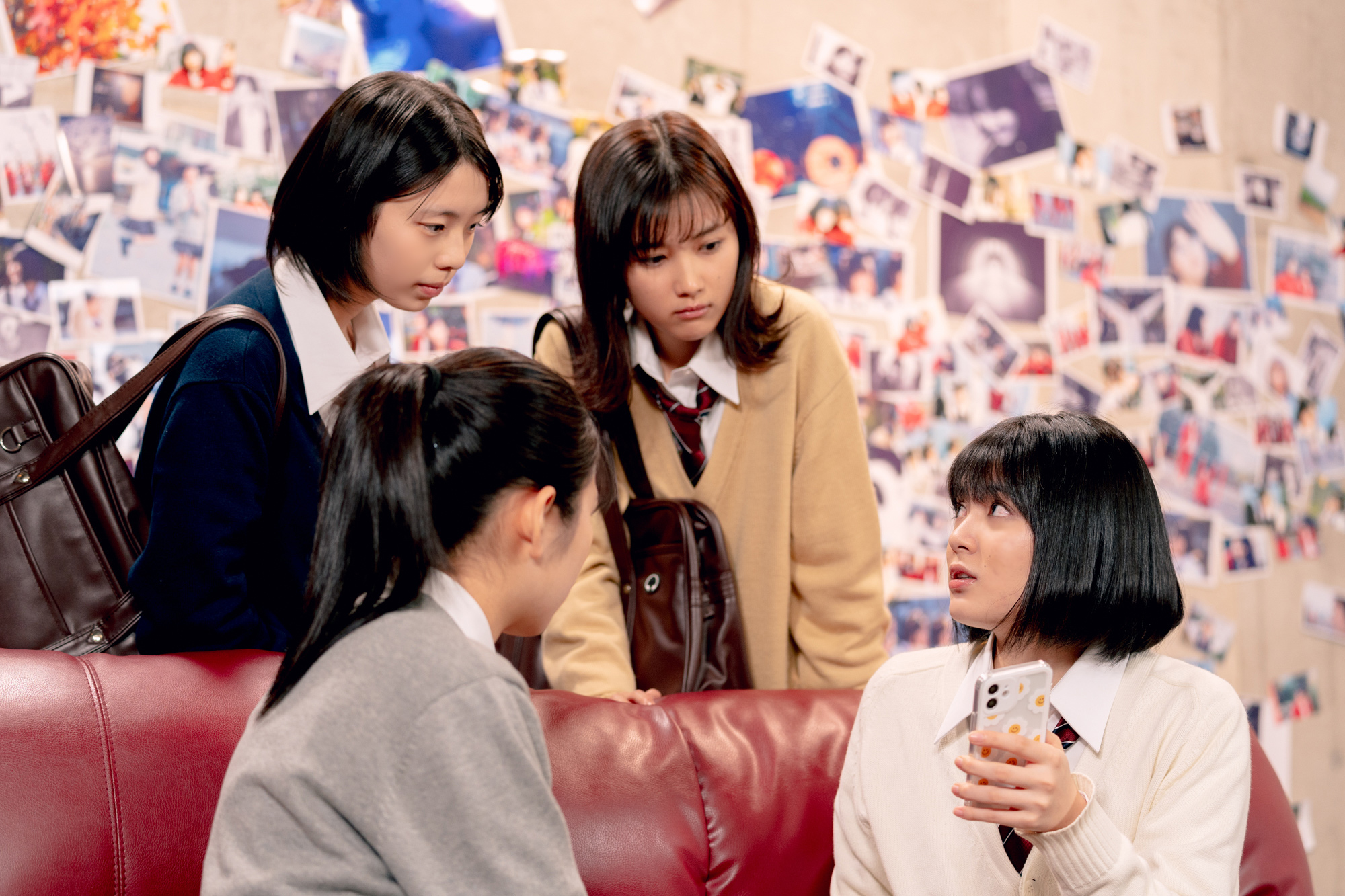
Mayhem Girls (メイヘムガールズ, Shinichi Fujita, 2022)

Four teenage girls unexpectedly find themselves with superpowers during the Covid-19 pandemic, but largely struggle with just the same problems as everyone else in Shinichi Fujita’s sci-fi-inflected high school dramedy Mayhem Girls (メイヘムガールズ). Despite the implications of the title, mayhem is not exactly the girls’ vibe though they each in their own way challenge the oppressive social norms of those around them later depressed by the realisation that they’ll soon have to go back to being “normal” and lose this brief respite they’ve been given from the rigours of high school life. 

The girls are already close to boiling point with the pressures of the pandemic as the teachers (ironically) yell at them to use hand sanitiser and social distance. The final straw seems to be the announcement that the Cultural Festival will be going online. That might be one reason why popular girl Mizuho (Mizuki Yoshida) suddenly snaps when her teacher catches her reading Twitter on her phone rather than studying. Miss Sawaguchi (Maako Miwa) is young and somewhat timid, unable to exert her authority over the class which is largely uninterested in her attempt to read out articles from English-language magazines. What’s the point, Mizuho wonders, in learning English if you can’t go abroad anyway? Sawaguchi takes this opportunity to reprimand Mizuho as a means of asserting her control but it backfires as something strange happens when she confiscates the phone. Sawaguchi’s hand stops mid-air allowing Mizuho to simply reclaim it while she runs out of the room as if in pain. 

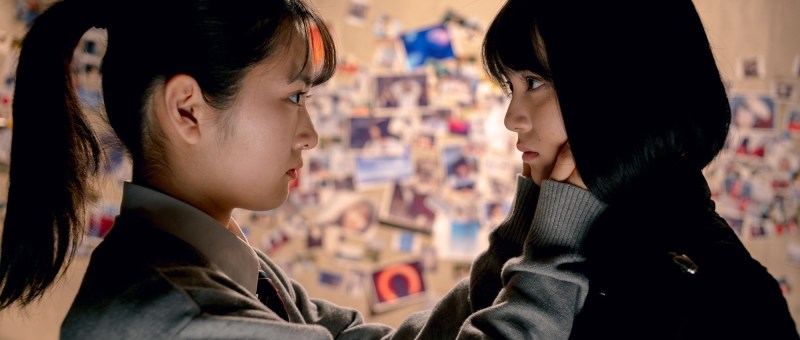
This is only the first inkling that Mizuho has gained unexpected powers of telekinesis though she struggles to understand what happened, certain that she didn’t touch Miss Sawaguchi and confused that she seems to be talking about “violence” and displaying bruises on her wrists. In any case, the event loses her her phone which is akin to a kind of social death for a teenage girl. Her powers have, however, brought her to the attention of Tamaki (Amane Kamiya) who is a telepath, or more accurately given her an excuse to make contact for as it turns out Tamaki has long been carrying a torch for the oblivious Mizuho who is hung up on the student who was her tutor in middle school, Yusuke (Taisei Kido). Soon they are joined by two more girls, Akane (Manami Igashira) who can teleport, and Kei (Hina Kikuchi) who can read the minds of machines, in a kind of after school superpower club. 

Though they eventually become good friends, the relationship between the girls is strained by their differing views on their powers and by Mizuho’s concurrent obsession with Yusuke who is now a part-time delivery rider struggling to find a full time job in the middle of the pandemic. Using Kei’s powers to track him down she waits outside his house for him to come back and inserts herself into his life. Though he seems as if he’s about to remind her that her behaviour is inappropriate, Yusuke eventually goes all in on Mizuho after learning of her powers and asks her to use them to rob a bank so he can forget about his employment woes. 

There are many things you shouldn’t do for a boy and robbing a bank is very high on the list, though perhaps merely a more extreme version of a lesson typically learned in adolescence. In any case, this is far as Mizuho is pushed to the dark side. Other than that, none of the girls really consider using their powers for evil ends with even Tamaki admitting that she has thought about poking around in Mizuho’s head but feels it would be wrong to do so. It’s Tamaki who draws the short straw in being largely unable to articulate herself even by using her powers before eventually trying to communicate in images only to be robbed of the power to do so at the very last second when she’s reduced to being “normal” once again. 

“Normality” does seem to resume for them, each of the girls heading back to their own individual cliques having seemingly learned little from their experiences save Tamaki who is left with a lingering sadness. Perhaps what they’ve been through is a kind of mayhem, a period of chaos provoked by the pressures of the pandemic along with oppressive teachers and the regular teenage issues of unrequited love and romantic disappointment but they’ve returned to “normal” all too quickly leaving precious little time to meditate on the results of their flirtation with superpowers and psychic abilities in a world in which normality itself is both somewhat illusionary and infinitely oppressive.


Mayhem Girls screened as part of this year’s New York Asian Film Festival.

Original trailer (no subtitles)

The Summer (그 여름, Han Ji-won, 2023)

A rueful young woman meditates on first love while losing direction in the city in Han Ji-won’s nostalgic adaptation of the story by Choi Sun-young, The Summer (그 여름, Geu Yeoleum). Set in the late ‘90s and early 2000s, the film finds an unexpected optimism for better future even in a society perhaps (even) less tolerant than that of today, but equally positions opposing reactions to their queerness as a force which erodes the innocent romance between two girls who met in high school and fell in love along with the more obvious stressors of city life such as social class and aspiration.

As Yi-gyeong later admits, “everything changed when we moved to Seoul”. Han depicts the tranquil rural town where the girls grew up as place of light and warmth, a kind of eternal summer of memory. Yet perhaps there’s something in the fact that when they first meet, footballer Su-yi accidentally breaks Yi-gyeong’s glasses rendering her at least temporarily unable to see clearly. A connection develops that first leads to an awkward friendship and finally to love, but where as a naive Yi-gyeong plans to come out and live openly as a lesbian, Su-yi is terrified and withdrawn. A few mocking sneers from her classmates show Yi-gyeong that Su-yi may have had a point and there are reasons they may have to keep their relationship secret.

Yi-gyeong’s inner conflict is reflected in a conundrum over her hair which is naturally lighter than than that of the uniform black of the girls around her. A teacher often stops to tell her to stop messing with it, leading her to wonder if she shouldn’t dye it the “correct” colour to be the same as everyone else thereby erasing her otherness and symbolically rejecting her homosexuality. She is also teased for having hazel eyes which are to some the eyes of a dog, and it’s Su-yi’s straightforward gaze into them that eventually brings the pair closer, Yi-gyeong feeling seen and accepted while Su-yi calmly tells her not to pay so much attention to what others think.

Yet for Su-yi the words are a double edged sword. Her way of not caring what other people think is to retreat into a bubble in which only she and Yi-gyeong matter, as if the rest of the world simply did not exist. Yi-gyeong, however, wants more. These divisions between them become even more palpable in the city when Yi-gyeong begins frequenting and then working at a lesbian bar which Su-yi still afraid to step into preferring to keep her relationship with Yi-gyeong an entirely private matter.

Han shrouds the city in shades of cold, blue and grey while the summer of their hometown gives way to a harsh winter. Where an orange cat had basked in the sun on Yi-gyeong’s desk, in the city a starving kitten shivers in an alleyway as if symbolising the love between the two women which is no longer being cared for or sheltered. While Yi-gyeong lives in a university dorm studying economics, an embittered Su-yi has given up her football dreams to become a mechanic while living in a dank room with mold on the ceiling that causes her to feel as if she’s compromising Yi-gyeong’s health simply by inviting her over. 

Conversely, as Yi-gyeong integrated more closely with the community through working at the bar she begins to grow apart from Su-yi, beginning to look down her as a working woman visibly irritated when she finally shows up at the bar but in her work clothes with grease on her face. Her new friends immediately put their foot in it by asking what Su-yi is studying at uni only to cause her embarrassment as she admits she didn’t get in and is doing a manual job instead. Yi-gyeong has to admit that what she feels is shame, now harbouring desires for city sophistication and nice middle class life as symbolised in her nascent crush on a slightly older nurse seemingly much more at home with who she is. 

But even so, an older Yi-gyeong can’t help asking herself why she swapped her dull but idyllic hometown for the emptiness of urbanity while meditating on the failure of her first love, wondering if she was wise to give it up or in the end betrayed both herself and Su-yi in her desire for something that was “more” than this without appreciating its innocent fragility. Poignant in its sense of melancholy regret, Han’s hazy drama lends a touch of warmth to Yi-gyeong’s infinite nostalgia for the endless summer of first love that in its way for her will never really end. 


The Summer screened as part of this year’s London Korean Film Festival.

Original trailer (Korean subtitles only)

Asog (Seán Devlin, 2023)

A non-binary former teacher bonds with a student during an impromptu road trip in the wake of a typhoon in Seán Devlin’s hilariously empathetic dramedy, Asog. As the opening title card explains, everyone in the film is a survivor of Typhoon Yolanda (also known as Super Typhoon Haiyan) which struck in 2013 causing mass devastation and loss of life, but it’s also clear that the effects of the storm are still being felt not least in the waves of corporate colonialism that keep lapping at the shores.

As Jaya (Rey Aclao) recalls in their voice over, Yolanda took everything from them when the TV station where they filmed their TV show was plunged underwater ending their career as a presenter. Returning to teaching they can see that the storm has created a generation of traumatised children struggling to allay their fear and anxiety or otherwise deal with loss. Arnel (Arnel Pablo) lost his mother some time previously and seems to have been more or less abandoned by his father of whom he eventually goes in search at the behest of his aunts keen to start preparations for her memorial service. 

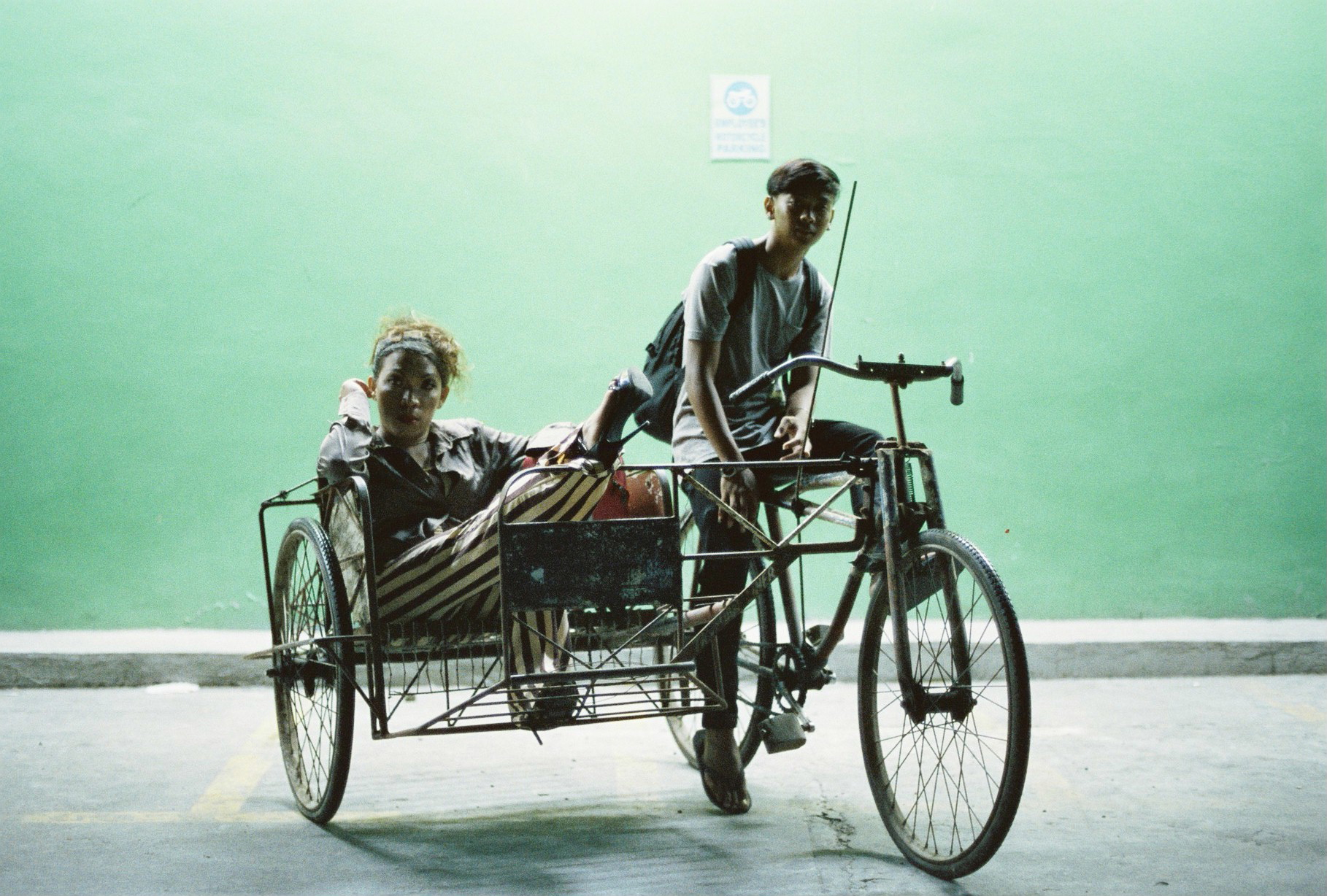
Jaya is also beginning to question their relationship with partner Cyrus (Ricky Gacho Jr.) which is only further strained when they abruptly quit their job after arguing with their boss, announcing that they plan to travel to Sicogon to enter a gay beauty pageant. It’s on the way that they meet up with Arnel who is travelling in the same direction but confused and alone having had to jump off a bus after dropping half his traveling expenses, which he was cradling in coin in his hands, in the road. Arnel perhaps hopes that his teacher whom he knows as “Mr. Andrade” will take him under their wing, but as it turns out Jaya doesn’t really have it together either. They’re travelling on a shoestring mainly by push bike and side car and sleeping on benches at railway stations. 

In any case, their journey takes them through the ravaged landscape until they finally reach the island and hear from its remaining villagers of what’s happened there, a corporate invasion which offered them aid but only if they surrendered their rights to their ancestral property. The venue for the beauty pageant is in the new resort built on top of stolen land while a small number of islanders who’ve refused to leave continue to fight for their rights and it seems are winning. Devlin casts real locals as the aggrieved islanders, and tells their story through the roundabout medium of a children’s story in which a swarm of mosquitos eventually deposed a king because though they were small, there were a lot of them, they stuck together, and they didn’t give up. 

Jaya likens the corporatising takeover as akin to that of the Philippines itself by Philip the Second of Spain who gives the islands their name and becomes in a way the crabby king of the fairy tale. They recall a story about Laurence Fishburne remarking in an interview that the Filipino people made him feel far more welcome than he ever had in America, though Jaya has often felt unwelcome themself. An old lady complains to see them putting on makeup on a bus and when they make a witty retort it’s Jaya and Arnel who are thrown off the bus. Cyrus and his previous partner had tried to have a child via a surrogate but the birth mother changed her mind, stating that she did not want the baby to be raised by a gay couple so had decided to keep it. But by contrast the old lady in Sicogon tells them that there have always been people like Jaya and that had they a name in an older language, Asog, so they always have been and belong here an integrated and accepted part of their culture. 

Through their journey together Jaya becomes a kind of mother figure to the young Arnel who felt alone in his grief abandoned by a father who abruptly left him behind. Grief changes shape, but it doesn’t end they advise him, quoting Keanu Reeves, revealing that they have learned to see their own mother who died when they were a child in the beauty of flowers or sunlight or passing birds as Arnel will too in time. The passing crisis allows Jaya the chance to quite literally rebuild their relationship with Cyrus while feeling grateful that at least they have this time to wait around together. As they said, their job was to help people cast away their troubles, countering despair with joy and laughter and togetherness which in itself gives the mosquito to the courage to keep swarming, fighting for its rights and refusing to be beaten by intimidating corporatising colonialists.


Asog screened as part of this year’s BFI London Film Festival.

Festival trailer (English subtitles)

Tsugaru Lacquer Girl (バカ塗りの娘, Keiko Tsuruoka, 2023)

Which traditions should we keep and which should we lose? A young woman finds herself frustrated by outdated gender norms in her desire to take over the family lacquerware business in Keiko Tsuruoka’s gentle rural drama, Tsugaru Lacquer Girl (バカ塗りの娘, Bakanuri no Musume). While her family, save older brother Yu (Ryota Bando) who has already rejected lacquerware, do nothing but run her down and claim she’ll never be a success at anything all she wants to do is devote her life to a traditional craft her father no longer believes has any kind of future. 

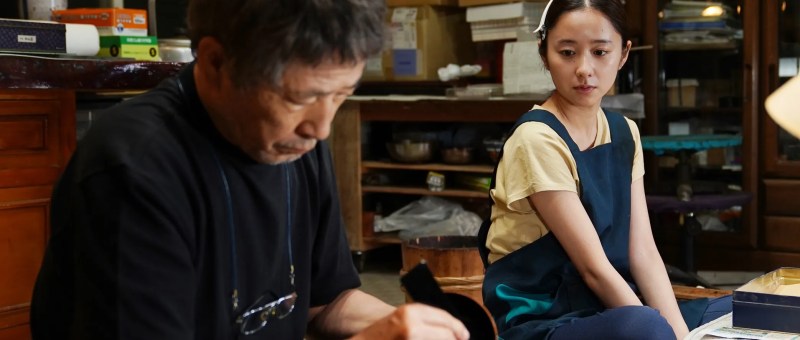
Even so, Seishiro (Kaoru Kobayashi) is dead set on Yu taking over the business to the point that they have become semi-estranged. He calls Miyako (Mayu Hotta) “clumsy” and complains that she has no aptitude for anything unlike Yu who was always good at anything he tried. Miyako too later suggests that she was her brother’s opposite, while he was cheerful and outgoing she is shy and melancholy but then perhaps it’s hard to be cheerful when everyone’s always telling you you’re useless and doing everything wrong. In an interesting parallel, Yu is also trapped by outdated social codes in that he is gay and he and his partner have decided to move to London where they can legally get married and live their life out and proud in a way they feel they cannot do in contemporary Japan. 

Lacking other direction in her life, Miyako has been working a part-time job in a local supermarket which she hates while her father occasionally allows her to help him finish big orders though it’s clear her salary is now their main source of financial support. A local inn keeper who is a good customer of theirs explains to some of his guests that craftsmen rarely construct large pieces such as tables because they are no longer cost effective while fewer young people are willing to take up apprenticeships leaving the traditional art in danger of dying out despite the frequent remarks that everything tastes better out of a lacquerware bowl which is after all in the modern parlance “sustainable” in that it will last for many decades and can easily be repaired if damaged. 

Seishiro doesn’t seem to have a reason for rejecting the idea that Miyako might take over aside from basic sexism in preferring to hand the business over to his first born son. It might be tempting to think that he dissuades her because he thinks there isn’t a future in lacquerware, but if that were the case he could simply retire. Her mother (Reiko Kataoka), who left the family some years ago in part it seems because of her own animosity towards lacquerware and its lack of financial promise, seems to feel much the same comparing Miyako to a more successful cousin who has kids and a high powered job at an international trading firm, telling her that she should be settling down and getting married suggesting that she is simply incapable of becoming a successful lacquerware artist and should at best keep it as a hobby. 

Her mother had also shut down her desire to learn piano as a child by telling her there was no point because she’d never be good at it. Miyako’s decision to prove herself by re-laquering an abandoned piano in her disused school is then an act of rebellion against both parents showing them what she can and will achieve along with the direction she has chosen for her life. Not everyone respects it even if her father begins to come around but really it doesn’t matter because the decision is hers alone whatever anyone else might have said. Far from being insular, the embrace of traditional culture gives Miyako new opportunities and allows her to grow in confidence until she’s finally ready to set off along her own path. Even so, it seems there are some traditions she thinks it would be better to lose, such as her father’s sexism and the homophobia that has forced her brother to emigrate in order to live a happy life just as he is. They call it “fools lacquer” because no one but a fool would go to all this trouble to make a bowl but in many ways that’s the point. Miyako pours all of herself in to the lacquer, piling layer on layer dotted by handfuls of thrown rice that give it its pattern much as she herself is slowly tempered by the world around her.


Tsugaru Lacquer Girl screened as part of this year’s Camera Japan.

Original trailer (English subtitles)

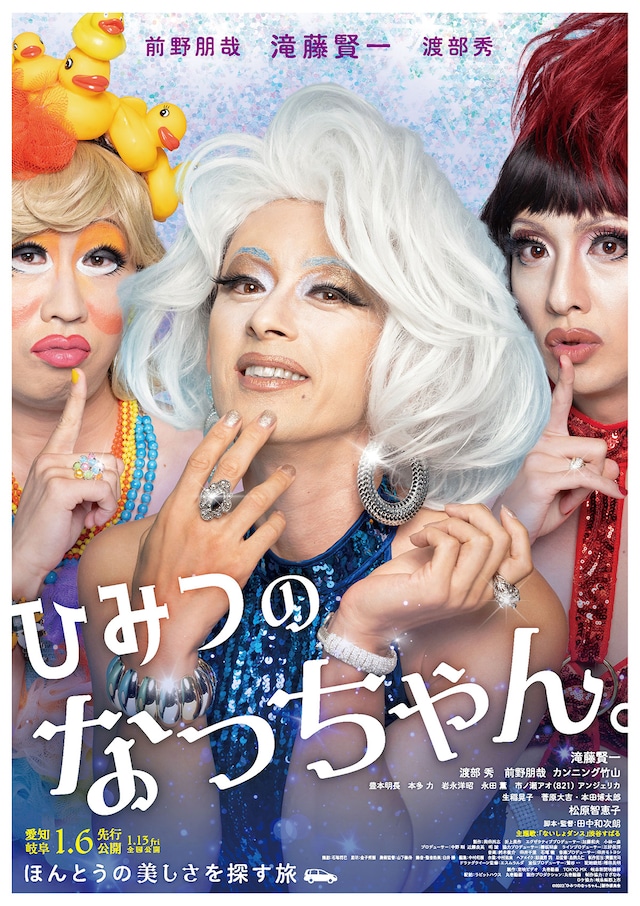
Natchan’s Little Secret (ひみつのなっちゃん。, Yasujiro Tanaka, 2023)

On learning that their friend and mentor has died, a trio of drag queens vows to do whatever it takes to fulfil her wishes and ensure her family never know about her sexuality in Yasujiro Tanaka’s road trip comedy Natchan’s Little Secret (ひみつのなっちゃん。, Himitsu no Natchan). In some ways it may seem old-fashioned, that rather than ensuring her family knew who she really was they decide to honour Natchan’s desire for secrecy but nevertheless meditate on the nature family while finally landing on a poignant sense of loss for all that secrecy entails.

Virgin (Kenichi Takito), an accountant by day and former drag queen who’s lost the taste for dancing, and Morilyn (Shu Watanabe) who works at the bar Natchan owned, are forced to confront the fact that in many ways they didn’t even know Natchan at all. They don’t know her address or hometown and have only the vague idea that she was estranged from her family. Virgin reflects that she was “secretive”, but in the end none of them really know what to do now that she’s gone. Another drag queen turned TV celebratory, Zubuko (Tomoya Maeno), laments that some take their secret to their grave realising that’s exactly what Natchan has done. That’s one reason why the trio become obsessed with the idea of cleaning out Natchan’s flat to make sure that her family don’t find anything they weren’t expecting. 

But then again, the trio frequently refer to the gay community as their family while claiming Natchan as their own. Without really thinking about it, Morilyn allowed hospital staff to assume he was family in a more legal sense and started making funeral arrangements. He also packs up some of Natchan’s property without realising he could be accused of theft while trying to tidy up her life. They may feel that the birth family are in a sense intruding, reasserting ownership over someone they never accepted in life and preventing those who truly loved them to honour their wishes. Yet Natchan’s mother (Chieko Matsubara) turns out to be sweet old lady who is in her way hurt that she and her son became estranged wishing that they could have been closer while he was alive.

It’s she who eventually invites them to Natchan’s rural hometown which is famous for a particular kind of festival dance. None of them are sure they want to go, partly because they fear accidentally blowing Natchan’s cover but also the social attitudes of what they imagine to be a more conservative, traditional area. Only it appears quite the reverse is true. Residents at the inn where they stay actually have a fierce curiosity about drag and enthusiastically enjoy a risqué routine performed by Morilyn and Zubuko while even a manly man later shrugs his shoulders and claims it’s not so different from Gujo Odori which also makes people sparkle. 

Maybe Natchan’s little secret is that she was a person who had learned to see the beautiful things in life and wanted others to see that they were beautiful too even if some told them that weren’t or they didn’t feel that they were. Virgin describes Morilyn’s straightforward living as a beautiful thing, especially as he recounts being made to do karate by conservative parents afraid of what the neighbours would think of their effeminate son, an experience he describes as emotionally destabilising and has led to a degree of repression as an adult. Virgin is out at work and well liked by a collection of female colleagues but now only dances alone at home and keeps it as her own kind of secret. Yet through their various adventures on the road the trio begin to come to new acceptances of themselves as they prepare to say goodbye to Natchan while comically affecting the tropes of conventional masculinity in an attempt not to give the game away. They wander through queer spaces in search of her and rediscover their own sense of family realising that they did know Natchan after all or at least all that was important to know as did others even if they pretended not to because that seemed to be how she wanted it. Finding liberation amid the Gujo Odori, the trio finally say goodbye but also discover a new sense of solidarity and self-acceptance joining the dance at which all truly are welcome. 


Natchan’s Little Secret screened as part of this year’s Camera Japan.

Original trailer (no subtitles)

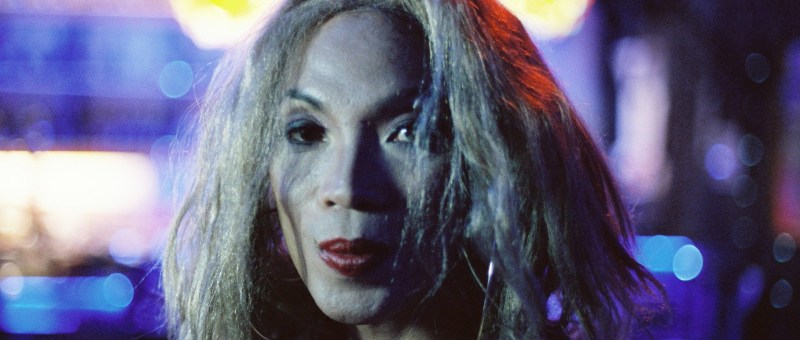
Where Is the Lie? (Marupok AF, Quark Henares, 2023)

What is it that motivates acts of seemingly pointless cruelty, why do people obsessively waste their own lives trying to make those of others miserable? Quark Henares’ inspired by real events (depending on who you ask) catfishing drama Where is the Lie? (Marupok AF) sees a trans woman fall victim to homophobic love fraud amid a climate of intense transphobia and subsequently make the decision to take a stand not as a petty act of revenge but to reclaim her dignity and protect her community while generously wishing her tormentor well. 

The catfisher, Beanie (Maris Racal), is given the right to reply through a series of confessional videos which slowly gain prominence towards the film’s conclusion. She admits that she knows what she did but does not really understand why she did it save justifying herself that she’s been “bullied” by members of the LGBTQ+ community in the past. She deliberately mangles the acronym and makes a point of using male pronouns to refer to the trans woman she’s currently targeting, Janzen (EJ Jallorina), but later starts to slip up instinctively using “she” after spending months talking to her normally over a dating app posing as buff model Theo (Royce Cabrera). Asked what the point of all this is, Beanie doesn’t have much of an answer beyond the cruelty itself explaining that the end goal is simply to ghost the target once they’ve made an emotional connection to cause them to feel hurt or humiliated. Perhaps these seem like low level consequences to Beanie who regards the catfishing as something like a weird hobby though one she expends an immense amount of time on seeing as she doesn’t appear to have anything else going on in her life aside from her actual job as a video director working in the fashion industry. 

The strange thing is though is Beanie describes Janzen as fun to talk to and they even seem to strike up a genuine connection over their shared interest in design. Beanie then finds herself in dilemma, simultaneously accelerating the plan to avoid having to deal with her complicated feelings but then restarting it after its natural end point by inserting herself into the conversation posing as Theo’s cousin and apologising on his behalf for his treatment of her in a moment of panic. The implication is that Beanie’s behaviour is motivated by an internalised homophobia in which she cannot bear to admit her desire for other women keeping her connection with Janzen because she is attracted to her but simultaneously denying it through a deliberate attempt to cause her pain and humiliation in returning her feelings vicariously through the fake Theo persona.

Some may feel that the film to too sympathetic towards outward transphobe Beanie or that once again implying the villain is closeted is unhelpful, but there may be something in her claims to be a kind of victim too in that her internalised homophobia is caused by societal conservatism in a largely Catholic, patriarchal culture. The film is clear on the dangers and discrimination Janzen faces daily both online and off as her friends remark on the case of a trans woman being arrested for using the ladies’ bathroom and later TV news footage shows president Duterte pardoning a US soldier who had been convicted of murdering a transgender sex worker. As the film begins, Janzen’s boyfriend breaks up with her over his discomfort about publicly dating a trans woman, implying that he is ashamed or embarrassed in his inability to explain the relationship to his older conservative parents. An online date then goes south when he realises she is trans. As her friends tell her Theo seems too good to be true especially as his social media only contains professionally taken photos and no personal posts or connections but Janzen is blinded by love and deeply wants to believe that the relationship is “real”.

That might go someway to explaining why she puts up with so much nonsense from Theo and continues to interact with him even after he calls her a series of slur words, leaves her waiting at the airport for a fake meeting, and then dumps her in a Jollibee after convincing her to travel all the way to Manila knowing she has no return ticket or place to stay. Playing out almost like an incredibly perverse Cyrano de Bergerac, the film at times pushes Janzen into the background in favour of exploring Beanie’s motivations for her seemingly senseless, sadistic cruelty, but subsequently allows her to reclaim centrestage in owning her own story by taking a stand against transphobic bullying on behalf of the other victims and her wider community while very much claiming the moral high ground by wishing Beanie nothing but peace though whether she’ll ever find it is anybody’s guess. 


Where Is the Lie? screened as part of this year’s New York Asian Film Festival

Original trailer (English subtitles)

Images: © Anima Studios, Kroma Entertainment, December 2022.© 2022 Kroma Entertainment. All Rights Reserved

Phantom (유령, Lee Hae-young, 2023)

Neatly subverting the drawing room mystery, Lee Hae-young’s intense colonial-era spy thriller Phantom (유령, Yuryeong) positions female solidarity as the roots of resistance towards oppressive militarist rule. Inspired by Mai Jia’s novel Sound of the Wind which focused on Chinese resistance towards the Japanese puppet government in Nanking, the film does indeed begin with the suggestion that one of the people in this room is a spy but soon encourages us to wonder if they all may be or some other game may be being played by an infinitely corrupt authority in the midst of a constant series of betrayals and reversals.

Opening in Kyungsung (modern day Seoul) in 1933, the film both begins and ends with a radio broadcast in Japanese reporting on the actions of “terrorist” group known as the “Shadow Corps” which has been conducting “organised crime” through a network of spies known as “Phantom”. An assassination attempt has recently been made in Shanghai on the new Korean governor and all members of the organisation are reported as dead following shootout with the Japanese authorities, though that obviously turns out not to be the case and we are quickly introduced to operative Park Cha-kyung (Lee Hanee) who works in the intelligence division of the colonial government and utilises a local cinema permanently screening Shanghai Express to communicate with her handlers. New instructions are boldly announced in plain sight through coded messages on cinema posters including one for Tod Browning’s Dracula. 

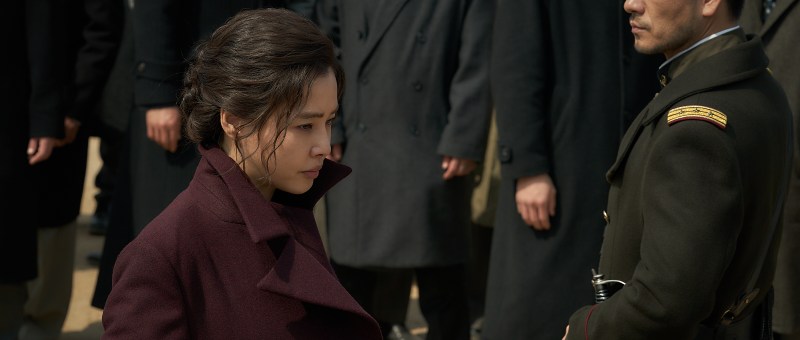
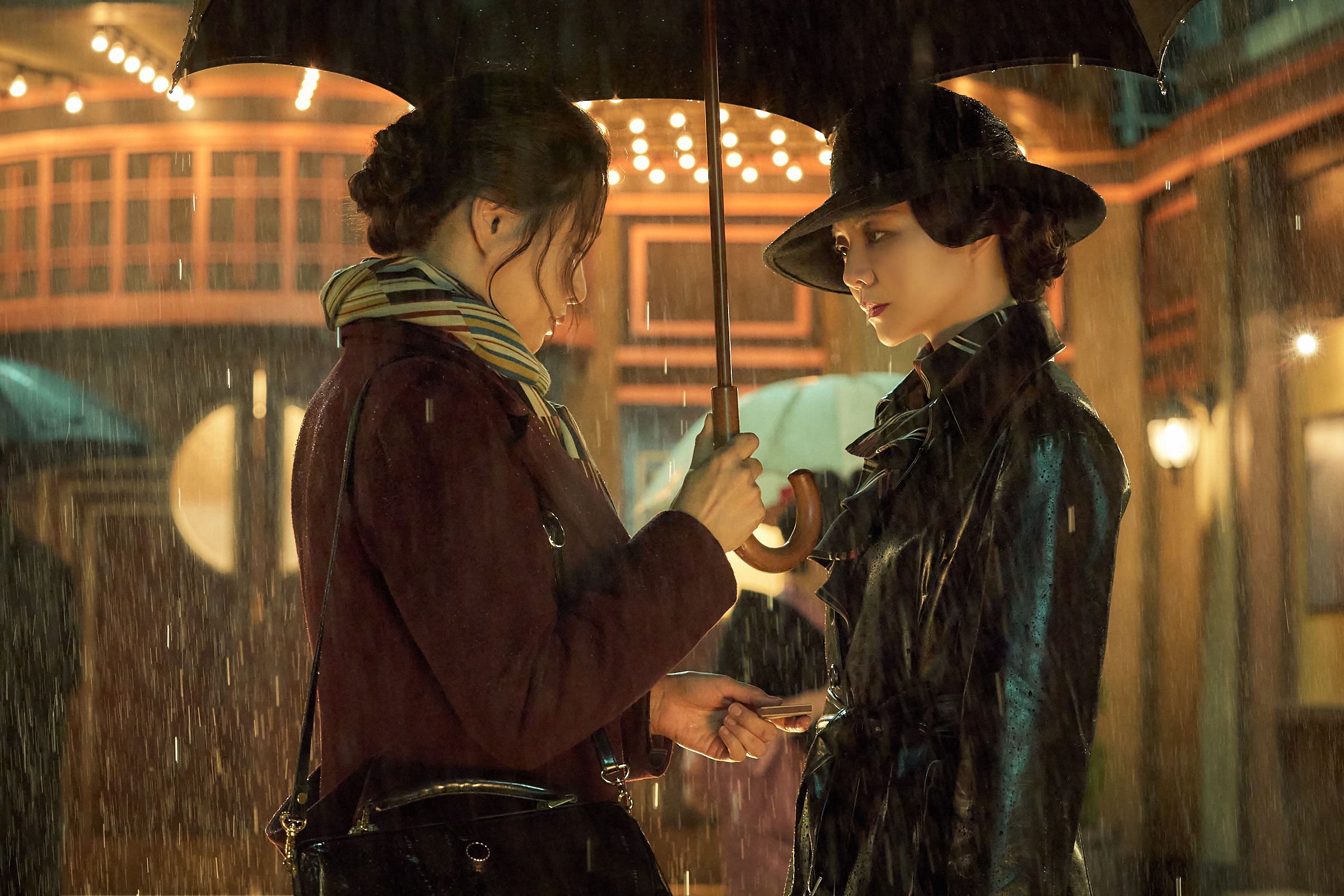
The group plan to assassinate the new governor when he visits a Japanese shrine in the city. A young woman dressed as a Shinto shrine maiden using a pistol concealed in a tray manages to wound but not kill him. She makes an escape but is shot by an unseen hand that could have come from either side. Following, Cha-kyung witnesses her death but can do nothing other than make a swift disappearance before the authorities arrive. Cha-kyung is often depicted as a shadow presence, disappearing phantom-like from the scene both there and not there as she tries to maintain her cover, but Lee also imbues her with an additional layer of repression in that the assassin, Nan-young (Esom), had been her lover. The two women meet briefly outside the cinema in an emotionally charged scene in which they can display no emotion as they must appear to be two strangers exchanging a match on the street though it’s clear that something much deeper is passing between them. 

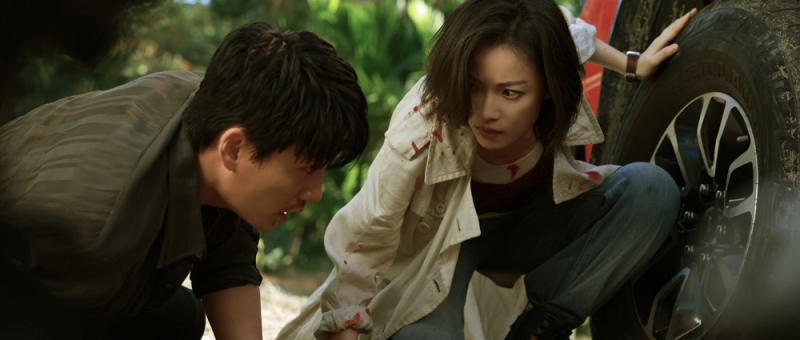
The exchange of cigarettes itself becomes repeated motif standing in for deepening intimacy in an atmosphere of intense mistrust. The box of matches that Cha-kyung had given to Nan-young as a parting gift and means of buying a few seconds more, blows their operation in leading investigating officer Takahara (Park Hae-soo) to a bar opposite the cinema where he figures out their code. Seemingly unsure as to who is the “Phantom”, he rounds up five suspects and takes them to a clifftop hotel where he encourages them to identify themselves or else they will be interrogated the following day. Along with Cha-kyung whom we already know to be “a” if not “the” Phantom is a police officer against whom Takahara bears a grudge (Sol Kyung-gu), the governor’s flapper secretary Yuriko (Park So-dam), codebreaker Cheon (Seo Hyun-woo) who is very attached to his cat, and terrified mailroom boy Baek-ho (Kim Dong-hee). 

Lee keeps the tension high and us guessing as we try to figure out what’s really going on, who is on which side, and if there’s to this than it first seems. Cha-kyung too seems uncertain, unable to trust any of her fellow suspects who obviously cannot trust her either while trying to maintain her ice cool cover. With sumptuous production design evoking the smoky, moody elegance of the 1930s setting, Lee drops us some clues in focussing on footwear particularly Cha-kyung’s ultra-practical boots and Yuriko’s totally impractical high heels and fancy outfits which as it turns out may have their uses after all when the simmering tension finally boils over and all hell breaks loose at the combination luxury hotel and state torture facility. In any case, as we gradually come to realise, the real “Phantom” the title refers to may be Korea itself, the resistance fighters accused of clinging on to the ghost of a nation which no longer exists while themselves rendered invisible, forced to live underground until the liberation day arrives. 


Phantom screens July 30 as part of this year’s New York Asian Film Festival.

International trailer (English subtitles)

Images: ⓒ 2023 CJ ENM Co., Ltd., THE LAMP.ltd ALL RIGHTS RESERVED

Geylang (芽籠, Boi Kwong, 2022)

Close to the end of Boi Kwong’s Geylang (芽籠), a young woman compares herself to a butterfly whose wings have begun to disintegrate, trapping in her in the environs of the famous red light district along with several others who all seem to have been the victim of cruel coincidence one rainy night. The world is indeed shades of grey, each of them having “good” reasons for behaving the way they do but also perhaps also selfish, or greedy, or merely afraid and seeking escape. 

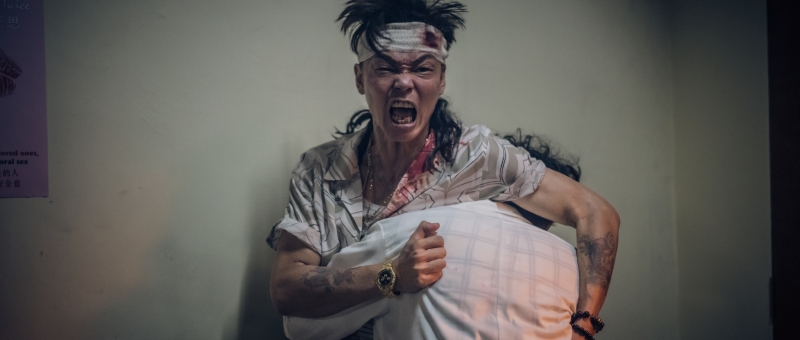
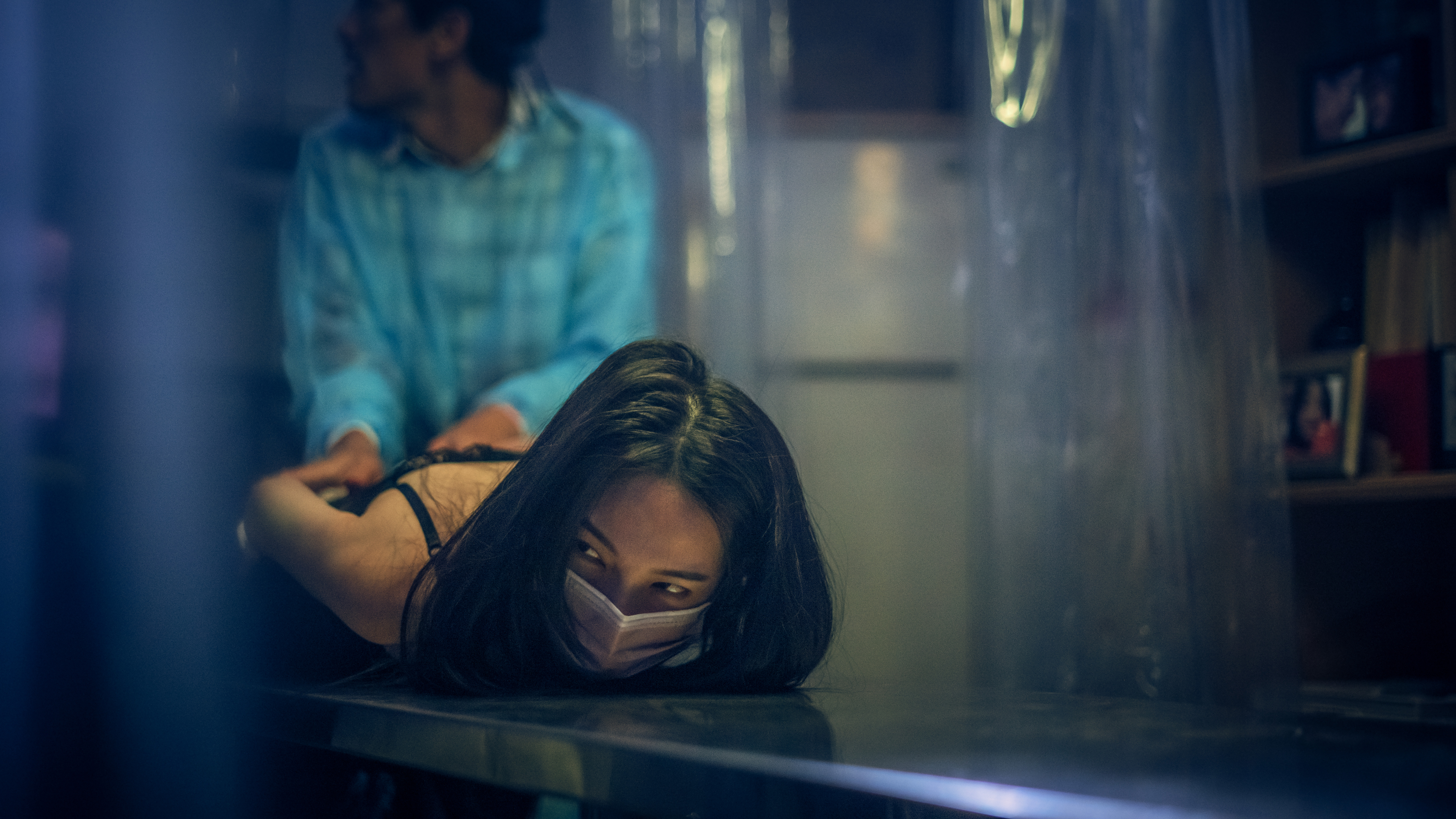
The strangest thing about this night in Geylang is that in the morning before it the body of a sex worker, Xiao Ling, was discovered near a remote stretch of road, only pretty much everyone seems to have forgotten about her and she is both incredibly central and an incidental detail in this karmic whirlpool of greed and desperation. Meanwhile, another sex worker, Shangri-La, is kidnapped by a crazed doctor trying to find a kidney donor for his seriously ill little girl. Shangri-La had also been in the middle of a blackmail plot against a politician running in the local election over a compromising video assisted by her pimp, Fatty, who is busy trying to care for his elderly father who has dementia. Meanwhile, activist lawyer Celine argues with her husband who is standing for office on a platform of cleaning up Geylang and is therefore unsupportive of her desire to continue to protect sex workers from violence and exploitation. 

What looks like simple greed turns out to be desperation born out of love and despair which nevertheless leads to little more than self-destruction. In a sense they are all seeking escape from Geylang, Fatty quite literally trying to run to Indonesia after his father ends up stabbing a loanshark to death, save perhaps Celine who may be seeking escape inside it in detailing her traumatic past and marriage to an abusive husband whom she no longer loves. The quest to retrieve the compromising video turns out to have a different purpose than we first thought, exposing another kind of prejudice that leads to shame and repression but also heartbreak and the hurt of betrayal. Love doesn’t have much currency in Geylang save perhaps the parental in the wholesome relationship between Fatty and his dad even if it is to an extent inverted in the mad doctor’s unethical determination to steal Shangri-La’s kidney. 

Even so, the election’s hypocrisy hangs over the rest of the action as a politician makes speeches about wanting to clean up the area as if the people who live there were just rubbish to swept away. Celine who runs Project Angel protecting vulnerable women working in the red light district feels differently but even she eventually reflects that the best way to protect herself is by gaining political power in addition to that granted to her by social position and wealth. She gives as good as she gets protecting a transgender sex worker from harrassment by a pair of obnoxious men but is also herself a victim of the ingrained misogyny of the world around her in which women’s bodies have been commodified yet have little value. Everyone seems to have forgotten Xiao Ling already, though there is quite a lot going on this particular night, as they scrabble for an exit.

Shot with noirish flair, the film surprises in its frankness amid the otherwise conservative Singapore painting a vivid picture of the other side of the underworld peopled by ordinary men and women just trying to by often in quite difficult circumstances. The irony is that the reason the video was so important wasn’t in its salacious content, but what it captured by mistake long after most had already stopped watching once again rendering its subject forgotten, a random after thought or loose end destined to remain untied. Dark moments of nihilistic humour hint at the sense of despair along with the cosmic irony that has drawn each of these people together united by their desire for a better life for themselves or others and their willingness to do whatever it takes to acquire it while seeking a way out of the neon-lit hell of Geylang only to realise that their tattered wings may no longer be able to carry them.


Geylang screens July 21 as part of this year’s New York Asian Film Festival.

Original trailer (Traditional Chinese / English subtitles)

Images: All Rights Reserved © 2023 MM2 Entertainment PTE Ltd J Team Productions PTE Ltd

Sorasoi (そらそい, Katsuhito Ishii, Shunichiro Miki, Yuka Osumi, 2008)

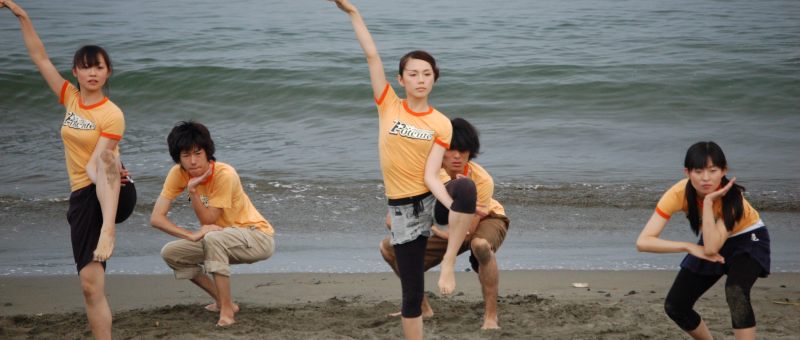
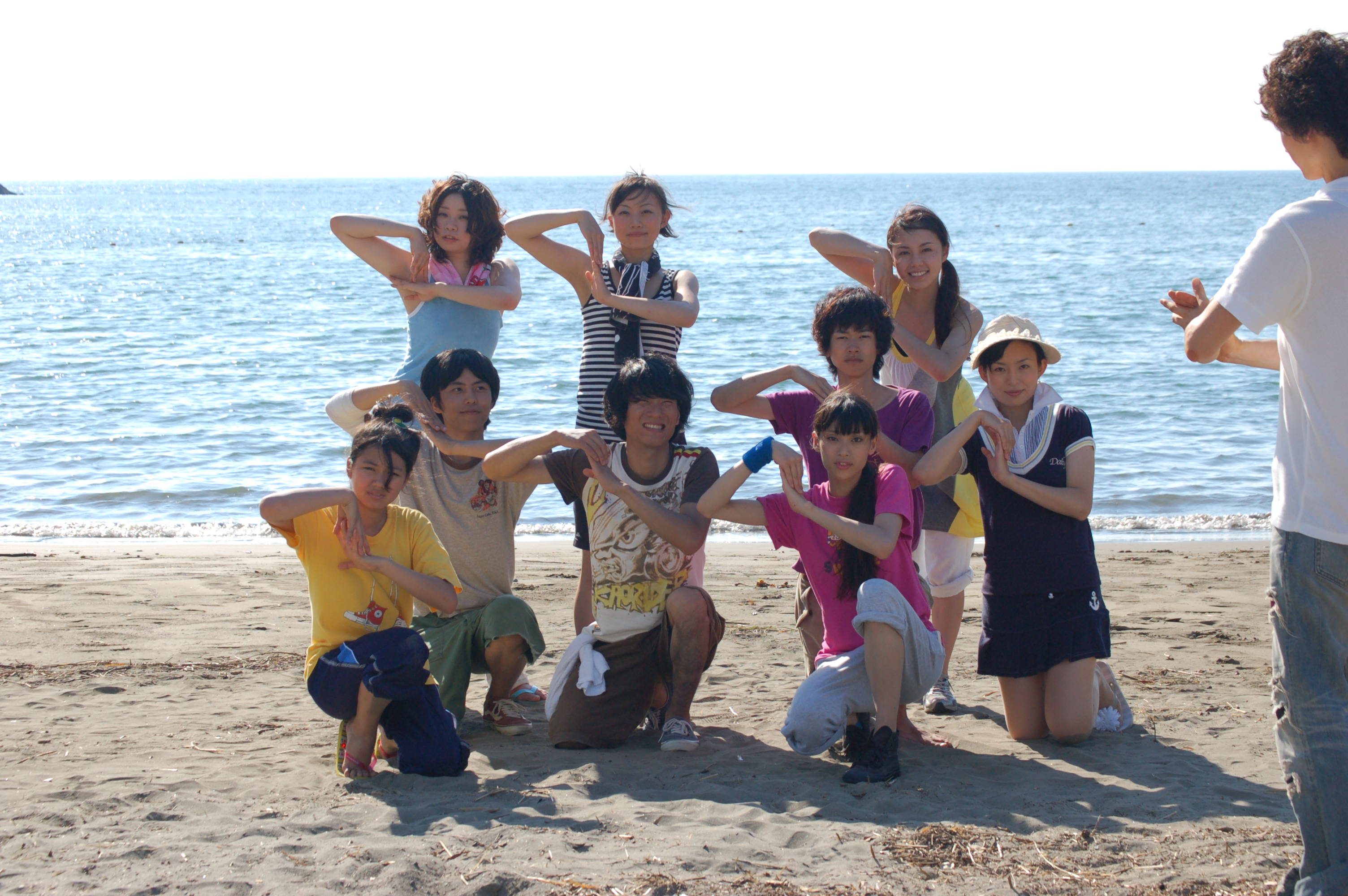
Students on a dance summer camp pick up a few lessons in authenticity and self-confidence while staying in an out of the way coastal hotel in Katsuhito Ishii, Shunichiro Miki, and Yuka Osumi’s goofy comedy Sorasoi (そらそい). Reuniting Ishii and Miki after Funky Forest, the film is less episodic in nature than the directors’ other work and quirky rather than surreal but otherwise offers some of the same lessons as those found in Party 7 as the students begin to discover new things about themselves and others while practicing dance on the beach. 

Led by teacher Tabe (Sota Aoyama) who claims to have been a top dancer with the Royal Ballet before an injury ended his career, the dance team consists of four girls and three boys all of whom Tabe regards as no hopers with little motivation to succeed. A trio of men lounging in donuts floating nearby in the sea gently mock them from a distance, but nevertheless utter a few words of encouragement as they leave the beach. Meanwhile, another young woman, Yuri (Sayuri Ichikawa), arrives to stay at the hotel after approaching the local tourist information office and asking for a reservation at somewhere that isn’t listed in the phonebook. 

Her request may echo that of Party 7’s Miki and her reasoning is similar in that she is clearly hoping to take some time out and doesn’t want to be bothered as evidenced by her decision to ignore missed calls and texts on her phone. The inn owner is forever trying to convince her to travel to a nearby beauty spot named the Cape of Love and its Lovers’ Bell though also dropping in casually that people sometimes take their own lives there which may be irresponsible given Yuri’s ambiguous mental state. In any case, she quickly catches the attention of student Ryu (Ryu Morioka) who begins pursuing her in a friendly if decidedly inappropriate way. 

The three guys tell each other that they’re only doing dance to get girls and that the fact the ones from the dance troupe aren’t interested in them can be excused because they are “different”. Engaging in stereotypically crude male banter one of them later tries to steal the girls’ underwear but as it turns out, at least two of them do actually like dancing and discover new things about themselves in the midst of their romantic pursuits, Ryu’s for Yuri and Atsushi’s (Atsushi Yoshioka) for Kano (Kanoko Kawaguchi ), a mysterious kimono’d woman who arrives to visit. The girls meanwhile are similarly focussed on romance with Ai (Ai Makino) besotted with the grumpy teacher Tabe and Kikka (Kikka) dropping entirely unsubtle hints that she’s in love with the seemingly straight Mako (Masako Satoh) who thinks she’s just playing around. 

They are all, however, keeping some kind of secret mainly because they fear being judged by others whether it relates to their sexuality, having embellished their CV, or having told a slightly bigger lie to help achieve their dancing dreams. What each of them learns is that it doesn’t matter very much if their dancing isn’t very good so long as they enjoy doing it and feel good about spreading that joy to others. Yuri, meanwhile, has some much more grown up dilemmas to consider especially as it transpires she may have been attempting to escape an abusive relationship with a degree of pressure placed on her from various directions to return because her boyfriend is “really a good guy” who made a “mistake” in a momentary fit of temper which is a fairly dated and uncomfortable sentiment to see presented so uncritically even in 2008. Nevertheless, the sense of discomfort is somewhat undercut in a counter courtship from Ryu who offers a sweet and romantic note that leaves the ball entirely in her court. 

In the best tradition of summer break movies, the film’s relaxed atmosphere adds to its laidback charm as do the unfussy indie visuals while the enthusiastic performances from a largely amateur cast of students from Ishii’s acting school (bar the participation of Warped Forest’s Fumi Nikaido and Ryu Morioka) reinforce the central messages of working hard at something you love whether it goes anywhere or not. The mutual solidarity of those around them with similar dreams affords the students the confidence to be more of who they are while clarifying what it is they may actually want out of life even if for some the future still seems uncertain.


Sorasoi is released in the UK on blu-ray on 17th July as part of Third Window Films’ Katsuhito Ishii Collection.

Original trailer (English subtitles)

Lost in the Stars (消失的她, Cui Rui & Liu Xiang, 2023)

A desperate husband with five days left on his visa finds himself at the mercy of a foreign police department when his wife suddenly disappears into thin air during their honeymoon in a fictional South East Asian nation in Liu Xiang & Cui Rui’s hugely entertaining mystery thriller Lost in the Stars (消失的她, xiāoshī de tā). Produced and co-scripted and produced by Detective Chinatown’s Chen Sicheng, the film draws inspiration from the 1990 Russian drama Trap for a Lonely Man which was itself adapted from a 1960 French play, Piège pour un homme seul, which Alfred Hitchcock had once been interested in adapting. 

It’s not difficult to see why seeing as the film revolves around a classic “wrong man” in frantic husband He Fei (Zhu Yilong) who like so many Hitchcock heroes is left feeling like the only sane man in an insane world when he wakes up next to a woman who claims to be his missing wife only he’s never seen her before and is adamant that something untoward must be going on though all the evidence points to the contrary and no one really believes him. The film never really entertains the possibility that the “fake” wife (Janice Man) is indeed telling the truth and Fei is undergoing some kind of psychotic break but does leave a question mark over his mental state and credibility on revealing that he is suffering from a neurological condition caused by his work as a diving instructor for which he is on serious medication. 

In any case, the film opens with him bursting into a local police station exasperated with their lack of interest in his wife’s disappearance. In something of a trope in recent Mainland cinema, the action takes place in a fictional South East Asian nation which has shades of Thailand and Indonesia where the implication is the authorities don’t really care very much about a missing tourist. A Chinese policeman, Zheng (Du Jiang), eventually admits as much confessing that the police department is massively understaffed and only investigates “criminal” cases which they don’t believe his wife’s to be, rather that she most likely got fed up with Fei and has gone off of her own accord. Their lack of concern echoes a persistent theme in mainstream Mainland movies that the safest place for Chinese citizens is at home, an idea only reinforced by the film’s melancholy conclusion and the implications of Chen Mai (Ni Ni), a top international lawyer Fei meets by chance, who suggests that his wife may have been taken by an international trafficking ring. 

Nevertheless, in its various twists and turns the film also has a few things to say about class disparities in contemporary China in which as someone later says money may even buy the Devil’s soul. With his visa running out, Fei insists that he won’t leave without finding out what’s happened to his “real” wife and what’s going on with the “imposter” who soon drops any pretence and openly admits that she’s out to get Fei for reasons he finds unclear though assumes to be financial. Then again, we start to realise that perhaps he hasn’t been a hundred percent honest even with the information he’s giving Mai who is the only person interested in helping him find his wife who may or may not be at the mercy of vicious international gang backed by important people against whom an ordinary tourist like Fei or even an international figure like Mai has little power. 

While the film noticeably carries a strong anti-gambling message perfectly in tune with the censors’ sensibilities, it also has a surprising queer subtext in the quite obviously coded persona of super lawyer Mai who makes a dramatic motorbike entrance and then more or less steals the film as she tries to ascertain the whereabouts of Fei’s missing wife. Nothing is quite as it first seems, subterfuge piles on on subterfuge along with altered realities and personal myth making though the film’s title takes on a poignant note in the closing moments in which another starry image is presented in an attempt to evoke an emotional reaction from an otherwise heartless villain. Boasting excellent production values and elegant production design, the film is careful never to lose itself in its various twists and reversals before quite literally dropping the curtain on its extremely satisfying conclusion in which we discover just how far some are willing to go in pursuit of the stars.


Lost in the Stars is in UK cinemas now courtesy of CineAsia.

Trailer (Simplified Chinese / English subtitles)