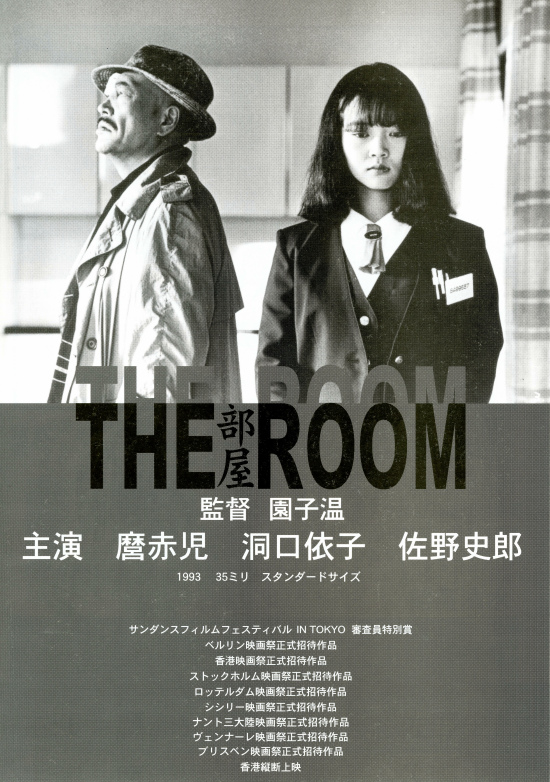
Love Letter (恋文, Kinuyo Tanaka, 1953)

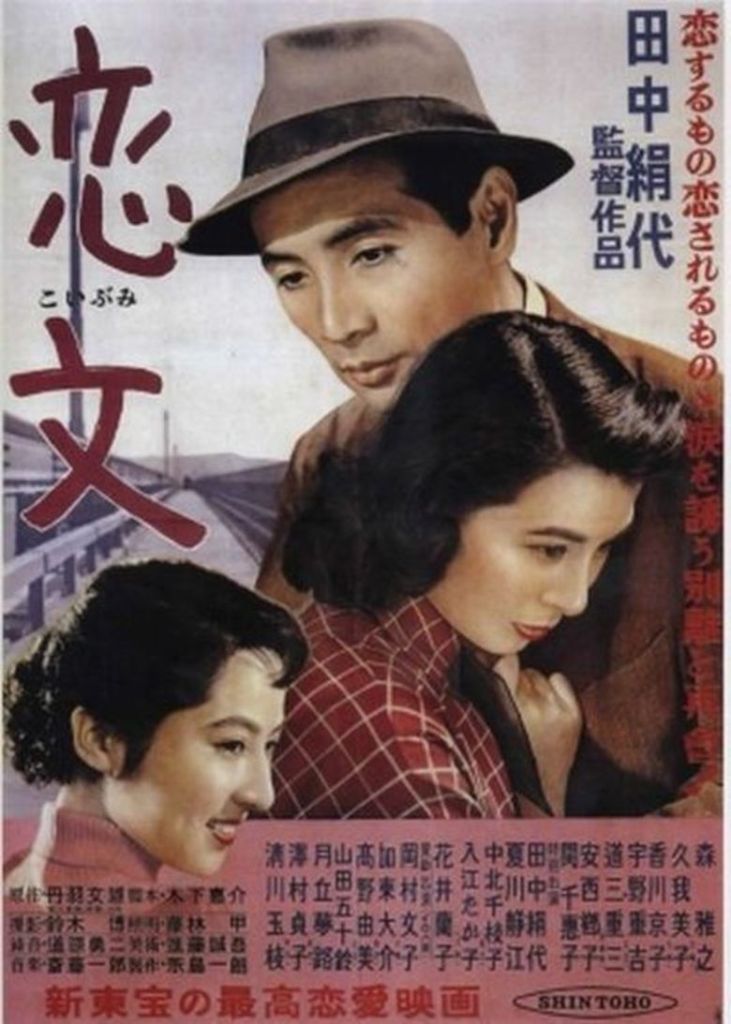
Love-Letter-1953-film-images-d67cf443-345f-409e-9cdb-26f20177f50Kinuyo Tanaka was one of the most successful actresses of the pre-war years well known for her work with celebrated director Kenji Mizoguchi including several of his most critically acclaimed works such as Sansho the Bailiff, Ugetsu, and The Life of Oharu. However, post-war Japan was a very different place and Tanaka had a different kind of ambition. With 1953’s Love Letter (恋文, Koibumi) she became Japan’s second ever female feature film director, though her working and personal relationship with Mizoguchi ended when he attempted to block her access to the Director’s Guild of Japan. No one quite knows why he did this and he tried to go back on it later but the damage was done, Tanaka never forgave him for this very public betrayal. Whatever Mizoguchi may have been thinking, he was very wrong indeed – Tanaka’s first venture behind the camera is an extraordinarily interesting one which is not only a technically solid production but actively seeks a new kind of Japanese cinema.
Based on the novel by Fumio Niwa and scripted by another of Tanaka’s frequent collaborators Keisuke Kinoshita, Love Letter takes place around 1950 just as the post-war chaos was beginning to settle down allowing individual trauma to come to the surface for the very first time. Our “hero” is Reikichi Mayumi (Masayuki Mori) – a melancholy naval veteran living with his brother Hiroshi (Juzo Dosan) and eking out a living as a translator of French literature. He spends his days hanging round train stations looking for a familiar face and constantly rereading a letter from his childhood sweetheart which informs him that, against her own wishes, she is shortly to be married to someone else. Michiko is apparently now a war widow, but despite his best efforts Reikichi has not been able to find her since being repatriated.

One day he runs into an old naval friend, Yamaji (Jukichi Uno), who has an interesting job. He drafts love letters in English and French from Japanese girls to the faithless foreigners who have abandoned them and returned home. Yamaji has developed an affection for some of these desperate women and tries to help them as much as he can with fatherly advice as he writes heartrending messages designed to get that guilt cash rolling back to Japan. Reikichi is not as well disposed the girls who he feels have sold themselves to the enemy but soon begins working there too. One fateful day, he hears a familiar voice.

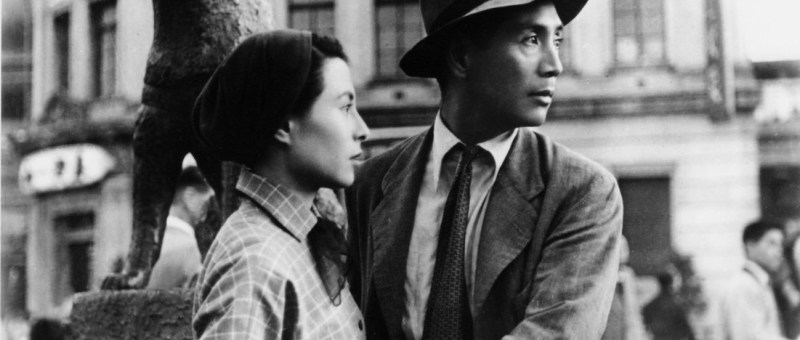
Whereas you might expect this to be the end of a conventional movie, it’s only really the beginning. After a desperate chase to the train station Reikichi catches up with Michiko (Yoshiko Kuga) in a beautifully filmed, emotionally powerful scene which frames them both in a closing train door, momentarily eclipsed as it moves away. However, the elation soon fades as Reikichi’s rather backward thinking kicks in and he dwells on the reason Michiko was in the shop in the first place. After having longed for her, searching endlessly for five years, he can’t bring himself to accept this Michiko who he sees as “polluted” by her relations with an American soldier. He says some extremely cruel, and in fact unforgivable, things which Michiko accepts with a deeply internalised sense of guilt and shame. It looks as if the long awaited romantic reunion is not to take place after all.

Tanaka’s point of view is about as progressive as it was possible to be, but there is an ongoing conflict in the film in regards to its portrayal of the post-war “pan-pan” phenomenon. Great pains are taken to separate Michiko from the ranks of other desperate women who found themselves reliant on the occupying forces for their survival. Michiko became the mistress of an American man, bearing and losing his child, and though she wonders herself if it makes a difference that it was one American man and not several, the film definitely thinks it does. Later on she meets a group of women who are more obviously prostitutes and former friends whom she tries to avoid but the attitude to these women is far less sympathetic. At once we’re told that we shouldn’t judge Michiko for having done what she needed to do to survive, but we are being invited to judge these other women, all the while being reminded that Michiko is not like them.

Reikichi, however, is firmly painted as being in the wrong especially when compared to his cheerfully pragmatic brother and down to earth friend. Everybody tells him he’s being unreasonable and attempting to punish himself by also punishing Michiko for a series of things that are no one’s fault, but Reikichi persists in his oddly romanticised, absolutist way of thinking. It is he who will need to change, become less rigid and more empathetic but there is still the idea that Michiko’s past is something to be “forgiven”, and therefore a pre-determined view that she has acted in a morally incorrect way and is paying for it now.

Interestingly, Tanaka undermines the film’s inherently melodramatic quality by choosing to end on a note of ambiguous anxiety. A decision seems to have been reached, yet it is a tentative one and there will be difficulties along the way. This is new and different world, filled with broken and damaged people. A better one is possible but won’t happen with a heartfelt apology over a hospital bed, it will require a long process of mutual understanding and empathy though the wounds themselves may never be entirely healed. Tanaka’s debut is a daring wonder filmed with true visual flair and an unusual degree of assuredness. A sympathetic look at the bubbling trauma of the post-war environment, Love Letter approaches its subjects with extreme sensitivity and the hope that love and forgiveness are possible, but they will require hard work and a willingness to embrace them.


The first Japanese feature film to be directed by a woman was completed by Tazuko Sakane in 1936. Mizoguchi actually gave her a start in the industry and she was able to keep working during in the war by making documentaries as part of the Manchurian Film Association. Once the war ended she was barred from further directorial opportunites because she didn’t have a university degree and returned to continuity and editing roles at Shochiku until she retired in 1962, never making another feature film. Kinuyo Tanaka was a little luckier in this regard and was able to make a few more features becoming the first woman able to have a career in film directing through she also continued acting in other people’s films and on television until the 1970s.

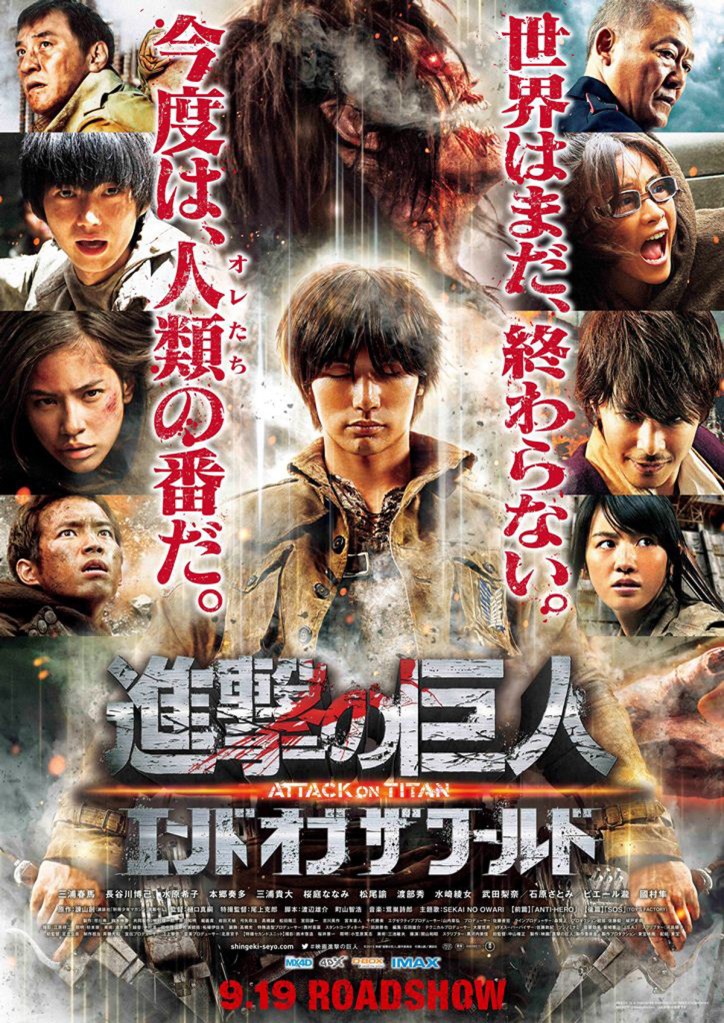
Attack on Titan: The Movie – Part 2: End of the World (進撃の巨人 ATTACK ON TITAN エンド オブ ザ ワールド, Shinji Higuchi, 2015)

166831_02Review of the second Attack on Titan live action movie first published by UK Anime Network.


Attack on Titan: The Movie – Part 1 ended on a humdinger of a cliff hanger, so this concluding half of the two part movie is one  which carries a fair amount of expectation regardless of reactions to the first instalment. Picking up more or less straight after the end of Part 1, the situation continues to be desperate as the mission to acquire explosives to blow the wall closed is an abject failure. Thanks to Eren’s (Haruma Miura) efforts, the Titan onslaught has eased off but he now finds himself in the direct firing line of sinister dictator Kubal (Jun Kunimura). Coming up with an alternative plan to recover the dud bomb we saw in the beginning of the first film, our intrepid band of comrades decide to return to their former home paving the way for the massive Titan on Titan frenzy finale.

Whereas Attack on Titan: The Movie – Part 1 attempted to reframe itself as a monster movie, The End of the World places itself firmly within the comic book genre. Rather than a frightened populace desperately trying to protect itself from the sudden arrival of man eating giants, The End of the World introduces a series of human lead super Titans who will eventually be duking it out during the film’s finale.

Largely, The End of the World eschews the thematic concerns of the first film in favour of large scale action scenes but it does come up with a few new ideas of its own. Towards the beginning, it seems as if The End of the World is about to undercut all the unpleasant fascistic connotations of the previous film by bringing Eren into contact with the Survey Corps who are now the rebel resistance but this turns out to be a hollow offering as the squad is then painted as a renegade militia commanded by a madman.

After his original imprisonment, Eren wakes up in a minimalist, low ceilinged white room which contains a ‘50s style jukebox with a cover version of the old time hit The End of the World already playing. Despite the ban on machines “the government” has apparently stockpiled some of these “artifacts” for their own use which also includes a rather prominent remote control for an Apple TV. At this point we’re shown some archive footage which explains the birth of the Titans and the creation of the “modern” society, the implication being that the Titans are part of an elaborate governmental propaganda scheme designed to keep the unruly populace firmly in line. The Titans reappeared at a political crisis point as the government felt the loyalty of its people waning and also feared that the plan to explore outside of the walls would weaken their authority. Having already instituted authoritarian policies such as limiting access to childbirth, the government used the Titan threat to galvanise support through fear.

This sequence begins to offer an entirely different reading of the film – one which is more fully hinted at in the final post-credit sequence, but is then largely forgotten. Aside from a nasty slice of possible domestic violence and some PTSD End of the World stays away from further character driven drama, leaving Shikishima to ham things up with an increasingly camp performance whilst behaving in a very ambiguous way towards Eren which proves awkward when considering further information provided regarding Eren’s childhood. As a whole, the Attack on Titan movies have a major problem with internal consistency, piling plot holes upon plot holes yet still failing to make any of its central conceits remotely compelling.

However, The End of the World does improve on some aspects of the previous film – notably in its tighter running time and action set piece finale (lengthy exposition sequence and extremely long recap aside). Production values appear a little better, there is far less of the bad CGI which marred the first film, and there’s even some more interesting production design to be found too. The Hollywood style heroic ending with the sun shining and the score soaring might appear less clichéd when considered alongside the alternate reading offered by the post-credits sequence, but then again this may be another red herring just like the resistance group which originally appeared to offer hope but was then summarily discredited.

The two live action Attack on Titan movies come at the original franchise from vastly different angles and are often at odds with each other. Some of these inconsistencies may be explained by the post-credits sequence which is, perhaps, a hook for a putative third film but only adds an additional layer of confusion to what is already an overloaded premise. All of that aside, The End of the World does offer slightly more straightforward, comic book style trial by combat action heading into its finale even if it does lay on the exposition a little thickly. Whilst offering some mild improvements over the first film, End of the World fails to rescue the project as a whole but is likely to provide satisfaction to those left hanging after the curtain fell on part one.


English subtitled trailer:

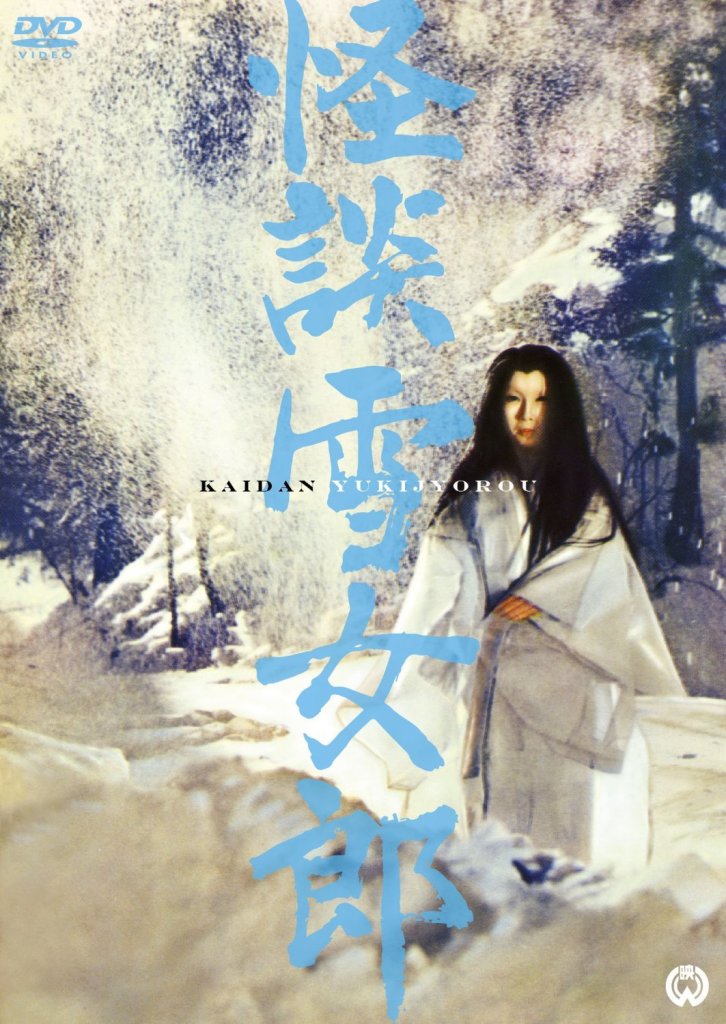
The Snow Woman (怪談雪女郎, Tokuzo Tanaka, 1968)

snow womanThe Snow Woman is one of the most popular figures of Japanese folklore. Though the legend begins as a terrifying tale of an evil spirit casting dominion over the snow lands and freezing to death any men she happens to find intruding on her territory, the tale suddenly changes track and far from celebrating human victory over supernatural malevolence, ultimately forces us to reconsider everything we know and see the Snow Woman as the final victim in her own story. Previously brought the screen by Masaki Kobayashi as part of his Kwaidan omnibus movie, Tokuzo Tanaka’s expanded look at the classic tale (怪談雪女郎, Kaidan Yukijoro) is one of extreme beauty contrasting human cruelty with supernatural inevitability and the endless quest for compassion.

As in the original folktale, the film begins with two sculptors venturing into snow filled forests looking for the perfect tree to carve a statue of the Buddhist goddess of mercy, Kanon, for the local temple. Having finally located the longed for tree, the pair spend the night in a cabin only to receive a visit from the Snow Woman herself who freezes the older man but is taken by the younger one’s beauty and spares his life, instructing him never to speak of these events.

Yosaku is taken back to the village followed not long after by the tree trunk. In tribute to his master, the head of the temple asks him to complete the statue himself despite his relative lack of experience. Later, a beautiful yet mysterious woman takes shelter from the intense rain under Yosaku’s roof and is taken in by his adoptive mother and wife of his former master. Eventually, Yosaku and “Yuki” fall in love and marry but the two quickly come to the notice of the higher samurai orders who seem determined to ruin their happy union.

Inspired by Lafcadio Hearn’s version of the story, this retelling adds a layer of social commentary with the constant interference of the higher echelons who exist solely to plague those below them with their petty games of subjugation. We first meet the local bailiff Jito when he rides into town trailing a massive entourage and immediately stars beating some of the local children who were playing with piles of wood. When Yosaku’s adoptive mother pleads with them to stop, he beats her too for having the temerity to speak to a samurai. Unfortunately, he has it in for Yosaku because he has another master sculptor he wants to use for the statue, and now he’s also taken a liking to the beautiful Yuki and will stop at nothing to have his wicked way with her. He is in for quite a nasty shock but even so, the higher orders remain the higher orders and those below them are left with no recourse but simply to follow suit.

The real villain of the film is this enforced class system which allows or even encourages those at its summit to run rampant over those below. The samurai will have their way and the people have nothing to oppose them with save their sense of personal integrity. The Snow Woman then becomes the film’s unlikely heroine. By the time we reach the film’s emotionally devastating finale, Yuki claims that she learned human compassion in her life with Yosaku and their child and ultimately sacrifices her own happiness to preserve that of her husband and son. Yosaku finds himself in competition with the other sculptor who manages to complete a beautiful statue but the temple priest finds it wanting, its expression is soulless and devoid of the sense of compassion he was looking for in the face of a goddess of mercy. Yosaku finds the very look he needs in his wife’s face, exhausted from lending her supernatural strength to save the life of a small child and her husband’s freedom, and in her eyes as she prepares to bid goodbye to him.

The Snow Woman is only obeying her own nature and cannot be blamed for merely being what she is, but the human cruelty and selfishness inherent in the feudal world is a matter of choice. Jito is an evil man, doubtless his world has also made him cruel and selfish but the choice always remains for him not to be – a choice which he is incapable of making. Men like Yosaku toil away endlessly and honestly but their rewards are fragile, personal things rarely recognised by the world at large. Only the Snow Woman, a cold creature, possesses the necessary warmth to breath life into a monument to mercy built solely by a pair of sincere hands.

Tanaka creates a stunning visual world using mostly simple effects and optical trickery to bring the Snow Woman’s icy domain into the ordinary feudal environment. The Snow Woman glides eerily through impressively layered snow scenes, dissolving from one world only to reappear in another. Beautifully filmed and filled with warmth and compassion despite its frozen aesthetic, The Snow Woman is deeply moving plea for empathy in a cruel world which successfully makes a tragic heroine out of its supernatural protagonist.


Original trailer (no subtitles)


Sharaku (写楽, Masahiro Shinoda, 1995)

SharakuEvery once in a while an artist emerges whose work is so far ahead of its time that the audience of the day is unwilling to accept but generations to come will finally recognise for the achievement it represents. So it is for Sharaku – a young man whose abilities and ambitions are ruthlessly manipulated by those around him for their own gain. Brought to the screen by veteran new wave director Masahiro Shinoda, Sharaku (写楽) is an attempt to throw some light on the life of this mysterious historical figure who comes to symbolise, in many ways, the turbulence of his era.
The Edo of 1791 is a world of extreme austerity. All art is suspect and all “pornography” outlawed. Any sign of extravagance is frowned on, including the “frivolous” arts leading to a decline in the world of classic entertainment as kabuki artists struggle to survive. Tombo (Hiroyuki Sanada) was one such kabuki performer but after an onstage accident leaves him with a damaged foot he joins a rag tag group of street performers. Whilst there he begins drawing bringing him to the attention of an art seller, Tsutaya (Frankie Sakai), who has an idea to create prints of famous actors as a way of promoting local theatre shows.

Rechristened with the artist’s name of Sharaku, Tombo’s artwork creates a sensation with its never seen before style which places a new emphasis on realism rather than flattery. Popularity brings its own problems as Sharaku finds himself a virtual prisoner of Tsutaya whose demands are ever expanding, as well as facing the intense opposition of Tsutaya’s former cash cow – renowned artist Utamaro, who is prepared to go to great lengths to ensure his traditional painting style is the one that wins out.

This is a time of extreme conservatism and Sharaku’s work is a risky proposition as it rejects accepted stylisation in favour of undoctored reality. Dynamically posed, his portraits of kabuki actors display no pandering but reflect all of the subject’s less flattering qualities. Striking and unusual, Sharaku’s insistence on capturing internal truth is entirely at odds with the need for compliance with the “truths” handed down by the government. The public aren’t ready for such radically honest art and even champions of a more naturalistic style such as the universally lauded Utamaro also reject it (though largely out of fear and self interest).

Sharaku is, of course, an artist’s name and not a man’s and therefore is easily manipulated. Held a virtual prisoner by Tsutaya, Tombo begins to resent his new life of exploitation by his master who wants him to work in a more commercial fashion yet took him on precisely because of the novel, aggressive nature of his untrained drawing. Sharaku’s commitment to artistry over conformity is at odds with the era which is entirely founded on everyone obeying the accepted order of things. The times are changing, but not fast enough for Sharaku.

Shinoda paints an exciting vision of Edo era Tokyo filled with colour and energy despite the supposed austerity of the times. He brings kabuki out into the streets with beautifully balletic street brawls and strange acrobatic feats that appear extremely incongruous in the off stage world. However, Sharaku attempts to juggle a number of themes and subplots which never manage to coalesce into something whole. The side story of a depressed geisha and her star crossed love for Tombo even whilst she finds herself the favourite misteress of Utamaro is the most interesting but is never satisfactorily resolved.

After beginning with some oddly old fashioned on screen graphics, Shinoda opts for a stately directing style though makes frequent use of freeze frames and dissolves. The film takes on an appropriately etherial quality with sudden interruptions of theatre and the rhythms of classical drama yet even the free floating dream-like atmosphere can’t quite makeup for its central lack of coherence. Tombo himself, as played by Hiroyuki Sanada, is too much of a cypher to lead the picture yet the attempt to branch out into an ensemble drama doesn’t take hold either. A late, flawed effort from an old master, Sharaku has a lot to say about the nature of art, about artists, about reception and legacy, and also about its era but much of the message is lost in the faded paper on which it is painted.


Unsubbed trailer:

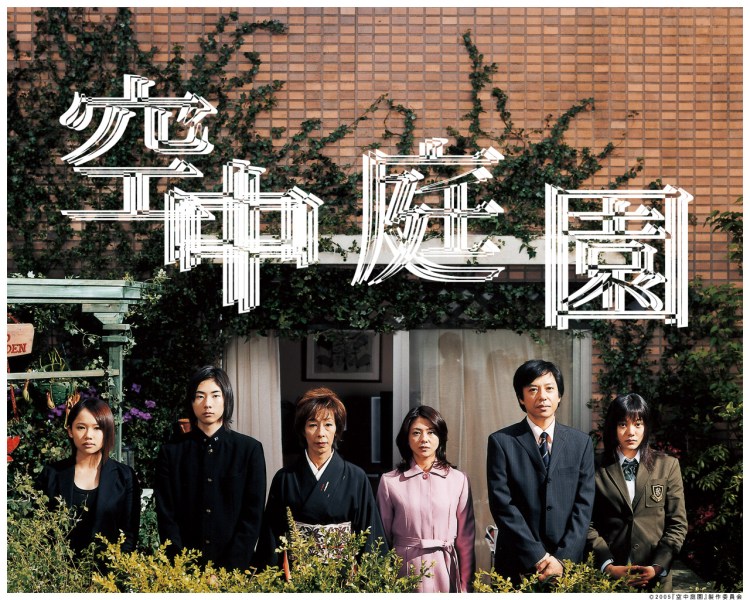
Hanging Garden (空中庭園, Toshiaki Toyoda, 2005)

hanging gardenIf you wake up one morning and decide you don’t like the world you’re living in, can you simply remake it by imagining it differently? The world of Hanging Garden (空中庭園, Kuchu Teien), based on the novel by Mitsuyo Kakuta, is a carefully constructed simulacrum – a place that is founded on total honesty yet is sustained by the willingness of its citizens to support and propagate the lies at its foundation. This is The Family Game 2.0 or, once more with feeling.
The Kobayashis have one rule – they keep no secrets and no subject is taboo. We can see they take this approach to life seriously when daughter Mana asks her mother about the circumstances of her conception and receives an honest and frank reply. However, this “pretence” of honesty is exactly that – a superficial manifestation of an idea intended to maintain control rather than foster liberty. Each of the family keeps their secrets close be it extra marital affairs, past trauma, or just dissatisfaction with the state of current society. The very idea which binds them together also keeps them forever apart, divided by the charade of unity.

Toyoda crafts his metaphors well. The hanging garden of the title belongs to the matriarch, Eriko, who has created an elegant garden space on the cramped balcony of their small flat on a housing estate. Her swinging hanging baskets give the film its odd sense of off kilter sway as the camera swirls and swoops unsteadily like a rudderless ship adrift at sea. Eriko is carefully rebuilding her world in manner more to her liking, pruning her rosebushes with intense precision both metaphorically and literally.

Eriko’s intense control freakery stems back to her childhood and strained relationship with her currently hospitalised mother, Sacchan. Sacchan is one feisty grandma who may not share Eriko’s tenet of total honesty but nevertheless is inclined to tell it like it is. The central tragedy here is of maternal misconnection, a mother and daughter who refuse to be honest with each other. An encounter with Eriko’s older brother who seems to have an equally difficult relationship with Sacchan makes this plain. However, facing a health crisis and aware of reaching the final stages of her life Sacchan is also in a reflective mood and reveals that she’s recently begun dreaming her memories – revising and improving them as she goes to the point that she’s no longer sure how much of her recollection is how she would have liked things to have been rather than how they really were.

Son Ko is also interested in imagined worlds only more of the technological kind where he’s created a virtual version of his real life on his computer. Something of a dreamer, he wonders if the designers of the tower block deliberately made all the windows face south so that they’d get more sunlight and people would feel happier but he’s quickly shot down with the prosaic explanation that it’s all to do with drying laundry. He’s the only one who tries to explain to his mother that her intense need for “honesty” is, ironically, just another way of avoiding reality but then everyone already knew that – it’s the final truth that underpins the value system which has defined each of their lives.

However, where the family at the centre of The Family Game is shown to be hollow, the Kobayashis’ willingness to go along with this crazy self determined cosmology is driven by genuine feeling. Father Takeshi may be having affairs all over the place and even lying to his boss to facilitate them, but he wouldn’t have stayed at all if it truly meant nothing to him. Eriko plays manipulative goddess, micromanaging the fate of this tiny nation state since its inception with a keen and calculating eye but it’s all in the service of creating for herself something which she’d always felt she’d been denied – unconditional familial love, something which she also seeks to pass on to her children as the ultimate revenge on her mother whom she believes to have been cold and unfeeling.

As useful a tool as honesty may be, Sacchan may have a point towards the end when she says you take your most important secrets with you to the grave. Some things lose their power once you speak them aloud, too much honesty only focuses attention on the self and is apt to make those secretive who would seek to be open. Hanging Garden is a rich and nuanced exploration of human relationships, the shifting nature of memory, and the importance of personal privacy coupled with the veneer of authenticity which makes life in a civil society possible. Take away a man’s life lie you take away his happiness – hanging gardens never take root, but they bloom all the same.


Humanity and Paper Balloons (人情紙風船, Sadao Yamanaka, 1937)

Humanity and Paper Balloons

That Humanity and Paper Balloons (人情紙風船, Ninjo Kami Fusen) would turn out to be the final film of its director is just one of its cruel ironies. Sadao Yamanaka was one of the most promising young directors of the 1930s, but his career was ultimately cut short by historical circumstance as, despite his leftist views, he found himself drafted into the army and dispatched to the Manchurian front where he later died in a field hospital at only 28 years old. The film both begins and ends with suicide – an acknowledgement of the crushing hopelessness of the feudal society in which humanity itself is as fragile, transient, and often overlooked as a paper balloon. Necessarily bleak, but not absent of humour (at least of the gallows kind) Humanity and Paper Balloons neatly reframes the Edo era not as one of a glorious lost past where honourable men presided over a carefully controlled social order but one where the elites were absent, crime was rampant, and and promises were always “a series of possibilities”.

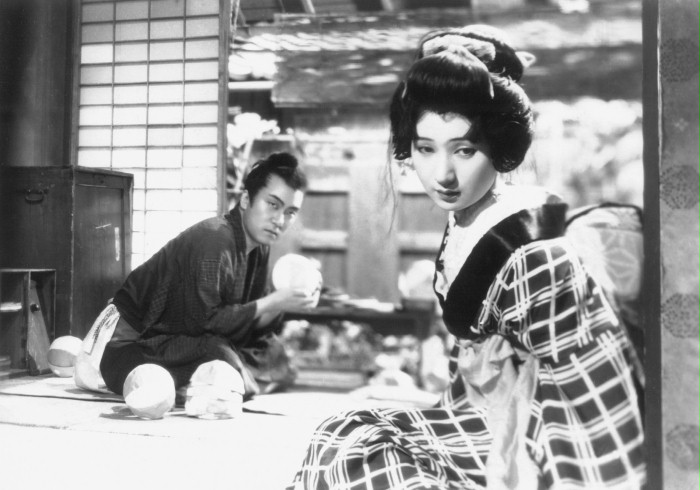
The scene opens with panic. A down on his luck samurai is dead by his own hand. So destitute was he, that he’s hanged himself – armed only with a bamboo sword he couldn’t even die in a manner befitting his social class. People are beginning to wonder if this is an “unlucky” street – this has been the third such suicide of recent times. Meanwhile, barber and upstart Shinzo has been conducting secret gambling sessions in local kingpin Yatagoro’s territory so his guys are out for blood. Neighbouring ronin Unno, whose wife manufactures the titular paper balloons, is convinced that a low level samurai who owes his status to the support of Unno’s now deceased father will help him as soon as he reads the letter his father wrote on his deathbed. Mori, however, is in no way interested and is currently in negotiations to “adopt” the daughter of a local merchant so she can be married to a noble samurai who otherwise would lose face in marrying down. Said daughter, Omoka, is not happy about this arrangement as she is in love with her father’s clerk, Chushichi. When Shinzo decides to kidnap Omoka, getting Unno involved by hiding her at his house, a series of unfortunate consequences ensue.

The world of the jidaigeki is often an idealised one. Centring on the higher echelons, they paint a picture of noble warriors bravely standing up for honour and justice whilst displaying fearsome loyalty to their feudal lords. This is no such idyll – this is a slum where the social classes mingle freely but with invisible barriers still dividing one from the other. The samurai were already in decline and so it was not unusual for the men who grew up in rarified halls to suddenly find themselves cast down into the lower orders without the means to support themselves. The former samurai who hangs himself at the beginning has had enough, evidently, having sold even his sword he finds himself unable to go on.

Unno is in a similarly desperate situation, reliant on the pittance his wife earns making the paper balloons. He still thinks Mori will obey ancient social codes and repay his father’s kindness by supporting him, but Mori has no use for him now and no inclination to follow the ideals of honour which underpin the samurai word. Unno is experiencing a rude awakening to Edo era hypocrisy. In making a rash decision to go along with Shinzo’s scheme, he damns himself in every conceivable way – by dishonouring himself as a samurai, by indulging in illegality, and in merely being a party to someone’s else’s underhanded scheme. “Samurai are wicked these days” say some of the neighbourhood women, not noticing Unno’s wife is just returning from a few days away, unaware of what her husband has been up to in her absence.

The verdict on the samurai class is damning. Honourable men without honour, they use and misuse each other but are entirely unwilling to help out even one of their own fallen on hard times. Yet men like Unno are also victims of their class, suddenly ejected from a life of comfort but with no skills to survive in world of “normal” people. Single men can become wandering ronin, drinking, fighting and whoring their way through life but married, mild mannered men like Unno are left with nothing to live on but resentment.

Yamanaka’s final feature is once again far ahead of its time more resembling the films of twenty years later than those of the mid 1930s. Aiming for a highly detailed approach closer to naturalism than the general trend of the time, Yamanka paints a vivd picture of a claustrophobic world, alive with the struggle of those desperately clawing over each other in order to survive while the landlords enjoy a life of ease in vast mansions surrounded by peace, quiet and open air. Pointedly a comment on the present more than the past, Yamanaka is getting away with much more than you would think possible in the highly pressured world of 1937 following the previous year’s failure of a complex military coup seeking to return power to the emperor in the hopes of a return to feudal style paternalistic socialism. Humanity here is a paper balloon – cheap, fragile, and often unnoticed. That it exists at all is something to be thankful for, but like a paper balloon, humanity requires careful construction and committed maintenance. The plea to the people of 1937 was clear but it is often hard to recognise the importance of so commonplace an object let alone ensure its survival.


Unsubbed clip:

Kochiyama Soshun (河内山宗俊, Sadao Yamanaka, 1936)

kochiyama soshunThe second of the only three extant films directed by Sadao Yamanaka in his intense yet brief career, Kochiyama Soshun (河内山宗俊, oddly retitled “Preist of Darkness” in its English language release) is not as obviously comic or as desperately bleak as the other two but falls somewhere in between with its meandering tale of a stolen (ceremonial) knife which precedes to carve a deep wound into the lives of everyone connected with it. Once again taking place within the realm of the jidaigeki, Kochiyama Soshun focuses more tightly on the lives of the dispossessed, downtrodden, and criminal who invoke their own downfall by attempting to repurpose and misuse the samurai’s symbol of his power, only to find it hollow and void of protection.
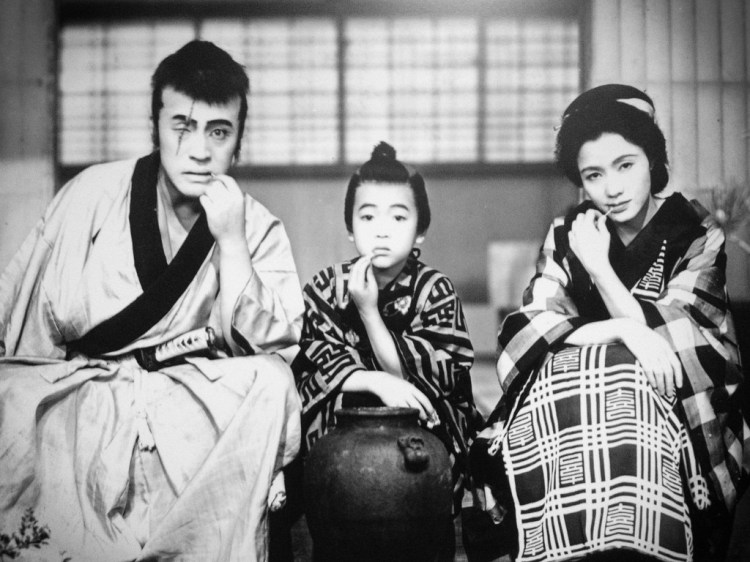
The primary players are the virtuous and innocent Onami (Setsuko Hara) who runs a small sweet sake stall and her errant young brother, Hiro, who spends all of his time in a local drinking establishment run by the wife of the titular Kochiyama Soshun. Despite his priestly get up, Kochiyama is a conman, swinder, gambler and petty gangster but for some reason he takes a liking to Hiro not knowing that he’s Onami’s brother because he’s been using the fake name of “Nao” to prevent his sister tracking him down and bringing him home again. There’s a bigger criminal outfit in town run by a guy named Morita but mostly everyone knows Kaneko who comes and collects his protection money. Kaneko also has something of a crush on Onami and generally lets her off the payments.

Everything starts to go very wrong when Hiro pinches the dagger of a careless samurai. It turns out that the sword and dagger set were a gift from his lord who received them from the shogun so this loss is particularly embarrassing and if he were asked to produce the dagger but couldn’t, he’d be duty bound to commit harakiri. Hiro gets himself into even more trouble when he spots a childhood friend working in the red light district and tries to run off with her. If things weren’t difficult enough, Onami is now firmly pulled into his web of trouble as Morita’s gang want the compensation money for the loss of their girl, a sum so vast there is no way Onami could ever be able to repay it leaving her with only one, unthinkable, option.

Everything here is pretence – the “priest” who cheats and gambles, the young man who uses a fake name, the samurai with no real power, and the dagger itself with its uncertain authenticity. Onami is the only true and honest thing in the entire film, unsullied by the meanness of the world which surrounds her, yet even she finds herself sucked in by the reckless actions of her brother. She too becomes a commodity to be bought, traded, and sold, placed as a bargaining chip between the competing forces of Kochiyama and Kaneko. Kaneko, though he works for the “bad guys” is not a bad man (more mirroring) and has a noble heart unwilling to carry out the service of his master when it conflicts with his own desire for justice.

Onami’s essential goodness has infected both of them as they now see that they have lived morally disappointing lives but have also been given a chance for a final bid at redemption, albeit in the service of an idiotic, self centred teenager whose selfish and reckless actions have destabilised the lives of everyone around him. The film ends on a note of uncertainty as one character is permitted to escape with the means to save another in hand, paid for by the sacrifice of others, but whether they will be in time or opt to selfishly run away is very much open for debate.

In a more serious mood here, Yamanaka is less playful than in the more obviously comic Tange Sazen: The Million Ryo Pot but nevertheless continues to push his art to the visible limit. Like Tange Sazen, Kochiyama Soshun is an ensemble led film but its plotting is far more intricate and involved. It’s possible that the film is incomplete, but events often seem hard to follow and we only learn of one extremely important incident during a throwaway conversation between two characters who clearly don’t know its import. Even so it’s no great hardship to piece things together as we go, and Yamanaka makes sure to draw his characters well enough that it doesn’t really matter. Even if the weaker of Yamanaka’s surviving films, Kochiyama Soshun is another characteristically innovative piece filled with wry humour but a fair degree of warmth too.


Unsubtitled clip:

Tange Sazen: The Million Ryo Pot (丹下左膳余話 百萬両の壺, Sadao Yamanaka, 1935)

million ryoSadao Yamanaka had a meteoric rise in the film industry completing 26 films between 1932 and 1938 after joining the Makino company at only 20 years old. Alongside such masters to be as Ozu, Naruse, and Mizoguchi, Yamanaka became one of the shining lights of the early Japanese cinematic world. Unfortunately, this light went out when Yamanaka was drafted into the army and sent on the Manchurian campaign where he unfortunately died in a field hospital at only 28 years old. Despite the vast respect of his peers, only three of Yamanaka’s 26 films have survived. Tange Sazen: The Million Ryo Pot (丹下左膳余話 百萬両の壺, Tange Sazen Yowa: Hyakuman Ryo no Tsubo) is the earliest of these and though a light hearted effort displays his trademark down to earth humanity.

The plot turns on the titular one million ryo pot when the local feudal lord inconveniently discovers that an ugly vase with a weird monkey pattern is actually a hidden treasure map just after he’s palmed it off on his younger brother as a kind of family heirloom. The brother, Genzaburo, is both angry and insulted that his vastly wealthy brother has given him such a worthless gift rather than the money which he feels he is owed. An underling is dispatched to try and get the pot back but Genzaburo is so annoyed about it that the pot gets sold before he finds out its value. The peddlers who buy it don’t know either so they give it to a little boy to keep his pet goldfish in. Eventually the boy comes into contact with Tange Sazen who is a popular character of the time known for the scar across his eye and lack of one arm. Round and round the pot goes but where it stops, no one knows – though in the end, it’s not the pot or even the treasure that really matters.

There’s something quite amusing about the central irony that this whole mess started with a stingy rich old man accidentally cheating himself out of a vast amount of money that he really didn’t need in the first place. Genzaburo does seem more like the impoverished and subjugated kind of samurai, but still he’s not exactly starving and has a large staff to support him. His concern is more with the humiliation he feels in the way he is treated by his brother. Truth be told, Genzaburo is a feckless and clumsy man who knows he has little talent or ability and continues to sulk about it. He’s even subjugated by his wife at one point after she discovers how much time he’s been spending at the local geisha house leading to another embarrassment when he tries to sneak back in late at night and is beaten up by his own servants who assumed he was a thief.

Indeed, Genzaburo repeatedly utters that finding the pot could take ten or twenty years – like a noble quest for justice! The truth being that he loses interest in the idea of actually finding it because it would mean an end to his life of “looking for the pot” which allows him to spend all his time shooting arrows with the ladies at the bar. In essence, Genzaburo is the harmless, childish kind of second tier samurai who complains about harsh treatment and lack of status but at the same time enjoys a life of leisure, indulging his personal whims and ignoring his feudal responsibilities as well as his family home.

Tange Sazen, by contrast, is well known from various other kinds of media as a loose cannon swordsman and wandering ronin gambler but here he’s more of a gruff but goodhearted ne’er do well. He seems to be in a fairly solid but perhaps unofficial relationship with the no nonsense owner of the archery-parlour-cum-geisha-palace, Ofuji, and together (more or less, after a lot of arguing and refusing) they take in the orphaned little boy, Yasu, who, unbeknownst to all, is keeping his prized goldfish inside the very pot which everyone is looking for. In fact, Genzaburo and Tange Sazen have been sitting next to it all along but entirely failed to notice.

This is just one strand of the film’s deeply felt humour as everyone fails to see what is staring them right in the face. Yamanaka proves far ahead of his time employing comedic techniques including frequent uses of what would later become know as a “bicycle joke” in which a character swears they’ll absolutely never do something only for the film to cut to them doing exactly that. Tange Sazen and Ofuji bicker endlessly – particularly about Yasu whom they’ve both become quite attached to despite their claims to the contrary. In addition to the frequent wipes and dissolves, Yamanaka’s direction is resolutely forward looking and inventive which, coupled with a more naturalistic acting style, lend it an oddly modern air for a film completed in 1935. Humorous and heartwarming with a little social commentary thrown in, Tange Sazen: The Million Ryo Pot is a wonderfully put together ensemble comedy which still proves hugely entertaining eighty years later.


Unsubtitled clip:

Sumo Do, Sumo Don’t (シコふんじゃった, Masayuki Suo, 1992)

sumo do sumo don'tConsidering how well known sumo wrestling is around the world, it’s surprising that it doesn’t make its way onto cinema screens more often. That said, Masayuki Suo’s Sumo Do, Sumo Don’t (シコふんじゃった, Shiko Funjatta) displays an ambivalent attitude to this ancient sport in that it’s definitely uncool, ridiculous, and prone to the obsessive fan effect, yet it’s also noble – not only a game of size and brute force but of strategy and comradeship. Not unlike Suo’s later film for which he remains most well known, Shall We Dance, Sumo Do, Sumo Don’t uses the presumed unpopularity of its central activity as a magnet which draws in and then binds together a disparate, originally reluctant collection of central characters.

We begin with a lecture given by Professor Anayama (Akira Emoto) in which he recounts the brief mention of sumo in the work of Jean Cocteau. It seems that Anayama is something of a sumo fanatic and had previously been a champion wrestler in his student days. Shuhei Yamamoto (Masahiro Motoki) is currently registered for Anayama’s class but he’s here on a party mandate and never attends classes – he even has someone raise their hand for him at registration. Shuhei already has a job offer for when he leaves so he needs to graduate – Anayama makes him a proposition, join the currently moribund sumo club and he’ll forget about the lack of attendance problem and fill his credits up too.

Actually, the sumo club has only one member – fanatical sumo fan and mature student, Aoki (Naoto Takenaka). Aoki takes tradition very seriously and it’s not long before he’s got Shuhei in a traditional “mawashi” sash (don’t call it a fundoshi!) and parading about the campus trying to find others they might be able to coerce into the club so they can compete in the next competition. Luckily they run into shy student Hosaku (Hiromasa Taguchi) who’s quickly convinced to help them keep the sumo club open, before also recruiting Shuhei’s younger brother Haruno (a refugee from the regular wrestling team), and even a foreign student, George Smiley, who only joins up to save on his rent. Together, they face an uphill battle but can they really conquer this demanding game with so little experience between them?

At heart, Sumo Do, Sumo Don’t is a standard sports comedy in which a rag tag collection of amateurs attempt to triumph over adversity whilst finding out more about themselves and each other.  No one, other than Aoki, really wanted to be in the sumo club with its embarrassing attire and total lack of social kudos. Shuhei is only there because he needs the grades, but after seeing how much Aoki cares about his sport he becomes determined to support his new found friend. Similarly, Hosaku had been leading quite a lonely life but enjoys being part of a team where his friends enthusiastically cheer him on.

By bringing in the foreign student (supposedly an English rugby player but played by an American with an unusually gung-ho attitude) Suo attempts to define sumo and, in a roundabout way, other aspects of Japanese culture from a more detached view point. “You Japanese never think things through” he’s fond of saying after asking a perfectly logical question that no one seems able to answer such as why they have a shrine to a household god in their clubhouse when this is a Christian university or why it’s frowned upon for him to wear shorts underneath his mawashi. Later, the group get a hanger on in the form of Masako (Ritsuko Umemoto) who has taken a liking to sumo, and more particularly to Haruno. Women aren’t allowed in the sumo ring but this is one aspect of tradition that it seems even the sumo diehards are prepared to let go. Far from the serious and rarified sumo world, the sumo club is a strictly equal opportunities enterprise built on mutual trust and acceptance. No one who loves the beautiful art of sumo is getting turned away.

Perhaps with less serious intent that some of Suo’s later works, Sumo Do, Sumo Don’t is a prime example of the ensemble comedy drama. The essence of the humour is physical leaning mainly on slapstick but with a side serving of wit and irony. Suo keeps things simple and straightforward, allowing the gentle comedy to emerge organically underpinned by strong characterisation and performances. Unashamedly feel good yet never tipping over into the mawkishly sentimental, Sumo Do, Sumo Don’t is the best kind of sports comedy where the outcome itself is almost irrelevant in light of the greater game that’s been in play right the way through.


Unsubbed trailer:

Copycat Killer (模倣犯, Yoshimitsu Morita, 2002)

copycatYoshimitsu Morita had a long standing commitment to creating “populist” mainstream cinema but, perversely, he liked to spice it with a layer of arthouse inspired style. 2002’s Copycat Killer(模倣犯, Mohouhan) finds him back in the realm of literary adaptations with a crime thriller inspired by Miyuki Miyabe’s book in which the media becomes an accessory in the crazed culprit’s elaborate bid for eternal fame through fear driven notoriety.

Following a non-linear structure, the film first introduces us to an old man who runs a tofu shop where he lives with his middle aged daughter who is in the middle of a breakdown following the end of her marriage, and his grown up granddaughter who has become the woman of the house during her mother’s illness. Though not without its difficulties his life was happy enough but after granddaughter Mariko goes out one evening and never comes home, nothing will ever be the same again.

A severed arm and a handbag are discovered in a flower bed by a teenage boy whilst walking a dog, though a mysterious distorted voice later contacts the media to inform them that the arm and the handbag do not belong to the same woman. The boy, oddly enough, is the sole survivor of his family who were all murdered some years previously. He was interviewed at the time by press reporter Yumiko whose soba shop owning brother may have a connection to the crimes. The cold blooded killer knows all of this and is engineering coincidences into a grand plan in which he will harness the power of mass media to earn himself a kind of national respect as an “expert” on the crimes which he has himself been committing.

Hitting a style somewhere between The Black House and Keiho, Morita opts for a dreamlike atmosphere filled with dissolves, soft split screens and hacker inspired graphical touches. Not only is the killer interested in appearing on TV either in voice or in person but can also manipulate mass media by hacking commercials and billboards to proclaim his own messages. As well as the early computer inspired effects, photo zooms, and contemporary methods of evidence presentation, Morita wrong foots the audience by zigzagging through the chronology of crime beginning with the central murder then switching back to the killers as they are now, then their childhoods, and cutting back to each of the other protagonists – the grandfather, teenage boy, and reporter.

Possibly inspired by the Leopold and Loeb case, the killers are a duo of psychotic young men who think they can achieve everlasting fame and personal satisfaction by committing the kind of murders which have never been committed before. The true motivator of the crimes even tells one of his victims that she ought to be grateful. That she was leading a “pointless” life and now she’s being given the opportunity to “serve” in something greater as a component in his master plan. Before, he explains, she’d just have gone on living until she died and been forgotten but now she’ll be a star – everyone will remember her name as a victim in the crime of the century and the world will mourn her death.

At another juncture, the killer also remarks that absolute faith in the family unit is the reason a relative of a suspect or victim of crime is routinely targeted by the press and a source of recrimination even though they themselves had nothing to do with it. Family issues are also a factor as rejection and abandonment by parental figures is offered as a reason for why a person may eventually become deranged. Thus, the killer’s intention to harness mass media for worldwide fame through committing heinous, terrible crimes is painted as a quest for the attention and recognition he never received from his parents. The family is both nothing and everything, but as we reach the conclusion it’s family that engenders hope as we’re presented with a potential new family committing to proving that nurture can trump nature with happy childhoods building mentally balanced adults.

The grief stricken grandfather tells the killer that his selfish actions are cowardly and pointless. That if he really wanted to cause a sensation in this cruel world, he should have become a hero and taught people how to love instead of hate – that would be the true radical action. Morita’s essential world view is once again resolutely bleak but offered with a wry and cynical sense of humour. The final messages are of acceptance and moving on no matter how hard it may be, and of trying to create something good out of even the very worst occurrences. The film’s extremely strange, oddly explosive expressionist finale takes things a step too far and the youthful, contemporary electronic score with its link to the stereotypical hacking iconography occasionally calls attention to itself but Copycat Killer still proves an entertaining, multilayered crime thriller filmed with Morita’s characteristically experimental approach and necessary dose of oddness.


Unsubtitled trailer: