 Aside from the original 1960 version of The Housemaid (and this perhaps only because of its modern “remake”), mid 20th century Korean Cinema has been severely neglected overseas. Ha Kil-jong’s The March of Fools (바보들의 행진, Babodeul-ui haengjin) is almost unknown abroad but consistently tops Korean lists of the country’s best cinema and has been both enormously influential on later filmmakers and fondly remembered by audiences.
The story centres around two philosophy students, Byeong-tae and Yeong-cheol who are making the most of their youthful freedom. Beginning as a camp comedy, the film follows the pair as they rub up against oppressive squares who take issue with their longish hair (as in one comical sequence where they amusingly escape from a policeman who could do with a trim himself) or berate them for smoking on campus. They’re pretty broke most of the time but they each pay a couple of bucks to go to a mixer to meet girls and they both spend the rest of the movie chasing their respective ladies. Byeong-tae ends up leaving the party to meet his date, Young-ja, outside but she makes him wait for her at a snack stand before flirting with her professor to try and get a better grade. Only partially succeeding, she then asks Byeong-tae to write the paper for her in return for a proper date. Yeong-cheol has much less luck with Young-sook who declares him “boring” and walks out, but the pair meet again a few times later.
Yes, there are drinking parties and sports – the authentic “college” experience, but these are turbulent times and though Ha Kil-jong is prevented from including as much political action as he’d have liked, the subtext of student rebellion hangs in the background. The film caused trouble with the censors at the scripting stage and even once completed was subject to a number of cuts which removed all references to student protests or so called “immoral behaviour”.
The cheerfulness of the early part of the film is there to deepen the despair present in its later moments, though this same despair and desperation were the things the censorship office sought to dampen with their frighteningly effective yet often minimal cuts and changes to the innovative editing structure. All of these young people talk about their dreams for the future and mostly these are small personal things, no one talks about changing the world or getting into politics. However, all are also facing the fact that the dreams they’re chasing are unattainable. They have no positive future or freedom to change their own path – a job, a marriage, children, death. All mapped out already, but if you fall from one of the branches, there’s nowhere to go but down.
Young-ja sort of knows this, she jokes around by saying she wouldn’t marry Byeong-tae because they’re the same age. He’ll be drafted into the army, then have to finish university, so she’ll be “an old maid” before their lives can even get started. She would be better off to find an older man who’s already been through the army, finished his education and has a steady a job. Byeong-tae is also a philosophy student which doesn’t exactly scream employment potential either. Yet, when the couple are to be separated at the end of the film in a scene which has become a landmark in Korean cinema history, she shows her true feelings for the first time as, perhaps, she is about to watch her dream pull away from her.
Yeong-cheol keeps repeating the same strange dream of going whale hunting after he becomes rich. He also always rides a bicycle but every time someone asks him about it he looks confused and says “this is my car”. Yeong-cheol is the weedier of the pair and has failed the military examination which takes place at the beginning of the film because of his poor eye sight. He couldn’t go into the military even if he wanted to and is much less equipt in terms of his personality to cope with the quite turbulent environment of 1970s student radicalism with the constant university shutdowns and pressure from above to conform to the standards of the time.
The “Fools” of the title are the young people like Byeong-tae and Yeong-cheol who know everything is pointless but somehow persist with their ideals and maintain the idea, at least, of a brighter future even if not actively pursuing any kind of “revolution”. Ha Kil-jong was educated in America alongside such contemporaries as Francis Ford Coppola and brought some of that mid 1960s radicalism back with him when he returned to Korea in 1970. Because of the effects of the censorship placed on the film which not only required dialogue to be erased or scenes to be cut entirely but even disrupted the sequence of the editing, the finished film is not necessarily the one which Ha was trying make but does place him among one of the most innovative directors working in the comparatively difficult 1970s Korean Cinema environment. Sadly, after making two sequels to this film Ha Kil-jong died of a stroke at the tragically young age of only 38 robbing us of the masterpieces which would surely have followed. At least with the stunning restoration completed by the Korean film archive which presents the film in the “most complete” form possible, his vision might be more clearly seen by viewers around the world.
The March of Fools is the second film in the Korean Film Archive’s series of blu-ray releases and like the other films in the collection includes English subtitles for the main feature as well as for the commentary track but also features an English language commentary from Korean film expert Darcy Paquet as well as some of the censored footage and comes with a 42 page booklet in both Korean and English.
Unsubtitled extract from towards the end of the film:
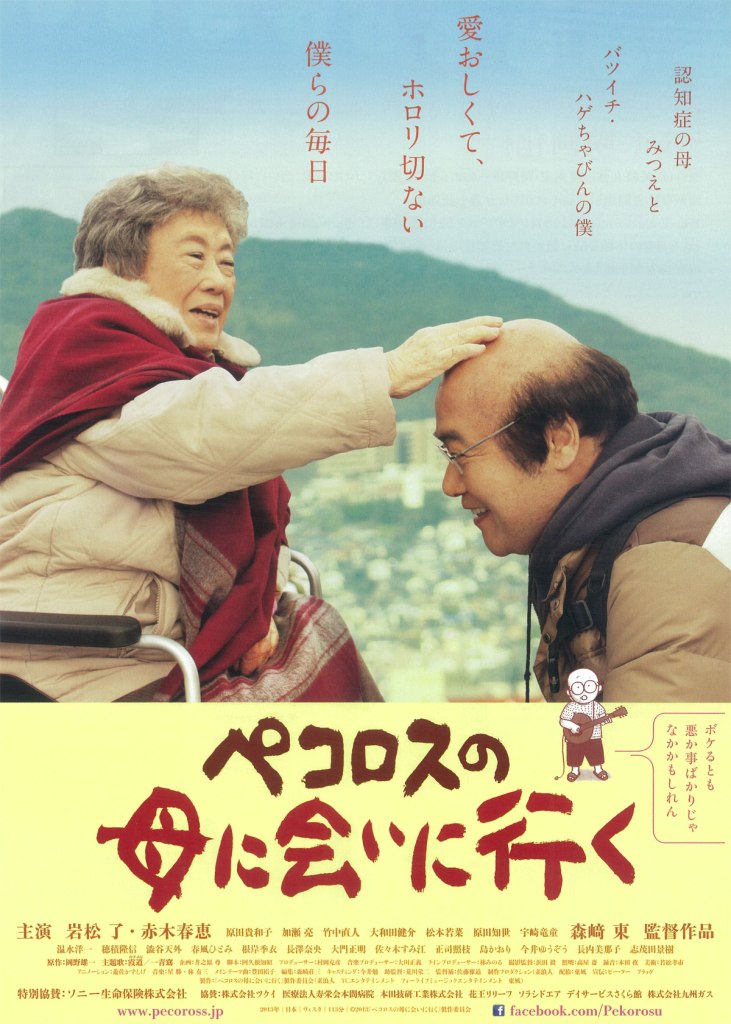 Topping the “best of 2013” lists in both Kinema Junpo and Eiga Geijitsu (something of a feat in itself), Pecoross’ Mother and Her Days (ペコロスの母に会いに行く, Pecoross no Haha ni Ai ni Iku) is a much more populist offering than might be supposed but nevertheless effectively pulls at the heartstrings. Addressing the themes of elder care and senile dementia in Japan’s rapidly ageing society, the film is both a tribute to a son’s love for his mother and to the personal suffering that coloured the majority of the mid-twentieth century in Japan.
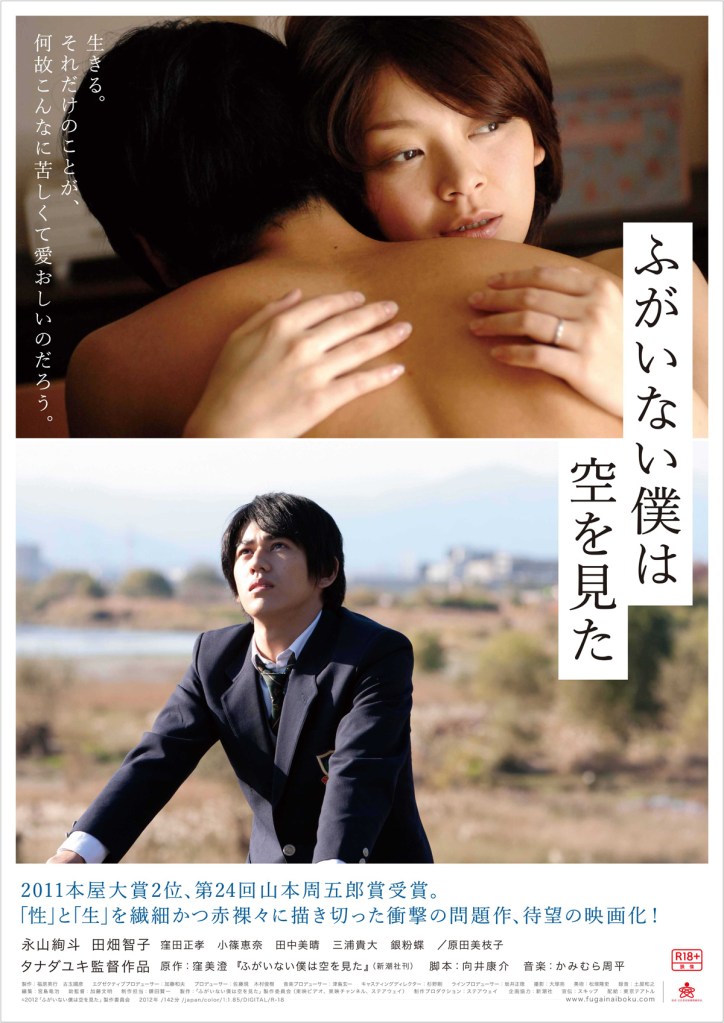 The work of director Yuki Tanada has had a predominant focus on the stories of independent young women but The Cowards Who Looked to the Sky sees her shift focus slightly as the troubled relationship between a middle aged housewife who escapes her humdrum life through cosplay and an ordinary high school boy takes centre stage. Based on the novel of the same name by Misumi Kubo, The Cowards Who Looked to the Sky (ふがいない僕は空を見た, Fugainai Boku wa Sora wo Mita) also tackles the difficult themes of social stigma, the power of rumour, teenage poverty, elder care, childbirth and even pedophilia which is, to be frank, a little too much to be going on with.
 It used to be that movies about marital discord typically ended in a tearful reconciliation and the promise of greater love and understanding between two people who’ve taken a vow to spend their lives together. These endings reinforce the importance of the traditional family which is, after all, what a lot of Japanese cinema is based on. However, times have changed and now there’s more room for different narratives – stories of women who’ve had enough with their useless, deadbeat man children and decide to make a go of things on their own.
 “Being good”. What does that mean? Is it as simple as “not being bad” (whatever that means) or perhaps it’s just abiding by the moral conventions of your society though those may be, no – are, questionable ideas in themselves. Mipo O follows up her hard hitting modern romance The Light Shines Only There by attempting to answer this question through looking at the stories of three ordinary people whose lives are touched by human cruelty.
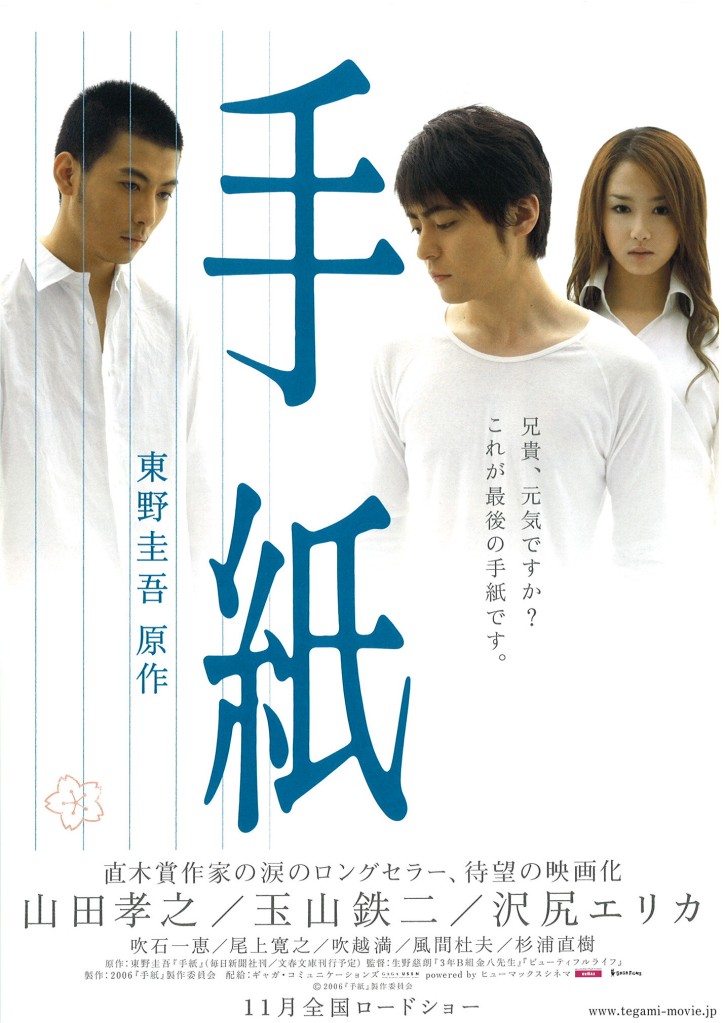 When it comes to cinematic adaptations of popular novelists, Keigo Higashino seems to have received more attention than most. Perhaps this is because he works in so many different genres from detective fiction (including his all powerful Galileo franchise) to family melodrama but it has to be said that his work manages to home in on the kind of films which have the potential to become a box office smash. The Letter (手紙, Tegami) finds him in the familiar territory of sentimental drama as its put upon protagonist battles unfairness and discrimination based on a set of rigid social codes.
 Kihachi Okamoto might be most often remembered for his samurai pictures including the landmark Sword of Doom but he had a long and extremely varied career which saw him tackle just about every conceivable genre and each from his own characteristically off-centre vantage point. The Elegant Life of Mr. Everyman (江分利満氏の優雅な生活, Eburi Man-shi no Yugana Seikatsu) sees him step into the world of the salaryman comedy as his hapless office worker reaches a dull middle age filled with drinking and regret imbued with good humour.
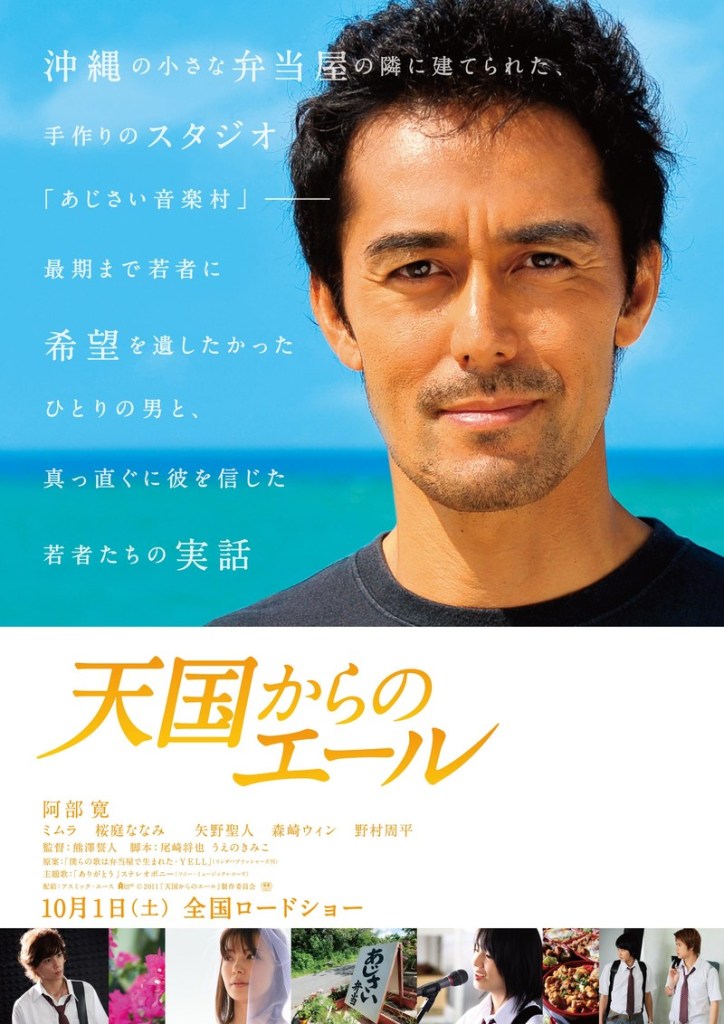 Okinawa might be a popular tourist destination but behind the beachside bars and fun loving nightlife there’s a thriving community of local people making their everyday lives here. Just like everywhere else, life can be tough when you’re young and the town’s teenagers lament that there’s just not much for them to do. A small group of high schoolers have formed a rock band but they’re quickly kicked out of their practice spot at school after a series of noise complaints from neighbours.
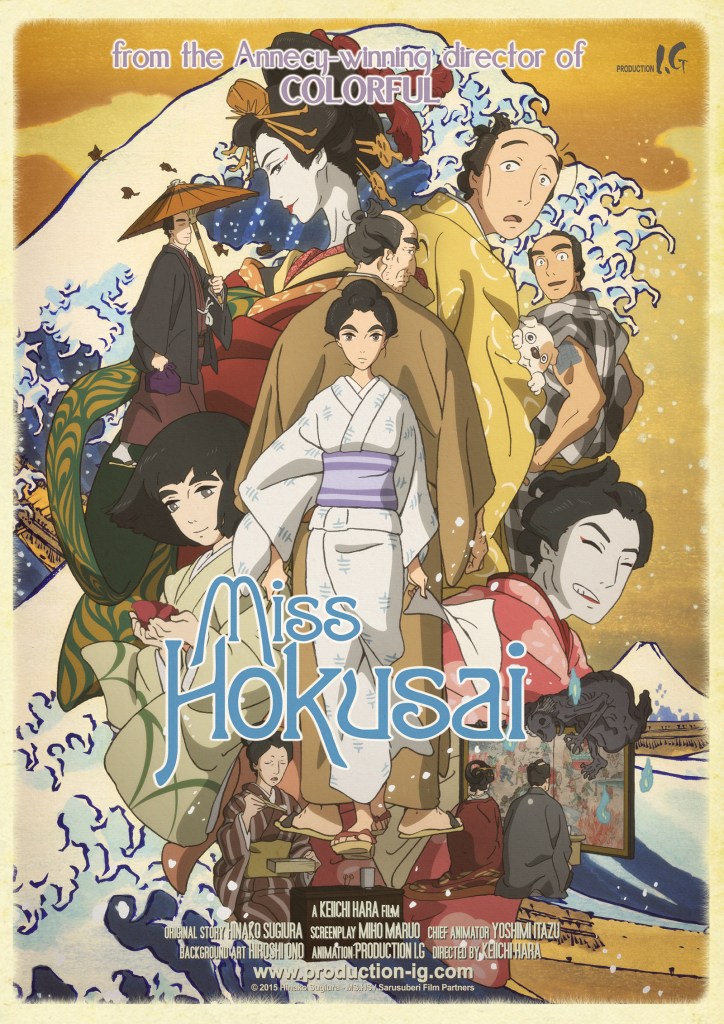 When it comes to the great Japanese artworks that everybody knows, the figure of Hokusai looms large. From the ubiquitous The Great Wave off Kanagawa to the infamous Dream of the Fisherman’s Wife, the work of Hokusai has come to represent the art of Edo woodblocks almost single handedly in the popular imagination yet there has long been scholarly debate about the true artist behind some of the pieces which are attributed to his name. Hokusai had a daughter – uniquely gifted, perhaps even surpassing the skills of her father, O-Ei was a talented artist in her own right as well as her father’s assistant and caregiver in his old age.
 A Japanese tragedy, or the tragedy of Japan? In Kinoshita’s mind, there was no greater tragedy than the war itself though perhaps what came after was little better. Made only eight years after Japan’s defeat, Keisuke Kinoshita’s 1953 film A Japanese Tragedy (日本の悲劇, Nihon no Higeki) is the story of a woman who sacrificed everything it was possible to sacrifice to keep her children safe, well fed and to invest some kind of hope in a better future for them. However, when you’ve had to go to such lengths to merely to stay alive, you may find that afterwards there’s only shame and recrimination from those who ought to be most grateful.
 Windows on Worlds