 Nobuhiro Yamashita has made something of a career out of championing the underdog and La La La at Rock Bottom (味園ユニバース, Misono Universe) provides yet another foray into the lives of the disposed and degraded. With a lighter touch than some of his previous work, the once again musically inflected film is another testament to the power of redemption and that you can still turn your life around if you only have the courage to take the chance.
The film begins with a young man being released from prison. The guard apologises about the smell of mothballs emanating from the man’s jacket, usually the family bring clean clothes. No family has come for this inmate though – just a couple of cool seeming characters who profess their gratitude for “what you’ve done for us” but the reunion is anything but warm. A little while later the man is unceremoniously bundled into a car and taken off to a quiet place where he is beaten half to death by thugs using baseball bats. After waking up, he stumbles around and eventually chances on a summer festival with a band playing on the mainstage. Zombified, the man grabs the mic and starts singing before promptly collapsing again.
The band’s manager, a young girl, takes the man home whereupon she discovers he’s lost his memory. Giving him the ironic nickname of “Pooch” (Kasumi also has a habit of picking up stray dogs), the band and local villagers quickly “adopt” the confused stranger and let him work at their karaoke rooms and studio whilst coaching him to become their new lead singer. However, as Pooch’s memories start to return it seems that his former life may not have been as tranquil as his laid-back amnesiac persona might suggest.
Like much of Yamashita’s previous work, music plays a central role with the one thing that Pooch remembers from his former life being the lyrics to a particular song and his innate singing talent. The leading role of Pooch himself is played by real life singing star Subaru Shibutani of Kansai based idol band Kanjani Eight who proves himself more than capable of belting out these hard rock/enka tracks as well as being able to imbue Pooch’s amnesiac blankness with his own specific character. He is ably supported by the popular young actress Fumi Nikaido who turns in yet another impressively nuanced performance as the older than her years Kasumi.
The beginning of the film gives us quite an idea of the man Pooch may have been and the kind of life he’s led. As the revelations pile on and Pooch’s memories inevitably return threatening the new life and personality he’s begun to build with the band and the possibility of fulfilling a long abandoned dream of being a singer, his dark side begins to break through and we’re shown a man lost in rage and violence left with nowhere to turn. At the end of the day, “Pooch” has been given a valuable opportunity to start all over again but it requires him to make the choice to do so. Go back to being “Shigeo”, a self hating thug who’s alienated absolutely everyone in his life or choose to become Pooch and earn a second chance to be the man he always wanted to be.
Like Yamshita’s previous film, Tamako in Moratorium, with which it also shares a lot in terms of style, La La La offers no great revelations or technical bells and whistles but revels in the simple pleasure of a tale told well. Like much of his other work, the central message is that it’s never too late to begin again (even if there are bridges which have been burned beyond repair) only that it requires you to make the sometimes scary choice to take a chance on something new. That choice rests with one person but is greatly aided by the support of others and the unusual bond between the two central characters (which stops short of romance) plus the uncompromising faith which Kasumi places in Pooch are some of the greatest joys of the film.
Perhaps not a career best from this still vastly underrated director, La La La at Rock Bottom is nevertheless another beautifully constructed addition to his filmography. Offering an extreme depth of performance from each of its ensemble cast, the film is rich with detail whilst also reflecting Yamashita’s trademark cinematic naturalism. Once again a musical feast for the ears, La La La at Rock Bottom is destined to become one of the director’s best loved films even in a career which has already offered so many as yet undiscovered gems.
 Actress of the moment Sakura Ando steps into the ring, literally, for this tale of plucky underdog beating the odds in unexpected ways. It would be wrong to call 100 Yen Love (百円の恋, Hyaku Yen no Koi) a “boxing movie”, it’s more than half way through the film before the protagonist decides to embark on the surprising career herself and though there are the training sequences and match based set pieces they aren’t the focus of the film. Rather, the plucky underdog comes to the fore as we watch the virtual hikkikomori slacker Ichiko eventually become a force to be reckoned with both in the ring and out.
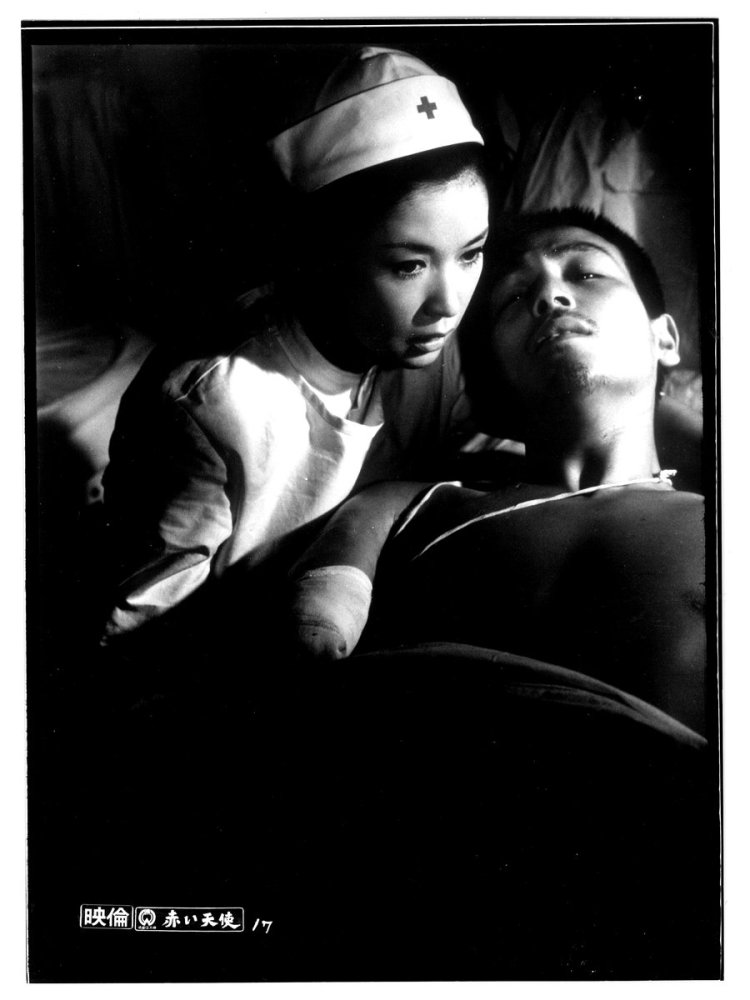 Red Angel (赤い天使, Akai Tenshi) sees Masumura returning directly to the theme of the war, and particularly to the early days of the Manchurian campaign. Himself a war veteran (though of a slightly later period), Masumura knew first hand the sheer horror of warfare and with this particular film wanted to convey not just the mangled bodies, blood and destruction that warfare brings about but the secondary effects it has on the psyche of all those connected with it.
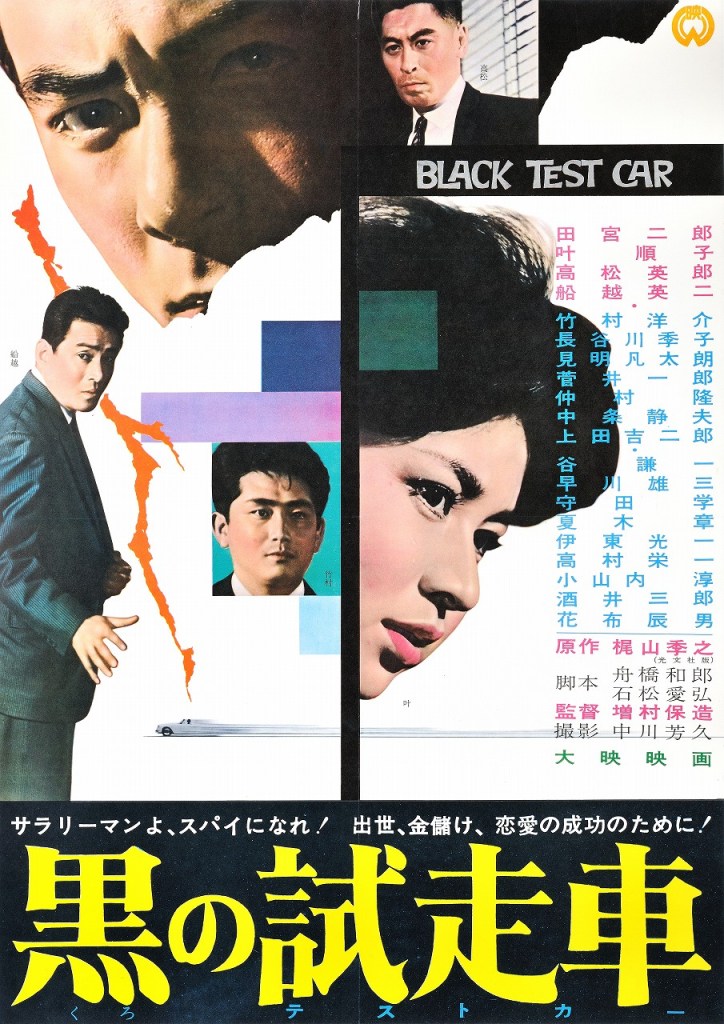 The automobile business is a high stakes game. Do you want to play faster, shinier and sleeker, or safer, family friendly and reliable? Family cars are the best sellers – everyone one wants something that’s reliable for getting to work every morning, getting the grocery shopping done and that you won’t worry about taking your kids to the park in. However, it’s the 1960s and lifestyles are shifting, men (in particular) are marrying later and they want to have fun before they do – hence having quite a lot of disposable income they can blow on a flashy two-seater sports car with no wife to complain about it. Tiger have just finished a new prototype called the Pioneer they plan to launch as a revolution in commercial sports cars which is super speedy but with the convenience of an everyday sedan. However, the Yamato company are also set to launch a new car and it keeps looking suspiciously like the Pioneer – does Tiger have a mole?
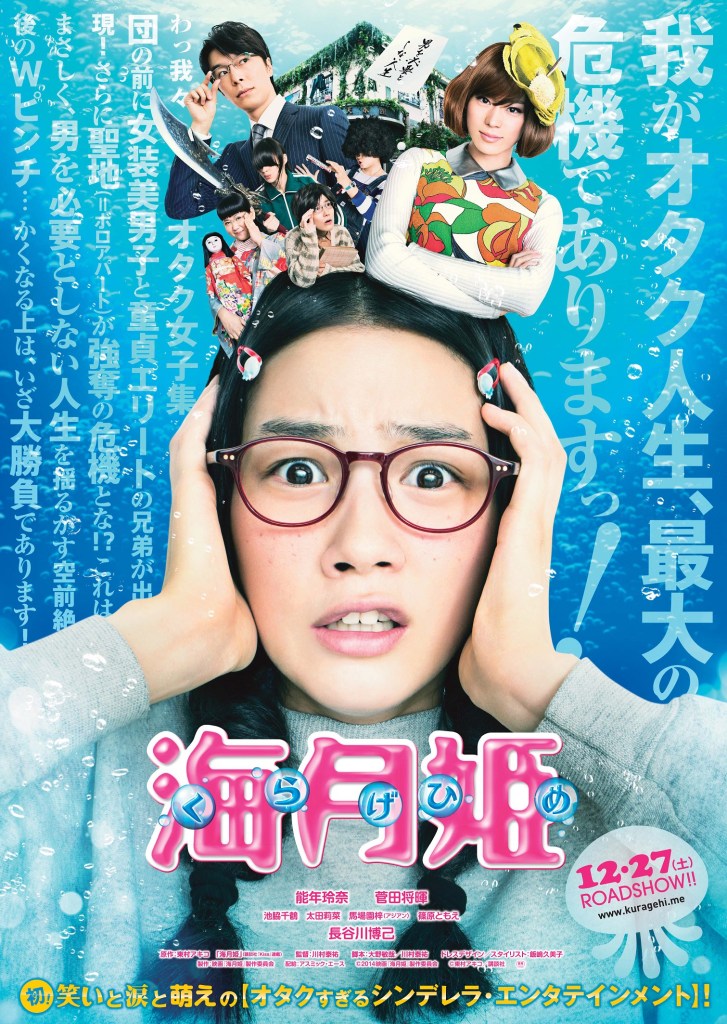 Originating as an ongoing manga series by Akiko Higashimura which was also later adapted into a popular TV anime, Princess Jellyfish adopts a slightly unusual focus as it homes in on the sometimes underrepresented female otaku.
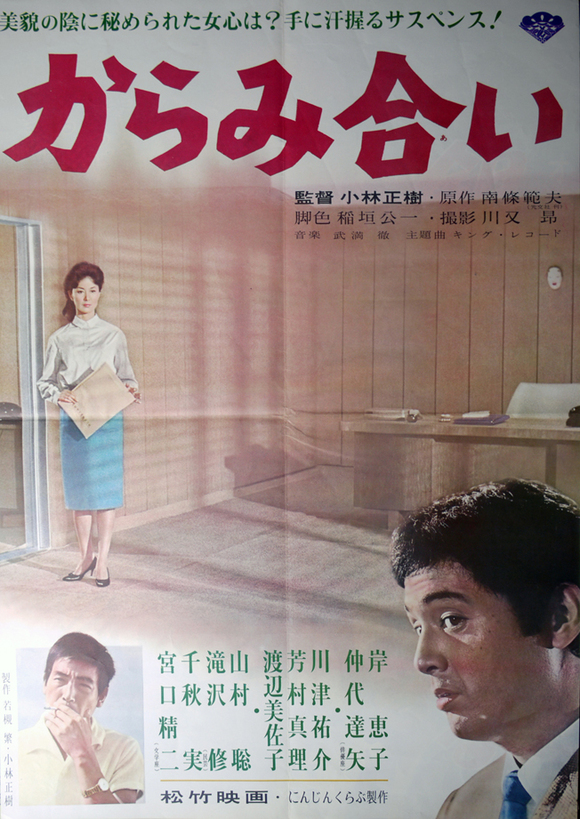 Kobayashi’s first film after completing his magnum opus, The Human Condition trilogy, The Inheritance (からみ合い, Karami-ai) returns him to contemporary Japan where, once again, he finds only greed and betrayal. With all the trappings of a noir thriller mixed with a middle class melodrama of unhappy marriages and wasted lives, The Inheritance is yet another exposé of the futility of lusting after material wealth.
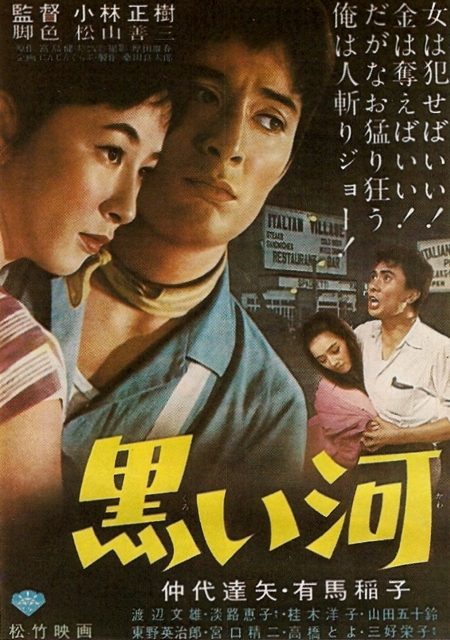 Masaki Kobayashi is still not enamoured with the new Japan by the time he comes to make Black River (黒い河, Kuroi Kawa) in 1957 which proves his most raw and cynical take on contemporary society to date. Set in a small, rundown backwater filled with the desperate and hopeless, Black River is a tale of ruined innocence, opportunistic fury and a nation losing its way.
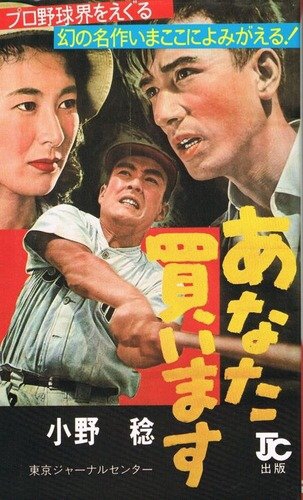 In I will Buy You (あなた買います, Anata Kaimasu, a provocative title if there ever was one), Kobayashi may have moved away from directly referencing the war but he’s still far from happy with the state of his nation. Taking what should be a light hearted topic of a much loved sport which is assumed to bring joy and happiness to a hard working nation, I Will Buy You exposes the veniality not only of the baseball industry but by implication the society as a whole.
 There’s a persistent myth that Japanese cinema avoids talking about the war directly and only addresses the war part of post-war malaise obliquely but if you look at the cinema of the early ‘50s immediately after the end of the occupation this is not the case at all. Though the strict censorship measures in place during the occupation often made referring to the war itself, the rise of militarism in the ‘30s or the American presence after the war’s end impossible, once these measures were relaxed a number of film directors who had direct experience with the conflict began to address what they felt about modern Japan. One of these directors was Masaki Kobayashi whose trilogy, The Human Condition, would come to be the best example of these films. This early effort, The Thick-Walled Room (壁あつき部屋, Kabe Atsuki Heya), scripted by Kobo Abe is one of the first attempts to tell the story of the men who’d returned from overseas bringing a troubled legacy with them.
 Windows on Worlds