Midnight Diner (深夜食堂, Shinya Shokudo, Joji Matsuoka, 2015)

mainvisualYaro Abe’s manga Midnight Diner (深夜食堂, Shinya Shokudo) was first adapted as 10 episode TV drama back in 2009 with a second series in 2011 and a third in 2014. With a Korean adaptation in between, the series now finds itself back for second helpings in the form of a big screen adaptation.

Midnight Diner is set in a cosy little eatery which only opens between the hours of midnight and 7am. Presided over by the “Master”, a mysterious figure himself with a large unexplained scar running down one side of his face, the restaurant has only one regular dish on its menu but Master is willing to make whatever his customers want provided he has the ingredients. Regulars and newcomers mingle nightly each with their own, sometimes sad, stories while Master offers them a safe place to think things through coupled with his gentle, all knowing advice.

The big screen movie plays just like a series of connected episodes from the television drama yet manages unify its approach into something which feels consistently more cinematic. Keeping the warm, nostalgic tone the film also increases its production values whilst maintaining its trademark style. The movie opens with the same title sequence as its TV version and divides itself neatly into chapters which each carry the title of the key dish that Master will cook for this segment’s star. A little less wilfully melodramatic, Midnight Diner the movie nevertheless offers its gentle commentary on the melancholy elements of modern life and its ordinary moments of sadness.

Fans of the TV drama will be pleased to see their favourite restaurant regulars reappearing if only briefly, but the film also boosts its profile in the form of some big name stars including a manager of another restaurant in town played by Kimiko Yo who seems to have some kind of history with Master as well as a smaller role played by prolific indie star of the moment Kiyohiko Shibukawa and the return of Joe Odagiri whose character seems to have undergone quite a radical change since we last saw him.

The stories this time around feature a serial mistress and her dalliance with another, poorer, client of the diner; a young girl who pulls a dine and dash only to return, apologise and offer to work off her bill; a lovelorn widower who’s come to Tokyo to chase an aid worker who probably just isn’t interested in him; and then there’s strange mystery of a mislaid funerary urn neatly tieing everything together. Just as in the TV series, each character has a special dish that they’ve been longing for and through reconnecting with the past by means of Master’s magic cooking, they manage to unlock their futures too. As usual, Master knows what it is they need long before they do and though he’s a man of few words, always seems to know what to say. One of the charms of the series as a whole which is echoed in the film is that it’s content to let a few mysteries hang while the central tale unfolds naturally almost as if you’re just another customer sitting at the end of Master’s counter.

Shot in more or less the same style as the TV series favouring long, static takes the film still manages to feel cinematic and its slight colour filtering adds to the overall warm and nostalgic tone the series has become known for. Once again offering a series of gentle human stories, Midnight Diner might not be the most groundbreaking of films but it offers its own delicate insights into the human condition and slowly but surely captivates with its intriguing cast of unlikely dining companions.

Romance Joe (로맨스 조, Lee Kwang-kuk, 2011)

romance-joeReview of Lee Kwang-kuk’s Romance Joe (로맨스 조) up at UK Anime Network. First saw this at the LFF a couple of years ago but now it’s back alongside Lee’s latest film A Matter of Interpretation at the London Korean Film Festival.


Lee Kwang-kuk’s meta romantic comedy drama first got a London outing at the BFI film festival back in 2012 but now makes a welcome return visit as part of the 2015 Korean film festival in a strand dedicated to its director. Playing alongside a short film, Hard to Say, which was completed by Lee in-between Romance Joe and his new film A Matter of Interpretation, the film brings Lee’s meta concerns to the fore and offers plenty of Alice in Wonderland inspired absurdity to its otherwise straightforward plot elements.

Romance Joe is a film with many levels. On the first layer, we have an elderly couple arriving in Seoul to look for their son who came to the city to be a director 18 years ago but he’s not been in contact recently so they’re worried. His friend greets them and tells them their son had been feeling depressed lately over the suicide of a well known actress. He then starts to tell them about an idea for a screenplay he’s had about a director with writer’s block who checks into a motel where he’s told another set of stories by a prostitute who delivers coffee as a cover. From here the stories radiate out like cracks in a broken mirror though we never quite get the answers we’ve been looking for.

Lee has worked extensively with Korean auteur Hong Sang-soo and his shadow looms large over the film. From the cutesy title cards to the static camera with occasional creeping zooms and often unbearably awkward situations, there is certainly a lot of Hong in Lee’s film. However, where Hong takes the same situation and replays it with a different outcome, Lee gives you a set of intersecting stories which spring forth from each other. Lee’s interests are more surreal and metaphysical than Hong’s which are, ostensibly, more naturalistic in feeling than Lee’s almost hyperreal world.

In contrast to Hong’s social comedies, Lee also digs a little darker into the Korean psyche and reveals a strange preoccupation with suicide and abandoned children. The furthest point back in the film deals with the lonely mid forest suicide attempt of a teenage schoolgirl who’s become a figure of fun thanks to a loud mouth “boyfriend”. Her rescuer may (or may not be) the man we later come to know as Romance Joe. Though the two eventually bond, the story is not an altogether happy one as they’re rushed into fairly adult decisions which neither of them is really ready for.

Later, a young boy who may (or may not) be the child of the high school girl arrives at the “cafe” from which the prostitute operates looking for his mother who apparently last wrote to him from that address sometime ago and has since disappeared. Later, the prostitute receives a call from her own son safely in the country being cared for by grandparents while his mother earns the money in the city.

In many ways it’s a series of sad yet inevitable stories leaping out from inside each other each more heart rending than the last, though somehow it never becomes as affecting as you’d like it to be. Romance Joe feels like a deliberate experiment in form or at least a dedication to pushing conventional narrative structures into new and exciting places but it does so in a way that’s self consciously about form rather than content so that it never quite takes hold. It wants to discuss time and memories and stories but ends up mostly talking about itself and, in truth, a little lengthily, still Romance Joe does at least manage to offer an intriguing, beautifully filmed and often enjoyable surrealist tale that will have your mind in knots long after you see it.


Reviewed at the London Korean Film Festival 2015.


The Piper (손님, Kim Gwang-tae, 2015)

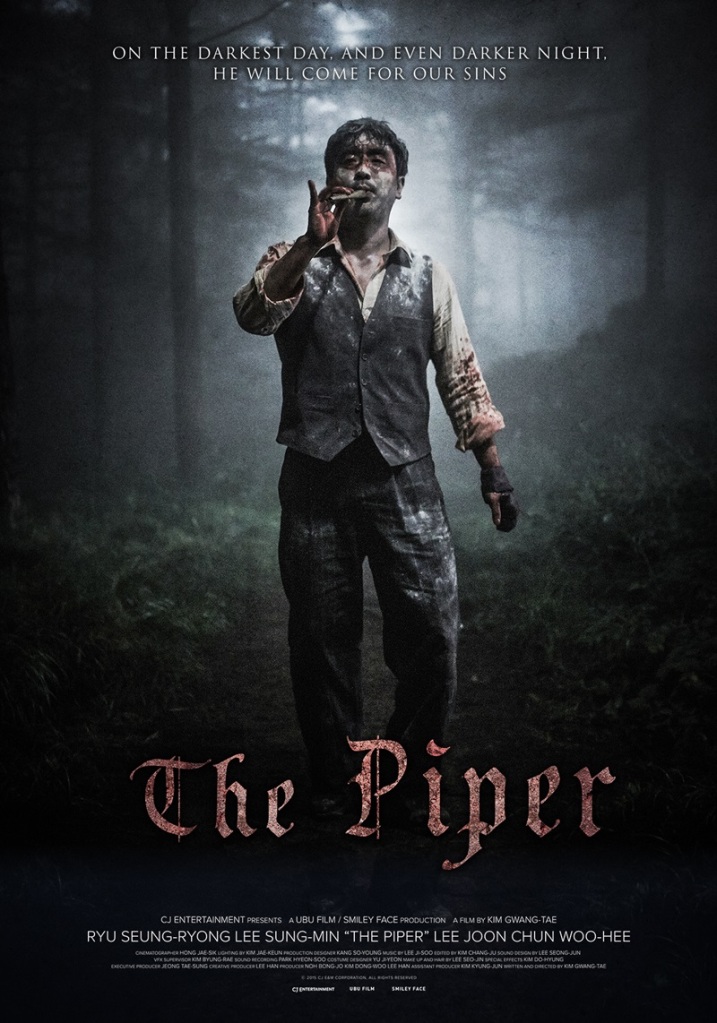
PiperPosterReview of Kim Gwang-tae’s The Piper (손님, Sonnim) up at UK Anime Network. I really liked this one!


The piper must be paid. So goes the old saying, and with good reason – one should always honour one’s promises but even so there are those should not be crossed. So the denizens at the centre of the mysterious hidden village in the debut feature from Korean director Kim Gwang-tae come to discover as they’re repaid for some not quite unforgotten sins when a travelling piper and his invalid son come calling.

Kim Woo-ryong is a travelling piper with a crippled leg journeying to Seoul with his young son after hearing that there is an American doctor there who may be able to treat the boy’s TB if only they can reach the city in time. After walking through the countryside they eventually come across a village which isn’t marked on any map and beg shelter from the village chieftain there. Life in the village seems like a scene from the middle ages, everyone is wearing traditional clothing and there’s something more than a “stranger in town” vibe about the way they look at Woo-ryong and his son Young-nam. The chieftain allows the pair to stay but warns them they can reveal nothing of the outside world to the village’s inhabitants and especially not that the Korean war is already “over” and has been for some time. Later Woo-ryong and Young-nam wander into a village dispute and in a fit of over helpfulness Young-nam exclaims he’s sure his dad can fix the problem (though he doesn’t know what it is). Woo-ryong jumps to the conclusion it must be about the rats which plague the town and offers to take care of them. The chieftain offers him the price of a cow if he can rid the town of vermin, but one gets the impression there’s more than one kind of rodent lurking in this strange, isolated place.

If you know the classic children’s fable, The Pied Piper of Hamelin, you likely know the outcome won’t be a pleasant one though the events of the The Piper turn a little bloodier and even more supernatural than in the Brothers Grimm  fairytale. The story starts out pleasant enough as Woo-ryong and Young-nam start to make friends in the village – Woo-ryong playing his pipe and Young-nam enjoying spending some time with the other children. However, from their very first entrance you can tell there is something very wrong in this community. There’s not just suspicion or curiosity in the way the villagers stare at the strangers, there’s fear too. Woo-ryong is a middle aged man with a lame leg, and Young-nam is a weedy 10 year old boy with a lung disease. They are no threat to anyone, what do these people have to fear?

The chieftain himself is obviously quite a sinister fellow. He charms Woo-ryong but lies to him when asked for guidance about the journey on to Seoul and seems to instil nothing but fear in the eyes of the other inhabitants. Woo-ryong strikes up a tentative romance with the village’s reluctant shaman which further raises the chieftain’s concerns – perhaps, he thinks, he doesn’t need to pay this piper after all. As might be expected, there’s a dark past at play here. Everyone is so terrified of the war, which they still believe is going on, and the things they’ve already done to survive that they’re prepared to go along with whatever their leader says to maintain their peaceful village life. Mob mentality at its worst, even those who were growing closer to the pair of strangers are quick to turn on them in a paranoid frenzy.

Like the original story, the moral is that you reap what you sew and if you don’t keep your promises, you deserve everything that’s coming to you. These are people who have lived in difficult times and done cruel things to survive. The rats which plague the town take on an almost supernatural air and have apparently developed a taste for human flesh. They become a kind of metaphor, a haunting presence which refuses to allow the villagers to forget the crimes they’ve committed and reminds them that their present safety was bought with innocent blood. A perfectly pitched fairytale with an all pervading sense of dread and foreboding, The Piper is an impressive effort from first time director Kim Gwang-tae and marks him out as a promising new voice in the world of Korean cinema.


Reviewed at the London Korean Film Festival 2015.


The Crucified Lovers (近松物語, Chikamatsu Monogatari, Kenji Mizoguchi, 1954)

E8BF91E69DBEE789A9E8AA9EB2Bunraku playwright Chikamatsu Monzaemon had a bit of a thing about double suicides which feature in a number of his plays. Though these legends of lovers driven into the arms of death by a cruel and unforgiving society are common across the world, they seem to have taken a particularly romantic route in Japanese drama. Brought to the screen by the great (if sometimes conflicted) champion of women’s cinema Kenji Mizoguchi, The Crucified Lovers (近松物語, Chikamatsu Monogatari) takes its queue from  one such bunraku play and tells the sorry tale of Osan and Mohei who find themselves thrown together by a set of huge misunderstandings and subsequently falling headlong into a forbidden romance.

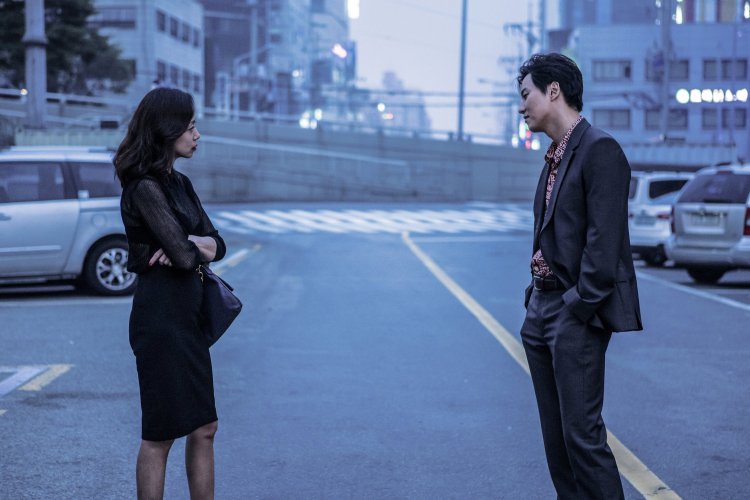
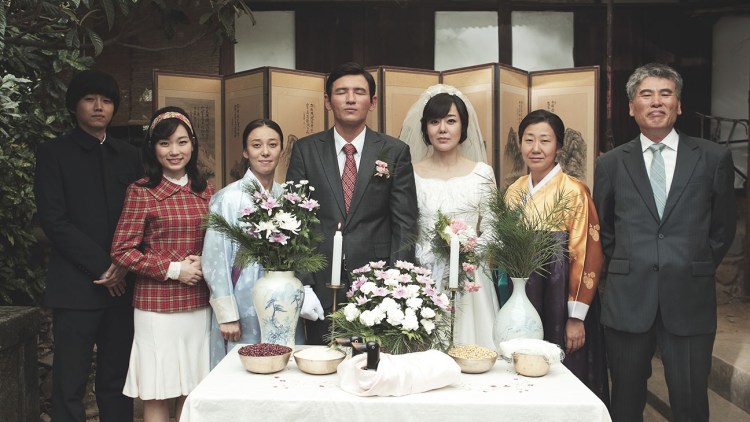
Set in 17th century Kyoto, the story begins with a reminder that adultery is currently illegal and that the penalty is crucifixion of both parties. A samurai woman and a man servant are being paraded through the streets for having committed the double transgression of an extra-martial affair which also crosses class borders. We set our tale at the top printing house in the city where the most promising employee, Mohei, is being pulled from his sickbed to complete a particularly important order. At the same time, mistress of the house Osan receives an unwelcome visit from her brother who is once again in pecuniary difficulty. He wants her to ask her wealthy husband, Ishun, to lend him some more money to meet the latest mortgage payment on their family home. However, Ishun is a stingy old man and outright refuses. Mohei overhears the brother’s visit and offers to help but his idea to temporarily embezzle some of the money backfires when he’s caught.

To make matters worse, Ishun now has it in for Mohei as Ishun has been after the servant girl Otama who has been refusing his advances and finally lied to him by claiming that she and Mohei are secretly engaged. After Otama reveals Ishun’s true nature to Osan, they hatch a plan to confront him by swapping rooms so that when Ishun makes his nightly visit to Otama he’ll find his wife waiting for him instead and have to backdown for awhile. This backfires too when Mohei decides to escape and stops by Otama’s room to say goodbye only for another servant to find Mohei and Osan together there. Mohei flees but a rumour starts about his friendship with Osan and it’s not long before she’s stormed out too. Accidentally running in to each other the pair find themselves on the run and eventually falling in love, but this isn’t the sort of place where two people can just move to another town and disappear. The police and Ishun’s men are hot on their tail determined to try and prevent the impending scandal…

Life was pretty harsh in feudal Japan. In some ways Osan might be thought lucky – married off at a young age to a well connected and prosperous husband. Indeed, at the beginning of the film she doesn’t seem too unhappy though is obviously nervous to talk to her husband about her brother’s predicament. Ishun is not a good man though he is perhaps sadly typical of his petty samurai merchant class. He swaggers around complaining about having to pay for everything and won’t even lend any of his vast wealth to his own sister let alone his wife’s family. Though outwardly miserly he’s no problem promising fancy kimonos and even a house to Otama if she’d only consent to becoming his mistress. Something of a double standard then when his wife is accused of having affair with a servant merely by having been found in a compromising position alone in a room with another man.

Mohei, by contrast, is the archetypal loyal retainer. When ever a problem comes up he reminds himself that one needs to be a “good servant” – a sentiment he utters to Otama when she asks for his help to fend off Ishun. He doesn’t approve of the idea of her simply giving in, but thinks she ought to grin and bear it. Similarly when some of the female members of staff are sympathising with the samurai lady about to be crucified for love, Mohei agrees that he feels sorry for her but also that she’s broken a law and what is happening is simply a natural consequence. He’s the last sort of person you would expect this sort of thing to happen to, and yet, it does.

The irony is that nothing existed between the pair other than the loose friendship and loyalty of a mistress and a member of staff before this whole thing started. Their union is quite literally unthinkable, not only a relationship between a married woman and another man, but love across the class divides. Even if Osan were free, a marriage with Mohei would be considered a disgrace. When the pair face the hopelessness of their situation and decide on suicide, Mohei confesses his love which immediately changes Osan’s mind about dying. She’s fallen in love with him too, and now she wants to live. For her now there can be no life without Mohei. Though Mohei entertains the noble idea of handing himself in to the police and sending Osan back to Ishun who would doubtless be glad to cover up the affair and avoid a bigger scandal, he later finds himself unable to give her up. The pair cannot, and will not, deny their love even if it costs their lives. In this unforgiving world of harsh social justice, the only freedom left to Osan and Mohei is to ride proudly to their agonising deaths hand in hand and with beatific smiles on their faces.

In the end, two grand houses fall because of a series of coincidental misunderstandings and lapses of protocol. Envious of his position, another petty samurai is perfectly happy to manipulate the situation to take down Ishun fully knowing that it will mean the deaths of two people. In ordinary circumstances this passionate, romantic love would never be permitted to exist (or at least among this social class). Its blossoming is an impossible miracle that threatens the very foundation of the extraordinarily regimented society of the two people at its centre. Parents betray their children to protect these archaic laws and preserve their family “honour” but what honour could their possibly be in the denial of love and society that places standing above basic compassion?

Though not perhaps Mizoguchi’s most impressive effort, The Crucified Lovers is an impassioned attack on needlessly repressive social systems and the self centred shenanigans which perpetuate them. Unashamedly melodramatic and filled with a melancholy though passionate resilience, The Crucified Lovers is a tragic tale of true love torn asunder by a cruel and unforgiving world. It would be so easy to say this would never happen today, and yet…


The Crucified Lovers is available on blu-ray in the UK as part of Eureka’s Late Mizoguchi box set.

No trailer but here is a particularly beautiful scene from the film

And an introduction from Tony Rayns

Miss Granny (수상한 그녀, Hwang Dong-hyeok, 2014)

131212-001_1401140436597Review of Hwang Dong-hyeok’s age swap comedy Miss Granny (수상한 그녀, Soosanghan Geunyeo) up at UK Anime Network.


Miss Granny is something of a departure for Korean director Hwang Dong-hyeok whose previous two films have both explored fairly weighty subjects firstly in The Father which, based on a true story, features an American adoptee looking for his father only to find him languishing on death row, and more recently in Silenced (also known as The Crucible) which depicted the harrowing, and again true, events that occurred at the Gwangju Inhwa School for the Deaf in which pupils were routinely abused by teachers and staff. So far as we know, Miss Granny is not based on a true story and is a more mainstream comedy in which a “difficult” old lady suddenly finds herself transformed into her 20 year old self.

At the beginning of the film, Oh Mal-soon is a bad tempered 74 year old woman who terrorises everyone around her into submission including her middle aged daughter-in-law who eventually lands up in the hospital with a heart condition that may in part have been brought on by Mal-soon’s constant criticism. Mal-soon’s son faces an impossible choice, ship his mother off to a home and give his wife some peace or risk losing either his marriage or his wife by keeping his mother around. Heartbroken at the thought her son maybe about to abandon her, Mal-soon wanders around the city before deciding to enter a mysterious portrait photographers and dolling herself up for a “funeral photo”. However, when she emerges she’s mysteriously transformed into a lithe and pretty 20 year old! Suddenly young again with potentially a whole life in front of her, what sort of choices will Mal-soon make this time around?

Much of the comedy of Miss Granny centres around the young Mal-soon, renamed Oh Doo-ri after her favourite actress, Audrey Hepburn, speaking and acting as if she really really were a 74 year old woman with all of the freedoms (and the invisibilities) that age grants you. Snapping away in her thick rural dialect and handing out unsolicited advice in the way only a nosy old woman can, Doo-ri is a very strange, and perhaps a slightly frightening, young woman. Undoubtedly, as we find out, Mal-soon has had a difficult life – starting out as an upperclass woman before becoming a young, penniless single mother dependent on the kindness of others and doing everything in her power to ensure that her son will grow up a fine man. Life has made her hard and in turn she makes things hard for all around her.

As a young woman she’s initially much the same yet comes to understand something of who she was and who she is. In her younger days she dreamed of being a singer and even as an old woman was well known for her fine voice. After unexpectedly jumping up to sing at a senior’s event in order to best another old lady rival, she’s “discovered” by a producer who’s tired of all the soulless idol stars who walk across his stage. Doo-ri is exactly what he’s been looking for, a young and pretty face with a voice that’s full of a lifetime’s heartbreak. Here is the real coup of the film – the younger actress, Shim Eun-kyung, reinterprets these classic pop songs from 40 years ago beautifully with exactly the right levels of pain and regret perfectly matching the montage flashbacks to Mal-soon’s youth. Becoming young again, experiencing everything again as if for the first time – opportunity, romance, friendship, Mal-soon finally begins to soften as if some of the harsh years of her original young life had been smoothed away.

Of course, nothing lasts forever and Mal-soon eventually has to make a choice between her newly returned youth and something else precious to her. She comes to understand that however hard it was she’d do it the same all over again because the same things would always have been the most important to her. Though it’s far from original and drags a little in the middle, Miss Granny still proves a warm and funny tale that walks the difficult line between serious and funny with ease and throws in a pretty catchy soundtrack to boot.


Reviewed at the London Korean Film Festival 2015.

Also here is one of the musical sequences in the film – I think this is a famous song from the ’70s (?) called White Butterfly. ‘Tis quite beautiful (mild spoilers for the film as it includes a montage of Mal-soon’s youth in the ’60s).


The Shameless (무뢰한, Oh Seung-uk, 2015)

fullsizephoto602641Review of Oh Seung-uk’s The Shameless (무뢰한, Moorwehan) up at UK Anime Network. I read some lukewarm reviews but I actually really liked this one (though I’m a sucker for B-movie noirs and my tolerance for melodrama is sky high)!


Director Oh Seung-uk maybe best known as the screenwriter behind such varied and well respected efforts as Green Fish (directed by Korean auteur Lee Chang-dong), Christmas in August and H, but way back in 2001 he made a minor splash at Cannes with his existential gangster piece, Kilimanjaro. The Shameless sees him one again turn to the shady world of underground crime though this time what he’s interested in is a romantic melodrama laced with deadly film noir morality.

Recently divorced police detective Jung Jae-gon has been handed what seems like a fairly straightforward murder. They already know who the killer is and the motive behind the crime, all that remains is to track the guy down. Luckily they also know that Park, a gangland thug, has a regular girlfriend, Kim Hye-kyung, who works at a seedy downtown bar. Through tailing her they’ll find their man. This is where things get sticky. Said girlfriend is the former lover of the head of another crime syndicate who’d now like to use Park’s current predicament to exact some revenge on the drifter who’s stolen his girl. Roping in a disgraced ex-cop, the gang offer Jae-gon a significant amount of money to cripple Park during his arrest and take him out of the picture for good. Jae-gon is conflicted. The way he sees it, the day you can’t tell which side you’re really on is the day you need to hand back your badge, but Jae-gon’s in need of money, this guy used to be his friend and then, there’s the girl…

Right here you have all the essential elements of your classic film noir. Basically good, if imperfect, detective receives an offer he can’t refuse and ultimately accepts it against his better judgement in part because of a femme fatale that he just can’t get out of his mind even if the more rational part of his brain knows this is something that is never going to happen. Before you know it, Jae-gon has researched Park’s history and adopted the persona of a former cellmate before taking an undercover job at Hye-kyung’s bar and attempting to become close to her in the hope that she’ll eventually lead them to Park’s whereabouts. Of course, he starts falling for her too and though she remains doggedly committed to Park, something in her begins to warm to him in return. This is a situation which can never end well and its classic B-movie style inevitability only adds to the eventual pathos of its deliberately downbeat ending.

The film is called The Shameless for a reason – nobody looks good in this shady world of corrupt cops and vicious gangsters who will stop at nothing to get what they want. The fact that you can barely tell who is on which side is a good indicator of the levels to which this world of chaos has become warped. Even the police are literally “shameless” stooping so far as to indulge in an interrogation technique which is, in fact, a sexual assault. At least the gangsters are abiding by their own rules.

The picture has a slick, stylish aesthetic which is perfectly in keeping with its morally grey, film noir inspired mood. It’s full of existential angst and the ennui of modern, aimless life. As usual for this kind of film, Hye-kyung repeatedly gets the short end of the stick – used and abused by faithless men, so massively in debt it’s almost impossible she’ll be able to extricate herself from the seedy world of hostess bars and petty gangsters before its too late. She’s only one victim of the pervasive sexism that defines this harsh world. Clinging desperately to Park, Hye-kyung’s one and only escape route is to hope one of these feckless men is the one who can take her away from this place.

Needless to say this isn’t one of those films where everyone gets what they want and walks off into the sunset of eternal happiness, but perhaps it isn’t as apocalyptic as the original premise might promise. That is actually something of a problem as the slightly softer ending undercuts the film’s emotional resonance and ultimately leaves one feeling a little less than satisfied. Still, even if The Shameless fails to hit its mark at the very end, Oh has still crafted a stylish and beautifully photographed neo-noir romance that stays true to its classic B-movie roots whilst also embracing the best of the modern crime movie.


Reviewed at the London Korean Film Festival 2015.


Ode to My Father (국제시장, JK Yoon, 2014)

ode_to_my_father_stillReview of JK Yoon’s Ode to My Father (국제시장, Gukjeshijang) – first published by UK Anime Network.


Of late, we’ve seen a lot of films attempt to trace the history of a nation through the story of one man and his family which ultimately becomes a metaphor for the that of the land itself. Many of these have come from China which shares something of the turbulent history that has affected the Korean peninsula over the last hundred years. In Ode to My Father, director JK Youn has tried to pay tribute both to his own father and to all the fathers of modern Korea who underwent great difficulties and suffered immensely in the hope of building a better, happier, future for their own children.

Mostly we view events from the point of view of Duk-soo – an old man at the beginning of the film who has made a success of himself and is surrounded by a large, loving family though seems to retain a kind of unresolved sadness. When we travel back with him, he’s just a small boy fleeing his homeland with his parents and siblings. As the oldest, he’s put in charge of his sister only to have her cruelly snatched away from him during the final escape. This event colours the rest of Duk-soo’s life as he carries with him both the tremendous guilt of having failed to protect his sister and of losing his father has he went back to look for her. The remaining family members gather together at the small imported goods shop belonging to an aunt which becomes another motif of the film.

Growing into manhood, Duk-soo is now the man of the house with both his siblings and his mother to provide for. Making countless sacrifices which see him abandoning his own dreams and travelling abroad to seek better paid work – first in the coalmines of West Germany and later the warzone of Vietnam, Duk-soo puts his family before himself every single time. Working tirelessly, Duk-soo grows up but inside he’s forever the little boy on a boat watching his father drift away him and desperately hoping he’ll some day miraculously turn up at the shop with a smile and an improbable story.

This is a story of painful separations and the shockwaves they send through the rest of one’s life and of all the lives throughout history. Having fled the Chinese and the communists in the North, Duk-soo and his family are excited about the prospect of being able to go home at the “end” of the war. However, this is a war which is still not technically over, merely suspended by a truce, and Duk-soo will never see his hometown again. Eventually, during the ‘80s, 30 years since Duk-soo was separated from his father and sister, a nationwide campaign is held to try and re-unite family members forced apart by the traumatic events of the 1950s. Entire squares in the city are covered with people desperately looking for each other wearing signs with their relatives’ names and point of last sighting, clothing etc all in the hope of finally finding each other again. Needless to say, some of these people are luckier than others and there are tears of both joy and sadness.

Still, all in all, Duk-soo and South Korea made a success of themselves even if there’s a resulting ache from the great wound which has split the nation in two. Much of the story is universal – a father’s love for his family, but Ode to My Father will obviously speak loudest to Koreans who can identify more strongly with the historical context. Yoon has also injected some humorous incidents involving real life Korean historical celebrities which may mystify international viewers even if they’re sign posted well enough that one gets the gist of it anyway.

Unabashedly sentimental and oftentimes overblown, Ode to My Father nevertheless succeeds in tugging at the heartstrings in all the intended ways. A paean to the post war generation and all that they endured in building the modern Korea that their children could live in without fear or hunger, Ode to My Father is in the end far too sugary but also, it has to be said, affecting.


Reviewed at the London Korean Film Festival 2015.


Veteran (베테랑, Ryoo Seung-wan, 2015)

1439210220_베테랑1Review of Ryoo Seung-wan’s Veteran (베테랑) – first published on UK Anime Network.


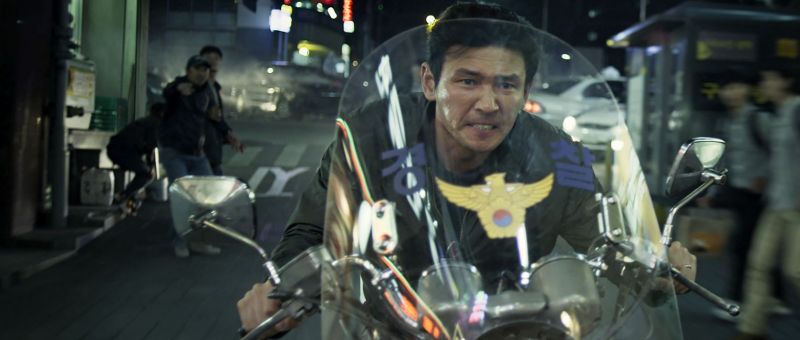
One of the top Korean box office hits of 2015, Ryoo Seung-wan’s Veteran is a glorious throw back to the uncomplicated days of ‘80s buddy cop crime comedy thrillers. A little less than subtle in its social commentary, Veteran nevertheless takes aim at corrupt corporate culture and the second generation rich kids who inherit daddy’s company but are filled with an apathetic, bored arrogance that is mostly their own.

Seo Do-cheol (Hwang Jung-min) is, as one other officer puts it, the kind of police officer who joined the force just to beat people up. He loves to fight and isn’t afraid of initiating a little “resisting arrest” action just to make things run a little more smoothly. However, when he strikes up a friendship with a put upon truck driver and his cute as a button son only to miss a crucial telephone call that eventually lands said truck driver in the hospital, Do-cheol’s sense of social justice is inflamed. After trying to join a trade union, Bae, the truck driver, is unceremoniously let go from his company. On taking his complaint directly to the head of Sin Jin Trading, play boy rich kid Tae-oh, Bae is subjected to the most cruel and humiliating “interview” of his life before apparently attempting to commit suicide after having realised the utter hopelessness of his situation. Incensed on his new friend’s behalf, Do-cheol is determined to take down these arrogant corporatists what ever the costs may be!

Veteran makes no secret of its retro roots. It even opens with a joyously fun sequence set to Blondie’s 1979 disco hit, Heart of Glass. Like those classic ‘80s movies, Veteran manages to mix in a background level of mischievous comedy which adds to the overall feeling of effortless cool that fills the film even when things look as if they might be about to take a darker turn. The action sequences are each exquisitely choreographed and filled with sight gags as the fight crazy Do-cheol turns just about any random object that appears to be close to hand into an improbable weapon.

Make no mistake about it either, this is a fight heavy film. Though Veteran has a very masculine feeling, it is to some degree evened out by the supreme Miss Bong whose high class high kicks can take out even the toughest opponents and seem to have most of her teammates looking on in awe, and the withering gaze of Do-cheol’s put upon wife who seems determined to remind him that he’s not some delinquent punk anymore but a respectable police officer with a wife and child who could benefit from a little more consideration.

Indeed, Tae-oh and his henchmen aren’t above going after policemen’s wives in an effort to get them to back off. Though this initial overture begins with an attempt at straightforward bribery (brilliantly dealt with by  Mrs. Seo who proves more than a match more the arrogant lackeys), there is a hint of future violence if the situation is not resolved. Tae-oh is a spoiled, psychopathic rich kid who lacks any kind of empathy for any other living thing and actively lives to inflict pain on others in order to breathe his own superiority. Probably he’s got issues galore following in his successful father’s footsteps and essentially having not much else to do but here he’s just an evil bastard who delights in torturing poor folk and thinks he can do whatever he likes just because he has money (and as far as the film would have it he is not wrong in that assumption).

He also loves to fight and finally meets his match in the long form finale sequence in which everything is decided in a no holds barred fist fight between maverick cop and good guy Do-cheol and irredeemable but good looking villain Tae-oh. Veteran never scores any points for subtlety and if it has any drawbacks it’s that its characterisations tend to be on the large side but what it does offer is good, old fashioned (in a good way) action comedy that has you cheering for its team of bumbling yet surprisingly decent cops from the get go. Luckily it seems Veteran already has a couple of sequels in the pipeline and if they’re anywhere near as enjoyable as the first film another new classic franchise may have just been born.


Reviewed at the first London East Asia Film Festival and the London Korean Film Festival.

The Bullet Vanishes (消失的子弹, Law Chi-leung, 2012)

20128291720405212Review of Law Chi-leung’s The Bullet Vanishes (消失的子弹, Xiāo Shī Dè Zǐ Dàn) – first published on UK Anime Network in June 2013.


In 1930’s Shanghai there’s a bullet factory where a young girl has been accused of pilfering. The punishment, it seems, is a cruel and very public trial by Russian roulette where fate, the gods or whoever will judge her innocent or guilty with a simple click or a loud bang. Crying out her innocence to the end, the girl pulls the trigger and presumably never actually hears the outcome as her co-workers look on in horror – she must have been guilty though, right? Or she would have been spared by the immortal powers at be.

Following this horrific incident, other deaths start to occur in the factory – the strange thing is, on examining the bodies, no trace of a bullet can be found (nor any casings at the scene). Some of the munitions workers start to believe the ghost of the poor girl who died must have returned to take revenge – perhaps she was innocent after all. To solve this intriguing mystery, the police turn to two unorthodox detectives – recently transferred former prison warden Song (Lau Ching-Wan) and maverick cop “fastest gun in town” Guo (Nicholas Tse). Neither of these two are buying the “supernatural” explanation and both are determined to get to the truth even if they work in very different ways. The solution is going to be a lot more complicated than anyone could have thought, and will, ultimately, be painful to hear.

Let’s get this out of this way first – yes, the film owes a significant debt to the recent “westernisation”, if you want to put it that way, of Ritchie’s Sherlock Holmes and other Victorian set crime dramas (e.g. Ripper Street) which seek to present themselves as taking place in a totally lawless world denizened by a criminal population that is somehow both repellent and glamourous. Although The Bullet Vanishes is set in 1930s, it still has a noticeably “Victorian” sensibility presenting a world in which rapid industrialisation has brought about mass corruption and a decline in morality. Once again, setting a film in China’s past proves to be a surefire way of getting subtextual criticisms of modern China past the country’s strict censorship regulations.

The murder mystery itself is certainly very intriguing with a series of unpredictable twists and turns. The idea of disappearing bullets might not be a new one, but The Bullet Vanishes manages to find an original solution that is perfectly plausible within its own time setting. Also, the “supernatural” element exists only as an idea and is never seriously entertained as an explanation by any of the investigators – something of a break from the genre norm.

The two detectives seem much more like rivals than partners for much of the film though an awkward sort of camaraderie does eventually grow up between them. Lau and Tse both give excellent performances but Tse in particular who’s often criticised for being a pretty boy trading on family connections, really proves himself with his surprisingly complex Guo. There is, however, the familiar criticism that the female characters are severely underdeveloped and seem almost like a rushed afterthought. Yang Mi gives a lot to the barely two dimensional Little Lark but can’t disguise the fact that the character only exists as a love interest for Guo and that in turn a love interest for Guo only exists so that we can have the “obligatory” love scene. That wouldn’t be so much of a problem if the love scene itself didn’t feel quite so “obligatory” – it could easily have been excised and the film would have remained pretty much unchanged as the scene feels as if it exists purely to satisfy a perceived audience need for romance.

There really isn’t much to fault with The Bullet Vanishes. As a slightly cerebral mainstream period thriller it’s certainly very successful. It has an engaging mystery element, strong characters played excellently by the cast and extremely slick, modern direction. In Song they’ve created a very interesting character who’d be very welcome in a sequel or two. His relationship with female prison inmate, a sort of Irene Adler figure to Song’s cerebral detective, who he’d previously investigated before being transferred was quite an usual idea that would really benefit from further exploration. All in all The Bullet Vanishes is a very impressive and enjoyable period procedural that is truly a cut above its genre origins.


Ryuzo and the Seven Henchmen (龍三と七人の子分たち, Takeshi Kitano, 2015)

142984037484393493178_ryuzo-7nin-kobuntachi-g4First published on UK Anime Network – review of Takeshi Kitano’s Ryuzo and the Seven Henchman (龍三と七人の子分たち Ryuzo to Shichinin no Kobuntachi) from LFF 2015.


Most people probably know Takeshi Kitano best for his series of ultra violent ’90s gangster movies, his role as the sadistic teacher in the controversial Battle Royale or as the host of bizarre Japanese endurance game show Takeshi’s Castle. However, in Japan he’s probably best known as a comedian though few of his comedy films have ever made it overseas. This may change with his latest effort, Ryuzo and the Seven Henchmen, which both takes him back to his yakuza roots and celebrates his comedic talents.

Ryuzo “the demon” was once a yakuza more feared the than respected whose very name alone made women swoon and struck fear into the hearts of men. Now though, he’s a grumpy grandpa living with his ultra conservative son who’d rather the neighbours didn’t know he had a gangster living in his house. After some punks make the mistake of trying an “ore ore” scam on him, Ryuzo gets back into the spirit of his gangster days and takes the guy down in a classic intimidation play. However, some of his other yakuza buddies also seem to be getting into trouble with upstart youngsters and once again it’s up to Ryuzo and his seven old timer yakuza buddies to set the town to rights.

The world has changed since Ryuzo and his guys were ruling the streets. In the old days the yakuza were a family, they had rules and ethics and they stuck to them. They saw themselves both as heroic outlaws and as defenders of the rights of ordinary people (even if they made their money through extorting those very people they claimed to protect). This new brand of crooks doesn’t care about honour, or morality or human kindness – they aren’t above conning the vulnerable into falling for obvious telephone scams or loaning large amounts of money to desperate people at ridiculously high interest just to make a buck. These guys are “business men” running a “legitimate enterprise” where the only rules are that you get rich and stay rich.

Ryuzo and co may be old, but they still have their honour and their pride. Watching the old guys trying to relive their former glory days is often funny, if a little sad as their grand schemes take on the absurd quality of little boys playing cops and robbers. It goes without saying that the film is hilarious though perhaps takes certain instances of low humour a too little far. Each of the main eight old timer yakuza has his own particular strength which endures despite their advanced ages though perhaps in slightly different forms and even if they’re coasting on former glory none of them has forgotten their former status.

Though not quite a return to the artistic highs of Sonatine or Hana-bi, Ryuzo and the Seven Henchmen is nevertheless an entertaining mix of Kitano’s tough guy yakuza and absurd comedian personas. Unlikely to walk away with any awards or lasting praise, Ryuzo and the Seven Henchmen is sure to be remembered fondly for its expertly timed and often gleefully absurd humour.


Reviewed at LFF 2015.