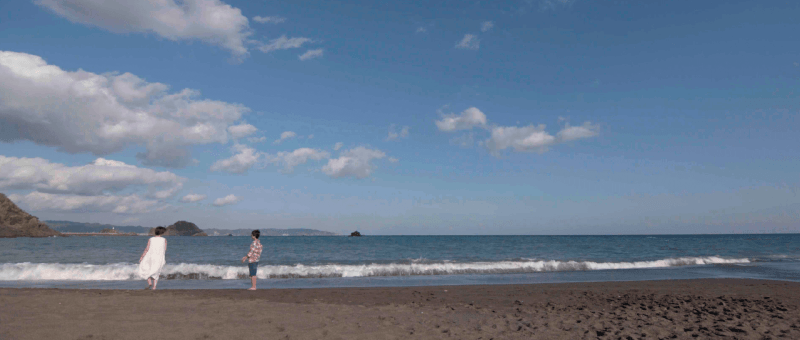
Freelance Samurai (桃太郎侍, Kenji Misumi, 1957)

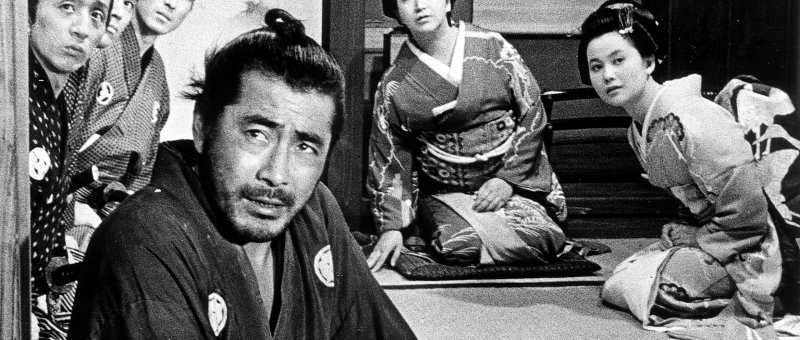
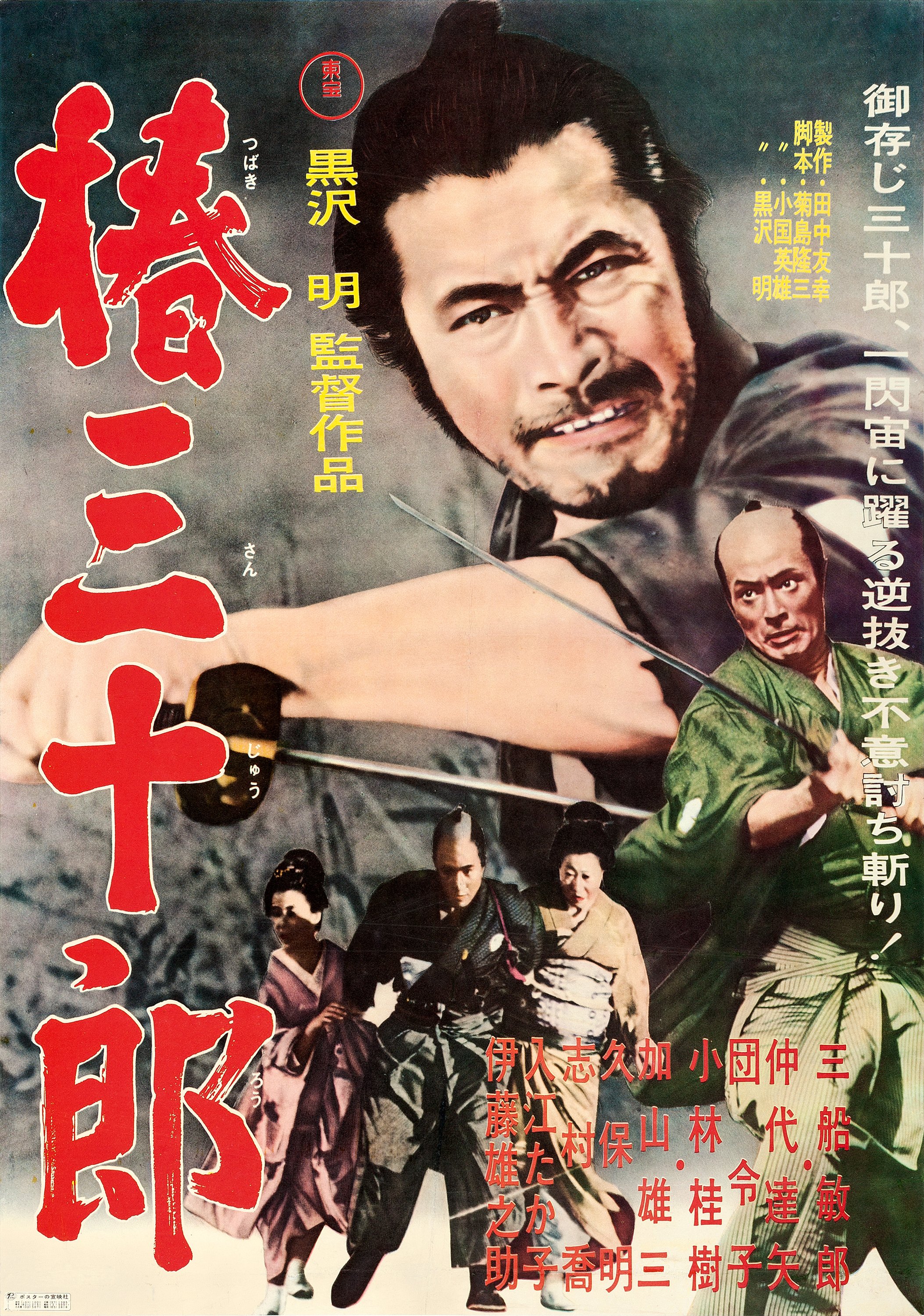
An abandoned son resolves to wander Japan killing the “demons” of Edo-era society in Kenji Misumi’s adaptation of the popular novel by Kiichiro Yamate, Freelance Samurai (桃太郎侍, Momotaro-Zamurai, AKA The Demon Crusader). Starring a young Raizo Ichikawa in dual roles as twins separated at birth, a familiar jidaigeki plot device, Misumi’s drama is among his most conventional but still finds the demon-hunting hero of the title resolutely rejecting the “silly rules of the samurai” in refusing to serve or be served while resisting the persistent corruptions of the feudal society. 

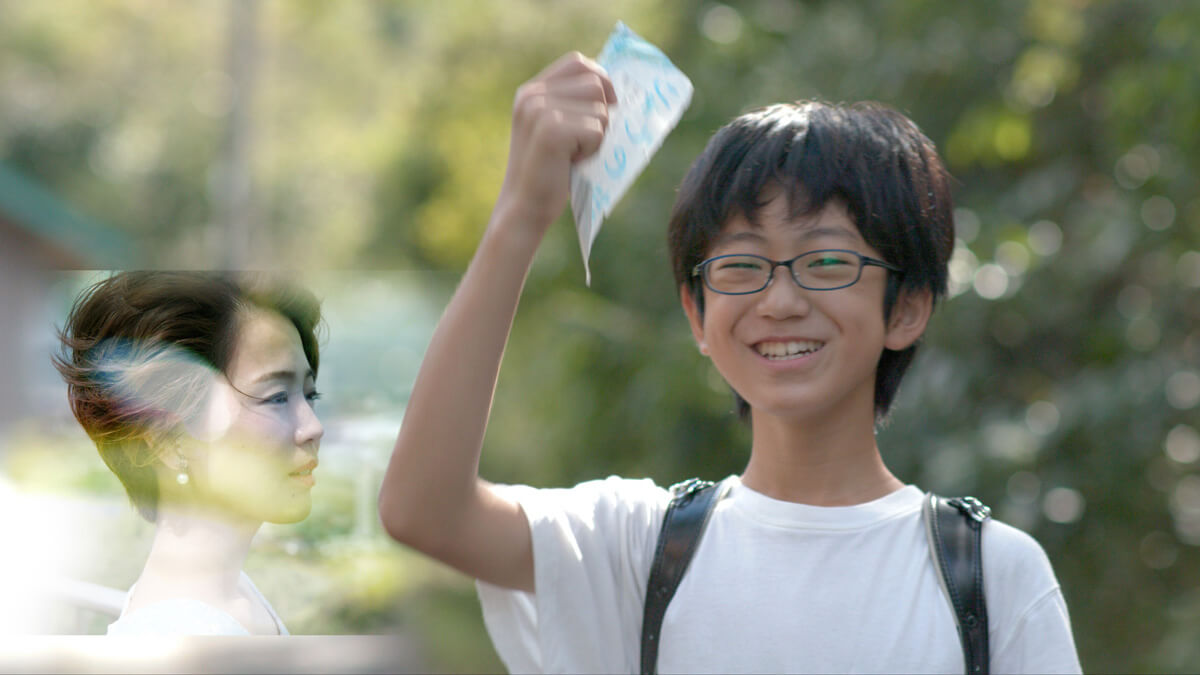
First spotted returning a paper balloon to some children playing in the street, the hero (Raizo Ichikawa) later gives his name as “Momotaro”, the legendary folklore champion who was born from a peach and then went on to befriend various forest creatures travelling with them to fight the cruel demons who had been oppressing the peasants of the farmland where his adoptive parents lived. The name is a sense ironic in that it reflects his own fatherless existence having discovered that he is actually Shinjiro, the younger brother of the heir to a nearby clan, Shinnosuke (also Raizo Ichikawa). At this particular cultural moment, twins were thought inauspicious with one usually cast out, Momotaro in someways more fortunate than most in that he was sent away and raised by his mother to whom he was apparently devoted. In fact, as he says, he only delayed his demon-killing mission out of consideration for her but that now that she has sadly passed away he is free to pursue justice as a wandering ronin determined to serve no master but himself. 

This insistence on justice and opposition to samurai oppression is made plain in the opening scene in which he rescues pickpocket Kosuzu (Michiyo Kogure) from two samurai she’d robbed who were hassling her. She of course falls in love with him, but is also party to the central conspiracy engineered by high ranking retainer Shuzen (Shosaku Sugiyama) who is plotting to unseat Shinnosuke in favour of the lord’s illegitimate young son Mantaro (Junta Yamamoto) with the help of ambitious underling Iga (Seizaburo Kawazu). Momotaro is swept into the intrigue when he rescues the beautiful daughter of loyal retainer Iori (Gen Shimizu), Yuri (Yoko Uraji), from an attempted kidnapping. Both sides want to recruit him for his bravery and sword skill, but Momotaro is reluctant to help either of them especially on discovering the ironic coincidence that he finds himself caught up in a succession struggle in the very clan which previously cast him out. 

Deciding to help when hearing that Shinnosuke has been poisoned, Momotaro demonstrates his strategic abilities in coming up with a ruse to trick the conspirators but remains somewhat conflicted remembering his mother’s dying words that he should hold no grudges even as a part of him continues to resent his abandonment. That may in part explain his defiant rejection of the hierarchal society, ignoring the “silly” rules of the samurai while insisting on equality in refusing to serve or be served by anyone else. In a nod to the folktale, his greatest friend is a humble peddler, Inosuke “the monkey man” (Shunji Sakai) who gives him a place to stay in the rundown tenement where he lives affectionately known as “ghost apartments”. Even so, Inosuke as much servant as sidekick, and while he is in a sense torn between the earthy pickpocket Kosuzu who is later redeemed through her loyalty to him and the beautiful samurai daughter Yuri it seems fairly clear that he will eventually opt for his class-appropriate match the only surprising thing being that it is she who transgressively breaks with convention in abandoning her samurai home in order to follow Momotaro out on the road as he hunts other “demons” corrupting the social order all over Japan. 

Shot in colour academy ratio, Freelance Samurai features little of Misumi’s trademark natural vistas save for the poignant pillow shots of flowers growing in the compound though it does reflect his preoccupation with absent fathers and perpetual wandering. In the many dualities in play, it is also interesting that Momotaro is depicted as the more capable of the brothers, Ichikawa’s characterisation of the cosseted Shinnosuke as a kind and compassionate, effete young man rather than the strapping warrior the heir to a clan is expected to be hinting perhaps at the perceived weakness that allowed the conspirators to assume they could usurp him. Similarly, it’s Michiyo Kogure’s tragic pickpocket undone by her love for the noble samurai that makes the deeper impression rather than the rather insipid Yuri who makes her mark only in her final decision to follow Momotaro unbidden. Momotaro’s quest may in a sense be ironic in that he outwardly rejects the superiority of the samurai but effectively preserves it even as he determines to clean out the oppressive “demons” intent on corrupting the land just as his folkloric namesake had done, but in its own way has its defiant nobility in his fierce love of justice and equality. 


Scandal (醜聞, Akira Kurosawa, 1950)

“Freedom of the press or harassment?” The more things change, the more they stay the same. Akira Kurosawa’s attack on the declining moral standards of the post-war society as reflected in the duplicity of the gutter press has unexpected resonance in the present day in which the media is simultaneously unwilling to challenge authority and in thrall to the populist allure of celebrity gossip with sometimes tragic results. The aptly named Scandal (醜聞) is essentially a morality tale which draws additional power from its seasonal setting and embodies the soul of the contemporary society in a conflicted lawyer consumed by internal struggle against despair and hopelessness. 

The more literal scandal however revolves around a well known singer, Miyako Saijo (Yoshiko (Shirley) Yamaguchi), and a motorcycle-riding artist, Ichiro Aoe (Toshiro Mifune), who meet by chance while staying at the same remote mountain inn. Having ironically headed to the mountains to escape the various “annoying things” that plague her in the city, Miyako has been pursued by two muckrakers from the tabloid press who take umbrage at her refusal to see them. They are then fairly delighted when they manage to snap a picture of Ichiro and Miyako standing on her balcony looking out at the mountains like a young couple in love. They deliver the photo to their seedy boss, Hori (Eitaro Ozawa), who is over the moon with excitement at his new business prospects. Suddenly Ichiro and Miyako are on posters all around the city with headlines such as “Love on a Motorcycle” and “Miyako Saijo’s secret love – revealed!”. 

Though Ichiro is a semi-public figure himself having been featured in magazine spreads as an artist on the rise, he is not a worldly man and is shocked by the idea that the press can make something up and print it with no consequences. He feels he must resist not just on a personal level angry to have been misrepresented but for the post-war future to ensure that the press is held to account and that it does not misuse its power to breach the privacy of ordinary citizens. To his mind, they only get away with it because most people just ignore them and wait for the scandal to pass, a sentiment born out by Hori who dismisses a concerned underling with the reminder that they’ve never yet been sued so they need have no fear saying whatever they like whether it’s true or not. “The kind of snobs we target think the law is beneath them” he adds, suggesting that most people prefer to think of the gutter press as something they can safely ignore and that it’s only themselves that they show up in their torrid obsession with the lives of others. 

But Hori also ironically defends his right to press freedom and quickly hits back that he’s being oppressed by those who wish to silence his right to free speech even when what he’s saying isn’t true. Lawyer Hiruta (Takashi Shimura) who offers to represent Ichiro in his lawsuit quickly identifies Hori as a duplicitous conman but also allows himself to be manipulated accidentally accepting a bribe after being led to believe that Hori has a top legal expert on retainer and the case is hopeless unless Miyako, who has so far maintained a dignified silence, can be persuaded to join as co-plaintiff. Ichiro had decided to accept Hiruta’s offer of representation largely on meeting his teenage daughter, Masako (Yoko Katsuragi), who has been bedridden with TB for the last five years. Masako is a pure soul whose isolation from the contemporary society has allowed her to maintain her innocence and humanity but it’s also true that it’s the society that made her ill in the first place.

The morality play reaches a climax on Christmas Day as Ichiro delivers a tree on his motorbike while Miyako sings carols for a radiant Masako who is at least sitting up and looking much healthier than she’s ever been before. But the more Hiruta debases himself, caught between an accidental debt to Hori, his own lack of conviction, and the frustrated desire to do right, the sicker she gets as if poisoned by post-war duplicity. Even so, Ichiro continues to defend him insisting that Hiruta isn’t a bad person just a weak one and that in the end he won’t be able to go through with betraying him but will eventually come clean and tell the truth when it counts. Ichiro’s faith is as much in the institutions of the new democratic Japan as it is in Hiruta as he explains at the trial admitting that he may have been naive in placing too much trust in the legal system thinking that he couldn’t lose because he knows he’s in the right. As the opposition lawyer points out, that’s not a very good legal argument because his client thinks he’s in the right too only he doesn’t know that Hori is both a liar and an idiot who’s staked everything on the assumption that Hiruta won’t expose him for bribery, which would at least strongly imply he can’t back up his story, because it would mean destroying himself. 

In the end it’s Hiruta who puts himself on trial, baring his soul to the court which he acknowledges he has betrayed in his negligence and wilful obstruction of justice. It’s a victory for truth and decency and a turn away from the duplicitous, capitalistic mores of men like Hori who think they can do whatever they want and only laugh at those who value fairness and compassion. “In all my 50 years I’ve never seen a more confused age” Hiruta explains speaking of post-war chaos and the forced comprises of the intervening years of despair and desperation. As he coaxes the denizens of a small bar into an early rendition of Auld Lang Syne on Christmas Day, each vowing that this time next year things really will be better, many of them breakdown in frustrated longing drowning their sorrows as they continue to yearn for better times they do not really believe will come. But then like all the best Christmas films, this is also a redemption story of a man who decided that it wasn’t too late after all and that he might have to destroy himself in order make himself anew and be the man his daughter always knew he could be even if in the end he could not save her from the ravages of the post-war society.


Scandal screens at the BFI Southbank, London on 10th & 24th January 2023 as part of the Kurosawa season.

Kim Jong-boon of Wangshimni (왕십리 김종분, Kim Jin-yeol, 2021)

“I’m lucky” elderly market vendor Kim Jong-boon finally explains to director Kim Jin-yeol, having endured a long life filled with hardship and sadness but having learned to see the best in it in gaining experiences others might not have the opportunity to and thankful that her circumstances while certainly not luxurious are comfortable enough and her surviving children and their spouses are healthy and happy. Titled simply Kim Jong-boon of Wangshimni (왕십리 김종분, Wangshimni Kim Jong-boon), Kim’s documentary is testimony to the extraordinary stories of ordinary people and the heartwarming resilience of those who’ve known tragedy but have resolved to remain honest and kind to all those around them. 

Born in 1939 and now in her 80s, Jong-boon is still a regular fixture running a small night stall in the lower-class district of Wangshimni in Seoul where she has lived for the last 50 years. Wind and snow, she runs her business enjoying a gentle camaraderie with a group of fellow market sellers of around the same age with whom she often goes for dinner or plays cards in her small apartment where they also come together to make kimchi. Jong-boon isn’t forced to work into her 80s because of financial penury, but because she’s become a kind of symbol with people glad and reassured to see her stall where it always is. She lends money or extends a tab to those who need it whether she thinks they’ll pay her back or not. In the closing scenes a man arrives to return some money she’d lent him 30 years previously, he nervously arriving laden with pumpkins and quinces uncertain if she’d be alive but feeling relieved to finally unburden himself of this spiritual and literal debt. 

Part of this is as we later discover an extension of her private tragedy in having lost her daughter, the middle of three children, during the democracy protests of the early ‘90s. Though the climactic events of 1987 had led to the introduction of a democratic system, the left-wing, pro-democracy vote had been spilt by infighting which allowed the protege of former dictator Chun Doo-hwan, Roh Tae-woo, to become the first elected leader of a “democratic” Korea leading to an intensification of political protests led by the student movement. In university at the time, Jong-boon’s daughter Gwi-jung became involved in democratic and labour activism and was killed during a protest in which police kettled protestors with no provided exit route (as had previously been the norm) leading to a crush in which Gwi-jung was suffocated. Despite the depths of her grief, Jong-boon became a prominent figure in the movement in her daughter’s memory campaigning for justice and recognition along with others who had lost family members to police violence during the protest. Though over 30 years have now passed since Gwi-jung’s death, as many as 300 mourners still come to her annual memorial service which Jong-boon and her family cater themselves. 

Though she and her husband had actually voted for Roh, Jong-boon continues to support the causes her daughter had given her life fighting for in the hope of a better world while discovering a new community not only with the other bereaved relatives but in the students themselves many of whom continue to look in on Jong-boon and accompany her as she travels to universities around the country to give talks in Gwi-jung’s memory. Despite her grief and sorrow, we later see her collapsing in tears on visiting Gwi-jung’s grave in a small area dedicated to those who died in the protests, she’s also thankful for the new opportunities Gwi-jung has given her in travelling all around the country and meeting new people. One of the reasons she continues to run her stall is for the former student protesters, so they’ll always know where to find Kim Jong-boon of Wangshimni. Having endured crushing poverty in her youth, working several jobs from construction to domestic service and then running her stall at night, Jong-boon can declare herself happy to have lived so much experiencing things others might never get the chance to even if they’re things no-one really wants to experience like getting tricked out of a house or having all your money stolen by a credit union. A portrait of a truly extraordinary woman living an ostensibly very ordinary life, Kim’s quietly moving documentary is testament both to the hidden stories of those all around us and to the enduring resilience of a mother’s love.


Kim Jong-boon of Wangshimni screened as part of this year’s Udine Far East Film Festival.

Original trailer (no subtitles)

Space Travelers (スペーストラベラーズ, Katsuyuki Motohiro, 2000)

“What are you doing now?” asks a very zeitgeisty set of onscreen titles at the beginning of Katsuyuki Motohiro’s millennial heist comedy, Space Travelers (スペーストラベラーズ). Both hopeful and not, Motoyuki’s cosmic farce takes the sense of anxiety and despair which colour other similarly themed turn of the century movies and turns them into a source of possibility while simultaneously implying that for some paradise may always be out of reach or else relegated to a state of mind. After all, “reality is different from animation”.

The idea of a far off paradise is what drives a trio of orphans (Takeshi Kaneshiro, Masanobu Ando, and Hiroyuki Ikeuchi) to consider armed robbery, planning the slick kind of heist they’ve seen in the movies in which they run into off into the sunset with a bag full of cash after holding a bank to ransom. Of course, it doesn’t quite go to plan leaving the three essentially good-hearted guys with a problem because they weren’t really prepared to harm anyone (two of their three weapons are duds) and they don’t have a plan B. What happens then is somewhat unexpected as a degree of camaraderie begins to arise between the would-be-thieves and the small number of customers and employees trapped in the foyer who then become something of an artificial team trying to overcome the rapidly escalating situation as the police surround the building in the incorrect assumption that the robbery is connected to terrorist action. 

What soon becomes apparent is that for the trio the heist is part wish fulfilment fantasy and a last ditch attempt to catapult themselves out of a sense of impossible despair. As they are all orphans, they feel a deeper sense of disconnection from a society which has in itself abandoned them, partly as it turns out hoping to find their long-lost parents in a tropical island paradise known to them only from a faded postcard. For the customers and employees, the robbery is the most exciting thing to happen to them in their entire lives and the proximity to mortal danger soon forces them to wrestle with their personal dissatisfaction. Before the heist took place, bank clerk Midori (Eri Fukatsu) had been planning to attend a party to celebrate her engagement to another employee branded a sleazy creep by most of the other female members of staff with whom he had apparently tried it on on previous occasions. She had agreed to marry him despite her reservations because he had sworn to lay down his life for her if she were ever in danger only to spot him trying to escape on his own via the air conditioning ducts. Being caught up in this bizarre situation forces her to accept she had been leading a “conveyor belt life” out of fear, always picking the safe option rather than take a risk chasing personal happiness even picking a husband solely because he promised her protection. 

In the Japan of the 2000s, chasing personal happiness might have seemed like a fools errand trapped in a stagnant economy with no prospect of improvement and only increased risk if you fall from one particular rung on the ladder. Yet the conclusion Midori seems to come to is that the only way of rebelling against this sense of nihilistic frustration is to take the risk and look for the paradise that is waiting for her rather than settle for a disappointing status quo. She learns this partly through her connection with one of the bank robbers who casts each of the hostages as members of his favourite, now cancelled, anime “Space Travelers” created according to an onscreen interview to offer a sense of something tangible to an increasingly disconnected youth that would allow them to experience a full range of emotions (the animated sequences created for the film were later spun off into an OVA of their own). Through their accidental role playing, the hostages each discover the sides of themselves they’d been missing to claim their true identities, Midori learning that she can protect herself, nerdy clerk Shimizu (Masahiro Komoto) overcoming his crippling shyness, a middle-aged electrician flummoxed by modern technology proving that his skills aren’t obsolete, and a feuding couple on the brink of divorce reflecting that they actually do work well as a team. 

Even so, not everyone comes out of the situation with new hope for the future with the implication being that some gambles are simply too big or that for some paradise will always lie just out of reach even if Midori remains committed to seeking it out on her own whether she eventually finds it or not. Meanwhile, Motohiro takes potshots at the media reality of the day as a cynical boyband publicity stunt to announce their breakup tour to rake in more cash before announcing a comeback is derailed by the press tripping over themselves to get to the unfolding bank hostage crisis with the police also doing their bit to hog the media spotlight while mistakenly believing a suspicious-looking man who actually is a fugitive terrorist is responsible for the heist. With the world as messed up as it clearly is, the film seems to say, chasing paradise is the least risky thing of all. 


Trailers (no subtitles)

A Hundred Flowers (百花, Genki Kawamura, 2022)

An expectant father finds himself confronted with paternal anxiety and past trauma on learning that his mother has been diagnosed with Alzheimer’s in Genki Kawamura’s adaptation of his own novel, A Hundred Flowers (百花, Hyakka). A prolific film producer behind such hits as Lee Sang-il’s Rage and Tetsuya Nakashima’s Confessions, Kawamura also penned the international bestseller If Cats Disappeared from the World which was later adapted into a film starring Takeru Satoh and here makes his directorial debut with a semi-autobiographical exploration of memory and forgetting. 

Kawamura neatly signals his central concern in the opening scenes as Yuriko (Mieko Harada) seems to become unstuck in time, a withered dandelion on her kitchen table as she flits between swapping it for a new one and playing the piano eventually watching herself from an alternate temporal space. Her grown-up son Izumi (Masaki Suda) seems surprised to witness her decline on a visit home, running panicked through the streets looking for her only to find his mother sitting on the swings at the park muttering about “half fireworks”. When he approaches her she seems to mistake him for someone else, Izumi rejecting her too intimate hug and later making his exit earlier than expected, leaving the New Year food Yuriko has prepared uneaten and making an excuse about an emergency at work. 

The chase through the streets may have awakened traumatic memories in Izumi too, forcing him to remember another time as a child he came home and found his mother gone. Disappearing again, Yuriko is found at his old school, guided by a memory of a parents day at which Izumi read out sections of Osamu Dazai’s Run, Melos!, a story of a man running back to the city to save his friend before he is executed in his place. Thrown back into the past, Yuriko later berates the grown Izumi for his habit of wandering off, suggesting that he gets lost on purpose so that she’ll look for him which is perhaps what Yuriko is doing longing for her son to understand and forgive her for an act of childhood betrayal. Kawamura often places the camera directly behind Izumi’s head, following him as he chases the mother who he fears has forgotten him while he feels foolish in his inability to forget her despite the depth of his resentment. 

Ironically enough, Izumi and his heavily pregnant wife Kaori (Masami Nagasawa) both work at a music company developing a virtual idol whom they explain has been fed thousands of memories as data in order to improve her AI but ends up oddly soulless as if these fragments of moments in time are meaningless in isolation. His friend quips that maybe they should have given the AI the ability to forget, as if that would make it more “human” and relatable. Izumi is pretty sure he hasn’t forgotten anything important, but memory remakes itself every day and is in some ways selective. Though he holds his mother at arm’s length, he begins to put the past behind him in learning to forgive her and in the process regaining the happy memories of his earlier childhood that his trauma had taken from him. 

The flowers so closely associated with Yuriko who is often dressed in a bright yellow are perhaps another allusion to Dazai and his insistance on embracing the gift of a single dandelion as a kind of metaphor for the frustrated love between mother and son, while the half fireworks they later see also resemble a dandelion dispersing mimicking the continual scattering of Yuriko’s memories. Izumi remarks that it’s like her memories are being stolen while charting her decline as a depletion of her identity until there is nothing left of her at all, the various boxes in her apartment standing in for blocks of data slowly being shed. Shifting between the perspectives of mother and son who are each in some way blind to the other, Kawamura touches on the tactile quality of memory as one moment sparks another while for Yuriko time proceeds on a maddening loop of overlapping incidents that robs of her present, past, and future in equal measure. The irony may be that only in losing his mother does Izumi begin to find her again, searching for her within the halls of his own memory and rediscovering a sense of himself as a child that he had long forgotten. 


A Hundred Flowers screened as part of this year’s London East Asia Film Festival 

International trailer (English subtitles)

Blue Ribbon Awards Announces Nominations for 65th Edition

©2022 "A MAN" FILM PARTNERS

Presented by the Association of Tokyo Film Journalists, the Blue Ribbon Awards has announced its nominations for the 65th edition honouring films released in 2022. This year’s favourite is Kei Ishikawa’s A Man which picks up six nominations, while there is also a strong showing for Ryuichi Hiroki’s Motherhood and mystery drama Missing. Like last year, the physical awards ceremony has been canceled due to the ongoing coronavirus pandemic though the winners are expected to be announced in late February.

Best Film 

  • ©2022 "A MAN" FILM PARTNERS
  • A Man – latest drama from Kei Ishikawa starring Satoshi Tsumabuki as a lawyer who is drawn into a mystery while investigating a former client’s deceased husband.
  • Kingdom 2: To Distant Lands – sequel to the popular blockbuster set in Warring States-era China.
  • Small, Slow But Steady – An aspiring boxer begins to lose the will to fight in Sho Miyake’s empathetic character study. Review.
  • Missing – a young woman finds herself in the crosshairs of a serial killer while looking for her missing father in Shinzo Katayama’s dark mystery drama. Review.
  • Silent Parade – long-awaited latest instalment in the Galileo franchise starring Masaharu Fukuyama.
  • Dr. Coto’s Clinic – sequel to the TV drama from the 2000s revolving around a doctor on a small island.
  • Plan 75 – an elderly woman finds herself pushed towards voluntary euthanasia by a society driven only by productivity in Chie Hayakawa’s dark dystopian drama. Review.
  • Motherhood – drama from Ryuichi Hiroki revolving around the suicide of a teenage girl.
  • Fragments of the Last Will – wartime drama from Takahisa Zeze in which a soldier longs to return home to his wife.
  • Wandering – drama from Lee Sang-il in which a student takes in a neglected little girl only to be accused of kidnapping.

Best Director

  • Kei Ishikawa (A Man)
  • Shinzo Katayama (Missing)
  • Takahisa Zeze (Tombi: Father and Son, Fragments of the Last Will)
  • Chie Hayakawa (Plan 75)
  • Ryuichi Hiroki (2 Women, Motherhood, Phases of the Moon)

Best Actor

  • ©2022 "A MAN" FILM PARTNERS
  • Sadao Abe (Lesson in Murder, I am Makimoto)
  • Jiro Sato (Missing)
  • Satoshi Tsumabuki (A Man)
  • Kazunari Ninomiya (Tang, Fragments of the Last Will)
  • Masaharu Fukuyama (Silent Parade)

Best Actress

Best Supporting Actor

Best Supporting Actress

  • Sakura Ando (A Man, Korosuna)
  • Machiko Ono (Anime Supremacy!, Soul At Twenty, Sabakan, Thousand and One Nights)
  • Nana Seino (Kingdom 2: To Distant Lands, Offbeat Cops, A Man)
  • Atsuko Takahata (Motherhood)
  • Ryoko Hirosue  (The Hound of the Baskervilles: Sherlock the Movie, 2 Women)

Best Newcomer

Best Foreign Film

  • Avatar: The Way of Water 
  • West Side Story
  • Cry Macho
  • Coda
  • Top Gun: Maverick
  • King Richard
  • Blue Bayou
  • Broker
  • Belfast
  • Lamb

Sources: Eiga NatalieSports Hochi

Rashomon (羅生門, Akira Kurosawa, 1950)

Is there such a thing as objective truth, or only an agreed upon “reality”? Like many of his early films, Akira Kurosawa’s adaptation of a pair of short stories by Ryunosuke Akutagawa is concerned with the idea of authenticity, or the difference between the truth and a lie, but is also acutely aware that the lines between the two aren’t as clear as we’d like them to be largely because we lie to ourselves and come to believe our own perceptions as “truth” assuming that it is others who are mistaken or duplicitous. 

After all, the film opens with the words “I don’t understand”, as the woodsman (Takashi Shimura), who later tells us unprompted that he does not lie, tries to reconcile the conflicting testimonies of a series of witnesses at the trial of the bandit Tajomaru (Toshiro Mifune) who is accused of raping a noble woman (Machiko Kyo) in the forest and killing her husband (Masayuki Mori). At the end of the film it becomes clear that most of his confusion is born of the fact that he witnessed more than he claimed, later presenting a more objective version of the events while justifying his decision not reveal it earlier by saying he didn’t want to get involved. Not wanting to get involved might be understandable, he has six children and presumably won’t be paid for his time nor will he want to risk being accused of something himself. Then again as the cynical peasant (Kichijiro Ueda) sheltering with him at the already ruined Rashomon Gate seems to have figured out, it might equally be that he took the precious dagger repeatedly mentioned in the trial before running off to find the police. He has six children to feed after all. 

The woodsman is simply confused if also guilty, but the Buddhist monk (Minoru Chiaki) who saw the couple on the road some days previously has been thrown into existential despair and is on the brink of losing his faith in humanity. He can’t bear to live in a world in which everyone is selfish and dishonest. Yet “dishonest” is not quite the right word to describe the testimony, for there’s reason to believe that the witnesses may believe what they say when saying it or have at least deluded themselves into believing a subjective version of the truth that shows them in a better light than the “objective” might have. At least, none of the suspects are lying in order to escape justice as each confesses to the crime though for varying reasons. 

The bandit flatters himself by assuming dominance over the situation, baldly stating that he killed the samurai to rape the wife only she took a liking to him and he killed the husband in a fair fight even remarking on his skill as a swordsman. As we later see Kurosawa frames these fights in a more naturalistic fashion than your average chambara. They are often clumsy and desperate, won more by chance than by skill. Tajomaru also describes the wife as “fierce” in an unwomanly fashion though she is meek and cheerful on the stand and later states that she fainted after her husband rejected her for her “faithlessness” and woke up to find her dagger in his chest, while his beyond the grave testimony delivered via spirit medium claims that he killed himself unable to bear the humiliation of his wife’s betrayal in agreeing to leave with Tajomaru. 

As the peasant points out, Tajomaru lies because he is insecure and so tells a story that makes him seem more “heroic” than he actually is, while the wife lies to overcome her shame, and the samurai to reclaim agency over his death and escape the twin humiliations of having been unable to protect his wife and being murdered by a petty bandit. As the three men sheltering under the Rashomon Gate concede, we don’t know our own souls and often resort to narrative to tell ourselves who we are. As usual, the truth is a little of everything, all the tales are partly true and less “lies” than wilful self-delusion to help the witness accept an unpalatable “reality”. Kurosawa perhaps hints at this in his use of extreme closeup while otherwise forcing the viewer into the roles alternately of witness and judge as if we were like the woodman watching from the bushes or hearing testimony from the dais while the action proceeds to the maddening rhythms of a bolero. Despite the hopeless of the situation, the reality that everyone lies and the world is a duplicitous place, the monk’s faith is eventually restored in the acknowledgment that there are truths other than the literal as he witnesses the woodsman’s compassion and humanity, the skies ahead of them beginning to clear as they leave the shelter of the ruined gate for a world which seems no less uncertain but perhaps not so cynical as it had before.


Rashomon is re-released in UK cinemas on 6th January courtesy of BFI.

Re-release trailer (English subtitles)

Ebola Syndrome (伊波拉病毒, Herman Yau, 1996)

“I’ll fuck up whoever busts my balls!” snarls the protagonist of Herman Yau’s notorious 1996 Cat III exploitation film Ebola Syndrome (伊波拉病毒), seemingly filled with internalised rage in a sense of oppression as a little guy continually at the mercy of bosses who exploit and belittle him. Then again, Kai (Anthony Wong Chau-Sang) is not a nice guy and his various crimes are less those of an emasculated man towards an unfair society than a sociopathic disregard for conventional human morality. 

Even so, his first act of violence is a result of his attempt at petty class rebellion by sleeping with a mob boss’ wife only for the boss to come home and ritually humiliate him by ordering his wife to pee all over his treacherous underling before threatening to cut his bits off with a pair of secateurs. Kai, however, goes crazy and uses the shears to take out the boss, the associate, and the wife, pausing as he leaves to douse their terrified little girl in petrol in an ironic piece of foreshadowing only to be interrupted before he can light a flame. 10 years later in 1996, Kai is on the run working in a Chinese restaurant in Johannesburg where he is once again oppressed and belittled by the Taiwanese manager and his wife not to mention further displaced by the complicated racial politics of mid-90s South Africa. 

A minor comment on colonial corruptions in the anxiety surrounding Hong Kong’s imminent transition, Kai and his boss Kei (Lo Meng) find themselves in a difficult position in facing discrimination from all sides. Needing meat for their restaurant, they decide to strike a deal with the local indigenous community after being insulted by a white butcher but on their arrival walk into some kind of ritual conducted over the bodies of numerous locals who each have bloody welts all over their skin. On meeting with the leader, the pair immediately rip him off while he plays a grim joke on them as they discover two human bodies in place of the pig carcasses they’d intended to buy before he returns to set them straight.

This early moment of foreshadowing has its own dark irony as Kai will eventually end up once again murdering three people he accuses of busting his balls before mincing them up and turning them into “African Char-sui Bao” hamburgers. By this point Kai is already a “super spreader” having unknowingly contracted the ebola virus after raping a near comatose indigenous woman at the waterside who vomited white liquid in his face as he climaxed. In another instance of cruel cosmic irony, Kai turns out to be one of small amount of people effectively immune recovering quickly from what seems like flu but almost certainly having infected Kei and his wife and through them anyone who ate the African Char-sui Bao which is how ebola winds up in the city and eventually travels all the way to Hong Kong after Kai cuts his losses and goes home to live the high life on Kei’s savings. 

Yau does not hold back on the gore nor on the very real terror of the ravages of ebola as a doctor gruesomely dissects a human body remarking on the disintegration of its internal organs. At this point, Kai doesn’t know ebola’s what he has or that he’s passing it on but it’s unlikely he’d care. When the truth is finally revealed he runs anarchically through the streets with a meat cleaver shouting “ebola for everyone” and spitting at passersby as if taking his revenge against humanity itself. Yet he’s ultimately a wild animal trapped in civilised society caring for nothing other than the satisfaction of his immediate needs aside from his desperation to affirm his masculinity, not to be looked down on or bullied. We see him impassively chop up live frogs and witness the heads being torn off live chickens for others to drink their blood seeing him for what he is, an urban predator with no sense of conventional human value systems. 

Even so, the film seems to suggest this breed of malicious selfishness and amorality cannot be exorcised from the contemporary society while the infection continues to spread exponentially, the film’s bleak conclusion implying that the innocent will continue to suffer while the systemic causes of the disease go unexamined. Then again, Yau approaches his material with absurdly dark humour that implies that this really is some sort of cosmic joke in which all you can really do is laugh at life’s immense cruelties. 


Trailer (no subtitles)

One Wonderful Sunday (素晴らしき日曜日, Akira Kurosawa, 1947)
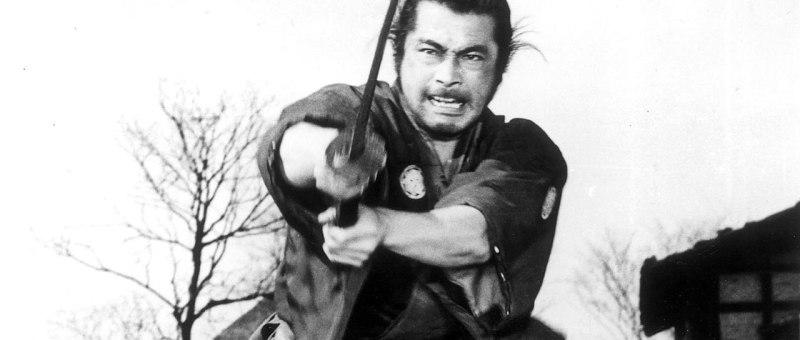
A young couple attempt to have a nice day out in Tokyo for only 35 yen but eventually discover something much more valuable in Akira Kurosawa’s surprisingly upbeat voyage through the backstreets of the post-war city, One Wonderful Sunday (素晴らしき日曜日, Subarashiki Nichiyobi). Though it may begin with frustration and progress to abject despair, the film allows its dejected heroes to find renewed hope for the future in the ashes of their defeat if only through the power of make-believe. 

Yuzo (Isao Numasaki) and Masako (Chieko Nakakita) are a young(ish) couple who’ve been together since before the war but are unable to marry because their precarious financial situation prevents them from finding a home in which they can live together. Though they are each in full employment, Masako currently lives with her sister and Yuzo with a friend. They can only spend Sundays together, but this particular Sunday Yuzo is fulled with frustration and resentment. He has only 15 yen, not much of a date as he tells Masako with irritation explaining that she’s had a wasted journey. She reveals that she has 20, but Yuzo has his male pride and is reluctant to take “a woman’s money” while internally humiliated not to be able to take her out on the town. Just before she had arrived, Yuzo had stared at an abandoned cigarette butt on the pavement. His desire soon overcame his shame. He picked it up and smoked it, only for Masako to bat it out of his hand as if insisting that he’s better than that. 

For her part, Masako is defiantly upbeat. Perhaps she’s putting on a brave face for Yuzo, but does her best to buoy his spirits so they can have a nice day together. It may be her only nice day all week. While she looks forward, he cannot move beyond the dissatisfying present. Masako begins by suggesting they check out a show home advertised on a billboard as a new kind of residence which is cheaper to build and available for only 100,000 yen for the first 100 buyers. She imagines how their life might be together in this space, while Yuzo merely sulks in the corner and points out the shoddiness of the build amid declining modern standards. It’s advertised as affordable, but they can’t afford it. Meanwhile, another man wanders in with a woman who is clearly his mistress. She exclaims that the place is a dump, “I hate matchbox houses”, while he agrees that it’s cheap for a reason and you get what you pay for. Presumably he already owns a home where his wife and family live and is about to drop a small fortune on a discreet love nest while his mistress, not unreasonably, attempts to haggle her way up to something a bit more fancy. Yuzo knows he won’t ever be able to afford even this “inexpensive” home that a wealthy man disdains as not worthy of his bit on the side. They’ve just come from seeing a crummy flat a few streets away which Masako asks directions to only to be put off by the doorman who warns them that the flat isn’t even really habitable and the landlord is heartless but they couldn’t afford that either even on the assumption they would both keep working (which depending on Masako’s job might not possible once she marries).

The landscape around them is in ruins. Yuzo and Masako wander through a bombed out city not yet ready for reconstruction looking for somewhere to stay out of the cold without eating into their 35 yen. He wants to give up and go home, but she convinces him to attend a concert of the music they heard on their first date before the war only when they get there all the cheaper tickets have been bought up by touts who sell them on at 50% markup. Beaten up for challenging the touts’ uncompromising cynicism, Yuzo hits rock bottom returning to his flat in a rundown tenement where a woman mopping the corridor gives Masako serious side eye. Frustrated, he tries to pressure her into premarital sex, her rock bottom coming a few minutes later when she firstly leaves in outrage and then returns as if admitting that their situation will never improve. 

“The war destroyed that dream” Yuzo had said of Masako’s attempt to rekindle his hopes for the future in the plan they made to open a cafe together after they married, but the reality of their mutual defeat finally seems to inspire defiance in the face of the world’s hostility. On their journey through the city, they’d encountered a ragged street kid who thought them fools after they refused his offer of ten yen for one of their rice balls and simply gave it to him out of human kindness. Yuzo felt himself a fool after trying to visit an old friend who’s done well for himself with a swanky cabaret bar only to be rebuffed and see his own image reflected in a mirror with his threadbare overcoat and battered hat juxtaposed with the image of a fine young couple eyeing him with disdain and suspicion. In the end Masako can only appeal to us, breaking the fourth wall in a moment reminiscent of Peter Pan asking us to clap if we believe in fairies as she tries to revive Yuzo’s sense of naive possibility to conduct an unfinished symphony of their imagined life together in a happier future of post-war Japan. Refusing to give in to their baser instincts, to become cynical and selfish or else simply to give up, this wonderful Sunday does seem to have given them a childish sense of hope that better days are on their way and until then there’s always next week. 


One Wonderful Sunday screens at the BFI Southbank, London on 3rd & 15th January 2023 as part of the Kurosawa season.

Seven Days War (ぼくらの七日間戦争, Hiroshi Sugawara, 1988)

“What’s wrong with a little happiness?” one of the “eight heroes” of Aoba Jr. High Class 1-A asks, retreating from the duplicitous adult world into a teenage paradise. Another Kadokawa teen movie, Seven Days War (ぼくらの七日間戦争, Bokura no Nanoka-kan Senso) adapts the first in a series of Kadokawa novels by Osamu Soda and situates itself very much in the throws of the Bubble era in which the young rail not only against a rigid, conformist society but familial disappointment and the enduring legacy of the authoritarian past. 

According to the principal’s assembly speech, at Aoba Jr. High the motto for the day is “intellect, morality, and physique”. While he’s busy talking, another teacher, Yashiro (Shiro Sano), is patiently going through students’ bags and confiscating things he doesn’t like, even such innocent items as hairbrushes lest they should be used “to attract boys” rather than to maintain one’s appearance as the school would doubtless wish seeing as we later see the same teacher taking a ruler to make sure all the girls’ skirts are at regulation length. A boy late for assembly is also taken to task over his hair, accused of having had a perm and physically dragged towards a water butt by violent P. E teacher Mr. Sakae (Yasuaki Kurata) who later beats another overweight student for not performing well enough on the monkey bars. 

It’s small wonder the kids want to rebel. Eight of the boys in Yashiro’s class suddenly disappear one day, seceding to form their own society hiding out in a disused factory. Discovered and questioned, their only demands are to have the bad teachers fired and for all the students to be treated equally, but as expected their requests fall on deaf ears. Mindful of the school’s reputation, the principal tries to calm the anxious mothers but his underling, Nozawa (Yasuo Daichi), cooly absolves himself of all responsibility insensitively telling the parents that their children’s actions are obviously a reflection of poor parenting rather than a reaction to conditions at the school. 

As crude as that sounds, it’s accidentally echoed in another of the children’s demands in that they reject the idea that “children are robbers of parents’ lives”. Many of them are dealing with some degree of familial discord, often caused by the socio-economic stresses of the Bubble era in which everyone works all the time. The parents of ringleader Eiji (Kenichiro Kikuchi) are always arguing because his father is never around to help out at home, claiming that his golf weekends etc are essential work activities while his mother complains she’s worn out expected to handle the domestic responsibilities all alone. The broody Hiroshi (Toshitada Nabeshima) resents his mother for never being home, forever off working and communicating with him largely through answerphone messages. Nakao (Ken Ohsawa), the most studious of the boys, complains that he doesn’t really like the subjects he’s forced to study and only goes to cram school to please his parents. Hitomi (Rie Miyazawa), a female student who ends up joining the group later, is often left to her own devices with her father away working in Mexico and her mother always off “playing golf” which she seems to suspect is a euphemism for some other activity. 

What the kids want is to be free to be themselves, rejecting the salaryman straitjacket the mainstream world seems to be preparing for them. This being 1988, it goes without saying that the older teachers were children themselves during wartime and the legacy of militarism seems to have endured in their extreme love of order and discipline which has also infected the slightly younger and especially scary Yashiro. The wartime echoes are driven home by the very random find of a WWII tank for some reason hidden in the factory which the kids eventually repurpose and weaponise as part of their resistance, fortifying their hideout with a series of otherwise non-lethal booby traps to keep the authorities out even after the principal orders armed troops in. In the final confrontation, Nozawa turns up wearing a WWII German uniform only to be humiliatingly defeated by one of the gang’s Mousetrap-esque devices. 

Their rebellion, however, remains temporary and goodnatured, culminating in a beautiful fireworks display that has the adults admiring their artistry, while they later appear dressed once again in their school uniforms apparently considering their next revolutionary act. A Bubble-era time capsule, Seven Days War has much in common with other ‘80s kids movies, but positions its contemporary teens at the intersection of the authoritarian past and the consumerist present each of which conspire to rob them of their freedom but in their own way fighting back for their right to be themselves in a still conformist society.


Music video (no subtitles)