Torso (トルソ, Yutaka Yamazaki, 2009)

A traumatised woman overcomes her sense of loneliness by sharing her life with a limbless inflatable doll in the aptly named Torso (トルソ). More than a treatise on urban disconnection, the directorial debut from Yutaka Yamazaki is both an exploration of the lingering effects of childhood trauma and a contemplation of contemporary womanhood, the changing relationship dynamics between men and women, and the extent of bodily autonomy in an often conformist society while ending on a note of ambiguity which may represent either liberation or resignation. 

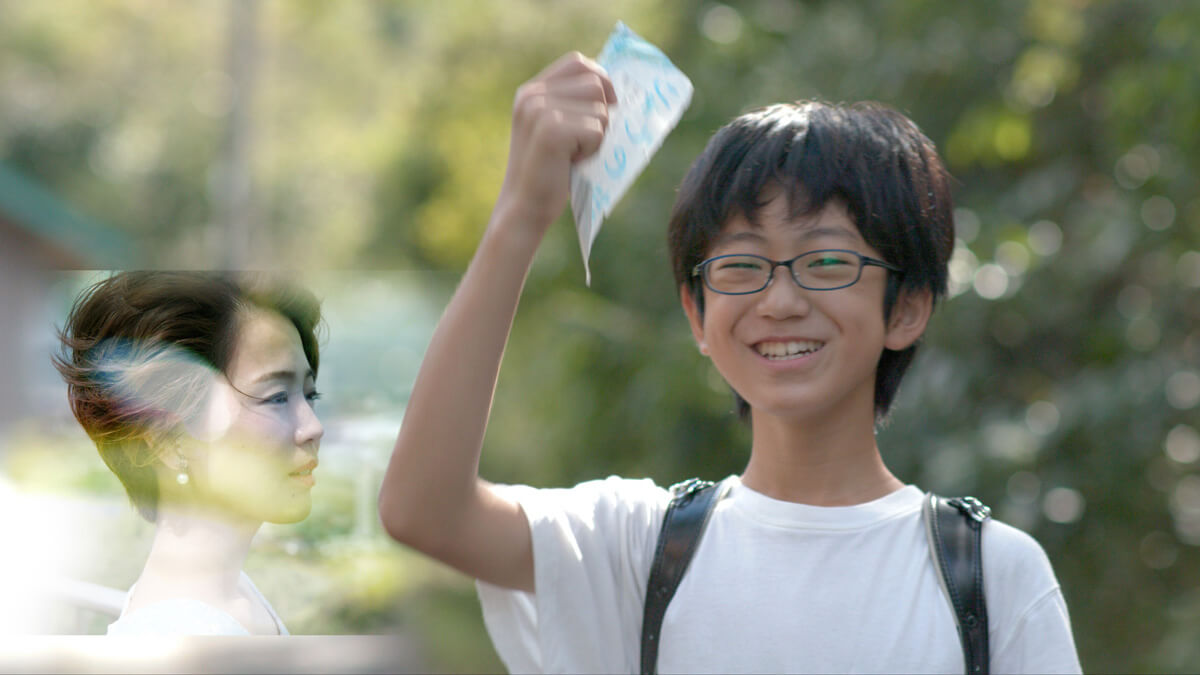
34-year-old Hiroko (Makiko Watanabe) works at an apparel studio where she is among the older of the employees and somewhat aloof with her colleagues, declining invitations to hang out after work or attend the singles mixers one of the other girls is forever organising. She is indeed the sort of person who likes to keep her distance, ostensibly preferring her own company spending her time working on a patchwork quilt but secretly cuddling up at night with a slightly smaller than life-size inflatable male torso which is anatomically correct yet has no head, arms, or legs and into which she must herself breathe life only to let it out again later. Her only other real connection is with her younger half-sister Mina (Sakura Ando) who is her polar opposite in terms of personality, a bubbly, energetic woman who seems to crave the kind of contact her sister is largely unable to give her. 

Even so despite claiming to hate having other people in her space, Hiroko is indulgent of Mina always giving in and allowing her to stay at her apartment at one point for an extended period of time even if not entirely happy about it. While Hiroko has eschewed male contact for the 100% controllable union with the torso pillow, Mina is trapped in an abusive relationship with a man, the otherwise unseen Jiro, whom we later learn to have been a long term boyfriend of Hiroko. Theirs is a relationship frustrated and defined by unresolved resentments, Hiroko complaining that Mina always takes everything she treasures beginning it seems with her mother’s love. A colleague of Hiroko’s around her own age laments that at their age weddings and funerals are the only occasions that they visit their hometowns, but Hiroko is reluctant to visit for reasons other than the usual awkwardness between grownup children and their parents, dressing up and catching a train to attend the funeral of the stepfather we gather must have abused her while her mother (Miyako Yamaguchi) turned a blind eye but finally unable to go through with it. 

For Hiroko’s mother, Hiroko is the embodiment of her resentment towards her first husband who left her, later on another visit snapping back that she must have got her “unpleasant personality” from him while otherwise praising Mina who admittedly has bad taste in men but a generous heart. Hiroko meanwhile projects her own resentment onto her mother who failed to protect her from abuse she wonders possibly because of the resentment she feels towards her while she also projects her feelings of jealous inadequacy onto Mina who may also in a sense resent her for being unable to return the sisterly affection she desires. As she replies, she took Hiroko’s things because she only wanted her love even if vicariously through the otherwise abusive relationship with Jiro whose child she is also carrying. 

In many ways it’s Mina’s pregnancy which forces Hiroko to reassess her life, not least in the accusation that she had wanted to carry Jiro’s child herself. At 34 Hiroko is perhaps at a moment of crisis, her frosty mother coldly telling her she’ll soon have to “give in” and abandon her solitary life for a conventional marriage (despite her recent widowhood her mother has already started another affair with the guy from the funeral parlour). On the other hand, are men actually very necessary anymore or has true independence become not only viable but a respected choice? Despite the constant mixers, some of the younger women at the office have decided not to wait for marriage and have already put a foot on the property ladder getting a good deal on a mortgage by starting young to own their own place and achieve financial independence. “You can’t rely on men these days” one of others agrees while recognising that choosing this kind of independence does not necessarily mean a rejection of romance or long term relationships. 

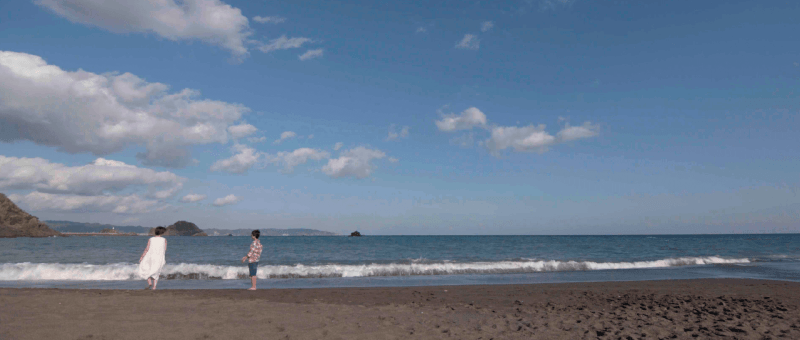
For her part, Hiroko is wary of men who do in the main seem to be sleazy and predatory, visibly flinching as an over-friendly clerk at the car rental office repeatedly attempts to lean across her while she’s sitting in the driving seat. Aside from its obvious insentience, the torso is symbolically unable to harm her in having no arms to strike, no legs to kick, and no head to hurt while preserving the part she most craves buried in its empty chest which she cradles constantly like a child with a favourite toy. Her attachment to it is not purely physical but emotional, taking it on a mini holiday to the beach dressed in a pair of tiny speedos as they frolic in the sea together alone on a private beach. Yet even this body as empty as she feels her own to be can also betray and be betrayed, another treasure to be stolen if only in the breaking of a spell on realising that Mina has discovered her secret. 

Mina’s final decision is both old-fashioned and ultra-contemporary, vowing to go back to the country and raise the child alone while in a symbolic sense becoming her mother in intending to take over her old part-time job at a nursing home. Hiroko meanwhile is preoccupied with the idea that she’s sacrificing her dreams and aspirations because of something that’s essentially Jiro’s fault, in part stripping her of her own agency in making her decisions and imposing on her the view that struggling in the city even if it doesn’t really suit you is inherently better than making a simple life at home. A brassy gravure model (Sora Aoi) who makes a point of the fact her body is business similarly looks down on Mina, suggesting that she’s simply weak and if she really wanted to pursue her dreams she’d have an abortion without a second thought. Yet does it really need to be an either or? The decision that Hiroko finally comes to may suggest that it might, or then again perhaps she’s merely freeing herself of her long held trauma and looking to lead a more emotionally fulfilling life. “We’re just starting out” Mina shouts back from from across the ticket barriers as she leaves hinting at new beginnings for each of the sisters having each at least laid something to rest. 


Original trailer (no subtitles)
Feast (Apag, Brillante Mendoza, 2022)

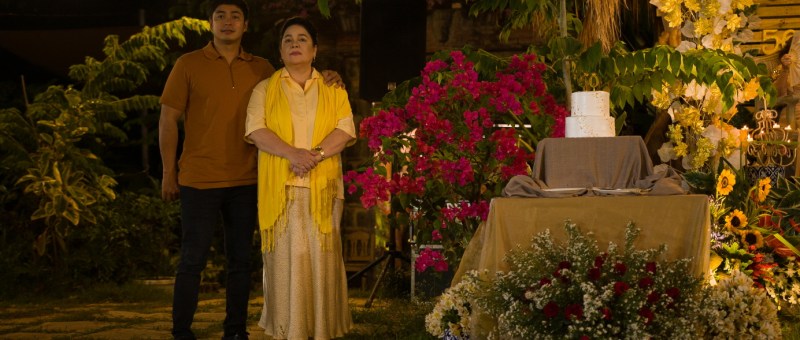
A young man fuelled by an internalised class conflict struggles to come to terms with his guilt after running over a man and his daughter in Brilliante Mendoza’s social drama, Feast (Apag). With a strong religious sentiment, each of the four acts is preceded by a title card with a Biblical quotation, Mendoza seems to suggest that we are all one big family and that all divisions are healed when the feast is shared equally, except that equal it is not even when brokered by mutual compassion. 

The opening scenes also have their irony. Wealthy businessman Alfredo (Lito Lapid) and his diffident son Rafael (Coco Martin) shop for expensive fresh crabs at the market, while Matias and his young daughter haggled for much less extravagant fare before making their way home by scooter and sidecar. Distracted by a phone call, Rafael ends up colliding with Matias in his 4×4. Acting quickly, Alfredo jumps in the driving seat and speeds away insisting that he will take the responsibility for the accident, whatever that might mean. After a talk with their lawyer who tells them they’ve not a leg to stand on, Rafael goes to the hospital and pays the family’s bills but Matias dies soon afterwards. Alfredo insists on taking the blame, agreeing to go prison in his stead, but Rafael can’t get over his guilt and enters a depressive spell that prevents him from getting on with the rest of his life.

As we later discover, Rafael occupies a difficult position in terms of his social class. His mother Elisa is Alfredo’s second wife, once a waitress in the family home and disliked by the children of his previous spouse. He is separated from his daughter as his wife seems to have left him for unclear reasons and gone abroad where she has met another man. He wants to unburden himself by accepting the punishment for Matias’ death but is prevented by his father’s heroic act of sacrifice and must carry the guilt alone. The family determine to make amends by “supporting” Matias’ widow Nita (Jaclyn Jose) and their children, but are in essence wielding their privilege over her in assuming they can settle all of this with money and need accept no other responsibility. 

Nita is rightly insulted when Elisa turns up to offer her money to compensate for her husband’s death, but it’s also clear that the family is already poor and now presumably without their main breadwinner. In any case what she wants is justice, and both gets it and doesn’t when Alfredo is sent to prison in place of Rafael. In the final acts of the film, the family has taken in Nita and her children but ostensibly as servants even if ones treated like friends while she is forced to feel grateful to the family that killed her husband for gifting her financial security. The feast with which the film ends was cooked by Nita, but she is not invited to partake in it only stand by and watch while the rest of the family eat. Yet the scene is presented to suggest that a divide has been healed, that inviting them to attend the feast was enough in itself even if a class distinction is still clearly felt between those who serve and those who eat. 

Though Nita seems to have some latent resentment, it is largely washed away on learning the truth allowing her to forgive and symbolically releasing Rafael from his torment. While forgiveness maybe worthy, it also lets the privileged off the hook for their oppressive behaviour in suggesting that the wealthy need only show magnanimity while the poor are expected to simply accept it in good faith. Had this not happened, there is no way they would share their feast with a woman like Nita nor will they ever do so again. If they really meant to dissolve class barriers, they could open the doors to all but they do not. In any case, through coming to terms with his responsibility for Matias’ death, Rafael appears to quell his own inner class conflict to occupy his rightful place but perhaps still fails to fully consider that Matias’ death wasn’t really just an “accident” but a natural consequence of the way in which men like himself move through the world.


Feast screened as part of the 2022 Busan International Film Festival.

Original trailer (no subtitles)
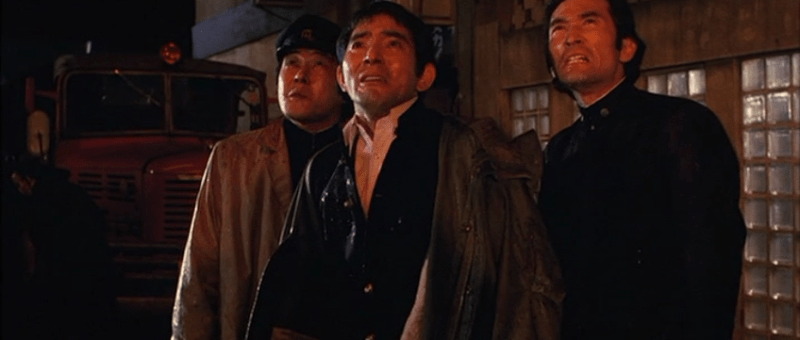
Dead Angle (白昼の死角, Toru Murakawa, 1979)

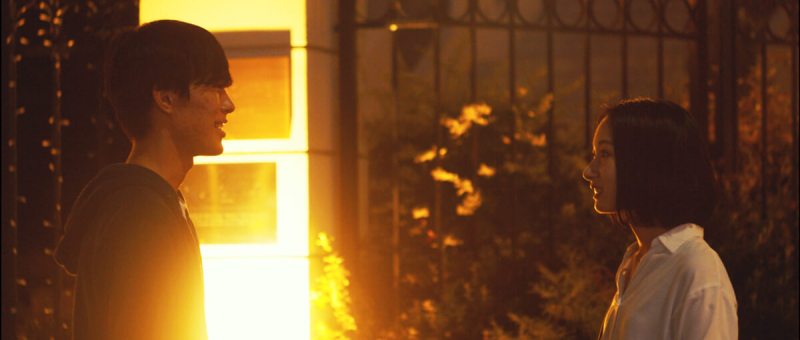
The jitsuroku yakuza movie which had become dominant in the mid-70s had often told of the rise and fall of the petty street gangster from the chaos of the immediate post-war era to the economically comfortable present day. The jitsuroku films didn’t attempt to glamourise organised crime and often presented their heroes as men born of their times who had been changed by their wartime experiences and were ultimately unable to adjust themselves to life in the new post-war society. Adapted from a serialised novel by Akimitsu Takagi which ran from 1959 to 1960, Toru Murakawa’s Dead Angle (白昼の死角, Hakuchu no Shikaku) by contrast speaks directly to the contemporary era in following a narcissistic conman who has no need to live a life of crime but as he says does evil things for evil reasons. 

Prior to the film’s opening in 1949, the hero Tsuruoka (Isao Natsuyagi) had been a law student at a prestigious Tokyo university where he nevertheless became involved in the Sun Club, a student financial organisation launched by mastermind Sumida (Shin Kishida) who eventually commits suicide by self-immolation when the organisation collapses after being accused of black market trading. An unrepentant Tsuruoka resolves to start again, rebuilding in the ashes as a means of kicking back against hypocritical social institutions and rising corporate power by utilising his legal knowledge to run a series of cons through the use of promissory notes to prove that the law is not justice but power. 

In this Tsuruoka has an ironic point. He doesn’t pretend what he’s doing is legal, only that he’s safeguarded himself against prosecution. When a pair of yakuza thugs break into his office and threaten him in retaliation for a con he ran on a shipping company, he reminds them that as they’ve had him open the safe it would make the charge of killing him robbery plus murder which means automatic life imprisonment rather than the few years they might get for simply killing him without taking any money. He always has some reason why the law can’t touch him, while implicitly placing the blame on his victims who were often too greedy or desperate to read the small print and therefore deserve whatever’s coming to them. In at least one case, Tsuruoka’s victimless crimes end up resulting in death with one old man whom he’d double conned, pretending to give him the money he was owed but getting him drunk and talking him into “re-investing” the money with him, takes his own life by seppuku in the depths of his shame not only in the humiliation of having been swindled but losing his company, who had trusted him, so much money. 

You could never call Tsuruoka’s rebellion an anti-capitalist act, but it is perhaps this sense of corporate tribalism symbolised by the old man’s extremely feudalistic gesture that Tsuruoka is targeting. As his wife Takako (Mitsuko Oka) tells him, Tsuruoka should have no problem making an honest living. After all he graduated in law from a top university, it’s not as if he wouldn’t have been financially comfortable and it doesn’t seem that the money is his primary motive. While Takako continues to insist that he’s a good person who wouldn’t do anything “illegal”, his longterm geisha mistress Ayaka (Yoko Shimada) knows that he’s an evil man who does evil things for evil’s sake and that’s what she likes about him. Elderly businessmen are always harping on about the “irresponsible youth” of the day but all are too quick to fall for Tsuruoka’s patter while he is essentially nothing more than a narcissist who gets off on a sense of superiority laughing at the law, the police, and the corporate landscape while constantly outsmarting them. 

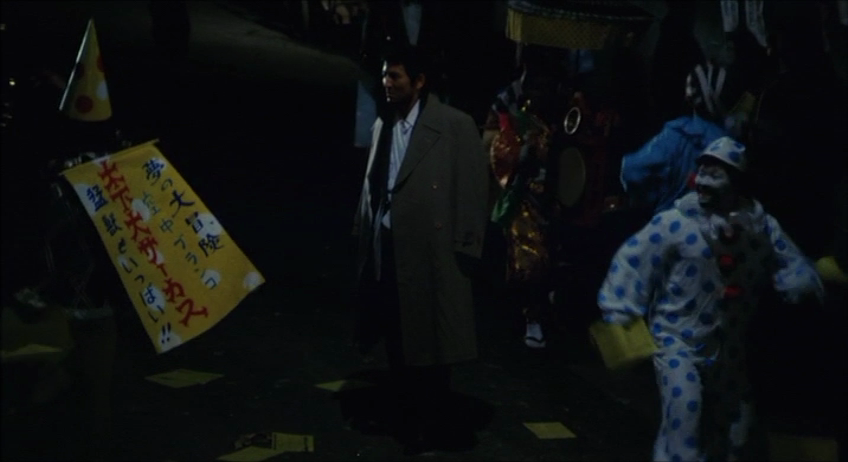
In this, the film seems to be talking to the untapped capitalism of the 1970s. Like Tsuruoka, the nation now has no need to get its hands dirty and should know when enough is enough but is in danger of losing sight of conventional morality in the relentless consumerist dash of the economic miracle. That might explain why unlike the jitsuroku gangster pictures, Murakawa scores the film mainly with an anachronistic contemporary soundtrack along with the ironic use of saloon music in the bar where Tsuruoka’s associates hook an early target, and the circus tunes which envelope him at the film’s opening and closing hinting that this is all in some ways a farce even as Tsuruoka is haunted by the ghosts his narcissistic greed has birthed. Then again perhaps he too is merely a product of his times, cynical, mistrustful of authority, and seeking independence from a hypocritical social order but discovering only failure and exile in his unfeeling hubris. 


Original trailer (no subtitles)
Broker (브로커, Hirokazu Koreeda, 2022)

Perhaps more than any other contemporary director in Japan, Hirokazu Koreeda has persistently interrogated the concept of the modern family asking what exactly the word has come to mean and how it is or should be defined. In Nobody Knows he showed us a case of parental neglect as abandoned siblings attempted to get by on their own in the absence of maternal care, while the separated brothers of I Wish struggle to define the nature of their relationships in the wake of their parents’ divorce. In Like Father, Like Son, Koreeda asks whether it’s blood relation that defines a family tie or whether it is forged more by mutual affection and shared memories, and in festival hit Shoplifters, he showed us a family who were not related by blood but had found in each other a home and a place to belong. 

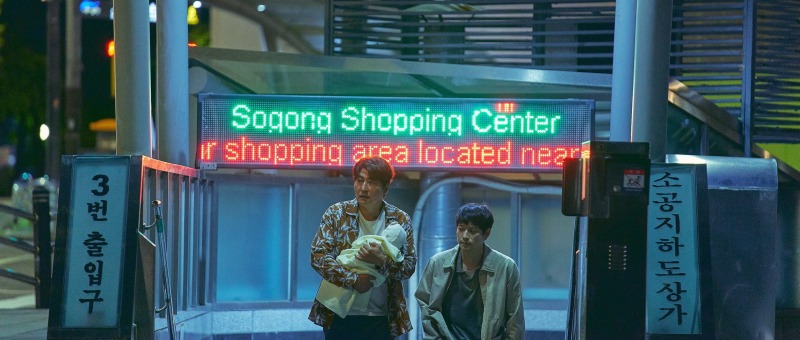
Billed as a kind of companion piece, Broker (브로커) once again features a found family “brokered” by criminal activity but goes a step further, asking once again what the rights and responsibilities are when it comes parenthood and if the choice to abandon a child can ever be justified. Set in Korea where Christian morality has a greater influence, the film opens with a young woman leaving her infant child in front of a church yet abandoning him on the floor rather than placing him inside the “baby box” in the church’s wall. A policewoman staking out the church in the belief that someone is using the baby box to traffic children gently places the infant inside with what looks like maternal care but then we start to wonder, perhaps she only does so in order to see what happens when someone picks up him from the other side. 

Indeed, the policewoman will later concede that perhaps she herself was the one who most wanted the baby, Woo-Sung, to be sold so that she could catch the traffickers redhanded. We might feel a degree of revulsion towards the idea that a baby could be exchanged for money, but then perhaps we don’t stop to wonder who might buy and for what purpose. Sang-hyun (Song Kang-ho), a dry cleaner with gambling debts, and his partner Dong-soo (Gang Dong-won) who himself grew up in an orphanage, later recount selling a baby to two gay men who would otherwise be unable to adopt in the still conservative country suggesting in part that it’s a repressive society that forces people into this morally questionable underground trade in human children. It’s also societal conservatism that necessitates the existence of something like the baby box in that often very young women who bear children but cannot keep them either out of shame or simple economic impossibility have few other options than to abandon their child in the hope that someone will take it in. 

Detective Lee (Bae Doona) nevertheless brands these women as “irresponsible” and blames the baby box for tacitly encouraging their behaviour. An abandoned child himself, Dong-soo also struggles with his attitude towards the mother, So-young (Lee Ji-eun), who against all the odds does come back to reclaim her son after changing her mind. He and Sang-hyun justify their actions that they’re “saving” Woo-sung from being placed into the care system by finding him a loving home with parents who can give him a comfortable life. After taking to the road, the trio arrive at the orphanage where Dong-soo was raised which is less a home for him than a painful reminder of all he’ll never have and will never achieve as someone without a clear idea of a place to belong.

The man running the orphanage even concedes he’s not doing so well after the losing the subsidies for a few of the kids who have left, though few people adopt kids over six and the law makes it more difficult at eight which is a particular problem for football enthusiast Hae-jin (Im Seung-soo) who ends up climbing into Sang-hyun’s van and demanding they take him in. “Blood is thicker than water” the man sighs, explaining that kids are often sent back when it doesn’t work out or even end up suffering abuse despite the supposedly rigorous processes for vetting potential parents which causes some to simply buy a child on the black market instead. 

Despite the image of Dong-soo and Sang-hyun as heartless child traffickers they nevertheless take good care of Woo-sung and are up to a point careful that they should give him to someone responsible, mindful of those who might want a baby for untoward purposes or are intent on selling him on. A visual motif of tangling threads from the cotton on Sang-hyun’s sewing machine to the rope that pulls the busted back door of the van closed hints at the various ways these five dispossessed people are slowly bound together, becoming an accidental family forged through a process of mutual understanding in which Dong-soo is able to re-evaluate his feelings towards his mother through bonding with So-young and realising that in abandoning her child she may only have been trying to protect him and give him the better life that she never had. 

So-young tells Dong-soo that she sometimes has a dream in which the rain washes away her life until now, but on waking she realises it’s raining and nothing’s changed. He tells her perhaps all she needs is an umbrella that’s big enough for two, a metaphor for the protective quality of family he could perhaps have given her. Even she later concedes that had she met them earlier, none of this would have been necessary while Detective Lee’s more sympathetic partner (Baek Hyun-jin) likewise asks why they couldn’t have intervened earlier and done something to help this struggling young woman whose only problem was her aloneness before it came to this. What emerges is an unexpected compassion and the extension of an umbrella from an unexpected source in the acknowledgement that nothing’s ever quite as simple as it might seem. Koreeda leaves us with an outcome that is possibly as happy as it could be in an imperfect world, which might in itself be a little unrealistic but nevertheless in its own way hopeful in having reclaimed a notion of “family” brokered by selflessness and mutual compassion if not quite love for the orphans of an indifferent society.


Broker opens in UK & Irish cinemas on February 24th. For more information head to http://broker.film/

UK release trailer (English subtitles)

Hypnosis (ヒプノシス, Takuto Okui, 2022)

The difference between hypnosis and brainwashing, according to a recently released street thief, is that brainwashing forces you to do something you don’t really want to whereas hypnosis merely encourages you to act on a latent desire. He perhaps leans a little heavily on this defence, justifying his own actions as only accidental motivators as if his victims were somehow complicit in his crimes, yet there is something in what he says if only in his own wilful self-delusions. 

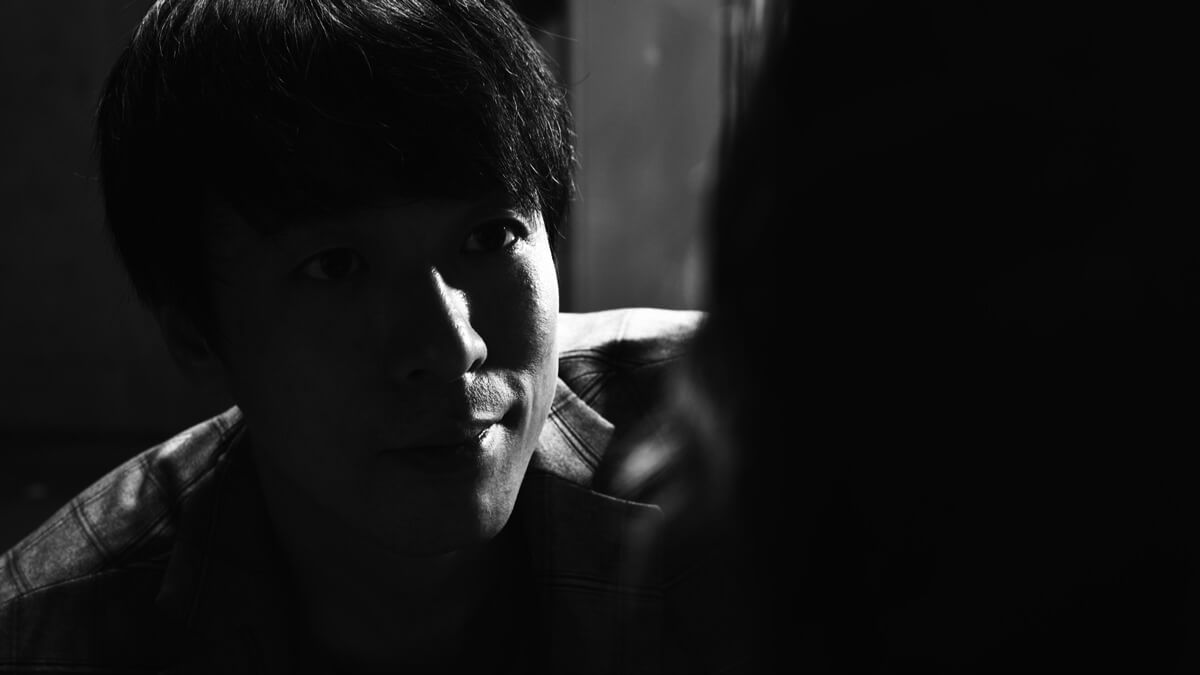
A graduation project, Takuto Okui’s Hypnosis (ヒプノシス) follows protagonist Kazuto across two time periods 15 years apart opening in colour with the young Kazuto hypnotising and then robbing a policeman of his watch and gun, before jumping forward and into black and white to find him recently released from prison using his powers for “good” to knock out a sexually aggressive guy and rescue sex worker Maki from being assaulted in an alleyway. Taking her for a hamburger dinner he can’t convince her to eat, he explains that he was passing through on a trip down memory lane remembering when he’d saved his first love Mei from a similar situation with an abusive boyfriend. 

Kazuto proves his point about hypnosis only working if the target on some level wants to comply when his attempt to convince Mei to leave violent partner Masashi immediately fails, she later coming to the conclusion her decision to stay with him was also a kind of brainwashing. Nevertheless, he seems to be able to pull Jedi mind tricks on various policemen while otherwise using it to manipulate a situation to his advantage. We might wonder about his ability to pull the wool over our eyes especially when he pulls a gun on his abusive father, a fantasy sequence giving way to his shooting him for real but there being no sign of blood at the scene though a policeman does turn up a little later having received a report of a gunshot only for Kazuto to convince him to go away without investigating further. 

In each timeline he’s minded to play the hero, firstly trying to save Mei from Masashi and then Maki from the loansharks who have been after her ever since her father took his own life after unwisely guaranteeing a loan for his boss who then ran off and left him to carry the can. But the more he tells us the less we trust him, painting a picture of romantic tragedy in which he was cruelly robbed of his true love and languished in prison for 15 years while Masashi apparently went on enjoying his life. “That’s how this story ends” Kazuto stoically explains, suggesting that it’s how he’s chosen to end it in not immediately gunning for revenge on his release from prison but also hinting at a degree of personal myth making in creating an ending that fits with his version of events. 

The colour sequences are in a way part of the movie in his mind, the way he’s taught himself to remember it, while the black and white are just that a starker version of an objective truth without Kazuto’s editorial filter. He says he wants to help Maki, and perhaps he does, but is also playing an angle to get his hands on her money while leaving her open to reprisals from the loanshark, not to mention his grand plan involves selling someone to an elite club of French of torture enthusiasts through middle woman Akemi who, as a kind of anchor, has apparently not changed in the 15 years he’s been in prison. 

Even so, reality will eventually come calling for him and he’ll go to great lengths to protect his self-deluded fantasy, preserving the grand act of self-hypnosis he’s practiced on himself. As it turns out, there are some situations you can’t talk your way out of or escape through a simple Jedi mind trick but the ability to rewrite the past as you remember it might be the next best thing. Heavily stylised, Okui’s noirish drama pits fantasy against reality and objective truth against delusion while Kazuto wanders between failed hero and cowardly villain unable to protect anything or anyone save perhaps his image of himself even in his failure. 


Hypnosis screened as part of the 2022 Yubari International Fantastic Film Festival.

Interview with the director (Japanese only)

Throne of Blood (蜘蛛巣城, Akira Kurosawa, 1957)

In many ways, the underlying theme in Akira Kurosawa’s films of the 1950s is that we are incapable of knowing ourselves and are, as a forest spirit remarks in Throne of Blood (蜘蛛巣城, Kumonosu-jo), afraid to look into our own hearts and admit our darkest desires. In adapting Shakespeare’s Macbeth, Kurosawa is less interested in the pull of ambition than the insecurity that drives it along with the inability to transcend himself that precipitates the hero’s decline. 

Indeed, after Washizu (Toshiro Mifune) and his best friend Miki (Minoru Chiaki) ride into the misty forest domain of the witch-like seer who ominously turns her spinning while offering a moral lesson that neither of them heed, they sit on the ground and laugh about what they’ve heard. Yet as Washizu partly admits the old woman revealed something of himself to him in that she echoed a dream of which he was unwilling to speak. Miki asks what warrior would not want to be placed in charge of a castle, but for Washizu it’s almost a primal need to prove himself in surpassing other men. Miki, by contrast, is not so nakedly ambitious but he doesn’t really need to be because he has a son. Washizu has no heir, his line will end with him and so he has only this life to make something of his name. 

Having no heir also undermines his sense of masculinity, just as it undermines the femininity of his wife, Lady Asaji (Isuzu Yamada), who as a woman now likely too old to bear a child may fear for her position. Kurosawa styles Yamada’s face as a perfect noh mask while she delivers her lines with the intonation of noh theatre all of which lends her a fairly eerie presence which only deepens as she descends into the darkness and back out again hovering like a ghost. She is in a sense perhaps already dead if not otherwise possessed by some malignant spirit as she urges her husband on in their dark deeds like a demon on his shoulder even going so far as to present him with the spear he will use to murder his lord, the ultimate act of samurai transgression. 

Yet as Lady Asaji points out, the present lord killed the lord before him for the right to sit on the dais. When the lord comes to stay with them on a pretext of hunting while preparing to launch an attack on a potential rival, the couple are moved into a room previously inhabited by a retainer who’d tried to mount a rebellion but was defeated. He took his own life and the room is still stained with his blood which covers both walls and floor. Washizu ought to realise that this is his fate too, but deep down he wants the prophecy to be true, which it is if more in the letter than the spirit. Would he have done it if he had not met the forest spirit, or would he only idly have thought of it but never followed through? It’s not something that can be known, but his eventual failure is born more of his inability to accept this side of himself than it is the price of ambition in itself. “If you’re going to choose ambition choose it honestly with cruelty” the forest spirit later advises, and Washizu might have been more successful if had he done so earlier. 

Then again, the world he lives in is as Lady Asaji describes it a wicked one in which betrayal is an all but inevitable certainty. Washizu insists that Miki is his friend, and that making Miki’s son his heir satisfies the prophecy while binding him to him so that he cannot rebel even if he were minded to. But Lady Asaji assumes that Miki is ambitious too, suggesting that he may strike first or report his treachery in the hope of personal advancement. For the prophecy to come true, someone has to betray the lord though it need not have been either of them but there can be no trust or friendship in this world of fierce hierarchy and internecine violence. 

Both men should perhaps have realised that when they were trapped riding around the eerie lair of the forest spirit with its mists and cobwebs not to mention heaps of piled skeletons still in their armour all victims of ambition and the spirit’s false promises if also echoing the legacy of wartime folly. “Look upon the ruins of the castle of delusion” the noh chant that opens and closes the film intones, warning of illusionary riches and the price of deluding oneself along with the destruction wrought by those unable to break free of the spider’s web of human desire. 


Throne of Blood screens at the BFI Southbank, London on 21st February 2023 as part of the Kurosawa season.

Original trailer (no subtitles)

Asian Pop-Up Cinema Announces Season 16 Japanese Showcase

Chicago’s Asian Pop-Up Cinema will be returning for its 16th season March 18 to April 16 and has just announced the programme for its opening weekend which will be dedicated to Japanese Cinema. Running March 18 & 19 the Japanese Showcase will open with awards favourite A Man, while French-Japanese co-production Umami will follow March 22.

Saturday, March 18, 2:30 PM: A Man

Guest Host and introduction by Mark Schilling (Japan Times/Variety). A pre-recorded Q&A with Director Kei Ishikawa will be featured after the screening

©2022 "A MAN" FILM PARTNERS

The latest film from Kei Ishikawa (Gukoroku: Traces of SinArc), A Man stars Satoshi Tsumabuki as a lawyer who is pulled into a web of intrigue when a former client asks him to investigate her late husband who had been living under an assumed identity.

Saturday, March 18, 5:30 PM: She Is Me, I Am Her 

Director Mayu Nakamura and lead actress Nahana, who is also the recipient of the Career Achievement Award, will be in attendance for an introduction plus a post-screening Q&A moderated by Mark Schilling.

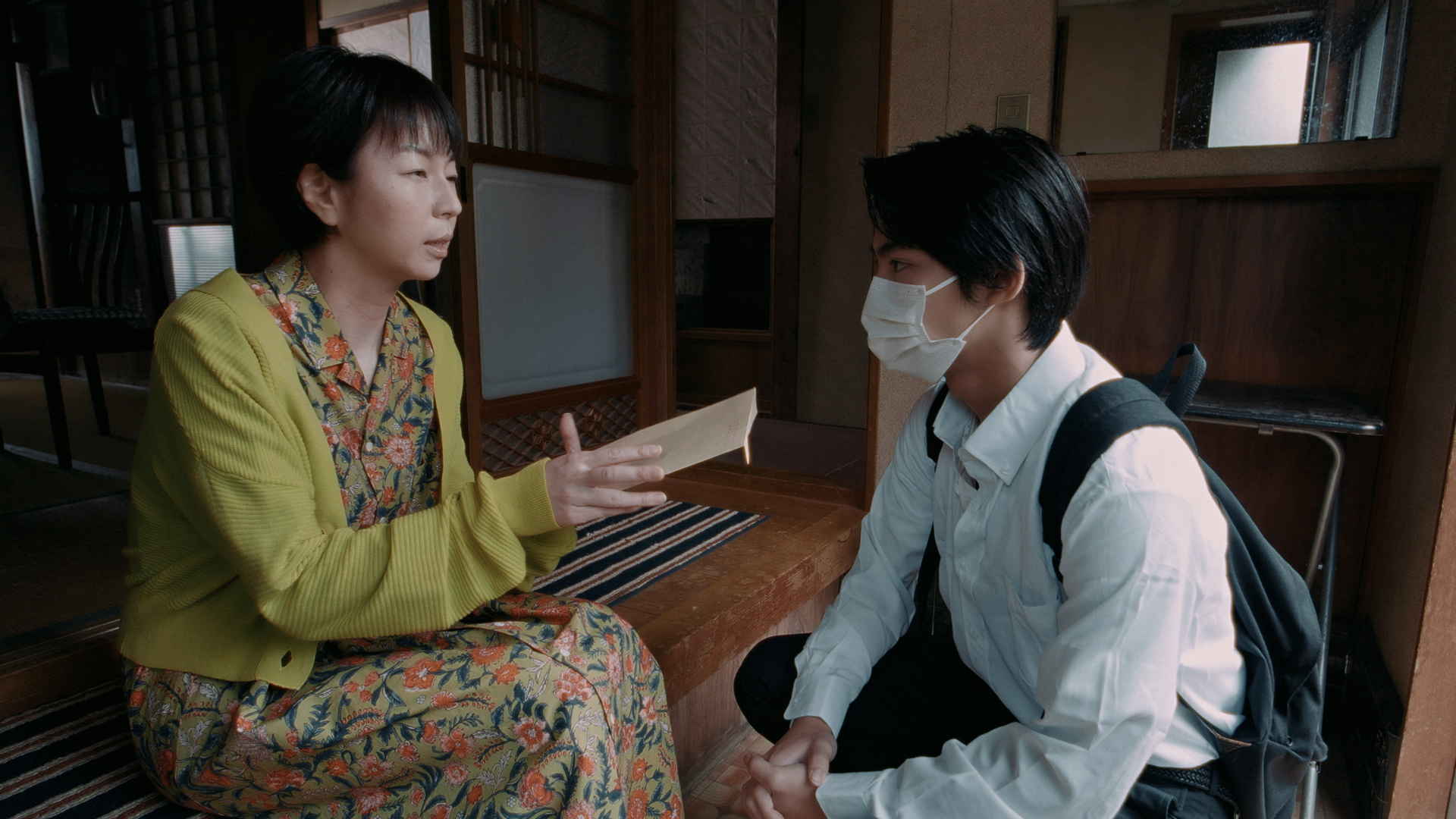
Mayu Nakamura’s anthology film spins four of tales of contemporary loneliness exacerbated by the COVID-19 pandemic each starring actress Nahana as a conflicted housewife meditating on past regret, a lonely woman who takes a liking to a takeaway delivery driver, a sex worker displaced by the pandemic, and a blind woman who offers a hand of salvation to a telephone scammer. Review.

Sunday, March 19, 2:30 PM: Before They Take Us Away 

Producer Evelyn Nakano Glenn and Director Antonia Grace Glenn are scheduled to attend in person for an introduction plus a post-screening Q&A moderated by Mark Schilling

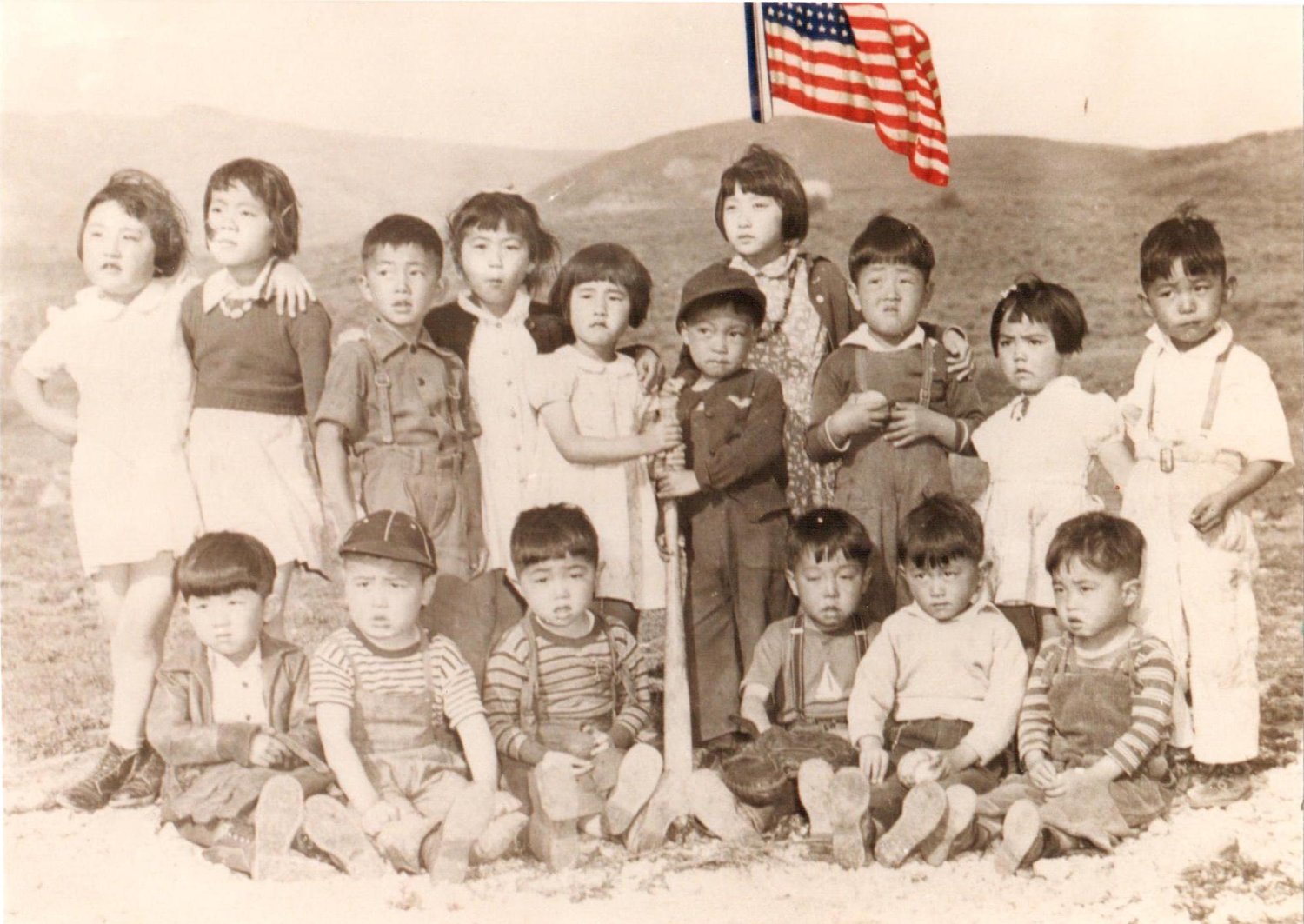
Antonia Grace Glenn’s documentary focusses on the Japanese Americans who evacuated voluntarily in the wake of Executive Order 9066 and avoided entering the internment camps but became refugees in their own country.

Sunday, March 19, 5:30 PM: Convenience Story

Introduction by Mark Schilling followed by Q&A moderated by Chicago-based writer Michael Foster after the feature presentation.

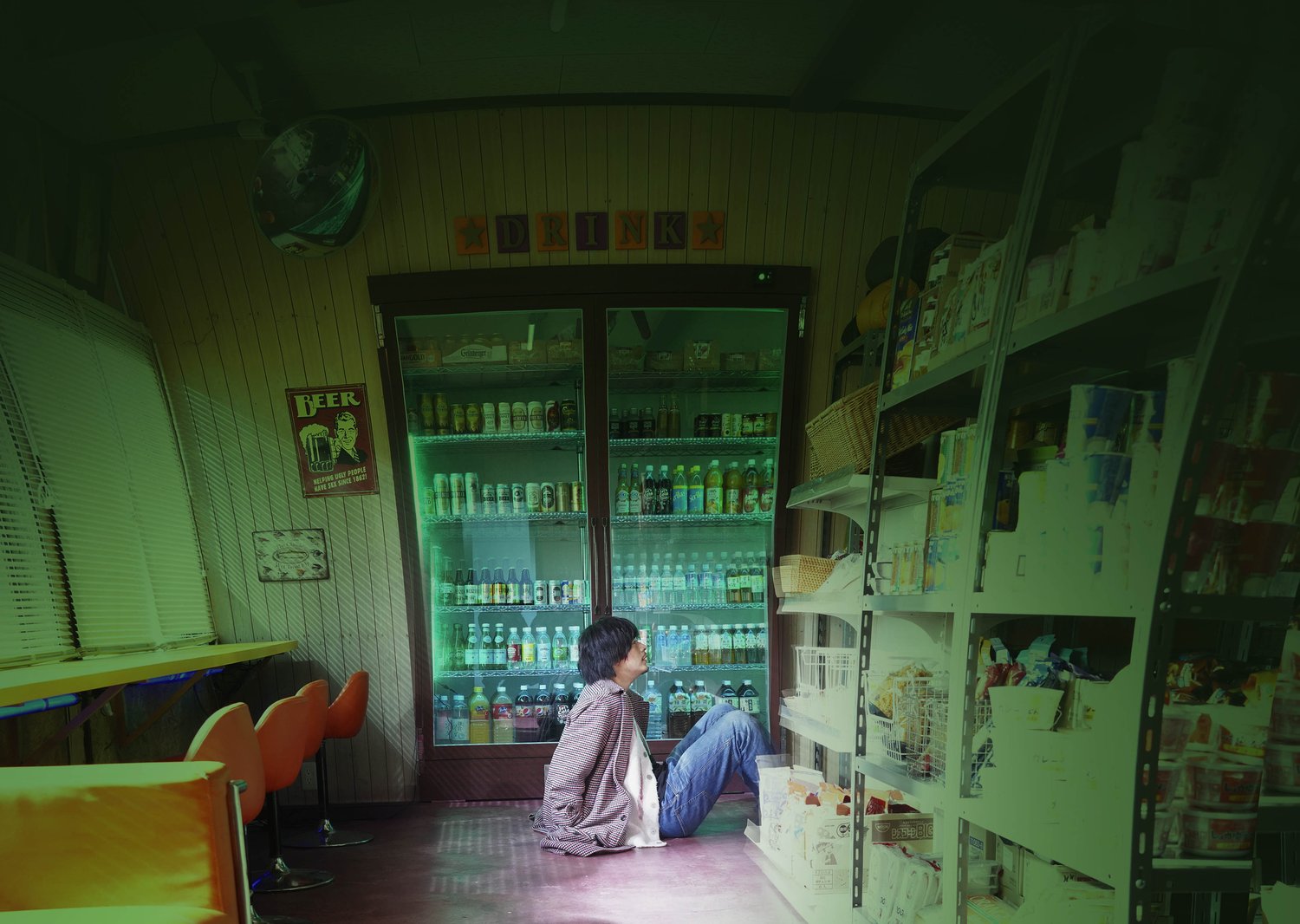
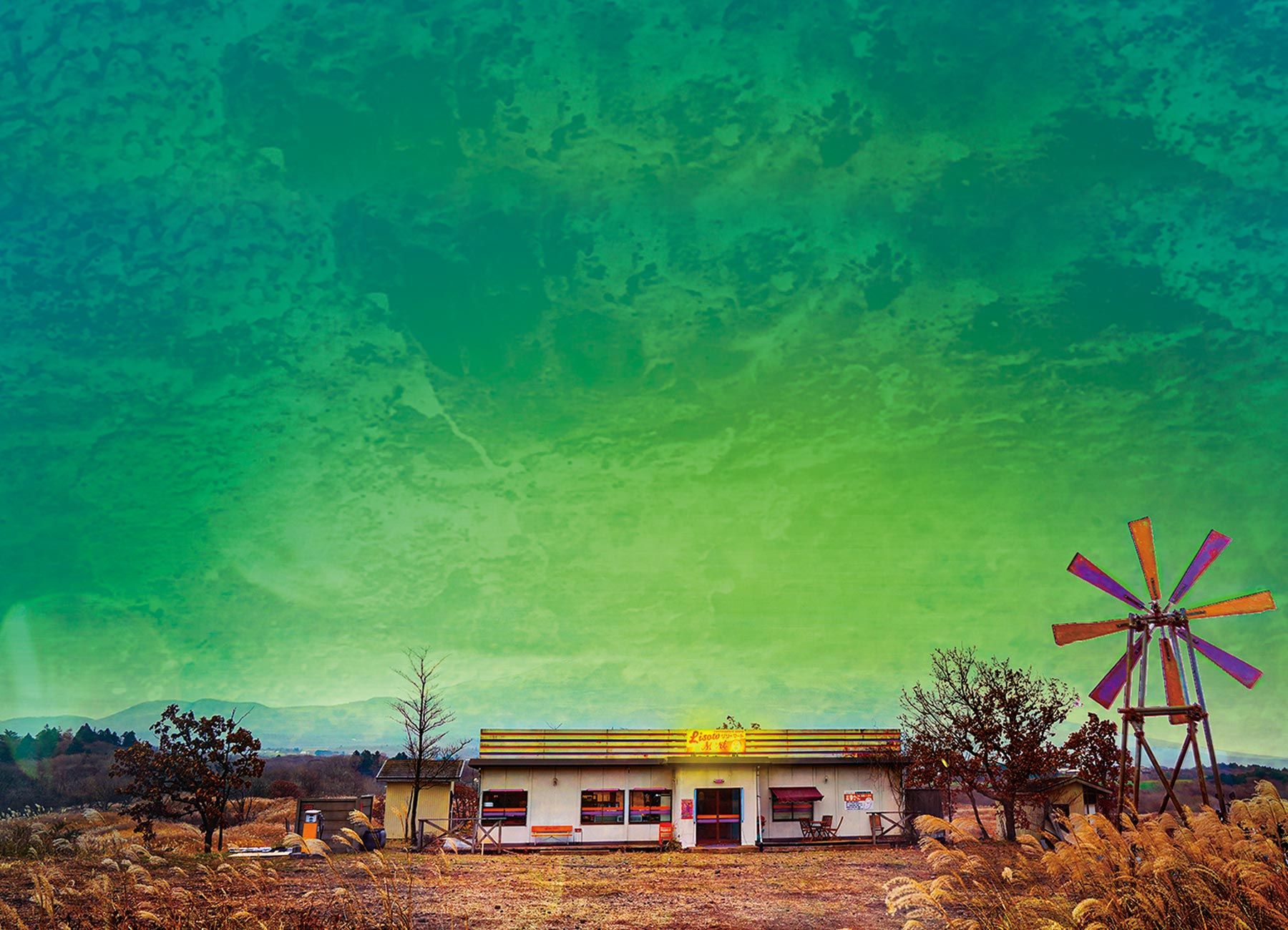
Surreal Lynchian adventure based on a story by film writer Mark Schilling and directed by Satoshi Miki following a blocked writer (Ryo Narita) who becomes trapped in a weird alternate reality after entering a mysterious convenience store. Review.

Wednesday, March 22, 6:30 PM: Umami

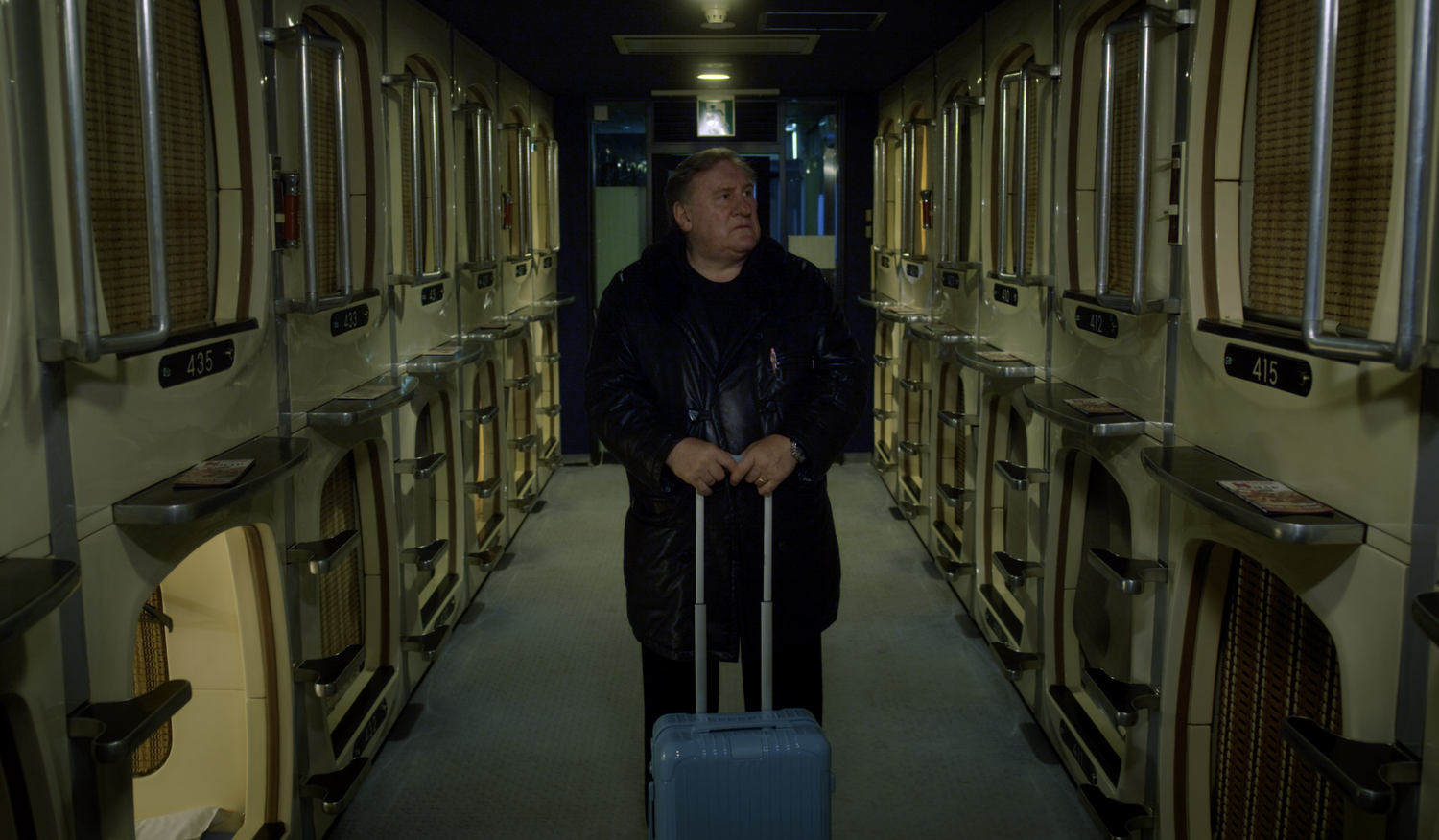
French-Japanese co-production starring Gérard Depardieu as a chef who has a near death experience and embarks on an existential journey to Japan haunted by his defeat in a culinary competition decades earlier at the hands of a Japanese ramen master.

The full lineup for season 16 will be announced Feb. 27. The Japanese Showcase runs at Evanston’s AMC 12 (1715 Maple Ave, Evanston, IL 60201) March 18 & 19 with Umami on following on March 22. Tickets are on sale now priced at $10, Seniors (62+) $8, and free for Students with valid ID & educational email address. Further details can be found on the official website and you can also keep up with all the latest news by following Asian Pop-up Cinema on  FacebookTwitter,  Instagram, and Vimeo.

Piece of Atom (アトムの欠片, Takuya Koda, 2021)

A teenage boy attempts to come to terms with grief following the sudden death of his parents in Takuya Koda’s nostalgic youth drama, Piece of Atom (アトムの欠片, Atom no Kakera). Quite clearly influenced by the films of Nobuhiko Obayashi, Koda’s summertime drama contemplates transience and eternity in insisting that nothing’s ever really gone forever and that we leave traces of ourselves wherever we go that may be picked up by anyone able to discern them. 

Teenager Ryo is very into science and particularly interested in the nature of the atom. He lives with his parents and much older sister Shiho in a small flat in Tokyo, but when his mother and father are killed in a car accident he is forced to move to a house the family owned in the country which is in a state of disrepair. At around 30, Shiho does her best to create a stable environment for her brother as they work together to repair their home but there’s also strange ethereality in her behaviour that suggests she’s trying to prepare him for an early adolescence. 

Neither of them seem to know very much about their parents’ pasts or why it is they have this house which obviously has not been visited in many years. Yet soon after his arrival, Ryo begins to encounter a strange phenomenon in which he almost breathes in floating memories of his father which begin to illuminate the parts of his parents’ lives which had remained hidden from him. He attributes this to the presence of his father’s “atoms” which he shed while, as Ryo discovers, he lived in the area as a student. Later he comes to the realisation that some of his father’s atoms survive in him as well as in everything he ever touched or came into contact with and that he might also posses the atoms of famous historical figures forever connecting him to the great confluence of humanity comforted by the knowledge that his parents did not simply disappear from the world and parts of them will forever remain within it. 

Meanwhile, he’s also a city boy trying to adapt to life in the country. His first shock is that his school is so small that there are no grades, all the children are being taught together. In any case he quickly makes a friend with local boy Ken, who shares his love of tokusatsu hero “Woodman”, setting up a secret base for them both in an abandoned car on a local dump. Ryo fights with his sister over personal privacy, irritated by her tendency to tidy his room without warning like any teenage boy might be, while struggling to define his idea of family now that there are only two of them. Before he died, Ryo had wanted to ask his father who had penned a book on the subject why atoms are round and how they hold together only to get a partial answer through one of his visions which is echoed by Shiho’s explanation that it’s his feelings which hold her together as if his unwillingness to let her go literally binds her atoms in their current form. 

Yet as she also points out, atoms may be eternal but people are not and she cannot stay with him forever. Echoing the work of Nobuhiko Obayashi, Kudo’s dialogue is often theatrical and self-reflective, while he makes surprising use of green screen and special effects to lend a note of unreality to the world around Ryo as he embarks on a journey of self-discovery across a timeless and nostalgic summer. The atoms he refers to are less physical particles, though clearly that too, than fragments of memory littered over a landscape as a kind of proof of life. Like a snail trail of human existence, they are evidence of the traces left behind by those who have gone allowing Ryo to come to a greater understanding of his parents while learning to let them go in order to move forward with his life. An affecting coming-of age-tale, Kudo’s occasionally psychedelic drama repurposes the atom as an embodiment of memory and feeling, a force that preserves its integrity while allowing its young hero to find an accommodation with loss through the contemplation of eternity. 


Piece of Atom screened as part of the 2022 Yubari International Fantastic Film Festival.

Original trailer (no subtitles)

Rhapsody in August (八月の狂詩曲, Akira Kurosawa, 1991)

“People do forget everything, and quickly too” a teenage girl laments preparing to meet her half-American uncle and feeling a little awkward having been admonished by her parents for inadvertently confronting him with the realities of the wartime past. The middle generation in Kurosawa’s tri-generational tale of the legacy of warfare Rhapsody in August (八月の狂詩曲, Hachigatsu no Rhapsody) have it seems an ambivalent attitude they’re in the process of imparting to their children that views talk of the atomic bomb as almost taboo, tiptoeing around it with their newfound American relatives lest they offend them but mostly out of a desire for economic gain that reflects an early post-war mentality almost entirely alien to their Bubble-era teenage kids.

It’s the children who are keenest to learn about their past, staying with their elderly and seemingly frail grandmother Kane (Sachiko Murase) over the summer while their parents have travelled to Hawaii to investigate after receiving a letter from Kane’s long lost younger brother Suzujiro who emigrated in the 1920s and has since become a wealthy man running a pineapple plantation. The problem is that Kane had a large number of siblings, at least 11, and honestly doesn’t remember one called Suzujiro who did after all leave the country 60 years previously and was never seen again. The children, Tadao (Hisashi Igawa) and Yoshie (Toshie Negishi), think her refusal to visit him in Hawaii is partly down to a lingering resentment for the dropping of the atomic bomb which killed her husband, but as she later tells the grandchildren that was 45 years ago and she no longer has any strong feelings either way about the Americans adding only that it was all the fault of the war.

Nevertheless, it’s clear that Kane lives with a sense of loss and the continuing trauma of witnessing the flash that is expressed by the bald spot on the back of her head. As the grandchildren ask her questions she begins to reflect more on the past, remembering a younger brother, Suzukichi, who witnessed the flash with her and later had some kind of breakdown locking himself away endlessly drawing pictures of eyes that she later explains mimicked that of the flash itself. Kurosawa depicts this memory with surrealist imagery, a red sky splitting open just as Kane described exposing an eye which seemed to stare down at them. Youngest grandson Shinjiro (Mitsunori Isaki) draws such an eye on the blackboard in the study room in his grandmother’s house, an eye which continues to observe the children as they contemplate the recent past as well as an older Japan exemplified by their grandmother’s tales of the water imp living in a nearby pool who might once have saved Suzukichi’s life. 

In some ways, it’s almost as if the middle generation has been passed over. The grandchildren are very close to their grandmother and resentful of their parents, irritated by their constant references to their American relatives’ wealth with Shinjiro directly asking them why they haven’t asked how Kane has been or bothered to say hello to her before showing off photos of the Hawaiin mansion owned by Suzujiro. Kane also sets them right after deciding she’d like to visit after all, explaining that she couldn’t care less or if he’s rich or not she’d just like to see her brother. Her refusal to accept him was perhaps an expression of her own inability to make peace with the past, having literally forgotten only latterly coming to believe that Suzujiro really is her brother and wanting to reintegrate him into her life as an expression of peace between nations. 

Kane had said that Tadao’s conviction that they should avoid mentioning the bomb was illogical and ridiculous, an attitude later borne out by the unexpected arrival of Suzujiro’s half-American son Clark (Richard Gere) who speaks pigeon Japanese and is somewhat mortified by his own ignorance not having realised that his uncle must have died in the atomic bombing of Nagasaki until inadvertently tipped off by eldest grandson Tateo’s (Hidetaka Yoshioka) telegram. Clark bonds with Kane and sadly reflects on his own lack of knowledge after visiting the school where his uncle died and seeing scores of contemporary children flood into the playground where the twisted metal of a melted climbing frame serves as a memorial for the young lives that were lost. The intention is not however to provoke an apology or apportion blame only to mourn the folly of war while trying to put the past aside to ensure it never happens again.

The kids wear jeans and T-shirts with the logos of American universities on, but are determined to fix the out of tune harmonium in their grandmother’s parlour as if literarily setting the past to rights. The song they play sings of a red rose in a field, a rose that Shinjiro later sees near the shrine during the memorial service for the bombing that comes to resemble Kane in the closing frames as she charges through the rain with her blown umbrella while her children and grandchildren chase after her as the ants had trailed the rose. “People will do anything just to win a war,” Kane admonishes her son, “sooner or later it will be the ruin of us all” reminding him that dropping the bomb didn’t stop people killing each other, even 45 years later war continues to ruin people’s lives. Like the rose “blossoming in innocence” she stands for peace and mutual compassion amid an expressionist storm of fear and resentment.


Rhapsody in August screens at the BFI Southbank, London on 19th & 25th February 2023 as part of the Kurosawa season.

Original trailer (no subtitles)

Legend of Gatotkaca (Satria Dewa: Gatotkaca, Hanung Bramantyo, 2022)

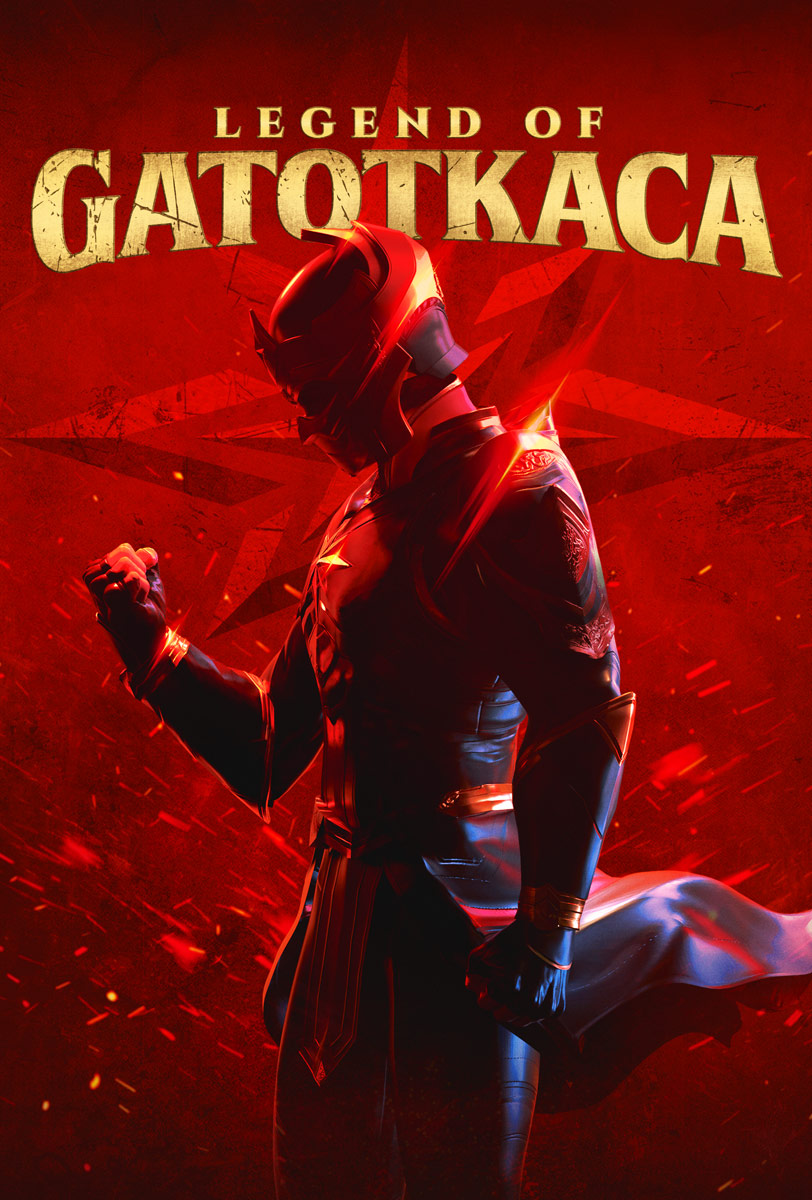
Indonesia has quietly been building its very own superhero cinematic universes over the past few years with Joko Anwar’s Gundala almost certainly the best known internationally. The Legend of Gatotkaca (Satria Dewa: Gatotkaca) is similarly intended to be the first in a new franchise, Satria Dewa, which draws influence from Indian mythology and is set in a dualistic world centuries after a battle between good and evil was ended by the gods to stop evil winning. 

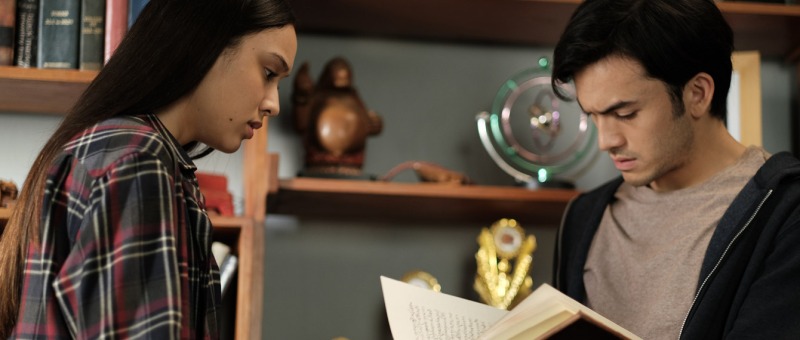
Essentially an origin story for the titular hero Gatotkaca, the film follows down on his luck photographer Yuda (Rizky Nazar) who had to drop out of university because he is poor and also responsible for taking care of his mother who is suffering with memory loss and mental illness following an incident 15 years previously in which the pair were attacked by a mysterious figure in black who could shoot lasers from his fingers. Yuda assumes his memories from back then must have been a dream and that his mother’s mental distress has more to do with his father, Pande (Cecep Arif Rahman), abandoning the family. Nevertheless, he is soon dragged into intrigue when his best friend Erlangga (Jerome Kurnia) is murdered in the same way his mother was attacked during his university graduation ceremony. Determined to figure out the truth, Yuda and professor’s daughter Agni (Yasmin Napper) find their way to a secret organisation Erlangga had been a part of which aims to save the world from destructive forces carrying the Kaurava gene. 

In the film’s dualistic world view, there was once a civil war between those carrying the Pandava gene which encourages good, humanistic qualities and the Kaurava whose impulses are dark and destructive. But then as Professor Arya (Edward Akbar) who studies such things points out, Pandava can also be destructive while Kaurava are capable of using their “destructive” qualities for good. Even so, most of the bad things that have happened in the world particularly in the last 15 years since a mysterious meteorite fell to earth, can be attributed to the rising Kaurava influence from political corruption to illegal logging and even the COVID-19 pandemic. Someone is bumping off Pandava in an effort to release evil Kaurava general Aswatama (Fedi Nuril) from his imprisonment within a giant gemstone which explains the “mysterious” deaths of talented people like Olympic sportmsmen and a doctor who discovered a COVID-19 vaccine. 

Of course, Yuda turns out to be a chosen one and must pursue his destiny as the defender of the Pandava before assuming his rightful role as Gatotkaca. Only by confronting his immediate family history can he make himself whole and gain the strength to defeat Aswatama, saving the world from chaos. Meanwhile he has to contend with a romantic subplot in which Agni is aggressively courted by the odious and entitled Nathan (Axel Matthew Thomas) and his father who have at least strong Kaurava energy aside from being embodiments of oppressive elitism looking down on Yuda simply because he is poor. The underground cell Yuda eventually comes into contact with are also in their way a resistance to this same elitism, though unusually well equipped in their incredibly expensive-looking lair filled with the latest technology and looked after by a kindly Indian granny who is herself a Karauna but uses her powers, and at one point a good old-fashioned shot gun, for good.

It’s this duality to which the film eventually returns as Yuda declares they must be the light in the darkness and the darkness in the light as they secretly wage a war against an ancient evil apparently already well established in the contemporary social order. This being the first instalment in what seems to be cued up as a burgeoning franchise, there is undoubtedly a lot to take in from the talk of heirlooms and amulets to holy water and ancient weapons though the film does boast some excellent production design even if the centralisation of genetics as an indicator of good and evil is equally uncomfortable. Nevertheless, it’s a promising start to the cycle with a series of exciting action set pieces showcasing the art of silat along with some impressive CGI in the Star Wars-esque laser warfare even if it’s clear Gatotkaca’s toughest battles are yet to come.


Legend of Gatotkaca streams in the US via Hi-YAH! from 17th February and will be released on Digital, blu-ray, and DVD on March 21 courtesy of Well Go USA.

International trailer (English subtitles)