Minamata Mandala (水俣曼荼羅, Kazuo Hara, 2020)

“An Individual can never win against the government” according to a man seeking justice, “Challenging the government means risking your life”, yet he continues to fight. In his 2017 documentary Sennan Asbestos Disaster, Kazuo Hara had charted the protracted efforts of workers from the factories in Sennan to get justice from the government that failed to protect them. 15 years in the making, Minamata Mandala (水俣曼荼羅) addresses another of post-war Japan’s great industrial scandals as victims of the “Minamata disease” struggle for recognition in the face of continued governmental intransigence. 

Opened in 1908, the Chisso chemical plant was among the most technologically advanced in Japan yet it routinely expelled wastewater directly into Minamata bay. The factory had already paid compensation in 1926 and 1943 for damage done to local fisheries before a change in its production process led to the release of methylmercury into the local water system from 1951 onwards. Though some had noticed unusual behaviour in animals, it wasn’t until 1956 when a little girl fell ill with strange symptoms including difficulty walking and speaking that a widespread “”epidemic of an unknown disease of the central nervous system” was discovered in the local community and subsequently came to be known as the “Minamata Disease”. In order to cover their tracks, Chisso began discharging wastewater directly into Minamata River spreading the pollution further along the coast with additional cases arising in other villages on the Shiranui Sea. 

Hara’s justice seekers, however, take aim not directly at Chisso which still exists and is a dominant economic force in the area, but local and national governments whose continued failure to protect them has greatly exacerbated their suffering. The greatest source of their discomfort is the unfairness of criteria set down in 1977 for legal certification of Minamata Disease in order to gain access to compensation. According to contemporary researchers, the criteria, inspired by Hunter-Russell syndrome discovered after an industrial accident in the UK in the 1940s, were simply wrong leading to the vast majority of applicants being rejected. Hara shifts between the stories of various victims and a pair of scientists determined to prove that the root of the disease lies not in peripheral nerve but brain damage and that the criteria is therefore useless in certifying cases of Minamata Disease. The applicants, meanwhile, intensely resent the implication that they are not genuine, that they are undergoing a collective delusion, faking their symptoms, or suffering from an unrelated illness not the responsibility of Chisso or the government. 

One campaigner whose hair was found to contain high levels of mercury at two years old recounts his ill treatment at the hands of the legal system which implied application of the criteria could be affected by “personality” factors while passive aggressively listing his occupation as “time waster”. Though his case may at first seem mild, it’s also true that as he’s suffered from Minamata Disease his entire life it’s difficult for him to assess how severely it affects him as evidenced by the accidental severing of the top of his thumb which he barely noticed because of his reduced sensitivity to pain. Like other sufferers, he is often privy to the usual hollow apologies from politicians (including one from then Minister of the Environment Yuriko Koike), though another source of frustration is that those in power often refuse to attend meetings with Minamata patients sending underprepared underlings in their stead. One particularly heated meeting quickly goes south when a rookie civil servant allows his handwritten memo reading “no apologies” to be seen by a woman recording the proceedings from the front row while his embarrassed colleagues are able to offer little other than the standard platitudes insisting the Minamata issue has already been dealt with through the previous settlements. 

Rather than focus on the court cases and medical investigations, however, Hara is keen to remind us of the costs to the victims of industrial poisoning, one of the scientists later breaking down as he explains that the main effect of the disease is sensory deprivation leaving even those mildly affected unable to enjoy their lives fully. A rather poignant song written by a congenital sufferer reflects on her tendency to fall in love too easily and be forever disappointed while longing for a freedom and independence denied her because of her disability. For the campaigners, meanwhile, Minamata Disease has robbed them of their right to a personal life as they devote all of themselves to fighting for justice while acknowledging that even when they win it brings little improvement into the lives of those forever affected by industrial pollution. Just as Hara had expressed frustration with the Sennen campaigners he felt were overly feudal in their deference to authority, some find it difficult to support those who ultimately opted to accept a paltry settlement while simultaneously understanding the desire not to have to fight anymore especially as even those born with the disease are now approaching late middle-age. Ending on a poignant freeze-frame, however, Hara reminds us that the damage can never be undone nor can there be adequate compensation for the tremendous loss of potential even as the government continues to vacillate in the abdication of its responsibility. 


Minamata Mandala streams in the US until July 2 as part of Japan Society New York’s Cinema as Struggle: The Films of Kazuo Hara & Sachiko Kobayashi

Clip (English subtitles)

Deliver Us From Evil (다만 악에서 구하소서, Hong Won-chan, 2020)

A melancholy hitman bids for paternal redemption but finds himself literally stalked by the mistakes of his violent past in Hong Won-chan’s pulpy action drama, Deliver Us From Evil (다만 악에서 구하소서, Daman Akeseo Goohasoseo). Aptly named, Hong’s noirish thriller takes us from the back streets of Osaka to underground Bangkok while the hero longs for the tranquil horizons of Panama but finally discovers that he cannot outrun himself even if he can perhaps repay his karmic debt by freeing others from the riptide of his moral transgressions. 

A former government agent apparently unceremoniously burned, In-nam (Hwang Jung-min) has been earning his keep as a killer for hire hiding out in Japan. His “one last job” is knocking off a Zainichi Korean mob boss, Koreda (Kosuke Toyohara), after which he’ll be free to go wherever he wants, arbitrarily setting his sights on Panama solely because of the tranquil scene featured in a picture opposite his favourite seat in his local izakaya. The past is however not done with him yet. His old handler gets in touch to let him know old flame Young-ju (Choi Hee-seo) has been trying to contact him, but so consumed with shame and defeat is he that he declines to respond only to hear a short time later that Young-ju has been found dead in Bangkok and as she’d listed him as next of kin he’s responsible for the repatriation of her body. Remorseful, he’s shocked to discover that Young-ju had a daughter, Yoo-min (Park So-yi), whose kidnap by her Korean-Chinese nanny may be connected to her murder. Switching up his plans, In-nam determines to save the daughter he believes to be his own but is pursued by flamboyant Korean-Japanese gangster Ray (Lee Jung-jae) hellbent on getting revenge for his estranged blood brother Koreda. 

In-nam finds himself in a sense caught between a series of codes of masculinity, apparently a former government spy who seems to have been involved in state sanctioned acts of torture and murder that may privately be against his sense of morality only to fall still further as a killer for hire even if we’re told in no uncertain terms that Koreda was a bad guy, a killer of women whose death is perhaps morally justifiable within the codes of chivalry. In-nam’s partner warns him about Ray, reminding him that they should have killed him at some point in the past but apparently let him live, a decision that has led, as Ray later states, to their present confrontation. Quizzed by a local Thai mobster, Ray claims he can’t even remember why he’s so set on killing In-nam but is mindlessly bound to follow his own code of manliness in avenging the death of a blood brother he had apparently fallen out with some years previously.

Meanwhile, in retrieving his daughter In-nam attempts to reclaim the right to a peaceful life making up in a sense for the mistakes of the past in having first abandoned Young-ju because of his manly code and then failed her in refusing her request for help. He attempts to reassert himself as a father by saving his little girl, but in doing so opts only for the personal, unmoved on discovering a child trafficking network enabled by the peculiar medical regulations of Japan and Korea which prohibit child organ transplants looking to save only Yoo-min while making no real effort to help the others. On reporting her daughter missing to the police, Young-ju had been horrified to discover Yoo-min’s photo pasted onto a wall entirely covered in similar notices for other children the police, as we later discover somewhat complicit, have so far failed to find. Yet saving the children is more happy accident than design, an indirect consequence of In-nam’s violent intervention. 

Indeed, In-nam more or less leaves the kids to his local sidekick a Korean transgender woman whose confirmation surgery he’s promised to fund in return for her assistance as guide and translator while he remains bound to a nihilistic path of manliness knowing there’s no way out for him that does not end in violent confrontation with past sins. Caught between the outlandish pulp of the flamboyant Ray and the noirish fatalism of In-nam’s journey into the darkness of the Bangkok underworld, Deliver Us From Evil defiantly refuses to marry its conflicting sensibilities as the two men pursue their respective codes each looking for their own particular deliverance but finding that salvation lies only in confrontation. 


Deliver Us From Evil screens at Edinburgh Filmhouse on 22nd June and Genesis Cinema London 24th June as the first Teaser Screening for this year’s London Korean Film Festival. The next screening in the series, Voice of Silence, will screen at Edinburgh Filmhouse on 1st July and Curzon Soho 3rd July, while Samjin Company English Class will then screen at London’s Screen on the Green on 8th July.

International trailer (English subtitles)

The Stormy Family (台風家族, Masahide Ichii, 2019)

A disparate group of now middle-aged children orphaned by the storm of their parents’ abandonment struggle to find solidarity on reuniting to put the past to rest, but eventually come to an understanding in letting go in Masahide Ichii’s darkly comic tale of familial resentments, The Stormy Family (台風家族, Taifu Kazoku, AKA Typhoon Family). Battling not just a sense of betrayal, but intense resentment in being left to deal with the fallout of a corrupted parental legacy the kids squabble over their “inheritance” but later perhaps regain a sense of mutual connection in reclaiming their shared history. 

10 years previously, Ittetsu (Tatsuya Fuji) and his wife Mitsuko (Rumi Sakakibara) robbed a local bank and then apparently made a run for it in the family hearse. With the statute of limitations now expired, the children decide to hold a funeral having had their parents declared dead so they can divide the estate and presumably draw a line under their shared trauma. The problem is, partly, that they’re hurt believing that their parents committed a crime and then simply abandoned them, but they have each also had to deal with the stigma of being the children of the elderly bandits who robbed a bank with a hearse. Oldest son Kotetsu (Tsuyoshi Kusanagi) lost his job, daughter Rena’s (Megumi) marriage broke down, and while middle son Kyo (Hirofumi Arai) does not particularly mention how the crisis affected him, youngest brother Chihiro (Tomoya Nakamura) who was a teenager at the time remains resentful that as he only had a part-time job anyway no one from the media was very much interested in hassling him. 

Rather than finding siblings’ solidarity in their shared trauma, the crisis only seems to have driven them further apart. If perhaps slightly ashamed, they freely admit that they’ve only come to sort out the inheritance but even this leads to another argument as Kotetsu tries to use his oldest son privileges to claim he’s entitled to an unequal share because the others all went to uni on the parents’ dime, complaining that he needs the money more because he’s been unable to hold down a steady job and has to pay for his teenage daughter Yuzuki’s (Mahiru Coda) education, hoping to send her to music conservatoire in Vienna. As expected, that doesn’t go down very well with everyone else, while even Yuzuki expresses disdain and exasperation for her father’s amoral venality, telling him to get back on his feet with honest work rather than trying to cheat his siblings out of their birthright. In this, however, the family largely agree he might not be so different from patriarch Ittetsu who despite his motto of “don’t bother others” often penny pinched to an extreme degree and even seemed inappropriately happy to receive new business considering he ran a funeral parlour. 

On closer investigation of their parents’ home, what the kids learn is that there were things they didn’t understand perhaps because Ittetsu didn’t want to “bother” them with an explanation, though as someone else points out family aren’t “others” and probably it should be alright to bother them. Having argued with his father when he left to pursue his dream of being an actor, Kotetsu eventually sacrificed his desires recommitting himself to making his daughter’s dreams come true instead but like Ittetsu struggles to find a way to support her emotionally. Ittetsu may have been a difficult, perhaps less than honest, man but in learning the truth the family begin to realise that his actions came from a deep place of love even if it was a love he was unable to show on the surface. 

In an extremely ironic twist, the funeral and a climactic storm eventually allow the siblings to let their parents go, forgiving them for the fallout from their crime but also for their abandonment and all the petty resentments of their childhood. The world may be a pretty dishonest place, filled with greedy monks, telephone fraudsters, schemers and thieves, and perhaps you can’t even really trust your family but a father’s love is apparently the one true thing though it might not always be easy to understand. A darkly comic take on dysfunctional family bonds and the radiating legacy of crime, The Stormy Family gradually creeps towards its macabre but surprisingly moving finale allowing the family to rediscover itself in letting go only to set them at odds once again with the corrupting influence of greed. 


The Stormy Family streamed as part of this year’s Nippon Connection.

Original trailer (no subtitles)

Images: ©2019 “The Stormy Family” FILM PARTNERS

Red Post on Escher Street (エッシャー通りの赤いポスト, Sion Sono, 2020)

“Freedom is disappearing from our world. Everyone rise up!” screams an accidental revolutionary having achieved a kind of self-actualisation in wresting the leading role not only in the film within the film but in the film itself in an act of characteristically meta Sion Sono playfulness. Harking back to the earlier days of his more recently prolific career, Red Post on Escher Street (エッシャー通りの赤いポスト, Escher dori no akai post) is perhaps a thinly veiled though affectionate attack on the mainstream Japanese cinema industry, a defence not only of “jishu eiga” but a “jishu” life in the meditation that a crowd is composed of many faces in which we are all simultanteously extra and protagonist.

In a sense perhaps Sono’s stand-in, the director at the film’s centre, Tadashi Kobayashi (Tatsuhiro Yamaoka), is a festival darling who made his name with a series of critically acclaimed independent films but has since been dragged towards the mainstream while forced into a moment of reconsideration following the sudden death of his muse and lover. Kobayashi’s ambition is to produce another DIY film of the kind that first sparked his creative awakening, but it’s clear from the get go that his desires and those of his backers to not exactly match. Middle man producer Muto (Taro Suwa), sporting a sling and broken leg after being beaten up by the jealous boyfriend of a starlet he’d been “seeing”, is under strict instructions to ensure Kobayashi casts names and most particularly the series of names the studio want. To convince him, they go so far as to have the established “stars” (seemingly more personalities than actresses) join the open auditions at which the director hoped to find fresh faces, hoping he can be persuaded to cast them instead. The irony is that the studio want Kobayashi’s festival kudos, but at the same time deny him the freedom to make the kind of films that will appeal to the international circuit, the director frequently complaining the producers keep mangling his script with their unhelpful notes. 

A handsome young man, Kobayashi has also inspired cult-like devotion among fans including a decidedly strange group of devotees branding themselves the “Kobayashi True Love Club” who each wear Edwardian-style white lace dresses and straw hats while singing a folksong everywhere they go. Nevertheless, most of the hopefuls are ordinary young women with an interest in performing or merely for becoming famous. Their stories are the story, a series of universes spinning off from the central spine from a troupe kimono’d actresses performing a play about female gamblers, to a young widow taking on the mission of making her late husband’s acting dreams come true, and a very intense woman with an extremely traumatic past. The audition speech finds each of the hopefuls vowing to drag their true love back from “the crowd” into which he fears he is dissolving, only for them later to save themselves by removing their “masks” to reclaim their individual identity and agency as protagonists in their own lives rather than passively accept their relegation to the role of extra.

Then again, there are those who wilfully embrace the label such as a faintly ridiculous old man who commands near cult-like adoration from his disciples of professional supernumeraries for his ability to hog the screen even if his less than naturalistic acting is at best a distraction from the main action. Without extras, he points out, the screen would become a lonely place, lacking in life and energy though he at least seems to be content to occupy a liminal space never desiring the leading role but seizing his 15 seconds of fame as a prominent bystander. Others however are not, determined to elbow aside the vacuous leading players and reclaim their space. Subtly critiquing the seamier ends of the industry from the lecherous producers who always seem to be draped with a young woman eager for fame and fortune, to the machinations of star makers and manipulations of talentless celebrities, the film makes an argument for sidestepping an infinitely corrupt system in suggesting the jishu way is inherently purer but nevertheless ends on a note of irony as its defiant act of guerrilla filmmaking is abruptly shutdown by the gloved hand of state authority. 


Red Post on Escher Street streamed as part of this year’s Nippon Connection.

Original trailer (English subtitles)
Wonderful Paradise (脳天パラダイス, Masashi Yamamoto, 2020)

A moribund Tokyo mansion becomes the scene for an orgy of life, death, love, and rebirth in Masashi Yamamoto’s surrealist party movie Wonderful Paradise (脳天パラダイス, Noten Paradise). Sometimes you have to learn to say goodbye and move on, other times you have to learn to forgive and let go of past resentment. Of course, sometimes you have to do both of those things at the same time, which is perhaps appropriate for the former home of the Sasayas which seems to exist between the realms of life and death, a perpetual Bon festival where departed spirits and lost souls congregate for one almighty party. 

Dad Shuji (Seiko Ito) has had a run of bad luck and unfortunately lost the family home he inherited from his parents meaning he and his two adult children, son Yuta (Soran Tamoto) and daughter Akane (Mayu Ozawa), are having to move on though who knows where to. Resentful that she’s having her life uprooted by her father’s fecklessness, Akane takes to social media and Tweets that there’s a party at hers and everyone’s invited as kind of goodbye to the house. Meanwhile, a series of strange events occur from a weird old monk (Akira Emoto) who keeps trying to pray to the various neoclassical statues on the property going nuts at a belligerent removal man and then apparently dropping dead, to the resurfacing of mother Akiko (Kaho Minami) who apparently left the family some years previously for a man who ran a coffee shop but has since passed away. 

The first people to arrive for the party are a gay couple looking for somewhere to celebrate their marriage, a minor irony in that the event will later descend into an elaborate funeral for two people who may or may not be dead. As more and more guests arrive, along with a series of opportunistic commercial food stands and other businesses, the party begins to get out of hand becoming ever stranger as the night wears on. 

At the heart of it all are the tensions in the family, an unresolved resentment directed at son Yuta who is, according to his brash aunt Yuka (Sonomi Hoshino), overly preoccupied with his family circumstances to the extent that it prevents him from getting a regular job and moving on with his life. Shuji has quite clearly failed both as a son and as a father, eventually betting one of his dad’s precious antiques in a card game run by yakuza loansharks setting up shop in the house. Akane appears exasperated, but is also harbouring an intense resentment towards Akiko for her abandonment that prevents her being able to “move on” from her former family home. 

Moving on is also a problem for a few of the ghosts, the line between the living and the dead becoming increasingly blurred. One random surreal moment to the next, Yamamoto careers between absurdist episodes culminating in a fight between a murderous sentient coffee bean and a statue come to life. What began as a lowkey wedding eventually becomes a bizarre funeral enacted through the medium of Bollywood song and dance transitioning into a traditional enka festival number all of which happens before a couple of hapless crooks who’ve been operating a drug factory on the family’s property for the last two years without them ever knowing turn up with their “super mandala drug of paradise” to send the evening in a psychedelic direction. 

Yet for all the surreality of death, violence, sex, and rebirth when dawn arrives it brings with it a kind of calm brokering a new peace between friends and family members as they learn to accept each other and the past in an unburdened sense of openness. Possibly deceased monks, talking cats, kids who can’t figure out how to stop swinging and mysteriously turn themselves into sticks or dissolve in bath water, scorned lovers, unrepentant thieves, ghosts and family secrets descend on this weird gothic mansion in the middle of a city, creating a “wonderful paradise” for one night only filled with surrealist magic and unforgettable strangeness that nevertheless pushes the family back together through dream logic and a taste of the absurd. A weird, sometimes incomprehensible, journey into an etherial, psychedelic twilight psychodrama rave, Yamamoto’s charmingly bizarre nighttime odyssey is a law unto itself but one filled with wonder for the uncanniness of the everyday. 


Wonderful Paradise streamed as part of this year’s Nippon Connection.

Original trailer (English subtitles)
NIFFF 2021 Confirms Complete Programme for 20th Edition

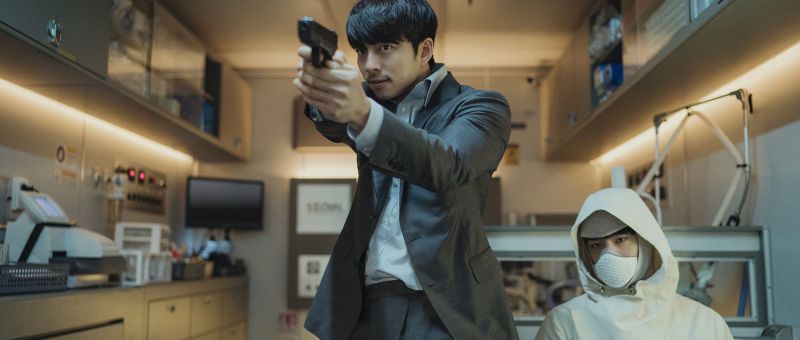
The Neuchâtel International Fantastic Film Festival (NIFFF) returns for 2021 in a hybrid format taking place online and at various locations across the Swiss city. This year’s edition will have a special focus on Taiwanese genre cinema with the Formosa Fantastica strand encompassing five features, the first two episodes of a TV series, and a collection of shorts streaming online and screening physically while visitors to the festival will also be able to enjoy a series of installations at Neuchâtel Natural History Museum from 2nd to 10th July.

New Cinema From Asia

Beauty Water

A young woman goes to great lengths to be accounted “beautiful” in Cho Kyung-hun’s animated body horror takedown of extreme patriarchal beauty standards. Review.

Beyond the Infinite Two Minutes

A diffident cafe owner faces an existential dilemma when trapped in a time loop with himself from two minutes previously in Junta Yamaguchi’s meticulously plotted farce. Review.

OK! Madam

A computer repair man wins a dream holiday to Hawaii and decides to take his wife who sells breadsticks at the market for their first family holiday. Disaster strikes, however, when the plane is hijacked!

Shock Wave 2

A HK bomb disposal officer finds himself putting out the fires of his own explosive resentment in a thematic sequel to Herman Yau’s high octane action drama Shock Wave starring Andy Lau and Sean Lau Ching-wan. Review.

The Fable the Killer Who Doesn’t Kill

Junichi Okada returns in a sequel to the hit action comedy The Fable as the hitman on sabbatical continues to live an ordinary life working at a design company only for his cover to be blown when an assassin comes for one of his colleagues!

International Competition

Midnight in a Perfect World

Philippine horror set in a near-future Manila where mysterious power outages are claiming the lives of citizens in random parts of the city after midnight.

Films of the Third Kind

Tonkatsu DJ Agetaro

The bored third-generation heir to a tonkatsu restaurant (Takumi Kitamura) experiences an awakening when he delivers a bento to a dance club and falls in love with the music, hoping to become a tonkatsu chef/DJ combo and thereby win the heart of his crush, Sonoko (Maika Yamamoto), in an anarchic rom-com from Ken Ninomiya (The Limit of Sleeping Beauty, Chiwawa).

Formosa Fantastica

As We Like It

All female retelling of the Shakespeare play set in an internet-free corner of contemporary Taipei in which the hero falls in love with the heroine in the guise of a man.

Get the Hell Out

An idealistic former MP and a hapless, besotted security guard attempt to fight their way out of a zombiefied parliament in Wang I-fan’s absurdist satire. Review.

My Missing Valentine

A lovelorn woman finds herself forced to reckon with the forgotten past when she somehow misplaces Valentine’s Day in Chen Yu-Hsun’s charmingly quirky rom-com. Review.

The Magician on the Skywalk

The first two episodes of the hit TV drama adapted from a series of short stories by Wu Mingyi in which a young boy has a life changing encounter with a mysterious magician in a shopping mall in 1985.

The Scoundrels

Intensely kinetic Taiwanese neo-noir in which a disgraced former basketball player takes to a life of crime only to find himself locked in a deadly battle with a mysterious and amoral thief known as the “Raincoat Robber”. Review.

The Tag-Along

Creepy Taiwanese horror inspired by a real life urban legend of a little girl in red who randomly photobombed a family on a hiking trip standing right behind a man who later died. Her latest victims are apparently a harried real-estate agent and his conflicted radio DJ fiancée whose reluctance to marry makes her a target for supernatural ire. Review.

The Neuchâtel International Fantastic Film Festival (NIFFF) runs online and in Switzerland 2nd to 10th July. Tickets are on sale now via the official website. You can keep up to date with all the latest news by following the festival on FacebookTwitterYouTube, and Instagram.

Sasaki in My Mind (佐々木、イン、マイマイン, Takuya Uchiyama, 2020)

A young man is forced to confront his quarter life malaise when presented with unexpected tragedy in Takuya Uchiyama’s heartfelt youth movie, Sasaki in My Mind (佐々木、イン、マイマイン). A study in inertia, Uchiyama’s moody drama finds its melancholy hero defeated by life, looking back to more hopeful high school days and the larger than life friend he has, by his own admission, failed convinced by his own rather solipsistic sense of personal inadequacy that he lacked the capacity to save him. 

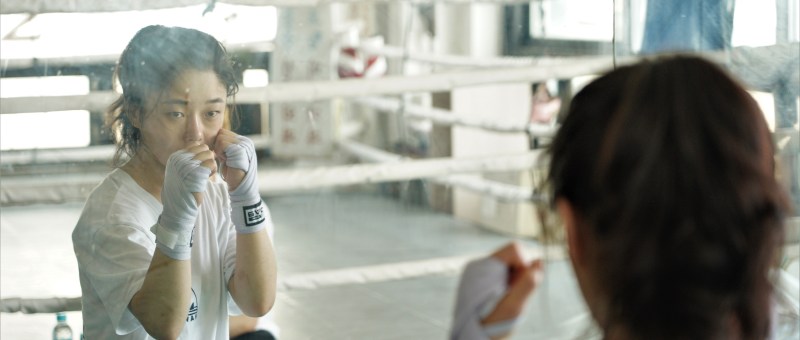
An aspiring actor, Yuji (Kisetsu Fujiwara) lives in a small apartment with his ex-girlfriend (Minori Hagiwara) and makes ends meet with a factory job he seems to be embarrassed by. Approached by an actor friend (Nijiro Murakami) apparently doing a little a better with a series of bit parts in TV shows and commercials, Yuji is reluctant to take him up on his offer of a part in a play, while an accidental meeting with an old high school friend, Tada (Yuya Shintaro), pushes him into a defensive mindset after he’s rightly called on his passivity. “Watching life go by in terror” as his character in the play eventually puts it, Yuji is so defeated by life that it has rendered him entirely listless. Ironically taking up boxing, he gets into a random fight with a customer from the the next table at an izakaya, insisting that he doesn’t want to lose but otherwise refusing to fight for anything even the girlfriend he apparently still loves whose refusal to move on perhaps hints at the desire to be given a reason not to. 

His meeting with Tada, now a moderately successful, married salaryman, reminds him of his high school friend, Sasaki (Gaku Hosokawa), a larger than life character who used to strip impromptu and dance in the nude when greeted by chants of his name. It was Sasaki who first convinced him to become an actor as they watched Kirk Douglas in Champion on TV, though after graduation and a move to Tokyo Yuji made no real effort to keep in touch with his friend seeing him only once and discovering he had become a lonely pachinko player equally consumed by a sense of personal hopelessness. As Sasaki once put it, elephants communicate with each other through low frequency sound imperceptible to humans, his own quiet distress call apparently missed by his old friends who perhaps tired of his outlandishness as they outgrew their teenage selves and became bogged down in their own lives leaving him behind as they strove forward alone. 

Left behind is something which Yuji cannot help but feel, further deepening his sense of personal failure in having achieved not much of anything in his Tokyo life. Sasaki aside, his high school friends, Tada and Kimura (Yusaku Mori), have each shifted into a conventional adulthood with regular salaryman jobs, homes, wives, and even children. He didn’t go to his last high school reunion, probably as Tada seems to have realised out of a sense of shame, for the same reason avoiding contact with his old friends while living in an awkward limbo with the ex who apparently grew bored with his lack of drive and continuing air of defeated ennui. Despite his own insecurity, Sasaki had encouraged him to live his life, assuring him that he’s got this, but when it came to it Yuji failed to do the same abandoning him in their old home town as a relic of the past he can’t quite accept. 

Admitting as much to his theatre director, Yuji is once again told to shine in his own spotlight and that lonely people aren’t necessarily lonely because they’re alone. Everyone keeps telling him to grow up, act like an adult, but Yuji doesn’t seem to know how hung up on high school immaturity and reflecting only too late that perhaps they never really understood their friend and in the end they simply left him behind. Only a confrontation with finality pushes him towards a break with his sense of inertia, acknowledging that what he feared was letting go and the eventual forgetting that comes with loss but the “world is rushing forward. We have to keep up”. Sasaki remains for him at least in his mind as he always was, the first of many goodbyes in an “empty elegy” that eventually becomes one’s own. A touching tale of quarter life crisis, Uchiyama’s moving drama eventually pushes its static hero towards an acceptance of his moral cowardice but finally gives him the courage to move forward taking his memories with him into a freer future. 


Sasaki in My Mind streamed as part of this year’s Nippon Connection.

Original trailer (no subtitles)

Ainu Neno An Ainu (アイヌネノアンアイヌ, Neo Sora & Laura Liverani, 2021)

Japanese society often presents itself as homogenous claiming a harmony born of a universal culture to which all subscribe, but in reality has sometimes sought to exclude or assimilate those it regards as different such as the still continuing prejudice against the burakumin underclass and towards the indigenous people of Hokkaido, the Ainu, who were only officially recognised by the Japanese government in 2008. Laura Liverani & Neo Sora’s documentary Ainu Neno An Ainu (アイヌネノアンアイヌ, lit. humanlike human) explores the realities of what it means to be Ainu in contemporary Japan as the community strives to recover and preserve its traditional culture in the face of increasing modernity. 

Japan annexed Hokkaido during the Meiji era largely through settler colonialism, later determining to “develop” the island which entailed confiscating Ainu lands along with banning their language and traditional practices such as tattooing in an act of forced assimilation. Many of the participants in the documentary have the same name but this is not necessarily because they are related as one explains, the entire town was in fact given the same surname inspired by the name of their settlement translated into Japanese when assimilated as Japanese citizens. While some aspects of traditional culture survived, many of the older residents lament that their parents preferred not to teach them the Ainu language in fear of social discrimination, something which is repeatedly cited by many as a reason some prefer not to disclose their Ainu identity after leaving for the cities. 

Nevertheless, some younger people are eagerly attempting to reclaim and preserve the Ainu language which is entirely oral and has no writing system. The main protagonist of the documentary, Maya, opens the film by teaching a traditional lullaby to a class of students later revealing that her father Kenji, who was not born Ainu, taught himself the language and has become passionate about passing it on. Language classes can also be heard on local radio while remnants of Ainu words pepper the local dialect even if many may not realise. Meanwhile, others relearn ancient lullabies not directly from their mothers but from archival tapes. 

Maya’s mother is also part of a stage performance showcasing traditional Ainu music for tourists from outside of the community, a Korean translator interpreting for a rapt audience each clutching pamphlets as they listen. A young man, Hibiki, who works for the Ainu museum admits that some feel ambivalent about the way they’ve chosen to commodify their culture in order to preserve it while others feel it’s a price worth paying in order to ensure that something at least survives. Some customs are perhaps harder to justify in the modern society such as the Iomante bear sacrifice which no longer takes place after successful campaigns by animal rights organisations. 

While some speak of divisions within the Ainu communities, others praise the local traditions of acceptance and hospitality in which it is normal to offer food, gifts, and shelter to others without expectation. Many who were not born Ainu have been accepted into the community, the Takanos for example who arrived from Tokyo in the 1960s and now run a store selling the Ainu handicrafts they have spent a lifetime learning, or Magi a transgender woman from Okinawa finding family and a place to belong among the Ainu. 

It is not in any case an either or situation, the local children cheerfully singing the theme from My Neighbour Totoro as they supervise the harvest as well as a Japanese folk song before they leave school for the day while at the end of the film introducing themselves in the Ainu language for a local radio host. Intended as a “family photo album” of the local community, an image which opens the film and recurs throughout in static captures of the various protagonists posed for a portrait, Ainu Neno An Ainu examines what it means to be a member of the Ainu community in the present society and uncovers with it a tremendous warmth and openness not only among the extended families as its centre but towards the wider society in the hope of preserving their culture through sharing it as widely as possible with all who wish to learn. 


Ainu Neno An Ainu streamed as part of this year’s Nippon Connection.

The photo project which sparked the documentary

Original trailer (English subtitles)
Extraneous Matter – Complete Edition (異物-完全版-, Kenichi Ugana, 2021)

If you suddenly encountered a weird, decidedly alien, octopus-like creature living in your wardrobe what would you do? Would it frighten or intrigue you, would you want to get rid of it as quickly as possible or look after it for the rest of your life? The presence of these strange creatures provokes different responses from each of the heroes of Kenichi Ugana’s Extraneous Matter – Complete Edition (異物-完全版-, Ibutsu – Kanzenban-), an expansion of his earlier short of the same title. Drawing inspiration from the early work of Shinya Tsukamoto, Ugana’s crisp, academy ratio black and white photography makes use of an ironic score mimicking classic Hollywood melodrama lending a mythic quality to this lowkey tale of alien sex fiend invasion and human loneliness. 

For Kaoru (Kaoru Koide), heroine of the first segment, the creature seems to signify her sexual frustration and sense of existential inertia. For her, every day is the same. She wakes up alone, makes herself a cup of coffee and eats a pastry in front of the television which always seems to be carrying news of a celebrity sex scandal, and then starts work with her friends (for some reason working at her apartment) who gossip about their various sugar daddies. Her boyfriend (Shunsuke Tanaka) apparently lives with her, but immediately disappears right after dinner and actively avoids intimacy. Were it not for later events, we might wonder if the creature is somehow a transformation of the boyfriend, Kaoru herself unsure whether it was a dream, first violated but then apparently satisfied by the alien tentacles which later begin satisfying all of her friends. 

If the “extraneous matter” of Kaoru’s life was indeed her unfulfilled desire and internalised shame, then for the barmaid (Momoka Ishida) of the second sequence it’s perhaps a lack of excitement while for the young man (Kaito Yoshimura) who brings a creature zipped into a holdall to a pub to meet his ex-girlfriend (Makoto Tanaka) it’s more a desire for familial intimacy or a sense of commitment that may previously have frightened him. He appears to want to get back together with the young woman, apologising for his past behaviour while explaining that he found the creature in his wardrobe scary to begin with but later became fond of it and is convinced he could raise it with her help, ordering a parfait to feed it because he’s discovered it has a sweet tooth and particularly likes strawberries. He swats the errant tentacles away as if shushing a naughty baby as the woman too begins to coo over it, shovelling cream from the parfait into its mouth with a spoon. 

But then, the extraneous matter of the lives of others can also present a challenge to the social order. Some wish to eliminate the alien threat, a young man working at a factory (Shuto Miyazak) charged with disposing of alien bodies eventually conflicted on discovering one alive sure that he can hear the creature begging him for help. Together with a like-minded colleague (Duncan) he determines to save it and help it return to its people, culminating in an unexpected ET moment which perhaps realigns the “alien” threat with a social other as the two compassionate employees evade the authorities to get the creature to safety despite having been betrayed by their female colleague (Mizuki Takanashi). 

So, what is the “extraneous matter” of our lives, a kind of loneliness, a sense of “alienation”, or of emptiness in an “absurd” world of infinite mundanity? Perhaps all of the above, Kaoru returning to her lonely life apparently missing the strange and unidentified creature only to re-encounter it in an unexpected place and discover it has not forgotten her. Gently ironic, Ugana’s sci-fi-inflected aesthetic begins with grim body horror before progressing into something warmer, for good or ill becoming fond of its alien invaders as compassionate humans refuse to reject them embracing in a sense these “extraneous” sides of themselves they may have previously found disturbing in search of more fulfilling lives. Elegantly composed in its classic academy ratio frame with its ironic bonsai pillow shots and continuing sense of unease, Extraneous Matter nevertheless ends on a note of hope rather than threat even as the invaders apparently lurk among us but bringing with them comfort even in the reflection of our unmet desires. 


Extraneous Matter – Complete Edition streamed as part of this year’s Nippon Connection.

Original trailer (English subtitles)
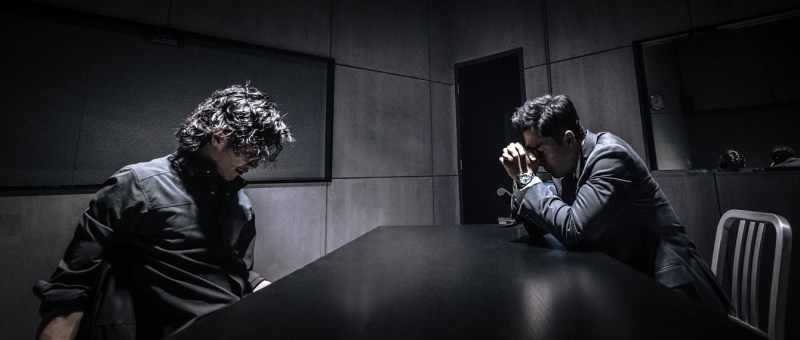
BOLT (Kaizo Hayashi, 2019)

“We have to trust the bonds that tie us” intones a voice from the control room, “if you can’t tighten that bolt the water will pollute the future”. A series of post-Fukushima tales, Kaizo Hayashi’s tripartite portmanteau movie BOLT is less about the radiating effects of a nuclear disaster than their legacy, insisting that if you can’t pull together you can’t move forward but then in the end the bolt cannot be tightened or the deluge stemmed. It is perhaps too late, but still you have to live. 

Set in the immediate aftermath of the tsunami, the first of the three tales follows a series of selfless engineers sent in to tighten a bolt on a leaking tank. They are informed their suits will protect them but not completely, they have only half an hour of oxygen, and should work in pairs for no longer than a minute before changing over. The older men tell the younger to wait behind, hoping to spare them from harm while the young men bristle wanting to do their bit. In any case, one of the young men later freezes, his feet rooted to the spot as if under some kind of spell while his friend begins to go quietly mad when a second bolt works it way out seconds after he’s fixed the first. The unnamed chief (Masatoshi Nagase) refuses to return with his team, staying to ensure he’s done all that can be done but in the end they cannot stop what is already in motion. 

A few years later the chief has apparently moved on, now working as a house clearer in the exclusion zone. His job is to tidy up and sanitise the home of a man who refused the evacuation order and has since passed away alone. As he’s been told, he carefully saves important documents and personal items such as photo albums for the family only to be told there is no family to take them, they were all taken by the tsunami. His cynical partner asks him why he got into this kind of work. He doesn’t have much of an answer for him save that someone’s got to do it and can offer only the declaration that he has to go on living for further direction of his life. 

On Christmas Eve 2014 however he’s still alone, living in an auto garage making some kind of metal device while a pair of children outside set the scene for a ghost story claiming there’s a mermaid living in the tank inside. Like the deceased man, the chief also seems to have lost someone, a black and white photograph sitting on the desk behind him, while apparently attempting to return to his former life as a nuclear technician only to be told he’s taken too much radiation already though the plant is short staffed seeing as many prefer to work on the Olympics, forging the future while neglecting the past. His Christmas gets off to a strange start when a beautiful woman in a red convertible bedecked with festive lights literally crashes into his life. An echo of someone else her arrival and subsequent departure hint at the strange and ethereal impermanence of post-disaster life in the continuing impossibility of moving on from irresolvable trauma. 

Beginning in science fiction with the high concept opener and its cyber punk design, Hayashi posits the nuclear threat as a kind of supernatural curse which can perhaps never be undone. Crackles of electricity take on a spiritual air while the permanent pinking of the sky seems to hint at a world forever changed as if something has been unleashed and can never again be caged. Tormented by cosmological unease, the chief chooses action, trying to his best to live even when action fails. The bolt can’t be tightened, the water pollutes the future, and all he can do is continue to stem the tide, tightening the bolts wherever they fray. With occasional flashes of psychedelic surrealism, Hayashi’s three tales offer a bleak and melancholy vision of life in the shadow of an almost supernatural disaster, but find finally a determination to live no matter how futile it may turn out to be. 


BOLT streamed as part of this year’s Nippon Connection.

Original trailer (no subtitles)

Images: ©L’espace Vision, Dream Kid, Kaizo Production