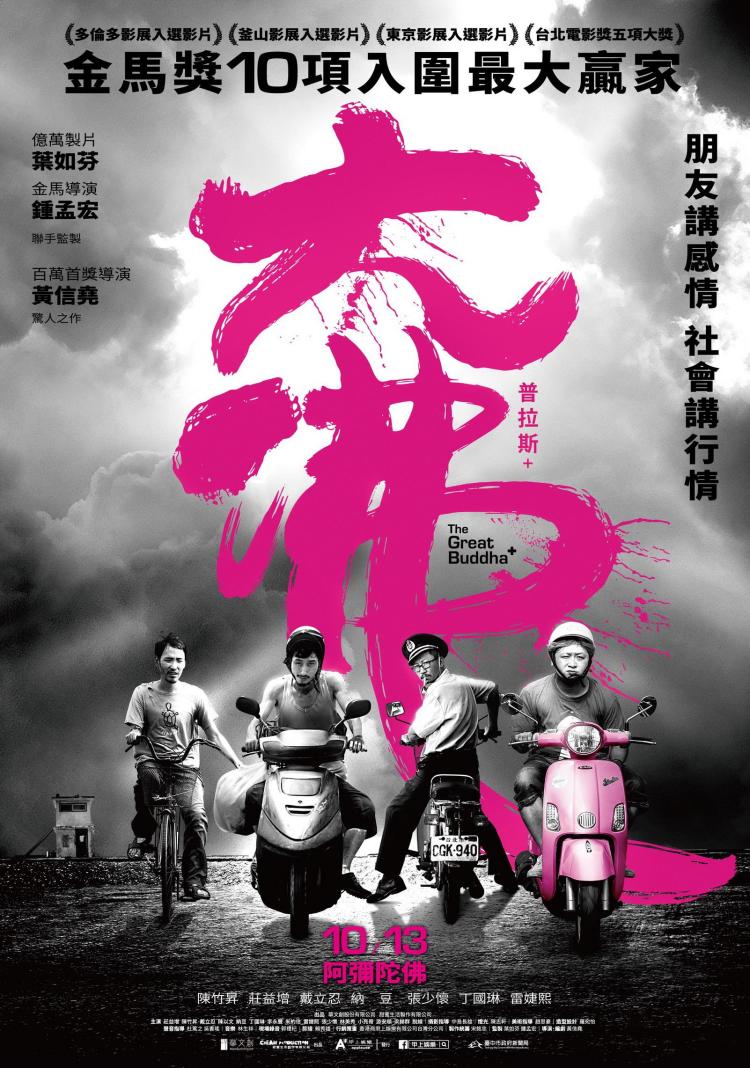
The Great Buddha+ (大佛普拉斯, Huang Hsin-yao, 2017)

Great Buddha + posterFor some, the good life always seems a little out of reach, as if they showed up late to the great buffet of life and now all that’s left is a few soggy pastries and the salad someone’s aunt brings every year that no one really likes. Still, even if you know this is all there is, it doesn’t have to be so bad so long as you have good friends and something to do every day. The “heroes” of documentarian Huang Hsin-yao’s fiction feature debut The Great Buddha+ (大佛普拉斯, Dà fó pǔ lā sī) are exactly this sort – men in late middle age who’ve never quite grown up but have eased into a perpetual boyhood safe in the knowledge that there’s nowhere left for them to grow up to.

“Pickle” (Cres Chuang) is something of a holy fool. His major preoccupation in life is his elderly mother whose increasing medical bills he is continually worrying about paying. He’s taken to banging a drum in a local marching band with a big line in funerals for extra money at which he is terrible but seeing as there’s no one else his job is probably safe for the minute. His “occupation” is nightwatchman at a factory owned by “Kevin” (Leon Dai) – a renowned sculptor working on a giant Buddha statue. Nothing ever happens at the factory at night so no one is very bothered what Pickle does there, which is mostly being “entertained” by his “best friend” Belly Button (Bamboo Chen). Belly Button doesn’t really have a job but earns money through collecting recyclables and selling them on. Looking for a new source of vicarious fun, Belly Button talks Pickle into stealing the SD card from the dash cam on Kevin’s fancy car so they can enjoy riding along with him in their very own private sim. This turns out to be more fun than expected because Kevin is also a womaniser with a thing for car sex even if the cam only captures the audio of his exploits. Nevertheless, the guys inevitably end up seeing something they shouldn’t.

Huang shoots in black and white but switches to vibrant colour for the dash cam footage, somehow implying that nothing is quite so real to guys like Pickle and Belly Button as a fantasy vision of someone else’s glamorous life. After all, if it’s not online it didn’t really happen. Trapped in the gutter of small town life, both men have either failed to move on from or wilfully regressed into a perpetual adolescence in which they waste their days idly on pointless pursuits – leafing through ancient porn mags, gossiping, and eating half frozen curries from half-filled Tupperware boxes. A mild mannered man, Pickle is so innocent that he never quite understands Belly Button’s lewd jokes while Belly Button, who is picked on and belittled by everyone else in town, takes delight in being able to boss him around.

Together the pair of them can only marvel at a man like Kevin with his wealth and talent which allows him to gain the thing they want the most – female company. Kevin, however, is not quite as marvellous as they might assume him to be even if they remain in awe of his caddish treatment of women while perhaps feeling sorry for those unfortunate enough to fall in love with him. In tight with the local bigwigs, Kevin is simply one link in a long chain of bureaucratic corruption in which business is done in the bathhouse surrounded by floozies. Kevin never explicitly lets on whether he knows that Pickle and Belly Button have stumbled on his secret, but their lives begin to change all the same. Their easy nights in the security cabin have gone for good and they feel themselves under threat in a chilling reminder of how easily a little guy can disappear or fall victim to an accident after asking too many questions about a vain and powerful man with money.

Meanwhile, Pickle is left worrying what’ll happen to his mum if he falls out with Kevin. Even if he wanted to speak out about a great injustice, he’d be putting his mother in the firing line. Then again, after a brief visit to Belly Button’s home in which he cocoons himself inside a mini UFO filled with the prizes he’s won from UFO grabber games (he says it’s like “therapy”), Pickle is forced to wonder how well he even knew him – his only friend. As Huang puts it in his melancholy voice over, we might have put men on the moon, but we’ll never be able to explore the universe of other peoples’ hearts.

Huang’s deadpan commentary is among the film’s strongest assets with its New Wave associations and determination to wring wry humour out of the increasingly hopeless world inhabited by Pickle, Belly Button, and their similarly disenfranchised friends. Filled with meta humour and a deep sadness masked by resignation to the futility of life, The Great Buddha+ is a beautifully lensed lament for the little guy just trying to survive in a land of hollow Buddhas and venial charlatans.


Screened as part of the 2018 London East Asia Film Festival.

Original trailer (English subtitles)
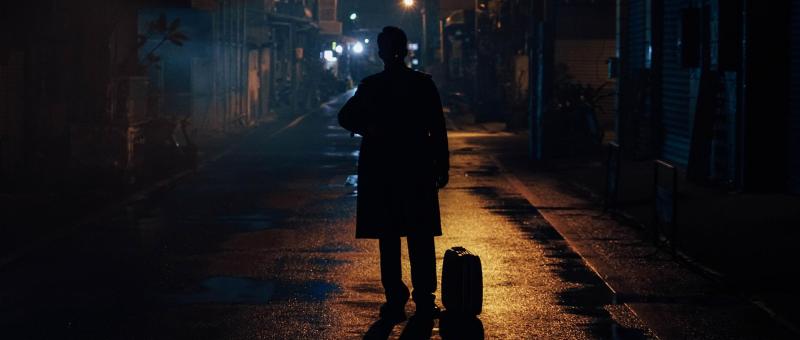
Father to Son (范保德, Hsiao Ya-Chuan, 2018)

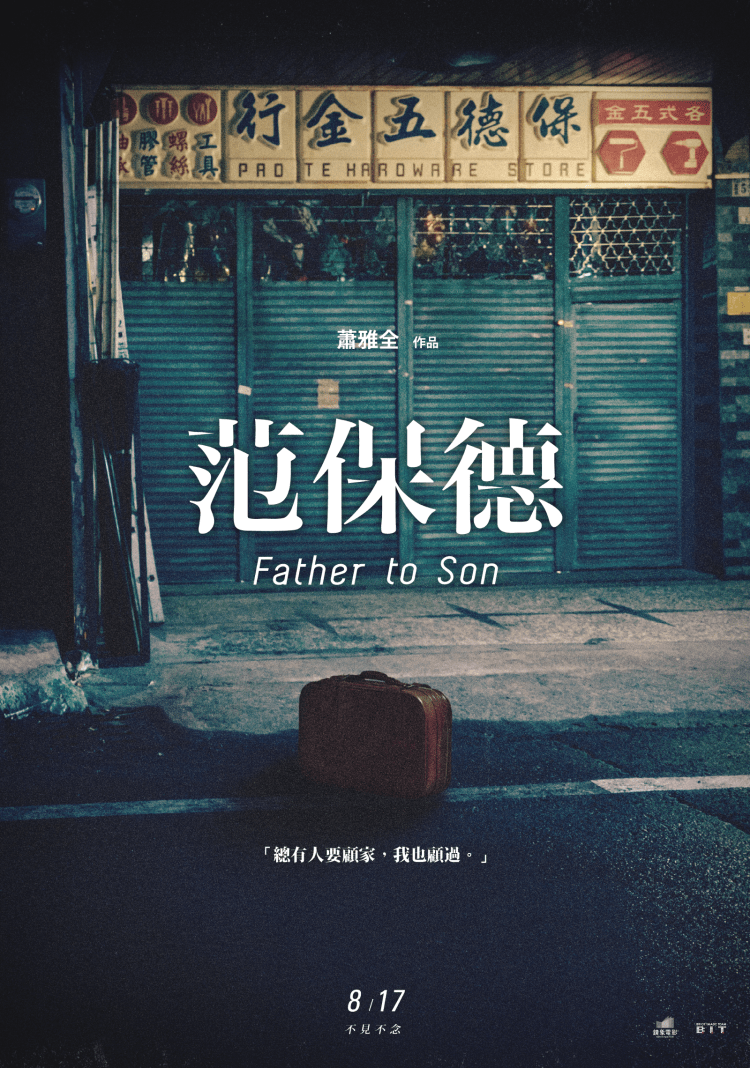
Father to Son posterEvery son kills his father, but echoes of the past prove hard to escape in Hsiao Ya-Chuan’s Father to Son (范保德, Van Pao-te). Legacies national and personal conspire to frustrate the dreams of the young while the old are left with nothing more than enduring mystery after a lifetime of disappointment. Faint notions of mortality send an old man on a quest to understand himself by making peace with his long absent father and taking his own son along for the ride, but perhaps there really are no answers to the questions you most want to ask, or to put it another way perhaps it’s better to answer them yourself.

60-year-old Van Pao-te (Michael Jq Huang) is feeling his age. He’s taking longer in the bathroom and he’s no longer as agile as he was. A handyman with a hardware store, Van is also something of an “inventor” and has several patents in his name but cannot escape the feeling of being unfulfilled, as if something in his life has always been missing. A twinge fixing a pipe for a doctor friend provokes a fuller examination as a result of which Van is told he may have a serious pancreatic illness and is advised to see a specialist in Taipei, but Van hates doctors and so he puts the decision off. Meanwhile, he goes to the city on other business. Honoured for his contribution to Taiwan’s intellectual economy thanks to his inventions, Van is also presented with an unexpected opportunity to do business with a Japanese company. Rather than deal with his medical problem, Van visits an old friend for an address he was first offered 30 years ago and decides to look for his long lost father who abandoned the family when Van was 10 in order to try his luck in the burgeoning Japanese post-war economy.

History repeats itself eerily. Van dreams of the night his father left in anger and resolves never to become the kind of man that he was but finds himself falling into his father’s footsteps. His own son, Ta-Chi (Fu Meng-Po), is a man much like him – which is to say, he is torn between duty to family and a desire to follow his dreams. Ta-Chi works in the hardware store, but his talent is for coding and he’s already a mildly successful app builder. Van thinks he should go to the city and make something of himself, but is worried that he won’t because he can’t leave his ageing parents behind alone.

Meanwhile, trouble is brewing because the beautiful niece of the woman who runs the dry cleaners has just blown in from Taipei to cover the shop while her aunt goes to the city for cancer treatment. A splash of excitement in this tiny town, she has created quite a stir among Ta-Chi and his friends which is exactly the same thing that happened thirty year’s previously when the current hotel owner first arrived in town. At select moments we also get voice over narration from Kuo Yu-Chin (Aria Wang) who, as she tells a friend, caused some “trouble” back in 1987 only to leave and then return again later. She and Van seem to share a painful history and mutual resentment over a future that never was. Yu-Chin wonders if the stories of the past that you want to hear are hidden in the future or if it’s the other way round, but if their background music choices are to be believed there seems to be a part of them always stuck in 1987 and waiting for an excuse to leave.

Like his father, Van considered leaving his family to chase a dream but he couldn’t do it. As Ta-Chi later puts it, he wasn’t “heartless” enough. Van learns enough about his father’s later life to confirm what he suspected, that his dad was no good and best forgotten, but that only leaves him with a lingering sense of resentment and inferiority in wondering if he wasted his life sticking around his hometown to make a point about a man who never gave him a second thought. He doesn’t want the same thing for his son, but hasn’t figured out the best way to push him out of the nest without breaking his heart.

While Van is caught in a web of existential confusion attempting to break free once and for all from the destructive memory of his father, Taiwan too finds itself pulled between conflicting colonial echoes while striving to embrace an identity all of its own. Hsiao paints a melancholy picture of inescapable tragedies and generational miscommunications, eventually advancing that a father’s love for his son is often buried in silent sacrifice, but does so with warmth and sympathy, resigned to the cruel ironies of time.


Screened as part of the 2018 London East Asia Film Festival.

International trailer (English subtitles)

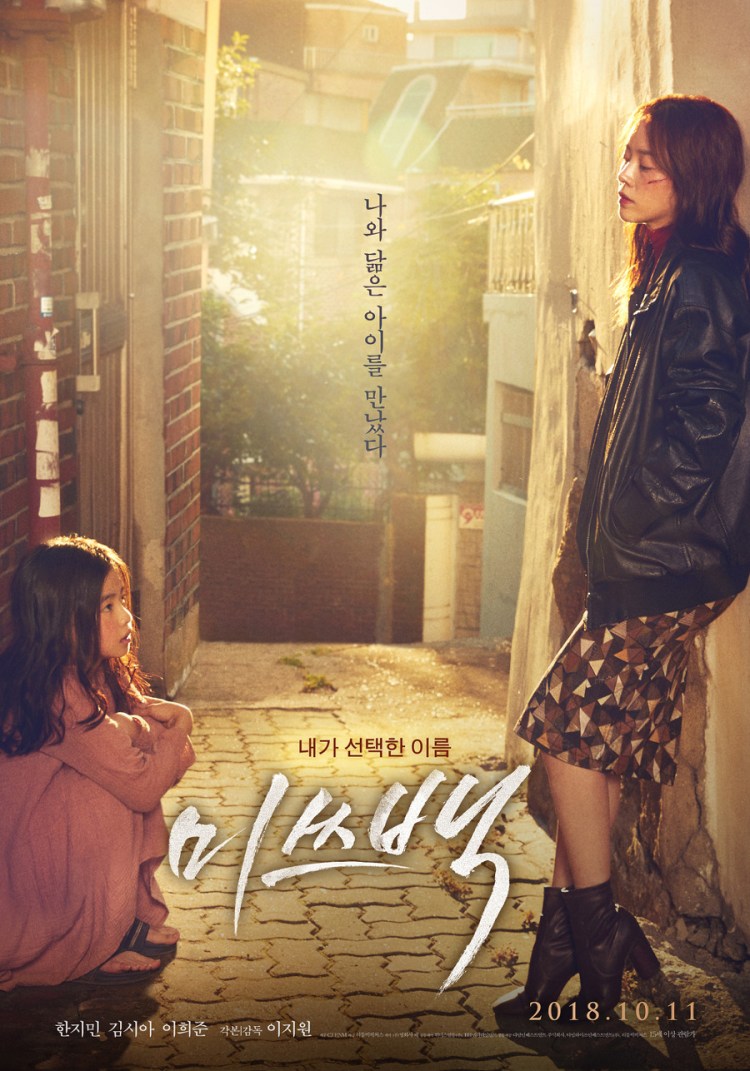
Miss Baek (미쓰백, Lee Ji-won, 2018)

Miss baek posterIn one sense we’ve never been more connected to one another, but our tendency to remain inside our own solipsistic bubbles has never been higher. We ignore those in need, confident that “someone” will do something, that it isn’t our responsibility. Then again perhaps we don’t even notice. It’s freezing cold in director Lee Ji-won’s debut feature Miss Baek (미쓰백) and a little girl is sitting outside in her nightie. No one takes very much interest her even though it’s far too late for a child to be out alone. That is, until the titular Miss Baek (Han Ji-min) overcomes her own sense of alienation and decides to look back.

Now in her mid-30s, Baek Sang-ah is an aloof, near silent woman who ekes out a living through a series of casual jobs from car washing to massage. She is in a kind of relationship with a kindly policeman, Jang-sub (Lee Hee-joon), who wants to marry her, but Sang-ah has long ago ruled out the idea of marriage and family. She never wanted to be someone’s wife or mother. Sang-ah says this not (entirely) because she values her independence, but because of a legacy of trauma and abandonment born of the physical abuse she suffered at the hands of her mother who fell into depression and alcoholism following the loss of her husband. Fearing becoming another link in a long chain of abuse passed from parent to child, Sang-ha has kept herself isolated, avoiding all intimate relationships and vowing to continue on alone causing harm to no one.

One winter day, however, she can’t walk past the girl in the nightie anymore. Taking her to a nearby food stall, Sang-ha finds out the girl’s name is Ji-eun (Kim Si-a) and she’s nine years old. Just as Sang-ha is beginning to ask about the cuts and bruises on Ji-eun’s hands and feet, a well dressed woman who turns out to be her father’s girlfriend arrives and whisks the girl away. Sang-ha tries to forget about her and go on with her life, but she can’t seem to do it. Buying Ji-eun some proper winter wear, she resolves to try and help the girl the way that no one tried to help her.

There is something particularly insidious in the continuous stream of injustice and mistreatment Sang-ha and Ji-eun find themselves subject to precisely because of their lack of social power. Children, most obviously, have no mechanism to defend themselves besides their parents and should they try to speak out against them, they may not be listened to. Managing to escape, Ji-eun tried to tell the police what her parents were doing to her but they sent her home with only a mild warning to her smirking step-mother that she’d best ease back on the “discipline”. Understandably, Ji-eun doesn’t have much faith in the authorities as a source of salvation. Sang-ha experienced much the same but her oppression continued on into adulthood when she was arrested for violently defending herself against a would-be-rapist who happened to be the son of a wealthy and connected man who used his status to do as he pleased while Sang-ah went to jail. Sang-ha’s prison record comes back to bite her again when she tries to talk to the police on Ji-eun’s behalf only for them to lay into her when they eventually run her file.

Meanwhile, Ji-eun’s step-mother Mi-kyung (Kwon So-hyun) is well turned out and scrupulously polite. She has a plausible answer for everything and a talent for middle-class respectability, even crying during church services. Her father Il-gon (Baek Soo-jang), by contrast, is addicted to video games and rarely leaves the house while little Ji-eun is often locked in the bathroom where she cowers under the sink, or cast out onto the balcony in the mild hope that she’ll freeze to death. The only reason Mi-kyung has been keeping her around is the welfare payments, but they’re about to stop. Both “parents” project all of their personal resentments onto the face of a nine year old girl whom they beat, starve, and torture for no discernible reason other than they don’t know any other way to behave.

Ji-eun’s father was also beaten as a child. He wonders where the police were then and what sort of life they think Ji-eun is going to have when she too grew up like this. Sang-ah’s desire to save Ji-eun is also a desire to save herself as she contemplates maternity from both sides in revisiting the complicated relationship with her own mother while wondering if she is a fit person to care for a child with such poor models to follow. She doubts she can break the chain and free Ji-eun from a seemingly inescapable system of abuse and violence but through her deepening attachment to the little girl Sang-ha begins to find a way through her inertia and fear of intimacy to a deeper and more positive connection. A gritty yet always open and empathetic look at an all too often hidden social problem, Miss Baek is a promising and important debut from Lee Ji-won which refuses to look away from the dark and unpalatable but finds hope in the power of simple human kindness against cruelty and indifference.


Screened as part of the 2018 London East Asia Film Festival.

Original trailer (no subtitles)

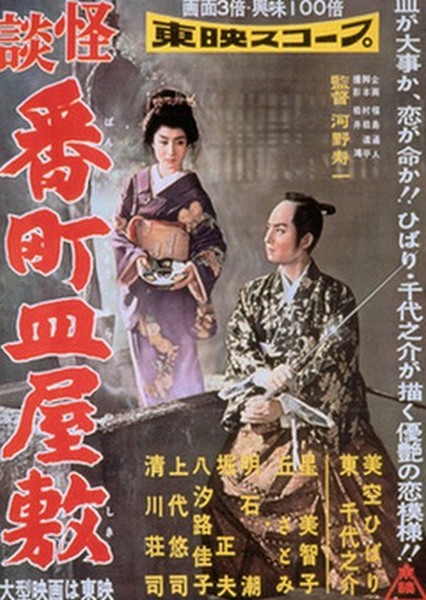
Ghost in the Well (怪談番町皿屋敷, Toshikazu Kono, 1957)

Ghost in the Well poster 2Love across the class divide threatens to overthrow the social order. Inspired by the classic folktale Bancho Sarayashiki, Ghost in the Well (怪談番町皿屋敷, Kaidan Bancho Sarayashiki) is indeed the story of a haunting though perhaps not altogether of the kind you might be expecting. This is a tale of romance, but also one of impossible love in which the only possible union is in death. The pure love of a servant girl is deemed incompatible with the oppressive world of samurai honour, and so she must die, but her lord cannot survive it. He cannot reconcile himself to having chosen to preserve his honour, his status, his lineage at the cost of her life and his love.

Rowdy samurai Harima (Chiyonosuke Azuma) loves making trouble in the streets. As the lord’s bannerman he knows he has a degree of status and likes to throw his weight around in the yoshiwara, much to the lord’s consternation. Harima has also taken a fancy to one of his maids, Okiku (Hibari Misora), who continues to reject his advances despite returning his affections because she knows the class difference makes a legitimate relationship between them impossible and a dalliance with her lord means losing the opportunity to marry anyone else. Harima tells her that there’s no such thing as status when it comes to love and that he doesn’t think of her as a passing infatuation. Eventually Okiku gives in and a kind of promise is made between them.

Nevertheless, it’s a promise which can’t be kept. The Aoyama family is in trouble and the obvious answer is to make a good match for Harima that will restore both status and wealth. When one of Harima’s friends is ordered to commit seppuku for the exact same petty punk antics Harima gets up to all the time matters come to a crunch. To keep him safe, Harima’s uncle arranges a marriage with an influential family. Harima tries to refuse but he too is more or less powerless even if he weren’t torn between the obligation to his samurai code and his illicit love for servant girl whom he would never be permitted to make his wife. To cement the match, Harima’s uncle has prepared 10 precious plates as a dowry, but Okiku, catching sight of Harima’s bride-to-be, drops one and breaks it in two. Her fate is sealed. Harima draws his sword on her and she backs away, eventually falling into the well and dying there.

The broken plate is, of course, a symbol of their broken covenant but also of Okiku’s shattered dreams as she watches a beautiful but haughty woman steal away her last hope of happiness solely through the accident of noble birth. As her friend tells her, a commoner cannot become the wife of a samurai and all Okiku can do is resign herself to her unhappy fate. Having broken the plate, however, all is lost. The men of the household admit their responsibility for entrusting the entirety of their future to a mere slip of a girl in the middle of intense heartbreak, but Okiku cannot go unpunished and Harima must claim his new life by destroying his past love.

Harima does what he’s supposed to do, if in passion and half by accident. Yet the marriage remains broken, the family in jeopardy, and Harima without hope of future. The ghost of Okiku, real or imagined, haunts him while he remains guilt ridden and filled with regrets. Despite his rowdiness and manly pride, he chose his samurai honour and condemned his one true love to a lonely death. Her love has, however, survived and resurrected her not as a demon of vengeance come to lead him to his doom but as a lovelorn woman keen to remind him of the promise he made and broke but which might be mended.

Harima pays for his transgressions, though more as a mischievous samurai who allowed his over inflated ego to convince him he had the right to oppress his fellow retainers than as a man who caused the death of an innocent woman, first by corrupting her and then by the same rigidity which has led to his present predicament. There can be no “love” in a such a society, let alone the love of a bannerman and a servant girl. Theirs is a blood wedding, uniting them in death, consumed by the impossibilities of the samurai era. At only 45 minutes, Ghost in the Well is perhaps a slight retelling of the tale and somewhat in imbalanced in its presentation of the fates of the two lovers but is nevertheless a refreshingly romantic take on an often dark story in which a scorned woman’s vengeance is reframed as a powerful condemnation of an oppressive society.


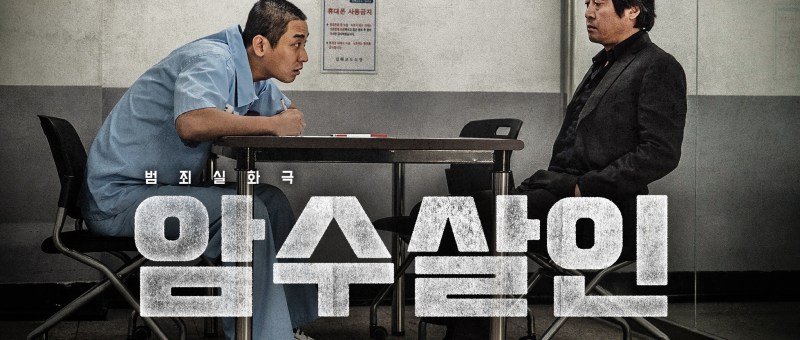
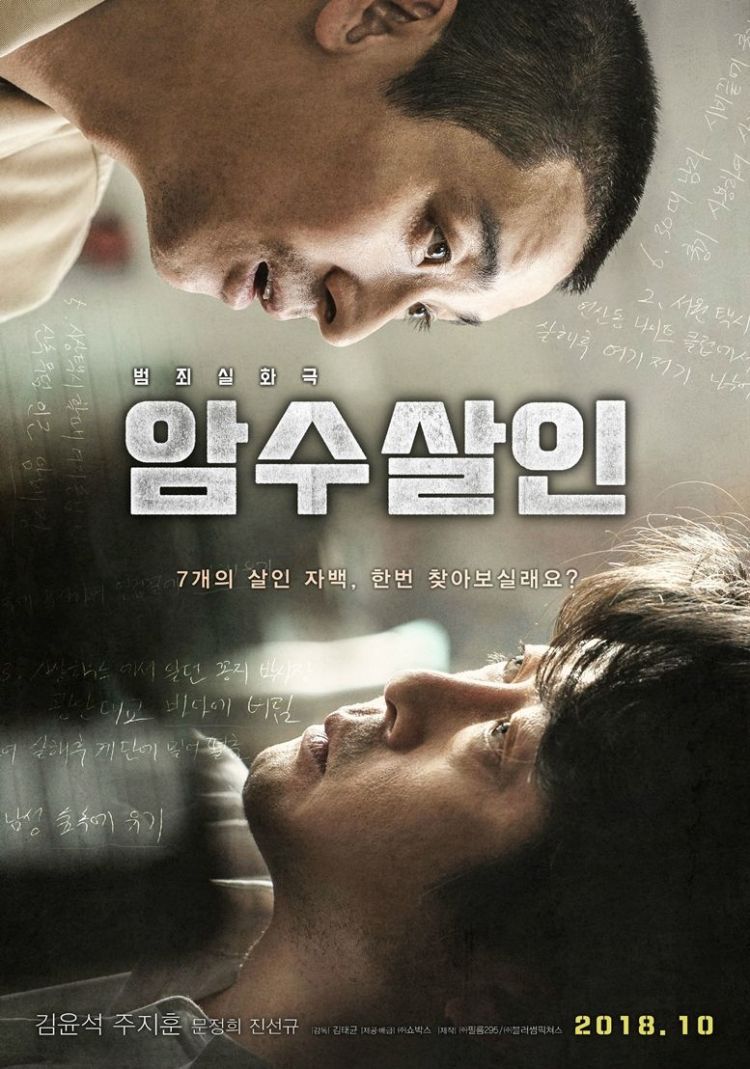
Dark Figure of Crime (암수살인, Kim Tae-kyun, 2018)

Dark Figure of Crime poster 1No matter how accurate statistics relating to criminal activity might be, there are many more acts of violence and immorality which, for various reasons, will go unreported. Criminologists refer to this phenomenon as the “Dark Figure of Crime”. Kim Tae-kyun’s cerebral thriller takes the strangely poetic term as its title (암수살인, Amsusalin) and does indeed revolve around the perfect murder and a man who claims to have completed six of them before abandoning his system and getting himself caught. Yet unlike many cops and robber dramas, Dark Figure of Crime is not about the killer but about the hidden victims who’ve lived a life haunted by the horrible uncertainty of whether their loved ones abandoned them but are alive and well somewhere else, or have fallen victim to some terrible event.

Narcotics officer Kim Hyung-min’s (Kim Yoon-seok) introduction to a new source of information takes a turn for the unexpected when he first starts telling him about having disposed of a body some years ago and then is promptly arrested by Homicide for the murder of his girlfriend. Tae-oh (Ju Ji-hoon) is convicted and sent to prison, but calls Hyung-min and complains that the police framed him when they didn’t need to. Tae-ho murdered his former girlfriend alright, but the evidence the police submitted was faked which has annoyed him. He draws Hyung-min a map to where he buried the “real” evidence just so he can catch the police out acting improperly and embarrass them as well as earn Hyung-min’s trust for the next part of his plan, which is vaguely confessing to another six murders. Hyung-min can’t know if Tae-oh is on the level or just messing with his head but feels as if he has to investigate all the same.

Not everyone understands Hyung-min’s commitment to this strange series of cold cases. After getting himself a transfer to Homicide, Hyung-min’s new boss warns him about another officer who was tricked by a bored felon and ended up losing everything – once a promising policeman he’s now a divorced carpark attendant. A meeting with the former officer yields another warning – men like Tae-ho know the law and they play with it. He’ll get you to investigate crimes B and C for which he knows there won’t be enough evidence, then he’ll use his acquittals to cast doubt on his original conviction. Hyung-min is wary but also hooked. He knows Tae-ho is playing him, but thinks he can win by giving him the opportunity to slip-up and give something away he didn’t quite mean to.

Tae-ho is certainly a dangerous, unhinged young man no matter how much of what he says is actually true. Hyung-min can’t know if any of this is real or just a bizarre game Tae-ho has cooked up because he’s got 15 years and no one ever visits him, but then he starts turning up suspicious absences. As he tells him in a tense conversation late in the game, none of this is really about Tae-ho. Hyung-min couldn’t care less about his big man act and is not impressed by his “crimes” or the ways in which he got away with them though he does want to make sure he never gets out to hurt anyone else. What Hyung-min cares about is the victims whose family members are living with the unresolved trauma of not knowing what happened to their loved ones. Something Tae-ho could quite easily help with if he had a mind to, but seeing as Tae-ho only wants to play games Hyung-min will have to find out on his own, and he will stop at nothing to do so even if he ends up manning a rundown police box in the middle of nowhere for his pains.

Living with a trauma of his own, not even Hyung-min has much faith in the police hence why he needs to complete this case himself – he simply doesn’t believe anyone else will bother. Police in Korean films are universally bumbling and incompetent if not actually corrupt and selfish. Hyung-min is an exception though his opinion of his profession may not be much different to the stereotypes you see in the movies. He doesn’t care about getting a big promotion or being the guy who catches the big fish, he just wants the truth to be known and the past laid to rest so the indirect victims can begin to move on with their lives. The “dark figure of crime” refers not only to the hidden and unresolved, but to the oppressive spectre cast over those left behind with only pain and worry. The terrifying thing is, there may be countless other dangerous people out there whose crimes go undetected not because they’re criminal geniuses but because no one really cares enough to stop them. Subtly subverting serial killer movie norms, Kim pulls the focus from the self-aggrandising villain to remind us of the very real costs of his actions while making a hero of the dogged policeman who refuses to to give in to a societal expectation of indifference.


Screened as part of the 2018 London East Asia Film Festival.

International trailer (English subtitles)

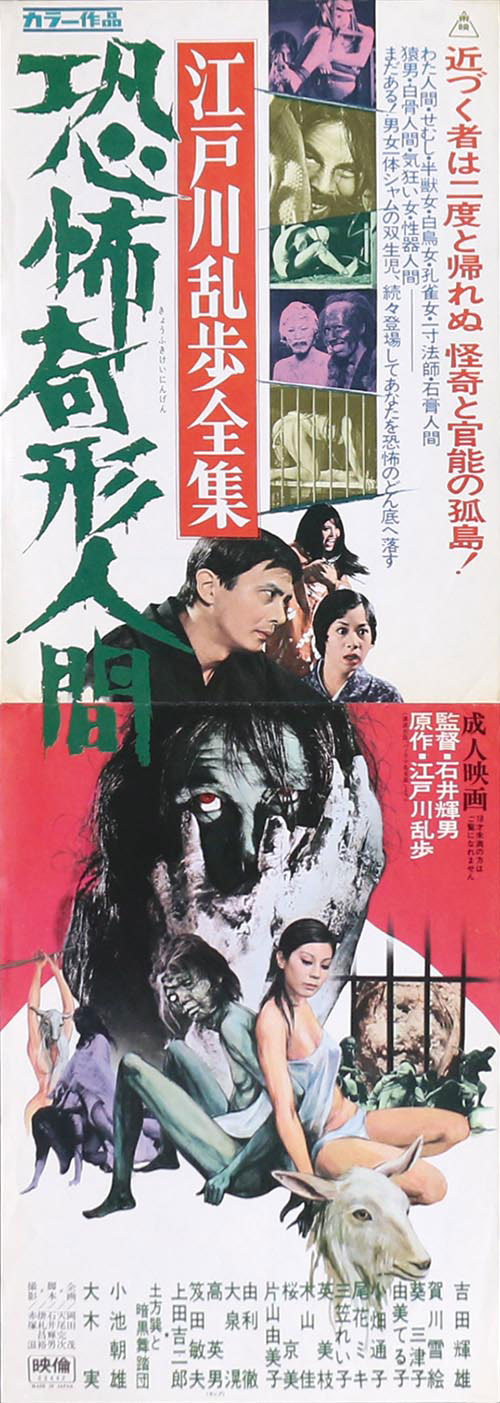
Horrors of Malformed Men (江戸川乱歩全集 恐怖奇形人間, Teruo Ishii, 1969)

Horrors of Malformed Men poster

The line between madness and sanity is often a thin one, entirely dependent on a series of social perceptions themselves dictated by a vague concept of time and morality. Horrors of Malformed Men (江戸川乱歩全集 恐怖奇形人間, Edogawa Rampo Zenshu: Kyofu Kikei Ningen), loosely inspired by an Edogawa Rampo short story The Strange Tale of Panorama Island as well as a series of similarly themed tales from East and West, is set in 1925 – the end of “Taisho” which is to say immediately before the problematic “Showa” era marked by its own kind of madness and defeat if also by a gradual rebirth. Nevertheless, madness reigns in here though it’s madness of a very particular kind as those excluded from a fiercely conformist society seek to remake the world in their own image and take a horrifyingly poetic revenge on the rest of humanity for their failure to embrace difference.

The tale begins with amnesiac medical student Hirosuke (Teruo Yoshida) who finds himself inside a cage at a mental institution surrounded by screaming, half naked women one of whom attacks him with a knife. Luckily, the knife turns out to be a stage prop with a retractible blade presumably given to the unfortunate woman wielding it as a kind of calming device. Eventually rescued by the warden who attacks the mad with whips as if they were mere cattle, Hirosuke retreats to his cell to ponder on his current circumstances, if he is really “mad” or the only sane man in an insane world. Meanwhile, he is plagued by the memories of a long forgotten lullaby and the vision of a woman’s face suddenly contorting, transformed into a horrifying monstrosity.

Managing to escape, Hirosuke gets a lead on the lullaby that takes him to a coastal village where he discovers that a man who looks eerily like himself has recently passed away. Hoping to solve a series of mysteries, he fakes his own death and manages to convince the other villagers that he is the recently deceased Genzaburo somehow resurrected and risen from the grave. Where all this takes him is to a mysterious island where Genzaburo’s father Jogoro (Tatsumi Hijikata) – a hideously deformed man with webbed fingers, has been trying to create his own bizarre society.

Horrors of Malformed Men was technically “banned”, or perhaps it’s better to say suppressed in an act of self censorship by a nervous studio, but not so much for its gleefully surreal grotesquery as for the “malformed” in the Japanese title which is in fact an extraordinarily offensive word. In any case it adopts a typically difficult position towards those it calls “malformed” as warped both in body and mind. Our mad scientist, Jogoro is a man driven insane by his society’s consistent rejection of him. When the beautiful wife he has somehow managed to win displays only disgust towards his twisted body and finally betrays him by sleeping with her handsome, sensitive cousin, Jogoro’s mental stability is forever fractured leading to his dark desire to take revenge on the “perfect” world by creating his own “malformed” creatures mirroring his own spiritual decline.

Jogoro’s island is a place of “madness” where spiritual corruption leads only to a kind of devolution in which animalistic desires exist only to be sated. Here there is no love or community, only a cold and individual progress towards oblivion. Hirosuke enters a nightmare of a waking sort in which he must confront himself, his family legacy, and a potential conflict between his own desires and the rules of society. Yet he is also haunted by the image of an as yet unseen future of where such ugliness may lead. Jogoro’s otherworldliness and deformities, his singleminded to desire to remake the world with himself on top and others all below, speak of a madness yet to come and the terrible retribution which would be exacted for it.

As if to reinforce his own message, Hirosuke declares himself not of this kind – he chooses to remove himself from a world with which his personal desires are incompatible, maintaining their purity in refusing to live on indulging in a practice most would regard as so taboo as to constitute a kind of “madness” all on its own rather than honouring civilisation by living on in denial. Something tells him, this is where he’s been heading all along. Deeply strange, surreal, and perhaps questionable in its final moment of capitulation which lays the blame for the entire sad and sorry escapade at the feet of a scornful woman rather than the society which both forced her to marry a man she didn’t like and encouraged her to reject him on the grounds of his “ugliness”, Horrors of Malformed Men is not a story about madmen and weird islands but of the evil that men do and the pain it leaves behind.


Horrors of Malformed Men is available on blu-ray from Arrow Films. The set includes two audio commentaries – one featuring film critic Mark Schilling ported from a previous release, and the other a new commentary by film scholar Tom Mes, as well as interviews with Shinya Tsukamoto and Minoru Kawasaki on Ishii’s career, and footage of Ishii visiting the Udine Far East Film Festival. The first pressing also comes with a booklet featuring a wide ranging essay by Jasper Sharp plus shorter essays by Tom Mes on Ishii’s career and Grady Hendrix on Edogawa Rampo.

Original trailer (English subtitles)
Walking Past the Future (路過未來, Li Ruijun, 2017)

Walking Past the Future poster 1Communism is a labour movement. It’s supposed to look after the workers, ensure fairness and equality through prosperity born of common endeavour. “Socialism with Chinese characteristics” was how the ruling powers tried to justify their headlong slide into globalised capitalism but thirty years on the modern China has left many behind while the rich get richer off the backs of the poor. The poetically titled Walking Past the Future (路過未來, Lùguò Wèilái) follows two such unlucky youngsters from Gansu who find themselves out of options in China’s shrinking industrial heartlands.

Our heroine Yaoting (Yang Zishan) has a job in an electronics factory assembling circuit boards. She lives with her parents – peasants from rural Gansu who came to Shenzhen 25 years previously in search of a better life, and a younger sister who is the family’s bright hope. Trouble is on horizon when Yaoting’s dad is taken ill and needs hospital treatment only to be unceremoniously “made redundant” when he tries to go back to work. On the very same day, Yaoting’s mother also announces she has been let go from her factory job leaving Yaoting as the family’s only earner. The day after Yaoting’s dad gets fired, his factory literally collapses and many workers are killed. You could say he’s had a lucky escape, but there are still few options for a man in his 60s with poor health and the family needs money. He decides they have no other option than to move back to Gansu and go back to farming, but when they get there, he discovers someone else has taken over his land (legally) and won’t give it back.

Meanwhile, Yingtao desperately wants to buy an apartment but with sending money back to her struggling parents her factory job is barely enough to live on. Her best friend Li Qian (Wang Ting), unburdened by a family, is addicted to plastic surgery and is saving to go to Korea for the best there is. On a hospital visit during which she is temporarily blinded, Li Qian runs into the roguish Xinmin (Yin Fang) who has a sideline recruiting desperate people to take part in potentially dangerous medical trials. Unbeknownst to either of them, Xinmin is also the “Desert Ship” to Yingtao’s “Misty Landscape”. They’ve become online best friends but have never met. Increasingly desperate to get the money for her dream apartment, Yingtao agrees to participate in a series of drug trials even though she has previously had a liver transplant and has a history of poor health.

Despite the supposed benefits of a movement led by workers, Yingtao and her family are victims of the modern era in which jobs are no longer for life, there is no community or fellow feeling between “boss” and “employee”, and those at the bottom of the ladder enjoy few rights. Yingtao’s father gets laid off when they find out he’s been ill with only a goodwill gesture of severance pay (which presumably goes up in smoke with the factory), while the same thing later happens to Yingtao when her liver condition resurfaces. When the electronics factory hits a rough patch, Yingtao is laid off for an entire week with no pay – so much for solidarity and a full belly for all.

Yingtao’s only pleasures are her constant conversations with “Desert Ship” who keeps needling her to officially accept his friendship request, but she won’t because moving their friendship to a more official level would prevent her from talking to him quite so freely. Neither Xinmin nor Yingtao is aware of the other’s identity, or that they are in fact texting each other while quietly miserable in the same room. A young orphan just trying to survive, Xinmin has a cynical and exploitative streak perfectly symptomatic of the world in which he lives but he is not completely heartless even if he is somewhat hypocritical in advising his online friend against the medical trials he has unwittingly persuaded her to undertake back in the real world. 

Pushed lower and lower, forced to undertake difficult and physically dangerous work with little protection and only the warning that their decisions are on their own heads, Yingtao and Xinmin find little to be hopeful about despite the eventual warmth of the connection between them and the innocent desire to see the snow back in the simpler world of rural Gansu. The future has indeed passed them by, marooning them in a miserable present yet, like the song the pair keep singing, they continue to dream of finding a “welcoming window” no matter how far off it seems to be.


Walking Past the Future screens in Chicago on Oct. 24 as part of the Seventh Season of Asian Pop-Up Cinema where director Lee Ruijun and producer Zhang Min will be present for an introduction and Q&A.

Original trailer (English subtitles)
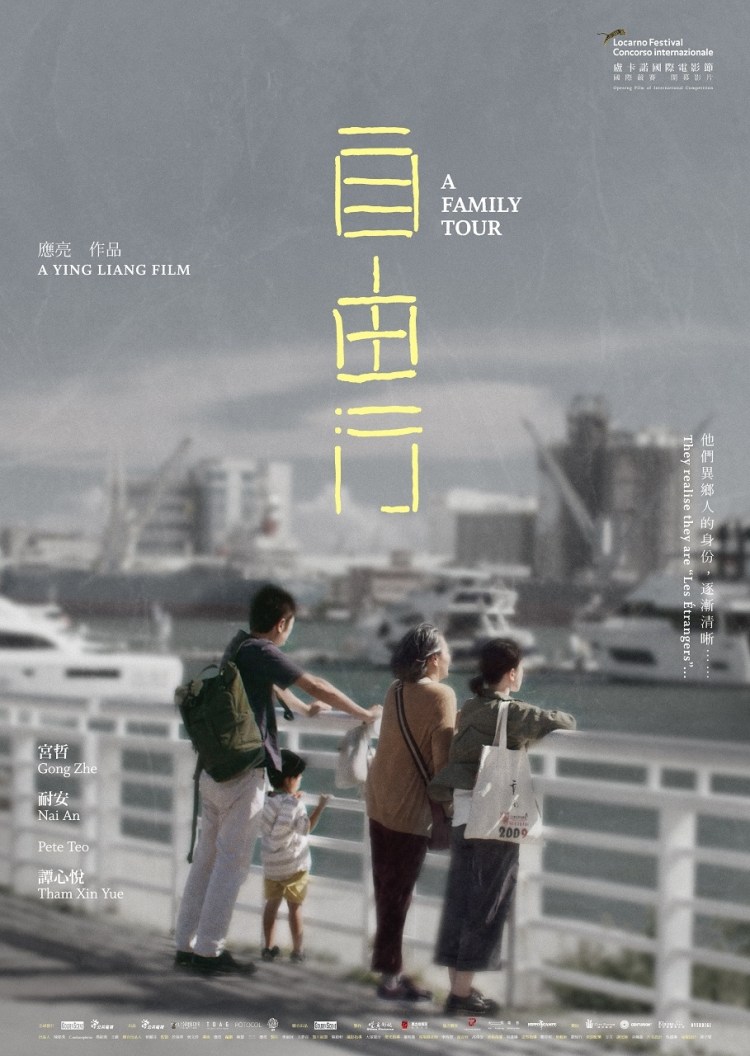
A Family Tour (自由行, Ying Liang, 2018)

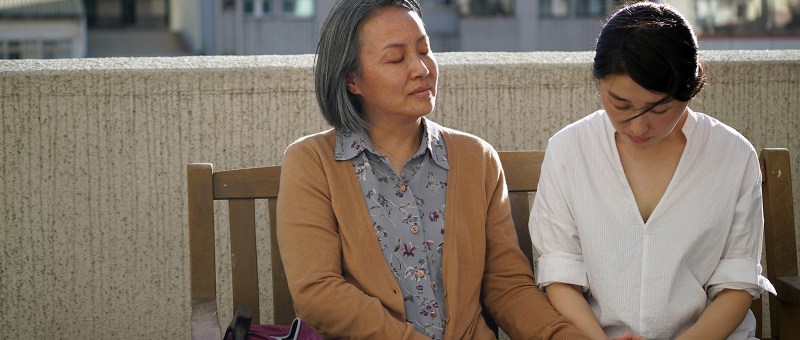
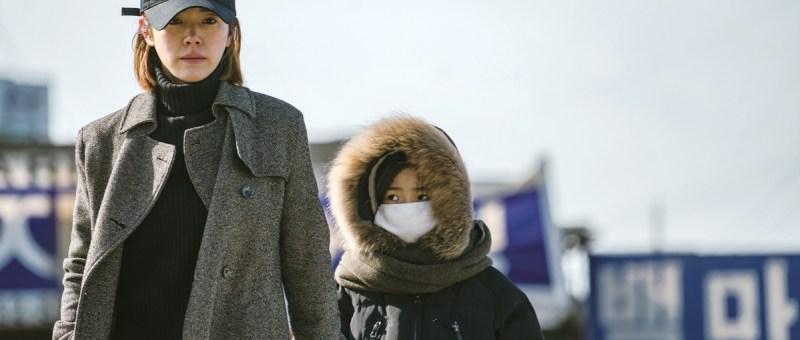
A Family Tour posterMaking films in China is far from easy, especially if you’re intent on exposing the misconduct of your own government. Director Ying Liang found this out the hard way after his third film When Night Falls fell foul of the censors and subsequently saw him exiled from Mainland China. Distancing himself slightly from his material, Ying draws inspiration from his own life in following an exiled female filmmaker’s uncover mission to surreptitiously meet up with her mother by “coincidentally” bumping into her at various tourist spots around Taiwan while she pretends to be taking part in a specially organised package tour.

Ying’s stand-in, Yang Shu (Gong Zhe), has been living in Hong Kong for the last five years after her last film, which features the same plot as Ying’s offending feature in following the mother of a man facing the death penalty for a notorious violent crime whose case may not have been properly handled, was banned. Married to a Hong Kong film programmer, Cheung Ka-Ming (Pete Teo), Yang has a young son and a teaching position but has been unable to pursue filmmaking thanks to the demands of living in exile. When a Taiwanese festival decides to screen her controversial film and invites her over to talk about it, it seems like too good an opportunity to miss. Together with her compassionate husband, Yang hatches a plot to bring her mother, Chen Xiaolin (Nai An), to the “neutral” territory of Taiwan as part of a tightly organised package tour of Mainland tourists. However, as it might cause problems for Xiaolin on her return if they are spotted together, the family will have to take care to ensure that their meetings seem coincidental – no mean feat when Xiaolin is holidaying with a crowd of sociable coach travellers who will no doubt be wondering why she keeps wandering off on her own.

The ironies of exile abound. Yang is constantly asked difficult questions of identity, whether she considers herself to be a Hong Konger or a Mainlander with pressure on all sides to give the correct response. Meanwhile, she’s confronted with the creeping authoritarianism of Beijing even in Hong Kong as a celebrity doctor who’s said the wrong thing is forced on TV to make the obligatory public self criticism in which he avows his loyalty to the “One China”. Despite being married to a Hong Kong national and mother to a son born on the island, Yang doesn’t quite feel as if she’s truly supposed to be there. As she later almost puts it in an ill-advised social media post her husband is quick to talk her out of, Yang “wants to go home” and being unable to means she can’t really settle anywhere else.

Meanwhile, she’s “free” to travel to Taiwan while her mother can only get there by bribing an official tour guide to get her on a tightly regimented bus trip which requires jumping through a lot of bureaucratic hoops to prove you will definitely be coming back. China famously doesn’t recognise the autonomy of Taiwan which has its own troubled history of colonisation and oppression. One of Xiaolin’s fellow passengers who eventually stumbles on her secret is an elderly man whose father came to Taiwan with the nationalists in 1949 shortly before he was born and was executed there, never to meet his son. The old man has come to Taiwan to see where his dad lived and died while he still has time. Politics has been destroying families since time immemorial  but never quite so insidiously as when it decides to use the natural bonds of parents and children as a tool to ensure total compliance within a cruel and uncompromising regime.

Despite having made all this effort, Yang’s interactions with her mother are strange and strained. She’s angry, resentful, guilt ridden and conflicted, unable to meet her mother on an emotional level and unwilling to accept this will probably be the last time she ever sees her. Xiaolin knows her daughter well but her country better, she’s learned to live within its oppressive confines by keeping her head down but Yang seethes with anger towards her mother’s tendency towards compliance. When Yang’s film was blacklisted, it was Xiaolin’s house the men in suits barged into, insisting she force her daughter to re-edit her film, bringing up unpleasant memories of her husband’s time in the re-education camps and making mildly threatening insinuations while Xiaolin holds her ground and refuses to cooperate. Yang’s activism has very real consequences not only for herself but for her family. Ironically enough, Ka-Ming is free to travel back and forth to the mainland, occasionally visiting Xiaolin but too afraid to take his son there in case the authorities try to snatch him.

Restrained as always, Xiaolin poignantly and without irony talks of what she terms the “Chinese way of love” – that you might have to sever connection with those closest to you in order to keep them safe. Familial love, or any kind of love at all, is a liability and a burden that puts both parties in danger from those that would seek to use their feelings against them. Like the rather brusque tour leader who has taken a significant risk in facilitating this odd reunion puts it, “what can ordinary people do?”. Ying cannot find much of an answer. Ironically enough, the Chinese title translates as “free travel” – the very opposite of a package tour in which one has the right and the opportunity to go wherever one wants whenever one wants to, unencumbered by the desires of the collective. A meditation on the inertia of exile, the pain of separation, and the cruelty of the uncompromising systems which abuse real feeling in the name of control, A Family Tour (自由行, Zìyóuxíng) is a heartbreaking exercise in futility in which the only way forward lies in melancholy resignation.


Screened as part of the 2018 BFI London Film Festival.

Trailer (English subtitles)

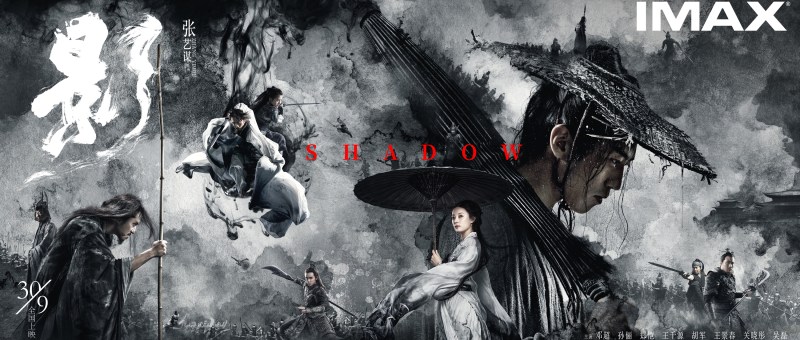
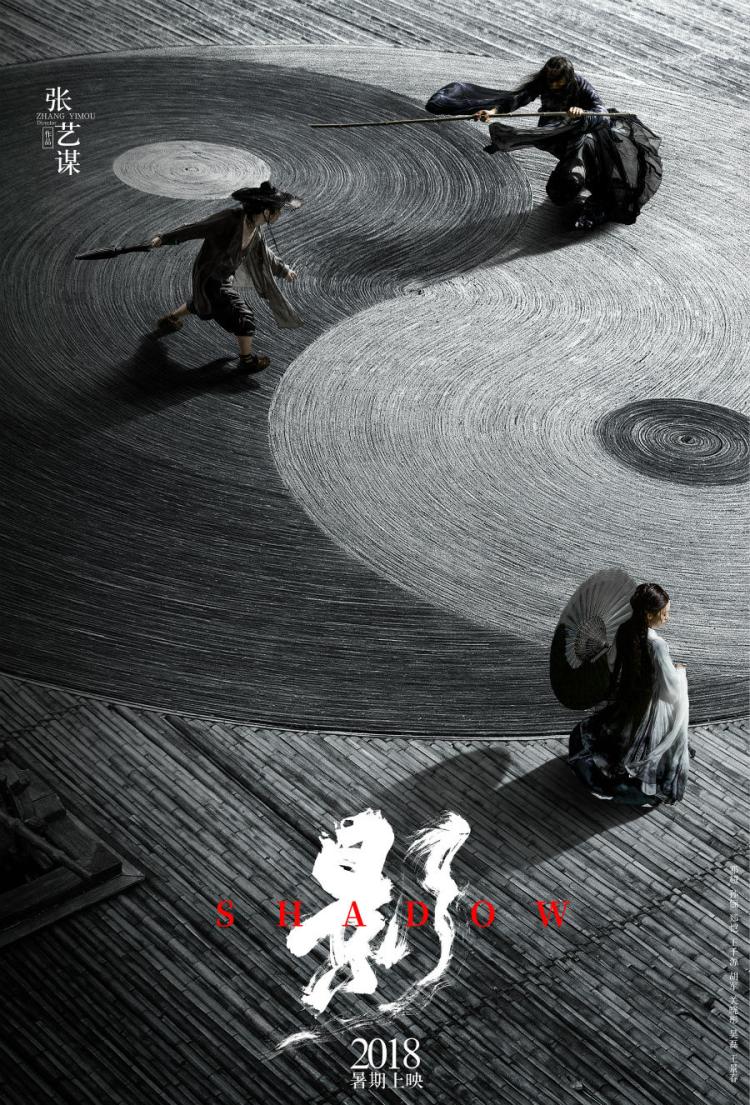
Shadow (影, Zhang Yimou, 2018)

Shadow poster 1Zhang Yimou waxes Shakespearean in a tale of palace intrigue and a world out of balance in his latest return to the age of wuxia, Shadow (影, Yǐng). Drawing inspiration from classic ink paintings, Zhang’s monochromatic world has a chilling beauty even in its intense layers of oppression which make prisoners of king and subjects alike. Like the yin yang diagram on which the climatic battle takes place, Shadow is a tale of dualities and oppositions as its hollowed out hero begins to wonder who exactly he might be without the mirror.

Long ago in feudal China, the Kingdom of Pei has been living in peace thanks to an “alliance” with the Yang who are technically occupying the former Pei city of Jing. Many in the Kingdom of Pei are unhappy with this arrangement, regarding the loss of Jing as a humiliation and the king’s refusal to retake it more cowardice than pragmatism. Despite the king’s instruction that the truce must be maintained and war avoided at all costs, his trusted commander has undertaken a secret meeting with Yang in which he has agreed to a personal duel for the honour of Pei. The king is very unhappy. A lesser man might have lost his head, but the king needs his commander. What he doesn’t know, however, is that the commander is not all he seems. Nobleman Yu (Deng Chao) was badly injured during a previous fight with Yang and has retreated to the catacombs while his double, Jing (also Deng Chao), has been playing his part in court.

Jing, “saved” from poverty as a young child brought to the palace as a double for Yu, is grateful and loyal. He respects his masters and has trained hard to learn the skills needed to pass as a nobleman and more particularly as Yu. As such he has no “identity”. Even his name was given to him by his master and is simply that of the town where he was found which happens to be the disputed city itself. Jing does everything right – his instincts are good, he is clever and quick-witted with a talent for intrigue, all of which makes him both a danger and a shield for Yu. Yu, meanwhile, trapped in the same underground cell which used to house Jing, has become warped and embittered. Nursing a mortal wound, he plots and schemes against the king, scuttling goblin-like as he rails against his fate.

Yu promises Jing a release from his mental imprisonment if he agrees to take part in the duel with Yang. Jing knows that Yu’s promise is hollow and that he is not intended to survive, but submits himself to his fate anyway. He does this, partly, in hope but also because of his longstanding but unspeakable love for Madam (Sun Li) – Yu’s wife, who is one of the few people ever to express pity for his miserable circumstances. As the film opens, Madam and the king’s sister are reading proverbs together including one which insists that men are meant to rule. The king, however, is weak – he is effete and prefers the art of the brush to that of the sword, while his sister is “wild” – a bold and impetuous young woman seemingly more suited to the throne than her foppish brother.

As if to complete the theme, it’s Madam who eventually reveals the technique to beat Yang to her increasingly crazed husband. In order to defeat his hyper masculine enemy who fights with a giant sabre, Yu resolves to fight like a girl armed with one of Pei’s iconic parasols reconfigured in sharpened iron. Only by creating balance can they hope to win, meeting the weight of Yang’s blunt force with a lightness of touch and feminine elegance. 

The world of Shadow is one defined by its dualities – male/female, lowborn and high, betrayal and loyalty, arrogance and supplication. Jing’s existence is defined by that of the “true” commander – a shadow cannot exist without a form to cast it, or so it had always been thought. Offered the possibility of escape, Jing’s original identity begins to resurface. Yet his victory over his “other self” is also a defeat which infects him with the dubious moralities of the court, allowing him to become more than himself alone and leaving the world once again dangerously unbalanced. As the opening narration told us, however, it is not Jing, or Yu, or the king who hold the fate of Pei in their hands but Madam whose final decision will dictate the course of history. Set in a world of oppressive greys broken only by the driving rain and shocking redness of blood, Shadow may not return Zhang to the balletic heights of the poetic Hero, but does its best to add Shakespearean grandeur to its tragic tale of fractured identities and conflicting desires.


Screened as part of the 2018 BFI London Film Festival.

International trailer (English subtitles)

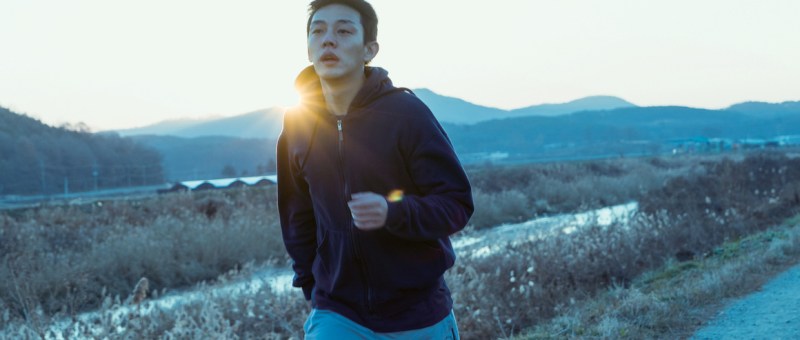
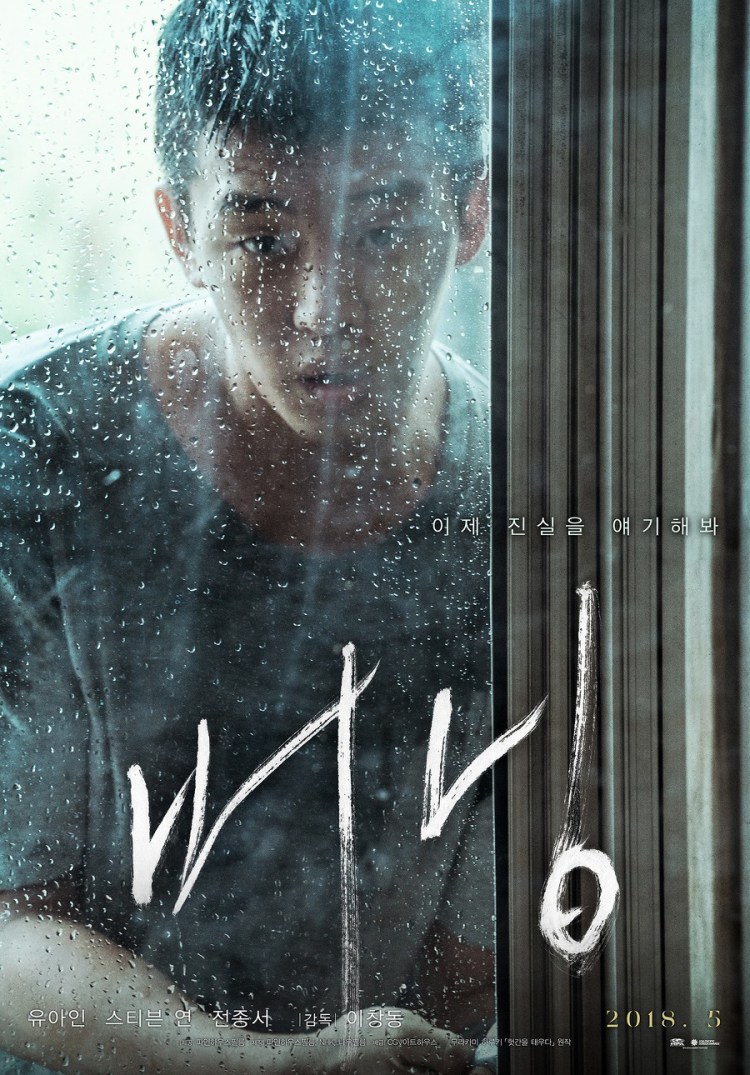
Burning (버닝, Lee Chang-dong, 2018)

Burning posterWith the world the way it is, it’s no wonder young people everywhere find themselves lost and confused, unable to find a sense of greater purpose when all they see is futility. Eight years on from Poetry which revolved around a grandmother’s growing sense of disquiet on realising no one cares about the victim of her grandson’s transgression, Lee Chang-dong returns with a story of frustrated youth as three conflicted souls are drawn into a spiral of resentments, jealousies and forlorn hopes.

Our hero, Jong-su (Yoo Ah-in), is an aspiring writer currently working a series of casual blue collar jobs to get by in the city. One such job unexpectedly brings him into contact with Hae-mi (Jeon Jong-seo), a childhood friend from his home town he didn’t quite recognise. “Plastic surgery” she quips, though she seems happy enough to see him which comes as a surprise to Jong-su, awkward as he is. Hae-mi invites him for drinks over which she asks him a favour – to look after her cat while she goes off to Africa for a bit in response to the call of “great hunger”. Jong-su agrees, but has also agreed to go home to Paju to look after the family’s last remaining cow seeing as his dad, whom he hates, has got himself arrested after getting into a fight with a public official. Before she leaves for Africa, Jong-su begins a sexual relationship with Hae-mi which he seems to think is a sign of a deeper attachment, but when she rings and asks him to pick her up from the airport he is dismayed to find she’s in the company of another man – Ben (Steven Yeun), a handsome, sophisticated, and very wealthy Korean she was accidentally marooned with for three days in Nairobi waiting for a plane.

A man like Ben is an existential threat to one like Jong-su. He doesn’t even put up a fight when Ben, whose friend has been secretly following Jong-su’s rundown pickup all the way back to the city in his Porsche, offers to take Hae-mi the rest of the way. A farm boy from rural backwater Paju, he feels himself inferior, bumpkinish, and unrefined as Ben subtly undermines his self-confidence in order to boost his own sense of superiority. Jong-su, invited to Ben’s upscale condo for “pasta”, is instantly uncomfortable. Eventually unable to mask his rising resentment, he rudely lays into his host while smoking with Hae-mi out on the balcony by musing on how a man in early middle age can afford to live like this – cooking pasta and listening to music, driving a Porsche, owning a Gagnam apartment. In the first of many barbed comments which won’t help his cause, Jong-su asks Hae-mi what exactly she thinks Ben is doing with someone like her. She replies that he says he finds her “interesting”, but the sadness in her eyes implies that she’s already given this question more than a degree of thought.

Ben remains a cypher. Though his manner is charming, even superficially kind, there’s something unsettling about him, a kind of creeping hollowness coupled with unpredictability. Rattled, Jong-su starts going through his bathroom cupboards and finds a ladies’ makeup box and a draw full of trinkets which seem to have belonged to several different women. At the very least, Ben has not been honest with Hae-mi, but Jong-su doesn’t say anything. Jong-su, less naive, is also well aware of the way Ben has been trotting them out for entertainment value at dinner parties frequented by his wealthy friends who take in the country bumpkin freak show with cruel superiority. Ben, however, is already bored – yawning ostentatiously but making a conspiratorial show of locking eyes with Jong-su who he knows is on to him in more ways than one.

Unexpectedly rocking up at Jong-su’s rundown Paju farmhouse, Ben plants a kernel of intrigue in Jong-su’s fragile mind by telling him about his “hobby” of burning down random “greenhouses” just for the hell of it. Despite his literary pretensions, Jong-su takes Ben’s words at face value and misses the obvious subtext. Whatever Ben is or might be, men like him delight in destroying fragile things to mask their own fragility. Jong-su takes the bait and the “metaphorical” fire Ben has lit within him begins to catch.

Ben, who finds Hae-mi’s tears “fascinating” because he has never cried, says he burns things to feel his soul vibrate. Hae-mi, meanwhile, remains frustratingly distant to both men. She talks about spiritual hunger and longs to find some kind of meaning in a world of futility but also longs to disappear like an all too brief sunset. She “reminds” Jong-su of a childhood incident in which she fell into a well behind her family’s farm and eventually found salvation in the sudden appearance of his face, but Jong-su doesn’t even remember. Hae-mi is in a sense still living at the bottom of a well, staring at the sky and waiting for rescue only to find herself continually abandoned, friendless and alone.

Then again, perhaps nothing she’s told Jong-su is true. Hae-mi’s answer to want is imagination, a simple ability to “forget” a desired object does not already exist. She asks Jong-su to look after a cat who is so shy he begins to wonder if it’s real, reassured only by an empty food bowl and full litter tray. Jong-su is our “writer”, but the only thing he writes is a petition letter to get the father he can’t stand an appeal for crime he knows he committed. He is our guide to “truth” but his job is to engineer narrative – the story is his to direct and the ending his to choose. He writes because “the world is a mystery” to him, but remains trapped within his own petty preoccupations in which the full weight of his rage levels towards Ben whose existence seems so unfair.

Burdened by a strangely feudal deference, Jong-su is a fuse slowly catching light. Failed by family, he and Hae-mi are abandoned children looking for a way out. They thought they wanted out of Paju, but perhaps they were meant to be together in this place if the world were better and there were no more playboy kings like Ben, eager to do “anything for fun” in order to escape the emptiness of their existence in which inherited wealth has left them purposeless and hugely insecure despite the superficial confidence of class. Jong-su and Hae-mi chase brief moments of sunlight bounced back from the gleaming spires of an inaccessible city but find no relief or promise in its greying skies. Adapting a short story by Haruki Murakami, Lee Chang-dong paints a dizzying picture of a tinderbox world in which the rage of the oppressed little guy threatens to engulf us all while those best placed to help only want to fan the flames.


Screened as part of the 2018 BFI London Film Festival.

US trailer (English subtitles)